
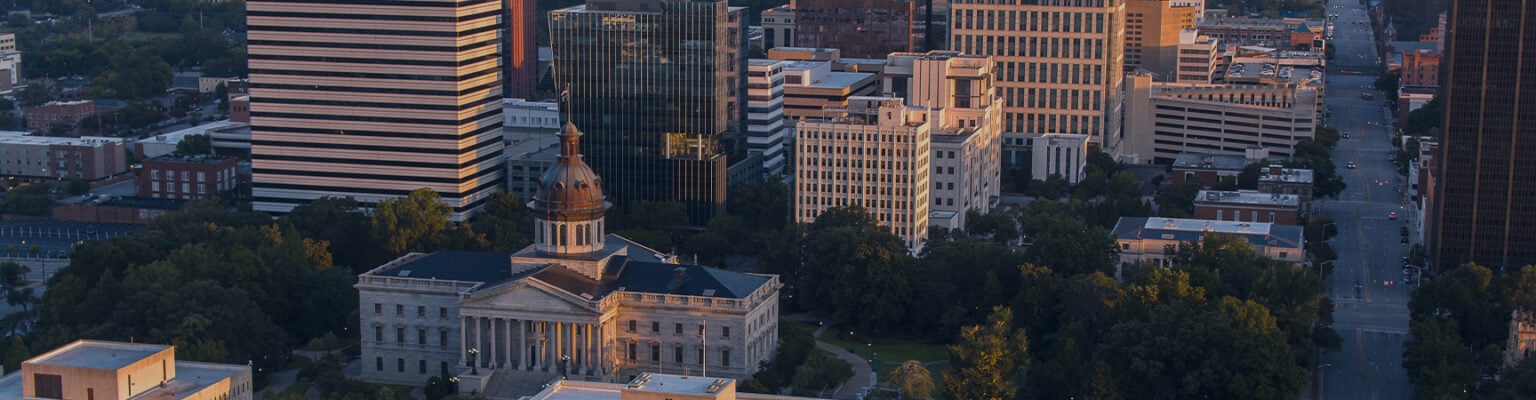
FCI Ashland at a glance
FCI Ashland is a low-security federal prison for men in Boyd County, Kentucky, with a minimum-security satellite camp beside it. It held 1,448 people as of September 2026: 1,159 in the main institution and 289 at the camp. It sits on State Route 716 in the unincorporated community of Summit, a few miles west of the city of Ashland.
| Official name | Federal Correctional Institution, Ashland |
|---|---|
| BOP code | ASH |
| Security level | Low; men |
| Population | 1,448 (as of September 2026): 1,159 at the FCI, 289 at the camp |
| Visiting | FCI: Saturday, Sunday, Monday and federal holidays, 8:00 a.m.–3:00 p.m. Camp: Saturday, Sunday and federal holidays, 8:00 a.m.–3:00 p.m. |
| Inmate mail | FCI: Inmate Name & Register Number · FCI Ashland · Federal Correctional Institution · P.O. Box 6001 · Ashland, KY 41105 Camp: Inmate Name & Register Number · FCI Ashland · Federal Correctional Institution · Satellite Camp · P.O. Box 6001 · Ashland, KY 41105 |
| Send money | Lockbox · Western Union (code city FBOP, DC) · MoneyGram (receive code 7932) |
| Phone | 606-928-6414 · Fax 606-929-4395 |
| Street address | State Route 716, Ashland, KY 41105 · Boyd County |
| Judicial district | Eastern District of Kentucky |
| BOP region | Mid-Atlantic |
| Designated capacity | 745 at the FCI, 296 at the camp |
| Housing | Open-bay dormitories (5 at the FCI, 4 at the camp) and 9 multiple-occupancy cell units; no single cells |
| Special Housing Unit | Yes · 52 segregation cells |
| Medical care level | Level 2 |
| Mental health care level | Level 2 |
| RDAP | No |
| Sex offender treatment | No |
| UNICOR | Yes, at the FCI (office furniture); none at the camp |
| Camp | Yes · minimum-security satellite camp beside the FCI |
On this page
FCI Ashland opened in 1940. It is one of the five federal prisons in Kentucky, in the Bureau’s Mid-Atlantic Region and the Eastern District of Kentucky. Its 2024 audit under the Prison Rape Elimination Act records a designated capacity of 745 for the FCI and 296 for the camp. The FCI was then holding 1,159 men, about 156 percent of what it was designed for, while the camp was barely half full.

Which prison near Ashland, Kentucky, are you actually looking for?
If you are looking for the federal prison, you want FCI Ashland or its satellite camp, two separate prisons on one site on KY 716. Four mix-ups send people to the wrong place. Settle which building you mean before you write a letter, book a flight or send money, because none of these places share rules with the others.
First, the FCI and the camp are two prisons on one site. They sit either side of a four-way stop on KY 716 and share a mailing box and a commissary list, but they run on different visiting days, clothing, counts and movement rules. A camp resident wears green; a man at the FCI wears khaki. The camp does not visit on Mondays; the FCI does.
Second, Kentucky holds five federal institutions and Ashland is only one of them. The table below lists the Bureau’s current roster of federal prisons in Kentucky.
| Institution | Security | Where | Code |
|---|---|---|---|
| FCI Ashland (this page) | Low, plus a minimum-security camp | Boyd County, northeast Kentucky | ASH |
| FCI Manchester | Medium, plus a camp | Clay County | MAN |
| FMC Lexington | Administrative — a medical referral center, plus a camp | Fayette County | LEX |
| USP Big Sandy | High, plus a camp | Inez, Martin County | BSY |
| USP McCreary | High, plus a camp | Pine Knot, McCreary County | MCR |
Only one of those five is closing anything. The Bureau’s press release of July 1, 2026, announced closures at six institutions and named the Lexington FMC Satellite Camp among them; no Ashland facility appears on that list. If you have read that a Kentucky federal camp is shutting, it is the one at Lexington.
Third, a great deal of federal prison news datelined “Ashland, Kentucky” is not about this prison. The Northern Division of the Eastern District of Kentucky sits in Ashland, so prosecutions arising at USP Big Sandy — a high-security penitentiary two counties away, where a stabbing and a homicide were charged in 2026 — are filed and reported here. A headline placing violence at a “federal prison” under an Ashland dateline very often describes Big Sandy.
Fourth, Kentucky runs a large state system of its own. Eastern Kentucky Correctional Complex is a state prison in West Liberty, Morgan County, run by the Kentucky Department of Corrections; the Boyd County Detention Center in Catlettsburg is the county jail a few miles from the federal prison. Someone sentenced in a Kentucky state court, or held on a county charge, will not appear in the federal inmate locator at all, and a federal defendant held before trial in a county or contract jail may not appear either; a pretrial defendant held in a Bureau institution does appear, with a release date of “UNKNOWN.”
What is the security level at FCI Ashland?
The main institution at FCI Ashland is low security, and the camp beside it is minimum security. The 2024 PREA audit puts the custody classifications precisely: Low/In at the FCI, and Minimum/Out/Community at the camp. “In” and “Out” are about supervision, not about the fence. An Out custody classification is what allows work outside the secure perimeter, and it is why camp details go to the warehouse, the power plant and a community service detail in the Wayne National Forest while the FCI’s compound stays inside the line.
Low security at Ashland does not mean spacious. The same audit records 67 buildings, no single-cell housing units whatsoever, nine multiple-occupancy cell units, open-bay dormitories — five at the FCI and four at the camp — and 52 segregation cells. Against a designated capacity of 745, the FCI held 1,159 men on the audit’s first day, and the form answers “yes” to whether the facility had been over capacity in the previous twelve months. The camp, designated for 296, held 171 then and 289 on the Bureau’s September 2026 report.
The Designation and Sentence Computation Center decides before arrival whether someone goes to the FCI or the camp, on two things: the security point score and any Public Safety Factor, which overrides the points. A man can score low enough for a camp and still be sent inside the fence because a PSF, such as a sex offense, a deportable-alien status or a long remaining sentence, sits on his record. That is the most misunderstood step in the Bureau’s security designation rules, and a step where a lawyer can make the case before arrival.
The camp handbook says how quickly a camp placement can end: “Serious offenses, such as the introduction and/or possession of alcohol, marijuana, other unauthorized drugs, cellphones, cigarettes, and aggressive behavior will normally constitute a transfer to an institution of greater security and supervision.” That transfer is administrative. It needs no conviction, and it happens fast. Our guides to the intake process and to preparing for prison cover the first days after arrival.
Who are the notable inmates at FCI Ashland?
Four well-known men are held at FCI Ashland as of September 2026. Each name below carries its register number, the only reliable key to the Bureau’s records.
| Name and register number | Status (September 2026) | Case |
|---|---|---|
| Robert Hadden, 07740-509 | Held at FCI Ashland; projected release February 14, 2039 | New York gynecologist sentenced in July 2023 to 20 years for sexually abusing patients who traveled to see him |
| Shahawar Matin Siraj, 63283-053 | Held at FCI Ashland; projected release April 17, 2030 | Convicted in 2006 of conspiring to bomb a New York City subway station; sentenced to 30 years |
| John F. Johnson, 20257-509 | Held at FCI Ashland; projected release July 2, 2028 | Known as Grand Master Jay; founder of the armed group NFAC, sentenced in 2022 for pointing a rifle at federal agents during a Louisville protest |
| Troy A. Titus, 58299-083 | Held at FCI Ashland; projected release January 8, 2034 | Virginia real estate lawyer convicted in 2009 of fraud and money laundering in a Ponzi scheme |
The locator shows three well-known men released from this institution rather than transferred out of it: Alexander “P.G.” Sittenfeld (18085-509), the Cincinnati councilman, on May 28, 2025; Brian Kelsey (72146-509), the Tennessee state senator, on March 11, 2025; and Azamat Tazhayakov (95090-038), convicted of obstructing the Boston Marathon bombing investigation, on May 19, 2016.
Two men often listed at FCI Ashland are held elsewhere. Mark A. Ciavarella Jr., the Luzerne County judge convicted in the Pennsylvania “kids for cash” case, is not at FCI Ashland: the locator places him under register number 15008-067 at FCI Butner Medium I in North Carolina, projected release June 18, 2034. John Russell Whitt, 19945-057, is also at FCI Butner Medium I, not at FMC Butner. Those are two prisons on one campus with two Bureau codes, BUT and BUH, and the distinction decides where a letter goes.
The three men whose rare-book theft became the film American Animals — Spencer Reinhard, Eric Borsuk and Warren Lipka — are often said to have served their sentences here. The locator’s last recorded facility is RRM Nashville for two of them and FCI Petersburg Low for the third. The locator keeps only the last placement, so an earlier stay is not ruled out, but no Bureau record places them at Ashland.
How do I find someone at FCI Ashland?
Use the Bureau’s free public Inmate Locator, which is the only authoritative answer. Search by the eight-digit register number if you have it, and by committed name if you do not; the locator matches the name on the judgment, not a nickname or a married name. Its records cover everyone in federal custody since 1982: for someone still held it gives the facility and a projected release date, and for someone released it shows “Not in BOP Custody as of” and a date, with no facility.
Read the answer carefully: the screen names a facility and its type rather than giving a code, and the names are close enough to mislead. Someone here shows as “Located at: Ashland FCI.” Butner alone has four separate prisons, shown as Butner Low FCI, Butner Medium I FCI, Butner Medium II FCI and Butner FMC. A result ending in “RRM,” such as Cincinnati RRM or Nashville RRM, is not a prison at all — it is a Residential Reentry Management office, meaning the person is in a halfway house or on home confinement under that office’s supervision.
If the locator shows nothing, the usual reasons are that the person is in state or county custody rather than federal, that they are in pretrial detention under the United States Marshals Service rather than in a Bureau institution, or that the committed name differs from the one you know. Our guide to how register numbers work explains how the number is built and what its last three digits tell you.
How do I write to someone at FCI Ashland?
Mail for both the FCI and the camp at FCI Ashland goes to P.O. Box 6001, Ashland, KY 41105. The committed name and the register number go on the first line, together. Mail without a register number is returned.
| For someone at the FCI | For someone at the satellite camp |
|---|---|
| Inmate Name & Register Number FCI Ashland Federal Correctional Institution P.O. Box 6001 Ashland, KY 41105 | Inmate Name & Register Number FCI Ashland Federal Correctional Institution Satellite Camp P.O. Box 6001 Ashland, KY 41105 |
The camp’s own handbook, last updated in November 2011, and many directory listings give P.O. Box 6000 with a ZIP+4 of 41105-6000. The Bureau’s current facility page gives 6001 for the camp as well as the FCI. Use 6001, and if a letter comes back, call 606-928-6414 before trying anything else.
Two other boxes exist here and neither is for mail to a prisoner: P.O. Box 888 is staff mail, and freight goes to the warehouse at the street address.
Ordinary letters are opened, inspected for contraband and may be read. Legal mail is opened only in the presence of the person it is addressed to and is not read, provided the envelope identifies the sender as an attorney and is marked “Special Mail — Open only in the presence of the inmate”; without that marking it is ordinary mail. The national rules are in the Bureau’s correspondence regulations; see also our guides to attorney-client communication and to writing to someone in federal prison.
One local rule trips up attorneys. Ashland’s visiting supplement provides that “legal materials will be mailed in by the visiting attorney for inmate review prior to any legal visit,” and that people “are not allowed to bring any legal materials to visit nor return with any materials after the visit.” A lawyer who plans to hand over discovery across the table during a legal visit at Ashland will not be allowed to. Post it in advance, marked as special mail, and allow time for the mailroom.
Never put money in a letter. Cash or a money order tucked into correspondence is rejected at the mailroom and sent back.
How do I send money to someone at FCI Ashland?
Send money to someone at FCI Ashland through the Bureau’s national lockbox in Des Moines or one of two wire services, never to the prison itself; all three routes need the committed name and the eight-digit register number. No one at this institution may accept money from a visitor, and none is transmitted in the visiting room.
| Route | Where it goes | Notes |
|---|---|---|
| Postal money order or cashier’s check | Federal Bureau of Prisons Committed Name Eight-Digit Register Number Post Office Box 474701 Des Moines, Iowa 50947-0001 | A U.S. postal money order clears without a hold; other instruments are held automatically. Cash and personal checks are not accepted |
| Western Union Quick Collect | Code city FBOP, DC | The Bureau’s Sending Money page says a transfer made between 7:00 a.m. and 9:00 p.m., Eastern time, posts within two to four hours, while Program Statement 4500.13, § 9.7, says “within two hours”; one made after 9:00 p.m. posts at 7:00 a.m. the next morning |
| MoneyGram | Receive code 7932, company name Federal Bureau of Prisons, Washington, DC | Our page on sending money by MoneyGram sets out the limits |
If the committed name and register number are missing from either the instrument or the envelope, the funds go back to the sender — and with no return address, to the Treasury. Our guide to sending money to a federal prisoner compares each route and its cost.
Before sending a large sum, know the ceiling on what it can buy. Commissary spending is capped at $460 a month across the Bureau under its trust fund rules, so money beyond that sits in the account. If the person you are supporting has refused to participate in the Inmate Financial Responsibility Program, the FCI’s handbook records that their commissary spending limit drops to $25.00 a month regardless of the balance, so even a well-funded account buys very little.
What are the visiting hours at FCI Ashland?
At FCI Ashland, the main institution visits 8:00 a.m. to 3:00 p.m. on Saturday, Sunday and Monday, including all federal holidays, and not at all Tuesday through Friday. The camp visits the same hours on Saturday, Sunday and federal holidays only — no Mondays. Both come from institution supplement ASH-5267.09E of October 12, 2023, which replaced the 2018 version.
The October 2023 supplement is the current published statement of when this prison opens its visiting room; call 606-928-6414 to confirm before you travel. The national rules behind it are the Bureau’s visiting regulations.
The point system, and why Monday is the cheapest day to visit
At the FCI each person gets ten visiting points a month. A weekend or holiday visit costs three points; a weekday visit costs one. Because the FCI opens only on Saturday, Sunday and Monday, Monday is the only weekday it is possible to visit, and the supplement’s own worked example makes the arithmetic explicit: seven weekday visits plus one weekend or holiday visit uses the whole month.
Ten points buys three weekend visits a month, or ten Mondays. A family that can take a Monday off work can see someone at FCI Ashland more than three times as often as a family that can only come on weekends.
There is a second reason Monday matters. Weekend visiting at the FCI runs on a unit rotation — the unit team publishes quarterly calendars on TRULINCS identifying “your unit’s day to visit during the weekend,” and it is the incarcerated person’s job to pass that on. The supplement attaches no such rotation to Monday. Ask which weekend day the unit has been given before booking anything.
The camp’s points work differently and come out at six visits a month: ten points, the first visit costing five and every later one, holidays included, costing one. The camp’s own handbook says the same in words — “You are allowed six (6) regularly scheduled visits per month, including holiday visits.”
Who can visit, and how many at a time
- The visiting list holds no more than twenty people, children included; to add someone, an equal number must come off.
- The visitor must have known the person before their incarceration, unless the warden makes an exception. Children born after incarceration are exempt.
- Anyone under 18 needs form BP-629 signed by a parent or guardian; anyone under 16 must be accompanied by a parent, guardian or immediate family member aged 18 or over.
- A minister of record counts against neither the twenty-person list nor the monthly visits, and there may be one at a time.
- People in holdover status visit immediate family only, on Tuesdays. Someone still in Admission and Orientation, with no approved list, may also visit immediate family only.
- Special Housing Unit visits are Monday only, whatever the custody level: two hours at most, in the non-contact booth in the FCI visiting room, two visitors including children, one SHU resident at a time.
The supplement gives two limits on group size. Paragraph 10 says the total number of visitors, including children, will not normally exceed three, with exceptions approved by the Captain; the visitor handout attached to the same supplement says the maximum number of adults at one time is four. If you are bringing a group, call 606-928-6414 first.
Contact is tightly drawn. Embracing and kissing are allowed at the beginning and end of the visit only, in a designated area in front of the officer’s station; for the rest of the visit, contact is limited to hand-holding in plain view. Only visitors’ minor children may use the playroom — the incarcerated parent may not go in. If a visitor leaves the visiting room for any reason, the visit ends for that day.
If the room becomes overcrowded, visits are terminated in a set order: volunteers first, then those who have visited most often, then those there longest that day, then those who traveled the shortest distance. Distance traveled is a protection for families coming from out of state.
What visitors can wear and bring
Ashland’s dress rules include one that surprises many visitors: metal underwire bras are prohibited, regardless of the age of the person wearing it. They set off the metal detector, and there is no way through the front entrance without clearing it.
The list runs long, and the items people are actually turned away for are these: anything sleeveless; anything see-through, form-fitting or skin-tight, jeggings, leggings and yoga pants included; shorts, on anyone but a child; hooded sweatshirts and sweat suits; white T-shirts and T-shirts with any logo; hats; hospital scrubs; camouflage, except a Class A dress uniform on active-duty personnel; untucked, sagging, ripped or torn clothing; and open-toed shoes of any description. Skirts and dresses must reach the knee when seated, and a slit may not run more than two inches above it. Khaki, tan and anything resembling the inmate uniform is refused, as is any club or gang symbol.
Everything you carry in must fit a clear plastic container or bag no larger than 12 by 12 inches. Diapers and up to two clear eight-ounce baby bottles are allowed. Handbags, sunglasses, reading material, photographs, any electronic device, all food and drink including gum and mints — sealed infant formula and baby food excepted — nail clippers, lighters, tobacco and e-cigarettes, makeup, charm bracelets and lockets, and strollers, carriages and car seats are not. Take non-emergency prescription medication before you come in; emergency medication is surrendered to the visiting room officer and can be retrieved at any time. Lockers at the front entrance hold vehicle keys. Everything else stays in the car.
Identification and screening
Everyone aged 16 and over needs government-issued photo identification — a driver’s license, state ID or military ID. A visitor who is not a United States citizen needs a valid passport or a valid state driver’s license carrying a photograph.
The FCI front entrance has a walk-through metal detector, a hand-held scanner and an ION spectrometer — an electronic narcotics detection device. Every visitor is subject to testing on the pattern set for that day. Failing it means no entry; refusing it also means no entry, and the supplement says so twice. There is no appeal from a positive reading.
A visitor with a medical implant that sets off the detector should bring documentation endorsed by a physician stating where it is; without that, the Operations Lieutenant decides. Everyone signs the BP-A0224 form before entry, which records consent to search under 28 C.F.R. part 511 and states that the visiting area, including its restrooms, may be monitored. All visitors are searched on every entry, and their belongings and vehicles are subject to search. That consent is not a formality: signing the BP-A0224 is what makes the car you parked outside searchable as well as the bag you carried in. See searches, shakedowns and contraband and federal prison visitation.
Getting there
The prison sits on KY 716 under four miles west of the city of Ashland, close enough to the Ohio and West Virginia lines that many visiting families cross a state border to get here. The institution publishes directions from both.
From Ohio. After crossing the bridge into Ashland you are on 12th Street. Follow it six blocks until it merges with 13th Street, which is U.S. 60 West, and stay on U.S. 60 out of the city. About three miles out of town the Kentucky State Police barracks stands on the right at the junction of U.S. 60 and KY 716, with a Speedway and a McDonald’s on the same corner. Turn right on KY 716 and go about three-quarters of a mile to a four-way stop.
From West Virginia. Take I-64 West to Exit 185, Cannonsburg, KY 180. Turn right at the end of the ramp and go about 5.5 miles — seven traffic lights from the interstate. At the seventh light turn left at that same junction, then left on KY 716 and three-quarters of a mile to the four-way stop.
At the four-way stop, from either direction: do not go straight. For the FCI take the right-hand turn, and the first immediate left is the visitor parking lot. For the camp turn left instead; the camp is on the right and the first immediate right is its lot.
Flying in, the airport the Bureau itself points visitors to is Tri-State Airport at Huntington, West Virginia. The transportation sheet attached to the visiting supplement lists car services at the airport and cab firms nearby, and warns: “because of this institution’s location; this is the only transportation to the front door.” There is no bus and no walking route. Arrange the ride before you land, and if you get lost the institution asks you to call 606-928-6414.
How do phone calls and email work at FCI Ashland?
Calls at FCI Ashland go out, never in, and email runs through TRULINCS. The person inside places each call to a number on their approved list. Under the Bureau’s telephone regulations, Program Statement 5264.09, issued September 3, 2026, the monthly allowance across the Bureau is 510 minutes: 300 are free to anyone eligible for First Step Act telephone incentives, and anyone who uses up those 300, eligible or not, may buy the other 210. A single call should generally not exceed 15 minutes, at least 30 minutes must pass between completed calls, and the monthly limit does not apply to unmonitored legal calls. The extra 100 minutes in November and December belonged to the 2008 policy and did not survive its rescission.
At the FCI the phones run from 6:00 a.m. to no later than 11:30 p.m., but access is normally closed off Monday to Friday, excluding holidays, from 7:30 to 10:30 a.m. and from 12:30 p.m. until after the 4:00 p.m. count clears. That is deliberate: people are expected to be at work. For shift workers the institution may leave one telephone per unit available. If your calls stop arriving in the middle of the day on weekdays, that is why, and it is not a punishment.
At the camp the telephones sit in Building 300, across from the commissary, in a room open 6:00 a.m. to 11:30 p.m. daily; camp residents are not relieved from a work detail to call except in an emergency approved by the unit team. No third-party, credit-card, conference or speaker calls are permitted anywhere on the site, and every call is monitored.
Phone credit moves from the commissary account to the telephone account in whole dollars, from any phone, and the transfer is immediate. Our guide to federal inmate phone calls explains rates and the approved-number list.
Electronic messaging runs on TRULINCS, which a family reaches from the outside through CorrLinks: text only, with a per-minute charge, and nothing passes until you accept the invitation the person inside sends. Email with a lawyer is not privileged. The Bureau permits attorneys on the contact list and monitors those messages, so privileged writing has to travel as marked special mail. See CorrLinks and TRULINCS for how to set up an account and what it costs.
What can people buy at the FCI Ashland commissary?
The monthly commissary spending limit at FCI Ashland is $460, set nationally by the Bureau’s trust fund rules, Program Statement 4500.13, issued May 7, 2026. The limit rises by $50 during the November and December holiday period, for no more than one validation period. The only things that do not count against it are postage stamps, nicotine replacement patches and lozenges, over-the-counter medicines and vitamins, kosher and halal shelf-stable entrées for people in IFRP refusal status, copy cards and copy paper, footwear including sneakers and safety shoes, mattresses, and the secured media device.
Older figures are out of date. FCI Ashland’s own 2014 handbook says “The National Spending Limit is 320.00,” the camp’s 2011 handbook says $320, and the program statement records the increase from $360 to $460 in its own change log.
The FCI and the camp shop from one list. The Bureau’s published order form for this institution is the 2018 list, so treat its prices as historical and its rules as the house style, which changes far less often. Those rules are printed in capitals and they are unforgiving: no highlighted lists; no additions or subtractions once the list is turned in; check the out-of-stock list first; all sales final, no exchanges, no refunds.
Shopping is by unit and by rotation. At the camp each person shops once a week, the Appalachian and Bluegrass units on alternate days, the schedule swapping each quarter, and the commissary closes for a week every three months for inventory. Nothing can be bought without the identification card, and a change of appearance — growing or shaving a beard — means the card is taken and reissued.
Caps are set by category rather than by item — twelve meat items in combination, twelve sweets, four bags of chips, two soaps, two hair-care products in total, ten bag soups, seven kosher meals, one watch, and one pair of shoes a week apart from shower shoes. Stamps come in a ten-dollar combination; copy cards are limited to two. Items marked with a dollar sign are the only ones available to someone on commissary restriction.
Two entries on the 2018 list are specific to this site: sugar cubes are marked “CAMP ITEM ONLY,” and an MP3 return envelope is stocked at 85 cents. For the national rules behind this list, see our page on the federal prison commissary.
What programs are available at FCI Ashland?
FCI Ashland offers non-residential drug treatment, the Resolve trauma program, occupational education, a UNICOR factory and a largely faith-based set of partnerships, but no RDAP and no sex offender treatment.
Drug treatment: there is no RDAP here
FCI Ashland does not run the Residential Drug Abuse Program. That is the most consequential fact about programming here, because RDAP is the one program that can shorten a federal sentence: up to twelve months off, under 18 U.S.C. § 3621(e), for someone convicted of a non-violent offense who completes it.
The Bureau’s First Step Act Approved Programs Guide (2026) carries an RDAP locations list of 57 programs at 50 locations. Its Mid-Atlantic entries are Alderson, Beckley, Big Sandy, both Butner FCIs, Cumberland and its camp, Lexington’s two programs, Memphis and both Petersburg institutions. Ashland is not among them, and the guide’s separate institution grid also marks Ashland as running neither the residential program nor its dual-diagnosis version. The two halves of the guide agree.
In Kentucky, RDAP runs at USP Big Sandy and at FMC Lexington, which has two programs. It does not run at Ashland, Manchester or McCreary. Where RDAP matters to a sentence, the institution someone is designated to decides whether the program is even available — a question for the designation stage or a transfer request, not for the unit team here.
What Ashland does have is the non-residential drug abuse treatment program, drug abuse education, and Alcoholics Anonymous and Narcotics Anonymous, all marked for it in the 2026 guide. It also runs something most low-security prisons lack.
The Resolve Program, and the psychology track
FCI Ashland is one of 31 institutions the 2026 guide names, by code, as running the Resolve Program — a trauma-focused cognitive behavioral therapy program delivered by Psychology Services in three parts: an education workshop on traumatic stress and resilience, the Seeking Safety skills group, then Dialectical Behavior Therapy, Cognitive Processing Therapy or a skills maintenance group. It is worth 80 First Step Act programming hours, and in Kentucky only Ashland and FMC Lexington are named for it.
Seeking Safety and Seeking Strength, Start Now, Trauma Education, Anger Management, Criminal Thinking and the Inmate Companion Program are marked separately for Ashland; our guide to mental health programs in federal prison explains how referral works and why waiting lists matter more than eligibility. One absence is asked about often: neither the residential nor the non-residential Sex Offender Treatment Program is approved to run here.
Education, work and vocational training
All four of the Bureau’s occupational education categories are marked for Ashland — job certification, technical certificate or degree, vocational apprenticeship and vocational marketable skills — along with the literacy program, English as a Second Language, the Barton reading and spelling program, and national parenting.
One category is not marked, and a second federal source corroborates the absence. Post-secondary education is unmarked for Ashland in the 2026 guide, and the Bureau of Justice Statistics count of recidivism reduction partnerships records zero higher-education partnerships here in 2024. The camp’s 2011 handbook describes college classes through the local community college, needing “a minimum of 17 students” to run, and nothing in current federal data shows a college partnership operating. Ask the education department in writing before planning around a degree.
UNICOR runs at the FCI. The Bureau lists Ashland, Kentucky, under Office Furniture among its factory locations, and the auditor who inspected this prison in November 2024 recorded visiting the UNICOR shop. There is no factory at the camp, though camp residents work as UNICOR clerks and warehouse laborers, and the camp’s movement schedule puts a UNICOR special move under staff escort at 5:00 a.m. Federal Prison Industries is worth 500 First Step Act credit hours and affects the risk score; hiring is from a waiting list, with priority for people within three years of release. Bureau-wide the participation rate is 8 percent against 25,000 people waiting, and pay runs from 23 cents to $1.15 an hour.
The camp’s own work list is the fullest published description of labor on this site: food service, clinic and unit orderlies, education clerks and tutors, the clothing room, maintenance trades, the UNICOR warehouse, the business office, the power plant, the machine shop, the chapel, the garden — and a community service detail in the Wayne National Forest. Our guides to prison education and vocational training explain how these tracks work across the system.
Faith-based and reentry programming
Programming at FCI Ashland leans heavily on religion, and the federal data says so precisely. The Bureau of Justice Statistics recorded 39 recidivism reduction partnerships here in 2024: 36 faith-based, two community-based, one in vocational training, and none at all in higher education, workforce development, art, nonprofit or private partnership.
Threshold, Faith-Based Conflict Management, Embracing Interfaith and House of Healing are all marked for Ashland and carry First Step Act credit. If the person you care about will not take part in religious programming, the pool of approved activities is narrower than the headline count of 39 suggests. Our page on religious programs in prison covers what participation does and does not require.
The same 2024 data records 36 volunteers at Ashland, every one of them Level II — badged, trained, authorized for five days a year or more — and not a single Level I volunteer. The PREA audit also counts 36 volunteers.
Approval is not delivery. The guide lists what is approved to be offered; whether a class is running this month, and how long the waiting list is, is a question for the unit team, in writing, with a copy kept.
What is daily life like at FCI Ashland?
Days at FCI Ashland run on a fixed pattern of counts, work calls and controlled movement, and the camp’s handbook, updated in November 2011, gives the fullest published timetable. Read it as the shape of the day rather than this month’s timetable.
| Monday to Friday | Weekends and federal holidays | |
|---|---|---|
| Lights on | 6:00 a.m. | Coffee hour 6:45–7:45 a.m. |
| Breakfast / brunch | Mainline 6:00–7:00 a.m. | Brunch 10:30–11:30 a.m. |
| Pill line | 7:00–7:30 a.m. and 6:00–6:30 p.m. | 8:30 a.m. and 6:00 p.m. |
| Sick call | Forms in by 6:30 a.m.; appointments 9:00–11:00 a.m., Monday, Tuesday, Wednesday and Friday | Emergencies only |
| Lunch | 11:00–11:30 a.m. | — |
| Work call / recall | Work calls at 5:00, 6:20 and 7:00 a.m. and 11:45 a.m.; recalls at 10:45 a.m. and 3:00 p.m. | — |
| Stand-up counts | 4:00 p.m. and 9:00 p.m. | 10:00 a.m., 4:00 p.m. and 9:00 p.m. |
| Dinner | 4:15–4:45 p.m., or once the 4:00 p.m. count clears | 4:15–5:30 p.m. |
| Commissary | Tuesday and Wednesday, 6:15 a.m.–3:30 p.m. | — |
| Lights out | 9:00 p.m. | 9:00 p.m. |
Source: FPC Ashland Admission & Orientation Handbook (2011), the most recent camp handbook the Bureau publishes.
One camp rule explains a small daily anxiety families hear about on the phone: the evening meal is called unit by unit “on a rotating basis according to the housing unit that has achieved the highest weekly sanitation inspection score.” Cleaning the unit is not busywork. It decides who eats first.
The camp runs three controlled movements a day for details working outside its grounds, and the rear gate stays locked from 5:00 a.m. to 4:00 p.m. on weekdays unless someone is under escort. Housing is dormitory cubicles in the Appalachian and Bluegrass units, and new arrivals are issued three sets of work clothes and a pair of safety shoes, which must be worn on the job.
At the FCI the day is tighter. Khaki uniform is required Monday to Friday between 7:30 a.m. and 3:30 p.m., shirt tucked in; the identification card is worn on the upper front of the body whenever someone is out of their cell, and a replacement costs $5.00. There are at least five official counts every 24 hours, with an extra at 10:00 a.m. on weekends and holidays. Movement is controlled and runs hourly, with five minutes to get between places, and taking more than ten minutes on a pass is a disciplinary matter. Call-outs for the next day’s appointments go up on the unit board after 4:00 p.m.
Clothing rules at the FCI rule out blue, black, red and camouflage entirely; commissary clothing for men is gray and white only; and athletic shoes are capped at $100. One radio or MP3 player, one watch, no Polaroid photographs. Our page on recreation in federal prison covers what the yard and gym usually hold; the camp’s recreation building has three pool tables, cable television and exercise equipment, open seven days from 6:00 a.m. to 9:00 p.m.
Health care at the camp costs $2.00 a visit when the person initiates it, and the handbook states that “inmates will not be denied health care services due to indigent status.” The Bureau’s 2024 care-level charts place FCI Ashland at medical care level 2 and mental health care level 2; see the Bureau’s care-level rules. Our guide to medical care in federal prison explains the sick-call system and what to do when it fails.
What do inspectors say about conditions at FCI Ashland?
The DOJ Office of the Inspector General has not conducted an on-site inspection of this facility, and the District of Columbia Corrections Information Council has never inspected it either. The independent record is a single PREA audit, two sets of federal statistics that publish figures for Ashland by name, and a string of criminal cases against staff.
The 2024 PREA audit
FCI Ashland was audited under the Prison Rape Elimination Act on November 19–21, 2024, by James Kenney of Corrections Consulting Services, an independent auditor. The final report is dated December 18, 2024, and the facility passed: two standards exceeded, 43 met, none unmet, no corrective action. It superseded the audit of December 17, 2021 by Kristin Winges-Yanez, on site November 2–4, 2021.
The two exceeded standards were 115.65, coordinated response, and 115.71, criminal and administrative investigations. The auditor’s reason for the first is concrete: the Guide for First Responders was posted in staff areas throughout the institution and set as the screen saver on every institution computer, so the minutes after a report are governed by a checklist staff cannot avoid seeing.
Over the year of allegations the audit examined, the institution recorded no reported allegations of sexual abuse at all, and one allegation of inmate-on-inmate sexual harassment, investigated and found unfounded. The auditor wrote that “FCI Ashland has a significantly low number of allegations.” That is a count of reports, not of events. It is the distinction the Government Accountability Office drew in May 2026 in finding that “some facilities have passed their audits despite widespread ongoing sexual abuse,” because PREA auditors check compliance with standards rather than look for abuse.
The audit is also the most detailed public description of this prison’s physical plant.
| Buildings | 67 |
|---|---|
| Single-cell housing units | 0 |
| Multiple-occupancy cell units | 9 |
| Open-bay dormitory units | 5 at the FCI, 4 at the camp |
| Segregation cells | 52 |
| Designated capacity | 745 at the FCI, 296 at the camp |
| Population on the audit’s first day | 1,159 at the FCI, 171 at the camp |
| Staff who may have inmate contact | 268, of whom 39 were hired in the previous twelve months |
| Contractors / volunteers | 9 / 36 |
| Age range of population | 21 to 82 |
| Average length of stay | 706.5 days at the FCI, 415.3 days at the camp |
| Accreditation | ACA only, within three years. The audit’s NCCHC and CALEA boxes are unticked |
Of the 1,329 people counted on the audit’s first day, 110 were limited English proficient, 44 identified as lesbian, gay or bisexual, 11 as transgender or intersex, 25 had a cognitive or functional disability, and 20 had disclosed prior sexual victimization during risk screening. Not one had ever been placed in segregated housing here because of a risk of sexual victimization, or for having reported abuse. Isolating the person who reports is one way a prison discourages reporting.
Two practical details. Forensic examinations are done off-site at a local hospital, by a nurse examiner where possible, and the institution employs no criminal investigators of its own — those cases go to a Department of Justice component. And the auditor corresponded with Just Detention International and the Pathways Victim Services Program, whose information the institution posts on TRULINCS quarterly, so a family can raise a concern through an outside organization without waiting for the person inside to report.
What the GAO and the Bureau of Justice Statistics publish about this prison
Two federal reports published in 2026 carry per-institution figures for Ashland.
The Government Accountability Office’s review of sexual abuse in federal prisons, GAO-26-107343, published May 5, 2026, counts roughly 8,500 reported allegations across the Bureau from 2014 through 2022 and makes seven recommendations. Its facility tables record, for Ashland, six allegations across 2020 to 2024 where another incarcerated person was the alleged perpetrator, and eight where a Bureau employee was. Both series read zero for 2024, which is what the PREA audit found independently. For scale, the highest-reporting institution in the first table had 113 allegations and in the second, 260.
The Bureau of Justice Statistics report Federal Prisoner Statistics Collected Under the First Step Act, 2025, published in March 2026, is the only public source for discipline counts at a named federal prison. In 2024 Ashland FCI recorded 524 prohibited acts that cost someone rewards, incentives or time credits: two of low severity, 237 moderate, 73 high, and 212 in the greatest-severity band. That band is where the Bureau’s disciplinary code puts killing, serious assault and escape — and also the use, possession or introduction of drugs or alcohol, and refusing a urine sample. The table does not break the 212 down by code, so they are not necessarily 212 violent incidents, and a low-security designation does not mean discipline here is light.
Staff prosecutions, and what the Inspector General’s file actually holds
The DOJ Office of the Inspector General has not conducted an on-site inspection of this facility, but it has announced criminal cases arising here in three separate episodes across seventeen years, every one about contraband.
- 2024–2025. Sean Lawless, a correctional officer at FCI Ashland, pleaded guilty in the Eastern District of Kentucky on November 22, 2024, to one count of introduction of contraband, and was sentenced on January 30, 2025, to two years of probation, on condition that he not seek or accept law enforcement employment.
- 2013–2014. Three people were indicted in September 2013 for conspiring to introduce prohibited items into the prison; a jury convicted the incarcerated participant in March 2014, and the former officer was sentenced to prison in May 2014.
- 2008. A senior correctional officer pleaded guilty to an extortion scheme smuggling contraband tobacco. The Inspector General’s announcement records that he made nearly $25,000 from it.
The rest of the Inspector General’s file on Ashland is national work in which the institution is a data point rather than a subject: a 2008 health-care audit recording it at care level 2 with a population of 1,233; a 2003 drug-interdiction evaluation listing its positive drug test rates among low-security institutions; and the 2021 follow-up survey of staff perceptions of the Bureau’s pandemic management, whose interactive product publishes response percentages for “Ashland FCI” by name. None of those is an inspection of conditions here.
What the courts have found
Claims about conditions at FCI Ashland belong in the Eastern District of Kentucky, whose Northern Division sits in the city of Ashland; courts in New Jersey and West Virginia have both severed Ashland claims and sent them here. The recent decisions all turned on procedure rather than on what happened.
In Myers v. Beard, No. 0:20-cv-00129 (E.D. Ky. Aug. 2, 2022), a blind man who had asked for single-cell status on arriving in December 2019 was housed with a cellmate and, on April 22, 2020, attacked by two men including that cellmate, needing stitches. The court never reached the merits. It granted summary judgment on exhaustion under the Prison Litigation Reform Act, finding he had filed 47 administrative remedy requests during his incarceration and unrelated grievances in the same period, and that when he asked for forms he was complaining about being denied a private cell rather than about the assault. The case was dismissed without prejudice. The grievance has to be about the thing you later sue over, and the administrative remedy rules set the steps.
Two 2025 medical cases failed the same way. In Cook v. Peters, No. 3:23-cv-02214 (N.D. Ohio Mar. 18, 2025), a complaint about diabetes medication changed and other medications discontinued on arrival was dismissed on screening because it described “Defendants” and “medical staff” collectively and never said what any individual did. In Vargas v. Ashland Federal Correctional Institution, No. 0:24-cv-00021 (E.D. Ky. Mar. 24, 2025), a request to compel specific medications for reflux was denied as moot once the petitioner was transferred, and because a claim of that kind sounds in medical malpractice and needs expert testimony that had not been arranged.
One older decision still governs a common situation. In Wooten v. United States, 825 F.2d 1039 (6th Cir. 1987), a man transferred to FCI Ashland without his medical records was cleared for normal duty despite a herniated disc and put on heavy cleaning work; a $500,000 judgment was entered and then set aside. The Sixth Circuit held that 18 U.S.C. § 4126, the inmate accident compensation scheme, is the exclusive remedy for a prisoner’s work-related injury, and that the exclusivity reaches the aggravation of a pre-existing condition by an unsuitable work assignment, so the Federal Tort Claims Act does not cover it — but that the complaint also alleged inadequate medical care that was not work-related and is compensable under the Act, and remanded to separate the two. Anyone injured on a prison job here needs to know which box their injury falls into before filing anything.
Finally, timing: a constitutional claim arising here borrows Kentucky’s one-year personal-injury limitations period, and filing grievances does not stop that clock.
FCI Ashland in the news
Recent news about FCI Ashland centers on the Bureau’s 2026 closure list, two 2025 rulings on First Step Act time credits, the release of two former officeholders and a staff contraband sentence; older items concern deaths reported in December 2020, the 2015 anniversary and a 2009 Forbes list.
- July 2026 — the Bureau announced closures at six institutions and the conversion of two camps. No Ashland facility is on the list; the only Kentucky facility named is the satellite camp at FMC Lexington.
- July 2025 and April 2025 — two petitions out of this institution seeking First Step Act time credits were denied by the Eastern District of Kentucky, the April one holding that credits could not be earned in local custody before arrival in federal prison. The court quoted the Bureau’s time-credit procedures, Program Statement 5410.01 (2023); an interim final rule published August 31, 2026, removes the arrival clause from 28 C.F.R. § 523.42(a) effective September 30, 2026, after which the regulation says only that credits begin “after the inmate’s term of imprisonment commences” (91 Fed. Reg. 55740).
- May 2025 — Alexander “P.G.” Sittenfeld, the former Cincinnati councilman, was released from FCI Ashland, sixteen months after reporting there.
- March 2025 — Brian Kelsey, the former Tennessee state senator, was released from FCI Ashland weeks into a 21-month sentence.
- January 2025 — a former correctional officer was sentenced to two years of probation for introducing contraband into the institution.
- December 2020 — the Bureau posted six news releases reporting the deaths of people held at FCI Ashland; the Bureau’s releases are listed on its press release page.
- May 2015 — FCI Ashland marked its 75th anniversary at a ceremony in Summit, Kentucky.
- July 2009 — Forbes named “Federal Correctional Institution at Ashland, Ky.” in a list of “America’s 10 Cushiest Prisons,” noting its history of holding well-known prisoners. The list named the FCI, not the camp.
Frequently asked questions about FCI Ashland
What is FCI Ashland?
A low-security federal prison for men on State Route 716 in Boyd County, Kentucky, with an adjacent minimum-security satellite camp. It held 1,448 people as of September 2026: 1,159 at the FCI and 289 at the camp. It opened in 1940 and sits in the Bureau’s Mid-Atlantic Region and the Eastern District of Kentucky.
When can I visit someone at FCI Ashland?
The FCI visits 8:00 a.m. to 3:00 p.m. on Saturday, Sunday and Monday, including federal holidays, and not at all Tuesday through Friday. The camp visits 8:00 a.m. to 3:00 p.m. on Saturday, Sunday and federal holidays only. Both come from the institution’s 2023 visiting supplement, ASH-5267.09E. Monday is the cheapest day to visit under the FCI’s point system. Call 606-928-6414 before traveling.
Why is a Monday visit at FCI Ashland better than a Saturday visit?
Because it costs a third as much of the monthly allowance. Each person at the FCI gets ten visiting points a month; a weekend or holiday visit costs three points and a weekday visit costs one, and Monday is the only weekday the FCI opens its visiting room. Ten points buys three weekend visits or ten Mondays. Weekend visiting also runs on a unit rotation published on TRULINCS, so ask which weekend day the unit has been assigned.
What is the mailing address for FCI Ashland?
Inmate Name and Register Number, FCI Ashland, Federal Correctional Institution, P.O. Box 6001, Ashland, KY 41105. For the camp, the same block with “Satellite Camp” added — and the same box, 6001. The camp’s own 2011 handbook and many directory listings still say P.O. Box 6000; the Bureau’s current facility page gives 6001. Mail without a register number is returned, and money must never go to either address.
Does FCI Ashland have RDAP?
No. The Bureau’s 2026 First Step Act Approved Programs Guide lists 57 residential drug abuse programs at 50 locations, and Ashland is not on that list or marked for the program in the guide’s institution grid. In Kentucky, RDAP runs at USP Big Sandy and at FMC Lexington, which has two programs. Ashland does offer the non-residential drug abuse program, drug abuse education, AA and NA.
How much can someone spend at the FCI Ashland commissary?
$460 a month. That is the national ceiling in Program Statement 4500.13 (2026), which adds $50 during the November and December holiday period for no more than one validation period. Stamps, over-the-counter medicines, copy cards and footwear are excluded from the limit. Older figures are out of date: the 2014 FCI handbook and the 2011 camp handbook both say $320.
Is FCI Ashland overcrowded?
The main institution is. Its 2024 PREA audit records a designated capacity of 745 and a population of 1,159 on the audit’s first day — about 156 percent — and answers “yes” to whether the facility had been over capacity in the previous twelve months. The camp is designated for 296 and held 289 on the Bureau’s September 2026 report. The audit records no single-cell housing units at all.
Who is held at FCI Ashland now?
As of September 2026, the Bureau’s inmate locator places four well-known men here: Robert Hadden (07740-509), Shahawar Matin Siraj (63283-053), John F. Johnson, known as Grand Master Jay (20257-509), and Troy A. Titus (58299-083). Alexander “P.G.” Sittenfeld and Brian Kelsey were both released from this institution in 2025. Mark Ciavarella, often listed here, is at FCI Butner Medium I.
Is FCI Ashland closing?
No. The Bureau’s press release of July 1, 2026, announced closures at Beaumont FCI Low, Big Spring, La Tuna, Petersburg FCI Low, Taft and the Lexington FMC Satellite Camp. No Ashland facility appears on that list: the Kentucky camp named for closure is at Lexington.
What is the nearest airport to FCI Ashland?
Tri-State Airport at Huntington, West Virginia. The institution’s own transportation sheet lists airport car services and local cab firms, and warns that because of the prison’s location a taxi “is the only transportation to the front door.” There is no bus route and no walking approach, so arrange a ride before you fly in.
Has FCI Ashland been inspected?
The DOJ Office of the Inspector General has not conducted an on-site inspection of this facility, and the District of Columbia Corrections Information Council has never inspected it. It passed an independent Prison Rape Elimination Act audit conducted November 19–21, 2024, with 43 standards met, two exceeded and none unmet. Separately, the Government Accountability Office and the Bureau of Justice Statistics both published per-institution figures for Ashland in 2026.
Problems at FCI Ashland: where we can help
The problems we help with at FCI Ashland are the ones its own record shows recurring, and they are not the ones a low-security designation would lead you to expect. An FCI at about 156 percent of its designated capacity with no single-cell housing. A 2024 discipline total of 524 sanctioned prohibited acts, 212 of them in the band that includes drugs and alcohol. Two First Step Act time-credit petitions denied in 2025. Three sets of contraband prosecutions against staff since 2008. And a court record in which every recent claim about conditions here failed on exhaustion, on pleading or on proof rather than on what happened.
- First Step Act time credits — whether they are being earned, calculated and applied. The two 2025 petitions listed above both lost, one on the pre-arrival rule, whose version in the regulation is deleted as of September 30, 2026. Understand the rule before a motion is drafted, not after.
- Designation and transfer. Ashland has no RDAP, no sex offender treatment program and no higher-education partnership. Where a program is the point, the institution is the argument, and it is made at designation or through a transfer request. See our federal prison consulting services.
- Medical care that is not happening. Cook and Vargas show the two ways these claims die here: a complaint naming “medical staff” collectively instead of the person who decided, and a malpractice claim with no expert lined up. Where injury has been caused, a Federal Tort Claims Act claim is the filing that fits — but if the injury happened on a prison job, Wooten puts it inside 18 U.S.C. § 4126 and outside the Act.
- Exhaustion. Myers is the cautionary case: 47 remedy filings and the claim still failed, because the grievances were not about the assault he later sued over. The administrative remedy process has a clock on every rung, and Kentucky’s one-year period runs behind it.
- Disciplinary proceedings under the Bureau’s discipline rules that threaten good conduct time or a camp placement, and SHU placements that outlast their justification under the Bureau’s Special Housing Unit rules — including a move made pending a threat assessment, which is how one dispute here reached federal court.
- Contraband allegations against a visitor. The front entrance screens with a metal detector and an ION spectrometer, and this institution’s staff have been prosecuted three times since 2008 for introduction of contraband. A visitor drawn into one of those investigations needs advice before speaking to anyone.
- Halfway house and home confinement placement under the Bureau’s placement procedures; compassionate release under the Bureau’s reduction-in-sentence rules; and sentence computation errors, measured against the Bureau’s sentence computation manual. See our federal prison early release practice.
- Challenges to the conviction or sentence itself, through a direct appeal or a § 2255 motion.
Elizabeth Franklin-Best, P.C. handles federal criminal defense, appeals and post-conviction matters nationwide, and advises families on Bureau of Prisons issues at institutions across the system. Call (843) 620-1100 or contact us to talk through a specific situation. Christopher Zoukis, JD, MBA, the firm’s Managing Director, writes and maintains the federal prison policy material on this site. He is not counsel of record; legal representation is provided by Elizabeth Franklin-Best.
Sources and currency
Bureau of Prisons documents
- FCI Ashland, Federal Bureau of Prisons, 2026. The Bureau’s facility page, with address, mailing boxes, contact details, judicial district and region.
- Institution Supplement ASH-5267.09E, Visiting Regulations, Federal Bureau of Prisons, FCI Ashland, 2023. Visiting days, the point system, visitor rules and the transportation sheet; replaced ASH-5267.09B (2018).
- FCI Ashland / SCP Ashland Commissary List, Federal Bureau of Prisons, FCI Ashland, 2018.
- FCI Ashland Admission & Orientation Handbook, Federal Bureau of Prisons, FCI Ashland, 2014.
- FPC Ashland Admission & Orientation Handbook, Federal Bureau of Prisons, FCI Ashland, 2011. The most recent camp handbook the Bureau publishes.
- Trust Fund/Deposit Fund Manual, Program Statement 4500.13, Federal Bureau of Prisons, 2026. Sets the $460 commissary spending limit and the money-transfer rules.
- Inmate Telephone Regulations, Program Statement 5264.09, Federal Bureau of Prisons, 2026. Replaced Program Statement 5264.08 (2008).
- First Step Act of 2018 – Time Credits: Procedures for Implementation of 18 U.S.C. § 3632(d)(4), Program Statement 5410.01, Federal Bureau of Prisons, 2023.
- First Step Act Approved Programs Guide, Federal Bureau of Prisons, Reentry Services Division, 2026. Program availability by institution, including the RDAP locations list.
- Institution Care Levels for Medical Assignment and Institutional Mental Health Care Levels, Federal Bureau of Prisons, 2024. Released under Freedom of Information Act request 2024-03455 and published by the Washington Lawyers’ Committee.
- Sending Money, Federal Bureau of Prisons, 2026. Lockbox, Western Union and MoneyGram instructions.
- UNICOR, Federal Bureau of Prisons, 2026. Factory locations, pay and waiting-list figures.
- About Federal Inmate Records, Federal Bureau of Prisons, 2026. What the Bureau’s inmate search shows for people in custody, released and awaiting trial.
- Federal Bureau of Prisons Announces Facility Closures and Operational Changes, Federal Bureau of Prisons, 2026. Press release.
- Press Releases, Federal Bureau of Prisons, 2020. Includes the six December 2020 releases reporting deaths at FCI Ashland.
Audits and inspections
- PREA Audit Report: FCI Ashland (KY), Corrections Consulting Services, 2024. On-site audit of November 19–21, 2024, by James Kenney, an independent auditor.
- PREA Audit Report: Federal Correctional Institution, Ashland, Kristin Winges-Yanez, independent auditor, 2021. On-site audit of November 2–4, 2021; superseded by the 2024 audit.
- Federal Prisons: Improvements Needed to Prevent, Detect, and Address Sexual Abuse (GAO-26-107343), U.S. Government Accountability Office, 2026.
- Staff Perceptions of the Federal Bureau of Prisons’ Management of the Coronavirus Disease 2019 Pandemic: A Follow-Up Survey of BOP Staff (Report 21-126), U.S. Department of Justice, Office of the Inspector General, 2021.
- The Federal Bureau of Prisons’ Efforts to Manage Inmate Health Care (Report 08-08), U.S. Department of Justice, Office of the Inspector General, 2008.
- The Federal Bureau of Prisons’ Drug Interdiction Activities (Report I-2003-002), U.S. Department of Justice, Office of the Inspector General, 2003.
Court records
- Orr v. Warden, FCI Ashland, No. 0:25-cv-00039, U.S. District Court for the Eastern District of Kentucky, 2025. Denied a First Step Act time-credit petition.
- Trivedi v. Warden, FCI Ashland, No. 0:25-cv-00047, U.S. District Court for the Eastern District of Kentucky, 2025. Held that time credits could not be earned in local custody before arrival in federal prison.
- Vargas v. Ashland Federal Correctional Institution, No. 0:24-cv-00021, U.S. District Court for the Eastern District of Kentucky, 2025.
- Cook v. Peters, No. 3:23-cv-02214, U.S. District Court for the Northern District of Ohio, 2025.
- Former BOP Correctional Officer Sentenced for Introduction of Contraband, U.S. Department of Justice, Office of the Inspector General, 2025. Sean Lawless’s sentence of two years of probation.
- Former BOP Correctional Officer Arrested and Pleaded Guilty to Introduction of Contraband, U.S. Department of Justice, Office of the Inspector General, 2024. Sean Lawless’s guilty plea.
- Fiorito v. Anderson, No. 0:23-cv-01125, U.S. District Court for the District of Minnesota, 2023. Applied Kentucky’s one-year limitations period to claims arising at FCI Ashland.
- Myers v. Beard, No. 0:20-cv-00129, U.S. District Court for the Eastern District of Kentucky, 2022.
- Former Corrections Officer Sentenced for Conspiring With Inmate to Smuggle Illegal Items Into Prison, U.S. Department of Justice, Office of the Inspector General, 2014.
- Federal Inmate in Ashland Convicted of Conspiring With Prison Guard to Smuggle Prohibited Items Into Prison, U.S. Department of Justice, Office of the Inspector General, 2014.
- Three Indicted for Conspiring to Introduce Prohibited Items Into a Federal Prison in Ashland, U.S. Department of Justice, Office of the Inspector General, 2013.
- Ashland Federal Correctional Officer Pleads Guilty to Smuggling Tobacco Products for Inmates, U.S. Department of Justice, Office of the Inspector General, 2008.
- Wooten v. United States, 825 F.2d 1039, U.S. Court of Appeals for the Sixth Circuit, 1987.
News and other sources
- Federal Prisoner Statistics Collected Under the First Step Act, 2025 (NCJ 310701), U.S. Department of Justice, Bureau of Justice Statistics, 2026. Per-institution discipline, partnership and volunteer counts.
- FCI Ashland Celebrates 75 Years, The Independent (Ashland, Kentucky), 2015.
- In Pictures: America’s 10 Cushiest Prisons, Forbes, 2009. By Asher Hawkins.
- First Step Act Time Credits—Revisions, Federal Bureau of Prisons (Federal Register), 2026. Interim final rule, 91 Federal Register 55740, revising 28 C.F.R. § 523.42(a) effective September 30, 2026.
- 18 U.S.C. § 3621(e), Imprisonment of a convicted person, U.S. Code (Legal Information Institute).
- 18 U.S.C. § 4126, Prison Industries Fund; use and settlement of accounts, U.S. Code (Legal Information Institute).
- 28 C.F.R. part 511, General Management Policy, Code of Federal Regulations (Legal Information Institute).
- 28 C.F.R. § 523.42(a), Earning First Step Act Time Credits, Code of Federal Regulations (Legal Information Institute).
Sources reviewed September 2026.
Reviewed for legal accuracy by Elizabeth Franklin-Best, Esq., Principal Attorney·September 2026