
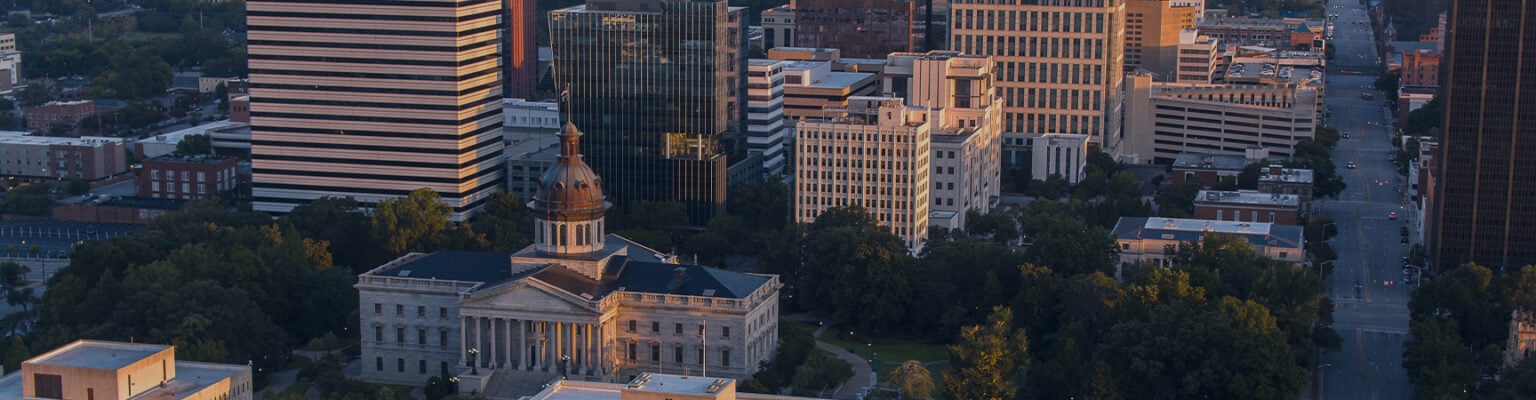
FCI Forrest City Low at a glance
FCI Forrest City Low is a low-security federal prison for men in Forrest City, Arkansas, with an adjacent minimum-security satellite camp. It held 1,882 people as of September 2026 — 1,615 at the institution and 267 at the camp — and is one half of the Federal Correctional Complex at Forrest City.
| Official name | Federal Correctional Institution, Forrest City Low |
|---|---|
| BOP code | FOR · complex FOX |
| Security level | Low; men |
| Population | 1,882: 1,615 at the institution, 267 at the camp (as of September 2026) |
| Visiting | Saturdays, Sundays and federal holidays, 8:00 a.m.–3:00 p.m. |
| Inmate mail | FCI: Inmate Name & Register Number · FCI Forrest City Low · Federal Correctional Institution · P.O. Box 9000 · Forrest City, AR 72336 Camp: Inmate Name & Register Number · FCI Forrest City Low · Federal Correctional Institution · Satellite Camp · P.O. Box 8000 · Forrest City, AR 72336 |
| Send money | Lockbox · Western Union (code city FBOP, DC) · MoneyGram (receive code 7932) |
| Phone | 870-630-6000, institution and camp · Fax 870-494-4496 |
| Street address | 1400 Dale Bumpers Road, Forrest City, AR 72335 · camp 1340 Dale Bumpers Road · Saint Francis County |
| Judicial district | Eastern District of Arkansas |
| BOP region | South Central |
| Special Housing Unit | Yes · visits by video, Mondays only |
| RDAP | Yes at the institution · the camp is not on the Bureau’s RDAP list |
| UNICOR | Yes |
| Camp | Minimum-security satellite camp · 267 men |
On this page
The institution sits in Saint Francis County in the Arkansas Delta, about 45 miles west of Memphis, in the Bureau’s South Central Region, and is one of the federal prisons in Arkansas, next to FCI Forrest City Medium. The low, the camp and the neighboring medium-security prison stand at three different street addresses on the same road.

Forrest City has two federal prisons and a camp
The Forrest City campus holds two federal prisons and a camp: FCI Forrest City Low, its satellite camp and FCI Forrest City Medium. Settle which one holds the person before you send anything: the three take different mail, and two of them answer different telephones.
| Facility | Code | Street address | Telephone | Inmate mail |
|---|---|---|---|---|
| FCI Forrest City Low (this page) | FOR | 1400 Dale Bumpers Road | 870-630-6000 | P.O. Box 9000, 72336 |
| Forrest City satellite camp | FOR | 1340 Dale Bumpers Road | 870-630-6000 | P.O. Box 8000, 72336 |
| FCI Forrest City Medium | FOM | 1301 Dale Bumpers Road | 870-494-4200 | P.O. Box 3000, 72336 |
The street addresses are those in the directions attachment to the complex visiting supplement; the post office boxes and telephone numbers are the Bureau’s. The Bureau’s public roster prints 1400 Dale Bumpers Road against all three codes, which is why almost every directory site repeats one address for the whole campus.
Most of what the Bureau publishes for this prison is a complex document: the visiting supplement, the handbook and the commissary list all carry FOX or FCC headings and govern the medium and the camp too. A handful of provisions inside them apply to one component only, and the sections below name them. When a press release or an Inspector General product says “FCC Forrest City” it means all three facilities at once.
What is the security level at FCI Forrest City Low?
FCI Forrest City Low is a low-security institution, and the camp beside it is minimum security. They share a commissary list, a handbook and a telephone number, but they are different places to serve a sentence, and which one someone lands in is decided before they arrive.
The Bureau describes this place on its own page as “a low security federal correctional institution with an adjacent minimum security satellite camp.” Our guide to the intake process covers the first days after arrival, and how to prepare for prison covers what to do before a self-surrender date.
Whether someone goes to the institution or the camp turns on a security point score and on whether any Public Safety Factor applies under the Bureau’s security designation rules. A Public Safety Factor overrides the point total: it is what keeps a person out of a camp no matter how low they score. The court record here shows how hard it is to undo. In Taylor v. Yates, a man serving eighteen years at this institution argued under 28 U.S.C. § 2241 that the Bureau had wrongly treated his Hobbs Act robbery conviction as violent, giving him a Greatest Severity factor that kept him out of a camp. The Eastern District of Arkansas recommended dismissal without prejudice, holding that a classification challenge is not cognizable in habeas at all: habeas reaches the fact or duration of custody, and where a sentence is served belongs in a civil action. No. 2:21-cv-00112 (E.D. Ark. Jan. 9, 2023).
The same court has drawn that line twice more: a First Step Act accommodation claim from this institution failed for want of habeas jurisdiction in Burchard v. Garrett, No. 2:24-cv-00160 (E.D. Ark. Nov. 8, 2024), and a prerelease-custody claim went the same way in Durham v. Humphrey, No. 2:26-cv-00027 (E.D. Ark. Apr. 8, 2026). A Public Safety Factor is challenged through the unit team, the administrative remedy program and, where the underlying record is wrong, the sentencing court. Choosing the wrong vehicle costs months.
The prerelease half of that question has since been settled above this court. Denying reconsideration in Durham on May 21, 2026, the judge said he had to apply the law as it stood and noted a pending Eighth Circuit appeal that might change it. The Eighth Circuit decided it on June 30, 2026. In Osorio-Calderon v. Warden, FCI Sandstone, No. 25-3090, it held that the First Step Act’s instruction that the Bureau “shall transfer eligible prisoners” into prerelease custody must be read together with 18 U.S.C. § 3621(b), under which a designation of the place of imprisonment “is not reviewable by any court,” and that the distinction between the two is “illusory.” It affirmed the dismissal and held that § 3621(b) forecloses mandamus as well. That binds every federal court in Arkansas.
Who are the notable inmates at FCI Forrest City Low?
No widely known prisoner is held at FCI Forrest City Low now; the two people below were once held here. Their register numbers are printed so you can check them in the Bureau’s Inmate Locator.
| Name | Status | Case |
|---|---|---|
| Victor Hill | Former. Reported here May 15, 2023; moved to community confinement March 18, 2024; register number 41909-509, actual release date April 11, 2024 | Sheriff of Clayton County, Georgia; 18 months for violating the civil rights of detainees held in restraint chairs |
| Michael Buck | Former. At the Forrest City institution in March 2025; register number 21190-045 is now recorded at FCI Sandstone, Minnesota, projected release July 7, 2045 | 300 months, imposed April 2, 2026 by Chief Judge Kristine G. Baker, for threatening a federal judge, a federal law enforcement officer and their families |
The Buck case also shows what reaches the inside of the prison. The United States Attorney for the Eastern District of Arkansas recorded that a surreptitious recording made inside the institution in March 2025 captured him “admitting that he has used a contraband prison phone to locate his victims and that he has already called one of them.” A contraband cellphone in a federal prison in Forrest City was used to find the family of a federal judge.
Charles “Chuck” Wright, the former sheriff of Spartanburg County, South Carolina, who surrendered on August 11, 2026, to begin a 41-month sentence, is held at FCI Lewisburg in Pennsylvania, not here: the Bureau’s records place register number 19780-512 there, with a projected release date of June 29, 2029. Listings that place him at FCI Forrest City Low are out of date.
How do I find someone at FCI Forrest City Low?
To find someone at FCI Forrest City Low, use the Bureau’s free public Inmate Locator on bop.gov. Search by the eight-digit register number if you have it: the locator matches the committed name on the judgment, not a nickname. It covers everyone in federal custody since 1982: for someone still held it gives the facility and a projected release date, and for someone released it shows “Not in BOP Custody as of” and a date, with no facility.
Read the answer carefully. The screen gives the institution’s name, and the two on this campus differ by a single word: “Forrest City Low FCI” is this institution and its camp, “Forrest City Medium FCI” the medium-security prison next door (codes FOR and FOM in the Bureau’s records, with FOX for the complex). Someone at the Medium is not reachable at the addresses on this page. A blank result usually means state rather than federal custody, pretrial detention under the U.S. Marshals Service, or a name on the judgment that differs from the one in daily use. See how register numbers work.
How do I write to someone at FCI Forrest City Low?
Letters to someone at FCI Forrest City Low go to P.O. Box 9000, and letters to someone at its satellite camp go to P.O. Box 8000, both in the 72336 ZIP code rather than the 72335 of the street address. Put the committed name and register number on the first line; mail without a register number cannot be matched to anyone and goes back to the sender without a rejection notice.
| For someone at the institution | For someone at the satellite camp |
|---|---|
| Inmate Name & Register Number FCI Forrest City Low Federal Correctional Institution P.O. Box 9000 Forrest City, AR 72336 | Inmate Name & Register Number FCI Forrest City Low Federal Correctional Institution Satellite Camp P.O. Box 8000 Forrest City, AR 72336 |
Use those two blocks, which the Bureau publishes on this facility’s own page. The complex’s Admission and Orientation Handbook (2026) prints a return-address table that is wrong for Forrest City: it tells people here to write “FCC Complex (Low), P.O. Box 26020, Forrest City, AR 77720,” with 26040 for the medium and 26030 for the complex. Those boxes belong to the Federal Correctional Complex at Beaumont, Texas, and 77720 is a Beaumont ZIP code. Forrest City’s boxes are 9000, 8000 and 3000.
The mailroom rules here are strict enough that ordinary letters bounce. From the same handbook: every incoming envelope and every sheet of paper inside it must be white, and anything else goes back to the sender. Glitter, stickers, lipstick, marker, oily substances, stains and perfume all cause rejection, as do padded envelopes. Address labels are not accepted on either line — the address must be “either in ink or through address ink stamp.” And greeting cards are gone: “Family members will be required to photocopy cards on white paper only.” Our guide to writing to someone in federal prison covers what gets rejected and why, and the Bureau’s correspondence regulations set the national rules.
Books are one of the few places where the low is treated better than the medium next door. The handbook allows magazines and softback or hardback books to be “sent from domestic addresses for inmates at the Low and Minimum-security institutions,” while at the medium everything must come from a publisher or bookstore. A package must be marked “AUTHORIZED BY BUREAU POLICY” on the outside or it is refused.
Legal mail is different: opened only in front of the person it is addressed to and not read, but only if the sender is clearly identified on the envelope and the front is marked “Special Mail — Open only in the presence of the inmate.” An attorney letter without that marking is handled as ordinary mail and read. Our page on attorney-client communication in the Bureau of Prisons explains the marking. There is no mail service on weekends or holidays, and outgoing mail may be sealed at the low and the camp but not at the medium.
How do I send money to someone at FCI Forrest City Low?
Money for someone at FCI Forrest City Low goes to the Bureau’s national lockbox in Iowa or through one of two wire services, never to the prison’s address. All three routes need the committed name and the eight-digit register number.
| Route | Where it goes | When it posts |
|---|---|---|
| Postal money order, U.S. government check, cashier’s or certified check, or bank draft | Federal Bureau of Prisons Committed Name Eight-Digit Register Number Post Office Box 474701 Des Moines, Iowa 50947-0001 | A 15-day hold on non-U.S. postal money orders and non-government checks; 45 days on foreign instruments payable in U.S. dollars |
| Western Union Quick Collect | Code city FBOP, DC. Account number is the register number and last name, no spaces or dashes — 12345678DOE; attention line the full committed name | Two to four hours if sent 7:00 a.m. to 9:00 p.m. Eastern; otherwise by 7:00 a.m. next day |
| MoneyGram ExpressPayment | Receive code 7932, company name Federal Bureau of Prisons, Washington, DC. Up to $300 online | As Western Union; processed seven days a week including holidays |
No cash and no personal checks. If the committed name and register number are not on both the instrument and the envelope the funds go back, and anything else enclosed is destroyed rather than delivered. The Bureau staffs a deposit line at 202-307-2712, 8:00 a.m. to 4:30 p.m. Eastern. Our guide to sending money to a federal prisoner sets out what each route costs. Spending here is capped at $460 a month in two halves, so money beyond about $230 every two weeks simply sits in the account.
What are the visiting hours at FCI Forrest City Low?
Visiting at the institution and at the camp runs from 8:00 a.m. to 3:00 p.m. on Saturdays, Sundays and all federal holidays, and visitors may not be on institution property before 7:45 a.m. There is no weekday and no evening visiting. This is from complex institution supplement FOX 5267.09B, Visiting Regulations, dated August 19, 2025, which replaced the April 2023 version; the 2017 edition set the same hours. The Bureau’s visiting regulations set the national rules.
The Bureau’s Forrest City Low page offers the supplement as a download rather than a timetable. If visiting is ever suspended, the supplement says the Executive Assistant will update the institution page on bop.gov with a red banner indicating that visitation has been canceled. Check that page the day before you travel.
Visits for people in the Special Housing Unit are not in person. They run by closed-circuit television as a telephone or video conference, last one hour, happen on Mondays only, and must be requested by the incarcerated person and approved in advance by the SHU lieutenant. The Bureau’s special housing unit rules govern placement there.
Who can visit, and how many
- Five visiting points a month at the institution, one charged for each visit. A morning visit and an afternoon visit on the same day cost two points, so splitting a long drive across two sessions burns through the month twice as fast.
- The camp paragraph of the same supplement sets no points limit at all — it moves straight from hours to visitor numbers. If you are visiting the camp, ask the unit team in writing what the limit is rather than assuming it is five.
- Four adult visitors and five children at one time; more children need prior unit team approval.
- Visitor processing stops one hour before the count and one hour before visiting closes. Arriving at 1:30 p.m. on a Saturday will not get you in.
- A visitor may be on only one person’s visiting list, immediate family excepted. Visits can be terminated for overcrowding, volunteers first.
What visitors can wear and bring
Three rules here turn away visitors who otherwise dressed conservatively. Skirts and dresses must fall below the knee both standing and seated, with any split no higher than the knee. Wrist watches of any kind are barred, and so are purses and men’s wallets. Jackets, coats, gloves and scarves are prohibited; a light sweater is allowed only if it has no hood and no pockets. Also barred: see-through fabric, sleeveless shirts, form-fitting or stretch clothing, hats other than traditional religious headwear, camouflage, hooded sweatshirts, sunglasses and open-toe shoes — and at the low and the medium, no khaki and no shirt-and-pant combination.
You may carry in a small clear plastic purse no larger than eight inches square holding up to $20.00 in five- and one-dollar bills and change for the vending machines, infant items in a quantity usable during the visit, and life-sustaining medication, which is held at the officer’s station. Everything else stays outside, including strollers, food, gum, tobacco, toys, photographs, papers, writing implements and any electronic device. Lockers are provided only to visitors who arrived by cab or were dropped off.
Inside, one kiss and one embrace at the beginning and at the end are authorized and nothing else, and hands must stay in plain view. Vending purchases are made by the visitor and handed over unopened. Once a visitor leaves the visiting room the visit is over: you cannot step out and come back, and going to your car after completing the visitor form ends it too.
Identification and screening
State or government-issued photo identification is required, and the supplement is blunt: “If a visitor has no photo identification he/she will not be admitted into the institution.” Everyone completes a Notification to Visitor form, passes through a metal detector, and has their hand stamped with ultraviolet ink checked on the way in and out. All visitors are escorted and are subject to random Ion Spectrometry Device testing — the drug-residue swab that ends more federal prison visits than any other screening step. Bring documentation of any implanted plate, pin or pacemaker. See our guide to federal prison visitation and to searches, shakedowns and contraband.
The person you are visiting goes through more. Under the supplement’s inmate-attire paragraph he strips to t-shirt, boxer shorts and socks, is pat searched, and is issued a jumpsuit and bus shoes for the visit, his own clothes left on a numbered hook. Into the room he may carry only a plain wedding band, a religious medallion, eyeglasses, a handkerchief, a comb, life-sustaining medication and approved religious headwear.
Getting there
The complex sits about three miles outside the town. From Interstate 40, take Exit 239, head south on Highway 1B and turn left onto Dale Bumpers Road. The low is at the first parking lot on the left, and visitors park on its right-hand portion. For the camp, carry on toward the camp administration building; the parking lot is just before it. The medium is on the far right of the grounds. The nearest airports are Memphis, about 45 miles east, and Little Rock, about 90 miles west.
How do phone calls and email work at FCI Forrest City Low?
Phone calls at FCI Forrest City Low are placed only by the incarcerated person; there is no number that rings through to him. Telephones sit in each general housing unit and are available from 6:00 a.m. to 10:00 p.m. daily, under the complex handbook (2026), which also records the current national allowance of 510 minutes a month.
The Bureau’s telephone regulations, Program Statement 5264.09, issued September 3, 2026, set that figure and replaced the 2008 policy: 510 minutes per calendar month, 300 of them free to anyone eligible for First Step Act telephone incentives, and 210 more that anyone can buy after using up the first 300. A single call should generally not exceed 15 minutes. The extra minutes once granted in November and December belonged to the old policy and did not survive it. Listings that give 300 minutes with a 400-minute holiday allowance for this prison come from the 2016 handbook, which the Bureau still serves at an old address on its own website. Our guide to federal inmate phone calls has the national rules.
Two local details trip people up. The phone system runs on voice recognition, so a new arrival cannot call anyone until his voice is registered — and registration happens at Inmate Services, inside the laundry department, at an open house held Monday to Thursday from 11:30 a.m. to 12:00 noon. That is a half-hour window, four days a week. Second, everyone is issued a personal access code on arrival; sharing it, or dialing for someone else, is treated as circumventing telephone monitoring.
Third-party, credit-card and three-way calls are barred, and every call except a properly arranged legal call is recorded. Unmonitored attorney calls are set up through the case manager or the correctional counselor.
Electronic messaging runs on TRULINCS inside and CorrLinks outside. Contact-list requests are ordinarily processed within five working days, and someone without workstation access may change the list only once a month. The handbook adds a rule you will not find in national policy: “Telephone numbers to local motels are not authorized.” Our page on CorrLinks and TRULINCS explains the national contact-list limits, the system and its costs.
How does legal access work at FCI Forrest City Low?
Legal access at FCI Forrest City Low runs under the Bureau’s national policy, not a local one. Some federal prisons publish their own institution supplement on legal activities setting out law library hours and local procedure. Here the “Legal Activities” link on the Bureau’s page for this facility points at Program Statement 1315.08, the Bureau-wide policy, not at a Forrest City document. If a client tells you there is a local rule about law library access here, ask to see it.
That national policy changed materially in 2026. The Bureau’s legal activities rules, Program Statement 1315.08, issued May 7, 2026, rescinded the 2023 version and “[e]liminates requirement to maintain physical law libraries. Law library materials are now available to inmates via an electronic law library.” The attachments that used to list the books a prison had to stock were replaced by a resource list held on the Bureau’s intranet, which the public cannot see. The same policy created form BP-A1155, the E-Discovery Material Authorization, and added guidance on Bureau-provided stand-alone computers for reviewing electronic discovery.
Attorney visits are handled outside the ordinary visiting schedule, coordinated and supervised by unit management, and no visiting points are deducted. Legal documents must be approved by a unit management staff member beforehand; that staff member counts them, inspects them for contraband, hand-carries them into the visiting room, and counts and inspects them again at the end. Send a list ahead.
The visiting supplement adds: “Restriction of legal access should occur only when necessary to protect the safety and security of employees, inmates, or the public, even during a disruptive event. Upon approval of the Warden, attorney visits can continue even during significant events.” A lockdown does not automatically cancel an attorney visit here; it makes the visit a warden’s decision. Ask. Legal material that will not fit in a locker can be kept in “the unit’s legal property storage area,” arranged through the correctional counselor. Our page on the prison law library explains how access works.
What can people buy at the FCI Forrest City Low commissary?
People at FCI Forrest City Low can spend up to $460 a month at the commissary, but not as a single monthly allowance. The handbook (2026) states that “FCC Forrest City utilizes a bi-weekly commissary spending limit, where inmates revalidate on the 1st and 15th of each month,” and that in each cycle “inmates are authorized to spend up to $230.00 ($460.00 per month).” The handbook puts postage stamps, over-the-counter medications and ITS — the inmate telephone system — outside that limit. Only the first two of those survive national policy. Program Statement 4500.13 makes its own exclusion list exhaustive, in terms, and telephone credit is not on it, so phone time counts against the $460 rather than sitting beside it. An unspent first half does not roll into the second, and the total value of commissary items a person holds at any time is itself capped at $460.
Anyone on a spending restriction moves onto a personal calendar: the handbook sets the revalidation date at the fifth digit of the register number multiplied by three, plus one. Its worked example is 12345-678, whose fifth digit is 5, revalidating on the 16th.
The $460 matches national policy exactly. The Bureau’s trust fund rules, Program Statement 4500.13, issued May 7, 2026, raised the Bureau-wide limitation from $360 to $460 a month; the limit rises by $50 during the November and December holiday period, for no more than one validation period. Listings that give $360 for this prison are out of date, and one of them is the Bureau’s own: the file at this facility’s for_commlist.pdf address is a 2018 scan headed “MAXIMUM SPENDING LIMIT $360.00.” Older still, the 2016 handbook the Bureau has served at this facility’s address says “$290.00 per month.”
The shopping rules are printed in capitals across the top of the current list (2026): no substitutions or add-ons at the window, all sales final, and — this one costs two weeks — “IF YOU DO NOT SHOW AT THE WINDOW WHEN YOUR NAME IS CALLED, YOU WILL FORFEIT YOUR SHOPPING PRIVILEGE UNTIL YOUR NEXT SHOPPING DAY.” Access times rotate by unit and purchases are authorized by fingerprint. Twice a year the commissary shuts a week for inventory, in March and September.
The stock list also says something about the place. Category caps run to ten soups, five meat or fish items, three each of chips, cookies, crackers, candy and pastries, and one pair of shoes in nine months. Under the heading “LOCAL USE ONLY” it still sells a typewriter ribbon at $9.10, lift-off correction tape at $3.25 and a Swintec print wheel at $56.95 — which tells you how legal work still gets done here, in a prison whose law library the Bureau stopped requiring in May 2026. Our page on the federal prison commissary covers the national rules.
What programs are available at FCI Forrest City Low?
FCI Forrest City Low offers the Residential Drug Abuse Program at the institution, vocational training in eight trades, apprenticeships in five, UNICOR factory work and a long list of First Step Act programs.
RDAP and drug treatment
The institution is an RDAP site. The Bureau’s RDAP locations list (2026), printed inside the First Step Act Approved Programs Guide, names “FCI Forrest City – L (AR)” among the fifty-seven programs at fifty locations nationally.
It does not name the camp, although the same list names satellite camps in their own right wherever a camp runs its own program — SCP Cumberland, SCP Leavenworth, SCP Lewisburg, SCP McKean, SCP Edgefield and SCP Texarkana all appear separately. The Forrest City camp does not. Read that as the Bureau’s current published position rather than as a finding, and have the unit team confirm it in writing before anyone counts on an RDAP placement at the camp.
RDAP is a minimum nine-month modified therapeutic community delivered as a half-day program, and for people convicted of non-violent offenses completion can mean up to a year off the sentence under 18 U.S.C. § 3621(e), subject to the Bureau’s psychology treatment program rules. The handbook records that people are “ordinarily interviewed 42-24 months from release,” which is why referral timing matters more than families realize. Drug Abuse Education is compulsory where the presentence report documents prolonged drug use, a drug or alcohol contribution to the offense, a judicial recommendation for treatment, or a supervision violation, and refusing it caps performance pay at maintenance level. The Challenge Program “is not available at FCC Forrest City.”
Education, vocational training and UNICOR
Literacy is mandatory for anyone without a high school diploma or GED, and promotion in UNICOR or in any institution job beyond entry grade depends on completing it.
The vocational catalog is broader than at most low-security prisons. The handbook (2026) lists training in major appliance repair, basic diesel engine repair, building trades, Commercial Driver’s License, culinary arts, HVAC, business education and welding applications, with apprenticeships in carpentry, electrical, painting, plumbing and HVAC. A diploma or GED is required to enroll, and a CDL earned inside is one of the few credentials that converts directly into work on release. Our guides cover prison education and vocational training in more detail.
UNICOR operates here — both halves of the Bureau’s programs guide (2026) name this institution for Federal Prison Industries — and the waiting list runs on a published order. The handbook divides one master list into three: List 1 is previous UNICOR hires, List 2 is people in the Inmate Financial Responsibility Program with court-imposed fines over $1,000, and List 3 is everyone else. Pay runs from grade 5 to grade 1 premium at $0.23 to $1.15 an hour, plus a thirty-cent longevity premium. Refusing the financial responsibility program costs UNICOR entirely and caps performance pay at the maintenance level of $5.25.
Faith-based and reentry programming
Religious Services runs with staff chaplains alongside contract and volunteer representatives of various faiths, and the chaplain’s office coordinates religious diets and holiday observances. Psychology Services can be reached by electronic request, at open house, at mainline, on unit rounds or through any staff member in a crisis.
On First Step Act programming, the guide’s by-institution grid marks fifty-seven programs for this facility, from anger management and criminal thinking through parenting to a long list of productive activities. One entry needs a caution: the grid marks this institution for FPI Lean Basic Training, but the program’s own narrative entry — which controls where the two halves of the guide disagree — names ten institutions and this is not one of them. Everything else the guide records here is blanket permission: “may be offered at all BOP institutions.” Approval is not delivery.
What is daily life like at FCI Forrest City Low?
Daily life at FCI Forrest City Low starts with a 6:00 a.m. wake-up and runs on five counts, with weekday work call at 7:30 a.m.; the complex handbook (2026) sets separate meal times for each of the three facilities on the campus, and the times below are the low’s.
| Weekdays | Weekends and federal holidays | |
|---|---|---|
| Wake-up | 6:00 a.m. | |
| Breakfast | 6:00 a.m. | Announced by the control center |
| Work call | 7:30 a.m. | — |
| Lunch | 10:45 a.m. | Announced by the control center |
| Dinner | After the 4:00 p.m. count clears and moves have been called | |
| Counts | Midnight, 3:00 a.m., 5:00 a.m., 4:00 p.m. stand-up, 9:00 p.m. stand-up | The same, plus a 10:00 a.m. stand-up count |
| Telephones | 6:00 a.m. – 10:00 p.m. | |
| Television | 6:00 a.m. – 11:00 p.m. | 6:00 a.m. – midnight |
Two rows there are specific to the low. The last stand-up count is at 9:00 p.m. here and at the medium, against the handbook’s general figure of 10:00 p.m.; and television runs an hour later here than at the medium and the camp. The handbook is exact about what a count requires: “Each inmate must actually display flesh for all counts, even if the inmate must be awakened.”
Housing units are named alphabetically and are two-story, with unit team offices on the ground floor. Beds are made each weekday before work call, and the handbook specifies the fold: a white collar of about six inches, turned eighteen inches from the head of the bed, with hospital corners. At the low, nothing may sit on the desktop and exactly one picture and one religious book on top of the lockers. Recreation polices itself on a fixed scale: thirty days’ suspension for a first violation, ninety for a second, removal for a third.
Medical care starts with sick call, and the days it runs at the low are not the days it runs next door. Sick call and triage at the institution are on Monday, Tuesday, Wednesday and Friday from 6:00 to 7:00 a.m.; the medium runs Monday, Tuesday, Thursday and Friday from 6:15 to 7:15, and the camp from 6:30 to 7:00. There is no routine sick call on weekends or holidays — only emergency services, insulin clinics and pill line. The copayment is $2.00 for each requested visit, waived for anyone whose trust fund balance has not reached $6.00 in the previous thirty days. See medical care in federal prison.
New arrivals go on call-out to the chapel for the institution’s orientation program within four weeks, with a separate unit orientation inside seven calendar days of arrival.
What do inspectors say about conditions at FCI Forrest City Low?
The DOJ Office of the Inspector General has not conducted an on-site inspection of this facility.
The Inspector General reached this complex by video teleconference, not a site visit, for one Bureau-wide review. Its Impact of an Aging Inmate Population on the Federal Bureau of Prisons, Report 15-05 of May 2015, revised February 2016, covered thirteen institutions, and its methodology appendix says exactly how: “We visited eight institutions in person, and another five via video teleconference.” Forrest City was in the second group, and inmates were interviewed only at the eight visited in person. “Forrest City” appears once in the seventy-two-page report, in that appendix, and the report makes no finding about this complex.
Nothing is pending against this facility either. As of September 2026 the Inspector General’s ongoing work names three institution engagements — FCI Berlin, FCI El Reno and infrastructure oversight at FCI Estill — and none is here. Six Bureau-wide engagements are open: evaluations of lockdowns and modified operations and of medical intake; audits of drone mitigation, of how the Bureau buys and manages major food-service equipment, and of controls over inmate email; and oversight of the $5 billion provided by Public Law 119-21. None is an inspection of Forrest City. The District of Columbia’s Corrections Information Council has never inspected it either.
The 2023 PREA audit of the complex
FCC Forrest City was audited under the Prison Rape Elimination Act on July 11–13, 2023, by an independent auditor, Valerie Wolfe Mahfood, working under subcontract to PREA Auditors of America. The final report was submitted on August 26, 2023. It is one audit of the whole campus, also published on the medium-security prison’s page, so every figure below describes the complex, not the low alone. Six standards were exceeded, thirty-nine met, none unmet.
| Designed capacity of the complex | 2,944 |
|---|---|
| Population recorded on the audit form | 3,395 — about 115 percent of design capacity |
| Average daily population, prior 12 months | 3,344 |
| Over capacity at any point in the prior 12 months? | Yes |
| Inmate housing units | 28 |
| Staff who may have contact with inmates | 505 |
| Age range of the population | 19 to 80 |
On the first day of the on-site portion the complex held 3,411 people. Of those, 185 had disclosed prior sexual victimization during risk screening, 25 had reported sexual abuse in the facility and six identified as transgender or intersex. The count of people identifying as lesbian, gay or bisexual is recorded as “00,” and the auditor’s own note explains that “00 = A running count of this category of inmate is not tracked within the facility.” That zero records an absence of counting, not an absence of people.
In the twelve months before the audit the complex recorded nineteen allegations of sexual abuse — nine inmate-on-inmate and ten staff-on-inmate. None went to a criminal investigation, eighteen were investigated administratively and one both ways, and the administrative outcomes were seven unfounded, twelve unsubstantiated and none substantiated. Eleven sexual-harassment allegations were recorded in the same period, all administrative, none substantiated.
Sexual-abuse allegation counts
In May 2026 the Government Accountability Office published five years of per-institution allegation data, the first time the Bureau’s figures were broken out facility by facility. For this institution, the tables read:
| Alleged perpetrator | 2020 | 2021 | 2022 | 2023 | 2024 | Total |
|---|---|---|---|---|---|---|
| Another incarcerated person | 5 | 6 | 2 | 5 | 2 | 20 |
| A Bureau employee | 0 | 0 | 0 | 2 | 4 | 6 |
Three cautions come with those numbers, and each is GAO’s own. They are reported allegations, not findings: nationally, from 2014 through 2022, most ended unsubstantiated, meaning there was not enough evidence either way, and unsubstantiated does not mean false. The two rows are not additive — the first counts by the year an incident is said to have happened, from one Bureau system as of August 2025, the second by the year an allegation was reported, from a different system as of March 2025. And GAO does not adjust for population anywhere in the report, so no facility can honestly be ranked on these figures.
Contraband and staff prosecutions
The Inspector General’s public index carries more criminal cases from this complex than from most federal prisons of its size, and the pattern is consistent: staff paid to carry things in. The two most recent were sentenced on August 19, 2026, by United States District Judge Brian S. Miller. Robert Cochran, 37, a correctional officer, admitted taking approximately $58,775 from the friends and families of prisoners to bring in rolling papers, tobacco, sunglasses and over-the-counter drugs, and was filmed leaving bags of contraband in an office for a prisoner to collect. Tejuana Dillard, 42, an officer for thirteen years, received $91,788 to supply contraband cigarettes to two prisoners through 2020. Each received thirty months. They were not isolated: a former officer got three years’ probation in November 2025, another thirty-three months in November 2023, and two more twelve months and a day in 2020.
Contraband telephones run through the habeas petitions this prison generates, and the sanction is heavy. In Dent v. Humphrey the hearing officer here found a man guilty of possessing a hazardous tool after a cell phone and charger were found in a search, and imposed thirty days of disciplinary segregation, 180 days’ loss of visitation and the loss of forty-one days of good-conduct time. The court held the Wolff v. McDonnell requirements met, that the incident report alone supplied the “some evidence” a disciplinary finding needs, and that forty-one days is authorized for a Greatest Severity act under 28 C.F.R. § 541.3. No. 2:25-cv-00102 (E.D. Ark. July 28, 2025). A second petition lost forty-one days for the same offense and was dismissed for not finishing the administrative remedy process first. McNeil v. Garrett, No. 2:24-cv-00124 (E.D. Ark. Sept. 30, 2024).
A further case bears on damages suits. In Henson v. Tomar the court screened a claim that the institution’s clinical director had written a retaliatory incident report after the plaintiff filed administrative remedies and complained to the state medical board, and recommended dismissal with prejudice — not because the facts failed, but because after Egbert v. Boule there is no Bivens damages action for First Amendment retaliation at all. No. 2:22-cv-00200 (E.D. Ark. Dec. 27, 2022).
FCI Forrest City Low in the news
Recent news about FCI Forrest City Low centers on the 2026 sentences of two complex officers for contraband smuggling, a new handbook and commissary list, and a prisoner’s sentence for threatening a federal judge; older items concern officer sentences in 2023 and 2020, the 2023 PREA audit and a 2020 COVID-19 outbreak.
- August 2026 — two former correctional officers at the complex, Robert Cochran and Tejuana Dillard, were each sentenced to thirty months for contraband smuggling that had netted them $58,775 and $91,788.
- July 2026 — the Bureau issued a new Admission and Orientation handbook for the complex, dated July 21, and a new commissary list three days later.
- April 2026 — Michael Buck, then held at the Forrest City institution, was sentenced to twenty-five years for threatening a federal judge and a federal law enforcement officer and their families, having used a contraband prison telephone to trace them.
- November 2023 — a former correctional officer at the complex was sentenced to thirty-three months for bribery.
- August 2023 — the final report of the complex’s Prison Rape Elimination Act audit was submitted, recording a population of 3,395 against a designed capacity of 2,944.
- August 2020 — a guard at the complex was sentenced to twelve months and a day for smuggling tobacco and cellular telephones into the prison.
- April 2020 — a team from the Centers for Disease Control and Prevention was deployed to Forrest City to respond to what the Arkansas Democrat-Gazette described as a rapidly escalating COVID-19 outbreak at the complex.
Frequently asked questions about FCI Forrest City Low
What is FCI Forrest City Low?
FCI Forrest City Low is a low-security federal prison for men in Forrest City, Arkansas, with an adjacent minimum-security satellite camp. It held 1,882 people as of September 2026 — 1,615 at the institution and 267 at the camp. It is one half of the Federal Correctional Complex at Forrest City; the other half is FCI Forrest City Medium.
When can I visit someone at FCI Forrest City Low?
On Saturdays, Sundays and all federal holidays, 8:00 a.m. to 3:00 p.m., at both the institution and the camp, under complex supplement FOX 5267.09B (2025). Visitors may not be on institution property before 7:45 a.m., and processing stops one hour before visiting closes. There is no weekday or evening visiting.
What is the mailing address for FCI Forrest City Low?
Letters for someone at the institution go to P.O. Box 9000, Forrest City, AR 72336, and for someone at the camp to P.O. Box 8000, same ZIP, with the committed name and register number on the first line. The street address, 1400 Dale Bumpers Road in the 72335 ZIP code, is for visiting rather than mail. Money goes to the Bureau’s lockbox in Des Moines, Iowa.
How much can someone spend at the FCI Forrest City Low commissary?
$460 a month, drawn in two halves of $230, because the complex revalidates spending on the 1st and the 15th. That matches Program Statement 4500.13, which raised the national ceiling from $360 in May 2026. The handbook puts stamps, over-the-counter medications and telephone credit outside the limit, but the program statement’s exclusion list is exhaustive and telephone credit is not on it, so phone time counts against the $460. Sources stating $360 or $290 are quoting superseded documents.
Does FCI Forrest City Low have RDAP?
Yes at the institution. The Bureau’s list of Residential Drug Abuse Program locations (2026), printed inside the First Step Act Approved Programs Guide, names FCI Forrest City — L. It does not name the satellite camp, although it names six other satellite camps elsewhere, so a camp placement should not be assumed.
What is the difference between FCI Forrest City Low and FCI Forrest City Medium?
They are two separate federal prisons on one campus, with different security levels, telephone numbers and mailing addresses. The low is code FOR, at 1400 Dale Bumpers Road, answering 870-630-6000, taking mail at P.O. Box 9000. The medium is code FOM, at 1301 Dale Bumpers Road, answering 870-494-4200, taking mail at P.O. Box 3000. The Bureau’s roster prints one street address for both.
Can visitors wear a watch at FCI Forrest City Low?
No. Wrist watches of any kind are barred by the complex visiting supplement, and so are purses and men’s wallets, jackets, coats, gloves and scarves. A light sweater is permitted only if it has neither a hood nor pockets. Skirts and dresses must fall below the knee standing and seated. At the low and the medium: no khaki, and no shirt-and-pant combination.
Can you send books to someone at FCI Forrest City Low?
Yes, and this is one rule where the low is treated more generously than the medium next door. The handbook (2026) allows magazines and softback or hardback books to be sent from domestic addresses to people at the low and the camp, while at the medium everything must come from a publisher or bookstore. Packages must be marked “AUTHORIZED BY BUREAU POLICY.”
Why was my letter to FCI Forrest City Low returned?
Most often because of the color. The handbook requires every incoming envelope and every sheet of paper inside it to be white, and anything else goes back to the sender. Address labels are not accepted on either line. Glitter, stickers, lipstick, marker, stains, perfume and padded envelopes all cause rejection. Greeting cards are no longer accepted at all; photocopy the card onto white paper instead.
Has FCI Forrest City Low been inspected?
The DOJ Office of the Inspector General has not conducted an on-site inspection of this facility. Its 2015 review of the aging prison population reached the complex by video teleconference rather than a site visit, on the report’s own account. The District of Columbia’s Corrections Information Council has no inspection of this facility on record. The complex passed a Prison Rape Elimination Act audit conducted July 11–13, 2023, six standards exceeded and none unmet.
Is FCI Forrest City Low overcrowded?
The only public capacity figure covers the whole complex. The 2023 Prison Rape Elimination Act audit records a designed capacity of 2,944 for FCC Forrest City against a population of 3,395 on the audit form — about 115 percent — and answers “Yes” to whether the facility had been over capacity in the previous twelve months. No separate figure for the low is published.
How many minutes of phone calls does someone get at FCI Forrest City Low?
510 minutes per calendar month, under the handbook (2026) and Program Statement 5264.09 (2026), and a single call should generally not exceed 15 minutes. Of those 510 minutes, 300 come free to anyone eligible for First Step Act telephone incentives, and 210 more can be bought once those 300 are used up. There is no longer an extra November and December allowance.
Who is the most famous person held at FCI Forrest City Low?
No widely known prisoner is held here now. Victor Hill, the former sheriff of Clayton County, Georgia, served most of an 18-month civil rights sentence here from May 2023 before being moved to community confinement in March 2024 and released that April. Bureau records place no other well-known name here.
Problems at FCI Forrest City Low: where we can help
The issues that recur at this prison are visible in its own record: in the discipline cases the Eastern District of Arkansas keeps dismissing on procedure, in an audit that found the campus at 115 percent of its design capacity, and in a run of staff prosecutions for carrying contraband in. These are the ones we are asked about most:
- Disciplinary proceedings over contraband telephones, the charge behind both recent discipline petitions out of this institution. The reported sanction has run to thirty days in segregation, 180 days without visits and forty-one days of good conduct time, and the defenses that work are procedural and are used at the hearing rather than afterward.
- Finishing the administrative remedy program before going to court. Petitions from this institution have been dismissed for stopping short of it, and the clock is tight: a BP-9 within twenty calendar days of the incident, then twenty days to the Regional Director, then the General Counsel.
- Public Safety Factors and camp placement. A Greatest Severity factor overrides a low point score, and the court here has held that habeas is the wrong vehicle to challenge it. The work is in the classification record and the unit team. See federal prison transfers and our federal prison consulting services.
- First Step Act time credits — whether they are being earned, calculated and applied to the release date. After Osorio-Calderon that is a materially better question in this circuit than asking a court to order a halfway-house transfer under the Bureau’s placement procedures; see our federal prison early release practice.
- RDAP eligibility and the section 3621(e) year, including for anyone at the camp, where the Bureau’s current list shows no program.
- Medical care that is not happening. Sick call at the low runs four mornings a week for one hour and not at all on weekends, which is a narrow door for a population of 1,615. See medical care in federal prison and, where negligence has caused injury, Federal Tort Claims Act claims.
- Special Housing Unit placements that outlast their justification. A SHU placement here also converts visits into a one-hour video call on Mondays only.
- Mail and publication rejections, which here follow rules strict enough that ordinary letters bounce; rejections are appealable.
- Compassionate release under the Bureau’s reduction-in-sentence rules, and sentence computation errors measured against the Bureau’s sentence computation manual.
- Challenges to the conviction or sentence itself, through a direct appeal or a § 2255 motion.
One caution before a family files anything itself. A wife who brought a case in this court on her husband’s behalf under a general power of attorney was told that a non-lawyer may appear only for himself, and that a case improperly filed on behalf of another is a nullity that cannot be repaired by amendment. Christensen v. FCI Forrest City Low, No. 2:24-cv-00229 (E.D. Ark. 2025).
Elizabeth Franklin-Best, P.C. handles federal criminal defense, appeals and post-conviction matters nationwide, and advises families on Bureau of Prisons issues at institutions across the system. Call (843) 620-1100 or contact us to talk through a specific situation.
Christopher Zoukis, JD, MBA, the firm’s Managing Director, writes and maintains the federal prison policy material on this site. He is not counsel of record; legal representation is provided by Elizabeth Franklin-Best.
Sources and currency
Bureau of Prisons documents
- FCI Forrest City Low, Federal Bureau of Prisons, 2026. The Bureau’s facility page, with addresses, telephone, mailing blocks and the Legal Activities link.
- FCC Forrest City Admission and Orientation Handbook, Federal Bureau of Prisons, 2026. Daily schedule, counts, meals, mail, telephone and TRULINCS, commissary, programs, UNICOR and sick call.
- Institution Supplement FOX 5267.09B, Visiting Regulations, Federal Bureau of Prisons, FCC Forrest City, 2025. Hours, points, visitor numbers, dress code, screening, special housing visits, attorney visits and directions; replaced FOX 5267.09-02 (2023).
- FCC Forrest City Commissary List, Federal Bureau of Prisons, 2026. Spending limit, category caps, prices and shopping rules.
- FCC Forrest City Admission and Orientation Manual, Federal Bureau of Prisons, 2016. Superseded; the source of the obsolete $290 and 300-minute figures.
- FCC Forrest City Commissary List, Federal Bureau of Prisons, 2018. Superseded list headed with a $360.00 limit, still served at this facility’s address.
- Community Ties: Sending Money, Federal Bureau of Prisons, 2026. Deposit routes, holds and wire posting times.
- Inmate Legal Activities, Program Statement 1315.08, Federal Bureau of Prisons, 2026. Electronic law libraries and form BP-A1155; replaced the 2023 version.
- Trust Fund/Deposit Fund Manual, Program Statement 4500.13, Federal Bureau of Prisons, 2026. Sets the $460 commissary spending limit, its exclusions and the holiday increase.
- Inmate Telephone Regulations, Program Statement 5264.09, Federal Bureau of Prisons, 2026. Replaced the 2008 policy.
- First Step Act Approved Programs Guide, Federal Bureau of Prisons, Reentry Services Division, 2026. RDAP locations list, program narratives and the by-institution grid.
Audits and inspections
- PREA Facility Audit Report: FCC Forrest City, PREA Auditors of America, 2023. On-site audit of July 11–13, 2023, by Valerie Wolfe Mahfood, an independent auditor subcontracted by PREA Auditors of America; final report August 26, 2023.
- Federal Prisons: Improvements Needed to Prevent, Detect, and Address Sexual Abuse, U.S. Government Accountability Office, 2026. GAO-26-107343, with per-institution allegation tables.
- The Impact of an Aging Inmate Population on the Federal Bureau of Prisons, U.S. Department of Justice, Office of the Inspector General, Evaluation and Inspections Division, 2015. Report 15-05, revised in 2016; its methodology appendix records the Forrest City video teleconference.
- Ongoing Work, U.S. Department of Justice, Office of the Inspector General, 2026. The Inspector General’s list of engagements under way.
Court records
- Two Former Bureau of Prisons Correctional Officers Accused of Smuggling Contraband Each Sentenced to More Than Two Years in Federal Prison, U.S. Attorney’s Office, Eastern District of Arkansas, 2026. Robert Cochran’s and Tejuana Dillard’s thirty-month sentences.
- Osorio-Calderon v. Warden, FCI Sandstone, No. 25-3090 (8th Cir.), U.S. Court of Appeals for the Eighth Circuit, 2026. Opinion of June 30, 2026.
- Durham v. Humphrey, No. 2:26-cv-00027 (E.D. Ark.), U.S. District Court for the Eastern District of Arkansas, 2026. Docket, including the rulings of April 8 and May 21, 2026.
- Missouri Man Sentenced to 25 Years in Federal Prison for Threatening a Federal Judge and a Federal Law Enforcement Officer, U.S. Attorney’s Office, Eastern District of Arkansas, 2026. Michael Buck’s 300-month sentence.
- Former BOP Correctional Officer Pleaded Guilty to Bribery, U.S. Department of Justice, Office of the Inspector General, 2026.
- Former BOP Correctional Officer Pleads Guilty to Providing False Statements, U.S. Department of Justice, Office of the Inspector General, 2026.
- Dent v. Humphrey, No. 2:25-cv-00102 (E.D. Ark.), U.S. District Court for the Eastern District of Arkansas, 2025.
- Christensen v. FCI Forrest City Low, No. 2:24-cv-00229 (E.D. Ark.), U.S. District Court for the Eastern District of Arkansas, 2025.
- Former BOP Correctional Officer Sentenced for Receiving a Bribe by a Public Official, U.S. Department of Justice, Office of the Inspector General, 2025. The November 2025 probation sentence.
- Former BOP Correctional Officer Indicted for Bribery of a Public Official, U.S. Department of Justice, Office of the Inspector General, 2024.
- Burchard v. Garrett, No. 2:24-cv-00160 (E.D. Ark.), U.S. District Court for the Eastern District of Arkansas, 2024.
- McNeil v. Garrett, No. 2:24-cv-00124 (E.D. Ark.), U.S. District Court for the Eastern District of Arkansas, 2024.
- Former BOP Correctional Officer Indicted for Bribery of a Public Official and False Statements, U.S. Department of Justice, Office of the Inspector General, 2024.
- Former BOP Correctional Officer Indicted for Bribery, U.S. Department of Justice, Office of the Inspector General, 2023.
- Former BOP Correctional Officer Sentenced for Bribery, U.S. Department of Justice, Office of the Inspector General, 2023. The thirty-three-month sentence.
- Non-DOJ Individual Sentenced for Conspiring with a BOP Inmate and a Then BOP Correctional Officer to Distribute and Possess with Intent to Distribute a Controlled Substance, U.S. Department of Justice, Office of the Inspector General, 2023.
- Non-DOJ Individual Pleaded Guilty to Conspiring with a BOP Inmate and a Then BOP Correctional Officer to Distribute and Possess with Intent to Distribute a Controlled Substance, U.S. Department of Justice, Office of the Inspector General, 2023.
- Former BOP Correctional Officer Pleaded Guilty to Bribery of a Public Official, U.S. Department of Justice, Office of the Inspector General, 2023.
- BOP Inmate Pleaded Guilty and Sentenced for Possession of Controlled Substance with Intent to Distribute, U.S. Department of Justice, Office of the Inspector General, 2023.
- BOP Inmate Pleaded Guilty and Sentenced for Bribery of a Public Official, U.S. Department of Justice, Office of the Inspector General, 2023.
- Taylor v. Yates, No. 2:21-cv-00112 (E.D. Ark.), U.S. District Court for the Eastern District of Arkansas, 2023. Recommended disposition of January 9, 2023.
- Henson v. Tomar, No. 2:22-cv-00200 (E.D. Ark.), U.S. District Court for the Eastern District of Arkansas, 2022. Recommended disposition of December 27, 2022.
- BOP Inmate Sentenced for Bribery of a Public Official, U.S. Department of Justice, Office of the Inspector General, 2022.
- BOP Inmate Indicted and Arrested for Conspiracy to Distribute and Possess with Intent to Distribute a Controlled Substance and Bribery of a Public Official, U.S. Department of Justice, Office of the Inspector General, 2021.
- Former Prison Guard Sentenced to Prison For Smuggling Contraband, U.S. Department of Justice, Office of the Inspector General, 2020.
- Former BOP Correctional Officer Sentenced for Bribery of a Public Official, U.S. Department of Justice, Office of the Inspector General, 2020.
News and other sources
- CDC to Aid Response at Forrest City Prison, Northwest Arkansas Democrat-Gazette, 2020. By John Moritz.
- 18 U.S.C. § 3621(b) and (e), Imprisonment of a convicted person, U.S. Code (Legal Information Institute).
- 28 U.S.C. § 2241, Power to grant writ, U.S. Code (Legal Information Institute).
- 28 C.F.R. § 541.3, Prohibited acts and available sanctions, Code of Federal Regulations (Legal Information Institute).
Sources reviewed September 2026.
Reviewed for legal accuracy by Elizabeth Franklin-Best, Esq., Principal Attorney·September 2026