
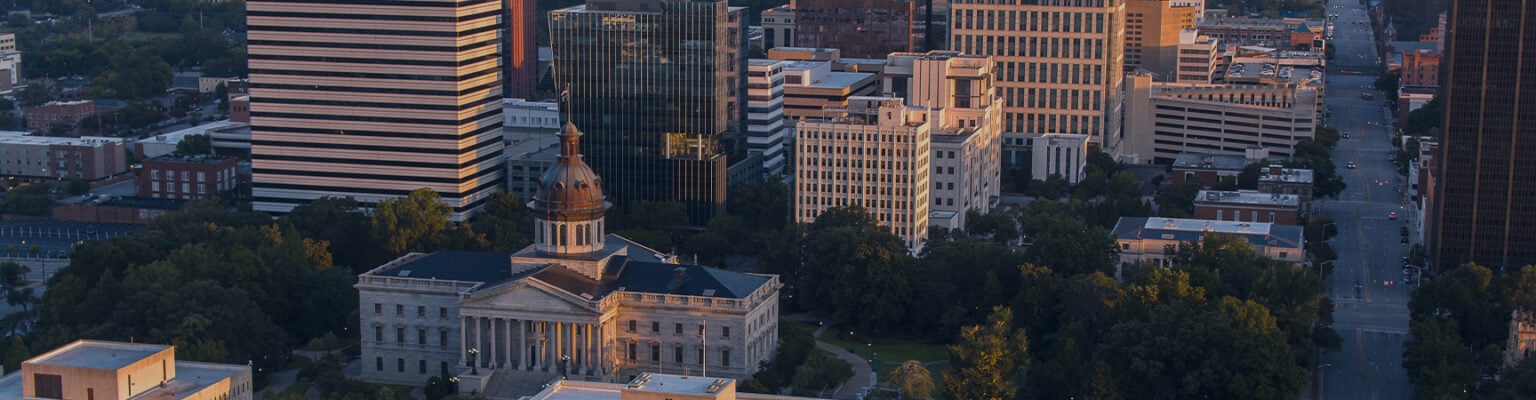
FCI Petersburg Low at a glance
FCI Petersburg Low is a low-security federal prison for men at 1100 River Road in Hopewell, Virginia, with a minimum-security satellite camp beside it, inside the Federal Correctional Complex at Petersburg. The Bureau of Prisons announced on July 1, 2026, that it would close the low-security institution. As of September 2026, all 216 people it reports under this code are at the camp.
| Official name | Federal Correctional Institution, Petersburg Low |
|---|---|
| BOP code | PET · complex PEX |
| Security level | Low; men |
| Status | Closing (announced July 1, 2026) · no closure date published · see closure |
| Population | 216 (as of September 2026) · all reported at the satellite camp |
| Visiting | Weekends and federal holidays, 8:00 a.m.–3:00 p.m. · see visiting hours |
| Inmate mail | Institution: Inmate Name & Register Number · FCI Petersburg Low · Federal Correctional Institution · P.O. Box 1000 · Petersburg, VA 23804 Camp: Inmate Name & Register Number · FCI Petersburg Low · Federal Correctional Institution · Satellite Camp · P.O. Box 1000 · Petersburg, VA 23804 |
| Send money | Lockbox · Western Union (code city FBOP, DC) · MoneyGram |
| Phone | 804-733-7881 · Fax 804-863-1510 |
| Street address | 1100 River Road, Hopewell, VA 23860 · Hopewell City |
| Judicial district | Eastern District of Virginia |
| BOP region | Mid-Atlantic |
| Special Housing Unit | None · segregation is served at FCI Petersburg Medium |
| Medical care level | Level 2 |
| Mental health care level | Level 2 |
| RDAP | Listed · see RDAP |
| UNICOR | Yes · print plant |
| Camp | Yes · minimum security; no code of its own |
On this page
The camp is still running. The prison the Bureau said it would close appears to have emptied, and the Bureau has published nothing about where the people held there went. The Bureau records the address in Hopewell City, though local reporting places the complex in Prince George County. The institution is one of the federal prisons in Virginia, shares its campus with FCI Petersburg Medium and falls under the Bureau’s Mid-Atlantic Region.

Is FCI Petersburg Low closed?
FCI Petersburg Low is not formally closed: the Bureau announced its closure on July 1, 2026, and no Bureau document says it has shut. But the low-security institution’s published population is now zero, and the only people the Bureau reports at this address are at the camp.
What the Bureau announced, and what it did not
The press release of July 1, 2026, says the Bureau “will close the following institutions” and lists six. One is “Petersburg FCI Low.” The stated reasons are “decades of deferred maintenance and extreme staffing challenges,” against a maintenance backlog the release puts above $4 billion, and staff here “will be transferred to other units onsite or nearby for continued employment with the BOP.” Director William K. Marshall III is quoted: “We are a Bureau that acts.”
For two of the six the release names the satellite camp expressly — “Big Spring FCI and Satellite Camp,” “La Tuna FCI, FSL (Federal Satellite Low), and Satellite Camp” — and the Lexington entry is itself a camp. The Petersburg entry names the institution and stops; the camp here is not on the list. That is an argument from the text of the release, not a Bureau statement that the camp will stay open — but it matches what the population report shows.
The population, month by month
Four dated figures exist, and together they describe a prison emptying over ten weeks.
| Date | What was published | Source |
|---|---|---|
| June 21, 2026 | “a low-security facility with about 600 inmates” | WRIC, citing the Bureau |
| July 1, 2026 | 459 at FCI Petersburg Low on the day of the announcement | Forbes, reporting the six closures |
| August 13, 2026 | 360 total under code PET | The Bureau’s own facility page |
| September 10, 2026 | 216 total, in one line named “Petersburg FCI-Camp.” No line for the institution | The Bureau’s population report |
The Medium next door did not absorb them. Its own count went from 1,643 in August to 1,596 in September — down, not up. Whoever left this institution over the summer left Virginia.
How this closure compares with the other five
Ten weeks after the announcement, only two of the six have visibly changed, and this is one of them. Populations below are from the Bureau’s population report as of September 2026; roster status is from the Bureau’s roster.
| Named for closure | Still on the roster? | Population, September 2026 |
|---|---|---|
| FCI Beaumont Low | Yes | 1,834 — 1,317 at the FCI, 517 at the camp |
| FCI Big Spring and camp | Yes | 506 — 413 at the FCI, 93 at the camp |
| FCI La Tuna, FSL and camp | Yes | 558 — 437 at the FCI, 121 at the camp |
| FMC Lexington satellite camp | Yes | 1,262 — 1,064 at the medical center, 198 still at the camp |
| FCI Petersburg Low | Yes | 216 — all 216 under “Petersburg FCI-Camp.” No line for the institution |
| FCI Taft | No. Removed from the Bureau’s roster, and its facility page is gone | 0. The release described it as already non-operational |
Taft is the only one the Bureau has removed from its systems. Petersburg Low is the only one still on the roster whose population report no longer returns a line for the institution named for closure. Two other changes announced the same day have not happened at all: Morgantown and Duluth were to become Federal Satellite Lows, and both still carry minimum security and the facility type “Federal Prison Camp.”
As of September 2026, the Bureau’s page for this facility carries no closure notice, banner or alert; it reports the population as one figure, “216 Total Inmates,” without saying that all 216 are at the camp. In short, the Bureau has said it will close this institution, its published population has fallen to zero, the camp still holds 216 people, and no closure date, notice or destination list has been published.
Where did the people held at FCI Petersburg Low go?
The Bureau has not said where the people held at FCI Petersburg Low went, and it was asked directly. On July 2, 2026, WRIC reported that the release “makes no mention of what will happen to those currently serving time at any of these closing prisons,” and that when the station put the question to the Bureau, “[a] spokesperson said that the information contained within the release was all that could be shared at this time.” Nothing further has been published since.
What can be said is that the receiving institutions were not nearby: the Medium’s population fell over the same period, so it did not take them. Across all six closures Forbes put the total at “nearly 4,000 inmates” who would have to move “to institutions across the federal system.” If your relative was here, run the Inmate Locator today, and run it again before you mail anything or get in a car.
What the law says about where someone is sent
Congress wrote a distance rule into the First Step Act and then left it without a remedy. Under 18 U.S.C. § 3621(b) the Bureau “shall designate the place of the prisoner’s imprisonment” and shall, subject to bed availability, security designation, program needs, medical and mental health needs, faith-based requests, the sentencing court’s recommendations and “other security concerns,” place the person “in a facility as close as practicable to the prisoner’s primary residence, and to the extent practicable, in a facility within 500 driving miles of that residence.” The same subsection tells the Bureau to keep moving people closer to home even when they are already inside that radius.
The last sentence of the subsection decides what anyone can do with it: “Notwithstanding any other provision of law, a designation of a place of imprisonment under this subsection is not reviewable by any court.” A designation cannot be appealed. It can be argued about and it can be changed — the Bureau “may at any time… direct the transfer of a prisoner from one penal or correctional facility to another” — but the forum is the Bureau, not a judge.
What a transfer changes
It is slow and it is quiet. People move by bus or through the Justice Prisoner and Alien Transportation System, and rarely go straight to the new prison: many spend days or weeks passing through federal transfer centers and county jails. Telephone and email access is limited or gone for that stretch, property arrives later than the person does, and the locator may show a transfer center (“Oklahoma City FTC”, for example); it never prints “IN TRANSIT” — a record the Bureau marks that way shows as “NOT IN BOP CUSTODY”.
- Mail is the first trap. Under the Bureau’s correspondence rules, general correspondence is forwarded for 30 days after a transfer and then returned to the sender, while properly marked special and legal mail keeps being forwarded. An ordinary letter posted five weeks after the move comes back; a marked attorney letter does not.
- Visiting does not transfer. Each institution runs its own approved list, background checks, point system, dress code and identification rules, so a family who has visited Petersburg for years should read the new institution’s supplement before driving anywhere. If the new prison is hundreds of miles away, ask the unit team in writing about additional visiting points for long-distance visitors; most institutions have a provision for it, and Petersburg’s own supplement did.
- Release dates and credits need checking. The January 2023 handbook says a case is reviewed for halfway house placement “17-19 months prior to their release date” and, once the release address is approved, that the referral packet must go in “no less than 60 days prior to the requested RRC placement date”; a transfer resets the case manager, not the clock, so put the release address and the review date in writing to the new counselor early. First Step Act credits are earned by completing a program, not by starting one — “No credits will be awarded for partial completion” — and RDAP is not offered everywhere; this complex’s handbook says interviews typically fall 24 to 36 months before release.
- A pending remedy or claim does not pause. Keep copies and dates, and if a deadline slips because the paperwork was in a property box on a bus, say so in writing and ask for an extension for delay beyond the person’s control. Anything that happened at Petersburg stays a Petersburg claim, and a Standard Form 95 is not accepted at the institution in any event — it goes to the Regional Counsel at the Mid-Atlantic Regional Office.
Our guides to federal prison transfers and the administrative remedy process cover the machinery in more detail.
What is the security level at FCI Petersburg Low?
FCI Petersburg Low is a low-security institution, and the satellite camp beside it is minimum security. They share a post office box, a commissary sheet, a telephone number and one visiting supplement, but they are different places to serve a sentence, and which one a person lands in is decided before they arrive — by the security point score on the designation form and by whether any Public Safety Factor applies under the Bureau’s security designation rules. A Public Safety Factor overrides the point total, which is what keeps someone out of a camp no matter how low they score. That argument starts with the presentence report, because the report is the document the designation is built from.
The camp has a working identity the security label does not capture: its people run the complex’s utilities. The January 2023 handbook records that the Power House “operates at the ‘Camp only'” — steam and hot-water boilers, chillers, generators, sewage grinding and pumping equipment and the elevated water tanks, 24 hours a day, seven days a week — and that the Trash Crew is camp-only and requires a current class B commercial driver’s license. Camp residents wear green; the Low and the Medium wear khaki.
There is no Special Housing Unit at FCI Petersburg Low. Inspectors found it in 2016 and again in 2022 — “Petersburg Low does not have a SHU. Instead, inmates are sent to the neighboring medium security facility.” The same is true of suicide watch, run in observation cells at the Medium with follow-up care back here afterward. A person placed in segregation leaves this institution to serve it, which changes visiting, mail handling and what publications may be received.
Who are the notable inmates at FCI Petersburg Low?
No well-known person is recorded at FCI Petersburg Low now: the names often attached to it have all left, and the table gives each one’s register number so you can check the Inmate Locator. Chad Arrington, Juelz Santana, Mark Siljander, Tarik Shah and Sabri Benkahla, often listed under this camp, were each released between 2013 and 2023, and the Bureau’s last record for each is a halfway house, not this prison; no public document gives their register numbers, so their records are matched by name and release date only.
| Name | Register number | What the Bureau’s records show, September 2026 |
|---|---|---|
| Richard Chandler | 44076-074 | Not at Petersburg. Held at FCI Sandstone, Minnesota; projected release June 8, 2032 |
| Roger Loughry Sr. | 43691-037 | Not at Petersburg. His sentence closed on January 30, 2025, at FCI Butner Low, North Carolina, under the release code the locator uses for a death in custody |
| Marion S. Barry Jr. | 14856-016 | Released April 23, 1992, from FCI Loretto in Pennsylvania. He died in 2014 |
| Deric Lostutter | 21103-032 | Released September 27, 2019, and the Bureau’s last recorded facility is this one |
| Abdelhaleem Hasan Ashqar | 41500-054 | Released June 13, 2017, and the Bureau’s last recorded facility is this one |
Bob McDonnell, the former Governor of Virginia, never served a day in federal prison. He was sentenced on January 6, 2015, to two years, with the judge recommending a Petersburg facility close to his home, but the sentence was held while he appealed; the Supreme Court vacated his convictions on June 27, 2016, in McDonnell v. United States, 579 U.S. 550 (2016), holding that arranging a meeting or hosting an event is not by itself an “official act”; and the Justice Department moved to dismiss the charges on September 8, 2016. The offense was public corruption. The locator cannot be searched by facility, so no list of this kind is complete.
How do I find someone at FCI Petersburg Low?
To find someone at FCI Petersburg Low, search the Bureau’s public Inmate Locator by the eight-digit register number, which is exact, rather than by name, which is not. Then read the answer twice, because the screen separates the two institutions here by one word: this one and its camp appear as “Petersburg Low FCI”, the Medium as “Petersburg Medium FCI”. See how register numbers work for what each block of digits means.
Right now a result naming this institution deserves a second look, because with the published population at zero a “Petersburg Low FCI” result may reflect a record that has not caught up with a move, and the locator gives no way to tell whether someone is at the camp or elsewhere. Call 804-733-7881 before you post mail or travel. If the locator finds no one, the usual reasons are state rather than federal custody, pretrial detention under the U.S. Marshals Service, or a committed name spelled differently from the one in daily use; a facility type of RRM means a halfway house or home confinement, not a prison.
How do I write to someone at FCI Petersburg Low?
Write to someone at FCI Petersburg Low at P.O. Box 1000, Petersburg, VA 23804, using the block below exactly, with the committed name and the eight-digit register number on the first line. The institution and the camp share one post office box; the only difference between the two is the line reading “Satellite Camp.”
| For someone at the institution | For someone at the satellite camp |
|---|---|
| Inmate Name & Register Number FCI Petersburg Low Federal Correctional Institution P.O. Box 1000 Petersburg, VA 23804 | Inmate Name & Register Number FCI Petersburg Low Federal Correctional Institution Satellite Camp P.O. Box 1000 Petersburg, VA 23804 |
Those are the blocks the Bureau publishes on its facility page. The complex’s 2023 inmate information handbook gives a different second line — “Federal Correctional Complex” — and insists that “[t]he name of the institution MUST be spelled out (Federal Correctional Complex) and not abbreviated.” The two Bureau documents do not agree with each other. Neither leaves out the register number, which is the part that routes the letter.
On three points the Low and the camp are treated better than the Medium next door under the Bureau’s mail rules and the handbook. Outgoing mail may be sealed by the writer: “Outgoing mail for inmates in the Low institution and the Camp may be sealed. Inmates housed in the Medium institution, including the Special Housing Unit, may not seal their outgoing general correspondence.” Paperbacks and magazines may come from any sender, and hardcovers and newspapers only from a publisher, bookstore or book club; at the Medium soft covers are held to those three sources too, which catches people from here who are housed in the Medium’s segregation unit. And at the camp, legal and special mail is collected at the officer’s station at 6:00 a.m. on weekdays, against 11:00 to 11:30 a.m. at the Low.
Everything else is stricter than families expect. All incoming general correspondence is photocopied and what reaches the person is the copy — in color, except personal letters, which arrive in black and white; originals are kept 30 days and then destroyed. Five single-sided sheets of white 8.5 by 11 paper per envelope, no card stock unless it is a commercial greeting card. Glitter, stickers, lipstick, crayon, marker, oily substances and perfume all cause rejection, and so may a printed address label. No stamps, stationery, blank cards or spiral-bound books come in by post at all.
Legal mail is opened in front of the addressee and not read, but only if it is marked, and the handbook states the consequence: “Without adequate identification as Special Mail, staff may treat the mail as general correspondence. In this case, the mail may be opened, read, and inspected.” Money enclosed in a letter is returned; the handbook is absolute that “[a]t no time will funds (i.e., money order, cash, check) be accepted thru the mail at this institution.” See attorney-client communication in the Bureau of Prisons and our guide to writing to someone in federal prison.
How do I send money to someone at FCI Petersburg Low?
Money for someone at FCI Petersburg Low goes through the Bureau’s national lockbox in Iowa, or by wire. Both routes need the committed name and the eight-digit register number, and nothing goes to the prison’s own address.
| Route | Where it goes | How fast it posts |
|---|---|---|
| Postal money order | Federal Bureau of Prisons Committed Inmate Name Eight-Digit Register Number Post Office Box 474701 Des Moines, Iowa 50947-0001 | A U.S. postal money order posts without a hold. Every non-postal money order and non-government check through the lockbox carries an automatic 15-day hold |
| Western Union Quick Collect | Code city FBOP, DC. Enter the eight-digit register number with no spaces or dashes, immediately followed by the last name; put the committed full name on the attention line | Two to four hours if sent between 7:00 a.m. and 9:00 p.m. Eastern, any day. Later than that, by 7:00 a.m. the next morning |
| MoneyGram | Available Bureau-wide under the Bureau’s trust fund rules, Program Statement 4500.13. No Petersburg document prints a receive code, so confirm the current one with the institution | Comparable to Western Union |
Cash and personal checks are never accepted, and a wire sent to a wrong register number that “is used and accepted and posted to that inmate” may not be returned. Two account statuses cap what the money is worth — refusing the Financial Responsibility Program holds a person to maintenance pay of $5.25 a month, bars UNICOR work and, under Program Statement 5380.08, limits commissary spending to $25 a month, stamps and telephone credits aside; and encumbered status allots “$6.00 per month for toiletries and postage stamps.” Our guide to sending money to a federal prisoner compares the routes and their costs.
What are the visiting hours at FCI Petersburg Low?
Visiting at FCI Petersburg Low runs on weekends and federal holidays, 8:00 a.m. to 3:00 p.m., the part every Bureau document agrees on. The weekday and Friday-evening sessions are not, and the Bureau’s website publishes no schedule for this facility at all. Call 804-733-7881 before you travel.
The visiting supplement and its schedules
The local visiting rules for this institution and its camp are in FCC Petersburg Complex Supplement PEX-5267.09a, dated January 2, 2021, which replaced the June 2016 edition. The Bureau posts it but does not link it from the facility page. The same supplement is posted under the Medium’s code, and it governs all three parts of this campus under the Bureau’s visiting regulations.
| Bureau document | Date | Visiting days it gives for the Low and the camp |
|---|---|---|
| Complex Supplement PEX-5267.09a, body | January 2, 2021 | Friday 5:00–9:00 p.m., processing ending at 8:00; Saturday, Sunday and federal holidays 8:00 a.m.–3:00 p.m., processing ending at 2:00. The camp’s paragraph gives the same hours as the Low’s |
| Attachment C to the same supplement, the handout mailed to approved visitors | January 2, 2021 | Monday, Thursday and Friday 5:00–9:00 p.m., plus Saturday, Sunday and federal holidays 8:00 a.m.–3:00 p.m. |
| FCC Petersburg orientation handbook | January 2023 | “For general population throughout the Complex, visiting will be held on Saturday and Sunday” — 8:00 a.m. to 3:00 p.m., no weekday evening session at all |
| bop.gov facility page | 2026 | The visiting schedule is published empty |
The supplement disagrees with its own attachment on the same day, and the handbook two years later drops weekday evenings entirely. Plan a weeknight trip around the attachment’s Monday, Thursday and Friday evenings and you may arrive at a closed visiting room. Whatever else is uncertain, no visit ever starts less than 60 minutes before the session ends.
Who can visit, and how many
- Four visitors at a time at the Low and at the camp — not six, which is the Medium’s number — and children of every age count toward the four. Exceeding it takes a written request through the Unit Manager to the Associate Warden, filed two weeks ahead, and is “not ordinarily” granted on holidays.
- Ten visiting points a month. A weekend or federal-holiday visit costs two points, a weekday visit one, any part of a day counts as a whole point, and unused points are canceled at month end. Extra points for a visitor who travels a long way and visits rarely must be approved by the Unit Manager, who has to notify the visiting room by memorandum before the visit, not on the day.
- Immediate family are unlimited on the list once the counselor has verified the relationship from the presentence report; other relatives and friends are capped at ten combined and need a background check begun on form BP-629. Lists are amended quarterly, and only the Warden can put a suspended visitor back on one.
- The posted safe occupancy is 85 for the camp and 188 for the Low. Above it, staff ask for volunteers to end their visits first — a volunteer earns the person they are visiting a point back — then weigh whether a visitor is local, how often they come and how far they traveled. Everyone gets a minimum of two hours before termination is considered.
- Non-contact visiting is not used anywhere on this campus; a handshake, an embrace and a kiss are permitted at the start and the end of a visit. Attorneys work on a separate schedule, Monday to Friday 8:00 a.m. to 3:00 p.m., arranged with unit team at least 24 hours ahead on a Visiting Attorney Statement.
What visitors can wear and bring
The color rule differs between the two sides of one entrance road, and it turns people away at the door. No solid khaki, tan or orange for a visit to the Low, because khaki is the uniform there. No solid green for a visit to the camp, because green is the camp’s uniform. Beyond color: nothing see-through, tight or midriff-baring; no tank tops or camouflage; skirts and shorts within three inches of the knee; sleeves for male visitors; and, from the January 2023 handbook, no gray sweats, medical scrubs or flip-flops. Children 12 and under may wear shorts.
You may carry in up to $40 per adult for the vending machines, in a transparent change purse no larger than five by eight by four inches holding only money and identification; for an infant, three diapers, two sealed containers of baby food, three bottles, a crib-size blanket and one small diaper bag, with carriers and strollers left outside. Asthma inhalers, insulin pumps, nitroglycerin and oxygen tanks may come in for the visitor’s own use, in the original labeled container. Two details are particular to this side of the complex: lockers are a Medium-only facility, so anything you cannot carry in stays in the car, and the Low and the camp have no children’s play room — books and toys are put out in the visiting room instead.
Identification must be a valid, unexpired state or government-issued photo card; birth certificates and social security cards are not accepted. Everyone clears a metal detector, and a medical condition does not exempt you: bring documentation at every visit, because a medical pass “does not exempt the visitor and their property from clearing the electronic screening.” Refusing random screening by drug detection device means being refused entry, and anyone showing “odor, confusion, loss of balance” is turned away. How these rules are applied is covered in the Bureau’s rules on searching visitors, searches, shakedowns and contraband and federal prison visitation.
Getting there
The handbook’s own directions are written to this institution rather than to the complex. From Interstate 95, north or south, take Exit 54 toward Temple Avenue, turn right on Temple Avenue and follow it about 3.2 miles, then turn left on River Road for about 3.6 miles: “FCC Petersburg Low is located on the left side of River Road, just outside the sharp right bend in the road.” River Road reaches this institution and the camp first; the Medium is a tenth of a mile further on, off Magnolia Road.
Park in the marked “Inmate Visitor’s Parking Area” on the right-hand side of the entrance road, then go to the visitor’s waiting area and pick up the telephone there to reach the Front Lobby Officer; no one may park in front of the camp. Camp visitors are cleared by the Low’s front lobby officer first and then directed to the camp visiting room — a procedure written before the closure announcement, so confirm it by telephone before you travel. No bus route serves the institution.
How do phone calls and email work at FCI Petersburg Low?
Calls from FCI Petersburg Low go one way only, to a number already on an approved list of up to 30, and the allowance is 510 minutes a calendar month under the Bureau’s telephone regulations, Program Statement 5264.09, issued September 3, 2026: 300 free to anyone eligible for First Step Act telephone incentives, and 210 more that anyone may buy after using up the 300. A single call should generally not exceed 15 minutes, at least 30 minutes must pass between completed calls, and the monthly limit does not apply to unmonitored legal calls. Before the first call the person records a voice sample for the V-PIN system; sharing an access code, three-way calling and call forwarding are prohibited and cost phone privileges.
Unit phones run 4:30 to 11:30 p.m. every evening and 6:00 a.m. to 4:00 p.m. on weekends and holidays. On a weekday the only window open to everyone is 10:30 a.m. to 12:30 p.m.; outside it a single unit phone serves people on the afternoon shift, a scheduled day off or vacation, and phones go down for up to an hour before and during every count. Email runs on TRULINCS, which families reach through CorrLinks; nothing passes until the person inside adds your address and you accept the invitation. Email with a lawyer is not privileged. The only prices ever published here are old — five cents a minute for messaging and $3.15 for a 15-minute call to Washington, recorded by inspectors in 2016. See federal inmate phone calls and CorrLinks and TRULINCS.
What can people buy at the FCI Petersburg Low commissary?
People at FCI Petersburg Low buy from the complex’s commissary sheet, within the national monthly ceiling of $460 set by the Bureau’s trust fund rules, Program Statement 4500.13, issued May 7, 2026, whose own change log records that it “[i]ncreases spending limit from $360 to $460 per month.” The limit rises by $50 during the November and December holiday period, for no more than one validation period. Some purchases, such as stamps and over-the-counter medications, do not count against it.
The last figure this institution itself published is the $320 a month inspectors recorded on August 19, 2014 — the national ceiling then, superseded twice since. Ask the unit team what applies today.
Shopping frequency is where this side of the campus differs, and the sales sheet says so in capitals: “EACH INMATE AT THE MEDIUM INSTITUTION IS AFFORDED THE PRIVILEGE TO SHOP ONCE BI-WEEKLY. LOW AND CAMP INMATES WILL SHOP ONCE A WEEK. INMATES MUST BE PRESENT IN THE COMMISSARY WHEN CALLED TO SHOP OR THEY WILL FORFEIT THEIR PRIVILEGES FOR THE WEEK. NO ADDITIONS OR SUBSTITUTIONS WILL BE TAKEN AT THE WINDOW.” Weekly rather than every two weeks is an advantage; missing your call still costs the whole week, so a callout that collides with the commissary window is expensive.
The sales sheet in force (2025) covers all three parts of the campus and labels items K, H, G and S for kosher, halal, gluten free and soy free. A few lines are stocked for the camp alone — fabric dryer sheets, Heritage detergent, Tide Pods. The handbook says sales run Monday through Thursday and that “[t]he shopping rotation and times are posted on the inmate bulletin boards”; the Bureau publishes no shopping hours for this institution. The federal prison commissary page sets out the rules that apply everywhere.
What programs are available at FCI Petersburg Low?
The programs recorded at FCI Petersburg Low are set out below: faith-based reentry, drug treatment, education and trades, the print plant, and release preparation. After the closure announcement, ask the unit team which of them is still running.
The Life Connections Program
The Life Connections Program distinguishes this institution. The Bureau’s First Step Act Approved Programs Guide (2026) marks FCI Petersburg Low for the residential Life Connections Program in its programs-by-institution table. The guide’s own Life Connections page names five sites by code — Carswell, Milan, Terre Haute, Fort Dix and Greenville — and does not include Petersburg, so the two parts of the guide do not agree; ask the chaplaincy whether it is running. No other institution-restricted program in the guide names this facility’s code. The guide records it as an evidence-based recidivism reduction program worth 500 credit hours, delivered by Chaplaincy Services: residential, faith-based, “open to those of all faiths and whom have no religious background,” and connecting each participant with a community mentor inside and a faith or community organization at the release destination.
What it looks like on the ground comes from the two inspections. It runs 18 months in three six-month phases, and participants must be within 24 to 36 months of release, hold a GED or be working toward one, and have no incident report in the previous 18 months. At the March 2016 count 95 people were enrolled and the average wait to get in was 149 days. The unit has five spiritual guides, three cohorts, a graduation every six months and a requirement to attend one faith service a week. The Reentry Resource Center and the institution’s single employment-search kiosk sit inside the unit, so they reach program participants and not everyone else. Inspectors in December 2021 recorded the program as understaffed.
One catch. Completion can yield 500 hours of First Step Act credit — but, as inspectors recorded, “DC Code Offenders are not eligible to receive this credit.” Fifty-nine people serving District of Columbia sentences were here in November 2021, about 8% of the population, and for them the program is worth doing on its merits, not for time.
RDAP and drug treatment
The Residential Drug Abuse Program is listed at this institution in the Bureau’s 2026 guide — that is, after the closure announcement, which is what the guide says rather than evidence that it is still running. The unit opened in 2010; inspectors found it at a capacity of 108 with 96 enrolled, 12 on the institution’s own waiting list and 55 waiting across the complex, running three phases of two, five and two months, with programming on weekdays from noon to 4:00 p.m.
The handbook sets the timing: “Inmates interested in participating are interviewed typically between 24 to 36 months from their projected release date” — miss that window and the arithmetic stops working. And: “Only inmates found eligible to participate in RDAP will have their legal record reviewed by Central Office to determine if they will receive early release.” Admission to the program and the year off under 18 U.S.C. § 3621(e) are two decisions, taken by two offices, and the second one is never reached unless the first goes the right way. A non-residential program also runs here; in December 2021 two residents told inspectors they had signed up for RDAP and heard nothing back. Our RDAP guide explains the program nationally.
Education, trades and the print plant
Under the Bureau’s literacy rules, anyone without a diploma or GED must attend literacy classes, and post-secondary study is self-funded correspondence, pre-approved by the Supervisor of Education so the mailroom will accept the materials. The vocational offering shrank. At the 2014 visit this institution ran seven Department of Labor apprenticeships — HVAC, plumbing, cooking, bindery, landscaping, machinist and electrical maintenance — with about 200 people in education. By December 2021 the department had two vacancies, class sizes had fallen from 10–15 to four or five, and of 15 people interviewed one was in education and none in vocational training. One said: “There are no programs available.”
UNICOR here is the complex’s print plant, a full-service printer for federal agencies. People at the Low are given an application during admission and orientation, and the waiting list runs by category rather than by date, with the First Step Act list first, under the Bureau’s work and pay rules. In 2014 it normally employed about 140 against a maximum of 180, with roughly 370 waiting and an average wait of a year. By December 2021 it employed 36. See prison education and vocational training.
The January 2023 handbook starts Release Preparation Program participation 30 months out and counts refusing a core course as refusing to program, ordinarily bringing a recommendation for the minimum halfway house time. The Bureau’s release preparation rules, Program Statement 5325.09 (2026), now set enrollment “between 18 and 24 months prior to their institution departure date,” and says a man who refuses the program “will not ordinarily participate in an RRC,” though he is not to be excluded from referral automatically; halfway house placement follows the Bureau’s referral procedures. Religious Services had eight staff, a chapel and 86 volunteers at the 2014 visit. Whether reentry help reaches anyone is a separate question from whether it exists: in December 2021 the reentry coordinator “had only been in that position a few weeks and was not able to tell the CIC about existing re-entry programs, staffing, or resident participation,” and one of seven residents had had any contact with the post.
What is daily life like at FCI Petersburg Low?
Daily life at FCI Petersburg Low runs without a kitchen of its own. The Corrections Information Council recorded in September 2022, on a visit of December 4–6, 2021, that “[t]he Low does not have its own kitchen, dining hall, or pharmacy. Meals are prepared in a trailer and transported to units, which reportedly often arrive cold. Individuals receiving daily medication must also walk to the Medium to pick it up.”
That was not always so. At the earlier visit, on August 19, 2014, Food Service here employed 220 people on two shifts and the dining hall seated 324; no published source explains when it stopped being used. In 2022 the Bureau told inspectors a new dining facility was “in Phase I” and “92% complete,” and that once finished “inmates at the Low Security facility will have the ability to sit and eat hot meals.” The Warden could give no date, and the Council added the part that matters: the temporary building “would not have kitchen capabilities, so individuals would still need to pick up packaged meals at the Medium facility.” Nothing published since says whether it was ever finished.
Housing counts have changed between reports. In August 2014 inspectors found “seven units of approximately 200 inmates each,” with two-person and four-person cells and televisions, phones, computers and microwaves in the common areas. In December 2021 they found twelve housing units. Neither figure is current.
Work hours run 6:00 a.m. to 4:00 p.m. Monday to Friday in institution-issued uniform, with the weekend running from 4:00 p.m. Friday to 6:00 a.m. Monday. Sick call is Monday, Tuesday, Thursday and Friday on an 8:30 a.m. move, with requests collected from the Health Services box between 7:00 and 7:30 each morning and anything later held to the next day. Hobby-craft work must be mailed home at the maker’s expense within 30 days, to immediate family or approved visitors, and may not be sold; library copies cost ten cents a page, with $5.00 a month free for people who are indigent.
Health care
This is a Medical Care Level 2 and Mental Health Care Level 2 institution with its own unit — five exam rooms, a dental room, a laboratory, an optometry room and an administrative office — but x-rays are done at the Medium and, for most people, so is the pill line. In December 2021 the weekday complement was one doctor, two mid-level providers, two morning nurses and one evening staff member, with six visiting contractors: a cardiologist, an orthopedic surgeon, a general surgeon, an ultrasound technician, an MRI technician and a dietician. Staff told inspectors the wait to see one of them ran three to four months after a request.
Medical care is the first thing to check on here. Inspectors in 2014 found 224 chronic care patients, “35% of inmates at the facility,” and a department of one doctor, one nurse practitioner, one other mid-level practitioner and one licensed practical nurse, with four vacancies as of March 2016. The Council printed the comparison: one physician here for 1,184 people, against seven at FCI Otisville for 1,065 and two at FCI Cumberland for 1,381. Physicals were annual over 50 and biennial under 50, and “[i]nmates must request their physicals.” Dental was the exception — a one-to-two-week wait for check-ups, and the only unprompted praise about health care in the report. A $2.00 co-payment applies to any visit the person initiates; preventive and chronic care, emergencies and staff-initiated follow-ups are free. See medical care in federal prison and the Bureau’s patient care rules.
What do inspectors say about conditions at FCI Petersburg Low?
Conditions at FCI Petersburg Low have been examined by one body, twice: the District of Columbia’s Corrections Information Council, which inspects federal prisons holding DC residents. Lori M. Fadorick, an independent auditor subcontracted by PREA Auditors of America, covered the whole complex under the Prison Rape Elimination Act, on site from October 31 to November 2, 2023, and the report is mostly complex-level, but it does give three figures for this institution alone: 689 people held here on the first day of the audit, 901 of the complex’s 3,729 admissions in the preceding twelve months, and an age range of 19 to 78. Set that 689 against the 459 reported on the day the closure was announced and the zero the Bureau reports now. Its findings cover the complex as a whole, so every finding specific to this prison is still at least four years and nine months old, and the inspectors who made the most recent ones were refused entry to the housing units they came to see.
The 2022 report, on a December 2021 visit
Inspectors spoke with 15 people here, all of them DC Code offenders who volunteered, out of 59 DC residents in a population of 770 on November 16, 2021 — about a quarter of the DC group and about 2% of the prison. The report gives its visit dates as December 4–6 in the body and December 7–8 in its appendix, and the DC count as 59 in one place and 58 in another.
- Water was the headline finding, and it was worst here: “The CIC heard serious concerns about water leaking into housing units, particularly at the Low facility.” Five of the 15 reported leaks in Lee Hall and Richmond Hall. One said “when it rains it floods”; another described catching the water in buckets; a resident of Lee Hall said its upstairs portion was closed because of frequent flooding. Four reported roaches and mold.
- Inspectors could not check any of it. “The team was not allowed to tour housing units at either facility at FCI Petersburg. When asked to provide justification for the denial, the Warden stated that they looked no different than the residential programming units that the CIC had toured, so there was no need to see a housing unit.” The Council called the refusal “particularly concerning” given what residents were describing, and the Bureau also declined to give the rated capacity of each institution separately.
- Staff said the unit closures were caused by COVID and the falling population, and that maintenance was being addressed “dependent on available funding.”
- On staff conduct, of 12 who answered, four said unit officers were usually responsive to their needs, four sometimes and four rarely; seven said officers were usually respectful and professional. Of eleven asked, nine said they had not been harassed or abused by staff; one said that since arriving he had “been harassed by staff, just because he is from DC.”
The 2016 report, on an August 2014 visit
In the 2016 report, eight of the 13 DC residents then here were interviewed, out of a population of 1,184 — 142% of a rated capacity of 834. The first key finding was the building itself: “FCI Petersburg Low is over 85 years old. Inmates report poor living conditions.” Thirteen of the 35 concerns recorded were about health services; the rest were mostly about the fabric of the place. “Inmates live in the basement of the old building.” “Asbestos is in the basement.” “There is one microwave per unit of 300 people.”
The Bureau’s published response concedes things no Bureau page says. On asbestos: “FCI Petersburg Low has asbestos containing materials (ACM). The Safety and Facility departments have an asbestos survey on file documenting the locations of possible ACM within the institution. As long as the ACM remains in good condition and is undisturbed there is no danger of exposure,” with testing before any renovation. On the microwaves: “FCI Petersburg Low no longer maintains microwave ovens in the housing units.” And on the complaints generally: “The Bureau does not find credibility in many of the inmate concerns listed in the draft report.” Ten years later the Bureau gave deferred maintenance as one of its two reasons for closing this institution.
The same report prints the Bureau’s own administrative remedy tallies for this institution for July 2013 to June 2014. Across the four most-filed categories at each of the three levels — 224 requests at the institution, 111 appeals to the Region, 55 to Central Office, 390 in all — 121 were rejected without reaching the merits and exactly one was granted: a jail-time-credit appeal at the Regional Office. Medical was the largest category at every level and produced no grant at any of them. That is not a reason to skip a process that is the door to court, but it is a reason to get the form, the deadline and the informal-resolution step right the first time.
What the Inspector General has and has not done
The DOJ Office of the Inspector General has not conducted an on-site inspection of this facility. Its inspection program had reached fourteen institutions on the Inspector General’s own count in May 2026 (Report 26-055). Its staff have been inside the building at least once, and the report recording it names this institution rather than the complex: the 1999 review of Bureau management of inmate telephone privileges lists the prisons it visited in its own table, and one row reads “Federal Correctional Institution Petersburg, VA — Low — 1,324.” Later reviews are less precise. The 2004 review of the Bureau’s disciplinary system says its staff “visited… the FCI in Petersburg, Virginia” without saying which; the December 2011 review of the international prisoner transfer program lists “FCI Petersburg” among five site visits and gives no date; and the 2017 review of restrictive housing for prisoners with mental illness covered this complex, whose restrictive housing is at the Medium. The Inspector General’s investigative side has been busier here than its audit side, and both prosecutions below were its work.
The criminal cases out of this complex
A jury convicted a correctional officer at FCI Petersburg, Chikosi Legins, on February 12, 2020 of willfully making materially false statements to federal investigators examining an allegation that he had sexually assaulted a prisoner; it acquitted him of depriving that man of his civil rights, of aggravated sexual abuse and of two counts of sexual abuse of a ward. He was sentenced on July 14, 2020, to 54 months. The Fourth Circuit affirmed in United States v. Legins, 34 F.4th 304 (4th Cir. 2022), and the holding matters for reasons that have nothing to do with this officer: the court held that the district court could vary upward from a guideline range of 27 to 33 months to 54 months on its own findings, made by a preponderance of the evidence, that the sexual conduct the jury had acquitted him of had in fact occurred. A sentencing judge may consider acquitted and uncharged conduct. Anyone facing sentencing should understand that before treating an acquittal on a count as the end of it.
A second prosecution, of three Bureau employees over the death of a man in a suicide watch cell in January 2021, produced two convictions and a guilty plea between 2023 and 2025. The releases and the court’s opinion say only “the Federal Correctional Institution at Petersburg,” so it may have happened here or at FCI Petersburg Medium; the public record does not say which.
FCI Petersburg Low in the news
Recent news about FCI Petersburg Low is the closure announced in July 2026 and the emptying that followed it; the other items are two deaths in custody and the sentences handed down over a death here in 2021.
- September 2026 — the Bureau’s population report lists 216 people under this institution’s code, all of them under the line “Petersburg FCI-Camp,” and no line for the low-security institution. The facility page reports the same 216 as a single total and carries no notice.
- July 1, 2026 — the Bureau announced it will close FCI Petersburg Low, one of six institutions named, citing deferred maintenance and staffing. Forbes put the institution’s population that day at 459 and the six closures’ transfer burden at “nearly 4,000 inmates.” The Bureau told WRIC the next day that the release “was all that could be shared at this time.”
- June 20, 2026 — the Bureau reported that John Archie McNeill Jr., 38, “became unresponsive” here at about 11:30 p.m. and, after life-saving measures, was “pronounced deceased by EMS personnel.” He was serving 24 months for a supervised release violation on underlying bank fraud and conspiracy charges, and had been at Petersburg Low since March 3, 2026. No cause of death was released.
- September 24, 2025 — the Bureau reported that Sean Jason Harstine, 39, “was found unresponsive” here at about 3:20 a.m. and, after life-saving measures, was “pronounced deceased by EMS personnel.” He was serving 270 months from the Eastern District of North Carolina and had been at FCI Petersburg Low since the previous day.
- May 7 and 8, 2025 — a former Bureau lieutenant and a former Bureau nurse were sentenced over the January 2021 death of a man in custody at FCI Petersburg; a second lieutenant had been sentenced to three years in November 2023.
Frequently asked questions about FCI Petersburg Low
Is FCI Petersburg Low closing?
The Bureau of Prisons announced on July 1, 2026, that it will close FCI Petersburg Low, citing “decades of deferred maintenance and extreme staffing challenges,” and has published no closure date. As of September 2026 the institution is still on the roster with a live facility page, but the Bureau’s population report lists 216 people under this code, all under the line “Petersburg FCI-Camp,” and no line for the low-security institution.
Is the satellite camp at Petersburg closing too?
The camp is not named in the closure announcement. The release names satellite camps expressly where it means them — “Big Spring FCI and Satellite Camp,” “La Tuna FCI, FSL, and Satellite Camp” — and for Petersburg it names only the institution, which still leaves 216 people at the camp as of September 2026. That reads the release; it is not a Bureau statement that the camp will stay open.
Where were people from FCI Petersburg Low transferred?
The Bureau has not said. Asked directly by WRIC in July 2026, a spokesperson said the press release “was all that could be shared at this time.” The medium-security institution next door did not absorb them: its population fell from 1,643 in August to 1,596 in September 2026. Run the Inmate Locator by register number before sending mail or traveling.
What is the difference between FCI Petersburg Low and FCI Petersburg Medium?
Two separate prisons on one campus. The Low is code PET at 1100 River Road, telephone 804-733-7881, and the satellite camp belongs to it. The Medium is code PEM at 1060 River Road, telephone 804-504-7200, and holds the complex’s only Special Housing Unit. On the Inmate Locator this institution reads “Petersburg Low FCI” and the Medium “Petersburg Medium FCI”, so check which name the result gives.
When can families visit FCI Petersburg Low?
Weekends and federal holidays, 8:00 a.m. to 3:00 p.m., is the part all three Bureau documents agree on. The January 2021 complex supplement adds Friday evenings, 5:00 to 9:00 p.m., for the institution and the camp; the visitor handout attached to that same supplement gives Monday, Thursday and Friday evenings; the January 2023 handbook gives Saturday and Sunday only. The Bureau’s website publishes no schedule. Call 804-733-7881 before traveling.
How many visitors can someone have at FCI Petersburg Low?
Four at a time at the institution and at the camp, and children of every age count toward the four; the medium-security institution allows six. Exceeding the limit takes a written request through the Unit Manager two weeks in advance and is not ordinarily granted on holidays. Each person has ten visiting points a month, and a weekend or holiday visit costs two.
What is the mailing address for FCI Petersburg Low?
Inmate Name & Register Number, FCI Petersburg Low, Federal Correctional Institution, P.O. Box 1000, Petersburg, VA 23804. For someone at the satellite camp, add the line “Satellite Camp” after “Federal Correctional Institution”; the post office box is the same. Never send money to this address — funds mailed to the institution are not accepted.
How much can someone spend at the FCI Petersburg Low commissary?
$460 a month is the Bureau-wide limit, set by Program Statement 4500.13, which raised it from $360 in May 2026, plus $50 for no more than one validation period over the November and December holidays. The last local figure this institution published is $320 a month, recorded by DC inspectors in August 2014, which was the national ceiling then. People at the Low and the camp shop once a week; people at the Medium shop once every two weeks.
Does FCI Petersburg Low have a Special Housing Unit?
No. The complex has one Special Housing Unit and it is at FCI Petersburg Medium. DC inspectors recorded in both 2016 and 2022 that people from the Low are sent next door to serve segregation, and the same is true of suicide watch, which is run in observation cells at the Medium with follow-up care back at the Low.
What is the Life Connections Program?
A residential, faith-based reentry program run by Chaplaincy Services over 18 months in three phases, open to people of any faith or none, pairing each participant with a mentor inside and a community organization at the release destination. The Bureau’s First Step Act guide of August 2026 marks FCI Petersburg Low for the program in its programs-by-institution table, and credits completion with 500 hours. People serving District of Columbia Code sentences cannot apply those credits.
Has FCI Petersburg Low been inspected?
Twice, both times by the District of Columbia’s Corrections Information Council, because DC residents are held here: a visit on August 19, 2014 reported in April 2016, and a visit on December 4–6, 2021 reported in September 2022, on which inspectors were refused entry to the housing units. The DOJ Office of the Inspector General has not conducted an on-site inspection of this facility. Its staff did visit during a Bureau-wide review of inmate telephone privileges in 1999.
Problems at FCI Petersburg Low: where we can help
The issues that recur at this institution are the ones an emptying prison creates and the ones two inspections found here twice: a transfer the Bureau has not explained, and medical care that does not arrive. Both run on deadlines, and one of them cannot be taken to a judge at all.
- Redesignation after the closure. A designation is not reviewable by any court under 18 U.S.C. § 3621(b), but the Bureau may transfer someone at any time and the same subsection tells it to move people closer to home. That argument is made to the Designation and Sentence Computation Center and the unit team, with a documented release address and family circumstances, not in a petition. See federal prison transfers and the Bureau’s designation rules.
- Sentence computation and First Step Act credits after a move — whether credits earned here were recorded, whether an interrupted program can be finished elsewhere, and whether the release date still adds up.
- Halfway house and home confinement placement, where the 2023 handbook puts the halfway house review 17 to 19 months out and the referral packet at least 60 days before the requested date, which a transfer is the most common reason to miss; and RDAP eligibility and the year off under 18 U.S.C. § 3621(e), where the same handbook says interviews typically fall 24 to 36 months before release and program eligibility is decided separately from early release.
- Medical and dental care that is not happening — the largest single block of complaints at the 2014 inspection and still the most common issue raised in 2021. The route is a written request to staff and then the administrative remedy process, where this institution’s own record shows rejection on procedure is the ordinary outcome. Where neglect has caused injury, see Federal Tort Claims Act claims.
- A closed prison does not close the paperwork that follows a person out of it. Good conduct time lost in a disciplinary proceeding here still has to be challenged from wherever he is now; a Special Housing Unit placement that began here is now being served somewhere else, under a different warden; and a Public Safety Factor that kept someone out of the camp travels with the file to the new institution. Compassionate release goes to the sentencing court either way, whatever the Bureau does with a reduction-in-sentence request.
- Challenges to the conviction or sentence itself, through a direct appeal or a § 2255 motion, and the other routes to early release.
Elizabeth Franklin-Best, P.C. represents people in federal appeals, post-conviction proceedings and Bureau of Prisons matters nationwide, and advises families dealing with designation, transfer and release planning. Call (843) 620-1100 or contact us to arrange a paid one-hour consultation. The firm’s federal prison policy material is written by its Managing Director, Christopher Zoukis, JD, MBA, who is not counsel of record; legal representation is provided by Elizabeth Franklin-Best.
Sources and currency
Bureau of Prisons documents
- FCI Petersburg Low, Federal Bureau of Prisons, 2026.
- FCC Petersburg Inmate Information Handbook, Federal Bureau of Prisons, 2023.
- FCC Petersburg Complex Supplement PEX-5267.09a, Visiting Regulations, Federal Bureau of Prisons, 2021. Replaced PEX-5267.09 (2016).
- FCC Petersburg Commissary Sales Sheet, Federal Bureau of Prisons, 2025.
- Population Statistics, Federal Bureau of Prisons, 2026.
- Trust Fund/Deposit Fund Manual, Program Statement 4500.13, Federal Bureau of Prisons, 2026. Sets the $460 commissary spending limit.
- Inmate Telephone Regulations, Program Statement 5264.09, Federal Bureau of Prisons, 2026. Replaced Program Statement 5264.08 (2008).
- Release Preparation Program, Program Statement 5325.09, Federal Bureau of Prisons, 2026.
- Financial Responsibility Program, Inmate, Program Statement 5380.08, Federal Bureau of Prisons, 2005.
- First Step Act Approved Programs Guide, Federal Bureau of Prisons, Reentry Services Division, 2026. Marks this institution for the Life Connections Program in its programs-by-institution table, and lists the Residential Drug Abuse Program here.
- Federal Bureau of Prisons Announces Facility Closures and Operational Changes, Federal Bureau of Prisons, 2026. The closure announcement.
- Death at FCI Petersburg Low, Federal Bureau of Prisons, 2026. Press release on the death of John Archie McNeill, Jr.
- Death at FCI Petersburg Low, Federal Bureau of Prisons, 2025. Press release on the death of Sean Jason Harstine.
Audits and inspections
- PREA Facility Audit Report: Final, FCC Petersburg, PREA Auditors of America, 2023. Audit conducted by Lori M. Fadorick; complex-level findings with three figures for this institution.
- FCC Petersburg Inspection Report, District of Columbia Corrections Information Council, 2022. Inspection of December 2021, with the Bureau’s responses.
- FCI Petersburg Low Inspection Report, District of Columbia Corrections Information Council, 2016. Inspection of August 2014, with the Bureau’s response.
- Inspection of the Federal Bureau of Prisons’ U.S. Penitentiary Canaan (Report 26-055), U.S. Department of Justice, Office of the Inspector General, 2026. Includes the Inspector General’s count of institutions inspected since 2023.
- Review of the Federal Bureau of Prisons’ Use of Restrictive Housing for Inmates with Mental Illness, U.S. Department of Justice, Office of the Inspector General, 2017. Evaluation and Inspections Report 17-05.
- Review of the Department of Justice’s International Prisoner Transfer Program, U.S. Department of Justice, Office of the Inspector General, 2011. Report I-2012-002.
- Review of the Federal Bureau of Prisons’ Disciplinary System, U.S. Department of Justice, Office of the Inspector General, 2004. Report I-2004-008.
- Criminal Calls: A Review of the Bureau of Prisons’ Management of Inmate Telephone Privileges, U.S. Department of Justice, Office of the Inspector General, 1999. Lists this institution among the prisons visited in 1998.
Court records
- United States v. Covington, No. 3:23-cr-68 (E.D. Va. Feb. 20, 2024), ECF No. 132 (Memorandum Opinion), U.S. District Court for the Eastern District of Virginia, 2024.
- Former Federal Bureau of Prisons Official sentenced for federal civil rights violation for failing to obtain medical care for an inmate who died, U.S. Attorney’s Office, Eastern District of Virginia, 2025. The May 2025 sentences.
- United States v. Legins, 34 F.4th 304 (4th Cir. 2022), U.S. Court of Appeals for the Fourth Circuit, 2022.
- Former Federal Corrections Officer Sentenced for Lying to Federal Authorities, U.S. Attorney’s Office, Eastern District of Virginia, 2020. Chikosi Legins’s sentence.
- McDonnell v. United States, 579 U.S. 550 (2016), Supreme Court of the United States, 2016.
- Justice Department Moves to Dismiss McDonnell Charges, U.S. Department of Justice, Office of Public Affairs, 2016.
News and other sources
- Prince George Federal Prison Closing Due to Expensive, Decades-Old Maintenance and Staffing Issues, WRIC ABC 8News, 2026.
- Bureau Of Prisons Announces Multiple Facility Closings Citing Budget, Forbes (Walter Pavlo), 2026.
- 38-Year-Old Inmate Dies in Prince George Federal Prison, WRIC ABC 8News, 2026.
- Justice Department Dropping Corruption Case Against Bob McDonnell, Politico (Josh Gerstein), 2016.
- VA’s Ex-Gov. McDonnell Gets Two Years in Prison, Courthouse News Service, 2015.
- 18 U.S.C. § 3621(b) and (e), Imprisonment of a convicted person, U.S. Code (Legal Information Institute).
Sources reviewed September 2026.
Reviewed for legal accuracy by Elizabeth Franklin-Best, Esq., Principal Attorney·September 2026