
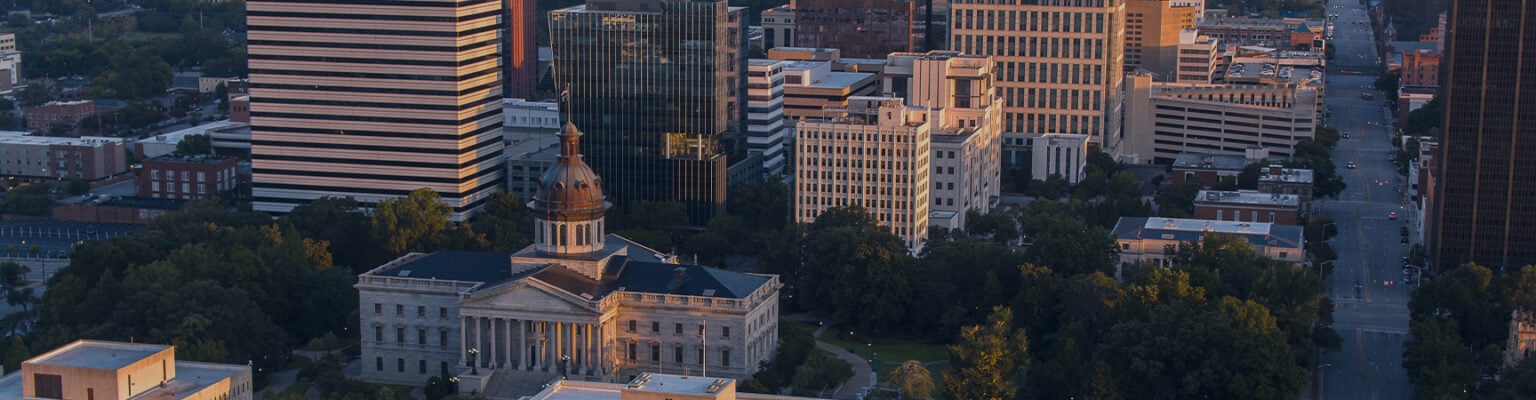
USP Big Sandy at a glance
USP Big Sandy is a high-security federal penitentiary for men in Inez, Kentucky, with a minimum-security satellite camp beside it. It held 1,316 men as of September 2026: 1,216 in the penitentiary and 100 at the camp. It sits on an old mountaintop mine site in Martin County, near the West Virginia line.
| Official name | United States Penitentiary, Big Sandy |
|---|---|
| BOP code | BSY |
| Security level | High; men |
| Population | 1,316 (as of September 2026): 1,216 at the penitentiary, 100 at the camp |
| Visiting | Saturday, Sunday and federal holidays, 8:30 a.m.–3:00 p.m. · see visiting hours |
| Inmate mail | USP: Inmate Name and Register Number · USP Big Sandy · U.S. Penitentiary · P.O. Box 2068 · Inez, KY 41224 Camp: Inmate Name and Register Number · USP Big Sandy · U.S. Penitentiary · Satellite Camp · P.O. Box 2068 · Inez, KY 41224 |
| Send money | Lockbox · Western Union (code city FBOP, DC) · MoneyGram (receive code 7932) |
| Phone | 606-433-2400 · Fax 606-433-2577 |
| Street address | 1197 Airport Road, Inez, KY 41224 · Martin County |
| Judicial district | Eastern District of Kentucky |
| BOP region | Mid-Atlantic |
| Designated capacity | 1,076: 948 at the penitentiary, 128 at the camp |
| Housing | 13 multiple-occupancy cell units and one open dormitory (the camp); no single-cell units |
| Special Housing Unit | Yes · 96 segregation cells |
| RDAP | Yes |
| UNICOR | No working factory |
| Camp | Yes · minimum security, on the same grounds |
On this page
USP Big Sandy was activated in 2002. It is one of the federal prisons in Kentucky, in the Bureau’s Mid-Atlantic Region and the Eastern District of Kentucky. Two things set this penitentiary apart. It is one of sixteen federal prisons the Bureau names in its 2026 First Step Act programs guide as offering Pell-funded college coursework. And between 2023 and 2026 six of its own employees — four lieutenants, a case management coordinator and the captain’s secretary — were sentenced in the Eastern District of Kentucky over assaults on prisoners in the spring of 2021, several of them in the lieutenants’ office, and the false reports that covered them.

Two Big Sandy lockups, and a handbook for the wrong prison
USP Big Sandy is not the Big Sandy Regional Detention Center, and the handbook the Bureau links under its name belongs to a prison in Texas. The first confusion is the name. The Big Sandy Regional Detention Center is a local jail run by the Big Sandy Regional Jail Authority. The Bureau of Prisons does not run it, and a person held there will not appear in the federal inmate locator. It is not another name for the penitentiary.
The second is the Bureau’s own doing. Its USP Big Sandy page offers a link labeled “USP Big Sandy Admissions and Orientation Handbook,” in English and Spanish. The English file is 87 pages and its cover reads “Federal Correctional Institution, Big Spring, Texas — C. Humphrey, Warden — Updated: December 18, 2023.” It prints a Big Spring, Texas 79720 address and states that “FCI Big Spring does not have an RDAP,” which is true of Big Spring and false of Big Sandy. The words Big Sandy do not appear in it, and the Spanish edition is the same Texas document. Archived copies show that the same address served a genuine Big Sandy handbook as late as January 2024 and the Texas file from July 2024 on.
The genuine Big Sandy handbook is the “Inmate Admission and Orientation Handbook, USP/SCP Big Sandy”, revised July 1, 2019, 81 pages, covering the penitentiary and the camp. The most recent Big Sandy visiting supplement is BSY-5267.09 of July 30, 2019. The Bureau no longer publishes either document. Both are seven years old, and both are the most recent local rules for this institution.
What is the security level at USP Big Sandy?
USP Big Sandy is a high-security penitentiary, and the camp on the same grounds is minimum security. The 2025 PREA audit records the two custody levels as “High-In” and “Minimum-Out” — men inside the fence under constant supervision, and men outside it trusted to work the grounds. Under the Bureau’s security designation rules, designation runs on the security point score and on the Public Safety Factors that override the score — for a man, the three that require a high-security institution unless waived are more than 30 years left to serve, validated membership in a disruptive group, and a disciplinary finding of taking part in a prison disturbance. Our guide to the intake process covers the first weeks.
What high security means here in physical terms, the audit sets out in numbers: ten buildings; fourteen housing units, thirteen of them multiple-occupancy cell units and one an open dormitory — the camp; no single-cell units; ninety-six segregation cells in a Special Housing Unit that holds “both administrative (protective custody) and disciplinary cases”; 368 operational cameras at the time of the February 2025 audit; 416 staff who may have contact with prisoners. The 2019 handbook adds that every cell has a duress alarm, and the warden’s opening message states that “when inmates fail to comply with the verbal warning system to lay on the ground, the tower officer will fire warning shots,” and that those “who continue to disregard orders with intent to do grievous bodily harm to another will be fired upon.”
Inside the fence are three general-population units, A, B and C, and program units that sit apart: the Residential Drug Abuse Program on its own unit — the Corrections Information Council found it on unit B in 2015, in 64 double-bunked cells — the Challenge Program unit, and the Transition Unit for men within five years of release. One man’s answer to the Council’s 2018 survey asked for “more jobs, programs for the yard instead of just for the C-side.” Placement in a program unit is the most useful thing a family can push for here, and the handbook’s route is a written request to the Challenge coordinator or to Psychology Services.
How often is USP Big Sandy locked down, and what does that cost a family?
USP Big Sandy has a long record of frequent lockdowns, and they come without notice a family can plan around. When the Corrections Information Council interviewed DC prisoners here on August 29 and 30, 2018, lockdowns were “by far the most common concern”: the men said the prison was locked down nearly half of each month, that lockdowns often ran about two weeks, that the whole prison was locked for an incident on one unit, and that they could not warn family already on the road. The Bureau’s reply of October 2, 2019, gave no count of its own; it said the decision “is never taken lightly,” that penitentiaries “are fluid in nature,” and that Big Sandy had begun keeping visiting open and extending classes where a lockdown allowed.
The pattern is old. A federal opinion in Browning v. Pennerton quotes the memorandum the then-warden issued to the prison population on November 29, 2006: “as long as there continues to be information which leads me to believe problems between groups of inmates may result in injuries to either staff or inmates, the institution will remain on full lockdown status.” The same opinion records, as undisputed, a prisoner’s allegation that the inmates who had been murdered there came from the District of Columbia. And the Bureau’s own Big Sandy page, as archived on July 1, 2013, carried the notice: “Due to institution lockdown, visiting at the USP is canceled until further notice. Visiting at the Camp is unaffected.” That last sentence remains a useful rule of thumb.
A lockdown changes everything described below — the 2019 handbook says that “all lockdown meals will be cold,” and the 2018 interviews add no classes, no chapel, no visits and no calls. What it does not do is move a court deadline. In Wilson v. United States (N.D. Ala. Dec. 8, 2022) a Big Sandy prisoner argued that pandemic lockdowns blocking the law library excused a late § 2255 motion; the court held that lost library access alone is not an unconstitutional impediment. A lawyer with a client here files early or moves for an extension before the deadline. The Inspector General’s evaluation of lockdowns and modified operations across the Bureau, announced in June 2025, was listed as ongoing in September 2026.
Who are the notable inmates at USP Big Sandy?
Four well-known men are held at USP Big Sandy as of September 2026: Thomas Pitera, El Sayyid Nosair, Abdul West and Anderson Lee Aldrich. The table gives each name’s status in the Bureau’s records, including men often listed here who are held elsewhere or have been released.
| Name | Status (September 2026) | Case |
|---|---|---|
| Thomas Pitera | Held here; register number 29465-053; serving life | Bonanno family figure; multiple life terms affirmed in United States v. Pitera, 5 F.3d 624 (2d Cir. 1993) |
| El Sayyid Nosair | Held here; register number 35074-054; serving life | 1995 New York seditious-conspiracy trial; life on the count charging the 1990 murder of Meir Kahane, affirmed in United States v. Rahman, 189 F.3d 88 (2d Cir. 1999) |
| Abdul West, the rapper AR-Ab | Held here; register number 76811-066; projected release April 15, 2056 | Convicted in the Eastern District of Pennsylvania in November 2019 as leader of a drug organization; 45 years, April 2021 |
| Anderson Lee Aldrich | Held here; register number 95144-510; the release field reads “STATE PRIS,” a term the Bureau’s locator guide does not define | Pleaded guilty in the District of Colorado to 74 hate-crime and firearms counts for the November 2022 Club Q shooting; 55 life terms, June 2024 |
| Albuquerque Cosper Head | Former — Big Sandy was his last facility; released January 21, 2025 | Assaulting an officer on January 6, 2021; 90 months, October 27, 2022 |
| Gerald Miller | Former — Big Sandy was his last facility; released September 20, 2024 | Leader of the Supreme Team crack organization in Queens; United States v. Miller, 116 F.3d 641 (2d Cir. 1997) |
| Vincent Basciano | Not here — at USP Florence High, Colorado; register number 30694-054; serving life | Former acting boss of the Bonanno family, as the Second Circuit describes him; United States v. Basciano, 634 F. App’x 832 (2d Cir. 2015) |
| Roy M. Belfast Jr., “Chuckie Taylor” | Not here — at USP Lee, Virginia; register number 76556-004; projected release June 18, 2090 | First person prosecuted under the federal Torture Act; 97 years affirmed in United States v. Belfast, 611 F.3d 783 (11th Cir. 2010) |
Belfast and Basciano, often listed as held here, are at USP Lee and USP Florence High. Ruslan Asainov and Jack Teixeira, also sometimes listed here, are at the ADX in Florence on the locator’s record. Andy Cox was released on January 6, 2021, on the locator’s record.
How do I find someone at USP Big Sandy?
To find someone at USP Big Sandy, search the Bureau’s free Inmate Locator, which takes a name or, better, the eight-digit register number. The result gives the institution — a man here shows as “Located at: Big Sandy USP” — and a projected release date, which for many men here reads “LIFE.” Three entries confuse families. The Bureau’s own guide to the locator says “IN TRANSIT” means the person has been moved from a Bureau facility and may or may not be returned; ordinary mail already posted is forwarded for 30 days after a transfer under the Bureau’s correspondence rules, but hold new letters until the record shows where he has landed. The same guide says “UNKNOWN” in the release field means the term of confinement has not been determined, as for someone not yet sentenced. “STATE PRIS,” which appears on one record above, is not defined there at all, and none of the three is a release date. Our guide to how register numbers work explains the suffix.
How do I write to someone at USP Big Sandy?
Mail for both the penitentiary and the camp at USP Big Sandy goes to P.O. Box 2068, Inez, KY 41224; the Bureau prints a separate camp address that adds a “Satellite Camp” line. Use the committed name — the name on the judgment — and the register number.
| For someone in the penitentiary | For someone at the camp |
|---|---|
| Inmate Name and Register Number USP Big Sandy U.S. Penitentiary P.O. Box 2068 Inez, KY 41224 | Inmate Name and Register Number USP Big Sandy U.S. Penitentiary Satellite Camp P.O. Box 2068 Inez, KY 41224 |
Big Sandy’s mail rules are stricter than national policy. From June 1, 2017, the 2019 handbook records, any general correspondence “printed on colored paper or envelopes” is photocopied, the prisoner gets the copy and the original is held 60 days; mail that tests positive for drugs goes to investigators; mail with odors, stains or discoloration is returned. The Bureau’s October 2019 response to the Corrections Information Council went further: photographs printed on ordinary paper are photocopied, and “greeting cards, colored paper and scented paper are no longer allowed; as well as colored/painted pictures.” Send plain white paper in a plain envelope and photographs on photographic paper; at the penitentiary, books, magazines and newspapers must come from a publisher, book club or bookstore; at the camp, softcover books and magazines may come from any source, though hardcover books and newspapers still need one of those three; stamps may not be mailed in.
Legal mail is different, and the handbook spells out the marking that protects it: the envelope must identify the sender as an attorney by name, address and title — “the title of esquire does not qualify” — and carry “Open in the Presence of the Inmate” or similar words. Without that, staff “may treat the mail as general correspondence and may open, inspect, and read the mail.” Our guides to attorney-client communication in the Bureau and to writing to someone in federal prison cover the national rules underneath; see also the Bureau’s legal activities rules.
How do I send money to someone at USP Big Sandy?
Send money to someone at USP Big Sandy through the Bureau’s national lockbox or one of two wire services, never to the prison itself. The Bureau’s correspondence rules reject money enclosed in a letter, and the 2019 supplement says visitors may not leave money with staff. All three routes need the committed name and the eight-digit register number.
| Route | Where it goes | Timing and holds |
|---|---|---|
| Money order, U.S. government check, cashier’s or certified check, or bank draft, by mail | Federal Bureau of Prisons Committed Name Eight-Digit Register Number Post Office Box 474701 Des Moines, Iowa 50947-0001 | Non-postal money orders and non-government checks are held 15 days, foreign instruments 45; no cash, no personal checks, nothing else in the envelope |
| Western Union Quick Collect | Code city FBOP, DC; the account number is the register number, no spaces, followed by the last name | Credited within two to four hours when sent between 7:00 a.m. and 9:00 p.m. Eastern, otherwise the next morning |
| MoneyGram | Receive code 7932, company name Federal Bureau of Prisons, Washington, DC | Same windows as Western Union |
Those are the Bureau’s national routes, as its Sending Money page sets them out. The 2019 handbook warns that the lockbox issues no receipt; for a mailed deposit that has not posted, the Bureau’s page tells the sender to start a tracer with the company that issued the money order, and it lists 202-307-2712, 8:00 a.m. to 4:30 p.m. Eastern, for deposit questions. And a man who refuses the Inmate Financial Responsibility Program — the payment plan for his fine, restitution and assessment — is held by national policy to $25 of commissary spending a month, stamps and telephone credit aside, however much is sent. The fees of the three routes are compared in our guide to sending money to a federal prisoner.
What are the visiting hours at USP Big Sandy?
Visiting at USP Big Sandy runs on Saturdays, Sundays and federal holidays, 8:30 a.m. to 3:00 p.m., for the penitentiary and the camp alike, under the most recent visiting supplement for this institution, BSY-5267.09 of July 30, 2019. Visitors are not processed before 8:00 a.m. or after 2:00 p.m., and men are not called to the visiting room between 9:30 a.m. and the clearing of the 10:00 a.m. count, so a visitor arriving at 9:40 waits. The 2019 handbook, revised four weeks earlier, prints an 8:00 a.m. start; the supplement is the later document. The Bureau’s page for this prison links no visiting supplement, so confirm at 606-433-2400 before you drive. The national rules are the Bureau’s visiting regulations.
Special Housing Unit visits are on Fridays, 8:30 a.m. to 3:00 p.m., non-contact, two hours, two visitors; none are processed during mainline, 10:30 a.m. to 12:30 p.m., and when a federal holiday falls on a Friday the SHU visits move to Thursday. Visits run on points — ten a month, one per visit, and two if a man leaves the room and returns the same day — provided the prison is open.
Who can visit, and how many
- The approved list normally holds up to ten friends and associates plus immediate family, and may be amended once every ninety days.
- Five visitors at a time, children included; split visits allow up to ten, or two groups, in a day.
- New arrivals and holdovers get no social visits for the first 72 hours, then immediate family only until the list is investigated.
- Friends and associates need a background check on form BP-629, mailed out by the prisoner; visitors who did not know the man before his confinement are “ordinarily” denied.
- Children under 16 must be accompanied by an adult on the list; a parent or guardian signs for anyone under 18.
- An attorney arriving during social hours must be on the list or carry a memorandum from the executive assistant approved by the captain, or the visit counts as a social one.
- Capacity in 2019 was 190 people at the penitentiary and 50 at the camp; when it fills, the operations lieutenant ends visits by distance driven, time already spent and relationship — a rule that favors the family from out of state.
What visitors can wear and bring
The 2019 dress list is long and the supplement calls it “not all inclusive.” Prohibited: anything showing the upper torso, cleavage or underwear; bare shoulders; athletic garments including tights, sweat outfits and sports jerseys; spandex or form-fitting material such as yoga pants; shorts; skirts and dresses above the knee; anything khaki, tan or light brown; camouflage; anything see-through; hats, scarves and heavy coats; hooded jackets; hospital scrubs; ripped pants; plain white T-shirts; open-toe shoes; heels and platforms; watches; and clothing with metal that cannot be removed. The handbook adds green, the camp uniform color, and says “shorts will not be allowed for visitors over the age of 16.”
You may carry in photo identification, essential medication in the amount needed for the visit, and up to fifteen dollars in quarters — sixty coins — in a clear plastic bag or container no larger than ten inches square; the vending machines take only coins and only visitors may use them. Phones, pagers and handbags stay in the car and may not go in the lobby lockers, which take a single quarter. For an infant: two diapers, an unopened pack of wipes, one change of clothes, one see-through bottle and one small jar of baby food. Nothing may be handed to a prisoner or taken from one, including papers for signature.
Identification and screening
A driver’s license, a state photo identification card or a valid passport. The handbook states that “birth certificates are not considered proper identification” and that Mexican consular cards have not been accepted since May 2003. Everyone passes a walk-through metal detector and is pat-searched if it alarms; refusing a search means being turned away. Visitors are also subject to an ion scan for drug residue, and the handbook says: “If they test positive, alternative visitation or dismissal may occur.” Our guide to federal prison visitation covers the rules that apply everywhere, and searches, shakedowns and contraband explains what the scan is looking for.
Getting there
Big Sandy is remote in a way that decides whether a visit is a day trip or a weekend. The 2019 supplement says: “No bus or airline service exists in the immediate area. The closest major airports are located in Huntington, WV, Lexington, KY, Louisville, KY, and Cincinnati, OH.” Huntington’s Tri-State Airport is about 53 road miles and a little over an hour away; Lexington’s Blue Grass Airport about 148 miles and three hours; Louisville and the Cincinnati airport about 210 miles and four hours. From anywhere but Huntington a Saturday visit means a night in Prestonsburg or Paintsville, the towns the supplement places the prison between.
The written directions are identical in the supplement and the handbook. From Interstate 64 — Ashland, Huntington or Ohio — take Kentucky exit 191 to U.S. 23 South and follow it about 38 miles to Route 645; turn left onto 645 South for about 11 miles to Route 3; turn right onto Route 3 for about 10 miles to Airport Road; turn left and follow the signs. From Prestonsburg or Pikeville, take U.S. 23 North to Route 3 North and go about ten miles to Airport Road.
How do phone calls and email work at USP Big Sandy?
Calls at USP Big Sandy go out, never in, to numbers on a list of up to thirty that the man maintains on the TRULINCS terminal. Under the Bureau’s telephone regulations, Program Statement 5264.09, issued September 3, 2026, the national allowance is 510 minutes per calendar month: 300 free to anyone eligible for First Step Act telephone incentives, and the other 210 available to buy, eligible or not, once those 300 are used up. Unmonitored legal calls, arranged as described below, are outside the 510. The 2019 Big Sandy handbook prints the older limit — “limited to 300 total minutes, per inmate, per month” — which the 2026 program statement replaced.
The local rules in that handbook decide when your phone actually rings. Unit telephones run 6:00 a.m. to 9:15 p.m., and every man is locked in his cell for each count. In the Special Housing Unit the handbook allows “only one phone call every 30 days,” placed by the counselor or the SHU officer — a man who goes to the SHU on the first of the month may not be heard from until the next. A lawyer wanting an unmonitored call must have the client ask the unit manager in writing “indicating the court deadline”; without a deadline the request has no hook. See our guide to federal inmate phone calls.
Email is the TRULINCS system, reached from outside through CorrLinks. At Big Sandy in 2019 the charge was five cents a minute of session time. Messages are read. An attorney may be on the contact list, but the handbook says that those messages “will not be treated as privileged communications and will be subject to monitoring.” Anything privileged goes by marked legal mail. Our page on CorrLinks and TRULINCS explains the setup from outside.
What can people buy at the USP Big Sandy commissary?
The monthly commissary spending limit at USP Big Sandy is the national ceiling of $460, set by the Bureau’s trust fund rules, Program Statement 4500.13, issued May 7, 2026, which raised it from $360; the limit rises by $50 during the November and December holiday period, for no more than one validation period. Big Sandy’s own documents are older. The commissary form the Bureau links today is a paper list from 2020, headed “USP BIG SANDY COMMISSARY $90.00 LIMIT”; the 2019 handbook says men “are permitted to spend up to $90.00 per week with a total of $326.00 per month,” a monthly figure that matches no national limit; the national ceiling in 2019 was $360. Those documents show Big Sandy validating spending weekly, which the program statement allows; neither they nor anything else the Bureau publishes gives the current weekly figure under the $460 ceiling, so ask the unit team.
What does not count against the limit is set by the program statement, not by the handbook’s shorter, outdated list: stamps, over-the-counter medicines, copy cards and footwear are among the exclusions, and telephone credits are not, so they count against it. Special Purpose Orders — items not stocked, ordered through staff — are capped at one a month and $600 a quarter including markup and shipping.
Typewriter ribbons at $7.75 and correction tape at $9.25 sit beside legal file folders and white legal envelopes, which is how a man here still prepares a filing. There is a kufi at $8.50, a prayer rug at $12.95 and a Rasta tam, and the food lines carry kosher and halal marks throughout. The third page of the same file is the camp’s own 2020 list: an MP3 player at $88.40, and Tide and dryer sheets, because the 2019 handbook makes camp men responsible for washing their own clothes in the unit. For the rules that apply at every institution, see our page on the federal prison commissary.
What programs are available at USP Big Sandy?
USP Big Sandy runs the Residential Drug Abuse Program, the Challenge Program, Pell-funded college coursework and the Transition Unit, but it has no working UNICOR factory.
RDAP, the Challenge Program and drug treatment
The Residential Drug Abuse Program runs at the penitentiary under the Bureau’s drug treatment rules: USP Big Sandy appears by name on the Bureau’s list of residential drug treatment locations inside the 2026 First Step Act guide, a list headed “57 RDAPS at 50 Locations” and marked “Updated 6/4/2026”; its only other Kentucky entries are two programs at FMC Lexington, and it predates the Bureau’s July 1, 2026 announcement that it will close FMC Lexington’s satellite camp. The 2019 handbook describes a nine-month program whose participants live on one unit, program half the day and work the other half; it says some who finish are eligible for time off their sentences — under 18 U.S.C. § 3621(e), up to a year for a prisoner convicted of a nonviolent offense — and that a man “normally” needs to be within 42 months of release to start. The Corrections Information Council recorded the program’s activation in January 2013 and, in August 2018, 86 men in it.
The Challenge Program is the other residential program and the one that makes Big Sandy unusual. The 2026 guide describes a cognitive-behavioral residential treatment program “developed for male offenders in the United States Penitentiary (USP) settings,” delivered in a modified therapeutic community on its own housing unit for high-security men with substance-use problems or serious mental illness, and names eleven institutions that run it: Atwater, Big Sandy, Lee, Canaan, Coleman I, Coleman II, Hazelton, Tucson, Terre Haute, McCreary and Pollock. A man may enter at any point with at least eighteen months left to serve, if he has a history of drug use, which self-report, the presentence report or incident reports can establish, or a current diagnosis of serious mental illness. The handbook routes applications through a written request to the Challenge coordinator. In 2018 just over half of the DC men the Council surveyed said it was easy or somewhat easy to get in.
Education, Pell-funded college and vocational training
Big Sandy is one of sixteen federal prisons the 2026 First Step Act guide names as sites offering post-secondary education funded by Pell Grants, with Atlanta, Bennettsville, Beaumont Low, Beaumont Medium, Danbury, El Reno, Elkton, Gilmer, Leavenworth, Milan, Pekin, Ray Brook, Texarkana, Talladega and Williamsburg; Beaumont Low is one of the prisons the Bureau announced on July 1, 2026 that it will close. For a man with a GED and years to serve, it is the most valuable program here, and the first question for the education department is which college holds the contract and whether there is a waiting list. The guide records approval, not seats.
Below college, the 2019 handbook lists GED classes in English and Spanish, English as a second language, adult continuing education, correspondence courses, a parenting program and three vocational programs — major appliance repair, data entry operator and receptionist — each requiring a GED or diploma. The Bureau told the Council in October 2019 that it had added two Department of Labor apprenticeships through Big Sandy Community and Technical College and that the GED program “is always near the top of the country for GED completions.” The Council heard a different account the year before: ten of the DC prisoners interviewed said there were no programs at all, and three-quarters of survey respondents were unsatisfied with vocational training. Our guides to prison education and vocational training explain how the national programs are meant to work; the law library hours are in the daily-life table below.
Federal Prison Industries
USP Big Sandy has no working UNICOR factory on the current record; descriptions of one refer to the past. The 2026 First Step Act guide, whose Federal Prison Industries locations were revised in that edition, names fifty-five institution codes for FPI operations, one of them, the Butner code BUT, twice, and Big Sandy is not among them, in either the program’s narrative entry or the by-institution grid. The Corrections Information Council recorded the history in 2015: “In the past, USP Big Sandy had a UNICOR factory which employed 100 inmates at a time producing textiles. By 2015, staff reported that the factory was not officially closed but was no longer actively operating.” For the national rules on work assignments and pay, see the Bureau’s work and pay rules.
Faith-based and reentry programming
Religious Services runs the chapel schedule, the religious diet program — a written request, a chaplain’s interview within two working days, a decision recorded on form BP-S700 — and the headwear rules, which allow three items. The handbook’s “hot list” says group prayer is allowed only in the chapel during scheduled times, and the recreation rules repeat that religious meetings are prohibited in the gym and on the yard; at a penitentiary that is about gang control as much as worship.
Reentry is organized around the Transition Unit, a residential program for men within five years of release with ninety days of clear conduct: classes 8:30 a.m. to 12:30 p.m. on weekdays for nine months to a year, applications through the reentry affairs coordinator, education or the unit team. The 2019 handbook had the unit team take up halfway-house placement and other release needs when a man was 17 to 19 months from release. For most First Step Act programs the 2026 guide says only that they “may be offered at all BOP institutions.” Approval is not delivery. Whether a class is running, and whether a man is earning time credits for it, is a question for the unit team in writing.
What is daily life like at USP Big Sandy?
Days at USP Big Sandy follow the schedule below, from the 2019 handbook, the most recent genuine handbook for this institution. It is the structure, not a promise: a lockdown replaces all of it with cold meals in a cell.
| Part of the day | Weekdays | Weekends and holidays |
|---|---|---|
| Counts | Midnight, 3:00 a.m., 5:00 a.m., 4:00 p.m. (standing) and 10:00 p.m. (standing) | The same, plus a 10:00 a.m. standing count |
| Lights on | 6:00 a.m. | 7:00 a.m. |
| Uniform | Khaki and safety boots 6:00 a.m. to 4:00 p.m.; cells inspection-ready 7:30 a.m. to 4:00 p.m. | Appropriately dressed; beds made by 10:00 a.m. |
| Meals | Breakfast in the dining hall; lunch and dinner “grab and go”; units called by weekly sanitation score, cleanest first | All three meals grab and go |
| Sick call | Sign up at the morning pill line Monday, Tuesday, Thursday and Friday; Wednesday is physicals and emergencies only | Emergencies only |
| Law and leisure library | 7:45 to 10:05 a.m. and 11:30 a.m. to 3:00 p.m.; Monday to Thursday also 5:10 to 8:40 p.m. | 7:45 to 9:40 a.m. and 10:50 a.m. to 3:25 p.m. |
| Showers | From unlock until 7:30 a.m. and 3:00 to 9:15 p.m.; upper-tier showers only in between | |
| Unit telephones | 6:00 a.m. to 9:15 p.m.; men are in their cells for each count | |
| Television | Set by the unit’s weekly sanitation score: 98 to 100 stays on all night; 95 to 97 off at 2:00 a.m.; 91 to 94 off at midnight; 90 or below off at 10:00 p.m. | |
Each man is issued a metal locker for his property, and the unit team can hold excess legal papers in a three-cubic-foot legal locker; a man may visit another cell on his own unit, but no more than three men may be in a cell at once and the door must stay open. Medical care comes from physicians, mid-level practitioners and nurses on site, with outside consultants in specialties such as orthopedics and optometry; the optometry wait was three to four months in 2019, and a $2 co-pay attaches to anything the man initiates. The camp is the exception to most of this: a dormitory, its own officer and the same visiting days. Recreation offers a certified personal trainer course, yoga, ceramics, music and intramural leagues, under two penitentiary rules: the department provides no equipment that builds upper-body strength, and exercise groups of three or more men are prohibited. Our guide to recreation in federal prison explains the first.
Two of the handbook’s rules are where discipline starts for a man new to a penitentiary. The meal-scanning system logs every register number at the serving line, and a number scanned twice draws an incident report for stealing. And the duress button in every cell, pressed for anything that is not an emergency, “will most likely be cited for Code 208.”
What do inspectors say about conditions at USP Big Sandy?
The DOJ Office of the Inspector General has not conducted an on-site inspection of this facility. Its auditors visited Big Sandy, one of six institutions they went to for a November 2023 audit of the Bureau’s accreditation contract with the American Correctional Association, without saying when, and found that because of the contract’s deficiencies “the BOP did not receive an independent review of its facilities.” Its investigators have been here for a different reason. The most consequential oversight of USP Big Sandy in its history came from a criminal investigation, not an inspection.
The staff assault prosecutions, 2021 to 2026
Between November 2023 and April 2026 six employees of USP Big Sandy were sentenced in the Eastern District of Kentucky for assaults on prisoners in the spring of 2021 and for the reports written to conceal them.
| Defendant and post | Conduct admitted or proved | Outcome |
|---|---|---|
| Samuel J. Patrick, case management coordinator | With Pauley, pepper-sprayed and kicked a compliant prisoner on March 30, 2021, assaulted, witnesses testified, “for walking too slowly to his cell”; on April 29, 2021, in the lieutenants’ office, beat a prisoner who had asked for protection from other prisoners | Pleaded guilty; 36 months, November 8, 2023 |
| Clinton L. Pauley, captain’s secretary | The same two assaults and, by his own admission, a third on March 26, 2021 | Pleaded guilty; 40 months, November 8, 2023 |
| Kevin C. Pearce Jr., operations lieutenant | Present at both assaults; wrote false reports, pressured lower-ranking officers to join the cover-ups and, more than a year later, made false statements to Inspector General and FBI agents | Convicted by a jury after a six-day trial, March 14, 2023; 66 months, December 5, 2023 |
| Ryan O. Elliott, lieutenant | Tackled and punched a prisoner in a camera-free room on March 26, 2021; wrote a false report on a beating he had not attended | Pleaded guilty; one year and one day, March 14, 2024 |
| Terry L. Melvin, lieutenant | Conspiracy from early 2021 to March 2022 with other senior officials “to systematically assault inmates requesting protective custody to dissuade the requests and thereby reduce Special Housing Unit populations”; punched and kicked a prisoner on April 13, 2021 | Pleaded guilty, January 24, 2025; 48 months, April 2, 2026 (United States v. Melvin, No. 0:26-cr-00005-REW, E.D. Ky.) |
| Michael Childers, lieutenant | Present at the April 13, 2021 assault on a prisoner who “pleaded for protective custody”; wrote a report falsely claiming the prisoner had head-butted and punched him | Pleaded guilty, December 1, 2025; 17 months, April 8, 2026 — “the final defendant to be sentenced” |
By the Inspector General’s summary of the plea’s factual statement, the purpose of Melvin’s conspiracy was to assault men who asked for protective custody so that fewer would ask and the Special Housing Unit would hold fewer men. The government’s sentencing memorandum sought 63 months, Mountain Top Media reported; Judge Robert E. Wier granted a defense variance in part and imposed 48. The Martin County newspaper, the Mountain Citizen, reported from the plea agreement on January 29, 2025, that the scheme was an “unofficial policy” originating with an associate warden and a captain, and that one day a week was known as “staff assault day.” Those details are the newspaper’s account; the court’s docket shows the plea agreement was returned to the government rather than filed.
By the plea’s account, for about a year a request for protective custody at this prison could itself bring a beating. The mechanics the pleas describe — a request made in person, a “resisting” narrative, an incident report that turns the victim into the aggressor — are the mechanics of every use-of-force cover-up, and the defense against them is paper. A man who fears for his safety should put the request in writing, keep a copy and tell someone outside the walls the same day. A family that hears “he assaulted staff” after a request for protection should ask for the incident report, the injury assessment and the camera coverage before anything is conceded at the disciplinary hearing.
The 2019 Corrections Information Council report
The only independent inspection of conditions at USP Big Sandy came from the District of Columbia’s Corrections Information Council, which inspects federal prisons because DC’s own prisoners are held in them. It toured Big Sandy on July 16, 2015, interviewed prisoners on August 29 and 30, 2018, and published on October 21, 2019. In August 2018 the prison held 1,247 men, 100 of them DC Code offenders, of whom the report’s introduction says 47 spoke with the Council and 53 declined, while its methodology section says 53 were interviewed; 42 completed surveys. Every percentage below is a share of those few dozen DC men, not of the prison.
- Medical and dental care: 75 percent of respondents felt they lacked adequate access; accounts ran from “weeks” to be seen for a toothache to “almost three years” for dental work.
- The Special Housing Unit: one man described 16 hours in waist chains and pepper spray that blinded him for two days; cleaning supplies came once a month.
- Food: 24 of 35 surveyed had complaints about portions and cold or uncooked food.
- Pepper spray: several men said it was used frequently, one saying “maybe every day,” and that “improper ventilation” left it lingering on the units.
- Staff conduct: no reports of physical abuse by staff or other prisoners, and eight men reporting verbal harassment by staff, mostly insults about race or DC residency.
The Bureau’s reply called the findings “unsubstantiated allegations” from “a small percentage of DC inmates,” but answered each recommendation: sick call four days a week and daily in the SHU, cleaning supplies twice a week there, a full-time contract physician, and the mail rules above. The Council’s interviews were in August 2018, more than two years before the spring 2021 assaults the courts later punished, so the absence of abuse reports then says nothing about that period.
The 2025 PREA audit
USP Big Sandy was audited under the Prison Rape Elimination Act by Lori Fadorick of Corrections Consulting Services on February 25–27, 2025; her final report is dated April 3, 2025. The facility met 44 standards and exceeded one — 115.71, on the conduct of investigations — with none unmet and no corrective action.
| Population on the first day of the audit | 1,342, on February 25, 2025 |
|---|---|
| Average daily population, previous 12 months | 1,372 — 1,323 at the penitentiary, 49 at the camp |
| Average length of stay | Printed as “460 months” for the penitentiary, a figure that cannot be right for a prison activated in 2002; 322.3 days at the camp |
| Sexual-abuse allegations, previous 12 months | 18 — 12 prisoner-on-prisoner, 6 staff-on-prisoner — plus 2 of sexual harassment |
| Outcomes of the 18 | Prisoner-on-prisoner: 2 substantiated, 6 unsubstantiated, 4 unfounded, 2 referred for prosecution. Staff-on-prisoner: none substantiated, 3 unsubstantiated, 3 unfounded |
Two details carry weight beyond the numbers. A Bureau mock audit had found that men placed straight into the Special Housing Unit on arrival were not receiving the required PREA education, which the institution fixed with a new acknowledgment form before the auditor arrived. And a facility memorandum put Correctional Services at 96.25 percent staffed as of January 2025, drug-treatment staff at 80 percent and medical staff at 105 percent; the captain told the auditor that staffing is kept up with voluntary or mandated overtime and “augmentation using non-custody staff.” Treat the audit’s average-stay line with care: 460 months is more than 38 years, longer than the prison has existed.
Sexual-abuse allegations reported to GAO
The Government Accountability Office published the Bureau’s allegation counts for every institution in May 2026. For Big Sandy, Table 7 records 24 allegations of sexual abuse by another prisoner across 2020 to 2024, by the year the incident occurred — 7, 1, 2, 6 and 8 — and Table 8 records 21 allegations against staff across the same years, by the year reported — 5, 2, 3, 1 and 10. The tables come from different Bureau systems and are not added together. These are reported allegations, not findings: nationally for 2014 to 2022, GAO found five percent of allegations against prisoners and nine percent against staff substantiated.
Restraints and the failure-to-protect cases
The Inspector General’s July 2025 audit of the Bureau’s oversight of restraints counted use-of-force incidents involving restraints between January 1, 2018 and January 16, 2024, and its table of institutions with more than 300 puts USP Big Sandy second in the country at 712, behind USP Thomson’s 1,448. That is a raw six-year count, not a rate, and the audit did not visit Big Sandy; it is nonetheless the only published Bureau-wide comparison of force that includes this prison.
The civil docket shows what a failure-to-protect claim against Big Sandy staff looks like in practice. In Browning v. Pennerton, 633 F. Supp. 2d 415 (E.D. Ky. 2009), a man stabbed on December 11, 2006, twelve days after the lockdown memorandum, sued the staff he said he had warned; the court let his failure-to-protect claims against four of them, a lieutenant among them, go forward, and recorded that the footage had been “removed in the normal course of business” after the prison’s own investigation was complete. In Holder v. Saunders (E.D. Ky. Oct. 7, 2019) a man stabbed in unit C-4 on May 7, 2012 by a prisoner on psychological alert lost after a bench trial: the court wrote that “Many of the inmates housed at USP Big Sandy are volatile and aggressive,” and that a general potential for violence “would not have materially distinguished A.T. from a typical USP Big Sandy inmate.” Two lessons follow. Warnings must be specific, written and made to the people with authority to separate men. And the demand to preserve video must go in before the Bureau’s own review ends.
USP Big Sandy in the news
Recent news about USP Big Sandy centers on the August 2026 indictment of three prisoners and the staff assault prosecutions that ended in April 2026; older items concern a 2021 drug-smuggling sentence, a 2018 gang stabbing, a 2006 killing, a 2007 contraband conviction and the settling ground reported in 2002.
- August 2026 — a federal grand jury in Ashland indicted three prisoners, Gilbert Saldana, Edward Rodriguez and Alfred Fabrow, on August 27, 2026 over an assault on another prisoner on or about July 6, 2026 with what the indictment calls a “homemade stabbing instrument,” WYMT reported; FOX 56 reported that the FBI’s Louisville office tied the case to the Mexican Mafia. An indictment is an accusation, not a finding. As of September 17, 2026, the court’s case index marks none of the three cases closed.
- April 2026 — the last two staff sentencings from the 2021 assaults: Terry Melvin, 48 months, on April 2, and Michael Childers, 17 months, on April 8.
- January 2025 — Melvin’s guilty plea, and the Mountain Citizen’s account of a plea agreement describing an “unofficial policy” against men seeking protective custody.
- December 2023 — former operations lieutenant Kevin Pearce sentenced to 66 months after his conviction at trial in March.
- November 2023 — Samuel Patrick and Clinton Pauley sentenced to 36 and 40 months.
- August 2021 — former cook supervisor Hank Williams sentenced to 210 months for conspiring with a prisoner to distribute methamphetamine and for taking bribes.
- August 2019 — four members of the Texas Mexican Mafia sentenced to between 100 and 300 months for stabbing two Arizona Mexican Mafia members in a cell block on June 17, 2018.
- March 2009 — two men indicted on charges that, as prisoners here, they beat and choked fellow prisoner Shamoni Peterson to death on or about November 12, 2006, seventeen days before the lockdown memorandum quoted above.
- February 2007 — former correctional officer Alice Marie Stapleton convicted of conspiring to distribute heroin and marijuana and to bring contraband into the prison, in a scheme that also involved a prisoner; a June 2008 U.S. Attorney’s release said she was serving 78 months.
- July 2002 — The New York Times reported that the ground was settling beneath the unfinished prison, built on an old mountaintop mine site, and that a guard tower had tilted.
Frequently asked questions about USP Big Sandy
What is USP Big Sandy?
A high-security United States Penitentiary for men in Inez, Martin County, Kentucky, run by the Federal Bureau of Prisons, with a minimum-security satellite camp on the same grounds. It was activated in 2002, according to the District of Columbia Corrections Information Council, on an old mountaintop mine site, and held 1,316 men as of September 2026.
Is USP Big Sandy the same as the Big Sandy Regional Detention Center?
No. The Big Sandy Regional Detention Center is a local jail operated by the Big Sandy Regional Jail Authority; people held there do not appear in the federal Inmate Locator. USP Big Sandy is the federal penitentiary on Airport Road in Inez.
When can I visit someone at USP Big Sandy?
Saturdays, Sundays and federal holidays, 8:30 a.m. to 3:00 p.m., at the penitentiary and the camp, under the institution’s most recent visiting supplement, BSY-5267.09 (2019); visitors are not processed after 2:00 p.m. Special Housing Unit visits are on Fridays, non-contact. The Bureau links no current supplement, so call 606-433-2400 before traveling.
Why does the Bureau’s Big Sandy handbook describe a prison in Texas?
Because the file linked as “USP Big Sandy Admissions and Orientation Handbook” on bop.gov is the December 2023 handbook of FCI Big Spring, Texas. Archived copies show the genuine Big Sandy handbook, revised July 1, 2019, at the same address until January 2024; the Bureau no longer publishes it.
Is USP Big Sandy locked down a lot?
Historically, yes. DC prisoners interviewed in August 2018 told the Corrections Information Council the prison was locked down nearly half of each month, and the Bureau’s response offered no count of its own. Lockdown status changes without notice, so call 606-433-2400 before traveling.
Who is the most famous prisoner at USP Big Sandy?
As of September 2026, the Bureau’s locator places Thomas Pitera of the Bonanno family’s “Pitera Crew,” El Sayyid Nosair, the rapper AR-Ab (Abdul West) and the Club Q shooter Anderson Lee Aldrich at Big Sandy. Vincent Basciano and “Chuckie Taylor” Belfast, who appear on many published lists, are at USP Florence High and USP Lee.
Where do I send money for someone at USP Big Sandy?
Not to the prison. Mail a postal money order to Federal Bureau of Prisons, Post Office Box 474701, Des Moines, Iowa 50947-0001, with the committed name and eight-digit register number, or use Western Union Quick Collect with code city FBOP, DC, or MoneyGram with receive code 7932.
How much can someone spend at the USP Big Sandy commissary?
Program Statement 4500.13 (2026) caps monthly spending at $460 and adds $50 during the November and December holiday period, for no more than one validation period. Big Sandy’s own documents show a weekly cycle: the commissary form the Bureau links, from 2020, is headed “$90.00 LIMIT.” No current weekly figure is published, so ask the unit team.
Does USP Big Sandy have RDAP?
Yes. USP Big Sandy is on the Bureau’s list of residential drug treatment locations in the 2026 First Step Act guide, and the guide also names it as one of eleven penitentiaries running the Challenge Program and one of sixteen prisons with Pell-funded college coursework.
Has USP Big Sandy been inspected?
The DOJ Office of the Inspector General has not conducted an on-site inspection of this facility. The District of Columbia Corrections Information Council inspected it in 2015 and interviewed prisoners in 2018, reporting in October 2019. It passed a Prison Rape Elimination Act audit conducted on site by Lori Fadorick on February 25–27, 2025, with 44 standards met and one exceeded.
What happened in the staff assault cases at USP Big Sandy?
Six employees were sentenced in the Eastern District of Kentucky between November 2023 and April 2026 to terms from a year and a day to 66 months for assaults on prisoners in March and April 2021, several of them in the lieutenants’ office, and for the false reports that covered them. Lieutenant Terry Melvin admitted a conspiracy to assault men who requested protective custody so that fewer would ask.
Problems at USP Big Sandy: where we can help
The problems we help with at USP Big Sandy are the ones its record shows recurring, each with a procedure and a clock:
- Safety and protective custody. The Justice Department’s accounts of the 2021 cases describe requests for protection met with force and paperwork that reversed the blame. A request should be made in writing, copied outside, and followed by a demand to preserve video before the Bureau’s own review closes — the lesson of Browning. See protective custody, the Special Housing Unit and the Bureau’s SHU rules.
- Incident reports that follow a use of force. Three of the six convicted employees were convicted over false reports, and one of those reports cast the prisoner as the attacker. A disciplinary hearing under the Bureau’s discipline rules on an assault-on-staff charge here deserves the injury assessment, the camera coverage and the witness list before any statement is made.
- Lockdowns and deadlines. At least one court has refused to excuse a late filing because Big Sandy was locked down; post-conviction and habeas deadlines have to be managed from outside, with extensions sought before they run.
- Designation and transfer. Whether a man belongs at a penitentiary turns on the points, Public Safety Factors and Management Variables in his file, all of which can be challenged under the Bureau’s designation rules. See federal prison transfers and our federal prison consulting services.
- Medical and dental care, which three-quarters of the DC men the Council surveyed in 2018 said they could not adequately get. The route is the administrative remedy program on the twenty-day clock the handbook sets out, and where negligence has caused injury a Federal Tort Claims Act claim. See medical care in federal prison.
- RDAP and Challenge admission, First Step Act time credits and whether they are earned and applied, and the Transition Unit — the programs that shorten a sentence or change where it is served, each with an eligibility file that has to be right.
- Release itself: halfway house and home confinement placement under the Bureau’s placement procedures; compassionate release under the Bureau’s reduction-in-sentence rules; and the sentence computation errors that move a release date, measured against the Bureau’s sentence computation manual. See our federal prison early release practice.
- Challenges to the conviction or sentence itself, through a direct appeal or a § 2255 motion.
Elizabeth Franklin-Best, P.C. handles federal criminal defense, appeals and post-conviction matters nationwide, and advises families on Bureau of Prisons issues at institutions across the system. Call (843) 620-1100 or contact us to talk through a specific situation.
Christopher Zoukis, JD, MBA, the firm’s Managing Director, writes and maintains the federal prison policy material on this site. He is not counsel of record; legal representation is provided by Elizabeth Franklin-Best.
Sources and currency
Bureau of Prisons documents
- USP Big Sandy, Federal Bureau of Prisons, 2026. The Bureau’s facility page, with address, mailing addresses, contact details and region.
- USP Big Sandy Commissary List, Federal Bureau of Prisons, USP Big Sandy, 2020. Includes the camp’s own list.
- Institution Supplement BSY-5267.09, Visiting Regulations, Federal Bureau of Prisons, USP Big Sandy, 2019. The Bureau no longer publishes it; the link is the Internet Archive’s copy.
- Inmate Admission and Orientation Handbook, USP/SCP Big Sandy, Federal Bureau of Prisons, USP Big Sandy, 2019. The Bureau no longer publishes it; the link is the Internet Archive’s copy.
- USP Big Sandy (facility page as archived in 2013), Federal Bureau of Prisons, 2013. The Internet Archive’s copy; carries the lockdown visiting notice.
- FCI Big Spring Inmate Admission and Orientation Handbook, Federal Bureau of Prisons, FCI Big Spring, 2023. Linked from the Bureau’s USP Big Sandy page as the Big Sandy handbook.
- FCI Big Spring Inmate Admission and Orientation Handbook (Spanish edition), Federal Bureau of Prisons, FCI Big Spring, 2023. Linked from the Bureau’s USP Big Sandy page as the Spanish Big Sandy handbook.
- Trust Fund/Deposit Fund Manual, Program Statement 4500.13, Federal Bureau of Prisons, 2026. Sets the $460 commissary spending limit and the money-transfer rules.
- Inmate Telephone Regulations, Program Statement 5264.09, Federal Bureau of Prisons, 2026. Replaced Program Statement 5264.08 (2008).
- Correspondence, Program Statement 5265.14, Federal Bureau of Prisons, 2011. Includes the 30-day forwarding rule.
- Financial Responsibility Program, Inmate, Program Statement 5380.08, Federal Bureau of Prisons, 2005. Includes the commissary limit for program refusals.
- First Step Act Approved Programs Guide, Federal Bureau of Prisons, Reentry Services Division, 2026. Program availability by institution, including the RDAP, Challenge, Pell and Federal Prison Industries lists.
- Sending Money, Federal Bureau of Prisons, 2026. Lockbox, Western Union and MoneyGram instructions.
- About Federal Inmate Records, Federal Bureau of Prisons, 2026. What the Bureau’s inmate search results mean, including IN TRANSIT and UNKNOWN.
- Federal Bureau of Prisons Announces Facility Closures and Operational Changes, Federal Bureau of Prisons, 2026. Press release.
Audits and inspections
- PREA Audit Report: USP Big Sandy, Corrections Consulting Services, 2025. On-site audit of February 25–27, 2025, by Lori Fadorick, an independent auditor.
- Federal Prisons: Improvements Needed to Prevent, Detect, and Address Sexual Abuse (GAO-26-107343), U.S. Government Accountability Office, 2026.
- Evaluation of the Use of Lockdowns and Modified Operations at Federal Bureau of Prisons Institutions, U.S. Department of Justice, Office of the Inspector General, 2025. Ongoing work.
- Audit of the Federal Bureau of Prisons’ Oversight of the Use of Restraints (Report 25-070), U.S. Department of Justice, Office of the Inspector General, 2025.
- Audit of the Federal Bureau of Prisons’ Contract Awarded to the American Correctional Association (Report 24-009), U.S. Department of Justice, Office of the Inspector General, 2023.
- USP Big Sandy Inspection Report, District of Columbia Corrections Information Council, 2019. With the Bureau’s 2019 response.
Court records
- BOP Lieutenant Sentenced for Obstructive Falsification of Records, U.S. Department of Justice, Office of the Inspector General, 2026. Michael Childers’s 17-month sentence.
- BOP Lieutenant Sentenced for Deprivation of Rights Under Color of Law and Conspiracy Against Rights, U.S. Department of Justice, Office of the Inspector General, 2026. Terry Melvin’s 48-month sentence.
- United States v. Melvin, No. 0:26-cr-00005-REW-EBA, U.S. District Court for the Eastern District of Kentucky, 2026. Docket, including the April 2026 judgment.
- BOP Lieutenant Arrested and Pleaded Guilty to Falsifying a Document with Intent to Obstruct a Federal Investigation, U.S. Department of Justice, Office of the Inspector General, 2025. Michael Childers’s guilty plea.
- BOP Lieutenant Arrested and Pleaded Guilty to Deprivation of Rights Under Color of Law and Conspiracy to Deprive Rights Under Color of Law, U.S. Department of Justice, Office of the Inspector General, 2025. Terry Melvin’s guilty plea.
- United States v. Pearce, No. 23-6079, U.S. Court of Appeals for the Sixth Circuit, 2024.
- Former Colorado Resident Sentenced to Life in Prison for Federal Hate Crimes and Firearm Offenses Related to Mass Shooting at Club Q, U.S. Attorney’s Office, District of Colorado, 2024. Anderson Lee Aldrich’s sentence.
- Former Kentucky Federal Corrections Lieutenant Sentenced for Violating the Civil Rights of an Inmate and Writing False Reports, U.S. Department of Justice, Office of the Inspector General, 2024. Ryan Elliott’s sentence.
- Former Kentucky Federal Corrections Supervisor Sentenced to 66 Months for Leading Cover-Ups of Inmate Assaults and Making False Reports, U.S. Department of Justice, Office of the Inspector General, 2023. Kevin Pearce’s sentence.
- Former BOP Lieutenant Arrested and Pleaded Guilty to Deprivation of Rights Under Color of Law and Falsifying a Document with Intent to Obstruct a Federal Investigation, U.S. Department of Justice, Office of the Inspector General, 2023.
- Two Former Federal Correctional Officers in Kentucky Sentenced for Assaulting Federal Inmates and Conspiring with a Supervisor to Cover It Up, U.S. Department of Justice, Office of the Inspector General, 2023. Samuel Patrick’s and Clinton Pauley’s sentences.
- Former Kentucky Federal Prison Lieutenant Convicted of Covering Up the Assaults of Two Federal Inmates by Corrections Officers, U.S. Department of Justice, Office of the Inspector General, 2023. Kevin Pearce’s conviction.
- Former BOP Case Management Coordinator Pleaded Guilty to Deprivation of Rights Under Color of Law, U.S. Department of Justice, Office of the Inspector General, 2023.
- Former Kentucky Correctional Officer Pleads Guilty to Civil Rights Charges for Assaulting Two Federal Inmates, U.S. Department of Justice, Office of the Inspector General, 2023.
- Wilson v. United States, No. 1:21-cv-08006, U.S. District Court for the Northern District of Alabama, 2022.
- Three Kentucky Correctional Officers Face Additional Civil Rights Charges for Assaulting Inmates and Attempting to Cover it Up, U.S. Department of Justice, Office of the Inspector General, 2022.
- BOP Captain’s Secretary Indicted for Civil Rights Violations, Falsifying a Document with Intent to Obstruct a Federal Investigation, and Providing a False Statement to Federal Agents, U.S. Department of Justice, Office of the Inspector General, 2022.
- BOP Case Management Coordinator Indicted for Civil Rights Violations, Tampering with a Witness, and Falsifying a Document with Intent to Obstruct a Federal Investigation, U.S. Department of Justice, Office of the Inspector General, 2022.
- BOP Lieutenant Indicted for Civil Rights Violations, Tampering with a Witness, and Falsifying a Document with Intent to Obstruct a Federal Investigation, U.S. Department of Justice, Office of the Inspector General, 2022.
- Three Big Sandy Employees Indicted for Civil Rights Violations, U.S. Department of Justice, Office of the Inspector General, 2022.
- Former BOP Correctional Officer Sentenced for Conspiracy to Distribute Methamphetamine, Bribery, and Use of a Communication Facility to Facilitate the Commission of a Federal Offense, U.S. Department of Justice, Office of the Inspector General, 2021. Hank Williams’s 210-month sentence.
- Leader of Philadelphia Drug Trafficking Gang and Rap Artists “Original Block Hustlaz” Sentenced to 45 Years in Prison, U.S. Attorney’s Office, Eastern District of Pennsylvania, 2021. Abdul West’s sentence.
- Holder v. Saunders, No. 7:13-cv-00038, U.S. District Court for the Eastern District of Kentucky, 2019.
- Four Texas Mexican Mafia Members Sentenced for Attempted Murder and Assault with a Dangerous Weapon, U.S. Attorney’s Office, Eastern District of Kentucky, 2019.
- United States v. Basciano, 634 F. App’x 832, U.S. Court of Appeals for the Second Circuit, 2015.
- United States v. Belfast, 611 F.3d 783, U.S. Court of Appeals for the Eleventh Circuit, 2010.
- Browning v. Pennerton, 633 F. Supp. 2d 415, U.S. District Court for the Eastern District of Kentucky, 2009.
- Former USP Big Sandy Inmates Indicted for Murder of Fellow Inmate, U.S. Department of Justice, Office of the Inspector General, 2009. Indictment in Shamoni Peterson’s death.
- Federal Inmates Indicted for Conspiracy to Distribute Heroin, U.S. Department of Justice, Office of the Inspector General, 2008.
- United States v. Rahman, 189 F.3d 88, U.S. Court of Appeals for the Second Circuit, 1999.
- United States v. Miller, 116 F.3d 641, U.S. Court of Appeals for the Second Circuit, 1997.
- United States v. Pitera, 5 F.3d 624, U.S. Court of Appeals for the Second Circuit, 1993.
News and other sources
- Three federally indicted for alleged stabbing at prison, WYMT, 2026.
- FBI: Mexican Mafia linked to Kentucky federal prisoner assault, FOX 56, 2026.
- Two sides differ on punishment for former guard who revealed ‘unofficial policy’ of abuse, Mountain Top Media, 2026. The sentencing requests in the Melvin case.
- Inside the brutality of USP Big Sandy: Former prison lieutenant’s plea reveals culture of abuse, The Mountain Citizen, 2025. By Roger Smith.
- Agreement allows Big Sandy jail inmates to use medication to battle opioid use disorder, The Paintsville Herald, 2023. On the Big Sandy Regional Detention Center.
- Man who pulled officer Fanone into mob at US Capitol sentenced to over 7 years, CNN, 2022. Albuquerque Head’s sentence.
- Jan. 6 rioter who dragged Michael Fanone into crowd sentenced to 7.5 years in prison, NBC News, 2022.
- National Briefing | South: Kentucky: Hard Time on Soft Ground, The New York Times (Associated Press), 2002.
- 18 U.S.C. § 3621(e), Imprisonment of a convicted person, U.S. Code (Legal Information Institute).
Sources reviewed September 2026.
Reviewed for legal accuracy by Elizabeth Franklin-Best, Esq., Principal Attorney·September 2026