
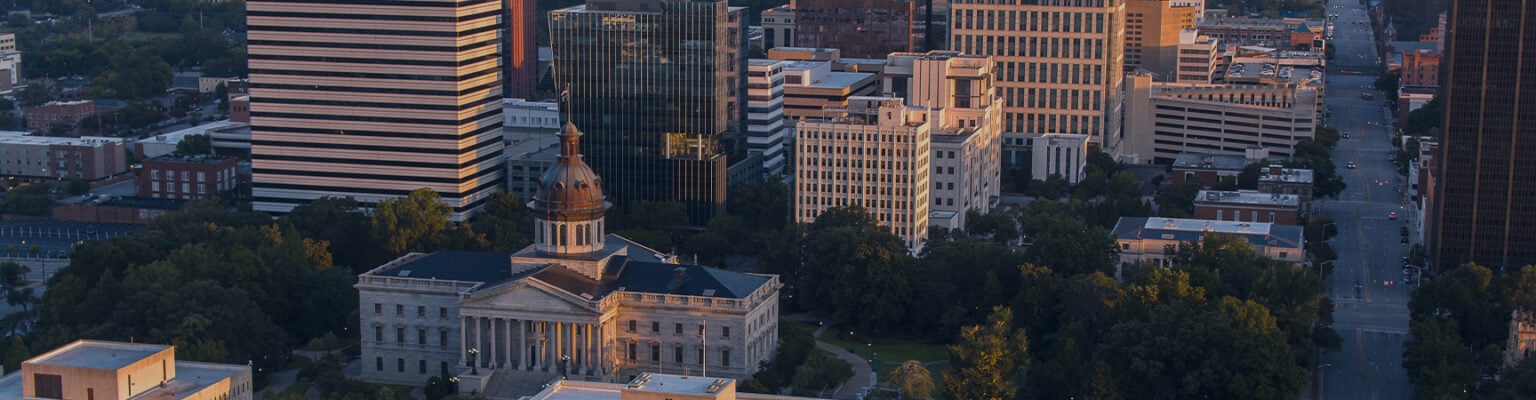
ADX Florence at a glance
ADX Florence, officially USP Florence ADMAX, is the Federal Bureau of Prisons’ only administrative-maximum penitentiary: the prison the Bureau uses when it has decided a man cannot be held safely anywhere else in the federal system. It sits in Florence, Colorado, beside USP Florence – High and FCI Florence, and held 399 men as of September 2026.
| Official name | USP Florence ADMAX (ADX Florence) · U.S. Penitentiary, Administrative Maximum |
|---|---|
| BOP code | FLM · complex FLX |
| Security level | Administrative; men |
| Population | 399 (as of September 2026) |
| Visiting | Thursday–Sunday and federal holidays, 8:00 a.m.–3:00 p.m. · non-contact only · Special Security Unit: Monday–Wednesday |
| Inmate mail | Inmate Name & Register Number · USP Florence ADMAX · U.S. Penitentiary · P.O. Box 8500 · Florence, CO 81226 |
| Send money | Lockbox · Western Union (code city FBOP, DC) · MoneyGram (receive code 7932) |
| Phone | 719-784-9464 · Fax 719-784-5290 |
| Street address | 5880 State Highway 67 South, Florence, CO 81226 · Fremont County |
| Judicial district | District of Colorado |
| BOP region | North Central |
| Designated capacity | 560 |
| Housing | Nine units · single cells only |
| Special Housing Unit | Yes · Charlie Unit, with the four-cell Range 13 wing |
| Mental health care level | Level 2 |
| RDAP | No · a non-residential group of up to five men |
| UNICOR | No |
| Camp | None; the complex camp belongs to FCI Florence |
On this page
It sits on State Highway 67 in Fremont County, about 45 miles south of Colorado Springs, in the Bureau’s North Central Region, and was activated in November 1994; it is one of the federal prisons in Colorado. One figure sets it apart: the auditor who inspected the complex in May 2026 put the average length of stay here at 1,709 days — about four years and eight months — against 512 days at the penitentiary next door.

Three federal prisons and a camp share one address in Florence, Colorado
Three federal prisons and a camp sit inside one complex at 5880 State Highway 67 South, sharing that address and the same map coordinates and nothing else — not visiting rules, phone allowances, commissary, security level or phone number. “At Florence” is not enough information to act on; mixing the prisons up is the mistake that costs families wasted trips.
| Institution | Code | Security level | Phone |
|---|---|---|---|
| ADX Florence (USP Florence ADMAX, this page) | FLM | Administrative | 719-784-9464 |
| USP Florence – High | FLP | High | 719-784-9454 |
| FCI Florence | FLF | Medium, with the complex’s satellite camp | 719-784-9100 |
| FCC Florence (the complex) | FLX | Not a housing designation | — |
The Bureau’s name for the high-security prison is “USP Florence – High,” not “USP Florence.” The camp belongs to FCI Florence on the current roster, though men from it cross the complex to cook at the ADX and work in its library, which is why older documents blur the two. The Bureau prints this institution’s name with two spaces in it, “USP Florence ADMAX.”
What is the security level at ADX Florence?
ADX Florence’s security level on the Bureau’s roster is Administrative, and it is the only administrative-maximum penitentiary the Bureau operates; a federal court has called it “the Alcatraz of the Rockies.” “Supermax” is the press’s word; ADMAX is the Bureau’s. There is no federal “level 6” — the Bureau classifies prisons as minimum, low, medium, high and administrative, and nothing else. In practice it means single-cell confinement. Inspectors who visited in April 2023 wrote that “ADX is a lockdown facility, meaning residents are housed in single cells for 23 hours per day,” and that “ADX residents are not permitted to integrate with other members of the population.” In 2017 they recorded that, apart from the two transition units, men “spend 22 to 23 hours a day alone in a cell with no meaningful human contact.” See solitary confinement and special housing units.
The nine housing units, from most to least restrictive
Which unit a man is in matters more here than at any other federal prison: the units carry different out-of-cell time, different phone allowances, different visiting days and different routes out.
| Unit | What it is | Out-of-cell time |
|---|---|---|
| Range 13 (a wing of the SHU) | Four cells; the most restrictive and most isolated area in the prison | Under two hours a day; recreation alone |
| Bravo — Control Unit | 78 cells. Isolated at all times, including recreation. Separate hearing process under 28 C.F.R. § 541.40 | 23 to 24 hours a day in cell |
| Hotel — Special Security Unit | Men under Special Administrative Measures; its own visiting days | Not published |
| Charlie — Special Housing Unit | New arrivals and Control Unit overflow. Staff said in 2017 the ADX had stopped running it as a conventional SHU “because disciplinary sanctions can be imposed on any unit” | Two hours each weekday; one man outdoors at a time |
| Delta, Echo, Fox, Golf — general population | The bulk of the prison | Up to two hours per weekday; at least 22 hours in cell |
| Joker — intermediate unit | 32 cells. Phase 2 of step-down; everyone who leaves passes through | Up to three hours a day |
| Kilo — least restrictive | Mainly men designated here for their own safety. Requires no assaults on staff and three incident-free years | Up to seven hours a day |
Sources: District of Columbia Corrections Information Council reports of 2018 (inspection April 2017) and 2023 (inspection April 2023); Range 13 also from the DOJ Inspector General’s July 2017 evaluation. Unit use changes; treat this as the shape of the place rather than a guarantee.
Range 13 is where the public record reaches least. Inspectors asked to see it in 2017 and the Acting Warden refused. Two years earlier the Inspector General’s staff did see it, holding two men, each alone, confined more than 22 hours a day and recreating alone. Asked whether that was solitary confinement, a psychologist employed at the ADX answered: “you have no contact, you don’t speak to anybody, and it’s a form of torture on some level.… So, yes, I would say that they are in fact in solitary confinement.”
The cell
Inspectors measured the cells at roughly seven feet by twelve, with a poured concrete bed, desk and stool, a combination stainless steel sink and toilet, and a shower with an automatic shut-off inside the cell. The bed has handles for attaching four-point restraints, and the single window — about 42 inches tall and four inches wide — is angled so a man sees only the sky. Men rotate cells every 90 days and staff do not clean them between occupants; inspectors heard reports “that some inmates with mental illness live in cells covered in their feces and trash until their cells rotate.”
How does someone get designated to ADX Florence, and how do they get out?
A man is designated to ADX Florence through a written referral, three concurrences, a hearing at which he can appear and present evidence, a written decision by a Bureau assistant director, and a two-step appeal ending at the Office of General Counsel; he leaves through a step-down program that ends at USP Florence – High. Designation here is not a security-point calculation.
How a referral is made
The first rule is the one most often skipped: another high-security prison has to be considered first. The Bureau’s security designation rules, Program Statement 5100.08, say “prior to referring an inmate to USP Marion or ADX Florence, redesignation to another high security institution should be considered first,” and a federal judge quoted its closing words in February 2026 when he barred the transfer here of men whose death sentences had been commuted. Since a change notice of May 6, 2026, the same program statement also says that “the Attorney General may exercise authority to designate or redesignate the place of a prisoner’s imprisonment”; otherwise the Bureau’s own procedure applies, and the court in Taylor v. Trump described it from the record in February:
- The man must meet one of two criteria: his “placement in other correctional facilities creates a risk to institutional security and good order or poses a risk to the safety of staff, inmates, others, or to public safety”; or his “status” is such that he “may not be safely housed in the general population of another institution.”
- Three officials must concur — the warden of his current facility, the regional director, and the chief of the Designation and Sentence Computation Center.
- The hearing administrator must send a notice containing the “specific evidence” forming “the basis for the referral,” and the man may appear and present evidence against it; if transfer is found appropriate the administrator must give “specific reasons” in “sufficient detail.”
- The Assistant Director for the Correctional Programs Division decides, and a two-step appeal ends at the Office of General Counsel.
The packet must contain a warden’s memorandum with the specific rationale, every disciplinary report behind the referral, a current progress report, the latest presentence investigation report, and a recent psychiatric or mental health evaluation. Two provisions stand out: “inmates currently diagnosed as suffering from serious psychiatric illnesses should not be referred for placement at either USP Marion or ADX Florence”; and, on the way out, that a man who completes the program is transferred on the warden’s request through the North Central Regional Director, coded 308 for lesser security. Staff told inspectors in 2017 that 92% of men here had been designated because of discipline elsewhere. See designation and federal prison transfers.
The mental health evaluation that must be in the packet
This is the most under-used argument in an ADX case. Program Statement 5310.16, the national policy on the treatment and care of inmates with mental illness, provides that “a mental health evaluation is a required component of all referral packets for the ADX Florence Control Unit and ADX Florence General Population.” Not recommended — required. It must be conducted by a licensed doctoral-level psychologist and include a clinical interview, testing on the current Personality Assessment Inventory, and screening for intellectual disability on the Kaufman Brief Intelligence Test; notice comes first, on form BP-A1055 or BP-A1056. The case formulation must state “the evaluator’s conclusion whether any psychological factors would preclude the inmate’s placement at the ADX,” and the report goes to the Psychology Services Branch in Central Office before a concurrence email reaches the Chief Psychologist and the warden. An evaluation that skips an element can be challenged.
The same policy excludes men classified as seriously mentally ill except where “extraordinary security needs are identified that cannot be managed elsewhere,” and bars referral altogether for men needing inpatient care. The decision to exclude “is not contingent on his/her willingness to participate in a mental health treatment program.” Nor does the protection stop at the door: a man held here continuously for 12 months must receive a fresh evaluation, with updates each anniversary, and the Branch reviews men for removal on an emergency psychiatric transfer or on the onset of serious mental illness after placement. The Inspector General recorded that seriously mentally ill men who remain here must have an individualized treatment plan and at least ten, and as many as twenty, hours of out-of-cell time a week.
That this machinery sometimes works is on the record. In Bacote v. Federal Bureau of Prisons (10th Cir. 2024), a man here was diagnosed with an intellectual disability and a persistent depressive disorder; the court recorded that those diagnoses “triggered the Federal Bureau of Prisons’ Program Statement 5310.16, which forbids [the Bureau] to incarcerate inmates with Persistent Depressive Disorders in ADX-Florence,” and he was moved to the mental health unit at USP Allenwood.
The Control Unit and SAMs are separate decisions
Placement in Bravo Unit is not the same decision as placement at the ADX; it has its own regulation at 28 C.F.R. §§ 541.40 to 541.50, implemented by Program Statement 5212.07, and a separate hearing on 24 hours’ written notice. One line catches men out: every 30 days the unit team meets with him, and “the inmate is required to attend the team meeting in order to be eligible for the previous month’s stay in the control unit to be credited toward the projected duration of confinement in that unit.” Appeals run to an Executive Panel within five working days, and from the Panel through the administrative remedy process to the Office of General Counsel within 30 calendar days. The release rule is absolute: “only the Executive Panel may release an inmate from a control unit.”
Special Administrative Measures are a different restriction that often travels with ADX placement, and conflating the two means litigating the wrong thing. Men under SAMs are housed in the Special Security Unit, H Unit. SAMs come from 28 C.F.R. § 501.3, under which “upon direction of the Attorney General, the Director, Bureau of Prisons, may authorize the Warden to implement special administrative measures.” Staff here told inspectors in 2017 that “SAMs restrictions always come from judicial orders.” That is not what the regulation says: the authority sits with the Attorney General, not a sentencing judge. H Unit men visit only Monday through Wednesday, and while one is in the visiting room no other man may enter it.
The step-down program, and how people leave
No one leaves the ADX directly. Everyone released or transferred out goes through the Joker Unit first. Staff described the program in 2017 as a two-year process: a year of clear conduct is Phase 1, which earns about six months in Joker as Phase 2; Phases 3 and 4 are served at USP Florence – High, where a man is celled with another for three to six months before moving on. Joker has 32 cells and is “the first time inmates interact with other inmates at Florence ADX without restraints.” Phase 3 brings three hours out of cell a day and 300 phone minutes a month; Phase 4 brings double-celling for at least six months and GED programming.
The denial record is the least visible part of the program. Inspectors reviewed eleven responses to step-down requests from five men; ten were denials, and the one approval was followed by a denial five months later and three more over the next two years. One man was denied because he had twice been removed for refusing a cellmate — although the guilty finding for the first refusal had been expunged and the second came less than a month after transfer, when the institution’s own supplement requires men to be celled alone for their first three months on a step-down unit.
Two cases govern and point in different directions. In Rezaq v. Nalley, 677 F.3d 1001 (10th Cir. 2012), the Tenth Circuit — which covers Colorado — affirmed on the merits that the prisoners before it had no cognizable liberty interest in avoiding confinement at the ADX, applying the four Estate of DiMarco factors to their circumstances. In Aref v. Lynch, 833 F.3d 242 (D.C. Cir. 2016), the D.C. Circuit treats duration as a crucial element, and in February 2026 a judge in Washington applied it to hold that men facing transfer here likely do have a liberty interest at stake. Bacote is the cautionary tale: a transfer can end a lawsuit as effectively as a ruling.
Who are the notable inmates at ADX Florence?
As of September 14, 2026, Bureau records placed every man in the first table below at ADX Florence; the best known include Dzhokhar Tsarnaev, Joaquín Guzmán Loera, Ramzi Yousef and Terry Nichols. Published lists of ADX inmates often repeat names for years after men have moved, been released or died, so search the Bureau’s Inmate Locator by register number before relying on one.
| Name | Case | Register | Bureau record |
|---|---|---|---|
| Dzhokhar A. Tsarnaev | 2013 Boston Marathon bombing | 95079-038 | Here, death sentence |
| Joaquín Archivaldo Guzmán Loera | Sinaloa cartel leader | 89914-053 | Here, life |
| Ramzi Ahmed Yousef | 1993 World Trade Center bombing | 03911-000 | Here, life |
| Terry Lynn Nichols | 1995 Oklahoma City bombing | 08157-031 | Here, life |
| Eric Robert Rudolph | 1996 Olympic Park and three other bombings | 18282-058 | Here, life |
| Zacarias Moussaoui | September 11 conspiracy; E.D. Va., life, 2006 | 51427-054 | Here, life |
| Richard Colvin Reid | 2001 shoe-bomb attempt | 24079-038 | Here, life |
| Umar Farouk Abdulmutallab | 2009 Flight 253 bombing attempt | 44107-039 | Here, life |
| Sayfullo Saipov | 2017 West Side Highway truck attack; eight consecutive life terms plus 260 years | 79715-054 | Here, life |
| Ahmad Khan Rahimi | 2016 Chelsea bombing | 78312-054 | Here; the Bureau records his projected release as a transfer to state custody |
| Faisal Shahzad | 2010 Times Square car bombing attempt | 63510-054 | Here, life |
| Mostafa Kamel Mostafa | 1998 Yemen kidnapping and other terrorism offenses | 67495-054 | Here, life |
| Mamdouh Mahmud Salim | Al-Qaeda co-founder | 42426-054 | Here, life |
| Wadih el-Hage | 1998 East Africa embassy bombings | 42393-054 | Here, life |
| Mohammed Mansour Jabarah | Embassy bomb plot, Southeast Asia | 06909-091 | Here, life |
| Naser Jason Abdo | Fort Hood attack plot | 80882-280 | Here, life |
| Ahmed Ressam | Millennium plot against Los Angeles airport | 29638-086 | Here, to July 1, 2032 |
| Mahmud Abouhalima | 1993 World Trade Center bombing | 28064-054 | Here, to March 8, 2060 |
| Muhanad Mahmoud Al Farekh | Material support for al-Qaeda | 85795-053 | Here, to August 5, 2053 |
| Abdulrahman El Bahnasawy | New York subway and Times Square bomb plot | 75868-054 | Here, to September 10, 2051 |
| Juvenal Ovidio Palmera Pineda — “Simón Trinidad” | FARC commander; hostage-taking of U.S. contractors | 27896-016 | Here, to February 17, 2055 |
| Michael J. Swango | Physician; pleaded guilty in 2000 to poisoning patients | 08352-424 | Here, life |
| Kaboni Savage | Philadelphia racketeering and murder; death sentence commuted to life on December 23, 2024 | 58232-066 | Here, life |
| James Marcello | Chicago Outfit boss | 99076-012 | Here, life |
| Luis Felipe | New York Latin Kings founder | 14067-074 | Here, life |
| Tyler Davis Bingham | Aryan Brotherhood leader | 03325-091 | Here, life |
| Jeff Fort | El Rukn founder | 92298-024 | Here, to October 14, 2044 |
The men below are still listed elsewhere as held at ADX Florence. Bureau records place none of them here.
| Name | Register | Where Bureau records placed him on September 14, 2026 |
|---|---|---|
| Robert Philip Hanssen | 48551-083 | Died at ADX Florence on June 5, 2023, aged 79 — the FBI counterintelligence agent who spied for the Soviet Union and Russia |
| Theodore J. Kaczynski | 04475-046 | Died June 10, 2023 at FMC Butner — not here, which he left in 2021 |
| Barry Byron Mills | 14559-116 | Aryan Brotherhood leader; died July 8, 2018 at this facility |
| Larry Hoover | 86063-024 | Released from federal custody May 29, 2025 after commutation; still held on an Illinois state sentence of up to 200 years, reported by ABC News in October 2025 and the Chicago Tribune in May 2026 |
| Jose Padilla | 20796-424 | MCFP Springfield; release November 12, 2026 |
| Noshir S. Gowadia | 95518-022 | MCFP Springfield; release October 28, 2028 |
| Salvador Magluta | 26012-037 | USP Allenwood; release September 28, 2165 |
| Matthew Hale | 15177-424 | FCI Cumberland; release April 29, 2036 |
| Amor M. Ftouhi | 55707-039 | USP Florence – High — the penitentiary next door, not the ADX |
| Ronald Herron | 78527-053 | USP Florence – High |
| Ross William Ulbricht | 18870-111 | Released January 21, 2025 from USP Tucson, not from the ADX. The locator’s record holds a current or last facility (the screen names no facility once someone is released), not a custody history, so it cannot settle where else he was held |
| Dylann Storm Roof | 28509-171 | USP Terre Haute, under a death sentence |
Zacarias Moussaoui is not an Egyptian cleric and had nothing to do with the 1998 Yemen kidnapping; that belongs to Mostafa Kamel Mostafa. The Bureau’s committed name for the former Sinaloa cartel leader is Guzmán Loera, not “Guzman Lopera,” and the locator matches the committed name.
The 37 commuted federal death sentences
The largest change in this prison’s population in thirty years is under way and being litigated. On December 23, 2024, President Biden commuted the death sentences of 37 men at USP Terre Haute, and the Bureau began redesignating them. On January 20, 2025 Executive Order 14164 directed the Attorney General to ensure they were “imprisoned in conditions consistent with the monstrosity of their crimes,” and a February 5, 2025 Attorney General memorandum passed that to the Bureau. Within a week, counsel were told all of them would be referred here. All but one of the 37 were.
Twenty sued. On February 11, 2026, in Taylor v. Trump, the United States District Court for the District of Columbia granted a preliminary injunction blocking their transfer, finding them likely to succeed on a Fifth Amendment due process claim because “it is likely their redesignations were determined before their process even began.” In the court’s words, “the process it provides cannot be a sham.” It also concluded that 18 U.S.C. § 3621(b), which says a designation of a place of imprisonment “is not reviewable by any court,” does not bar constitutional claims.
That order has since been renewed and overtaken. At the parties’ joint request the court reissued it on May 5, 2026 to run from May 12 to August 10 (ECF No. 86). On May 6 the Bureau amended Program Statement 5100.08 to recognize the Attorney General’s designation power under 28 U.S.C. § 509, and on May 8 the government reported that the men’s ADX designations had been vacated and that the Acting Attorney General had made a “presumptive, non-final determination” to send each of them here (ECF No. 87). On July 24 the court ordered, on the parties’ stipulation, that no transfer of any of them here begin until at least fourteen days after his final decisions on all of them (ECF No. 114), and the parties then asked for no further injunction (ECF No. 115). As of September 2026, the docket showed no final decision.
The court’s orders protect only the men who are parties to the suit. As of September 14, 2026, Bureau records placed twelve of the 37 men on the published commutation list at ADX Florence — Shannon Wayne Agofsky, Aquilia Marcivicci Barnette, Meier Jason Brown, Carlos David Caro, Christopher Emory Cramer, Len Davis, Joseph Ebron, Ricky Allen Fackrell, Edward Leon Fields Jr., Edgar Baltazar Garcia, Kaboni Savage and Mark Isaac Snarr. Twenty-two remained at USP Terre Haute, two were at MCFP Springfield and one was in transit.
How do I find someone at ADX Florence?
To find someone at ADX Florence, use the Bureau’s free public Inmate Locator and search by the eight-digit register number if you have it — the number is the reliable key, because the locator matches the committed name on the judgment, not the name a man actually uses.
Two results from this complex confuse people. “Florence ADMAX” is the ADX — this page. “Florence – High” is USP Florence – High, the separate penitentiary next door. A blank result usually means state custody, Marshals Service pretrial detention or a committed name spelled differently on the judgment. See how federal register numbers work.
How do I write to someone at ADX Florence?
Write to someone at ADX Florence at P.O. Box 8500, Florence, CO 81226, with the committed name and eight-digit register number on the first line; mail without a register number is returned. Mail is how families stay in contact here, because the telephone allowance is small and email largely does not exist.
| Mailing address | Inmate Name & Register Number USP Florence ADMAX U.S. Penitentiary P.O. Box 8500 Florence, CO 81226 |
|---|
Legal mail is opened only in front of the man it is addressed to, and is not read, if the sender is identified on the envelope and the front is marked “Special Mail — Open only in the presence of the inmate”; otherwise it is treated as general correspondence, which is opened, inspected and may be read. See the Bureau’s correspondence rules, attorney-client communication in the Bureau of Prisons and our guide to writing to someone in federal prison.
Delay was the commonest complaint inspectors heard in 2017: typical waits of about two weeks, one man reporting his mail was always held 14 to 21 days, another describing two letters that each took three months. Men attributed it to the Special Investigative Service, which reviews mail. The same inspection recorded a man whose legal mail had been handed to him already opened three times; if that happens, note the date, keep the envelope and start an administrative remedy at once. Never put money in a letter — the Bureau “shall dispose of all items included with the funds.”
How do I send money to someone at ADX Florence?
Money for someone at ADX Florence goes to the Bureau’s national lockbox in Des Moines, Iowa, or through one of two wire services, never to the prison’s address; all three routes need the committed name and eight-digit register number. See how to send money to a federal inmate.
| Route | Where it goes | How fast it posts |
|---|---|---|
| Postal money order | Federal Bureau of Prisons Committed Name Eight-Digit Register Number Post Office Box 474701 Des Moines, Iowa 50947-0001 | U.S. postal money orders post without a hold; non-postal money orders and non-government checks carry an automatic 15-day hold |
| Western Union Quick Collect | Code city FBOP, DC | Two to four hours when sent between 7:00 a.m. and 9:00 p.m. Eastern, seven days a week including holidays |
| MoneyGram ExpressPayment | Receive code 7932, company name Federal Bureau of Prisons, Washington, DC | Same as Western Union |
No cash and no personal checks. Visitors cannot leave money at the front lobby, and men here never handle currency.
Men here face a further complication. They told inspectors in April 2023 that the institution was encumbering funds — freezing money so it cannot be spent — after refusals to take part in the Inmate Financial Responsibility Program (see the Bureau’s IFRP rules), leaving them unable to buy hygiene supplies, stamps or medication. The Bureau’s published response is that encumbrances are made “at the Warden’s discretion or the result of a disciplinary hearing sanction,” and that no restrictions follow non-participation. Money sent here is also frozen if the sender supports someone incarcerated elsewhere in the Bureau, pending a contraband review — expect a delay and keep your receipts.
What are the visiting hours at ADX Florence?
Visiting at ADX Florence runs 8:00 a.m. to 3:00 p.m. on Thursday, Friday, Saturday, Sunday and federal holidays, with no visitor processed in after 2:00 p.m. The hours come from institution supplement FLM 5267.08C, Visiting Procedures, signed by the warden on May 7, 2014; see also the Bureau’s national visiting rules.
The document the Bureau links from this prison’s own page as its “Visiting Schedule & Procedures” is twelve years old, and half of it governs a camp the current roster attaches to FCI Florence. It is still the only published visiting policy for this institution — but call 719-784-9464 before you book a flight. Listings giving an 8:30 a.m. holiday start are supported by nothing in the supplement.
Every visit is non-contact: “all visits will be non-contact visits and are conducted in isolated rooms designated for this purpose.” Inspectors counted eight visiting booths, with visitors and the men they visit separated by clear glass and speaking over a telephone handset; only one Control Unit man may use the visiting room at a time.
Who can visit, and how many
- Five visits a month, maximum seven hours each. “Any portion of a visit will be charged as one visit,” and visits do not carry over. A holiday visit counts against the five.
- A maximum of three visitors at one time, children included; the ADX visiting list form provides ten numbered lines. A visitor who leaves may not return the same day. Approval starts on form BP-S629.052.
- Men in the Special Security Unit visit only Monday through Wednesday, and not at all when a federal holiday falls on one of those days.
- Inspectors recorded 34 days a year on which no visiting takes place, designated “special administrative days.”
The rule with the widest effect on contact is not in the visiting supplement but in the Bureau’s written response to inspectors in 2023: “all inmates who arrive at the ADX are subject to a thorough review of contacts. Any approved contacts prior to arrival at the ADX are void, upon arrival.” A list built up over years at another prison does not travel; it has to be rebuilt from nothing. One man told inspectors a phone slip took six months to come back, and when it did the Special Investigative Service asked him to produce a phone bill to prove the number was real.
What visitors can wear, bring and expect
The supplement bars shorts, mini-skirts, sheer or tight-fitting clothing, backless clothing, halter tops, sleeveless clothing and anything “of a suggestive or revealing nature.” What you may carry in is narrow: “visitors will only be permitted to bring a small clear change purse and needed medication into the visiting room.” Two traps catch people: no money may be left with the front lobby officer for deposit, and documents may not be signed in the visiting room without the prior approval of the Unit Manager or the Captain — which matters if you had planned to get a power of attorney signed.
Visitors are hand-stamped on entry and checked again under black light on the way out; anyone who leaves the visiting area “will be denied re-entry until the next visiting day.” Visitors are randomly selected for ion spectrometry screening. One detail tells you which unit a man is in the moment he walks in: jumpsuits are color-coded — orange for the Special Housing Unit, yellow for the Control Unit, white for general population, khaki for a step-down unit. A foreign national’s consular representative may visit on legitimate business, and that visit “may not be withheld even if the inmate is on disciplinary status.” See federal prison visitation.
Attorney visits
An attorney not already on the visiting list arranges the visit through the unit team, and the lead time is real: “normally attorneys are to contact the Unit Team at least three work days prior to their planned visit.” The request must be in writing with an original signature — “telefax requests will not be accepted” — and must carry the attorney’s bar number, state of licensing and date of birth. The approving authority is the warden.
One line saves a wasted trip: “if the attorney wishes to conduct the visit in a booth with a pass-through slot for documents, he/she must indicate this in the written request.” Inspectors found four attorney-client rooms and reported that not all have a document slot — so a lawyer who arrives with papers, and did not ask for the right booth, may not be able to hand them over at all. They also reported that although those rooms are meant to be soundproof, “individuals can hear through the walls.” Unmonitored attorney telephone calls are placed from the observation cell on each unit range.
Getting there
The complex is on State Highway 67 south of the town of Florence, about 45 miles south of Colorado Springs and 35 miles west of Pueblo. From Colorado Springs, take Highway 115 south to Florence, turn south on Highway 67 and go about two miles to the main entrance; from Pueblo, take Highway 50 west about 30 miles to Highway 115, south five miles to Highway 67, then south two miles. Inspectors describe the area as remote, “with limited travel and hotel accommodations in the surrounding area” — book lodging before you travel, and be ready to say at the front entrance which institution inside the complex you are visiting.
How do phone calls and email work at ADX Florence?
Phone calls at ADX Florence are few, short and scheduled by housing unit, and email is generally not available: assume there is none until the unit team tells you otherwise. Families get this wrong more often than anything else about this prison, and it changes how you plan everything else.
The institution’s 2022 handbook says it directly: “most of the TRULINCS services are not available at ADX Florence due to the unique physical, and security related restrictions.” The only service it then lists is the Electronic Law Library. Inspectors found the same on the ground in 2017: “no email access,” and unit computers that “do not have access to CorrLinks email to email persons outside the facility.” See CorrLinks and TRULINCS for the system used at most federal prisons.
Telephone access varies by unit. The handbook says access “will normally be limited to the schedule assigned to each housing unit,” that “to receive a telephone call the inmate will submit an Inmate Request to Staff Member identifying the time that he would like to request his telephone call,” that calls are limited to 15 minutes, and that men “are limited to amount of minutes per month based on Housing Unit assignment.”
How many calls? No current Bureau publication gives a number, and the two figures in the record disagree. Inspectors recorded in 2018, from an April 2017 visit, that Control Unit men were allowed two 15-minute calls a month and general population up to three. The court record in Taylor v. Trump, in February 2026, describes a man who would “only be able to make four such calls per month at ADX Florence.” Neither is current published policy, so plan for a handful of short calls a month and confirm with the unit team. Every contact is wiped and re-verified on arrival; by comparison, Phase 3 of the step-down program next door carries the ordinary national allowance, which the Bureau’s telephone regulations, Program Statement 5264.09, issued September 3, 2026, raised to 510 minutes a month: 300 free to anyone eligible for First Step Act telephone incentives, and 210 more that anyone who uses up those 300, eligible or not, may buy. See federal inmate phone calls.
What can people buy at the ADX Florence commissary?
The national monthly commissary spending limit that applies at ADX Florence is $460: the Bureau’s trust fund rules, Program Statement 4500.13, issued May 7, 2026, raised it from $360. Three other figures circulate for this prison, and all appear in Bureau documents.
| Figure | Source | Date |
|---|---|---|
| $460 a month | Program Statement 4500.13, the national trust fund manual | 2026 — the current national limit |
| $310 a month | This institution’s A&O handbook: “The ADX Commissary Spending Limit is $310.00 per month” | 2022 |
| $285 a month | This institution’s posted commissary order form | 2018 |
| $265 a month | Recorded by inspectors at the April 2017 inspection | 2017 |
The national limit is newest and it governs; both local figures predate the increase. A $360 figure describes the position before May 2026, and no ADX document gives a figure of $90 a week. The ADX order form excludes “stamps, vitamins, and over-the-counter medications” from the limit.
No one shops in person here. The order form makes the arrangement plain: “all sales are considered final once an inmate has signed the sales receipt and the staff member has departed the cell front.” An order goes in on a paper list and comes to the cell door, which is why a missing item cannot be swapped.
The list itself tells you about the regime. Caps run to 14 soups, 10 candy bars, 6 chips, 3 rolls of toilet paper and 2 each of soap, shampoo, toothpaste and deodorant; stamps carry a possession limit of $29.40. Around sixty items are religiously certified, and a prayer rug, a kufi and miswak sticks are stocked, as are weight-lifting and handball gloves. What is missing says more: no tablet, no MP3 player and no typewriter ribbon appear anywhere on the ADX list, though earbud headphones and an extension cord do — because the programming comes through a television bolted into the cell. See the federal prison commissary.
What programs are available at ADX Florence?
Almost everything called a program here happens inside a cell, on a television: the Bureau’s own handbook describes psychology programming delivered “through the closed circuit operation,” and education and religious services the same way.
Drug treatment: there is no RDAP here
There is no Residential Drug Abuse Program here, and so no route to the year off a sentence that 18 U.S.C. § 3621(e) allows on completing one. The institution’s 2022 handbook says what it does have: “ADX Florence currently provides a Non-Residential Drug Abuse Treatment group. No more than five inmates are able to be in this group at one time” — five men, in a prison of roughly four hundred. It adds that “Drug Education is not currently provided” — and then, three lines later, lists “Drug Abuse Programming (Drug Education)” among the programs Psychology Services runs on the closed-circuit system. Ask the unit team which of the two is running. If drug treatment matters to a sentence, the argument is for a transfer to an institution that runs one. See the Bureau’s drug treatment program rules and federal prison early release.
Psychology, education and religious services
The 2022 handbook records a Chief Psychologist, a Resolve coordinator, five ADX psychologists and a technician; inspectors were told in 2017 that the facility “had recently increased its number of psychologists in response to a lawsuit.” Programming runs on the in-cell channels, and although small group therapy is offered, “group space is limited” and treatment “will primarily be provided through individual treatment sessions” — once a week, on Fridays, with capacity for five men. Group therapy here means something different: sessions run in the gymnasium, where “the participants are separated into individual cages, in front of which is a psychologist… During group sessions, inmates remain shackled with their hands in front of them.”
Psychiatry is remote. The handbook states that “psychiatric care is primarily provided through tele-psychiatry” and that this “typically occurs twice per month”; inspectors found two contract psychiatrists seeing two to five patients a session, and a facility that had been through three psychiatrists in two years. One local protection applies: in July 2015 the ADX issued local policy providing that a man on psychotropic medication must be seen by a psychiatrist, physician or psychiatric nurse every 90 days for at least his first year here. See mental health care in federal prison and the Bureau’s care-level designations.
Education is television too. GED and English-as-a-second-language classes run as across the Bureau, with mandatory literacy at 240 instructional hours; the GED test here is paper-based. Inspectors counted 83 closed-circuit channels and recorded a finding never publicly answered: “closed captioning is not available on channels presented by facility departments, which can effectively prohibit individuals who have limited hearing from all available programming.” At a prison where programming is the television, that is not a minor gap. The leisure library runs to 11 sections of 150 to 200 books; a man reaches one section at a time and can request five books a week, with no large-print stocked. There is no UNICOR — inspectors refer to “the former UNICOR space.”
Men pray in their cells. Inspectors recorded it without qualification: “inmates pray and participate in religious services in their cells. Inmates are not able to use the chapel or an outdoor worship area, and the facility prohibits inmates from praying in groups.” The department had eight staff including four chaplains in 2017. Its channel carries 16 hours of Qur’an recitations; prayer mats are sold in the commissary; men on the religious diet receive one ceremonial meal a year. At the 2023 inspection men said the Muslim chaplain had not been making rounds; the Bureau responded that one “makes rounds with the executive staff to each housing unit weekly, at a minimum.” See religious programs in prison.
Legal work, the law library and typewriters
There are no typewriters. Institution supplement FLM 1315.07G, Legal Activities, Inmate (2012) says it in one line: “typewriters are not available for inmate use at the ADX… Carbon paper may be requested through the Correctional Counselor.” If you are working with someone here on a motion or an administrative remedy, assume everything arrives handwritten and build the schedule around that.
The electronic law library is a cell — one on each unit range, holding a terminal, a chair and three concrete shelves, running LexisNexis materials. The rules are exact:
- Sessions run in two-hour blocks, and the system times a user out. A man with “a verified imminent court deadline” may get two consecutive periods, ordinarily for five days — and the supplement defines an imminent court deadline as “required legal responses 30 days or less.” That is the definition to quote when a deadline is being treated as not urgent. Printed material reaches the units on Mondays, Wednesdays and Fridays.
- Copies cost 15 cents a page, 30 cents double-sided. An indigent man — one without a balance of $6.00 for 30 days — with a verified imminent deadline gets up to 20 pages a week.
- Legal material in the cell is capped at three cubic feet. The main law library holds no state legal materials; the supplement says only that “an outside resource for state material is available upon request.” Inspectors who visited in April 2017 reported, in October 2018, that the complex had an agreement with the University of Wisconsin-Green Bay through which men could request them.
- Help from another prisoner is limited to men “on their respective range of the unit,” needs the unit manager’s approval, and reaches a man in a closed unit “only if they are co-defendants or co-plaintiffs in a particular case,” and then only in writing.
What is daily life like at ADX Florence?
Daily life at ADX Florence is built around counts and the two hours a man spends out of his cell. There is no mainline and no yard. Moving one man to recreation takes three to five staff, and his cell is searched every time he leaves it; during its 2023 interviews the Corrections Information Council recorded that “each resident was accompanied by two corrections officers and a lieutenant.”
| Weekdays | Weekends and holidays | |
|---|---|---|
| Official counts | At least five in every 24 hours | |
| Standing counts | 4:00 p.m., 8:00 p.m., 9:45 p.m. | 10:00 a.m., 4:00 p.m., 8:00 p.m., 9:45 p.m. |
| Meals | Delivered from the kitchen to the cell door | |
| Recreation, general population | Up to two hours, rotating indoors and outdoors | Not published |
| Out-of-cell time, Joker Unit | Up to three hours a day | |
| Out-of-cell time, Kilo Unit | Up to seven hours a day | |
| Uniform | Khaki pants and shirt whenever escorted out of the cell, except for recreation and showers | |
| Showers | In-cell and daily, except in H, J and K Units | |
Sources: counts, uniform and showers from the ADX Admission and Orientation Handbook (2022); out-of-cell figures from the District of Columbia Corrections Information Council’s 2018 report on its April 2017 inspection. Schedules change; treat this as the shape of the day rather than a guarantee.
Outdoor recreation is a concrete enclosure: for the Control Unit, “six narrow, empty concrete spaces”; for general population, “a large, deep, concrete area with a caged ceiling and five individual cages for each unit.” In-cell recreation is paper, pencils, paint and yarn bought by special order, plus weekly paper game sheets — and one line from the 2018 report captures the sound of the day: “many individuals do not want to do the weekly ‘games,’ but are required to participate, and so they shout out the answers to others on their unit range.”
What do inspectors say about conditions at ADX Florence?
The public record on conditions at ADX Florence is thin and comes almost entirely from the government of the District of Columbia, which has statutory authority to inspect wherever its residents are held. The DOJ Office of the Inspector General has not conducted an on-site inspection of this facility; its July 2017 evaluation of restrictive housing for men with mental illness did visit and name the ADX, but that was a program review across seven institutions, not an inspection of this one.
The other Inspector General work that names the ADX
One Bureau-wide audit exists because of this place. In December 2011 a Bureau employee pleaded guilty to stealing stun munitions — flash-bang devices — during tactical training at the Florence complex, and the Inspector General opened an audit of how the Bureau controls its armories. The result, Audit of the Federal Bureau of Prisons’ Armory Munitions and Equipment (Report 16-17, March 2016), found that the Bureau’s tracking system records what is in an armory but nothing about movement in or out, so “Security Officers can move inventory in and out of armories, and change information in [the system], without leaving any record that a change in inventory occurred.” Two sources place the theft slightly differently. The audit’s public summary says “Federal Correctional Complex (FCC) Florence”; the Inspector General, testifying to the House Committee on Oversight and Government Reform on July 6, 2016, said the employee was on the Bureau’s Special Operations Response Team and the theft was from “the Administrative Maximum (ADX) Federal Correctional Complex Florence.” The audit’s public version is redacted and does not name the seven institutions where auditors did site work, so whether the ADX was one is not public.
Two further items name this institution rather than the complex. An Inspector General investigation here produced a federal conviction: Tammy Karasawa, a cook foreman at what the Justice Department called “the BOP U.S. Penitentiary Florence ADX facility,” pleaded guilty on April 3, 2019 in the District of Colorado to making false statements — she had denied to Inspector General agents a physical relationship with a man under her supervision that began in the summer of 2017. And the Inspector General’s September 2021 follow-up survey of Bureau staff on the pandemic publishes its results institution by institution, with this one listed as “Florence USP ADMAX”; its companion survey of incarcerated men names the ADX in its explanation of institution types. The February 2026 audit of the Bureau’s compliance with its National Menu tested FCC Florence at complex level and does not break its findings out by institution, so it says nothing about this kitchen in particular.
What the District of Columbia inspectors found
The Corrections Information Council has inspected twice: on April 19 and 20, 2023 (report published that September), and on April 26–28, 2017 (report published in October 2018). Both sets of figures come from self-selected volunteers drawn only from District of Columbia Code offenders — 12 respondents of 16 District residents in 2023, and 24 of 35 in 2017, at a prison then holding 325 and 427 men; the 2023 report gives a rated capacity of 551. Those are small denominators, and the only independent interviews with men at this prison in the public record.
The most significant 2023 finding is about access, not conditions. “Initially, the CIC was denied entry to ADX based upon the facility’s similarity to BOP’s Special Housing Units.” Access came only after the Bureau’s executive staff reconsidered and a letter of support arrived from the District’s delegate to Congress — and even then inspectors were not allowed to tour.
- Every man is single-celled, and “ADX residents are not permitted to integrate with other members of the population.” Programming and religious services come through in-cell televisions; some “group” programming happens in the gym, “where each resident is placed in an individual cage-like enclosure to ensure separation.” Men said “there is very little programming available on the in-cell televisions.” (2023)
- Men said the institution was encumbering funds at the warden’s discretion after refusals to take part in the financial responsibility or First Step Act programs, leaving them unable to buy hygiene supplies, stamps or medication; men who decline First Step Act programming have a sign posted on the cell door identifying them as non-compliant. A footnote records that District of Columbia Code offenders do not receive First Step Act time credits — a group the Council found over-represented here, 8.2% of the prison in 2017 against 2.5% of the federal population. (2023, 2017)
- Mental health was the dominant 2017 finding. The Council’s correctional psychology expert found that each of the four District residents she interviewed “appeared to display significant signs of mental health disorders,” and wrote that diagnoses of serious illness recorded before arrival “are being reassessed” here as antisocial personality disorder — which does not oblige the Bureau to provide counseling. She called it “a severe and very substantial departure from accepted clinical judgment and standards,” and wrote: “the blindness to mental health issues evidenced by the Florence ADMAX mental health staff is alarming.” (2017)
- Between March 2016 and February 2017 the documented rate of incidents the Bureau records as “Threatening Bodily Harm” here was 8.7 per 100 men, against a Bureau-wide 0.9 per 100 between June 2016 and May 2017. The Council attached a footnote to that figure saying it was unclear what specific acts are categorized under that heading, so read it as a disciplinary-code count and not as a measure of self-harm. Twelve of the 17 men who answered the mental health question — a sub-sample of the 24 respondents — said they needed mental health care, and half of those did not believe they had adequate access. The 2017 inspectors were refused access to the Special Security Unit and Range 13. (2017)
The Inspector General and Range 13
The Inspector General visited in 2015 as one of seven institutions in its national review, Review of the Federal Bureau of Prisons’ Use of Restrictive Housing for Inmates with Mental Illness, published in July 2017. It learned of one man with serious mental illness who “spent about 19 years at the ADX before being transferred to a secure residential mental health treatment program,” found an average ADX placement of about 69 months in its sample of men with mental illness, and recorded that the Government Accountability Office had found the Bureau’s oversight of “ADX-specific conditions of confinement notably lacking.”
The 2026 PREA audit
FCC Florence was audited under the Prison Rape Elimination Act on May 19–21, 2026 by an independent auditor, Matthew Taylor of Corrections Consulting Services, LLC; the final report is dated July 3, 2026. The complex passed: 45 standards met, none unmet. The result comes with a limitation: the audit covers FCC Florence as a whole — three prisons and a camp — and does not break findings out by institution. It gives two population figures and reconciles neither: 3,112 on day one of the onsite visit, and the per-institution counts in the table below, which total 2,550. It rests on 25 random and 25 targeted inmate interviews and 23 staff interviews, 12 random and 11 specialized. See the Bureau’s sexual abuse prevention rules.
| ADX | USP Florence – High | FCI Florence | Camp | |
|---|---|---|---|---|
| Designated capacity | 560 | 971 | 1,018 | 508 |
| Population at the audit | 410 | 810 | 1,010 | 320 |
| Average daily population, prior 12 months | 363 | 813 | 1,052 | 331 |
| Average length of stay (days) | 1,709 | 512.5 | 362.1 | 325.3 |
| Age range | 24–82 | 22–77 | 19–80 | 21–78 |
| Admissions, prior 12 months | 194 | 1,082 | 1,773 | Not stated |
Complex-wide, the audit records 793 staff who may have contact with people in custody, accreditation by the American Correctional Association but not the National Commission on Correctional Health Care, and that the facility was over capacity at some point in the preceding year. In the twelve months before the audit the complex recorded 19 allegations of sexual abuse, ten staff-on-inmate, and 40 of sexual harassment, 28 staff-on-inmate; one abuse allegation was substantiated and two remained open.
Cunningham v. Federal Bureau of Prisons
The reason this prison has a mental health screening regime at all is a class action filed in the District of Colorado on June 18, 2012 by men with mental illness held here: Cunningham v. Federal Bureau of Prisons, No. 1:12-cv-01570. The court approved a settlement on December 29, 2016 and terminated the case on January 17, 2017. Its terms required the Bureau to revise policy on mental health diagnosis, treatment and suicide prevention; to open secure mental health units at USP Atlanta and USP Allenwood and the STAGES program at USP Florence – High; to build space for private tele-psychiatry, counseling and group therapy here; to screen men before and after arrival, excluding those with serious mental illness “except when extreme security needs exist”; and to provide a mental health professional’s visit every 90 days for at least the first year. Program Statement 5310.16 is the architecture that came out of that case.
ADX Florence in the news
Recent news about ADX Florence centers on the 2026 PREA audit, the Aspen Acres fire and the ruling on commuted death sentences; older items concern the Bacote appeal and Robert Hanssen’s death.
- August 2026 — the Bureau posted the independent PREA audit of FCC Florence, covering an onsite visit in May 2026. The complex passed, with 45 standards met and none unmet.
- July 2026 — the Aspen Acres fire. The Colorado Springs Gazette reported it at about 93,000 acres after the night of Monday July 6, and about 9.5 miles south of the prison on the afternoon of Tuesday July 7. Evacuation orders reached the edge of the complex but did not include it; a Bureau spokesman, Scott Taylor, said the complex “remains safe from any threats of wildfire activity and will continue to shelter in place as a precautionary measure.” There is no public record of the prison being evacuated.
- February 2026 — a federal judge in Washington blocked the transfer of 20 men whose federal death sentences were commuted in December 2024, finding they were likely to succeed on a due process claim that the Bureau had decided to send them here before the process began.
- March 2024 — the Tenth Circuit dismissed Bacote v. Federal Bureau of Prisons as prudentially moot after the Bureau transferred the plaintiff to the mental health unit at USP Allenwood during the appeal.
- June 2023 — Robert Hanssen, the FBI counterintelligence agent who spied for the Soviet Union and Russia, died in his cell here at 79.
Frequently asked questions about ADX Florence
What is ADX Florence?
ADX Florence, officially USP Florence ADMAX, is the Federal Bureau of Prisons’ only administrative-maximum penitentiary. It is a men’s prison at 5880 State Highway 67 South, Florence, Colorado, activated in November 1994, and it held 399 men as of September 2026. Every man is held in a single cell. It is one of three federal prisons that, with a camp, make up the Federal Correctional Complex at Florence.
What security level is ADX Florence?
Administrative — the security level on the Bureau’s own roster. The Bureau classifies its prisons as minimum, low, medium, high and administrative, and ADX Florence is its only administrative-maximum penitentiary. There is no federal security “level 6”; that figure appears on many websites and is not a Bureau classification.
How long do people stay at ADX Florence, and how do they get out?
The auditor who inspected the complex in May 2026 recorded the average length of stay at the ADX as 1,709 days, against 512 days at the penitentiary next door. Everyone leaving goes first to the Joker Unit, then completes the final phases at USP Florence – High; staff described the program as a two-year process. The Inspector General found that the men with mental illness in its sample had been at the ADX for an average of about 69 months.
Is ADX Florence the same as USP Florence?
No. They are separate prisons sharing one address. USP Florence – High is a high-security penitentiary at 719-784-9454; ADX Florence is the administrative-maximum prison at 719-784-9464; FCI Florence, medium-security and holding the complex’s camp, is the third. Mail, visiting lists, phone allowances and commissary are all separate.
When are visits allowed at ADX Florence?
8:00 a.m. to 3:00 p.m. on Thursday, Friday, Saturday, Sunday and federal holidays, with no visitor processed in after 2:00 p.m. That is from institution supplement FLM 5267.08C (2014), still the Bureau’s current published visiting policy for this prison. Men in the Special Security Unit visit Monday through Wednesday instead. All visits are non-contact, through glass, over a telephone. Call 719-784-9464 before you travel.
Can you email someone at ADX Florence?
Generally no. The institution’s 2022 handbook says “most of the TRULINCS services are not available at ADX Florence due to the unique physical, and security related restrictions,” and the only service it lists is the Electronic Law Library. Inspectors recorded in 2017 that there was no email access and that the unit computers cannot reach CorrLinks. Plan on mail, and confirm with the unit team.
Can you touch someone during a visit at ADX Florence?
No. The visiting supplement states that “all visits will be non-contact visits and are conducted in isolated rooms designated for this purpose.” Inspectors counted eight booths where visitors and the men they visit are separated by clear glass and speak over a telephone handset. There is no embrace and no hand-holding.
Does ADX Florence have RDAP?
No. The institution’s 2022 handbook says ADX Florence provides a non-residential drug abuse treatment group with “no more than five inmates” at one time, and that “Drug Education is not currently provided” — though the same handbook lists “Drug Abuse Programming (Drug Education)” three lines later among its closed-circuit programs. There is no Residential Drug Abuse Program here, and therefore no route to the sentence reduction under 18 U.S.C. § 3621(e) that completing one can allow.
How much can someone spend at the ADX Florence commissary?
The Bureau’s national monthly limit is $460, set by Program Statement 4500.13 in May 2026, which raised it from $360. This institution’s own documents carry older figures: $310 a month in its 2022 handbook and $285 on its 2018 commissary order form. Both predate the national increase. Orders go in on paper and are delivered to the cell door; all sales are final once the staff member leaves the cell front.
Who is held at ADX Florence, and what is Range 13?
As of September 14, 2026, Bureau records placed Dzhokhar Tsarnaev, Joaquín Guzmán Loera, Ramzi Yousef, Terry Nichols, Eric Rudolph, Zacarias Moussaoui, Richard Reid and Sayfullo Saipov here. Robert Hanssen died here in June 2023; Ted Kaczynski left in 2021. Range 13 is a four-cell wing of the Special Housing Unit that inspectors describe as the most isolated area in the prison.
Problems at ADX Florence: where we can help
At ADX Florence, the firm’s work is testing the record: almost nothing contestable here is contestable in person. What can be tested is a document somebody else wrote about a man — a referral packet, a psychiatric evaluation the District’s own expert said departs from accepted clinical judgment, a step-down meeting recorded as a refusal. Those are the pressure points here, and several carry review windows measured in days:
- The designation itself. The referral had to be preceded by consideration of another high-security prison, satisfy one of two published criteria, carry three concurrences, and include a doctoral-level mental health evaluation. Each is a place where the record can be tested. See designation and transfers.
- Mental illness and the exclusion criteria. Program Statement 5310.16 excludes seriously mentally ill men absent extraordinary security needs, requires a fresh evaluation after twelve continuous months, and provides for review for removal where a man’s condition deteriorates after placement.
- Control Unit placement and the 30-day review. Attendance at the monthly team meeting is what makes the previous month count toward the projected duration; only the Executive Panel can release a man, and an appeal from the Panel runs to the Office of General Counsel within 30 calendar days.
- Disciplinary proceedings that cost good conduct time, and step-down denials — the record here shows ten refusals for every approval in the sample inspectors reviewed.
- Medical and mental health care that is not happening. The route is a written request to staff and then the administrative remedy process, which has a clock on every rung; where negligence caused injury, see Federal Tort Claims Act claims.
- Compassionate release under the Bureau’s reduction-in-sentence rules, a § 2255 motion, or a direct appeal — the work of shortening a sentence already imposed.
Elizabeth Franklin-Best, P.C. handles federal criminal defense, appeals and post-conviction matters nationwide, and advises families on Bureau of Prisons issues at institutions across the system. Call (843) 620-1100 or contact us to talk through a specific situation.
Christopher Zoukis, JD, MBA is the Managing Director of Elizabeth Franklin-Best, P.C. and writes the firm’s federal prison policy material. He is not counsel of record; legal representation is provided by Elizabeth Franklin-Best.
Sources and currency
Bureau of Prisons documents
- USP Florence ADMAX, Federal Bureau of Prisons, 2026.
- Visiting Procedures, Institution Supplement FLM 5267.08C, Federal Bureau of Prisons, USP Florence ADMAX, 2014.
- ADX Florence Admission and Orientation Handbook, Federal Bureau of Prisons, USP Florence ADMAX, 2022.
- Legal Activities, Inmate, Institution Supplement FLM 1315.07G, Federal Bureau of Prisons, USP Florence ADMAX, 2012.
- USP Florence ADMAX Commissary List, Federal Bureau of Prisons, USP Florence ADMAX, 2018.
- Trust Fund/Deposit Fund Manual, Program Statement 4500.13, Federal Bureau of Prisons, 2026.
- Inmate Security Designation and Custody Classification, Program Statement 5100.08, Federal Bureau of Prisons, 2006. Amended in 2026.
- Control Unit Programs, Program Statement 5212.07, Federal Bureau of Prisons, 2001.
- Inmate Telephone Regulations, Program Statement 5264.09, Federal Bureau of Prisons, 2026. Replaced Program Statement 5264.08 (2008).
- Treatment and Care of Inmates with Mental Illness, Program Statement 5310.16, Federal Bureau of Prisons, 2014. Amended in 2025.
Audits and inspections
- PREA Audit Report: FCC Florence, Colorado, Matthew Taylor, Corrections Consulting Services, LLC, 2026.
- Audit of the Federal Bureau of Prisons’ Documentation of Its Compliance with Select National Menu Requirements (Report 26-021), U.S. Department of Justice, Office of the Inspector General, 2026.
- USP & ADX Florence, District of Columbia Corrections Information Council, 2023. Includes the Bureau of Prisons’ responses.
- Staff Perceptions of the Federal Bureau of Prisons’ Management of the Coronavirus Disease 2019 Pandemic: A Follow-Up Survey of BOP Staff (Report 21-126), U.S. Department of Justice, Office of the Inspector General, 2021.
- Florence ADMAX Inspection Report and BOP Response, District of Columbia Corrections Information Council, 2018.
- Review of the Federal Bureau of Prisons’ Use of Restrictive Housing for Inmates with Mental Illness (Report 17-05), U.S. Department of Justice, Office of the Inspector General, 2017.
- Statement of Michael E. Horowitz before the House Committee on Oversight and Government Reform, “Firearms and Munitions at Risk: Examining Inadequate Safeguards”, U.S. Department of Justice, Office of the Inspector General, 2016.
- Audit of the Federal Bureau of Prisons’ Armory Munitions and Equipment (Report 16-17), U.S. Department of Justice, Office of the Inspector General, 2016. Public, redacted version.
Court records
- Taylor v. Trump, No. 1:25-cv-03742-TJK (docket), U.S. District Court for the District of Columbia, 2025.
- Taylor v. Trump, ECF No. 115, U.S. District Court for the District of Columbia, 2026. Joint status report.
- Taylor v. Trump, ECF No. 114, U.S. District Court for the District of Columbia, 2026. Stipulated order on transfers.
- Taylor v. Trump, ECF No. 87, U.S. District Court for the District of Columbia, 2026. Notice of vacated designations.
- Taylor v. Trump, ECF No. 86, U.S. District Court for the District of Columbia, 2026. Order renewing the injunction.
- Taylor v. Trump, ECF No. 71, U.S. District Court for the District of Columbia, 2026. Memorandum opinion.
- Taylor v. Trump, ECF No. 70, U.S. District Court for the District of Columbia, 2026. Preliminary injunction.
- Bacote v. Federal Bureau of Prisons, 94 F.4th 1162, U.S. Court of Appeals for the Tenth Circuit, 2024.
- Bureau of Prisons Employee Pleads Guilty to Making False Statements, U.S. Department of Justice, Office of Public Affairs, 2019. Tammy Karasawa’s guilty plea.
- Aref v. Lynch, 833 F.3d 242, U.S. Court of Appeals for the D.C. Circuit, 2016.
- Cunningham v. Federal Bureau of Prisons, No. 1:12-cv-01570 (docket), U.S. District Court for the District of Colorado, 2012.
- Rezaq v. Nalley, 677 F.3d 1001, U.S. Court of Appeals for the Tenth Circuit, 2012.
News and other sources
- Street gang leader Larry Hoover’s clemency bid now in Gov. JB Pritzker’s hands, Chicago Tribune, 2026.
- How Close Is Aspen Acres Fire to ADX Florence Supermax Prison?, The Gazette (Colorado Springs), 2026.
- Months After Trump’s Pardon, Larry Hoover Pushes for Pritzker Clemency, ABC News, 2025. By Beatrice Peterson.
- Fact Sheet: President Biden Commutes the Sentences of 37 Individuals on Death Row, The White House, 2024.
- 18 U.S.C. § 3621(b) and (e), Imprisonment of a convicted person, U.S. Code (Legal Information Institute).
- 28 U.S.C. § 509, Functions of the Attorney General, U.S. Code (Legal Information Institute).
- 28 C.F.R. § 501.3, Prevention of acts of violence and terrorism, Code of Federal Regulations (Legal Information Institute).
- 28 C.F.R. §§ 541.40–541.50, Control Unit Programs, Code of Federal Regulations (Legal Information Institute).
Sources reviewed September 2026.
Reviewed for legal accuracy by Elizabeth Franklin-Best, Esq., Principal Attorney·September 2026