
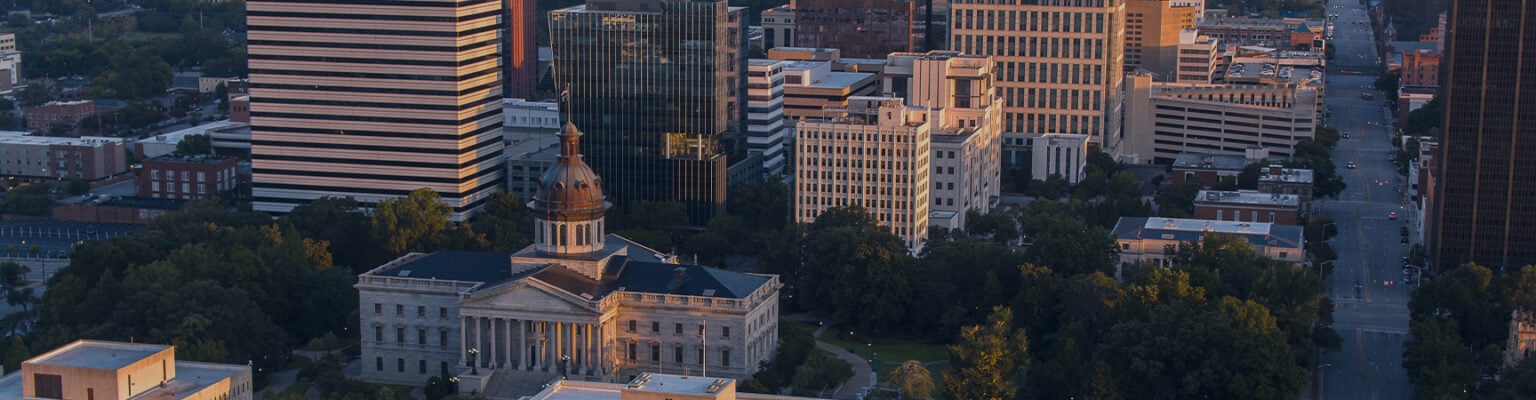
USP Tucson at a glance
USP Tucson is a high-security United States penitentiary for men on South Wilmot Road in Tucson, Arizona, with a minimum-security satellite camp beside it. It is a Sex Offender Management Program institution: of the nine prisons where the Bureau delivers its non-residential sex offender treatment program, it is the only penitentiary and the only high-security prison.
| Official name | United States Penitentiary, Tucson |
|---|---|
| BOP code | TCP · complex TCX |
| Security level | High; men |
| Population | 1,092 (as of September 2026) |
| Visiting | Penitentiary: Friday, 5:00–8:00 p.m.; Saturday, Sunday, and federal holidays, 8:15 a.m.–3:00 p.m. · Camp: Saturday, Sunday, and federal holidays, 8:15 a.m.–3:00 p.m. |
| Inmate mail | Penitentiary: Inmate Name & Register Number · USP Tucson · U.S. Penitentiary · P.O. Box 24550 · Tucson, AZ 85734 Camp: Inmate Name & Register Number · USP Tucson · Satellite Prison Camp · P.O. Box 24549 · Tucson, AZ 85734 |
| Send money | Lockbox · Western Union (code city FBOP, DC) · MoneyGram (receive code 7932) |
| Phone | 520-663-5000 · Fax 520-663-5024 |
| Street address | 9300 South Wilmot Road, Tucson, AZ 85756 · Pima County |
| Judicial district | District of Arizona |
| BOP region | Western |
| Designated capacity | 972 at the penitentiary; 128 at the camp |
| Housing | 13 units at the penitentiary and 1 at the camp; no single-cell units |
| Special Housing Unit | 120 cells at the penitentiary, serving the whole complex |
| Medical care level | Level 3 at the penitentiary; Levels 2 and 3 across the complex |
| Mental health care level | Level 3 |
| RDAP | No |
| Sex offender treatment | Non-residential program (SOTP-NR); Sex Offender Management Program institution |
| UNICOR | Disputed; see the programs section |
| Camp | Minimum-security satellite camp beside the penitentiary |
On this page
The population was 1,092 as of September 2026: 972 behind the penitentiary’s fence and 120 at the camp. The institution sits in Pima County, in the Bureau’s Western Region, and in the District of Arizona, which covers the whole state as a single federal judicial district under 28 U.S.C. § 82. It shares the Federal Correctional Complex at Tucson with FCI Tucson, a medium-security institution a mile away on the same road. Reporting in July 2020, the Justice Department’s Inspector General put the share of men in the penitentiary serving sentences for sex offenses at about 77 percent.

USP Tucson and FCI Tucson are not the same prison
USP Tucson and FCI Tucson are two separate federal prisons a mile apart on the same road in Tucson, with different Bureau codes and different mailing addresses. Check which one holds the person before you send anything.
| Facility | Code | What it is | Inmate mail |
|---|---|---|---|
| USP Tucson (this page) | TCP | High-security penitentiary, men, 972 held | P.O. Box 24550, Tucson, AZ 85734 |
| USP Tucson satellite camp | TCP | Minimum security, men, 120 held — the camp belongs to the penitentiary | P.O. Box 24549, Tucson, AZ 85734 |
| FCI Tucson | TCN | Medium-security institution with a detention center; holds men and women; 475 held | P.O. Box 23811, Tucson, AZ 85734 |
| FCC Tucson | TCX | The complex the two institutions sit in — an administrative umbrella, not a place anyone is held | — |
The Bureau’s Inmate Locator gives a facility name rather than a code: it reads “Tucson USP” for the penitentiary and “Tucson FCI” for the medium. If the result reads Tucson FCI, the person is at FCI Tucson and the mail goes to a different post office box. The camp belongs to TCP; FCI Tucson has no camp at all, so a letter addressed to “the camp at FCI Tucson” will not reach anyone.
The camp shooting attempt of November 13, 2022, in which a man held at the minimum-security camp pulled a concealed handgun on a visitor, happened at the penitentiary’s camp, not at FCI Tucson; the Associated Press report of it names “the Federal Correctional Institution in Tucson” in the same paragraph in which it describes a minimum-security prison camp.
In April 2024 the Bureau renamed six penitentiaries as correctional institutions to match security levels that had already dropped: Atlanta, Leavenworth, Lewisburg, Lompoc, Marion, and Yazoo City. Tucson was not among them, and the Bureau’s roster still lists this facility as a U.S. Penitentiary at high security. The rest of the state’s federal roster is FCI Phoenix and its camp, FCI Safford, and RRM Phoenix; our guide to federal prisons in Arizona covers all of them.
What is the security level at USP Tucson?
USP Tucson is a high-security penitentiary, the most secure category the Bureau operates outside the administrative-maximum facility in Colorado. Beside it, outside the penitentiary’s fence, sits a minimum-security camp. They share a mailing city, a switchboard, and a commissary list, and they are different places to serve a sentence.
What high security means physically, here, is cells. Inspectors describing the layout in 2020 recorded that the penitentiary’s housing units consist of “closed cells surrounding a common area,” and the Council inspectors who toured in 2016 counted two-story units with 32 cells to a side on each floor. The 2026 PREA audit recorded thirteen housing units at the penitentiary, every one multiple-occupancy, and not one single-cell unit anywhere on the complex. Refusing a cellmate is an incident report, not an option.
Whether someone lands at the penitentiary or the camp turns on a security point score under the Bureau’s security designation rules and on whether any Public Safety Factor applies; a Public Safety Factor overrides the point total, and a sex offense is one of the factors that applies it. At this institution there is a second variable on top, because the Bureau also designates men here for a reason that has nothing to do with points. Our guides to the intake process and to preparing for prison cover the first weeks after arrival.
What does it mean that USP Tucson is a SOMP penitentiary?
It means the Bureau concentrates men with sexual offense histories at a high-security penitentiary on purpose, assesses all of them, offers treatment to those who ask, and applies property, mail, and visiting restrictions that reach every man on the compound whatever he was convicted of. The institution’s handbook opens with the designation in its first line — “USP Tucson is a Sex Offender Management Program (SOMP) institution” — and states the consequence without softening it: “Effective management of sexual offenders in prisons requires modifications and restrictions in property, mail, correspondence, and visitation for ALL inmates.” The capitals are the Bureau’s.
The combination is unusual. The August 2026 First Step Act Approved Programs Guide names nine institutions where the Non-Residential Sex Offender Treatment Program runs: FMC Carswell (women only), FCI Elkton, FCI Englewood, FCI Marianna, FCI Marion, FCI Milan, FCI Petersburg Medium, FCI Seagoville, and USP Tucson. Set that against the Bureau’s roster and one entry stands apart: four are low security, three medium, and one an administrative medical center, and Tucson is the only high-security prison and the only penitentiary in the set.
How many men that covers is not something the Bureau publishes institution by institution, but the Inspector General published it once for this one. Describing the complex in a July 2020 remote inspection report, its inspectors wrote that “the USP is a Sex Offender Management Program institution, and about 77 percent of USP inmates are incarcerated for sex offenses.” That figure is six years old, and it is the only sourced proportion on the public record here. A 40 percent figure seen elsewhere for Tucson cites no source.
The Bureau’s stated reason for concentrating people this way is safety. Its sex offender program rules, Program Statement 5324.10, set the goal as reducing “the need to place sexual offenders in protective custody” and creating “an institution climate conducive to voluntary participation in treatment,” and to do it a SOMP institution “will maintain a significant proportion of sexual offenders in the population.” On a high-security yard that has a measurable result: the January 2026 PREA audit recorded no one at the complex held in segregation because of a risk of sexual victimization, and no one held there for having reported abuse. Our guide to sex offenders in the Bureau of Prisons covers the national picture.
How people are designated here
Five routes lead to a SOMP institution and only one involves volunteering. The Designation and Sentence Computation Center may send a newly sentenced man straight to one, or approve a transfer for a man who applies for treatment elsewhere. A man whose conduct inside triggers a Correctional Management Plan may be moved so the plan can be imposed. A man with “verified protective custody needs due to their sex offense history” may be redesignated here instead of being left in segregation. And men “may also be redesignated to SOMP institutions to meet the population target percentage of sexual offenders”: the Bureau moves people to keep that proportion at its target.
Leaving is the harder half, and the rule is national rather than a warden’s. Three categories of men “should not be considered for transfer to a non-SOMP institution”: anyone waiting for or taking either treatment program, anyone whose Discharge Evaluation is outstanding, and anyone under a Correctional Management Plan. Applying for treatment and then waiting on the list therefore blocks a move to a non-SOMP institution, so weigh that before the application goes in. Our guide to federal prison transfers explains how a redesignation request is made.
What the management side restricts
Treatment is voluntary. Management is not, and its categories decide what a family can post. The institution’s handbook lists them: items usable as sexual paraphernalia, including “photographs, pictures, or drawings depicting adults or children in sexually explicit or suggestive poses or situations”; material promoting the sexual exploitation of children; “[w]ritten correspondence in which individuals are discussed in a sexualized way”; and, catching everything else, “[a]ny other personal property deemed inappropriate by the SOMP Coordinator due to its association with the inmate’s risk to engage in sexually offensive behavior.” Seized items are contraband and the final call is the Warden’s.
Restrictions on contact take the same shape: a man may be barred from writing to, calling, or messaging prior victims, children he is said to be grooming and the adults who care for them, “[o]ther sexual offenders,” and anyone else local staff judge inappropriate. The visiting version adds a category that surprises families more than any other — “[c]hildren who will not be adequately supervised by an accompanying visiting adult.”
One Tucson restriction is harsher than the national pattern and decides whether a family will have email at all. The handbook states that men “with a Walsh Assignment of Certified, with Conviction and No Conviction will not receive access to TRULINCS, even if you had it at previous institutions,” and that only those carrying the no-conviction flag “may receive a waiver on a case by case basis.” In a prison where roughly three men in four are serving a sex offense sentence, that is a large part of the population with no electronic messaging. Letters and the telephone are what is left.
The visiting supplement adds a rule about the room itself. Its final numbered paragraph has the Case Manager approve or refuse visits for men “convicted of a sex offense involving a minor (WA W CONV),” provides that any man with that flag “will have his/her visits closely monitored,” and directs that “[t]hese inmates will be placed close to the Officer’s station for closer supervision and be seated away from children in the visiting room.” A family seated at the officers’ desk on a first visit has not done anything wrong; that is the policy.
One required document is not public. Program Statement 5324.10 requires every SOMP institution to keep an institution supplement setting out “how it will monitor inmates for risk-relevant behavior.” USP Tucson does not publish it. The Bureau’s page for this facility posts four documents (the 2017 handbook, the 2020 visiting supplement, the commissary form, and the PREA audit), and none is that supplement. If a restriction is imposed, ask in writing for the plan and for the local supplement it was written under, and keep the answer.
The treatment program, and the queue
The program delivered here is the non-residential one: an evidence-based recidivism reduction program worth 144 credit hours, run by Psychology Services, ordinarily taken in the last 36 to 48 months of a sentence, for men assessed at low to moderate risk — “[m]ost participants in the SOTP-NR have a history of a single sexual offense and many may be first-time offenders serving a sentence for an internet-based sexual crime.” The high-intensity residential program does not run here; the Bureau operates it at FMC Devens in Massachusetts and at Marion in Illinois. The facility at Marion became FCI Marion in April 2024; the Bureau’s sex-offender page still calls it “USP Marion.”
The only public measurement of the queue comes from the Corrections Information Council’s inspection in September 2016, which found three treatment groups running with 18 men in them, 37 men on active treatment plans, two vacant psychology posts in the program, and 250 men on the waiting list.
That snapshot is ten years old, and the Bureau has published no figure since. Ask the unit team in writing, early, where a person sits on the list and what the current group size is.
Adam Walsh certification: the review before release
The risk that makes a SOMP designation consequential for a sentence is civil commitment, and its timetable starts earlier than families expect. Section 4248 of Title 18, added by the Adam Walsh Child Protection and Safety Act of 2006, lets the Director of the Bureau certify a person in federal custody as a “sexually dangerous person,” through a Sex Offender Certification Review Branch and a Certification Review Panel inside it.
The trigger is a date, not a behavior. Under Program Statement 5394.01, the Designation and Sentence Computation Center refers to the review branch those men with a history of unlawful sexual conduct “who are between eighteen (18) and twenty-four (24) months from their projected release date,” and institution staff must refer immediately anyone already inside that window. Everyone in Bureau custody carries a Walsh Act code in SENTRY from the day they arrive, and a referral changes it.
Certification stops the release clock: “The filing of the certification stays the release of the inmate pending the outcome of a judicial commitment proceeding under section 4248.” A man whose sentence has expired does not go home while that proceeding runs. Certified men go to FCI Butner in North Carolina, the designated institution for precertification evaluations and for the Commitment and Treatment Program.
Two years out from a projected release date is therefore the moment to know what is in the file, because the referral is made on documents — the presentence report, the judgment, the statement of reasons, discipline records — written years earlier and often wrong in small ways that matter here.
Who are the notable inmates at USP Tucson?
Of the well-known prisoners linked to USP Tucson in the table below, one is held here now: Gregory Scott Stephen, co-founder of Barnstormers Basketball of Iowa. The others have left, died here, or are recorded at other prisons.
| Name | Status at USP Tucson | Case |
|---|---|---|
| Gregory Scott Stephen | Currently held here; register 17502-029, projected release August 1, 2171 | Co-founder of Barnstormers Basketball of Iowa; sentenced in the Northern District of Iowa in May 2019 to 180 years for sexual exploitation of minors |
| Larry Nassar | Former — arrived February 2018, moved out after an assault in August 2018. Bureau records carry him as Lawrence Gerard Nassar, register 21504-040, and place him at FCI Lewisburg in Pennsylvania | The USA Gymnastics and Michigan State physician, serving 60 years on federal child pornography counts |
| James “Whitey” Bulger | Former — designated here in January 2014, transferred to the penitentiary at Coleman, Florida, on September 3, 2014. Killed at USP Hazelton in October 2018 | The Boston organized crime figure convicted in 2013 of racketeering including eleven murders |
| Brian David Mitchell | Former. Bureau records spell the first name Bryan, register 15815-081, and place him at FCI Lewisburg serving life | Convicted in 2010 of kidnapping Elizabeth Smart in Salt Lake City in 2002 |
| Keith Raniere | Not here now. Register 57005-177 places him at FCI Butner Medium I in North Carolina, projected release 2120 | Founder of NXIVM; convicted of racketeering, sex trafficking, and forced labor conspiracy |
| Steven Dale Green | Died here on February 15, 2014, aged 28; register 20848-058 | Former Army private serving life for the 2006 rape and murder of a 14-year-old girl and her family at Mahmudiyah, Iraq |
| Toby MacFarlane | Former — released April 21, 2020; register 74173-298 | Former title insurance executive prosecuted in the Varsity Blues college admissions case |
Three men often listed at USP Tucson are held elsewhere. The Bureau places Larry Nassar at FCI Lewisburg, and Elizabeth Smart’s kidnapper at FCI Lewisburg too, under the spelling Bryan. Keith Raniere is recorded at FCI Butner Medium I.
Bulger’s eight months here are documented in unusual detail because the Inspector General investigated his death. Its December 2022 report records that he was designated to Tucson in January 2014 as a medical care level 3 inmate, was assaulted on April 5, 2014, by a man listed as a separatee, and was moved out that summer because “the Tucson Warden had requested ‘immediate’ transfer.” A Bureau intelligence official later wrote that Bulger “was stabbed at [Tucson] in 2014.”
How do I find someone at USP Tucson?
To find someone at USP Tucson, search the Bureau’s free public Inmate Locator by the eight-digit register number if you have it, because names repeat and the locator matches the committed name rather than the one a family uses. The locator covers everyone in federal custody since 1982: for someone still held it gives the facility and a projected release date, and for someone released it shows “Not in BOP Custody as of” and a date, with no facility. Our guide to the Inmate Locator explains the search.
Read the result carefully. It does not distinguish the camp from the penitentiary — a man at either appears as Tucson USP — so if it matters for mail or for a visit, ask the unit team whether he is at the camp. For how that number is built, and why it stays with a person for life, see how federal register numbers work.
How do I write to someone at USP Tucson?
Write to someone at the penitentiary at P.O. Box 24550, Tucson, AZ 85734, and to someone at the satellite camp at P.O. Box 24549 in the same city; neither box is the street address in the at-a-glance table above. Put the committed name and the register number on the first line.
| For someone at the penitentiary | For someone at the satellite camp |
|---|---|
| Inmate Name & Register Number USP Tucson U.S. Penitentiary P.O. Box 24550 Tucson, AZ 85734 | Inmate Name & Register Number USP Tucson Satellite Prison Camp P.O. Box 24549 Tucson, AZ 85734 |
Under the Bureau’s correspondence rules, general correspondence is opened and inspected, and at a high-security institution it is also read: the handbook is explicit that outgoing mail from a sentenced man at a medium or high security institution “may not be sealed by the inmate and may be read and inspected by staff,” which is not true of a camp or a low. Incoming first-class mail is delivered Monday to Friday by the evening watch officer. Publications have their own rule at this level — softcover books and magazines only from a publisher, a book club, or a bookstore, never from a relative’s shelf.
Legal mail is treated differently, and only when it is marked. It is opened in front of the addressee and not read, provided the envelope carries the sender’s name with “Esq.” or “Attorney at Law” and is marked on the front “Special Mail – Open only in the presence of the inmate.” Without that marking the handbook says it “may be handled as general correspondence” — which at this institution means read. What gets rejected, and why, is set out in our guides to writing to someone in federal prison and attorney-client communication in the Bureau of Prisons.
One warning specific to this prison. Because the management program reaches mail, a letter here passes more eyes than elsewhere: national policy lets SOMP staff carry out “secondary monitoring of mail when an inmate has an active Correctional Management Plan,” and a photograph of children at a swimming pool, entirely innocent, is the most common thing that starts a restriction. Mail is also what people here complain about: in the year ending in June 2016, the institution received 103 grievances about mail and 106 about medical care, granting four of each.
Never put money in a letter. Funds enclosed in correspondence are removed and returned to the sender.
How do I send money to someone at USP Tucson?
Money for someone at USP Tucson goes to the Bureau’s national lockbox in Iowa or through Western Union or MoneyGram, never to Tucson itself, and every route needs the committed name and the eight-digit register number.
| Route | Where it goes | How fast it posts |
|---|---|---|
| Postal money order or cashier’s check | Federal Bureau of Prisons Committed Name Eight-Digit Register Number Post Office Box 474701 Des Moines, Iowa 50947-0001 | U.S. postal money orders post without a hold; non-postal money orders and non-government checks carry an automatic 15-day hold |
| Western Union Quick Collect | City code FBOP, state code DC | Two to four hours if sent between 7:00 a.m. and 9:00 p.m. Eastern; otherwise by 7:00 a.m. the next morning |
| MoneyGram | Receive code 7932, company name Federal Bureau of Prisons, Washington, DC | Same posting windows as Western Union |
No cash and no personal checks. If the committed name and register number are missing from the instrument or the envelope the money goes back to the sender, and with no return address it goes to the Treasury. The fees and the trade-offs between these routes are set out in our guide to sending money to a federal prisoner.
Two limits apply to a large deposit. Commissary spending is capped nationally at $460 a month under the Bureau’s trust fund rules, so money beyond that sits in the account. And a man in refuse status under the Inmate Financial Responsibility Program is held to $25 a month whatever his balance, alongside less desirable housing and the loss of favorable requests.
What are the visiting hours at USP Tucson?
Visiting hours at USP Tucson are Friday, 5:00 p.m. to 8:00 p.m., and Saturdays, Sundays, and federal holidays, 8:15 a.m. to 3:00 p.m., at the penitentiary; the camp has visiting on weekends and federal holidays only, 8:15 a.m. to 3:00 p.m. Those hours come from complex supplement TCX 5267.09, the Tucson complex’s supplement to the Bureau’s national visiting regulations, dated September 8, 2020.
On weekends and holidays, processing stops an hour before the room closes: “Visitors will not be processed before 8:15 a.m. or after 2:00 p.m. on weekends and holidays.” The room stays open until three, but the door to it closes at two, so a visitor who arrives at 2:15 on a Saturday will not get in. The handbook adds that no one may be in the complex parking lots before 8:00 a.m.
The Bureau’s facility page for USP Tucson, like every Bureau facility page, lists no visiting hours; it links the supplement above instead. That supplement is the only published source for the hours, and it is six years old. Call 520-663-5000 before you travel.
Who can visit, and how many
- The visiting list holds a maximum of thirty people, no more than ten of them friends and associates. The institution’s 2017 handbook says twelve; the 2020 supplement is the later document and controls.
- At the penitentiary, no more than three approved adult visitors aged sixteen or over and three children, excluding infants, at any one time — six people in total.
- Every proposed visitor is run through the National Crime Information Center; a prior conviction goes to the Unit Manager and then the Warden, and a proposed visitor who did not know the person before he was incarcerated is refused.
- Visiting is first-come, first-served. The penitentiary’s visiting room holds 196 people; once it is full, staff begin ending visits, “based on the distance a visitor has driven and the length of time the visitor has been in the visiting room.” That decision belongs to the Institution Duty Officer or the Operations Lieutenant and is logged.
What visitors can wear and bring
The dress code is written around the colors staff and prisoners wear, and it is stricter than most. Barred outright: camouflage, plain T-shirts, khaki, orange or green clothing, hospital scrubs, anything resembling an officer’s uniform, shorts and capri pants, bib overalls, sweat suits, and breakaway pants. Also barred: low-cut, sleeveless, see-through, backless, tube, tank, halter, crop, and cap-sleeve tops, swimsuits, skin-tight clothing, sundresses, overcoats, excessive jewelry, and open-toe shoes. A dress or skirt may be no shorter than the back of the knee, slits included, and shorts are allowed only on a child under twelve.
Two clauses catch many visitors. “Wrist watches/timepieces/electronic sports bands of any sort are not authorized” — leave the watch in the car. And on underwear the supplement is emphatic in both directions: “Undergarments containing metal (i.e. underwire bra) are not permitted. HOWEVER UNDERGARMENTS ARE REQUIRED FOR ADMISSION.”
What you may carry in is a short list: a clear change purse no more than eight inches in either direction; no more than $25.00 for the vending machines, in denominations of $5.00 or less; photo identification; and essential medication, which the Visiting Room Officer holds after health services approve it. For an infant, a clear diaper bag no larger than seventeen by thirteen by seven inches with four diapers, wipes in a clear bag, one change of clothing, two clear bottles filled three-quarters, two small unopened jars of baby food, a receiving blanket, a clear cup, and a plastic spoon.
Everything else goes in a lobby locker or stays in the car: coats, hats, billfolds, purses, packages, toys, and every electronic device, which may not enter the administration building at all. Vehicle keys go to the front lobby officer for a numbered chit — keep it. If you were dropped off and have no car, anything you cannot take in is thrown away or the visit is refused.
Identification and screening
Every visitor aged eighteen and over, attorneys included, must present a valid government-issued photo identification: a driver’s license, a military ID, a passport including an unexpired foreign one, a tribal ID from a federally recognized tribe, or a state or local identification card. A birth certificate is accepted between sixteen and eighteen. One document is named and refused: “Matricular identification cards issued by the Mexican Consulate are not considered valid for entrance.”
Screening is layered. Everyone passes a walk-through metal detector; a surgical implant or pacemaker needs a doctor’s letter before the visit, not at the door. The penitentiary’s front lobby runs a Smith ION Track narcotics detection system on randomly chosen visitors. A confirmed positive does not automatically end the visit — the Warden or a designee decides, and the supplement warns staff that “[c]ategorically deciding to deny visitation without considering the other options should not occur” — but it can support a search, a controlled visit, or a refusal. Visitors are stamped with invisible ink and checked under black light three times: entering, at the control room, and on the way out. See our guides to searches, shakedowns, and contraband and federal prison visitation.
Getting there
From Interstate 10 take exit 269 and head south on Wilmot Road. FCI Tucson comes first, about a mile and a half south of the interchange, on the east side of the road. Keep going another mile: the penitentiary and the camp are on the west side, at 9300 South Wilmot Road. The visiting supplement puts Tucson International Airport about seven miles west of the complex.
How do phone calls and email work at USP Tucson?
People held at USP Tucson can place calls but cannot receive them. The person inside dials from a unit telephone using a nine-digit access code, and the number must be on an approved list of up to thirty. The allowance is 510 minutes a calendar month under the Bureau’s telephone regulations, Program Statement 5264.09, issued September 3, 2026: 300 minutes are free to anyone eligible for First Step Act telephone incentives, and anyone who uses up those 300, eligible or not, may buy the other 210. A single call should generally not exceed 15 minutes, at least 30 minutes must pass between completed calls, and the monthly limit does not apply to unmonitored legal calls. The handbook warns that sharing an access code or making any three-way or forwarded call is a disciplinary matter for everyone involved. How the charges and the monthly allowance work is covered in our guide to federal inmate phone calls.
Email is where this prison differs most from others. TRULINCS, which families reach through CorrLinks, is not available to a large part of this population: as the SOMP section above sets out, men whose Walsh Act assignment is Certified, With Conviction, or No Conviction do not get TRULINCS access here, even if they had it at a previous institution, and only the no-conviction group may be considered for a waiver, case by case. Someone who arrives from a low or a medium where he had been emailing his family for years can lose that access. Our page on CorrLinks and TRULINCS explains the system and its costs; do not count on it here.
Where messaging is available it is text only, monitored, and charged by the message. The Council recorded the rates in force at its September 2016 inspection as five cents a message and eleven cents a minute for a call to Washington, DC. Those are 2016 prices, useful only as a guide to the shape of the cost.
Legal calls are a separate and restrictive regime. Both the handbook and the Council’s report describe the same rule: to get an unmonitored call with a lawyer a man “must demonstrate to the Unit Team the need, such as an imminent court deadline,” he pays for it, and staff prefer it placed collect. The Council thought that too narrow and recommended in 2017 that the institution let people “place an occasional unmonitored call to his or her attorney.” The rule as the handbook states it has not changed. Put the request in writing early.
What can people buy at the USP Tucson commissary?
The monthly spending limit at USP Tucson is $460, set nationally by the Bureau’s trust fund rules, Program Statement 4500.13, issued May 7, 2026, which raised it from $360. The limit rises by $50 during the November and December holiday period, for no more than one validation period. Items excluded from the limit include postage stamps, over-the-counter medicines and vitamins, copy cards and copy paper, footwear, mattresses, and nicotine replacement lozenges.
Tucson’s own paperwork gives different figures. The 2017 handbook records “[t]he National Spending Limit is 320.00 per month” and adds that “FCC Tucson revalidates the entire inmate population bi-weekly on the 1st and the 15th of each month with $160.00.” The $320 and the $160 are obsolete as amounts. The bi-weekly mechanism is not: Program Statement 4500.13 provides that the limit is revalidated monthly “except where weekly or bi-weekly validation is used,” which is what this complex does. The Bureau has not published the current bi-weekly figure for Tucson. Listings that give $360 and $180 are out of date.
The order form itself is the oldest document the Bureau publishes for this complex: the 2016 FCC Tucson Complex Commissary List, which prints no spending limit anywhere. Its prices are ten years old and cannot be relied on. It is still useful for the rules and the shape of what is stocked: kosher, halal, and gluten-free items are marked throughout, and typewriter ribbon and correction tape are still on the sheet, which tells you how legal work gets done here.
The shopping rules are unforgiving and they are printed in a box on the form. Check the out-of-stock list before you write your order. Illegible or crossed-out items are not filled. “NO CHANGES, ADDITIONS OR SUBSTITUTIONS WILL BE MADE AT THE SALES WINDOW.” You must turn in your own list, and verify your own order, and there are no refunds or exchanges once you leave the window. Miss three calls and you are marked absent and lose the week’s shopping. Being in the commissary area outside your assigned time is out of bounds and is written up. The national rules behind them are on our federal prison commissary page.
What programs are available at USP Tucson?
The Bureau’s August 2026 First Step Act Approved Programs Guide names four programs for USP Tucson on its own program pages, and its by-institution table marks the same four. Approval is not delivery; whether a class is meeting this month is a question for the unit team. One of the four is the Tattoo Removal Program, which the guide places at exactly two institutions in the whole system: this one and FCI Tucson next door.
Drug treatment, and why there is no RDAP here
There is no Residential Drug Abuse Program at USP Tucson or at its camp, and that is the most consequential programming fact about this prison. The guide’s RDAP location list, updated in June 2026, names five Western Region institutions (FCI Herlong, FCI Lompoc, FCI Phoenix, FCI Safford, and FCI Sheridan), and Tucson is not one. Its by-institution table marks the residential drug program absent here as well, so both halves of the document agree. Drug Education and the non-residential drug program do run here.
Completing RDAP can mean up to a year off a sentence under 18 U.S.C. § 3621(e), so a man at Tucson who wants it has to be transferred to get it; the nearest options are FCI Phoenix and FCI Safford. That request runs straight into the SOMP transfer rules described above, and the two need to be argued together rather than in sequence.
The Challenge Program
The Challenge Program is the residential treatment program Tucson does have, and it is built for high-security prisons: the guide records it at eleven of them, worth 500 credit hours, open to men with at least eighteen months left and either a documented history of drug use or a serious mental illness.
At Tucson it started in 2010, lives in Unit D-2, and runs nine to twelve months as a modified therapeutic community. When the Council inspected in September 2016 it had four treatment staff, 80 men enrolled and 49 waiting, and about 160 graduates since it opened. The inspectors described it as the alternative for men who do not qualify for RDAP — which at this institution is most of them.
The fourth named program is LifeSkills Laboratories, which the guide approves at five institutions including this one: 90 hours from Psychology Services, “developed to help individuals with serious mental health illness practice life skills,” in five modules — health and hygiene, budgeting and shopping, manners and self-advocacy, cleaning and clothing care, and cooking — each at three levels, with placement set by assessment. At a Mental Health Care Level 3 institution that is a substantial thing to have.
Education and vocational training
GED and English-as-a-second-language classes are mandatory for anyone without a diploma, 240 instructional hours at minimum, and the institution pays $25 for passing the GED and $15 for the ESL certification. The education department also runs Adult Continuing Education, parenting, release preparation, correspondence courses at the student’s own expense, and the INEA program, under which the Mexican Consulate awards Mexican primary and secondary certificates — a real feature of a prison on this border rather than a formality.
The vocational catalog in the 2017 handbook covers both institutions and the camp. Its entry requirements are the part to read first.
| Track | What it is | What it takes to get in |
|---|---|---|
| Department of Labor apprenticeships | Electrical (8,000 hours, capped at ten apprentices), plumbing (8,000 hours), and cook and pastry cook (6,420 hours) | A diploma or GED, medical and safety clearance, full-time work in the trade — and a minimum of five years still to serve at this complex |
| Vocational trades | Custodial Maintenance at the penitentiary (100 classroom hours plus 20 hands-on); Basic and Advanced Baking; ServSafe certification, valid five years | A verified diploma or GED, food service clearance, two years still to serve, and 365 days of clear conduct |
| College certificate | Pima Community College Business and Accounting certificate — five college-level courses, 100 hours and six transferable credits each | A diploma or GED and two years still to serve |
Source: USP Tucson Admission & Orientation Handbook (2017). For how these tracks work across the system, see prison education and vocational training.
The record on UNICOR at USP Tucson conflicts. The 2017 handbook describes one factory at this complex (“FCI UNICOR is a recycling factory,” about a hundred men, 7:30 a.m. to 3:30 p.m. weekdays, 23 cents to $1.15 an hour) and places it at the FCI. The August 2026 guide’s Federal Prison Industries page names fifty-five codes, one of them repeated, and neither Tucson code is among them; its by-institution table marks USP Tucson anyway. Ask the unit team, because a UNICOR job pays more than any other work assignment here.
Faith-based and reentry programming
Religious Services runs pastoral care, the religious diet program, and the Threshold program; the residential Life Connections Program is not approved here. The Council’s DC respondents in 2016 reported that “Muslim-based faiths are given little attention,” and the inspectors recommended the institution assess and adjust the programming available for them.
Release preparation includes Arizona@Work, which visits the last Wednesday of each month and which the Bureau confirmed is open to men releasing anywhere in the United States, not only in Arizona. Halfway house and home confinement placement follows the release district; the Bureau lists Arizona and Southern Nevada under RRM Phoenix. See our guides to halfway houses and home confinement.
What is daily life like at USP Tucson?
Daily life at USP Tucson is built around five counts and a controlled-movement clock. This is the shape of it as the institution’s 2017 handbook sets it out.
| Weekdays | Weekends and holidays | |
|---|---|---|
| Wake-up | 6:00 a.m. | |
| Meals | Breakfast 6:30 a.m., lunch 11:00 a.m., dinner 5:00 p.m. | Coffee hour 6:30 a.m., brunch 11:00 a.m., dinner 5:00 p.m. |
| Counts | Midnight, 3:00 a.m., 5:00 a.m., 4:00 p.m., and 10:00 p.m. | |
| Standing counts | 4:00 p.m. and 10:00 p.m. | 10:00 a.m., 4:00 p.m., and 10:00 p.m. |
| Khaki uniform required | 7:30 a.m.–3:30 p.m. | — |
| Controlled movement | Begins ten minutes before the hour, ends on the hour | |
| Sick call sign-up | 6:00–7:00 a.m., Monday, Tuesday, Thursday, and Friday | — |
| Library and law library | 8:00–10:00 a.m., 1:00–3:30 p.m., and 6:00–8:30 p.m. (Monday to Thursday) | 8:00–9:30 a.m. and 12:30–3:30 p.m. |
| Call-outs for the next day | Posted on the unit board after 4:00 p.m. | |
Source: USP Tucson Admission & Orientation Handbook (2017). A nine-year-old schedule shows the shape of a day, not this week’s times.
Food service at this complex puts out about 2,796,630 meals a year on a budget the handbook states as $3.40 per person per day. The north and south sides of the penitentiary swap places in the meal rotation every month, and insulin and pill lines run by side.
Recreation covers intramural sport, fitness programming, and art and hobby craft, under the Zimmer Amendment restrictions that apply across the system: no R, X, or NC-17 films, no martial arts or weightlifting instruction, no electric instruments.
Health services are thinner than the complex’s size suggests, and the handbook says so: “emergency medical care is available 16 hours a day at this facility,” with community emergency services covering the rest. Sick call is in person at triage on Monday, Tuesday, Thursday, and Friday between 6:00 and 7:00 a.m., as each unit is released for breakfast, with a $2 co-payment for a visit the patient initiates. Our guide to medical care in federal prison covers how to escalate when this does not work.
What do inspectors say about conditions at USP Tucson?
Conditions at USP Tucson have been reported on from three directions: the Justice Department’s Inspector General, an independent Prison Rape Elimination Act auditor, and the District of Columbia’s Corrections Information Council. The DOJ Office of the Inspector General has not conducted an on-site inspection of this facility — but it made this complex the subject of a named report in 2020 and has published per-institution figures for Tucson twice since. Its staff have been to FCC Tucson twice on Bureau-wide work: a review of UNICOR’s electronics recycling, whose field work from November 2006 to February 2009 covered the recycling factory at the FCI and the warehouse at the camp that is now this penitentiary’s satellite, and a review of correctional officer hiring published in September 2011 that names the complex and no institution inside it. An independent auditor spent three days here in January 2026. And the Council inspected the penitentiary in 2016, because DC residents are held here.
The 2026 PREA audit
FCC Tucson was audited under the Prison Rape Elimination Act on January 13–15, 2026, by Matthew Taylor of Corrections Consulting Services, and the final report is dated February 24, 2026. The complex passed: 44 standards met, one exceeded (standard 115.31, employee training), and none unmet. No corrective action was required.
That result comes with a limitation. In the twelve months before the audit the complex received 35 allegations of sexual abuse — 23 between prisoners, twelve against staff — and seven of sexual harassment, according to its tables; its narrative says sixteen of both kinds. Every one of the twelve staff allegations was still open at the time of the audit, and the auditor reviewed four investigation files, all of them prisoner-on-prisoner. He recorded reviewing no staff-on-inmate files at all, and answered “no” when the form asked whether his sample covered a cross-section of outcomes. Of the concluded administrative investigations one was substantiated, twelve unsubstantiated, and one unfounded; one prisoner-on-prisoner case went for prosecution.
The audit is also the fullest public description of the complex’s physical plant on the record.
| Designated capacity | 972 at the penitentiary, 391 at the FCI, 128 at the camp |
|---|---|
| Population at the audit | 973 at the penitentiary, 475 at the FCI, 126 at the camp |
| Average daily population, previous 12 months | 968 / 443 / 113 — and the complex was over capacity at some point in that year |
| Housing units | 13 at the penitentiary, 8 at the FCI, 1 at the camp |
| Single-cell housing units | None anywhere on the complex |
| Segregation cells | 120, all at the penitentiary |
| Average length of stay | 1,521 days at the penitentiary; 324.8 days at the camp |
| Accreditation | American Correctional Association, within three years. Not NCCHC, not CALEA |
Three more figures come from the audit’s first day. Of the men at the penitentiary, 96 had disclosed prior sexual victimization at risk screening and 93 were blind or had low vision. Thirty-five people at the complex had reported being sexually abused in this facility. And no one was in segregation either for risk of sexual victimization or for having reported abuse.
The 2016 inspection
The District of Columbia Corrections Information Council inspected USP Tucson on September 1 and 2, 2016, and published its inspection report in April 2017. Everything below describes the prison as it was on those two days, and every number is drawn from a self-selected sample: the inspectors interviewed 35 DC Code prisoners out of the 69 DC residents then held, who were themselves 4.35 percent of a population of 1,585.
- Crowding. Rated capacity was 960, and the prison held 1,585 — 155 percent — at an inmate-to-staff ratio across the complex of 3.50 to 1.
- Distance. Tucson is 2,271 miles from Washington, DC, and all but one of the DC men interviewed wanted to be moved closer to home. The Council’s twelfth recommendation was to move DC prisoners to a facility within 250 miles of the District.
- Staff conduct was the dominant complaint. Twenty respondents said they had been harassed, threatened, or abused by staff, and thirteen said they had not; five said the same of other prisoners. The most-cited forms were insulting remarks and discrimination for being from DC, fourteen each, then discrimination based on the offense. Seven men reported it; none was satisfied with the response.
- One reported practice goes to this institution’s mission. Respondents said staff “have a bad habit of looking up information on why an inmate is incarcerated and then sharing the information with other inmates.” At a prison where a man’s offense determines his safety, that is not a minor complaint.
- Safety, against that, was the most-cited good thing about the place. Nine respondents volunteered that Tucson is safer than other high-security prisons they had been in — “not as violent as other facilities,” with fewer lockdowns, fights, and stabbings.
- Mental health. Tucson is a Mental Health Care Level 3 institution, and Psychology Services across the complex had seventeen staff in August 2016 — nine doctoral-level psychologists, seven treatment specialists, and a technician — with a contracted psychiatrist on site four hours a week. The Council recommended bringing in Public Health Service officers to fill the vacancies.
- Grievances. Forty-five percent of the respondents had used the administrative remedy process and nearly half said they could not get the forms.
The Special Housing Unit is where the complex’s architecture shows. It is designed for 238 men — the 120 two-man cells the 2026 audit counted — and it serves both institutions: “All inmates housed in FCI Tucson requiring placement in SHU are sent to the SHU at USP Tucson.” On the days of the inspection it held 145 men in administrative detention — 51 pending investigation, two of those beyond thirty days — and 120 in disciplinary segregation. Recreation was an hour a day on weekdays except Tuesdays and none on weekends; a telephone call was available once every thirty days on written request. That same month the institution hired a psychologist to work only with men in segregation, one of six pilot sites. See our guides to special housing units and protective custody.
One finding was unambiguously good and is still, so far as the Bureau has said, unique: USP Tucson was the first federal prison to provide video relay interpreting so that deaf and hard-of-hearing prisoners could communicate with staff, in place since 2014. The Council’s own staff were later able to interview a DC prisoner here using it.
What the Inspector General has published
FCC Tucson was one of the first two institutions the Inspector General examined when it built a pandemic inspection program in 2020, and Pandemic Response Report 20-087, published July 23, 2020, is the only Justice Department product whose subject is this complex. It was not a visit: the inspectors worked between April 27 and June 8, 2020 “through telephonic interviews with FCC Tucson and BOP officials, review of documents,” a staff survey, and hotline complaints, and they say so.
What they found was favorable. Tucson quarantined arrivals for fourteen days before the Bureau required it, split its custody roster between the FCI and the penitentiary before national guidance told institutions to, and repurposed two empty penitentiary units for quarantine and isolation. There had been no prisoner cases of COVID-19 and one staff case when fieldwork ended. And the report records something no other document does: “Unlike other BOP institutions, FCC Tucson was not experiencing a staffing shortage,” across a complex it gave in 2020 as 586 federal employees and roughly 1,900 prisoners.
Two later reports put Tucson in per-institution tables rather than examining it. The February 2024 evaluation of deaths in Bureau custody lists the ten institutions with the most deaths in the eight years from fiscal 2014 to fiscal 2021 — a count that covers suicide, homicide, accident, and unknown causes, and expressly excludes natural deaths. USP Tucson appears ninth, with eight such deaths against a population the report gives as 1,385 in March 2018. The July 2025 audit of the Bureau’s oversight of restraints lists sixteen institutions that recorded more than 300 applications of restraints during use-of-force incidents between January 2018 and September 2024. USP Tucson recorded 386, eleventh on that list, out of 14,772 across the Bureau.
Staff here have also been prosecuted: an employee was sentenced on October 29, 2019, to five years for solicitation of a bribe and falsification of records, after seeking an incarcerated man’s help in March 2016 to arrange the murder of a former partner.
Deaths and violence
Four deaths at this penitentiary are confirmed both by contemporaneous reporting and by the Bureau’s own inmate records.
- Steven Dale Green, 28, died here on February 15, 2014, in what authorities described at the time as a suspected suicide. He was serving life for the 2006 rape and murder of a 14-year-old girl and the killing of her family in Mahmudiyah, Iraq.
- Terry Drake, 73, died on December 15, 2020, of COVID-19, three weeks after testing positive and after being hospitalized and ventilated. He had been here since June 2019, serving 300 months from the Western District of Michigan.
- Stephen A. Keating, 61, was found unresponsive after a fight on November 10, 2021. He had been here since September 2013, serving 110 years imposed in Georgia for sexual exploitation of a minor and distribution of child pornography. Bureau records give his release date as November 22, 2021; the Arizona Daily Star report gives November 10 as the date he was found.
- Ruben Valle, 51, died after an altercation at about 4:00 p.m. on Saturday, May 13, 2023; a second man was treated for minor injuries. He had arrived three months earlier, serving 401 months from two Texas districts for methamphetamine conspiracy and conspiracy to commit murder. Bureau records give the date as May 14, 2023.
Two of those four men were serving sentences for sexual offenses against children, which bears on both of the Council’s findings about this prison: that its DC respondents thought it safer than other penitentiaries, and that staff were reported to be telling prisoners what other prisoners were convicted of.
The camp has its own record. On Sunday, November 13, 2022, a man held there produced a concealed handgun in the camp’s visiting room and pulled the trigger on a woman visiting him; the weapon misfired, no one was hurt, and the firearm was seized. And at about 8:10 a.m. on Wednesday, September 2, 2026, the Bureau found James Cangro, 46, missing from the same camp and notified the Marshals Service and the FBI.
USP Tucson in the news
Recent news about USP Tucson centers on a September 2026 walkaway from the satellite camp and a January 2026 death at the penitentiary; older items concern the 2022 camp visiting-room shooting attempt, the Bureau’s 2020–2022 death releases, and the stays of Larry Nassar and James “Whitey” Bulger.
- September 2026 — walkaway from the satellite camp. James Cangro was found missing at about 8:10 a.m. on September 2; the Bureau notified the U.S. Marshals Service and the FBI and asked anyone with information to call 202-307-9100.
- January 2026 — death at the penitentiary. The Bureau reported that on January 9, 2026, Ernesto Valles-Sanchez, 35, “was found unresponsive” at USP Tucson; he was taken to a local hospital and “subsequently pronounced deceased by hospital personnel,” and the FBI was notified.
- November 2022 — the camp visiting-room shooting attempt, at the penitentiary’s camp rather than at FCI Tucson.
- November 2020 to July 2022 — the Bureau posted 13 news releases reporting the deaths of people held at USP Tucson; the Bureau’s releases are listed on its press release page.
- February to August 2018 — Larry Nassar served the opening months of his federal sentence here, arriving in February, before being moved out after an assault.
- 2014 — James “Whitey” Bulger spent eight months at Tucson, was assaulted in April, and was transferred at the Warden’s urgent request in September.
Frequently asked questions about USP Tucson
What is USP Tucson?
USP Tucson is a high-security United States penitentiary for men at 9300 South Wilmot Road in Tucson, Arizona, with an adjacent minimum-security satellite camp. As of September 2026, it held 1,092 people: 972 at the penitentiary and 120 at the camp. It is part of the Federal Correctional Complex at Tucson and is a Sex Offender Management Program institution.
Is USP Tucson the same as FCI Tucson?
No. They are two prisons a mile apart on the same road. USP Tucson is the high-security penitentiary, Bureau code TCP, and it owns the satellite camp. FCI Tucson is a medium-security institution with a detention center, code TCN, holding both men and women. They have different mailing addresses and telephone numbers, and the Inmate Locator names them Tucson USP and Tucson FCI.
Why does USP Tucson hold so many men convicted of sex offenses?
USP Tucson is a Sex Offender Management Program (SOMP) institution: the Bureau concentrates men with sexual offense histories here, assesses them all, and offers treatment to volunteers. The handbook states that this “requires modifications and restrictions in property, mail, correspondence, and visitation for ALL inmates” — not only for those convicted of sexual offenses. The Justice Department’s Inspector General reported in July 2020 that about 77 percent of the men at the penitentiary were serving sentences for sex offenses.
When can I visit someone at USP Tucson?
At the penitentiary, Fridays 5:00 p.m. to 8:00 p.m. and Saturdays, Sundays, and federal holidays 8:15 a.m. to 3:00 p.m.; at the camp, weekends and holidays only, 8:15 a.m. to 3:00 p.m. Visitors are not processed before 8:15 a.m. or after 2:00 p.m. on weekends and holidays, so arriving after two means not getting in. The hours come from complex supplement TCX 5267.09 (2020), and the Bureau’s facility page lists none. Call 520-663-5000 before traveling.
What is the mailing address for USP Tucson?
Inmate Name and Register Number, USP Tucson, U.S. Penitentiary, P.O. Box 24550, Tucson, AZ 85734. For the satellite camp, substitute Satellite Prison Camp and P.O. Box 24549, same city and zip. Do not send mail to the street address, and never send money in a letter.
Does USP Tucson have RDAP?
No. The Residential Drug Abuse Program does not run at USP Tucson or at its camp. The Bureau’s August 2026 list of RDAP locations names five Western Region institutions (FCI Herlong, FCI Lompoc, FCI Phoenix, FCI Safford, and FCI Sheridan), and Tucson is not among them. Drug Education and the non-residential program are offered here. Getting RDAP means getting transferred, and a transfer request from a SOMP institution has its own obstacles.
Can someone at USP Tucson use email?
Often not. The institution’s handbook states that men whose Walsh Act assignment is Certified, With Conviction, or No Conviction “will not receive access to TRULINCS, even if you had it at previous institutions,” and that only the no-conviction group may be granted a waiver case by case. At a prison where most people are serving sex offense sentences, that removes electronic messaging for a large share of the population. Letters and the telephone are the alternatives.
How much can someone spend at the USP Tucson commissary?
$460 a month, the national limit set by Program Statement 4500.13 (2026), which rises by $50 during the November and December holiday period for no more than one validation period. Stamps, over-the-counter medicines, copy cards, and footwear do not count against it. This complex validates spending twice a month rather than once, but the Bureau has not published a current bi-weekly figure for Tucson. Sources giving $320 or $360 are out of date.
Is Larry Nassar at USP Tucson?
No. He began his federal sentence at USP Tucson in February 2018 and was moved out that August after an assault. Bureau records carry him as Lawrence Gerard Nassar, register 21504-040, at FCI Lewisburg in Pennsylvania. Keith Raniere and Brian David Mitchell, both routinely listed at Tucson, are recorded at FCI Butner Medium I and FCI Lewisburg respectively.
Is USP Tucson dangerous?
It is a high-security penitentiary, and people have died in fights here, most recently in May 2023 and November 2021. The Inspector General’s 2024 evaluation of deaths in Bureau custody ranks USP Tucson ninth among the ten institutions with the most non-natural deaths from fiscal 2014 through 2021, with eight. Yet when DC inspectors interviewed 35 men here in 2016, the good point they heard most often was that it was safer than other penitentiaries.
Has USP Tucson been inspected?
The DOJ Office of the Inspector General has not conducted an on-site inspection of this facility. It published a remote inspection of the complex in July 2020, done by telephone and document review, and later published per-institution figures for Tucson twice since. Its staff came to the complex twice for Bureau-wide reviews; neither report places them inside the penitentiary. The District of Columbia Corrections Information Council inspected the penitentiary in September 2016, and the complex passed an on-site Prison Rape Elimination Act audit in January 2026.
What is the Adam Walsh Act review, and when does it happen?
It is the Bureau’s review of whether to certify someone as a “sexually dangerous person” under 18 U.S.C. § 4248. Under Program Statement 5394.01, the Designation and Sentence Computation Center refers people with a history of unlawful sexual conduct to the Sex Offender Certification Review Branch when they are eighteen to twenty-four months from a projected release date. A filed certification stays release until a federal court decides the commitment case, and certified men go to FCI Butner.
Problems at USP Tucson: where we can help
The problems that recur here are the ones this prison’s own record keeps producing: restrictions imposed outside any hearing, a treatment queue with no published length, a segregation unit serving two institutions, and a release date that a filing can stop.
- Correctional Management Plans and the property or mail restrictions imposed under them. They come from a psychologist’s assessment rather than a disciplinary hearing, so there is no disciplinary appeal — the route is a written request for the plan and the local supplement behind it, then the administrative remedy process, which has a clock on every rung.
- Adam Walsh Act certification review. The referral window opens eighteen to twenty-four months before a projected release date and the file it is decided on was written years earlier. That is the point at which to correct what is in it.
- Sex offender treatment access and its consequences: getting onto the list, and understanding that being on it can itself block a transfer closer to home.
- RDAP, which is not offered here at all, and the transfer request that getting it requires. See our RDAP guide and federal prison transfers.
- Designation and redesignation generally: security points, Public Safety Factors, and Management Variables are all arguable, and for a family 2,000 miles away the distance is the whole problem.
- Disciplinary proceedings that threaten good conduct time, and placements in a Special Housing Unit that outlast their reason. Fifty-one men were pending investigation in that unit on the day the Council visited.
- Medical and mental health care that does not arrive. On-site emergency cover here is sixteen hours a day, and mental health vacancies were the subject of a formal recommendation to this institution. See medical care in federal prison, and Federal Tort Claims Act claims where negligence has caused an injury.
- Early release: First Step Act time credits and how they are earned and applied, and halfway house or home confinement placement through the reentry office for the release district.
- Compassionate release under the Bureau’s reduction-in-sentence procedures, and errors in sentence computation.
- Challenges to the conviction or sentence itself, through a direct appeal or a § 2255 motion.
Elizabeth Franklin-Best, P.C. handles federal criminal defense, appeals and post-conviction matters nationwide, and advises families on Bureau of Prisons issues at institutions across the system. Call (843) 620-1100 or contact us to talk through a specific situation.
Christopher Zoukis, JD, MBA, the firm’s Managing Director, writes and maintains the federal prison policy material on this site. He is not counsel of record; legal representation is provided by Elizabeth Franklin-Best.
Sources and currency
Bureau of Prisons documents
- USP Tucson, Federal Bureau of Prisons, 2026. The Bureau’s page for the institution, with its address, phone numbers, and posted documents.
- Visiting Regulations, Complex Supplement TCX 5267.09, Federal Bureau of Prisons, Federal Correctional Complex Tucson, 2020.
- USP Tucson Admission & Orientation Handbook, Federal Bureau of Prisons, 2017.
- FCC Tucson Complex Commissary List, Federal Bureau of Prisons, 2016.
- Trust Fund/Deposit Fund Manual, Program Statement 4500.13, Federal Bureau of Prisons, 2026. Sets the commissary spending limit, its holiday increase, the exclusions, and bi-weekly validation.
- Inmate Telephone Regulations, Program Statement 5264.09, Federal Bureau of Prisons, 2026. Replaced Program Statement 5264.08 (2008).
- Sex Offender Programs, Program Statement 5324.10, Federal Bureau of Prisons, 2013. Amended in 2025.
- Certification and Civil Commitment of Sexually Dangerous Persons, Program Statement 5394.01, Federal Bureau of Prisons, 2016. Amended in 2025.
- Walkaway from USP Tucson’s Satellite Camp, Federal Bureau of Prisons, Federal Correctional Complex Tucson, 2026. Press release.
- Death at USP Tucson, Federal Bureau of Prisons, United States Penitentiary Tucson, 2026. Press release.
- Inmate Death at USP Tucson, Federal Bureau of Prisons, 2020. Press release on the death of Terry Drake.
- Press Releases, Federal Bureau of Prisons, 2020–2022. The Bureau’s list of its news releases, including the USP Tucson death releases.
- First Step Act Approved Programs Guide, Federal Bureau of Prisons, Reentry Services Division, 2026.
- Sex Offenders, Federal Bureau of Prisons, 2026. The Bureau’s list of sex offender treatment locations.
- Find an Inmate, Federal Bureau of Prisons, 2026. The Bureau’s search for people in federal custody, with register numbers and custody status.
- RRM Phoenix, Federal Bureau of Prisons, 2026. The residential reentry office for Arizona and Southern Nevada.
Audits and inspections
- PREA Audit Report: Federal Correctional Complex (FCC) Tucson, Corrections Consulting Services, 2026.
- Audit of the Federal Bureau of Prisons’ Oversight of the Use of Restraints (Report 25-070), U.S. Department of Justice, Office of the Inspector General, 2025.
- Evaluation of Issues Surrounding Inmate Deaths in Federal Bureau of Prisons Institutions (Report 24-041), U.S. Department of Justice, Office of the Inspector General, 2024.
- Investigation and Review of the Federal Bureau of Prisons’ Handling of the Transfer of Inmate James “Whitey” Bulger (Report 23-007), U.S. Department of Justice, Office of the Inspector General, 2022.
- Remote Inspection of Federal Correctional Complex Tucson (Pandemic Response Report 20-087), U.S. Department of Justice, Office of the Inspector General, 2020.
- USP Tucson Inspection Report, District of Columbia Corrections Information Council, 2017. Includes the Bureau’s response.
News and other sources
- Inmate Dies After Altercation at U.S. Penitentiary Tucson, KVOA News 4, 2023.
- Federal Inmate Tried to Shoot Visitor at Tucson Prison Camp, Associated Press via Arizona Public Media, 2022.
- Fight at Federal Prison in Tucson Leaves One Inmate Dead, Arizona Daily Star, 2021.
- Nassar Transferred to a Holdover Prison After Assault, The Detroit News, 2018.
- Larry Nassar Sent to Maximum-Security Federal Prison in Tucson, NBC News, 2018.
- Convicted US War Criminal Steven Green Dead in ‘Suicide’, BBC News, 2014.
- 18 U.S.C. § 3621(e), Imprisonment of a convicted person, U.S. Code (Legal Information Institute).
- 18 U.S.C. § 4248, Civil commitment of a sexually dangerous person, U.S. Code (Legal Information Institute).
- 28 U.S.C. § 82, Arizona, U.S. Code (Legal Information Institute). Makes Arizona one judicial district.
Sources reviewed September 2026.
Reviewed for legal accuracy by Elizabeth Franklin-Best, Esq., Principal Attorney·September 2026