
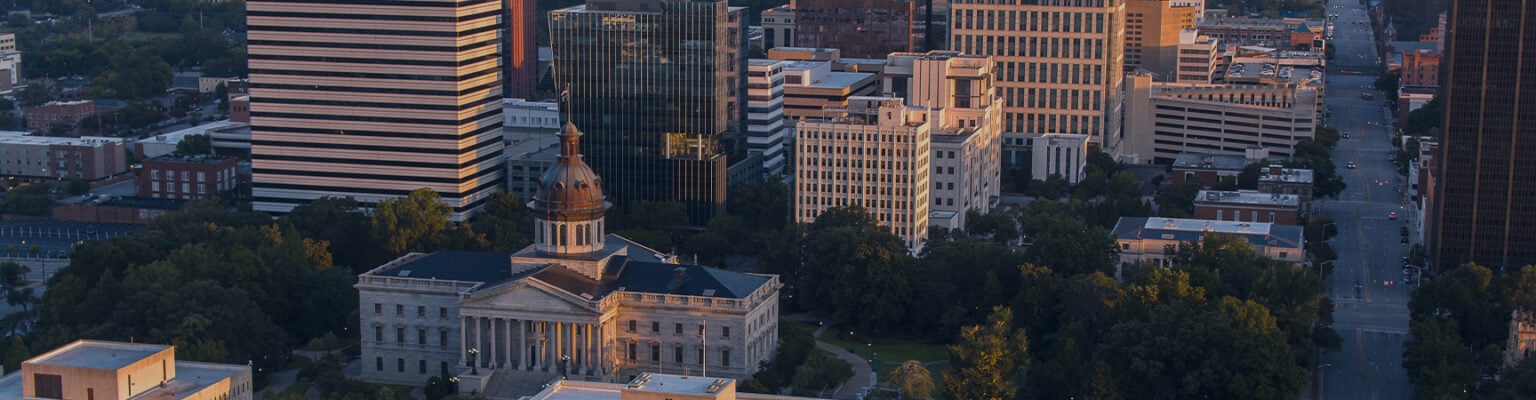
FCI Fort Dix at a glance
FCI Fort Dix is a low-security federal prison for men on Joint Base McGuire-Dix-Lakehurst in Burlington County, New Jersey, and the largest prison the Federal Bureau of Prisons operates. It held 4,214 people as of September 2026: 3,935 at the institution and 279 at its minimum-security satellite camp. The institution is split into an East Compound and a West Compound.
| Official name | Federal Correctional Institution, Fort Dix |
|---|---|
| BOP code | FTD |
| Security level | Low; men; minimum-security satellite camp |
| Population | 4,214 — 3,935 at the FCI, 279 at the camp (as of September 2026) |
| Visiting | Saturday, Sunday and federal holidays, 8:30 a.m.–3:00 p.m. · see visiting hours |
| Inmate mail | FCI: Inmate Committed Name & Register Number · Building/Floor Number · Federal Correctional Institution · P.O. Box 2000 · Joint Base MDL, NJ 08640 Camp: Inmate Committed Name & Register Number · FCI Fort Dix · Federal Correctional Institution · Satellite Camp · P.O. Box 2000 · Joint Base MDL, NJ 08640 |
| Send money | Lockbox · Western Union (code city FBOP, DC) · MoneyGram (receive code 7932) |
| Phone | 609-723-1100 · Fax 609-724-7557 |
| Street address | 5756 Hartford & Pointville Road, Joint Base MDL, NJ 08640 · Burlington County |
| Judicial district | District of New Jersey |
| BOP region | Northeast |
| Housing | 12 housing units across an East Compound, a West Compound and the camp |
| Special Housing Unit | Yes |
| Medical care level | Level 2 |
| RDAP | Yes · two programs, West Compound; not at the camp |
| UNICOR | Yes · clothing and textiles, West Compound |
| Camp | Yes · minimum-security satellite camp |
On this page
No other federal prison comes close: the next largest single institution, FCI Thomson in Illinois, held 1,927 against Fort Dix’s 3,935 on the same day, and counting each camp with its institution the second-placed FCI Lompoc II held 2,234 against Fort Dix’s 4,214. One in every thirty-three people held in a Bureau prison is at Fort Dix. Each compound has its own visiting room, food service and law library. The institution is one of the two federal prisons in New Jersey and falls under the Bureau’s Northeast Region. The prison occupies buildings the Army put up in 1950, and everything about daily life here — the waits, the crowding, the drive through a military gate — follows from those two facts, the scale and the age.

Which Fort Dix? The base, the prison and the two compounds
“Fort Dix” names three different things in the same square mile, and mixing them up is how people end up at the wrong gate.
| Joint Base McGuire-Dix-Lakehurst | An active military installation of about 45,000 people, formed under the 2005 Base Realignment and Closure round from McGuire Air Force Base, the Army’s Fort Dix and Naval Air Engineering Station Lakehurst. The prison sits inside it. You pass a military checkpoint to reach the prison at all. |
|---|---|
| FCI Fort Dix (this page) | The federal prison, run by the Bureau of Prisons. Two compounds, East and West, plus the Federal Prison Camp. |
| FCI Fairton | New Jersey’s only other federal prison, a medium-security institution with its own camp, about 51 miles to the southwest in a straight line between the two prisons’ coordinates in the Bureau’s roster. See FCI Fairton and our guide to federal prisons in New Jersey. |
The buildings are older than the prison. Answering the Corrections Information Council in 2022, the Bureau wrote that “FCI Fort Dix was constructed in 1950”; the same report records the year the prison opened as 1992. That forty-two-year gap explains a great deal: these are Army barracks with a fence around them, not a purpose-built prison.
Inside the wire, the East Compound and the West Compound run as near-separate prisons, each with its own visiting room, food service, laundry and law library. Which side someone lands on decides which visiting room you drive to and, for one program, whether they can take part at all: the Residential Drug Abuse Program runs on the West Compound, and someone on the East who qualifies is moved across.
What is the security level at FCI Fort Dix?
FCI Fort Dix is a low-security institution, and the satellite camp beside it is minimum security. The 2024 PREA audit records the facility’s security and custody levels as “Low, Minimum/Community” and its custody classifications as “In” and “Out.”
Low security at Fort Dix means open housing. The institution’s handbook says: “There are no bars, towers, or locks on rooms within the community units.” People live in rooms, not cells. Two-man rooms and lower bunks are treated as preferred housing, assigned by the unit team and revocable — a disciplinary sanction, a sanitation violation or refusing the financial responsibility program can each cost someone one. In June 2022 inspectors recorded general housing units with a capacity of roughly 370 people and eight bunk beds to a section.
Whether someone is designated to the institution or to the camp turns on their security point score and on whether any Public Safety Factor applies; a Public Safety Factor overrides the point total, which is what keeps a person with low points out of a camp. See the intake process, designation and preparing for prison.
Intake has one local feature. Fort Dix runs an Admission and Orientation unit, and inspectors recorded that people are placed in it on a Tuesday, Wednesday or Thursday, stay two days, and are then moved to a general housing unit. At an institution this size, orientation is brief.
Reporting for a self-surrender
The institution publishes its own voluntary-surrender instructions, and they are more specific than most. Report to the main gate on Pointville Road, at the intersection of Pointville and Hartford Roads, and tell the checkpoint officer you are reporting to serve your sentence; he will direct you to the West visitors’ parking lot, where Receiving and Discharge staff will meet you inside the West administration building.
Timing matters more here than at most prisons. The instructions strongly encourage arrival between 7:30 a.m. and 12:00 p.m., and warn that anyone arriving after 2:30 p.m. “may be placed in the Special Housing Unit pending screening the next business day.” A late arrival can mean a first night in segregation. Bring only the clothes you are wearing, prescription eyeglasses and a wedding band worth no more than $100. Prescribed medication and money are allowed — the money goes into the trust fund account and the medication is reviewed by medical staff. Extra clothing, jewelry, radios, cameras, cellphones and stamps are all turned away.
Who are the notable inmates at FCI Fort Dix?
FCI Fort Dix’s best-known current prisoners are Sean Combs and Christopher “Dudus” Coke. Most of the names on published lists of Fort Dix prisoners left long ago; the table gives each person’s status with register numbers where the person is still held.
| Name | Status at Fort Dix (as of September 2026) | Case |
|---|---|---|
| Sean Combs | Held here. Register 37452-054; projected release February 5, 2028 | Transferred here on October 30, 2025, to serve a 50-month sentence imposed in the Southern District of New York on two Mann Act counts of transportation to engage in prostitution; acquitted of racketeering conspiracy and sex trafficking |
| Christopher “Dudus” Coke | Held here. Register 02257-748; projected release January 29, 2028 | Leader of the Jamaican “Shower Posse”; pleaded guilty in August 2011 to racketeering conspiracy and conspiracy to commit assault in aid of racketeering, and was sentenced in the Southern District of New York in June 2012 to 23 years |
| Martin Shkreli | Former — released September 14, 2022 | Convicted of securities fraud and conspiracy in the Eastern District of New York |
| Kwame Kilpatrick | Former — released January 20, 2021 on commutation; Bureau records give his facility of record as FCI Oakdale I, Louisiana | Former Mayor of Detroit, convicted of racketeering, extortion and tax offenses |
| George Jung | Former — released July 3, 2017 | Cocaine trafficker, the subject of the film Blow |
| Vincent “Buddy” Cianci | Former — released July 27, 2007 | Former Mayor of Providence, Rhode Island, convicted of racketeering conspiracy |
| Richard Steve Goldberg | Former — released May 24, 2024; facility of record FMC Devens, Massachusetts | Former FBI Ten Most Wanted fugitive, convicted of child pornography offenses |
Martin Shkreli has not been at Fort Dix since 2022 and is out of custody altogether. Kwame Kilpatrick’s last Bureau facility was FCI Oakdale I in Louisiana, facility code OAK in his record, not FTD. Richard Steve Goldberg, who appears on nearly every Fort Dix list, was released in May 2024 from FMC Devens.
How do I find someone at FCI Fort Dix?
To find someone at FCI Fort Dix, use the Bureau’s free public Inmate Locator. Search by name, or by the eight-digit register number if you have it. The number is the reliable key: at a prison holding more than four thousand men, common names produce a lot of near matches, and the locator matches the committed name rather than a nickname. It covers everyone in federal custody since 1982: for someone still held it gives the facility and a projected release date, and for someone released it shows “Not in BOP Custody as of” and a date, with no facility.
If the locator shows nothing, the usual reasons are that the person is in state rather than federal custody, that they are still in pretrial detention under the U.S. Marshals Service, or that the judgment spells the name differently from daily use. Our guide to how register numbers work explains how the eight digits are assigned.
How do I write to someone at FCI Fort Dix?
Write to someone at FCI Fort Dix at P.O. Box 2000, which the institution and the camp share, and add the line the institution’s handbook asks for and the Bureau’s website address block leaves out: the building and floor number. At a prison spread across two compounds and a dozen housing units, that line is what gets a letter to the right unit.
| For someone at the FCI | For someone at the camp |
|---|---|
| Inmate Committed Name & Register Number Building/Floor Number Federal Correctional Institution P.O. Box 2000 Joint Base MDL, NJ 08640 | Inmate Committed Name & Register Number FCI Fort Dix Federal Correctional Institution Satellite Camp P.O. Box 2000 Joint Base MDL, NJ 08640 |
P.O. Box 38 is the staff mailbox — it appears on some of the institution’s own letterhead, but inmate mail sent there does not arrive.
Fort Dix applies the Bureau’s contraband-prevention mail rules strictly, and its handbook lists them one by one. Envelopes and paper must be white. Mail containing glitter, lipstick or crayon is rejected, as is mail that is stained or oily. Stamps and envelope flaps may be removed before delivery. Mail using a printed address label, for sender or recipient, may be rejected — handwrite it or use an address stamp. Anything sprayed with perfume or cologne may be rejected. See writing to someone in federal prison.
Legal mail adds a step that surprises attorneys. Special and legal mail is still opened only in the presence of the person it is addressed to and is not read — but the envelopes are photocopied first, “with only the copy provided to the inmate.” For the privilege to attach at all, the sender must be clearly identified and the front marked “Special Mail — Open Only in the Presence of the Inmate.” An attorney letter without that marking is opened and read as ordinary mail. See attorney-client communication in the Bureau of Prisons.
Going the other way, outgoing legal and special mail is not dropped in a unit box. It must be handed to the unit team between 3:00 p.m. and 4:00 p.m., Monday to Friday, already addressed and stamped, for deposit in the legal mail box. Miss that hour and the letter waits a day.
Money does not go in a letter. The handbook requires negotiable items, money orders and checks to be sent to the national lockbox instead, and says that one arriving without the committed name and register number is returned to the sender by certified mail. The deposit routes below are the only ones that work.
How do I send money to someone at FCI Fort Dix?
Money for someone at FCI Fort Dix goes to the Bureau’s national lockbox in Iowa or through one of two wire services; nothing sent to 5756 Hartford & Pointville Road, or to either post office box, reaches a trust fund account. All three routes need the committed name and the eight-digit register number.
| Postal money order, government or business check | Federal Bureau of Prisons Inmate Name Eight-Digit Register Number Post Office Box 474701 Des Moines, Iowa 50947-0001 | Postal money orders and federal, state and local government checks post with no hold. Every other non-postal money order and non-government check carries an automatic 15-day hold. Personal checks are not accepted at all |
| Western Union Quick Collect | Code city FBOP, DC, using the Blue Quick Collect form | The Bureau’s Send Money page gives 2–4 hours for a transfer sent between 7:00 a.m. and 9:00 p.m. EST, and 7:00 a.m. the next morning for a later one; PS 4500.13 says ordinarily within two hours |
| MoneyGram | Receive code 7932, company name Federal Bureau of Prisons, Washington, DC | Identical posting times |
If the committed name and register number are not on both the instrument and the envelope, the funds go back to the sender. Our guide to sending money to a federal prisoner sets the routes against each other on speed and fee.
Before sending a large amount, know what it can be spent on. Commissary spending at Fort Dix is capped at $180 per validation period, twice a month — $360 a month — and money beyond that sits in the account. Someone refusing the Inmate Financial Responsibility Program is restricted to $25 a month.
What are the visiting hours at FCI Fort Dix?
Visiting at FCI Fort Dix, at both compounds and the camp, runs 8:30 a.m. to 3:00 p.m. on Saturdays, Sundays and federal holidays, under institution supplement FTD 5267.09N, Visiting Regulations, dated July 13, 2026. The supplement is explicit that there is “no visiting on Tuesdays, Wednesdays, Thursdays, or Fridays unless a Federal Holiday falls on one of the days.”
The institution’s Admission & Orientation handbook, revised July 6, 2026 — one week earlier — says both compounds and the camp also visit on Mondays, and both documents are on bop.gov. The visiting supplement is the later document and the institution’s governing directive on visiting, so it controls: a family planning a Monday trip on the strength of the handbook will arrive to a closed visiting room. Call 609-723-1100 before you travel.
| Visiting supplement (controls) | A&O handbook | |
|---|---|---|
| East and West Compounds | Sat, Sun and federal holidays, 8:30 a.m.–3:00 p.m. | Sat, Sun, Monday and federal holidays; Monday until 12:00 p.m. only |
| Federal Prison Camp | Sat, Sun and federal holidays, 8:30 a.m.–3:00 p.m. | Sat, Sun, Monday and federal holidays, 8:30 a.m.–3:00 p.m. |
| Special Housing Unit | Mondays 8:30 a.m.–3:00 p.m., two hours only; none on federal holidays | Mondays 12:00 p.m.–3:00 p.m. and federal holidays falling on a Monday |
| Visiting points | 8 a month, 2 points per visit | 8 a month, 2 points weekend, 1 point weekday |
Two timing rules cost people the visit. Visitor processing in the front lobby stops at 2:00 p.m. — not 3:00. And at 3:00 p.m. visitors and inmates separate and are processed out, with everyone off the grounds by 3:30. Arriving at 1:50 p.m. after a long drive leaves almost no visit at all.
Special Housing Unit visits do not happen where you expect. They are non-contact video visits, and the visitor is processed at the Federal Prison Camp, not at the compound, two adults and two children at a time. If the video equipment is out of service, SHU visits are canceled outright.
Who can visit, and how many
- The list holds immediate family plus ten friends and other relatives. Changes are permitted once every six months — far tighter than most institutions, so get it right the first time.
- Someone transferring in keeps their previous approved list for 30 days. Everyone other than immediate family needs a background check: form BP-A0629 is mailed out by the person inside and returned to the counselor by regular mail only — faxed copies are not accepted.
- No more than three adults and three children may visit one person at a time without prior approval. A Minister of Record added through the Chaplain counts against neither the visitor limit nor the social-visit count.
Crowding is the other limit, and it follows from the size of this place. The supplement caps visiting rooms at 250 on the East, 350 on the West and 150 at the camp. When a room fills, staff ask for volunteers to leave and then terminate visits — and the order is written down: “visitors from the local commuting area (within a 100-mile radius) will be the first to be terminated.” If you live in Philadelphia or North Jersey you are at the front of that line.
What visitors can wear and bring
Prohibited: shorts of any kind except on children under ten; sheer, net or mesh garments; sleeveless blouses — shirts must cover the entire shoulder; crop, halter, backless or low-cut tops; hats other than religious; wrap-around skirts and dresses; spandex, tights or leotards; sweats; anything with holes; hooded clothing of any kind; skirts or dresses more than two inches above the knee; open-toe shoes; and camouflage.
Nothing may resemble what the people inside wear, and that differs by location: khaki at the institution, dark green at the camp. The older handbook sets the skirt rule at four inches rather than two; dress to the two-inch rule.
You may bring one clear plastic container, no larger than one cubic foot, per visitor, and inside it up to $60 in $1, $5 and $10 bills for the vending machines — a higher allowance than most federal prisons permit, and it must be small bills. For an infant: three clear bottles filled no more than three-quarters, two unopened jars of baby food, wipes, five diapers, a blanket and one change of clothes. Strollers are not permitted, nor are food, newspapers, phones, recording equipment, radios, pictures or tobacco, and no visitor may leave money for an account.
Identification, screening and the military gate
Fort Dix has two gates, and the first one is not the prison’s. Before you reach the institution checkpoint you pass onto an active military installation, and the handbook sets out what that requires: “In order to gain access to the installation all vehicles entering Fort Dix must be insured, properly registered and operated by a licensed driver. Proof of insurance, registration and driver’s license is required and will be asked for. If these items are not in possession or not valid, the visitor will not be permitted entry to the post.”
If you are borrowing a car, check its papers: an expired registration card in someone else’s glove compartment ends the trip before the prison is in sight. Every visitor except a minor must also produce valid identification to enter the installation, separately from the prison’s own check.
At the prison, every visitor aged sixteen or over must show photo identification — a driver’s license, passport or other government-issued photo card — and children under sixteen must be accompanied by an approved adult. Everyone is marked on one hand with an invisible-ink stamp checked under a black light before the sally port, and everyone clears a walk-through metal detector; a visitor who cannot, for medical reasons such as surgical pins or plates, must produce a doctor’s certificate stating where the metal is — a general note will not do.
Fort Dix runs an ion spectrometry program, and a positive test suspends visiting on a ladder: 48 hours for a first confirmed positive, 30 days for a second, 90 for a third and 180 for a fourth and any after. Testing is random. One protection is written in: “At no time will disciplinary action be taken against an inmate when an individual scheduled to visit the inmate tests positive for a controlled substance.” Refusing any search means leaving the grounds. See searches, shakedowns and contraband, and, for the rules generally, the Bureau’s visiting regulations and our guide to federal prison visitation.
Getting there
The institution is off Pointville Road on the Dix side of the joint base, about forty-five minutes east of Philadelphia. From Philadelphia over the Ben Franklin Bridge: Route 30 East to Route 38 East for roughly twenty miles, left onto Route 616 at Pemberton, through two lights, right onto Route 630, which becomes Pointville Road and runs to the institution checkpoint. From northern New Jersey: the Turnpike to exit 7, then Route 206 South to Route 630. From the south: I-95 North to I-295 North, exit 40 onto Route 38 East. Coming through the checkpoint the East Compound is on your right, the West Compound on your left and the camp straight ahead. There is no public transport to the gate.
The Bureau’s facility page for Fort Dix gives no visiting days or hours; the schedule is in the visiting supplement, a PDF linked from that page.
How do phone calls and email work at FCI Fort Dix?
Calls at FCI Fort Dix go one way: the person inside places every call, and no one can call in. The number must be on their approved list, which holds up to thirty numbers. Under the Bureau’s telephone regulations, Program Statement 5264.09, issued September 3, 2026, people get 510 minutes a calendar month: 300 of them are free to anyone eligible for First Step Act telephone incentives, and anyone who uses up those 300, eligible or not, may buy the other 210. A single call should generally not exceed fifteen minutes, and properly arranged unmonitored legal calls do not count against the 510.
At Fort Dix the phones are in the community units and run 6:00 a.m. to 11:30 p.m., then shut off. No phone is in use during a count — and the counts here are at midnight, 3:00 a.m., 5:00 a.m., 4:00 p.m. and 9:30 p.m., with an extra 10:00 a.m. count on weekends and holidays. Calls may not be made during work hours. Every call except a properly placed legal call is monitored and recorded, and three-way calls, sharing a PIN and letting someone else talk on your time are all prohibited acts. See our guide to federal inmate phone calls.
Email here is TRULINCS; the account a family opens on the outside is CorrLinks, and our guide below explains the setup. Email with a lawyer is not privileged — privileged written communication has to go by properly marked special mail, and at Fort Dix the envelope is photocopied before delivery. See CorrLinks and TRULINCS and staying in contact.
What can people buy at the FCI Fort Dix commissary?
People at FCI Fort Dix can spend up to $180 per validation period at the commissary, and Fort Dix validates twice a month, on the 1st and the 15th — $360 a month. That limit comes from the institution’s 2026 handbook.
The national ceiling is higher. The Bureau’s trust fund rules, Program Statement 4500.13, issued May 7, 2026, set the Bureau-wide limit at $460 a month and record the increase from $360 — but the same paragraph provides that the limit is revalidated once a month “except where weekly or bi-weekly validation is used,” which is what Fort Dix does. So the $360 here is not a stale copy of the old national figure; it is a local structure the national policy expressly contemplates. Listings that give Fort Dix a $460 monthly limit apply the national ceiling, not the local limit.
Some purchases do not count against the limit. Under PS 4500.13 the exclusions are postage stamps; nicotine replacement products; over-the-counter medications, medical products and vitamins; kosher and halal shelf-stable entrees for people in refusal status on the financial responsibility program; copy cards and copy paper; footwear including sneakers and safety shoes; mattresses; and a secured media device. During the November and December holiday period the limit rises by $50, for no more than one validation period.
The 2025 commissary list, approved by Warden R. Thompson, caps purchases by category: twelve soups or rices, twelve meat and fish items, three of any candy, two of any chip. Soda is sold only from the 1st to the 14th of the month. Batteries are exchange-only. Copy cards are $7.50 for fifty copies, and a Score 7T tablet is $141.70.
Around sixty items carry kosher or halal marking, including shelf-stable beef rib steak, bone-in chicken, beef cholent and vegetable and kidney-bean curries — a range that reflects a population where nearly a quarter had limited English at the last audit. And three typewriter ribbons are still stocked, at $9.60 to $10.85, because the legal-activities supplement makes people buy their own: typewriters are provided in the law library, but “inmates will be responsible for purchasing their own typewriter ribbons and printwheel from the commissary.” At a prison this size, where the 2022 inspection counted sixteen library computers, that is what preparing a filing involves. See the federal prison commissary.
What programs are available at FCI Fort Dix?
FCI Fort Dix runs two Residential Drug Abuse Programs, GED and English classes, vocational training, a UNICOR textile factory and the faith-based Life Connections Program.
RDAP and drug treatment
Fort Dix runs the Residential Drug Abuse Program, and it runs two of them. The RDAP locations list in the Bureau’s First Step Act Approved Programs Guide (2026), which counts 57 RDAPs at 50 locations, names “FCI Fort Dix 1” and “FCI Fort Dix 2” as separate entries. Very few institutions appear twice.
Where those programs sit matters. The institution’s handbook says RDAP is “only offered on the West compound. If housed on the East and you are found eligible you will be moved to the West.” It adds: “If at the camp and found eligible you will be transferred to a camp with the RDAP.” Qualifying for RDAP from the Fort Dix camp does not mean moving across the road. It means a transfer to a different prison, possibly far from home.
Tell the psychologist at intake screening that you are interested and the referral is automatic; change your mind later and the only route is an email, because the handbook states that drug-treatment questions are “ONLY addressed through email.” The program is nine months residential, six months of transitional services at the halfway house and continuing treatment on supervised release, delivered as a half-day program.
Whether the year off under 18 U.S.C. § 3621(e) is available is not decided at Fort Dix. The handbook says the eligibility packet goes to the Bureau’s Designation and Sentence Computation Center at Grand Prairie, Texas, and that office decides; the unit team does not.
Education and vocational training
GED enrollment is mandatory for anyone without a verified high school diploma and runs to 240 hours of instruction; English-as-a-second-language enrollment runs until the CASAS tests are passed. That second requirement carries real weight here: on the first day of the 2024 PREA audit, 987 of the 3,859 people in the facility were limited English proficient — roughly one in four. The Education Department keeps a foreign-language library in Chinese, Korean and Russian.
All four Bureau vocational tracks are offered — staff-taught marketable-skill courses, Advanced Occupational Education, Department of Labor apprenticeships and short-term industry certificates — with post-secondary study by external correspondence at the student’s own cost. See prison education and vocational training.
Capacity is the constraint, and inspectors put numbers on it in June 2022: 303 people in vocational programming out of a population of 3,215, classes one day a week for each unit, a designated classroom capacity of ten, and an associate degree program through Mercer County Community College suspended for the pandemic.
The law library is reachable only from Education Department computers; the terminals in the units carry TRULINCS. In June 2022 inspectors counted sixteen computers, two label printers and about two typewriters for a population of 3,215, and copies run fifteen cents a page. The camp’s satellite law library runs 7:30 a.m. to 9:00 p.m., seven days a week. Local law-library rules come from institution supplement FTD 1315.07I, Inmate Legal Activities.
That supplement dates from 2015, is signed by a warden who left years ago and cross-references a visiting supplement rescinded twice over. It is still the only local document on law-library access, electronic discovery and unmonitored attorney calls that the institution publishes, and the Fort Dix page on bop.gov does not link to it; the “Inmate Legal Activities” link there points to the national program statement.
Two rules from it matter to any lawyer sending discovery. Electronic media must be mailed by counsel, and at the institution the client may not possess or carry it at all: staff move it to Education, it is stored there, and Education staff decide when it can be reviewed on an access computer. At the camp it may be kept in a personal locker. And an unmonitored attorney call is available only on a showing that mail, visits and monitored calls are inadequate — the supplement gives an imminent court deadline as the example.
UNICOR at Fort Dix makes clothing and textiles. Hiring is from a waiting list on a six-to-one ratio — six from the prior list, then one from the general list — and pay runs from $0.23 an hour at grade five to $1.15 at grade one, with a GED required above grade four. Inspectors recorded 238 workers in June 2022 against 285 the factory needed, and noted that the East-side operation, an electronics recycling factory, had moved to Schuylkill, leaving UNICOR on the West side only. That plant has its own history: the Inspector General examined staff and inmate exposure to cadmium and lead at the Fort Dix e-waste operation in its 2010 review of the program.
Faith-based and reentry programming
Fort Dix is one of five institutions in the entire Bureau that runs the Life Connections Program, the residential faith-based reentry program. The Bureau’s 2026 First Step Act Approved Programs Guide names the five in the program’s own description — Carswell, Milan, Terre Haute, Fort Dix and Greenville. Its by-institution table marks twenty-nine institutions, Fort Dix among them. If faith-based residential programming matters to a reentry plan, this is one of the few places it exists. See religious programs in prison.
Fort Dix does not run the Mental Health Step Down Program; the guide names its five institutions as Allenwood USP, Atlanta, Butner Medium I, Fort Worth and Sheridan. The guide’s by-institution grid marks Fort Dix for twenty-five evidence-based recidivism reduction programs and forty productive activities.
A note on First Step Act programming. Being approved to offer a program is not the same as running it, and the gap can be wide. Inspectors in June 2022 counted nine First Step Act classes on offer; the Bureau replied in the same report that “FCI Fort Dix currently has 34 First Step Act programs actively operating for the inmate population.” Neither figure can be checked from outside; ask the unit team in writing what is actually running. See the Bureau’s time-credits policy and our work on First Step Act time credits.
Release planning has two tracks in the institution’s 2026 handbook. A mandatory Unit Release Preparation Program starts when a man enters the pre-release phase, “normally 17-19 months remaining to serve”; a voluntary Institution Release Preparation Program takes men “within 30 months of release,” and the handbook warns that not taking part “could affect placement into a Residential Reentry Center program.” The Bureau’s release preparation policy, Program Statement 5325.09, issued June 22, 2026, two weeks before the handbook’s July 2026 revision, now enrolls people in the Release Preparation Program “between 18 and 24 months prior to their institution departure date to the community”; where the handbook’s timings differ, the program statement is the Bureau’s governing policy. Halfway-house placement runs through the reentry office for the district a man releases to — for New Jersey, RRM Philadelphia — so ask the unit team in writing when his referral will be reviewed. See federal halfway houses and home confinement.
What is daily life like at FCI Fort Dix?
Daily life at FCI Fort Dix runs on hourly controlled moves, five counts a day and a fixed meal schedule, as the institution’s 2026 handbook sets out; schedules change, so treat the table as the rhythm rather than a guarantee.
| Weekdays | Weekends and federal holidays | |
|---|---|---|
| Wake-up | 6:00 a.m. | |
| Breakfast | From about 6:00 a.m. | Coffee hour from about 6:30 a.m. |
| Midday meal | Lunch from about 11:00 a.m. | Brunch after the 10:00 a.m. count clears |
| Dinner | After the 4:00 p.m. count clears | |
| Counts | Midnight, 3:00 a.m., 5:00 a.m., 4:00 p.m. and 9:30 p.m. | The same, plus a 10:00 a.m. stand-up count |
| Uniform required | 7:30 a.m. – 4:00 p.m. | — |
| Controlled moves | Five minutes, hourly, seven days a week, lower compound then upper | |
| Recall to the unit | 8:30 p.m. | |
| Telephones and TRULINCS | 6:00 a.m. – 11:30 p.m., off during counts | |
| Television and recreation rooms | 6:00–7:30 a.m., then 11:00 a.m. onward | From 6:30 a.m.; to 2:00 a.m. on Friday, Saturday and nights before a holiday |
| Lights out in rooms | 11:30 p.m. | |
The controlled move shapes the day. The compound is divided in half at the Lieutenant’s Office; the compound officer calls a five-minute move for the lower half, clears it, then calls a five-minute move for the upper. Five minutes to get where you are going, hourly, seven days a week, and anyone still out when the move ends is sent to the recreation track until the next one. With four thousand people moving on that clock, callouts get missed and nothing here happens quickly.
Housing is in community units. Rooms must be ready for inspection and beds made by 7:30 a.m., with nothing taped to walls, doors or lockers. Unit laundry is free on the compounds on the unit’s wash day, linen exchanged weekly and blankets monthly; at the camp people wash their own clothes and buy their own detergent.
Recreation is unusually well equipped for a low: a gymnasium, weight rooms, stationary bicycles and music rooms indoors, and a softball field, a soccer and football field, handball and racquetball courts, horseshoe pits, volleyball courts and bocce lanes outdoors. Hobby craft — art, music and leather craft — sits on the third floor of the Education Building. Intramural sport is split over and under the age of thirty-five, and the 2024 PREA audit put the age range at 19 to 82 at the institution and 19 to 86 at the camp.
Fort Dix is a care level 2 institution; care level 3 and 4 patients are transferred elsewhere. Health services run on a fixed rhythm. Sick-call triage is during the morning meal on Monday, Tuesday, Thursday and Friday, excluding federal holidays; a provider is on site seven days a week from 6:00 a.m. to 8:00 p.m. including holidays, with a physician or mid-level on call otherwise. Dental sick call is 6:15 to 6:45 a.m. on the same four days and is for urgent problems only. Morning insulin is 6:00 to 6:30 a.m. and evening insulin follows the 4:00 p.m. count. See medical care in federal prison.
Where does the water at FCI Fort Dix come from?
The water at FCI Fort Dix comes from the Army’s Dix Drinking Water System, not from the Bureau of Prisons: Public Water System ID No. 0325001, one of eighteen separate drinking-water systems on Joint Base McGuire-Dix-Lakehurst. No one at the prison tests or treats the water; the base publishes an annual Consumer Confidence Report, which says so and places hard copies, in its own words, at “the Dix Correctional Facility.”
The report for calendar year 2025 answers its own question “Is my water safe?” with “Yes.” The Dix system draws from three wells screened in the Potomac-Raritan-Magothy aquifer at 1,118 to 1,155 feet, filtered and chlorinated, plus a four-million-gallon-a-day surface plant on the Greenwood Branch of the North Branch of the Rancocas Creek. It recorded one Notice of Violation in the year, and it was administrative rather than about the water: the base filed its annual lead service line inventory by email on time, but New Jersey had switched to a new electronic reporting system and the submission was not accepted. The report says the matter was resolved and “there is nothing you need to do currently.”
The 2023 report for the same system gives the numbers a family is likely to want. Regulated per- and polyfluoroalkyl substances — PFOA, PFOS and PFNA — were below the detection limit of 2 parts per trillion, against New Jersey maximum contaminant levels of 13 and 14. Of thirty lead samples taken in 2021, the ninetieth-percentile result was 0 parts per billion against an action level of 15, and 160 coliform samples returned no positives. The same report also rates susceptibility: New Jersey rates the Rancocas Creek surface source high for pathogens, inorganics and disinfection-byproduct precursors, and lists the potential contaminant sources it found, all on the base, as waste handling facilities, a closed landfill, septic tanks, industrial land use and the golf course.
That closed landfill is the Fort Dix Landfill, 126 acres that operated from 1950 to 1984, went onto the Superfund National Priorities List, was capped under a 1991 Record of Decision and was delisted on September 24, 2012. It remains inside a New Jersey Classification Exception Area — a formal restriction on using the groundwater beneath it — and under federal review every five years; the sixth, issued in May 2023, found the remedy functioning as intended and no contaminant of concern migrating beyond the site boundary. PFOS and PFOA were separately confirmed at the Dix side of the base in 2016, in groundwater rather than in the treated drinking water.
In short, for a family told the water at Fort Dix is poisoned: the base has a real and documented contamination history in its groundwater, and the treated drinking water delivered to the prison met federal and state standards in each of the reports cited here. Both are true at once, and the reports are public.
What do inspectors say about conditions at FCI Fort Dix?
Inspectors have published little about conditions at FCI Fort Dix, given its size. The DOJ Office of the Inspector General has not conducted an on-site inspection of this facility. Members of Congress asked for one: on January 15, 2021, after the worst COVID-19 outbreak in the federal prison system, Senators Cory Booker and Robert Menendez and eight New Jersey members of Congress wrote to the Inspector General asking him to investigate the pandemic response at Fort Dix. As of September 2026 the Inspector General has published no report inspecting this institution, and its list of ongoing work names FCI Berlin, FCI El Reno and FCI Estill — not Fort Dix.
Inspector General staff have been here repeatedly, but as stops on Bureau-wide reviews rather than to inspect the place: Fort Dix was one of three institutions sampled for the 2024 audit of the Inmate Financial Responsibility Program, one of six for the 2020 review of pharmaceutical drug costs, and one of four visited for the 2004 review of the Bureau’s selection of Muslim religious services providers. None of those makes a finding about conditions here.
So the only published independent look at how people actually live at the largest prison in the federal system is a two-day visit by a District of Columbia agency, four years ago, because DC residents happen to be held here.
The 2022 inspection
The District of Columbia’s Corrections Information Council inspected FCI Fort Dix on June 15–16, 2022, and published its report on December 9, 2022. It recorded a rated capacity of 4,600. The denominators are small and matter: fifty-two DC Code offenders were held here, and twenty-one responded to the Council’s survey. Every figure below is out of those twenty-one self-selected volunteers, not out of the 3,215 people then in the prison, and every condition described is as of June 2022.
- All 21 respondents said conditions in the general housing units were poor, and raised black mold in the shower and bathroom areas, with cleaning supplies scarce or too weak for it.
- All 21 said there was no air conditioning in general housing, and that a working A/C unit was one of the incentives for joining UNICOR or RDAP.
- The Council was shown the RDAP and UNICOR housing units and told they were identical to general housing. Respondents said that was not accurate, “citing differences in capacity, cleanliness, access to programming and resources, and access to A/C.”
- 6 of 21 reported being harassed or abused by staff, describing verbal disrespect and unnecessary shakedowns, and respondents reported no consistent case-management service.
- About half the total population was receiving chronic care, seen at least once a year, and five respondents on chronic care said they had not received required care or accommodations — orthopedic shoes, CPAP machines, canes.
- 4 of 21 had spent time in the Special Housing Unit and said it was cleaner than general housing and had air conditioning. Of the 8 respondents within 18 months of release, five had taken no release-preparation program and had not discussed release planning with their unit team.
The Bureau’s written response is published alongside and disputes a good deal. On the housing tour it says the Council’s own analyst “requested to proceed to the visitation building instead of general housing unit 5812 due to the range of limited time for completion of interviews.” On mold it says an external audit of the institution’s safety program received the highest rating of Superior and inspected inmate living areas “with no finding of black mold.” On heat it describes ceiling fans installed in each room in 2007. On staff conduct and medical complaints it says the Council gave no specific information for it to investigate. Neither account can be verified from outside, and the Council’s next inspection, listed under its 2026 fiscal year, has not yet been reported.
Staffing and medical capacity
The two sides could not agree even on a staffing ratio. The Council cited Bureau data published on September 30, 2021, giving an inmate-to-correctional-officer ratio at Fort Dix of 14.4 to 1. The Bureau replied that the Council had asked for the staff-to-inmate ratio and that the institution had supplied one staff member to 5.8 inmates. The two figures measure different things.
The medical numbers are firmer. In written answers to the Senate Judiciary Committee transmitted on February 17, 2021, the Bureau’s director described the Fort Dix medical department as forty-one staff, including one clinical director, four staff physicians, three dentists, three pharmacists, three advanced practice providers and thirteen nurses. In 2022 the Bureau told the Council that five doctors is “a full complement … allocated by the agencies staffing guidelines.” Five physicians for a population of 4,214 as of September 2026, about half of whom are in chronic care clinics.
Mental health is thinner still. The Council recorded three staff psychologists and one medication-assisted-treatment psychologist, offering Anger Management, Criminal Thinking and Emotional Self-Regulation. Groups ran quarterly, two or three groups a cycle, eight to ten people a group. That is on the order of twenty to thirty group places a quarter, in a prison of four thousand.
The 2024 PREA audit
Fort Dix was audited under the Prison Rape Elimination Act from January 30 to February 1, 2024, by an independent auditor, Valerie Wolfe Mahfood, subcontracted by PREA Auditors of America; the final report is dated March 17, 2024. The facility passed well: six standards exceeded, thirty-five met, none not met — the exceeded standards including supervision and monitoring, provision for inmates with disabilities and limited English proficiency, and inmate education.
The audit is also the most detailed public description of the physical plant and the population that exists for this prison.
| Designed capacity | 4,375 |
|---|---|
| Population at the audit | 3,753; average daily population over the prior year 3,647; not over capacity at any point in the prior 12 months |
| Inmate housing units | 12 |
| Age range | 19 to 82 at the institution; 19 to 86 at the camp |
| Staff on day one | 517, plus 132 volunteers and 98 contractors with inmate contact |
| Limited English proficient | 987 of the 3,859 present on day one — roughly one in four |
| Deaf or hard of hearing | 60 |
| Transgender or intersex | 11 |
| Placed in segregation for risk of sexual victimization | 0, ever |
The allegation figures qualify that result. In the twelve months before the audit the institution recorded eleven allegations of sexual abuse — three inmate-on-inmate and eight staff-on-inmate — and eighteen allegations of sexual harassment, of which two inmate-on-inmate harassment allegations were substantiated and four staff-on-inmate harassment investigations were still open when the auditor left. Twelve sexual abuse investigation files were reviewed. Two years later, on July 28, 2026, a Fort Dix correctional officer was arrested and charged with sexual abuse of a ward.
FCI Fort Dix in the news
Recent news about FCI Fort Dix centers on a correctional officer’s 2026 arrest, a death in custody and Sean Combs’s arrival; older items concern the 2020–21 COVID-19 outbreak, deaths reported in 2021, the warden’s reassignment, drone smuggling and staff corruption.
- July 2026 — officer charged. The Justice Department’s Inspector General announced that on July 28, 2026, Jordan Pensak, a correctional officer assigned to FCI Fort Dix, was arrested and charged in the District of New Jersey with one count of sexual abuse of a ward. The criminal complaint alleges an offense on January 8, 2026, against a federal detainee housed here. A charge is not a conviction.
- November 2025 — death in custody. In a release titled Death at FCI Fort Dix, the Bureau reported that Jarrette Morales, 25, “was found unresponsive” at about 2:15 a.m. on November 29, 2025, and “was subsequently pronounced deceased by EMS personnel”; the FBI was notified. He had been sentenced in the District of Puerto Rico to an aggregate 76 months and had been at Fort Dix since July 2, 2024.
- October 2025 — Sean Combs arrived, transferred here on October 30, 2025, to serve a 50-month sentence imposed in the Southern District of New York.
- January and March 2021 — the Bureau posted two news releases reporting the deaths of people held at FCI Fort Dix; the Bureau’s releases are listed on its press release page.
- February 2021 — Warden David Ortiz was temporarily reassigned to the Bureau’s regional office in Philadelphia on February 1, 2021, weeks after New Jersey’s congressional delegation asked the Inspector General to investigate conditions here.
- Winter 2020–21 — the largest COVID-19 outbreak in the federal system. In early October 2020 the Bureau transferred more than 150 people from FCI Elkton in Ohio to Fort Dix, several of whom tested positive. By November 9 there were at least 228 active cases; the Bureau imposed a moratorium on transfers, said there was “no evidence” of a connection to the Elkton transfer, and lifted the moratorium on November 24. By January 6, 2021, nearly 600 of the 2,700 people held here had active cases, and 1,664 had tested positive in all — the highest total of any Bureau facility. A Bureau Program Review Division team reviewed compliance with COVID protocols; the Bureau noted that this was “not the Office of Inspector General.”
- 2020–2022 — the drone cases. Fort Dix was the target of one of the federal system’s most heavily prosecuted contraband-by-drone conspiracies, running from June 2018 to March 2020, producing charges in March and October 2020, guilty pleas in February 2022 and sentences of up to 43 months.
- 2008–2022 — staff corruption. A Fort Dix correctional officer charged in 2018 with accepting cash bribes to bring contraband to inmates admitted it in November 2019 and was sentenced in February 2022 to 26 months. A Bureau employee admitted providing mobile phones to an inmate here in 2014, and a former officer admitted distributing steroids in 2008.
Frequently asked questions about FCI Fort Dix
What is FCI Fort Dix?
FCI Fort Dix is a low-security federal prison for men on the grounds of Joint Base McGuire-Dix-Lakehurst in Burlington County, New Jersey, with an adjacent minimum-security satellite camp. It held 4,214 people as of September 2026 — 3,935 at the institution and 279 at the camp.
Is FCI Fort Dix the largest federal prison?
Yes. As of September 2026 it held 4,214 people, more than any other single federal prison; the institution alone, at 3,935, is more than double the next largest, FCI Thomson in Illinois at 1,927. Only the multi-prison complexes at Coleman and Yazoo City hold more in aggregate. The institution’s own handbook agrees: “Fort Dix is the largest Federal Prison.”
When can families visit someone at FCI Fort Dix?
From 8:30 a.m. to 3:00 p.m. on Saturdays, Sundays and federal holidays, at both compounds and the camp, under the July 2026 visiting supplement, FTD 5267.09N. Visitor processing in the front lobby stops at 2:00 p.m. The Admission & Orientation handbook, dated one week earlier, also lists Monday visiting; the later supplement does not, and it controls. Special Housing Unit visits are on Mondays, for two hours, by video, processed at the camp. Call 609-723-1100 before traveling.
Do I need anything special to get onto the base to visit?
Yes. The prison sits inside an active military installation. The institution’s handbook states that every vehicle entering Fort Dix must be insured, properly registered and driven by a licensed driver, and that proof of all three will be asked for — without them you are not permitted onto the post at all. Every visitor except a minor must also show valid identification at the installation gate, separately from the prison’s own photo-ID check.
Is FCI Fort Dix a low- or minimum-security prison?
Both, in two parts: the main institution is low security and the adjacent satellite camp is minimum security. The 2024 PREA audit records the levels as Low and Minimum/Community. The institution’s handbook notes that there are “no bars, towers, or locks on rooms within the community units.”
Does FCI Fort Dix have RDAP?
Yes — two programs. The RDAP locations list in the Bureau’s 2026 First Step Act Approved Programs Guide lists “FCI Fort Dix 1” and “FCI Fort Dix 2” separately. The handbook says RDAP runs on the West Compound only: someone on the East who qualifies is moved across, and someone at the camp who qualifies is transferred to a different prison’s camp. Whether the § 3621(e) year off is available is decided in Grand Prairie, Texas, not here.
How much can someone spend at the FCI Fort Dix commissary?
$180 per validation period, twice a month on the 1st and the 15th — $360 a month — under the institution’s 2026 handbook. The national ceiling is $460 a month under Program Statement 4500.13, in force since May 2026, but that policy expressly allows the bi-weekly validation Fort Dix uses. Stamps, over-the-counter medications, copy cards, footwear and mattresses are excluded from the limit.
What is the mailing address for an inmate at FCI Fort Dix?
Committed name and register number, then the building and floor number, then Federal Correctional Institution, P.O. Box 2000, Joint Base MDL, NJ 08640. For the camp, insert “Satellite Camp” and use the same box. The building/floor line comes from the institution’s own handbook and is not in the Bureau’s website address block; at a prison this size it is what routes the letter. P.O. Box 38 is the staff mailbox. Envelopes and paper must be white.
Can you send money directly to FCI Fort Dix?
No. Anything sent to the prison’s own street address comes back. Money goes to the Bureau’s Des Moines lockbox at Post Office Box 474701, Iowa 50947-0001, or by Western Union Quick Collect under code city FBOP, DC, or by MoneyGram under receive code 7932. Each of the three wants the committed name and the eight-digit register number.
Who is the most famous person held at FCI Fort Dix?
Sean Combs, transferred here on October 30, 2025, to serve a 50-month sentence for two Mann Act counts of transportation to engage in prostitution. As of September 2026, Bureau records show him at Fort Dix under register number 37452-054 with a projected release date of February 5, 2028. Christopher “Dudus” Coke is also held here. Martin Shkreli, who appears on most published lists for this prison, was released in September 2022.
Has FCI Fort Dix been inspected?
Three times, by an agency of the District of Columbia, which has published only its June 2022 report. The DOJ Office of the Inspector General has not conducted an on-site inspection of this facility, although New Jersey’s congressional delegation asked it to investigate in January 2021. The DC Corrections Information Council’s published inspection was on June 15–16, 2022. The institution passed an independent PREA audit in early 2024, six standards exceeded and none unmet.
Is the water at FCI Fort Dix safe to drink?
The prison is served by the Army’s Dix Drinking Water System, not by a Bureau of Prisons system. That system’s Consumer Confidence Report for calendar year 2025 states the water met all federal and state standards. The 2023 report records regulated PFAS below the detection limit. The base does have a contamination history — a Superfund landfill delisted in 2012 and PFOS and PFOA confirmed in groundwater in 2016 — separate from the treated drinking water.
How long is the wait for programs at FCI Fort Dix?
Longer than at most institutions, and the Bureau does not publish waitlists. On the public record: in June 2022 inspectors recorded 303 people of a 3,215 population in vocational programming, classes one day a week per unit with a classroom capacity of ten, and three staff psychologists offering two or three groups a quarter of eight to ten people. Ask the unit team in writing.
Does FCI Fort Dix have a camp?
Yes. The Federal Prison Camp at Fort Dix is a minimum-security satellite camp holding 279 men as of September 2026. It shares the institution’s mailing address and commissary list but has its own visiting room and its own law library, open 7:30 a.m. to 9:00 p.m. seven days a week. Camp uniforms are dark green rather than khaki, and RDAP does not run at the camp.
Problems at FCI Fort Dix: where we can help
We help with the problems that recur at FCI Fort Dix, and most of them come from scale: four thousand people waiting on a system built for fewer. The institution’s own record — its inspection, its audit, its supplements and the prosecutions arising from it — shows these recurring:
- Programming that is approved but not delivered. The gap between nine First Step Act classes counted by inspectors and thirty-four reported by the Bureau shows the problem. A written request to the unit team, then the administrative remedy process, is how a waitlist position becomes a record.
- RDAP placement, and the camp trap. Qualifying for RDAP from the Fort Dix camp means a transfer to another prison’s camp, and the § 3621(e) year is decided at Grand Prairie rather than here. Both are arguable, and better argued before a decision than after.
- Medical care at a care level 2 institution with five physicians and roughly half the population in chronic care clinics. See medical care in federal prison, and, where an injury has followed, Federal Tort Claims Act claims.
- Mental health access, where the published record shows three staff psychologists and groups running two or three times a quarter for eight to ten people.
- Halfway house and home confinement placement, handled by the reentry office for the release district (RRM Philadelphia for releases to New Jersey). At an institution releasing this many people a year, a packet that sits is a real cost.
- Designation and transfer — whether someone belongs at the institution or the camp, and whether they can be moved closer to home, turns on security points, Public Safety Factors and a Management Variable. See federal prison transfers.
- Disciplinary findings that cost good conduct time, and Special Housing Unit stays that run on past the reason for them, including protective custody. The SHU regime here limits visits to one two-hour video call a week.
- Staff misconduct. This institution has produced a run of bribery, contraband and drone-smuggling prosecutions, and a correctional officer was charged in July 2026 with sexual abuse of a ward. Reporting routes, and the protections that come with them, matter here.
- First Step Act time credits and sentence computation errors, and compassionate release for older people under the Bureau’s reduction-in-sentence policy: the 2024 audit recorded an age range running to 82 at the institution and 86 at the camp.
- Challenges to the conviction or sentence itself, through a direct appeal or a § 2255 motion.
Elizabeth Franklin-Best, P.C. handles federal criminal defense, appeals and post-conviction matters nationwide, and advises families on Bureau of Prisons issues at institutions across the system. Call (843) 620-1100 or contact us to talk through a specific situation.
Christopher Zoukis, JD, MBA, the firm’s Managing Director, writes and maintains the federal prison policy material on this site. He is not counsel of record; legal representation is provided by Elizabeth Franklin-Best.
Sources and currency
Bureau of Prisons documents
- FCI Fort Dix, Federal Bureau of Prisons, 2026. The Bureau’s facility page, with address, contact details, population and inmate-mail blocks.
- Institution Supplement FTD 5267.09N, Visiting Regulations, Federal Bureau of Prisons, FCI Fort Dix, 2026. Visiting days and hours, visitor lists, dress, room capacities and the ion-scan suspensions.
- FCI Fort Dix Admission and Orientation Handbook, Federal Bureau of Prisons, 2026. Housing, mail, the commissary limit, programs, the daily schedule, base access and health services.
- FCI Fort Dix Voluntary Surrender Instructions, Federal Bureau of Prisons. Where and when to report.
- FCI Fort Dix Commissary List, Federal Bureau of Prisons, 2025. Items, prices and category limits.
- Institution Supplement FTD 1315.07I, Inmate Legal Activities, Federal Bureau of Prisons, FCI Fort Dix, 2015. Law library, electronic discovery and unmonitored attorney calls.
- Trust Fund/Deposit Fund Manual, Program Statement 4500.13, Federal Bureau of Prisons, 2026. Sets the $460 national spending limit and allows bi-weekly validation.
- Inmate Telephone Regulations, Program Statement 5264.09, Federal Bureau of Prisons, 2026. Replaced Program Statement 5264.08 (2008).
- Release Preparation Program, Program Statement 5325.09, Federal Bureau of Prisons, 2026.
- First Step Act Approved Programs Guide, Federal Bureau of Prisons, Reentry Services Division, 2026. RDAP locations, the Life Connections and Mental Health Step Down institutions, and programs by institution.
- Community Ties, Federal Bureau of Prisons, 2026. The Bureau’s Send Money instructions and posting times.
- Population Statistics, Federal Bureau of Prisons, 2026. Institution population figures.
- Letter from Director Michael Carvajal to Senator Richard J. Durbin, with responses to questions for the record, Federal Bureau of Prisons, 2021. Published by the U.S. Senate Committee on the Judiciary; includes the Fort Dix medical staffing figures.
- Death at FCI Fort Dix, Federal Bureau of Prisons, 2025. News release on the death of Jarrette Morales.
- Press Releases, Federal Bureau of Prisons, 2021. Includes the January and March 2021 releases reporting deaths at FCI Fort Dix.
Audits and inspections
- Inspected Facilities, District of Columbia Corrections Information Council, 2026. Lists visits to FCI Fort Dix in fiscal years 2015, 2022 and 2026.
- Ongoing Work, U.S. Department of Justice, Office of the Inspector General, 2026. The Inspector General’s list of engagements under way.
- Audit of the Federal Bureau of Prisons’ Inmate Financial Responsibility Program, U.S. Department of Justice, Office of the Inspector General, 2024. Report 24-089.
- PREA Facility Audit Report: FCI Fort Dix, PREA Auditors of America, 2024. On-site audit of January 30 to February 1, 2024, by Valerie Wolfe Mahfood, an independent auditor subcontracted by PREA Auditors of America; capacity, population, staffing and allegation data.
- FCI Fort Dix: Report on Findings and Recommendations, District of Columbia Corrections Information Council, 2022. The June 2022 inspection, with the Bureau’s written response.
- CIC Ongoing Monitoring of Covid-19 Outbreaks at FCI Fort Dix, District of Columbia Corrections Information Council, 2021.
- Review of the Federal Bureau of Prisons’ Pharmaceutical Drug Costs and Procurement, U.S. Department of Justice, Office of the Inspector General, 2020. Report 20-027.
- Annual Report 2019, District of Columbia Corrections Information Council, 2019. Records the decision not to publish the 2015 FCI Fort Dix report.
- A Review of Federal Prison Industries’ Electronic-Waste Recycling Program, U.S. Department of Justice, Office of the Inspector General, 2010.
Court records
- BOP Correctional Officer Arrested for Sexual Abuse of a Ward, U.S. Department of Justice, Office of the Inspector General, 2026. Jordan Pensak’s arrest and charge.
- Jamaican Drug Lord Christopher Michael Coke Sentenced in Manhattan Federal Court to 23 Years in Prison, U.S. Attorney’s Office, Southern District of New York, 2012. Christopher Coke’s sentence.
News and other sources
- 2025 Consumer Confidence Report, Joint Base McGuire-Dix-Lakehurst, 2026. Covers the Dix Drinking Water System, Public Water System ID No. 0325001.
- Dix 2023 Consumer Confidence Report, Joint Base McGuire-Dix-Lakehurst, 2024.
- Superfund Site Profile: Fort Dix (Landfill Site), Pemberton Township, NJ, U.S. Environmental Protection Agency, 2026.
- 18 U.S.C. § 3621(e), Imprisonment of a convicted person, U.S. Code (Legal Information Institute).
Sources reviewed September 2026.
Reviewed for legal accuracy by Elizabeth Franklin-Best, Esq., Principal Attorney·September 2026