
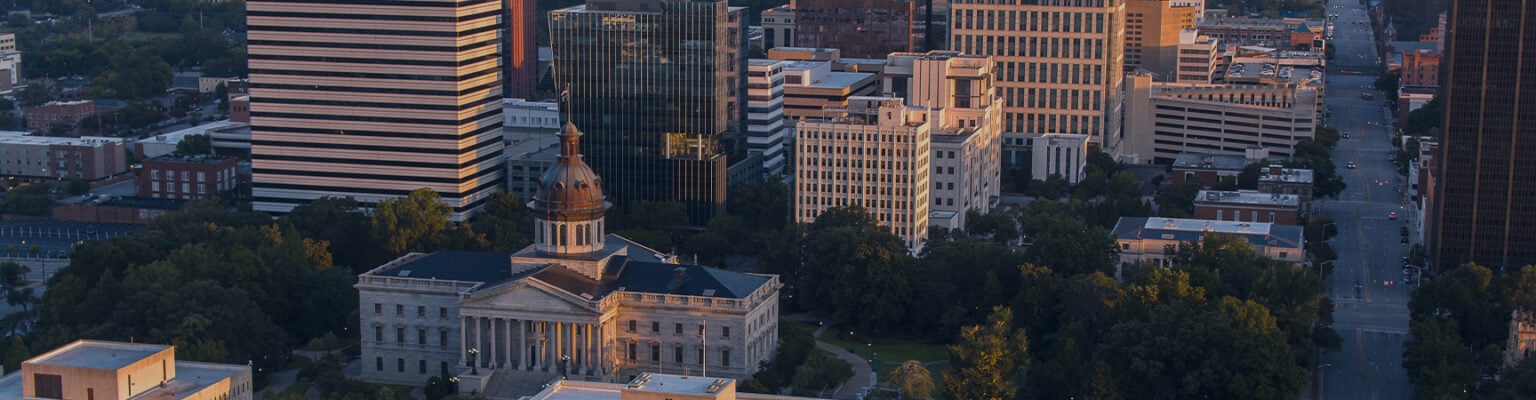
FPC Yankton at a glance
FPC Yankton is a standalone minimum-security federal prison camp for men in Yankton, South Dakota, holding 524 people as of September 2026. It is the only federal prison in the state, and it is attached to nothing: no parent penitentiary, no satellite camp, no complex. It occupies the campus of Yankton College, which closed in December 1984.
| Official name | Federal Prison Camp, Yankton |
|---|---|
| BOP code | YAN |
| Security level | Minimum; a standalone camp, not a satellite of any other prison |
| Population | 524 (as of September 2026) |
| Visiting | Saturdays, Sundays and federal holidays, 8:15 a.m.–3:00 p.m. · see visiting hours |
| Inmate mail | Inmate Name & Register Number · FPC Yankton · Federal Prison Camp · P.O. Box 700 · Yankton, SD 57078 |
| Send money | Lockbox · Western Union (city code FBOP, state code DC) · MoneyGram (receive code 7932) |
| Phone | 605-665-3262 · Fax 605-668-1113 |
| Street address | 1016 Douglas Avenue, Yankton, SD 57078 · Yankton County |
| Judicial district | District of South Dakota |
| BOP region | North Central |
| Designated capacity | 684 |
| Housing | Four units — three open-bay dormitories and one multiple-occupancy room unit; no single cells |
| Special Housing Unit | Yes · 3 segregation cells |
| Medical care level | Level 1 |
| Mental health care level | Level 1 |
| RDAP | Yes |
| UNICOR | No · see programs |
On this page
The camp falls under the Bureau’s North Central Region. Yankton College was the first college in Dakota Territory, and the Bureau bought the campus out of bankruptcy for $3.1 million. The housing units are converted college dormitories, the visiting room is a 1901 student union, and the gymnasium was assembled in 1948 out of an airplane hangar shipped here by train.

There are two minimum-security prisons in Yankton. Only one is federal.
Settle this before anything else, because the two are a few miles apart and neither locator will find a person held at the other.
| Prison | Run by | Where it is | How to find someone |
|---|---|---|---|
| FPC Yankton (this page) | Federal Bureau of Prisons | 1016 Douglas Avenue | BOP Inmate Locator |
| Yankton Minimum Center | South Dakota Department of Corrections | 178 Mickelson Drive | South Dakota DOC inmate lookup |
Our guide to the federal prisons in South Dakota covers the state roster. The Yankton Minimum Center is a state facility that opened in the 1970s to supply workers to the Human Services Center, South Dakota’s psychiatric hospital in the same town, and is run out of Mike Durfee State Prison. If the person you want was sentenced in a South Dakota state court, that is where they are. Two smaller confusions are worth clearing. FPC Yankton is the only Bureau of Prisons institution in the state, and people sentenced in the District of South Dakota are routinely designated hundreds of miles away. And the Bureau’s code for this camp is YAN — not YAZ, YAM or YAP, the three institutions of the Federal Correctional Complex at Yazoo City, Mississippi. On the locator screen the camp appears as “Yankton FPC”; the code lives in the record behind it, and in any alphabetical list of codes those four sit together.
Why FPC Yankton looks like a college campus
Because it is one. Yankton College was chartered in 1881 and its first five students began classes on October 4, 1882. It closed in December 1984 under long-standing debts, taking with it more than 200 students, about 100 faculty and staff, and a $1.4 million annual payroll from a town of roughly 12,000. Three years later the campus was a liability nobody could sell, and the Bureau of Prisons bought it. That history is not decoration: it decides where a man sleeps, where he eats, where his family sits during a visit, and why the boundary of this federal prison is a line on a city street.
How the Bureau got the campus
The Bureau told this story itself, in the first issue of its own Federal Prisons Journal in 1989, under the headline “From ‘College Town’ to ‘Prison Town’.” In mid-1987 Senator Larry Pressler’s office canvassed federal agencies to see whether any had a use for the empty campus; the Bureau was immediately interested. Its Chief of Facilities Development and Operations, Bill Patrick, came that September and told a joint meeting of the city and county commissions that a camp here would be a Security Level 1 institution, the lowest of the six then in use, holding 300 to 500 men serving average sentences of about 18 months for tax evasion, fraud, money laundering and drug trafficking.
The town fought about it for three months. Opponents organized as Citizens for a Better Alternative, led by two former Yankton College faculty members, and gathered about 1,100 signatures to force a ballot measure requiring the city to buy the campus instead. On December 15, 1987 the measure failed 3,025 to 986 — in practice, a vote for the prison. A bankruptcy court approved the sale on April 21, 1988; the Bureau paid $3.1 million and closing was May 5, the birthday of the college’s founder, Joseph Ward. The first six men arrived from FPC Duluth that August to help with the renovation, and the camp was dedicated on September 6, 1988 before Director J. Michael Quinlan and about 300 citizens.
One sentence from that article tells you more about this prison than any security-level table. “Last fall, the Bureau of Prisons began erecting a 4-foot fence around the perimeter of the institution. It is designed for decorative purposes, not for security; it provides a barrier for children and pedestrians.”
The buildings, and what they were built for
The Yankton College Historic District was listed on the National Register on March 22, 1982, six years before the sale, under reference 82003949. Its nomination catalogs “sixteen structures and landscape features, which were constructed between 1882 and 1970” across twenty-five acres; the Bureau’s 1989 account calls it “16 buildings on 33 acres”; the 2026 PREA audit counts thirteen. Nobody reconciles the acreage, and the historic-district boundary is not the prison’s. What is not in doubt is which building is which, because the Bureau kept the college’s names.
| Building | Built, and built for | What it is now |
|---|---|---|
| Kingsbury Hall | 1914, Tudor Revival, the women’s dormitory | Housing unit |
| Durand Hall | 1964, a co-ed dormitory | Housing unit — the RDAP treatment unit, and Psychology Services offices |
| Lloyd Hall | 1970, the college library | Housing unit; its OHO room is where Special Housing Unit visits are held through glass |
| Forbes Hall | 1930, by Prairie School architect George Elmslie; a state architectural landmark | Commissary, clothing room, warehouse and the TRULINCS printers |
| Ward Hall | 1894, Richardsonian Romanesque, the science building | Non-residential drug treatment and the Life Skills Library, third floor |
| Fargo Union | 1901, a field house, later the student center | The visiting room |
| Nash Gymnasium | 1948, built from an airplane hangar dismantled and shipped to Yankton by train | Gym, recreation and the barber shop |
| Warren Campus Center | 1967, with the cafeteria, bookstore and post office | Where outgoing mail is posted |
| Crane-Youngworth Field | 1903, five acres of football field and track | Now the high school’s field; visitor parking runs along it |
Sources: National Register of Historic Places nomination, Yankton College Historic District (listed March 22, 1982); FPC Yankton Admission and Orientation Handbook; Institution Supplement YAN 5267.09L (June 9, 2025).
Two consequences follow. Nobody at FPC Yankton lives in a cell. And the prison has no wall to hide behind; the handbook is blunt: “The Yankton Federal Prison Camp is located within the city limits and within a neighborhood. There is a school and School activities field located across the street from the camp. There are also homes with families.” Men are “prohibited from talking to, yelling at, or making any noise or gesture toward members of the community.”
What is the security level at FPC Yankton?
Minimum security — the lowest level the Bureau operates, and the only level this institution has ever held. A man is designated to a camp when two things are true at once: his security point total is 0 to 11, and no Public Safety Factor applies. Both conditions come from the Bureau’s security designation rules, Program Statement 5100.08, Security Designation Table for males.
The second half of that test is where most camp cases are won or lost. A Public Safety Factor overrides the point score outright — Sex Offender, Deportable Alien, Greatest Severity Offense, Threat to Government Officials, Serious Telephone Abuse, Sentence Length, Serious Escape, Disruptive Group or Prison Disturbance — and only the Designation and Sentence Computation Center can waive one. This camp’s visiting supplement shows how completely that filter works: it treats a man with a Walsh Act sex-offense conviction purely as a contingency, noting that “[d]ue to the unique location of FPC Yankton, it is highly unlikely” one will ever be housed here. On May 28, 2026, the Bureau announced a Strategic Expansion of Minimum-Security Camp Utilization: institutions would begin transferring eligible people to camps once they have a Residential Reentry Center or home-confinement date, prioritizing at first those held in low-security institutions and excluding categories the release lists, among them sex offenders and deportable aliens.
Minimum security also requires Community or Out custody rather than In custody, and the 2026 audit records this camp holding men at all three. Community custody is what opens up furloughs and unescorted work in town, and at a camp it is the difference between a sentence served on the compound and a sentence served partly in the community.
There is no wall and no armed post. What there is instead is accountability: counts at 12:01, 3:00 and 5:00 a.m., 10:00 a.m., 4:00 p.m. and 10:00 p.m., the last three standing; census counts on work days at 8:00 a.m. and 12:15 p.m.; and a sign-in and sign-out sheet on which a man records his name, number, time and destination every time he leaves his unit. Failing to sign out is a disciplinary matter. Walking away is a federal crime under 18 U.S.C. § 751, prosecuted as escape, and it carries a new sentence on top of the one being served.
How does self-surrender to FPC Yankton work?
Almost everyone who arrives at this camp arrives at the wheel of a car. Where the judgment allows voluntary surrender, the Designation and Sentence Computation Center in Grand Prairie, Texas sets the institution and the date, and the person reports on his own, unescorted, on the day named. If the court allowed surrender but fixed no date, the Designation Center contacts the court to set one.
That is worth three points. Program Statement 5100.08 subtracts three from the security point total where the judgment shows the court allowed voluntary surrender, and defines it narrowly: the person “was not escorted by a law enforcement officer to either the U.S. Marshals Office or the place of confinement,” and the credit “does not include cases where the inmate surrendered to the U.S. Marshals on the same day as sentencing.” On a scale where the camp cut-off is eleven points, three is frequently the whole argument — which is why the request belongs in the sentencing memorandum and not in a letter written afterward.
Reporting day, and the first weeks
Report to 1016 Douglas Avenue with the surrender paperwork, photo identification and nothing else. The handbook’s property rule catches almost everyone: toiletry and grooming items “are to be purchased in the commissary or mailed from another institution. They may not be brought into the institution by self-commitments.” Clothes, shoes, watches, books and phones go home with whoever drove. Receiving and Discharge issues clothing, safety shoes, winter kit and bedding, with a bedroll of personal care items to last until the first commissary day.
Case-management, medical and mental-health screening happen on arrival, with the PREA risk screening inside 72 hours; the Admission and Orientation program and initial classification both run within 28 days. Two things happen early that nobody warns people about. The phone access code and PIN are created in the warehouse area of Forbes Hall, and without them there is no telephone, commissary or email. And the visiting list is handed out at the intake screening interview, with additions and deletions accepted only every six months — so the list submitted in week one is, in practice, the list for the next half-year.
What a family can usefully do beforehand is send money to the Des Moines lockbox so funds have posted by the time the account opens, and write down the register number. Nothing moves without it. The rest of the first two weeks is mapped out in our guides to the intake process and to preparing for prison.
Who are the notable inmates at FPC Yankton?
Published lists for this camp go stale quickly. Each entry below carries its register number, and what the Bureau’s records show.
| Name | What the Bureau’s records show (September 2026) | Case |
|---|---|---|
| Steve A. McBee | No longer at the camp. Register 45107-511; Bureau records place him under RRM Kansas City with a projected release date of January 8, 2027. He began the sentence here in December 2025 | Star of the Bravo series The McBee Dynasty: Real American Cowboys. Pleaded guilty in the Western District of Missouri on November 5, 2024 to federal crop insurance fraud and was sentenced in September 2025 to 24 months, having admitted drawing $3,158,923 in crop insurance benefits and premium subsidies he was not entitled to. The Justice Department published a release for the plea but none for the sentencing, so the month comes from contemporaneous reporting |
| John McTiernan | Former. Register 43029-112; released April 1, 2014. The locator records no facility for him at all; contemporaneous entertainment-press reporting is what places him at this camp | Director of Die Hard and Predator. Entered a conditional guilty plea in October 2010 to two counts of making a false statement to an FBI agent and one count of perjury, arising from the Anthony Pellicano wiretapping prosecution |
| Shawn Richard Merriman | Former, with the caution below. Register 36404-013; released May 8, 2020, his last recorded Bureau location being RRM Phoenix | A former lay bishop of the Church of Jesus Christ of Latter-day Saints who ran a Ponzi scheme from Aurora, Colorado. Sentenced on September 14, 2010 to 151 months for mail fraud, with restitution of $20,124,183.13 to 67 defrauded investors |
Three of those listings are wrong. Shawn Merriman is named everywhere as an FPC Yankton prisoner; Bureau records confirm his sentence and release date but do not show where he served it, and we found no primary source placing him here. John McTiernan is routinely listed as a current inmate; he left more than a decade ago. And Steve McBee, whom the entertainment press was still placing here in the summer of 2026, had already moved to community placement.
One structural point about camp rosters: the 2026 PREA audit gives an average length of stay of 365 days. A “notable inmates” list for FPC Yankton is a snapshot of a room that empties once a year.
How do I find someone at FPC Yankton?
The Bureau’s public Inmate Locator is free and is the only authoritative answer. Search on the eight-digit register number where you have one: it is unambiguous, and the locator matches the committed name on the judgment rather than the name a family uses. It covers everyone in federal custody since 1982: for someone still held it gives the facility and a projected release date, and for someone released it shows “Not in BOP Custody as of” and a date, with no facility.
Read the answer carefully. The locator shows a facility name and type, and for someone already moved to a halfway house or home confinement it shows the Residential Reentry Management office covering the district of release — RRM Kansas City, for one man in the table above — which is not an address you can write to or visit. Our guide to how register numbers work explains the number itself. If the locator finds nothing, the usual reasons are state rather than federal custody, pretrial detention under the Marshals Service, or a committed name spelled differently from the name you know.
How do I write to someone at FPC Yankton?
To the post office box, never to Douglas Avenue. The street address is for freight and for staff.
| General and legal mail | Freight and non-USPS parcels |
|---|---|
| Inmate Name & Register Number FPC Yankton Federal Prison Camp P.O. Box 700 Yankton, SD 57078 | Staff Name FPC Yankton Federal Prison Camp Attn: Warehouse 1016 Douglas Avenue Yankton, SD 57078 |
The handbook asks correspondents to add the housing unit under the box number, because mail is sorted by unit. One rule here is genuinely different from a fenced prison: outgoing mail may be sealed by the sender inside, “in accordance with the Bureau’s open correspondence privileges for minimum security institutions.” Outgoing mail goes into the boxes in the Warren Campus Center and must carry a TRULINCS-printed mailing label, five a day at most; mail without one is returned to the sender inside. Incoming general correspondence is opened, inspected and may be read under the Bureau’s correspondence regulations, and there is no mail on weekends or holidays.
Legal mail is different, and the difference has to be created by the lawyer. It is opened only in the presence of the person it is addressed to and is not read — but only if the attorney’s name and title appear in the return address and the face of the envelope is marked “Special Mail — Open only in the presence of the inmate.” Without both, it is ordinary mail. The whole privilege question is worked through on our page about attorney-client communication in the Bureau of Prisons.
Outgoing special mail has its own window here, and it is narrow. The drop box in the Warren Campus Center was eliminated; a man now hands outgoing legal mail to the mail room at an open house held Monday to Friday, 7:45 to 8:00 a.m., carrying his account card. Fifteen minutes a day, five days a week. If your correspondence with counsel is time-critical, that schedule is the constraint to plan around.
How do I send money to someone at FPC Yankton?
Not to Yankton. Money addressed to the camp comes back; it goes to the Bureau’s national lockbox in Des Moines, or by wire. Each route needs the committed name and the eight-digit register number, written on the instrument and on the envelope both.
| Route | Where it goes | How fast it posts |
|---|---|---|
| Postal money order or cashier’s check | Federal Bureau of Prisons Committed Name Eight-Digit Register Number Post Office Box 474701 Des Moines, Iowa 50947-0001 | Generally available the day after the lockbox receives it, if sent as a U.S. postal money order |
| Western Union Quick Collect | City code FBOP, state code DC | Two to four hours if sent between 7:00 a.m. and 9:00 p.m. Eastern; otherwise by 7:00 a.m. the next day |
| MoneyGram ExpressPayment | Receive code 7932, company name Federal Bureau of Prisons, Washington, DC | The same windows as Western Union |
No cash and no personal checks. The lockbox discards anything enclosed with a negotiable instrument, so send letters and photographs separately to the box number, and put your name and return address in the upper left corner — funds that cannot be posted cannot be returned without it. Costs and timing for each route sit side by side in our guide to sending money to a federal prisoner.
Two limits before you send a large sum. Commissary spending is capped, so money beyond the cap sits in the account. And someone in refusal status under the Financial Responsibility Program is cut to $25 a month at the commissary and loses social furloughs and community-service placement altogether — a heavy sanction, at a camp, for a payment-plan dispute.
What are the visiting hours at FPC Yankton?
Saturdays, Sundays and federal holidays, 8:15 a.m. to 3:00 p.m., from the camp’s own institution supplement YAN 5267.09L, dated June 9, 2025, which rescinded the November 2019 version.
Friday evening visiting no longer exists. The Bureau’s own Admission and Orientation handbook for this camp still lists social visits “on Fridays, from 4:30 P.M. to 9:15 P.M.,” and so does almost every directory page about FPC Yankton. The 2025 supplement lists weekends and federal holidays and nothing else. Plan a trip around a Friday evening and you will arrive to a closed visiting room.
Two timing rules will cost you the day. There is a 10:00 a.m. count on every visiting day; visitors are admitted until 9:15 a.m. and anyone arriving later waits outside until it clears. And the cut-off for calling a man out is 2:30 p.m. If either of you leaves the visiting room, no further visit is permitted that day.
There is also a rotation, and it is the single most important thing to confirm before booking travel. The 2025 supplement says only that “[i]nmates will visit according to the established rotation schedule,” without printing it. The handbook describes a three-week cycle keyed to the fifth digit of the register number and warns that “[v]isitors arriving any time other than your visiting weekend or that are not on your approved visiting list will be turned away regardless of how far they may have traveled.” Nothing published tells us whether that cycle still operates. Ask the unit team in writing, or call 605-665-3262, before you buy a ticket.
From mid-spring to mid-fall there is outdoor visiting, opened and closed by the Captain and shut in bad weather and after dark. A party chooses indoors or outdoors as a group and may not split, on a first-come sign-in sheet, and the two areas together may never exceed 178. Men in the Special Housing Unit may receive one one-hour visit a week from up to two visitors, through glass and by telephone in the Lloyd Hall OHO room, with five days’ notice.
Who can visit, and how many
- Immediate family are routinely approved. Beyond them the list is capped at ten adults aged 16 or over who knew the person before he was confined; any exception needs the Warden’s approval on a written justification.
- Six visitors at a time, regardless of age; more needs the Captain’s advance approval. A visitor may appear on only one person’s list.
- Lists follow a man from his last institution, but every visitor must be re-approved by the counselor here, and additions and deletions are accepted only every six months.
- The Warden allows each man at least four hours of visiting a month and may limit visits to one weekend day when the room is full. Where visits must be cut for crowding, staff weigh frequency, who has been visiting longest and distance traveled, with special consideration for visitors who came more than 400 miles.
- Attorney visits need an advance appointment and carry auditory privacy; the attorney signs form BP-A0241 and may bring a briefcase, which is searched.
What visitors can wear and bring
Skirts, shorts and dresses may not end above the top of the kneecap, and that rule starts at age 12. Barred: see-through clothing; halter, tube and tank tops and sleeveless shirts; anything revealing the midriff; radically low-cut, backless or revealing front clothing; skin-tight or spandex clothing. Footwear must cover the whole foot, and undergarments are required.
Everything you carry in goes in one clear plastic bag plus a small clear change purse; wallets and handbags are not permitted. The authorized list is short: identification, keys, vending-machine money, feminine hygiene products, infant diapers and bottles, and inhalers or cardiac medication in original containers. Nothing else comes in — no other medication, no diaper bags, strollers, cameras or electronic devices. Cash is capped at $25 in ones, fives and tens, and you may not hand anything to the person you are visiting, though you may buy him something from a vending machine. Men are pat-searched entering the visiting room and randomly strip-searched on leaving it.
Identification and screening
Everyone aged 16 and over needs photo identification, is photographed, and completes the Notification to Visitor, form BP-A0224, before entering; visitors under 16 must be accompanied. Screening is by metal detector, and a full personal search needs the Warden’s authorization, with the visitor offered the chance to leave instead unless there is cause to detain. How these rules are applied across the Bureau is set out in the Bureau’s visiting regulations and on our pages about searches, shakedowns and contraband and federal prison visitation.
Getting to FPC Yankton
Put 1016 Douglas Avenue into the satnav, and know that the Bureau’s own documents will tell you four different things. The roster, the facility page and the 2026 PREA audit’s own address field all say 1016 Douglas Avenue. The travel attachment to the June 2025 visiting supplement says “The address to the Yankton Federal Prison Camp is 1100 Douglas Avenue.” The Admission and Orientation handbook says “11th and Douglas Streets” in one place and “10th & Douglas” in another, and puts the visiting room at “12th & Douglas adjacent to Crane Youngworth Football Stadium.” They are describing one campus of a few city blocks, but 1100 and 1016 are a block apart and the difference is real if you are circling a residential street on a Saturday morning. The Bureau’s current record is 1016, and the visiting-room door is at 12th.
Yankton sits on the Missouri River in the far south-east corner of South Dakota, about 60 miles north-west of Sioux City, Iowa and about 85 miles south-west of Sioux Falls. From Sioux Falls take I-29 south to State Road 46 west, then State Road 81 south into Yankton; from Sioux City take I-29 north to State Road 50. Either way, turn onto Douglas Avenue and follow it to 12th Street. Visitors park on 12th Street between Douglas and Pine, in front of the football field, and enter the north door of the Fargo building; men entering from the compound use the south door.
How do phone calls and email work at FPC Yankton?
Calls go out, never in, from a list of up to 30 numbers. Across the Bureau the allowance is 510 minutes per calendar month under the Bureau’s telephone regulations, Program Statement 5264.09, issued September 3, 2026: 300 are free to anyone eligible for First Step Act telephone incentives, and anyone who exhausts them may buy the remaining 210 whether or not he is eligible. Single calls should generally not exceed 15 minutes, with at least 30 minutes between them. An unmonitored legal call, properly arranged, sits outside the 510 altogether.
This camp’s handbook still prints the old figure of 300 minutes a month and still cites the rescinded PS 5264.08. The 510-minute allowance controls, and the extra 100 minutes that used to appear in November and December did not survive the rescission.
Local telephone hours from the handbook run 6:00 to 7:30 a.m., 10:30 a.m. to 12:30 p.m., 5:00 to 10:00 p.m. and 10:30 to 11:30 p.m. on weekdays, with longer morning and afternoon blocks on weekends and on federal holidays. All calls except properly placed legal calls are recorded, and the handbook warns that being insolent to staff during a monitored call is itself a disciplinary charge. An unmonitored attorney call is arranged by the lawyer contacting the case manager, not by the client dialing. Our guide to federal inmate phone calls takes the national rules apart.
Email runs on TRULINCS, which families reach through CorrLinks, with workstations in every unit and in the law library. Messages cost five cents a minute to create, send, receive or read. The person inside adds your address and the system sends an invitation you must accept. Email with a lawyer is not privileged and is monitored; privileged written communication has to go by marked special mail. See our CorrLinks and TRULINCS page.
Requests to staff here are electronic and rationed: every cop-out goes through TRULINCS, addressed to a department rather than a named officer, one per person per day. Men in the Special Housing Unit or held at the Yankton County Jail use paper forms.
What can people buy at the FPC Yankton commissary?
The monthly spending limit is $460, set by the Bureau’s trust fund rules, Program Statement 4500.13, issued May 7, 2026, which records the increase from $360 and adds $50 for the November to December holiday period. Stamps, copy cards and paper, over-the-counter medications and vitamins, nicotine replacement products, footwear including sneakers and safety shoes, mattresses and a secured media device are excluded from the limit.
Two older figures are still circulating and both are obsolete: this camp’s own handbook states “[t]he monthly spending limit is $320.00,” and many directory pages still give $360.
The camp’s own order form, dated July 11, 2024, prints no monthly ceiling at all: it carries per-item caps and a stamp allowance of $13.20, which is twenty Forever stamps at the price then in force. What it does carry, unusually, is a record of what was not in stock — twenty-seven lines are marked OUT rather than priced, among them the miswak stick, one of only two religious items the form lists.
The shopping system here is more elaborate than at most institutions, and getting it wrong costs a week. Regular sales run Tuesday and Wednesday evenings, from after the 4:00 p.m. count until 8:00 p.m.; special-purchase sales for hobby-craft, religious and education items run Thursday, with about a two-week wait. Which night you shop turns on the last two of the first five digits of the register number, and the assignment flips on October 1 and April 1. Shopping on the wrong night means being refused and possibly written up, and all sales are final once you leave the line.
The list runs to several hundred items, from a 7T tablet at $131.30 and a G-Shock watch at $87.10 down to tuna and mackerel pouches capped at 24 each. There are no typewriter ribbons on it, which tells you legal work here is done on the electronic law library and the copy machine. See our federal prison commissary page.
What programs are available at FPC Yankton?
RDAP and drug treatment
The Bureau’s RDAP rules govern the Residential Drug Abuse Program, which runs here, and FPC Yankton is named on the RDAP locations list dated June 4, 2026 inside the Bureau’s August 2026 First Step Act Approved Programs Guide, which records 57 programs at 50 locations. Both halves of the guide agree, and the program is credited at 500 hours. The treatment unit is Durand Hall, set apart from general population, and the department is staffed by a chief psychologist, two further psychologists serving as drug abuse program coordinators, and eight drug treatment specialists.
RDAP is a minimum nine-month modified therapeutic community, delivered as a half-day program with work and school filling the rest. For people convicted of non-violent offenses, completing all three components — the unit-based program, follow-up treatment and community transition treatment in a halfway house — can mean up to a year off under 18 U.S.C. § 3621(e). Admission is driven by nearness to release: the handbook records that men are ordinarily interviewed 24 to 42 months out, and that window, not the application date, governs.
The leading authority on that year is captioned at this camp. Ten men held here petitioned for habeas against the warden of FPC Yankton after the Bureau refused them the reduction because their offenses had involved firearms. The Eighth Circuit ruled for the Bureau in Bellis v. Davis, 186 F.3d 1092 (8th Cir. 1999), reversing the district court and holding that the statute “vests broad discretion in the BOP to determine which individuals, among the group of statutorily eligible inmates convicted of nonviolent offenses, are appropriate candidates for early release” — and, quoting the Seventh Circuit’s Bush v. Pitzer, 133 F.3d 455, 457 (7th Cir. 1998), “[e]ligibility is not entitlement.” The Supreme Court affirmed, in a case that took the name of one of the ten Yankton petitioners: Lopez v. Davis, 531 U.S. 230 (2001), holding that the Bureau “has the authority, but not the duty,” to reduce a sentence, and may exclude a category of prisoners by rule rather than case by case. Completing RDAP earns consideration. It does not earn the year.
Drug Abuse Education and the non-residential program also run, from the third floor of Ward Hall; refusing the education course when it is required costs performance pay above maintenance level. The camp also runs CHOICES, in which men with addiction histories speak to outside audiences, mainly school students, about what drugs cost them — a program that only works at a facility whose residents can leave the grounds.
Education, vocational training and college
Mount Marty University, a Benedictine institution across town, has taught at this camp since 1989, the year after it opened; its own published history records that it “began offering courses at the Yankton Federal Prison Camp at the site of the former Yankton College.” College teaching never really left the campus.
The Bureau has published what that looks like. A news item of its own in February 2016 described men here maintaining the grounds “while earning credits toward an Associate’s Degree in Horticulture,” growing the flowers that become the baskets decorating downtown Yankton, and packaging seed for the Yankton City Library’s community seed project.
Below the college level the structure is the Bureau’s standard one: at least 240 instructional hours of literacy classes for anyone without a high school credential, and a $25 award for finishing. Department of Labor apprenticeships run through Facilities in construction, carpentry, HVAC, plumbing, electrical work, automotive maintenance and welding, and through Food Service in cooking and baking. Both tracks are set out in our guides to prison education and to vocational training.
The law library is in the Education Department and open most of the day on weekdays and part of the weekend. It holds the United States Code Annotated, the Federal Reporter, program statements and institution supplements, plus the electronic law library and an inmate law clerk; printing is 15 cents a page and unit secretaries can notarize. FPC Yankton publishes no legal-activities institution supplement of its own; the resources panel on its facility page links the Bureau-wide Program Statement 1315.08 instead.
Faith-based, veterans and reentry programming
The chapel keeps a library and a quarterly activities schedule posted in English and Spanish, with volunteers from several faiths and an outdoor religious area. The Bureau’s 2026 program matrix marks this camp for Threshold, Crossroads Prison Ministry and Faith-Based Conflict Management, and for a distinct cluster of veterans and older-adult programming — Soldier On, Service FIT, Veterans Resilience Support and Healthy Steps for Older Adults.
Two cautions on that list. Approval to offer a program is not a report that it runs; whether a class has started, and whether there is a waiting list, is a question for the unit team in writing. And on one program the guide contradicts itself: the by-institution matrix marks FPC Yankton for Federal Prison Industries, while the narrative half — which controls — names 54 institutions and omits this camp. The handbook lists nine employing departments and UNICOR is not among them. On the published record there is no prison industries shop here, but the Bureau has not reconciled its own two halves, so anyone counting on a UNICOR job should get the unit team’s answer in writing.
Reentry runs through the unit team. Halfway house and home confinement placement follows the release district: for men going home to South Dakota, North Dakota or Minnesota it runs through RRM Minneapolis, and men pay 25 percent of their income as subsistence there. Furloughs are open to men with community custody within two years of release, and the person pays for the urinalysis given on return.
What is daily life like at FPC Yankton?
| Weekdays | Weekends and holidays | |
|---|---|---|
| Food service move | 5:50 a.m.; one-way recreation move 6:10 a.m. | — |
| Breakfast / brunch | Announced about 6:45 a.m. | Brunch 11:00 a.m.; coffee hour from 7:30 a.m. |
| Rooms ready for inspection | 7:45 a.m. | 10:00 a.m. |
| Work call | 7:45 a.m., on station by 8:00 a.m.; recall 3:45 p.m. | — |
| Lunch | 11:00 a.m.; compound cleared 10:45 a.m. | — |
| Standing counts | 4:00 p.m. and 10:00 p.m. | 10:00 a.m., 4:00 p.m. and 10:00 p.m. |
| Dinner | After the 4:00 p.m. count clears | |
| Confined to the unit | 9:30 p.m. to 6:30 a.m. | 9:30 p.m. to 7:30 a.m. |
Source: FPC Yankton Admission and Orientation Handbook. Schedules change; read this as the shape of the day rather than a guarantee.
Housing is dormitory. Rooms are inspected daily, brass is polished inside and out, nothing sits on top of a locker, blinds close after dusk and no pictures go on the walls. Two incentive schemes shape the week: the unit with the highest weekly safety and sanitation rating is released first to commissary and to the meal line, and the unit officer picks a room or cube of the week whose occupants go ahead of the rest of their unit. Legal material is capped at two cubic feet unless the unit manager approves more.
Everyone works. Performance pay runs from 12 cents an hour at grade four to 40 cents at grade one, with maintenance pay up to $5.25 a month for men not on a graded detail. Linen is exchanged Thursday mornings from 7:40 to 7:55 a.m. and personal care items on Monday mornings in the same fifteen-minute window — miss it and you wait a week.
Recreation runs on the college’s own plant: Nash Gym, an all-purpose court, a softball diamond, a walking track, a music room where the instruments must stay, and hobby craft, whose materials the March 2015 handbook routes through a special purchase order capped at $300 a quarter; Program Statement 4500.13 (2026) now allows Special Purpose Orders of up to $600 a quarter, including markup and shipping, and one a month, so ask Recreation whether the local hobby-craft figure has changed. Health services are outpatient, with anything inpatient going to a community hospital. Sick call sign-up is a paper form completed in Health Services between 6:30 and 7:00 a.m. on weekdays — and you surrender your identification card to get the form, which comes back when triage is done. There is a $2 co-payment for a visit you request.
What do inspectors say about conditions at FPC Yankton?
Very little, and that is the finding. The DOJ Office of the Inspector General has not conducted an on-site inspection of this facility. The District of Columbia’s Corrections Information Council, which inspects the federal prisons holding DC residents, has never inspected it either. The only independent examination FPC Yankton receives is the audit required every three years by the Prison Rape Elimination Act, which is by design about sexual safety and nothing else.
Nor is the camp accredited: the 2026 audit records no accreditation from the American Correctional Association, the National Commission on Correctional Health Care, the Commission on Accreditation for Law Enforcement Agencies or anyone else within the past three years, and no other internal or external audits.
The 2026 PREA audit
FPC Yankton was audited under the Prison Rape Elimination Act on site from April 28–30, 2026 by Haley Boaen of Corrections Consulting Services; the final report is dated June 12, 2026 and the Bureau posted it on July 15, 2026. The camp passed comfortably: three standards exceeded — supervision and monitoring, screening for sexual victimization and abusiveness, and coordinated response — 42 met and none unmet, with no corrective action required. The audit names Marc Delafoisse as warden. Nothing else on the public record describes Yankton in this much detail.
| Buildings and housing | 13 buildings; 4 housing units — three open-bay dormitories, one multiple-occupancy room unit, no single cells; 3 segregation cells |
|---|---|
| Capacity and population | Designated capacity 684, never exceeded in the preceding year; 503 on day one; average daily population 432 |
| Staff, contractors, volunteers | 118 staff who may have inmate contact, 11 hired in the preceding year; 20 contractors; 35 volunteers |
| Population characteristics on day one | 35 had disclosed prior sexual victimization at screening; 7 had a cognitive or functional disability; 6 were limited English proficient; 2 self-reported as lesbian, gay or bisexual and 1 as transgender or intersex |
| Forensic examinations and advocacy | Examinations off site at Avera Sacred Heart Hospital, examiner available around the clock, none performed in the audit year; victim advocacy by written agreement with the River City Domestic Violence Center |
| Accreditation | None within three years |
One figure in that report should not be read as local. It records 253 investigators responsible for administrative investigations of sexual abuse and harassment; the same 253 appears in other institutions’ audits, because the form asks about the agency as well as the facility.
What the sexual-abuse numbers show
Two independent datasets now cover this camp, and they point the same way. The Government Accountability Office published per-institution allegation counts for every federal prison in May 2026. For FPC Yankton across 2020 to 2024 it records zero allegations of sexual abuse in which another incarcerated person was the alleged perpetrator — zero in each of the five years — and five in which a Bureau employee was, one each in 2021, 2022 and 2023 and two in 2024.
The 2026 PREA audit, covering the twelve months before April 2026, records the same shape again: five allegations of sexual abuse, all five staff-on-inmate, none inmate-on-inmate, and none of sexual harassment in either direction. All five went to administrative investigation, none to criminal investigation, and all five were closed as unfounded. Nobody who had reported sexual abuse or harassment at this facility was housed there on the first day of the audit.
Read those numbers carefully, and in both directions. An allegation is not a finding, and “unfounded” is a determination that the event did not occur — a stronger conclusion than “unsubstantiated,” which means only that the evidence did not settle it. GAO does not adjust for population, so these counts cannot rank prisons, and a zero can mean nothing happened or that nobody reported. What is genuinely unusual is the direction. Between them the two datasets cover 2020 through 2024 and the twelve months to April 2026 — six years, with most of 2025 in neither — and across all of it every sexual-abuse allegation recorded at FPC Yankton named a staff member, and not one named another incarcerated person.
The DOJ Inspector General record
Seven Inspector General products name FPC Yankton. Four of them say something about this camp; none is an inspection of it.
- February 2023, on inmate-on-staff sexual harassment: three survey respondents named FPC Yankton as the institution where an incarcerated person had sexually harassed them. That is against a Bureau-wide total of 2,571 and a maximum of 168 at FCC Coleman, and only two institutions in the appendix — FPC Pensacola and FPC Montgomery, one apiece — recorded fewer. The OIG cautions of the same survey data that because respondents named the institution where the harassment occurred rather than where they now work, “we could not compare the number of survey respondents who reported inmate-on-staff sexual harassment at a particular institution in the OIG survey and the total number of employees at that institution.”
- March 2016, on medical staffing: the Bureau had petitioned the Public Health Service to designate five institutions “isolated hardship locations,” so that commissioned officers serving 180 consecutive days there qualify for a hardship award. As of October 2015 those five were FCI Safford, FCI Manchester, FCI Estill, FPC Yankton and FCI Three Rivers — a federal recognition that this camp is hard to staff with physicians.
- February 2008, on health care: the appendix of institution care levels that gave this camp its Care Level 1 rating also records 859 people held here, against 524 on September 10, 2026.
- August 1999, Criminal Calls: the one product recording something that happened here, reported to the Inspector General by a Drug Enforcement Administration field office. “[A]n inmate in FPC Yankton, South Dakota used prison telephones to direct his wife to continue methamphetamine and cocaine transactions and laundering of drug proceeds,” and “[t]he BOP was not aware of the inmate’s activities and his telephone privileges were not restricted after the inmate was indicted.”
The other three are listings rather than findings: a March 2004 release-preparation audit naming this camp among institutions from which the team “conducted field work and/or obtained information through questionnaires” without saying which, a January 2003 drug-interdiction evaluation, and the September 2021 follow-up survey of Bureau staff on pandemic management. Asked to rate their own institution’s overall response to COVID-19, staff here split 50.0 percent effective and 33.3 percent somewhat effective against 4.2 percent somewhat ineffective and 4.2 percent ineffective — the most favorable answer any camp gave. The Inspector General publishes no respondent count beside those percentages; for FPC Yankton they resolve to 24 answers, which is too small a base to rank anything by.
Six Bureau-wide engagements were open as of September 2026: evaluations of lockdowns and modified operations (posted June 9, 2025) and of medical intake (September 4, 2025); audits of drone-contraband mitigation, of food-service equipment, and of the Bureau’s monitoring of inmate email (February 2, 2026); and oversight of the $5 billion appropriated by Public Law 119-21. None is an inspection of FPC Yankton, and none has reported.
Staffing and medical care
The 2026 audit gives the only current staffing figure on the public record: 118 staff who may have contact with the people held here, 11 of them hired in the preceding year, for a population of about 500, with no deviations from the staffing plan reported. Medical care is the thinnest part of the record: an outpatient clinic that sends inpatients to community hospitals, classified at the healthiest of the Bureau’s care levels, in a town the Public Health Service designated an isolated hardship location — and no published inspection has examined medical care here at any point. Hold those two facts together when you assess a medical complaint from inside this camp.
FPC Yankton in the news
Recent news about FPC Yankton centers on a report that a man had gone home nine months into a sentence begun here, the camp’s 2026 PREA audit, and a man reported missing in transit to a reentry center; older items concern the 2025 visiting supplement and a dog-training program.
- September 2026 — Steve McBee Sr. was reported home after nine months of a 24-month sentence begun here in December 2025. Bureau records still place him under RRM Kansas City with a projected release date of January 8, 2027, so he had not left federal custody.
- July 2026 — the Bureau posted the camp’s 2026 PREA audit, its first since October 2022: three standards exceeded, 42 met, none unmet.
- May 2026 — Isai Ramirez, 37, was reported missing after failing to arrive at the reentry center in Lubbock, Texas, in transit from FPC Yankton. The camp told the Yankton Press & Dakotan the same day that he “had not escaped the facility but was in a ‘technical violation'” and was in custody; Bureau records now show him released from FPC Yankton on May 6, 2026.
- June 2025 — a new visiting supplement, YAN 5267.09L, replaced the November 2019 version and dropped Friday evening visiting.
- January 2017 — Yankton’s Heartland Humane Society created the Federal Inmate Dog Obedience program, placing shelter dogs at the camp with two or three handlers for eight-week cycles; the handlers write the adoption profiles and the work counts toward educational credit. No published source records whether it still runs.
Frequently asked questions about FPC Yankton
What is FPC Yankton?
FPC Yankton is a minimum-security federal prison camp for men in Yankton, South Dakota, and the only federal prison in the state. It was dedicated on September 6, 1988 on the campus of Yankton College, which had closed in December 1984. As of the Bureau’s count of September 10, 2026 it held 524 people.
Is FPC Yankton really a former college campus?
Yes. The Bureau bought the Yankton College campus out of bankruptcy for $3.1 million and the sale closed on May 5, 1988. The buildings are still in use under their original names: Kingsbury Hall, a 1914 women’s dormitory, and Durand Hall, a 1964 co-ed dormitory, are housing units; the 1970 Lloyd library is a housing unit; the 1901 Fargo Union student center is the visiting room; and Nash Gymnasium, built in 1948 from an airplane hangar shipped to Yankton by train, is the gym.
Does FPC Yankton have a fence?
Not a security fence. The Bureau wrote in its own journal in 1989 that it had begun erecting a four-foot fence around the perimeter “designed for decorative purposes, not for security,” providing a barrier for children and pedestrians. The camp sits in a residential neighborhood inside the city limits, with a school across the street. Accountability runs on counts and a sign-in and sign-out sheet.
What are FPC Yankton’s visiting hours?
Saturdays, Sundays and federal holidays, 8:15 a.m. to 3:00 p.m., under institution supplement YAN 5267.09L dated June 9, 2025. Friday evening visiting was discontinued; listings showing 4:30 to 9:15 p.m. on Fridays are obsolete. Visitors are admitted until 9:15 a.m. because of the 10:00 a.m. count, and the cut-off for calling a man out is 2:30 p.m. A visiting rotation applies, so confirm the weekend before traveling.
Where does money for someone at FPC Yankton go?
Not to the prison. Use the Bureau’s lockbox at Post Office Box 474701, Des Moines, Iowa 50947-0001; or Western Union Quick Collect, city code FBOP, state code DC; or MoneyGram, receive code 7932. Whichever route you choose, the committed name and the eight-digit register number have to travel with the money. Cash enclosed in a letter cannot be posted at this camp and comes back.
How much can someone spend at the FPC Yankton commissary?
$460 a month, under Program Statement 4500.13, issued May 7, 2026, rising by $50 for the November to December holiday period. Stamps, copy cards, over-the-counter medications and vitamins, footwear and a few other categories are excluded. The camp’s own handbook still prints $320 and many directory pages say $360; both are obsolete. Refusal status under the Financial Responsibility Program cuts the limit to $25 a month.
Does FPC Yankton have RDAP?
Yes. The Residential Drug Abuse Program runs in Durand Hall, and FPC Yankton is named on the RDAP locations list inside the Bureau’s First Step Act Approved Programs Guide (2026). It is a minimum nine-month modified therapeutic community, and for people convicted of non-violent offenses completing all components can reduce a sentence by up to twelve months under 18 U.S.C. section 3621(e). The camp’s March 2015 handbook says interviews ordinarily happen 24 to 42 months before release.
Can you self-surrender to FPC Yankton?
Yes, where the judgment allows it. The Designation and Sentence Computation Center sets the institution and the date and the person reports to 1016 Douglas Avenue unescorted. Program Statement 5100.08 subtracts three points from the security point total when the judgment shows the court allowed voluntary surrender, which matters because minimum security requires 0 to 11 points with no Public Safety Factor. The credit does not apply where someone surrendered to the Marshals on the day of sentencing.
Has FPC Yankton been inspected?
Not in the way most people mean. The DOJ Office of the Inspector General has not conducted an on-site inspection of this facility. Neither has the DC Corrections Information Council, which inspects the federal prisons holding DC residents. The only recurring independent examination is the Prison Rape Elimination Act audit, most recently on site from April 28–30, 2026, which found three standards exceeded, 42 met and none unmet. The camp holds no ACA, NCCHC or CALEA accreditation.
Who is the most famous person held at FPC Yankton?
The best-known recent resident is Steve McBee Sr. of the Bravo series The McBee Dynasty, who began a 24-month crop insurance fraud sentence here in December 2025 and whom Bureau records now place under RRM Kansas City. The director John McTiernan served a perjury and false-statement sentence at the camp and was released on April 1, 2014. Lists naming either man as currently held here are out of date.
Problems at FPC Yankton: where we can help
The problems that recur here are the ones a camp generates: designation, community access, and the handful of sanctions that can take a man out of a camp altogether. Its own records show where they cluster.
- Getting designated here, and staying here. Minimum security needs 0 to 11 points and no Public Safety Factor, and the three-point voluntary surrender credit is argued at sentencing rather than afterward. See our guides to security levels and Public Safety Factors and federal prison transfers.
- Disciplinary proceedings. At a camp an incident report does more than cost good conduct time: it can end community custody, and with it furloughs, community service placement and the camp designation itself. SHU placement here means three cells or a county jail bed.
- Walkaway and failure-to-report exposure. This camp’s boundary is a city street and its transfers to halfway houses are unescorted; the Bureau treats both as escape under 18 U.S.C. section 751, and the May 2026 Lubbock case shows how fast a missed report becomes a federal charge.
- RDAP eligibility and the section 3621(e) year, where the handbook puts interviews ordinarily 24 to 42 months before release and the benefit turns on a diagnosis documented in the presentence report.
- First Step Act time credits — whether they are earned, calculated and applied — furlough decisions, and halfway house and home confinement placement through the reentry office for the release district, which for the Dakotas and Minnesota is RRM Minneapolis.
- Medical care that is not happening, at an outpatient clinic in a town the Public Health Service designated an isolated hardship location and that no published inspection has examined. A written request first, then the administrative remedy process, which has a clock on every rung; see medical care and Federal Tort Claims Act claims.
- Staff misconduct complaints. Every sexual-abuse allegation recorded at this camp by GAO between 2020 and 2024, and every one in its 2026 PREA audit, named a staff member; all were closed administratively without a criminal investigation.
Elizabeth Franklin-Best, P.C. handles federal criminal defense, appeals and post-conviction matters nationwide, and advises families on Bureau of Prisons issues at institutions across the system. Call (843) 620-1100 or contact us to talk through a specific situation.
Christopher Zoukis, JD, MBA, the firm’s Managing Director, writes and maintains the federal prison policy material on this site. He is not counsel of record; legal representation is provided by Elizabeth Franklin-Best.
Sources and currency
Bureau of Prisons documents
- FPC Yankton, Federal Bureau of Prisons, 2026. The Bureau’s facility page, with address, contact details and population.
- Institution Supplement YAN 5267.09L, Visiting Regulations, Federal Bureau of Prisons, FPC Yankton, 2025. Visiting days and hours, visitor lists, dress code, identification, screening, outdoor visiting, special housing visits and directions; replaced Institution Supplement YAN 5267.9J (2019).
- FPC Yankton Commissary List, Federal Bureau of Prisons, FPC Yankton, 2024. Stocked items, per-item limits and the stamp allowance.
- FPC Yankton Admission and Orientation Handbook, Federal Bureau of Prisons, FPC Yankton, 2015. Schedule, counts, housing, property, commissary operations, telephone and law library hours, health services, work, furloughs and release.
- Trust Fund/Deposit Fund Manual, Program Statement 4500.13, Federal Bureau of Prisons, 2026. The monthly commissary spending limit, the holiday increase and special purpose orders.
- Inmate Security Designation and Custody Classification, Program Statement 5100.08, Federal Bureau of Prisons, 2026. The Security Designation Table for men and the point ranges for each security level.
- Inmate Telephone Regulations, Program Statement 5264.09, Federal Bureau of Prisons, 2026. Replaced Program Statement 5264.08 (2008).
- Community Corrections Center (CCC) Utilization and Transfer Procedure, Program Statement 7310.04, Federal Bureau of Prisons, 1998. Halfway house referral through the reentry office for the release district.
- First Step Act Approved Programs Guide, Federal Bureau of Prisons, Reentry Services Division, 2026. Programs by institution, including the RDAP locations list.
- Institution Care Levels for Medical Assignment and Institutional Mental Health Care Levels, Federal Bureau of Prisons, 2024. Released under Freedom of Information Act request 2024-03455 and published by the Washington Lawyers’ Committee.
- RRM Minneapolis, Federal Bureau of Prisons, 2026. The reentry office for Minnesota, North Dakota and South Dakota.
- FPC Yankton Provides Educational Opportunities, Federal Bureau of Prisons, 2016.
- Strategic Expansion of Minimum-Security Camp Utilization, Federal Bureau of Prisons, 2026. Moving eligible people with a halfway-house or home-confinement date to camps.
- Federal Prisons Journal, volume 1, number 1, Federal Bureau of Prisons, 1989. Doug Green’s account of the purchase, the local referendum and the dedication.
Audits and inspections
- PREA Audit Report: Federal Prison Camp (FPC) Yankton, Corrections Consulting Services, 2026. The on-site audit of April 28–30, 2026 by Haley Boaen; physical plant, capacity, population, staffing, accreditation and allegation data.
- Federal Prisons: Improvements Needed to Prevent, Detect, and Address Sexual Abuse, U.S. Government Accountability Office, 2026. Report GAO-26-107343; allegation counts by institution.
- Ongoing Work, U.S. Department of Justice, Office of the Inspector General, 2026. The open engagements involving the Bureau of Prisons.
- Evaluation of the Federal Bureau of Prisons’ Efforts to Address Sexual Harassment and Sexual Assault Committed by Inmates Toward Staff, U.S. Department of Justice, Office of the Inspector General, 2023. Report 23-034.
- Staff Perceptions of the Federal Bureau of Prisons’ Management of the Coronavirus Disease 2019 Pandemic: A Follow-Up Survey of BOP Staff, U.S. Department of Justice, Office of the Inspector General, 2021. Report 21-126.
- Review of the Federal Bureau of Prisons’ Medical Staffing Challenges, U.S. Department of Justice, Office of the Inspector General, 2016. Report 16-02.
- The Federal Bureau of Prisons’ Efforts to Manage Inmate Health Care, U.S. Department of Justice, Office of the Inspector General, 2008. Report 08-08.
- The Federal Bureau of Prisons Inmate Release Preparation and Transitional Reentry Programs, U.S. Department of Justice, Office of the Inspector General, 2004. Report 04-16.
- Criminal Calls: A Review of the Bureau of Prisons’ Management of Inmate Telephone Privileges, U.S. Department of Justice, Office of the Inspector General, 1999.
Court records
- Gallatin Farmer Pleads Guilty to Multi-million Dollar Crop Insurance Fraud, U.S. Attorney’s Office, Western District of Missouri, 2024. Steve McBee Sr.’s plea.
- Shawn Merriman Sentenced to Federal Prison for Mail Fraud, U.S. Attorney’s Office, District of Colorado, 2010.
- Lopez v. Davis, 531 U.S. 230, Supreme Court of the United States, 2001.
- Bellis v. Davis, 186 F.3d 1092 (8th Cir.), U.S. Court of Appeals for the Eighth Circuit, 1999.
- Bush v. Pitzer, 133 F.3d 455 (7th Cir.), U.S. Court of Appeals for the Seventh Circuit, 1998. The source of the “eligibility is not entitlement” rule quoted in Bellis.
News and other sources
- Update: Inmate Escape From Yankton FPC In Custody, Yankton Press & Dakotan, 2026.
- Yankton Minimum Center, South Dakota Department of Corrections, 2026. The state minimum-security unit in the same town.
- History, Mount Marty University, 2026. The university’s account of teaching at the camp since 1989.
- YFPC Inmates Help Train Dogs For HHS, Yankton Press & Dakotan, 2017.
- National Register of Historic Places Nomination: Yankton College Historic District, National Park Service, 1982. Buildings, dates, architects, acreage and the founding of the college.
- 18 U.S.C. § 751, Prisoners in custody of institution or officer, U.S. Code (Legal Information Institute).
- 18 U.S.C. § 3621(e), Imprisonment of a convicted person, U.S. Code (Legal Information Institute).
Sources reviewed September 2026.
Reviewed for legal accuracy by Elizabeth Franklin-Best, Esq., Principal Attorney·September 2026