
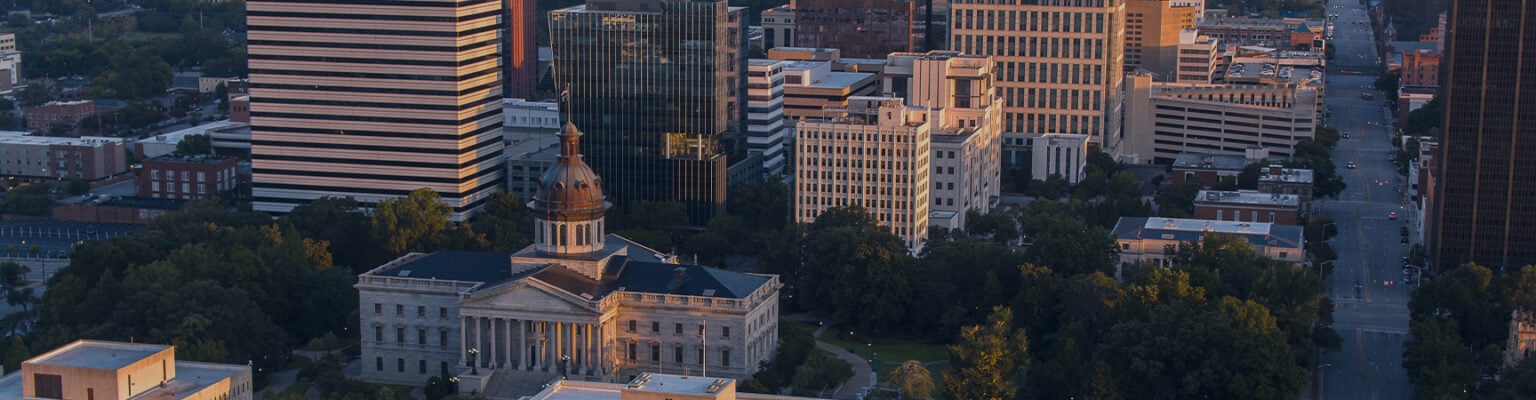
FMC Carswell at a glance
FMC Carswell is the Federal Bureau of Prisons’ only medical center for women, an administrative-security institution on the Naval Air Station Joint Reserve Base in Fort Worth, Texas, holding 1,271 women as of September 2026: 1,026 at the medical center and 245 at the minimum-security satellite camp beside it.
| Official name | Federal Medical Center, Carswell |
|---|---|
| BOP code | CRW |
| Security level | Administrative; women of every security level; the satellite camp is minimum security |
| Population | 1,271 (as of September 2026) · 1,026 at the medical center, 245 at the camp |
| Visiting | Saturday, Sunday and federal holidays, 8:00 a.m.–3:00 p.m.; visitor processing ends at 2:00 p.m. |
| Inmate mail | Medical center: Committed Inmate Name & Register Number · Housing Unit · Federal Medical Center, Carswell · P.O. Box 27137 · Fort Worth, TX 76127 Camp: Committed Inmate Name & Register Number · Satellite Camp · Federal Medical Center, Carswell · P.O. Box 27137 · Fort Worth, TX 76127 |
| Send money | Lockbox · Western Union (code city FBOP, DC) · MoneyGram (receive code 7932) |
| Phone | 817-782-4000 · Fax 817-782-4875 |
| Street address | Naval Air Station, 1200 Meandering Road, Fort Worth, TX 76114 · Tarrant County |
| Judicial district | Northern District of Texas, Fort Worth Division |
| BOP region | South Central |
| Designated capacity | 1,302 |
| Housing | 25 buildings; 18 housing units · three single-cell, fourteen multiple-occupancy, one open dormitory |
| Special Housing Unit | Yes |
| Medical care level | 3 and 4 |
| Mental health care level | 3 and 4 |
| RDAP | Yes · dual-diagnosis and Spanish-language programs, and the Female Integrated Treatment program |
| Sex offender treatment | Yes · non-residential |
| UNICOR | None recorded |
| Camp | Yes · minimum-security satellite camp |
On this page
It sits in Tarrant County, in the Northern District of Texas and the Bureau’s South Central Region, among the federal prisons in Texas. It is where the Bureau sends a woman who is seriously ill, pregnant with complications, on dialysis, in psychiatric crisis or classified as high security, and two Inspector General reports describe it as the only place in the system for some of them.

Fort Worth has two federal medical centers. This is the one for women.
Families, directory sites and occasionally government documents confuse the two. FMC Fort Worth, on Horton Road in the southeast of the city, holds men; FMC Carswell, on the air base on the west side, holds women. Different addresses, post office boxes, phone numbers and facility codes, and a letter sent to the wrong one goes astray.
| Institution | Who is held there | Bureau code | Address and phone |
|---|---|---|---|
| FMC Carswell (this page) | Women, all security levels, with a women’s camp | CRW | Naval Air Station, 1200 Meandering Road, Fort Worth, TX 76114 — 817-782-4000 |
| FMC Fort Worth | Men, administrative security, no camp | FTW | 3150 Horton Road, Fort Worth, TX 76119 — 817-534-8400 |
What is the security level at FMC Carswell, and what does “medical center” mean?
Carswell is classed as administrative security, the Bureau’s label for a special-mission institution holding people of every security level under one roof; the September 2025 PREA audit lists the levels held here as “Administrative/High/Low/Minimum; Maximum/In/Out/Community.” A woman scored for a camp and a woman classified as high security can both be designated here. Our guide to federal security levels explains that score and what a Public Safety Factor does to it.
The population turns over fast: the audit counted 1,584 admissions in the twelve months before July 2025 against a daily population of about 1,130, with an average stay at the medical center of 464.9 days. The complex has 25 buildings and 18 housing units, three single-cell, fourteen multiple-occupancy and one open dormitory. And the medical center can do what almost nothing else in the women’s system can: the Inspector General’s December 2024 inspection of FMC Devens records that “the BOP has only four institutions with a dialysis unit: FMC Devens, FMC Butner, FMC Carswell, and U.S. Medical Center for Federal Prisoners Springfield,” and describes the seven Federal Medical Centers as institutions “that house inmates of all medical and mental health care levels.”
The care-level question
The Bureau’s system, set out in the May 2019 classification guide the Inspector General reproduces in the Devens inspection, assigns a medical care level and a separate mental-health care level to each person, from 1 (healthy) to 4 (needs inpatient care), and matches her to an institution rated for it. The institution ratings are in the Bureau’s own charts: the medical chart dated February 13, 2024 and its mental-health companion, released under FOIA request 2024-03455 and reprinted by the DC Corrections Information Council in January 2025, put Carswell at care levels 3 and 4 on both scales, and the Council’s 2018 report called it “a Care Level 3 and 4 administrative facility.”
Under the Bureau’s security designation rules, Program Statement 5100.08, the Designation and Sentence Computation Center in Grand Prairie, Texas, refers any new commitment with apparent medical or mental-health concerns to the Office of Medical Designations and Transportation, whose medical designator reads the presentence report and the judgment and decides where she goes; “only the OMDT” designates those cases. A judicial recommendation is considered but does not bind. A woman already in custody can be moved here when her needs change, but only if there is room: the Inspector General’s May 2023 inspection of FCI Waseca found that Waseca had asked to move women with complex conditions, but “the only medical center in the BOP established for female inmates, Federal Medical Center Carswell, has not had the space to accept the transfers.”
The Administrative Unit: the Bureau’s only high-security housing for women
Nearly all sentenced women in federal custody are classified minimum or low security; the few who are not go to one unit inside this prison. The Inspector General’s September 2018 review of the Bureau’s management of women recorded that “the small number of female inmates who cannot be managed in these settings are designated as high security and housed in BOP’s sole high security female unit at FMC Carswell.” The Bureau calls it the Administrative Unit. The Inspector General’s July 2017 review of restrictive housing described it as a unit “with its own SHU that houses inmates, including those with mental illness, with histories of escape, chronic behavioral problems, repeated incidents of assaultive or predatory behavior, or other special management concerns,” holding 17 women in June 2016; the DC Corrections Information Council found nine in September 2017. The 2026 supplement still carries visiting rules for a woman under sentence of death, from the years when the only woman on federal death row was held here.
The satellite camp
The minimum-security camp holds 245 women as of September 2026, with an average stay the PREA auditor gave as 763.7 days, about ten months longer than at the medical center. It has its own visiting room, its own library, a spruce-green uniform and a share of the same post office box. The Bureau serves no separate camp handbook; the only handbooks are the medical center’s English and Spanish editions (2023). The Council counted 314 camp beds against 926 at the medical center in 2017.
Who is held at FMC Carswell?
Women of every age and security level, many of them there for medical or psychiatric care; the Council’s 2018 report adds women in forensic studies, competency restoration and civil commitment. The PREA auditor’s census of July 29, 2025 counted 1,128 women, aged 20 to 87: 41 with a physical disability, 104 with a cognitive, psychiatric or other functional disability, two blind or with low vision, one deaf or hard of hearing, 147 with limited English and 34 who identified as transgender or intersex. Twenty-three had reported sexual abuse inside this facility, and 24 had disclosed prior sexual victimization at intake. The form also records women held for the U.S. Marshals Service, Immigration and Customs Enforcement, a state correctional agency and a military branch.
Who lives in which unit is now partly governed by a federal court. On June 2, 2026, in Fleming v. Rule, No. 4:25-cv-0157-D (N.D. Tex.), Senior Judge Sidney A. Fitzwater entered a preliminary injunction for five women held at Carswell that bars the Bureau from housing “any male inmate (meaning any inmate who is biologically male, regardless of gender identity) within the general population of any housing unit at FMC Carswell where biological females are present,” keeps such inmates out of shared spaces such as showers, restrooms and dormitories, and orders them housed “in a secure, segregated area at FMC Carswell,” with exceptions for the SHU, the hospital and suicide-watch areas, and escorted legal visits. An earlier injunction protects the original plaintiffs, Rhonda Fleming and Miriam Crystal Herrera. On August 28, 2026 the court renewed the June relief for 90 days, finding that the five women “continue to satisfy their burden.” Five days after the June 2 order, Judge Royce C. Lamberth in Doe v. Blanche, Nos. 1:25-cv-286, -401 and -653 (D.D.C. June 7, 2026), barred the transfer of fourteen transgender women to men’s prisons; the opinion records that four of them are at Carswell and that the two orders do not conflict, one governing where they live inside Carswell, the other whether they may be moved out. Both cases continue.
Who are the notable inmates at FMC Carswell?
The lists that circulate are years stale. Each register number below is printed so you can repeat the search in the Bureau’s inmate locator; where a Bureau record names a later office, the Carswell placement comes from the press source in Sources.
| Name | Bureau record | Case |
|---|---|---|
| Aafia Siddiqui | Currently held here (register 90279-054); projected release June 30, 2082 | Convicted in the Southern District of New York in 2010 of attempting to murder U.S. personnel in Afghanistan; 86-year sentence affirmed, United States v. Siddiqui, 699 F.3d 690 (2d Cir. 2012) |
| Kristen Gilbert | Currently held here (register 90371-038); serving life | Former VA hospital nurse convicted in 2001 of murdering four patients with injected epinephrine (Skwira v. United States, 344 F.3d 64 (1st Cir. 2003)) and of attempting to murder three others (Cascone v. United States, 370 F.3d 95, 96 (1st Cir. 2004)) |
| Ana Belen Montes | Former — released from Carswell on January 6, 2023 (register 25037-016) | Defense Intelligence Agency analyst who pleaded guilty in the District of Columbia on March 19, 2002 to conspiracy to commit espionage for Cuba; 25-year sentence |
| Reality Winner | Former — released from Carswell on June 2, 2021, according to the New York Times; the locator’s record gives her last facility as the San Antonio reentry office and her release as November 23, 2021 (register 22056-021) | Sentenced in the Southern District of Georgia on August 23, 2018 to 63 months for unlawful retention and transmission of national defense information |
| Lisa Montgomery | The locator’s record still carries her under FMC Carswell, marked deceased on January 13, 2021, the day she was executed at Terre Haute (register 11072-031) | Convicted in the Western District of Missouri of kidnapping resulting in death and sentenced to death; affirmed, United States v. Montgomery, 635 F.3d 1074 (8th Cir. 2011) |
| Lynne Stewart | Former — released from Carswell on December 31, 2013 (register 53504-054) | New York defense lawyer; 120-month sentence for material support, conspiracy to defraud and false statements affirmed, United States v. Stewart, 686 F.3d 156 (2d Cir. 2012) |
| Marjorie Diehl-Armstrong | Died in custody here on April 4, 2017 (register 08916-068) | Convicted in the Western District of Pennsylvania in the Erie “collar bomb” bank robbery; affirmed, United States v. Armstrong, 504 F. App’x 152 (3d Cir. 2012) |
| Marion Jones | Former — surrendered at Carswell in March 2008, the Associated Press reported; the locator’s record names the San Antonio reentry office as her last facility, with release on September 5, 2008 (register 84868-054) | Olympic sprinter sentenced in the Southern District of New York on January 11, 2008 to six months for lying to federal agents |
| Lynette Fromme | Former — paroled from Carswell on August 14, 2009 (register 06075-180) | Manson follower convicted of the 1975 attempt on President Gerald Ford’s life |
| Andrea Circle Bear | Died on April 28, 2020 (register 18015-273) | Serving 26 months from South Dakota; arrived March 20, 2020, delivered her baby by cesarean section on April 1 while on a ventilator, and died of COVID-19, per the Bureau’s death notice |
Two corrections that recur on other lists. Reta Mays, whose life sentence some directories place at Carswell, is at FCI Aliceville in Alabama (register 03105-509). And Alice Marie Johnson, who spent more than two decades in Bureau custody before a full pardon in 2020, began her incarceration at Carswell and returned on June 17, 2026 as the White House pardon czar, a visit the Bureau wrote up nine days later, noting discussions of “staffing gaps in vocational training, medical service demands, and other issues impacting daily operations.”
How do I find someone at FMC Carswell?
Search the Bureau’s free Inmate Locator by name or, better, by the eight-digit register number that the handbook wants on every envelope. The result names the prison, “Located at: Carswell FMC,” with a release date, or, once a woman has left, reads “Not in BOP Custody as of” and gives the date; CRW is a field in the record, not on the screen. A woman just sentenced may wait in a county jail or in Marshals custody before the locator shows Carswell, because the Bureau, not the court, designates her, and a medical case goes through a second office in Washington. Our guide to how register numbers work covers the rest.
Two points matter more here than elsewhere. The locator shows only the facility, so it will not tell you that a woman is in the outside contract hospital, the SHU, the Administrative Unit or a mental-health unit; you learn that from her or her unit team. And under the visiting supplement, detailed medical news normally comes from the attending physician or the Clinical Director, not from officers or guards.
How do I write to someone at FMC Carswell?
Every letter goes to one post office box, medical center or camp, and the handbook asks for her housing unit on the envelope as well as her name and register number.
| For someone at the medical center | For someone at the satellite camp |
|---|---|
| Committed Inmate Name & Register Number Housing Unit Federal Medical Center, Carswell P.O. Box 27137 Fort Worth, TX 76127 | Committed Inmate Name & Register Number Satellite Camp Federal Medical Center, Carswell P.O. Box 27137 Fort Worth, TX 76127 |
The medical-center block is the one printed in the April 2023 handbook; the camp block follows the Bureau’s facility page, and the Bureau’s roster gives the same box for both. Do not use the street address or the staff box, P.O. Box 27066. Mail is handed out after the 4:00 p.m. count clears and again at 9:30 p.m., Monday to Friday. The handbook’s “nuisance contraband” list is specific: greeting cards, stickers, glitter, card stock, journals, stationery, stamps, lottery tickets, lipstick marks and anything stained with oily substances go back to the sender. Its publications section is stricter than the national rule on newspapers: 28 C.F.R. § 540.71(a)(1) accepts newspapers and hard-cover books from a publisher, a book club or a bookstore, but the handbook says newspapers “must be received directly from the publisher,” so order them that way. Under the Bureau’s correspondence rules, legal mail is opened in her presence and not read only if the envelope identifies the sender as an attorney and is marked “Special Mail — Open only in the presence of the inmate”; an inadequately marked envelope, the handbook says, “may be opened as general correspondence.” See attorney-client communication in the Bureau and writing to someone in federal prison.
How do I send money to someone at FMC Carswell?
Not to the prison: a money order that reaches the Carswell mail room is returned with a letter explaining the national lockbox, and cash and personal checks are never accepted. All three routes key on the committed name and the eight-digit register number.
| Route | Details | When it posts |
|---|---|---|
| U.S. Postal Service money order | Federal Bureau of Prisons [Committed name] [Eight-digit register number] Post Office Box 474701 Des Moines, Iowa 50947-0001 | Postal money orders post without a hold; non-postal money orders and non-government checks carry an automatic 15-day hold under PS 4500.13 |
| Western Union Quick Collect | Register number with no spaces followed by the last name; committed name on the attention line; code city FBOP, DC | Two to four hours when sent in the 7:00 a.m. to 9:00 p.m. Eastern window, otherwise by 7:00 the next morning |
| MoneyGram ExpressPayment | Receive code 7932; company name Federal Bureau of Prisons, Washington, DC; online up to $300 by Visa or MasterCard | The same window as Western Union |
Money she sends out leaves by a BP-199 request on TRULINCS, processed weekly; only an Associate Warden can approve a withdrawal over $500. Our guide to sending money to a federal prisoner compares the fees.
What are the visiting hours at FMC Carswell?
Saturdays, Sundays and federal holidays, 8:00 a.m. to 3:00 p.m., at both the medical center and the camp, under institution supplement CRW 5267.09g, Visitation Regulations, signed by Warden T. Rule on February 13, 2026 and replacing the November 2018 version, which applies the Bureau’s national visiting regulations; a Spanish edition is dated March 23, 2026. General-population visiting never happens on a weekday. On the Administrative Unit the supplement contradicts itself: page 2 and Attachment C say Saturday and Sunday only, while page 17 adds federal holidays, so ask the unit team before planning a holiday visit.
The hour that catches people is 2:00. “Processing of incoming visitors will be terminated at 2:00 p.m.,” the supplement says. No one is processed in the thirty minutes before the 10:00 a.m. count either, no one may be on institution property before 8:00, and everyone leaves at 3:00. The medical center’s visiting room is rated for 140 people and the camp’s for 120 in the February 2026 supplement, and when either fills, visits are cut in a fixed order: local and frequent visitors first, with a floor of one hour for them and two for anyone infrequent or from out of state, counted from when the woman reaches the room.
Who can visit, and how often
- Six visiting points a month. A Saturday or Sunday visit costs one, a federal-holiday visit two; when they are gone the duty officer turns the visitor away.
- No more than five visitors at one time. Children under 16 come with an adult family member or guardian on the list; 16- and 17-year-olds need their own government ID and, if not with a parent, guardian or adult relative, that person’s written approval.
- The list holds up to twenty people including immediate family, no more than eight of them friends who knew her before confinement. It is built within about five days of arrival from the presentence report and changed only by written request at team review; the handbook says to ask three weeks before a visit. Women in holdover status and new arrivals see immediate family only.
- The 2023 handbook allows “5 adults (16 years or older) with maximum of (5) children per visit”; the newer 2026 supplement says five visitors, so plan on five and ask the unit team before bringing more.
What visitors can wear and bring
Nothing khaki, green, orange or yellow; no shorts, tank or halter tops, see-through fabric, miniskirts, sundresses, camouflage, sweatpants or leggings; no flip-flops or house shoes, and “no visitor, male or female, will be permitted to wear open toed shoes.” Female visitors must wear a bra. Hats, caps and non-prescription sunglasses are barred, as are “wrist watches, timepieces, or electronic sports bands” and smart watches, “due to the camera and cell phone capabilities.” A wedding band and a religious medallion are the only jewelry allowed.
You may carry one clear change purse no larger than 8 by 10 inches, with up to $20 and one card, for the vending machines, which only visitors may use. For each infant: three diapers, one unopened pack of wipes, two small unopened jars of baby food, two clear bottles of pre-mixed formula, one receiving blanket and one cup, all in clear containers. A visitor who needs to breastfeed may use the attorney visiting room, and visitors may bring their own feminine hygiene products; the visitor bathrooms are to be stocked with the ones the prisoners get. Contact is one kiss and one embrace at the start and end, no hand-holding, a warning for the first breach and termination for the second; under-fives may sit on her lap. Hospital patients come in pajamas and a robe, and a woman may bring five photo tickets.
Identification and screening
Everyone 16 and over shows a government-issued photo ID; “no other forms of identification will be accepted such as a school identification.” Visitors clear a metal detector and an x-ray, and “visitors entering the institution are subject to random ION Spectrometry Device testing,” a swab for drug residue; a visitor who will not agree to a random search is not admitted until she submits. Visitors arrive at the institution’s east gate, and because the prison sits on a military base, no weapons may be brought onto the base. Our guide to federal prison visitation covers the rules that apply everywhere, and searches, shakedowns and contraband explains what the swab looks for.
Visiting a woman in hospital, in the SHU, or in the Administrative Unit
Pages 9 to 13 of the supplement, under “Community Hospital Patients,” set out what happens when a woman is admitted to the outside contract hospital. In working hours a family visit there “is usually done only in cases as defined by the clinical director”; if one is approved, unit management and the medical social worker write a memorandum naming who may visit, on what date, “for a specified time frame not to exceed four (4) consecutive hours,” and send it to the hospital, where the unit team, the duty officer or social work supervises the visit.
After hours, a bedside visit is approved verbally by the unit team with the duty officer, the Captain and the social worker, and “would normally occur after normal duty hours and when there is concern regarding the possible death of an inmate,” at the request of hospital staff “where the inmate’s condition deteriorates to the point the attending medical staff feel death could be imminent.” The hospital’s house supervisor calls the prison’s control center, the social worker calls the next of kin “to make immediate arrangements for a bedside visit,” and only immediate family are admitted until her visiting list and presentence report are checked. The supplement says “it is important that approved family members be given crucial medical information upon arrival,” with detail normally from the attending physician or the Clinical Director, while officers, contract guards and staff not designated “are not to relay any information regarding the inmate to the visitor(s).” After 15 days in hospital, the Captain or an Associate Warden may authorize a supervised call to a number on her list, placed from the duty officer’s cellphone with the number blocked, and the social worker, with the Captain’s approval, may arrange one “based on clinical needs, discharge planning needs, or for infant placement issues.” She is warned that “if she mentions where she is, the call will be terminated immediately.”
A woman on the medical/surgical unit who cannot reach the visiting room may be visited on the unit when staff can supervise: two visitors, two hours, no children; hospice patients get individual consideration on a written proposal from the unit team, the attending physician and the clinical social worker to the Warden. A woman in the Special Housing Unit keeps her visits unless a disciplinary hearing has taken them, but she visits by video: two consecutive sessions totalling one hour, booked when the visitor arrives at the front lobby, the visitor then logging in from the camp’s attorney room while she logs in from the SHU law library. If the Captain approves a contact visit instead, she is escorted in handcuffs and a belly chain, removed for the visit itself.
The Administrative Unit has the strictest rules in the supplement. She submits a request naming visitors from her list at least 21 working days before the date she wants, gets a written answer within 15 working days, and is allowed one four-hour visit a month, with no more than four visitors. Visits are non-contact; she is restrained for the escort and has the cuffs removed through the door slot once inside. The supplement still carries the rule for a woman under sentence of death: non-contact visits in the unit, or, once an execution date is set, video visits from the camp. Attorneys arrange unit visits with the unit team three working days ahead.
Getting to FMC Carswell
Use the prison’s own directions: the Bureau has its own gate on Meandering Road. From State Highway 183 southbound, turn left onto Roberts Cut-Off Road, then left at the traffic island onto Meandering Road, “right in front of the Quickway Convenience Store” according to the handbook. Meandering Road forks; stay right, and the gate is on the left opposite the entrance to Burger’s Lake water park. Visitors park in the far lot beside the camp visiting room.
How do phone calls and email work at FMC Carswell?
She calls you; you cannot call her. Calls go through TRUFONE to a list of up to thirty numbers, generally last no more than fifteen minutes with at least thirty minutes between them, and are recorded except for a properly arranged legal call. The allowance is national, under the Bureau’s telephone regulations, Program Statement 5264.09, issued September 3, 2026: 510 minutes per calendar month, 300 of them free to a woman eligible for First Step Act telephone incentives and, eligible or not, 210 more for purchase once 300 are used. The April 2023 handbook’s “each inmate is allowed 300 minutes of calling time per month” reflects the rescinded 2008 policy; 510 now controls, with no November–December supplement. Unmonitored attorney calls are arranged through the unit team on a showing of need “such as an imminent court deadline,” at her expense, and do not count against the 510. See federal inmate phone calls.
Email is TRULINCS, reached from outside through CorrLinks: text only, 13,000 characters a message, charged by the minute and monitored. Two TRULINCS features fit a medical center: a Prescription Refill request that goes straight to the pharmacy, and the DOJ Sexual Abuse Reporting mailbox, which goes directly to the Inspector General. Video visits, the usual way a woman in the SHU sees family, cost $6.00, or 120 TRU-Units, for 25 minutes, with a $3.00 fee if she does not turn up.
What can people buy at the FMC Carswell commissary?
The monthly spending limit is $460, set nationally by the Bureau’s trust fund rules, Program Statement 4500.13, issued May 7, 2026, which raised it from $360, plus $50 in one November or December validation period. Carswell’s handbook, printed in April 2023, still says “a spending limit of $180.00 twice a month, for a total of $360 for the month.” The $360 is obsolete. The handbook adds local detail: accounts validate on the 1st and the 15th, a woman not at the window when her name is called forfeits that shopping day, the store opens Monday to Thursday during breakfast and lunch, and a woman who refuses the Financial Responsibility Program is capped at $25 a month.
The program statement’s exclusion list, at section 3.2.b, is expressly exhaustive: postage stamps, over-the-counter medicines and vitamins, copy cards and paper, footwear, mattresses, nicotine-replacement patches and lozenges, kosher and halal entrees for women refusing the Financial Responsibility Program, and a secured media device. Money moved to the telephone account is not on the list, so it counts against the limit. Special Purpose Orders for items the store does not stock are limited to one a month and $600 a quarter, markup and shipping included.
The Bureau serves a two-page Carswell price list dated April 2023 at its own web address for this institution without linking it from the facility page. It is a women’s list and a hospital’s list: relaxers and hair color that the list says are “sold to the inmate then picked up by” cosmetology staff, a make-up section, tampons at $5.30 and pads from $6.00, hijab shawls and prayer oil subject to religious-services approval, two laundry detergents marked “hospital only,” and a column headed “transgender items” that lists men’s body wash, razors and boxer briefs and a $49.50 chest binder. The Council’s 2017 inspection asked the Bureau to “evaluate the 30% markup, particularly on feminine hygiene products.” Our guide to the federal prison commissary explains the national rules in full.
What programs are available at FMC Carswell?
RDAP, FIT and treatment programs
Carswell runs two Residential Drug Abuse Programs: a Dual Diagnosis RDAP “for inmates who have both a substance abuse diagnosis and either a major mental illness or a serious medical condition,” and a Spanish RDAP for women who do not speak English. Both are 500-hour programs, with twelve months of after-care at Carswell. The 2023 handbook asks for 24 months left to serve and a verifiable substance problem in the year before arrest; the Bureau’s psychology treatment programs policy, Program Statement 5330.11 (2016), requires a verifiable substance use disorder and ordinarily 24 months or more, and treats records from the year before arrest as one way to verify it. A non-violent offender who completes the program may be considered for up to a year off under 18 U.S.C. § 3621(e). The August 2026 First Step Act guide‘s list carries “FMC Carswell (TX)” among its 57 RDAPs and marks it as a Spanish program. Our RDAP guide explains the interview timing.
Carswell is also one of five institutions the guide names for the Female Integrated Treatment program, with the camps at Greenville, Danbury and Phoenix and FCI Tallahassee: a 500-hour residential program treating substance use, mental illness and trauma together, with vocational training, in which a woman who qualifies for RDAP “can complete RDAP in the context of the FIT Program and may be eligible for the associated early release benefit.” The guide also names Carswell for Resolve, a trauma program that opens with a Trauma in Life workshop; the Life Connections Program, the chaplaincy’s 500-hour residential program; and the non-residential Sex Offender Treatment Program, marked “CRW (women only).” The handbook adds a Mental Health Program under which “mental health designated inmates reside on mental health units.”
Education and vocational training
The GED is mandatory for anyone without a diploma, with 240 instructional hours and a $25 award on completion; ESL earns the same award. Vocational training runs wider than cosmetology and culinary arts. Cosmetology, accredited through the Texas Department of Licensing and Regulation, takes 1,500 hours over 12 to 18 months and ends in the State of Texas board exam, and “cost of the program will be incurred by the inmate participant.” Culinary Arts is 800 hours over nine months, with a ManageFirst credential and ServSafe certification. A business certificate runs through Tarrant County College; Carswell is not among the sixteen institutions the guide names for Pell-funded post-secondary education, so ask who pays. The handbook also lists seventeen Department of Labor apprenticeships, from carpentry and welding to dental technician, nurse assistant and medical equipment operator. There is no Federal Prison Industries factory here: neither the August 2026 First Step Act guide nor the handbook’s job list records a UNICOR operation at Carswell, so the paid work that exists is institution work under the Bureau’s performance pay rules. Our guides to prison education and vocational training explain how these are credited.
Parenting, faith and reentry
Parenting combines structured classes with Children’s Center activities, under the Bureau’s National Parenting Program: a Phase I workshop and Phase II courses including Mothers of Adolescents, Preparing for Motherhood and Parenting Inside Out. Religious Services runs the religious diet program, and the Release Orientation Program is three days, once a quarter. The First Step Act guide’s program descriptions name Carswell for the five programs above, while its by-institution grid marks 84; for the other 79 the grid is the only record, and “approved” means permitted, not running, so ask the unit team in writing whether a class has a seat.
What is daily life like at FMC Carswell?
The table follows the controlled-movement schedule in the April 2023 handbook.
| Time | Weekdays | Weekends and holidays |
|---|---|---|
| 12:01, 3:00 and 5:00 a.m. | Counts in the cell | |
| 6:00 a.m. | Wake-up; compound opens for breakfast, sick call and pill line | Wake-up; compound opens at 7:00 a.m. |
| 7:30 a.m. | Work call; cells clean; khaki uniform until 4:00 p.m.; ten-minute moves at 7:45, 8:45 and 9:45; recall at 10:30 | Cells clean by 10:00 a.m.; a move at 8:45; recall at 9:45 |
| 10:00 a.m. | — | Stand-up count |
| 11:00 a.m. | Lunch, units called in order of the week’s sanitation scores | |
| 12:30 p.m. | Work call; a move at 1:45; open movement 2:45 to 3:30, when the compound closes | Moves at 12:45 and 1:45; open movement 2:45 to 3:30 |
| 4:00 p.m. | Stand-up count; insulin line and dinner rotation once it clears; mail call | |
| 5:55 p.m. | Movement resumes; evening pill line by unit; compound closed to non-workers from 8:55 p.m. | |
| 9:30 p.m. | Stand-up count; second mail call | |
| Lights out | 10:30 p.m. Sunday to Thursday | 11:30 p.m. Friday and Saturday |
Housing runs from single cells to an open dormitory; the 2017 Council inspection listed a chronic-care unit, a medical/surgical unit, the M1, M2 and M3 mental-health units, a hospice, a medical SHU and an RDAP unit alongside general population. Each woman gets one cork board for decorations, and women on designated units get two laundry services a week at the central laundry in the hospital basement. Haircuts, color and relaxers are done only in the cosmetology department, by appointment. Sick call carried a $2 co-payment when the Council inspected, unless the woman was indigent or the care was chronic; controlled medication is given at pill line. The Records Office holds open house on Wednesday mornings for questions about the sentence computation. Recreation serves the medical center, the Administrative Unit and the camp: a softball field, sand volleyball courts, a track and horseshoe pits outside; a cardio room, weight machines and hobby craft inside, with 90 days to finish and mail out a project.
What do inspectors say about conditions at FMC Carswell?
The DOJ Office of the Inspector General has not conducted an on-site inspection of this facility. Its staff have still been inside for at least six Bureau-wide reviews, published between 2008 and 2018 on health care, staff sexual abuse, x-ray equipment, release preparation, restrictive housing for the mentally ill and the management of women (the visits behind the 2008, 2016 and 2017 reports took place in 2007, 2015 and 2015), and have interviewed Carswell staff by video for reviews of compassionate release in 2013, which chose Carswell because it had received among the most requests, of aging prisoners in 2015 and of colorectal-cancer screening in 2025. None was an inspection of Carswell’s conditions, and the Inspector General’s May 2026 report on USP Canaan, which counts inspections at 14 Bureau institutions since 2023, does not list Carswell among them. As of September 2026, the Inspector General listed six Bureau-wide engagements as ongoing on its ongoing-work list — among them an evaluation of medical intake, posted in September 2025. None names Carswell.
What the Inspector General found when it was here
The July 2017 restrictive-housing review is the one Inspector General report that describes a Carswell unit from inside. The inspectors “found at FMC Carswell a unit, known as ‘M3,’ which has been used since at least 1999 to house the most volatile and decompensating female inmates (predominately MHCL 4 inmates).” Most women in it “were single-celled, with no designated recreation area”; an officer who had worked there “has seen a few inmates housed in this unit for about a year”; and because the institution did not treat M3 as a SHU, its women did not get the extended-placement reviews the mental-health policy requires. The Chief Psychologist said challenges including officer staffing had kept the institution from giving the unit an outdoor recreation area. The same review found the Administrative Unit’s own SHU missing from the Bureau’s restrictive-housing data, with three mentally ill women inside it in August 2015. The 2025 screening evaluation found 63 percent of Carswell’s 282 average-risk women current on colorectal-cancer screening in April 2024.
The 2025 PREA audit
FMC Carswell was audited under the Prison Rape Elimination Act by Cynthia Swier of Corrections Consulting Services on July 29–31, 2025; her final report, dated September 10, 2025, is the one the Bureau’s facility page links, and it found all 45 standards met, none exceeded and none failed. In the twelve months before the audit the institution logged 22 allegations of sexual abuse, eighteen against other prisoners and four against staff, and 24 of sexual harassment, fifteen of them against staff, all investigated administratively. Thirteen prisoner-on-prisoner abuse allegations were closed unsubstantiated and four unfounded; three of the four staff abuse allegations were still open; one staff-harassment allegation was substantiated and twelve were open. Three forensic examinations were done in the year by sexual-assault examiners at the local hospital, and The Women’s Center in Fort Worth provides confidential emotional support under a memorandum of understanding. The audit records staffing at 92 percent on October 28, 2024, and 420 employees, 124 contractors and 116 volunteers authorized to have contact with the women.
Sexual abuse by staff: the record
The record here is not made of allegations alone. Inspector General press releases announce five Carswell prosecutions: Vincent Inametti, a Catholic priest serving as chaplain, sentenced in May 2008 to 48 months for abusing two women he knew through the chapel; Yvonne Marrufo, a cook supervisor, who pleaded guilty in May 2016; Matthew McGaugh, a case manager, sentenced to twelve months in November 2017; Luis Curiel, called a correctional officer when he pleaded and a lieutenant when he was sentenced, who admitted abusing three women by a staff elevator in October 2021 and received eighteen months in September 2022; and Marerllis Nix, a former correctional officer convicted at trial on two counts from 2021 and sentenced on December 12, 2025 to 27 months. The Senate Permanent Subcommittee on Investigations adds Brady Green, charged in 2014, who pleaded guilty to falsely denying that he had sex with a ward.
That Senate staff report, Sexual Abuse of Female Inmates in Federal Prisons (December 13, 2022), has more Carswell detail than any other oversight report on the subject. Its Exhibit 1 counts women abused by Bureau employees from 2012 to 2022, combining convictions with cases the Bureau’s Office of Internal Affairs substantiated at the six women-only prisons: for FMC Carswell, one victim each for Green, Marrufo and McGaugh, three for Curiel and sixteen in substantiated cases, 22 women, the largest figure in the exhibit. Its Exhibit 2 reproduces the Bureau’s internal-affairs data: 77 staff-on-inmate sexual-abuse cases opened at Carswell from 2012 through 2021, thirteen closed as sustained. Three months earlier, on September 7, 2022, Representative Marc Veasey had asked the House Judiciary Committee for a North Texas hearing after a Star-Telegram investigation found that from 2014 to 2018 Carswell “had the highest number of allegations of sexual assault and abuse of women by staff at any federal prison in the country.”
The Government Accountability Office’s May 2026 report adds two counts that must not be added together: its Table 7 records 38 allegations at Carswell from 2020 through 2024 in which another prisoner was the alleged abuser, by year of incident, and its Table 8 records 41 against Bureau employees, by year of report, rising from three in 2020 to fourteen in 2024. They are allegations, not findings; for the allegations it reviewed from 2014 through 2022, GAO notes that “most allegations resulted in an unsubstantiated outcome, meaning there was not enough evidence to support the allegation did or did not occur,” which is not the same as false. A woman who says an officer raped her in the shower of her cell on the medical-surgical floor in September 2022 sued the United States in the District of Columbia on February 28, 2025 (Holland v. United States, No. 1:25-cv-00589); the court transferred the case on July 29, 2025 and it was docketed in Fort Worth as No. 4:25-cv-00855. By December 2025, the Guardian reported, eleven women had sued in Washington since May 1 over abuse at Carswell, accusing among others a doctor, a chaplain and officers; several named the head of the biomedical equipment office.
The 2017 DC inspection
The only outside inspection of conditions here came from the District of Columbia’s Corrections Information Council, which visited on September 7–8, 2017 because seventeen DC women were held at Carswell, and reported in July 2018. Its survey rests on thirteen interviewed DC women, a small sample: about half satisfied with medical care, 27 percent with mental-health care, 58 percent “very unsatisfied” with medical wait times. The facts reported by staff weigh more. The Bureau reported twelve deaths in the twelve months to August 2017, all recorded as natural. Health Services had 21 vacancies, including six clinical nurses and three nurse practitioners; the chronic-care clinic covered almost 40 percent of the population; no surgery is performed on site. Women received three pairs of underwear every six months, and some had been paying for tampons and pads; a Bureau policy making them free took effect on September 1, 2017, a week before the visit. The SHU, built for 43, held 30 women, whose average stay was 30 days and who were supposed to get an hour a day out of cell. The population has since fallen, from 1,625 on the Bureau’s death notice of April 28, 2020 to 1,271 in September 2026, just under the designated capacity of 1,302 recorded in July 2025.
FMC Carswell in the news
Recent news about FMC Carswell centers on the litigation over who may be housed here and on the prosecution of staff for sexual abuse; older items concern the executions and deaths of women held at the institution.
- August 28, 2026 — the Fleming v. Rule injunction on where Carswell may house biologically male prisoners is renewed for 90 days on the same terms, three days after the court denies without prejudice the original plaintiffs’ motion for partial summary judgment.
- June 2026 — the intervenors’ Fleming injunction on June 2; the District of Columbia order of June 7 barring the transfer of fourteen transgender women, four of them at Carswell; and the pardon czar’s tour with the Bureau’s Deputy Director on June 17.
- December 12, 2025 — former officer Marerllis Nix is sentenced to 27 months after trial, a day after the Guardian reports that eleven Carswell women have sued the United States over abuse by staff.
- September 7, 2022 — Representative Veasey asks for a North Texas hearing after the Star-Telegram’s investigation; eight days later Luis Curiel is sentenced.
- April 2020 to October 2021 — the Bureau posted eight news releases reporting the deaths of people held at FMC Carswell; the Bureau’s releases are listed on its press release page.
- January 13, 2021 — Lisa Montgomery, held at Carswell for more than a decade, is executed at Terre Haute.
- April to August 2020 — six Carswell women die of COVID-19, on the Bureau’s own list of deaths in custody: Andrea Circle Bear (April 28), Sandra Kincaid (July 15), Teresa Ely (July 20), Veronica Martinez Carrera-Perez (August 3), Wendy Campbell (August 15) and Marie Neba (August 25). The Bureau’s death notices put the population at 1,625 on April 28 and 1,314 on August 17.
Frequently asked questions about FMC Carswell
What is FMC Carswell?
The Federal Bureau of Prisons’ only medical center for women, an administrative-security institution with a minimum-security satellite camp on the Naval Air Station Joint Reserve Base in Fort Worth, Texas. It held 1,271 women as of September 2026, 1,026 at the medical center and 245 at the camp.
What security level is FMC Carswell?
Administrative: it holds women of every security level, placed there for medical, psychiatric or security reasons. It also contains the Administrative Unit, which the Inspector General described in 2018 as the Bureau’s sole high-security unit for women. The camp is minimum security.
What is FMC Carswell’s medical care level?
Care levels 3 and 4, for both medical and mental-health care, on the Bureau’s own institution charts (the medical one dated February 13, 2024) released under FOIA request 2024-03455. Each woman also carries her own levels, 1 to 4, and the Bureau’s medical designators place women with serious needs where their care levels can be met.
Is FMC Carswell the same as FMC Fort Worth?
No. FMC Fort Worth, on Horton Road, holds men; FMC Carswell, on the Naval Air Station, holds women. On the Inmate Locator they appear as “Fort Worth FMC” and “Carswell FMC” (Bureau codes FTW and CRW), and their post office boxes and phone numbers differ.
What are FMC Carswell’s visiting hours?
Saturdays, Sundays and federal holidays from 8:00 a.m. to 3:00 p.m. at both the medical center and the camp, under institution supplement CRW 5267.09g dated February 13, 2026. Processing stops at 2:00 p.m. Each woman has six visiting points a month, a weekend visit costing one and a holiday visit two, with no more than five visitors at a time.
Can I visit a Carswell prisoner who is in an outside hospital?
Only with approval. The 2026 supplement allows family visits at the contract hospital in cases defined by the clinical director, on a memorandum naming the visitors and a period of no more than four consecutive hours, and after hours only when medical staff believe death may be imminent. Detailed medical information normally comes from the attending physician or the Clinical Director; officers and guards are told not to relay any.
Where does money for a woman at FMC Carswell go?
Through the Bureau’s lockbox at Post Office Box 474701, Des Moines, Iowa 50947-0001, by Western Union Quick Collect to code city FBOP, DC, or by MoneyGram with receive code 7932, always with the committed name and register number. Money sent to the prison is returned.
How much can a woman spend at the FMC Carswell commissary?
$460 a month under Program Statement 4500.13, dated May 7, 2026, with $50 more in one November or December validation period. Carswell’s April 2023 handbook still prints $180 twice a month for a total of $360; that figure is obsolete. Stamps and over-the-counter medicines are excluded from the limit; telephone credits are not.
Does FMC Carswell have RDAP?
Yes, two: a Dual Diagnosis RDAP for women with both a substance-use diagnosis and a serious mental illness or medical condition, and a Spanish-language RDAP. Carswell is also one of five institutions the August 2026 First Step Act guide names for the Female Integrated Treatment program, which has an RDAP component.
Has the Inspector General inspected FMC Carswell?
The DOJ Office of the Inspector General has not conducted an on-site inspection of this facility. Its staff have visited for Bureau-wide reviews, and its July 2017 restrictive-housing review described Carswell’s M3 unit in detail. The only outside inspection of conditions was the DC Corrections Information Council’s in September 2017.
Which well-known prisoners have been held at FMC Carswell?
Aafia Siddiqui and Kristen Gilbert are held here. Ana Montes, Reality Winner, Lynne Stewart, Lynette Fromme and Marion Jones have all left; Marjorie Diehl-Armstrong died in custody here in April 2017 and Lisa Montgomery was executed in January 2021. Reta Mays, often listed here, is at FCI Aliceville.
Problems at FMC Carswell: where we can help
The problems that reach lawyers from this prison are the ones its record predicts, and each has a procedure with a clock on it:
- Medical care that is late, missing or wrong. The route is a written request, then the administrative remedy process on the deadlines the handbook prints; where negligence has caused injury or death, a Federal Tort Claims Act claim on Standard Form 95 must be presented to the Bureau within two years after the claim accrues. See medical care in federal prison.
- Compassionate release. The Inspector General’s 2013 review chose Carswell because it received among the most requests; a woman may take a motion to her sentencing court once 30 days have passed since the warden received her request, or sooner if she has exhausted the Bureau’s appeals. See our compassionate release practice.
- Sexual abuse by staff. A report through the TRULINCS mailbox reaches the Inspector General directly, and preserving dates and evidence is what a later claim turns on.
- Placement in the Administrative Unit or a mental-health unit, and the periodic reviews the Inspector General found were not happening in M3, both challengeable through the remedy program.
- Challenges to the conviction or sentence itself, through a direct appeal or a § 2255 motion.
- Designation and transfer: whether a woman needs a medical center at all, and whether a rising care level is keeping her from a camp closer to home. See federal prison transfers, our federal prison consulting services and our federal prison early release practice.
- RDAP, FIT and First Step Act time credits — our pages on RDAP and on First Step Act credits explain how each is argued — and disciplinary proceedings or SHU placements that cost good-conduct time, visiting or program eligibility.
Elizabeth Franklin-Best, P.C. handles federal criminal defense, appeals and post-conviction matters nationwide, and advises families on Bureau of Prisons issues at institutions across the system. Call (843) 620-1100 or contact us to talk through a specific situation.
Christopher Zoukis, JD, MBA, the firm’s Managing Director, writes and maintains the federal prison policy material on this site. He is not counsel of record; legal representation is provided by Elizabeth Franklin-Best.
Sources and currency
Bureau of Prisons documents
- FMC Carswell, Federal Bureau of Prisons, 2026. The Bureau’s facility page, with address, contact details, population and resource links.
- Institution Supplement CRW 5267.09g, Visitation Regulations, Federal Bureau of Prisons, FMC Carswell, 2026. Visiting days and hours, points, dress and search rules, and hospital, Special Housing Unit and Administrative Unit visits.
- Institution Supplement CRW 5267.09g, Reglamento de Visitas, Federal Bureau of Prisons, FMC Carswell, 2026. The Spanish edition of the visiting supplement.
- FMC Carswell Admission and Orientation Handbook, Federal Bureau of Prisons, FMC Carswell, 2023. Mail, commissary, the daily schedule, housing, health services, education and vocational training.
- FMC Carswell Admission and Orientation Handbook (Spanish edition), Federal Bureau of Prisons, FMC Carswell, 2023.
- FMC Carswell Commissary List: General Population, Federal Bureau of Prisons, FMC Carswell, 2023. Served at the Bureau’s own address for this institution but not linked from the facility page.
- Trust Fund/Deposit Fund Manual, Program Statement 4500.13, Federal Bureau of Prisons, 2026. Sets the $460 monthly commissary spending limit and the exclusion list.
- Inmate Security Designation and Custody Classification, Program Statement 5100.08, Federal Bureau of Prisons, 2026. Designation, including referral of medical and mental-health cases to the Office of Medical Designations and Transportation.
- Inmate Telephone Regulations, Program Statement 5264.09, Federal Bureau of Prisons, 2026. Replaced Program Statement 5264.08 (2008).
- Psychology Treatment Programs, Program Statement 5330.11, Federal Bureau of Prisons, 2016. Residential Drug Abuse Program eligibility. The Bureau no longer serves the English edition; only the Spanish edition is online.
- First Step Act Approved Programs Guide, Federal Bureau of Prisons, Reentry Services Division, 2026. Program availability by institution, including the RDAP and Female Integrated Treatment lists.
- Institution Care Levels for Medical Assignment and Institutional Mental Health Care Levels, Federal Bureau of Prisons, 2024. Released under Freedom of Information Act request 2024-03455 and published by the Washington Lawyers’ Committee.
- Inmate Deaths 2019 to 2022, Federal Bureau of Prisons, Freedom of Information Act Library, 2023.
- Press Releases, Federal Bureau of Prisons, 2021. The Bureau’s list of news releases, including its notices of deaths in custody.
- Carswell Visit Shows Impact of Rehabilitation & Renewal, Federal Bureau of Prisons, 2026. The pardon czar’s visit with the Bureau’s Deputy Director.
Audits and inspections
- Ongoing Work, U.S. Department of Justice, Office of the Inspector General, 2026. The Inspector General’s list of engagements under way.
- Inspection of the Federal Bureau of Prisons’ U.S. Penitentiary Canaan, Report 26-055, U.S. Department of Justice, Office of the Inspector General, 2026. Counts the institutions the Inspector General has inspected since 2023.
- Federal Prisons: Improvements Needed to Prevent, Detect, and Address Sexual Abuse, U.S. Government Accountability Office, 2026. Report GAO-26-107343, with allegation counts by institution.
- PREA Audit Report: Federal Medical Center (FMC) Carswell, Corrections Consulting Services, LLC, 2025. On-site audit of July 29–31, 2025 by Cynthia Swier; population, housing, staffing and allegation data.
- Evaluation of the Federal Bureau of Prisons’ Colorectal Cancer Screening Practices for Inmates and Its Clinical Follow-up on Screenings, Report 25-057, U.S. Department of Justice, Office of the Inspector General, 2025.
- Inspection of the Federal Bureau of Prisons’ Federal Medical Center Devens, Report 25-009, U.S. Department of Justice, Office of the Inspector General, 2024. Names the four institutions with a dialysis unit and reproduces the Bureau’s care-level classification guide.
- Inspection of the Federal Bureau of Prisons’ Federal Correctional Institution Waseca, Report 23-068, U.S. Department of Justice, Office of the Inspector General, 2023. Records that Carswell had no space for transfers of women with complex conditions.
- Sexual Abuse of Female Inmates in Federal Prisons, U.S. Senate Permanent Subcommittee on Investigations, 2022. Staff report; Exhibits 1 and 2 count victims and internal-affairs cases institution by institution.
- FMC Carswell Inspection Report and BOP Response, District of Columbia Corrections Information Council, 2018. Inspection of September 7–8, 2017.
- Review of the Federal Bureau of Prisons’ Management of Its Female Inmate Population, Report 18-05, U.S. Department of Justice, Office of the Inspector General, 2018. Identifies the Administrative Unit as the Bureau’s sole high-security housing for women.
- Review of the Federal Bureau of Prisons’ Use of Restrictive Housing for Inmates with Mental Illness, Report 17-05, U.S. Department of Justice, Office of the Inspector General, 2017. Describes the M3 unit and the Administrative Unit’s own Special Housing Unit.
- Review of the Federal Bureau of Prisons’ Release Preparation Program, Report 16-07, U.S. Department of Justice, Office of the Inspector General, 2016.
- The Impact of an Aging Inmate Population on the Federal Bureau of Prisons, Report 15-05, U.S. Department of Justice, Office of the Inspector General, 2015.
- Audit of the Federal Bureau of Prisons’ September 2011 Procurement of X-Ray Equipment, Report 14-27, U.S. Department of Justice, Office of the Inspector General, 2014.
- The Federal Bureau of Prisons’ Compassionate Release Program, Report I-2013-006, U.S. Department of Justice, Office of the Inspector General, 2013. Carswell was among the institutions chosen because it received among the most requests.
- Review of the Department of Justice’s Effort to Prevent Staff Sexual Abuse of Federal Inmates, Report I-2009-004, U.S. Department of Justice, Office of the Inspector General, 2009.
- The Federal Bureau of Prisons’ Efforts to Manage Inmate Health Care, Report 08-08, U.S. Department of Justice, Office of the Inspector General, 2008.
Court records
- Fleming v. Rule, No. 4:25-cv-0157-D, ECF No. 236 (N.D. Tex.), U.S. District Court for the Northern District of Texas, 2026. Renewal of the preliminary injunction for 90 days.
- Fleming v. Rule, No. 4:25-cv-0157-D, ECF No. 232 (N.D. Tex. Aug. 25, 2026), U.S. District Court for the Northern District of Texas, 2026. Partial summary judgment denied without prejudice.
- Doe v. Blanche, No. 1:25-cv-286-RCL, ECF No. 148 (D.D.C. June 7, 2026), U.S. District Court for the District of Columbia, 2026. Bars the transfer of fourteen transgender women to men’s prisons; four are at Carswell.
- Fleming v. Rule, No. 4:25-cv-0157-D, ECF No. 199 (N.D. Tex. June 2, 2026), U.S. District Court for the Northern District of Texas, 2026. The preliminary injunction on housing at Carswell.
- Fleming v. Rule, No. 4:25-cv-0157-D, ECF No. 197 (N.D. Tex. May 26, 2026), U.S. District Court for the Northern District of Texas, 2026. The opinion granting the intervenors’ motion.
- Former BOP Correctional Officer Sentenced for Sexual Abuse of a Ward, U.S. Department of Justice, Office of the Inspector General, 2025. Marerllis Nix’s 27-month sentence.
- Former BOP Correctional Officer Indicted and Arrested for Sexual Abuse of a Ward, U.S. Department of Justice, Office of the Inspector General, 2025.
- Holland v. United States, No. 1:25-cv-00589 (D.D.C.), U.S. District Court for the District of Columbia, 2025. Docket; transferred to the Northern District of Texas as No. 4:25-cv-00855.
- Holland v. United States, No. 1:25-cv-00589, ECF No. 1 (D.D.C. Feb. 28, 2025), U.S. District Court for the District of Columbia, 2025. Complaint.
- Former BOP Lieutenant Sentenced for Sexual Abuse of a Ward, U.S. Department of Justice, Office of the Inspector General, 2022. Luis Curiel’s eighteen-month sentence.
- Prison Guard Pleads Guilty to Sexually Abusing Inmates, U.S. Department of Justice, Office of the Inspector General, 2022. Luis Curiel’s guilty plea.
- Former BOP Employee Sentenced for Engaging in Sexual Acts with an Inmate, U.S. Department of Justice, Office of the Inspector General, 2017. Matthew McGaugh’s twelve-month sentence.
- Former BOP Cook Pleads Guilty to Sexual Abuse of an Inmate, U.S. Department of Justice, Office of the Inspector General, 2016. Yvonne Marrufo’s guilty plea.
- United States v. Siddiqui, 699 F.3d 690 (2d Cir. 2012), U.S. Court of Appeals for the Second Circuit, 2012. Aafia Siddiqui’s 86-year sentence, affirmed.
- United States v. Stewart, 686 F.3d 156 (2d Cir. 2012), U.S. Court of Appeals for the Second Circuit, 2012. Lynne Stewart’s 120-month sentence, affirmed.
- United States v. Armstrong, 504 F. App’x 152 (3d Cir. 2012), U.S. Court of Appeals for the Third Circuit, 2012. Marjorie Diehl-Armstrong’s conviction, affirmed.
- United States v. Montgomery, 635 F.3d 1074 (8th Cir. 2011), U.S. Court of Appeals for the Eighth Circuit, 2011. Lisa Montgomery’s death sentence, affirmed.
- Priest Who Sexually Abused Inmates at FMC Carswell in Fort Worth Sentenced to 4 Years in Federal Prison, U.S. Department of Justice, Office of the Inspector General, 2008. Vincent Inametti’s 48-month sentence.
- Cascone v. United States, 370 F.3d 95 (1st Cir. 2004), U.S. Court of Appeals for the First Circuit, 2004. Kristen Gilbert’s attempted-murder convictions.
- Skwira v. United States, 344 F.3d 64 (1st Cir. 2003), U.S. Court of Appeals for the First Circuit, 2003. The Gilbert murders at the Northampton VA hospital.
News and other sources
- ‘Human Trafficking Behind Prison Walls’: Women Jailed in Texas Allege Rampant Sexual Abuse, Kaley Johnson, The Guardian, 2025.
- Rep. Veasey Urges House Judiciary Committee to Investigate Bureau of Prisons Handling of Prisons With High Number of Sexual Abuse Claims, Office of Representative Marc Veasey, 2022.
- U.S. Executes Lisa Montgomery, the Only Woman on Federal Death Row, NPR, 2021.
- Reality Winner, Who Leaked Government Secrets, Is Released from Prison, The New York Times, 2021.
- Inmate Death at FMC Carswell, Federal Bureau of Prisons, 2020. Press release on the death of Marie Neba.
- Inmate Death at FMC Carswell, Federal Bureau of Prisons, 2020. Press release on the death of Wendy Campbell.
- Inmate Death at FMC Carswell, Federal Bureau of Prisons, 2020. Press release on the death of Veronica Martinez Carrera-Perez.
- Inmate Death at FMC Carswell, Federal Bureau of Prisons, 2020. Press release on the death of Andrea Circle Bear.
- Federal Government Contractor Sentenced for Removing and Transmitting Classified Materials to a News Outlet, U.S. Department of Justice, Office of Public Affairs, 2018. Reality Winner’s 63-month sentence.
- Unsealed Indictment Charges Former U.S. Federal Employee with Conspiracy to Commit Espionage for Cuba, U.S. Department of Justice, Office of Public Affairs, 2013.
- Lynette ‘Squeaky’ Fromme, Manson Follower and Would-Be Assassin, Out of Prison, ABC News, 2009.
- Manson Disciple “Squeaky” Fromme Set Free, CBS News, 2009.
- Jones Begins 6-Month Federal Prison Sentence, Associated Press, 2008.
- Ana Montes, Federal Bureau of Investigation.
- 18 U.S.C. § 3621(e), Imprisonment of a convicted person, U.S. Code (Legal Information Institute).
- 28 C.F.R. § 540.71(a)(1), Procedures, Code of Federal Regulations (Legal Information Institute).
Sources reviewed September 2026.
Reviewed for legal accuracy by Elizabeth Franklin-Best, Esq., Principal Attorney·September 2026