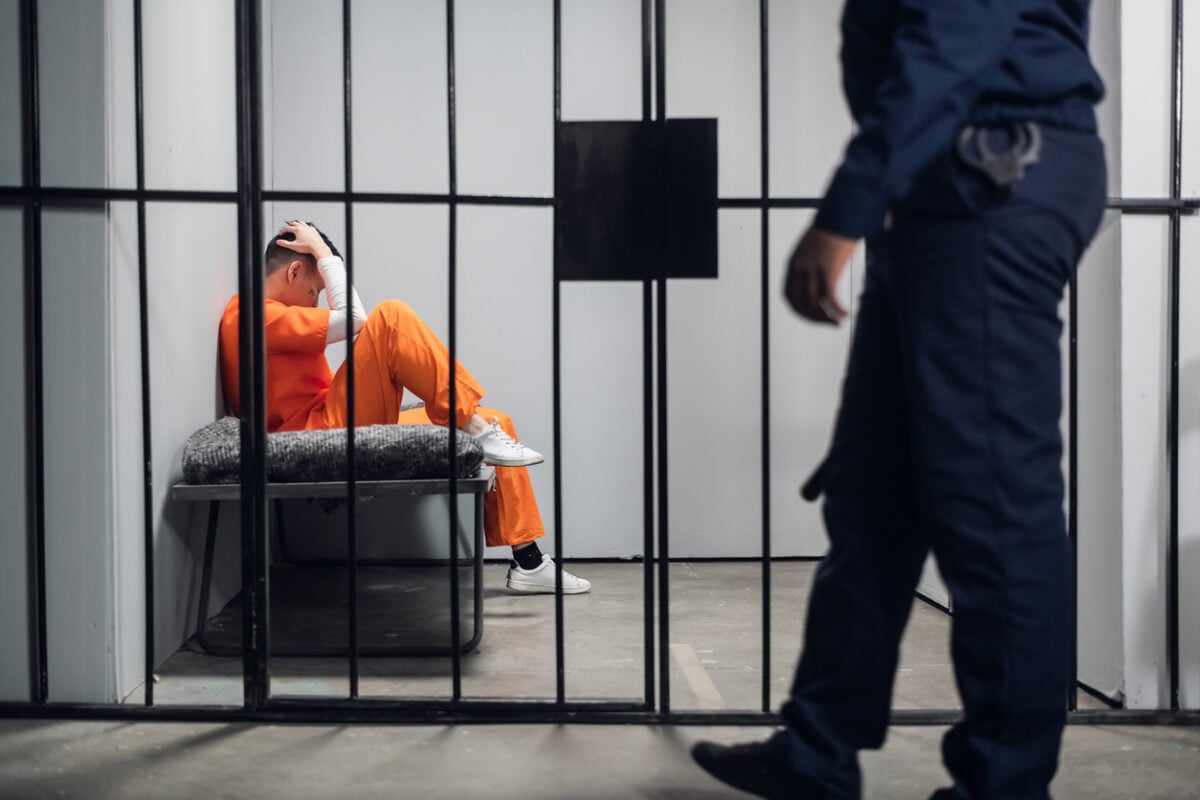
Prisons Call it Ad. Seg but Prisoners Call it Torture

This past February 25th, a panel of experts on solitary confinement converged at Harvard University in Cambridge, Massachusetts, to discuss the horrendous practice in our U.S. prisons that many call “cruel and unusual punishment.” While the panel detailed the disastrous effects such isolation causes, the legal challenges through the years, and the “judicial and institutional […]

Read More

Some GPS Devices Capable of Audio Recording

Civil libertarians and prisoner advocacy groups have expressed shock and outrage at the discovery that some Global Positioning System (GPS) tracking devices, used to monitor the movement and whereabouts of many pre-trial defendants, parolees, sex offenders, and other persons, function like cell phones and are capable of recording conversations without the knowledge or consent of […]

Read More

Life in Prison: Men Who Abuse Small Animals

Few things in this world anger me more than grown men who attack or torture small animals and think it’s acceptable. Sadly, I’m often reminded of how much I hate this occurrence due to the apparently large population of animal abusers who reside at FCI Petersburg, the medium security federal prison in Petersburg, Virginia, where I am […]

Read More

Prison Consultants: Preparing Clients for Incarceration

Perhaps the most unfortunate aspect of American society is our vast network of prison systems. Crime must be hindered, criminals must pay for their crimes, and prison is where we must confine them.  But what if the person spending time in the slammer is not necessarily a criminal, but an erring citizen?  What if the […]

Read More

What Federal Inmates Should Do When Charged With Disciplinary Infractions

Disciplinary infractions are a fact of life for inmates incarcerated within the Federal Bureau of Prisons.  Simply put, those incarcerated in federal prison will likely have to defend against incident reports at some point during their incarceration.  Learning how to defend against disciplinary action is not something that should be done after an incident report […]

Read More

Why on Earth Should We Bother Educating Prisoners?

An Australian named John Braithwaite wrote a book titled Prisons, Education, and Work.  His book was published in 1980.  In his book, Braithwaite presented a number of very cogent and persuasive ideas concerning prisoners and education. At the time Braithwaite wrote, the general consensus in Australia was that prisoners should not receive any benefits greater than those […]

Read More

Federal Inmates Allowed To Utilize MP3 Player Service

In an innovative move by the Federal Bureau of Prisons (BOP), federal inmates are now allowed to purchase MP3 players from their institution’s commissary and individual MP3 files through their housing unit’s Trust Fund Limited Inmate Communication System (TRULINCS) computers.  This system is offered via a federal contract with Advanced Technologies Group (ATG) and has […]

Read More

Distance Learning: Rhema Bible College

Master the Word of God with Home Study that is Flexible and Affordable The Word of God is full of truth about unconditional love, overflowing joy, and perfect peace. But if you don’t know these Bible truths, chances are you’re not enjoying their benefits. RHEMA Correspondence Bible School can help! RCBS is a non-accredited home […]

Read More

The Victim Offender Reconciliation Program

Mediation for victims of crimes, their families, and the offenders is a large part of finding restitution for the crime and having that crime reoccur. The Victim Offender Reconciliation Program, based in Fresno, California, is a faith-based nonprofit organization that provides voluntary, non-fee mediation services to victims of juvenile crime and their offenders. The Victim Offender […]

Read More

Prison Disciplinary Hearings: Lack of Notice, a Valuable Defense

The vast majority of inmates incarcerated within the Federal Bureau of Prisons will one day face a disciplinary proceeding.  These proceedings could be the result of a serious allegation of misconduct (e.g., fighting or brewing alcohol) or a less serious allegation (e.g., feeding the birds, or not making a bed).  Regardless of what the alleged […]

Read More