
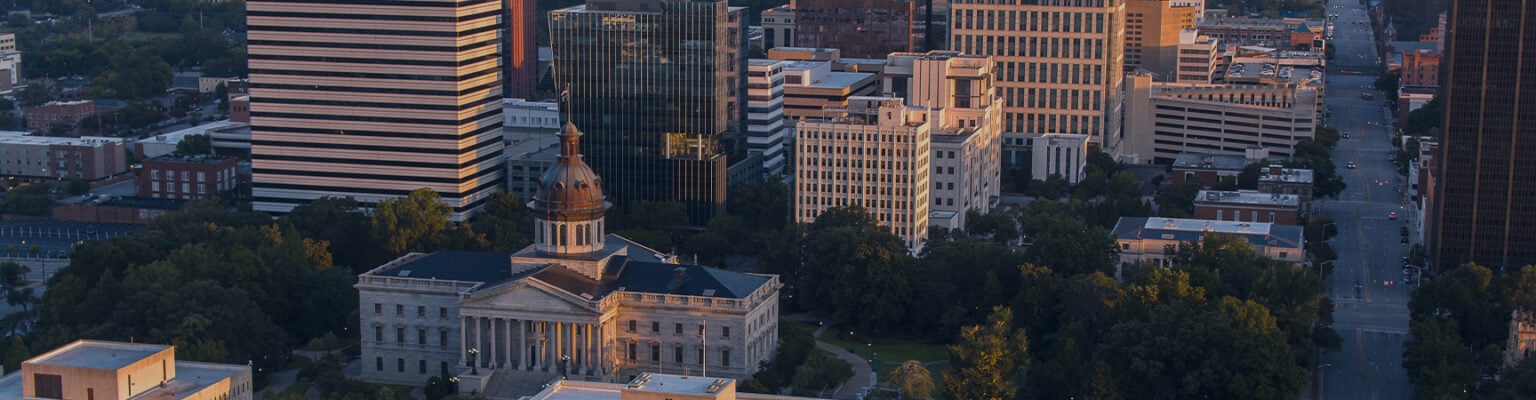
FCI Jesup at a glance
FCI Jesup is a medium-security federal prison for men in Jesup, Georgia, and the only institution in the Bureau of Prisons that runs a Federal Satellite Low and a satellite camp on the same ground. The three prisons share one code, one telephone number, and one visiting room, and together held 1,673 men as of September 2026: 1,049 at the medium, 494 at the low, and 130 at the camp.
| Official name | Federal Correctional Institution, Jesup |
|---|---|
| BOP code | JES · one code for the FCI, the Federal Satellite Low, and the camp |
| Security level | Medium; men · Federal Satellite Low: low · satellite camp: minimum |
| Population | 1,673 (as of September 2026) · FCI 1,049 · FSL 494 · camp 130 |
| Visiting | FCI: Sunday and Monday, 8:00 a.m.–3:00 p.m. · FSL and camp: Friday and Saturday, 8:00 a.m.–3:00 p.m. · see visiting hours |
| Inmate mail | FCI: Inmate Name & Register Number · FCI Jesup · Federal Correctional Institution · 2680 Highway 301 South · Jesup, GA 31599 FSL: Inmate Name & Register Number · FCI Jesup · Federal Correctional Institution · Federal Satellite Low · 2680 Highway 301 South · Jesup, GA 31599 Camp: Inmate Name & Register Number · FCI Jesup · Federal Correctional Institution · Satellite Camp · 2650 Highway 301 South · Jesup, GA 31599 |
| Send money | Lockbox · Western Union (code city FBOP, DC) · MoneyGram (receive code 7932) |
| Phone | 912-427-0870 · Fax 912-427-1125 |
| Street address | 2600 Highway 301 South, Jesup, GA 31599 |
| Judicial district | Southern District of Georgia, Brunswick Division |
| BOP region | Southeast |
| Designated capacity | 1,380 · FCI 808 · FSL 444 · camp 128 |
| Housing | FCI: two- and three-man cells · FSL and camp: two- and three-man cubicles in open-bay units · no single cells |
| Special Housing Unit | Yes · 41 segregation cells |
| RDAP | Yes · at the Federal Satellite Low |
| Sex offender treatment | No |
| UNICOR | Yes |
| Camp | Yes · minimum-security satellite camp |
On this page
The institution sits on Highway 301 south of the town, about 65 miles from Savannah, in the Bureau’s Southeast Region and the Southern District of Georgia. It holds men only, and its 2025 PREA audit records it also holding people for a U.S. military branch and for a state corrections agency. Which of the three prisons a man lands in is decided before he arrives, by a point score and a Public Safety Factor, and that decision shapes almost everything about his sentence.

FCI, FSL or camp? One address, three prisons
Jesup is three prisons at one address: FCI Jesup at medium security, a Federal Satellite Low at low security, and a satellite camp at minimum security, each with its own rules for visiting, mail, searches, sick call, and lights out. A relative “at the satellite” in Jesup could be at either of two prisons, so find out which of the three you are dealing with before relying on anything else on this page.
| The three prisons at Jesup | Security level | Population (as of September 2026) | Housing |
|---|---|---|---|
| FCI Jesup (the main institution) | Medium | 1,049 | Two- and three-man cells |
| FSL Jesup (Federal Satellite Low) | Low | 494 | Two- and three-man cubicles in open-bay units |
| Jesup satellite camp | Minimum | 130 | Two- and three-man cubicles in one open-bay unit |
The 2025 PREA audit records eight multiple-occupancy cell housing units, three open-bay dormitory units — two at the low, one at the camp — and no single-cell housing anywhere on the site.
What a Federal Satellite Low is, and who goes there
A Federal Satellite Low is a low-security prison attached to a larger institution. It is not a camp. A camp is minimum security: no fence in the usual sense, dormitory housing, work details outside the perimeter, the lowest supervision the Bureau operates. A low is a secure institution with a fence — less restrictive than a medium, far more restrictive than a camp. The Bureau’s own description of Jesup uses exactly those terms: “A medium security federal correctional institution with an adjacent low security satellite prison and a minimum security satellite camp.”
Designation to one of the three starts with arithmetic. Under the Bureau’s security designation table for men, a score of 0 to 11 points with no Public Safety Factor produces a minimum-security designation; 12 to 15 produces low; 16 to 23 produces medium; 24 and above produces high. That table is Table 5-2 of the Bureau’s security designation rules, Program Statement 5100.08. A Public Safety Factor then overrides the arithmetic: the program statement defines the nine of them as factors “applied to inmates who are not appropriate for placement at an institution which would permit inmate access to the community (i.e., MINIMUM security),” and provides that applying one “overrides security point scores.”
That is why one man with eight points can be at the camp and another with eight points at the low. A deportable-alien factor, a sex-offense factor, a greatest-severity offense, more than ten years left to serve — any of those pushes a camp-scoring person up to low security. At Jesup the low is on the same road, so the consequence is not a transfer across the country but a fence, a strip search after every visit, and a different set of days on which his family may come.
How many Federal Satellite Lows are left
Two Federal Satellite Lows remain as of September 2026, and Jesup has one of them: the Bureau’s roster lists them only at FCI Elkton in Ohio and at FCI Jesup, and only Jesup also has a camp. The Bureau’s population report agrees: Elkton reports two lines, an FCI and an FSL; Danbury and La Tuna report an FCI and a camp; Jesup reports three.
There used to be four. In September 2018 the Inspector General recorded, in a footnote to a Danbury construction audit, that “The BOP has FSLs at FCI Danbury; FCI Elkton in Lisbon, Ohio; FCI La Tuna in Anthony, Texas; and FCI Jesup in Jesup, Georgia,” and that converting minimum-security institutions this way had “eased crowding at low-security facilities.” Danbury’s and La Tuna’s have since gone; the Bureau’s closure announcement of July 1, 2026, listed “La Tuna FCI, FSL (Federal Satellite Low), and Satellite Camp” for permanent closure, noting the La Tuna low was already non-operational.
That number may change. The same announcement said “Morgantown FPC and Duluth FPC will transition from minimum-security camps to FSL facilities.” As of September 2026, the Bureau still lists both as minimum-security camps, each with a single population line.
How to tell which one your relative is in
Ask the unit team which designation facility he is assigned to; the inmate locator shows “Jesup FCI” for all three. “Designation facility” is a term of art. Program Statement 5100.08 defines a designation facility as “each of the separate missions within an institution for designation purposes,” adds that “each DFCL is shown as a separate line on the Population Report and has its own security level and destination (DST) assignment,” and then provides: “Designations are made to a DFCL code rather than to a facility (FACL) code.” The three lines on Jesup’s population report are therefore three designations, and moving between them is a redesignation decision rather than a room change.
Three shortcuts in the meantime. Mail to 2650 Highway 301 South means the camp; 2680 is the FCI and the low. A habeas petition captioned against the “Warden, FSL Jesup” — as several filed in the Brunswick Division have been — means the low, which the Southern District of Georgia describes as “the Federal Correctional Institution-Satellite Low in Jesup, Georgia.” And Friday and Saturday visiting means the low or the camp; Sunday and Monday means the FCI.
Official sources blur the three as well. When a man walked away from Jesup in May 2026, the FBI’s wanted notice said he escaped from “the Federal Correctional Institute (FCI) Jesup,” while local reporting said he had left “the minimum-security satellite camp next to the Federal Correctional Institution in Jesup.”
What is the security level at FCI Jesup?
FCI Jesup is a medium-security institution; its Federal Satellite Low is low security and its camp is minimum security. The Bureau’s roster record for code JES gives the security level as Medium, and the 2025 PREA audit records the FCI’s custody designation as “Medium/In.”
What medium means here, in the institution’s own words: two- and three-man cells rather than dormitories, the three-man cells reserved to “temporarily house new inmates and inmates who refuse institution programs”; controlled movement “seven days a week,” with “ten minute open movements… every hour on the half hour”; a census count twice each working day on top of five official counts; and a strip search before and after every visit. The handbook is equally clear about the satellites: “There are no controlled movements at the FSL or FPC.” See the intake process and preparing for prison.
Crowding is uneven across the site. The 2025 PREA audit gives designated capacities of 808 at the FCI, 444 at the low, and 128 at the camp, against populations on the audit dates of 1,103, 449, and 121: the medium was carrying about a third more men than its designated capacity while the satellites were close to theirs. That is why a cell holds three men instead of two, and why a program has a waiting list.
Who are the notable inmates at FCI Jesup?
FCI Jesup’s best-known prisoners are Russell Wasendorf, the founder of Peregrine Financial Group, and Andrew Fahie, the former Premier of the British Virgin Islands. Several names that other sites place here are not held at Jesup.
| Name | Status on Bureau records | Case |
|---|---|---|
| Russell R. Wasendorf | Held here. Register 12191-029; release February 19, 2054 | Founder of Peregrine Financial Group. Sentenced on January 31, 2013, in the Northern District of Iowa to 50 years — the maximum allowed by law, said the U.S. Attorney’s office — for stealing more than $215 million in customer funds |
| Andrew Alturo Fahie | Held here. Register 07491-506; release September 12, 2032 | Former Premier of the British Virgin Islands. Convicted at trial and sentenced on August 5, 2024, to 135 months for cocaine-trafficking and money-laundering conspiracies, for agreeing to let Colombian cocaine pass through BVI ports |
| Arthur Lee Cofield | Escaped from the camp on May 26, 2026, and not recaptured. Register 21957-509; the locator shows “Escaped On: 05/26/2026” | Serving more than eleven years for conspiracy to commit bank fraud and aggravated identity theft; charged with escape on May 27, 2026 |
| Bobby Paul Edwards | Former — register 32836-171, recorded at RRM Raleigh, release November 6, 2026 | South Carolina restaurant owner sentenced in 2019 for forced labor |
| Charles Stango | Former — register 11435-082, released June 10, 2025, last recorded at FCI Texarkana | New Jersey organized-crime figure |
| Fabio Ochoa-Vásquez | Former — register 09017-016, released December 3, 2024, from FCI Milan, Michigan | Medellín cartel figure convicted of cocaine trafficking in 2003 |
| Robert J. Mellow | Former — register 70626-067, released March 14, 2014 | Former Pennsylvania state senator. The televangelist Jim Bakker, register 07407-058, who came to the camp in 1993, was released on December 1, 1994 |
| Christopher Howard Chaney | Former — register 22396-018, released May 19, 2021 | Convicted in 2012 in the celebrity email-hacking case |
Listings that place Bobby Paul Edwards at Jesup are out of date: the Bureau has him at a reentry office in North Carolina. Charles Stango was released on June 10, 2025, from Texarkana, not in March 2023. Fabio Ochoa-Vásquez was at FCI Milan at his release. Andrew Fahie’s release date is September 12, 2032, not April 10, 2033.
A former South Carolina sheriff sentenced to 41 months in July 2026 asked, through his lawyers, to serve at Jesup. A request is not a designation, and neither is a judicial recommendation: the Designation and Sentence Computation Center decides, on points, Public Safety Factors, and bed space. The locator shows no one of that name here.
How do I find someone at FCI Jesup?
Search the Bureau’s public inmate locator by the eight-digit register number if you have it, and by committed name if you do not. The locator covers everyone in federal custody since 1982: for someone still held it gives the facility and a projected release date, and for someone released it shows “Not in BOP Custody as of” and a date, with no facility. For anyone held here the locator shows “Jesup FCI” — the FCI, the low, and the camp all report under code JES, so the result gives the address and not the prison. If you do not have the number, how federal register numbers work explains where it comes from.
A blank result usually means state rather than federal custody, pretrial detention under the U.S. Marshals Service, or a committed name that differs from the one the family uses. Read the label in front of the date as well: for the man who left the Jesup camp in May 2026, the locator shows “Escaped On: 05/26/2026.”
How do I write to someone at FCI Jesup?
Mail goes to 2680 Highway 301 South for the FCI and the low, and to 2650 Highway 301 South for the camp, not to the 2600 Highway 301 South that the Bureau’s contact page gives. The Bureau publishes two street numbers for the same building — its institutions roster says 2600, while its address records list 2680 as the physical address — and no mailroom is listed at 2600. The blocks below are the ones the Bureau’s facility page gives, and a letter is far likelier to arrive if the second line names the right prison.
| For someone at the FCI | For someone at the Federal Satellite Low | For someone at the camp |
|---|---|---|
| Inmate Name & Register Number FCI Jesup Federal Correctional Institution 2680 Highway 301 South Jesup, GA 31599 | Inmate Name & Register Number FCI Jesup Federal Correctional Institution Federal Satellite Low 2680 Highway 301 South Jesup, GA 31599 | Inmate Name & Register Number FCI Jesup Federal Correctional Institution Satellite Camp 2650 Highway 301 South Jesup, GA 31599 |
The register number is what routes the letter. Put it on the first line with the committed name from the judgment, not a nickname. Our guide to writing to someone in federal prison sets out what a mailroom rejects, and why, and the Bureau’s correspondence rules govern every institution.
The rule that most often catches Jesup families turns on security level rather than on local policy. Hardcovers and newspapers may come only from a publisher, book club, or bookstore, everywhere. Softcovers are different: the Admission & Orientation handbook records that at medium-security institutions they too are limited that way, while “at minimum security and low security institutions, an inmate may receive soft-cover publications (other than newspapers) from any source.” At this one address a paperback posted from your kitchen table reaches a man at the low or the camp and is refused at the FCI.
Legal mail is opened only in front of the person it is addressed to, and only if the envelope identifies the sender as an attorney and carries the special-mail marking. On the scope of the privilege, see attorney-client communication in the Bureau of Prisons. Outgoing legal mail is hand-delivered to staff, and the window differs by facility: at the FCI, Tuesday to Thursday from 11:00 a.m. until fifteen minutes after mainline plus Monday and Friday at work call; at the low, Monday to Friday 7:30 to 8:00 a.m.; at the camp, Monday to Friday 7:15 to 7:30 a.m. A camp resident who misses that fifteen-minute window waits a day.
Two more handbook rules: general correspondence at the FCI goes into the unit mailbox unsealed, because staff screen it; and at the camp, “Stamps are not allowed to be sent in with incoming mail.” The rule matters given what stamps are worth inside, and given what a former officer here was convicted of smuggling.
How do I send money to someone at FCI Jesup?
Money for someone at FCI Jesup goes to the Bureau’s national lockbox in Des Moines, Iowa, or through Western Union or MoneyGram, never to the institution. The institution’s handbook says the mailroom “will not accept funds received from outside the institution,” and returns them with instructions. Each route needs the committed name and the eight-digit register number, on the instrument and on the envelope; the Bureau’s money instructions give the account-number format and posting times.
| Route | Where it goes | Notes |
|---|---|---|
| Postal money order, cashier’s check, or a U.S. Treasury, state, or local government check | Federal Bureau of Prisons Inmate Name & Register Number Post Office Box 474701 Des Moines, Iowa 50947-0001 | Nothing else in the envelope — the lockbox cannot forward a letter or a photograph. Put your own return address on it, or funds that cannot be posted are gone |
| Western Union Quick Collect | Code city FBOP, DC; account number is the eight-digit register number with no spaces or dashes followed straight by the surname, and the attention line is the full committed name | Sent between 7:00 a.m. and 9:00 p.m. Eastern, posted in two to four hours; sent later, posted at 7:00 a.m. the next morning |
| MoneyGram Express Payment | Receive code 7932, company Federal Bureau of Prisons, Washington, DC; same account-number format, up to $300 online | The same posting times, seven days a week including holidays |
No cash, no personal checks, and nothing handed over in the visiting room: the visitors’ handout says funds must go to the lockbox or by Western Union. For what each route costs and how long it takes, see sending money to a federal prisoner.
What the money can buy is capped. Commissary spending across the Bureau is limited to $460 a month under the Bureau’s trust fund rules, Program Statement 4500.13 (2026), which raised the limit from $360. The limit rises by $50 during the November and December holiday period, for no more than one validation period. Stamps, over-the-counter medication and vitamins, nicotine replacement products, copy cards and paper, footwear, and mattresses are among the items outside the limit. Money above the limit stays in the account.
What are the visiting hours at FCI Jesup?
FCI Jesup visits on Sundays and Mondays, and the Federal Satellite Low and the camp visit on Fridays and Saturdays, all from 8:00 a.m. to 3:00 p.m. Institution supplement JES 5267.09, dated May 15, 2025, and signed by Warden G. Swaney, sets the three schedules under the Bureau’s visiting regulations:
- FCI Jesup: Sunday and Monday. Not Saturday.
- Federal Satellite Low: Friday and Saturday.
- Satellite camp: Friday and Saturday.
- Special Housing Unit, at all three: Tuesdays only, staggered — camp 8:00 to 10:00 a.m., low 10:15 a.m. to 12:15 p.m., FCI 12:30 to 2:30 p.m.
The Admission & Orientation handbook the Bureau still publishes on the Jesup page says “Visiting hours will be on Saturday, Sunday, Monday and all federal holidays.” Listings that repeat the handbook, or that give Saturday and Sunday for the whole site, are out of date: the 2025 supplement is nine years newer than the handbook and governs. A family that drives to the FCI on a Saturday, or to the camp on a Sunday, arrives on a day with no visiting there. Call 912-427-0870 and have a person confirm before you book anything.
The Bureau’s facility page publishes no visiting schedule for Jesup, so the supplement is the schedule to rely on.
Who can visit, and how many
- Four adult visitors at one time. The Unit Manager may approve more “under special circumstances (i.e., out of town, long-distance travel, etc.).”
- Eight visiting points a month, two deducted for each weekend or holiday visit, counted by day rather than by visit, with nothing rolling over. As the supplement is written, a Monday visit at the FCI is neither a weekend nor a holiday visit; confirm how the institution counts it.
- Children under sixteen need not be on the list but must be with an approved adult; sixteen- and seventeen-year-olds must be. Everyone sixteen or over who is not immediate family needs an NCIC check first.
- Visits may be shortened to a minimum of one hour when the room is full; infrequent visitors and those who have traveled a long way “will be among the last to be terminated.” Immediate family named in the presentence report are approved for 30 days from the end of Admission and Orientation, and that approval lapses if the forms are not back inside it.
- The prior-relationship rule is enforced and only the Warden may waive it. Men on holdover status get four visiting days a month, immediate family only; men in protective custody visit in Receiving and Discharge rather than the visiting room, for no more than two hours.
What visitors can wear and bring
The dress code is identical at all three facilities and more specific than most. Skirts and dresses must fall below the bend of the knee, with no split above it. Women must wear a bra, and the same list prohibits underwire bras, so wear one without an underwire. Footwear gets its own paragraph: thin-soled closed-toe shoes or boots with a heel no higher than half an inch, and everyone including children must be shod. Also barred: sagging clothing; halter, strapless, or wrap styles; tights, spandex, and yoga pants; sweat and wind suits; low necklines, bare midriffs, tank tops, and sheer blouses; torn clothing; capris above mid-calf; hats and hoods except a hijab; khaki, tan, or orange, which resemble institution issue; camouflage; and gang colors.
You may carry in a clear change purse or bag no larger than six by six by three inches, up to $25 with no note larger than a $5 bill for the vending machines, one car key, a comb, a sweater, three feminine hygiene items, and infant supplies — two empty clear bottles, sealed formula and baby food, a sippy cup, a spoon, diapers, ointment, a blanket, and one change of clothes. Strollers and carriers stay outside. The barred list is longer: cosmetics of any kind including lip balm, purses, sunglasses, bobby pins, photographs, books, pens, toys, food, tobacco, and wristwatches. Heart and epilepsy medication may come in and is held by the visiting room officer at the FCI and the low; diabetic medication and syringes are expressly not treated as life-maintenance medication and must stay in a locker or your car. The vending machines are operated by visitors, and the supplement warns that the institution is not responsible for losses and that “Reimbursement is not guaranteed.”
Identification and screening
The 2025 supplement gives two different identification rules, and the difference could cost you a day. Its body says visitors “must have at least one of the following forms of photo identification, either a state issued REAL ID or Government Issued Passport.” The visitors’ handout attached to the same document says visitors “must have two forms of identification, one being a picture I.D. (i.e., driver’s license or other official I.D. card).” A non-REAL-ID driver’s license satisfies the second and not the first. The supplement does not say which controls; take a REAL ID or a passport plus a second document, and ask when you call.
Screening then diverges. Visitors to the FCI and the low pass through a walk-through metal detector and are marked with invisible ink, checked under a black light before they leave; camp visitors need current photo identification and “may be randomly screened using the hand-held trans-frisker.” An implant that will not clear the detector needs a licensed doctor’s documentation naming it. Your relative is searched too: men at the FCI and the low are strip searched before and after every visit, camp residents pat-searched on the way out. And one camp rule has no equivalent elsewhere on the site — visitors may not be on institution property before 7:30 a.m. and “are not permitted to exit their vehicle prior to 7:45 a.m.,” on pain of losing that day’s visit. On how these searches are conducted, see searches, shakedowns, and contraband and the Bureau’s rules on searching visitors; on the system-wide rules, federal prison visitation.
Getting there
The institution is on U.S. Highway 301 South, in the southeast corner of Jesup. The Bureau’s own directions, in the visitors’ handout: from Savannah, Interstate 16 to Interstate 95 south, exit 14 at Richmond Hill, Highway 17 south, Highway 196 to Hinesville, then Highway 84 into Jesup, bearing left under the railroad underpass onto 301 South. The supplement gives the distances as about 65 miles from Savannah, 100 from Jacksonville, and 40 from Brunswick, and says Brunswick’s airport is roughly fifty minutes away while the other two have more flights and a longer drive.
How do phone calls and email work at FCI Jesup?
Calls at FCI Jesup go one way: he calls you, from an approved list of up to thirty numbers, and there is no way to call in. Under the Bureau’s telephone regulations, Program Statement 5264.09, issued September 3, 2026, the Bureau-wide allowance is 510 minutes a month: 300 free to anyone eligible for First Step Act telephone incentives, and 210 more that anyone who uses up those 300, eligible or not, may buy. A single call should generally not exceed 15 minutes, at least 30 minutes must pass between completed calls, and the monthly limit does not apply to unmonitored legal calls. At Jesup the phones run 6:00 a.m. to 9:30 p.m. daily except during counts, and only one phone in each unit is available during weekday work hours. The wider rules are in our guide to federal inmate phone calls.
Phone locations differ between the three prisons: the handbook puts them “in the housing units at the FCI/FPC, and directly outside of the housing units at the FSL.” At the low that means weather and yard hours help decide when a man can call.
Every call is recorded except a properly arranged unmonitored legal call. The request goes to the Unit Manager on an Inmate Request for a Legal Telephone Call form giving the lawyer’s name and number, the time wanted, and why other means will not do — and at Jesup “Phone calls to an attorney will be made COLLECT ONLY.” If your firm’s system does not accept collect calls, the call does not happen.
Email runs on TRULINCS, which families reach through CorrLinks; messages are text only, the person inside must add your address before you can accept the invitation, and messages to a lawyer on it are not privileged. The handbook also tells people they can report sexual abuse straight to the Justice Department’s Inspector General through a TRULINCS mailbox called “DOJ Sexual Abuse Reporting,” which is “untraceable at the local institution” and cannot be replied to, but anonymity from the Bureau has to be asked for in the message itself.
What can people buy at the FCI Jesup commissary?
People at FCI Jesup can spend up to $460 a month at the commissary, the national limit that Program Statement 4500.13, issued May 7, 2026, set when it raised the ceiling from $360. Jesup publishes no current figure of its own, and it counts the limit in two-week periods.
The 2016 handbook says “You are permitted to spend the approved Bureau of Prisons limit which is currently $160.00 per bi-weekly… The spending limit is reset on the 1st and 15 of each month.” That is the same national system: paragraph 3.2 of the program statement provides that the limit “is automatically revalidated once per month for each inmate except where weekly or bi-weekly validation is used,” and Jesup uses the bi-weekly option. In 2016, $160 twice a month was exactly the $320 national ceiling of the day. Ask the trust fund office what the per-period figure is under the $460 ceiling: a family sending money on the 14th and a family sending it on the 16th are working against different balances.
The only order form the Bureau publishes for Jesup is the 2013 commissary list. Its prices are long out of date, but its structure still shows how the store works: copy cards, photo tickets at a dollar, ice cream limited to one container, sodas capped at two six-packs, about sixty lines marked (K) for kosher, and typing and correction ribbons at $5.65 and $6.50 for the typewriters the law library still keeps. The footer sets the house rule in capitals: “After your name has been called 3 times without response, you will not be allowed to shop until the following week. You are permitted to shop only once per week. NO EXCEPTIONS!!!”
Shopping day is fixed by the last two digits of the register number and differs at each facility: at the FCI, Monday for 00–24 through Thursday for 76–99, with Friday closed; at the low, Tuesday to Thursday; at the camp, Monday, at the Business Office warehouse. The schedules rotate every six months, and being in the sales unit on the wrong day is out of bounds. The Special Housing Unit orders on paper: lists out Thursday, collected Monday morning, delivered Monday afternoon. Coins are not sold at Jesup; debit cards do the work of quarters. For what a commissary account buys anywhere in the Bureau, see the federal prison commissary and the Bureau’s trust fund rules.
What programs are available at FCI Jesup?
FCI Jesup offers the Residential Drug Abuse Program at its Federal Satellite Low, GED and English-as-a-second-language classes, a registered apprenticeship program, trade courses through a local technical college, UNICOR work, and religious programming; the Challenge Program and sex offender treatment are not offered here.
RDAP runs at the Federal Satellite Low
The Residential Drug Abuse Program at Jesup is named at the low — not the medium, not the camp. The Bureau’s current list of RDAP locations, printed inside the August 2026 First Step Act guide and updated in June 2026, shows 57 programs at 50 locations and eight sites in the Southeast Region; the Georgia entry reads “FSL Jesup (GA).” The institution’s handbook says the same from the inside: residential treatment “is available at selected Bureau of Prisons facilities including FSL Jesup.” The Bureau’s treatment program rules govern admission.
Completion can mean up to a year off a sentence for a nonviolent offense under 18 U.S.C. § 3621(e), and the handbook’s next sentence decides whether that year is reachable: “Inmates who meet the criteria for the program will be transferred to an institution with an RDAP.” A man at the FCI who qualifies is not walking down the road to the low; he is waiting on a redesignation, and redesignations take time a sentence may not have. The program runs a minimum of 500 hours over nine to twelve months in a dedicated unit, and the psychology department carries an RDAP coordinator and three drug treatment specialists.
Eligibility disputes from Jesup have reached court. In a published decision the Southern District of Georgia took the case of a man who applied for RDAP while at FSL Jesup and was refused, held the Bureau’s reading of the twelve-months-preceding requirement unpersuasive, granted the writ, and ordered the Bureau to reconsider his eligibility on clearly permissible criteria. Smith v. Vazquez, 491 F. Supp. 2d 1165 (S.D. Ga. 2007). The court did not order him into the program; it ordered the decision to be made again, properly.
Non-residential treatment and drug education run at all three facilities; the non-residential program meets weekly for twelve to twenty-four weeks, carries a $30 award, and wardens are “strongly encouraged” to approve people who finish it for the maximum halfway-house placement. The handbook also lists what is not offered here — the Challenge Program, the sex offender treatment programs, BRAVE, Skills, and Habilitation: “None of these programs are available at FCI/FSL/SCP Jesup.” The August 2026 guide’s programs-by-institution table still marks none of them for this code.
Education and vocational training
Education includes GED and English-as-a-second-language classes, the latter required until a man tests at an eighth-grade equivalency; adult continuing education the handbook names individually — a commercial driver’s license course aimed at the test after release, legal research and writing, Spanish, basic finance, résumé writing, and parenting; an annual mock job fair; and college correspondence courses proctored in the education department. The apprenticeship program is registered with the U.S. Department of Labor and runs from 2,000 to 8,000 hours. See prison education and vocational training.
A local technical college teaches the trade courses, and the FCI gets more of them than the low. The handbook records that it works “through the FCI/FSL Jesup Education Department,” that the FCI offers commercial wiring, air conditioning technology, and information technology, and that the low “offers a certificate for Information Technology” — one trade against three, with the camp not mentioned. All require a diploma or GED. The August 2026 guide’s programs-by-institution table marks this institution for all four occupational-education categories, including vocational apprenticeships.
The law library, run under the Bureau’s legal activities rules, sits in the education department with an inmate law clerk, the electronic law library, and typewriters, and serves the Special Housing Unit by delivery. UNICOR operates here — the August 2026 guide names JES among its Federal Prison Industries institutions — and it runs on its own pay scale. Everyone else works for twelve to forty cents an hour, or $5.25 a month at maintenance grade, under the Bureau’s work and pay rules, and no one without a GED is promoted past the bottom grade.
Faith-based and reentry programming
Religious Services is staffed by full-time and contract chaplains, under the Bureau’s religious practice rules, and administers pastoral visits, religious property, holy-day observance, and the religious diet program — the only department that can put a man on that diet or take him off it. A minister of record may be added to a visiting list on written request, does not count against the visitor limit, and is seen apart from other visitors; any other clergy visit counts as an ordinary social visit.
Little outside programming reaches this compound: the February 2025 PREA audit counted ten volunteers and nine individual contractors authorized to enter, for a site holding 1,679 men. The August 2026 guide’s programs-by-institution table marks the code for Threshold, the national faith-based productive activity, along with anger management, criminal thinking, parenting, victim impact, Alcoholics and Narcotics Anonymous, and trauma education.
The guide records what an institution is approved to offer. Whether a class is running this quarter, and how long its waiting list is, is a question for the unit team; at an institution the Inspector General once ranked second in the Bureau for chaplain shortfall, ask in writing.
What is daily life like at FCI Jesup?
Daily life at FCI Jesup runs on five official counts a day, fixed meal and work hours, and, at the FCI only, controlled movement every hour. The schedule below comes from the Admission & Orientation handbook (2016); the document is a decade old, so treat it as the rhythm rather than a timetable.
| Weekdays | Weekends and holidays | |
|---|---|---|
| Official counts | Midnight, 3:00 a.m., 5:00 a.m., 4:00 p.m., 10:00 p.m. | The same, plus 10:00 a.m. |
| Meals | Breakfast 6:30–7:30 a.m.; lunch 11:00 a.m.–noon; dinner after the 4:00 p.m. count clears | Brunch replaces breakfast and lunch; coffee hour 7:00–8:00 a.m.; dinner after the 4:00 p.m. count |
| Work | 7:40–11:00 a.m. and 11:40 a.m.–3:45 p.m. | — |
| Controlled movement | FCI only: ten minutes every hour, on the half hour, seven days a week. None at the low or the camp | Same at the FCI |
| Recreation | FCI and low 6:30 a.m.–8:00 p.m.; camp 6:00 a.m. to dusk | FCI and low 7:00 a.m.–8:00 p.m.; camp the same as weekdays |
| Lights out | FCI and camp: unit lights out at 10:00 p.m. Low: cell lights until midnight Sunday to Thursday and 2:00 a.m. Friday, Saturday, and holidays | |
Quiet hours run from the end of the 10:00 p.m. count to 6:00 a.m. everywhere.
Which unit eats first is decided by the week’s sanitation scores. Table games run from noon at the FCI and from 6:00 a.m. at the low and the camp, where men also play “on the front porches of the housing units” after four o’clock. The institution is smoke-free, hobby-craft work must be mailed out rather than kept, and of musical instruments the handbook allows exactly one in a unit: “With the exception of harmonicas, no musical instrument will be permitted in the unit.”
Sick call differs by facility. Health services staff are on site from 6:30 a.m. to 8:30 p.m. seven days a week and emergency care runs around the clock, but sign-up happens Mondays, Tuesdays, Thursdays, and Fridays at three different times: 6:00 a.m. at the camp, 11:15 a.m. at the low, and at the 7:40 a.m. work call at the FCI. There is a $2.00 copayment for a visit the patient asked for, waived for chronic, preventive, emergency, and mental health care and for anyone whose account has held $5.25 or less for thirty days. See medical care in federal prison and the Bureau’s patient care rules.
What do inspectors say about conditions at FCI Jesup?
Independent oversight of FCI Jesup consists of a Prison Rape Elimination Act audit every three years, Inspector General products that examine this institution by name, and a criminal docket. The DOJ Office of the Inspector General has not conducted an on-site inspection of this facility, and it is not among the institutions the OIG lists as under inspection now. The District of Columbia’s Corrections Information Council, which inspects federal prisons holding D.C. Code offenders, has never inspected Jesup.
The 2025 PREA audit
Jesup was audited under the Prison Rape Elimination Act on site on February 11–13, 2025, by an independent auditor, Cynthia Swier of Corrections Consulting Services; the report is dated February 25, 2025. The facility passed: 45 standards met, none exceeded, none unmet.
The audit counts all three prisons separately.
| Designated capacity | FCI 808 · FSL 444 · camp 128 |
|---|---|
| Population at the audit | FCI 1,103 · FSL 449 · camp 121; 1,679 on day one |
| Buildings / housing units / segregation cells | 42 / 8 cell units plus 3 open-bay dormitories / 41. Over capacity at some point in the preceding year: yes |
| Staff who may have inmate contact | 353, of whom 42 were hired in the preceding year |
| Day one: limited English proficient / disclosed prior victimization | 236 / 169 |
In the year of reported incidents the auditor reviewed under the Bureau’s sexual abuse prevention rules, the three facilities together recorded 23 allegations: thirteen of sexual abuse, ten inmate-on-inmate and three staff-on-inmate, and ten of sexual harassment. Of the abuse allegations three were unfounded and nine unsubstantiated, none substantiated — and one staff-on-inmate allegation has no outcome recorded in the audit’s own table. One inmate-on-inmate harassment allegation was substantiated. No criminal investigation was opened in the period; criminal referrals go to a Justice Department component rather than local police.
The audit’s figure of 253 investigators “employed by the agency and/or facility” is a Bureau-wide count that appears in the audits of dozens of other federal prisons. The staffing paragraph is local, and it reports that “the current staffing is based on the average daily number of inmates since the last PREA audit, which is 1663,” with the Warden certifying no deviation from the staffing plan in the preceding year because “posts are not authorized to be unmanned” and overtime or non-custody augmentation covers the gap.
What the Inspector General has found here
Jesup was one of three institutions the OIG visited in 2019 for its evaluation of how the Bureau handles sexual harassment and assault committed by inmates against staff, published in February 2023: “In 2019, we conducted site visits to Federal Correctional Institution (FCI) Jesup, Federal Correctional Complex Coleman, and FCI Miami, where we spoke with BOP staff in various positions and a few inmates.” That is a site visit inside a Bureau-wide evaluation, not an inspection of this prison — but it produced one finding attributed to Jesup by name, about augmentation:
“Some interviewees at Federal Correctional Institution (FCI) Jesup explained that inmates recognize when staff are being augmented and see that as an opportunity to take advantage of the situation, especially sexually.”
Augmentation is the practice of filling correctional officer posts with teachers, counselors, case managers, and medical staff — and it is the mechanism the Warden described to the PREA auditor six years later as the reason no post at Jesup goes unmanned. For a family it shows up as a canceled call-out, a class that did not run, or a medical appointment that slipped.
The same report’s appendix lists institutions by the number of staff who reported inmate-on-staff sexual harassment in the OIG’s anonymous 2019 survey, which drew 7,334 responses Bureau-wide. Jesup returned 24, its security levels listed as “Minimum, Low, & Medium.” No per-institution denominator is published, so that is a count of respondents, not a rate.
Staffing, chaplaincy, and augmentation
The OIG’s July 2021 audit of the Bureau’s chaplaincy services program ranked Jesup second among the ten most understaffed chaplaincy departments in the federal system as of February 2020. In February 2020 it had one chaplain for 1,567 people, against the five the Bureau’s own guidelines suggested for it.
The satellites push the guideline number up. The audit sets out the Bureau’s rule: a minimum of one chaplain and one religious services assistant per department, plus one more chaplain per 500 inmates and one more for each of a major medical center, a special unit, or “2 or more satellite facilities.” Jesup is one of the few institutions that triggers the satellite clause. On the Bureau’s own arithmetic it needed five chaplains; it had one. That is February 2020 data published in July 2021 and not a statement about today — but it is the only published measure of program staffing this institution has.
The criminal record centers on a 2022 contraband conspiracy: between May and September 2022 an officer here took bribes through three Cash App accounts to bring in methamphetamine, synthetic cannabinoids, phones, cigarettes, and postage stamps, and every person charged — the officer and seven current or former Jesup prisoners — has now pleaded guilty. With contraband arriving by uniform and, on the government’s case, by drone, phones circulate, and a phone in a cell is a common route to an incident report.
FCI Jesup in the news
Recent news about FCI Jesup centers on the May 2026 escape from the camp, a drone-smuggling indictment, a death in custody, and the prosecutions from the 2022 contraband conspiracy; older items concern deaths the Bureau reported in 2020 and 2021.
- July 2026 — the escapee believed to be in Mexico. On July 28 the FBI’s Atlanta field office said of Arthur Cofield, “It is believed he is in Mexico. We are still looking for him.” The Bureau’s locator shows “Escaped On: 05/26/2026” for him, with Jesup the last facility in his record.
- June 2026 — the drone indictment. On June 24 the U.S. Attorney for the Middle District of Georgia unsealed charges against twelve people alleged to have used six drones to drop contraband into federal prisons at least 38 times between September 2023 and May 2026. FCI Jesup is one of ten institutions named, with FCI Atlanta, FCI Beckley, FMC Lexington, FCI Manchester, FCI Memphis, FCC Petersburg, FCI Pollock, FCI Talladega, and FCI Yazoo City; one defendant is a former Jesup prisoner alleged to have used contraband phones to schedule drops.
- May 2026 — a walk-away from the camp. Arthur Lee Cofield left on the afternoon of May 26 while serving more than eleven years for bank fraud and aggravated identity theft, and was charged with escape the next day.
- February 2026 — death in custody. The Bureau’s news release reported that Julius Leroy Harrison, 66, “was found unresponsive” at FCI Jesup at about 5:30 a.m. on February 24, 2026, that responding employees “initiated life-saving measures,” and that on February 26, 2026, he “was pronounced deceased by hospital personnel.”
- February 2026 — the last guilty plea. The U.S. Attorney for the Southern District of Georgia announced that the former officer at the center of the 2022 contraband conspiracy pleaded guilty on January 28 to 24 counts of accepting a bribe and 16 of money laundering, the last of eight defendants to do so. The Inspector General says the indictment charged 24 Cash App bribes totaling $29,000; the U.S. Attorney’s office says she received over $80,000 in all.
- October and November 2025 — the Inspector General announced four prosecutions of current and former Jesup prisoners for introducing contraband, including one man who bought a phone the officer smuggled in.
- July 2020 and January 2021 — the Bureau posted two news releases reporting the deaths of people held at the FCI Jesup Satellite Camp and at FCI Jesup; the Bureau’s releases are listed on its press release page.
Frequently asked questions about FCI Jesup
What is FCI Jesup?
FCI Jesup is a medium-security federal prison for men at 2600 Highway 301 South in Jesup, Georgia. Two satellite prisons stand on the same site: a Federal Satellite Low and a minimum-security camp. As of September 2026, the three held 1,673 men — 1,049 at the FCI, 494 at the low, and 130 at the camp.
What is a Federal Satellite Low, and how is it different from a prison camp?
A Federal Satellite Low is a low-security prison attached to a larger institution; a camp is minimum security. The low has a secure perimeter and strip searches after visits; the camp has dormitory housing and the lightest supervision. Placement turns on the point score and any Public Safety Factor: under Program Statement 5100.08, 0 to 11 points with no Public Safety Factor produces minimum security, 12 to 15 produces low, and a Public Safety Factor overrides the score.
How many Federal Satellite Lows does the Bureau of Prisons have?
Two, as of September 2026: FCI Elkton in Ohio and FCI Jesup. They are the only Bureau institutions listed with a Federal Satellite Low, and Jesup is the only one that also has a camp. The Inspector General recorded four in 2018 — Danbury, Elkton, La Tuna, and Jesup. The Bureau announced on July 1, 2026, that the Morgantown and Duluth camps would become Federal Satellite Lows, but as of September 2026 it still listed both as camps.
When can I visit someone at FCI Jesup?
Three schedules, all 8:00 a.m. to 3:00 p.m., under institution supplement JES 5267.09 (2025). The FCI visits Sundays and Mondays; the Federal Satellite Low and the camp visit Fridays and Saturdays; Special Housing Unit visits are Tuesdays only. The Bureau’s 2016 handbook still says Saturday, Sunday, and Monday for everyone, and listings that copy it are out of date. Call 912-427-0870 and confirm before traveling.
What is the mailing address for FCI Jesup?
There are two, and neither is the 2600 Highway 301 South shown on the Bureau’s contact page. Mail for the FCI or the Federal Satellite Low goes to 2680 Highway 301 South, Jesup, GA 31599; mail for the camp goes to 2650 Highway 301 South. Put the committed name and register number on the first line and the right facility on the second.
Does FCI Jesup have RDAP?
Yes, at the Federal Satellite Low. The Bureau’s current list of Residential Drug Abuse Program locations, printed inside the August 2026 First Step Act Approved Programs Guide and updated in June 2026, names “FSL Jesup” as the Georgia site, and the institution’s handbook says residential treatment is available “including FSL Jesup.” A man at the medium or the camp who qualifies has to be redesignated first.
How much can someone spend at the FCI Jesup commissary?
$460 a month under Program Statement 4500.13, issued in May 2026, which raised the ceiling from $360; it rises by $50 during the November and December holiday period, for no more than one validation period. Stamps, over-the-counter medication, copy cards, footwear, and mattresses are among the excluded items. Jesup validates the limit twice a month rather than monthly, which the program statement permits. Listings that give $320 or $360 are out of date.
Where do I send money for someone at FCI Jesup?
Not to the prison — the mailroom returns funds to the sender. Deposits go to the Bureau’s lockbox at Post Office Box 474701, Des Moines, Iowa 50947-0001, by Western Union Quick Collect to code city FBOP, DC, or by MoneyGram using receive code 7932. Each needs the committed name and the eight-digit register number.
Who are the famous inmates at FCI Jesup?
Bureau records place two well-known men here: Russell Wasendorf, the Peregrine Financial Group founder serving 50 years, and Andrew Fahie, the former Premier of the British Virgin Islands serving 135 months. Arthur Lee Cofield escaped from the camp in May 2026 and has not been recaptured. Names often attached to Jesup that the Bureau does not place here include Bobby Paul Edwards, recorded at a reentry office in North Carolina, and Fabio Ochoa-Vásquez, released from FCI Milan in December 2024.
Has anyone escaped from FCI Jesup?
Yes. Arthur Lee Cofield walked away from the minimum-security satellite camp on the afternoon of May 26, 2026, and was charged with escape in the Southern District of Georgia the next day. The FBI offers up to $10,000, describes him as armed and dangerous, and said in July 2026 that he is believed to be in Mexico. The Bureau’s locator shows “Escaped On: 05/26/2026” for him.
Has FCI Jesup been inspected?
FCI Jesup’s most recent on-site review is an independent Prison Rape Elimination Act audit in February 2025, which it passed with 45 standards met and none unmet. The DOJ Office of the Inspector General has not conducted an on-site inspection of this facility, and the District of Columbia’s Corrections Information Council has never inspected it.
What other federal prisons are in Georgia?
Two Bureau-operated institutions, FCI Jesup and FCI Atlanta, plus RRM Atlanta and the Bureau’s Southeast Regional Office. Privately operated contract prisons that have held federal prisoners in Georgia, such as D. Ray James and McRae, are not Bureau institutions and no longer appear on the Bureau’s facility roster. The full state picture is in our guide to federal prisons in Georgia.
Problems at FCI Jesup: where we can help
Most problems at FCI Jesup arise along the seams between its three prisons, or in the gap between what the Bureau’s paperwork says and what the institution is doing. These are the issues that recur here, and most run on a clock.
- Designation to the wrong one of the three. A Public Safety Factor is the usual reason a camp-scoring man is at the low, and Public Safety Factors are arguable — sometimes because the underlying fact is wrong in the presentence report. See federal prison transfers and the Bureau’s designation rules.
- RDAP access, which at Jesup means a redesignation to the low or to another institution before the program is even reachable. The published case law from this institution is about exactly that: whether the Bureau applied permissible criteria when it said no.
- First Step Act time credits under the Bureau’s time-credit rules. Habeas petitions from the low have repeatedly failed in the Southern District of Georgia on the ground that there is no liberty interest in earned time credits, and that asking to move into prerelease custody is not asking for release.
- Disciplinary proceedings, especially phone and contraband charges, at an institution where drones and a corrupt officer put phones into circulation for years. A code 108 finding costs good conduct time and can cost a camp placement.
- Special Housing Unit placements that outlast their justification, including protective custody, where visits move to Receiving and Discharge and are capped at two hours.
- Medical care that is not happening — the route is a written request, then the administrative remedy process (see how to file a BP-9), and every rung has a deadline. A Federal Tort Claims Act claim is a different filing on a different clock, and it is the one that fits where negligence has already caused an injury.
- Halfway house and home confinement placement, the effect of a detainer on both, compassionate release under the Bureau’s reduction-in-sentence policy, and sentence computation errors. See our early-release work.
- Challenges to the conviction or sentence itself, through a direct appeal or a § 2255 motion.
Elizabeth Franklin-Best, P.C. handles federal criminal defense, appeals and post-conviction matters nationwide, and advises families on Bureau of Prisons issues at institutions across the system. Call (843) 620-1100 or contact us to talk through a specific situation.
Christopher Zoukis, JD, MBA, the firm’s Managing Director, writes and maintains the federal prison policy material on this site. He is not counsel of record; legal representation is provided by Elizabeth Franklin-Best.
Sources and currency
Bureau of Prisons documents
- FCI Jesup, Federal Bureau of Prisons, 2026.
- Death at FCI Jesup, Federal Bureau of Prisons, FCI Jesup, 2026. News release on the death of Julius Leroy Harrison.
- Visitation Regulations, Institution Supplement JES 5267.09, Federal Bureau of Prisons, FCI Jesup, 2025. Replaced Institution Supplement JES 5267.08E (2017).
- FCI Jesup Admission & Orientation Handbook, Federal Bureau of Prisons, FCI Jesup, 2016.
- FCI Jesup Commissary List, Federal Bureau of Prisons, FCI Jesup, 2013.
- Community Ties: Sending Money, Federal Bureau of Prisons, 2026. Deposit routes, account-number format, and wire posting times.
- Trust Fund/Deposit Fund Manual, Program Statement 4500.13, Federal Bureau of Prisons, 2026. Commissary spending limit and its validation periods.
- Inmate Security Designation and Custody Classification, Program Statement 5100.08, Federal Bureau of Prisons, 2006, as amended in 2026.
- Inmate Telephone Regulations, Program Statement 5264.09, Federal Bureau of Prisons, 2026. Monthly minute allowance and call rules; replaced Program Statement 5264.08 (2008).
- First Step Act Approved Programs Guide, Federal Bureau of Prisons, Reentry Services Division, 2026. Programs by institution and the RDAP locations list.
- Federal Bureau of Prisons Announces Facility Closures and Operational Changes, Federal Bureau of Prisons, 2026.
- Press Releases, Federal Bureau of Prisons, 2021.
Audits and inspections
- PREA Audit Report: FCI Jesup, Corrections Consulting Services, 2025. Auditor Cynthia Swier.
- Evaluation of the Federal Bureau of Prisons’ Efforts to Address Sexual Harassment and Sexual Assault Committed by Inmates Toward Staff (Report 23-034), U.S. Department of Justice, Office of the Inspector General, 2023. Includes the 2019 site visit to FCI Jesup.
- Audit of the Federal Bureau of Prisons’ Management and Oversight of its Chaplaincy Services Program (Report 21-091), U.S. Department of Justice, Office of the Inspector General, 2021.
- Audit of the Federal Bureau of Prisons’ Contract Awarded to Sealaska Constructors, LLC, to Build Facilities at Federal Correctional Institution Danbury (Report 18-31), U.S. Department of Justice, Office of the Inspector General, 2018. Lists the four Federal Satellite Lows then operating.
Court records
- Twelve Indicted in Alleged Drone Smuggling Conspiracy at Ten Prisons, U.S. Attorney’s Office, Middle District of Georgia, 2026. Names FCI Jesup among the ten institutions.
- Kvashuk v. Warden, FSL Jesup, No. 2:25-cv-22, 2026 WL 676497 (order and report and recommendation), U.S. District Court for the Southern District of Georgia, 2026. A request to move into prerelease custody is not a request for release.
- Former Bureau of Prisons Corrections Officer Pleaded Guilty to Accepting Bribes and Money Laundering in Prison Contraband Conspiracy, U.S. Attorney’s Office, Southern District of Georgia, 2026. The former FCI Jesup officer’s guilty plea, the last of eight defendants.
- Former BOP Correctional Officer Pleaded Guilty to Bribery and Money Laundering, U.S. Department of Justice, Office of the Inspector General, 2026. The same guilty plea and the 24 bribes charged in the indictment.
- BOP Inmates Pleaded Guilty and Sentenced for Introduction of Contraband, U.S. Department of Justice, Office of the Inspector General, 2025. Guilty pleas and sentences of two FCI Jesup prisoners.
- Former BOP Inmate Pleaded Guilty and Sentenced for Introduction of Contraband, U.S. Department of Justice, Office of the Inspector General, 2025. A former prisoner who bought a contraband phone smuggled into FCI Jesup.
- Former BOP Inmate Arrested for Drug Conspiracy, U.S. Department of Justice, Office of the Inspector General, 2025. A former prisoner charged with conspiring with the officer to distribute drugs in FCI Jesup.
- Former BOP Inmate Pleaded Guilty and Sentenced for Introduction of Contraband, U.S. Department of Justice, Office of the Inspector General, 2025. A former FCI Jesup prisoner who bought cigarettes while held there.
- Lozano v. Warden, FSL Jesup, No. 2:24-cv-79 (order adopting the report and recommendation), U.S. District Court for the Southern District of Georgia, 2025.
- Lozano v. Warden, FSL Jesup, No. 2:24-cv-79, 2025 WL 868214 (report and recommendation), U.S. District Court for the Southern District of Georgia, 2025. No liberty interest in First Step Act earned time credits.
- Former British Virgin Islands Premier Sentenced to Prison for Conspiring to Import Cocaine into the United States, U.S. Attorney’s Office, Southern District of Florida, 2024. Andrew Fahie’s sentence.
- Smith v. Vazquez, 491 F. Supp. 2d 1165, U.S. District Court for the Southern District of Georgia, 2007. An RDAP eligibility petition from FSL Jesup.
- Peregrine Financial Group CEO Sentenced To 50 Years For Fraud, Embezzlement, And Lying To Regulators, U.S. Attorney’s Office, Northern District of Iowa, 2013. Russell Wasendorf’s sentence.
News and other sources
- FBI: Federal inmate who escaped Jesup prison camp believed to be in Mexico, WJCL (Savannah), 2026.
- Arthur Lee Cofield, Federal Bureau of Investigation, 2026. Wanted notice for escape from custody.
- 18 U.S.C. § 3621(e), Imprisonment of a convicted person, U.S. Code (Legal Information Institute).
Sources reviewed September 2026.
Reviewed for legal accuracy by Elizabeth Franklin-Best, Esq., Principal Attorney·September 2026