
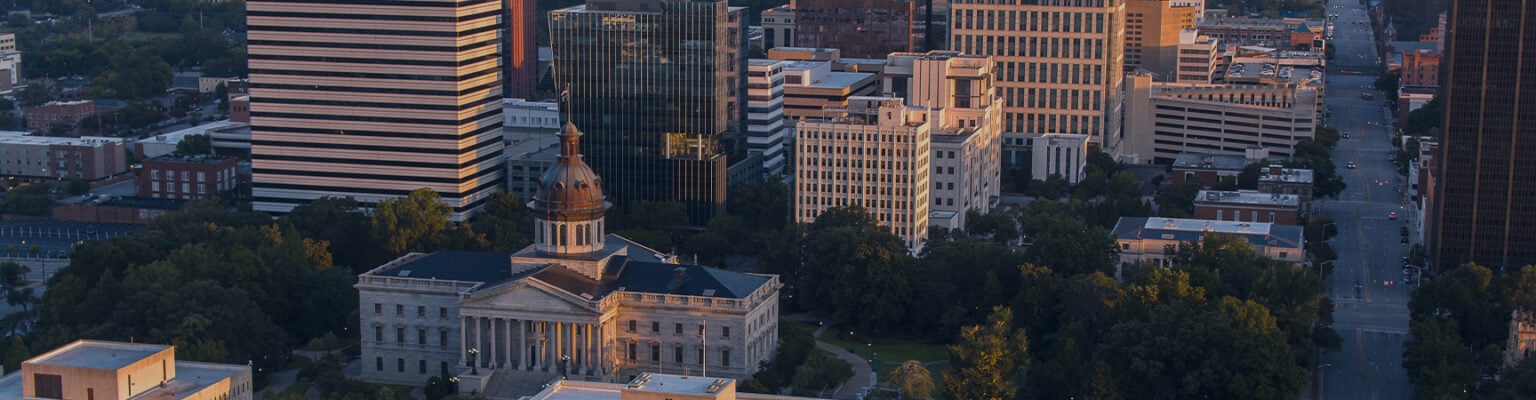
FCI Thomson at a glance
FCI Thomson is a low-security federal prison for men at 1100 One Mile Road in Thomson, Illinois, with an adjacent minimum-security satellite camp. It held 2,074 people as of September 2026: 1,927 at the institution and 147 at the camp. Until 2023 it was a penitentiary, USP Thomson, and it ran the Special Management Unit the Bureau closed in February 2023.
| Official name | Federal Correctional Institution, Thomson · formerly USP Thomson and AUSP Thomson |
|---|---|
| BOP code | TOM |
| Security level | Low; men |
| Population | 2,074 (as of September 2026) · 1,927 at the FCI, 147 at the camp |
| Visiting | Saturdays, Sundays and federal holidays, 8:30 a.m.–3:00 p.m. · see visiting hours |
| Inmate mail | FCI: Inmate Name & Register Number · FCI Thomson · Federal Correctional Institution · P.O. Box 1002 · Thomson, IL 61285 Camp: Inmate Name & Register Number · FCI Thomson · Federal Correctional Institution · Satellite Camp · P.O. Box 1002 · Thomson, IL 61285 |
| Send money | Lockbox · Western Union (code city FBOP, DC) · MoneyGram (receive code 7932) |
| Phone | 815-259-1000 · Fax 815-259-0186 |
| Street address | 1100 One Mile Road, Thomson, IL 61285 · Carroll County |
| Judicial district | Northern District of Illinois |
| BOP region | North Central |
| Designated capacity | 1,962 |
| Housing | 7 housing units: 6 multiple-occupancy cell, 1 open-bay dormitory |
| Special Housing Unit | Yes · 96 segregation cells |
| RDAP | No |
| Sex offender treatment | No |
| UNICOR | See the programs section |
| Camp | Adjacent minimum-security satellite camp |
On this page
It sits in Carroll County on the Illinois side of the Mississippi River, in the Bureau’s North Central Region and the Northern District of Illinois. Only four of the Bureau’s 34 low-security institutions held more people on the Bureau’s September 2026 counts. The Bureau has not reopened a Special Management Unit anywhere.

Why this page still says USP Thomson, and what changed
The page keeps the USP Thomson name in its address because most people still search for it; the prison itself is now a low-security federal correctional institution. Thomson was a penitentiary. Two Bureau records date the change differently, and the table sets them side by side.
| Record | What it says about Thomson |
|---|---|
| BOP news release, “Name Changes Approved for Seven FBOP Facilities,” April 4, 2024 | Names six penitentiaries — Atlanta, Leavenworth, Lewisburg, Lompoc, Marion and Yazoo City — plus FCI Morgantown. Thomson is not in it. |
| Internet Archive captures of this facility’s own page | Titled “USP Thomson” on November 16, 2023; titled “FCI Thomson” on December 22, 2023 |
| Appendix 2 of the Inspector General’s restraints audit, Report 25-070 (July 29, 2025), a table the Bureau supplied | Thomson: name changed USP to FCI on 4/4/2024; security level changed High to Low on 4/17/2023. The same table omits Leavenworth and Marion. |
The order of events is not in doubt: the security level dropped first. The Department of Justice and the Bureau announced on March 10, 2023, what Senator Durbin’s office described as a decision to “temporarily convert United States Penitentiary (USP) Thomson into a low-security prison,” housing roughly 1,178 low-security adults and taking its first arrivals from the week of April 10, 2023, with the camp unaffected; the Bureau’s own data puts the change at April 17, 2023. The name caught up between November and December 2023 on the Bureau’s own web page; the Bureau’s own data, in the table above, puts it four months later, on April 4, 2024, with the seven-facility batch. Two Bureau records, neither withdrawn, and the Bureau has not reconciled them. Nothing in the Bureau’s current records still calls the conversion temporary.
The Bureau’s page for this prison still labels its Prison Rape Elimination Act audit the “USP Thomson PREA Report,” though the audit itself is headed FCI Thomson, and the commissary form the Bureau hosts is headed “AUSP/SCP Thomson.” Paperwork lags; the designation does not. The State of Illinois built the prison as Thomson Correctional Center, completed in 2001; the Bureau bought it in 2012 and received its first federal prisoners on June 15, 2015. Also known as USP Thomson, AUSP Thomson, Thomson Correctional Center and Thomson FCI — none of which affects how you find someone, because the inmate locator indexes people, not buildings.
Illinois has five federal prisons. FCI Thomson (this page) and FCI Marion are both former penitentiaries; FCI Greenville is medium security with a women’s camp; FCI Pekin is medium security with a camp; MCC Chicago is an administrative facility holding mostly people awaiting trial. Illinois also runs its own state prison system, which has nothing to do with this one: a sentence from an Illinois circuit court does not lead here. Our guide to federal prisons in Illinois sets out the roster.
What is the security level at FCI Thomson?
FCI Thomson is a low-security institution. Beside it stands a minimum-security satellite camp. They share a post office box, a phone number and a visiting schedule, and they are different places to serve a sentence.
The physical plant is not a low-security one, because it was not built for this. The 2025 Prison Rape Elimination Act audit counted 19 buildings and seven housing units — six of multiple-occupancy cells and one open-bay dormitory — with no single-cell units at all, and 96 segregation cells. That is a penitentiary’s number, in a prison now running a low-security mission inside the same walls.
Capacity is the other inherited problem. The same audit records a designated capacity of 1,962 and an average daily population of 1,951 over the preceding twelve months; the Bureau’s count as of September 2026 was 2,074. That is about six percent above the designated figure, and it is the backdrop to everything below about waitlists and staffing.
Whether a person lands at the FCI or at the camp turns, under the Bureau’s security designation rules, on a security point score and on whether any Public Safety Factor applies. A Public Safety Factor overrides the point total: it is what keeps someone out of a camp no matter how low the score. With only 147 camp beds against 1,927 at the institution, the camp here is small relative to the prison it serves, and a camp placement is correspondingly hard to get. Our guides to designation and the intake process explain how the scoring works and what the first days look like.
What happened to the Special Management Unit at Thomson?
It closed on February 14, 2023, and nothing like it has operated anywhere in the Bureau of Prisons since. This section is history: the most heavily documented episode in this prison’s short life, and the one most accounts of Thomson still describe as current.
What a Special Management Unit was
A Special Management Unit was the Bureau’s long-term behavioral program for men whose gang activity or disciplinary record was judged to need heightened management. Under Program Statement 5217.02 (2016) it ran in levels, was expected to take nine to thirteen months, and carried a stated maximum of 24 consecutive months. The first one opened at USP Lewisburg. In June 2018 the Bureau announced that it would move to Thomson, then being activated as an Administrative U.S. Penitentiary; roughly 400 men were transferred, and the facility was fully activated in January 2019.
The Government Accountability Office set out the sequence in February 2024: the Bureau “closed its three remaining SMUs in Lewisburg and Allenwood, Pennsylvania, and in Florence, Colorado, between 2014 and 2019,” moved the Lewisburg unit to Thomson in 2019, and closed Thomson — “which was the only operational SMU at the time of our audit” — in February 2023. The Bureau told the GAO it “has already suspended the SMU program and is working to identify an appropriate replacement.” Program Statement 5217.02 has never been rescinded.
Why it closed
It closed after allegations of abuse and a series of deaths, as the Inspector General told the Senate Judiciary Committee under oath on February 15, 2024. Michael Horowitz told the committee that the OIG was auditing the Bureau’s use of restraints, an audit “prompted in large part by allegations that inmates in the Special Management Unit (SMU), a type of restrictive housing, at U.S. Penitentiary (USP) Thomson were routinely placed in four-point restraints for extended periods of time, sometimes even days, and otherwise mistreated while restrained.” He continued: “In 2023, in response to these and other allegations of misconduct, as well as a series of deaths at the facility, several of which we reference in our Deaths in Custody report, Director Peters closed the SMU at USP Thomson. The BOP acknowledged significant concerns with the institutional culture at USP Thomson and a lack of compliance with its own policies.”
In the Inspector General’s account, then, the Bureau conceded a problem with the culture of this institution and with its compliance with its own rules, and closed a national program because of it.
The reporting that started it was published by The Marshall Project and NPR on May 31, 2022, under the headline “How the Newest Federal Prison Became One of the Deadliest.” On June 8, 2022, the Federal Anti-Solitary Taskforce asked the Inspector General to investigate conditions here, citing five suspected homicides and two alleged suicides since 2020. The OIG folded that request into a Bureau-wide evaluation and visited in June 2022.
What the record shows about the deaths
The Inspector General’s Evaluation of Issues Surrounding Inmate Deaths in Federal Bureau of Prisons Institutions, published February 15, 2024, examined 344 deaths across the Bureau in fiscal years 2014 to 2021 and used Thomson as its worked example of what happens after one. Five people died here inside that window: one homicide in fiscal 2020, then two homicides and two suicides in fiscal 2021.
After Action Reports were completed for all five and produced 44 recommendations; for the 27 attached to the three homicides, “there was no Central Office requirement for the institution to respond to or implement them.” After-incident reviews are required for every death, and the Bureau “was unable to provide ECR reports for four of the five deaths”; the one it produced contained no recommendations. Both fiscal 2021 suicide reviews recommended that Thomson limit single-celling — “a practice that USP Thomson had continued despite Central Office’s March 2020 directive to limit single-celling to the greatest extent possible.”
Mortality review recommendations on three of the deaths likewise required no root cause analysis and no corrective action. Five deaths produced dozens of recommendations, most of which bound no one. That finding is about the Bureau’s processes, not only about this prison — but it was Thomson’s paperwork the inspectors read.
The restraints audit, and the number it produced
The audit the Inspector General described to the Senate was published on July 29, 2025, as Report 25-070. Its scope ran from January 2018 through September 2024, and it printed a table of every institution with more than 300 recorded applications of restraints. Thomson is at the top of it.
| Institution | Security level used | Recorded applications of restraints |
|---|---|---|
| USP Thomson | High | 1,448 |
| USP Big Sandy | High | 712 |
| USP McCreary | High | 632 |
| USP Florence | High | 605 |
Across the whole Bureau the same data set records 14,772 applications of restraints. One in ten of them happened at this prison. Two cautions travel with that figure: the OIG states that it “did not validate the data provided” and used it “for informational purposes,” and the table uses the security level “that was in effect that covered a significant time period of the incidents,” which for Thomson means the penitentiary years, not now.
Alongside the government’s work there is a private one. In July 2023 the Washington Lawyers’ Committee for Civil Rights and Urban Affairs, with the Uptown People’s Law Center, Levy Firestone Muse LLP and Latham & Watkins LLP, published Cruel and Usual: An Investigation Into Prison Abuse at USP Thomson: eighteen months of work, information from more than 120 men held in the unit, at least 100 interviews and legal calls. It recorded 241 acts of physical violence by guards, 178 uses of excessive restraint, 82 men assaulted or violently restrained and 13 left in four-point restraints for between 24 and 96 hours, and reported that “five individuals imprisoned at USP Thomson died unnatural deaths between 2019 and 2022, the most of any BOP facility.” Those are accounts given to lawyers, not findings by a court, and the report says so. The Bureau closed the unit before any case was filed.
What is left of it now
Documents, and a building. The commissary order form the Bureau hosts for this address is headed “AUSP/SCP Thomson Commissary, January 2019,” and inside it are separate order sheets headed “Special Management Unit Level 1 and 2” and “Special Management Unit Level 3 and Complete,” with per-shop spending limits of $50 and $75. They describe a program that ended in February 2023, at a prison that stopped being a penitentiary two months later. Nothing on that form applies to anyone at Thomson today.
The 96 segregation cells are still there. A Special Housing Unit is not a Special Management Unit; it is the short-term restrictive housing every federal prison has, and our guide to special housing units and the Bureau’s SHU rules explain the difference.
Who are the notable inmates at FCI Thomson?
One notable person is held at FCI Thomson on the Bureau’s own records: John P. Tomkins. Three other names often listed for this prison belong to men held elsewhere or released.
| Name | Register number | Where the Bureau says they are |
|---|---|---|
| John P. Tomkins | 19421-424 | At FCI Thomson. Projected release November 30, 2038 |
| Daron D. Wint | 64292-007 | USP Atwater, California. Serving life |
| Christopher Lawrence Jeburk | 09029-021 | USP McCreary, Kentucky. Serving life |
| Bill K. Kapri, the rapper Kodak Black | 18149-104 | Released from federal custody on February 21, 2024, from FDC Miami |
A released person’s locator entry names no facility, only a “Not in BOP Custody” status and a date. The facility code in Bill Kapri’s record is MIM, FDC Miami; code MIA is FCI Miami, a different prison in the same city.
John Tomkins is the man who signed himself “The BISHOP.” He mailed threatening letters and two packages containing pipe-bomb components to investment firms, demanding that they drive up the price of stock he held. A jury convicted him on ten counts of mailing threatening communications, two firearms counts and one count of using a firearm during a crime of violence, and he was sentenced on May 21, 2013, to 37 years. The Seventh Circuit affirmed in 2015, holding that a defendant’s subjective claim that his devices were a hoax is irrelevant where their design serves no legitimate purpose, that including the word “intended” in the destructive-device instruction was harmless error, and that the search warrants were in any event covered by the good-faith exception. United States v. Tomkins, 782 F.3d 338 (7th Cir. 2015).
Daron Wint is often listed at Thomson; Bureau records place him at USP Atwater. He was convicted in the District of Columbia of four murders committed in May 2015 and sentenced to life without release; in December 2022 the District of Columbia Court of Appeals held that the trial court had erred in refusing him surrebuttal evidence but that the error was harmless, affirmed the murder convictions, merged certain counts and remanded for resentencing. Wint v. United States, No. 19-CF-116 (D.C. Ct. App. Dec. 15, 2022). He is a District of Columbia Code offender serving a local sentence in a federal prison, which is why the District’s own inspectors turn up at places like this at all.
How do I find someone at FCI Thomson?
You find someone at FCI Thomson through the Bureau’s free public inmate locator. Search by name, or better, by the eight-digit register number, because names repeat and the locator matches the committed name rather than the one anybody uses. It covers everyone in federal custody since 1982: for someone still held it gives the facility and a projected release date, and for someone released it shows “Not in BOP Custody as of” and a date, with no facility.
If it finds nothing, the usual reasons are state rather than federal custody, pretrial detention under the U.S. Marshals Service, or a judgment that spells the name differently from daily use. Thomson turns over fast — the 2025 PREA audit recorded 2,000 admissions in twelve months with a stay of 72 hours or more — so someone designated here may not have arrived, and someone here last month may have gone. How the eight digits are assigned, and what they encode, is explained in our guide to register numbers.
How do I write to someone at FCI Thomson?
Mail for someone at FCI Thomson goes to P.O. Box 1002, Thomson, IL 61285, at the institution and the camp alike; the only difference is one line. Put the committed name and register number on the first line; mail without a register number is returned.
| For someone at the FCI | For someone at the satellite camp |
|---|---|
| Inmate Name & Register Number FCI Thomson Federal Correctional Institution P.O. Box 1002 Thomson, IL 61285 | Inmate Name & Register Number FCI Thomson Federal Correctional Institution Satellite Camp P.O. Box 1002 Thomson, IL 61285 |
Expect mail here to be slow and closely screened. On April 16, 2025, the Bureau confirmed that “several employees at the Federal Correctional Institution (FCI) Thomson have begun feeling unwell following a possible exposure to an unknown substance” in the mail room, and that some were taken to the hospital. The staff union put the number at seventeen, most given Narcan, and called it the eighth such hospitalization from exposure that year; the same report elsewhere says fifteen, and the Bureau gives no count. Visiting was suspended and the institution locked down; neither restriction is in force now.
In practice that means paper, ink, stickers, crayon drawings and anything glued or taped are risks to a letter’s delivery — not because of a rule written for your family, but because of what staff are looking for. Send plain white paper and blue or black ink, and nothing else in the envelope.
Under the Bureau’s correspondence rules, every ordinary letter that arrives here is opened, searched for contraband and may be read. Legal mail is opened only in front of the addressee and is not read, but only if the sender is clearly identified and the front is marked “Special Mail — Open only in the presence of the inmate”; otherwise it is treated as ordinary mail. Thomson’s visiting supplement adds a local rule that surprises lawyers: nothing may be handed to a client in the visiting room, and legal material must be “processed through Special Mail Procedures” instead. Our guides to writing to someone in federal prison and attorney-client communication in the Bureau of Prisons cover what gets rejected and why. Never put money in a letter: funds enclosed in correspondence are rejected and returned.
How do I send money to someone at FCI Thomson?
Money for someone at FCI Thomson goes to the Bureau’s national lockbox in Iowa or through Western Union or MoneyGram, not to the prison. Every route needs the committed name and the eight-digit register number on the instrument and on the envelope.
| Route | Where it goes | How fast it posts |
|---|---|---|
| Postal money order or cashier’s check | Federal Bureau of Prisons Committed Name Eight-Digit Register Number Post Office Box 474701 Des Moines, Iowa 50947-0001 | Processed the day it arrives, available the next day. Postal money orders post without a hold; most other instruments carry an automatic 15-day hold |
| Western Union Quick Collect | Code city FBOP, DC | Within two to four hours, says the Bureau’s Send Money page, and within two hours under its trust fund rules, for transfers made between 7:00 a.m. and 9:00 p.m. Eastern; later ones post by 7:00 a.m. the next day |
| MoneyGram | Receive code 7932, company name Federal Bureau of Prisons, Washington, DC | Same as Western Union |
No cash and no personal checks. If the committed name and register number are missing from the instrument or the envelope the funds go back to the sender, and with no return address they go to the Treasury. The cost of each route is set out in our guide to sending money to a federal prisoner.
Before sending a large amount, understand the ceiling on what it can buy: commissary spending is capped at $460 a month across the Bureau, so money much above that sits in the account rather than becoming anything. Visitors may not hand money to anyone or leave it for deposit — Thomson’s supplement says flatly that “no money will be accepted or held by the Visiting Room Officers.”
What are the visiting hours at FCI Thomson?
Visiting at FCI Thomson runs Saturdays, Sundays and all federal holidays, 8:30 a.m. to 3:00 p.m., at both the institution and the camp. There is no weekday and no evening visiting. This is from Thomson’s own institution supplement 5267.09, Visiting Regulations, dated June 24, 2025, which replaced the March 2025 version.
The supplement gives two processing cut-offs. Its body says social visits will not be processed before 8:30 a.m. or after 1:30 p.m. at the FCI, and not before 8:00 a.m. or after 1:30 p.m. at the camp. The visitor handouts attached to the same supplement print a “visitor processing ends” column reading “9:15 a.m. and 1:30 p.m.” for both. The difference decides whether a late-morning arrival gets in. Call 815-259-1000 before you drive.
Special Housing Unit visits run on different days: Friday, Saturday and Sunday, 8:30 a.m. to 3:00 p.m., one hour, non-contact, with SHU visitors not processed after 1:00 p.m. Friday exists at Thomson only for the SHU, and does not apply to general population.
Who can visit, and how many
The camp’s visiting limits are stricter than the prison’s.
- At the FCI: four approved visitors. That can be exceeded by up to three children under ten who do not occupy a seat. A child who takes a seat counts as an adult.
- At the camp: two adult visitors, “because of the limited available space.” There is no limit on the number of children, but the inmate and his visitors are responsible for supervising them. A family of five can visit the man at the institution and not the man at the camp.
- The list holds up to 20 people and can be changed at Unit Team open house at any frequency. Everyone on it is background-checked, including confirmed immediate family. The Unit Manager approves or denies, tells the incarcerated person, and it is then his job to tell the visitor; anything needing further review goes to the Warden.
- Six visiting points a month. Two points are deducted for each Saturday or Sunday visit regardless of how long it lasts, and federal holidays are excluded from the deduction. That allows three weekend visits a month, plus holidays. Unused points expire at the end of the month.
A man convicted of a sex offense involving a minor has a note entered in the visiting program and is seated where staff can watch him throughout. Holdover visits are limited to immediate family and must be requested from the Correctional Counselor fourteen days ahead, and any visit can be shortened when the room is crowded.
What visitors can wear and bring
The color rules are unusual, because the two facilities issue different uniforms: men at the institution wear brown or khaki, men at the camp forest green, and visitors may not wear the color of the uniform at the facility they are visiting. The handouts add camouflage and fluorescent orange.
Also prohibited: anything see-through or revealing, including a top worn so that cleavage shows; tank tops and halters; any skirt or dress slit above the knee, and shorts, skirts or dresses shorter than two inches above mid-knee for anyone over ten; leggings, spandex or any skin-tight pants, and pants with holes, unless the lower body is covered; open-toe shoes, house shoes and flip-flops; hats, head wraps, headbands, sunglasses and hoods, except religious or medical headwear; and sweatpants, sweat shorts and plain white T-shirts, which are barred as commissary items.
You may carry in one clear container or bag no larger than eight inches square, holding up to $20 in coins — loose, not in rolls — and your photo identification. Paper currency and debit or credit cards are barred from the visiting room entirely, so the vending machines run on those quarters and nothing else. Essential medication means an asthma inhaler or nitroglycerin in the amount needed for the visit, approved when the visitor joined the list and held at the officer’s station. Purses, coats not being worn, phones, cameras, food and drink stay in the car; keys and remotes go to the lobby officer.
For an infant, per child: two diapers, one unopened package of wipes, one change of clothes, two clear bottles with contents, two small unopened jars of baby food, one receiving blanket and one clear cup, in a clear bag no larger than twelve by sixteen inches. A breastfeeding mother may use a lactation room or the attorney-client room. Photographs are taken by an inmate photographer and paid for from the trust fund account, and a visitor may be photographed only with the person they are approved to visit. The rules that apply at every federal prison are set out in the Bureau’s visiting regulations and our guide to federal prison visitation.
Identification and screening
Everyone sixteen and over needs a valid state or United States government photo identification — a driver’s license, a military or state card, or a passport. Thomson’s supplement is explicit that non-governmental identification and foreign identification other than a passport, “like Consulate issued Identification Cards, will not be accepted.” Given that the 2025 PREA audit recorded 803 men here with limited English proficiency, that clause will turn families away.
Screening differs between the two facilities, which matters if you carry an implant. At the institution visitors pass a metal detector and everything carried in goes through an X-ray machine; anyone who refuses or cannot clear either is denied entry. The camp handout describes a walk-through metal detector only, and allows hand-held screening for visitors with metal in their bodies or fixed braces who bring documentation. Visitors may also be screened by electronic drug-detection devices; breathalyzer, urinalysis and visual searches need the Warden’s approval, and at the camp the order of random searches is fixed before visiting starts and searches happen out of sight of other visitors.
Everyone signs the visitor log, form BP-A0224 and a contraband declaration, available in English or Spanish. You are identified again on the way out, at the desk, at the door and at the control center, and visitors leave five adults at a time. A visitor who leaves the visiting area is not readmitted until the next visiting day. Only the Institution Duty Officer or Operations Lieutenant may deny or terminate a visit, and anyone turned away for dress gets a chance to change. Our guide to searches, shakedowns and contraband explains how these powers are used.
Getting there
The prison is at 1100 One Mile Road in Thomson, Carroll County, on the Illinois bank of the Mississippi River. It is remote. The Bureau’s own “driving directions” link is a map pin on the coordinates, with no written route. The supplement gives airports instead — Quad City International at Moline, 48 miles south; Dubuque Regional in Iowa, 59 miles north; Cedar Rapids and Rockford beyond that. Business hours are Monday through Friday, 7:30 a.m. to 4:00 p.m. Park only in the designated visitor lot; no one may wait at the front entrance or sit in a vehicle in the lot, and alcohol, drugs, weapons and ammunition may not come onto the property on your person or in your car.
How do phone calls and email work at FCI Thomson?
Phone calls and email at FCI Thomson follow the Bureau’s national rules, because Thomson publishes no local ones. Calls are placed by the incarcerated person — you cannot call in — to a number on an approved list of up to 30. Across the Bureau people get 510 minutes a calendar month under the Bureau’s telephone regulations, Program Statement 5264.09, issued September 3, 2026: 300 free to anyone eligible for First Step Act telephone incentives, and 210 more that anyone may buy after using up those 300. A single call should generally not exceed 15 minutes, and at least 30 minutes must pass between completed calls. The extra 100 minutes in November and December belonged to the 2008 policy and did not survive its rescission. Properly arranged unmonitored legal calls do not count against the 510; everything else is recorded. Our guide to federal inmate phone calls sets out the rest.
Thomson’s telephone and TRULINCS hours, and the times the housing units open the phones, are not published: the Bureau posts no Admission and Orientation handbook for this institution. Ask the unit team in writing, or ask the person inside.
Email runs through TRULINCS inside and CorrLinks outside: text only, with no attachments, and charged by the minute. Email with a lawyer is not privileged, because the Bureau monitors attorney messages too; privileged writing goes by marked special mail. Setting up an account, and what it costs, is covered on our CorrLinks and TRULINCS page.
What can people buy at the FCI Thomson commissary?
The commissary spending limit at FCI Thomson is $460 a month, set nationally by the Bureau’s trust fund rules, Program Statement 4500.13, issued May 7, 2026, which record the increase “from $360 to $460 per month.” The limit rises by a further $50 during the November and December holiday period, for no more than one validation period, and revalidates automatically once a month.
Listings that give $360 are out of date.
Some things do not count against the limit at all, and the exclusion list was rewritten in the same May 2026 program statement. It now covers postage stamps; nicotine replacement patches and lozenges; over-the-counter medications, medical products and vitamin and mineral supplements; copy cards and copy paper; kosher and halal shelf-stable entrees for anyone in Financial Responsibility Program refusal status; mattresses; a secured media device; and footwear, including sneakers and safety shoes.
The Bureau publishes no current commissary list for Thomson: the only order form it hosts at this address is a January 2019 form headed “AUSP/SCP Thomson.” It prices Keefe coffee at $3.10 and a four-pack of AA batteries at $1.75, caps soups at twelve and soda at 24 cans, and carries two order sheets for Special Management Unit levels and one for administrative detention. It is seven years old and was written for a prison that no longer exists. What the national rules allow, and what the money actually buys, is on our federal prison commissary page.
What programs are available at FCI Thomson?
FCI Thomson offers fewer programs than most low-security prisons of its size, and it has no residential drug treatment program. The program listings below come from the Bureau’s First Step Act Approved Programs Guide (2026).
RDAP and drug treatment
There is no Residential Drug Abuse Program at FCI Thomson. The list of RDAP locations inside the 2026 guide, totaling “57 RDAPS at 50 Locations,” names eleven institutions in the North Central Region — Englewood, FCI and USP Florence, the Leavenworth camp, Marion, Milan, Sandstone, Springfield, Terre Haute, Waseca and Yankton. Thomson is not among them. The guide’s programs-by-institution table agrees: it marks Thomson with a dot, not an X, for residential drug treatment and for the dual-diagnosis version.
That matters because completing RDAP is the route to up to a year off a sentence under 18 U.S.C. § 3621(e) for people convicted of non-violent offenses. A man designated to Thomson who qualifies has to be transferred to a prison that runs it, early enough for a nine-month program to finish before his release date; interviews ordinarily happen at least 24 months out. If that window is open, a written request to the unit team is the first step, and it should be pressed at the designation stage rather than after arrival; our RDAP practice handles these requests.
What is offered here is the non-residential drug abuse program, which the guide describes as “available to individuals at every institution,” and drug education. Neither carries the § 3621(e) reduction.
Education, work and the two records that disagree
The 2026 guide marks Thomson for the standard education and cognitive set: literacy and the GED program, English as a second language, anger management, criminal thinking, emotional self-regulation, parenting and family programming, post-secondary education, dialectical behavior therapy, seeking safety, the inmate companion program, and all four occupational-education categories, apprenticeships included. New arrivals are screened by Education within 30 days and by the unit team within 28 days against the First Step Act’s thirteen need areas.
On two programs the guide contradicts itself:
| Program | The guide’s own description page | The guide’s programs-by-institution table |
|---|---|---|
| Federal Prison Industries (UNICOR) | Lists 55 institution codes where FPI operates. Thomson is not one of them | Marks Thomson with an X |
| Life Connections Program (residential) | Names five institutions: Carswell, Milan, USP Terre Haute, Fort Dix and Greenville. Thomson is not one of them | Marks Thomson with an X |
Whether a UNICOR factory operates here decides whether a man can earn more than institutional work pay. Put the question to the unit team on paper, and ask for the reply on paper. Remember too that the guide lists what a prison is approved to offer: whether a class is running this quarter, and how long the waitlist is, is a different question. Our guides to prison education and vocational training explain how the programs work across the system.
The guide marks Thomson for the Threshold Program, which its own description page says “may be offered at all BOP institutions,” and for faith-based conflict management; Religious Services also administers the religious diet program. What is not offered here, on the guide’s description pages, is either sex offender treatment program, the Challenge program, BRAVE, STAGES, the Skills Program, Life Skills Laboratories or mental health step-down. Both sex offender treatment programs run at FCI Marion, three hundred miles south.
What is daily life like at FCI Thomson?
The Bureau publishes no daily schedule for FCI Thomson. Almost every federal prison publishes an Admission and Orientation handbook setting out wake-up, meals, counts, movement, phone hours and callouts; Thomson does not. Its Bureau page links the visiting supplement in English and Spanish, the Bureau’s national legal activities program statement, and the PREA audit, and nothing else. A handbook dated June 2021 exists — Thomson gave it to District of Columbia inspectors on request — but it has never been published, and a 2017 camp handbook that was once online is no longer posted.
What the record does establish is this. Housing is seven units — six of multiple-occupancy cells and one open-bay dormitory, with no single-cell units — in a 19-building plant with 96 segregation cells, and the Bureau installed or upgraded video surveillance in the year before February 2025. Men at the institution wear brown or khaki, men at the camp forest green, and the uniform is required in the visiting room, shirt buttoned and tucked, sleeves down. Health services is an ambulatory clinic with a laboratory, an X-ray machine and a trauma room; anyone needing more is taken by local emergency services to a hospital twenty to thirty minutes away in Clinton, Iowa, and when the unit is short-staffed it gets telemedicine support from the federal medical center at Rochester, Minnesota. The institution is smoke-free.
The unpublished 2021 handbook, as quoted by those inspectors, promised that soap, toothpaste, toothbrushes, combs and razors “are issued by the institution” and that showers would be provided three times a week; sixteen men told them hygiene items were not being issued and had to be bought from commissary, and four said showers were withheld or treated as something to be earned. That described the penitentiary in July 2021 and is history — but it is the only first-hand account of daily life here on the public record.
What do inspectors say about conditions at FCI Thomson?
The DOJ Office of the Inspector General has not conducted an on-site inspection of this facility. Its staff have been here — in November 2017 for the contract audit below, and in June 2022 as one of three institutions visited for a Bureau-wide evaluation of inmate deaths — but neither visit was an inspection of Thomson. Since 2023 the OIG has run a program of unannounced inspections; on the Inspector General’s own count, in Report 26-055 of May 21, 2026, it had by then “conducted inspections at 14 BOP institutions: 7 individual facility inspections, 6 inspections conducted as part of the OIG’s Concurrent Inspections of BOP Food Service Operations, and the most recent ongoing inspection effort at Federal Correctional Institution (FCI) Berlin in New Hampshire.” Thomson is not one of the fourteen, and as of September 2026 it was not on the OIG’s list of inspections under way.
The OIG has published one report with Thomson’s name on it — a March 21, 2019, audit finding that the Bureau had “limited competition by awarding a sole source contract” for a $2.4 million perimeter fence detection system here, and had paid $56,018 in commission for overseeing a related-party subcontractor the contracting officer did not know about, on nine recommendations the Bureau accepted. It has also folded Thomson into a national evaluation, and opened a Bureau-wide audit because of what happened here.
The 2021 District of Columbia inspection
The only independent inspection of conditions this prison has had came from the District of Columbia, and only because District residents are held in federal prisons. The Corrections Information Council inspected on July 20 and 21, 2021, and published in September 2022. Everything in it describes the penitentiary in the summer of 2021 — five years ago and two missions ago. Read it as history, and as a measure of what this institution was carrying.
Start with the denominators, because these are small-sample percentages. On the day of the visit staff reported roughly 900 men in the Special Management Unit and 275 in the Reintegration Unit, against a rated capacity of 1,900 for the main facility. About 66 District residents were in the SMU — 7 percent of it — and 15 in the Reintegration Unit, three of them in the Special Housing Unit: about 81 people. The inspectors interviewed or took written feedback from 57 of them. Every figure below is out of those 57 or a subset, and every one is a District of Columbia Code offender rather than a cross-section of the prison. The inspectors were also not allowed into the SMU: “Per the CIC’s agreement with the BOP, the CIC is not allowed access to the Special Management Unit.” The one team with a right to look at this prison could not enter the unit holding most of the people it came to see.
- Staff violence. 24 of the 43 men who spoke to the inspectors on the subject reported harassment or abuse by staff. Nine described physical assaults, two while handcuffed; five reported racial slurs, four more verbal threats, four said recreation was denied, three said showers were denied, four said property was destroyed.
- Length of stay. Twelve men had been in the SMU more than 12 months and seven more than 24, the maximum the program statement allowed; six of those with the longest stays had never progressed past Level 1. Twenty — almost half of everyone who spoke to the inspectors — said it was not their first time in the unit.
- Discipline. Bureau records showed 479 incident reports in a year for code 205, engaging in sexual acts — far more than any other charge, ahead of 124 for refusing an order, 116 for threatening bodily harm and 100 for fighting. Staff told the inspectors that code 205 covers masturbation and intentional exposure as well as anything else.
- Medical care. 29 of the 41 who answered the survey question — 71 percent — said they could not get medical care when they needed it; seven said they could. Twelve reported never having seen dental staff, one after nearly eighteen months with a cavity. Staff said about 500 men, roughly 45 percent of the population, were on chronic care.
In the SMU itself, education and psychology were delivered “almost entirely by self-study packets and radio programs.” One inconsistency should travel with that medical figure: the report’s key findings page summarizes it as “nearly one in four survey respondents said that they were not able to access medical care when needed,” while its body gives 29 of 41, or 71 percent. Both are in the same document, which does not explain the gap.
Executive staff also explained that men who “fail” the SMU through disruptive behavior are often reassigned to it immediately for another period of up to 24 months, so that, in the inspectors’ words, “there is functionally no maximum time an inmate may spend in SMU.” The Bureau’s published response is not an admission: on the assault allegations it said the inspectors “did not provide USP Thomson Executive Staff or the Bureau Coordinator with detailed and specific information to investigate or substantiate any allegation of abuse.” On staffing it gave numbers: at the time of the visit overall staffing stood at 81 percent, correctional officer staffing at 73 percent and correctional services at 74 percent; by August 26, 2022, those were 81.92, 76.52 and 78.57 percent, with health services at 72.22 percent.
The 2025 PREA audit
Thomson was audited under the Prison Rape Elimination Act on February 11 to 13, 2025, by an independent auditor, Lynni O’Haver of Corrections Consulting Services. The final report is dated March 8, 2025, and the Bureau’s page still labels it “USP Thomson PREA Report.” The facility passed: 45 standards met, none exceeded, none unmet. It is accredited by the American Correctional Association, and the audit records no accreditation by the National Commission on Correctional Health Care or by CALEA.
| Held on the first day of the audit | 2,055 |
|---|---|
| Designated capacity / average daily population | 1,962 / 1,951 |
| Buildings / housing units / segregation cells | 19 / 7 / 96 |
| Housing configuration | 6 multiple-occupancy cell units and 1 open-bay dormitory; no single-cell units |
| Limited English proficient | 803 — roughly two men in five |
| Transgender or intersex | 20 |
| Cognitive, intellectual, psychiatric or speech disability | 63 |
| Admissions in 12 months, staying 72 hours or more | 2,000 |
| Forensic examinations after a sexual assault | At a local hospital, not on site |
| Criminal investigators employed by the agency or facility | 0 — criminal investigations are done by a Department of Justice component |
Two things should be read alongside that audit rather than after it. The first is the allegation count. For the twelve months before the audit the facility reported two allegations of sexual abuse, both between prisoners and both administratively unsubstantiated, and zero allegations of staff-on-inmate sexual abuse. Twelve days after the auditor left, a federal grand jury in Rockford indicted a Thomson cook supervisor for sexual abuse of two men held here, and a jury convicted him on two of those counts in May 2026 for conduct in March 2024 — inside the period the audit covered. The court record says the case began when “the inmates made a report about misconduct to BOP.”
The second is smaller. The audit gives two staffing numbers that cannot both be right: 580 staff “who may have contact with inmates” on one page, and 375 staff in total on another. The document does not reconcile them.
Staffing
Staffing shortages run through every inspection of this prison. They are the reason a callout is canceled, a program has a waitlist, a medical appointment slips or a visit is cut short.
When the Inspector General visited in June 2022, Thomson “had not had an on-site full-time Staff Physician for over a year and nearly half of its 12 nursing positions were vacant,” which staff said produced longer waits, mandatory overtime for nurses and no nursing cover at night. One of the institution’s own after-action reports, quoted by the OIG, observed significant understaffing of correctional services and concluded that “mandatory overtime is an unsustainable routine practice causing mental and physical exhaustion.” Thomson introduced a 25 percent retention bonus; staff told the OIG it helped recruit some people but was not enough for “this rural and demanding location.”
The union’s numbers run alongside. In May 2021 it reported 110 vacancies out of 602 positions and 20 to 60 staff augmented into correctional posts each day. Executive staff told the District’s inspectors that augmentation was declining, that none was used on the day of the visit and that 62 officers had been hired since January 2021 — and then declined to provide documents supporting any of it. By September 2021 the union put custodial vacancies at 96, down from 167 a year before. The most recent public marker is the mail room: between early 2024 and April 2025 the union counted eight separate incidents in which staff were hospitalized after exposure to an unknown substance.
FCI Thomson in the news
Recent news about FCI Thomson centers on the 2026 conviction of a staff member, a death the Bureau reported in March 2026, a 2025 life sentence for a killing here, a second staff prosecution, the 2025 mail room exposure and the restraints audit; older items concern the 2023 conversion to low security.
- May 2026 — conviction of a staff member. A jury in Rockford found Danny L. Spyker, a cook supervisor at FCI Thomson, not guilty on two counts and guilty on two counts of sexual abuse of a ward, for conduct in March 2024 involving two men held here. On July 21, 2026, the district court denied his motions for acquittal or a new trial, holding that setting aside the jury’s assessment of the complainants’ credibility would require the “exacting and rare determination that [their] testimony was incredible as a matter of law.” Sentencing was set for September 14, 2026.
- March 2026 — a death reported by the Bureau. In a release titled Death at FCI Thomson, the Bureau reported that Mickell Close, 44, was “found unresponsive” at the institution on March 5, 2026, and was “subsequently pronounced deceased by hospital personnel.”
- August 2025 — life sentence for a killing here. Brandon Simonson, 41, was sentenced to life after a Rockford jury convicted him of second-degree murder, conspiracy to commit murder, hate crime and assault in the death of Matthew Phillips, beaten on March 2, 2020, and dead three days later. Prosecutors said Simonson and a co-defendant, Kristopher Martin, attacked Phillips because he was Jewish, to earn membership of a white-supremacist prison gang; Martin pleaded guilty. Bureau records place both men at the federal supermax, ADX Florence.
- May 2025 — a second staff prosecution. The Inspector General announced that Gregory Inman, a former correctional officer assigned to FCI Thomson, had been arrested on an indictment in the Northern District of Illinois charging one count of assault by striking and one count of obstruction of justice by falsification of records. The indictment alleges that on or about March 9, 2021, he assaulted a man “by striking, beating, and wounding him” and falsified Bureau records. The release does not report how the case ended, and an indictment is an allegation and nothing more.
- April 2025 — mail room exposure. The Bureau confirmed that several employees became unwell after a possible exposure to an unknown substance and that some were taken to the hospital. The staff union put the figure at seventeen, most given Narcan, and called it the eighth hospitalization from exposure that year; the same report elsewhere says fifteen. Visiting was suspended and the institution locked down at the time.
- July 2025 — the restraints audit reports. The Inspector General published Report 25-070, the audit opened because of the allegations about four-point restraints in Thomson’s Special Management Unit, and recorded 1,448 applications of restraints at this institution between January 2018 and September 2024 — the most of any federal prison.
- March–April 2023 — the conversion. The Department of Justice and the Bureau announced the conversion of the penitentiary to low security; the first low-security arrivals came from the week of April 10, 2023.
Frequently asked questions about FCI Thomson
Is FCI Thomson the same prison as USP Thomson?
Yes. One prison, three names in ten years: Administrative U.S. Penitentiary Thomson from 2018, USP Thomson, and FCI Thomson since late 2023. Bureau data records the security level changing from high to low on April 17, 2023, and the name on April 4, 2024, while captures of the Bureau’s own page show the title changing between November and December 2023. The building, the address and the phone number never changed.
Does FCI Thomson still have a Special Management Unit?
No. The Bureau closed it on February 14, 2023, and it was the last one operating anywhere in the federal system. The Government Accountability Office recorded in February 2024 that the Thomson unit “was the only operational SMU at the time of our audit” and that the Bureau had “already suspended the SMU program.” Thomson still has a Special Housing Unit, which is ordinary short-term restrictive housing and not the same thing.
When can I visit someone at FCI Thomson?
Saturdays, Sundays and federal holidays, 8:30 a.m. to 3:00 p.m., at both the institution and the camp, under institution supplement 5267.09 (2025). There is no weekday or evening visiting for general population. Special Housing Unit visits run Friday, Saturday and Sunday for one hour in a non-contact room. Call 815-259-1000 to confirm before you travel: the supplement’s body and its visitor handouts give different processing cut-off times.
How many people can visit at FCI Thomson?
Four approved visitors at the institution, which may be exceeded by up to three children under ten who do not occupy a seat. At the camp the limit is two adult visitors, “because of the limited available space,” with no limit on children. Up to 20 people may be on the visiting list, and every one of them is background-checked, including immediate family.
Does FCI Thomson have RDAP?
No. The Bureau’s Residential Drug Abuse Program locations list, printed inside the 2026 First Step Act Approved Programs Guide, names eleven North Central Region institutions, and Thomson is not among them. Non-residential drug treatment and drug education are offered here; neither carries the sentence reduction of up to one year available under 18 U.S.C. § 3621(e) on completion of RDAP. A man who qualifies must transfer to a prison that runs it, so ask the unit team in writing early.
How much can someone spend at the FCI Thomson commissary?
$460 a month, set nationally by Program Statement 4500.13 (2026), which raised it from $360; the limit rises by $50 during the November and December holiday period, for no more than one validation period. Stamps, over-the-counter medications, copy cards, mattresses and footwear including sneakers are excluded from the limit. Listings that still give $360 are out of date.
Can you send money directly to FCI Thomson?
No. Money sent to the prison’s address is returned. Use the Bureau’s national lockbox at Post Office Box 474701, Des Moines, Iowa 50947-0001, or Western Union Quick Collect with code city FBOP, DC, or MoneyGram with receive code 7932. Whichever route you pick, the committed name and the eight-digit register number have to appear on the instrument and on the envelope, or the money comes back to you.
Has FCI Thomson been inspected?
Once, by the District of Columbia’s Corrections Information Council, which inspected in July 2021 and published in September 2022; it was not allowed into the Special Management Unit. The DOJ Office of the Inspector General has not conducted an on-site inspection of this facility. Its staff visited in November 2017 for a contract audit and in June 2022 for a Bureau-wide review of deaths. A February 2025 Prison Rape Elimination Act audit found 45 standards met and none unmet.
Is FCI Thomson a low-security or a high-security prison?
Low, with an adjacent minimum-security satellite camp. It was a high-security penitentiary until 2023, and the physical plant still shows it: the 2025 PREA audit counted 96 segregation cells across seven housing units and 19 buildings, and recorded no single-cell housing units.
Does FCI Thomson publish an inmate handbook?
No. The Bureau’s FCI Thomson page links only the visiting supplement in English and Spanish, the Bureau’s national legal activities program statement and the PREA audit. Of the Bureau’s 118 institution pages, 112 link a handbook; Thomson’s is one of six that do not. Ask the unit team for local schedules in writing.
Who is the best-known person held at FCI Thomson?
John P. Tomkins, register number 19421-424, who signed himself “The BISHOP” and is serving 37 years for mailing threatening letters and pipe-bomb components to investment firms; his projected release date is November 30, 2038. Three men commonly listed here are not: Bureau records place Daron Wint at USP Atwater and Christopher Jeburk at USP McCreary, and show Kodak Black, committed as Bill K. Kapri, released on February 21, 2024.
Is FCI Thomson on lockdown?
Thomson was locked down and visiting was suspended in April 2025 after a mail room exposure incident; that restriction is no longer in force. A lockdown or visiting suspension is a live condition rather than a fixed rule, so call the institution at 815-259-1000 the day before you travel to confirm that visiting is running.
Problems at FCI Thomson: where we can help
The problems that recur at this prison are documented and specific to it. This is what its own record shows, and where a lawyer’s work lands.
- Getting to a prison that runs RDAP. Thomson has no Residential Drug Abuse Program. For someone eligible for RDAP, the sentence reduction under 18 U.S.C. § 3621(e) depends on a transfer happening early enough for a nine-month program to finish. That is a designation and transfer question, and it is argued on paper, in advance.
- Medical care that is not happening. It was the leading complaint in the only independent inspection this prison has had, and the Inspector General found the institution running for more than a year without a full-time staff physician and with half its nursing posts vacant. The route is a written request to staff, then the administrative remedy process, which has a clock on every rung. Our pages on medical care in federal prison and on Federal Tort Claims Act claims cover the two routes.
- Restrictive housing that outlasts its justification. Ninety-six segregation cells sit inside a low-security prison, and this institution’s history with restrictive housing is the reason a national program was closed. Special Housing Unit placements, including protective custody, are reviewable.
- Use of force and restraints. Bureau data recorded more applications of restraints here than at any other federal prison between 2018 and 2024. Every use of force generates an after-action report reviewed by the regional office; those records can be obtained, and they matter to a remedy and to a claim.
- Discipline. Under the Bureau’s discipline rules, Thomson has historically written incident reports at a rate its own inspectors found remarkable, and a single report can cost good conduct time, a program placement or a transfer. See disciplinary proceedings.
- Staff misconduct. Two former employees here have been federally indicted since 2025, one of them convicted by a jury. Reporting misconduct is not the same as preserving a claim, and the two run on different deadlines.
- First Step Act time credits, halfway house and home confinement placement, compassionate release and sentence computation errors. Time credits are harder to police at a prison with a thin program list, and men going back to northern Illinois are released through RRM Chicago. See our pages on First Step Act credits, halfway houses and the Bureau’s placement procedures, home confinement, compassionate release under the Bureau’s reduction-in-sentence rules, sentence computation under the Bureau’s computation manual, and early release.
- Challenges to the conviction or sentence itself, through a direct appeal or a § 2255 motion.
Elizabeth Franklin-Best, P.C. handles federal criminal defense, appeals and post-conviction matters nationwide, and advises families on Bureau of Prisons issues at institutions across the system. Call (843) 620-1100 or contact us to talk through a specific situation.
Christopher Zoukis, JD, MBA, the firm’s Managing Director, writes and maintains the federal prison policy material on this site. He is not counsel of record; legal representation is provided by Elizabeth Franklin-Best.
Sources and currency
Bureau of Prisons documents
- FCI Thomson, Federal Bureau of Prisons, 2026. The Bureau’s facility page, with address, contact details and the inmate mailing address.
- Institution Supplement 5267.09, Visiting Regulations, Federal Bureau of Prisons, FCI Thomson, 2025. Visiting days and hours, processing times, visitor limits, dress, screening and airports; replaced the March 2025 version.
- AUSP/SCP Thomson Commissary, Federal Bureau of Prisons, AUSP Thomson, 2019. Order sheets for the penitentiary, the camp and the Special Management Unit levels.
- Trust Fund/Deposit Fund Manual, Program Statement 4500.13, Federal Bureau of Prisons, 2026. The $460 spending limit, the holiday increase and the exclusion list.
- Special Management Units, Program Statement 5217.02, Federal Bureau of Prisons, 2016. Not rescinded.
- Inmate Telephone Regulations, Program Statement 5264.09, Federal Bureau of Prisons, 2026. Replaced Program Statement 5264.08 (2008).
- First Step Act Approved Programs Guide, Federal Bureau of Prisons, Reentry Services Division, 2026. Program descriptions, the RDAP locations list and the programs-by-institution table.
- Community Ties: Sending Money, Federal Bureau of Prisons, 2026. Deposit routes and wire posting times.
- Death at FCI Thomson, Federal Bureau of Prisons, 2026. News release on the death of Mickell Close.
- Name Changes Approved for Seven FBOP Facilities, Federal Bureau of Prisons, 2024.
Audits and inspections
- Inspection of the Federal Bureau of Prisons’ U.S. Penitentiary Canaan, U.S. Department of Justice, Office of the Inspector General, 2026. Report 26-055; the Inspector General’s count of inspected institutions.
- Audit of the Federal Bureau of Prisons’ Oversight of the Use of Restraints, U.S. Department of Justice, Office of the Inspector General, 2025. Report 25-070; restraint applications by institution and the Bureau’s table of name and security-level changes.
- PREA Audit Report: FCI Thomson, Corrections Consulting Services, LLC, 2025. On-site audit of February 11–13, 2025, by Lynni O’Haver, an independent auditor subcontracted by Corrections Consulting Services, LLC; capacity, physical plant, population characteristics, staffing and allegation data.
- Evaluation of Issues Surrounding Inmate Deaths in Federal Bureau of Prisons Institutions, U.S. Department of Justice, Office of the Inspector General, 2024. Report 24-041; the June 2022 site visit, the five Thomson deaths, the staffing findings and the suspension of the Special Management Unit program.
- Statement of Michael E. Horowitz, Inspector General, before the U.S. Senate Committee on the Judiciary, U.S. Department of Justice, Office of the Inspector General, 2024. Testimony of February 15, 2024, on the closure of the Thomson unit.
- Bureau of Prisons: Additional Actions Needed to Improve Restrictive Housing Practices, U.S. Government Accountability Office, 2024. GAO-24-105737; the closure of the Special Management Units.
- USP Thomson Inspection Report, District of Columbia Corrections Information Council, 2022. Inspection of July 20–21, 2021, with the Bureau’s response.
- Audit of the Federal Bureau of Prisons’ Perimeter Security Upgrade Contract for Administrative U.S. Penitentiary Thomson, U.S. Department of Justice, Office of the Inspector General, 2019. Report 19-19.
- DOJ OIG Releases Report on the Federal Bureau of Prisons’ Perimeter Security Upgrade Contract, U.S. Department of Justice, Office of the Inspector General, 2019. News release for Report 19-19.
Court records
- United States v. Spyker, No. 3:25-cr-50005, ECF No. 82 (N.D. Ill.), U.S. District Court for the Northern District of Illinois, 2026. Memorandum opinion and order of July 21, 2026, denying the motions for acquittal or a new trial.
- United States v. Spyker, No. 3:25-cr-50005 (N.D. Ill.), U.S. District Court for the Northern District of Illinois, 2026. The docket, including the minute entry of May 13, 2026, recording the verdict.
- Federal Prison Inmate Sentenced to Life Term for Murdering Fellow Inmate Due to His Religious Faith, U.S. Attorney’s Office, Northern District of Illinois, 2025. The life sentence imposed on Brandon Simonson.
- Former BOP Correctional Officer Indicted for Assault by Striking and Obstruction of Justice by Falsification of Records, U.S. Department of Justice, Office of the Inspector General, 2025. The arrest of Gregory Inman.
- Wint v. United States, No. 19-CF-116, District of Columbia Court of Appeals, 2022.
- United States v. Tomkins, 782 F.3d 338 (7th Cir. 2015), U.S. Court of Appeals for the Seventh Circuit, 2015.
News and other sources
- 17 Officers Exposed to ‘Unknown Substance’ at Thomson Prison, Union President Says, KWQC, 2025.
- Cruel and Usual: An Investigation Into Prison Abuse at USP Thomson, Washington Lawyers’ Committee for Civil Rights and Urban Affairs, with the Uptown People’s Law Center, Levy Firestone Muse LLP and Latham & Watkins LLP, 2023.
- Durbin Statement on Temporary Conversion of Thomson Prison to Low-Security Facility, Office of U.S. Senator Richard J. Durbin, 2023.
- How the Newest Federal Prison Became One of the Deadliest, The Marshall Project and NPR, 2022. By Christie Thompson and Joseph Shapiro.
- 18 U.S.C. § 3621(e), Imprisonment of a convicted person, U.S. Code (Legal Information Institute).
Sources reviewed September 2026.
Reviewed for legal accuracy by Elizabeth Franklin-Best, Esq., Principal Attorney·September 2026