
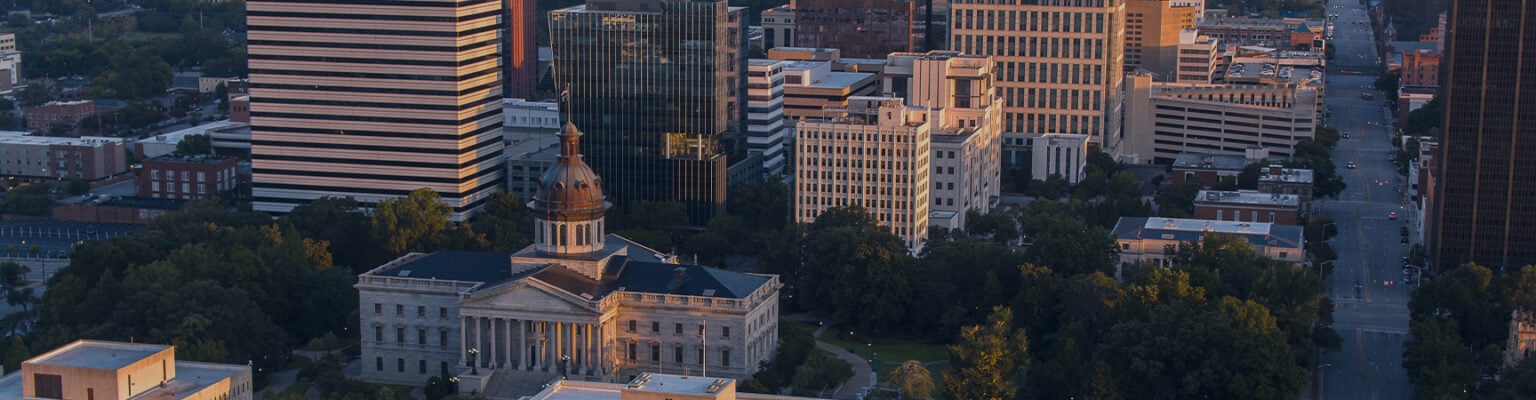
RRM Detroit at a glance
RRM Detroit is one of the Bureau of Prisons’ 22 Residential Reentry Management field offices, and the only one that prints a single federal judicial district. It covers Eastern Michigan from an address on East Arkona Road in Milan, in the Bureau’s North Central Region, and administers two halfway-house contracts.
| Official name | RRM Detroit |
|---|---|
| BOP code | CDT |
| BOP region | North Central Region |
| Judicial districts | Eastern Michigan |
| Street address | 4026 E. ARKONA RD., MILAN, MI 48160 |
| Staff mail | STAFF NAME, RRM Detroit, RESIDENTIAL REENTRY OFFICE, 4026 E. ARKONA RD., MILAN, MI 48160 |
| Phone | 734-508-9048 |
| Fax | 734-439-7671 |
| Halfway-house contracts | 2 (September 2026) |
On this page
What does RRM Detroit do?
It administers the Bureau’s community contracts for its district and acts as the Bureau’s local liaison; it is an office, not a facility. The Bureau’s Offices page says that RRMs “administer contracts for community-based programs and serve as the Federal Bureau of Prisons local liaison with the federal courts, the U.S. Marshals Service, state and local corrections, and a variety of community groups within their specific judicial districts,” and that “RRM Staff also monitor local Residential Reentry Centers” (read September 18, 2026).
The name changed recently, the job did not. Program Statement 7310.04 speaks of a Community Corrections Manager throughout, and Program Statement 5325.09 of June 22, 2026 records at p. 1 that it “Changes Community Corrections references to Residential Reentry Management (RRM).” A Michigan file naming a CCM is naming this office, as is the Bureau’s Community Corrections Manual.
Which federal judicial districts does RRM Detroit cover?
One: Eastern Michigan, as the Bureau prints it — the Eastern District of Michigan, which runs from Detroit and Ann Arbor north to Flint, Bay City and Port Huron. No other office on the reentry pages prints it, and no second district is printed here.
Michigan is divided into an Eastern and a Western District by 28 U.S.C. § 102, and the Bureau splits the state between two offices: RRM Chicago prints Western Michigan alongside its Illinois, Wisconsin and Indiana districts. Both Michigan districts are therefore printed, each on one page only. Neither is claimed by two offices, and neither is missing from the reentry pages — which is worth saying plainly, because it is not true everywhere: Missouri is printed twice over and the Southern District of Indiana is printed nowhere at all.
The office that takes a case is fixed by the district a person is going home to rather than by where the sentence was served. Program Statement 7310.04 at p. 12 tells the warden, where significant doubt about a referral exists, to consider “contacting the Chief USPO in the release district.” Someone held at FCI Milan who is releasing to Grand Rapids is an RRM Chicago matter, and someone held in Texas who is going home to Detroit is this office’s.
Which halfway houses does RRM Detroit oversee?
Two contracts on the Bureau’s national list in September 2026, with 176 beds of contract capacity between them. A listing on it is not a promise of a bed, and the numbers are the capacities written into the contracts rather than a count of residents.
| Provider | Street address | City, State | Services | Beds (M / F / total) | Contract expires | Phone |
|---|---|---|---|---|---|---|
| Cherry Street Services, Inc. | 8333 Townsend Street | Detroit, MI 48213 | RRC/HC (Males) | 146 M / 0 F / 146 | June 30, 2029 | 606-965-8215 |
| Cherry Street Services, Inc. | 8333 Townsend St. | Detroit, MI 48213 | RRC/HC (Females | 30 M / 0 F / 30 | May 31, 2027 | 616-965-8215 |
Both are held by the same provider at the same Townsend Street address in Detroit, and the Bureau prints them separately because they are separate contracts: one marked RRC/HC for men, one for women, expiring in different years. RRC/HC is the Bureau’s code for a contract covering both reentry center beds and home-confinement supervision.
What a residential reentry center asks of a resident is on the Bureau’s own page for these centers: “Ordinarily, offenders are expected to be employed 40 hours/week within 15 calendar days after their arrival at the RRC,” and the subsistence charge “is 25 percent of their gross income, not to exceed the per diem rate for that contract” (read September 18, 2026).
When does halfway-house and home-confinement placement happen?
Two timetables run in parallel. Release preparation starts first: Program Statement 5325.09 provides at p. 8 that “Inmates will be enrolled in the RPP between 18 and 24 months prior to their institution departure date to the community.” The referral comes later: Program Statement 7310.04 at p. 13 provides that “Normally 11 to 13 months before each inmate’s probable release date, the unit team shall decide whether to refer an inmate to a Community Corrections program.” That statement is dated 1998.
Statute sets the outer limits. Under 18 U.S.C. § 3624(c)(1) part of the final months of a term, “not to exceed 12 months,” is served in conditions that prepare a person for release. Home confinement under § 3624(c)(2) is limited to “the shorter of 10 percent of the term of imprisonment of that prisoner or 6 months,” and Program Statement 7320.01 at p. 5 places the duty on this office: “The Community Corrections Manager (CCM) shall ensure that each appropriate inmate is placed on home confinement as soon as otherwise eligible.” Prerelease custody bought with First Step Act time credits escapes both figures: § 3624(g)(10) provides that “The time limits under subsections (b) and (c) shall not apply to prerelease custody under this subsection.”
The start of credit-earning is in transition. Until September 30, 2026, 28 C.F.R. § 523.42(a) ties it to “the date the inmate arrives or voluntarily surrenders at the designated Bureau facility where the sentence will be served”; from that date an interim final rule at 91 Fed. Reg. 55740 (Aug. 31, 2026) deletes the clause, and the rule reads that “An eligible inmate begins earning FSA Time Credits after the inmate’s term of imprisonment commences.”
How do I contact RRM Detroit?
The office answers on 734-508-9048 and its fax is 734-439-7671. Its published mailbox is CDT-CCM-S@bop.gov. Staff mail goes to RRM Detroit, Residential Reentry Office, 4026 E. Arkona Rd., Milan, MI 48160 — the same road as the federal prison at Milan, which is a different institution with its own mail rules.
One field in the Bureau’s record does not match its own address: the county prints as MONROE, while the Census geocoder puts both the street address and the coordinates the page publishes in Washtenaw County (checked September 17, 2026). Use the address as printed.
Nothing addressed to a prisoner belongs at this office. It houses no one. Mail for a person in a halfway house goes to the center under the center’s rules, and mail for someone still inside goes to the institution. A record in the inmate locator that reads RRM Detroit means prerelease custody somewhere in the district, because the Bureau does not publish the center’s own address.
Can someone in a halfway house or on home confinement under RRM Detroit request compassionate release?
Yes, and it is filed here rather than with a warden. Program Statement 5050.51 of September 3, 2026 provides at p. 3 that “‘Warden’ includes Residential Reentry Manager for requests filed by inmates designated to an RRC or on home confinement.” The request “must address why RIS is appropriate notwithstanding the inmate’s placement in prerelease custody,” and it “will be sent to the Residential Reentry Management Office responsible for the jurisdiction in which the inmate is confined.” For anyone in prerelease custody in the Eastern District of Michigan, that is this office. Our compassionate release page sets out what the request has to establish.
How do administrative remedies work for people under RRM Detroit?
The steps are the same as inside; only the first address changes. Program Statement 1330.18 provides at p. 6 that “CCC inmates may mail their Requests to the CCM” — today, the Residential Reentry Manager. At p. 9 the policy sets the response times: “by the Warden or CCM within 20 calendar days; by the Regional Director within 30 calendar days; and by the General Counsel within 40 calendar days,” each extendable once on written notice, with an unanswered filing treatable as a denial. Our guide to filing a BP-9 has the sequence.
Frequently Asked Questions
What is RRM Detroit, in plain terms?
A Residential Reentry Management field office of the Bureau of Prisons. It awards and administers halfway-house contracts, oversees people on home confinement and speaks for the Bureau to the courts, the marshals and state corrections in the district it is given. It holds nobody. Older policy calls the same post a Community Corrections Manager.
Why is RRM Detroit not in Detroit?
The Bureau puts its address at 4026 E. Arkona Rd., Milan, Michigan 48160, well outside the city in the office name. The record prints the county as Monroe, while the Census geocoder places both the street address and the published coordinates in Washtenaw County. The office name is not corrected on the Bureau’s page.
Does RRM Detroit cover the whole of Michigan?
No. Michigan has two federal judicial districts. This office prints Eastern Michigan, which runs from Detroit and Ann Arbor north to Bay City and Port Huron; RRM Chicago prints Western Michigan, taking in Grand Rapids, Kalamazoo, Lansing and the Upper Peninsula. Each district is printed exactly once across the reentry pages.
How many halfway houses does RRM Detroit contract with?
Two, on the Bureau’s national list in September 2026, both held by Cherry Street Services at the same Townsend Street address in Detroit, one for men and one for women, with 176 beds of contract capacity between them. The contracts carry different expiry dates. A capacity is not an opening and a listing is not a placement.
What does it mean when the inmate locator shows RRM Detroit?
That the person is in prerelease custody somewhere in the Eastern District of Michigan, not that they are at the office. The Bureau’s own page for reentry centers says it does not reveal the actual address of the center, only the reentry office responsible. Ask the unit team or the person where they have actually been placed.
Who signs off on a halfway-house referral for an Eastern District release?
The institution does the work first. Program Statement 7310.04 at p. 13 gives the referral decision to the unit team, normally 11 to 13 months before the probable release date, and the warden approves the packet before it reaches this office. RRM Detroit then works with the contractor on the date and the bed.
Can someone on home confinement under RRM Detroit seek compassionate release?
Yes. Program Statement 5050.51 makes the Residential Reentry Manager the warden for requests from people designated to a reentry center or on home confinement, and sends the request to the office responsible for the jurisdiction of confinement. The request must also say why a reduction is warranted although the person is already out of the institution.
Where does a complaint about the Detroit halfway house go?
To the contractor first, because sign-out, passes, room assignments, employment checks and subsistence are run by the center under its own rules. What the center will not fix is the reentry office’s business as the contract administrator, and a formal complaint is filed on the administrative remedy forms rather than made by telephone.
Where we can help
A single-district office concentrates the problems. The common ones here are a release date that has been computed without credits a person believes were earned; a referral that has stalled or been refused at the institution; and removal from home confinement or from the center for a rule violation, which is contested on the administrative remedy forms. A reduction in sentence sought from prerelease custody is a fourth, filed with this office under Program Statement 5050.51. We cannot guarantee an outcome.
That work runs beside prison consulting for people still inside and our early release practice.
Elizabeth Franklin-Best, P.C. is a federal criminal defense and post-conviction firm based in Columbia, South Carolina, practicing nationwide. Mentions of Michigan places on this page do not imply an office or a lawyer there.
Call 843-620-1100 or contact us to arrange a paid one-hour consultation about a specific situation. Calls are answered 24 hours a day.
Sources and currency
Bureau of Prisons documents
- RRM Detroit, Federal Bureau of Prisons, 2026. District, address, telephone, fax and mailbox; re-read September 18, 2026.
- Offices, Federal Bureau of Prisons, 2026.
- Residential Reentry Management Centers, Federal Bureau of Prisons, 2026.
- RRC Contact Directory, Federal Bureau of Prisons, 2026.
- Community Corrections Center (CCC) Utilization and Transfer Procedure, Program Statement 7310.04, 1998. Release district, p. 12; referral timing, p. 13.
- Release Preparation, Program Statement 5325.09, 2026. Enrollment, p. 8; renaming, p. 1.
- Home Confinement, Program Statement 7320.01, 1995 (Change Notice 2, 2017), p. 5.
- Compassionate Release / Reduction in Sentence, Program Statement 5050.51, 2026, p. 3.
- Administrative Remedy Program, Program Statement 1330.18, 2014. Filing, p. 6; response times, p. 9.
Court records and statutes
- 18 U.S.C. § 3624, Office of the Law Revision Counsel.
- 28 U.S.C. § 102. The two Michigan judicial districts.
- First Step Act Time Credits—Revisions, 91 Fed. Reg. 55740 (Aug. 31, 2026).
Sources reviewed September 2026.
Reviewed for legal accuracy by Elizabeth Franklin-Best, Esq., Principal Attorney·September 2026