
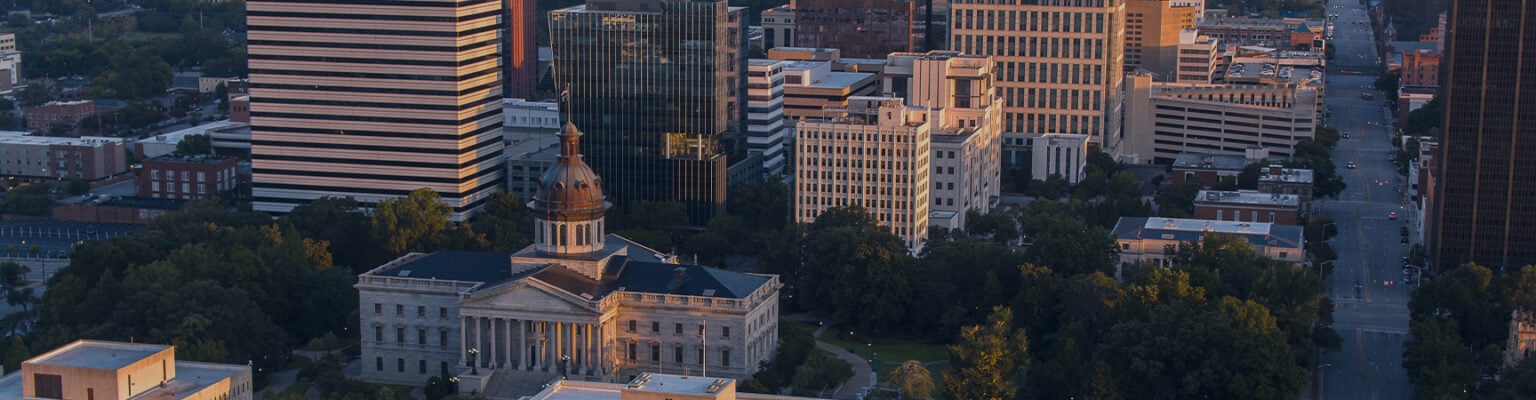
FCI El Reno at a glance
FCI El Reno is a medium-security federal prison for men in El Reno, Oklahoma, about thirty miles west of Oklahoma City, with a minimum-security satellite camp beside it. As of September 2026 it held 1,160 people: 1,005 at the main institution and 155 at the camp.
| Official name | Federal Correctional Institution, El Reno |
|---|---|
| BOP code | ERE |
| Security level | Medium; men · adjacent minimum-security satellite camp |
| Population | 1,160 (as of September 2026) · 1,005 at the FCI, 155 at the camp |
| Visiting | Friday through Monday and federal holidays, 8:00 a.m.–3:00 p.m. · no entry after 2:00 p.m. · see visiting hours |
| Inmate mail | FCI: Inmate Name & Register Number · FCI El Reno · Federal Correctional Institution · P.O. Box 1500 · El Reno, OK 73036 Camp: see how to write to someone at the camp |
| Send money | Lockbox · Western Union (code city FBOP, DC) · MoneyGram (receive code 7932) |
| Phone | 405-262-4875 · Fax 405-319-7626 |
| Street address | 4205 Highway 66 West, El Reno, OK 73036 · Canadian County |
| Judicial district | Western District of Oklahoma |
| BOP region | South Central |
| Designated capacity | 926 |
| Housing | Five units: four multiple-occupancy cell units and one open-bay dormitory; no single-cell units |
| Special Housing Unit | Yes · 84 segregation cells |
| RDAP | Yes, at the FCI · not at the camp |
| UNICOR | Yes · metal factory; dairy and farm worked from the camp |
| Camp | Adjacent minimum-security satellite camp for men |
On this page
It sits on Highway 66 in Canadian County, in the Bureau’s South Central Region, and it is one of the oldest institutions in the federal system: Congress created it in May 1930 as the United States Southwestern Reformatory, on land cut from the Fort Reno army reservation. Two things set it apart in September 2026. The Justice Department’s Inspector General has an inspection of it under way. And on September 14, 2026, the Bureau’s page for this facility carried a banner reading, in full, “Visiting at the Federal Correctional Institution (FCI) has been suspended until further notice.” By September 17 the page no longer showed it.

Is FCI El Reno the same as the Federal Transfer Center in Oklahoma City?
No. FCI El Reno and FTC Oklahoma City are the only two Bureau of Prisons institutions in Oklahoma; they sit about thirty miles apart and do different jobs, and confusing them is one of the costliest mistakes families make. Settle which one you are dealing with before you write a letter, send money or book a flight. The figures below are from the Bureau’s roster, with populations as of September 2026.
| FCI El Reno (this page) | FTC Oklahoma City | |
|---|---|---|
| BOP code | ERE | OKL |
| What it is | A medium-security prison where people serve sentences | An administrative-security federal transfer center — the Bureau’s air hub |
| Population | 1,160 | 1,233 |
| Who is held | Men | Men and women |
| Where | 4205 Highway 66 West, El Reno, OK 73036 | 7410 S. MacArthur Blvd, Oklahoma City, OK 73169 |
| Phone | 405-262-4875 | 405-682-4075 |
The transfer center holds more people than the prison, and almost everyone there is passing through — in transit, in on a court writ, waiting for a designation — with stays measured in days or weeks. If your relative has just been sentenced and the locator shows Oklahoma City, they are probably at the transfer center and probably moving on; our page on FTC Oklahoma City covers that facility. Neither address works for the other.
Two other Oklahoma prisons get mistaken for this one. The Great Plains Correctional Facility at Hinton, forty miles farther west, held federal prisoners under contract for years and no longer does: GEO Group’s filings with the Securities and Exchange Commission state that “we currently do not operate any prison contracts for the BOP,” and the Oklahoma Department of Corrections has leased and run Great Plains since May 2023. The Canadian County jail is in El Reno itself, minutes from the federal prison. Anyone in either is in state or county custody, and the federal Inmate Locator will not find them.
What is the security level at FCI El Reno?
The main institution is medium security and the satellite camp beside it is minimum security. The 2024 Prison Rape Elimination Act audit records the facility’s custody levels as “Medium/In, Minimum/Out, Community.” The two sides share a warden, a commissary vendor and a post office box, and almost nothing else about daily life.
The audit describes a very full place: a designated capacity of 926 against a population of 1,190 on its facility-data form, roughly 129 percent, and an average daily population of 1,217 over the preceding twelve months. Asked whether the facility had been over capacity at any point that year, the box marked is “Yes.” The 129 percent is the ratio of two numbers the auditor recorded, not a finding by the auditor, and it is the number behind waitlists, canceled callouts and cellmates no one chose. The audit’s full description of the buildings and housing units is in the PREA audit section.
The same audit counted 1,163 people on the first day of its onsite work, aged 19 to 80 at the FCI and 21 to 74 at the camp, of whom 28 were blind or had low vision and four identified as transgender or intersex. Average length of stay was 574.3 days at the main institution and 529.8 at the camp, under two years in both cases: most people move through El Reno rather than finish their sentences here.
Whether someone lands at the FCI or the camp is decided before they arrive, under the Bureau’s security designation rules, and it turns on their security point score and on whether any Public Safety Factor applies. A Public Safety Factor overrides the point total: a person can score low enough for a camp and still be held behind the fence because a factor applies to their case. It is the most misunderstood part of designation, and the part most worth reviewing with a lawyer. Our guides to the intake process and to preparing for prison cover what happens either way.
How old is FCI El Reno, and why does that still matter?
Congress created this institution in May 1930 as the United States Southwestern Reformatory, and it has held federal prisoners since the middle of the Depression. Its history explains three things about it today: the land, the farm and its ninety-year-old buildings.
According to Glen R. Roberson’s entry in the Oklahoma Historical Society’s Encyclopedia of Oklahoma History and Culture (2017), the prison sits on a thousand-acre tract at the southeast corner of the Fort Reno reservation, a former U.S. Army Remount Station two miles west of the town. Ground was broken on January 2, 1932, and the first prisoners arrived on April 4, 1934. Some sources give 1933, and digitized Oklahoma newspapers refer to prisoners at the Southwestern Reformatory in July 1933; the Historical Society’s account is the better-documented one.
It was a reformatory in the literal sense: the first arrivals were first-time prisoners aged 18 to 26 who had not been judged habitual criminals. It became Federal Reformatory, El Reno in 1938, and not until the late 1970s a Federal Correctional Institution open to men of all ages. The farm came with it — more than 240 acres south of the main buildings, with a vegetable plot, forage crops and dairy cows — and writing in 2017 the Historical Society recorded El Reno as one of only two Bureau correctional institutions still running a minimum-security farm. The institution’s handbook records a Facilities Department looking after 3,595 acres and more than 1,100,000 square feet of building space, 56 acres of it inside the perimeter fence.
The Oklahoma City bombing, in the court record
El Reno held the men later convicted in the Oklahoma City bombing conspiracy while the federal grand jury sat in 1995, and the primary record of it is a detention order rather than a news clipping. On June 6, 1995, the United States District Court for the Western District of Oklahoma denied Terry Lynn Nichols pretrial release and ordered that he “be committed to the custody of Attorney General for confinement in the El Reno Federal Correctional Institution.” United States v. Nichols, 897 F. Supp. 542 (W.D. Okla. 1995).
What the court held is narrower than it is usually reported. The opinion expressly records that Nichols “has presented substantial evidence of his whereabouts and activities during the days immediately preceding and following the bombing,” but concluded that this “do[es] not preclude his aiding and abetting the commission of the offense charged.” It is a ruling about detention, not about guilt. Timothy McVeigh’s months here in 1995 are recorded in contemporaneous press coverage rather than in a published opinion.
Twenty years later, on July 16, 2015, President Barack Obama came here and met a group of men held at the institution, the first visit by a sitting President to a federal prison. The Bureau announced the visit in advance on its website.
Who are the notable inmates at FCI El Reno?
Two people whose cases drew wide attention are held at FCI El Reno, and three names that appear on most published lists of its prisoners are not here. The table gives each person’s status in the Bureau’s records as of September 2026. Jake Files has no Bureau register number on the public record; his entry rests on the U.S. Attorney’s release and contemporaneous Arkansas reporting.
| Name | Status in Bureau records | Case |
|---|---|---|
| Christopher Faulkner | Held here. Register number 76501-112; projected release April 25, 2030 | The Texas oil-and-gas promoter who called himself the “frack master.” Sentenced in September 2021 in the Northern District of Texas to 15 years for securities fraud and attempted tax evasion, with $92.4 million in restitution (U.S. Attorney’s Office) |
| Joel Lopez Sr. | Held here. Register number 20142-079; serving life | Sentenced on October 23, 2009, in the Southern District of Texas to a second life term for conspiracy to commit kidnapping and murder-for-hire, after soliciting a fellow prisoner to kill the federal judge who had imposed his earlier life drug sentence (FBI Houston) |
| Jake Files | Former. Reported here in August 2018 | Former Arkansas state senator. Sentenced on June 18, 2018, in the Western District of Arkansas to 18 months and $83,903.77 restitution for wire fraud, money laundering and bank fraud (U.S. Attorney’s Office) |
| Diego Montoya Sanchez | Not here. Bureau records place him at FCI Petersburg Medium, Virginia | Colombian trafficking figure; projected release 2045 |
| Lontrell Williams (Pooh Shiesty) | Not here. Released from Bureau custody on April 21, 2026 | Memphis rapper; firearms conspiracy |
| Jon Woods | Not here. The locator records register 08275-090 as in transit, with no institution and no projected release date shown | Former Arkansas state senator; fraud and money laundering |
Diego Montoya Sanchez is held at FCI Petersburg Medium, not at El Reno. Jon Woods is not at FCI Bastrop; in September 2026 his record read IN TRANSIT, with no institution, which the screen shows as “NOT IN BOP CUSTODY” and “Release Date: UNKNOWN”. Lontrell Williams left federal custody on April 21, 2026. A list that has not been re-checked against the locator can send a family’s mail to a prison the person has left.
How do I find someone at FCI El Reno?
Use the Bureau’s free public Inmate Locator, and search by the eight-digit register number if you have it, because the number is the reliable key and names are common. The locator covers everyone in federal custody since 1982: for someone still held it gives the facility and a projected release date, and for someone released it shows “Not in BOP Custody as of” and a date, with no facility.
The result names the institution, so check which of Oklahoma’s two it is: “El Reno FCI” is this prison, “Oklahoma City FTC” the transfer center. It does not distinguish the main institution from the camp — both show as “El Reno FCI” — and the mailing line, the commissary schedule and the law library hours all differ between them, so ask the person which side of the fence they are on, or call 405-262-4875.
If the locator shows nothing, the usual reasons are that the person is in state or county custody rather than federal, that they are in pretrial detention under the U.S. Marshals Service rather than in a Bureau institution, or that the committed name on the judgment is spelled differently from the name they use. Our guide to how register numbers work explains how the number is assigned.
How do I write to someone at FCI El Reno?
Put the committed name and the eight-digit register number on the first line; mail without a register number is returned. The Bureau’s address block for the main institution is below, and the Bureau’s correspondence rules apply with the local details that follow.
| For someone at the FCI | For someone at the satellite camp |
|---|---|
| Inmate Name & Register Number FCI El Reno Federal Correctional Institution P.O. Box 1500 El Reno, OK 73036 | The Bureau’s page renders only “Inmate Name & Register Number / Satellite Camp” with no street or city line. Confirm the camp address with the institution before you mail anything. |
The camp block on the Bureau’s facility page is incomplete: it prints the designation line and then a bare comma where the city and state should be. The same page renders a block for a “Federal Satellite Low,” although the Bureau’s roster records that this facility has none. The institution’s handbook gives P.O. Box 1500 as the return address people here are required to use, and P.O. Box 1000 is the facility’s staff and administrative box; those boxes do not add up to a published camp address, so call 405-262-4875 and ask.
Outgoing mail from the main institution is not sealed. The institution’s handbook states the rule: outgoing mail from a sentenced person at a medium or high security institution “may not be sealed by the inmate and may be read and inspected by staff.” Only at minimum and low security institutions does outgoing mail leave sealed and uninspected, so letters from the camp go out sealed and letters from behind the fence do not.
Legal mail depends on its marking. The envelope must carry the attorney’s name, an indication that the sender is an attorney, and the words “Special Mail – open only in the presence of the inmate.” Without that it is opened and handled as ordinary mail, and the handbook puts the burden squarely on the incarcerated person: “It is the responsibility of the inmate to advise his/her attorney of these requirements.” Our guide to attorney-client communication in the Bureau of Prisons covers the whole privilege question.
Outgoing special mail is hand-delivered to mailroom staff, not dropped in a box, and the windows are narrow: at the FCI mail room, Monday to Friday between 11:00 a.m. and 12:00 p.m.; at the camp’s outside mail room, between 9:00 and 10:00 a.m. Miss it and the mail waits a day, which matters to anyone with a filing deadline. Other local rules, each of which produces returned mail:
- Mail is processed Monday to Friday only, and no stamps may be mailed in from outside — stamps are sold in the commissary.
- A “package” means anything over 16 ounces, or anything in a box or padded envelope, and needs written authorization from the unit team before it is sent. Unauthorized packages are refused at the post office.
- Rejected outright: musical greeting cards, Polaroid photographs, nude photographs, plant material, and anything that cannot be inspected. Outgoing mail must be in the unit mailbox by 10:00 p.m.
Our guide to writing to someone in federal prison covers what gets rejected system-wide. Never put money in a letter; funds enclosed in correspondence are removed and returned.
How do I send money to someone at FCI El Reno?
Send money through the Bureau’s national lockbox in Iowa, Western Union or MoneyGram, never to the prison’s address; all three need the committed name and the eight-digit register number. The routes and timings below are from the institution’s handbook.
| Route | Where it goes | How fast it posts |
|---|---|---|
| U.S. postal money order | Lock Box, Federal Bureau of Prisons Committed Name Eight-Digit Register Number Post Office Box 474701 Des Moines, Iowa 50947-0001 | Postal money orders post without a hold. Since December 1, 2007, every non-postal money order and non-government check processed through the lockbox carries an automatic 15-day hold |
| Western Union Quick Collect | Code city and state FBOP, DC | Two to four hours if sent between 7:00 a.m. and 9:00 p.m. Eastern, any day including holidays; otherwise by 7:00 a.m. the next morning |
| MoneyGram Express Payment | Receive code 7932, company name Federal Bureau of Prisons, Washington, DC. Up to $300 online | Same as Western Union |
Cash and personal checks cannot be accepted. The envelope must contain nothing but the money order — anything sent with it is disposed of — and if the name and register number are wrong and the transfer posts to somebody else, the funds may not be recoverable. Our full guide to sending money to a federal prisoner compares every route and its cost.
Commissary spending is capped, and money above the cap stays in the account; the cap is explained in the commissary section below.
What are the visiting hours at FCI El Reno?
Visiting at both the FCI and the camp runs from 8:00 a.m. to 3:00 p.m., Friday through Monday, and on federal holidays; there is no visiting on Tuesday, Wednesday or Thursday. Two cut-offs inside those hours will turn you away at the gate: no visitor is admitted after 2:00 p.m., and on weekends and holidays there is a mid-morning blackout — no FCI entry between 9:15 and 10:45 a.m., no camp entry between 9:00 and 11:00 a.m., or later if the institution count is still running. See the Bureau’s visiting regulations.
On September 14, 2026, the Bureau’s page for this facility carried a banner, displayed twice, reading “Visiting at the Federal Correctional Institution (FCI) has been suspended until further notice.” The notice named the FCI, not the camp, and gave no reason and no end date; no press release accompanied it. The Bureau’s records that day showed no suspension at FTC Oklahoma City, FCI Cumberland, FCI Berlin, FCI Atlanta or FCI Petersburg Medium, so this was not a nationwide suspension of the kind imposed in January 2022. By September 17 the page no longer showed the notice, and the Bureau had announced nothing either way. Call 405-262-4875 before you travel, and again the morning you leave.
These hours come from Institution Supplement ERE 5267.09B, dated October 19, 2017, which is still the visiting supplement the Bureau’s El Reno page links. It predates the pandemic, and no later local change has been published, so confirm before you drive.
Who can visit, and how many
El Reno runs a points system, and it is stricter than most. Each person starts the month with 32 visiting points. A weekday hour costs one point; an hour on a weekend or a federal holiday costs two; and no more than 20 of the 32 may be spent on weekend and holiday visiting. Any part of an hour counts as a full hour, and points do not carry over.
In practice, twenty weekend points buy ten hours of weekend visiting a month, and once they are gone the only visits left are on Fridays and Mondays. A family that can only travel on weekends should plan the month, not the week. Up to ten additional points a month may be requested through the unit team, with the Associate Warden of Programs as the final approving authority. Attorney visits and visits from approved Prisoner Visitation and Support volunteers cost no points at all.
- No more than five adult visitors per person per day, and children are limited to five. The two visitor handouts attached to the same supplement word this differently, and neither matches the body; the front entrance officer decides on the day.
- Immediate family — mother, father, step-parents, foster parents, brothers, sisters, spouse, children — go on the list absent strong circumstances, plus ordinarily no more than ten friends and associates. Grandparents, uncles, aunts, nephews, nieces, in-laws, cousins and the mother of a person’s child are not immediate family for this purpose and cannot visit until the full list is approved.
Visiting-room capacity is 133 at the FCI and 57 at the camp, and the supplement says what happens when it fills: staff compile a list of visitors with addresses within a fifty-mile radius of El Reno and ask for volunteers to end their visits, and if that fails the Operations Lieutenant terminates the first five groups on that list — no fewer than five. Local families are the ones asked to leave first. If you have driven from out of state, say so when you check in.
Visits for people in the Special Housing Unit are conducted on the secure video visitation system inside the SHU, limited to two adults and one child, or one adult and two children, for one hour. There is no contact visit from the SHU here, and attorney visits from the SHU are ordinarily on the same system.
What visitors can wear, bring and expect at the door
The 2017 supplement’s dress and property rules are strict. Barred: miniskirts, halter tops, sleeveless shirts, tank tops, backless shirts or dresses, body suits, sweat-suits and sweatpants, form-fitting or see-through clothing, anything “which ends at the knee or above,” anything resembling inmate khaki, open-toed shoes and high heels. Female visitors must wear a brassiere and other undergarments, “without any exception.” The rules bind anyone over ten. What you may carry in is one see-through coin purse no larger than about nine inches square, searched in front of you; no more than $20; and per baby, two diapers and one bottle, with store-bought baby food sealed in its original container. That is the whole list — hats, telephones, electronic devices, keys, food, gum, candy, toys, cosmetics, sunglasses, bags, strollers, child carriers and diaper bags all stay in the car, so the diapers go in the coin purse or they do not come in.
Photo identification is required at 16 and over, and the supplement says: “A government issued ID is the only valid photo identification accepted.” Credit cards, store cards, school identification, birth certificates, Social Security cards and bank cards will not get you in; foreign driver’s licenses are accepted. Children under 16 need a parent or guardian with them, and 16- and 17-year-olds arriving alone need written approval mailed to the institution in advance. Screening is x-ray, then a walk-through metal detector, then a pat search if an alarm cannot be explained — and every visitor, children included, is marked with a fluorescent hand stamp read under ultraviolet light going in and coming out. Inside, contact is limited to a handshake, an embrace and a kiss at the start and end and hand-holding in between, and leaving the visiting room ends the visit. See our guides to searches, shakedowns and contraband and to federal prison visitation.
Getting there
From Interstate 40, take exit 123, Country Club Road, and go north to Highway 66. Turn west and go about one and a half miles to the institution. Stop at the intercom and identify yourself to the tower officer; you will be directed to the visiting parking lot, and visitors may not wait in their vehicles.
The supplement says twice that there is no public transportation: “There is no local transportation available in this area,” and “Taxicabs are not available in El Reno.” Oklahoma City is roughly thirty miles east, so a visitor flying in needs a rental car or a ride arranged in advance.
How do phone calls and email work at FCI El Reno?
Calls go one way: the incarcerated person places them, and no one can call in. Under the institution’s handbook, telephones operate from 6:00 a.m. to 9:00 p.m. seven days a week, calls must be placed from the assigned housing unit, every call ends automatically at 15 minutes, and phones close during count. A local rule trips families up: there is a one-hour waiting period between the end of one call and the placing of the next, so a dropped call cannot be placed again right away.
The national allowance is 510 minutes a month under the Bureau’s telephone regulations, Program Statement 5264.09, issued September 3, 2026: 300 are free to anyone eligible for First Step Act telephone incentives, and anyone, eligible or not, may buy the other 210 after using up the first 300. Nationally, a single call should generally not exceed 15 minutes, at least 30 minutes must pass between completed calls, and the monthly limit does not apply to unmonitored legal calls (PS 5264.09 at 6–7). El Reno resets the allowance on a day set by the fifth digit of the register number, not on the first of the month, which is why minutes can run out mid-month.
| Fifth digit | Reset day | Fifth digit | Reset day |
|---|---|---|---|
| 0 | 1st | 5 | 16th |
| 1 | 4th | 6 | 19th |
| 2 | 7th | 7 | 22nd |
| 3 | 10th | 8 | 25th |
| 4 | 13th | 9 | 28th |
Source: FCI El Reno Admission and Orientation Handbook (2017).
On the receiving end, the called party presses 5 to accept and 77 to block all future calls from that person. A block put on in frustration is not easy to undo: it can be lifted only by a written request from the person who imposed it, with a copy of a phone bill attached. Three-way calls and 800 and 900 numbers are prohibited and produce an incident report. An unmonitored call with a lawyer is arranged through the Case Manager, and the handbook sets the test: the person must “demonstrate to the Unit Team the need, such as an imminent court deadline.” Every other call is monitored and recorded. See our guide to federal inmate phone calls.
Email runs on TRULINCS, which families reach through CorrLinks. It is available from 6:00 a.m. to 9:00 p.m. daily, and a session is capped at 30 consecutive minutes. Requests to staff are limited to five a day through the same system — and allegations of sexual abuse or harassment can be sent from it directly to the Justice Department’s Inspector General. Email with a lawyer is not privileged; privileged written communication goes by marked special mail. Our page on CorrLinks and TRULINCS explains the system and its costs.
Law library access differs between the two halves of the institution. The Electronic Law Library and the printing workstations at the FCI run only during the Education and Recreation Department’s scheduled hours. At the camp, the law library runs from 6:00 a.m. to 9:00 p.m. daily. A camp resident preparing a filing has close to fifteen hours a day of access; a person behind the fence has the library’s posted hours and no more. See how the electronic law library works.
What can people buy at the FCI El Reno commissary?
The national monthly spending limit is $460, set by the Bureau’s trust fund rules, Program Statement 4500.13, issued May 7, 2026; the policy’s change record says it “Increases spending limit from $360 to $460 per month.” The limit rises by $50 during the November and December holiday period, for no more than one validation period.
El Reno’s own paperwork still says $360, which is obsolete as a national ceiling, and El Reno revalidates twice a month rather than once. The facility’s commissary order form (2020), still the form the Bureau publishes, states on both the main institution’s list and the camp’s: “Commissary Re-validation on the 1st with $180 and the 15th with $180.” The 2017 handbook repeats the old figure: “The National Spending Limit is $360.00 but may be further restricted at the local level.” Two halves of $180 came to exactly the old national ceiling.
Bi-weekly validation is expressly permitted; Program Statement 4500.13 provides that the limit “is automatically revalidated once per month for each inmate except where weekly or bi-weekly validation is used.” What is not on the public record is whether El Reno has raised its two halves to match the new ceiling, because the Bureau has not republished this institution’s order form since 2020. Check the account balance before shopping rather than relying on either figure. Some items never count against the limit — postage stamps, over-the-counter medications, copy cards and copy paper, footwear and mattresses among them — and El Reno’s own form marks stamps (limit $11.00) and copy cards (limit two) as items that “do not come off validation.”
Shopping here is scheduled by register number, and getting it wrong costs a week. The rules below come from the order form and the handbook.
| Main institution | Satellite camp | |
|---|---|---|
| Sales days | Monday to Thursday. An even fifth digit of the register number shops Monday and/or Wednesday; odd shops Tuesday and/or Thursday | Tuesday and Thursday, one shop per week |
| Hours | 6:30–7:15 a.m., 11:00 a.m.–12:15 p.m., 1:55–3:25 p.m. Last list taken at 3:15 p.m. | 6:30–7:15 a.m. and 10:30 a.m.–12:30 p.m. on the order form; 10:30 a.m.–12:20 p.m. with the last list at 12:10 p.m. in the handbook |
| Closed | Friday, Saturday, Sunday and major holidays | Weekends and major holidays |
| Limit on trips | Two sales per week; Trust Fund sells in the Special Housing Unit on Wednesdays | One shop per week |
The camp’s two published documents disagree about its hours, as the table shows. Shopping requires an approved commissary bag and an account card, and purchases are made on the fingerprint system. The order form’s instruction is firm: “NO ADDITIONS OR SUBSTITUTIONS,” and “ALL SALES ARE FINAL,” with questions to be raised before leaving the window. The camp’s list adds: “and no knocking on window.”
The stock list still includes a typewriter ribbon at $7.80 and a Swintec print wheel at $23.50, a sign that much legal work here is still typed. A person in refusal status under the Inmate Financial Responsibility Program has a commissary limit of $25.00 a month and cannot work for Federal Prison Industries. Our page on the federal prison commissary covers the national rules.
What programs are available at FCI El Reno?
FCI El Reno runs the Residential Drug Abuse Program at the main institution and the country’s first federal Prison Fellowship Academy, alongside vocational training in plumbing, electrical work, welding, horticulture and diesel, UNICOR metal and dairy work, and psychology and chaplaincy programs.
The Prison Fellowship Academy, and why it is here first
On June 18, 2026, FCI El Reno became the first federal prison in the country to run a Prison Fellowship Academy. The Bureau’s announcement explains why that matters for sentence credit: the ceremony “celebrated the launch of the Prison Fellowship Academy, the first nonprofit program formally designated as an evidence-based recidivism reduction program under the First Step Act.”
Programs the Bureau classifies as evidence-based recidivism reduction programs are the ones that earn First Step Act time credits. The Bureau’s August 2026 First Step Act Approved Programs Guide lists the Prison Fellowship Academy as an evidence-based program worth 500 hours, delivered through Chaplaincy Services, and its list of institutions where the program runs has one entry: ERE. It is a year-long program in its own housing unit; guests at the ribbon-cutting “toured the housing unit where the yearlong program will be delivered” and met the men selected for the first cohort.
It is a faith-based program, like most of El Reno’s outside partnerships: the Bureau of Justice Statistics counted the institution’s recidivism-reduction partnerships for 2024 at 32, of which twenty-one were faith-based, six community-based, four visitation volunteer, one vocational training, and none at all for higher education.
RDAP and drug treatment
The Residential Drug Abuse Program runs at the main institution. The Bureau’s August 2026 First Step Act guide lists FCI El Reno among its South Central Region RDAP sites; it does not list a separate camp site here, although it does list satellite camps elsewhere — Cumberland, Lewisburg, McKean, Texarkana, Edgefield, Leavenworth. On the Bureau’s listing, the El Reno camp is not an RDAP site; the Bureau’s RDAP rules govern admission.
RDAP is a minimum nine-month modified therapeutic community delivered as a half-day program. For a person convicted of a non-violent offense, completing it — including the community transition component after transfer to a halfway house — can mean up to a year off the sentence under 18 U.S.C. § 3621(e)(2). Timing matters, and the handbook states the window: “Ordinarily inmates are interviewed 42-24 months from release depending on the facility’s security level and waiting list for the RDAP.” A person can apply at any point, but the interview is scheduled by proximity to release, which is why the conversation with the unit team belongs three and a half years out, not one.
The Drug Abuse Education course is not treatment, and it is compulsory where the presentence report documents a prolonged history of drug use or a judicial recommendation for treatment; refusing it costs performance pay above maintenance level and eligibility for a Federal Prison Industries job. The institution has no Resolve Program; the handbook says: “This institution does not have a Resolve Program” — the Bureau’s trauma-focused treatment program. A person who needs it here is asking for a transfer.
Education, work, and the farm
Vocational training at the main institution is plumbing, electrical and welding. At the camp it is horticulture and diesel. That is the handbook’s list; the longer lists that circulate online for this prison do not appear in any Bureau document. Literacy carries 240 mandatory instructional hours for anyone without a high school diploma, and a person who picks up an incident report connected to their literacy enrollment stops vesting good conduct time and must complete another 240 hours. The apprenticeship committee meets quarterly, so missing a quarter costs three months, and the FCI library keeps limited hours — noon to 3:00 p.m. Monday to Friday, 5:15 to 8:00 p.m. Wednesday to Friday, two blocks on Sunday, closed Saturdays. See our guides to prison education and vocational training.
The handbook describes the industrial operation this way: “FCI El Reno has a metal factory and dairy/farm which employs approximately several hundred inmates.” Most federal prisons have a factory; very few still have a farm, and the Bureau’s 2016 account of this one records men from the camp running it under Federal Prison Industries staff, one of them delivering milk to eighteen institutions on a commercial license he earned inside. The operation is still trading: Federal Prison Industries posted a first-quarter fiscal 2027 milk solicitation for FCI El Reno with a September 2026 deadline. It is a camp job, which matters when a designation is in play — a person at the camp here has access to agricultural work that a person behind the fence does not. Working for UNICOR carries a condition: participation in the Inmate Financial Responsibility Program at 50 percent of industrial earnings, under the Bureau’s work and pay rules.
Faith, psychology and family emergencies
Religious Services here is staffed by a Supervisory Chaplain, a Staff Chaplain and a Religious Services Assistant, with community volunteers running much of the chapel schedule; under the Bureau’s religious practice rules, a request to observe a recognized holy day, fast or ceremonial meal must be in writing at least 30 days beforehand, and 90 days for Passover. The chaplains are also the route for a family emergency. Call 405-262-4875 and be ready with the nature of the emergency, the person’s name and register number, and something staff can verify — the name and telephone number of a funeral home or hospital. Without verification the message does not move. Psychology Services runs individual counseling and an Anger Management Program, and supports counselor-led Breaking Barriers, Pre-Release and Moral Reconation Therapy groups.
A note on First Step Act programming. The Bureau’s approved-programs guide lists which programs are approved to be offered at each institution. Approval is not delivery. Whether a class is actually running this month, and how long the waitlist is, changes constantly and is a question for the unit team — and at an institution running at roughly 129 percent of its designated capacity, waitlists are the norm.
What is daily life like at FCI El Reno?
Daily life at FCI El Reno runs on counts, meals, ten-minute controlled moves and fixed telephone and TRULINCS hours. The main institution’s day, from its 2017 handbook, is below; treat it as the rhythm rather than a guarantee.
| Weekdays | Weekends and holidays | |
|---|---|---|
| Wake-up | 6:00 a.m. | |
| Breakfast | 6:00 a.m. | 7:00–7:45 a.m. |
| Midday meal | Noon meal rotation called at 11:00 a.m. | Brunch, 10:45–11:30 a.m. |
| Dinner | Mainline opens 4:40 p.m., closes 5:30 p.m. | |
| Uniform required | 7:30 a.m. – 3:30 p.m. | — |
| Stand-up counts | 4:00 p.m. and 9:30 p.m. | 10:00 a.m., 4:00 p.m. and 9:30 p.m. |
| Other counts | 12:01 a.m., 3:00 a.m., 5:00 a.m. | |
| Controlled movement | Ten minutes, beginning ten minutes before the hour; ordinarily one-way, inbound or outbound | |
| Telephones and TRULINCS | 6:00 a.m. – 9:00 p.m. | |
Source: FCI El Reno Admission and Orientation Handbook (2017). The camp runs on a different clock: breakfast at 5:30 a.m., lunch at 11:00, dinner once the 4:00 p.m. count clears, and on weekends a coffee hour from 7:00 to 8:00 a.m. and brunch from 10:30 to 11:30.
Small rules govern much of the day. Which unit eats first is decided by weekly sanitation ratings — the cleanest unit is called first and the lowest-rated last, which makes a dirty cell everybody’s problem. All showers are closed from 7:00 a.m. to 3:00 p.m. Monday to Friday, except one identified shower on the lower range. Hallway lights and telephones go off at 9:00 p.m. Callouts for the next day’s appointments post on the unit boards after 4:00 p.m., and more than ten minutes in transit between two places is a disciplinary matter under the pass system.
Health Services operates from 6:00 a.m. to 10:00 p.m. seven days a week, with emergency care around the clock. Routine sick-call triage at the FCI is between 6:00 and 6:30 a.m. on weekdays except Wednesday — a half-hour window, four mornings a week, and you must be there with your identification card. At the camp it is 6:30 to 6:45 a.m. There is a $2.00 co-payment for any visit the person requests, with no fee for staff referrals, chronic-care follow-up, preventive care, emergencies, mental health or substance abuse treatment, and a person counts as indigent if their trust fund balance has not reached $6.00 in 30 days. See medical care in federal prison for how to escalate when care does not happen.
What do inspectors say about conditions at FCI El Reno?
No inspector has yet published an assessment of conditions at FCI El Reno, but the Justice Department’s Office of the Inspector General has an inspection of it under way. The Inspector General’s Ongoing Work page carries this entry in full:
Inspection of Federal Correctional Institution El Reno. The OIG is conducting an inspection of Federal Correctional Institution El Reno. This is a routine inspection to assess compliance with correctional policies and standards.
FCI El Reno is one of two Bureau institutions with an inspection listed there (the other is FCI Berlin in New Hampshire); a third entry concerns maintenance-and-repair funds at FCI Estill, and everything else the Inspector General lists for the Bureau is national in scope.
What that inspection is, in practice: since 2023 the Inspector General has been sending teams into federal prisons unannounced, and by its own count in May 2026 it had reached fourteen institutions (Report 26-055). The program runs under the Federal Prison Oversight Act, signed on July 25, 2024, which requires the Inspector General to conduct periodic inspections of Bureau facilities and operations based on its own assessment of risk. Inspectors arrive without notice, walk housing units, interview staff and incarcerated people and review records on site. The product is a public report with findings and recommendations the Bureau must answer in writing. Expect a wait: USP Canaan was inspected in June 2025, and its report did not appear until May 2026. When El Reno’s does appear it will be the first independent assessment of conditions this institution has ever received.
Until then, what exists reaches this institution in passing rather than as its subject. The Inspector General’s November 2005 audit of Bureau pharmacy services traced a Chief Pharmacist at FCI El Reno illegally purchasing prescription medications, and used it to show what weak purchasing controls allow. Its September 2021 staff survey publishes response percentages for El Reno by name. Beyond that its presence here has been prosecutorial rather than inspectorial: since 2017 its agents have made at least seven criminal cases against staff or prisoners at this institution, among them a correctional officer, a materials handler supervisor, a food service cook supervisor and an education specialist. None of that is an assessment of conditions, which is what the pending inspection will be. The District of Columbia’s Corrections Information Council, which inspects Bureau facilities holding DC residents, has not inspected El Reno.
For a prison that held roughly 1,160 people as of September 2026, the only independent examination on the public record is a single audit, of a single subject, conducted in the fall of 2024.
The 2024 PREA audit
An independent auditor, Valerie Wolfe Mahfood of Corrections Consulting Services, audited FCI El Reno under the Prison Rape Elimination Act; the final report is dated December 21, 2024. The report gives two dates for the visit: its cover page says October 5–7, 2024, and its post-audit reporting section says November 5–7, 2024. Anyone citing the audit in a filing should note both.
The facility passed: seven standards exceeded, thirty-eight met, none unmet, and no corrective action required. In the twelve months before the audit the facility recorded seven allegations of sexual abuse, all inmate-on-inmate and none staff-on-inmate, and no allegations of sexual harassment at all. The auditor reviewed all seven investigation files and recorded that “all reported allegations were properly completed and issued dispositions in accordance with their investigative findings.” One was substantiated and six unsubstantiated.
The audit’s facility figures:
| Buildings | 66 |
|---|---|
| Housing units | 5 — four multiple-occupancy cell units, one open-bay dormitory, no single-cell units |
| Segregation cells | 84 |
| Designated capacity | 926 |
| Population at the audit | 1,190 on the facility-data form and 1,163 on the first day of the onsite work; average daily population over the prior year 1,217; over capacity at some point in the year: yes |
| Staff who may have inmate contact | 244, with 23 hired in the prior twelve months |
| Accreditation | American Correctional Association only — the form’s boxes for health-care and law-enforcement accreditation are unticked |
| Forensic examinations | Conducted off site at a local hospital or clinic |
| Warden at the time | Kris Goldey |
On staffing, the audit records the Warden’s position rather than an independent finding: “Per the FCI El Reno Warden, within the audit time frame, the staffing levels of FCI El Reno have not fallen below the required levels.” The plan is reviewed quarterly and was last finalized on June 26, 2024, and supervision and monitoring was one of the seven standards exceeded, on the strength of documented unannounced rounds by supervisors up to and including the Warden. There has been no independent staffing review of this institution to test any of it. For a family considering a complaint: the facility employs no criminal investigators of its own, and the Warden told the auditor that criminal allegations of sexual abuse are referred to the FBI and to the Inspector General.
Discipline, by the numbers
The Bureau of Justice Statistics publishes a per-facility count of prohibited acts that cost someone a reward, an incentive or a time credit. For 2024 it recorded 1,394 at FCI El Reno: none at the low severity level, 704 moderate, 238 high and 452 of the greatest severity.
These are disciplinary findings that cost somebody something, not raw incident reports, and they are not a count of violence. In the same table FCI Cumberland recorded 902 and FCI Beckley 1,005, and 452 findings at the greatest severity level is a substantial number for a facility with 84 segregation cells.
What the court record shows
Three decisions naming this prison matter for their holdings rather than their outcomes.
The most practically useful is Arrington v. United States Parole Commission, No. 2024-1718 (D.D.C. June 20, 2025). A man held here challenged the Bureau’s calculation of his good-time credits and filed in Washington. The court held that such a dispute sounds in habeas corpus; that under the immediate-custodian rule the proper respondent is the warden of the facility where the person is actually held; and that the custodian must be within the deciding court’s territorial jurisdiction. Because “the jurisdiction in which FCI El Reno is located is the Western District of Oklahoma … not the District of Columbia,” the case was dismissed for want of jurisdiction. The practical rule: a habeas petition about sentence computation or First Step Act credits is filed in the Western District of Oklahoma and names the warden of FCI El Reno. Filing it in the sentencing district can cost months.
Brown v. Harvey, No. 5:25-cv-00126 (W.D. Okla. Apr. 17, 2025), makes two related points. A man who alleged that staff here had threatened him asked to be moved, was transferred to a penitentiary in Colorado, and lost his request for injunctive relief as moot — the court made no finding that anyone had done anything, and a transfer ended the case. The same opinion holds that a prisoner seeking release or a shorter sentence on the basis of earned credits must proceed in habeas rather than in a civil rights action, while conditions claims may go forward under Bivens. And in the Tenth Circuit a Federal Tort Claims Act claim must be presented to the agency first: that requirement is jurisdictional and cannot be waived, so the Standard Form 95 comes before the lawsuit, always.
Finally, Patel v. Fleming, 415 F.3d 1105 (10th Cir. 2005), arose from a secondhand-smoke grievance at this institution and produced a holding that still binds every federal prisoner in the Tenth Circuit: “[a]n inmate cannot unilaterally extend the twenty-day time limit for making a formal filing based on a desire to resolve his or her claims informally.” Trying to sort a problem out with the unit team does not stop the clock. File inside the window and keep negotiating afterward. Our guide to the administrative remedy program sets out every rung and every deadline.
FCI El Reno in the news
Recent news about FCI El Reno centers on the September 2026 visiting suspension, the June 2026 launch of the Prison Fellowship Academy and deaths in custody; older items concern staff prosecutions, a former state senator’s sentence and the 2015 presidential visit. Items are newest first. The Bureau does not publish a per-facility count of deaths in custody, so the deaths listed here are not a complete record.
- September 2026 — visiting suspended. On September 14 the Bureau’s page for this facility carried a banner reading “Visiting at the Federal Correctional Institution (FCI) has been suspended until further notice,” with no reason and no press release; by September 17 the page no longer showed it.
- June 2026 — Prison Fellowship Academy launched. A ribbon-cutting on June 18 opened the first Prison Fellowship Academy in a federal prison (KOCO 5); the Bureau announced it on its website. It is the first nonprofit program designated an evidence-based recidivism reduction program under the First Step Act.
- January 2026 — death in custody. In a release titled Death at FCI El Reno, the Bureau reported that Dujuan Cole, 44, was “found unresponsive” at about 12:20 p.m. on January 22 and, after life-saving measures, was “pronounced deceased by hospital personnel.” He had arrived at the facility the previous day and was serving 120 months imposed in the Southern District of Illinois for distributing methamphetamine. The FBI was notified.
- May 2024 — death in custody. Irvin Cooper, 45, was found just after 8 p.m. on May 4 and pronounced dead by emergency medical personnel. He was serving more than eighteen years for a drug and firearms conviction. The FBI was notified (KOKH Fox 25).
- November 2022 — staff bribery conviction. Kacie Deyo, 30, a correctional officer here from November 2016 until January 2022, pleaded guilty on November 10, 2022, to accepting a bribe by a public official, admitting she took thousands of dollars to smuggle contraband into the institution between March 3 and May 7, 2021. Investigated by the Justice Department’s Inspector General and the FBI.
- October 2020 — the Bureau posted one news release reporting the death of a person held at FCI El Reno; the Bureau’s releases are listed on its press release page.
- December 2018 — death in custody. Justin Clark, 34, was found unresponsive at about 2 p.m. on December 11, serving 293 months for a drug conspiracy imposed in Texas (Associated Press).
- August 2018 — former Arkansas state senator Jake Files reported here to serve 18 months for wire fraud, money laundering and bank fraud, having been sentenced on June 18, 2018, and ordered to pay $83,903.77 in restitution.
- January 2017 — staff sexual-abuse conviction. Amanda Hock, 35, a correctional officer here until she resigned in December 2015, pleaded guilty on January 23, 2017, under 18 U.S.C. § 2244(a)(4) to illegal sexual contact with an incarcerated man, and was sentenced to 60 months’ probation with 180 days of home detention.
- July 2015 — President Barack Obama visited on July 16, the first sitting President to enter a federal prison.
Frequently asked questions about FCI El Reno
What is FCI El Reno?
FCI El Reno is a medium-security federal prison for men in El Reno, Oklahoma, with an adjacent minimum-security satellite camp. Congress created it in May 1930 as the United States Southwestern Reformatory. As of September 2026 it held 1,160 people — 1,005 at the main institution and 155 at the camp.
Is visiting open at FCI El Reno?
On September 14, 2026, the Bureau’s page for the facility carried a banner reading “Visiting at the Federal Correctional Institution (FCI) has been suspended until further notice,” with no reason or end date and no mention of the camp. By September 17 the page no longer showed it, but the Bureau has not said visiting resumed, so call 405-262-4875 before traveling.
What are FCI El Reno’s visiting hours when visiting is running?
8:00 a.m. to 3:00 p.m., Friday through Monday, and on federal holidays, at both the FCI and the camp. There is no visiting on Tuesday, Wednesday or Thursday, and no visitor is admitted after 2:00 p.m. On weekends and holidays there is an entry blackout from 9:15 to 10:45 a.m. at the FCI and from 9:00 to 11:00 a.m. at the camp. These hours come from the 2017 visiting supplement, ERE 5267.09B.
How is FCI El Reno different from FTC Oklahoma City?
Oklahoma has two Bureau of Prisons institutions about thirty miles apart. FCI El Reno, code ERE, is a medium-security prison for men where people serve sentences. FTC Oklahoma City, code OKL, is an administrative-security federal transfer center holding men and women, most of them in transit — and it holds more people, 1,233 to El Reno’s 1,160 as of September 2026. Their mailing addresses and visiting rules differ.
How much can someone spend at the FCI El Reno commissary?
The national ceiling is $460 a month under Program Statement 4500.13, issued in May 2026, up from $360; it rises by $50 during the November and December holiday period, for no more than one validation period. FCI El Reno revalidates twice a month, and its 2020 commissary order form, still the published version, shows $180 on the 1st and $180 on the 15th. Whether those halves have been raised is not on the public record.
Does FCI El Reno have RDAP?
Yes, at the main institution. The Bureau’s First Step Act Approved Programs Guide of August 2026 lists FCI El Reno among its South Central Region Residential Drug Abuse Program sites and does not list a separate camp site here. For a person convicted of a non-violent offense, completion can reduce a sentence by up to twelve months under 18 U.S.C. § 3621(e), and the handbook records that people are ordinarily interviewed 42 to 24 months before release.
What is the Prison Fellowship Academy at FCI El Reno?
It is a year-long faith-based program launched here on June 18, 2026, and run in its own housing unit. The Bureau describes it as the first nonprofit program formally designated an evidence-based recidivism reduction program under the First Step Act, the category that earns time credits. The Bureau’s August 2026 First Step Act Approved Programs Guide lists it at 500 hours, delivered through Chaplaincy Services, with ERE — FCI El Reno — as the only institution where it runs.
Has FCI El Reno been inspected?
Not yet, but an inspection is under way. The Justice Department’s Inspector General lists an inspection of FCI El Reno on its Ongoing Work page, and it is one of two Bureau institutions with an inspection listed there (the other is FCI Berlin); a third entry concerns maintenance-and-repair funds at FCI Estill. The only independent examination of conditions on the public record is a Prison Rape Elimination Act audit conducted in late 2024, which the facility passed.
Why did my relative’s phone minutes run out in the middle of the month?
FCI El Reno resets the monthly allowance on a day set by the fifth digit of the register number, not on the first: 0 resets on the 1st, 1 on the 4th, 2 on the 7th, 3 on the 10th, 4 on the 13th, 5 on the 16th, 6 on the 19th, 7 on the 22nd, 8 on the 25th and 9 on the 28th. The allowance itself is 510 minutes a month under Program Statement 5264.09 (2026).
Where is a habeas petition filed for someone at FCI El Reno?
In the United States District Court for the Western District of Oklahoma, naming the warden of FCI El Reno as respondent. A federal court in the District of Columbia dismissed that kind of claim for want of jurisdiction in Arrington v. United States Parole Commission (2025), holding that the proper respondent is the warden of the facility where the person is held. This is general information about where such a case belongs, not advice about any particular case.
Problems at FCI El Reno: where we can help
Problems at El Reno often trace to an old paper record: a visiting supplement from 2017, a commissary order form from 2020, and nothing published since to say whether either still describes the place. These issues come up here, and they run on deadlines that are easy to miss:
- Camp designation and the Public Safety Factor. At this institution the difference between the fence and the camp is a dormitory, agricultural work, a law library open fifteen hours a day and sealed outgoing mail — or none of those. Whether a factor applies, and whether a Management Variable can be argued, is where the work is. See the Bureau’s security designation rules and our guide to federal prison transfers.
- First Step Act time credits and sentence computation — whether they are being earned, calculated and applied correctly, and where to file when they are not. A habeas petition from here belongs in the Western District of Oklahoma. See our First Step Act credit reviews, sentence computation challenges and § 2241 petitions, and the Bureau’s sentence computation rules.
- RDAP eligibility and the § 3621(e) year, where the handbook puts the interview ordinarily 42 to 24 months before release and a late referral can cost the whole benefit. See our RDAP advocacy.
- Placement in the new Prison Fellowship Academy, which is an evidence-based program for First Step Act purposes and runs in a dedicated unit here with a limited cohort.
- Medical care that is not happening. Sick-call triage here is a thirty-minute window four mornings a week. The route is a written request to staff, then the administrative remedy process — and the Tenth Circuit has held that trying to resolve something informally does not extend the twenty-day filing deadline. See medical care in federal prison.
- Disciplinary proceedings that threaten good conduct time, and SHU placements that outlast their justification under the Bureau’s Special Housing Unit rules, including protective custody. This institution recorded 1,394 prohibited acts costing credit or incentives in 2024.
- Halfway house and home confinement placement, and what happens to a release plan when a visiting suspension cuts off the family contact that plan depends on. See our halfway house and home confinement work and the Bureau’s halfway house placement procedures.
- Compassionate release and sentence-computation errors. See our compassionate release and early release practices and the Bureau’s compassionate release procedures.
- Challenges to the conviction or sentence itself, through a direct appeal or a § 2255 motion.
Elizabeth Franklin-Best, P.C. handles federal criminal defense, appeals and post-conviction matters nationwide, and advises families on Bureau of Prisons issues at institutions across the system. Christopher Zoukis, JD, MBA is the firm’s Managing Director and writes its federal prison policy material; he is not counsel of record. Legal representation is provided by Elizabeth Franklin-Best. Calls are answered 24 hours a day. Call (843) 620-1100 or contact us to arrange a paid one-hour consultation about a specific situation.
Sources and currency
Bureau of Prisons documents
- FCI El Reno, Federal Bureau of Prisons, 2026. Address, contact details, mailing addresses and posted documents.
- FCI El Reno Commissary List and Satellite Camp Commissary List, Federal Bureau of Prisons, FCI El Reno, 2020. Prices, sales days, revalidation and items outside the spending limit.
- FCI El Reno Admission and Orientation Handbook, Federal Bureau of Prisons, FCI El Reno, 2017. Daily schedule, telephone, mail, money, programs and health services.
- Visiting Regulations, Institution Supplement ERE 5267.09B, Federal Bureau of Prisons, FCI El Reno, 2017. Visiting days and hours, points, dress, identification, screening and directions.
- Trust Fund/Deposit Fund Manual, Program Statement 4500.13, Federal Bureau of Prisons, 2026. Monthly spending limit, holiday increase, exclusions and revalidation.
- Inmate Telephone Regulations, Program Statement 5264.09, Federal Bureau of Prisons, 2026. Replaced Program Statement 5264.08 (2008).
- First Step Act Approved Programs Guide, Federal Bureau of Prisons, Reentry Services Division, 2026. August 2026 edition; lists the Prison Fellowship Academy at El Reno and the RDAP locations.
- BOP Celebrates Launch of Evidence-Based Academy, Federal Bureau of Prisons, 2026.
- Death at FCI El Reno, Federal Bureau of Prisons, 2026. Dujuan Cole’s death.
- Press Releases, Federal Bureau of Prisons, 2020. Lists the Bureau’s news releases, including the October 2020 release on a death at FCI El Reno.
- Milking Every Opportunity for Successful Reentry, Federal Bureau of Prisons, 2016. The El Reno dairy.
- President to Visit FCI El Reno, Federal Bureau of Prisons, 2015.
Audits and inspections
- Ongoing Work, U.S. Department of Justice, Office of the Inspector General, 2026. Lists the inspection of FCI El Reno.
- Inspection of the Federal Bureau of Prisons’ U.S. Penitentiary Canaan (Report 26-055), U.S. Department of Justice, Office of the Inspector General, 2026.
- Reports: Federal Bureau of Prisons, U.S. Department of Justice, Office of the Inspector General, 2026. Index of the Inspector General’s work on the Bureau.
- PREA Audit Report: FCI El Reno, Valerie Wolfe Mahfood, Corrections Consulting Services, 2024. Final report of December 21, 2024.
- Staff Perceptions of the Federal Bureau of Prisons’ Management of the Coronavirus Disease 2019 Pandemic: A Follow-Up Survey of BOP Staff (Report 21-126), U.S. Department of Justice, Office of the Inspector General, 2021. Interactive survey results by institution.
Court records
- Arrington v. United States Parole Commission, No. 2024-1718, U.S. District Court for the District of Columbia, 2025. Order of June 20, 2025.
- Brown v. Harvey, No. 5:25-cv-00126, U.S. District Court for the Western District of Oklahoma, 2025. Opinion of April 17, 2025.
- Romero v. United States, No. 5:24-cv-01011, U.S. District Court for the Western District of Oklahoma, 2024. Opinion of October 16, 2024.
- Former Correctional Officer Pleads Guilty to Accepting Bribes to Smuggle Contraband into Federal Prison, U.S. Attorney’s Office, Western District of Oklahoma, 2022. Kacie Deyo’s guilty plea.
- So-Called ‘Frack Master’ Sentenced to 15 Years in Federal Prison, U.S. Attorney’s Office, Northern District of Texas, 2021. Christopher Faulkner’s sentence.
- Former Arkansas State Senator Sentenced to 18 Months in Federal Prison, U.S. Attorney’s Office, Western District of Arkansas, 2018. Jake Files’s sentence.
- Former Correctional Officer Pleads Guilty to Having Illegal Sexual Contact with Inmate, U.S. Attorney’s Office, Western District of Oklahoma, 2017. Amanda Hock’s plea and sentence.
- Inmate’s Murder-for-Hire Plot to Kill a Federal Judge and Kidnapping Conspiracy Results in Life Sentence, Federal Bureau of Investigation, Houston Division, 2009. Joel Lopez Sr.’s life sentence.
- Patel v. Fleming, 415 F.3d 1105, U.S. Court of Appeals for the Tenth Circuit, 2005.
- United States v. Nichols, 897 F. Supp. 542, U.S. District Court for the Western District of Oklahoma, 1995. Detention order of June 6, 1995.
News and other sources
- Federal Prison in Oklahoma Becomes First in US to Welcome Prison Fellowship Rehabilitation Program, KOCO 5 (Oklahoma City), 2026.
- Inmate Dead One Day After Arriving at Oklahoma Federal Correctional Institution, KOCO 5 (Oklahoma City), 2026.
- Inmate Found Unresponsive and Pronounced Dead at El Reno Federal Correctional Institution, KOKH Fox 25 (Oklahoma City), 2024. Irvin Cooper’s death.
- Oklahoma Department of Corrections Secures Better Deal for State, Oklahoma Department of Corrections, 2023. Lease and operation of the Hinton facility.
- Inmate Dies at Federal Correctional Institute in Oklahoma, Associated Press (via KRGV), 2018. Justin Clark’s death.
- Federal Correctional Institution, El Reno, Glen R. Roberson, The Encyclopedia of Oklahoma History and Culture (Oklahoma Historical Society), 2017.
- Federal Prisoner Statistics Collected Under the First Step Act, 2025, U.S. Department of Justice, Bureau of Justice Statistics, 2026. Partnerships and prohibited-act findings by facility.
- Quarterly report filed with the U.S. Securities and Exchange Commission, The GEO Group, Inc. States that GEO operates no prison contracts for the Bureau.
- 18 U.S.C. § 2244(a)(4), Abusive sexual contact, U.S. Code (Legal Information Institute).
- 18 U.S.C. § 3621(e)(2), Imprisonment of a convicted person, U.S. Code (Legal Information Institute).
Sources reviewed September 2026.
Reviewed for legal accuracy by Elizabeth Franklin-Best, Esq., Principal Attorney·September 2026