
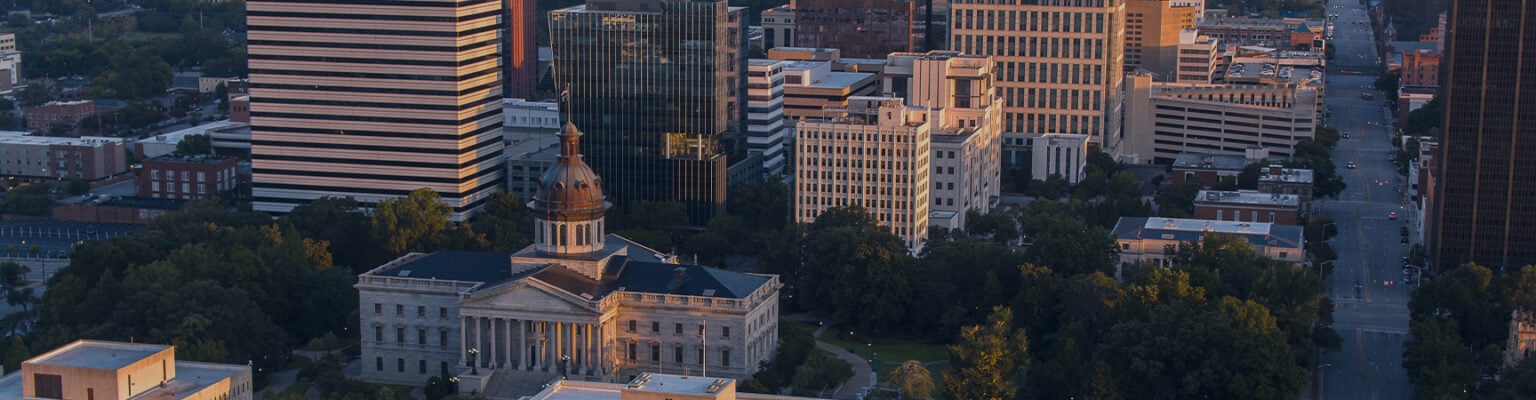
FCI Beckley at a glance
FCI Beckley is a medium-security federal prison for men in Raleigh County, West Virginia, with a minimum-security satellite camp beside it; despite the name, its street and mailing addresses are in Beaver. As of September 2026 it held 1,858 men: 1,567 in the FCI and 291 at the camp.
| Official name | Federal Correctional Institution, Beckley |
|---|---|
| BOP code | BEC |
| Security level | Medium; men |
| Population | 1,858 (as of September 2026) · 1,567 at the FCI, 291 at the camp |
| Visiting | Saturday, Sunday and federal holidays, 8:00 a.m.–3:00 p.m. · no processing after 2:00 p.m. · see visiting hours |
| Inmate mail | FCI: Inmate Name & Register Number · FCI Beckley · Federal Correctional Institution · P.O. Box 350 · General & Legal Mail · Beaver, WV 25813 Camp: Inmate Name & Register Number · FCI Beckley · Federal Correctional Institution · Satellite Camp · P.O. Box 350 · General & Legal Mail · Beaver, WV 25813 |
| Send money | Lockbox · Western Union (code city FBOP, DC) · MoneyGram (receive code 7932) |
| Phone | 304-252-9758 · Fax 304-256-4956 |
| Street address | 1600 Industrial Road, Beaver, WV 25813 · Raleigh County |
| Judicial district | Southern District of West Virginia |
| BOP region | Mid-Atlantic |
| Designated capacity | 2,029 · 1,645 at the FCI, 384 at the camp |
| Housing | Eight units: six with multiple-occupancy cells, two open-bay dormitories |
| Special Housing Unit | Yes · 72 segregation cells |
| Medical care level | Care Level 2 |
| Mental health care level | Care Level 2 |
| RDAP | Yes |
| UNICOR | Yes · office chairs |
| Camp | Minimum-security satellite camp for men, adjacent to the FCI |
On this page
The institution is in the Bureau’s Mid-Atlantic Region, and it is where BRAVE, the Bureau’s residential program for young men early in a first federal sentence, began; the Bureau’s State of the Bureau report for 1999 called it the Beckley Responsibility and Values Enhancement program.

Is FCI Beckley in Beckley or in Beaver?
FCI Beckley is in Beaver. The Bureau’s roster places it at 1600 Industrial Road, Beaver, WV 25813, in Raleigh County, and prisoner mail goes to a Beaver post office box. Two state-run facilities in the same county are easy to confuse with it:
- The Southern Regional Jail and Correctional Facility, run by the West Virginia Division of Corrections and Rehabilitation, is at 1200 Airport Road in Beaver, with the same ZIP code and the same Interstate 64 exit, 125B. The Division says it was built in 1994.
- The Beckley Correctional Center and Jail, at 111 S. Eisenhower Drive in the city of Beckley, is a minimum-security community correctional facility. The Division says it was “Established in 1974 as Beckley Work Release Center,” renamed in 1997, and “expanded into the Jackie Withrow hospital in March of 2011.”
That history belongs to the state center. The federal prison “was activated in 1995,” according to the DC Corrections Information Council’s 2018 report. The road has two names in Bureau paper as well: Industrial Road on the roster, and Industrial Park Road in the visiting supplement, the 2025 PREA audit and the Bureau’s 2005 State of the Bureau report.
FCI Beckley stands alone, outside any complex, and its camp has no separate roster entry. The Bureau’s roster lists seven West Virginia institutions, two of them inside the Hazelton complex:
| Institution | Code | Security level on the roster | Town |
|---|---|---|---|
| FPC Alderson | ALD | Minimum; a women’s camp | Alderson |
| FCI Beckley | BEC | Medium, with a camp | Beaver |
| FCI Gilmer | GIL | Medium, with a camp | Glenville |
| FCI Hazelton | HAF | Medium, with a secure female facility; part of FCC Hazelton | Bruceton Mills |
| USP Hazelton | HAZ | High, with a camp; part of FCC Hazelton | Bruceton Mills |
| FCI McDowell | MCD | Medium, with a camp | Welch |
| FPC Morgantown | MRG | Minimum; a men’s camp | Morgantown |
The Bureau’s July 1, 2026, closure announcement names no West Virginia prison for closure; its only West Virginia change is that FPC Morgantown “will transition” from a minimum-security camp to a federal satellite low (FSL). In 2017 the council also found Beckley’s Discipline Hearing Officer rotating to FCI McDowell and FPC Alderson. See federal prisons in West Virginia and the Bureau’s Mid-Atlantic Region.
What is the security level at FCI Beckley?
FCI Beckley is a medium-security institution, and its satellite camp is minimum security; the 2025 PREA audit calls the arrangement “Medium-In, Minimum-Out.” Men arrive through the Bureau’s designation process, governed by its security designation rules, Program Statement 5100.08, which scores security points and then applies Public Safety Factors and Management Variables, so the score alone does not settle where a man goes.
Distance counts too. In its April 2018 reply to the DC Corrections Information Council, the Bureau quoted Program Statement 5100.08 for the rule that placement within 500 miles of a person’s release area is “reasonable, regardless of whether there may be an institution closer.” The council, which monitors people convicted under the D.C. Code, put Beckley about 302 driving miles from Washington.
The 2025 PREA audit lists 18 buildings, eight housing units (six with multiple-occupancy cells and two open-bay dormitories) and 72 segregation cells. In August 2017 the council recorded a rated capacity of 1,127 against a population of 1,486, with 128 beds in each general housing unit; the audit’s 2025 figure of 2,029 is a designated capacity, a different measure.
The camp is filling. Its average daily population was 115 in the twelve months before the July 2025 audit, the audit questionnaire recorded 138, the Bureau’s facility page showed 223 in June 2026, and 291 men were held there as of September 2026, against a designated camp capacity of 384 in 2025.
Who are the notable inmates at FCI Beckley?
The notable recent prisoner at FCI Beckley is Marshand Crisler, the former sheriff of Hinds County, Mississippi; listings that place James Charles Kopp, Steven E. Warshak or Eric Dewayne Boyd here are out of date.
- Marshand Crisler was sentenced in February 2025 to 30 months “for soliciting and accepting bribes and for knowingly providing ammunition to a convicted felon,” according to the U.S. Attorney’s Office for the Southern District of Mississippi. WLBT reported in August 2026 that he served 16 months at FCI Beckley before release to community confinement, and the Bureau’s Inmate Locator lists him (56429-510) under the Residential Reentry Management office in Montgomery, Alabama, with a projected release date of November 24, 2026.
- James Charles Kopp (11761-055), serving life, is at FCI Mendota in California.
- Steven E. Warshak (04431-061) was released on June 14, 2016.
- Eric Dewayne Boyd (31710-074), once said to be serving 18 years here, left Bureau custody on June 9, 2022; his locator record names FCI Yazoo City Low II as his last institution.
Aaron Hubbard, charged in a 2026 drone-smuggling indictment and presumed innocent, appears in the news section below, and the Leibelson civil-rights case appears with the court record.
How do I find someone at FCI Beckley?
To find someone at FCI Beckley, search the Bureau’s Inmate Locator by eight-digit register number, or by first and last name. A man held here appears as “Beckley FCI,” the name on the Bureau’s roster, while an entry such as “Montgomery RRM” means the Bureau is supervising the person from that Residential Reentry Management office rather than holding him in a prison. The name search rejects a last name on its own and can miss hyphenated or two-part surnames, so try each part and treat an empty result as a reason to keep looking. If the locator and what you have been told disagree, call the institution at 304-252-9758.
How do I write to someone at FCI Beckley?
Letters to a man at FCI Beckley or its camp go to P.O. Box 350, Beaver, WV 25813, and the camp’s address block adds a “Satellite Camp” line. These are the blocks the Bureau lists for FCI Beckley:
| For a man at the FCI | For a man at the satellite camp |
|---|---|
| Inmate Name & Register Number FCI Beckley Federal Correctional Institution P.O. Box 350 General & Legal Mail Beaver, WV 25813 | Inmate Name & Register Number FCI Beckley Federal Correctional Institution Satellite Camp P.O. Box 350 General & Legal Mail Beaver, WV 25813 |
The “General & Legal Mail” line is part of the Bureau’s block: ordinary and legal mail share Box 350, while P.O. Box 1280 is for staff. The 2021 handbook asks senders to add the man’s housing unit beside his register number. At the FCI, softcover publications must come from the publisher, a book club or a bookstore; at the camp, a minimum-security facility, softcover books and magazines may come from any source, and hardcover books and newspapers must come from those three sources at both. There is no mail service on weekends or holidays, packages need prior authorization, and general mail is forwarded for 30 days after a man leaves.
Legal mail must identify the sender as an attorney and be marked “Special Mail – Open only in the presence of the inmate”; the handbook makes it the prisoner’s job to tell his lawyer. See our page on attorney-client communications and the Bureau’s correspondence rules.
Beckley has tightened mail before. The council reported that in June 2017 the institution banned cards, colored envelopes and paper, crayon and marker, and anything with an odor or discoloration, after two staff assaults it believed were connected to illicit substances. The Bureau later told senators, in answers following a September 13, 2023, oversight hearing, that Beckley and USP Canaan had hosted a pilot that scanned postal mail off-site, with legal mail excluded, and that the pilot “successfully concluded on June 30, 2021.” Ask the mailroom whether Beckley scans mail now before sending anything irreplaceable. See writing to someone in federal prison.
How do I send money to someone at FCI Beckley?
Money for someone at FCI Beckley goes through the Bureau’s national system, by MoneyGram, Western Union or mail to the Des Moines lockbox, not through the prison, and the visiting supplement says none can be deposited during a visit. The Bureau’s Send Money page gives these instructions:
| Method | What to enter |
|---|---|
| MoneyGram | Company: Federal Bureau of Prisons; city and state: Washington, DC; receive code 7932; account number: the eight-digit register number followed by the last name, as in 12345678DOE. Online transfers of up to $300 require a Visa or MasterCard credit card. |
| Western Union | Code city FBOP, DC; attention line: the committed name; by telephone at 1-800-634-3422 (option 2) or through the Send2Corrections website or app. |
| Mail to the lockbox | Federal Bureau of Prisons / committed name / eight-digit register number / Post Office Box 474701 / Des Moines, Iowa 50947-0001. Money orders, U.S. government checks, certified or cashier’s checks and bank drafts only; no cash or personal checks. |
Electronic transfers sent between 7:00 a.m. and 9:00 p.m. Eastern post within two to four hours; later ones post at 7:00 a.m. the next morning. Money orders other than U.S. Postal money orders, and checks other than government checks, are held for 15 days, and foreign instruments for 45. The Bureau takes deposit questions at 202-307-2712.
The $460 commissary ceiling, discussed below, limits what money can buy, and the 2021 handbook holds a man who refuses the Inmate Financial Responsibility Program to $25 a month, with no UNICOR job and no pay above maintenance. See how to send money to a federal inmate.
What are the visiting hours at FCI Beckley?
Social visiting at FCI Beckley and its camp runs from 8:00 a.m. to 3:00 p.m. on Saturdays, Sundays and federal holidays, and no visitor is processed in after 2:00 p.m. That schedule comes from visiting supplement BEC-5267.09c, signed by Warden D. L. Young on April 23, 2020, which replaced the June 2018 version. Processing pauses during counts, and the supplement warns that visiting “may be modified or suspended based on the needs of the institution” and that “Visitors traveling to the facility do so at their own risk.” See our visitation guide and the Bureau’s visiting regulations, Program Statement 5267.09.
Other Beckley documents print a different week. The visitor letter attached to the 2021 handbook, in both languages, gives hours of 8:15 a.m. to 3:15 p.m. on Saturday, Sunday, Monday and federal holidays, with a 1:30 p.m. cutoff at the camp, and the DC Corrections Information Council recorded Monday visiting in August 2017. The supplement controls, because the Bureau’s Beckley page posts it as the institution’s official visiting policy. The letter lists U.S. Air and Northwest among the airlines serving Charleston, where the 2020 supplement lists Delta, United and American, so at least part of its text is older, although its Tuesday slots for segregation visits match the supplement. Plan on weekends and holidays, and call before counting on a Monday; listings that add Monday to the supplement’s hours mix the two documents.
Men in administrative detention or disciplinary segregation get video visits on Tuesdays only, by appointment, in three two-hour slots starting at 8:15 a.m., 10:35 a.m. and 12:55 p.m.; the council was told in 2017 that these visits were on Mondays. See our guide to video visiting.
Each man receives eight visiting points a month: a weekday visit costs one and a weekend or holiday visit two, and the supplement says the camp does not ordinarily use the point system. Under the 2020 supplement the FCI visiting room holds 180 and the camp room 120, and when a room passes safe capacity, visits end first for men who have used the most points, with staff weighing how local the visitors are, how often they come and how far they travel.
The supplement also says the Bureau “is not liable for travel and other costs” when visiting changes. In July 2024, WVNS reported that a member of an informal Beckley family group had paid for airfare and a hotel only to have her visit canceled once she arrived, and that she was not reimbursed; a Bureau spokesperson, Scott Taylor, told the station that regulations were followed. Since August 1, 2023, national policy has required staff to make all reasonable efforts to notify families, defense counsel, local courts and the public when a significant or disruptive event restricts legal or social visiting; the Bureau’s legal activities rules, Program Statement 1315.08 (2026), now carry that duty (at 11–12). The April 2020 supplement predates it and sets out no such procedure.
Who can visit, and how many
The approved list may include immediate family (mother, father, step-parents, foster parents, brothers, sisters, spouse and children) and up to ten friends and associates, who ordinarily must have known the man before his incarceration; former prisoners and their relatives may visit only “Rarely,” with the Warden’s prior approval. A visitor already on another prisoner’s list needs the Warden’s approval. Men request additions through their counselor at least three weeks ahead, and visitors complete the form the supplement calls BP-629.
- No more than five visitors at a time, children included, although an exception may be granted on a written request to the Unit Manager; ordinarily only one split-visit exchange is allowed per day.
- Children under 16 must come with an adult family member, and visitors aged 16 or 17 without a parent, guardian or adult immediate family member need written approval.
- Companions who are not approved may not wait in the parking lot; they must leave the grounds.
- Men in admission and orientation or holdover status may see only immediate family whose relationship can be verified in the presentence report.
What visitors can wear and bring
The supplement bars bare feet (babies included), open-toe shoes, flip-flops, backless slip-ons and sandals; shorts, miniskirts, camouflage, spandex, sleeveless or strapless tops, sweat pants, hooded jackets, hats, bandanas and scarves; medical scrubs or anything resembling a staff uniform; and clothing, boots or shoes that resemble a prisoner’s uniform, meaning khaki pants and shirts at the FCI and green pants and shirts at the camp. Khaki or green clothing that does not resemble the uniform is allowed.
Visitors may bring a clear plastic purse no larger than eight inches in height and width, a reasonable amount of money, a comb, baby bottles and baby food, two diapers and one change of baby clothes, a sweater, heart medication and jewelry normally worn; any other medication needs approval from the operations lieutenant and front lobby officer on duty. No food may be brought in. Phones, watches and handbags stay in a locker or the car, and firearms must leave the grounds entirely. The camp ordinarily allows baby carriers that can be searched, and both rooms have toy areas. Affection is limited to the start and end of a visit, and no written messages or photographs may change hands.
Identification and screening
Adults need a valid driver’s license or state identification card; other official identification is at the supervisor’s discretion. Visitors complete the Title 18 form, pass through a walk-through metal detector and may also be checked with a hand-held one, and a visitor with a medical implant must show a medical card. Staff may search visitors, including random selections directed by the Special Investigative Services lieutenant, and a breathalyzer test needs approval from the Warden, the acting Warden or the administrative duty officer. The supplement still cites a superseded ion spectrometry program statement; in 2017, two of the eleven council respondents who explained their visiting problems said a visitor had been turned away after an ion scan. See searches and contraband.
Legal visits
Attorneys arrange visits in advance with the client’s Unit Manager, bring a bar card or other proof of licensure and a photo driver’s license, and complete the Visiting Attorney Statement, form BP-S241.013. A paralegal also needs a Paralegal or Legal Assistant Confirmation Form (BPS242.013) and an Application to Enter Institution as Representative (BPS243.013), reviewed by the unit team. Legal papers should be mailed in rather than handed over unless the Unit Manager approves, and the handbook says legal visits are subject to visual but not audio monitoring. Program Statement 1315.08 requires alternative legal access arrangements once a disruptive event lasts more than 24 hours; see inmate legal activities.
Getting there
Use Interstate 64, Exit 125B, the Airport Road exit. From Lewisburg, the supplement says, take I-64 west to Exit 125B, turn right onto Industrial Road and follow the signs to the FCI or the camp; from Charleston, take I-77 south to I-64 east; from Bluefield, take I-77 north to I-64 east. The state’s Southern Regional Jail is also on Airport Road, so read the entrance sign before turning in. The Bureau’s 2005 State of the Bureau report put the prison about 51 miles southeast of Charleston and 136 miles northwest of Roanoke, Virginia, and the 2020 supplement lists Charleston’s Yeager Airport and a Greyhound station on Prince Street in Beckley; confirm both before booking.
How do phone calls and email work at FCI Beckley?
Each man at FCI Beckley may use up to 510 telephone minutes a month under the Bureau’s telephone regulations, Program Statement 5264.09, issued September 3, 2026: 300 of them free for men eligible for First Step Act telephone incentives, and 210 more that any man, eligible or not, may buy once he has used up the first 300. A single call should generally not exceed 15 minutes, the Warden sets the wait between completed calls at no less than 30 minutes, and the old November and December bonus minutes no longer exist. The 510-minute cap does not apply to unmonitored legal calls.
Beckley’s 2021 handbook predates that statement. Its allowance of 300 minutes a month, plus 100 in November and December, is superseded, and its 45-minute wait between calls may or may not survive now that the Warden sets the interval above a 30-minute floor. The handbook allows up to 30 numbers, collect calls to domestic numbers, and international calls by debit only unless the other party has a prepaid account, and says telephone credit cannot be moved back to a commissary account. Each housing unit, or “quad,” has five phones, available from 6:00 a.m. to 11:30 p.m., but during most weekday work hours the handbook’s schedule leaves only one phone per quad switched on.
Calls to a lawyer whose number is on a man’s regular list are monitored; for an unmonitored call he must show the unit team a need, “such as an imminent court deadline.” See federal inmate phone calls.
Email runs through TRULINCS and CorrLinks, text only and billed by the minute. On July 8, 2026, the Bureau announced a new tablet contract whose rollout “will occur in phases,” with no date given for Beckley. See CorrLinks and TRULINCS and tablets in federal prison.
What can people buy at the FCI Beckley commissary?
A man at FCI Beckley may spend up to $460 a month at the commissary. That is the national ceiling in the Bureau’s trust fund rules, Program Statement 4500.13, issued May 7, 2026, which raised it from $360; the limit rises by $50 during the November–December holiday period, for no more than one validation period (PS 4500.13 at 28). The statement excludes only a short list of items from the ceiling, among them postage stamps, over-the-counter medications, copy cards, footwear and a secured media device; telephone credit is not on that list, so it counts toward the $460. See our commissary page.
Beckley’s own commissary sales list (2025), signed by Warden W. Holzapfel, prints no dollar limit at all. It marks stamps, copy cards, vitamins and pharmaceuticals as not affecting the spending limit, but it lists a tablet at $137.80 without that mark. The 2026 statement now excludes a “secured media device,” and neither document says whether the tablet on Beckley’s list is one, so ask before counting on the exclusion.
Older Beckley figures are obsolete: the 2021 handbook’s $320 a month, revalidated at $160 on the 1st and the 15th, and the $340 the council recorded in 2017. Listings that give $360 are out of date; that figure was superseded in May 2026. The handbook’s $100 cap on athletic shoes is also below the $150 the national statement now allows.
The 2025 list sets per-order limits and prices, including these:
| Item | Price or limit on the 2025 list |
|---|---|
| Postage stamps | $.73 each; limit 20 |
| Photocopy cards | $2.60; limit 2 |
| Soups | Limit 24 in total |
| Meats, fish and chicken | Limit 24 of each |
| Rice, beans and tortillas | Limit 10 of each |
| Soda | Limit 2 in total |
| Candy bars | Limit 10 of each |
| Tablet | $137.80 |
| G-Shock watch | $73.95 |
| Wind-up radio | $66.95 |
| Boots | $77.95 |
| Typewriter ribbon | $7.29; Swintec ribbon $7.65 |
The list warns that all sales are final once a man leaves the window and that items marked (R) may be bought while on restriction, one of each. Under the 2021 handbook, UNICOR workers shop Monday through Wednesday from 6:30 to 7:15 a.m., and others shop Monday through Thursday after the morning census, in a housing-unit order that rotates monthly.
What programs are available at FCI Beckley?
The Bureau’s First Step Act Approved Programs Guide, August 2026 edition, names FCI Beckley in the entries for three programs: BRAVE, which began here, Federal Prison Industries, and the Residential Drug Abuse Program, whose location list is on page 29. Most other programs in the guide carry only the line “May be offered at all BOP institutions,” which is permission rather than proof that a class meets here, so ask the unit team in writing what is running.
BRAVE, the program that began here
The guide describes BRAVE as a cognitive behavioral, residential program for younger men on their initial designation, usually completed over six months of half-day sessions and credited with 350 hours. The Bureau’s 1999 State of the Bureau report described it as “Housed at FCI Beckley, West Virginia” and gave its original name, the Beckley Responsibility and Values Enhancement program; the guide now calls it the Bureau Rehabilitation and Values Enhancement program. The council’s 2018 report says BRAVE started in 1998, and staff told the council it began in response to the closing of the Lorton Reformatory, when Beckley was expected to absorb many District of Columbia prisoners.
Since November 1, 2021, the guide says, a man must be 40 or younger, have at least 36 months left to serve, be on his first Bureau commitment and be within the first 18 months of his sentence; Beckley’s 2021 handbook still prints the older limits of 32 years and 60 months and places the unit on Oak A Lower. The guide’s narrative entry lists six locations, Beckley first, while its by-institution table marks five, leaving out FCI Yazoo City Low II.
The evidence on results is mixed. In 1999 the Bureau reported preliminary findings that graduates were 55 percent less likely than comparable men to have sustained misconduct charges, but a May 12, 2025, study by its Office of Research and Evaluation, covering Beckley participants from 2008 to 2014, found that “BRAVE participation did not have a statistically significant effect on misconduct or recidivism”; it reported post-release arrests for 37.19 percent of participants and 31.05 percent of the comparison group, a gap its recidivism model did not find statistically significant (hazard ratio 1.234, p = .066). Staff told the council in 2017 that 30 to 40 percent of participants failed the program.
RDAP and drug treatment
The residential drug abuse program list in the August 2026 guide, headed “57 RDAPS at 50 Locations,” names “FCI Beckley (WV)” and gives the camp no separate entry, although it lists some other camps by name, so a camp resident should ask how Beckley handles camp participants. See our RDAP guide and the Bureau’s drug treatment program rules.
The 2021 handbook puts the program on the Poplar A Lower unit, from 8:00 to 11:30 a.m. on weekdays for nine to twelve months, with interviews scheduled by projected release date, and says eligibility for early release under 18 U.S.C. § 3621(e) is “NOT determined locally.” It also describes a drug education course of about four days, where a missed course means a failing status, maintenance pay and a 90-day wait, and a weekly nonresidential program lasting up to 24 weeks.
In August 2017 the residential program had 116 participants against a goal of 120 plus eight mentor beds, with about 60 men waiting, and staff said a detainer disqualified a man because he could not finish the last phase in a residential reentry center. That was a 2017 staff statement, so get the current rule in writing.
Education and vocational training
The 2021 handbook lists a GED program, which requires 240 instructional hours of men without a diploma or GED, English as a second language, adult continuing education, occupational training in carpentry, electrical work, HVAC and forklift certification, and apprenticeships ranging from teacher’s aide to upholsterer. Correspondence college courses are allowed at the prisoner’s own expense if they lead to a degree; the guide’s list of 16 post-secondary sites does not include Beckley. See education in federal prison and vocational training.
The Bureau’s April 2018 reply to the council described courses in building trades, HVAC and major appliances, and partnerships with the Raleigh County Board of Education’s Academy of Careers and Technology and with New River Community and Technical College, whose certificates, the council was told, do not mention the prison. The same letter said a Certified Quality Improvement Associate course run with UNICOR was “pushed out to eight more institutions in the fall 2017.”
Federal Prison Industries
Beckley’s UNICOR factory makes chairs, according to both the council’s 2017 report and the Bureau’s 2025 announcement, and the August 2026 guide names Beckley among the Federal Prison Industries sites. In 2017 the council found 70 men working, 270 waiting, pay from $0.23 to $1.15 an hour, and 23 types of office chairs in production; staff said output had fallen from about 8,000 chairs a month in 2016 to 2,000, and that the factory stops during lockdowns. On June 10, 2025, the Bureau’s official X account announced FPI Beckley’s first sales order, “rolling out the very first chairs from our UNICOR assembly line,” with 93 men at work. See UNICOR jobs.
Psychology, faith and reentry
The 2021 handbook lists psychology groups in anger management, criminal thinking, trauma education and emotional self-regulation, plus Alcoholics Anonymous and Narcotics Anonymous on Monday evenings in the chapel. It says Psychology Services does not offer parenting, victim impact or Life Connections programs, and it contradicts itself on whether psychology holds an open house. See mental health programs.
Jum’ah prayer is at 1:00 p.m. on Fridays in the chapel. The handbook says a chaplain relays a family death or hospitalization only after the family calls with information staff can verify, and it urges men to keep some money and phone minutes in reserve each month for emergencies. See religious programs.
For release, the handbook tells men to secure two forms of identification, including a Social Security card. On April 24, 2026, the Bureau featured Jeremiah Nelson, released in 2008, who now volunteers at FCI Beckley, “the same prison where he was once incarcerated,” mentoring men preparing for reentry. See release preparation.
What is daily life like at FCI Beckley?
The day at FCI Beckley starts with a 6:00 a.m. wake-up and has official counts at 4:00 p.m. and 10:00 p.m. every day, under the schedule in the 2021 handbook, the most recent published local schedule; confirm any time that matters with the unit team. These are its fixed points:
| Time | What happens, per the 2021 handbook |
|---|---|
| 6:00 a.m. | Wake-up; telephones switch on |
| 7:30 a.m., weekdays | Beds made; FCI men in khaki until 3:30 p.m. and camp men in green until 4:00 p.m., Monday through Friday |
| Meals | Units go to the dining hall in an order set by weekly sanitation ratings |
| 10:00 a.m., weekends and holidays | Official count |
| 4:00 p.m., every day | Official count; the next day’s callouts are posted afterward |
| 10:00 p.m., every day | Official count |
| 11:00 to 11:30 p.m. | Telephones off; the handbook’s phone schedule ends at 11:00 p.m., while its text allows calls until 11:30 p.m. |
Movement is controlled in ten-minute windows, and at the FCI clothing is exchanged, Monday through Thursday, on a day set by the last two of the first five digits of the register number. The FCI’s housing units are named Oak, Pine and Poplar, and the institution is tobacco free. See inmate counts.
Recreation includes team leagues, wellness classes, hobby craft and music. Movies run on Friday and Saturday evenings and on weekend afternoons, and the handbook lists in-house radio frequencies for R&B (87.7), Spanish (90.1), rap (99.1) and rock (104.1). In 2017 the council found recreation open 14 hours on weekdays and a library of 5,000 to 8,000 books with interlibrary loans through the City of Beckley’s public library; Program Statement 1315.08 no longer requires institutions to keep a physical law library. See recreation and law libraries.
The handbook’s two language editions disagree on sick-call days: Monday through Thursday in English, but Monday, Tuesday, Thursday and Friday in Spanish, as in the Bureau’s 2018 letter to the council. Camp sick call is 6:30 to 6:45 a.m., Monday through Thursday, and the copay is $2. The council reported in 2017 that Beckley was a care level 2 institution for medical and mental health care, and the Bureau’s care-level charts released in 2024 still list it at level 2 for both. The 2025 PREA audit says medical staff are on site from 6:00 a.m. to 10:00 p.m. and on call overnight. See medical care, care levels and the Bureau’s medical designation rules.
Weather can stop the routine. During the council’s August 2017 visit, a “fog restriction” delayed the morning count, and the council reported that such restrictions keep all inmates confined to their units.
What do inspectors say about conditions at FCI Beckley?
The DOJ Office of the Inspector General has not conducted an on-site inspection of this facility. Beckley’s outside record comes instead from Inspector General work that used its data, the DC Corrections Information Council’s 2017 visit, the Bureau’s Prison Rape Elimination Act audits, a 2026 report by the Government Accountability Office, a criminal case against an officer, and civil and habeas litigation.
Inspector General data on cancer screening
In May 2025 the Inspector General published Report 25-057, an evaluation of the Bureau’s colorectal cancer screening. Its fieldwork, from April to September 2024, included video teleconference interviews with Bureau employees at 14 facilities, FCI Beckley among them, chosen to represent a range of regions, facility types, security levels and population sizes, as well as high and low screening and refusal levels. The report’s table of April 2024 data shows Beckley with an average-risk population of 297 men, 95 percent of them with a current screening offer, 1 percent of those offered refusing, and 93 percent with a current screening.
Other Inspector General products name Beckley as well, among them two that report answers from its staff. A February 2023 evaluation of sexual harassment and assault by prisoners against staff (Report 23-034) lists FCI Beckley with 18 employees who reported such harassment in its fall 2019 staff survey, although the evaluation’s site visits were to other prisons. The interactive results of a 2021 staff survey on the pandemic (Report 21-126) show about 80 percent of the Beckley employees who answered a question on the pandemic’s personal impact reporting increased stress; the office does not publish how many answered.
DC Corrections Information Council, 2017
The council inspected FCI Beckley on August 1 and 2, 2017, and reported on April 6, 2018. Its figures come from District of Columbia residents who volunteered, 24 of whom were interviewed, and the Bureau noted that fewer than 20 percent of the D.C. men at Beckley took part. Among its findings:
- 16 of 19 respondents named staff behavior as the most negative thing about Beckley, 18 of 20 said staff treated D.C. residents worse, and 13 of 20 reported abuse, harassment or threats by staff, mostly insulting or discriminatory remarks; none of 15 reported physical or sexual abuse.
- 13 of 20 lacked access to grievance forms and 10 of 19 to request-to-staff forms, and 8 of the 15 who explained why they avoided grievances cited staff retaliation.
- 14 of 18 called access to medical and dental care inadequate, and staff put the dental wait at about ten months for a cleaning and one to two years for fillings.
- From July 2016 through June 2017 the institution recorded four lockdowns, one natural death, no suicides or homicides, 23 assaults on prisoners, 10 assaults on staff and 26 uses of force.
- From June 2016 through May 2017, no facility-level grievance (BP-9) was granted; two appeals were granted at the regional level and two at the national level.
Among its 16 recommendations, the council urged staff professionalism training, more medical and dental staff, easing the 2017 mail restrictions, grievance forms in every unit, and transferring D.C. residents to prisons closer to home once they are within two years of returning to the District. The Bureau replied that the findings rested on a small percentage of D.C. prisoners, that Beckley was hiring another registered nurse and working toward two contract dentists, and that Beckley “is now using the parole eligibility date for program enrollments for DC inmates.” See prison grievances and the administrative remedy program.
PREA audit, July 2025
Lori Fadorick of Corrections Consulting Services LLC audited FCI Beckley under the Prison Rape Elimination Act, on site July 15–17, 2025; her final report is dated August 31, 2025. She found all 45 applicable standards met, none exceeded or unmet, after two corrective actions during the audit:
- Comprehensive PREA education, standard 115.33: of 45 prisoners interviewed, 23 received it more than 30 days after arrival and 5 had no record of it, and there was no tracking system. Documentation of the fix arrived on August 19 and 22, 2025.
- Screening and reassessment, standard 115.41: nine of the 45 had their first team meeting, where reassessment happens, after 30 days, and most did not recall being asked about their safety. Bureau policy sets the initial team meeting within 28 days, and training and tracking followed.
In the twelve months before the audit, the institution recorded nine sexual abuse allegations, five naming prisoners and four naming staff, and five sexual harassment allegations, all naming staff. None was substantiated, and the auditor did not review four staff investigations that were still open. On July 15, 2025, the first day on site, the institution housed 1,705 men, and 113 of them had disclosed prior sexual victimization.
Correctional services had 87 percent of positions filled and the institution 90 percent overall, with non-custody staff augmenting shifts. The report is inconsistent about forensic examinations: page 54 lists four hospitals (Beckley Appalachian Regional Healthcare Hospital, Charleston Area Medical Center, Raleigh General Hospital and Princeton Community Hospital), page 56 says “one of three local hospitals,” and on page 134 the health services administrator names only Raleigh General and Beckley Appalachian Regional, whichever has a sexual assault nurse examiner available. Staff had tried repeatedly, without an answer, to renew an agreement with the local rape crisis center. The previous audit was on site November 15–17, 2022. See PREA in federal prisons.
GAO allegation counts
GAO-26-107343, the Government Accountability Office’s May 5, 2026, report on sexual abuse in federal prisons, counts Beckley allegations for 2020 through 2024: 25 naming an incarcerated perpetrator, by year of the incident (Table 7), and 43 naming a Bureau employee, by year of the report (Table 8). The tables come from different systems and cannot be added together. These are allegations, not findings; GAO notes that most allegations nationally from 2014 through 2022 ended unsubstantiated, meaning the evidence could not show whether they occurred, which is not the same as false, and its counts are not adjusted for population, so they cannot rank one prison against another. See violence and sexual assault in prison.
Staffing and staff prosecutions
The staffing figures agree: 90 percent of positions filled, according to the Bureau’s spokesperson in July 2024 and the July 2025 PREA audit. Staff misconduct has also reached court. Former Beckley officer Cody Adam Bays was sentenced on May 16, 2024, to 18 months in prison; according to federal prosecutors, he supplied Suboxone, marijuana, synthetic marijuana and tobacco to prisoners between November 2022 and February 2023, earned $20,800, and suffered a serious overdose after sampling fentanyl he had tried to smuggle in. The Inspector General’s office, which investigated, describes only the Suboxone.
In the courts
In Leibelson v. Samuels, a transgender woman held at Beckley from November 2013 to March 2014 alleged, among other claims, that an officer sexually assaulted her during a strip search. On December 27, 2017, the Southern District of West Virginia denied summary judgment on her Eighth Amendment claim against that officer, citing disputed facts, and on a claim against a captain, and granted it on her other claims; a Bureau special investigative agent had found the allegations not sustained. In an unpublished decision of February 22, 2019, the Fourth Circuit dismissed the officer’s appeal for lack of jurisdiction, vacated the ruling that had revived an abandoned claim against the captain, and remanded. After court-ordered mediation in May 2019, the district court entered an order dismissing the case on July 2, 2019; the available docket entries do not say on what terms.
First Step Act petitions from Beckley often turn on exhaustion. In Parrish v. Young (July 19, 2022), the petitioner said Beckley was on lockdown from March 7 to March 24, 2022; the court considered his late objections but held that he had not exhausted his administrative remedies, and that his petition, filed in July 2021 before the Bureau was required to award the credits, was premature. In Parrish v. Heckard (September 5, 2023), the court applied the rule that a prisoner claiming the process was unavailable must “adduce facts showing that he was prevented, through no fault of his own,” from using it, and held that credits reach prerelease custody only for a man rated minimum or low risk on his last two reassessments or whose petition the warden has approved.
Compassionate release works differently. In United States v. Mosley (D. Alaska June 26, 2024), a Beckley prisoner’s request to the Warden went unanswered, and the court treated the lapse of more than 30 days as exhaustion before denying the motion on its merits.
FCI Beckley in the news
Recent news about FCI Beckley centers on contraband: guilty pleas by two prisoners caught with drugs, a drone-smuggling indictment and a reported gun on the property. Older items concern altercations among prisoners, family complaints, a death after an altercation and weapons sentences. Newest first:
- August 26, 2026: Federal prosecutors in the Southern District of West Virginia announced that Quantel Saunders, 31, had pleaded guilty to possessing contraband after staff searched him following a visit on October 13, 2024, and found THC and cocaine.
- August 13, 2026: The same office announced that Travis Jerome Darden, 45, had pleaded guilty after a random pat search on October 21, 2025, turned up suspected methamphetamine and cocaine; sentencing was set for December 4, 2026.
- June 24, 2026: Prosecutors in the Middle District of Georgia unsealed an indictment of twelve people in an alleged drone-smuggling conspiracy accused of making at least 38 drops into ten federal prisons, FCI Beckley among them, between September 2023 and May 2026. One defendant, Aaron Hubbard, 37, is described as a Bureau prisoner at FCI Beckley. Everyone charged is presumed innocent.
- March 18, 2026: WVNS reported the Bureau’s statement that on March 12 the institution received information that a gun “may have been introduced onto the property of FCI Beckley,” that the Warden placed it on modified operations for a detailed search, and that no firearm had been located.
- October 17, 2025: WVNS reported the Bureau’s statement that several altercations among prisoners that day were “contained and isolated by employees.”
- July 30, 2024: WVNS reported complaints from an informal family group about lockdowns, visiting, mail and medical care, along with the Bureau’s response.
- January 1, 2024: WVNS published the Bureau’s account that on December 31, 2023, employees found Andrew Davis, 39, injured after a “perceived altercation” with another incarcerated individual, and that he was taken to a local hospital “where he was pronounced dead by hospital personnel.” The Bureau’s Inmate Locator records his death that day; the facility code in his record is BEC.
- November 16, 2023: Federal prosecutors in the Southern District of West Virginia announced consecutive sentences of a year and a day to 15 months for four Beckley prisoners caught with homemade weapons between December 2022 and April 2023.
Frequently asked questions about FCI Beckley
Which town is FCI Beckley actually in?
Beaver, West Virginia. The Bureau lists FCI Beckley at 1600 Industrial Road, Beaver, WV 25813, in Raleigh County, and prisoner mail goes to P.O. Box 350 in Beaver. The Beckley Correctional Center and Jail, in the city of Beckley, and the Southern Regional Jail, on Airport Road in Beaver, are state facilities.
What security level is FCI Beckley?
Medium, with an adjacent minimum-security satellite camp; the 2025 PREA audit calls the arrangement “Medium-In, Minimum-Out.” Men reach Beckley through the Bureau’s designation process under Program Statement 5100.08, which scores security points and then applies Public Safety Factors and Management Variables, so the score alone does not settle where a man goes.
How many men are held at FCI Beckley?
As of September 2026, 1,858: 1,567 at the FCI and 291 at the camp. The 2025 PREA audit gave a designated capacity of 2,029, with 1,645 at the FCI and 384 at the camp. The camp is filling; the 2025 audit questionnaire had recorded 138 men there.
What is the mailing address for FCI Beckley?
For the FCI: the man’s name and register number, FCI Beckley, Federal Correctional Institution, P.O. Box 350, General & Legal Mail, Beaver, WV 25813. For the camp, add Satellite Camp after Federal Correctional Institution. At the FCI, publications must come from the publisher, a book club or a bookstore; at the camp, paperbacks and magazines may come from any source, but hardcover books and newspapers still need one of those three.
When can families visit FCI Beckley?
On Saturdays, Sundays and federal holidays, 8:00 a.m. to 3:00 p.m., with no processing after 2:00 p.m., under visiting supplement BEC-5267.09c (2020). Men at the FCI have eight visiting points a month (the camp does not ordinarily use points), and no more than five visitors may come at once. Segregation video visits are on Tuesdays by appointment. Call 304-252-9758 before you travel.
Is there visiting on Mondays at FCI Beckley?
Not under the April 2020 supplement, which controls, although the visitor letter attached to the 2021 handbook still lists Monday hours, from 8:15 a.m. to 3:15 p.m., and the DC Corrections Information Council recorded Monday visiting in 2017. Confirm with the institution before planning a Monday trip.
What is the commissary spending limit at FCI Beckley?
$460 a month under Program Statement 4500.13, which raised the national ceiling from $360 in May 2026, plus $50 for no more than one validation period during the November–December holidays. Stamps, copy cards, over-the-counter medications and footwear do not count against it; telephone credit does. The $320 limit in Beckley’s 2021 handbook is obsolete.
How many phone minutes do men at FCI Beckley get?
Up to 510 a month under Program Statement 5264.09 (2026): 300 free for men eligible for First Step Act telephone incentives, and 210 more that any man may buy after using up the first 300. A single call should generally not exceed 15 minutes. The lower allowance and holiday bonus in Beckley’s 2021 handbook no longer apply.
Does FCI Beckley have RDAP?
Yes. The residential drug abuse program list in the Bureau’s August 2026 First Step Act guide names FCI Beckley, with no separate entry for the camp. The 2021 handbook places the program on the Poplar A Lower unit, from 8:00 to 11:30 a.m. on weekdays for nine to twelve months, with interviews scheduled by projected release date.
What is the BRAVE program at FCI Beckley?
A six-month residential cognitive behavioral program for younger men on their initial designation. It began at Beckley as the Beckley Responsibility and Values Enhancement program, and since November 1, 2021, it has taken men 40 or younger with at least 36 months left to serve, on a first Bureau commitment and within the first 18 months of the sentence.
Has the Inspector General inspected FCI Beckley?
The DOJ Office of the Inspector General has not conducted an on-site inspection of this facility. Its May 2025 cancer-screening evaluation used Beckley data and video interviews with employees, the DC Corrections Information Council inspected in August 2017, and a PREA auditor was on site July 15–17, 2025.
Is FCI Beckley closing?
No Bureau announcement says it is. The Bureau’s July 1, 2026, closure announcement does not name Beckley, and the institution remains on the Bureau’s roster. The only West Virginia change in that announcement is FPC Morgantown’s planned transition from a minimum-security camp to a federal satellite low.
Problems at FCI Beckley: where we can help
Beckley’s own records point to a handful of problems that recur here, and each has a deadline or a paper trail that matters.
- Late team meetings. The 2025 PREA audit found first team meetings and safety reassessments held after the 30-day mark, and program and custody decisions start at that meeting. Ask the unit team in writing when it will happen; we can help frame the request.
- First Step Act credits. As Parrish v. Heckard shows, a Beckley petition in the Southern District of West Virginia turns on exhaustion and on the risk-level and warden-petition conditions of 18 U.S.C. § 3624(g), so we build the administrative record first. See First Step Act time credits, our First Step Act credit reviews and challenging a Bureau sentence computation.
- Compassionate release. A Warden’s silence past 30 days satisfied exhaustion in Mosley, and requests now run under the Bureau’s compassionate release procedures, Program Statement 5050.51, which replaced 5050.50 on September 3, 2026. See compassionate release and the request to the Warden.
- BRAVE and RDAP timing. BRAVE admits men only in the first 18 months of a sentence, and RDAP interviews follow projected release dates, so apply early and get any detainer question answered in writing. Our early release work, including RDAP advocacy, starts with those dates.
- Modified operations. After the March 2026 firearm report, the notice and 24-hour legal-access duties in Program Statement 1315.08 matter to anyone with a court deadline, and we can raise them with the institution. See lockdowns and modified operations.
- Discipline after searches. Drugs, homemade weapons and drone deliveries at Beckley since late 2022 have led to federal prosecutions, and a man facing an incident report from a search should get advice before the hearing. See disciplinary proceedings, the Special Housing Unit and protective custody.
- Medical and dental delays. The council heard in 2017 of waits of up to two years for fillings; we help families document requests and evaluate Federal Tort Claims Act claims. See also dental care.
- Halfway house placement follows the man’s release district, not Beckley’s location, so raise timing with the case manager early. See halfway houses, the Bureau’s halfway house placement procedures, home confinement and transfers.
- Challenges to the conviction or sentence itself, through a direct appeal or a § 2255 motion.
Elizabeth Franklin-Best, P.C. handles federal criminal defense, appeals and post-conviction matters nationwide, and advises families and prisoners on Bureau of Prisons designation, programming, discipline and time-credit problems at institutions across the system, including FCI Beckley and its satellite camp. Call (843) 620-1100 or contact us to talk through a specific situation.
Christopher Zoukis, JD, MBA, the firm’s Managing Director, writes and maintains the federal prison policy material on this site. He is not counsel of record; legal representation is provided by Elizabeth Franklin-Best.
Sources and currency
Bureau of Prisons documents
- FCI Beckley, Federal Bureau of Prisons, 2026. Address, contact details, mailing addresses and posted documents.
- FCI Beckley Commissary Sales List, Federal Bureau of Prisons, FCI Beckley, 2025. Prices, per-order limits and items outside the spending limit.
- FCI Beckley Admission and Orientation Handbook, Federal Bureau of Prisons, FCI Beckley, 2021. Daily schedule, telephone, commissary, programs and sick call, with the visitor letter.
- FCI Beckley Admission and Orientation Handbook (Spanish edition), Federal Bureau of Prisons, FCI Beckley, 2021.
- Visiting Regulations, Institution Supplement BEC-5267.09c, Federal Bureau of Prisons, FCI Beckley, 2020. Visiting times, points, dress, permitted items, screening, attorney visits and directions.
- Inmate Legal Activities, Program Statement 1315.08, Federal Bureau of Prisons, 2026. Notice of visiting disruptions, alternative legal access and electronic law libraries.
- Trust Fund/Deposit Fund Manual, Program Statement 4500.13, Federal Bureau of Prisons, 2026. Commissary spending limit and its exclusions.
- Compassionate Release/Reduction in Sentence Procedures, Program Statement 5050.51, Federal Bureau of Prisons, 2026. Replaced Program Statement 5050.50.
- Inmate Security Designation and Custody Classification, Program Statement 5100.08, Federal Bureau of Prisons, 2006, as amended in 2026.
- Inmate Telephone Regulations, Program Statement 5264.09, Federal Bureau of Prisons, 2026. Monthly minute allowance and call rules.
- First Step Act Approved Programs Guide, Federal Bureau of Prisons, Reentry Services Division, 2026. August 2026 edition; programs by institution, including the RDAP locations list.
- Federal Bureau of Prisons Awards Transformational Inmate Tablet Contract to Modernize Communication, Education and Rehabilitation Services, Federal Bureau of Prisons, 2026.
- Federal Bureau of Prisons Announces Facility Closures and Operational Changes, Federal Bureau of Prisons, 2026.
- Celebrating Second Chance Month, Federal Bureau of Prisons, 2026. Includes Jeremiah Nelson’s volunteer work at FCI Beckley.
- Community Ties: Sending Money, Federal Bureau of Prisons, 2026. Deposit routes, posting times and holds.
- “Big news from FPI Beckley!” (post on X), Federal Bureau of Prisons, 2025. The UNICOR factory’s first sales order.
- Evaluation of BRAVE: Brief Technical Evaluation Report, Federal Bureau of Prisons, Office of Research and Evaluation, 2025.
- Responses to Questions for the Record, Oversight of the Federal Bureau of Prisons, Federal Bureau of Prisons, 2025. Submitted to the Senate Committee on the Judiciary after its September 13, 2023, hearing; describes the Beckley and Canaan mail-scanning pilot.
- Institution Care Levels for Medical Assignment and Institutional Mental Health Care Levels, Federal Bureau of Prisons, 2024. Released under Freedom of Information Act request 2024-03455 and published by the Washington Lawyers’ Committee.
- State of the Bureau 2005, Federal Bureau of Prisons, 2006.
- State of the Bureau 1999, Federal Bureau of Prisons, 1999.
Audits and inspections
- Federal Prisons: Improvements Needed to Prevent, Detect, and Address Sexual Abuse (GAO-26-107343), U.S. Government Accountability Office, 2026. Allegation counts by institution for 2020 through 2024.
- PREA Audit Report: Federal Correctional Institution (FCI) Beckley, Lori Fadorick, Corrections Consulting Services LLC, 2025. On-site audit of July 15–17, 2025.
- Evaluation of the Federal Bureau of Prisons’ Colorectal Cancer Screening Practices for Inmates and Its Clinical Follow-up on Screenings (Report 25-057), U.S. Department of Justice, Office of the Inspector General, 2025.
- Evaluation of the Federal Bureau of Prisons’ Efforts to Address Sexual Harassment and Sexual Assault Committed by Inmates Toward Staff (Report 23-034), U.S. Department of Justice, Office of the Inspector General, 2023.
- Staff Perceptions of the Federal Bureau of Prisons’ Management of the Coronavirus Disease 2019 Pandemic: A Follow-Up Survey of BOP Staff (Report 21-126), U.S. Department of Justice, Office of the Inspector General, 2021. Interactive survey results by institution.
- FCI Beckley Inspection Report, District of Columbia Corrections Information Council, 2018. Includes the Bureau’s response.
Court records
- Inmate Pleads Guilty to Possessing Drugs at FCI Beckley, U.S. Attorney’s Office, Southern District of West Virginia, 2026. Quantel Saunders’s guilty plea.
- Inmate Pleads Guilty to Possessing Drugs at FCI Beckley, U.S. Attorney’s Office, Southern District of West Virginia, 2026. Travis Jerome Darden’s guilty plea.
- Twelve Indicted in Alleged Drone Smuggling Conspiracy at Ten Prisons, U.S. Attorney’s Office, Middle District of Georgia, 2026. The indictment naming Aaron Hubbard.
- Former Hinds County Sheriff Sentenced to 30 Months in Prison for Soliciting Bribes and Providing Ammunition to a Convicted Felon, U.S. Attorney’s Office, Southern District of Mississippi, 2025. Marshand Crisler’s sentence.
- United States v. Mosley, No. 3:17-cr-00100-TMB, ECF No. 67, U.S. District Court for the District of Alaska, 2024. Denial of a compassionate release motion.
- Former FCI Beckley Correctional Officer Sentenced to Prison for Contraband Crime, U.S. Attorney’s Office, Southern District of West Virginia, 2024. Cody Adam Bays’s sentence.
- Former BOP Correctional Officer Sentenced for Introduction of Contraband, U.S. Department of Justice, Office of the Inspector General, 2024. Cody Adam Bays’s sentence.
- Four Inmates Sentenced to Prison for Possessing Weapons at FCI Beckley, U.S. Attorney’s Office, Southern District of West Virginia, 2023.
- Parrish v. Heckard, No. 5:22-cv-00134, U.S. District Court for the Southern District of West Virginia, 2023. Docket.
- Six Inmates Plead Guilty to Possessing Weapons at FCI Beckley, U.S. Attorney’s Office, Southern District of West Virginia, 2023.
- Parrish v. Young, No. 5:21-cv-00426, U.S. District Court for the Southern District of West Virginia, 2022. Docket.
- Leibelson v. Cook, No. 18-1202, U.S. Court of Appeals for the Fourth Circuit, 2019. Unpublished decision.
- Leibelson v. Samuels, No. 5:15-cv-12863, U.S. District Court for the Southern District of West Virginia, 2017. Docket, including the summary-judgment ruling and the 2019 dismissal order.
News and other sources
- Crisler Maintains Innocence, Vows to Expose System After Being Released on Home Arrest, WLBT, 2026.
- Information Released About Gun Allegedly Being on the Property of FCI Beckley, WVNS 59News, 2026.
- Beckley Correctional Center and Jail, West Virginia Division of Corrections and Rehabilitation, 2026.
- Southern Regional Jail and Correctional Facility, West Virginia Division of Corrections and Rehabilitation, 2026.
- Information Released About Reported Incident at FCI Beckley, WVNS 59News, 2025.
- FCI Beckley Family Group Wants Inmate Reports Investigated, WVNS 59News, 2024.
- Inmate Dies After “Perceived Altercation” at FCI Beckley, WVNS 59News, 2024.
- 18 U.S.C. § 3621(e), Imprisonment of a convicted person, U.S. Code (Legal Information Institute).
- 18 U.S.C. § 3624(g), Release of a prisoner, U.S. Code (Legal Information Institute).
- 28 U.S.C. § 129(b), West Virginia, U.S. Code (Legal Information Institute).
Sources reviewed September 2026.
Reviewed for legal accuracy by Elizabeth Franklin-Best, Esq., Principal Attorney·September 2026