
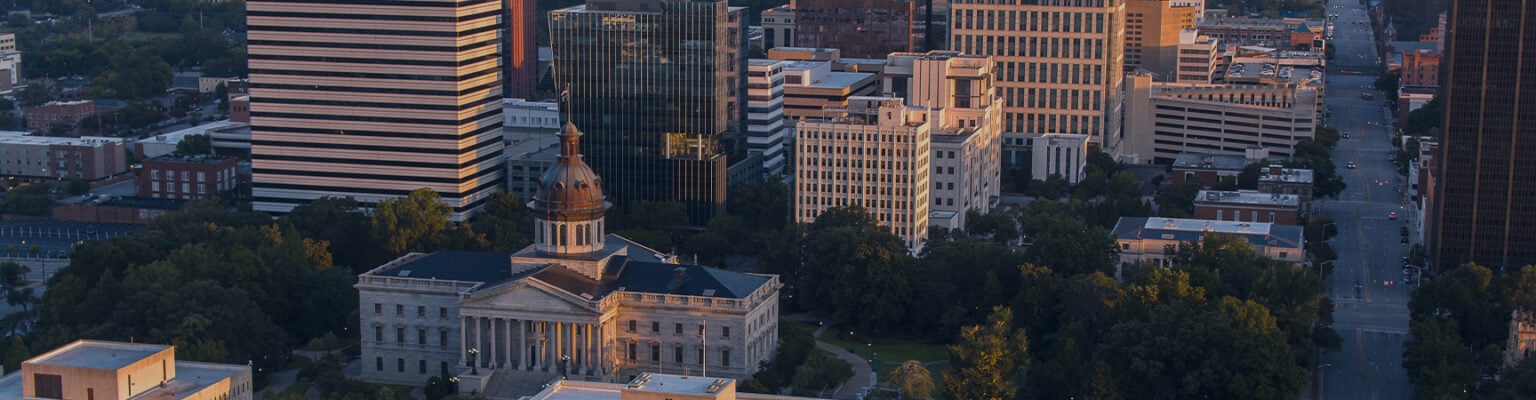
FCI McDowell at a glance
FCI McDowell is a medium-security federal prison for men at Welch, in McDowell County, West Virginia, with a minimum-security satellite camp that shares its name, its post office box and its Bureau facility code, MCD. As of September 2026 it held 1,632 men: 1,563 in the institution and 69 at the camp.
| Official name | Federal Correctional Institution, McDowell |
|---|---|
| BOP code | MCD |
| Security level | Medium; men · minimum-security satellite camp |
| Population | 1,632 (as of September 2026) · 1,563 at the institution, 69 at the camp |
| Visiting | Saturdays, Sundays and federal holidays, 8:00 a.m.–3:00 p.m. · no processing after 2:00 p.m. · Special Housing Unit: Mondays, by appointment · see visiting hours |
| Inmate mail | FCI: Inmate Name & Register Number · FCI McDowell · Federal Correctional Institution · P.O. Box 1009 · Welch, WV 24801 Camp: Inmate Name & Register Number · FCI McDowell · Federal Correctional Institution · Satellite Camp · P.O. Box 1009 · Welch, WV 24801 |
| Send money | Lockbox · Western Union (code city FBOP, DC) · MoneyGram (receive code 7932) |
| Phone | 304-436-7300 · Fax 304-436-7318 |
| Street address | 101 Federal Drive, Welch, WV 24801 · McDowell County |
| Judicial district | Southern District of West Virginia |
| BOP region | Mid-Atlantic |
| Designated capacity | 1,295 |
| Housing | See housing, meals and recreation |
| Special Housing Unit | Yes |
| Medical care level | Care Level 1 |
| Mental health care level | Care Level 1 |
| RDAP | No |
| UNICOR | No factory on the Bureau’s list · see education, trades and recycling |
| Camp | Minimum-security satellite camp for men |
On this page
McDowell belongs to the Bureau’s Mid-Atlantic Region and, by the coordinates on the Bureau’s roster, lies farther south than any other federal institution in West Virginia. Its public record shows contraband arriving from beyond the fence again and again: bags thrown into the recreation yard in 2018, a drone flown to a cell with a broken window in 2024, and another drone over the compound in August 2026.

Which prison in Welch is FCI McDowell?
FCI McDowell is the federal institution at 101 Federal Drive, not Stevens Correctional Center, the West Virginia state prison at 795 Virginia Avenue in Welch. According to the state Division of Corrections and Rehabilitation, Stevens occupies the former Stevens Clinic Hospital, has held state prisoners since 2006, became fully state-run in July 2025, holds up to 332 people and answers at (304) 436-5420. Nothing on this page applies to it.
The camp is part of FCI McDowell, but the Bureau’s paperwork calls it four things: “MCDOWELL-CAMP” in the population report, “Satellite Camp” in the mailing address, “Camp (SPC)”, “Satellite Prison Camp” and “FPC” in the 2022 visiting supplement, and “Federal Prison Camp” in the 2012 handbook. All four mean the same minimum-security unit.
There is no McDowell complex. The Bureau’s facility page shows blank address blocks for a “Federal Satellite Low” and an empty heading for “Other facilities at the McDowell Federal Correctional Complex”; they are template leftovers, and the roster record behind the page, which lists the institution as “McDowell FCI”, names no complex and no satellite low. FCI Beckley, at Beaver, is a separate prison about 33 miles away in a straight line by the roster’s coordinates, and McDowell’s supplement starts its driving directions in Beckley, so check the institution name before you mail anything or set off.
McDowell opened in 2010. The Associated Press reported that the first minimum-security prisoners arrived in September 2010 at “the $232 million prison” and were set to mowing and cleaning the grounds, with medium-security men due from November and about 1,152 medium-security and 128 minimum-security places planned; the Inspector General’s audit of the Bureau’s fiscal 2011 finances (Report 12-09) records the “remaining beds at FCI McDowell” coming into use that year.
What is the security level at FCI McDowell?
The institution is medium security and its camp is minimum security: the roster lists medium, the D.C. inspectors wrote “Medium, with minimum camp” in 2018, and the June 2024 PREA audit form records “Med/In/Comm/Out”, a medium-security prison holding men in In, Community and Out custody. Community and Out are the custody grades that go with minimum security.
The Designation and Sentence Computation Center places men under the Bureau’s security designation rules, Program Statement 5100.08, last amended by Change Notice 3 in May 2026. For men, 0 to 11 points is minimum, 12 to 15 low, 16 to 23 medium and 24 or more high (PS 5100.08 at 14). A Public Safety Factor overrides the score: a man scoring in the minimum range with more than 20 years left goes to a medium such as McDowell, a sex-offense or deportable-alien factor holds him at low, which keeps him out of a camp in the ordinary course, and a Disruptive Group factor sends a man in McDowell’s range to high security (PS 5100.08 at 61).
A Management Variable can also place a man above or below his score. It needs approval from the Center’s administrator, and staff are told to remove it once it no longer applies (PS 5100.08 at 50). If a man whose score fits the camp is held inside the fence, ask his unit team in writing which factor or variable is responsible. The statement also directs placement, where practicable, “within 500 driving miles” of home (PS 5100.08 at 4); in December 2018, 117 of McDowell’s 1,240 prisoners were D.C. Code offenders, 352 miles from Washington by the inspectors’ count.
Who are the notable inmates at FCI McDowell?
Two men whose cases drew national attention are held at McDowell, according to the Bureau’s inmate locator; three others tied to the prison by court papers or the press are not in its custody.
The table gives each man’s register number, what the public record shows and his status in the locator.
| Name | Register no. | What the record shows | Status in the locator |
|---|---|---|---|
| Zachary Adam Chesser | 76715-083 | Sentenced in 2011 in the Eastern District of Virginia to 25 years for threatening the writers of South Park, soliciting violent jihadists to desensitize law enforcement, and attempting to support al-Shabaab (Justice Department, February 24, 2011) | At McDowell; projected release January 1, 2032 |
| Denicio Elrayno Francisco | 31707-308 | East Side Bloods member sentenced in Arizona in September 2014 to 30 years for racketeering conspiracy, attempted murder in aid of racketeering and a firearms count (FBI Phoenix) | At McDowell; projected release June 6, 2031 |
| Adrian Peeler | 13443-014 | Connecticut cocaine-base conspiracy; a federal judge denied his compassionate-release motion in April 2024 while he was “serving a term of imprisonment at FCI McDowell”; sentence commuted to end July 16, 2025 (Justice Department list of January 17, 2025) | Released July 16, 2025 |
| Tony F. Mack | 64765-050 | Former Trenton, New Jersey, mayor serving 58 months for bribery, extortion and fraud; due to report to McDowell’s camp in June 2014 (Trentonian) | Released September 7, 2018; his record carries CRL, the Raleigh reentry office’s code |
| Dion Marquise Hayes | 58219-039 | Named in a 2025 court filing as professionally known as 42 Dugg; directed to report to “FCI McDowell Camp at noon 4/12/22”, then charged on April 28, 2022, with failing to surrender, indicted that June, pleaded guilty in February 2023 and sentenced that April to 12 months (N.D. Ga.) | Released October 16, 2023; his record carries MAN, FCI Manchester’s code |
The FBI’s release calls Francisco a long-time member of the gang, not a leader, who acted “to maintain his position and increase his status” in it.
How do I find someone at FCI McDowell?
Search the Bureau’s inmate locator by register number or full name. Results name the institution but not the unit, so ask whether he is at the camp before choosing a mailing block. In one McDowell case the locator found nothing for a surname the press hyphenated until the two parts were typed with a space, so try compound surnames in pieces. A newly sentenced man does not show at McDowell until he arrives, and the Bureau says to wait until then before sending money.
How do I write to someone at FCI McDowell?
Letters for a man at McDowell go to P.O. Box 1009 in Welch whether he is inside the fence or at the camp; camp mail adds a SATELLITE CAMP line above the box number. The blocks below are the ones on the Bureau’s facility page, and our guide to writing to a federal prisoner covers the general rules.
| Line | Institution | Satellite camp |
|---|---|---|
| 1 | INMATE NAME & REGISTER NUMBER | INMATE NAME & REGISTER NUMBER |
| 2 | FCI McDowell | FCI McDowell |
| 3 | FEDERAL CORRECTIONAL INSTITUTION | FEDERAL CORRECTIONAL INSTITUTION |
| 4 | P.O.BOX 1009 | SATELLITE CAMP |
| 5 | WELCH, WV 24801 | P.O.BOX 1009 |
| 6 | — | WELCH, WV 24801 |
Use the committed name and full register number. Under the Bureau’s correspondence rules, special mail correctly marked as such is opened only in the presence of the inmate. The 2022 supplement says books, magazines and newspapers must be mailed in by the publishing company, addressed to “Federal Correctional Institution” or “Satellite Prison Camp” at the same box, although the 2012 handbook and the national rule also accept book clubs and bookstores (28 C.F.R. § 540.71(a)), and at the camp the national rule accepts softcover books and magazines from any source (§ 540.71(a)(3)), so check with the institution before relying on either. A parcel from home needs prior written approval and may hold only release clothing or authorized medical devices. P.O. Box 1029 is the institution’s own address, not a prisoner’s.
Mail has been a recurring complaint. In December 2018 McDowell had banned colored paper after drug-soaked paper got in and limited photographs to 25 per mailing; D.C. prisoners told the inspectors of delays, unexplained returns and, in three cases, legal mail not opened in front of them, and the Bureau said in 2019 it would hire another mailroom worker. Plain white paper is the safe choice.
How do I send money to someone at FCI McDowell?
Send money through the Bureau’s national system, by Western Union, MoneyGram or the Des Moines lockbox, never to Welch, and wait until the man has physically arrived, as the Bureau asks. Wrong account details can see a transfer rejected or credited to someone else and not returned. The details below are from the Bureau’s money-transfer instructions; see also our guide to sending money.
| Route | What to enter | Posting |
|---|---|---|
| Western Union Quick Collect | Account: eight-digit register number plus last name, no spaces (12345678DOE); attention line: committed name; code city: FBOP, DC | Seven days a week; sent 7:00 a.m. to 9:00 p.m. Eastern, posted within two to four hours; later, posted at 7:00 a.m. next day |
| MoneyGram ExpressPayment | Same account; company: Federal Bureau of Prisons; city: Washington, DC; receive code: 7932; beneficiary: committed name | Same as Western Union |
| Mail to the lockbox | Federal Bureau of Prisons / committed name / register number / Post Office Box 474701 / Des Moines, Iowa 50947-0001 | No posting time published; non-postal money orders and non-government checks held 15 days |
Western Union takes cards online at its send2corrections.com site, in its app or on 1-800-634-3422 (option 2), and cash at agents. MoneyGram takes cash at agents (1-800-926-9400) and, online, up to $300 on a MasterCard or Visa credit card. The lockbox accepts money orders, government checks, cashier’s or certified checks and bank drafts, never cash or personal checks, with name and number on both payment and envelope; anything else enclosed is discarded. Deposit questions go to 202-307-2712, 8:00 a.m. to 4:30 p.m. Eastern, and the Bureau’s page still links the rescinded Program Statement 4500.12 instead of the current trust fund rules, Program Statement 4500.13 (2026).
What are the visiting hours at FCI McDowell?
Visiting at the institution and the camp runs from 8:00 a.m. to 3:00 p.m. on Saturdays, Sundays and federal holidays, with no social visitors processed after 2:00 p.m. The rules are in Institution Supplement MCD 5267.09B of December 14, 2022, the visiting supplement the Bureau’s McDowell page links. A man in the Special Housing Unit may have a non-contact visit only on a Monday, by appointment he books through the SHU lieutenant, in one of three slots (8:15 to 10:15 a.m., 10:35 a.m. to 12:35 p.m., 1:00 to 3:00 p.m.) and with no more than two visitors. See federal prison visiting.
Monday is not a general visiting day, although McDowell’s 2012 handbook listed it and rationed visits at six points a month; the 2022 supplement has no point system and keeps Monday for non-contact visits with men in the SHU and, under the same rules, pretrial and holdover men. Do not plan a Monday trip to see a man in general population.
The supplement adds that “Outside visiting is authorized at the SPC”, without saying where or when, so ask the camp first. Processing pauses during counts, visitors should not arrive early and must leave when the visit ends, and a driver who is not on the list may not wait in the parking lot. The visiting rooms are rated for 298 people at the institution and 117 at the camp (2022 supplement); when one fills, visits can be cut to two hours, volunteers first, then those who live nearest, then the most frequent visitors, so tell the officer if you traveled far.
Check before you set out. The supplement predates the August 2023 change notice to the Bureau’s visiting regulations, which requires each prison’s supplement to set out how staff will make all reasonable efforts to notify families, defense counsel, local courts and the public when a disruption restricts visiting, and it contains no such procedure. In 2018 D.C. men told the inspectors they had no way to warn their families of a lockdown before the trip. That change notice also bars turning away a visitor for using feminine hygiene products and calls for guidance on a private nursing area (PS 5267.09 CN-1 at 1). Call 304-436-7300 the morning you leave.
Who may visit, and how many at once
A visiting list holds up to 20 people, ordinarily no more than 10 of them friends and associates, and a man may change it by request during open house as often as he likes; the unit team checks backgrounds, the unit manager approves or refuses, and anyone he did not know before prison goes to the associate warden. Five approved visitors may sit with him at once, children included, unless the unit team agrees in advance to more, and one “split visit” exchange is allowed.
Children 15 and under need an approved adult, a child left unattended is removed for the rest of the visit, and 16- and 17-year-olds without a parent or adult relative need written permission. People not on the list must write two weeks ahead. Pretrial and holdover men may see verified immediate family only, from 30 days after arrival, without contact and under the same rules as SHU visits; Walsh Act offenders involving a minor are closely monitored; institution men in outside hospitals ordinarily get no visits, except immediate family of a gravely ill man with the warden’s approval; and camp men in hospital may see immediate family only.
Dress, belongings and what babies may bring
Visitors must cover stomach, chest and back, and may not wear tank tops, see-through or wrap-around clothing, slits above the knee, hems more than two inches above mid-knee (over age 10), form-fitting knits or spandex, uncovered leggings, clothing with suggestive words, open-toed or backless shoes, hats or headbands other than religious headwear, sunglasses, hoods, or any watch, Apple watches and Fitbits included. Nothing a prisoner could buy at the commissary, such as sweat pants or plain white T-shirts, and nothing khaki or tan is allowed. An underwire bra cannot be removed before the metal detector.
A visitor may carry a clear bag up to 8 by 12 inches with photo identification, up to $20 for vending machines in bills no larger than $1, and essential medication such as an inhaler, which the officer holds. Food stays out, cameras and recorders need the warden’s written permission to be on the grounds at all, and phones and other electronics stay in the car or the lobby lockers. For each baby, bring no more than two diapers, one unopened pack of wipes, one change of clothes, two clear bottles, one unopened container of formula, two small unopened jars of food, a receiving blanket and a clear cup, in a clear bag up to 12 by 16 inches; prisoners may not enter the children’s play area.
Identification, searches and the drug scanner
Visitors need a valid state or federal photo identification, such as a driver’s license, state card, military card or passport; club, check-cashing and school cards and Mexican consular cards are refused. Visitors sign Form BP-224, pass a metal detector, face random same-sex pat searches and may be screened by an electronic drug detector, while a breathalyzer, urinalysis or visual search needs approval from the warden or a designee. The supplement still cites the Bureau’s 2015 ion-scanner policy, which Program Statement 5524.01 replaced in May 2026. In December 2018 staff told the D.C. inspectors the ion scanner had flagged nine visitors in about 300 scans in three months, that no visitor was turned away without two matching readings, and that long-distance visitors were sometimes offered a non-contact visit instead.
Prisoners are visually searched on the way in, and institution men are searched and body-scanned afterward; at least one camp man in ten is searched. A man may bring only a wedding band, religious medal or headgear, glasses without a case and essential medication. Embraces and kisses, without open mouths, are allowed at the start and end only; seating is assigned, chairs stay put, no notes may change hands, and a man may not touch money or cover his hands or face.
Lawyers, consular officers and official visits
Attorney visits ordinarily happen during visiting hours: the lawyer faxes or mails Form BP-S241.013 and a written request to the unit manager and shows a bar card on arrival, paralegals and investigators use Forms BP-S242.013 and BP-S243.013, and private or after-hours meetings are arranged by unit staff; the D.C. inspectors counted two attorney-client rooms in 2018. The supplement promises counsel access “as soon as safely possible” after a major disruption, and the Bureau’s legal activities rules now require alternative legal-access arrangements once a disruption passes 24 hours (PS 1315.08 at 11). See attorney-client communications.
Getting there
The supplement’s route from Beckley: left onto WV-16, straight onto WV-121, right onto Slab Fork Road (County Route 34), right onto WV-97, left onto WV-10, right onto WV-16, then south into McDowell County and first right onto Federal Drive at the Federal Institution sign. From Bluefield, take US-52 North, turn right onto WV-16 North and continue about seven miles. The supplement says no public transportation serves Welch; in 2018 the inspectors reported one small hotel two miles away and the next lodging an hour off in Beckley, and the 2022 supplement lists the Pocahontas Motel, (304) 436-2250, and the Count Gilu Motel, (304) 436-3041, so call ahead.
How do phone calls and email work at FCI McDowell?
A man at McDowell may use up to 510 telephone minutes a calendar month under the Bureau’s telephone regulations, Program Statement 5264.09, issued September 3, 2026: 300 are free if he qualifies for First Step Act telephone incentives, and anyone, eligible or not, may buy 210 more once he has used up the first 300, while unmonitored legal calls do not count (PS 5264.09 at 7). A single call should generally not exceed 15 minutes, 30 minutes must separate completed calls, and phones operate between 6:00 a.m. and 11:30 p.m. at most (PS 5264.09 at 6–7). See federal prison phone calls.
McDowell’s 2012 handbook reflects the 2008 policy: 300 minutes a month, a 30-number list and a nine-digit access code never to be shared. Its 300-minute figure is superseded by the 510-minute rule, and the old November–December increase in minutes no longer exists. The handbook also says unit phones are monitored and recorded, and that an unmonitored call to a lawyer requires showing the unit team a need such as an imminent court deadline.
Email runs through TRULINCS under the Bureau’s national rules, which our guide to TRULINCS email explains. In December 2018 each housing unit had six telephones and four computers, and D.C. men said frequent lockdowns cut them off from family.
What can people buy at the FCI McDowell commissary?
The most a man at McDowell may spend at the commissary each month is $460 under the Bureau’s trust fund rules, Program Statement 4500.13, issued May 7, 2026, which moved it up from $360; the limit rises by $50 during the November–December holiday period, for no more than one validation period (PS 4500.13 at 28). McDowell’s 2012 handbook still says $320, which is obsolete, and the Bureau’s only McDowell commissary list, from spring 2018, prints no limit at all. See commissary items.
The statement’s exclusions from the limit include stamps, over-the-counter medicines, copy cards and paper, footwear and mattresses. Telephone credit is not among them, and neither is bottled water, which McDowell men who distrusted the tap told the D.C. inspectors in 2018 they had to buy. The statement also lets each prison set quantity limits against gambling and trafficking, and McDowell’s list sets many.
The limits and prices below are from McDowell’s 2018 list; they show the kind of goods sold rather than today’s cost.
| Item | 2018 limit | 2018 price |
|---|---|---|
| Postage stamps | $10.00 combined | Face value |
| Photocopy cards | Four, legal copies only | $2.60 |
| Chips | Three bags in all | $1.25 to $1.50 |
| Sodas | One twelve-pack | $5.05 |
| Bottled water | 24 bottles | $0.35 |
| Ice cream | One | $2.25 |
| Toothbrush | One a week | $0.55 |
All sales on the list are final, with no exchanges or add-ons, and items marked with three asterisks, such as thermal wear and winter gloves, may not be passed to another man. Detergent and dryer sheets appear under a heading that reads “LAUNDRY: CAMP ONLY”. The electronics column listed an MP3 player at $88.40, a Casio G-Shock watch at $82.55 and a Sangean radio at $45.50, and the stationery column still sold Swintec typewriter ribbon. The D.C. inspectors reported that the commissary had been unavailable for the month before their December 2018 visit because of the lockdown.
What programs are available at FCI McDowell?
McDowell offers schooling, a vocational trades program, a recycling plant and psychology and chaplaincy groups, but no residential drug treatment and no Life Connections unit. The Bureau’s August 2026 First Step Act Approved Programs Guide is weak evidence for anything more: none of its program entries names McDowell, because the entries that reach it say only that a program may be offered at all institutions and the entries that name particular prisons leave it out, and McDowell appears only in the guide’s by-institution table, which marks it for 57 programs and productive activities and even marks this men’s prison for “Women in the 21st Century Workplace”. A man planning First Step Act credits around a class should get the department’s answer in writing.
RDAP means a transfer
McDowell does not run the Residential Drug Abuse Program. It is missing from the guide’s list of “57 RDAPS at 50 Locations”, and the D.C. inspectors were told in 2018 that men who need it are transferred out. By straight-line distance from the Bureau’s coordinates, the closest sites on that list are FCI Beckley, FPC Alderson (a women’s camp) and USP Big Sandy (high security), but the Bureau decides where a man goes.
The 2012 handbook says eligibility interviews happen at McDowell: a man asks Psychology when he is 42 to 24 months from release, and an eligible man may be transferred to a prison with the program. The statute lets the Bureau shorten the custody of a man convicted of a nonviolent offense who completes the program by up to one year (18 U.S.C. § 3621(e)(2)(B)). At McDowell itself, drug treatment means the Drug Education course (12 to 15 hours, with a 70 percent pass mark) and the non-residential program (12 to 24 weeks), both described in the handbook, and in 2018 psychology also ran anger-management groups and individual therapy.
Education, the trades shop and the recycling plant
Figures in the D.C. inspectors’ report show 127 men enrolled in GED classes in fiscal 2018 and seven finishing, taught by four GED teachers with one ESL class and one GED class in Spanish. The vocational trades program had 90 places and 82 men enrolled in December 2018, 12 of them from D.C., with a GED required and four-month courses in masonry, carpentry and electrical work; concrete grinding was about to be added. The warden described priority entry for men with parolable life sentences, though D.C. lifers said shorter sentences came first, and 52 D.C. men were waiting. A recycling plant with 55 places, plus 10 for camp men, had won three EPA Federal Green Challenge awards. See education in federal prison.
The Bureau’s records do not show a UNICOR factory here. Its factory list shows West Virginia UNICOR sites only at Glenville and Beaver, and the guide’s Federal Prison Industries entry names 54 institutions without McDowell, although its by-institution table marks McDowell. College follows the same pattern: the post-secondary education entry names sixteen Pell-funded sites and McDowell is not one of them, while the table marks McDowell. Four D.C. men were studying by correspondence in 2018. Ask the unit team in writing before counting on either.
Chapel, psychology and release preparation
In December 2018 McDowell had two chapels, 12 active faith traditions, one chaplain and a vacant second post, and the warden said the remote location made it hard to recruit volunteers for classes and other programs; the 2012 handbook adds Friday Juma prayer at 1:00 p.m. for men with a chaplain’s pass. McDowell has no Life Connections Program, the residential faith-based reentry program, and the guide’s list of its sites leaves McDowell out. A McDowell prisoner refused a place filed a habeas petition in West Virginia, which was dismissed as moot in September 2025 after he was moved to FCI Milan and admitted there. See the Bureau’s religious practice rules and our guide to religious programs.
Psychology offered individual counseling, groups and, at the institution only, a self-help library, with a psychiatrist available for consultation (2012 handbook). Release preparation ran in 2018 from a converted housing unit, with a reentry room in each unit and a job-search kiosk; the warden said the reentry coordinator’s post had been cut, and the Bureau replied in 2019 that it had been filled.
What is daily life like at FCI McDowell?
A day at McDowell runs on counts, meals and ten-minute controlled moves. The only detailed timetable the Bureau has published is in the 2012 handbook, reproduced below; confirm the current one with the unit team.
| Time (2012 handbook) | What happens |
|---|---|
| 6:00 a.m. | Wake-up |
| 6:15 a.m. (camp 6:30) | Weekday breakfast; weekend coffee hour |
| 6:30 to 7:00 a.m. | Sick-call sign-up, Mondays, Tuesdays, Thursdays and Fridays (camp 6:30 to 6:45) |
| 7:30 a.m. to 3:30 p.m. | Khaki uniform on weekdays at the institution (green at the camp) |
| 10:00 a.m. | Standing count on weekends and holidays |
| 10:30 to 11:15 a.m. | Weekday lunch by rotation (camp 11:00); weekend brunch 11:10 |
| 4:00 p.m. | Standing count; next day’s call-outs posted afterward |
| About 5:10 p.m. | Dinner once the count clears (camp 5:00) |
| 10:00 p.m., 12:01, 3:00 and 5:00 a.m. | Night counts; every man must be seen, even if woken |
Unit staff are ordinarily present from 7:30 a.m. to 9:00 p.m. A new arrival is classified within 28 days and reviewed every 90 to 180 days after that; those reviews are the place to raise First Step Act credits, custody level and a move to the camp.
Housing, meals and recreation
The D.C. inspectors described 12 general-population units in three two-story buildings, each unit with 64 double-bunked cells, and found three units closed and one turned into an orientation classroom in December 2018. The June 2024 PREA audit form counts 14 housing units, a difference nothing published explains, and the audit questionnaire and the warden both reported no modification to the facility since August 20, 2012. The Special Housing Unit held 160 men in December 2018, 118 of them in administrative segregation.
During the late-2018 lockdown, men said, meals were mostly cold bag lunches with a hot meal every third day. The yard had five basketball courts, two handball courts and two tracks, and indoors there were a gym, a cardio room and art and music rooms, but men said the yard was often shut and more than half of the 54 D.C. prisoners the report says were surveyed were unhappy with recreation.
Health care and the water
McDowell is a Care Level 1 institution, meaning generally healthy people with limited medical needs, according to the D.C. inspectors in December 2018, the Bureau’s October 2019 letter, and the care-level charts the Bureau released in 2024, which put McDowell at Care Level 1 for both medical and mental health care; see the Bureau’s care-level rules and our guide to care levels. In 2018 it had 12 full-time medical staff and five contractors, no on-site pharmacy (prescriptions came by FedEx from FMC Lexington), a weekly contract dentist and a hospital 15 minutes away.
Of the D.C. men interviewed, 11 were satisfied with medical care, eight complained of co-pays for visits without treatment, 13 described unanswered sick-call requests, and five said ordered tests or specialist visits never happened. One man said his cell’s emergency button went unanswered for more than two hours while his cellmate was in distress, and that both were then sent to the SHU; the Bureau replied that staff answer all emergencies “in a professional and efficient manner.” Many men also raised concerns about the water, some saying it made them ill; the warden said it came from the City of Welch and was safe, the inspectors could not verify the complaints, and the Bureau said in 2019 that a certified laboratory tests it at random intervals.
The law library and legal paperwork
The 2012 handbook placed the law library in the education department, and in 2018 staff said it was open 12 hours a day, six days a week. The Bureau’s legal activities rules, Program Statement 1315.08 (2026), no longer require a physical library, put research on the TRULINCS electronic law library, allow extra time for a court deadline ordinarily within 30 days, and say access should return as soon as practicable after a lockdown (PS 1315.08 at 1–3).
The file the Bureau’s McDowell page labels “Inmate Legal Activities at FCI McDowell” is the national Program Statement 1315.07 of 1999, not a McDowell supplement, and PS 1315.08 has rescinded it. The new statement requires each institution to publish its own supplement; the Bureau’s McDowell page links none. The handbook gave 20 calendar days to file a BP-9 under the administrative remedy program.
What do inspectors say about conditions at FCI McDowell?
The independent record on McDowell comes mainly from two on-site reviews: the D.C. Corrections Information Council found the prison locked down in December 2018 and heard complaints about medical care, mail and staff, and a PREA auditor who visited in June 2024 found all 41 standards met, but only after two corrective actions. GAO’s 2026 allegation tables and the court files from the 2021 carbon monoxide leak add to that record.
The DOJ Office of the Inspector General has not conducted an on-site inspection of this facility.
Its published work touches McDowell only at a distance. The fiscal 2011 financial audit (Report 12-09) notes the new beds coming on line. A February 2023 evaluation (Report 23-034) lists McDowell because nine staff who answered its fall 2019 survey reported sexual harassment by prisoners there, though that evaluation’s site visits were to FCI Jesup, FCC Coleman and FCI Miami. And the online results of a 2021 pandemic survey of Bureau staff (Report 21-126) show 62.5 percent of McDowell respondents to one question saying their stress had increased; the survey site gives no count of respondents.
The D.C. inspection of December 2018
The Council, which monitors people serving D.C. Code sentences, inspected McDowell on December 12 and 13, 2018, and published its report on October 17, 2019. The inspectors were given a “rated capacity” of 1,295, and the camp held up to 65. Of the 1,240 men at McDowell in December 2018, 117 were D.C. Code offenders. Its survey appendix counts 61 respondents, while one finding refers to 54 surveyed, and every percentage is a share of that small, self-selected group of D.C. men.
The prison was locked down when the inspectors arrived. About a month earlier, outsiders had thrown bags of cell phones, tobacco and marijuana into the recreation yard; staff believed some phones were still hidden, said a similar incident earlier in 2018 had won approval for a thermal fence, and planned new cell furniture without hiding places. The lockdown, continuous since November 13 by staff and prisoners’ accounts, ended on December 18, 2018. The Bureau’s records listed three lockdowns in the previous year, in December 2017, June 2018 and September 2018, and none in November 2018, which the inspectors noted did not match. The inspectors urged locking down only the part of the prison involved, keeping lockdowns short and continuing programs during them; the Bureau answered that a lockdown “is one that is never taken lightly.”
D.C. men said staff called them “DC Blacks” or “007”, after the digits that usually end their register numbers, and described grievance forms withheld and fear of retaliation. A quarter of respondents found their unit team usually responsive, two reported staff violence without detail, and none reported assault by another prisoner. The report printed McDowell’s 2017 grievance logs under the administrative remedy program.
| Level | Submitted | Rejected | Answered | Granted |
|---|---|---|---|---|
| BP-9, institution | 164 | 68 | 87 | 2 |
| BP-10, regional office | 174 | 109 | 61 | 4 |
| BP-11, Central Office | 47 | 24 | 21 | 2 |
The Bureau’s reply of October 2, 2019, called the findings “based on a small percentage of DC inmates,” but reported a reentry coordinator appointed, a special-learning-needs teacher hired and another mailroom employee to come.
The June 2024 PREA audit
Lori M. Fadorick, an independent auditor subcontracted through PREA Auditors of America, audited FCI McDowell on site on June 4 and 5, 2024, and signed her final report on July 30, 2024. It finds all 41 facility-level PREA standards met, but only after two corrective actions: many files lacked a signed acknowledgment of PREA information and some orientation came more than 30 days after arrival, and several risk reassessments were late, with men saying their first unit team meeting “was very brief and did not discuss anything PREA related.” Documents sent on June 27, 2024, cured both.
The form, completed for the June 2024 visit, lists a designed and designated capacity of 1,295 against a population of 1,589, notes that McDowell had been over capacity during the prior year, and records 294 staff and custody staffing of about 96 percent. The men ranged in age from 19 to 76, and on the first day of the audit, June 4, 2024, 290 had limited English, 70 had a cognitive or functional disability, and 142 had disclosed earlier sexual victimization at screening. In the prior twelve months there were no criminal investigations; two inmate-on-inmate abuse allegations and six inmate-on-inmate harassment allegations were unsubstantiated, meaning unproven either way, and one staff abuse and two staff harassment allegations were still open. The auditor noted added cameras and a request for more in the SHU; forensic exams ordinarily take place at Raleigh General Hospital in Beckley, with advocacy from AWAY. The report never mentions the camp.
What GAO counted, and why it differs from the audit
GAO’s May 2026 report (GAO-26-107343) gives McDowell two separate allegation counts for 2020 through 2024.
| GAO table | 2020 | 2021 | 2022 | 2023 | 2024 | Total |
|---|---|---|---|---|---|---|
| Table 7, prisoner accused (year of incident) | 1 | 2 | 6 | 6 | 6 | 21 |
| Table 8, employee accused (year reported) | 2 | 0 | 3 | 9 | 8 | 22 |
The totals are never added: the tables come from different Bureau systems and count different years, and GAO’s “sexual abuse” includes harassment. They are allegations, not findings, and because GAO does not adjust for population they cannot rank McDowell. They also sit uneasily beside the audit’s three staff allegations in the year before June 2024, against GAO’s nine for 2023 and eight for 2024, and nothing published explains the gap.
Cameras and the carbon monoxide cases
On April 22, 2026, the Bureau posted a request for quotes, set aside for small businesses, to replace 16 compound cameras, two perimeter-road posts and recreation-yard cameras (solicitation 15B12226Q00000014), writing that “The current camera system at FCI McDowell was installed more than a decade ago and has undergone only limited incremental upgrades,” with outages, poor night images and blind spots documented over 24 months. That is a harsher account than the 2024 audit’s. Quotes were due May 6, 2026, and the notice, archived on May 21, shows no award.
In August 2021 carbon monoxide leaked at McDowell; the Bureau said 26 prisoners and five staff were treated. Prisoners sued, alleging gas from a water heater over four days and a mishandled emergency response. On September 5, 2024, in Broadnax v. United States, the Bluefield court granted the United States’ motion to dismiss their Federal Tort Claims Act claims for lack of jurisdiction: the theory that the water heater was negligently installed or maintained was a separate claim the prisoners had not raised in their administrative claims, and the emergency response and medical care fell within the discretionary-function exception. Claims against individual officers went on; the court refused in December 2024 to certify the dismissal for an immediate appeal, and after the officers moved to dismiss the third amended complaint, it stayed the case on March 31, 2026, pending a decision in another case, which its order calls Spivey. A Maryland suit by 86 men who were at McDowell during the leak, seeking a diagnostic protocol, was dismissed for lack of jurisdiction on May 25, 2024, the court holding that the elements of mandamus were not plausibly alleged and noting that complaints about inadequate care can be brought as a civil rights action (Abney v. Federal Correctional Institution McDowell).
FCI McDowell in the news
Recent news about McDowell centers on contraband: a weapon conviction in September 2026, a drone arrest in August 2026 and the drone-smuggling sentences of 2025, along with the camera replacement the Bureau sought in April 2026. Older items concern a 2023 death in custody, the 2021 carbon monoxide leak and its lawsuits, a staff bribery sentence, an escape attempt and the prison’s opening in 2010.
- September 15, 2026: After a one-day trial, a federal jury in Bluefield convicted Randy Hightower, 41, of possessing a shank, a piece of sharpened metal with a handle made from an institutional blanket, found in his pants pocket at McDowell on September 22, 2023; he faces up to five years (U.S. Attorney’s Office, Southern District of West Virginia).
- August 9, 2026: A correctional officer saw a drone over the prison after midnight, and deputies arrested three Michigan men, charging them with offenses involving a correctional facility, unlawful drone operation and conspiracy; investigators said one had been involved in an earlier county drone case (WVVA).
- April 22, 2026: The Bureau asked small businesses for quotes to replace cameras it called more than a decade old.
- December 17, 2025: The third of three Chicago men who came to Welch on February 1, 2024, got three years’ probation, as the other two had; that day officers caught the other two beside the prison fence with a drone and camouflaged packages, and found him at a Welch motel with tobacco, marijuana and packaging materials.
- August 26, 2025: Two men got three years’ probation, with two months’ home detention, for flying phones, tobacco and marijuana to a McDowell cell with a broken exterior window on February 9, 2024; a third got the same in July 2025.
- July 16, 2025: Adrian Peeler was released at the end of a sentence commuted on January 17, 2025.
- September 5, 2024: The Bluefield court dismissed the tort claims against the United States over the 2021 leak.
- May 25, 2024: A Maryland court dismissed 86 men’s suit seeking carbon monoxide testing.
- February 2024: The county sheriff announced eleven people charged after a surveillance operation on drone smuggling (WVVA).
- July 8, 2023: Javier Capote Cauz, 30, died in Bureau custody at McDowell; the inmate locator marks him deceased on that date, and the record behind it names McDowell. The Southern District of West Virginia later dismissed a habeas petition he had filed from McDowell as moot because of his death (Cauz v. LeFever). The Bluefield Daily Telegraph, quoting a Bureau statement, reported that he was found unresponsive at about 6:40 p.m., that staff began life-saving measures, that he was “subsequently pronounced deceased by hospital personnel,” and that the FBI was notified.
- August 2021: Carbon monoxide leaked; the Bureau said 26 prisoners and five staff were treated (WVNS-TV).
- December 13, 2017: Five McDowell prisoners were sentenced, three to 15 months and two to two years, for shanks found between March and June 2017.
- November 2015: Officer Joshua Austin was sentenced to 24 months, and ordered to forfeit $10,700, for taking bribes to smuggle in tobacco; the Inspector General’s office helped investigate.
- June 2014: Former Trenton mayor Tony Mack was due to report to the camp (Trentonian).
- January 15, 2014: Jason Dunlap received three years and one month for climbing the first of two perimeter fences on May 7, 2013; he was caught at once.
- September 2010: The first minimum-security prisoners arrived at the new prison.
Frequently asked questions about FCI McDowell
Is FCI McDowell a medium-security prison?
Yes. FCI McDowell is a medium-security federal prison for men in Welch, West Virginia, with a minimum-security satellite camp that shares its name and its mailing address. As of September 2026 the Bureau counted 1,632 men there: 1,563 at the institution and 69 at the camp.
Is FCI McDowell the same as Stevens Correctional Center in Welch?
No. FCI McDowell, at 101 Federal Drive, is a Bureau of Prisons institution; Stevens Correctional Center, at 795 Virginia Avenue, is a West Virginia state prison in the former Stevens Clinic Hospital. Federal prisoners’ mail, money and visits follow Bureau rules, not the state’s.
What is the mailing address for FCI McDowell and its camp?
Both use P.O. Box 1009, Welch, WV 24801, below the man’s name and register number, FCI McDowell and Federal Correctional Institution. Mail for the camp adds the line Satellite Camp just above the box number. Use his committed name and full register number, and never send money to this address.
When can I visit someone at FCI McDowell?
On Saturdays, Sundays and federal holidays, 8:00 a.m. to 3:00 p.m., with no one processed in after 2:00 p.m., under the 2022 visiting supplement. Mondays are reserved for non-contact visits, by appointment, for men in the Special Housing Unit, and the supplement puts pretrial and holdover men under the same rules.
What are the ways to send money to a man at FCI McDowell?
By Western Union to code city FBOP, DC, by MoneyGram with receive code 7932, or by money order to Post Office Box 474701, Des Moines, Iowa 50947-0001, always with the register number and committed name. Western Union and MoneyGram transfers made during the day post within two to four hours.
What is the commissary spending limit at FCI McDowell?
$460 a month under Program Statement 4500.13, issued in May 2026; the limit rises by $50 during the November–December holiday period, for no more than one validation period. Stamps, over-the-counter medicines and the other items the statement lists do not count toward it. The $320 figure in McDowell’s 2012 handbook is obsolete.
How many phone minutes does an inmate at FCI McDowell get?
Up to 510 a month under Program Statement 5264.09 (2026): 300 free for men eligible for First Step Act telephone incentives, and 210 more that anyone may buy after using up the first 300. A single call should generally not exceed 15 minutes. The 2012 handbook’s 300-minute cap no longer applies.
Does FCI McDowell have RDAP?
No. McDowell is not on the Bureau’s 2026 list of RDAP locations, and in 2018 staff told the D.C. inspectors that men who need the program are transferred out. Its 2012 handbook says a man asks Psychology about eligibility when he is 42 to 24 months from release, and an eligible man may be transferred to a prison that runs the program.
Does FCI McDowell have UNICOR?
Not according to the Bureau’s factory list, which shows West Virginia sites only at Glenville and Beaver, and the First Step Act guide’s Federal Prison Industries entry names 54 institutions without McDowell, although its by-institution table marks McDowell. Ask the unit team in writing before counting on a factory job.
Has the Inspector General inspected FCI McDowell?
The DOJ Office of the Inspector General has not conducted an on-site inspection of this facility. The D.C. Corrections Information Council inspected it on December 12 and 13, 2018, and a PREA auditor was on site on June 4 and 5, 2024.
What happened in the 2021 carbon monoxide leak at FCI McDowell?
In August 2021 carbon monoxide leaked at McDowell and the Bureau said 26 prisoners and five staff were treated. A West Virginia federal court dismissed the prisoners’ tort claims against the United States in September 2024, and later stayed their case against individual officers.
Which federal court covers FCI McDowell?
The Southern District of West Virginia, under 28 U.S.C. § 129(b); McDowell County lies within it, and the McDowell habeas petitions cited on this page were filed in its Bluefield division. A compassionate-release motion goes to the sentencing court instead, wherever the man was sentenced.
Problems at FCI McDowell: where we can help
McDowell’s record points to recurring problems: long lockdowns, unanswered medical requests, contraband cases that become new charges, and programs that exist only elsewhere. Each has a procedure and, usually, a deadline.
- Lockdowns and legal access. National policy requires alternative legal access once a disruption passes 24 hours, and reasonable efforts to tell families, lawyers and courts when visiting is restricted; if a lockdown is costing research time or a legal visit before a deadline, a lawyer can press the institution and, if necessary, the court. See the Bureau’s lockdown and modified-operations rules.
- Medical care and injury. Use a written request, then the remedy process, then, where negligence causes harm, a tort claim; the carbon monoxide case shows that the administrative claim must state every theory of fault.
- RDAP and Life Connections. Both require a transfer, and a refused or stalled request can be pursued through the remedy process and, in the right case, in court, as one McDowell prisoner did. See our RDAP advocacy.
- Contraband charges. A man facing an incident report that may become a federal case needs advice before he says anything; see disciplinary proceedings and searches and contraband.
- Special Housing Unit placements. The SHU held 160 men, most in administrative segregation, in December 2018, and SHU visiting is one non-contact Monday slot; a placement that outlasts its reason can be challenged under the Bureau’s Special Housing Unit rules.
- Designation and the camp. A man scoring at minimum but held inside the fence, or a D.C. man far from home, can seek review of the factor or variable holding him; see designation and transfers.
- Self-surrender. A surrender order names a date and hour, and failing to surrender is a separate crime under 18 U.S.C. § 3146; Welch has no public transport, so plan early.
- Credits, halfway house and release. First Step Act credits depend on classes a man can actually join, so raise them at every review; residential reentry placement follows the district where he will live, not West Virginia. See our First Step Act credit reviews, halfway house and home confinement work, and the Bureau’s halfway house placement procedures.
- Compassionate release and sentence computation. The sentencing court decides compassionate release; computation disputes go through the remedy process and, if needed, a habeas petition in the Southern District of West Virginia. See the Bureau’s compassionate release procedures, our compassionate release practice, challenging a Bureau sentence computation, the Bureau’s sentence computation rules and our early release work.
- Challenges to the conviction or sentence itself, through a direct appeal or a § 2255 motion.
Elizabeth Franklin-Best, P.C. handles federal criminal defense, appeals and post-conviction matters nationwide, and advises families on Bureau of Prisons issues at institutions across the system. Call (843) 620-1100 or contact us to talk through a specific situation.
Christopher Zoukis, JD, MBA, the firm’s Managing Director, writes and maintains the federal prison policy material on this site. He is not counsel of record; legal representation is provided by Elizabeth Franklin-Best.
Sources and currency
Bureau of Prisons documents
- FCI McDowell, Federal Bureau of Prisons, 2026. Address, contact details, mailing addresses and posted documents.
- FCI McDowell Cameras, Solicitation 15B12226Q00000014, Federal Bureau of Prisons, 2026. Combined synopsis and solicitation on SAM.gov for replacing the compound cameras.
- Inmate Visitation, Institution Supplement MCD 5267.09B, Federal Bureau of Prisons, FCI McDowell, 2022. Visiting days and hours, visitor lists, dress, searches, attorney visits and directions.
- Commissary Sales List, FCI McDowell, Federal Bureau of Prisons, 2018. Prices and per-order limits.
- Inmate Admission and Orientation Handbook, FCI/FPC McDowell, Federal Bureau of Prisons, 2012. Daily schedule, telephone, commissary, programs and legal activities.
- Legal Activities, Inmate, Program Statement 1315.07, Federal Bureau of Prisons, 1999. The file the FCI McDowell page links as Inmate Legal Activities at FCI McDowell.
- Inmate Legal Activities, Program Statement 1315.08, Federal Bureau of Prisons, 2026. Replaced Program Statement 1315.07 (1999).
- Trust Fund/Deposit Fund Manual, Program Statement 4500.13, Federal Bureau of Prisons, 2026. Commissary spending limit and its exclusions.
- Inmate Security Designation and Custody Classification, Program Statement 5100.08, Federal Bureau of Prisons, 2026.
- Inmate Telephone Regulations, Program Statement 5264.09, Federal Bureau of Prisons, 2026. Monthly minute allowance and call rules.
- Visiting Regulations, Program Statement 5267.09, Federal Bureau of Prisons, 2023. Includes the 2023 change notice on visiting disruptions and visitor hygiene products.
- Ion Spectrometry Device Program, Program Statement 5524.01, Federal Bureau of Prisons, 2026. Replaced the 2015 ion-scanner policy.
- First Step Act Approved Programs Guide, Federal Bureau of Prisons, Reentry Services Division, 2026. August 2026 edition; programs by institution, including the RDAP locations list.
- Community Ties, Federal Bureau of Prisons, 2026. Money-transfer instructions.
- UNICOR, Federal Bureau of Prisons, 2026. Federal Prison Industries factory locations.
- Institution Care Levels for Medical Assignment and Institutional Mental Health Care Levels, Federal Bureau of Prisons, 2024. Released under Freedom of Information Act request 2024-03455 and published by the Washington Lawyers’ Committee.
Audits and inspections
- Federal Prisons: Improvements Needed to Prevent, Detect, and Address Sexual Abuse (GAO-26-107343), U.S. Government Accountability Office, 2026. Allegation counts by institution for 2020 through 2024.
- PREA Facility Audit Report: Final, FCI McDowell, Lori M. Fadorick, PREA Auditors of America, 2024. On-site audit of June 4–5, 2024.
- Evaluation of the Federal Bureau of Prisons’ Efforts to Address Sexual Harassment and Sexual Assault Committed by Inmates Toward Staff (Report 23-034), U.S. Department of Justice, Office of the Inspector General, 2023.
- Staff Perceptions of the Federal Bureau of Prisons’ Management of the Coronavirus Disease 2019 Pandemic: A Follow-Up Survey of BOP Staff (Report 21-126), U.S. Department of Justice, Office of the Inspector General, 2021. Interactive survey results by institution.
- FCI McDowell Inspection Report, District of Columbia Corrections Information Council, 2019. Inspection of December 12–13, 2018; includes the Bureau’s response.
- Audit of the Federal Bureau of Prisons Annual Financial Statements Fiscal Year 2011 (Report 12-09), U.S. Department of Justice, Office of the Inspector General, 2012.
Court records
- Federal Jury Convicts Inmate of Possessing Weapon at FCI McDowell, U.S. Attorney’s Office, Southern District of West Virginia, 2026. Randy Hightower’s conviction.
- Chicago Man Sentenced for Role in Schemes to Transport Contraband into FCI McDowell with Drone, U.S. Attorney’s Office, Southern District of West Virginia, 2025.
- Two Men Sentenced and Third Man Pleads Guilty in Separate Schemes to Transport Contraband into FCI McDowell with Drones, U.S. Attorney’s Office, Southern District of West Virginia, 2025.
- Sandlain v. Warden, No. 1:22-cv-00304, U.S. District Court for the Southern District of West Virginia, 2025. Docket.
- Deal v. Henry, No. 2:25-cv-11781, U.S. District Court for the Central District of California, 2025. Docket; a filing names Dion Marquise Hayes as 42 Dugg.
- January 17, 2025 Commutation Recipients, U.S. Department of Justice, Office of the Pardon Attorney, 2025. Adrian Peeler’s commutation.
- United States v. Peeler, No. 3:99-cr-00067, U.S. District Court for the District of Connecticut, 2024. Docket, including the April 2024 denial of a compassionate release motion.
- Broadnax v. United States, No. 1:22-cv-00437, U.S. District Court for the Southern District of West Virginia, 2024. Docket, including the September 2024 dismissal of the tort claims and the March 2026 stay.
- Abney v. Federal Correctional Institution McDowell, No. 1:23-cv-00027, U.S. District Court for the District of Maryland, 2024. Docket.
- Cauz v. LeFever, No. 1:23-cv-00087, U.S. District Court for the Southern District of West Virginia, 2024. Docket; the proposed findings of May 23, 2024, were adopted on August 7, 2024.
- United States v. Hayes, No. 1:22-cr-00207, U.S. District Court for the Northern District of Georgia, 2023. Docket of the failure-to-surrender prosecution.
- United States v. Hayes, No. 1:22-mj-00384, U.S. District Court for the Northern District of Georgia, 2022. Docket of the criminal complaint.
- United States v. Hayes, No. 1:20-cr-00123, U.S. District Court for the Northern District of Georgia, 2022. Docket, including the order to report to the McDowell camp.
- Multiple Federal Inmates Sentenced on Weapons Charges, U.S. Attorney’s Office, Southern District of West Virginia, 2017.
- Federal Corrections Officer and Wife Sentenced for Accepting Bribes and Providing Contraband to Inmates, U.S. Department of Justice, Office of the Inspector General, 2015. Joshua Austin’s sentence.
- East Side Bloods Gang Member Sentenced to 30 Years in Prison for Racketeering Conspiracy, Attempted Murder, and Firearms Charges, Federal Bureau of Investigation, Phoenix Field Office, 2014. Denicio Elrayno Francisco’s sentence.
- Inmate Sentenced to 3+ Years for Attempting to Escape FCI Prison at McDowell, U.S. Attorney’s Office, Southern District of West Virginia, 2014. Jason Dunlap’s sentence.
- Virginia Man Sentenced to 25 Years in Prison for Providing Material Support and Encouraging Violent Jihadists to Kill U.S. Citizens, U.S. Department of Justice, Office of Public Affairs, 2011. Zachary Adam Chesser’s sentence.
News and other sources
- Three Michigan Men Arrested Following Drone Contraband Attempt at FCI McDowell, WVVA, 2026.
- Eleven Charged, One Suspect Dead, in Crime Ring Involving Drones Delivering Contraband to a Federal Prison in McDowell County, WVVA, 2024.
- Inmate Dies at Federal Correctional Institution in McDowell County, Bluefield Daily Telegraph, 2023.
- Dozens of Inmates Treated for Carbon Monoxide Poisoning at FCI McDowell, WVNS-TV, 2021.
- Ex-Trenton Mayor Tony Mack Reports to West Virginia Prison on Thursday, The Trentonian, 2014.
- New Federal Prison in W.Va. Receiving Inmates, Charleston Gazette-Mail (Associated Press), 2010.
- Stevens Correctional Center, West Virginia Division of Corrections and Rehabilitation, 2026.
- FCI McDowell | Federal Correctional Institution McDowell, Elizabeth Franklin-Best, P.C. (YouTube), 2022. Video overview.
- 18 U.S.C. § 3146, Penalty for failure to appear, U.S. Code (Legal Information Institute).
- 18 U.S.C. § 3621(e)(2)(B), Imprisonment of a convicted person, U.S. Code (Legal Information Institute).
- 28 U.S.C. § 129(b), West Virginia, U.S. Code (Legal Information Institute).
- 28 C.F.R. § 540.71(a), Procedures, Code of Federal Regulations (Legal Information Institute).
Sources reviewed September 2026.
Reviewed for legal accuracy by Elizabeth Franklin-Best, Esq., Principal Attorney·September 2026