
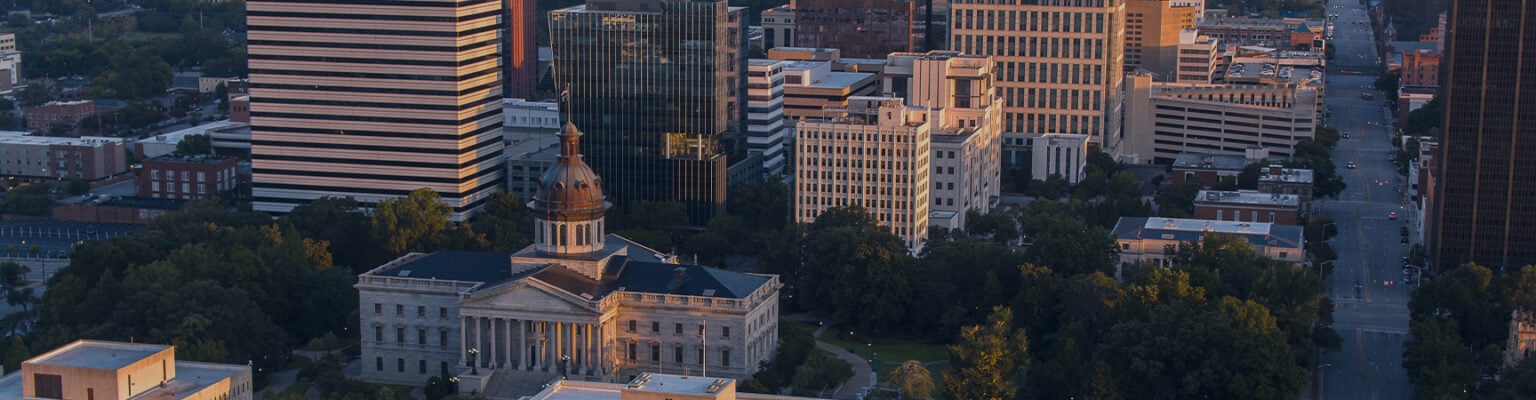
FCI Gilmer at a glance
FCI Gilmer is a medium-security federal prison for men at Glenville, West Virginia, with a minimum-security satellite camp beside it. It held 1,258 people as of September 2026: 1,181 inside the institution and 77 at the camp. Visiting is on Saturdays, Sundays and federal holidays only, and there is no public transportation to the prison.
| Official name | Federal Correctional Institution, Gilmer |
|---|---|
| BOP code | GIL |
| Security level | Medium; men |
| Population | 1,258: 1,181 at the FCI, 77 at the camp (as of September 2026) |
| Visiting | Saturday, Sunday and federal holidays, 8:00 a.m.–3:00 p.m. · no in-processing after 2:00 p.m. · no Friday visiting |
| Inmate mail | FCI: Inmate Name & Register Number · FCI Gilmer · Federal Correctional Institution · P.O. Box 6000 · Glenville, WV 26351 Camp: Inmate Name & Register Number · FCI Gilmer · Federal Correctional Institution · Satellite Camp · P.O. Box 7000 · Glenville, WV 26351 |
| Send money | Lockbox · Western Union (code city FBOP, DC) · MoneyGram (receive code 7932) |
| Phone | 304-626-2500 · Fax 304-626-2693 |
| Street address | 201 FCI Lane, Glenville, WV 26351 · Gilmer County |
| Judicial district | Northern District of West Virginia |
| BOP region | Mid-Atlantic |
| Designated capacity | 1,280: 1,152 at the FCI, 128 at the camp |
| Housing | 14 units: 13 multiple-occupancy cell units, 1 open-bay dormitory; no single cells |
| Special Housing Unit | Yes · 96 segregation cells |
| RDAP | See whether RDAP runs here |
| UNICOR | Yes |
| Camp | Yes · minimum security, beside the FCI |
On this page
The prison stands in Gilmer County at the end of a road that exists only to reach it, 79 miles by interstate from Charleston and 82 from Morgantown, with twelve miles of two-lane state route and a bridge after the exit ramp. Anyone coming to see a family member here is driving. FCI Gilmer is one of the federal prisons in West Virginia and falls under the Bureau’s Mid-Atlantic Region.

Friday visiting at FCI Gilmer has been discontinued
FCI Gilmer no longer has Friday visiting: its current visiting supplement, GIL-5267.09J (2026), sets visiting at the FCI and the camp for Saturday, Sunday and federal holidays only. Listings that give Friday hours are out of date.
The Friday hours come from the institution’s Admission & Orientation handbook (2014), still the edition the Bureau publishes, which says visits at the FCI run “on Fridays, Saturdays, Sundays, and federal holidays” and that Special Housing Unit visits happen on Thursdays.
| A&O handbook (2014) | Supplement GIL-5267.09J (2026) | |
|---|---|---|
| FCI visiting days | Friday, Saturday, Sunday, federal holidays | Saturday, Sunday, federal holidays |
| Camp visiting days | Saturday, Sunday, federal holidays | Saturday, Sunday, federal holidays |
| Special Housing Unit | Thursday, 8:00 a.m. to 3:00 p.m. | The same Saturday, Sunday and holiday schedule as everyone else |
| Non-contact visiting | “There are no non-contact visiting areas at FCI Gilmer” | “FCI Gilmer currently has one non-contact visiting area” |
| Hours | 8:00 a.m. to 3:00 p.m. | 8:00 a.m. to 3:00 p.m., no in-processing after 2:00 p.m. |
Visiting in the Special Housing Unit changed too. Under the 2014 handbook, SHU visits had a day of their own and were conducted in hand restraints, a martin chain and leg restraints. The 2026 supplement folds Special Housing and holdover visits into the ordinary weekend schedule, provides one non-contact area with a two-hour cap, and limits holdover visits to one hour and to legal visitors and immediate family — defined in the document as father, mother, stepparents, foster parents, brother, sister, spouse and children.
What is the security level at FCI Gilmer?
The institution is medium security and the satellite camp beside it is minimum security. The 2025 PREA audit records the custody classifications held as Medium-In at the institution and Minimum-Out at the camp, which is the formal way of saying that the men at the FCI do not leave the perimeter and the men at the camp work outside it.
The two sides of the fence are different places to serve a sentence, and the audit quantifies the difference. The average length of stay at the FCI is 820.2 days — nearly two and a quarter years. At the camp it is 543.1 days. The age range at the FCI runs from 20 to 84; at the camp, from 25 to 67.
The physical plant is 29 buildings and 14 housing units: 13 multiple-occupancy cell units and a single open-bay dormitory, with no single-cell housing anywhere and 96 segregation cells. Ninety-six segregation cells against a designated capacity of 1,280 is a high proportion for a medium, and the clearest structural indication of how the institution is run.
Designated capacity is 1,280 in total — 1,152 at the FCI and 128 at the camp. The April 2025 audit put the population at 1,112 on its facility form and 1,173 on the first day of the visit, and records that the institution had not been over capacity at any point in the preceding twelve months. The population of 1,258 as of September 2026 is closer to the line but still under it. Designation happens before he arrives, at the Designation and Sentence Computation Center, on a point score under the Bureau’s security designation rules, adjusted by any Public Safety Factor and Management Variable; the camp needs a minimum score and no Public Safety Factor at all. See the intake process and preparing for prison.
Who are the notable inmates at FCI Gilmer?
No one on the published notable-inmate lists is held at FCI Gilmer now. The rapper DMX is the only one the Bureau’s records tie to this prison, and he was released in 2019; three of the others are at other prisons.
| Name | Where the Bureau’s records put him | Case |
|---|---|---|
| Hector Rivera | Register 90335-054, serving life. FCI Atlanta as of September 2026, after a stop at FTC Oklahoma City, the Bureau’s transfer center. Not at Gilmer | Convicted in 2009 of Hobbs Act robbery and using a firearm during crimes of violence, as the leader of a crew that robbed businesses in Manhattan’s diamond district |
| Edward Brown | Register 03923-049, aged 84. FCI Ashland, Kentucky, projected release June 9, 2034. Not at Gilmer | The New Hampshire tax protester convicted after an armed standoff at his home |
| Earl Simmons, the rapper DMX | Register 76031-054. Released from Gilmer on January 25, 2019; he died in April 2021 | Pleaded guilty to tax fraud in 2018 and served a year. His is the only name on this list that the Bureau’s own record ties to this prison |
| Stephen Boykin | Register 10919-171, aged 54. USP Terre Haute, projected release July 16, 2027 | Was at FCI Gilmer in 2024, when he was sentenced to a further two years and three months for posting letters threatening a former president and his wife, a governor, a vice president and an Assistant U.S. Attorney, on top of a sentence he was already serving for the same offense |
| Robert Courtney | Register 14536-045. Released May 1, 2026 from residential reentry supervision in Kansas City | The Kansas City pharmacist who diluted chemotherapy drugs. Listings that place him at FCI Big Spring are out of date |
Floyd Lee Corkins, who appears on this site’s current page, returns no record in the Inmate Locator at all, so nothing on the Bureau’s public record places him here. The encyclopedia article about this prison lists Rivera and Brown as Gilmer inmates; both men are hundreds of miles from it.
How do I find someone at FCI Gilmer?
To find someone at FCI Gilmer, search the Bureau’s free Inmate Locator by the eight-digit register number. The number is unique and permanent; a name is neither. A result gives the institution and the projected release date or, for someone already out, a “Not in BOP Custody” line with the date he left.
Read the institution it names carefully, because West Virginia’s are easy to mix up. “Gilmer FCI” is this prison (facility code GIL in the person’s record); “Hazelton FCI” and “Hazelton USP” are two different prisons at one address near Bruceton Mills; “McDowell FCI” is at Welch, “Beckley FCI” at Beaver, “Morgantown FPC” at Morgantown, and “Alderson FPC” holds women. “Oklahoma City FTC” is not a prison in the ordinary sense: it is the Federal Transfer Center, where people pass through in transit, sometimes for weeks.
An empty result usually means state rather than federal custody, a U.S. Marshals Service detainee not yet in a Bureau institution, or a judgment that spells the name differently from the family. The number’s structure is explained in our guide to federal register numbers.
How do I write to someone at FCI Gilmer?
Letters go to P.O. Box 6000 for the FCI and P.O. Box 7000 for the satellite camp, both in Glenville, WV 26351. There are three post office boxes at this address and they are not interchangeable. Getting the wrong one is the most common reason mail to FCI Gilmer is delayed or returned; even the 2025 PREA audit prints P.O. Box 5000 as the facility’s mailing address, but Box 5000 is the staff mail box.
| For someone at the institution | For someone at the satellite camp |
|---|---|
| Inmate Name & Register Number FCI Gilmer Federal Correctional Institution P.O. Box 6000 Glenville, WV 26351 | Inmate Name & Register Number FCI Gilmer Federal Correctional Institution Satellite Camp P.O. Box 7000 Glenville, WV 26351 |
The street address, 201 FCI Lane, is for visitors and for freight. Never send a letter there, and never send one without a register number on the first line.
An ordinary letter is opened, searched and may be read. Privileged mail is different, but only if it is marked, and the handbook sets two conditions: the sender must have “adequately identified himself/herself on the envelope,” and the front must clearly say “Special Mail — Open only in the presence of the inmate.” Without both, “the mail may be opened, read, and inspected.” Telling the lawyer is the client’s job; do it in writing at the first opportunity. The Bureau’s correspondence regulations set the national rules. Our page on attorney-client communication in the Bureau of Prisons sets out the privilege and its limits, and writing to someone in federal prison covers what gets rejected.
Two further rules catch senders. Polaroids may not be kept at all, and a photograph in which the subject is partly or wholly nude goes back to the sender on arrival. And a rejected letter earns the sender written notice with reasons and a right of appeal, decided by a different officer from the one who rejected it — a real remedy that few senders use.
How do I send money to someone at FCI Gilmer?
Money for someone at FCI Gilmer goes to the Bureau’s national lockbox in Iowa or through Western Union or MoneyGram, not to Glenville. The visiting supplement says flatly that “money will not be accepted to credit to an inmate’s account” at the institution — a visitor cannot hand it over, and it cannot be posted to the prison.
| Route | Where it goes | Notes |
|---|---|---|
| U.S. postal money order | Federal Bureau of Prisons Inmate Name Inmate Register Number Post Office Box 474701 Des Moines, Iowa 50947-0001 | The handbook names the postal money order as the route for mailed deposits. Name and register number must appear on the instrument |
| Western Union Quick Collect | Code city FBOP, DC | The fastest of the three |
| MoneyGram | Receive code 7932, company name Federal Bureau of Prisons, Washington, DC | The national route |
Before sending a large sum, understand what caps it. Commissary spending is limited to $460 a month nationally. More sharply, a man in refuse status under the Financial Responsibility Program — someone who has declined to pay toward a court-ordered fine, restitution or assessment — is cut to $25.00 a month, and the handbook spells out the rest: no UNICOR, no performance pay above the maintenance level, and he “can be placed in less desirable housing, will not be considered for any favorable requests (i.e. vacations, furloughs, early release, etc.) and will score zero in responsibility on the progress report.” The status is revisited at program reviews. Our guide to sending money to a federal prisoner compares the routes.
What are the visiting hours at FCI Gilmer?
FCI Gilmer’s visiting hours are Saturday, Sunday and federal holidays, 8:00 a.m. to 3:00 p.m., at the institution and at the camp alike. They are set by institution supplement GIL-5267.09J, dated July 24, 2026, which replaced the September 2025 version, under the Bureau’s national visiting regulations. Special Housing and holdover visits now run on the same days.
The in-processing deadline is strict: “There will be no visitor in-processing after 2:00 p.m. during any scheduled day of visitation.” A visitor who arrives at ten past two does not get in.
Leaving is choreographed and starts earlier than the closing time. If fifteen or more men are in the visiting room, out-processing begins at about 2:30 p.m.; with fewer, at about 3:00. Staff call one row at a time. Each man is allowed one short kiss and one short embrace with his visitors, in an area of the floor marked out in red, then lines up against the wall by the inmate exit for a second visual search. Visitors are released to the lobby in groups of no more than six, and everyone else stays seated until called.
One caution the supplement itself supplies: visiting “is subject to cancellation or change at any time due to the safety and security needs of the institution or other exigent circumstances such as but not limited to natural disasters, inclement weather, or pandemics.” In this part of West Virginia in winter, the weather clause is not theoretical. Call 304-626-2500 before you set out.
Who may visit, and the five-person cap
- There is no limit on how often a general population inmate may be visited — the supplement says visiting is open to all of them during all visiting periods “with no limit on the number of visits.” That is unusual.
- The cap is on the room, not the calendar: five visitors at one time, and unlike most federal prisons that five includes children. Two parents and four children cannot all come on the same day.
- Lists may be changed at any time through the unit team, which reviews the presentence report, runs an NCIC check and sends a recommendation to the Associate Warden, who decides. A denial is documented and the man inside is told the decision and his appeal rights. A visitor with no prior relationship is ordinarily refused, but a waiver goes through the Unit Manager to the Associate Warden.
- Consular visits stand apart: a foreign national’s consular representative “shall be permitted to visit on matters of legitimate business,” the privilege “shall not be withheld even if the inmate is in disciplinary segregation,” and no prior relationship is required.
- One Minister of Record, added through the Chaplain, does not count against the list total, and minister and clergy visits are held in a part of the room that gives some privacy. Prisoner Visitation and Support volunteers visit during normal hours and — a detail that matters to a man with no family able to travel — may carry paper and writing implements into the visiting room.
Attorneys are encouraged to come during regular visiting hours, must show professional identification, and have briefcases and papers x-rayed in the front lobby. A visit on any other day is arranged through, and monitored by, the unit team. Privacy is provided in the attorney room inside the FCI visiting room or the camp conference room; if those are in use the attorney “is to be offered the opportunity to reschedule.” Unit team staff, not the client, carry in any legal papers the meeting needs.
The visitor dress code and what may come in
The prohibited list is long and specific. Hats and watches; transparent or sheer clothing, spandex, halter tops, sleeveless tops; sweatpants and jogging suits; shorts of any type but for children under six. Skirts, dresses, culottes and capri pants are barred outright, which is stricter than most federal prisons and turns away visitors who dressed conservatively. Nothing low-cut, V-necked or midriff-revealing, and no derogatory, sexually suggestive or gang-related logos. No bare feet — the supplement adds “including babies” — and no open-toe shoes, flip flops, backless slip-ons or sandals. Nothing in khaki, white, gray or camouflage, the colors the men inside wear. The supplement also requires undergarments of everyone and a bra of every female visitor, and forbids chewing gum for any reason.
Winter coats are allowed in cold weather but go through the front-lobby x-ray and then hang in a designated area rather than at the table.
What you may carry in is a short and precisely measured list: a transparent change purse no larger than five inches by eight by four; no more than $30.00 in change per adult per day for the vending machines, with debit and credit cards also accepted; two sanitary napkins or tampons; and, for an infant, four diapers, two small unopened store-bought containers of baby food, three baby bottles with contents, one baby blanket, one package of wipes, one change of clothes and one see-through drinking cup.
The vending rules are counterintuitive. Two visitors at the machines at once; the visitor buys and the man being visited may not go near them; the food is carried to the table in front of the officers’ station, opened in front of staff, put on a paper plate, drink labels removed. And although a visitor may buy food for him, the supplement says “it may not be shared between visitor and inmate.”
Two provisions in the supplement help visitors. Emergency medication — asthma inhalers, nitroglycerine — is not left in the car: it is held at the Visiting Room Officers’ station and handed to the visitor when needed. And on sanitary products the document says, in a sentence that does not appear in most institution supplements, “No visitor will be prohibited from visiting an inmate due to their use of sanitary products.”
Everything else goes back to the car, and there is no alternative: “Lockers are not available to visitors for the storage of personal items not allowed in the institution.” Mobile phones, pagers, vapes, tobacco, cameras, recording equipment, gifts and packages of any kind are all barred.
Inside there is a children’s play area with games, which the men may not enter except during approved Education parenting programs, and a private secured area for nursing. Children may not climb on the tables, and a visit can be ended if a child’s behavior disrupts other families.
Identification, screening and the invisible-ink stamp
Everyone sixteen and over must produce photo identification — a valid driver’s license, a government, state or school photo card, or a passport. The supplement leaves no discretion: “If a visitor does not present identification with a photograph, the visitor will not be permitted entry.” The handbook adds that a birth certificate is not acceptable identification.
Processing runs on an invisible-ink hand stamp. You sign the logbook, complete a form under Title 18, and are stamped by the Front Lobby Officer; the Control Center Officer reads the stamp under ultraviolet light before you enter, it is read again in the visiting room at the end, and a third time at control on the way out. Any discrepancy goes to the Operations Lieutenant before anyone leaves the sallyport.
The institution runs an ion spectrometry device program under the Bureau’s ION Spectrometry Device Program policy (2026). Read the penalty clause before you carry anything in for anyone. The supplement tells visitors that 18 U.S.C. § 1791 “provides a penalty of imprisonment for not more than 20 years, a fine, or both” for giving a prisoner anything without the Warden’s knowledge and consent. The twenty-year maximum is reserved for a narcotic drug, methamphetamine, LSD or PCP; a firearm or a Schedule I or II drug carries ten years, and lesser objects less. The supplement then describes what an attempted introduction looks like: the visit ends, the man goes to the Special Housing Unit pending investigation, the visitors are escorted to the front lobby, placed in hand restraints and detained, and searches of person, property and vehicle are conducted and recorded on video before local authorities decide on arrest. The disciplinary hearing officer may take his visits away as well.
Getting there
Both the supplement and the handbook say the same thing about the journey: “There is no public transportation available for visitors to the institution.” There is no bus, no shuttle and no taxi stand. The prison is about a mile beyond Glenville, at the end of FCI Lane.
The institution’s own directions approach from both ends of Interstate 79 and use the same exit. From Charleston, north on I-79 about 79 miles to exit 79, left at the bottom of the ramp onto West Virginia Route 5, about 12 miles, then left across the Ike Morris Bridge and a mile along FCI Lane. From Morgantown, south on I-79 about 82 miles to the same exit 79, right onto Route 5, then the same 12 miles, the same bridge and the same lane. Budget for those last 12 miles: Route 5 is two lanes through hill country, and in winter it is the sort of road that closes. If you fly, the practical airports are Charleston and Pittsburgh, and you will need a rental car from either.
How do phone calls and email work at FCI Gilmer?
Phone calls from FCI Gilmer go outward only, from the housing unit telephones, to numbers he has put on an approved list of thirty. The Bureau-wide allowance is 510 minutes per calendar month under the Bureau’s telephone regulations, Program Statement 5264.09, issued September 3, 2026: 300 of those minutes come free to anyone eligible for First Step Act telephone incentives, and anyone who uses up those 300, eligible or not, may buy the other 210. A single call should generally not exceed 15 minutes, and at least 30 minutes must pass between completed calls.
The institution’s 2014 handbook still says “Each inmate is allowed 300 minutes of calling time per month.” The program statement replaced that limit, and 300 is now the free share of 510 rather than the whole allowance.
Locally: no third-party or credit-card calls, and no 1-800, 1-900, 1-888 or 1-976 numbers. He receives a nine-digit personal access code by mail and dials the number followed by the code; giving or selling that code is a disciplinary matter, which is why a family should never let anyone else “use his phone time.” An unmonitored call to counsel is arranged through the Case Manager, and counsel has to set it up — a lawyer who calls the institution cold will not be put through. The system-wide rules are in our guide to federal inmate phone calls.
Electronic messaging runs on TRULINCS, reached from outside through CorrLinks, and the handbook is categorical that “at no time do the inmates have any access to the Internet.” Messages are not privileged, including messages to a lawyer. Our page on CorrLinks and TRULINCS explains the system and what it costs.
What can people buy at the FCI Gilmer commissary?
The FCI Gilmer commissary sells food, clothing and shoes, hair-care products, MP3 players, copy cards and photo tickets, and a man may spend up to $460 a month there. That ceiling is set nationally by the Bureau’s trust fund rules, Program Statement 4500.13, issued May 7, 2026, which raised it from $360.
The institution’s 2014 handbook still reads “The National Spending Limit is 320.00 but may be further restricted at the local level.” That figure is two increases out of date, and the label “National Spending Limit” makes it easy to believe. The commissary order form prints no limit at all, so the program statement’s $460 is the figure that applies.
Shopping is once a week on an assigned day and the form is unforgiving about it: “You are authorized to shop only once a week on your assigned day, no exceptions.” A list must be complete and accurate before it is handed in — “Lists must be adjusted prior to turning them in, not during the sale,” no add-ons or substitutions at the window, and, in capitals, no highlighted lists will be accepted at all. The sanction for wandering off is printed on the form: “IF YOU TURN IN YOUR LIST AND LEAVE THE COMMISSARY YOU WILL FORFEIT YOUR WEEKLY SHOPPING PRIVILEGE.” There are no warranties, no refunds and no exchanges on electronics, and copy cards are bought at the buyer’s own risk.
Two markings on the Gilmer list matter before anyone spends. An asterisk means local use only — it cannot be carried to another institution, and it covers a long run of hair-care products and even shoelaces. A separate mark identifies religiously certified items, which run right through the food pages.
Boots are sold by size at $75.00 to $99.00 and shoes at $50.00 to $99.00, and the form warns that “larger sizes of clothing and shoes are subject to a higher price.” An MP3 player is $88.40 and its return envelope $0.85. Soups are limited to 24 and run 25 cents for a ramen, 50 for a cup. Photo tickets are $1.00, limit ten — those pay for the visiting-room photographs a family takes home. The handbook restricts commissary clothing in men’s institutions to gray and white, and bars blue, black, red and camouflage anywhere on the compound. See the federal prison commissary for the national rules.
What programs are available at FCI Gilmer?
FCI Gilmer offers Federal Prison Industries (UNICOR), post-secondary education, Drug Abuse Education, non-residential drug treatment, literacy and English-as-a-second-language classes, occupational education and apprenticeships, and chaplaincy programs. Whether the Residential Drug Abuse Program runs here is disputed within the Bureau’s own records, including its First Step Act Approved Programs Guide (August 2026).
Is there RDAP? The record disagrees
Three Bureau records answer this question, and they do not all agree.
| Source | Date | What it says about RDAP at Gilmer |
|---|---|---|
| FCI Gilmer Admission & Orientation handbook | 2014 | “The RDAP is available in 62 BOP institutions. However, it is not available at FCI Gilmer.” |
| First Step Act guide — RDAP location list, inside the guide | Updated June 2026 | Lists 57 programs at 50 locations. FCI Gilmer is not among them |
| First Step Act guide — the by-institution grid | August 2026 | Marks the Residential Drug Abuse Program at FCI Gilmer |
Two of the three say no. The guide’s narrative entry for RDAP carries no institution list of its own — it says only “See page 29” — and page 29, the Bureau’s statement of where the program runs, leaves Gilmer off; the grid records what a program is approved to be offered at, not what is running. The practical step is the same either way: ask the unit team, in writing, whether RDAP is delivered at FCI Gilmer, and keep the answer. Plan on the footing that qualifying for the Residential Drug Abuse Program, and the reduction of up to a year that can follow it under 18 U.S.C. § 3621(e), will require a transfer, and raise that transfer at the first program review, not the last.
The rest of the drug-treatment ladder does run here. Drug Abuse Education is compulsory for anyone whose presentence report shows a prolonged drug history, a judicial recommendation for treatment, drug involvement in the offense, or a supervision violation involving drugs. Refusing it costs more at Gilmer than at most prisons: no performance pay above the maintenance level, no bonus or vacation pay, and — the handbook says this explicitly — no eligibility for a Federal Prison Industries job. Non-residential drug abuse treatment runs as well, with a completion award. Psychology Services provides screening, assessment, individual and group counseling and psycho-educational classes, and works with the unit team on programming recommendations at each review.
The guide’s grid also marks the residential Life Connections Program at Gilmer. The guide’s own narrative entry for that program names five institutions, and Gilmer is not among them. Treat it the same way as RDAP: ask, in writing, and keep the answer.
Education, UNICOR and the college program
Two programs are named for FCI Gilmer in both halves of the August 2026 First Step Act guide, which is the strongest signal the Bureau publishes: Federal Prison Industries and post-secondary education. UNICOR at Gilmer does metal fabrication and vehicle work, and it is the best-paid job on the compound and the fastest route to paying down a restitution order — which is why the Bureau gives priority for factory jobs to men with large court-ordered obligations, and why refusing the Financial Responsibility Program closes the door to it.
Literacy and English-as-a-second-language classes are compulsory where the law requires them, with Adult Continuing Education, parenting, and a resume and job skills class alongside. Occupational education and Department of Labor apprenticeships are the trade routes; an apprenticeship runs to thousands of hours on the job, so it needs a long sentence and the right detail. Legal research is done on the TRULINCS electronic law library, not a shelf of books.
In the guide, “approved” does not mean running, and it is the most misread word in federal prison programming. Of the guide’s entries touching Gilmer, 87 are blanket authorizations reading “May be offered at all BOP institutions”: they name no institution, and they are permission to offer rather than a report that anything runs. Exactly two entries name FCI Gilmer itself: Federal Prison Industries and post-secondary education. Everything else is a blanket or a mark in the grid. Whether a class has a seat in it this quarter is a question only the unit team can answer, on a written request kept for the next review.
Faith-based and reentry programming
Chaplains run worship, religious education, counseling and crisis intervention, and administer the Alternative Diet Program, which works either by self-selection from the mainline — including a no-flesh option — or through religiously certified processed foods. The August 2026 guide carries a long list of faith-based and veterans’ programming — the Aleph correspondence course, Crossroads Prison Ministry, Celebrate Recovery Inside, Soldier On, the veterans’ reentry program — but every one is a blanket entry that may be offered at any Bureau institution and names none. The guide is not evidence that any of them runs here.
Release preparation begins at initial classification, within 28 days of arrival, and program reviews follow every 90 to 180 days. He may not waive his appearance, and those reviews are where halfway house placement, earned time credits, custody level and transfer requests are decided. Unit staff are on site 7:30 a.m. to 9:00 p.m. and during the day on weekends, which helps when a family is trying to reach a case manager.
What is daily life like at FCI Gilmer?
Daily life at FCI Gilmer is organized around counts, cell housing and a meal line ranked by sanitation. The institution conducts at least five official counts in every 24 hours, and a sixth at 10:00 a.m. on weekends and holidays.
| Weekdays | Weekends and federal holidays | |
|---|---|---|
| Wake-up | 6:00 a.m. | |
| Stand-up counts | 4:00 p.m. and 10:00 p.m. | 10:00 a.m., 4:00 p.m. and 10:00 p.m. |
| Total official counts | At least five in every 24 hours, plus any emergency count | |
| Controlled movement | One-way moves during non-working hours; the first evening move begins when the 4:00 p.m. count clears | |
| Next day’s appointments | Posted on unit boards and TRULINCS after 4:00 p.m. the day before | |
| Unit staff on site | Ordinarily 7:30 a.m. to 9:00 p.m., and during the day on weekends | |
Source: FCI Gilmer Admission & Orientation Handbook (2014). Treat it as the shape of a day rather than a current timetable.
Which unit eats first is decided by the weekly sanitation rating: “The unit with the highest sanitation is called first, and the unit with the lowest rating is called last.” Unit officers and counselors inspect cells daily and publish individual ratings. A man’s dinner queue depends on how his neighbors keep their cells.
The identification card is worn on a lanyard around the neck at all times. Housing is cells almost everywhere — the audit counted 13 multiple-occupancy cell units against one open-bay dormitory, and no single-cell housing at all — so no one here has a cell to himself. Footwear is one pair each of work, shower, athletic, slipper and casual shoes, athletic shoes restricted to black, white or gray and capped at $100 in value. All food stays in the dining hall.
Medical and mental health services are provided on site, and the institution holds American Correctional Association and Accreditation Association for Ambulatory Health Care accreditation within the last three years. Forensic examinations after an allegation of sexual assault are not done here: those go to a local hospital or clinic, which in this county means a drive. See medical care in federal prison.
What do inspectors say about conditions at FCI Gilmer?
No inspection of conditions at FCI Gilmer has been published: the District of Columbia’s Corrections Information Council inspected it in 2015, and in 2019 decided not to publish its report. What exists instead is a sexual-safety audit every three years, a federal data set of allegation counts, and a run of criminal prosecutions of the institution’s own staff.
The April 2025 PREA audit
FCI Gilmer was audited under the Prison Rape Elimination Act on April 15–17, 2025, by an independent auditor, Lori Fadorick of Corrections Consulting Services. The final report is dated May 20, 2025, and runs to 147 pages. The institution met all 45 standards, exceeded none and failed none. The auditor also corresponded with a community organization, HOPE Inc. of Fairmont, West Virginia, which is the outreach the standards require.
The allegation figures inside the report are considerably higher than the headline result suggests. In the twelve months before the audit the institution recorded 11 allegations of sexual abuse — four inmate-on-inmate and seven staff-on-inmate — and 22 allegations of sexual harassment, of which 18 were staff-on-inmate. Every one of the 33 was investigated administratively; none went to a criminal investigation.
| Twelve months to April 2025 | Allegations | Unfounded | Unsubstantiated | Substantiated |
|---|---|---|---|---|
| Sexual abuse, inmate-on-inmate | 4 | 1 | 3 | 0 |
| Sexual abuse, staff-on-inmate | 7 | 5 | 2 | 0 |
| Sexual harassment, inmate-on-inmate | 4 | 0 | 4 | 0 |
| Sexual harassment, staff-on-inmate | 18 | 18 | 0 | 0 |
Source: PREA Audit Report: FCI Gilmer (2025).
Eighteen allegations that a member of staff sexually harassed a prisoner, in one year, at one institution, and every single one closed as unfounded — meaning the investigation concluded the conduct did not occur. The pattern is unusual either way: it points to an institution whose staff are accused very often and wrongly, or to an investigative process that is not finding what is put to it. The audit does not say which, because PREA does not ask the auditor to test the investigations. What it does record is that the institution employs no criminal investigators of its own for these allegations at all — that work goes outside, to a Justice Department component — and that every one of the 33 allegations stayed administrative.
The audit is also the fullest public description of the place: 29 buildings, 14 housing units, 96 segregation cells, 266 staff who may have contact with prisoners, seven individual contractors and 15 volunteers cleared to enter, and 1,220 admissions in twelve months.
What GAO recorded about sexual-abuse allegations
The Government Accountability Office published per-institution allegation counts for every federal prison in May 2026. For FCI Gilmer over 2020 to 2024 they are 32 allegations where another prisoner was the alleged perpetrator, and 11 where a Bureau employee was.
| Alleged perpetrator | 2020 | 2021 | 2022 | 2023 | 2024 | Total |
|---|---|---|---|---|---|---|
| Another incarcerated person | 6 | 7 | 6 | 8 | 5 | 32 |
| A Bureau employee | 1 | 2 | 1 | 3 | 4 | 11 |
Source: U.S. Government Accountability Office, report GAO-26-107343 (2026), tables 7 and 8.
Handle these numbers the way GAO does. They are reported allegations, not findings, and nationally most of those GAO examined from 2014 through 2022 ended unsubstantiated — which means the evidence settled nothing, not that the report was false. The two rows come from different Bureau systems on different bases (one by year of incident, one by year of report) and were pulled five months apart, so they cannot be added. GAO adjusts for population nowhere in the report, so a prison of 1,258 out-counts a prison of 400 at identical risk, and a low count can equally mean no one feels able to report. The PREA audit above draws on a third system again. Three partial views, none of them a ranking.
Staff prosecutions and the Inspector General
The DOJ Office of the Inspector General has not conducted an on-site inspection of this facility. The District of Columbia’s Corrections Information Council inspected it in 2015, but never published its report. On the Inspector General’s own count in May 2026, in its report on USP Canaan, it had inspected 14 Bureau institutions since 2023, out of 118. Gilmer is not one of them and is not among the inspections currently open.
What the Inspector General has published about FCI Gilmer is a record of staff prosecutions: seven of its case products name FCI Gilmer staff, and they span seventeen years.
- December 8, 2025 — Hector Lopez, a former correctional officer at FCI Gilmer, was sentenced in the Northern District of West Virginia to five years of probation, forfeiture of $40,000 and a special assessment, for bribery. Local reporting in August 2025 described him admitting to taking money from prisoners in exchange for smuggling contraband.
- December 4, 2025 — Jordyn Peters, a former education specialist at FCI Gilmer, was sentenced in the same district to three years of probation for introduction of contraband.
- March 24, 2025 — Kelli Ann Wilson, a former unit secretary at FCI Gilmer, was sentenced to five years of probation for making materially false statements to federal agents, having pleaded guilty on November 4, 2024.
- 2013 — Jason Noel Squires, a correctional officer at FCI Gilmer, was convicted and then sentenced on bribery charges for smuggling tobacco into the prison between January and August 2012 and passing it to prisoners.
- 2009 — a Bureau teacher pleaded guilty to bribery for taking money from an FCI Gilmer prisoner in return for tobacco.
Three staff sentenced in a nine-month stretch, at one medium-security prison, for bribery, contraband and lying to investigators. That is not a finding about conditions, and it is not an inspection. But it is the clearest documented pattern of how contraband reaches the inside of this institution, and it is why the visiting supplement devotes a page and a half to what happens to a visitor suspected of an introduction.
The only other Inspector General product that reached this place was a 2014 audit of a 2011 x-ray equipment procurement, which covered the machines here and at FCI Aliceville only through its survey — an audit of a contract, not of a prison. Gilmer is also named in the Inspector General’s 2021 follow-up survey of Bureau staff on pandemic management, which publishes response percentages by institution, including staff ratings of inmate medical care, medical isolation and testing for COVID-19. The Inspector General says those results are staff perceptions “rather than OIG findings about how the BOP or its individual institutions have managed the COVID-19 pandemic.”
Is FCI Gilmer understaffed?
FCI Gilmer’s union says the institution is understaffed, publicly and in unusual detail. In July 2025 Jason Hinkle, an FCI Gilmer employee and union officer, told WBOY-TV in Clarksburg that staffing had fallen from 302 employees in 2016 to 272, which he attributed to hiring freezes, retirements and salaries that cannot compete locally. The April 2025 PREA audit independently recorded 266 staff who may have contact with prisoners.
He described the institution’s finances in the same interview. He said the prison is not properly funded by the Bureau; that union officials were told at one point in the previous fiscal year that FCI Gilmer had 94 cents left in its budget; that it is habitually late paying bills, with utilities threatening to cut it off; that a $1.7 million project to replace the fire suppression system was unfunded; and that a message to staff had said the institution’s 36 self-contained breathing apparatus units would expire that year, with only six replaced for the whole prison.
He also said that since May 2025 the institution had been running on augmentation — assigning unit team members, teachers, medical staff and facilities workers to correctional officer posts. A psychologist, case manager or nurse standing a post is not doing the job a family is trying to reach him about.
The Bureau’s answer, published in the same report, does not deny the practice. It says that staff “may be called upon as correctional workers to serve the needs of the institution,” that augmentation “is one tool to ensure Correctional Officer posts are covered on a daily basis,” that all employees at correctional facilities “including FCI Gilmer, are law enforcement officers and are considered correctional workers first, regardless of their occupation,” and that “this is not a new practice.”
These are one union officer’s claims and the Bureau’s reply, both on the record and both dated. Staffing is the hidden variable behind almost every complaint a family brings us — the canceled callout, the waiting list, the appointment that slips a month — and at this institution the question is being argued in public.
FCI Gilmer in the news
Recent news about FCI Gilmer centers on the sentencing of former staff and the union’s account of staffing and finances; older items concern a 2024 threats sentence, deaths at the institution and its use as a COVID-19 quarantine site in 2020.
- December 2025 — two former FCI Gilmer employees were sentenced within four days of each other in the Northern District of West Virginia, a correctional officer for bribery and an education specialist for introducing contraband.
- July 2025 — the union’s public account of the institution’s finances and staffing, and the Bureau’s response, set out above.
- May 2024 — Stephen Boykin, then 52 and held at FCI Gilmer, was sentenced to a further two years and three months for posting letters that threatened Barack and Michelle Obama, Governor Ron DeSantis, Vice President Kamala Harris and an Assistant U.S. Attorney in South Carolina. He was already serving ten years and five months for mailing threatening communications to federal officials. Bureau records now place him at USP Terre Haute.
- August 2023 and March 2022 — WDTV reported the deaths of a 41-year-old man and a 34-year-old man at the institution.
- February 2021 — a man held here died of COVID-19. The Bureau posted one news release reporting the death of a person held at FCI Gilmer; the Bureau’s releases are listed on its press release page.
- 2020 — FCI Gilmer was designated one of the Bureau’s COVID-19 quarantine sites, and 124 men were transferred in from elsewhere.
Frequently asked questions about FCI Gilmer
What is FCI Gilmer?
FCI Gilmer is a medium-security federal prison for men at Glenville, West Virginia, with an adjacent minimum-security satellite camp, run by the Federal Bureau of Prisons. As of September 2026, it held 1,258 people: 1,181 at the institution and 77 at the camp.
What are FCI Gilmer’s visiting hours?
Saturday, Sunday and federal holidays, 8:00 a.m. to 3:00 p.m. at the institution and at the camp alike, under the institution’s 2026 visiting supplement, GIL-5267.09J. There is no visitor in-processing after 2:00 p.m. on any visiting day. Special Housing and holdover visits now run on the same days.
Can you visit FCI Gilmer on a Friday?
No. Friday visiting was discontinued. The institution’s 2014 Admission and Orientation handbook still lists Fridays, and listings copied from it are out of date; the current 2026 visiting supplement sets Saturday, Sunday and federal holidays only. Thursday Special Housing Unit visits were also discontinued.
What is the mailing address for FCI Gilmer?
Inmate Name and Register Number, FCI Gilmer, Federal Correctional Institution, P.O. Box 6000, Glenville, WV 26351. Mail for someone at the satellite camp goes to P.O. Box 7000 at the same town and ZIP code, with the words Satellite Camp on the address. P.O. Box 5000 is staff mail, and 201 FCI Lane is for visitors and freight only.
Does FCI Gilmer have RDAP?
The Bureau’s own records disagree. The institution’s handbook says the Residential Drug Abuse Program “is not available at FCI Gilmer.” The RDAP location list inside the August 2026 First Step Act guide, updated in June 2026, does not include Gilmer, and the guide’s narrative entry for the program points to that same list. Only the guide’s by-institution grid marks it. Assume a transfer will be needed, and ask the unit team in writing.
Does FCI Gilmer have UNICOR?
Yes. Federal Prison Industries is named for FCI Gilmer in both the narrative and the by-institution grid of the August 2026 First Step Act guide. It is the best-paid work on the compound, and the Bureau gives priority for factory jobs to people with large court-ordered financial obligations. Refusing the Financial Responsibility Program disqualifies someone from working there.
How much can someone spend at the FCI Gilmer commissary?
$460 a month, the national ceiling that Program Statement 4500.13 set in May 2026. The institution’s 2014 handbook still states “The National Spending Limit is 320.00,” which is two increases out of date, and its order form prints no limit at all. Someone in refuse status under the Financial Responsibility Program is capped at $25.00 a month.
How many phone minutes does someone at FCI Gilmer get?
510 minutes per calendar month across the Bureau, under Program Statement 5264.09 (2026). Three hundred are free to anyone eligible for First Step Act telephone incentives, and anyone who uses up those 300, eligible or not, can buy the remaining 210. A single call should generally not exceed 15 minutes. The institution’s 2014 handbook still says 300 minutes, and the old November and December holiday supplement no longer exists.
How do I get to FCI Gilmer without a car?
You cannot. Both the institution’s visiting supplement and its handbook state that “there is no public transportation available for visitors to the institution.” The prison is about a mile beyond Glenville at the end of FCI Lane, reached from exit 79 of Interstate 79 and then twelve miles of West Virginia Route 5 and the Ike Morris Bridge.
Who is the best-known person held at FCI Gilmer?
No one on the published lists is currently held there. As of September 2026, Bureau records placed Edward Brown at FCI Ashland in Kentucky and Hector Rivera at FCI Atlanta, after a stop at the Federal Transfer Center in Oklahoma City; the encyclopedia article for this prison lists both as Gilmer inmates. The rapper DMX, Earl Simmons, did serve here and was released on January 25, 2019.
Has FCI Gilmer been inspected?
Not in any published report on conditions. It passed an independent Prison Rape Elimination Act audit conducted on April 15–17, 2025, meeting all 45 standards. The DOJ Office of the Inspector General has not conducted an on-site inspection of this facility. The District of Columbia’s Corrections Information Council inspected it in 2015, but never published its report. Seven Inspector General case products do, however, name FCI Gilmer staff who were prosecuted.
How many federal prisons are in West Virginia?
Seven, with their camps: FCI Gilmer, FCI Beckley, FCI McDowell, FPC Morgantown (which the Bureau announced on July 1, 2026, will convert from a camp to a federal satellite low), and FCI Hazelton and USP Hazelton on one complex near Bruceton Mills. The seventh is FPC Alderson in the south of the state, which holds women. See our guide to federal prisons in West Virginia for the current roster.
Problems at FCI Gilmer: where we can help
This institution’s own record points at problems that are not the ones a family worries about first: contraband arriving through staff, a drug treatment program that may not exist on site, an administrative process that closes almost every allegation without a finding, and a prison arguing in public that it cannot afford to run itself. Each has a route through it.
- RDAP and the transfer it may require. The Bureau’s records do not agree that the program runs here, and a man who needs it — and the reduction of up to a year under 18 U.S.C. § 3621(e) — may have to be moved to reach it. Gilmer’s 2014 handbook says interviews ordinarily come 42 to 24 months before release, so the request is made early or not at all.
- Designation and transfer generally. Gilmer draws men from all over the country into a county with no public transport, and a closer-to-home request turns on security points, Public Safety Factors and a Management Variable. See federal prison transfers.
- Reporting sexual abuse or harassment, and what happens next. Eighteen staff-on-inmate harassment allegations in a single year were all closed as unfounded, and the institution employs no criminal investigators of its own. A man who reports here needs the report documented outside the institution as well as inside it.
- Disciplinary proceedings arising from contraband found in the visiting room, which can cost good conduct time and visiting privileges at the same hearing, and Special Housing Unit placements — which at Gilmer also mean non-contact visits capped at two hours.
- A visitor detained or barred after a search. The supplement’s own procedure ends with restraints, a recorded vehicle search and a referral to local authorities; a visitor caught up in that needs advice before speaking to anyone.
- Financial Responsibility Program refuse status, which at this institution closes off UNICOR, performance pay, favorable requests and preferred housing as well as capping commissary at $25 a month.
- First Step Act earned time credits and the halfway house or home confinement date they feed into. Ask at every review whether the credits are being calculated at all, and whether the work and classes he is doing are the ones that count.
- Medical care that is not happening, including specialist appointments that mean a trip out of a rural county. The route is a written request to staff and then the administrative remedy process, on deadlines at every stage, and, where neglect has caused injury, a Federal Tort Claims Act claim. Compassionate release requests under the Bureau’s reduction-in-sentence rules, and sentence computation errors, run the same way.
- Challenges to the conviction or sentence itself, through a direct appeal or a § 2255 motion.
Elizabeth Franklin-Best, P.C. handles federal criminal defense, appeals and post-conviction matters nationwide, and advises families on Bureau of Prisons issues at institutions across the system. Call (843) 620-1100 or contact us to talk through a specific situation.
Christopher Zoukis, JD, MBA, the firm’s Managing Director, writes and maintains the federal prison policy material on this site. He is not counsel of record; legal representation is provided by Elizabeth Franklin-Best.
Sources and currency
Bureau of Prisons documents
- FCI Gilmer, Federal Bureau of Prisons, 2026. The Bureau’s facility page, with address, contact details, population and the inmate-mail boxes.
- Institution Supplement GIL-5267.09J, Visiting Regulations, Federal Bureau of Prisons, FCI Gilmer, 2026. Visiting days and hours, visitor rules and screening; replaced GIL-5267.09I (2025).
- Inmate Admission & Orientation Handbook, FCI Gilmer, Federal Bureau of Prisons, FCI Gilmer, 2014. Mail, telephone, commissary, daily schedule, programs and the earlier visiting days.
- FCI Gilmer Commissary Shopping List, Federal Bureau of Prisons, FCI Gilmer, undated. Items, prices and shopping rules; no spending limit stated.
- Trust Fund/Deposit Fund Manual, Program Statement 4500.13, Federal Bureau of Prisons, 2026. Sets the $460 monthly commissary spending limit, raised from $360.
- Inmate Telephone Regulations, Program Statement 5264.09, Federal Bureau of Prisons, 2026. Sets the 510-minute monthly limit; replaced Program Statement 5264.08 (2008).
- Visiting Regulations, Program Statement 5267.09, Federal Bureau of Prisons, 2023. Cited in the institution supplement.
- ION Spectrometry Device Program, Program Statement 5524.01, Federal Bureau of Prisons, 2026. Cited in the institution supplement.
- First Step Act Approved Programs Guide, Federal Bureau of Prisons, Reentry Services Division, 2026. Program availability by institution, including the RDAP location list.
- Press Releases, Federal Bureau of Prisons, 2021. Includes the February 2021 release reporting a death at FCI Gilmer.
Audits and inspections
- Inspection of the Federal Bureau of Prisons’ U.S. Penitentiary Canaan, U.S. Department of Justice, Office of the Inspector General, 2026. Report 26-055, which counts the institutions the Inspector General has inspected since 2023.
- Federal Prisons: Improvements Needed to Prevent, Detect, and Address Sexual Abuse, U.S. Government Accountability Office, 2026. Report GAO-26-107343, with allegation counts for each federal prison.
- Inspected Facilities, District of Columbia Corrections Information Council, 2026. Lists the 2015 inspection of FCI Gilmer, with no published report.
- PREA Audit Report: FCI Gilmer, Corrections Consulting Services, 2025. On-site audit of April 15–17, 2025, by Lori Fadorick; capacity, housing, staffing and allegation data.
- Staff Perceptions of the Federal Bureau of Prisons’ Management of the Coronavirus Disease 2019 Pandemic: A Follow-Up Survey of BOP Staff, U.S. Department of Justice, Office of the Inspector General, 2021. Report 21-126, with staff responses by institution.
- Annual Report 2019, District of Columbia Corrections Information Council, 2019. Records the decision not to publish the 2015 FCI Gilmer report.
- Audit of the Federal Bureau of Prisons’ September 2011 Procurement of X-Ray Equipment Under Contract GS-07F-0182T, U.S. Department of Justice, Office of the Inspector General, 2014. Report 14-27; FCI Gilmer was covered only through its survey.
Court records
- Former BOP Correctional Officer Sentenced for Bribery, U.S. Department of Justice, Office of the Inspector General, 2025. Hector Lopez’s sentence.
- Former BOP Education Specialist Sentenced for Introduction of Contraband, U.S. Department of Justice, Office of the Inspector General, 2025. Jordyn Peters’s sentence.
- Former BOP Unit Secretary Sentenced to Five Years of Probation for False Statements to Federal Agents, U.S. Department of Justice, Office of the Inspector General, 2025. Kelli Ann Wilson’s sentence.
- Former BOP Unit Secretary Pleaded Guilty to False Statements to Federal Agents, U.S. Department of Justice, Office of the Inspector General, 2024. Kelli Ann Wilson’s guilty plea.
- Two Florida Residents Sentenced on Bribery Charges, U.S. Department of Justice, Office of the Inspector General, 2013. Jason Noel Squires’s sentence.
- Two Florida Residents Convicted on Bribery Charges, U.S. Department of Justice, Office of the Inspector General, 2013. Jason Noel Squires’s conviction.
- Two Bureau of Prison Employees Plead Guilty to Bribery Charges, U.S. Department of Justice, Office of the Inspector General, 2009. The plea of a Bureau teacher who took money from an FCI Gilmer prisoner.
News and other sources
- Former corrections officer at FCI Gilmer admitted to taking bribes, WDTV, 2025.
- FCI Gilmer employee raises alarm on prison’s finances and practices, WBOY-TV, 2025.
- FCI Gilmer prisoner sentenced for letters threatening Obamas, DeSantis, WBOY-TV, 2024.
- Inmate dies at FCI Gilmer, officials say, WDTV, 2023.
- Inmate dies at FCI Gilmer in Glenville, WDTV, 2022.
- 18 U.S.C. § 1791, Providing or possessing contraband in prison, U.S. Code (Legal Information Institute).
- 18 U.S.C. § 3621(e), Imprisonment of a convicted person, U.S. Code (Legal Information Institute).
- 28 C.F.R. § 115.401, Frequency and scope of audits, Code of Federal Regulations (Legal Information Institute).
Sources reviewed September 2026.
Reviewed for legal accuracy by Elizabeth Franklin-Best, Esq., Principal Attorney·September 2026