
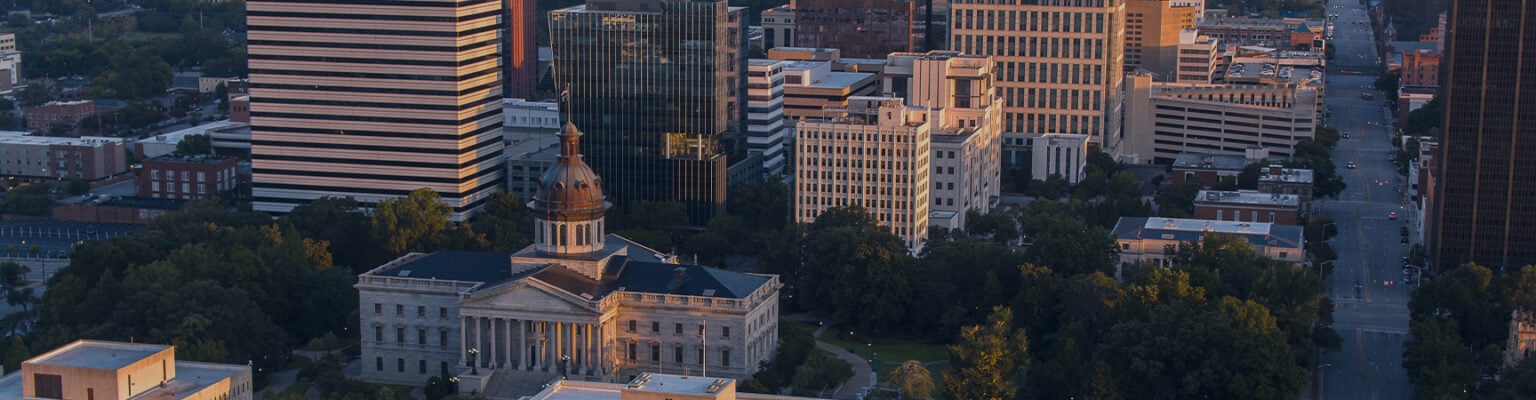
FCI Williamsburg at a glance
FCI Williamsburg is a medium-security federal prison for men in Salters, South Carolina, holding 1,691 people as of September 2026: 1,573 inside the fence and 118 at the minimum-security satellite camp beside it. It sits on Highway 521 in Williamsburg County, about sixty miles inland from Charleston.
| Official name | Federal Correctional Institution, Williamsburg |
|---|---|
| BOP code | WIL |
| Security level | Medium; men |
| Population | 1,691 · 1,573 at the FCI, 118 at the camp (as of September 2026) |
| Visiting | Saturdays, Sundays and federal holidays, 8:00 a.m.–3:00 p.m. · see visiting hours |
| Inmate mail | FCI: Inmate Name & Register Number · FCI Williamsburg · Federal Correctional Institution · P.O. Box 340 · Salters, SC 29590 Camp: Inmate Name & Register Number · FCI Williamsburg · Federal Correctional Institution · Satellite Camp · P.O. Box 340 · Salters, SC 29590 |
| Send money | Lockbox · Western Union (code city FBOP, DC) · MoneyGram (receive code 7932) |
| Phone | 843-387-9400 · Fax 843-387-6961 |
| Street address | 8301 Highway 521, Salters, SC 29590 · Williamsburg County |
| Judicial district | District of South Carolina |
| BOP region | Southeast |
| Designated capacity | 1,276 |
| Housing | 14 units: 13 with multiple-occupancy cells, 1 open dormitory; no single cells |
| Special Housing Unit | Yes · 96 segregation cells |
| RDAP | No · not at the FCI or the camp |
| UNICOR | Yes |
| Camp | Yes · minimum security |
On this page
FCI Williamsburg is in the Bureau’s Southeast Region and was activated in fiscal year 2005. The Residential Drug Abuse Program runs at neither the prison nor its camp, so a man who needs RDAP has to be designated somewhere else to get it.

Which Williamsburg? Where this prison actually is
FCI Williamsburg stands outside Salters, South Carolina: it is named for a South Carolina county, not a town, and it is not in Virginia. The buildings stand on Highway 521, in the southern half of Williamsburg County; the county seat, Kingstree, is a few miles north — the handbook puts its Amtrak station about four and a half miles away. A satellite navigation search for “Williamsburg, SC” will not take you to the front lobby.
Four different places get confused with this one.
| Place | Run by | How to find someone |
|---|---|---|
| FCI Williamsburg, Salters, SC (this page) | Federal Bureau of Prisons | BOP Inmate Locator |
| FCI Williamsburg satellite camp | Federal Bureau of Prisons — same post office box, same phone, lower custody | BOP Inmate Locator |
| Williamsburg County Detention Center, Kingstree, SC | Williamsburg County Sheriff’s Office — a 205-bed county jail | County jail roster |
| Anything in Williamsburg, Virginia | Not the Bureau of Prisons — it operates no facility there | Not applicable |
On the Virginia point: the Bureau’s roster carries exactly one facility whose name or city is Williamsburg, and it is this one. Virginia’s federal prisons are USP Lee at Pennington Gap and the Petersburg institutions at Hopewell. South Carolina’s own prison system has no institution named Williamsburg either, and none in this county. A state sentence returns nothing on the federal locator.
There is also no Williamsburg federal correctional complex. The Bureau’s roster record for this institution carries no complex code at all, and the satellite camp is the only other federal facility at this address.
South Carolina has four federal prisons in all. FCI Bennettsville and FCI Edgefield are the other two mediums for men with camps attached; FCI Estill is the outlier: low security, and on the Bureau’s current roster a women’s institution. Our guide to federal prisons in South Carolina has the full roster.
What is the security level at FCI Williamsburg?
FCI Williamsburg is a medium-security institution, and its satellite camp outside the fence is minimum security. One post office box, one telephone number, one commissary list and one visiting schedule serve both, and they are still two different sentences to serve. The 2024 PREA audit records the custody levels held here as Minimum, Low, Medium, Community, Out and In.
The February 2024 audit counted 14 housing units across 21 buildings and zero single-cell units anywhere. The 2026 handbook adds the working rule inside a cell — “Ordinarily, no more than two inmates should occupy a cell at the same time” — and every cell has a duress alarm “near the toilet flush valves.” What the first week looks like is covered in our guides to the intake process and to preparing for prison.
Two counts of housing units circulate and both are right: the handbook’s “four specific housing units,” each in its own building with the unit team’s offices inside, is the unit-management structure, while the auditor counts architecturally — by enclosed space with its own sleeping area, sanitation and dayroom — and gets fourteen.
Which side of the fence a man lands on turns on his security point score and on whether a Public Safety Factor applies. The Factor beats the points: a low enough score on every measure the Bureau counts still leaves a man out of the camp if one of them attaches to his record. That argument is had with the Designation and Sentence Computation Center in Grand Prairie, Texas, to which the handbook itself assigns “all sentence computations.”
Designated capacity is 1,276; as of September 2026 the FCI alone held 1,573. The 2024 audit recorded an average daily population of 1,480 and noted in the same paragraph that “the current staffing is based on 1,276 inmates.” The place has carried two to three hundred more men than its staffing plan assumes for years, and it is still growing — 1,568 in total in June 2026, 1,691 by September.
Who are the notable inmates at FCI Williamsburg?
None of the four men on the notable-inmate lists that circulate for FCI Williamsburg, including Wikipedia’s, is held there now: two are in federal prisons in other states, and two were released in 2020.
| Name | Register | Bureau record, September 2026 | Case |
|---|---|---|---|
| Farid Fata | 48860-039 | FCI Greenville, Illinois. Projected release December 11, 2050 | Detroit-area oncologist; pleaded guilty in 2015 to health care fraud, receiving kickbacks and money laundering for giving unnecessary chemotherapy; 45 years |
| Amine El Khalifi | 79748-083 | FCI Memphis, Tennessee. Projected release September 9, 2037 | Pleaded guilty in June 2012 to attempted use of a weapon of mass destruction in a plot against the U.S. Capitol; 30 years |
| Arthur E. Schlichter | 30044-048 | Released August 18, 2020. Last held at FCI Florence, Colorado — the medium-security institution, not the penitentiary or the ADX | Former NFL quarterback; pleaded guilty in 2011 to wire fraud, bank fraud and filing a false tax return in a ticket scheme |
| Allen H. Loughry II | 15022-088 | Released December 16, 2020, from RRM Baltimore | Former Chief Justice of the Supreme Court of Appeals of West Virginia; convicted on ten counts including mail and wire fraud; 24 months |
Listings that give Loughry’s release date as December 19, 2020, differ from the Bureau’s record, which says December 16.
The public record places a different set of men at this prison, and none of them is here now either.
| Name | Register | Status, September 2026 | Connection to this prison |
|---|---|---|---|
| Sammie Lee Sias | 58548-509 | Released February 11, 2025, from RRM Atlanta | Former Augusta, Georgia commissioner. Reported here in August 2023 on a three-year sentence; sentence reduced in February 2024; moved to Atlanta that September |
| Stanley J. Kowalewski | 63179-019 | Now under RRM Raleigh. Projected release October 14, 2029 | Held here in 2021 while a compassionate-release motion was pending; pleaded guilty in July 2022 to mailing a threatening communication to a United States District Court judge |
| Robert J. Mellow | 70626-067 | Released March 14, 2014 | Former Pennsylvania Senate Democratic leader. Sentenced November 30, 2012, to 16 months, three years of supervised release, a $40,000 fine and $79,806.17 in restitution; reported to the camp here in January 2013 |
The Kowalewski case explains two rules further down this page that otherwise look like bureaucracy. With a compassionate-release motion pending in the Northern District of Georgia, he handed a visitor a sealed letter to the judge threatening that if such motions were not granted by 3:00 p.m. on July 2, 2021, “we will begin to disappear the women closest to you.” Investigators found him because the recorded telephone call with that visitor caught him telling them to hurry up and mail it.
How do I find someone at FCI Williamsburg?
To find someone at FCI Williamsburg, search the Bureau’s free Inmate Locator by the eight-digit register number where you have it; the locator matches the committed name on the judgment, so a nickname will miss. For someone still held it gives the facility and a projected release date; for someone released it shows “Not in BOP Custody as of” and a date, with no facility.
Read the result carefully: the screen names the place and its type, and a man here shows as “Located at: Williamsburg FCI.” A result ending in RRM, such as “Raleigh RRM” or “Atlanta RRM,” is not a prison at all but a Residential Reentry Management office, meaning a halfway house or home confinement. A blank result usually means state custody, Marshals Service pretrial detention, or a committed name spelled differently from the one you know. See how register numbers work.
How do I write to someone at FCI Williamsburg?
Letters to someone at FCI Williamsburg go to P.O. Box 340, Salters, SC 29590, which the institution and the camp share. Put the committed name and the eight-digit register number on the first line; without the number the mail room cannot route it and it goes back.
| Purpose | Address |
|---|---|
| Someone at the FCI | Inmate Name & Register Number FCI Williamsburg Federal Correctional Institution P.O. Box 340 Salters, SC 29590 |
| Someone at the satellite camp | Inmate Name & Register Number FCI Williamsburg Federal Correctional Institution Satellite Camp P.O. Box 340 Salters, SC 29590 |
| Staff | Staff Name FCI Williamsburg Federal Correctional Institution P.O. Box 220 Salters, SC 29590 |
| Freight and non-USPS parcels | Staff Name FCI Williamsburg Federal Correctional Institution Attn: Warehouse 8301 Highway 521 Salters, SC 29590 |
Box 340 is for people in custody; Box 220 is for staff. The 2024 PREA audit form prints Box 220 as the facility’s mailing address, which is right for an auditor and wrong for a family.
General correspondence is opened, inspected for contraband and may be read. Legal mail is opened in front of the addressee and not read — but only when the outside of the envelope both identifies an attorney as the sender and carries the special-mail marking. The 2026 handbook says: “Legal mail from attorneys is ordinarily treated as special mail if properly identified on the envelope. If not properly marked, it may be opened as general correspondence.” Its forms table names the instrument for fixing that, a BP-493 Special Mail Notice, available from the unit team. See attorney-client communication in the Bureau of Prisons and writing to someone in federal prison.
Local rules that get letters rejected here, all from the August 2026 handbook: no colored envelopes and no colored paper; special mail capped at 25 photographs and five books per package; and every piece of outgoing general correspondence must carry a TRULINCS-generated mailing label, so a man with nothing on his account has a problem sending mail as well as receiving it. Packages need a Package Authorization Form on file and are ordinarily limited to approved medical devices and release clothing inside the last 30 days.
The mail room’s open house runs 10:30 a.m. to noon Monday to Friday and is for legal mail only; Wednesday and Thursday are the days a man can send a package out. The Records Office keeps the same window on Wednesdays and Thursdays, and that is where sentence computation, detainers and release dates get asked about.
How do I send money to someone at FCI Williamsburg?
Money for someone at FCI Williamsburg goes to the Bureau’s national lockbox in Des Moines, Iowa, or through a wire service, never to Salters: funds addressed to this prison are returned. All three routes need the committed name and the eight-digit register number on the instrument and on the outside of the envelope.
| Route | Where it goes | What to know |
|---|---|---|
| Postal money order, cashier’s check or business check | Federal Bureau of Prisons Committed Name Eight-Digit Register Number Post Office Box 474701 Des Moines, Iowa 50947-0001 | A U.S. postal money order posts without a hold. Everything else carries an automatic 15-day hold, and a foreign instrument 45 days. Enclose nothing else — no letter, no photographs |
| Western Union Quick Collect | Code city FBOP, DC | The route the institution’s own handbook names first |
| MoneyGram Express Payment | Receive code 7932, company name Federal Bureau of Prisons, Washington, DC | Still provided for by national policy, though the 2026 handbook here omits it |
What gets sent back: personal checks, cash through the mail, counter checks, anything expired or altered, and any instrument missing the committed name or the full register number. With no sender information on the envelope the money goes to the U.S. Treasury rather than back to you. See sending money to a federal prisoner.
The visitor handout attached to this institution’s 2018 supplement tells families that “all monies for an inmate must be mailed into the institution through the U. S. Postal Service.” That instruction is out of date. The Bureau’s own page for this facility says the opposite in capital letters, and the 2026 handbook gives the Des Moines address.
Before sending a large sum, understand what it can buy. Commissary spending is capped at $460 a month, so money above that sits in the account — still drawn against for a court-ordered obligation under the Inmate Financial Responsibility Program — but buying nothing more at the window except the exempt items listed further down. Money going the other way needs a BP-199 on TRULINCS, which a unit manager approves up to $499.99 and the Special Investigative Supervisor reviews above that.
What are the visiting hours at FCI Williamsburg?
Visiting at FCI Williamsburg is on Saturdays, Sundays and federal holidays, 8:00 a.m. to 3:00 p.m., at both the institution and the camp. Two institution documents agree on that: the visiting supplement, WIL 5267.09A, and the August 2026 Admission and Orientation handbook. There is no weekday visiting and no evening visiting.
The Bureau’s own facility page shows no visiting days or hours for this institution, and no Bureau facility page does; it links the supplement that sets them. The only published schedule for FCI Williamsburg is inside a PDF most visitors never open.
That supplement, dated May 22, 2018, is still the current one, and in two places the August 2026 handbook contradicts it; an officer at the door decides both. Three hard stops govern the day:
- No one is processed in before 8:00 a.m., and arriving in the parking lot or lining up at the door before 8:00 a.m. is prohibited.
- Every visitor must be completely processed through the front lobby by 9:30 a.m., because an official count runs on Saturdays, Sundays and holidays. Arrive after that and you wait outside until the count clears.
- No visitor is processed in after 2:00 p.m., whatever the 3:00 p.m. closing time suggests.
Special Housing Unit visits here are not conducted behind glass; they are video visits, using two rooms in the visiting room and two in the SHU, Saturday and Sunday, normally not exceeding three hours, first come first served, with the man escorted from his cell in an orange jump suit. For everyone else the supplement adds: “Non-contact areas are not available at this facility.”
Who can visit, and how many
Start with the disagreement, because it decides whether your children get in. The 2018 supplement limits a man to “five (5) adult visitors at one time” and says “children under sixteen (16) are not limited.” The August 2026 handbook says something else: “Inmates are allowed a limit of five (5) total visitors, including children, per visit.” Under the first rule a couple with three children is a party of two; under the second it is a party of five. Neither document rescinds the other. Call 843-387-9400 before you load the car.
- The visiting list normally holds twenty people, and once it is full it can be changed only once a quarter, by written request to the unit team. An omission made in March is not fixed until June.
- Every proposed visitor goes through a National Crime Information Center inquiry run by the unit counselor, and approved visitors are re-evaluated every six months. A man transferring in keeps his list if his last check is under two years old.
- Immediate family named in the presentence report go on the list, but “within thirty days all immediate family members must go through the same screening process.” A common-law partner has to be documented — joint leases, joint bank accounts, utility bills in both names — before the unit team will add them.
- No one visits during a new arrival’s first 72 hours, and only immediate family until the rest of the list clears verification. Neither the FCI nor the camp takes holdovers; a man passing through on that status gets verified immediate family, one day’s notice, and the SHU video rules.
- A criminal record does not automatically bar a visitor; the warden weighs “the nature and extent of the criminal record” against the value of the relationship. Former inmates of this institution and relatives of other inmates “rarely” get approved and need the warden’s prior approval.
There is no limit on the length of a visit — each man “is provided with an unlimited amount of visiting time during regular visiting hours” — until the room fills, at 299 people in the FCI visiting room and 118 at the camp. Then the Operations Lieutenant or Duty Officer starts ending visits, weighing “the distance a visitor has driven, the length of time the visitor has been in the visiting room, and the relationship of the visitor to the inmate.” Distance counts in your favor: a family that drove from Charlotte is comparatively protected, and a wife who has been in the room since eight is not.
What visitors can wear and bring
Three colors are barred here rather than the usual one, and the reason is in the handbook’s dress code for the men: khaki is the FCI uniform and green is the camp uniform, so visitors to either side may wear neither, and camouflage is out as well.
The rest runs with the national pattern — nothing see-through, backless, strapless, skin-tight or suggestive, no sweat suits, no open shoes, no heels over three inches, no hats except religious headwear — with two local twists. Shorts are allowed at both the FCI and the camp, this being South Carolina, but “shorts, dress slits or any other articles of clothing will not be less than two inches below the knee,” and nylon jogging suits “in good taste” are specifically permitted.
Now the second disagreement, and it is about cash. The 2018 supplement and its handout both authorize “money to be used for refreshments, no more than $25.00,” in a clear change purse no larger than six by six by three inches. The August 2026 handbook says: “Visitors may NOT bring money into the visiting room. Vending machines accept TBS vending cards purchased in the lobby.” A family that packs quarters on the strength of the older document may find them worthless. Ask when you call about the visitor count.
What may come in otherwise: a comb or hairbrush, a sweater or light jacket, worn jewelry, photo identification, feminine hygiene items, one see-through cup of twenty ounces or less, and the usual infant kit. Pillows, large blankets and strollers are not allowed. Medication is the clause people miss.
Life-maintenance medication — the supplement’s examples are heart and epilepsy drugs — may come in. Then, in the same line: “Diabetic medication and syringes are not considered life maintenance medications.” An insulin-dependent visitor planning a seven-hour day has to plan around that.
Small things that end a visit before it starts: no pens or pencils, no makeup of any kind, no key fobs, no perfume, no toys, no photographs, no newspapers or magazines, no food, no tobacco, and no watches worn into the room. Photographs are taken inside instead, weekly, at a nominal charge by an approved group. The man across the table may carry in a comb, a wedding band without a stone, a religious medallion, prescription eyeglasses and religious headwear, and nothing else.
Identification and screening
Government-issued photo identification is required for everyone sixteen and over — a driver’s license, a state identification card or a passport; children under sixteen are exempt but may not come in without an accompanying adult.
Screening here has an extra layer that trips people up. Every visitor passes a walk-through metal detector, and every visitor is also tested by an ION drug detection unit: “Any visitor refusing to be tested by the ION Drug System will not be allowed to visit.” Belongings are X-rayed, and failing either machine brings the Operations Lieutenant and Duty Officer and a written denial that goes to the Captain — which is why the handout advises leaving wired undergarments and excess metal at home. A black-light hand stamp is checked into the room and out of it. See searches, shakedowns and contraband, federal prison visitation and the Bureau’s visiting regulations.
For lawyers, three local rules matter. An attorney arriving during regular weekend hours must be on the client’s approved visiting list unless the unit team has a memorandum approved by the Captain; otherwise a written request goes to the warden 24 hours ahead. Visits are visually but not audibly monitored. And the supplement caps paper: half an inch of documents each way, and “normally, exchange or delivery of legal documents between an inmate and an attorney must occur through the U.S. Mail rather than through visitation” — so plan a signature in advance. A paralegal or interpreter needs a separate application with original signatures, and review takes about a week.
Getting there
The institution is at 8301 Highway 521, on the Salters side of Williamsburg County. The supplement routes you down Interstate 95 to Highway 521 south from the northeast, up I-95 from the southeast, and via Interstate 26 to I-95 south from the center of the state. The 2026 handbook adds the last turns: follow SC-521 into Salters, left at the first stoplight, on to the next stop sign, left again; at the entrance road turn right into the grounds, then left into visitor parking.
This is one of the few federal prisons a family can reach without a car. The 2026 handbook records train service at the Kingstree Amtrak station, which it puts “roughly four and a half miles north of Salters,” served by the Palmetto and the Silver Meteor; buses run to hubs at Florence, Sumter and Charleston; and it gives Myrtle Beach Regional Airport at about 48 miles and Charleston International at about 62. There is no public transportation from Kingstree to the gate, and the supplement lists local taxi services.
One warning about the Bureau’s own directions. The 2026 handbook’s opening line places the prison “in southwestern South Carolina.” It is not — it is in the eastern Lowcountry, which the handbook’s own next sentences confirm when they measure the distance to Charleston and Myrtle Beach.
How do phone calls and email work at FCI Williamsburg?
Every call at FCI Williamsburg is made from inside, to a number on the man’s approved list, and messages run through the Bureau’s TRULINCS system. There is no way to telephone in, and the list holds thirty numbers, dialed against a Phone Access Code issued at intake. The national allowance applies under the Bureau’s telephone regulations, Program Statement 5264.09, issued September 3, 2026: 510 minutes a calendar month, 300 of them free to anyone eligible for First Step Act telephone incentives and 210 more that may be bought once those 300 are used up, and a single call should generally not exceed 15 minutes. The 400-minute November and December figure came from the 2008 policy and did not survive its rescission. Three-way and international collect calls are prohibited, and phone credits can only be bought in whole dollars.
When the phones are actually on is a question this institution answers three different ways in one document. The handbook’s telephone table gives 6:00 a.m. to 9:15 p.m. every day. Its own frequently-asked-questions page and its daily-schedule appendix give banded weekday access — 6:00 to 8:00 a.m., 10:30 a.m. to 1:00 p.m. and 4:30 to 10:00 p.m. — with 6:00 a.m. to 10:00 p.m. on weekends. Lockdown is at 9:15 p.m., which fits the table and not the 10:00 p.m. figure. Expect the banded weekday schedule, and do not plan a family call for 9:45 p.m.
Everything except a properly arranged legal call is monitored and recorded, and the handbook says picking up the handset is the consent: “Use of the telephone constitutes consent to monitoring.” An unmonitored attorney call has to be set up in advance by written request to the unit team “with documentation verifying the attorney-client relationship.” See federal inmate phone calls.
Electronic messaging runs on TRULINCS, reached by families through CorrLinks, with workstations on each side of every housing unit. The same terminals run the Electronic Law Library and the printer, and printing costs three minutes of account time — about fifteen cents — a page, which is why a long docket is expensive. Messages to a lawyer are not privileged; privileged writing travels as marked special mail. See CorrLinks and TRULINCS.
What can people buy at the FCI Williamsburg commissary?
Each man at FCI Williamsburg may spend up to $460 a month at the commissary under the Bureau’s trust fund rules, Program Statement 4500.13, issued May 7, 2026, and $50 more during the November and December holiday period, for no more than one validation period. The policy’s change record reads: “Increases spending limit from $360 to $460 per month.” Listings that still give $360 for this facility are out of date.
Several things do not count against the limit: postage stamps, nicotine replacement products, over-the-counter medication and vitamins, copy cards and copy paper, kosher and halal shelf-stable entrees for men in financial-responsibility refusal status, mattresses, a secured media device, and footwear including sneakers and safety shoes. Whether the tablet on this institution’s own order form falls inside the media-device exclusion is a question for the trust fund office.
Williamsburg validates the limit twice a month rather than once — “revalidation of spending limits occurs on the 1st and 15th of every month” — and neither the handbook nor the order form prints the figure anywhere; it is “posted in each housing unit and at the commissary window.”
The institution’s 2026 commissary shopping list prints across the top the rule that costs a man his week — “Do not leave the Commissary once you have submitted your order form. No additions or substitutions will be made” — and the handbook adds the other half: stay in the lobby after you get a shopping number, because if you are not there when it is called “the number may be voided and the inmate may need to wait until the next shopping day.”
What is on the shelf says something about how time gets served here: a Swintec typewriter ribbon at $11.20, a print ribbon at $7.75, correction tape at $2.40, legal envelopes and ruled pads at $1.60, a copier card at $6.50 — and a typing room kept open “for legal work only” to use them in. Alongside those, a prayer rug at $16.98, frankincense and Firdous oils, a white turban, a yarmulke, baseball gloves and a tablet at $141.70.
What programs are available at FCI Williamsburg?
FCI Williamsburg offers drug education and nonresidential drug treatment but not RDAP, the BRAVE program for young men early in long sentences, Pell-funded college courses through Williamsburg Technical College, GED and vocational training, a UNICOR factory and faith-based programming.
Drug treatment without RDAP
The Residential Drug Abuse Program is not offered at FCI Williamsburg. The institution says so itself, in its August 2026 handbook: “RDAP is not available at FCI Williamsburg. To apply, submit an Inmate Request to Staff Member (cop-out) to the Drug Treatment Specialist… qualified inmates may be designated to an institution with an RDAP program.” The Bureau’s own list of RDAP locations inside the August 2026 First Step Act guide, updated June 4, 2026, says the same by omission: it names 57 programs at 50 locations, and neither this institution nor its camp appears on it. (An older standalone list, updated January 2025, gave 65 programs at 53 locations. It is superseded; anything still quoting those figures is out of date.)
This is the most consequential fact on the page for anyone with a documented substance-abuse history. Completing RDAP can take up to a year off the sentence of someone convicted of a nonviolent offense, under 18 U.S.C. § 3621(e)(2)(B) (First Step Act time credits can also move the transfer to supervised release up to 12 months earlier, under 18 U.S.C. § 3624(g)(3)), and here it is not a program application but a transfer argument, made through Grand Prairie on points, Public Safety Factors and management variables. Start it years before release. In the whole of South Carolina that list shows a single RDAP, at the camp attached to FCI Edgefield. See federal prison transfers.
What does run here: Drug Abuse Education, and the Non-Residential Drug Abuse Treatment Program, described in the handbook as “recommended for those interested in or waiting to attend RDAP.” Neither carries the § 3621(e) reduction. Medication for opioid use disorder is dispensed daily — the pill-line table lists an OUD line from 8:30 to 9:30 a.m. — and for a man arriving on buprenorphine that line is the thing to ask about in the first week.
One residential program does run here, aimed at young men at the start of long sentences. BRAVE — Bureau Rehabilitation and Values Enhancement — is a six-month, 350-hour behavioral treatment program in a housing unit separate from general population, and the Bureau’s August 2026 programs guide names six institutions approved to run it, this among them. The criteria are narrow: 40 or younger, at least 36 months left to serve, a first Bureau commitment, and within the first eighteen months of the sentence.
Education, vocational training and UNICOR
FCI Williamsburg is one of sixteen federal institutions where incarcerated students can take college courses paid for by a Pell Grant — that is the Bureau’s August 2026 programs guide — and the institution’s handbook names the college, Williamsburg Technical College, and records that the credits transfer. For a man serving the 60 to 100 months that is the average stay here, that is time enough for a degree.
Underneath that sit the ordinary tiers: GED; English as a second language to eighth-grade level on the CASAS exam; Adult Continuing Education taught by other incarcerated men, with the offerings changing quarterly; and Department of Labor apprenticeships. A man without a verified high school credential must enroll in the literacy program, and the credential governs how much good conduct time vests. HVAC certification testing runs here too, at the candidate’s own expense. See prison education and vocational training.
The law library is where this institution’s paperwork breaks down. The handbook’s narrative says the library “is open during convenient non-working hours, including Sundays” and is “closed on Saturdays and federal holidays.” Its own library table says exactly the opposite: open Saturday 7:15 a.m. to 3:30 p.m., closed Sunday and holidays. One of them is wrong and the public record cannot say which, so a man working to a filing deadline should get the answer from the unit team in writing rather than lose a weekend. The weekday hours at least agree: 8:30 to 10:30 a.m., 12:30 to 3:30 p.m., and Monday to Thursday evenings after the count clears until 8:30 p.m.
UNICOR operates at FCI Williamsburg; directory listings that say it does not are wrong. The August 2026 handbook devotes a section to it, gives factory hours of 7:30 a.m. to 3:30 p.m. and records that men in financial-responsibility refusal status are not eligible; the Bureau’s August 2026 programs guide lists this institution among the UNICOR sites. What the factory produces is not published for this location. Ordinary work details pay from $0.12 an hour to $1.20, with $5.25 a month for men unassigned or on maintenance pay.
Faith-based and reentry programming
Religious Services runs with a staff chaplain, a Religious Services Assistant and contract and volunteer representatives of various faiths, with a no-flesh line, certified kosher and halal meals, and one ceremonial meal a year. Personal religious property must be bought from approved catalogs — “ordinarily, no personal religious property may come from home” — which is why prayer rugs, oils and religious headwear appear on the commissary form.
The faith-based reentry program offered here is Thresholds: a six-month class, once weekly, capped at fifteen participants. The handbook also lists the Life Connections Program, an eighteen-month residential faith-based program — and here the Bureau contradicts itself twice over. The guide’s own Life Connections page names five institutions, and Williamsburg is not among them. The guide’s programs-by-institution table, a few pages later, marks Williamsburg for it. The handbook agrees with the table. The disagreement is unresolved, so anyone counting on Life Connections for time credits should get the answer in writing from the unit team.
Release preparation classes run in the Education Department, and a man is “generally required to be within three years of release” to enroll. Halfway house and home confinement placement is arranged by the reentry management office covering the district a man will live in after release; RRM Atlanta, whose Bureau page lists South Carolina and the three districts in Georgia, handles releases to this state. One caution about all of it: a published guide answers one question only, whether a program is approved to be offered somewhere. Whether a class is running this month, whether there is a waitlist, and whether credits are reaching the sentence computation are three different questions.
What is daily life like at FCI Williamsburg?
Days at FCI Williamsburg follow the count and movement schedule in the institution’s August 2026 handbook; where the handbook gives two times for the same thing, both are shown below.
| Weekdays | Weekends and holidays | |
|---|---|---|
| Official counts | 12:00 a.m., 3:00 a.m., 5:00 a.m. (stand-up), 4:00 p.m. (stand-up), 9:30 p.m. (stand-up), plus morning and afternoon census checks | Same, plus a 10:00 a.m. count |
| Wake-up / cell doors unlock | After the 5:00 a.m. count clears; doors open about 6:15 a.m. | |
| Meals | Breakfast 6:30 a.m.; lunch 10:45 a.m.; dinner after the 4:00 p.m. count clears | Coffee hour 7:00 a.m.; brunch after the 10:00 a.m. count clears; dinner after the 4:00 p.m. count |
| Sick call | 6:30–6:45 a.m. in one part of the handbook, the 8:30 a.m. move in two others — Monday, Tuesday, Thursday, Friday | Emergencies only |
| Pill lines | Morning and insulin 6:15–7:00 a.m.; opioid use disorder line 8:30–9:30 a.m.; self-carry issue 10:30 a.m.–12:30 p.m.; evening and insulin 5:30–6:30 p.m. Weekends and holidays the pill line runs with meals. SHU 8:30 a.m. and 3:00 p.m. | |
| Work call / controlled movement | 7:30 a.m. to 8:30 p.m., seven days a week including federal holidays | |
| Telephones | 6:00 a.m.–9:15 p.m. by the handbook’s table; 6:00–8:00 a.m., 10:30 a.m.–1:00 p.m. and 4:30–10:00 p.m. by its own FAQ and daily schedule | 6:00 a.m.–9:15 p.m., or 6:00 a.m.–10:00 p.m., same disagreement |
| Recreation yard / gym | Yard 8:30 a.m.–8:00 p.m., closing at dusk; gym 6:30 a.m.–8:30 p.m. weekdays, from 6:00 a.m. on weekends | |
| Lockdown | 9:15 p.m., final stand-up count 9:30 p.m. | |
Controlled movement runs from 7:30 in the morning until half past eight at night, every day of the year including federal holidays, and the handbook is firm about what it is for: “Controlled moves are for the purpose of moving from point A to point B, not to socialize or walk the compound.” Running on the compound is prohibited outright, and on the track, “do not jog near the perimeter fence at any time.”
Clothing marks which side of the fence a man lives on: khaki at the institution, green at the camp, gray sweats for recreation and weekends, with khaki required Monday to Friday for breakfast and lunch. Dark personal clothing is barred outright — no black, no blue, no civilian or altered clothing — and legal materials are permitted “for active/current cases only.”
Recreation covers intramural leagues, a wellness room with treadmills, bikes and rowing machines, yoga and structured exercise classes, and hobby craft in art, yarn, beads, leather and painting. Two projects run weekly and both matter to families: photographs are taken in the visiting room and on the yard, and movies are shown through the unit televisions.
Sick call is the trap. Whichever of the handbook’s two times is right, the window is narrow — fifteen minutes on one reading — and it runs only Monday, Tuesday, Thursday and Friday. There is a $2.00 copayment for care a man asks for himself, and none for staff referrals, chronic care, preventive care, emergencies, mental health or substance abuse treatment. Dental sick call is Monday and Thursday on the 8:30 a.m. move. A copy of a medical file comes on written request and ordinarily arrives within twenty days — the first thing to ask for when something has gone wrong. See medical care in federal prison.
What do inspectors say about conditions at FCI Williamsburg?
No outside body has published a general inspection of conditions at FCI Williamsburg; the only independent review of conditions is the February 2024 PREA audit, which examines one subject. The DOJ Office of the Inspector General has not conducted an on-site inspection of this facility. Its unannounced conditions inspection — a program that had reached fourteen institutions across the system on the Inspector General’s own count in May 2026 (Report 26-055) — has never been run at Williamsburg, and none is announced. The Inspector General has still been here: its criminal investigators have worked inside this prison repeatedly, and three of those investigations produced convictions between 2022 and 2025.
The District of Columbia’s Corrections Information Council, which produced the only independent conditions reports that exist for FCI Edgefield and FCI Bennettsville, has never inspected this one.
What the Inspector General has done here
Three people who worked inside FCI Williamsburg have been prosecuted for taking money to bring contraband in. Two were correctional officers; one was a medical contractor.
- Tanganita Dawkins, a Bureau medical contractor at this institution, was indicted on July 27, 2021, for bribery and introduction of contraband, arrested that August, pleaded guilty to one count of bribery on March 1, 2022, and was sentenced on June 2, 2022, to three years of probation.
- Angela Crosland, 51, of Elgin, a correctional officer here, was indicted in November 2023, convicted by a federal jury on January 28, 2025, and sentenced on May 23, 2025, to 136 months in prison. The Justice Department’s account: “While employed as a correctional officer, Crosland smuggled contraband into FCI Williamsburg in exchange for money. The contraband included Suboxone, methamphetamine, K-2-soaked paper, marijuana, food, and other items.” She took $56,791 through Cash App from the family members and associates of men inside, and did not declare it. The Inspector General and IRS Criminal Investigation worked the case.
- Megan Shara Welch, 33, of Florence, a former correctional officer here, was arrested on August 5, 2025, on a criminal conspiracy charge. The Williamsburg County Sheriff’s Office brought the charge and the institution’s own Special Investigative Services Division found the evidence: officers “found communication between Welch and an inmate from July 1 to Aug. 4 in which they conspired to bring contraband into the prison.” Investigators reported she had supplied contraband repeatedly while employed there, for $8,500. This was not only a county matter: the Justice Department’s Inspector General announced the arrest on August 5 and again on August 15, 2025.
In the Crosland case, families were paying a correctional officer through Cash App, by phone, from home. If someone asks you to send money anywhere other than the Des Moines lockbox, Western Union’s FBOP code city or the MoneyGram receive code, the request is not a shortcut — it is the offense that put Angela Crosland in prison for eleven years, and it exposes the person you are trying to help.
Eleven criminal and civil case announcements from the Inspector General name this institution. None of them evaluates conditions here, and neither does anything else in its published record — except the September 2021 follow-up survey of Bureau staff on the pandemic, which publishes results broken out for this facility by name, as “Williamsburg FCI.”
The 2024 PREA audit
FCI Williamsburg was audited under the Prison Rape Elimination Act on February 13–15, 2024, by Lori Fadorick, an independent auditor subcontracted by PREA Auditors of America. The final report is dated March 20, 2024. The warden at the time was Milton Graham.
The facility passed: 43 standards met, two exceeded — 115.31 on staff training and 115.71 on investigations — and none not met, with no corrective action. The auditor recorded no access problem of any kind: “The Auditor had full, unimpeded access to all areas of the facility.” It is also the fullest public description of this place anyone has published.
| Buildings | 21 |
|---|---|
| Housing units | 14 — 12 general population, 1 segregation, 1 camp dormitory; 13 multiple-occupancy cell units, 1 open dormitory, 0 single-cell units |
| Segregation cells | 96 |
| Designated capacity | 1,276 |
| Current population recorded on the audit form / average over the preceding year | 1,448 / 1,480 — over capacity during the year |
| Population on the first morning of the on-site visit | 1,213 — 1,158 at the FCI, 55 at the camp. The form records both this and the 1,448 above; they are different fields, not different days of the same count |
| Admissions in the preceding 12 months | 1,169, of whom 1,040 stayed 30 days or more |
| Age range | 19 to 81 |
| Average length of stay | 60 to 100 months |
| Staff | 358, of whom 16 were hired in the preceding year; 11 contractors and 22 volunteers |
| Accreditation within three years | None — not ACA, not NCCHC, not CALEA. The only other review listed is an internal Bureau program review |
| Sexual assault forensic examinations | Off site, at a local hospital |
Plenty of federal prisons carry American Correctional Association accreditation and some carry health care and law enforcement accreditation as well; as of February 2024 this one carried none of the three, and the PREA auditor was the only outside body to have examined any part of its operation in three years.
Of the 1,213 men present on the first day of the February 2024 audit, 139 had a physical disability, 73 were blind or visually impaired and sixteen were deaf or hard of hearing. For a medium-security prison that is a markedly disabled population, and it lives in a building with no single cells.
The allegation data are unusually clean. Across the twelve months before the audit the facility logged seven allegations in total — three of sexual abuse, four of sexual harassment, all of them inmate-on-inmate. There were no staff-on-inmate allegations of either kind. Of the abuse allegations, two were unfounded and one unsubstantiated, and one was “referred for prosecution, which was declined.” Of the harassment allegations, one was unfounded, two unsubstantiated and one substantiated.
Staffing
The clearest statement about staffing here comes from the PREA audit. In February 2024 “the Warden and PREA Compliance Manager stated that the facility was at approximately 80% staffing,” and “the Warden and Captain stated that there were approximately 30 custody vacancies for which they have been actively recruiting.”
Set that against two other lines in the same audit. The Bureau’s human resources policy, quoted by the auditor, provides that “the vacancy rate will not exceed ten percent during any eighteen-month period.” And the facility reported no deviations from its staffing plan in the previous twelve months, because policy “does not allow for correctional service rosters to be unmanned” — posts get filled by overtime and by augmentation, the practice of putting teachers, counselors and other non-custody staff on officer posts. Every roster was manned. It was manned at eighty percent of complement with thirty vacant custody posts, on a plan built for 1,276 men in a prison holding 1,448 at the time of the February 2024 audit.
For a family, short staffing is why a callout is canceled, a class has a waitlist, a fifteen-minute sick call window closes before a man reaches it, or a visit ends at noon.
Cases out of this prison
Two decisions from the District of South Carolina involve men held here.
In Earl v. Hansen, No. 1:20-cv-03907 (D.S.C. July 28, 2021), a man held here argued that staff interference at FCI Williamsburg had made the Bureau’s administrative remedy process unavailable to him. The magistrate judge did not decide whether that happened. What the report held is narrower and still useful: “Given the inconsistencies in the record before the court and Plaintiff’s evidence and argument presented, the undersigned declines to recommend dismissal of Plaintiff’s claims based on his failure to exhaust his administrative remedy.” The exhaustion defense failed at that stage; the claim still lost on the merits, on deliberate indifference and qualified immunity.
In Holmes v. United States, No. 9:23-cv-03251 (D.S.C. Feb. 28, 2024), a man transferred into FCI Williamsburg said he told medical staff at his intake evaluation that he needed daily medication to keep a cardiac stent from clogging, that he did not get it, and that he had a heart attack. The court never reached any of that: it recommended dismissal because the Federal Tort Claims Act requires that “any suit under the FTCA be initiated within six months after the date of mailing… of notice of final denial of the claim,” and he had filed nearly two years later. The merits were never decided. The clock was.
The institution’s own handbook sends tort claims to the wrong office. It tells men that completed tort claim forms “are ordinarily mailed to the North Central Regional Office.” The regulation it cites in the same paragraph, 28 C.F.R. § 543.31(c), says otherwise: “You may either mail or deliver the claim to the regional office in the region where the loss or injury occurred.” This prison is in the Southeast Region, which sits in Atlanta; North Central is in Kansas City. A misdirected claim is not automatically lost — a claim transferred between Bureau offices “will be considered filed with that office when the claim was received by the first appropriate agency office” — but it is delayed, and staff will not accept a claim handed in at the prison. Given the six-month clock that decided Holmes, delay is not a small thing. See Federal Tort Claims Act claims.
FCI Williamsburg in the news
Recent news about FCI Williamsburg centers on a new handbook and on contraband cases against two correctional officers; older items concern a medical contractor’s bribery case, a prisoner’s threat to a federal judge, deaths reported in January 2021, a former state senator’s arrival at the camp and the prison’s activation in fiscal year 2005. Newest first:
- August 2026 — the institution published a new Admission and Orientation handbook, signed by Warden J. Taylor on August 1. It records for the first time that RDAP is not available at this prison.
- August 2025 — Megan Shara Welch, 33, a former correctional officer here, was arrested on August 5 on a criminal conspiracy charge after the institution’s Special Investigative Services Division intercepted a month of communications between her and a man inside. Investigators reported she had been paid $8,500 for contraband deliveries.
- May 2025 — Angela Crosland, a correctional officer at this institution, was sentenced to 136 months in prison and three years of supervised release for bribery, money laundering, distributing methamphetamine and Suboxone inside the prison, and filing a false tax return. A federal jury had convicted her in January 2025.
- July 2022 — Stanley Kowalewski, then held here, pleaded guilty to mailing a threatening communication to a United States District Court judge, having passed the letter to a visitor for posting.
- June 2022 — Tanganita Dawkins, a Bureau medical contractor at this institution, was sentenced to three years of probation for bribery after an Inspector General investigation into contraband brought in through the medical department.
- January 2021 — the Bureau posted three news releases reporting the deaths of people held at FCI Williamsburg; the Bureau’s releases are listed on its press release page.
- January 2013 — Robert J. Mellow, former Democratic leader of the Pennsylvania Senate, reported to the satellite camp here to begin a 16-month sentence for conspiracy to commit mail fraud and to defraud the United States.
- Fiscal year 2005 — the Bureau activated FCI Williamsburg, one of ten institutions it brought online that year. It opened holding 922 men at the institution and 126 at the camp, with 267 staff.
Frequently asked questions about FCI Williamsburg
What is FCI Williamsburg?
FCI Williamsburg is a medium-security federal prison for men in Salters, South Carolina, with an adjacent minimum-security satellite camp. The Bureau activated it in fiscal year 2005. As of September 2026 it held 1,691 people — 1,573 at the institution and 118 at the camp.
Where is FCI Williamsburg located?
At 8301 Highway 521 in Salters, South Carolina 29590, in Williamsburg County, about sixty miles inland from Charleston. There is no town in South Carolina called Williamsburg — Williamsburg is the county, and Kingstree is the county seat a few miles north. It has nothing to do with Williamsburg, Virginia, where the Bureau of Prisons operates no facility at all.
When can I visit someone at FCI Williamsburg?
Saturdays, Sundays and federal holidays, 8:00 a.m. to 3:00 p.m., at both the institution and the camp, under institution supplement WIL 5267.09A. No one is processed in before 8:00 a.m. or after 2:00 p.m., and every visitor must be through the front lobby by 9:30 a.m. The Bureau’s own facility page shows no visiting days or hours for this institution, and no Bureau facility page does; it links the supplement that sets them. Call 843-387-9400 before traveling.
How many visitors can someone have at FCI Williamsburg?
The institution’s two published documents disagree. Its visiting supplement of May 22, 2018, allows five adult visitors at one time and says children under sixteen are not limited. Its Admission and Orientation handbook of August 2026 says the limit is five total visitors including children. Neither rescinds the other, so call 843-387-9400 before traveling with children.
Does FCI Williamsburg have RDAP?
No. The institution’s August 2026 handbook states that “RDAP is not available at FCI Williamsburg,” and the Bureau’s list of Residential Drug Abuse Program locations inside the August 2026 First Step Act guide, updated June 4, 2026, does not include this institution or its camp among its 57 programs at 50 locations. Drug Abuse Education and the Non-Residential Drug Abuse Treatment Program are offered here, and a daily opioid use disorder medication line runs from 8:30 to 9:30 a.m. Getting into RDAP from here is a designation and transfer question.
How much can someone spend at the FCI Williamsburg commissary?
$460 a month, plus $50 during the November–December holiday period for no more than one validation period, under Program Statement 4500.13, issued in May 2026, which raised the ceiling from $360. Stamps, nicotine replacement products, over-the-counter medication and vitamins, copy cards and paper, mattresses, a secured media device and footwear are excluded from the limit. Listings that still give $360 are out of date.
What is the mailing address for FCI Williamsburg?
Inmate Name and Register Number, FCI Williamsburg, Federal Correctional Institution, P.O. Box 340, Salters, SC 29590. Mail for someone at the satellite camp uses the same box with the line “Satellite Camp” added. P.O. Box 220 is the staff mailbox, not the inmate one. Never send money to either box — funds go to the Bureau’s lockbox in Des Moines, Iowa.
Does FCI Williamsburg have UNICOR?
Yes; directory listings that say otherwise are wrong. The institution’s August 2026 handbook has a UNICOR section giving factory hours of 7:30 a.m. to 3:30 p.m. and noting that men in Inmate Financial Responsibility Program refusal status are not eligible, and the Bureau’s August 2026 First Step Act Approved Programs Guide lists this institution among its UNICOR sites. What the factory produces is not published for this location.
Can you take college classes at FCI Williamsburg?
Yes. FCI Williamsburg is one of sixteen federal institutions listed in the Bureau’s August 2026 First Step Act Approved Programs Guide as offering post-secondary education funded by Pell Grants. The institution’s handbook names the provider as Williamsburg Technical College and records that the credits transfer. GED, English as a second language, Adult Continuing Education, vocational training in Building Trades and Culinary Arts, and Department of Labor apprenticeships are also offered.
Which well-known people have been held at FCI Williamsburg?
None of the four men on the published notable-inmate lists is held here now. The Bureau’s records place Farid Fata at FCI Greenville in Illinois and Amine El Khalifi at FCI Memphis in Tennessee; Art Schlichter was released in August 2020 and Allen Loughry in December 2020. Former Augusta commissioner Sammie Sias was held here from August 2023 until September 2024, and former Pennsylvania Senate leader Robert Mellow served at the camp from January 2013.
Has FCI Williamsburg been inspected?
Only on one subject. The DOJ Office of the Inspector General has not conducted an on-site inspection of this facility, and the District of Columbia’s Corrections Information Council, which inspected FCI Edgefield and FCI Bennettsville, has never inspected it. The institution passed an independent Prison Rape Elimination Act audit conducted on February 13–15, 2024, with 43 standards met, two exceeded and none unmet. That audit also records no ACA, NCCHC or CALEA accreditation in the preceding three years.
What is the difference between FCI Williamsburg and the Williamsburg County Detention Center?
They are different systems. FCI Williamsburg is a federal prison in Salters run by the Bureau of Prisons, and people there are found through the federal Inmate Locator. The Williamsburg County Detention Center is a 205-bed county jail in Kingstree run by the Williamsburg County Sheriff’s Office, with its own roster. Mail, money, visiting and release procedures differ at each, and the federal locator will never find someone held at the county jail.
Problems at FCI Williamsburg: where we can help
This institution’s own record points at two things first. The program most people need — RDAP — is not here, which turns a treatment question into a designation fight. And the contraband economy in this prison has run through staff: three people who worked inside it were prosecuted between 2021 and 2025 for taking money to bring things in. Each of the issues below runs on a deadline.
- RDAP eligibility and the § 3621(e) year. With no RDAP at this prison or its camp, this is a transfer and designation argument made through Grand Prairie, and it has to start years before a release date.
- First Step Act time credits — whether they are being earned, calculated and posted correctly, and whether a program a man has been told he is in is one the Bureau actually approves here. The gap between the handbook and the Bureau’s own August 2026 programs guide over Life Connections shows why that is worth checking in writing.
- Designation and transfer generally, including getting someone closer to home. See federal prison transfers.
- Medical care that is not happening. The route is a written request to staff and then the administrative remedy process, where the BP-9 must be filed within 20 calendar days of the incident; ask for the medical file in writing at the same time. Where neglect has caused injury, a Federal Tort Claims Act claim is a separate track with its own clock — and this institution’s handbook sends men to the wrong regional office, so check the address before it goes in the mail.
- Exhaustion problems. When staff make the remedy process unavailable that is an argument with a framework behind it, and a court in this district has declined to dismiss on exhaustion where the record showed inconsistencies. Document every form requested, every form refused and every date.
- Disciplinary proceedings that put good conduct time at risk, and time in the Special Housing Unit — or in protective custody — that has outlasted its reason. Bear in mind that a man in the SHU here is seen only through a video monitor.
- Halfway house and home confinement dates, which come from the reentry office for the release district; for a man going home to South Carolina, that is RRM Atlanta, in Georgia.
- Compassionate release under the Bureau’s reduction-in-sentence rules, and errors in the sentence computation itself — good conduct time that never vested because a literacy requirement was read wrongly is the one we see most.
- Challenges to the conviction or sentence itself, through a direct appeal or a § 2255 motion.
Elizabeth Franklin-Best, P.C. is a Columbia, South Carolina firm handling federal criminal defense, appeals and post-conviction matters. This prison sits in our own district, so a habeas petition filed out of it goes to judges we appear before and, on appeal, to the Fourth Circuit. Call (843) 620-1100 or contact us to talk through a specific situation.
Christopher Zoukis, JD, MBA, the firm’s Managing Director, writes and maintains the federal prison policy material on this site. He is not counsel of record; legal representation is provided by Elizabeth Franklin-Best.
Sources and currency
Bureau of Prisons documents
- FCI Williamsburg, Federal Bureau of Prisons, 2026. Contact details, mailing addresses and the documents the page links.
- FCI Williamsburg Admissions and Orientation Handbook, 2026 Edition, Federal Bureau of Prisons, FCI Williamsburg, 2026.
- FCI Williamsburg Commissary Shopping List, Federal Bureau of Prisons, FCI Williamsburg, 2026.
- Institution Supplement WIL 5267.09A, Visiting Regulations, Federal Bureau of Prisons, FCI Williamsburg, 2018. Replaced Institution Supplement WIL 5267.09 (2017).
- Federal Tort Claims Act, Program Statement 1320.07, Federal Bureau of Prisons, 2024. Reproduces 28 C.F.R. §§ 543.31–543.32.
- Trust Fund/Deposit Fund Manual, Program Statement 4500.13, Federal Bureau of Prisons, 2026. Spending limit, exclusions, acceptable instruments, holds and deposit routes.
- Inmate Telephone Regulations, Program Statement 5264.09, Federal Bureau of Prisons, 2026. Replaced Program Statement 5264.08 (2008).
- First Step Act Approved Programs Guide, Federal Bureau of Prisons, Reentry Services Division, 2026. BRAVE, Pell-funded education, Life Connections and UNICOR sites, and the current RDAP locations list.
- Press Releases, Federal Bureau of Prisons, 2021. Includes the three January 2021 releases reporting deaths at FCI Williamsburg.
- Southeast Regional Office, Federal Bureau of Prisons, 2026.
- RRM Atlanta, Federal Bureau of Prisons, 2026. The judicial districts the office serves.
- State of the Bureau 2005, Federal Bureau of Prisons, 2006. Records the institution’s activation, opening population and staffing in fiscal year 2005.
Audits and inspections
- Inspection of the Federal Bureau of Prisons’ U.S. Penitentiary Canaan (Report 26-055), U.S. Department of Justice, Office of the Inspector General, 2026. Gives the number of Bureau institutions the Inspector General has inspected.
- PREA Audit Report: Federal Correctional Institution (FCI) Williamsburg, PREA Auditors of America, LLC, 2024. On-site audit of February 13–15, 2024, by Lori Fadorick.
- Staff Perceptions of the Federal Bureau of Prisons’ Management of the Coronavirus Disease 2019 Pandemic: A Follow-Up Survey of BOP Staff (Report 21-126), U.S. Department of Justice, Office of the Inspector General, 2021. Staff survey results by institution.
Court records
- Arrest in Contraband at FCI Williamsburg, U.S. Department of Justice, Office of the Inspector General, 2025. Megan Shara Welch’s arrest.
- BOP Correctional Officer Arrested for Criminal Conspiracy, U.S. Department of Justice, Office of the Inspector General, 2025. Megan Shara Welch’s arrest.
- Former Bureau of Prisons Correctional Officer Sentenced to Federal Prison for Bribery, Drug Scheme, U.S. Attorney’s Office, District of South Carolina, 2025. Angela Crosland’s sentence.
- Former Bureau of Prisons Correctional Officer Sentenced to Federal Prison for Bribery, Drug Scheme, U.S. Department of Justice, Office of the Inspector General, 2025. Angela Crosland’s sentence.
- Federal Jury Convicts Former Bureau of Prisons Correctional Officer in Bribery, Drug Scheme, U.S. Department of Justice, Office of the Inspector General, 2025. Angela Crosland’s conviction.
- BOP Correctional Officer Indicted for Bribery, Distribution of Methamphetamine, U.S. Department of Justice, Office of the Inspector General, 2024. Angela Crosland’s case.
- Holmes v. United States, No. 9:23-cv-03251 (D.S.C.), U.S. District Court for the District of South Carolina, 2023. Docket; the magistrate judge’s report and recommendation is dated February 28, 2024.
- BOP Correctional Officer Indicted for Bribery, Distribution of Methamphetamine, U.S. Department of Justice, Office of the Inspector General, 2023. Angela Crosland’s indictment.
- Federal Inmate Pleads Guilty to Threatening Federal Judge, U.S. Attorney’s Office, District of South Carolina, 2022. Stanley J. Kowalewski’s guilty plea.
- Former BOP Medical Contractor Sentenced for Bribery, U.S. Department of Justice, Office of the Inspector General, 2022. Tanganita Dawkins’s sentence.
- Former BOP Medical Contractor Pleaded Guilty to Bribery, U.S. Department of Justice, Office of the Inspector General, 2022. Tanganita Dawkins’s guilty plea.
- Earl v. Hansen, No. 1:20-cv-03907 (D.S.C.), U.S. District Court for the District of South Carolina, 2020. Docket; the magistrate judge’s report and recommendation is dated July 28, 2021.
- Former BOP Medical Contractor Arrested for Bribery, U.S. Department of Justice, Office of the Inspector General, 2021. Tanganita Dawkins’s arrest.
- Former BOP Medial [sic] Contractor Indicted for Bribery and Providing Contraband into Prison, U.S. Department of Justice, Office of the Inspector General, 2021. Tanganita Dawkins’s indictment.
- Former Pennsylvania State Senator Robert Mellow Sentenced in Federal Court, Federal Bureau of Investigation, Philadelphia Division, 2012. Robert J. Mellow’s sentence.
News and other sources
- Williamsburg County Deputies Arrest Woman Providing Contraband to Inmates, Live 5 News (WCSC), 2025.
- Ex-Commissioner Sammie Sias Receives Reduced Prison Sentence, WRDW, 2024.
- Ex-Commissioner Sammie Sias Is in Prison; Sentenced to 3 Years, WRDW, 2023.
- Mellow Headed to S.C. to Serve Prison Time, The Times-Tribune (Scranton), 2013.
- Detention Center, Williamsburg County, South Carolina, 2026. The county jail in Kingstree.
- Institutions, South Carolina Department of Corrections, 2026. No state institution is named Williamsburg or located in the county.
- 18 U.S.C. § 3621(e)(2)(B), Imprisonment of a convicted person, U.S. Code (Legal Information Institute).
- 18 U.S.C. § 3624(g)(3), Release of a prisoner, U.S. Code (Legal Information Institute).
- 28 C.F.R. § 543.31(c), Presenting a claim, Code of Federal Regulations (Legal Information Institute).
Sources reviewed September 2026.
Reviewed for legal accuracy by Elizabeth Franklin-Best, Esq., Principal Attorney·September 2026