
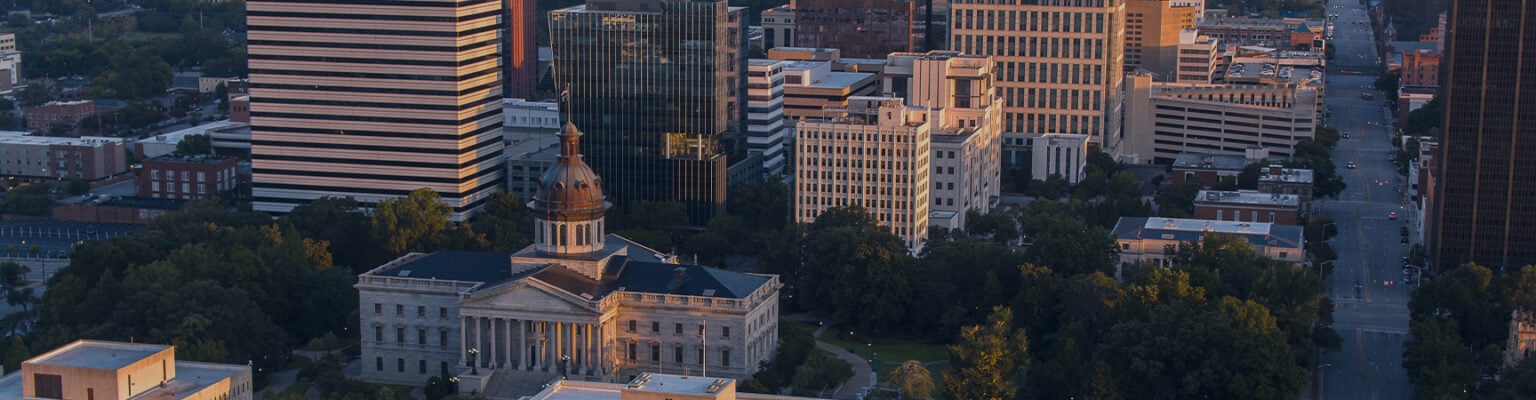
USP Beaumont at a glance
USP Beaumont is a high-security federal penitentiary for men on Knauth Road in Jefferson County, Texas, and the only penitentiary among the four federal prisons on the complex outside Beaumont, which the Bureau codes BMX. It held 1,227 people as of September 2026.
| Official name | United States Penitentiary, Beaumont |
|---|---|
| BOP code | BMP · complex BMX |
| Security level | High; men |
| Population | 1,227 (as of September 2026) |
| Visiting | Three Bureau documents disagree · see visiting hours |
| Inmate mail | Inmate Name & Register Number · USP Beaumont · U.S. Penitentiary · P.O. Box 26030 · Beaumont, TX 77720 |
| Send money | Lockbox · Western Union (code city FBOP, DC) · MoneyGram (receive code 7932) |
| Phone | 409-727-8188 · Fax 409-626-3700 |
| Street address | 6200 Knauth Road, Beaumont, TX 77705 · Jefferson County |
| Judicial district | Eastern District of Texas |
| BOP region | South Central |
| Housing | Three units of four pods each — twelve pods |
| Medical care level | Level 2 |
| RDAP | Disputed · see RDAP and the Challenge Program |
| UNICOR | Not listed |
| Camp | None on this code · the complex camp is carried under FCI Beaumont Low |
On this page
It sits in the Bureau’s South Central Region and in the Eastern District of Texas; the District of Columbia’s prison inspectorate, which comes here because D.C. residents are held here, measured the distance from Washington at about 1,346 miles. One thing is true of this prison and of almost no other in the federal system: six men whose federal death sentences were commuted on December 23, 2024 had been condemned for murders committed inside it. Its sister institutions on the campus are FCI Beaumont Low, which carries the satellite camp, and FCI Beaumont Medium; our guide to the federal prisons in Texas lists every institution in the state.

Four federal prisons share one address in Beaumont
Four federal prisons — three institutions and a satellite camp — share one address in Beaumont, and their three-letter codes look almost identical, so taking the wrong one puts a person at the wrong prison. Everything on this page is about BMP, the penitentiary.
| Institution | Code | Security | Street address | Phone |
|---|---|---|---|---|
| USP Beaumont (this page) | BMP | High | 6200 Knauth Road | 409-727-8188 |
| FCI Beaumont Medium | BMM | Medium | 5830 Knauth Road | 409-727-0101 |
| FCI Beaumont Low | BML | Low | 5560 Knauth Road | 409-727-8172 |
| Satellite camp | carried under BML | Minimum | — | — |
| FCC Beaumont (the complex) | BMX | n/a | 5830 Knauth Road | none published |
All four codes share one set of coordinates and one shipping dock at 5980 Knauth Road, which is why directory sites blur them.
The camp is where this goes wrong most often. The Bureau’s roster marks the satellite camp as belonging to the Low, and the camp’s 517 residents are reported on their own line under the Low. Yet the camp’s inmate mailing address is published only on this institution’s page and in this institution’s location record, addressed care of “USP Beaumont, U.S. Penitentiary, Satellite Camp.” The Low’s record carries no camp mailing block at all.
Two consequences follow. Population figures published for “Beaumont” are usually complex-wide: on September 10, 2026 the four institutions held 4,172 people, 1,227 of them at the penitentiary. And documents published under one institution’s name often cover the whole complex — the visiting supplement, the handbook, the commissary list and the PREA audit cited here all do.
What is the security level at USP Beaumont?
High. USP Beaumont is one of the Bureau’s high-security penitentiaries, the most restrictive general-population classification the federal system operates outside the administrative maximum facility at Florence, Colorado. That means a double perimeter with towers and electronic detection, cell housing rather than dormitories, close control of movement, and a staffing pattern set for men serving very long sentences.
The complex handbook records what that control looks like from the inside at this institution specifically. Movement between buildings at the penitentiary and the medium runs on “three separate five-minute one-way moves announced for each building”; no one may enter a second building during a single move or stand on the compound while one is running; and all foot traffic is routed on the outer-circle sidewalks rather than the inner ones. Identification cards are carried at all times. And one line in the handbook belongs to this prison and to nothing else in the Bureau: “At the USP, when the Automated Verbal Warning System in Tower #8 is activated, all inmates will lay face down on the ground until back to normal operation is announced.”
How designation to a penitentiary works
No one is sent to a penitentiary because of the name of the offense. The Bureau scores every person at designation under its security designation rules, Program Statement 5100.08, and the score — built from the length of sentence, the severity of the current offense, criminal history, history of violence and escape, detainers, education level and drug or alcohol history — decides the security level. Above a threshold the result is high security, and the Public Safety Factor system can push someone upward regardless of the raw points. Three factors put a man in a high-security institution unless waived: validated membership of a disruptive group, a disciplinary finding for engaging in or encouraging a riot, and more than thirty years left to serve, a non-parolable life sentence included. Others set lower floors — an escape from a secure facility at least a medium, a Greatest Severity offense at least a low.
Two levers matter to a lawyer and both are arguable. A Management Variable lets the Bureau place someone at a level other than the one the points produce, which is how a person can come down from a penitentiary before the points alone would allow. And the points themselves are often wrong, because the Criminal History score is computed from the presentence report and an error there propagates into every classification that follows. The place to fix it is at designation, in writing, with the corrected document attached. Our guides to the intake process and federal prison transfers set out how a classification is reviewed after arrival.
Lockdowns and modified operations
A family planning around this institution needs to understand that its schedule is conditional. When the District of Columbia’s Corrections Information Council inspected on November 20 and 21, 2024, “the facility was on modified operations, which consisted of restrictions on movement and securing residents in their cells or quarters for extended periods,” and the lockdown then in force had begun a week before the inspectors arrived. Every one of the 34 DC residents who spoke to the inspectors raised lockdowns, and they reported being confined to their cells on weekends.
The Bureau’s published reply, in the same April 2025 document, explains the mechanism without disputing the fact. It says the institution prefers “targeted control measures, such as restricting movement in specific areas while allowing others to continue with normal programming,” and turns to a full lockdown only “when security concerns are widespread.” It then gives the reason that matters most: “FCC Beaumont has a staff shortage that effects normal operations. Each USP housing unit is required to be manned with two staff members. If units are not adequately manned for security and safety reasons inmates are not released from their cells.”
A visit, a callout, a program session or a phone call here can be canceled because a post could not be filled, and the Bureau has said so in writing. As of September 2026, the Inspector General listed six Bureau-wide engagements as ongoing — among them an evaluation of “the use of lockdowns and modified operations at BOP institutions,” open since June 9, 2025, with no report yet. None names USP Beaumont. Our page on lockdowns and modified operations sets out what the Bureau’s own policy requires when one is declared.
Who are the notable inmates at USP Beaumont?
Most of the names the internet attaches to this prison do not belong to it. Of the men named on the best-known list of inmates at USP Beaumont, four are held somewhere else and one was never at the penitentiary at all. The Bureau’s record for each, by register number:
| Name | Register number | Where the Bureau’s record places him, as of September 2026 |
|---|---|---|
| Willis Mark Haynes | 35389-037 | USP Pollock, Louisiana (code POL), serving life. Not Beaumont |
| Oscar Ramiro Ortega-Hernandez | 33230-068 | FCI Victorville Medium I, California (code VIM), projected release June 21, 2033. Not Beaumont, and not FCI Herlong either |
| Andrew Charles Beard | 15188-509 | USP Tucson, Arizona (code TCP), projected release February 6, 2058. Not Beaumont |
| Stephen E. Stockman | 23502-479 | Released December 22, 2020. His last Bureau record is FCI Beaumont Low (code BML) — the low, not the penitentiary |
| Joel J. Cacace | 25136-077 | Released May 22, 2020 |
| Richard M. Scrushy | 24463-001 | Released July 25, 2012 |
Stephen Stockman, the former congressman from Texas, served his sentence at the low-security institution on this campus, code BML, not at the penitentiary. At a four-institution complex that distinction is the whole answer, and it is the one most often lost.
Patrick Andrews, register number 12550-007, is held at USP Beaumont with a projected release date recorded as LIFE. The men most closely associated with this penitentiary in the public record are no longer here.
The capital cases that came out of this prison
Six men on the Justice Department’s published list of commutations granted by President Biden on December 23, 2024 were sentenced to death in the Eastern District of Texas for murders committed inside USP Beaumont. The list gives each sentence and its date: Shannon Wayne Agofsky, death imposed March 30, 2007; Joseph Ebron, death on count one plus life, June 26, 2009; Edgar Baltazar Garcia and Mark Isaac Snarr, both May 24, 2010; and Ricky Allen Fackrell and Christopher Emory Cramer, both June 13, 2018. Every one of those sentences became life imprisonment on December 23, 2024.
Two of those prosecutions produced published Fifth Circuit opinions, and one contains the paragraph any family of a cooperating witness should read. In United States v. Ebron, 683 F.3d 105 (5th Cir. 2012), the court recorded that Keith Barnes arrived at USP Beaumont on May 6, 2005, and that “during the screening, Barnes told the case manager he had testified against his codefendants in two 1998 murder trials in Washington D.C. and was concerned about his safety because other inmates from the D.C. area might have been aware of his cooperation. Despite this voiced concern, Barnes was placed in the prison’s general population. The following day, Barnes was found dead on the top bunk of the bed in his cell.” The autopsy recorded 106 stab wounds over his heart, left lung and liver. The court affirmed the conviction, the sentence and the denial of a new trial.
In United States v. Agofsky, 516 F.3d 280 (5th Cir. 2008), the court described evidence that Agofsky “murdered Luther Plant, an inmate incarcerated with Agofsky at the federal penitentiary in Beaumont, Texas,” and affirmed the death sentence — but note what the holding is. The panel affirmed because an earlier panel in the same case had already addressed the arguments and its decision “was not clearly erroneous.” That is law of the case, not a fresh merits review.
All six are today held at the administrative maximum penitentiary in Florence, Colorado, which the locator shows as “Florence ADMAX USP,” and so are six of the seven men indicted over the January 2022 attack described below. Snarr, register number 11093-081, was tried with Garcia; Ebron was indicted with Michael Bacote and Charles Sherman. A separatee request, a protective-custody request or a documented note about who a person testified against is not paperwork for its own sake at an institution with this record. See our guide to protective custody.
How do I find someone at USP Beaumont?
Use the Bureau’s free Inmate Locator. Search by the eight-digit register number if you have it, because the locator matches the committed name on the judgment rather than the name a family uses, and it needs both a first and a last name: a search for “Edgar Garcia” returned 32 records as of September 2026. The locator covers everyone in federal custody since 1982: for someone still held it gives the facility and a projected release date, and for someone released it shows “Not in BOP Custody as of” and a date, with no facility.
At this complex, read the result carefully. The locator answers with an institution name and type, and at Beaumont a man held here shows as “Beaumont USP,” while “Beaumont Medium FCI” is the medium and “Beaumont Low FCI” covers both the low and the camp. “Beaumont” on its own tells you nothing about which of four prisons a person is in, and the four have different visiting schedules, different mailing addresses and different phone numbers. Our page on how register numbers work explains how the number is built and why it is the reliable key.
How do I write to someone at USP Beaumont?
Mail for the penitentiary goes to a post office box, not to Knauth Road. The camp block appears below because the Bureau publishes it on this institution’s page, and nowhere else.
| For someone at the penitentiary | For someone at the satellite camp |
|---|---|
| Inmate Name & Register Number USP Beaumont U.S. Penitentiary P.O. Box 26030 Beaumont, TX 77720 | Inmate Name & Register Number USP Beaumont U.S. Penitentiary Satellite Camp P.O. Box 26010 Beaumont, TX 77710 (the Bureau’s ZIP code; the Postal Service’s differs, as explained below) |
Watch the ZIP code on the camp block. The Bureau’s location record and its page for this institution give the penitentiary’s box 77720 and the camp’s box 77710. The complex handbook (2013) prints 77720 for all four Beaumont boxes, and the Postal Service’s ZIP Code lookup returns “PO BOX 26010, BEAUMONT TX 77720-6010” for that box whichever of the two ZIP codes is entered. That is the form the Postal Service’s own records give, so it is the safest last line on a camp envelope; if a letter comes back, call FCI Beaumont Low, which the roster makes responsible for the camp, on 409-727-8172 and ask the mailroom which form it wants. The low uses P.O. Box 26020 and the medium P.O. Box 26040, so a letter with the right person and the wrong box goes to the wrong prison on the same campus.
Do not copy Beaumont’s boxes from paperwork issued elsewhere. FCC Forrest City’s admission and orientation handbook (2026) prints boxes 26020, 26040 and 26030 in its own return-address table under “Forrest City, AR 77720,” so a family writing to Arkansas should take its address from our FCI Forrest City Low page instead.
Two rules here do not apply at the low or the camp. Outgoing mail at the penitentiary and the medium “must be unsealed when deposited in the institution’s mailbox”; only at the low and minimum-security institutions may a person seal his own letters. And nothing is processed without a TRULINCS mailing label — the label carries the addressee, not the return address, and the envelope still needs the sender’s name, register number, unit and return address in the upper left.
Incoming first-class mail is distributed Monday to Friday by the evening watch unit officer; there is no mail service on weekends or on federal holidays. Legal and special mail is delivered by a member of the unit team, and the handbook is specific about the route: special mail goes “to SIS staff in the Lieutenants’ Office or mainline between noon and 12:30 p.m., Monday through Friday.”
The marking rules are in the Bureau’s correspondence regulations: for a letter from a lawyer to be opened in the client’s presence and left unread, the envelope must carry the attorney’s name, an indication that the sender is an attorney, and the words “Special Mail — open only in the presence of the inmate” on the front. Without all three it is read as ordinary correspondence, and the handbook puts the burden on the incarcerated person to tell his lawyer. See attorney-client communication in the Bureau of Prisons and writing to someone in federal prison.
How do I send money to someone at USP Beaumont?
Money for someone at USP Beaumont goes to the Bureau’s national processing center in Iowa or through one of two wire services, never to the Knauth Road address. The Bureau’s own facility page says so: “Do NOT send money to an inmate using this facility’s address.” All three routes need the committed name and the eight-digit register number on the instrument. Our guide to sending money to a federal prisoner compares them.
| Route | Where it goes | What to know |
|---|---|---|
| Postal money order or cashier’s check | Federal Bureau of Prisons Committed Name Eight-Digit Register Number Post Office Box 474701 Des Moines, Iowa 50947-0001 | Money orders, government checks, business checks and foreign instruments in U.S. funds are all accepted. Postal money orders clear without a hold; most other instruments carry one |
| Western Union Quick Collect | Code city FBOP, DC | Sent between 7:00 a.m. and 9:00 p.m. Eastern: posted within 2–4 hours according to the Bureau’s Send Money page, or within two hours according to Program Statement 4500.13. Sent later: posted by 7:00 a.m. the next day |
| MoneyGram | Receive code 7932, company name Federal Bureau of Prisons, Washington, DC | Same timing. There is a per-transaction cap on online sends |
Cash and personal checks are not accepted. Money enclosed in a letter is rejected and returned to the sender, and if there is no return address it goes to the Treasury. Visitors may not hand money over in the visiting room either: the 2008 complex supplement says in terms that “money will not be accepted for deposit into the inmate’s account through the visiting room.” Our full guide to sending money to a federal prisoner compares the routes and their costs.
Before sending a large sum, read the commissary section below: there is a monthly ceiling on what can be spent, and money beyond it sits in the account. Unit managers can approve withdrawals for dependents, postage, attorney fees, legal books and release clothing, but only the Associate Warden of Programs can approve one over $500.
What are the visiting hours at USP Beaumont?
There is no single current published visiting schedule for USP Beaumont: its Bureau facility page shows no schedule, and the three Bureau documents that do give one disagree about which days the visiting room is open. Call 409-727-8188 before you book anything. The Bureau’s visiting regulations set the national rules that all three are working from.
| Source | Days for the penitentiary | Hours | Monthly points |
|---|---|---|---|
| Complex Supplement BMX 5267.08A, body, October 9, 2008 | Thursday, Friday, Saturday, Sunday, Monday and federal holidays | 8:30 a.m. – 3:00 p.m. | 8 |
| Admission & Orientation handbook, dated September 19, 2013 | Friday evening, Saturday, Sunday and federal holidays not falling on a Friday | Friday 5:00–8:00 p.m.; otherwise 8:30 a.m. – 3:00 p.m. | 12 |
| Attachment E, the visitor handout bound into the 2008 supplement | Sunday, Monday, Tuesday, Friday, Saturday and federal holidays | Two sessions: 8:00–11:30 a.m. and 11:30 a.m. – 3:00 p.m. | 15 |
| The Bureau’s facility page for this institution | No schedule published | — | — |
The handbook is the newer of the two dated documents and is the schedule the rest of the internet reproduces, but it has never been issued as a supplement and the 2008 supplement has never been rescinded on the record. Attachment E and the body of the same supplement name five days each and agree on only four of them: the body has Thursday, Attachment E has Tuesday. Which of the three the front lobby is working from is not published anywhere.
The two dated documents agree on the cut-off, and it is the detail that ruins more trips than the schedule does. Processing begins at 8:30 a.m. and stops at 9:30 a.m. on weekends and holidays, ahead of the 10:00 a.m. count, and again at 2:00 p.m. ahead of the 4:00 p.m. count. Arriving at 10:00 a.m. on a Saturday means not being processed.
The point system governs how often a person may be visited. The 2008 supplement gives the penitentiary eight points a month against twelve at the medium and fifteen at the low, charging one point for a weekday visit and two for a weekend or holiday visit; the handbook gives all three institutions twelve, charging one for a Friday evening, two for each weekend or holiday session and four for a weekend day running through both — three full weekend days a month. Attorney visits and law-enforcement interviews are not charged points; extra points need written approval from the Special Investigative Supervisor, the unit manager and the complex or deputy captain.
Who can visit, and how many
- Five visitors at one time, children included. A carried infant does not count toward the five; a child who can walk unaided does.
- Ten relatives, friends and associates on the approved list, plus immediate family. A friendship must predate the incarceration unless the warden authorizes an exception.
- Anyone under 18 needs written consent from a parent or guardian; anyone under 16 must be accompanied by a responsible adult, who need not be related to the person visited.
- Friends and associates get an NCIC criminal-history check; immediate family are verified through the presentence report or the probation office. A criminal record is not automatically disqualifying, but the unit team reviews it before approval.
- Leaving the visiting room for any reason ends the visit for the day; restrooms are inside it.
- If the room becomes overcrowded, terminations run in a set order: volunteers first, then visitors from within a 100-mile radius, then first-in first-out. Only the operations lieutenant, with the duty officer, may end a visit.
What visitors can wear and bring
Barred by the supplement: halter tops, midriffs and anything revealing the upper torso; sleeveless clothing; transparent, sheer, spandex or see-through fabric; extremely low-cut or extremely tight clothing; skirts or dresses two or more inches above the knee, wrap skirts and anything slit above the knee; shorts; athletic wear, including sweatpants and fleece; hooded jackets; open-toe or thong-style shoes; headwear other than religious attire; non-prescription sunglasses; wired bras; plain white T-shirts; medical scrubs; and — the two most often missed in Texas — khaki and camouflage.
You may carry in one clear change purse holding no more than $20 in one-dollar bills, five-dollar bills and change for the vending machines, a comb, approved heart medication, and jewelry normally worn. Everything else goes in a lobby locker or the car. For an infant: five diapers, one sealed container of wipes, one sealed formula mix, two sealed jars of baby food, a plastic spoon, an empty plastic bottle and a small clear tote. Other medication stays in the locker unless medical staff confirm it is life-supportive.
The person you are visiting may bring only a comb, a religious medal and chain, a plain wedding band, approved religious headgear, prescription glasses and a handkerchief, each logged at the door and checked again on the way out. Handshaking, embracing and kissing are permitted at the beginning and end of a visit and not in between. Steel-toed shoes are required for visiting at the other institutions on this campus but expressly not at the penitentiary.
Identification and screening
Everyone 16 or older needs state or U.S. government-issued photo identification; without it there is no entry. Every visitor passes through a walk-through metal detector and is subject to a random pat search; anyone who alarms is screened with a hand-held device and must produce the metal object or be denied, a decision only the operations lieutenant or the institution duty officer can make. Hands are stamped with an invisible ink rotated so the same stamp is never used on consecutive days, and read under black light going in and coming out. See our guide to searches, shakedowns and contraband.
Visits in the Special Housing Unit
Someone in administrative detention or disciplinary segregation keeps visiting privileges, but the visit changes shape. Under the complex supplement, SHU visits at the penitentiary, the medium and the low are non-contact video visits of one hour, “on Monday and Friday only.” The visitor is escorted to a video booth in the general-population visiting room; the incarcerated person is moved to a video cell inside the SHU in hand and leg restraints with a belly chain, wearing an orange jumpsuit. Attorney visits for people in the SHU are different — those are held in an attorney-client room in the main visiting room, not by video. The Bureau’s Special Housing Unit rules set the review timetable that is supposed to govern how long a placement lasts.
Plan for it. A weekend flight is no use to a family whose relative has been moved to the SHU, because the only two visiting days for that unit are weekdays, and there is no way to learn from outside that it has happened except by asking.
Getting there
From U.S. Highway 69, take the West Port Arthur Road / Florida Avenue and Avenue A exit and follow the service road to the stop sign. Turn on to West Port Arthur Road and follow it about five miles; roughly fifty feet past the railroad tracks, turn right at the sign for the Federal Correctional Complex and follow the drive to the flagpole. The institution drives come off in order — the low first on the right, the medium second, the satellite camp third, the penitentiary fifth. Our guide to federal prison visitation covers the system-wide rules.
How do phone calls and email work at USP Beaumont?
Calls go out, never in. The Bureau’s telephone regulations, Program Statement 5264.09, issued September 3, 2026, allow 510 minutes per calendar month — 300 free to anyone eligible for First Step Act telephone incentives, and 210 more that anyone, eligible or not, may buy after using up the first 300. A single call should generally not exceed 15 minutes. That policy rescinded the 2008 rules and with them the extra holiday minutes in November and December. The complex handbook still prints the old figure of 300 minutes a month; the program statement controls.
Locally, the handbook records telephones in every general housing unit open 6:00 a.m. to 10:00 p.m. daily, on a system that uses voice recognition — a person must have his voice registered at the Inmate Services open house, Monday to Thursday from 11:30 a.m. to noon at the Laundry, before he can call anyone. Debit and collect calls both work; three-way calls, third-party billing and credit-card calls do not, and each is a disciplinary offense. Everything except a properly arranged legal call is recorded. People in the Special Housing Unit are limited to a few calls, generally placed for them by SHU officers, and an unmonitored call with counsel is arranged through the unit team. The inspectors counted four telephones per housing unit in November 2024 — for a unit holding 117 men, one phone for every twenty-nine. See federal inmate phone calls.
Electronic messages run on TRULINCS, which families reach through CorrLinks. There were five terminals in the housing unit the inspectors walked through, and the same terminals carry the electronic law library, the electronic bulletin board and the request-to-staff system — so the queue for a message is also the queue for legal research; the Bureau’s inmate legal activities rules set what an institution must make available. Messages are text only, cost by the minute, and are not private: a message to a lawyer through TRULINCS is not privileged. Anything that must stay privileged travels on paper, marked as special mail. See CorrLinks and TRULINCS.
What can people buy at the USP Beaumont commissary?
The national ceiling is $460 a month, set by the Bureau’s trust fund rules, Program Statement 4500.13, issued May 7, 2026, which raised it from $360 and adds $50 for the November and December holiday period, for no more than one validation period. The complex handbook still prints the older local arrangement — “up to $160.00 ($320.00 per month)” — and excludes postage stamps, over-the-counter medication and telephone credits from the limit. Both halves of that are now wrong. The $320 figure is obsolete, and the program statement’s exclusion list is exhaustive — it names “the only items excluded” and telephone credit is not among them — so money moved to the phone account counts against the $460. What the handbook still tells you, and no national policy displaces, is the shape of the cycle: FCC Beaumont runs a two-week spending limit and people revalidate on the 1st and the 15th. Ask the unit team what the current per-cycle figure is before sending money against it.
Shopping day here is assigned differently from every other prison on the campus, and the rule explains why a shopping day moves. At the camp, the low and the medium a person shops on a day set by the fourth and fifth digits of his register number. At the penitentiary, the handbook says, “the inmates are assigned to shop based on the day their housing unit is designated to the west recreation yard.” Commissary access is tied to the yard rotation — so when that rotation changes, or modified operations suspend it, the shopping day moves with it.
Sales are authorized by fingerprint, with the identification card as the fallback, and once the receipt is issued and the customer leaves the window the sale is final. Anyone on a spending restriction revalidates on a date set by his register number — the fifth digit multiplied by three, plus one.
The complex commissary list itself, approved by the complex warden and undated, caps stamps at $9.80 and copy cards at five, and prices a SanDisk Clip Sport MP3 player at $88.40 and a Sangean radio at $50.65. There is no tablet on it. It sells kufis in black or white at $4.45, Native American bandanas at $3.25 and prayer oil. And it still stocks a typewriter ribbon at $4.50 and a correction ribbon at $0.90 next to legal notepads, legal envelopes and an English-Spanish dictionary — which tells you how legal work gets done at a prison where the electronic law library shares a terminal with the email queue. Our page on the federal prison commissary covers the national rules.
What programs are available at USP Beaumont?
Two federal records disagree about the two programs families ask about most, the Residential Drug Abuse Program and the Challenge Program: a federal oversight body watched both running here in November 2024, and the Bureau’s own national guide lists neither at this code in August 2026.
RDAP and the Challenge Program
In November 2024 the DC Corrections Information Council inspected both units here. The Residential Drug Abuse Program unit, run under the Bureau’s psychology treatment programs rules, held 80 men in two-man cells against a maximum of 100, with four treatment specialists carrying about twenty participants each, a nine-month course running three to four hours a day, four telephones of which three worked, and — a detail that matters at a prison that locks down — “residents still program during a facility lockdown.” The Challenge Program unit, the Bureau’s residential cognitive-behavioral program built for penitentiaries, held 68 men with three treatment specialists on a ten-to-eleven-month course. The Bureau’s reply of April 30, 2025 confirmed eight DC residents on the RDAP waiting list with one enrolled, and four on the Challenge list with one enrolled and one graduated.
Now the other record. The Bureau’s First Step Act Approved Programs Guide for August 2026 carries an RDAP location list updated June 4, 2026 and headed “57 RDAPS at 50 Locations.” Its South Central Region column lists Bastrop, Bryan, Carswell, El Reno, both Forrest City institutions, Fort Worth, La Tuna, Seagoville and Texarkana — no Beaumont institution at all. The same guide’s Challenge Program entry says the program “is available in 11 high security institutions” and names them: Atwater, Big Sandy, Lee, Canaan, Coleman, Coleman Low, Hazelton, Tucson, Terre Haute, McCreary and Pollock. USP Beaumont is not among them, and the guide’s by-institution grid agrees.
Either the programs closed between November 2024 and June 2026, or the guide is incomplete; nothing published settles it. Ask the unit team and the Drug Abuse Program Coordinator in writing and keep the answer. The waiting-list rule to ask about is the one the inspectors recorded — “residents transferring to the USP for RDAP are placed at the bottom of the list, unless they are within two years of release.”
Education and vocational training
GED and English-as-a-second-language classes run six days a week. Post-secondary classes are administered by Pueblo Community College, proctored by the institution’s education staff, and — the detail that decides whether a seat is affordable — “residents pay for classes.” USP Beaumont is not one of the sixteen institutions the August 2026 guide names as Pell-funded post-secondary sites; FCI Beaumont Low and FCI Beaumont Medium both are. A person at the penitentiary who wants a funded college seat is asking about a transfer, not about enrollment.
The results the inspectors recorded were poor. Of 34 DC residents surveyed, 28 were not in any educational program and 33 of the 34 were not enrolled in vocational programming; one man said he would be released without the high-school equivalency he had asked to work toward. The Bureau’s grid marks this institution for the Bureau Literacy Program, English-as-a-second-language, apprenticeship training, vocational training and certification courses. Our guides to prison education and vocational training explain how they work, and UNICOR covers prison industries — which the August 2026 guide lists at FCI Beaumont Low and not at this code.
Religious services and reentry
There are three chapel spaces, shared between faith groups, run under the Bureau’s religious programs rules. The inspectors recorded that “the Orthodox Islam community is the largest religious group in the facility,” and that “a rabbi acts as the sole religious contractor working at the facility. There are no additional volunteer contractors.” One contractor and no volunteers is a thin provision for a prison holding 1,408 men on the day of that visit, and it is the figure to quote when asking about access to services in a particular faith. Nine of the 34 residents surveyed said services in their faith were available. The chaplain visits the Special Housing Unit twice a week.
On reentry, the 2013 handbook starts Release Preparation Program classes 30 months before a release date and makes participation a condition of halfway house placement. The program statement that now governs, Program Statement 5325.09 (2026), enrolls people “between 18 and 24 months prior to their institution departure date to the community,” and where the two differ the program statement controls. It is also softer than the handbook on refusal: a man who refuses the program “will not ordinarily participate in an RRC,” but he “should not be automatically excluded from consideration for RRC referral.” The Bureau told the inspectors it runs monthly town halls on First Step Act time credits and holds program reviews every 180 days, or 90 for people closer to release. Residents told the inspectors their contact with the unit team ranged “between no meeting and once a year.” Where those accounts differ, the written request-to-staff and the administrative remedy form are what create a record.
What is daily life like at USP Beaumont?
The day here runs on controlled movement and five counts, in three housing units of four pods each, and the schedule below is the shape the complex handbook gives it.
| Weekdays | Weekends and federal holidays | |
|---|---|---|
| Wake-up | 6:00 a.m. | |
| Work call | Ordinarily 7:30 a.m. | — |
| Official counts | 12:00 a.m., 3:00 a.m., 5:00 a.m., 4:00 p.m. (stand-up), 10:00 p.m. (stand-up) | The same, plus a 10:00 a.m. stand-up count |
| Controlled movement | Three separate five-minute one-way moves announced per building | |
| Telephones | 6:00 a.m. – 10:00 p.m. | |
| Television | 6:00 a.m. – 10:00 p.m. | |
Source: the FCC Beaumont Admission & Orientation Handbook (2013). Treat it as the shape of the day, not a guarantee.
The penitentiary has three housing units of four pods each, twelve pods in all. The general-population unit the inspectors walked through held 117 men against a capacity of 128, with four showers, four telephones and five TRULINCS terminals. Meals are called by rotation, and at the penitentiary that rotation is not the one used elsewhere on the campus: the handbook ties it to the recreation-yard schedule, cleanest pods first and dirtiest last.
Recreation is thin for a prison this size and the inspectors said so: “USP Beaumont does not have an indoor gymnasium.” Indoors there are three pool tables, a leather craft shop and a hobby craft shop; outdoors there are three recreation spaces used on structured unit-rotation schedules. Programs are capped at 25 participants, and people sign up through flyers posted on TRULINCS or in person. Some recreation activities earn First Step Act credit, and people on a waiting list can earn it too.
What do inspectors say about conditions at USP Beaumont?
One body has inspected this penitentiary, twice, and it is not a federal one. The District of Columbia’s Corrections Information Council inspected it in February 2015, in a report it never published, and again on November 20 and 21, 2024, reported in April 2025. The DOJ Office of the Inspector General has not conducted an on-site inspection of this facility. Its auditors have been on this campus, but never to examine how people are held here. Its work has touched the complex since 1999 — an on-site review of personnel security files, a mail-monitoring review, a pharmaceutical-cost review that interviewed complex staff, a perimeter-fence contract audit covering nine penitentiaries including this one, an audit of the complex’s medical services contract in 2011, one of its Hurricane Rita roof repairs in 2006, and an investigation of an undetected escape from its camp, reported in June 2021. None examined conditions of confinement. No inspection of any Beaumont institution is under way.
The 2024 inspection
The District of Columbia’s Corrections Information Council inspected on November 20 and 21, 2024 and reported on April 30, 2025. It comes because DC Code offenders serve their sentences in federal prisons; on the day of the visit there were 45 of them here, in a population of 1,408 against a rated capacity of 1,530. Thirty-four volunteered to be surveyed. Every figure below is out of those 34, and the sample is self-selected, small and drawn only from DC residents — testimony from a group, not a measurement of the prison.
- Twenty-one of 34 said the medical department does not answer a sick-call request within 48 hours, and 11 of those 21 were dissatisfied with the care they eventually got; the inspectors recorded the wait as one to two weeks.
- The dental waiting list stood at 498. The dental team completed 111 procedures in 2024.
- Medical staffing was 81.5 of 83 positions, and health services are delivered by an outside contractor, Well Path LLC — not by Bureau employees. It is a Level 2 site under the Bureau’s medical designation and care-level rules, which set what an institution at that level is expected to treat on the compound. Thirteen of the 34 said they were not receiving their mental-health medication.
- Fifteen of 34 had used the grievance process and eight of those 15 received no response to a timely submission; residents said officers refused to forward grievances and retaliated. Nine of the 45 were in the Special Housing Unit at the time of the visit and twelve had been there one to three times.
- The inspectors were unable to inspect the SHU physically. They interviewed seven men held in it. They recorded that the panic buttons in the cells were nonfunctional, and that one resident “stated that he was stabbed 21 times in the SHU by his cellmate during an altercation and allegedly received no medical attention.” That is a resident’s account to inspectors, not a finding.
What the Bureau said in reply
The Bureau’s response is published alongside the report and is unusually concrete. On the panic buttons: “Upon inspection, some duress buttons in the Special Housing Unit (SHU) were found to be inoperable. A Building and Facilities project has been approved complex wide to repair all inmate duress buttons. Work is in progress to complete this project with a projected completion date of August 16, 2027. In the interim staff perform frequent and unannounced rounds.” That is the Bureau conceding that emergency call buttons in the segregation unit of a high-security penitentiary do not work, and putting the fix nearly three years after the inspection.
The Bureau also said the camera system was upgraded in 2024 and assessed as adequate, and that staff complete an eight-hour de-escalation course on arrival and an annual refresher. It did not dispute the staffing shortage.
The 2023 PREA audit of the complex
Read the label carefully. The Bureau links a document from this page titled “USP Beaumont PREA Report,” and the file it serves is a complex-wide audit of FCC Beaumont: the same file is posted on the penitentiary’s, the low’s and the medium’s pages, and the facility named inside it is “FCC Beaumont.” One audit covering four prisons, not this prison’s own.
Valerie Wolfe Mahfood audited the complex on site from November 14–16, 2023 for the Prison Rape Elimination Act audit and signed the final report on January 1, 2024. The result, against the national PREA standards, was five standards exceeded, 36 met and none unmet; the five were zero tolerance and the PREA coordinator, supervision and monitoring, inmate education, ongoing medical and mental health care for victims and abusers, and the frequency and scope of audits. Complex-wide, the report records a designated capacity of 4,066 against 4,769 people on day one, 40 housing units, an age range of 18 to 84, 735 staff who may have contact with incarcerated people, and 746 people with limited English. In the twelve months before the audit the complex reported nine allegations of sexual abuse — seven inmate-on-inmate, two staff-on-inmate — and none of harassment; the seven were closed as unsubstantiated, one staff allegation was referred for prosecution and two criminal investigations were open. One caution the report hands you itself: its facility block gives an average daily population of 1,292 and its audit block 4,292 for the same twelve months.
Sexual-abuse allegations
The Government Accountability Office published per-institution counts in May 2026. For USP Beaumont the 2020–2024 totals are 18 allegations where another incarcerated person was the alleged perpetrator and 31 where a Bureau employee was, the staff figure peaking at 13 in 2023. Three cautions travel with those numbers and GAO supplies all three: they are reported allegations, not findings, and most of those GAO tracked nationally from 2014 through 2022 ended unsubstantiated, which is not the same as false; GAO does not adjust for population, so they cannot rank prisons; and the two tables come from different systems with different as-of dates and must never be added together.
What the Inspector General has and has not done
Three OIG products deal with Beaumont on the merits, and the first names this penitentiary itself. In September 2024 the Inspector General’s audit of the Bureau’s National Gang Unit asked why a violent incident had not triggered a review of a gang’s disruptive-group status: “in January 2022, at USP Beaumont, an incident allegedly involving seven inmates affiliated with MS-13 resulted in the murder of two inmates affiliated with the rival Surenos gang. The incident resulted in a 7-day lockdown at all BOP institutions, as well as an additional 17 days of lockdown at select institutions.” A killing in a housing unit here locked down every federal prison in the country for a week.
The second is older and still relevant. In December 2011 the Inspector General audited the Bureau’s medical services contract with the University of Texas Medical Branch, sampling source documents at FCC Beaumont. It found that “FCC Beaumont did not ensure that UTMB was paying its employees the minimum wage rate as defined by the Department of Labor” and that the complex “did not verify that all portions of UTMB’s invoices were calculated correctly.” Medical care here has been bought from a contractor for two decades, and the only time an inspector general examined that arrangement the finding was that the complex was not checking the bills.
The third concerns the camp whose mailing block this page carries. In a memorandum to the Bureau’s Director dated June 4, 2021, Report 21-080, the Inspector General described its investigation at the camp at FCC Beaumont, “where the escape of 4 inmates went undetected for more than 12 hours despite 3 overnight inmate counts during that period of time.” It did not substantiate allegations that officers had broken policy. It did find the outer doors of the camp’s buildings unlocked, unstaffed and without cameras, with alarms that either did not work or could be manipulated, and it recorded that the complex had begun adding a perimeter fence, repairing door alarms and installing cameras and lighting.
USP Beaumont in the news
Recent news about USP Beaumont centers on two deaths in custody the Bureau announced here, a contraband prosecution out of the camp on this campus and a murder indictment; older items concern the January 2022 attack and the December 2024 commutations. Newest first:
- August 2026 — eight men pleaded guilty in the Eastern District of Texas to possessing contraband in prison, each having obtained a working cell phone at the camp on this campus. The pleas came out of a Justice Department task force whose first operation, on March 3, 2026, seized electronic devices, drugs and homemade weapons across the complex.
- April 2026 — the Bureau announced a death here. Its release records that on April 1, 2026, at about 1:00 p.m., employees “responded to multiple incarcerated individuals fighting”; that Larnie Brewer, 53, received “life-saving measures,” was “transported by EMS to a local hospital and was subsequently pronounced deceased by hospital personnel”; and that “a second individual was medically assessed and treated for minor injuries.” Death at USP Beaumont.
- March 2026 — a former correctional officer previously assigned to USP Beaumont was sentenced to 120 months for possession with intent to distribute methamphetamine.
- February 2026 — four men were indicted for murder over an altercation on November 21, 2025 that killed another prisoner at the complex. An indictment is not evidence of guilt.
- November 2025 — the Bureau announced a death here. Its release records that Jesse Daniel Williams, III, 46, “was found unresponsive” on November 16, 2025 at about 4:30 p.m., that staff began “life-saving measures,” and that after “life-saving efforts” he was “pronounced deceased by hospital personnel.” Death at USP Beaumont.
- 2022 to 2026 — seven men were charged in a 15-count indictment over the January 2022 attack; six of them are now held at the administrative maximum penitentiary in Florence, Colorado.
- December 2024 — six men condemned for murders committed at this penitentiary had their death sentences commuted to life.
Frequently asked questions about USP Beaumont
What is USP Beaumont?
USP Beaumont is a high-security federal penitentiary for men at 6200 Knauth Road, Beaumont, Texas, run by the Federal Bureau of Prisons. It held 1,227 people according to the Bureau’s population report dated September 10, 2026, and it is one of four federal prisons on the Beaumont complex.
Is USP Beaumont a high-security prison?
Yes. High security is the most restrictive general-population level the Bureau operates outside the administrative maximum facility at Florence, Colorado. Designation turns on a security point score under Program Statement 5100.08 and on any Public Safety Factor, which overrides the points.
Is there a camp at USP Beaumont?
There is a satellite camp on the complex, but the Bureau’s roster attaches it to FCI Beaumont Low and counts its 517 residents there. The camp’s inmate mailing address is nevertheless published only on the penitentiary’s page, as P.O. Box 26010, Beaumont, TX 77710; the Postal Service’s ZIP Code lookup files that box under 77720-6010, which is the form its own records give.
When can families visit USP Beaumont?
There is no single current published schedule. Three Bureau documents give three different schedules, and the Bureau’s page for this institution publishes none. Processing begins at 8:30 a.m. and stops at 9:30 a.m. on weekends and holidays, and again at 2:00 p.m. Call 409-727-8188 before traveling.
What is the mailing address for USP Beaumont?
Inmate Name and Register Number, USP Beaumont, U.S. Penitentiary, P.O. Box 26030, Beaumont, TX 77720. The low uses P.O. Box 26020 and the medium P.O. Box 26040, so the box number decides which prison a letter reaches, and mail sorted to the wrong one is not walked across the campus. The satellite camp uses P.O. Box 26010. Outgoing mail here must be left unsealed, and nothing is processed without a TRULINCS label. Do not send money to this address.
Does USP Beaumont have RDAP?
The record is split. Inspectors walked through an RDAP unit here in November 2024 holding 80 men, and the Bureau’s written reply of April 2025 described DC residents on the waiting list. But the Bureau’s August 2026 First Step Act guide, whose RDAP location list was updated June 4, 2026, names no Beaumont institution. Ask the unit team in writing.
How much can someone spend at the USP Beaumont commissary?
The national monthly ceiling is $460, set Bureau-wide by Program Statement 4500.13 in May 2026. The complex handbook still prints $160 per two-week cycle and $320 a month; that is obsolete. The two-week cycle itself, revalidating on the 1st and 15th, is a local rule.
Can you send money directly to USP Beaumont?
No. The Bureau’s own facility page says not to. Deposits go to Federal Bureau of Prisons, Post Office Box 474701, Des Moines, Iowa 50947-0001, or by Western Union Quick Collect to code city FBOP, DC, or by MoneyGram using receive code 7932, each with the committed name and register number.
Why is USP Beaumont called Bloody Beaumont?
It is a nickname, not a Bureau term, and it appears in none of the Bureau’s published documents for this institution. What the record shows is that six men sentenced to death in the Eastern District of Texas for murders committed inside this penitentiary appear on the Justice Department’s December 2024 commutation list, and that a January 2022 attack here caused a seven-day lockdown of every federal prison in the country.
Has USP Beaumont been inspected?
Twice, by the District of Columbia’s Corrections Information Council: in February 2015, in a report it never published, and on November 20 and 21, 2024, reported in April 2025. The DOJ Office of the Inspector General has not conducted an on-site inspection of this facility, and none is under way as of September 2026. A PREA audit covering the whole complex was completed in January 2024.
Problems at USP Beaumont: where we can help
The problems that recur here are documented in this prison’s own inspection record, and each runs on a deadline. These are the ones families call us about:
- Medical care that does not arrive. Twenty-one of 34 residents surveyed in 2024 said sick-call requests go unanswered beyond 48 hours, the dental list stood at 498, and care is bought from a contractor. Start with a written request to Health Services, then the administrative remedy forms; where delay caused injury, a Federal Tort Claims Act claim runs against the United States, not against the contractor. See medical care in federal prison.
- Grievances that go nowhere. Eight of the 15 people who filed one here got no response at all. A non-response is not the end of the remedy process; it has its own deadline and its own next step, and missing that step is what forecloses a later case.
- Lockdowns and modified operations that stop programming. The Bureau has said in writing that units go unopened when two staff cannot be posted, and First Step Act time credits, program completion and halfway house dates all turn on what a person can document he asked for.
- Placement in the Special Housing Unit, where the duress buttons were found inoperable and the repair is scheduled for August 2027, and where visits are by video on two weekdays only.
- Designation and transfer away from a penitentiary — security points, Public Safety Factors and the Management Variable, all arguable, and all starting from a presentence report that can be wrong.
- Access to RDAP and the Challenge Program, where the waiting list gives priority by release date and a transfer for treatment can put a person at the bottom of it. Compassionate release under the Bureau’s reduction-in-sentence policy, and sentence computation errors under the Bureau’s computation manual, run on the same records. Our early release page covers the routes out.
- Disciplinary proceedings that cost good conduct time, and First Step Act credits that are earned but not applied.
- Safety and separatee issues. A federal appellate opinion about this prison records a man telling intake staff he had testified against co-defendants, being placed in general population anyway, and being killed the next day. A documented separation request is not a formality here.
- Challenges to the conviction or sentence itself, through a direct appeal or a § 2255 motion.
Elizabeth Franklin-Best, P.C. handles federal criminal defense, appeals and post-conviction matters nationwide, and advises families on Bureau of Prisons issues at institutions across the system. Call (843) 620-1100 or contact us to talk through a specific situation.
Christopher Zoukis, JD, MBA, the firm’s Managing Director, writes and maintains the federal prison policy material on this site. He is not counsel of record; legal representation is provided by Elizabeth Franklin-Best.
Sources and currency
Bureau of Prisons documents
- USP Beaumont, Federal Bureau of Prisons, 2026. The Bureau’s page for the institution, with its addresses, contact details and posted documents.
- Admission and Orientation Inmate Handbook, Federal Bureau of Prisons, Federal Correctional Complex Beaumont, 2013. Covers the whole complex.
- Complex Supplement BMX 5267.08A, Visiting Regulations, Federal Bureau of Prisons, Federal Correctional Complex Beaumont, 2008. With Attachments B and E.
- Commissary List, Federal Bureau of Prisons, Federal Correctional Complex Beaumont. Undated.
- Admission and Orientation Handbook, Federal Bureau of Prisons, Federal Correctional Complex Forrest City, 2026. Its return-address table prints the Beaumont post office boxes under an Arkansas city.
- Inmate Security Designation and Custody Classification, Program Statement 5100.08, Federal Bureau of Prisons, 2026.
- Trust Fund/Deposit Fund Manual, Program Statement 4500.13, Federal Bureau of Prisons, 2026. Sets the spending limit and the wire-transfer posting times.
- Inmate Telephone Regulations, Program Statement 5264.09, Federal Bureau of Prisons, 2026. Replaced Program Statement 5264.08 (2008).
- Release Preparation Program, Program Statement 5325.09, Federal Bureau of Prisons, 2026.
- First Step Act Approved Programs Guide (August 2026), Federal Bureau of Prisons, Reentry Services Division, 2026. Includes the RDAP and Challenge Program location lists, the Pell-funded post-secondary sites and the programs-by-institution grid.
- Community Ties: Sending Money, Federal Bureau of Prisons, 2026. Deposit routes and wire posting times.
- Death at USP Beaumont, Federal Bureau of Prisons, 2026. The death of Larnie Brewer.
- Death at USP Beaumont, Federal Bureau of Prisons, 2025. The death of Jesse Daniel Williams, III.
- Press Releases, Federal Bureau of Prisons, 2026.
- Find an Inmate, Federal Bureau of Prisons, 2026. Custody status and register number of every person named on this page.
Audits and inspections
- Federal Prisons: Improvements Needed to Prevent, Detect, and Address Sexual Abuse (GAO-26-107343), U.S. Government Accountability Office, 2026. Tables 7 and 8 give the per-institution allegation counts.
- USP Beaumont Report, District of Columbia Corrections Information Council, 2025. Inspected November 20–21, 2024; published with the Bureau of Prisons’ response.
- Audit of the Federal Bureau of Prisons’ Management of the National Gang Unit (Report 24-115), U.S. Department of Justice, Office of the Inspector General, 2024.
- PREA Facility Audit Report: FCC Beaumont, PREA Auditors of America, 2024. Covers the whole complex.
- Management Advisory Memorandum: Notification of Security Concerns at the Federal Bureau of Prisons Camp Locations (Report 21-080), U.S. Department of Justice, Office of the Inspector General, 2021.
- Federal Bureau of Prisons Medical Services Contract with the University of Texas Medical Branch (Audit Report GR-60-12-001), U.S. Department of Justice, Office of the Inspector General, 2011.
Court records
- Eight inmates guilty of possessing cellular phones while incarcerated in Beaumont’s Federal Correctional Complex, U.S. Attorney’s Office, Eastern District of Texas, 2026.
- BOP Inmates Charged with Possession of Contraband in Prison, U.S. Department of Justice, Office of the Inspector General, 2026.
- Former BOP Correctional Officer Pleaded Guilty and Sentenced for Possession with Intent to Distribute Methamphetamine, U.S. Department of Justice, Office of the Inspector General, 2026.
- Inmates Indicted for Murder at Beaumont Federal Prison, U.S. Attorney’s Office, Eastern District of Texas, 2026.
- Retired Bureau of Prisons Safety and Occupational Health Specialist Arrested, Charged, and Pleaded Guilty to Theft of Government Property, U.S. Department of Justice, Office of the Inspector General, 2026.
- Former BOP Correctional Officer Sentenced for Wire Fraud, U.S. Department of Justice, Office of the Inspector General, 2025.
- BOP Correctional Officer Charged with One Count of Wire Fraud, U.S. Department of Justice, Office of the Inspector General, 2025.
- 7 MS-13 Members Charged with Double Murder Inside Federal Penitentiary in Beaumont, Texas, U.S. Attorney’s Office, Eastern District of Texas, 2022.
- United States v. Ebron, 683 F.3d 105, U.S. Court of Appeals for the Fifth Circuit, 2012. Intake screening, general-population placement and the murder of Keith Barnes; conviction and sentence affirmed.
- United States v. Agofsky, 516 F.3d 280, U.S. Court of Appeals for the Fifth Circuit, 2008. The murder of Luther Plant at the Beaumont penitentiary; death sentence affirmed on law-of-the-case grounds.
News and other sources
- Commutations Granted by President Joseph Biden (2021–2025), U.S. Department of Justice, Office of the Pardon Attorney, 2025. The grants of December 23, 2024.
Sources reviewed September 2026.
Reviewed for legal accuracy by Elizabeth Franklin-Best, Esq., Principal Attorney·September 2026