
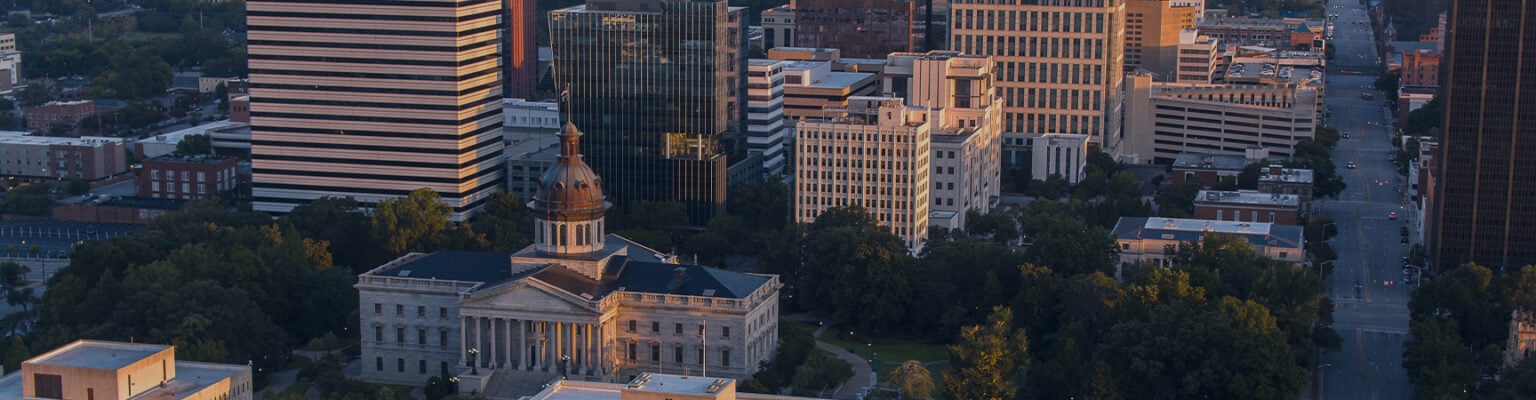
FDC SeaTac at a glance
FDC SeaTac is the Federal Bureau of Prisons’ detention center in SeaTac, Washington, two miles south of the airport. It holds men and women whose cases are still moving — pretrial defendants, holdovers and immigration detainees — alongside sentenced prisoners assigned there to work, and it held 673 people as of September 2026.
| Official name | Federal Detention Center, SeaTac |
|---|---|
| BOP code | SET |
| Security level | Administrative; men and women |
| Population | 673 (as of September 2026) |
| Visiting | Saturday and Sunday 7:30 a.m.–2:30 p.m.; Monday and Friday 2:00–9:00 p.m. · see the register-number rule |
| Inmate mail | Inmate Name & Register Number, Unit · FDC SeaTac · Federal Detention Center · P.O. Box 13900 · Seattle, WA 98198 |
| Send money | Lockbox · Western Union (code city FBOP, DC) · MoneyGram (receive code 7932) |
| Phone | 206-870-5700 · Fax 206-870-5717 |
| Street address | 2425 South 200th Street, SeaTac, WA 98198 · King County · see Seattle or SeaTac |
| Judicial district | Western District of Washington |
| BOP region | Western |
| Housing | 10 general-population units and 2 Special Housing Units; double-occupancy cells · see daily life |
| Special Housing Unit | Yes · two units |
| Medical care level | 2 |
| Mental health care level | 2 |
| RDAP | No |
| UNICOR | No · see prison industries |
On this page
It stands at 2425 South 200th Street in King County and serves the Western District of Washington. It is the only Bureau institution in Washington (see federal prisons in Washington) and falls under the Bureau’s Western Region. The Justice Department’s Inspector General inspected it unannounced in December 2024, calling it the program’s first inspection of a Federal Detention Center, and its own health-services leaders told the inspectors their staffing was in “crisis.”

Is FDC SeaTac in Seattle or in SeaTac?
FDC SeaTac stands in the city of SeaTac, but the Bureau addresses it to Seattle. SeaTac’s visiting supplement places the building in the city of SeaTac, at the corner of 200th Street and 26th Avenue South, about a block west of Highway 99, and its handbook gives “2425 South 200th Street, SeaTac, Washington” as the physical address. The Bureau’s roster, its live location record and mailing addresses, the 2024 PREA audit and the Inspector General’s report all say Seattle. Put Seattle on an envelope, exactly as the Bureau prints it, and SeaTac or the street address into a map. The federal court is the Western District of Washington, which covers King County (28 U.S.C. § 128(b)).
Three mix-ups recur. SeaTac is not the Northwest ICE Processing Center in Tacoma, although it has held immigration detainees. Its Bureau code is SET, while SEA is FCI Seagoville in Texas, and GAO’s 2026 tables of abuse allegations call it “Sea Tac Federal Detention Center.” “The Seattle Correctional Facility” is not a name any Bureau record uses for it. It is also the only Bureau institution in Washington: the nearest other one is FCI Sheridan in Oregon, about 170 miles away in a straight line, and the Bureau’s roster lists none in Idaho, Alaska or Montana.
Who is held at FDC SeaTac, and for how long?
FDC SeaTac holds three groups, according to the Inspector General’s 2025 report: pretrial detainees “awaiting or undergoing a criminal trial,” holdovers who “may be awaiting sentencing or assignment to another federal institution,” and people “assigned permanently to the institution”; the 2024 visiting supplement adds “ICE inmates.” Because pretrial and holdover stays are generally shorter, the report notes, the count moves more than at a prison: 660 people on December 9, 2024 (544 men and 116 women). It held 673 as of September 2026. In January 2024 the Western Regional Office temporarily capped the building at 756, below its rated capacity of 1,004, because of vacancies in Correctional Services positions.
SeaTac is one of the ten Pretrial Detention Facilities named in the Bureau’s Pretrial Detention Legal Access Handbook (2024), with MDC Brooklyn, MCC Chicago, MDC Guaynabo, FDC Honolulu, FDC Houston, MDC Los Angeles, FDC Miami, FDC Philadelphia and MCC San Diego. A July 2023 Justice Department report on access to counsel adds that it holds some people charged in the Districts of Idaho and Alaska. The Bureau’s rules for pretrial inmates, Program Statement 7331.05 (amended in 2025), govern this population: no compelled work beyond housekeeping without a signed waiver, attorney visits seven days a week, and at least immediate family on the visiting list.
A federal judge, not the Bureau, decides who is held before trial. Under the Bail Reform Act the detention hearing takes place at the first appearance unless a party seeks a short continuance, a finding of danger to the community needs clear and convincing evidence, and the hearing can be reopened on material new information (18 U.S.C. § 3142(f)). A detention order must provide separation “to the extent practicable” from sentenced prisoners and “reasonable opportunity for private consultation with counsel,” and the judge may later allow temporary release “necessary for preparation of the person’s defense or for another compelling reason” (§ 3142(i)). A magistrate judge’s order can be reviewed by the district court, which must rule “promptly” (§ 3145(b)), and a person held only to await trial has a separate 90-day trial clock, less excluded delay (§ 3164). Raise these with counsel when conditions here hamper a defense.
Time held here before sentencing ordinarily counts toward the prison term. Section 3585(b) credits “official detention” before the sentence begins if it resulted from the offense, or from another charge on which the person was arrested after that offense, and was not credited against another sentence. The Bureau computes that credit once the sentence has begun (United States v. Wilson, 503 U.S. 329 (1992)), and custody under a detention order counts while release on bail to a treatment center does not (Reno v. Koray, 515 U.S. 50 (1995)). See our page on prior custody credit.
What is the security level at FDC SeaTac?
FDC SeaTac is an administrative-security institution. The Bureau’s security designation rules, Program Statement 5100.08, define an administrative institution as one “with a special mission,” such as pretrial and holdover detention, “designed to house all security level inmates,” so people facing minor and very serious charges share the building. SeaTac’s handbook says pretrial and holdover detainees stay at “IN” custody. Our page on administrative-security prisons explains the category.
After sentencing, the Designation and Sentence Computation Center in Grand Prairie, Texas, picks the prison. The handbook warns that unit staff have no say in designation and will reveal only whether one has been made, not where; the U.S. Marshals Service arranges the move. People designated to serve their time at SeaTac move to a designated housing unit within a few days if a bed is free, with custody reviewed normally after six months, but anyone who needs residential drug treatment should not aim to stay, because SeaTac has no RDAP. See how federal designation works.
Who are the notable inmates at FDC SeaTac?
None of the three best-known former SeaTac detainees is held there as of September 2026.
| Person | Connection to SeaTac | Locator record (September 2026) |
|---|---|---|
| Colton Harris-Moore | Held at SeaTac while his federal case was pending, the U.S. Attorney’s Office in Seattle said in November 2010 | 83421-004; facility “IN TRANSIT”; projected release “UNKNOWN” |
| Marc Emery | The U.S. Attorney’s Office said in May 2010 he would stay at SeaTac until sentencing; he received five years that September | 40252-086; released July 10, 2014; last facility code YAM, the prison then called FCI Yazoo City Medium and now FCI Yazoo City Low II |
| Roman Seleznev | Held at SeaTac awaiting trial, the Seattle Times reported in October 2015; convicted in 2016 and sentenced to 27 years | No match for his name under three spellings; press reports say he was freed in the August 1, 2024, exchange with Russia |
Harris-Moore’s record carries no facility code, so the screen shows “NOT IN BOP CUSTODY” and “Release Date: UNKNOWN.” His federal docket shows him under supervision in 2019, when Judge Richard A. Jones denied his motion to end it early (United States v. Harris-Moore, No. 2:10-cr-00336 (W.D. Wash. May 24, 2019), ECF No. 90). The Bureau’s records do not show where he is now, and nothing places him at SeaTac. For the prison behind Emery’s YAM code, see our page on FCI Yazoo City Low II. Clayton Roueche, named on some lists, has no verified link to SeaTac.
How do I find someone at FDC SeaTac?
To find someone at FDC SeaTac, search the Bureau’s Inmate Locator by full name or eight-digit register number; someone held here appears under “SeaTac FDC.” Note the fifth digit of the register number, because it sets a pretrial or holdover detainee’s visiting days. If the locator shows nothing, ask the defense attorney or call 206-870-5700. Staff will not disclose a future designation, and families cannot call a detainee: the Western District’s Federal Public Defender, in guidance on the detention center revised in 2018, says people at the detention center cannot receive calls. Contact runs through mail, approved email, the detainee’s own calls and visits.
How do I write to someone at FDC SeaTac?
Mail for someone at FDC SeaTac goes to the Bureau’s post office box in Seattle, with the housing unit added. The Bureau’s facility page gives this address:
Inmate name and register number
FDC SeaTac
Federal Detention Center
P.O. Box 13900
Seattle, WA 98198
SeaTac’s admission and orientation handbook adds that “Incoming mail must have your unit assignment on it,” placing the unit on the register-number line (its example is “Unit GA”). P.O. Box 13901 is the staff box, used for visitor applications. Listings that give 13901 as the inmate box are out of date; the Bureau’s page gives 13900. The Bureau’s correspondence policy sets the national rules.
Mail is opened, inspected and, according to the handbook, photocopied before delivery, and staff may give the detainee a copy and return the original. Use plain white paper and envelopes. The handbook bars musical, glitter or padded cards, homemade cards, card stock, Polaroids, stickers and scented or stained paper, allows ten photographs a day, and admits books and periodicals only from publishers, book clubs or bookstores, with no more than five kept at once. The Federal Defender’s guidance says only first-class mail is accepted and express or courier items are returned, and the handbook says stamps or money tucked into a letter go back to the sender.
Legal mail is protected only if the envelope identifies the lawyer and is marked “Special Mail – Open only in the presence of the inmate,” and the handbook makes it the detainee’s job to tell counsel so. Outgoing legal mail is sealed in front of the unit officer between 5:00 and 9:30 p.m.
How do I send money to someone at FDC SeaTac?
Money for someone at FDC SeaTac goes only through the Bureau’s national systems: SeaTac returns money mailed to its own box, and visitors cannot bring deposits. The 2023 handbook gives three routes, and our guide to sending money to federal inmates covers each.
| Method | What to use |
|---|---|
| Lockbox | A money order showing the committed name and eight-digit register number, mailed to Federal Bureau of Prisons, [name], [register number], PO Box 474701, Des Moines, IA 50947-0001 |
| Western Union | Pay to Federal Bureau of Prisons; City Code FBOP; State DC; account = register number plus last name (for example, 12345678DOE) |
| MoneyGram | Federal Bureau of Prisons, Washington, DC; Receive Code 7932; beneficiary = full name and register number |
Mailed instruments other than postal money orders and government checks are usually held for 15 days, and foreign ones for 45. A detainee can check the balance by dialing 118 from a unit phone. The money pays for calls, email and commissary, and commissary spending is capped nationally at $460 a month; the commissary section explains why SeaTac’s own paperwork still shows $360.
What are the visiting hours at FDC SeaTac?
Social visiting is on Saturday and Sunday from 7:30 a.m. to 2:30 p.m., and on Monday and Friday from 2:00 to 9:00 p.m., under SeaTac’s Institution Supplement SET 5267.09c, dated February 21, 2024. That supplement’s first page reads “Pending Approval By: Howard C. Barron, Jr., Warden,” with a signature in the warden’s name set just above the line. Visits last two hours, one a day. The schedule, with the legal hours beside it:
| Day | Social visiting | Legal visiting |
|---|---|---|
| Sunday | 7:30 a.m.–2:30 p.m. | 7:30 a.m.–2:30 p.m. |
| Monday | 2:00–9:00 p.m. | 7:30 a.m.–9:00 p.m. |
| Tuesday | None | 7:30 a.m.–6:00 p.m. |
| Wednesday | None | 7:30 a.m.–6:00 p.m. |
| Thursday | None | 7:30 a.m.–6:00 p.m. |
| Friday | 2:00–9:00 p.m. | 7:30 a.m.–9:00 p.m. |
| Saturday | 7:30 a.m.–2:30 p.m. | 7:30 a.m.–2:30 p.m. |
| Federal holidays | 7:30 a.m.–2:30 p.m. on six special days; see below | 7:30 a.m.–2:30 p.m. |
Processing starts 30 minutes before a session and stops 90 minutes before it ends, so the last entry is 7:30 p.m. on Mondays and Fridays and 1:00 p.m. on weekends; it also pauses 45 minutes before each count. The 2023 handbook instead shows “NO SOCIAL VISITING” on weekdays. The newer supplement controls, but call 206-870-5700 before a long drive.
On New Year’s Day, Memorial Day, July 4, Labor Day, Thanksgiving and Christmas everyone may visit from 7:30 a.m. to 2:30 p.m. Martin Luther King Jr. Day, Presidents’ Day, Columbus Day and Juneteenth are ordinary 2:00 to 9:00 p.m. days, and Veterans Day is ordinary from Friday to Monday but closed on a Tuesday or Wednesday. In 2026 Veterans Day falls on a Wednesday, so there is no visiting, while Thanksgiving, a Thursday, is open to all.
The register-number rule
The supplement puts “Pre-trial, Holdover, and ICE inmates” on odd and even calendar days: “The fifth number of the register number will be the determining factor,” an odd digit allowing visits on odd-numbered visiting days and an even digit on even-numbered ones. Its examples are 01234-086, which “may visit on Even visiting days (i.e., May 2),” and 12461-086, which may visit on odd days such as May 15. Sentenced “cadre” detainees may visit on every social visiting day, Friday through Monday. In practice, a detainee under the rule usually gets two of the four days in a Friday-to-Monday week, though a month that ends on the 31st breaks the alternation. The handbook repeats the rule, in English and Spanish, with examples dated May 2007.
Who can visit, and how many
Pretrial and holdover detainees may list only immediate family: parents, stepparents, foster parents, siblings, spouse, children, and a domestic partner registered before the incarceration. Designated prisoners may add up to ten people they knew before confinement. A visitor may appear on only one list unless the detainees are the same immediate family, and lists change at most once a month.
The detainee sends each proposed visitor form BP-A629.52, and the completed packet, with photo identification and proof of the relationship, must come back by mail, because the handbook says emailed forms are not processed. It goes to the unit counselor; the Federal Defender’s guidance addresses it to the Unit Team at P.O. Box 13901. The supplement expects an initial list within seven days; the handbook’s own answer is that clearance can take “up to a few weeks.” Visitors with a criminal record need the associate warden’s written approval, and the detainee, not staff, tells visitors the result.
Up to six visitors may come at once, children included; those under 16 need an approved adult, and every child must be on the list. The 2024 supplement caps the room at 125 visitors and detainees and ends the longest visits first when it fills. A children’s room serves visitors under 16.
What visitors can wear and bring
Dress as for court. The supplement bars halter, tank and tube tops; open-toe or open-heel shoes and sandals; white, brown or orange T-shirts; sleeveless or form-fitting clothing; low-cut tops; shorts and sweat suits; skirts or dresses “shorter than 2 inches above the knee”; see-through clothing; offensive logos; hats and hoods; khaki; coats, jackets, gloves and scarves; sagging clothes; and torn jeans. It also warns against heavy metal trim, because everyone clears a metal detector.
Only identification goes into the visiting room; everything else stays in the car or a lobby locker, and money is barred. For a baby, one passage allows a pacifier, a diaper, five wipes in a clear bag, a bottle or clear sippy cup and a blanket, while another allows only the cup and blanket, so bring the shorter set. Toys are not allowed, and visitors may carry only life-preserving medicine such as an inhaler. Contact is a handshake, an embrace and one closed-mouth kiss at the start and end; detainees may hold their own children aged three and under; nothing may be passed, and no papers may be signed.
Identification and screening
Visitors 16 and older need valid government photo identification showing name and signature; an expired license is refused, but a suspended one is accepted. Every visitor goes through a walk-through metal detector, and the supplement also mentions x-ray screening and an ion spectrometer. See our guide to searches and contraband.
On paper, lawyers face the same checks: bar card, photo identification and the metal detector. In December 2024 the Inspector General found instead “an institution-specific order explicitly exempting visiting attorneys from pat searches,” and employees told the inspectors that management had instructed them not to put attorneys through the walk-through metal detector, random electronic drug screening, or the check of photo identification and legal credentials. The Bureau agreed to correct this and gave the inspectors a draft of revised front-lobby post orders from August 2025; the Inspector General asked for the signed, final version before it would close that recommendation. That recommendation no longer appears on the Inspector General’s list of open recommendations, and the supplement calls for the full screening.
Visits to the Special Housing Unit
Social visits for detainees in the Special Housing Unit take place only by recorded live video, from a non-contact video area in the visiting room, for up to an hour, with no more than six visitors. Groups go in order of arrival, and visitors may finish the paperwork, leave and return nearer their turn.
Getting there
From Interstate 5 take exit 151 for South 200th Street and cross Highway 99 (International Boulevard); the Federal Public Defender’s 2018 directions describe a multi-story concrete building on the left about two blocks on, with visitor parking on the east side. The airport is about two miles north. The national rules behind SeaTac’s supplement are in the Bureau’s visiting regulations and our guide to federal prison visiting.
How do phone calls and email work at FDC SeaTac?
Detainees at FDC SeaTac place calls out, families cannot call in, and email runs through TRULINCS. Calls are monitored and recorded, use a personal access code with voice verification and may be collect or prepaid, and the 2023 handbook says phones run from 6:00 a.m. until no later than 10:00 p.m.
That handbook’s allowance of 300 minutes a month is out of date. The Bureau’s telephone regulations, Program Statement 5264.09, issued September 3, 2026, set a limit of 510 minutes a month: 300 free for people eligible for First Step Act telephone incentives, and 210 more that anyone, eligible or not, may buy after using up the 300. Unlike the 2008 policy they replaced, they have no holiday-season increase. A single call should generally not exceed 15 minutes, at least 30 minutes must pass between completed calls, and unmonitored legal calls do not count toward the limit (at 6–7). The policy does not say whether unsentenced detainees qualify for the free minutes, so ask the unit team. It also names detention centers, pretrial detainees and holdovers as good cause for collect calls, and says pretrial and holdover units should not face telephone-hour restrictions because their occupants need daytime access “to prepare for trial.”
The handbook places Federal Public Defender and CJA telephones in every unit for unmonitored attorney calls. Attorneys are added to the CJA Directory through the CJA Administrator, 1601 Fifth Avenue, Suite 700, Seattle, WA 98101 (206-830-2976; WAW_CJA@fd.org).
Email runs on TRULINCS, with 60-minute sessions, a 15-minute lockout, TRU-Units at five cents, 30 active contacts, messages of up to 13,000 characters and a delay of at least an hour. It is not confidential, even with a lawyer, and the Federal Defender warns that it can reach the prosecutor. See our guides to inmate phone calls and TRULINCS email.
How does a lawyer reach a client at FDC SeaTac?
A lawyer can reach a client at FDC SeaTac in person on any day, by unmonitored telephone, by video and by marked mail. The Bureau’s legal-activities rules, Program Statement 1315.08 (2026), replaced PS 1315.07, which the Bureau’s pretrial handbook still cites, and dropped the requirement for physical law libraries. SeaTac’s own legal-activities supplement, which the 2023 Justice Department report lists as SET 1315.07L among supplements “not available online,” is not linked from the Bureau’s facility page or published elsewhere on its site.
Legal visiting hours and rooms
Legal visits run from 7:30 a.m. daily until 9:00 p.m. on Mondays and Fridays, 6:00 p.m. Tuesday through Thursday, and 2:30 p.m. on weekends and holidays, with weekday windows of 7:30 to 1:30, 2:00 to 3:30 and 4:30 to 6:00. Processing ends an hour before closing; visits at other times are meant for emergencies and need unit-team arrangement and, where possible, 24 hours’ notice. Attorneys show a bar card and photo identification, go ahead of social visitors, and have their materials run through an E-Scan machine.
The 2023 report recorded defense counsel saying they “routinely wait more than an hour” for a private room, though a footnote lists SeaTac among five facilities where counsel were satisfied with the space. SeaTac was then setting up a timer protocol, under which the earliest arrivals are asked to finish within 60 minutes when every room is full, and the report asked the Bureau to explore it for all pretrial facilities. Co-defendant meetings require the indictment’s first page, each defendant’s lawyer, and advance approval if men and women are involved. Materials leave with the attorney, and papers for a client go into the lobby legal mailbox marked “SPECIAL MAIL – OPEN ONLY IN THE PRESENCE OF THE INMATE.”
Laptops, drives and discovery
After signing the “Federal Detention Center SeaTac Electronic Devices Agreement,” attorneys may bring a laptop, notebook or iPad and external memory, with cords no longer than six feet. The 2023 report counted SeaTac among five pretrial facilities admitting laptops for all attorneys and three admitting them for legal assistants, but noted it takes only hard drives without a motor. PS 1315.08 now lets attorneys and approved legal assistants bring laptops to legal visits at pretrial facilities “for the sole purpose of facilitating the attorney-client relationship,” and any denial needs documented good cause.
Discovery for the client must come from defense counsel or the U.S. Attorney, read-only, on a hard drive or USB device rather than a CD or DVD, with the warden’s approval on the new form BP-A1155, and the policy says discovery computers at pretrial facilities should be placed in each housing unit and the Special Housing Unit. The pretrial handbook’s SeaTac paragraph, word for word the one printed for MCC San Diego, keeps approved discovery on the unit and sends sensitive material to the Education Department law library, which PS 1315.08 no longer requires, so ask where sensitive discovery is reviewed now. Counsel told the Justice Department in 2023 that discovery is often lost in transit here; keep a complete copy.
Legal calls and the phone booths
The unit legal phones allow brief unmonitored calls to verified defense numbers. SeaTac programs them for the Federal Defender and CJA counsel, including those in Idaho and Alaska, and asks the Federal Defender to vet a panel attorney before adding the number; longer confidential calls are requested on form BP-A0148. Because the phones sit in common areas, SeaTac piloted booths around them, in one pretrial unit according to the 2023 report’s spotlight and in three units according to its recommendation, and no later record shows how far they reached. Idaho’s federal defenders rely on video visits rather than flying in.
Paralegals, investigators and records
The supplement lets paralegals, investigators, interpreters and experts accompany an attorney, or visit alone with unit-team approval. In 2023, however, SeaTac said non-attorney staff could visit only if they were credentialed staff of the Western District’s Federal Defender or came with an attorney, the Federal Defender said paralegals got no legal visits in practice, and the report found SeaTac barred CJA and private counsel’s legal assistants, contrary to 28 C.F.R. § 543.16. The national handbook approves legal assistants yearly on form BP-A0243, so secure approval in writing before the first visit.
SeaTac said most attorney requests for medical records are processed within a week; the Federal Defender said the client must make them and they can take many weeks. Special Housing Unit legal visits often happen by video, so documents must be mailed ahead. A detainee may keep the presentence report until sentencing but not after. Unit staff can administer some oaths under 18 U.S.C. § 4004 and arrange a Washington notary, though the national handbook says pretrial facilities generally offer no notary. See our page on attorney-client communications.
What can people buy at the FDC SeaTac commissary?
People at FDC SeaTac can spend up to $460 a month under the Bureau’s trust fund rules, Program Statement 4500.13, issued May 7, 2026, which raised the limit from $360. SeaTac’s 2023 handbook still gives the limit as “currently $360.00 per month,” adds a local cap of $90 a week and limits food to twice that; the $360 is obsolete, and no published document says whether the weekly cap changed. The limit rises by $50 during the November and December holiday period, for no more than one validation period.
The trust fund rules exclude a short national list of items from the limit: stamps, nicotine patches and lozenges, over-the-counter medicines and vitamins, kosher or halal shelf-stable entrees for people in refusal status under the Inmate Financial Responsibility Program, copy cards and paper, footwear including sneakers, mattresses and a secured media device. Telephone credit is not on the list. Sneakers, which SeaTac’s list priced at $81.90 to $88.40, therefore fall outside the cap, although the 2023 handbook names only stamps, medicines and copy cards.
Lists go to the unit officer before 6:00 a.m. on shopping day, and orders are delivered to the unit. The 2023 commissary shopping list says sales are final and limited to one a week, allows six sodas and 24 soups, caps stamps at $11 a sale, and warns that anything over the limit “CAN BE CONFISCATED.” It stocks typewriter ribbon at $9.95 and correction tape at $3.05, which fits the handbook’s note that Education keeps typewriters for legal work, along with legal pads, a Spanish-English dictionary, a $12.95 combination lock, crochet hooks and yarn, tampons and makeup, headphones and a radio. Prices may have changed since. Our page on commissary items covers the national catalog.
What programs are available at FDC SeaTac?
FDC SeaTac offers short programs, mainly run by Psychology and Education, and no residential drug treatment. The by-institution matrix in the Bureau’s August 2026 First Step Act Approved Programs Guide marks SeaTac for 22 recidivism-reduction programs and 35 productive activities, but a matrix mark, like a program that “may be offered at all BOP institutions,” is permission rather than proof that a class runs. None of the guide’s program entries that list specific institutions includes SeaTac, so ask the unit team in writing what is actually offered.
Drug treatment and RDAP
SeaTac does not run RDAP: it is absent from the guide’s list of “57 RDAPS at 50 Locations,” and the nearest program on that list is at FCI Sheridan. A sentenced person who needs RDAP must be designated elsewhere, so raise it at sentencing; see RDAP and early release. The 2023 handbook lists the Non-Residential Drug Abuse Program with a $30 completion award, Alcoholics Anonymous and Narcotics Anonymous, drug-program staff who interview designated prisoners for RDAP elsewhere, groups on anger, cognitive skills, criminal thinking, emotional regulation and trauma, and a contract psychiatrist.
Education, work and prison industries
The handbook offers a GED program and English as a Second Language, each with a $25 award on passing, plus adult continuing education, correspondence courses, ACT WorkKeys and book carts, and a career resource center and interlibrary loan for designated prisoners. The matrix also marks vocational training, but the handbook names no trade program.
Jobs are mostly for designated prisoners, in food service, maintenance trades, the warehouse, orderly posts, laundry and sanitation, at 12 to 40 cents an hour. Pretrial detainees may work, mostly as unit orderlies, only after signing a waiver, and the handbook warns that anyone who quits a job will not be considered for another.
On Federal Prison Industries the records conflict: the guide’s matrix marks SeaTac, but the program’s own entry, which names 55 institution codes with one printed twice, leaves SeaTac out, and the handbook’s work list has no UNICOR factory. On that evidence, expect no prison-industries job.
First Step Act credits and time served
Programs completed before sentencing earn no First Step Act time credits. The statute excludes programs completed “during official detention prior to the date that the prisoner’s sentence commences under section 3585(a)” (18 U.S.C. § 3632(d)(4)(B)(ii)), and the Bureau’s time-credit procedures, PS 5410.01, say “an inmate cannot earn FTCs during pretrial confinement.” The regulation has tied the start of credits to arrival “at the designated Bureau facility where the sentence will be served” (28 C.F.R. § 523.42(a)), but an interim final rule published August 31, 2026 deletes that clause effective September 30, 2026, so credits begin “after the inmate’s term of imprisonment commences” (91 Fed. Reg. 55740). Section 3585(a) says a sentence commences when the defendant “is received in custody awaiting transportation to” the facility where it will be served. The Bureau’s notice says people awaiting transfer may then start approved programs, but credits still depend on completing assigned programs or activities, so anyone sentenced and waiting at SeaTac should ask the unit team what has been assigned.
What is daily life like at FDC SeaTac?
Daily life at FDC SeaTac happens almost entirely indoors. Detainees move between floors by elevator, facing the back; meals come up from the main kitchen and are eaten at the unit’s tables, one tier at a time for lunch and dinner; and the handbook concedes that outdoor recreation “is limited by the physical structure of this facility,” offering yard volleyball and basketball and bikes and stair steppers in the units. The 2023 handbook sets out the day this way:
| Time | What happens |
|---|---|
| 12:01, 3:00 and 5:00 a.m. | Official counts on weekdays |
| Before 6:00 a.m. | Commissary lists due on the scheduled day |
| 6:00 a.m. (7:00 on weekends and holidays) | Breakfast delivered to the units; telephones open at 6:00 |
| About 6:30 a.m. on weekdays | Court line |
| 10:00 a.m. on weekends and holidays | Standing count |
| 10:30 a.m. | Lunch |
| 4:00 p.m. | Standing count, then dinner and mail call |
| 5:00–9:30 p.m. | Outgoing legal mail sealed in front of the unit officer |
| 10:00 p.m. | Standing count; telephones close by this time |
| 11:00 p.m. | Cell lights off |
In December 2024 the Inspector General found ten general-population units of one or two floors, with double-occupancy cells around a common area, plus two Special Housing Units, and men and women housed apart; the handbook counts 11 units and the April 2024 PREA audit nine. When a staff member of the opposite sex enters a unit, a bell sounds for a man and a buzzer for a woman.
Health Services is staffed from 5:30 a.m. to 10:00 p.m. on weekdays and 6:00 a.m. to 10:00 p.m. on weekends, with a physician on recall otherwise. The $2 copay is waived for anyone whose account balance has not reached $6 in the past 30 days; unsentenced, undesignated and Special Housing Unit detainees get urgent dental care only. Meals follow the 35-day national menu with no-flesh and certified kosher options, and religious services meet in the units’ program rooms. See medical care in federal prison.
What do inspectors say about conditions at FDC SeaTac?
The Justice Department’s Inspector General inspected FDC SeaTac unannounced in December 2024 and found serious problems, above all in health care. The Inspector General notified the institution at about 8 a.m. on Monday, December 9, 2024, began at noon and stayed through Thursday, December 12; Report 25-081 followed on September 10, 2025. The September 2025 report says that “Since 2023, the OIG has conducted such inspections at 13 BOP institutions,” a count the May 2026 report on USP Canaan raised to 14, and calls SeaTac its first inspection of a Federal Detention Center. The press release called it “the twelfth unannounced inspection” under the program.
The December 2024 inspection
Health care dominated the report. Health Services had 10 of 20 positions filled, a clinical director post vacant for at least 18 months, three of nine nursing and one of two pharmacist posts filled, and a staffing-tool target of 40, and SeaTac nurses averaged $98,589 against $174,048 in the Seattle-Tacoma area. Health-services leaders called the situation a “crisis” and said emergencies came first, and the report concluded that “the healthcare available to these inmates in federal custody was unacceptable.” Its main measurements, each for the period stated:
| Measure | What the Inspector General found |
|---|---|
| Sick call | 168 requests (December 2022 to December 2024) labeled not seen; of 29 serious ones, 11 seen after 2.4 months on average and 18 with no evidence of being seen as of January 2025 |
| Outside care | Of 481 approved appointments (October 2023 to December 2024), 360 completed in 2.5 months on average; 91 not yet scheduled, pending 7.4 months on average |
| Laboratory | No phlebotomist since June 2024; 480 blood-draw orders more than 30 days late in November 2024; over half of patients with diabetes not given A1C tests on the recommended schedule |
| Intake screening | 108 of 368 arrivals in the six months before the December 2024 inspection not screened within 24 hours; two waited over 100 days |
| Pregnancy tests | 29 of 77 women arriving June to December 2024 tested, after 51 days on average |
| Preventive care | None of the 23 sentenced prisoners over 50 screened for cognitive impairment, a requirement the Bureau dropped on December 31, 2024; 49 of 60 average-risk prisoners not offered colorectal-cancer screening in the year before the December 2024 inspection |
| Medication | Evening pill line, including insulin, sometimes at 2 p.m. or even noon; irregular insulin timing led in one case to an emergency-room visit and four episodes of unconsciousness; a narcotics safe found open |
One patient with a hernia “approximately the size of a basketball” was evaluated only after inspectors raised it, nearly four months after the first examination, and left custody before further care; another, with a breast lump, waited nearly 14 months for an ultrasound. Exam, trauma and quarantine rooms were unsanitary, specimens sat unrefrigerated, and culture swabs had expired in September 2024. The 2023 handbook had already set the afternoon insulin line at 2:00 p.m., four hours before the evening pill line it lists at about 6:00 p.m.
Security staffing was thin too. Correctional Services had 86 of 124 positions filled, against 161 needed at full capacity; staff logged 39,472 overtime and 5,993 augmentation hours in a year; and officers averaged $76,209 against $82,860 for state and local officers in the Seattle-Tacoma area. In 120 hours of overnight video from November and December 2024, officers completed only 41 percent of required rounds in five general-population units. Random employee pat searches, required since October 2024, began in February 2025, and in March 2025 all 30 took place on the day shift, 24 of them within 15 minutes.
The building is aging: leaking pipes, water damage and clogged toilets; 11 of 30 showers outside the 100-to-120-degree range, no hot water in three tested showers in a women’s unit, and all six tested in empty Special Housing Unit cells above 120 degrees, one at 140; and rodent droppings near HVAC equipment and the warehouse. Staff estimated more than $4 million in needed equipment upgrades, $2.5 million of it for HVAC, a request unfunded at the time.
What the Bureau says it has done
The Bureau accepted all 11 recommendations in a response from Director William K. Marshall III dated August 27, 2025. It says it sent six people to SeaTac in the weeks of December 23 and December 30, 2024, formed an Urgent Action Team in January 2025, requested temporary clinicians, made a regional physician acting clinical director on site one week a month, updated pharmacy procedures on January 15, 2025, and raised telemedicine encounters 77 percent in 2025 over 2024. It also cut SeaTac’s retention incentives from 25 to 13 percent under agency-wide budget cuts effective March 23, 2025.
The report marks each recommendation “Resolved,” pending proof before closure, and asked the Bureau for documentation by December 10, 2025, including signed, final front-lobby post orders. As of September 2026, the Inspector General’s list of open recommendations for the report still carried numbers 1 to 5 and 8, each marked “Resolved.” The other five — 6, 7, 9, 10 and 11, including the one on visitor screening — no longer appear on that list, and no closure memorandum has been published.
Earlier Inspector General work that names SeaTac
Earlier Inspector General products use SeaTac in a different way. Two 2016 reviews, of medical staffing and of outside medical costs, chose it among five institutions, and their methodology sections, headed “Site Visits,” describe video teleconferences. A May 2025 evaluation of colorectal-cancer screening also interviewed SeaTac staff by video; its table of April 2024 Bureau data shows 94 percent of SeaTac’s 94 average-risk patients with a current screening offer, a different measure from the inspection’s 49 of 60 that points the other way. A 2021 review of the immigration hearing program records an ICE “surge” team sent to SeaTac in fiscal 2018.
The 2024 PREA audit
The auditor, Valerie Wolfe Mahfood, of Corrections Consulting Services (formerly PREA Auditors of America), audited SeaTac under the Prison Rape Elimination Act on April 9–11, 2024, and signed the final audit report on October 27, 2024: four standards exceeded, 37 met and none unmet.
The audit records a designed capacity of 924, nine housing units, and 799 people present on the first day of the April 2024 visit, 276 of them with limited English and 36 transgender or intersex. In the preceding 12 months there were 12 allegations of inmate-on-inmate sexual abuse, all unsubstantiated; five against staff, all still under investigation; and two of inmate-on-inmate harassment. Forensic examinations take place at Harborview Hospital, where the audit says specialist nurses are available around the clock.
Many male detainees told the auditor that female staff did not routinely announce themselves on entering the units, and she called for more training; gaps in some shower doors were covered with curtains. The report also states in two places that no biological females are held, although SeaTac houses women. See the Bureau’s sexual-abuse prevention policy.
Sexual-abuse allegations in the GAO data
The GAO’s report on sexual abuse in federal prisons (GAO-26-107343), dated May 5, 2026, lists “Sea Tac Federal Detention Center” and counts allegations, not findings. Against incarcerated people, by year of incident from 2020 to 2024, it counts 4, 11, 6, 10 and 14, or 45; against staff, by year reported, 7, 1, 2, 5 and 12, or 27. The two tables come from different systems and cannot be added, both peak in 2024, and neither is adjusted for population. GAO found most allegations nationally from 2014 through 2022 ended as unsubstantiated, meaning the evidence could not show whether the abuse occurred, not that the report was false.
The courts
In Stanard v. Dy, 88 F.4th 811 (9th Cir. 2023), a man held at SeaTac from 2016 was refused hepatitis C treatment after his 2018 conviction as “not qualified” and low priority, and was treated only after transfer to FCI Sheridan. The Ninth Circuit held that his Eighth Amendment damages claim fits the Bivens remedy recognized in Carlson v. Green and reversed its dismissal, but affirmed dismissal of his Fifth Amendment claim of unequal treatment of pretrial and sentenced prisoners. On remand, the district court dismissed the case with prejudice on February 24, 2025, finding no plausible allegation of deliberate indifference.
In Stanley v. United States, No. 2:15-cv-00256 (W.D. Wash. Oct. 4, 2023), a tort suit over a 2013 thumb fracture at SeaTac failed after a bench trial: the court found no SeaTac employee responsible for scheduling the outside physical therapy, which a contractor arranged and which the Federal Tort Claims Act does not reach, and found causation unproven. In Wood v. United States, No. 2:22-cv-00636 (W.D. Wash. Oct. 25, 2023), a request for an order about SeaTac medical care became moot when the plaintiff was transferred, though his claim to correct his medical records survived.
In Ngerntongdee v. Vaughan, No. C08-1070RSM (W.D. Wash.), the son of Roxanna Brown, a pretrial detainee who died at SeaTac in May 2008, obtained discovery in November 2008 after the court noted that the medical records showed no report to medical staff that she was in distress. The case closed in June 2009. The Associated Press reported that July that the government would pay $880,000 to settle the family’s malpractice suit in exchange for dismissal of all claims, and that detention center officials acknowledged no medical staff were on duty overnight when she died. For the routes these claims take, see the Federal Tort Claims Act and the administrative remedy program.
FDC SeaTac in the news
Recent news about FDC SeaTac centers on the 2025 inspection report, a 2025 sentence for smuggling drugs into the building and a 2024 prisoner exchange; older items concern medical care, COVID-19, the 2018 detention of asylum seekers, a 2013 sentence for an attack on an officer and a 2008 death.
- September 10, 2025: Report 25-081 was released. The Spokesman-Review reported that Sen. Patty Murray called the conditions “unacceptable,” and noted that the center is unrelated to Tacoma’s Northwest ICE Processing Center.
- March 31, 2025: A Tacoma man received 52 months, four of them for supervised-release violations, for smuggling fentanyl and heroin into SeaTac inside his body in September 2023. Two detainees who received his fentanyl were poisoned on September 9 and 10 and revived with naloxone, the U.S. Attorney’s Office said.
- August 1, 2024: Roman Seleznev, convicted in Seattle in 2016 after detention at SeaTac, was freed in a prisoner exchange with Russia, according to the Spokesman-Review and the Seattle Times.
- February 26, 2024: The Seattle Times published “SeaTac federal detainees grow desperate amid lack of medical care.”
- August 28, 2020: The Seattle Times reported COVID-19 infections among 31 detainees and six staff members.
- June 2018: ICE confirmed to KUOW on June 7 that 209 people, 177 of them women, were held at SeaTac, one of five federal prisons receiving asylum seekers from the southern border. Rep. Pramila Jayapal’s office said on June 9 that she had gone inside to meet the women, and thousands protested outside, Seattle Met reported.
- Fiscal year 2018: ICE sent one of its immigration-hearing “surge” teams to SeaTac, according to the Inspector General’s 2021 review.
- October 21, 2013: Roy Scott Fritts was sentenced to 28 years for his part in a January 2012 attack on an officer that prosecutors called “the worst officer involved assault in FDC SeaTac history.”
- May 2008: Roxanna Brown, a pretrial detainee, died at SeaTac; see the courts section.
Frequently asked questions about FDC SeaTac
Is FDC SeaTac in Seattle?
It is in the city of SeaTac, at 2425 South 200th Street in King County, as the institution’s own supplement and handbook say. The Bureau uses Seattle on its roster and mailing addresses, so letters go to P.O. Box 13900, Seattle, WA 98198.
Who is held at FDC SeaTac?
Men and women, housed separately: defendants awaiting trial or sentencing, including cases in the Western District of Washington, plus holdovers, immigration detainees and sentenced prisoners assigned there. It held 673 people as of September 2026, under a temporary ceiling of 756 set in January 2024.
When can families visit FDC SeaTac?
Saturday and Sunday from 7:30 a.m. to 2:30 p.m., and Monday and Friday from 2:00 to 9:00 p.m., under supplement SET 5267.09c (2024). Processing stops 90 minutes before closing, and pretrial and holdover detainees visit on odd or even dates according to the fifth digit of the register number.
Why does the SeaTac handbook show no weekday visiting?
The handbook dates from 2023. The February 2024 supplement, which shows Monday and Friday sessions, is newer and controls. Its first page carries the words “Pending Approval By:” before the warden’s name, with a signature in his name above them, so call 206-870-5700 before traveling.
How do I send mail to someone at FDC SeaTac?
Write the name and register number, then FDC SeaTac, Federal Detention Center, P.O. Box 13900, Seattle, WA 98198, and add the housing unit, as SeaTac’s handbook requires. Mail is opened and photocopied, money or stamps inside are returned, and books must come from a publisher, book club or bookstore.
How much can someone spend at the SeaTac commissary?
$460 a month under Program Statement 4500.13 (2026), rising by $50 during the November and December holiday period for no more than one validation period. SeaTac’s 2023 handbook still says $360, which is obsolete, and $90 a week. Stamps, over-the-counter medicines, copy cards and footwear do not count toward the limit.
How many phone minutes does a SeaTac detainee get?
Program Statement 5264.09 (2026) allows 510 a month: 300 free for people eligible for First Step Act incentives, and 210 more that anyone can buy after using up the first 300. A single call should generally not exceed 15 minutes. The handbook’s lower monthly figure reflects the rescinded policy, and unmonitored legal calls do not count.
Does FDC SeaTac have RDAP?
No. It is not on the list in the Bureau’s August 2026 approved-programs guide. SeaTac offers a non-residential drug program, and FCI Sheridan in Oregon has the nearest residential program on that list. A sentenced person who needs RDAP must be designated elsewhere, so raise it at sentencing.
Do First Step Act credits build up at SeaTac before sentencing?
No. The statute bars credits for programs completed in official detention before a sentence commences. The Bureau’s rule has started credits on arrival at the designated prison, but an interim final rule effective September 30, 2026 drops that condition, so credits can begin once the sentence commences, still only for assigned programs or activities completed. Detention time itself usually counts toward the sentence under 18 U.S.C. § 3585(b).
Can lawyers bring laptops into FDC SeaTac?
Yes, after signing the institution’s Electronic Devices Agreement: a laptop, notebook or iPad and external memory, with cords no longer than six feet. A 2023 Justice Department report said legal assistants could bring laptops too, but hard drives with a motor were refused.
Has the Inspector General inspected FDC SeaTac?
Yes, unannounced, from December 9 to 12, 2024. Report 25-081, released September 10, 2025, documented what the Bureau’s own assessment called a health-services staffing crisis, long delays in care, weak contraband controls and over $4 million in needed equipment upgrades, and made 11 recommendations that the Bureau accepted; by September 2026 five had left the Inspector General’s list of open recommendations.
Is FDC SeaTac the immigration detention center in Tacoma?
No. The Northwest ICE Processing Center in Tacoma is a separate facility. SeaTac is a Bureau of Prisons detention center, the only Bureau institution in Washington, holding pretrial detainees, holdovers and people assigned there permanently; it has also held immigration detainees, including 209 asylum seekers in June 2018.
Problems at FDC SeaTac: where we can help
SeaTac’s own record points to problems that recur, most of them tied to a case that is still open:
- Medical delay. The Inspector General found months-old sick calls, unscheduled outside care and hundreds of overdue lab orders. For a detainee, that record can support a request to the court under 18 U.S.C. § 3142(i) and an administrative remedy; for a sentenced prisoner, it can form part of a compassionate release motion under the Bureau’s reduction-in-sentence rules, though it does not by itself establish eligibility. Stanard shows that a damages claim must plead deliberate indifference, not only delay.
- Access to counsel: approving paralegals and investigators, adding panel attorneys’ numbers to the unit phones, arranging video or Special Housing Unit visits, and finding where sensitive discovery may be reviewed. Ask early and in writing, citing PS 1315.08 and 28 C.F.R. § 543.16.
- Custody credit under the Bureau’s sentence computation manual and the First Step Act credit start date, both of which move release dates. See our pages on challenging a Bureau sentence computation and federal prison early release.
- Designation. With no other Bureau prison in Washington and no RDAP at SeaTac, the next placement shapes family contact and treatment, so a judicial recommendation and an accurate presentence report matter. See our federal prison consulting services.
- Discipline. The handbook says a disciplinary finding against a pretrial detainee goes to the prosecutor and the probation office for the presentence report. See disciplinary proceedings and the Bureau’s discipline rules.
- Appeals and post-conviction deadlines, from a direct appeal in the Ninth Circuit to a § 2255 motion. Given the reports of legal papers lost in transit, keep a complete file outside the institution.
Elizabeth Franklin-Best, P.C. handles federal criminal defense, appeals and post-conviction matters nationwide, and advises families on Bureau of Prisons issues at institutions across the system. Call (843) 620-1100 or contact us to talk through a specific situation.
Christopher Zoukis, JD, MBA, the firm’s Managing Director, writes and maintains the federal prison policy material on this site. He is not counsel of record; legal representation is provided by Elizabeth Franklin-Best.
Sources and currency
Bureau of Prisons documents
- FDC SeaTac, Federal Bureau of Prisons, 2026. The Bureau’s facility page, with the mailing address, contact details and population.
- Institution Supplement SET 5267.09c, Visiting Regulations, Federal Bureau of Prisons, FDC SeaTac, 2024. Visiting days and hours, the register-number rule, visitor lists, dress code, screening and legal visiting.
- Institution Supplement SET 5267.09c, Visiting Regulations (Spanish edition), Federal Bureau of Prisons, FDC SeaTac, 2024.
- FDC SeaTac Commissary Shopping List, Federal Bureau of Prisons, FDC SeaTac, 2023. Items, prices and purchase limits.
- FDC SeaTac Inmate Admission and Orientation Handbook, Federal Bureau of Prisons, FDC SeaTac, 2023. Mail, money, visiting, telephone, legal access, programs, work, health services and the daily schedule.
- FDC SeaTac Inmate Admission and Orientation Handbook (Spanish edition), Federal Bureau of Prisons, FDC SeaTac, 2023.
- Inmate Legal Activities, Program Statement 1315.08, Federal Bureau of Prisons, 2026. Replaced Program Statement 1315.07; attorney laptops, discovery and electronic law libraries.
- Trust Fund/Deposit Fund Manual, Program Statement 4500.13, Federal Bureau of Prisons, 2026. Sets the $460 commissary spending limit and its exclusions.
- Inmate Security Designation and Custody Classification, Program Statement 5100.08, Federal Bureau of Prisons, 2006, as amended in 2026. Defines administrative institutions.
- Inmate Telephone Regulations, Program Statement 5264.09, Federal Bureau of Prisons, 2026. Replaced Program Statement 5264.08 (2008).
- First Step Act of 2018 – Time Credits: Procedures for Implementation of 18 U.S.C. § 3632(d)(4), Program Statement 5410.01, Federal Bureau of Prisons, 2022, as amended in 2023.
- Pretrial Inmates, Program Statement 7331.05, Federal Bureau of Prisons, 2023, as amended in 2025.
- First Step Act Time Credits—Revisions, 91 Fed. Reg. 55740, Federal Bureau of Prisons, 2026. Interim final rule amending 28 C.F.R. § 523.42(a), effective September 30, 2026.
- First Step Act Approved Programs Guide, Federal Bureau of Prisons, Reentry Services Division, 2026. Program availability by institution, including the RDAP location list.
- Pretrial Detention Legal Access Handbook, Federal Bureau of Prisons, 2024. Legal access at the ten pretrial detention facilities, including SeaTac.
Audits and inspections
- Inspection of the Federal Bureau of Prisons’ U.S. Penitentiary Canaan, U.S. Department of Justice, Office of the Inspector General, 2026. Report 26-055; counts the program’s unannounced inspections.
- Federal Prisons: Improvements Needed to Prevent, Detect, and Address Sexual Abuse, U.S. Government Accountability Office, 2026. Report GAO-26-107343; allegation counts by institution.
- Inspection of the Federal Bureau of Prisons’ Federal Detention Center SeaTac, U.S. Department of Justice, Office of the Inspector General, 2025. Report 25-081, with the Bureau’s response and the list of open recommendations; inspection of December 9–12, 2024.
- DOJ OIG Releases an Inspection of the BOP’s Federal Detention Center SeaTac, U.S. Department of Justice, Office of the Inspector General, 2025. Press release.
- Evaluation of the Federal Bureau of Prisons’ Colorectal Cancer Screening Practices for Inmates and Its Clinical Follow-up on Screenings, U.S. Department of Justice, Office of the Inspector General, 2025. Report 25-057.
- PREA Facility Audit Report: Final, FDC SeaTac, Corrections Consulting Services (formerly PREA Auditors of America), 2024. On-site audit of April 9–11, 2024, by Valerie Wolfe Mahfood.
- Report and Recommendations Concerning Access to Counsel at the Federal Bureau of Prisons’ Pretrial Facilities, U.S. Department of Justice (Advisory Group of DOJ Components), 2023.
- Review of the Institutional Hearing and Removal Program Expansion for Federal Inmates, U.S. Department of Justice, Office of the Inspector General, 2021. Report 21-123.
- The Federal Bureau of Prisons’ Reimbursement Rates for Outside Medical Care, U.S. Department of Justice, Office of the Inspector General, 2016. Report 16-04.
- Review of the Federal Bureau of Prisons’ Medical Staffing Challenges, U.S. Department of Justice, Office of the Inspector General, 2016. Report 16-02.
Court records
- Stanard v. Dy, No. 2:19-cv-01400 (W.D. Wash.), U.S. District Court for the Western District of Washington, 2025. Docket; dismissal with prejudice on remand.
- FDC-SeaTac inmate who distributed heroin and fentanyl within the prison sentenced to 52 months in prison, U.S. Attorney’s Office, Western District of Washington, 2025.
- Stanard v. Dy, 88 F.4th 811 (9th Cir. 2023), U.S. Court of Appeals for the Ninth Circuit, 2023. Eighth Amendment claim reinstated; Fifth Amendment claim dismissed.
- Wood v. United States, No. 2:22-cv-00636 (W.D. Wash.), U.S. District Court for the Western District of Washington, 2023. Docket.
- Stanley v. United States, No. 2:15-cv-00256 (W.D. Wash.), U.S. District Court for the Western District of Washington, 2023. Docket.
- United States v. Harris-Moore, No. 2:10-cr-00336 (W.D. Wash.), ECF No. 90, U.S. District Court for the Western District of Washington, 2019. Order denying early termination of supervision.
- United States v. Harris-Moore, No. 2:10-cr-00336 (W.D. Wash.), ECF No. 79, U.S. District Court for the Western District of Washington, 2019.
- Violent Federal Felon Sentenced to 28 Years in Prison for Attacks on Prison Guards, U.S. Attorney’s Office, Western District of Washington, 2013. Roy Scott Fritts’s sentence.
- Camano Island Man Indicted for Multi-State Crime Spree, U.S. Attorney’s Office, Western District of Washington, 2010. Colton Harris-Moore’s indictment.
- Canadian Sentenced to 5 Years in Prison for Selling Millions of Marijuana Seeds Across the Border, U.S. Attorney’s Office, Western District of Washington, 2010. Marc Emery’s sentence.
- Canadian Marijuana Seed Exporter Pleads Guilty to Conspiracy, U.S. Attorney’s Office, Western District of Washington, 2010. Marc Emery’s guilty plea.
- Ngerntongdee v. Vaughan, No. C08-1070RSM (W.D. Wash.), ECF No. 32, U.S. District Court for the Western District of Washington, 2008. Order on discovery in the case over Roxanna Brown’s death.
- Reno v. Koray, 515 U.S. 50 (1995), Supreme Court of the United States, 1995.
- United States v. Wilson, 503 U.S. 329 (1992), Supreme Court of the United States, 1992.
News and other sources
- Federal Inspection Finds an Inmate Healthcare ‘Crisis’ at SeaTac Detention Center amid Health Worker Shortage, The Spokesman-Review, 2025. By Emily White.
- Russian Hacker Convicted in Seattle Was Part of Historic Prisoner Swap, The Seattle Times, 2024.
- Russian Hacker Convicted in Seattle Was Part of Historic Prisoner Swap, The Spokesman-Review, 2024. Republished from The Seattle Times.
- SeaTac Federal Detainees Grow Desperate Amid Lack of Medical Care, The Seattle Times, 2024. By Nina Shapiro.
- COVID Infections Hit 31 Inmates and 6 Staff at Federal Detention Center in SeaTac, The Seattle Times, 2020.
- Thousands Protest Immigration Policy at SeaTac’s Federal Prison, Seattle Met, 2018.
- Jayapal Goes Inside Federal Detention Center to Meet With Asylum-Seeking Women, Office of Rep. Pramila Jayapal, 2018.
- At Least 60 Immigrant Moms Torn from Kids Jailed in SeaTac, KUOW, 2018.
- Information About the Federal Detention Center, Federal Public Defender for the Western District of Washington, 2018. Guidance for families and counsel on mail, calls, visiting and directions.
- Feds Say Accused Russian Hacker at SeaTac Detention Center May Be Plotting Escape, The Seattle Times, 2015.
- Feds to pay $880,000 for SeaTac detention death, The Associated Press, 2009. Published by OregonLive.
- 18 U.S.C. § 3142(f), (i), Release or detention of a defendant pending trial, U.S. Code (Legal Information Institute).
- 18 U.S.C. § 3145(b), Review and appeal of a release or detention order, U.S. Code (Legal Information Institute).
- 18 U.S.C. § 3164, Persons detained or designated as being of high risk, U.S. Code (Legal Information Institute).
- 18 U.S.C. § 3585(a), (b), Calculation of a term of imprisonment, U.S. Code (Legal Information Institute).
- 18 U.S.C. § 3632(d)(4)(B)(ii), Development of risk and needs assessment system, U.S. Code (Legal Information Institute).
- 18 U.S.C. § 4004, Oaths and acknowledgments, U.S. Code (Legal Information Institute).
- 28 U.S.C. § 128(b), Washington, U.S. Code (Legal Information Institute).
- 28 C.F.R. § 523.42(a), Earning First Step Act Time Credits, Code of Federal Regulations (Legal Information Institute).
- 28 C.F.R. § 543.16, Other paralegals, clerks, and legal assistants, Code of Federal Regulations (Legal Information Institute).
Sources reviewed September 2026.
Reviewed for legal accuracy by Elizabeth Franklin-Best, Esq., Principal Attorney·September 2026