
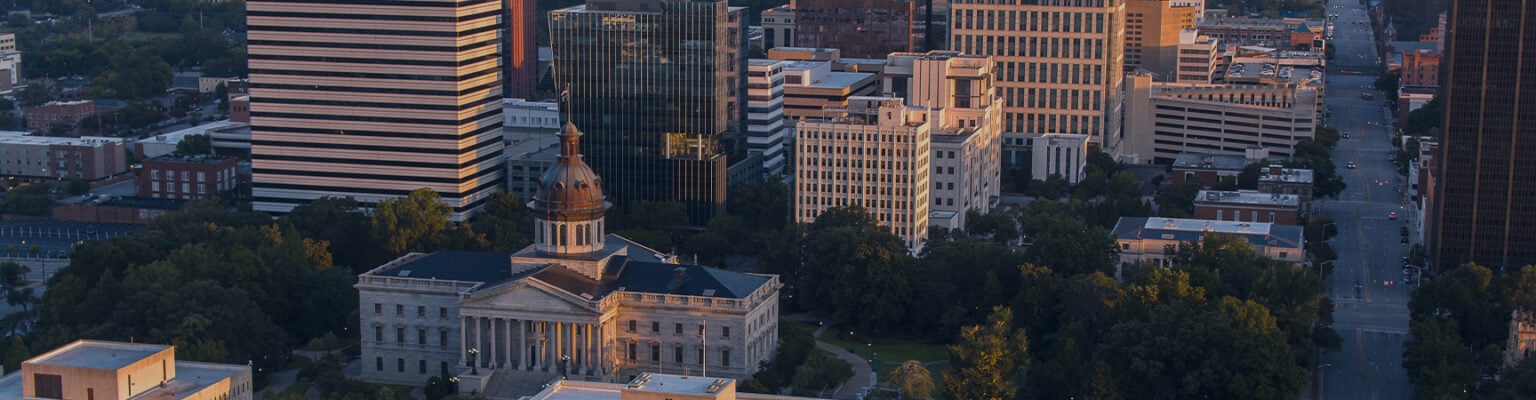

The United States Court of Appeals for the Ninth Circuit — headquartered at the James R. Browning United States Courthouse in San Francisco, California — is the largest federal appellate court in the nation. With 29 authorized active judgeships, jurisdiction over nine states and two territories encompassing approximately 68 million people, and a criminal docket driven by border enforcement, drug trafficking, immigration offenses, Native American reservation crime, and federal public lands jurisdiction, the Ninth Circuit handles one of the largest federal criminal appellate dockets in the country.
The Ninth Circuit is a federal court. It is not the same as the California Courts of Appeal (which have six appellate districts), the Arizona Court of Appeals, the Washington Court of Appeals, or the appellate courts of the other six states and two territories within its jurisdiction. If you were convicted in a federal district court in any of the nine Ninth Circuit states or two territories, your appeal goes to the U.S. Court of Appeals for the Ninth Circuit.
At Elizabeth Franklin-Best, P.C., attorney Elizabeth Franklin-Best and federal prison policy advisor Christopher Zoukis represent clients in federal criminal appeals across the circuits nationwide, including the Ninth Circuit. If you or a family member is facing a federal criminal appeal in this court, we encourage you to schedule a one-hour initial consultation with our team.
Federal Criminal Appeals in the Ninth Circuit
| Question | Answer |
|---|---|
| What states and territories does the Ninth Circuit cover? | Alaska, Arizona, California, Hawaii, Idaho, Montana, Nevada, Oregon, and Washington, plus Guam and the Northern Mariana Islands. |
| How many federal district courts feed into the Ninth Circuit? | Thirteen across nine states, plus two territorial courts. |
| What is the deadline to file a notice of appeal? | 14 days from entry of judgment under Fed. R. App. P. 4(b). |
| Where does the Ninth Circuit hear oral arguments? | At courthouses in San Francisco, Pasadena, Portland, and Seattle, with annual sittings in Anchorage and Honolulu. |
| What types of criminal cases dominate the Ninth Circuit’s docket? | Drug trafficking across the California-Arizona border, immigration offenses (illegal reentry and smuggling), Native American reservation crime, federal public lands offenses, and white-collar/tech-sector fraud. |
Key takeaways on the Ninth Circuit
- The Ninth Circuit is the largest federal appellate court in America — 29 active judgeships covering nine states and two territories with approximately 68 million residents (~20% of the entire U.S. population). It spans from the Arctic (Alaska) to the tropics (Hawaii, Guam) and from the Pacific coast to the Rocky Mountains.
- Chief Judge Mary H. Murguia — the first Latina to serve as chief judge of any federal circuit — has led the court since December 2021. Supreme Court Justice Elena Kagan serves as the Circuit Justice.
- The Southern District of California (San Diego) and District of Arizona (Phoenix/Tucson) are among the busiest federal criminal prosecution districts in the nation, driven by border enforcement, fentanyl trafficking, and immigration offenses.
- Immigration offenses account for approximately 40% of all federal criminal filings nationwide, and the Ninth Circuit handles a large share of these appeals. Illegal reentry under 8 U.S.C. § 1326 is the single most prosecuted federal offense in America.
- The Ninth Circuit encompasses more federally recognized tribal lands than any other circuit, including the Navajo Nation (the largest reservation in the United States) in Arizona, and dozens of other tribes across the western states.
- The circuit contains states with the highest percentages of federal land in the nation — Nevada (80%), Alaska (61%), Idaho (62%), Oregon (53%), and California (45%) — creating a distinctive federal public lands criminal docket.
- The Northern District of California (San Francisco/Silicon Valley) is the epicenter of tech-sector and securities fraud prosecution.
- The Ninth Circuit uses a unique limited en banc procedure — 11-judge panels rather than the full court — because 29 active judges cannot sit together effectively. This makes the Ninth Circuit the only circuit that uses limited en banc panels for rehearing.
- The court has been the subject of over 60 legislative proposals to split it since 1963, most recently in the 119th Congress.
Overview of the Ninth Circuit Court of Appeals
The United States Court of Appeals for the Ninth Circuit (cited as “9th Cir.” in case law) is a federal appellate court established under Article III of the Constitution. It hears appeals from thirteen federal district courts and two territorial courts:
| Federal District Court | Location | State/Territory |
|---|---|---|
| Central District of California | Los Angeles / Santa Ana / Riverside | California |
| Eastern District of California | Sacramento / Fresno | California |
| Northern District of California | San Francisco / Oakland / San Jose | California |
| Southern District of California | San Diego | California |
| District of Arizona | Phoenix / Tucson | Arizona |
| Western District of Washington | Seattle / Tacoma | Washington |
| Eastern District of Washington | Spokane / Yakima / Richland | Washington |
| District of Oregon | Portland / Eugene / Medford | Oregon |
| District of Nevada | Las Vegas / Reno | Nevada |
| District of Idaho | Boise / Pocatello / Coeur d’Alene | Idaho |
| District of Montana | Billings / Great Falls / Missoula / Butte / Helena | Montana |
| District of Alaska | Anchorage / Fairbanks / Juneau | Alaska |
| District of Hawaii | Honolulu | Hawaii |
| District of Guam | Hagatna | Guam |
| District of Northern Mariana Islands | Saipan | N. Mariana Islands |
The court sits primarily at the James R. Browning Courthouse at 95 Seventh Street in San Francisco — a Beaux Arts landmark that survived the 1906 earthquake and is a designated National Historic Landmark. The court also hears arguments at the Richard H. Chambers Courthouse in Pasadena, Pioneer Courthouse in Portland, and the William K. Nakamura Courthouse in Seattle, with annual sittings in Anchorage and Honolulu.
Practitioner Insight: The Ninth Circuit’s sheer scale creates unique procedural challenges. California’s four districts alone produce over half of the circuit’s criminal appeals. The geographic assignment system routes cases to different courthouses — southern California and Arizona cases are typically heard in Pasadena; northern California, Nevada, Hawaii, and Pacific territory cases in San Francisco; and Pacific Northwest cases in Portland or Seattle. Practitioners must consult the court’s Appellate Practice Guide for current briefing requirements and local rules. The court’s mediation program — the largest in the federal system — resolves a significant percentage of appeals before briefing is complete.
Drug Trafficking and Border Enforcement
The Ninth Circuit encompasses the two busiest drug trafficking prosecution districts on the U.S.-Mexico border. The Southern District of California (San Diego) is ground zero for fentanyl interdiction — the San Diego sector and California-Arizona border region account for the vast majority of fentanyl seized at U.S. ports of entry. The District of Arizona (Phoenix/Tucson) saw criminal filings surge dramatically in recent years, driven by drug trafficking and immigration prosecutions.
Fentanyl, methamphetamine, cocaine, and heroin flow north from Mexico through California and Arizona ports of entry and smuggling corridors. The Sinaloa Cartel and Cartel de Jalisco Nueva Generación (CJNG) dominate wholesale drug distribution across the circuit. Federal drug conspiracy charges under 21 U.S.C. §§ 841 and 846 carry severe mandatory minimum sentences — average fentanyl trafficking sentences have increased significantly in recent years, reflecting both higher quantities and enhanced prosecutorial focus.
Ninth Circuit drug trafficking appeals raise issues including drug quantity attribution, the reliability of cooperator testimony, wiretap challenges, sentencing guideline calculations involving fentanyl quantity thresholds, safety valve eligibility under 18 U.S.C. § 3553(f), fast-track plea program departures, and mandatory minimum challenges.
Immigration Criminal Offenses
Immigration offenses drive the largest single category of federal criminal cases in America, and the Ninth Circuit handles a large share of these appeals. Illegal reentry after deportation under 8 U.S.C. § 1326 is the single most prosecuted federal offense in the country. The Southern District of California files approximately 100 border-related criminal cases per week. The District of Arizona conducts mass hearings under Operation Streamline, during which dozens of defendants may plead guilty simultaneously.
Federal immigration criminal offenses prosecuted in the Ninth Circuit include illegal reentry (8 U.S.C. § 1326), illegal entry (8 U.S.C. § 1325), alien smuggling (8 U.S.C. § 1324), harboring, and document fraud. The Ninth Circuit also handles the largest share of Board of Immigration Appeals decisions in the federal system.
Practitioner Insight: Immigration criminal cases in the Ninth Circuit raise distinctive appellate issues that practitioners in other circuits rarely encounter. Challenges to the validity of prior deportation orders (which form the basis of illegal reentry charges), due process arguments regarding mass-processing programs, sentencing enhancements based on prior criminal history, and the intersection of immigration and criminal law require appellate counsel who understands both systems. The Ninth Circuit has been at the forefront of constitutional challenges to immigration criminal statutes and procedures.
Native American Reservation Crime and Tribal Jurisdiction
The Ninth Circuit encompasses more federally recognized tribal lands than any other circuit. Arizona alone is home to the Navajo Nation — the largest reservation in the United States at approximately 27,000 square miles — along with the Tohono O’odham Nation (which shares a border with Mexico, creating unique drug trafficking and smuggling jurisdictional issues), the San Carlos Apache, the Salt River Pima-Maricopa, the Gila River Indian Community, and the White Mountain Apache, among many others.
Federal criminal jurisdiction in Indian Country is governed by the Major Crimes Act (18 U.S.C. § 1153) and the General Crimes Act (18 U.S.C. § 1152). However, Public Law 280 significantly complicates the jurisdictional landscape within the Ninth Circuit: California is a mandatory PL-280 state where the state has assumed criminal jurisdiction over most reservation crimes, while Arizona has not assumed general PL-280 criminal jurisdiction and Idaho, Montana, and Nevada assumed only limited PL-280 jurisdiction (Idaho over enumerated subject areas, Montana on the Flathead Reservation, and Nevada only where a tribe consented), meaning federal jurisdiction under the Major Crimes Act remains in effect. Oregon is PL-280 except for the Warm Springs Reservation. Washington and Alaska have partial PL-280 jurisdiction with varying tribal-specific arrangements.
Ninth Circuit tribal jurisdiction appeals raise threshold questions of whether federal jurisdiction exists, the Indian status of the defendant and victim, the boundaries of Indian Country under 18 U.S.C. § 1151, and the interaction of tribal, state, and federal criminal authority.
Federal Public Lands Crime
The Ninth Circuit encompasses the nation’s most extensive federal landholdings. Nevada is approximately 80% federal land; Alaska, 61%; Idaho, 62%; Oregon, 53%; and California, 45%. These vast tracts of BLM, Forest Service, and National Park Service land carry federal criminal jurisdiction under federal statutes and land-management regulations, but the Assimilative Crimes Act (18 U.S.C. § 13) reaches only the portions held under exclusive or concurrent federal jurisdiction.
Federal crimes on public lands prosecuted in the Ninth Circuit include drug cultivation on National Forest lands (particularly marijuana grows in California’s national forests), illegal mining and resource extraction, timber theft, arson (including wildfire-related offenses), poaching and Lacey Act violations, archaeological site vandalism, illegal grazing, and assaults on federal officers. Alaska’s enormous federal landholdings generate a distinctive docket including subsistence rights disputes, wildlife offenses, and resource extraction crimes.
White-Collar and Tech-Sector Crime
The Northern District of California (San Francisco/Silicon Valley) houses a dedicated Corporate and Securities Fraud Section in the U.S. Attorney’s Office and serves as the primary venue for tech-sector federal criminal prosecutions. High-profile cases originating in this district — including securities fraud, wire fraud, and corporate fraud prosecutions — generate complex appellate proceedings before the Ninth Circuit.
The Central District of California (Los Angeles) handles entertainment industry fraud, financial crime, and healthcare fraud prosecutions. The District of Nevada (Las Vegas) generates gaming-related fraud and money laundering cases. White-collar appeals in the Ninth Circuit raise issues including the sufficiency of evidence for “knowing and willful” intent, loss calculations under the sentencing guidelines, the application of sophisticated-means enhancements, and restitution and forfeiture orders.
The Nine States and Two Territories
California — The four California districts (Central, Northern, Southern, Eastern) produce over half of the Ninth Circuit’s criminal appeals. The Central District (Los Angeles) is the largest federal district by population. The Southern District (San Diego) is a primary border enforcement court. The Northern District (San Francisco) handles tech and securities fraud. The Eastern District (Sacramento, Fresno) handles agricultural fraud and drug manufacturing cases.
Arizona — The District of Arizona (Phoenix, Tucson) is among the busiest federal criminal courts in the nation, driven by border enforcement, drug trafficking, and Indian Country jurisdiction across the state’s numerous reservations.
Washington — The Western District (Seattle) and Eastern District (Spokane) handle drug trafficking, firearms, fraud, and immigration cases.
Oregon — The District of Oregon (Portland) handles drug trafficking, firearms, fraud, and federal public lands cases.
Nevada — The District of Nevada (Las Vegas, Reno) handles drug trafficking, firearms, gaming-related fraud, and money laundering.
Idaho, Montana — Both single-district states handle drug trafficking, firearms, federal public lands offenses, and Indian Country cases (particularly Montana, with the Blackfeet, Crow, Flathead, and Fort Peck reservations).
Alaska, Hawaii — The District of Alaska handles federal lands cases, subsistence rights disputes, and wildlife offenses. The District of Hawaii handles drug trafficking and military-related offenses.
Guam, Northern Mariana Islands — Both territorial courts generate a smaller but distinctive docket, including drug offenses, immigration cases, and fraud.
The Limited En Banc Procedure
The Ninth Circuit is the only federal circuit that uses limited en banc panels rather than convening all active judges for en banc rehearing. Because 29 active judges cannot effectively sit together for oral argument and deliberation, the court uses panels of 11 judges — the Chief Judge plus 10 randomly selected active judges — for en banc review.
This procedure has significant implications for criminal appellants. En banc panels might not include any of the three judges from the original panel decision, and may not reflect the views of a majority of the full court. The result, critics argue, is an increased risk of intracircuit conflicts where different groupings of judges reach contradictory conclusions. For practitioners, understanding the limited en banc dynamic is essential when evaluating whether to petition for rehearing — a favorable en banc draw can reshape the law, but the randomness of panel selection introduces strategic uncertainty.
The Federal Criminal Appeals Process in the Ninth Circuit
Filing the Notice of Appeal
Under Federal Rule of Appellate Procedure 4(b), a defendant must file a notice of appeal within 14 days of the entry of judgment. This deadline is strictly enforced.
Briefing Schedule and Requirements
The Ninth Circuit follows the Federal Rules of Appellate Procedure, supplemented by its own Circuit Rules and General Orders. The court requires electronic filing through CM/ECF and publishes a comprehensive Appellate Practice Guide that practitioners should consult.
Mediation Program
The Ninth Circuit operates the largest appellate mediation program in the federal system, managed by a team of mediators. A significant percentage of cases are resolved through mediation before briefing is complete.
Oral Argument
Oral arguments are heard at four courthouses — San Francisco, Pasadena, Portland, and Seattle — with annual sittings in Anchorage and Honolulu. Cases are assigned to courthouses based on the geographic origin of the appeal.
Decisions and Opinions
The Ninth Circuit’s median disposition time is approximately 12 to 13 months from filing to decision — longer than many smaller circuits due to the sheer volume of appeals. The court files over 8,000 new appeals annually, more than any other circuit. Under Ninth Circuit Rule 36-3, unpublished memorandum dispositions may be cited but are not precedential.
Sentencing Appeals in the Ninth Circuit
Sentencing challenges account for a significant portion of criminal appeals in the Ninth Circuit. The court reviews sentences for both procedural and substantive reasonableness under the Booker/Gall/Rita framework.
Common sentencing issues include drug quantity determinations in border trafficking cases, the application of fast-track plea program departures (unique to border districts), career offender classifications, the application of mandatory minimums under 21 U.S.C. § 841 and 18 U.S.C. § 924(c), role-in-the-offense adjustments in multi-defendant drug conspiracies, and First Step Act sentence reduction motions under 18 U.S.C. § 3582(c)(1)(B).
Post-Conviction Appeals and Federal Prisons
Compassionate Release and Habeas Corpus
The Ninth Circuit reviews appeals from denials of compassionate release under 18 U.S.C. § 3582(c)(1)(A) and § 2255 habeas corpus motions. The court requires a certificate of appealability (COA) for habeas appeals. The Ninth Circuit has developed its own framework for evaluating compassionate release claims and has granted relief at a higher rate than many other circuits.
Federal Prisons in the Ninth Circuit
The Ninth Circuit encompasses the largest geographic territory of any federal appellate court and a wide range of BOP facilities across the western states, Alaska, Hawaii, and the Pacific territories.
- California — USP Atwater, FCC Victorville (USP and two FCIs), FCI Lompoc, USP Lompoc, FCI Terminal Island, MDC Los Angeles, MCC San Diego, FCI Mendota, FCI Herlong, FCI Dublin (historical)
- Arizona — USP Tucson, FCI Tucson, FCI Phoenix, FCI Safford
- Oregon — FCI Sheridan
- Washington — FDC SeaTac
- Hawaii — FDC Honolulu
- Alaska, Idaho, Montana, and Nevada — no standalone BOP facilities; defendants are designated to facilities elsewhere in the region
These facilities generate the heaviest volume of BOP-related appellate litigation in the country — compassionate release motions, § 2255 habeas petitions, First Step Act earned time credit disputes, and conditions-of-confinement claims. Our federal prison consulting practice works closely with our appellate team on BOP designation, classification, and post-conviction matters throughout the circuit.
Standards of Review in Ninth Circuit Criminal Appeals
| Standard of Review | Applies To | What It Means |
|---|---|---|
| De novo | Questions of law, constitutional issues, statutory interpretation, jury instructions | The appellate court decides the issue independently, with no deference. |
| Abuse of discretion | Evidentiary rulings, sentencing decisions (substantive reasonableness), case management | Reversal only if the district court’s decision was unreasonable. |
| Clear error | Factual findings | Reversal only if the court has a definite and firm conviction a mistake was made. |
| Plain error | Unpreserved issues (Fed. R. Crim. P. 52(b)) | Must show (1) error, (2) that is plain, (3) affecting substantial rights, and (4) seriously affecting the fairness or integrity of proceedings. |
Appellate Representation in the Ninth Circuit
Every defendant convicted in federal court has a constitutional right to counsel for a direct appeal. The Ninth Circuit maintains a CJA appellate panel, and the Federal Public Defender offices in each district handle a significant volume of criminal appeals. Defendants may also retain private counsel at any stage.
Our firm handles federal criminal appeals in circuits nationwide, including the Ninth Circuit. We represent defendants in appeals from every district within the circuit, with particular attention to the drug trafficking, immigration, tribal jurisdiction, and federal public lands cases that define this court’s enormous criminal docket.
Frequently Asked Questions: Ninth Circuit Criminal Appeals
What states and territories are in the Ninth Circuit Court of Appeals?
The Ninth Circuit covers nine states — Alaska, Arizona, California, Hawaii, Idaho, Montana, Nevada, Oregon, and Washington — plus the territories of Guam and the Northern Mariana Islands. It hears appeals from thirteen federal district courts and two territorial courts. The Ninth Circuit does not hear appeals from the state courts in these jurisdictions.
How long does a federal criminal appeal typically take in the Ninth Circuit?
The Ninth Circuit’s median disposition time is approximately 12 to 13 months from filing to decision. The court processes over 8,000 new appeals annually — more than any other circuit — which contributes to somewhat longer timelines than smaller circuits.
What is the limited en banc procedure in the Ninth Circuit?
The Ninth Circuit is the only circuit that uses limited en banc panels. Because the court has 29 active judges — too many to sit together — en banc hearings use 11-judge panels (the Chief Judge plus 10 randomly selected judges) rather than the full court.
How do I appeal a federal conviction in the Ninth Circuit?
File a notice of appeal within 14 days of the entry of judgment in the federal district court where you were convicted. The appeal goes to the Ninth Circuit, with oral arguments typically scheduled at the courthouse nearest to the originating district.
Why is the Ninth Circuit controversial?
The Ninth Circuit has been the subject of over 60 legislative proposals to split it since 1963, most recently in the 119th Congress. Its size, its historically higher Supreme Court reversal rate, and the ideological composition of its bench have generated ongoing political debate. For criminal defendants, what matters is the court’s specific precedent and the panel’s composition, not the court’s political reputation.
Can I appeal a federal immigration conviction in the Ninth Circuit?
Yes. Federal immigration criminal convictions — including illegal reentry, smuggling, and harboring — are appealed to the Ninth Circuit like any other federal criminal case. Common appellate issues include challenges to the validity of prior deportation orders, due process claims, sentencing enhancement disputes, and constitutional challenges to immigration criminal statutes.
Does the Ninth Circuit grant compassionate release?
The Ninth Circuit reviews compassionate release petitions under 18 U.S.C. § 3582(c)(1)(A). The court evaluates whether “extraordinary and compelling reasons” warrant release and whether release is consistent with the § 3553(a) sentencing factors. The Ninth Circuit has granted compassionate release at a higher rate than many other circuits.
Protect Your Rights in the Ninth Circuit
A federal criminal conviction in Alaska, Arizona, California, Hawaii, Idaho, Montana, Nevada, Oregon, Washington, Guam, or the Northern Mariana Islands carries consequences that extend far beyond the sentence — including imprisonment, fines, restitution, supervised release, and lasting collateral effects on employment, housing, and civil rights. The Ninth Circuit’s massive scale, its border enforcement and immigration docket, its complex tribal jurisdiction landscape, and the sheer diversity of criminal case types across fifteen district courts demand appellate representation that understands this specific court.
Elizabeth Franklin-Best, P.C., provides focused federal criminal appellate representation in the Ninth Circuit and every other federal circuit court.
Schedule a one-hour initial consultation to discuss your case and explore your options.
Call Elizabeth Franklin-Best P.C. at (843) 620-1100 or contact us today to speak with a federal criminal defense attorney and take decisive action to protect your rights.
Reviewed for legal accuracy by Elizabeth Franklin-Best, Esq., Principal Attorney·September 2026