
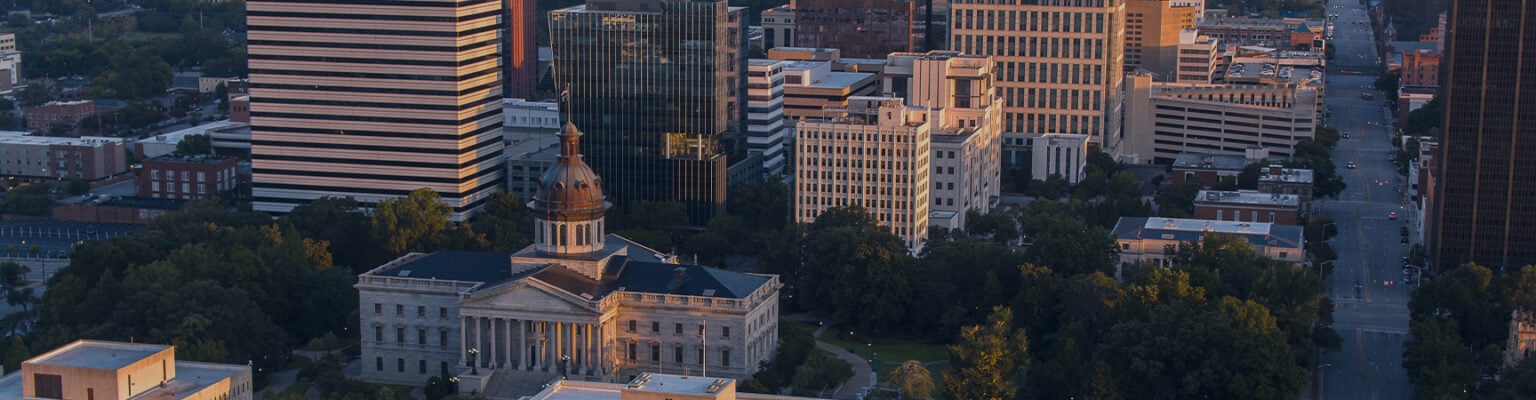

The United States Court of Appeals for the Tenth Circuit — headquartered at the Byron White United States Courthouse in Denver, Colorado — reviews federal criminal cases from eight district courts across six states spanning more than 560,000 square miles of the American West and Great Plains. With 12 authorized judgeships, a criminal docket transformed by the McGirt v. Oklahoma decision’s expansion of federal Indian Country jurisdiction, drug trafficking along the I-25 and I-40 corridors through New Mexico, significant federal public lands crime, and the nation’s only federal supermax prison, the Tenth Circuit occupies a distinctive position in federal appellate law.
The Tenth Circuit is a federal court. It is not the same as the Colorado Court of Appeals, the Oklahoma Court of Criminal Appeals, the New Mexico Court of Appeals, the Kansas Court of Appeals, or the Utah Court of Appeals. If you were convicted in a federal district court in Colorado, Kansas, New Mexico, Oklahoma, Utah, or Wyoming, your appeal goes to the U.S. Court of Appeals for the Tenth Circuit.
At Elizabeth Franklin-Best, P.C., attorney Elizabeth Franklin-Best and federal prison policy advisor Christopher Zoukis represent clients in federal criminal appeals across the circuits nationwide, including the Tenth Circuit. If you or a family member is facing a federal criminal appeal in this court, we encourage you to schedule a one-hour initial consultation with our team.
Federal Criminal Appeals in the Tenth Circuit
| Question | Answer |
|---|---|
| What states does the Tenth Circuit cover? | Colorado, Kansas, New Mexico, Oklahoma, Utah, and Wyoming. |
| How many federal district courts feed into the Tenth Circuit? | Eight across six states. |
| What is the deadline to file a notice of appeal? | 14 days from entry of judgment under Fed. R. App. P. 4(b). |
| Where does the Tenth Circuit hear oral arguments? | At the Byron White Courthouse, 1823 Stout Street, Denver, Colorado. |
| What types of criminal cases dominate the Tenth Circuit’s docket? | Indian Country crimes (especially post-McGirt in Oklahoma), drug trafficking, firearms offenses, federal public lands crimes, and immigration offenses. |
Key takeaways on the Tenth Circuit
- The Tenth Circuit has 12 authorized active judgeships. Chief Judge Jerome A. Holmes — the first African American to serve on this court — has led the Tenth Circuit since October 2022. Supreme Court Justice Neil Gorsuch, himself a former Tenth Circuit judge, serves as the Circuit Justice.
- McGirt v. Oklahoma (2020) dramatically expanded federal criminal jurisdiction across eastern Oklahoma, recognizing that the Muscogee (Creek) Nation reservation was never disestablished. The decision’s logic extended to the Cherokee, Chickasaw, Choctaw, and Seminole nations, shifting criminal prosecution of Indian defendants from Oklahoma state courts to federal courts across roughly 43% of the state’s territory.
- The Tenth Circuit encompasses some of the highest percentages of federal land in the nation — Utah at 63%, Wyoming at 48%, Colorado at 36%, and New Mexico at 35% — creating a distinctive federal public lands criminal docket.
- Drug trafficking through New Mexico along the I-25 and I-40 corridors is a primary driver of the circuit’s drug docket. The District of New Mexico is designated a High Intensity Drug Trafficking Area.
- ADX Florence (Colorado) — the nation’s only federal supermax prison — is located within the Tenth Circuit, generating conditions-of-confinement litigation and post-conviction appeals.
- The Tenth Circuit is actively shaping post-Bruen Second Amendment law, with recent decisions addressing the federal machinegun ban, felon-in-possession statutes, and state firearms regulations.
- Chief Judge Holmes served on the prosecution team for the Oklahoma City bombing and later as the Western District of Oklahoma’s Anti-Terrorism Coordinator — bringing direct criminal law experience to the bench.
Overview of the Tenth Circuit Court of Appeals
The United States Court of Appeals for the Tenth Circuit (cited as “10th Cir.” in case law) is a federal appellate court established under Article III of the Constitution. Created in 1929 when Congress split it from the Eighth Circuit, the court hears appeals from eight federal district courts:
| Federal District Court | Location | State |
|---|---|---|
| District of Colorado | Denver, CO | Colorado |
| District of Kansas | Kansas City / Topeka / Wichita, KS | Kansas |
| District of New Mexico | Albuquerque / Las Cruces / Santa Fe, NM | New Mexico |
| Eastern District of Oklahoma | Muskogee, OK | Oklahoma |
| Northern District of Oklahoma | Tulsa, OK | Oklahoma |
| Western District of Oklahoma | Oklahoma City, OK | Oklahoma |
| District of Utah | Salt Lake City, UT | Utah |
| District of Wyoming | Cheyenne / Casper, WY | Wyoming |
The court sits at the Byron White Courthouse at 1823 Stout Street in downtown Denver — named for former Supreme Court Justice Byron White, who served as a Tenth Circuit judge before his appointment to the high court. Justice Neil Gorsuch also served on the Tenth Circuit from 2006 to 2017 before his confirmation to the Supreme Court.
Practitioner Insight: The Tenth Circuit’s geographic span creates practical challenges for appellate practitioners. The court’s eight districts stretch from the Oklahoma-Arkansas border to the Wyoming-Montana border — a distance of over 1,200 miles. Yet all oral arguments are heard in Denver, meaning that Oklahoma and New Mexico counsel must travel significant distances for argument. The court publishes a Practitioner’s Guide and requires seven hard copies of merits briefs. Opening briefs are due within 40 days of record completion. Practitioners unfamiliar with the Tenth Circuit’s local rules should consult these resources early.
McGirt v. Oklahoma: The Transformation of Federal Criminal Jurisdiction
The Supreme Court’s 2020 decision in McGirt v. Oklahoma is the most significant criminal jurisdiction case in the Tenth Circuit in decades. Writing for a 5-4 majority, Justice Gorsuch held that the Muscogee (Creek) Nation’s reservation was never disestablished by Congress — meaning that the Major Crimes Act (18 U.S.C. § 1153) required federal, not state, prosecution of certain crimes committed by Indians within the reservation boundaries.
The decision’s reasoning quickly extended beyond the Creek Nation. Subsequent rulings confirmed that the reservations of the Cherokee Nation, Chickasaw Nation, Choctaw Nation, and Seminole Nation — collectively known as the Five Civilized Tribes — were likewise never disestablished, along with those of smaller nations, including the Quapaw Nation. Together, these reservations cover approximately 19 million acres — roughly 43% of Oklahoma’s total land area, including much of Tulsa and the eastern half of the state.
The practical impact on the Tenth Circuit’s criminal docket has been enormous. Criminal filings in the Eastern District of Oklahoma surged by more than 400% after McGirt, and in the Northern District of Oklahoma, increases approached 200%. The Judicial Conference recommended five additional federal judgeships for Oklahoma, and the federal defender system allocated approximately 98 new positions to handle the caseload.
In Oklahoma v. Castro-Huerta (2022), the Supreme Court partially narrowed McGirt by holding that states retain concurrent jurisdiction to prosecute crimes committed by non-Indians against Indians in Indian Country. However, the core holding of McGirt stands: federal jurisdiction over Indian defendants in Indian Country remains firmly in place, and the resulting appellate caseload continues to flow to the Tenth Circuit.
Tenth Circuit post-McGirt appeals raise complex jurisdictional issues, including the determination of Indian status, the boundaries of Indian Country under 18 U.S.C. § 1151, the scope of the Major Crimes Act’s enumerated offenses, the double jeopardy implications of state convictions that predate McGirt, and the retroactivity of McGirt to cases on collateral review.
Native American Jurisdiction Beyond Oklahoma
Oklahoma’s post-McGirt transformation is the most visible aspect of the Tenth Circuit’s Indian Country docket, but the circuit’s tribal jurisdiction extends well beyond Oklahoma’s borders.
New Mexico is home to the Navajo Nation — the largest reservation in the United States, spanning approximately 27,000 square miles across New Mexico, Arizona, and Utah — as well as 19 Pueblo communities, each with distinct jurisdictional arrangements. Major Crimes Act prosecutions from the Navajo Nation and Pueblo lands are brought in the District of New Mexico.
Utah’s Ute Mountain Ute Reservation and the Uintah and Ouray Reservation generate federal criminal cases in the District of Utah. Kansas includes tribal lands of the Prairie Band Potawatomi Nation and the Kickapoo Tribe.
Tenth Circuit Indian Country appeals raise the same jurisdictional threshold questions that arise in the Eighth and Ninth Circuits: whether the offense occurred in Indian Country, the Indian status of the defendant and victim, and the applicability of Public Law 280 or other jurisdictional statutes. Experienced appellate counsel must evaluate these jurisdictional foundations before addressing the merits.
Drug Trafficking Along the I-25, I-40, and I-35 Corridors
New Mexico is designated a High Intensity Drug Trafficking Area (HIDTA), and the District of New Mexico prosecutes a heavy volume of drug trafficking cases fueled by the state’s proximity to the Mexican border. The Sinaloa Cartel and Cartel de Jalisco Nueva Generación (CJNG) dominate wholesale drug distribution in the region. Fentanyl, methamphetamine, cocaine, and heroin flow north through New Mexico along the I-25 corridor (from the border through Albuquerque to Denver) and the I-40 corridor (from Albuquerque through Oklahoma to points east).
Oklahoma City functions as a significant regional transshipment and distribution center for illicit drugs, sitting at the intersection of I-35 (the primary north-south corridor from the Texas-Mexico border through Kansas) and I-40 (the east-west route from New Mexico through the Midwest). Kansas districts along the I-70 and I-35 corridors also generate substantial drug trafficking prosecutions.
Federal drug conspiracy charges under 21 U.S.C. §§ 841 and 846 carry severe mandatory minimum sentences. Tenth Circuit drug trafficking appeals commonly raise issues related to drug quantity attribution, the scope of conspiracy agreements, the reliability of cooperator testimony, sentencing guideline calculations, safety valve eligibility under 18 U.S.C. § 3553(f), and the application of First Step Act provisions.
Practitioner Insight: New Mexico’s border-adjacent geography means that the District of New Mexico handles not only drug trafficking but also a significant volume of immigration offenses. Federal immigration charges — including illegal reentry under 8 U.S.C. § 1326, smuggling, and harboring — generate Tenth Circuit appeals raising issues of sentencing enhancements, prior removal orders, and the intersection of immigration and criminal law.
Federal Public Lands Crime: A Uniquely Western Jurisdiction
The Tenth Circuit encompasses some of the nation’s most extensive federal landholdings. Utah is approximately 63% federal land; Wyoming is roughly 48%; Colorado is about 36%; and New Mexico is approximately 35%. These vast tracts of BLM, Forest Service, and National Park Service land carry federal criminal jurisdiction under federal statutes and land-management regulations; only the portions held under exclusive or concurrent federal jurisdiction fall within 18 U.S.C. § 7 (special maritime and territorial jurisdiction) and the Assimilative Crimes Act (18 U.S.C. § 13).
Federal crimes on public lands include drug cultivation on Forest Service land, poaching and Lacey Act violations, archaeological resource theft (particularly significant in New Mexico and Utah’s canyon country), arson, timber theft, illegal grazing, and assaults on federal officers. Yellowstone National Park — which extends from Wyoming into Montana and Idaho — creates jurisdictional questions unique to the Tenth Circuit.
Public lands cases often raise issues of federal jurisdiction, the scope of the Assimilative Crimes Act, Lacey Act penalty calculations, and the application of sentencing guidelines to environmental offenses.
Firearms Offenses and Second Amendment Litigation
The Tenth Circuit is actively shaping post-Bruen Second Amendment jurisprudence. Federal firearms prosecutions under 18 U.S.C. § 922(g) (felon in possession) and 18 U.S.C. § 924(c) (use of a firearm during a drug trafficking crime or crime of violence) are a substantial docket driver across the circuit’s rural and urban districts.
The court has upheld the constitutionality of § 922(g)(1) as applied to felons in the wake of Bruen, placing it among the circuits that have rejected broad challenges to the federal felon-in-possession statute. The Tenth Circuit has also addressed the federal machinegun ban and struck down New Mexico’s seven-day firearms waiting period as unconstitutional. These rulings make the Tenth Circuit a significant forum for Second Amendment criminal defense appeals, and practitioners should be familiar with the circuit’s evolving framework for analyzing firearms regulations.
The Six States: Distinct Federal Criminal Dockets
Colorado — The District of Colorado (Denver) handles drug trafficking, firearms offenses, white-collar crime, and cases arising from the state’s extensive federal lands. Colorado’s marijuana legalization creates ongoing tension with federal law — the Tenth Circuit has consistently held that state-legal marijuana activity violates the Controlled Substances Act.
Oklahoma — The Eastern, Northern, and Western Districts handle a post-McGirt surge in Indian Country criminal cases alongside drug trafficking, firearms offenses, and fraud. Oklahoma’s energy sector generates oil and gas fraud, tribal mineral rights disputes, and environmental crime prosecutions.
New Mexico — The District of New Mexico (Albuquerque, Las Cruces, Santa Fe) handles drug trafficking, immigration offenses, Indian Country cases from the Navajo Nation and Pueblo communities, and federal public lands crime.
Kansas — The District of Kansas (Kansas City, Topeka, Wichita) handles drug trafficking along the I-35 and I-70 corridors, firearms offenses, and fraud cases.
Utah — The District of Utah (Salt Lake City) handles drug trafficking, firearms offenses, fraud, Indian Country cases, and federal public lands crime across the state’s vast federal landholdings.
Wyoming — The District of Wyoming (Cheyenne, Casper) handles drug trafficking, firearms, federal public lands crime, and cases arising from Yellowstone and Grand Teton National Parks. Wyoming’s single-district court generates a smaller but distinctive docket.
The Federal Criminal Appeals Process in the Tenth Circuit
Filing the Notice of Appeal
Under Federal Rule of Appellate Procedure 4(b), a defendant must file a notice of appeal within 14 days of the entry of judgment. This deadline is strictly enforced.
Briefing Schedule and Requirements
The Tenth Circuit follows the Federal Rules of Appellate Procedure, supplemented by its own Local Rules and Internal Operating Procedures. Opening briefs are due within 40 days of the completion of the record on appeal. The court requires seven hard copies of merits briefs in addition to electronic filing through CM/ECF. A docketing statement must be filed within 14 days of the notice of appeal.
Oral Argument
The Tenth Circuit screens cases to determine whether oral argument is warranted. All arguments are held at the Byron White Courthouse in Denver. The court posts argument calendars and selected opinions on its website.
Decisions and Opinions
The Tenth Circuit resolves appeals in approximately 12 to 18 months from filing to decision for most criminal cases, though complex multi-defendant cases and those involving novel jurisdictional questions may take longer. Under Tenth Circuit Rule 36.4, unpublished opinions are not binding precedent but may be cited for their persuasive value.
Sentencing Appeals in the Tenth Circuit
Sentencing challenges represent a significant portion of Tenth Circuit criminal appeals. The court reviews sentences for both procedural and substantive reasonableness under the Booker/Gall/Rita framework.
Common sentencing issues include drug quantity determinations, career offender classifications, the application of mandatory minimums, role-in-the-offense adjustments, and First Step Act sentence reduction motions under 18 U.S.C. § 3582(c)(1)(B). The Tenth Circuit has recognized broad district court authority to determine what constitutes “extraordinary and compelling reasons” for compassionate release under the First Step Act.
Post-Conviction Appeals and Federal Prisons
Compassionate Release and Habeas Corpus
The Tenth Circuit reviews appeals from denials of compassionate release under 18 U.S.C. § 3582(c)(1)(A) and § 2255 habeas corpus motions. The court requires a certificate of appealability (COA) for habeas appeals. The Tenth Circuit’s Prost decision — holding that the savings clause does not allow a § 2241 petition to raise a statutory-interpretation claim that § 2255’s limits on successive motions would bar — became the national rule when the Supreme Court adopted the same approach in 2023.
Federal Prisons in the Tenth Circuit
The Tenth Circuit is home to ADX Florence — the nation’s only federal supermax prison — and several other significant federal facilities across the Mountain West and Great Plains.
- Colorado — ADX Florence (federal supermax), USP Florence, FCI Florence, FCI Englewood
- Oklahoma — FCI El Reno, FTC Oklahoma City (federal transfer hub)
- Kansas — FCI Leavenworth
- New Mexico, Utah, and Wyoming — no standalone BOP facilities; defendants are designated to facilities elsewhere in the region
These facilities — particularly ADX Florence — generate complex compassionate release petitions, § 2255 motions, conditions-of-confinement litigation, and challenges to long-term restrictive housing that regularly reach the Tenth Circuit. Our federal prison consulting practice works closely with our appellate team on BOP designation, classification, and post-conviction matters throughout the circuit.
Standards of Review in Tenth Circuit Criminal Appeals
| Standard of Review | Applies To | What It Means |
|---|---|---|
| De novo | Questions of law, constitutional issues, statutory interpretation, jury instructions | The appellate court decides the issue independently, with no deference. |
| Abuse of discretion | Evidentiary rulings, sentencing decisions (substantive reasonableness), case management | Reversal only if the district court’s decision was unreasonable. |
| Clear error | Factual findings | Reversal only if the court has a definite and firm conviction a mistake was made. |
| Plain error | Unpreserved issues (Fed. R. Crim. P. 52(b)) | Must show (1) error, (2) that is plain, (3) affecting substantial rights, and (4) seriously affecting the fairness or integrity of proceedings. |
Appellate Representation in the Tenth Circuit
Every defendant convicted in federal court has a constitutional right to counsel for a direct appeal. The Tenth Circuit maintains a CJA appellate panel, and the Federal Public Defender offices in each district handle a significant volume of criminal appeals. Defendants may also retain private counsel at any stage.
Our firm handles federal criminal appeals in circuits nationwide, including the Tenth Circuit. We represent defendants in appeals from every district within the circuit, with particular attention to the Indian Country, drug trafficking, firearms, and federal lands cases that define this court’s criminal docket.
Frequently Asked Questions: Tenth Circuit Criminal Appeals
What states are in the Tenth Circuit Court of Appeals?
The Tenth Circuit covers six states: Colorado, Kansas, New Mexico, Oklahoma, Utah, and Wyoming. It hears appeals from eight federal district courts across these states. The Tenth Circuit does not hear appeals from state courts — the Colorado Court of Appeals, the Oklahoma Court of Criminal Appeals, and the appellate courts of the other four states are entirely separate systems.
How did McGirt v. Oklahoma change federal criminal jurisdiction?
In McGirt v. Oklahoma (2020), the Supreme Court held that the Muscogee (Creek) Nation’s reservation was never disestablished, meaning that the Major Crimes Act requires federal prosecution of certain crimes committed by Indians within reservation boundaries. The decision extended to all Five Civilized Tribes (Cherokee, Chickasaw, Choctaw, Creek, and Seminole), covering approximately 43% of Oklahoma. Defendants who previously would have faced state prosecution now face federal charges with federal sentencing guidelines, mandatory minimums, and Tenth Circuit appellate review.
What is the filing deadline for a federal criminal appeal?
You must file a notice of appeal within 14 days of the entry of judgment under Fed. R. App. P. 4(b). This deadline applies to all federal criminal cases in the six Tenth Circuit states. Extensions are available only in limited circumstances.
How long does a federal appeal typically take in the Tenth Circuit?
Most criminal appeals in the Tenth Circuit take approximately 12 to 18 months from filing to decision. Cases involving complex records, multiple defendants, novel jurisdictional questions (such as post-McGirt issues), or oral argument may take longer.
What is ADX Florence?
ADX Florence, located in Fremont County, Colorado, is the nation’s only federal supermax prison — the highest-security facility in the Bureau of Prisons system. Inmates housed at ADX Florence who challenge their convictions or conditions of confinement may file appeals that are reviewed by the Tenth Circuit.
Can I appeal a federal conviction after a guilty plea?
In most cases, defendants retain the right to appeal illegal sentences, jurisdictional defects, and certain constitutional violations even after a guilty plea. However, most plea agreements contain appeal waivers that limit the scope of appellate review. An experienced appellate attorney can evaluate whether the waiver is enforceable and whether exceptions apply.
Does the Tenth Circuit grant compassionate release?
The Tenth Circuit reviews compassionate release petitions under 18 U.S.C. § 3582(c)(1)(A). The court has recognized that district courts have broad authority to determine what constitutes “extraordinary and compelling reasons” for release under the First Step Act, but the § 3553(a) sentencing factors must still support release.
Protect Your Rights in the Tenth Circuit
A federal criminal conviction in Colorado, Kansas, New Mexico, Oklahoma, Utah, or Wyoming carries consequences that extend far beyond the sentence — including imprisonment, fines, restitution, supervised release, and lasting collateral effects on employment, housing, and civil rights. The Tenth Circuit’s post-McGirt jurisdictional complexity, its vast federal lands docket, the drug trafficking corridors through New Mexico and Oklahoma, and the evolving Second Amendment landscape demand appellate representation that understands this specific court.
Elizabeth Franklin-Best, P.C., provides focused federal criminal appellate representation in the Tenth Circuit and every other federal circuit court.
Schedule a one-hour initial consultation to discuss your case and explore your options.
Call Elizabeth Franklin-Best P.C. at (843) 620-1100 or contact us today to speak with a federal criminal defense attorney and take decisive action to protect your rights.
Reviewed for legal accuracy by Elizabeth Franklin-Best, Esq., Principal Attorney·September 2026