
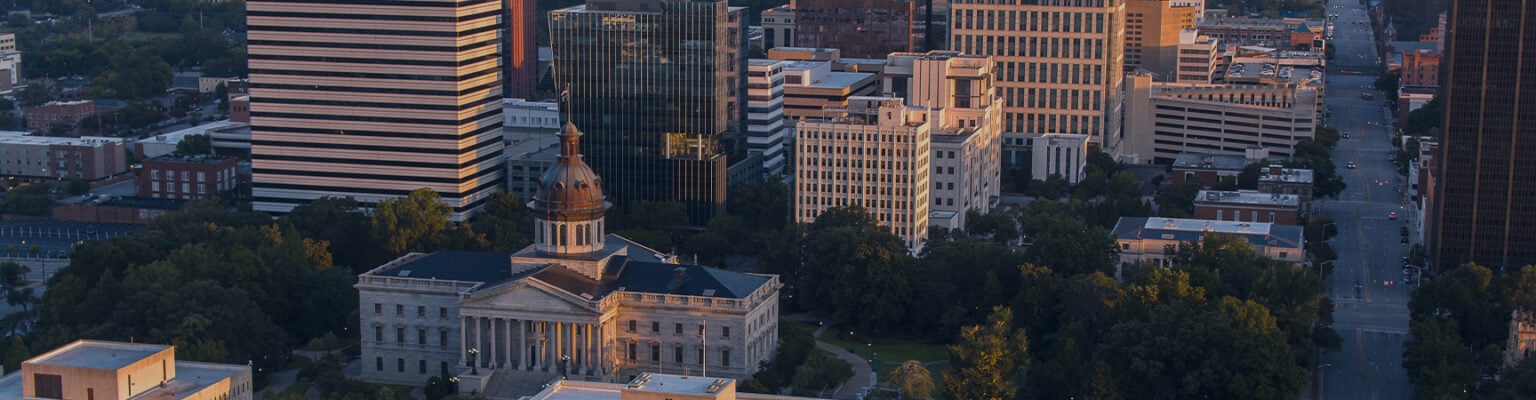
FCI Greenville at a glance
FCI Greenville is a medium-security federal prison in Greenville, Illinois, and it is really two prisons on one campus: the institution holds men, and the minimum-security satellite camp beside it holds women. As of September 2026 the Bureau counted 1,248 people there — 1,135 at the institution and 113 at the camp.
| Official name | Federal Correctional Institution, Greenville |
|---|---|
| BOP code | GRE |
| Security level | Medium; men at the institution, women at the adjacent minimum-security satellite camp |
| Population | 1,248 (as of September 2026) · 1,135 at the FCI, 113 at the camp |
| Visiting | Saturdays, Sundays and federal holidays, 8:00 a.m.–3:00 p.m. · see visiting hours |
| Inmate mail | Institution: Inmate Name & Register Number · FCI Greenville · Federal Correctional Institution · P.O. Box 5000 · Greenville, IL 62246 Camp: Inmate Name & Register Number · FCI Greenville · Federal Correctional Institution · Satellite Camp · P.O. Box 6000 · Greenville, IL 62246 |
| Send money | Lockbox · Western Union (Quick Collect) · MoneyGram |
| Phone | 618-664-6200 · Fax 618-664-6372 |
| Street address | 100 U.S. Highway 40, Greenville, IL 62246 · Bond County |
| Judicial district | Southern District of Illinois |
| BOP region | North Central |
| Housing | Nine multiple-occupancy cell units and two open-bay dormitory units; no single-cell units |
| Special Housing Unit | Yes · 73 segregation cells |
| RDAP | At the camp only, inside Female Integrated Treatment · not at the institution |
| UNICOR | Yes · a sewing factory at the institution |
| Camp | Adjacent minimum-security satellite camp for women |
On this page
It sits in Bond County, off Interstate 70 about 45 minutes east of St. Louis, inside the Bureau’s North Central Region and the Southern District of Illinois. The camp is one of only five places in the federal system running Female Integrated Treatment, and it is the only route to residential drug treatment on this campus.

Which Greenville? Sorting out the name first
There is no federal prison in Greenville, South Carolina, and that is the mix-up that sends the most people to the wrong place. The Bureau’s four South Carolina institutions are at Bennettsville, Edgefield, Estill and Salters; anyone held in Greenville, South Carolina is in a county or state facility that the federal inmate locator will never find. This page is about Greenville, Illinois, in Bond County, on I-70 between St. Louis and Effingham; our guide to federal prisons in Illinois covers the rest of the state.
Inside Illinois there are five federal prisons, and two were renamed recently enough that older paperwork still uses the old names.
| Institution | Code | Where | What to know |
|---|---|---|---|
| FCI Greenville (this page) | GRE | Greenville, Bond County | Medium security; camp holds women |
| FCI Marion | MAR | Marion, Williamson County | Renamed from USP Marion in 2024; medium security with a camp |
| FCI Pekin | PEK | Pekin, Tazewell County | Medium security with a camp; the roster marks it, like Greenville, as holding both sexes |
| FCI Thomson | TOM | Thomson, Carroll County | Renamed from USP Thomson; now low security with a camp |
| MCC Chicago | CCC | 71 West Van Buren Street, Chicago | Administrative; mostly pretrial and holdover |
Two more distinctions matter. Illinois runs its own state prison system, and a sentence from an Illinois circuit court does not lead here — the Bureau takes people sentenced in a United States District Court. And “Greenville FCI,” “FPC Greenville,” “SCP Greenville” and “FCI Greenville Camp” are all this campus: the Bureau’s feeds use “Greenville FCI” and “GREENVILLE-CAMP,” the visiting supplement calls the camp the SCP, and the First Step Act guide calls it SCP Greenville. Mail, though, is not interchangeable.
Who is held at FCI Greenville?
Men are held at the institution and women are held at the camp. That has been true since the Bureau changed the camp’s mission, announced on July 6, 2000, and it decides which programs a person can reach, which commissary list they shop from, and which of the two visiting rooms a family drives to.
The Bureau announced the change itself. In a press release dated July 6, 2000, Warden Charles R. Gilkey said that “the minimum-security Federal Prison Camp, Greenville, Illinois, will experience a change in mission to house only female inmates,” that “male camp inmates will be transferred to other Federal facilities before the Greenville Prison Camp receives any female inmates,” and that the change “will effect only the Federal Prison Camp. The Federal Correctional Institution will continue to house male inmates.” The reason given was bed space for women in the North Central Region, and the release set no completion date. Twenty-six years later the arrangement still holds.
Three current records confirm it independently. The PREA auditor who visited in May 2025 ticked “Both Females and Males” on the question of which populations the facility holds. Attachment C of the institution’s own visiting supplement — the instructions given to camp visitors — is written in female pronouns throughout, while Attachment B, for the institution, is written in male pronouns. And the camp’s published commissary list stocks tampons, sanitary pads, panties, foundation in four shades and a hijab; the institution’s list stocks none of those things.
Why this trips people up: the Bureau’s public roster carries one gender field per facility code, and for Greenville it reads “mixed,” which the facility page renders as “Male and Female Offenders.” Both describe the campus, not either side of it, and a reader taking them at face value can conclude that men and women are housed together at a medium-security prison. They are not. Our guide to women in federal prison covers what a women’s camp is. The institution and the camp are separate compounds with separate visiting rooms, housing, commissary lists and program catalogs.
One population fact belongs here because it changes what a camp designation is likely to mean. The May 2025 PREA audit recorded 231 women at the camp against a rated capacity of 127. By June 2026 the Bureau’s facility page showed 115, and as of September 2026 it showed 113. The camp has gone from badly over its rated capacity to just under it in sixteen months. No Bureau document explains why.
What is the security level at FCI Greenville?
The institution runs at medium security; the camp beside it is minimum. The May 2025 PREA audit records the campus as “Medium, Minimum” by security level and “Community, In, Out” by custody level — the Bureau’s way of saying that one campus runs everything from a fenced medium-security compound to an unfenced camp whose residents work outside the perimeter.
Designation is decided before anyone arrives, at the Designation and Sentence Computation Center in Grand Prairie, Texas, and it is arithmetic first. The Bureau’s security designation rules, Program Statement 5100.08, score offense severity, criminal history, history of violence and escape, detainers, education, substance abuse and time remaining. The total lands a person in a security range, which is then adjusted by Public Safety Factors — a deportable-alien finding, more than ten years left to serve, a serious escape, a sex offense — and by Management Variables, which let the Center override the arithmetic for a documented reason. For this campus that produces two rules: a man cannot be designated to the Greenville camp, and a woman cannot be designated to the institution. It is the most misunderstood part of designation, and the only way to know how a particular case scored is to ask the unit team for the BP-337 and BP-338 forms and read them.
The institution opened in late 1994. The physical plant, as the 2025 audit recorded it, is 28 buildings with no single-cell housing units at all: nine multiple-occupancy cell units, two open-bay dormitory units and 73 segregation cells. The audit’s summary field puts the number of housing units at nine, which does not reconcile with nine plus two; the component figures are the ones that describe what a person will live in. No one here has a cell to themselves by right, and refusing a cellmate is a disciplinary matter.
One unusual feature of the population: the same audit records that Greenville holds people for a branch of the United States military. That is not a paperwork artifact — a 2025 habeas petition in the Southern District of Illinois records that a prisoner transferred from the United States Disciplinary Barracks at Fort Leavenworth has been at FCI Greenville since September 2008.
Who are the notable inmates at FCI Greenville?
One person on the list every other site copies is actually at FCI Greenville. Terry M. Helvey, register number 13867-045, appears in the Bureau’s inmate locator at Greenville FCI with a projected release date of LIFE as of September 2026. Helvey was convicted by court-martial of the 1992 murder of Navy Radioman Petty Officer Third Class Allen R. Schindler Jr. in Sasebo, Japan, and transferred into Bureau custody from the United States Disciplinary Barracks at Fort Leavenworth. A 2025 federal filing in the Southern District of Illinois records that he has been held here since September 2008.
The rest of the list that circulates is out of date, in several cases by more than a decade. The table gives each person’s status in the Bureau’s records as of September 2026.
| Name | Register number | Where they actually are, September 15, 2026 |
|---|---|---|
| Terry M. Helvey | 13867-045 | FCI Greenville. Projected release: LIFE |
| David Anthony Mack | 12866-112 | Released from Bureau custody on May 14, 2010 |
| Walter Edmund Bond | 37096-013 | Released from Bureau custody on May 1, 2024 |
| Derrick Shareef | 22344-424 | FCI Forrest City Low, Arkansas. Projected release November 11, 2036 |
| Michael Curtis Reynolds | 10671-023 | FCI Atlanta, Georgia. Projected release December 14, 2032 |
| Edward Buck | 78687-112 | FCI Englewood, Colorado. Projected release June 3, 2045 |
| Patrick Houston (Project Pat) | 17959-076 | Released from Bureau custody on December 9, 2005 |
Two cautions about lists like this. The locator names a prison by place and type, and names a word apart are easy to misread: “Forrest City Low FCI” and “Forrest City Medium FCI” are two different prisons on one complex. And a name shown as “Not in BOP Custody” is a name that left, often from a halfway house in another state rather than from the prison a list still attaches it to.
How do I find someone at FCI Greenville?
Use the Bureau’s Inmate Locator, which is free, public and updated daily. Search by register number if you have one; otherwise by first and last name, leaving middle name, race, age and sex blank on the first attempt so the search is as wide as possible.
The locator covers everyone in federal custody since 1982. A result reading “Located at: Greenville FCI” means the person is on this campus, but the locator does not distinguish the institution from the camp; the sex field usually does that job here. The screen never prints “IN TRANSIT”: a record the Bureau marks that way — in its words, someone “moved from a BOP facility” who “may or may not be returned” — names no facility and shows “NOT IN BOP CUSTODY”, while someone housed at the Federal Transfer Center shows as “Located at: Oklahoma City FTC”. Someone already released shows no facility, only “Not in BOP Custody as of” and a date; where the record behind the screen gives a facility code beginning with C — CLB, CNV, CPH — that is a Residential Reentry Management office, meaning the sentence finished from a halfway house or home confinement rather than from the prison.
How do I write to someone at FCI Greenville?
There are two different post office boxes, and using the wrong one delays the letter. Mail for the institution goes to Box 5000; mail for the camp goes to Box 6000. These are the address blocks exactly as the Bureau publishes them.
| For someone at the institution | For someone at the camp |
|---|---|
| INMATE NAME & REGISTER NUMBER FCI Greenville FEDERAL CORRECTIONAL INSTITUTION P.O. BOX 5000 GREENVILLE, IL 62246 | INMATE NAME & REGISTER NUMBER FCI Greenville FEDERAL CORRECTIONAL INSTITUTION SATELLITE CAMP P.O. BOX 6000 GREENVILLE, IL 62246 |
The register number is not optional. It is five digits, a hyphen and three digits, it never changes for the life of a federal sentence, and mail without it is returned. Use the committed name from the judgment, not a nickname.
General correspondence is opened and read under the Bureau’s correspondence rules. The institution’s handbook records that first-class mail is distributed by the evening watch officer in each housing unit, that there is no mail service on weekends or federal holidays, and that only soft-cover publications may be sent, with hardcovers accepted only direct from a publisher, book club or bookstore.
Special mail — from an attorney, a court, a member of Congress, the Inspector General — is opened only in the inmate’s presence and is not read, but only if it is marked correctly. The envelope must be addressed to the person by name and register number, identify the sender as an attorney or other special-mail correspondent, and carry the words “Special Mail — Open only in the presence of the inmate” on the face. An envelope from a law office without that marking is read like any other letter. Inside, legal mail cannot be dropped in a unit box: the handbook states that legal and special mail placed in unit depositories is returned, and that it must be handed to the mail room with an identification card, or to the unit officer in the Special Housing Unit. Do not put money in a letter — the mail room removes and rejects it. Our guide to writing to someone in federal prison covers what gets rejected system-wide, and attorney-client communication covers the privilege question.
How do I send money to someone at FCI Greenville?
Money never goes to the prison. Every deposit by mail goes to a Bureau processing center in Des Moines, Iowa, for every federal prisoner in the country, and funds sent to the Greenville address are rejected and returned. Address a postal money order like this:
- Federal Bureau of Prisons
- Inmate name and register number
- P.O. Box 474701
- Des Moines, Iowa 50947-0001
Postal money orders are the only instrument that posts immediately; the institution’s handbook states that every other money order carries a fifteen-day hold, which matters when someone has just arrived with nothing. Print the committed name and register number on the money order and on the envelope, put your own name and return address in the top left corner, and enclose nothing else. The lockbox cannot forward anything that arrives with a payment.
For faster money, Western Union’s Quick Collect service and MoneyGram both send funds electronically to a Bureau account using the register number and committed name as the reference. Fees vary by amount and by whether you pay online, by phone or in person, and the Bureau’s own sending money page carries the current codes and the posting times: two to four hours for a transfer sent between 7:00 a.m. and 9:00 p.m. Eastern, and 7:00 a.m. the next morning for one sent later. Read it the day you send, because a mistyped reference sends money into a queue rather than to a person. Our full guide to sending money to a federal prisoner compares every route and its cost.
Money has a ceiling on what it can do. The monthly commissary limit caps ordinary purchases at $460, so a larger deposit sits in the account. And if the sentence carries restitution, a fine or a special assessment, a share of what arrives goes to it under the Inmate Financial Responsibility Program; someone who refuses to participate is capped at $25 a month at the commissary and shut out of UNICOR.
What are the visiting hours at FCI Greenville?
Saturdays, Sundays and federal holidays, from 8:00 a.m. until 3:00 p.m., on both sides of the campus. There is no weekday social visiting here. That comes from Institution Supplement GRE 5267.09E, dated October 1, 2024, which rescinded the March 2022 version and covers both sides of the campus in one document. See the Bureau’s visiting regulations and our guide to federal prison visitation.
The supplement’s schedule table and its visitor-facing attachments do not say quite the same thing, and the difference is the one that ruins a trip. The table in the body gives only start and end times. Attachments B and C, the instruction sheets handed to approved visitors, add a third column: visitor processing ends 9:15 a.m. and 2:15 p.m. The supplement never explains whether that means a morning and an afternoon intake or simply a last reliable moment to join the morning one, and the Bureau has published nothing that settles it. Call 618-664-6200 before you drive, and plan to be in the lobby well before 9:15.
If the visiting room fills, the Institution Duty Officer begins ending visits by distance: people who live within fifty miles go first, then the next fifty-mile band, and where several visitors are equally close, the ones who visit most often are ended first. It is an unusual rule and it is written down, which means a family driving four hours is the last to be turned out rather than the first.
Who can visit, and how many
Five people at a time, children included, unless the warden approves more. No one visits who is not already on the approved list. The person in custody asks their correctional counselor for a Visitor Information Form (BP-A0629) and mails it out; the prospective visitor completes it, attaches a copy of a government photo ID, and mails it back to the counselor directly, because the unit team will not accept the form from an inmate. An applicant under sixteen needs a parent or guardian’s signature. Everyone is run through NCIC, the warden decides any case the check flags, and the person in custody is told the answer but never the reason.
Approved lists also expire: a background check on file stays good for three years, and once it is older than that every prospective visitor reapplies from the beginning. Most families learn that at the lobby desk. Special visits and attorney visits outside regular hours are arranged by the unit team on a memorandum to the warden, and someone in the Special Housing Unit gets non-contact video visiting only, limited to verified immediate family and ordinarily capped at two hours.
Two limits in the same document contradict each other. Paragraph 4(j)(4) says an inmate “may have a maximum of ten (10) friends and associates placed on their visiting list.” Attachments B and C say “other relatives and friends authorized to visit is limited to twenty (20).” Same supplement, same date, no indication which controls. Immediate family is not counted against that cap. If you are near either number, ask the counselor in writing which figure the institution applies.
What visitors can wear and bring
The dress code refuses open-toed shoes, crocs, shorts, mini-skirts, sheer or form-fitting clothing — the supplement names skinny jeans and leggings — low-cut, backless, halter, midriff or sleeveless tops, dresses that rise above the knee when seated, heels and platforms, all headgear other than religious or medical, and anything camouflage, khaki, tan or fluorescent orange. One line catches more visitors than the rest: underwire bras and bras with metal clasps are not permitted, and the supplement names a sports bra as the most suitable option. The metal detector is the reason.
Purses, watches, car keys, cell phones, cameras and all cash and coin stay locked in the vehicle. What may come in is one clear wallet or change purse no larger than eight inches on a side holding money and identification only; one day’s prescription medication, surrendered at the officer’s station; and, for a baby, four diapers, four sealed plastic containers of food, four plastic bottles, a crib-size blanket and one small bag for baby items or feminine hygiene products, kept at the officer’s station.
Vending machines and microwaves are there for visitors, but not for cash. A vending card is bought in the Front Lobby at the institution or the Message Center at the camp for $5.00, paid with a $5.00 bill and nothing else, and arrives pre-loaded with $2.00. Value is added in one, five, ten and twenty dollar notes up to a $99.00 balance; coins cannot be loaded at all. Bring flat five-dollar bills. The person you are visiting may not touch the card or enter the vending area. Contact is limited to a handshake, a brief embrace and a closed-mouth kiss at the start and end. Children may use the play areas — at the institution the adult visitor supervises them there because inmates are barred from those areas, while at the camp the person you are visiting may join them when there is room. Lactation rooms are provided on both sides.
Identification and screening
Everyone sixteen and older needs a valid government photo identification and signs a Notification to Visitor form, a contraband declaration and the visitor log before each visit. At the institution, screening is a walk-through metal detector and an X-ray machine for anything carried in; at the camp, screening is by hand-held detector. Two rules then end visits early, and both are absolute. A visitor who leaves the visiting area is not readmitted until the next visiting day, so stepping out to the car for something forgotten ends the visit. And a visitor may not leave the institution and return the same day without the warden’s advance approval; an inmate is processed into the visiting room once per day, so a morning visit that ends is not resumed in the afternoon. Introducing anything onto the grounds without the warden’s knowledge and consent is a federal crime under 18 U.S.C. § 1791, and that warning is printed on the form every visitor signs. The twenty-year maximum is reserved for a narcotic drug, methamphetamine, LSD or PCP; a firearm or a Schedule I or II drug carries ten years, and lesser objects less.
Getting to FCI Greenville
The supplement’s written directions distinguish the two entrances. From the east on Interstate 70, take exit 45, go north to the first light, turn left, continue to the first stop sign and turn left to the institution entrance. From the west, take exit 41, go north over the interstate to Highway 40, turn right and go east to the first stop sign, then turn right. On the entrance road, stay on it for camp parking; for the institution, take the first right into visitor parking. The address the supplement gives is 100 U.S. Highway 40 and 4th Street.
Greenville is about 45 minutes east of St. Louis, the practical arrival airport and the only realistic public-transport link; the supplement names the Amtrak station at 550 South 16th Street in St. Louis and Greyhound service to Effingham and Springfield, none of which is in Greenville, so the last leg is a hire car or taxi. Institution business hours are Monday to Friday, 7:30 a.m. to 4:00 p.m. One number to write down carefully: the visiting supplement prints the main institution telephone as (815) 664-6200, three times. That is wrong. The roster, the location feed, the rendered facility page and the institution’s own handbook all give 618-664-6200, and 815 is a northern-Illinois area code with nothing to do with Bond County.
How do phone calls and email work at FCI Greenville?
Calls go one way: out. No one outside can telephone into a federal prison and be connected to a person in custody. A genuine emergency goes to the institution’s chaplain, who verifies it and passes on a message.
The Bureau’s telephone regulations, Program Statement 5264.09, issued September 3, 2026, set the national allowance at 510 minutes per calendar month: 300 are free to anyone eligible for First Step Act telephone incentives, and anyone, eligible or not, may buy the other 210 after using up the first 300. A single call should generally not exceed 15 minutes, at least 30 minutes must pass between completed calls, and the hours of telephone operation begin at 6:00 a.m. and end no later than 11:30 p.m., with access set locally by the Warden. It rescinded the 2008 edition, whose extra 100 minutes in November and December did not survive. Greenville’s handbook adds the local detail: no call may exceed fifteen minutes, the account holds up to thirty approved numbers, the list can be updated quarterly, and time is bought by moving money from the commissary account through the phone system. Minutes reset with the monthly commissary validation, which falls on a day set by the fifth digit of the register number — the same date each month, so a family can predict when a run of calls will stop and start again. Calls are monitored and recorded; the exception is a properly arranged unmonitored legal call, which the unit team sets up and which does not count against the 510 minutes. See our guide to federal inmate phone calls.
Email runs on TRULINCS, which is not email as anyone outside understands it: no internet access, no attachments, no photographs, and messages are screened. Greenville has workstations on each side of every housing unit, disabled during counts. The handbook prices it at five cents a minute of session time, bought in blocks of 40 to 600 minutes — the meter runs while a message is being typed, not per message sent — and printing costs about fifteen cents a page at the stations in Education and Recreation. A correspondent outside has to accept the connection before anything can pass. Someone in the Special Housing Unit keeps the electronic law library and print terminal but loses messaging. Our page on CorrLinks and TRULINCS explains the system and its costs.
What can people buy at the FCI Greenville commissary?
The monthly spending limit is $460, set nationally by the Bureau’s trust fund rules, Program Statement 4500.13, issued May 7, 2026, which raised it from $360; the limit rises by $50 during the November and December holiday period, for no more than one validation period. Stamps, over-the-counter medications, medical products, vitamins, nicotine replacement patches and lozenges, sneakers, mattresses and secured media devices do not count against it.
Several figures still in circulation for this institution are obsolete by different amounts. FCI Greenville’s own 2014 Admission and Orientation handbook says the limit is $290 a month. Listings that give $360 are out of date: that was the national figure until May 2026. Both are superseded, and the document that sets the current number is the program statement, not anything published by the institution.
What the institution does publish is two order forms, one for the institution and one for the camp, both stamped “list updated 7/19/2017” and signed by a warden who left years ago. They are the most-cited Greenville commissary documents on the internet and they are nine years old. Neither prints a spending ceiling. Use them for the shape of the list, not for prices — and read that way, they are the clearest illustration of how different the two sides of this campus are.
| Category | Institution list (men) | Camp list (women) |
|---|---|---|
| Hygiene | Shaving kit, razors, bump-stopper treatment, deodorant, hair grease | Tampons, maxi pads, panty liners, panties, flushable wipes |
| Cosmetics | None | Mascara, eyeliner, eye shadow, lip gloss, liquid foundation in four shades, hair dye |
| Religious items | Prayer oil, fragrance | Hijab, bandana |
| Electronics | MP3 player, MP3 cover, digital radio, watches, book light | Sport watch, batteries, reading glasses |
| Legal and office | Copy cards, photo tickets, legal pad, correction tape | Copy cards, photo tickets, address book, pencil sharpener |
Correction tape and a legal pad on the institution’s list mean legal work is still done on a typewriter here, and typing ribbons are bought at the commissary for the typing room in Education. The camp’s list is the only place on this campus where a menstruating woman’s supplies are sold at all; the camp handbook confirms that sanitary napkins and soap are issued by the institution, with name-brand alternatives available for purchase. Our page on the federal prison commissary covers the national rules.
There is a live gap in the public record here. Program Statement 4500.13 requires that “all institutions housing females … implement a standardized female specific commissary list,” and says that list lives on the Bureau’s Women and Special Populations Branch intranet page. That requirement took effect in May 2026. The camp’s published list predates it by nine years, and the replacement is not published anywhere the public can read it. If what a woman at the Greenville camp can buy matters to a case or a budget, ask the unit team in writing for the current list.
What programs are available at FCI Greenville?
Greenville runs two programs that exist at only a handful of federal prisons — the Life Connections Program and Female Integrated Treatment — and lacks one most people assume every institution has, because the men’s side is not a residential drug treatment site at all. Everything below comes from the Bureau’s First Step Act Approved Programs Guide for August 2026, read against the institution’s own handbooks. One caution applies throughout: the guide records where a program is approved to run, not whether it ran last month or how long the waiting list is. Approval is not delivery, and the way to find out what is being taught is to ask the unit team in writing and keep the answer.
Drug treatment: RDAP is at the camp, not the institution
The Residential Drug Abuse Program at Greenville is a women’s program, delivered at the camp as part of Female Integrated Treatment; the Bureau’s RDAP rules govern admission. FCI Greenville does not appear in the Bureau’s list of RDAP locations at all. That list sits at page 29 of the August 2026 guide, is dated “updated 6/4/2026,” and totals 57 RDAPs at 50 locations plus five Female Integrated Treatment programs at five locations. Its North Central Region entries are Englewood, FCI Florence, USP Florence, the Leavenworth camp, Marion, Milan, Sandstone, Springfield, Terre Haute, Waseca and Yankton. Greenville appears instead under the FIT heading — “North Central Region: SCP Greenville (IL)” — alongside SCP Danbury, FCI Tallahassee, FMC Carswell and SCP Phoenix, with the note that “each FIT program includes an RDAP component.”
The same guide’s programs-by-institution table marks Greenville for residential drug treatment, which looks at first like a contradiction. It is not: the table marks the facility code, and the residential program at that code is the camp’s. The reconciliation is the answer a family needs. A man designated to FCI Greenville who is counting on RDAP for the year off his sentence under 18 U.S.C. § 3621(e) is at an institution that does not run it, and will need a transfer to a program institution to get there. That is a unit-team conversation to start early and in writing, not something to discover eighteen months from release.
Female Integrated Treatment is one of five in the country. The guide describes it as a modified therapeutic community using cognitive behavioral therapy in a trauma-informed environment, run by Psychology Services, worth 500 First Step Act credit hours, with “a special emphasis on vocational training to prepare women with the skills they will need to support themselves and their families upon release” — including an apprenticeship toward work as a Peer Specialist outside. It treats substance use, trauma, mental health, antisocial peers and work needs as one program rather than separate referrals. Non-residential drug treatment and drug education run on both sides, and interviews for residential treatment are scheduled by proximity to release rather than by when the application arrived.
The Life Connections Program
Greenville is one of five federal prisons running the Life Connections Program, the Bureau’s residential faith- and values-based reentry program. The August 2026 guide names them in the program’s own entry by code: FMC Carswell, FCI Milan, USP Terre Haute, FCI Fort Dix and FCI Greenville. The guide’s programs-by-institution table marks Greenville too, so both halves of the document agree here — which is not true of every institution that table marks.
Participants live together in a designated unit and work through a standardized curriculum of interactive journaling in small therapeutic groups, run by Chaplaincy Services rather than Psychology Services and delivered by agency chaplains and mentor coordinators together with contracted spiritual guides, community mentors and volunteers from outside. The guide is explicit that it “is open to those of all faiths and whom have no religious background,” and that participants “approach the program from their own faith teachings or values-based background.” The content is community service, victim impact, mentoring, healthy living skills and release preparation. What distinguishes it from a study group is that the mentoring does not stop at the gate: each participant is matched with a community mentor inside and, on release, with a faith-based or community organization in the district they are going home to. For someone with no family support waiting, that is a concrete asset, and it is why the program is worth asking about even for people who are not religious.
It is an Evidence-Based Recidivism Reduction program worth 500 credit hours, so it belongs on the Individualized Needs Plan, and the route in is a written request through the unit team and the chaplain rather than a direct application. Because it is residential and runs at only five institutions, placement can mean a transfer, and the Bureau will weigh release district, security level and time remaining. Ask the chaplain, ask the unit team to record the interest on the needs plan, and expect the answer to take a program review cycle.
Trauma treatment, BRAVE and women-specific programming
The Resolve Program runs here for trauma-related mental health needs: a trauma education workshop, the Seeking Safety skills group, then dialectical behavior therapy, cognitive processing therapy or a skills-maintenance group, worth 80 credit hours. The camp’s own handbook describes the local version in plainer terms — a non-residential program for women with a history of physical or sexual abuse, whose Trauma in Life workshop is open to any woman with that history or an interest in the subject, while the counseling groups are limited to women with a trauma history and an associated mental health problem. Applications go to Psychology Services by written request. BRAVE, a six-month residential program worth 350 credit hours, is also approved here, one of six institutions named in the guide’s own entry; its criteria are narrow enough to check early — forty or younger, at least 36 months left to serve, a first Bureau commitment, and within the first eighteen months of the sentence.
Education, vocational training and UNICOR
The Education Department runs weekdays from 7:30 a.m. to 3:30 p.m. and on Monday to Thursday evenings. Anyone without a verified high school diploma or equivalency must enroll in the literacy program for 240 instructional hours, and promotions in work assignments and in the prison industries depend on it. The law library sits inside the Education Department, with a separate typing room restricted to legal work, under the Bureau’s inmate legal activities rules. Vocational training at the camp is horticulture, sewing, a Microsoft computer course and dog training through PAWS, with Department of Labor apprenticeships in welding, landscaping, HVAC and electrical work, plus a sixteen-week parenting program with special visiting-room activities. Greenville College — now Greenville University, in the same town — launched a college-in-prison program here on August 8, 2014; no current source confirms whether it is still running, which is a question for the Education Department.
UNICOR operates at the institution, and the 2014 handbook says what it makes: the Army Combat Uniform coat. Everyone hired is a sewer first, with inspector, mechanic, orderly and clerical posts available afterward, and a pre-industrial sewing course has to be passed before placement. Participation then averaged about 200 workers on a factory day of 7:30 a.m. to 3:30 p.m. Pay runs from 23 cents an hour in pre-industrial training up to $1.15 on a regular detail, many times the 12 to 40 cents of an ordinary institution job, which is why the waiting list is long. Anyone owing more than $1,000 in court-ordered obligations is referred for priority placement, UNICOR workers with obligations remit at least half their pay each month, and refusing the financial responsibility program disqualifies a person from the factory, under the Bureau’s work and pay rules. The 2026 guide confirms prison industries still operate here but does not name the product.
What is daily life like at FCI Greenville?
The day is built around five counts, and everything else fits between them. The institution’s handbook sets them out, and the camp’s handbook gives the same clock.
| Time | What happens |
|---|---|
| 12:01 a.m., 3:00 a.m., 5:00 a.m. | Overnight counts. Staff must physically see each person, waking them if necessary |
| Morning | Work details and call-outs; census check that everyone is where they are assigned |
| 10:00 a.m. (weekends and holidays) | Additional stand-up count |
| Midday | Main meal; UNICOR and compound-detail workers may not be in their units at the noon meal but may use recreation before returning to work |
| 4:00 p.m. | Stand-up count. No movement anywhere on the compound until it clears |
| Afternoon and evening | Second census; recreation, education and TRULINCS, which is disabled during counts |
| 10:00 p.m. | Stand-up count and lockdown; lights out at the camp |
Housing at the institution is cells, not dormitories, and every one is shared — the 2025 PREA audit recorded no single-cell housing units on the campus. Movement inside a unit is limited: people may visit other cells on their own side of the unit, but crossing to the other side, or entering a different unit, is an unauthorized-area charge under the Bureau’s discipline program. The camp, by contrast, is two open dormitory housing units, with daily sanitation inspections and pictures permitted only on the desk area.
Work is compulsory for anyone medically able, and a person stays on a detail three months before a change is considered. Ordinary pay is 12 to 40 cents an hour on a four-grade scale, and someone doing only minimal work draws maintenance pay of $5.25 a month — worth remembering when a family is working out how much to send. Food service is a self-service line with salad bars, special-diet options and a pork-free program arranged through Health Services and Religious Services. The whole campus, institution and camp alike, is tobacco-free.
What do inspectors say about conditions at FCI Greenville?
The most useful independent finding about this prison is not about conditions at all. It is about who was supposed to be checking them, and it comes from a Department of Justice Inspector General audit whose fieldwork was done inside FCI Greenville in July 2022.
The Inspector General’s 2023 accreditation audit
In November 2023 the Inspector General published its audit of the Bureau’s $2.75 million contract with the American Correctional Association, the private body that accredits federal prisons. FCI Greenville was one of six institutions the auditors visited, and it became the audit’s leading example. Auditors were on site in July 2022 while the accreditation reviewers conducted their reaccreditation review and a Bureau program review team worked in the building at the same time. The Bureau’s team identified several deficiencies. At the exit meeting, in the auditors’ account, “the ACA reviewer asked the BOP’s Management Analyst to determine which of the deficiencies the BOP program review team noted were noncompliant with ACA expected practices” — the accreditor asking the institution being accredited to mark its own paper. The Inspector General concluded that this “indicated a potential lack of an independent assessment by ACA reviewers in performing their review of this facility,” and that Bureau officials agreed it “raised concerns about the validity of the results.”
The paperwork that followed makes the same point. The draft accreditation report reached the Bureau ten days before the January 2023 hearing at which Greenville was to appear, so the accreditor recommended that Greenville not appear at all; accreditation was extended and the hearing moved to August 2023, about thirteen months after the site visit. The final report did not arrive until June 1, 2023, almost eleven months after the visit. The accreditor had invoiced in the week of the site visit and the Bureau paid at the end of July 2022, before the report existed. The audit’s overall conclusion was that “the BOP is, in effect, paying ACA to affirm the BOP’s own findings.” What that means for a family: the accreditation this institution holds was built on the Bureau’s internal program review rather than on an independent inspection.
What the PREA audit recorded
The Prison Rape Elimination Act audit is the one recurring outside look at this campus. The current PREA report was written by an independent auditor, Lynni O’Haver of Corrections Consulting Services, LLC, after an on-site visit on May 13, 14 and 15, 2025, and is final as of May 22, 2025. The auditor found the institution in compliance with all 45 applicable standards, exceeding none and failing none.
Its numbers are the most useful thing in it. Rated capacity was 723 at the institution and 127 at the camp. The population on the day of the audit was 1,045 and 231 — the institution at roughly 144 percent of its rated capacity, the camp at roughly 182 percent — and the auditor recorded that the facility had been over capacity during the preceding twelve months. The average stay was 688 days, the age range 20 to 78, and 1,248 people were admitted in the year before the audit — an admissions count, not a headcount.
On allegations, the audit recorded five reports of inmate-on-inmate sexual abuse in the twelve months before the visit, all investigated administratively and all five closed as unsubstantiated, with no criminal investigations; no staff-on-inmate sexual abuse allegations; and no sexual harassment allegations of any kind. Those are reported allegations investigated internally, at a facility holding men and women on one campus, and they record what was reported and how it was resolved rather than what occurred. One figure in that audit should not be attributed to Greenville: the form asks how many administrative investigators “the agency and/or facility” employs and the answer given is 253, a Bureau-wide number that appears identically on other institutions’ audits.
What has not been inspected
The DOJ Office of the Inspector General has not conducted an on-site inspection of this facility. Greenville is not among the fourteen institutions that program had reached on the Inspector General’s own count in May 2026 (Report 26-055), and it is not on the list of inspections under way; the July 2022 fieldwork was audit work on a contract, and the auditors said nothing about housing, medical care, staffing or safety here. The District of Columbia Corrections Information Council, which inspects the federal prisons holding D.C. Code offenders and publishes detailed conditions reports, has never inspected FCI Greenville either.
Greenville does appear by name in other Inspector General products — a 2018 review of the management of the female inmate population, which counts the camp among the Bureau’s mixed-gender institutions; a 2008 health-care audit; reviews of release preparation, drug interdiction and inmate telephone use going back to 1999; and a run of bribery and smuggling prosecutions in the early 2010s. Being named in a national report is not the same as being examined. So the position is this: the accreditation that exists rests, on the Inspector General’s own finding, on the Bureau’s review of itself.
The court record
FCI Greenville sits in the Southern District of Illinois, so habeas petitions against the warden are filed there, and the docket shows who runs the prison: orders through 2025 name Warden Lillard, and orders from January 2026 name Warden S. Rudolph, identified in a February 2026 service order as Susan Rudolph, Warden of FCI Greenville. The Bureau’s facility page does not name a warden, so the docket is the reliable public record of who holds the post. The petitions themselves carry a lesson rather than a holding: the 2025 and 2026 orders dispose of § 2241 petitions from Greenville without reaching the merits, several dismissed without prejudice for failure to exhaust administrative remedies. A person with a complaint about First Step Act credits, medical care, a disciplinary finding or a halfway-house date who goes to court before finishing the administrative remedy chain — BP-8, BP-9, BP-10 and BP-11 — will usually be sent back to start it. The administrative remedy paperwork is not a formality; it is the price of admission.
FCI Greenville in the news
Recent news about FCI Greenville centers on two deaths in custody in 2025 and a contraband prosecution; older items concern the Inspector General’s accreditation audit and the camp’s change of mission. Items are newest first.
- December 16, 2025 — Raekwon M. Patton, 27, was sentenced to an additional 24 months for possessing contraband in prison. An officer’s pat search on June 29, 2024 found a makeshift weapon in his waistband, described by prosecutors as a sharp, pointed piece of metal about seven and a half inches long fixed to a wooden handle wrapped in black cord. He was serving a 300-month sentence (U.S. Attorney, Southern District of Illinois).
- November 18, 2025 — Kenneth York, 67, was found unresponsive at about 2:45 p.m. Staff began life-saving measures and he was pronounced dead at a hospital. He had been at FCI Greenville since August 6, 2025, serving a 365-month sentence imposed in the Western District of Virginia. The FBI and the U.S. Marshals Service were notified; no staff or other incarcerated people were injured (FCI Greenville news release).
- May 2025 — the institution’s PREA audit was conducted over a site visit on May 13–15 and found the facility in compliance with all 45 applicable standards.
- March 11, 2025 — Nathan Merdick Smith, 29, was found at about 8:15 a.m. with what the institution’s own release called “injuries consistent with a perceived altercation,” and was pronounced dead at a local hospital. One other incarcerated person was injured and needed outside treatment. The FBI was notified. Smith had been at FCI Greenville since March 18, 2021, serving an aggregate 80-month sentence from the Western District of Missouri (FCI Greenville news release, reproduced by Vandalia Radio).
- November 2023 — the Inspector General published the accreditation audit built partly on July 2022 fieldwork here.
- July 6, 2000 — the Bureau announced that the Greenville camp would change mission and hold only women.
Frequently asked questions about FCI Greenville
Does FCI Greenville hold men or women?
Both, on one campus, but not together. The medium-security institution holds men and the adjacent minimum-security satellite camp holds women. The Bureau converted the camp to a women’s facility in 2000 and announced it in a press release dated July 6, 2000. The roster’s single “mixed” gender flag and the facility page’s “Male and Female Offenders” line describe the campus, not either side of it.
When can families visit FCI Greenville?
Saturdays, Sundays and federal holidays only, 8:00 a.m. to 3:00 p.m., at both the institution and the camp, under Institution Supplement GRE 5267.09E dated October 1, 2024. There is no weekday social visiting. The visitor instruction sheets add processing cut-offs at 9:15 a.m. and 2:15 p.m. that the supplement does not explain, so arrive early and call 618-664-6200 before you travel.
Is there RDAP at FCI Greenville?
Only at the camp, and only as part of Female Integrated Treatment. The Bureau’s RDAP locations list, updated June 4, 2026 inside the August 2026 First Step Act Approved Programs Guide, does not include FCI Greenville; it lists SCP Greenville as one of five Female Integrated Treatment sites, each of which includes an RDAP component. A man designated to the institution who needs residential drug treatment will have to raise a transfer with his unit team.
What is the mailing address for FCI Greenville?
For the institution: inmate name and register number, FCI Greenville, Federal Correctional Institution, P.O. Box 5000, Greenville, IL 62246. For the camp: inmate name and register number, FCI Greenville, Federal Correctional Institution, Satellite Camp, P.O. Box 6000, Greenville, IL 62246. The two boxes are not interchangeable, and mail without a register number is returned.
How does money reach an account at FCI Greenville?
Never to the prison. Mail a postal money order to Federal Bureau of Prisons, inmate name and register number, P.O. Box 474701, Des Moines, Iowa 50947-0001, with nothing else in the envelope. Postal money orders post immediately; other money orders carry a fifteen-day hold. Western Union Quick Collect and MoneyGram use the register number as the reference and post within two to four hours when sent inside Bureau hours.
What is the commissary spending limit at FCI Greenville?
$460 a month, set by Program Statement 4500.13 dated May 7, 2026, with an extra $50 for one validation period over the November and December holidays. Older figures circulate widely: the institution’s own 2014 handbook says $290 and many directory sites still say $360. Both are superseded. Stamps, over-the-counter medications, medical products and vitamins do not count against the limit.
How many people are held at FCI Greenville?
1,248 as of the Bureau’s population report dated September 10, 2026 — 1,135 at the institution and 113 at the camp. The May 2025 PREA audit recorded a rated capacity of 723 at the institution and 127 at the camp, and a population that day of 1,045 and 231. The camp’s population has fallen by about half since then.
Is FCI Greenville in Illinois or South Carolina?
Illinois. There is no federal prison in Greenville, South Carolina; the Bureau’s four South Carolina institutions are at Bennettsville, Edgefield, Estill and Salters. FCI Greenville is in Bond County, Illinois, on Interstate 70 about 45 minutes east of St. Louis, and falls in the Southern District of Illinois.
How many visitors can someone have at FCI Greenville?
Five people at a time including children, unless the warden approves more. The institution supplement contradicts itself on how many friends and associates may be on the list at all: paragraph 4(j)(4) says ten, and the visitor instruction sheets in the same document say twenty. Immediate family is not counted against that cap. Ask the correctional counselor in writing which figure the institution applies.
Has anyone inspected conditions at FCI Greenville?
The DOJ Office of the Inspector General has not conducted an on-site inspection of this facility, and the D.C. Corrections Information Council has never inspected it. Inspector General auditors did work inside the prison in July 2022, but on a contract audit; their November 2023 report found that the institution’s accreditation rested on the Bureau’s review of itself rather than on an independent evaluation.
Problems at FCI Greenville: where we can help
The problems that recur at this institution are visible in its own record, and they are specific to the way this campus is built.
- Residential drug treatment that is not here. A man designated to FCI Greenville who is counting on RDAP for a sentence reduction under 18 U.S.C. § 3621(e) is at an institution the Bureau’s own June 2026 locations list does not include. The remedy is a program transfer, raised with the unit team and documented on the needs plan long before the eligibility window closes. See our RDAP advocacy.
- Program placement generally. Life Connections runs at five institutions and BRAVE at six, both with narrow criteria and both residential. Getting a name onto the right list, in writing, at the right program review is ordinary work that gets skipped.
- First Step Act credits. Greenville is approved for a long list of recidivism-reduction programs and productive activities, which means credit is available and also means credit gets miscounted. Reading the Individualized Needs Plan and the time credit assessment against what a person has actually completed is where errors surface. See our First Step Act credit reviews, our guide to challenging a sentence computation and the Bureau’s sentence computation rules.
- Administrative remedies that have to be finished. The Southern District of Illinois disposes of petitions from this prison for failure to exhaust, without reaching the complaint. Filing the BP-8, BP-9, BP-10 and BP-11 correctly and on time is what preserves the issue, and a § 2241 petition follows only once that chain is finished.
- Discipline and the Special Housing Unit. This institution prosecutes weapons and contraband found in searches, and a disciplinary finding that also becomes a federal charge affects good time, security points, program eligibility and release date at once.
- Visiting lists that fall apart. Three-year background checks expiring without notice, a supplement giving two different caps on friends and associates, and a five-visitor limit that splits large families are all fixable in writing before a trip rather than at the lobby desk.
- Medical care and mental health treatment, particularly at a camp running trauma-focused and integrated treatment programming for women, where a delay in care and a delay in programming are the same delay.
- Deaths and serious incidents. Two people died at FCI Greenville in 2025, one of them after what the institution described as a perceived altercation. Families in that position need someone who knows what records exist, who holds them, and how to ask.
- Release that is not moving: halfway house and home confinement placement under the Bureau’s halfway house placement procedures, and compassionate release under its reduction-in-sentence procedures.
- Challenges to the conviction or sentence itself, through a direct appeal or a § 2255 motion.
Elizabeth Franklin-Best, P.C. is a federal criminal defense and federal prison law practice. We work on sentence computation and First Step Act credit disputes, program and transfer requests, administrative remedies, disciplinary appeals, compassionate release and § 2255 and § 2241 litigation, for people at FCI Greenville and across the federal system. Call (843) 620-1100 or contact us to talk through a specific situation.
Christopher Zoukis, JD, MBA, the firm’s Managing Director, writes and maintains the federal prison policy material on this site. He is not counsel of record; legal representation is provided by Elizabeth Franklin-Best.
Sources and currency
Bureau of Prisons documents
- FCI Greenville, Federal Bureau of Prisons, 2026. Address, contact details, population, mailing blocks and posted documents.
- Visiting Regulations, Institution Supplement GRE 5267.09E, Federal Bureau of Prisons, FCI Greenville, 2024. Schedule, visiting lists, dress code, screening, vending card and directions; rescinded GRE 5267.09D (2022).
- Visiting Regulations, Institution Supplement GRE 5267.09E, Spanish edition, Federal Bureau of Prisons, FCI Greenville, 2024.
- FCI Greenville Commissary Shopping List, Federal Bureau of Prisons, FCI Greenville, 2017. Stocked items, category limits and shopping rules at the institution.
- Federal Prison Camp Greenville Commissary Shopping List, Federal Bureau of Prisons, FCI Greenville, 2017. The camp list.
- FCI Greenville Admission and Orientation Handbook, Federal Bureau of Prisons, FCI Greenville, 2014. Counts, housing, work and pay, UNICOR, education, mail, telephone and TRULINCS.
- FCI Greenville Admission and Orientation Handbook, Spanish edition, Federal Bureau of Prisons, FCI Greenville, 2014.
- Federal Prison Camp Greenville Admission and Orientation Handbook, Federal Bureau of Prisons, FCI Greenville, 2014. The camp: housing, Resolve, vocational training and hygiene issue.
- Trust Fund/Deposit Fund Manual, Program Statement 4500.13, Federal Bureau of Prisons, 2026. The $460 spending limitation and its exclusions, special purpose orders, and the standardized female-specific commissary list.
- Inmate Security Designation and Custody Classification, Program Statement 5100.08, Federal Bureau of Prisons, 2026.
- Inmate Telephone Regulations, Program Statement 5264.09, Federal Bureau of Prisons, 2026. Replaced Program Statement 5264.08 (2008).
- First Step Act Approved Programs Guide, Federal Bureau of Prisons, Reentry Services Division, 2026. August 2026 edition; Life Connections, Female Integrated Treatment, BRAVE, Resolve and prison industries, with the RDAP and FIT locations lists.
- Send Money, Federal Bureau of Prisons, 2026. Lockbox, Western Union and MoneyGram routes, holds and posting times.
- Find an Inmate, Federal Bureau of Prisons, 2026.
- Population Statistics, Federal Bureau of Prisons, 2026.
- Death at FCI Greenville, Federal Bureau of Prisons, 2025. Kenneth York’s death.
- FCI Greenville, Federal Prison Camp to Begin Housing Female Inmates (Press Release 00-5), Federal Bureau of Prisons, 2000. The Bureau no longer publishes it; the link is the Internet Archive’s copy.
Audits and inspections
- PREA Audit Report: FCI Greenville, Lynni O’Haver, Corrections Consulting Services, 2025. Final report of May 22, 2025; site visit May 13–15, 2025. Capacity, population, physical plant, populations held and allegation data.
- Audit of the Federal Bureau of Prisons’ Contract Awarded to the American Correctional Association (Report 24-009), U.S. Department of Justice, Office of the Inspector General, 2023. July 2022 fieldwork at FCI Greenville; the exit meeting, the delayed visiting-committee report and the invoice paid before the report arrived.
- Review of the Federal Bureau of Prisons’ Management of Its Female Inmate Population (Report 18-05), U.S. Department of Justice, Office of the Inspector General, 2018. FPC Greenville among the Bureau’s mixed-gender institutions.
Court records
- Fleming v. Rudolph, No. 3:26-cv-00867, U.S. District Court for the Southern District of Illinois, 2026. Order of August 11, 2026.
- Jackson v. Rudolph, No. 3:26-cv-00816, U.S. District Court for the Southern District of Illinois, 2026. Order of July 16, 2026.
- Portillo v. Warden, No. 3:26-cv-00116, U.S. District Court for the Southern District of Illinois, 2026. Docket; the warden of record.
- Mathers v. Rudolph, No. 3:26-cv-00031, U.S. District Court for the Southern District of Illinois, 2026. Service order of February 10, 2026, identifying Susan Rudolph as Warden of FCI Greenville.
- Ellis v. Alatary, No. 3:25-cv-02032, U.S. District Court for the Southern District of Illinois, 2025. Order of December 19, 2025 dismissing for failure to exhaust administrative remedies.
- FCI-Greenville Inmate Sentenced to Additional Prison Time for Possessing Contraband, U.S. Attorney’s Office, Southern District of Illinois, 2025. Raekwon M. Patton’s sentence.
News and other sources
- Death Reported at FCI Greenville, Vandalia Radio, 2025. Reproduces the institution’s news release on Nathan Merdick Smith’s death.
- Find an Inmate results script, Federal Bureau of Prisons, 2026. What the search screen shows for a released or in-transit record.
- 18 U.S.C. § 1791, Providing or possessing contraband in prison, U.S. Code (Legal Information Institute).
- 18 U.S.C. § 3621(e), Imprisonment of a convicted person, U.S. Code (Legal Information Institute).
Sources reviewed September 2026.
Reviewed for legal accuracy by Elizabeth Franklin-Best, Esq., Principal Attorney·September 2026