
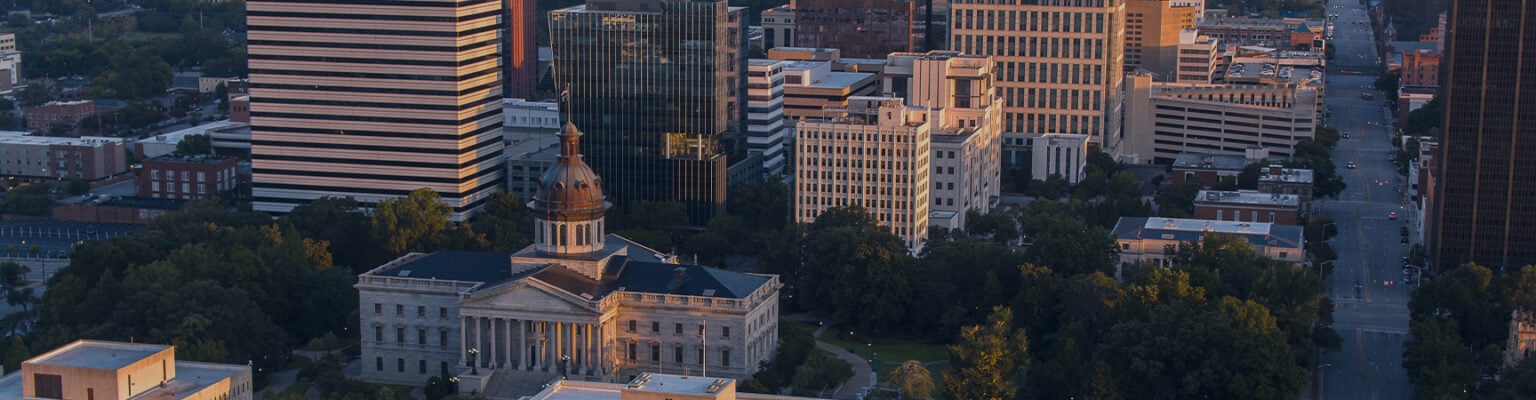
FCI Phoenix at a glance
FCI Phoenix is a medium-security federal prison for men about 30 miles north of downtown Phoenix, Arizona, off Interstate 17, with a minimum-security satellite camp for women beside it. The camp runs one of only five Female Integrated Treatment programs in the federal system, and the institution publishes its own guide for people surrendering to the camp.
| Official name | Federal Correctional Institution, Phoenix |
|---|---|
| BOP code | PHX |
| Security level | Medium, for men, with a self-contained holdover unit; the minimum-security camp holds women |
| Population | 1,071 (as of September 2026) |
| Visiting | FCI: Saturday, Sunday, Monday, and federal holidays, 8:00 a.m.–3:00 p.m. · Camp: Saturday, Sunday, and federal holidays, 8:00 a.m.–3:00 p.m. |
| Inmate mail | FCI: Inmate Name & Register Number · FCI Phoenix · Federal Correctional Institution · 37910 N. 45th Avenue · Phoenix, AZ 85086 Camp: Inmate Name & Register Number · FCI Phoenix · Federal Correctional Institution · Satellite Camp · 37930 N. 45th Avenue · Phoenix, AZ 85086 |
| Send money | Lockbox · Western Union (code city FBOP, DC) · MoneyGram (receive code 7932) |
| Phone | 623-465-9757 · Fax 623-465-5199 |
| Street address | 37900 N. 45th Avenue, Phoenix, AZ 85086 · Maricopa County |
| Judicial district | District of Arizona |
| BOP region | Western |
| Designated capacity | 1,022 |
| Housing | 12 units: one single-cell, seven multiple-occupancy cell, four open bay or dormitory |
| Special Housing Unit | At the FCI (45 segregation cells); none at the camp |
| RDAP | Yes, at the FCI; the camp runs Female Integrated Treatment, which includes RDAP |
| UNICOR | Yes (Electronics) |
| Camp | Minimum-security satellite camp for women |
On this page
The population was 1,071 as of September 2026: 873 at the main institution and 198 at the camp. The institution opened in 1985 in Maricopa County, off Interstate 17 at exit 225, and the camp opened in 1989; both fall under the Bureau’s Western Region. Arizona’s other federal prisons are FCI Safford and the two Tucson institutions, USP Tucson and FCI Tucson; our guide to federal prisons in Arizona covers all of them.

There is more than one prison called Phoenix. Only one is federal.
The Phoenix name belongs to prisons in three different systems, and only FCI Phoenix is federal: the others are Arizona’s state prison complex in Phoenix and SCI Phoenix in Pennsylvania. Check which one holds the person before you search or send anything.
| Facility | Run by | Where to search |
|---|---|---|
| FCI Phoenix, Arizona (this page) | Federal Bureau of Prisons | BOP Inmate Locator |
| Arizona State Prison Complex – Phoenix | Arizona Department of Corrections, Rehabilitation and Reentry | Arizona state inmate data search |
| SCI Phoenix, Collegeville, Pennsylvania | Pennsylvania Department of Corrections | Pennsylvania state inmate locator |
Two other mix-ups are worth naming. There is no federal correctional complex at Phoenix: Arizona’s only federal complex is FCC Tucson, made up of FCI Tucson and USP Tucson about 115 miles to the southeast, and an “FCC Phoenix” is not something the Bureau operates. And when a news story places a well-known federal prisoner at “an Arizona federal prison,” it is usually Tucson — separate institutions, separate wardens, separate mail addresses, separate visiting rules.
Arizona also has FCI Safford, a low-security institution in Graham County. If the judgment says Bureau of Prisons, the federal locator will find the person; if it says Arizona Department of Corrections, the federal locator returns nothing however the name is spelled.
What is the security level at FCI Phoenix?
FCI Phoenix is a medium-security institution, and its satellite camp across the road is minimum security. A third function sits inside the fence and is easy to miss: the Bureau’s 1992 directory of facilities records that “a self-contained jail unit houses holdovers and U.S. Marshals Service airlift inmates,” and the Bureau’s roster still lists a detention function at PHX. The 2019 visiting supplement names Yuma as the holdover unit and gives its residents their own footwear rule.
For a family, the holdover unit matters for visiting. Someone in holdover or pretrial status here gets no visits for the first 28 days, and when visits start they are limited to immediate family and must be approved in writing by the Unit Manager. A person passing through on an airlift may be gone before it is arranged.
The 2025 PREA audit puts designated capacity at 1,022 against a population of 1,194 on the day the auditor arrived. The Bureau’s 1992 directory rated the institution at 586 and the camp at 218 when they held 1,305 and 235. The institution was over capacity then, and again when the auditor arrived.
Whether someone lands at the FCI or the camp is decided before they arrive, under the Bureau’s security designation rules, by security point score and by whether any Public Safety Factor applies. A Public Safety Factor overrides the points and keeps a person out of a camp however low they score, and it is the part of the process a lawyer can challenge. See the intake process and preparing for prison.
How does self-surrender to FPC Phoenix work?
To self-surrender to FPC Phoenix, report by the date and time the sentencing judge set, and if the judgment names no time, arrive no later than 2:00 p.m. That instruction, and everything else in this section, comes from the institution’s own guide, “FPC Phoenix — Voluntary Surrender Information”. Most federal prisons publish nothing of the kind.
Where to go and who to speak to: walk into the lobby of the Camp Administration building and tell the Camp Secretary your name and that you are here to self-surrender. Someone may come with you and wait in the lobby — the guide says so in terms — and asks only that you keep the number down. The institution provides no transportation, and Sky Harbor Airport is about an hour’s drive in normal traffic.
The guide is specific about what not to bring. Do not surrender carrying a cell phone. Every piercing has to be out before you arrive, along with false nails, hair braids, and hair extensions. Money may come in as cash only and no more than $1,000. And do not send funds to the National Lock Box before the surrender date: the guide says they will be rejected and returned.
What may be kept is a short and unusually exact list.
- A plain wedding band — no stones, markings, inscriptions, or etchings — with a declared value under $100.
- One pair of earrings in white or yellow metal, no stones or markings, again under $100. Studs must be “approximately the size of a BB” and plain hoops must be smaller than a quarter.
- Prescription medication in the original prescription bottle. Nothing over the counter.
- Prescription eyeglasses in one plain soft-sided case. No designer frames, no stones, no mirrored lenses, and no contact lenses at all.
- One sheet of paper, 8½ by 11 inches, with contact information on it, and legal documents in a single manila envelope no thicker than one inch.
- A Social Security card and other identification — driver’s license, passport, state ID, tribal identification card, birth certificate. These are held in the Inmate Central File until release.
Two entries deserve a note. The tribal identification card is named as acceptable. And the guide ends the property list flatly: “Religious items are not approved by the Warden.” A rosary, a medallion, or a head covering carried through the door on surrender day does not come in with you, even though the commissary sells a religious item once you are inside.
Medical and orthopedic devices are the one thing to arrange in advance: the guide says to contact the institution before surrendering, and that every such device needs staff pre-approval. A CPAP machine, a brace, or a prosthesis that turns up unannounced is a device the front desk has no authority to admit.
Finally, the clothes. The institution pays to ship home only what the person is wearing when they walk in — pants, shirt, underwear, coat. Everything else “will be rejected and shipped to the inmate’s home at the inmate’s expense.” A suitcase is a bill, not a convenience.
One limit on all of it: the guide is written for the camp. It does not describe surrender to the medium-security FCI, and the Bureau’s page for FCI Phoenix posts no equivalent document for the institution. Anyone surrendering to the FCI should confirm the reporting point at 623-465-9757 before traveling.
How is the camp at FCI Phoenix different from the FCI?
The camp differs from the FCI in housing, movement, mail, visiting, and segregation, enough that the Bureau writes two different handbooks: the FCI’s in October 2025, the camp’s in November 2025. The two share a warden, a captain, a food service supervisor, and a set of national policies, and differ on almost everything a person actually experiences.
| FCI (October 2025 handbook) | Camp (November 2025 handbook) | |
|---|---|---|
| Wake-up | 6:00 a.m. | 5:30 a.m. |
| Standing counts, weekdays | 4:00 p.m. and 9:30 p.m. | 4:00 p.m. and 10:00 p.m. |
| Standing counts, weekends | 10:00 a.m., 4:00 p.m., 9:15 p.m. | 10:00 a.m., 4:00 p.m., 10:00 p.m. |
| Living space | Two-man cells; staff call “Cell Up” and lock the doors | Cubicles and bunks in pods and dorms; no cell doors to lock |
| Movement | Pass system 7:30 a.m.–4:00 p.m.; controlled movement in ten-minute windows starting five minutes before the hour | No pass system and no controlled-movement section at all |
| Special Housing Unit | Yes; orange jumpsuits; one-hour visits on Mondays | “Special Housing Unit: N/A” |
| Video visiting | Not mentioned in the handbook | Two terminals, 20-minute sessions |
| Outgoing mail | May not be sealed by the sender and may be read | May be sealed and goes out unopened and uninspected |
| Softcover publications | Publisher, book club, or bookstore only | Any source |
The mail difference is the one families underestimate. Both handbooks restate the national correspondence rule, and it turns on security level: at a medium-security institution outgoing correspondence cannot be sealed by the writer and may be read; at a minimum-security facility it can be sealed and leaves unopened. The same letter, from the same person, is private on one side of the road and not on the other.
The camp handbook also carries three sections the FCI handbook has no equivalent to. It lists eighteen gender-responsive programs sponsored by the Bureau’s Women and Special Populations Branch. It records extra health screening for women — mammography, PAP smears, and a pregnancy test at intake. And it ends with a voting-rights attachment the FCI handbook does not have.
One sentence in the camp handbook does more to explain the place than any other: “Papago B is designated for inmates approved to participate in the Female Integrated Treatment (FIT).” That is the program described below, and the reason women are sent to a camp in the Arizona desert from all over the country.
Smaller differences, all from the two handbooks: the camp bans vaping as well as smoking and prohibits nose, eyebrow, and lip piercings; hobbycraft there needs an approved project form or the project is confiscated; and commissary clothing for women is limited to pastel green, gray, and white.
Who are the notable inmates at FCI Phoenix?
None of the well-known people linked to FCI Phoenix below is held there now: Hamid Hayat, Sonny Barger, and Cris Kirkwood were released, and Earl Krugel was killed here in 2005. Three names on other lists of Phoenix prisoners are recorded at other prisons, and the Bureau’s records do not place a fourth here at all.
| Name | Status | Case |
|---|---|---|
| Hamid Hayat | Former — released from Phoenix on August 9, 2019 (register 15804-097) | Convicted in 2006 in the Eastern District of California of providing material support to terrorists, and sentenced to 24 years. A federal judge vacated the conviction on July 30, 2019, after about 14 years in custody |
| Earl Krugel | Former — killed here on November 4, 2005 (register 20966-112) | Western-states coordinator of the Jewish Defense League, serving 20 years for a plot to bomb a California mosque and a congressman’s district office |
| Sonny Barger | Former — released from Phoenix on November 6, 1992. Bureau records carry his committed name, Ralph Hubert Barger (register 82740-011) | Hells Angels founder, convicted in October 1988 in the Western District of Kentucky of conspiring to transport and receive explosives with intent to kill and damage buildings |
| Cris Kirkwood | Former — released July 7, 2005. The Bureau’s committed name is Christopher Kirkwood (register 81499-008) | Bassist of the Meat Puppets |
Steven Shawn Smith, register 12004-509, is recorded at FCI Fort Dix in New Jersey; Caswell Senior, 20180-509, at FCI Victorville Medium I; and Tyler Barriss, 29381-031, of the Wichita swatting case, at FCI Mendota. None of the three is at FCI Phoenix.
Some lists of Phoenix prisoners name a “former Steppenwolf drummer Jerry Posin.” The only locator record for register 57593-008 is a release on May 7, 2009, under facility code CLB — not an institution at all, but the Residential Reentry Management office at Long Beach. Register 37060-509, released on July 11, 2025, under code CPH, is also recorded as “Phoenix,” but CPH is the Phoenix reentry office, RRM Phoenix, not FCI Phoenix (PHX).
How do I find someone at FCI Phoenix?
To find someone at FCI Phoenix, use the Bureau’s free Inmate Locator and search by the eight-digit register number if you have it: the locator matches the committed name rather than the name anyone uses — the Meat Puppets bassist above is filed as Christopher, the Hells Angels founder as Ralph Hubert. It covers everyone in federal custody since 1982: for someone still held it gives the facility and a projected release date, and for someone released it shows “Not in BOP Custody as of” and a date, with no facility. Our guide to the Inmate Locator explains the search.
A blank result usually means the person is in Arizona state custody, is held pretrial by the U.S. Marshals Service in a county jail rather than a Bureau institution, or is spelled differently on the judgment. Our guide to how register numbers work explains what the number’s parts mean.
How do I write to someone at FCI Phoenix?
Write to someone at FCI Phoenix at 37910 N. 45th Avenue, Phoenix, AZ 85086, and to someone at the satellite camp at 37930 N. 45th Avenue; neither is the address on the Bureau’s facility page, which is administrative. Put the committed name and eight-digit register number on the first line.
| For someone at the FCI | For someone at the satellite camp |
|---|---|
| Inmate Name & Register Number FCI Phoenix Federal Correctional Institution 37910 N. 45th Avenue Phoenix, AZ 85086 | Inmate Name & Register Number FCI Phoenix Federal Correctional Institution Satellite Camp 37930 N. 45th Avenue Phoenix, AZ 85086 |
The camp’s November 2025 handbook prints the same camp address. The number 37900 is the physical and staff-mail address and should not be used for inmate mail.
First-class mail is delivered Monday to Friday by the evening-watch officer in each housing unit, with no weekend or holiday service. The handbook asks writers to put the housing unit on the envelope as well as the register number, which matters in a prison this size.
Under the Bureau’s correspondence rules, legal mail is treated differently, and only if it is marked: the envelope must carry the attorney’s name, an indication that the sender is an attorney, and the words “Special Mail — Open only in the presence of the inmate” on the front. The handbook puts the duty on the incarcerated person: “It is the responsibility of the inmate to advise his/her attorney of these requirements. If legal mail is not adequately marked, it may be opened as general correspondence.” See attorney-client communication in the Bureau of Prisons and writing to someone in federal prison.
Never put money in a letter. The visiting supplement says flatly that money will not be accepted at the institution to credit an account, and funds enclosed with correspondence are returned.
How do I send money to someone at FCI Phoenix?
Money for someone at FCI Phoenix goes to the Bureau’s national lockbox in Iowa or through one of two wire services, never to Phoenix. All three routes need the committed name and the eight-digit register number, entered exactly.
| Route | Where it goes | How fast it posts |
|---|---|---|
| Postal money order or cashier’s check | Federal Bureau of Prisons Committed Name Eight-Digit Register Number Post Office Box 474701 Des Moines, Iowa 50947-0001 | Non-postal money orders and non-government checks carry an automatic 15-day hold. Personal checks and cash are not accepted |
| Western Union Quick Collect | Code city FBOP, DC; register number with no spaces or dashes followed immediately by the last name | Two to four hours if sent between 7:00 a.m. and 9:00 p.m. Eastern; otherwise by 7:00 a.m. the next day |
| MoneyGram ExpressPayment | Receive code 7932, company name Federal Bureau of Prisons, Washington, DC. Up to $300 online | Same windows as Western Union |
If the name and number are wrong the transaction fails at the point of sale, and the handbook is blunt about where the risk falls: “If an incorrect register number and/or name are used and accepted and posted to that inmate, funds may not be returned.” Put a return address on the envelope, because money the Bureau can neither post nor return goes to the Treasury. See our guide to sending money to a federal prisoner.
Money going out is controlled too, under the Bureau’s trust fund rules: withdrawals go on form BP-199, are processed weekly, and only an Associate Warden can approve one over $500.
What are the visiting hours at FCI Phoenix?
Visiting hours at FCI Phoenix are 8:00 a.m. to 3:00 p.m. on Saturdays, Sundays, Mondays, and federal holidays at the FCI; the camp visits on Saturdays, Sundays, and federal holidays only. Institution supplement PHX 5267.09a, the institution’s supplement to the Bureau’s visiting regulations, dated March 1, 2019, says it in one line: “There is no visiting at the SCP on Mondays.” A Monday trip to the camp finds the visiting room shut.
The Bureau’s facility page lists no visiting days, only a generic note that hours “may not cover all cases.” The supplement is the only published schedule there is, it is more than six years old, and it is signed by a warden who has since left. Call 623-465-9757 before you travel.
Processing starts at 8:00 a.m. and stops an hour before the session ends; no visitor is admitted after 2:00 p.m. It also stops for the hour before the official 10:00 a.m. count on weekends and holidays, so arriving at 9:15 on a Saturday means waiting until the count clears.
Who can visit, and how many
- The list holds up to 20 people; attorneys of record, ministers of record, and children under 16 do not count against it. Five adult visitors at a time, at either site.
- Immediate family named in the presentence report are approved for 28 days while the Visitor Information form is processed, and come off the list if it is not returned. A questionable immediate-family member is decided by the Warden personally, anyone else by the Associate Warden for Programs.
- Visits are charged in points: ten a month, no carry-over, two for a Saturday or Sunday, one for a Monday at the FCI, none on a federal holiday.
- The FCI visiting room holds no more than 23 incarcerated people at a time; the camp’s is capped at 101 people in total, and camp visitors who arrive when it is full wait in the Administration Building, not in their cars.
- Seating is assigned, and visitors sit opposite the person they came to see for the whole visit.
- If the room fills, staff first ask visitors with a local address to volunteer to end their visits and only then terminate the longest-running ones, so say at the desk if you have traveled a long way.
Contact is one of the clearest differences between the two sites. At both, a kiss and an embrace are allowed at the start and end of the visit. At the FCI, holding hands or any other contact is prohibited, although children under eight may sit on a parent’s lap; at the camp, hand-holding is allowed. The children’s play area follows the same logic — camp residents may go in, FCI residents are barred from it at all times.
What visitors can wear and bring
Avoid two colors above all: khaki, which the FCI issues, and dark green, which the camp issues — a visitor in either can be turned away for resembling an inmate. Also barred: sleeveless, backless, and halter tops, bare midriffs, see-through or skin-tight clothing, spandex, any skirt or dress above the knee, sweatpants, jogging suits, hooded shirts, shorts on anyone over 12, hats and caps, open-toe shoes, and bare feet.
You may carry in one clear change purse no larger than nine inches square holding up to $25 in coins only; dollar bills are not allowed in the visiting room at all, so break the money before you arrive. Life-essential medication such as heart medication and inhalers may come in, and breastfeeding is permitted, with draping. For an infant: a clear diaper bag no larger than 15 by 10 by 3 inches holding two diapers, one unopened package of wipes, two clear bottles, two small unopened jars of baby food, and a receiving blanket. Strollers do not come in, and neither do purses, bags, cell phones, watches of any kind, photographs, letters, gifts, food, gum, candy, or children’s toys.
One rule catches camp visitors. The FCI lobby has a few lockable boxes, reserved for people dropped off by taxi or family with nowhere to leave a phone. The supplement then says: “Boxes are not available at the SCP; therefore, visitors to the SCP should plan accordingly.” At the camp, anything you cannot carry in stays in a vehicle — and if you were dropped off, it goes home with whoever dropped you.
Identification and screening
Everyone 16 and over needs valid state or government-issued photo identification; credit cards, store cards, school identification, birth certificates, Social Security cards, and bank cards are expressly invalid, a non-U.S. passport must come with a U.S. visa, and the camp handbook adds that foreign driver’s licenses are accepted. Screening then differs by site: FCI visitors clear a walk-through metal detector, camp visitors have their personal items searched instead. At both, randomly selected visitors go through ion-spectrometry drug scanning, and random pat and vehicle searches are in use, conducted by a staff member of the same sex; declining either means no visit that day. See searches, shakedowns, and contraband and federal prison visitation.
Special Housing Unit visits at the FCI run one hour, on Mondays, at a table in front of the officer’s desk, and the supplement lists non-contact visiting areas as “not applicable” — there is no non-contact booth here.
Video visiting at the camp
The camp has two video terminals; the FCI handbook does not mention video visiting at all. Sessions last 20 minutes, family members set up an account first, and there is none during work hours. Hours follow the computer room: Monday to Friday 6:00 a.m.–3:30 p.m. and 5:00–8:30 p.m.; Saturday and Sunday 6:00–9:30 a.m., 11:30 a.m.–3:30 p.m., and 5:00–8:30 p.m.
Getting there
From Interstate 17, take exit 225 and turn west; follow the road roughly two miles until it ends at the prison. The camp is directly across from the sign marking the start of federal property; for the FCI, turn left at that sign and go about 300 yards to the main entrance. Visitor parking is on the south side of the lot, and there is no public bus service to the camp.
How do phone calls and email work at FCI Phoenix?
People held at FCI Phoenix can place calls but cannot receive them. Under the Bureau’s telephone regulations, Program Statement 5264.09, issued September 3, 2026, which rescinded the 2008 policy, people are allowed 510 minutes a calendar month: 300 are free to anyone eligible for First Step Act telephone incentives, and anyone who uses up those 300, eligible or not, may buy the other 210. A single call should generally not exceed 15 minutes.
Both Phoenix handbooks are out of date on this. Each states that “inmates are limited to 300 minutes per calendar month,” and the camp handbook adds that “ordinarily, inmates will be allowed an extra 100 minutes per month in November and December.” The 300-minute cap was superseded in September 2026, and the holiday supplement belonged to the rescinded 2008 policy. The program statement controls.
What the handbooks add is local, and stricter than the national rule in one respect. Only one phone per housing unit is available between 6:00 a.m. and 3:30 p.m., for people on a day off or working an early or late shift, and after finishing a call a person may not place another for 60 minutes — twice the national interval. Phone-abuse sanctions run 6 to 18 months for a first offense and 18 to 36 months for a second, and anyone transferring in with a conviction involving the use of a prison phone may be restricted to a single call a month. The approved number list holds 30 entries. See federal inmate phone calls.
An unmonitored legal call is arranged in advance, not on demand. At the FCI the request goes in writing to the Unit Counselor at least 24 hours ahead; at the camp it goes through the Case Manager and needs a demonstrated need such as an imminent court deadline. Every other call is recorded.
Email runs on TRULINCS, which families reach through CorrLinks. Sessions last up to 60 minutes, and time is bought in Tru-Units at five cents each; messages carry no attachments, and email with a lawyer is not privileged. Our page on CorrLinks and TRULINCS explains how the system works.
What can people buy at the FCI Phoenix commissary?
The monthly spending limit at FCI Phoenix is $460, set by the Bureau’s trust fund rules, Program Statement 4500.13, issued May 7, 2026, which raised it from $360. Neither Phoenix handbook has caught up, and the two disagree with each other as well as with the policy. On one page the October 2025 FCI handbook says “the monthly spending limit is $360.00”; two pages later it says “the National Spending Limit is 320.00.” The November 2025 camp handbook repeats both, word for word. The program statement controls.
Shopping is once a week. The commissary opens Monday to Thursday and sells at the window during breakfast and lunch mainline; shopping day is set by the fourth and fifth digits of the register number and the rotation changes quarterly, so the day moves. One written list, no substitutions, all sales final, and any complaint settled before leaving the window. The unit closes for inventory in the last week of March and of September. Refusal status under the Financial Responsibility Program drops the limit to $25.
The order form itself carries no date and no spending limit, which is why the handbook figures matter. It is printed in English and Spanish on one sheet and labels items kosher, halal, restricted, local-only, and female-only. A tablet is $131.30, a Casio MCW watch $72.50, reading glasses $5.85 in strengths from 1.25 to 4.00.
Two details on that form stand out. Typing ribbon is stocked at $8.40, typing paper at $2.00, and lift-off correction tape at $14.40 — typewriters are still how a good deal of legal work gets done here. And the form carries a cosmetics section written in from a posted list — blush, foundation, mascara, eyeliner, lip gloss — alongside bras in sizes small to 3X and menstrual products. A men’s-only prison does not print that list. The food runs strongly southwestern: menudo, chorizo, taco mix, salsa verde, jalapeño wheels, Tajín, and Sazón Goya. The only religious item on the form is a Native headband, $3.25, limit two. See the federal prison commissary.
What programs are available at FCI Phoenix?
FCI Phoenix offers the Residential Drug Abuse Program at the FCI and Female Integrated Treatment at the camp, along with education, UNICOR work, and a run of women’s programs, according to the Bureau’s August 2026 First Step Act Approved Programs Guide and the institution’s two handbooks.
RDAP at the FCI and Female Integrated Treatment at the camp
The Bureau runs two different residential drug treatment programs here, one on each side of the road, and the two are easy to confuse when asking for a referral. The guide’s RDAP location list, updated in June 2026, totals “57 RDAPS at 50 Locations” and “5 FITs at 5 Locations.” Under Western Region it lists FCI Phoenix for the Residential Drug Abuse Program and SCP Phoenix as the region’s Female Integrated Treatment site.
Five FIT programs exist in the whole federal system: this one, the camps beside FCI Greenville and FCI Danbury, FCI Tallahassee, and FMC Carswell. The guide notes that “each FIT program includes an RDAP component,” so a woman completing FIT completes residential drug treatment as part of it, and the camp handbook records the unit she lives in while she does — Papago B. The guide credits FIT with 500 program hours, the same as RDAP.
Both handbooks describe the mechanics: apply by written request during open house for an interview with the Drug Abuse Program Coordinator, who decides whether there is a pattern of abuse or dependence; the program is a half-day modified therapeutic community; and completion can mean up to a year off the sentence under 18 U.S.C. § 3621(e). Psychology here runs a chief psychologist, two staff psychologists, and two Drug Abuse Program Coordinators — one for the FCI, one for the camp.
One caution: the FCI handbook says RDAP is available “here in Tahoe B.” There is no Tahoe unit at FCI Phoenix — the institution’s own visiting supplement names the units as Hopi, Papago, Papago RDAP, Mojave, Mojave RDAP, Navajo, Pima, and Yuma. Ask the unit team which unit the program occupies rather than looking for the one the handbook names.
Education, work, and UNICOR
GED and English-as-a-second-language classes, with ESL mandatory for anyone testing below an eighth-grade level; Adult Continuing Education; occupational education; Department of Labor apprenticeships; and parenting classes with a visiting component. The Reentry Affairs Coordinator sits in Education, alongside an electronic law library. See prison education and vocational training.
UNICOR operates here: the August 2026 guide names PHX for Federal Prison Industries in both halves of its record, and UNICOR’s own factory location list shows Phoenix, Arizona, under Electronics. Factory work is credited at 500 program hours and pays on a separate pay scale; priority goes to people with large court-ordered financial obligations, and no one behind on those obligations can work there.
On post-secondary study the guide needs reading carefully. Its narrative entry says only that it may be offered at all Bureau institutions, then names sixteen institutions funded for Pell-supported college programs — FCI Phoenix is not one of them. The grid does mark Phoenix for post-secondary education, and because the narrative entry names no institution, that grid is the only per-institution record there is. Treat it as a question for the unit team.
Women’s programming and the Resolve Program
The August 2026 guide names PHX for the Resolve Program, an 80-hour non-residential trauma program, in both halves of its record. That is a change: in its September 2018 review of the Bureau’s female population, the Inspector General wrote that “FCI Phoenix did not offer the Resolve program during the scope of our review because it had not been allocated a Resolve Coordinator position.” The October 2025 handbook now lists a Resolve Program Coordinator by name — a sequence useful in a program-access complaint.
Beyond Resolve and FIT, the guide’s grid marks Phoenix for a long run of women’s programs — Square One: Essentials for Women, Women’s Lifeskills, Women’s Relationships, Women’s Sexual Safety, Women’s Career Skills, Seeking Safety, Trauma Education, and others. A caution applies to every line of that grid: it records which programs are approved, not which are running. Whether a class has started, and how long the waitlist is, is a question for the unit team in writing.
Religious Services runs weekly worship, faith-based reentry programming, and the religious diet program; Recreation covers intramural leagues, wellness screening, and art and hobby craft. Zimmer Amendment restrictions apply: no R, X, or NC-17 films, no martial-arts or weightlifting instruction, no electric instruments. In place of a movie program, the FCI handbook records, the institution provides a premium movie channel.
What is daily life like at FCI Phoenix?
Daily life at FCI Phoenix follows the schedules in two 2025 handbooks, one for the FCI and one for the camp.
| At the FCI | At the camp | |
|---|---|---|
| Uniform hours | 7:30 a.m.–4:00 p.m., Monday to Friday | No stated hours |
| Compound secured on weekends | 9:30 a.m., before the 10:00 a.m. count | — |
| Sick call | 9:00–9:30 a.m. Monday, Tuesday, Thursday, and Friday | — |
| Pill line | 6:30 a.m. weekdays, 7:00 a.m. weekends; evening after the 4:00 p.m. count | Insulin 6:00–6:30 a.m. and 2:00–2:30 p.m.; pill line 6:30–7:00 a.m. and 2:00–2:30 p.m. |
| Executive open house | 10:45–11:45 a.m. daily, at the noon mainline meal | Same |
Sources: the FCI Admission & Orientation Handbook (2025) and the Satellite Prison Camp Admission & Orientation Handbook (2025). Schedules change; treat this as the shape of the day.
At least five counts are taken every 24 hours, with a sixth at 10:00 a.m. on weekends and holidays. At the FCI everyone stands at the bedside for the 4:00 p.m. and 9:30 p.m. counts and is locked in the cell for all of them; at the camp people stand at their bunks for every count except midnight and 5:00 a.m. Which unit eats first is decided by the week’s sanitation ratings.
One thing about medical care here is unlike most federal prisons, and a family should know it before a prescription runs out. The FCI handbook states: “Because FCI Phoenix is a Central Pharmacy Processing site, there is no pharmacy here; health services staff are unable to supply you with medication should you run out.” A provider’s order is processed by a pharmacist at another Bureau institution and shipped overnight; orders arrive Monday to Friday, and anything not collected within seven days goes back. Refills are requested through TRULINCS three to five days before the supply ends, and if the request is late there is nothing on site to bridge the gap.
Sick call is not a walk-in service. The FCI holds it 9:00 to 9:30 a.m. on Monday, Tuesday, Thursday, and Friday — never on Wednesday, weekends, or holidays — and the handbook warns that turning up at Health Services without an appointment after 7:45 a.m. is an out-of-bounds offense. Dental sign-up is 7:00 to 7:30 a.m. on Monday, Tuesday, and Thursday, emergencies only. A $2.00 co-payment applies to each requested visit, with the usual exemptions. See medical care in federal prison.
What do inspectors say about conditions at FCI Phoenix?
Inspectors have said little about conditions at FCI Phoenix, a prison that has been over capacity for years: the record holds one recent audit limited to sexual safety, no conditions inspection at all, and a federal trial about the institution’s own judgment held largely in secret.
The 2025 PREA audit
FCI Phoenix was audited under the Prison Rape Elimination Act on July 15–17, 2025, by Matthew Taylor of Corrections Consulting Services, LLC, and the final report is dated January 25, 2026. The facility passed: 45 standards met, none exceeded, none unmet, no corrective action. The same document is the fullest public description of the physical plant that exists.
| Designated capacity | 1,022 |
|---|---|
| Population at the audit | 1,194; average daily population 1,169 over the previous year; over capacity at some point in that year |
| Buildings | 28 |
| Housing units | 12 — one single-cell, seven multiple-occupancy cell, four open bay or dormitory |
| Segregation cells | 45 |
| Population held | Both females and males; age range 19 to 78 |
| Staff who may have inmate contact | 284, of whom 57 hired in the previous year; 81 volunteers |
| Accreditation | American Correctional Association only — not NCCHC, not CALEA |
| Forensic examinations | Off-site, at a local hospital |
Of the 1,072 people housed on day one of the on-site, ten disclosed prior sexual victimization during risk screening, three identified as transgender or intersex, five were limited English proficient, and 26 had a cognitive or functional disability. In the twelve months before the audit the facility recorded three allegations of sexual abuse and two of sexual harassment, all between incarcerated people and none against staff; every one closed as unsubstantiated, which means the evidence did not settle the question rather than that the allegation was false.
One structural point matters for any complaint: the facility employs no criminal investigators of its own, and criminal investigation of sexual abuse is done by an outside Justice Department component. A report made only to institution staff stays inside an administrative process.
What the Inspector General has and has not done
The DOJ Office of the Inspector General has not conducted an on-site inspection of this facility. Its staff have, however, been inside this prison more than once, to look at something other than the prison.
In February 2025 the Inspector General “conducted two in-person site visits at FCI Phoenix and FCI Talladega” to observe First Step Act implementation, in an evaluation of how the Bureau spent the $1.23 billion Congress appropriated for the Act in fiscal years 2022 to 2024, published on May 28, 2026. Of 118 institutions, two were visited, and this was one. Phoenix was also sampled for the May 2025 evaluation of colorectal cancer screening, was one of four institutions visited for the November 2023 audit of the Bureau’s American Correctional Association contract, and was one of nine site-visit locations in the June 2014 audit of its $4 million purchase of 65 x-ray machines. None makes a finding about conditions here.
One other Inspector General product names this institution in a way that matters: the September 2018 review of the Bureau’s management of its female population recorded that Phoenix was not running the Resolve Program because no coordinator post had been allocated to it. Nothing else fills the gap. The District of Columbia’s Corrections Information Council, the only other body doing systematic conditions work in federal prisons, has never inspected FCI Phoenix, and, as of September 2026, no Inspector General inspection of this facility is pending.
The closest anyone has come to examining this institution’s own judgment was a lawsuit, and most of it was sealed. On November 4, 2005, Earl Krugel was killed on the recreation yard, three days after his transfer here, by another prisoner who bludgeoned him with a piece of concrete wrapped in a mesh bag; the killer was sentenced to 35 years in March 2008. Krugel’s widow sued the United States under the Federal Tort Claims Act, alleging that the Bureau had not recorded the killer as a prison gang member despite his tattoos and had downgraded his high-security designation so he could enter a substance-abuse program here. The case was tried over two days in July 2009 and decided for the government, with the courtroom closed and the decision sealed; four news organizations intervened, and in September 2009 the court ordered the transcript unsealed with redactions protecting the Bureau’s gang-validation procedures. Krugel v. United States, No. 2:06-cv-05116-SVW-PLA (C.D. Cal.).
What GAO counted, and what it does not mean
In May 2026 the Government Accountability Office published per-institution counts of sexual abuse allegations for every Bureau facility. For FCI Phoenix: seven allegations against other incarcerated people over 2020 to 2024, counted by year of incident, and nine against staff over the same years, counted by year of report. Read them with GAO’s cautions attached. They are allegations, not findings, and nationally most from 2014 through 2022 closed as unsubstantiated. The two tables come from different Bureau systems with different cut-off dates and must never be added together. And GAO does not adjust for population, so the counts cannot rank one prison against another: a large institution out-counts a small one at identical risk, and a low count can equally mean no one is reporting.
Staffing
About 250 people work at FCI Phoenix, according to the Arizona Republic in April and June 2025; the institution’s own return to the PREA auditor in July 2025 gave 277 staff in total and 284 who may have contact with incarcerated people. The union says the place runs short and fills the gap with augmentation — assigning teachers, medical staff, and other non-correctional employees to officer posts.
That had a visible consequence in May 2025. In under two weeks from May 8, five staff fell ill after possible exposure to an unknown substance during cell searches; Narcan was administered, some went to hospital by ambulance, and after the fifth incident the warden locked the institution down and had every housing unit searched. Nothing was found, and two of the five were medical staff searching cells because of augmentation.
For a family, short staffing is why a callout is canceled, why a program has a waitlist, why an appointment slips a month, and why a visit is cut short in a room capped at 23 people.
FCI Phoenix in the news
Recent news about FCI Phoenix centers on staff prosecutions, a union campaign against the warden, and a 2025 lockdown after staff fell ill; older items concern the Bureau’s 2020–2021 death releases, prosecutions of staff for sexual abuse from 2017 to 2021, and the 2005 killing of Earl Krugel.
- May 2026 — a Bureau water operations supervisor at FCI Phoenix, Alejandro Montemayor, pleaded guilty in Arizona Superior Court in Maricopa County to two counts of promotion of gambling, having been arrested in November 2025 on a state indictment charging conspiracy, illegal control of an enterprise, and promotion of gambling. A state prosecution, not a federal one.
- October 2025 — Jamal K. Jackson, a former Bureau education teacher at FCI Phoenix, was sentenced in the District of Arizona to nine months’ imprisonment and three years of supervised release for receiving a bribe by a public official, having pleaded guilty in August 2025.
- June 2025 — union members called publicly for the removal of the warden and the Bureau’s Western regional director, taking out an electronic billboard near the prison at Jomax Road and Interstate 17.
- May 2025 — five staff fell ill in under two weeks after possible exposure to an unknown substance; the warden locked the prison down and searched every housing unit, and no drugs were found.
- December 2020 to May 2021 — the Bureau posted two news releases reporting the deaths of people held at FCI Phoenix and its satellite camp; the Bureau’s releases are listed on its press release page.
- April 2021 — a former correctional officer, Irvin Donavan Anglin, was sentenced to eight months’ incarceration and ten years of supervised release, and required to register as a sex offender, after pleading guilty in January 2021 to sexual abuse of a ward.
- February 2019 — a 17-year Bureau employee was sentenced after being convicted at trial of two counts of abusive sexual contact with a ward, having developed a relationship with a woman he supervised on a work crew in late 2016.
- 2017–2018 — two guards at the women’s camp were prosecuted over conduct in early 2015. Edward Mendoza, a senior correctional officer whose duties included supervising the camp, was sentenced in March 2017 to 16 months for sexual abuse of a ward. James R. Toadvine, Jr. pleaded guilty to abusive sexual conduct with a ward, never answered the civil complaint that followed, and in May 2018 a federal court entered a default judgment of $3,750,000 against him. Doe v. United States, No. 2:17-cv-01991-PHX-GMS (D. Ariz.).
- November 2005 — Earl Krugel was killed on the recreation yard three days after arriving; the litigation that followed is described above.
Frequently asked questions about FCI Phoenix
What is FCI Phoenix?
A medium-security federal prison about 30 miles north of downtown Phoenix, Arizona, run by the Federal Bureau of Prisons. It opened in 1985 and has an adjacent minimum-security satellite camp, opened in 1989, which holds women. As of September 2026, it held 1,071 people: 873 at the institution and 198 at the camp.
Does FCI Phoenix hold women?
Yes, at the satellite camp. The Bureau’s 1992 directory records that the camp “houses minimum-security female offenders,” the 2025 PREA audit records the facility as holding “Both Females and Males,” and the camp’s November 2025 handbook designates a unit for women in the Female Integrated Treatment program. The institution holds men.
When can I visit someone at FCI Phoenix?
8:00 a.m. to 3:00 p.m., with no admission after 2:00 p.m. The FCI visits on Saturdays, Sundays, Mondays, and federal holidays; the camp visits on Saturdays, Sundays, and federal holidays only, because institution supplement PHX 5267.09a (2019) states there is no visiting at the camp on Mondays. The Bureau’s facility page lists no visiting days, so call 623-465-9757 before traveling.
How do I self-surrender to FPC Phoenix?
Report by the date and time the sentencing judge set, or by 2:00 p.m. if no time is given, and tell the Camp Secretary in the lobby of the Camp Administration building that you are there to self-surrender. Bring identification, prescription medication in its original bottle, and no more than $1,000 in cash, but no cell phone. Remove all piercings, false nails, braids, and extensions first, and send no money to the national lockbox beforehand.
How much can someone spend at the FCI Phoenix commissary?
$460 a month, under Program Statement 4500.13 (2026). The institution’s October 2025 handbook prints $360 on one page and $320 on another, and the camp’s November 2025 handbook repeats both; all three are out of date and the program statement controls.
Does FCI Phoenix have RDAP?
Yes. The Bureau’s First Step Act Approved Programs Guide of August 2026 lists FCI Phoenix among the Western Region sites for the Residential Drug Abuse Program, on a location list updated in June 2026. The camp runs Female Integrated Treatment instead, which the guide says includes an RDAP component. For people convicted of non-violent offenses, completion can reduce a sentence by up to twelve months under 18 U.S.C. § 3621(e).
What is the Female Integrated Treatment program at the Phoenix camp?
A residential program for women combining drug treatment with trauma and mental health work, credited at 500 program hours. The August 2026 First Step Act guide records five in the whole federal system — the Phoenix camp, the Greenville and Danbury camps, FCI Tallahassee, and FMC Carswell — each including an RDAP component. The camp’s handbook designates Papago B for women approved for it.
Is there a pharmacy at FCI Phoenix?
No. The institution’s handbook states that because FCI Phoenix is a Central Pharmacy Processing site there is no pharmacy on site and health services staff cannot supply medication to someone who runs out. Prescriptions are processed at another Bureau institution and shipped overnight, and anything not collected within seven days is returned. Refills go through TRULINCS three to five days ahead.
Has FCI Phoenix been inspected?
Only narrowly. The DOJ Office of the Inspector General has not conducted an on-site inspection of this facility, although its staff visited in February 2025 as one of two institutions observed for an evaluation of First Step Act spending, and it has sampled the prison for three other Bureau-wide reviews. The District of Columbia’s Corrections Information Council has never inspected it. The facility passed an on-site Prison Rape Elimination Act audit in July 2025, meeting all 45 standards.
Does FCI Phoenix publish anything in Spanish?
Yes: its visiting regulations and the camp’s Admission and Orientation handbook. The Spanish visiting supplement matches the English in number, date, and figures, the Spanish camp handbook is the same November 2025 edition, and there is no Spanish FCI handbook. The Spanish camp handbook is machine-translated and garbles addresses: it renders the Board of Immigration Appeals at Falls Church, Virginia, as Iglesia de las Cataratas, VA 22041, which is not a place. Where the editions disagree, read the English.
Problems at FCI Phoenix: where we can help
The problems that recur here are visible in the institution’s own record — in the designation decision a federal court examined behind closed doors, in the staff prosecutions the Inspector General has published since 2017, and in the gap between what the program guide approves and what is running:
- Designation to the FCI rather than the camp. Points and Public Safety Factors are arguable, and this is a site where the classification decision has been litigated. See federal prison transfers.
- Getting a woman designated to the camp for Female Integrated Treatment: five programs serve the whole system, so a referral competes nationally.
- RDAP eligibility and the section 3621(e) year, and whether First Step Act time credits are being earned, calculated, and applied.
- Medication that stops. At an institution with no pharmacy on site, a late refill request or a shipment returned after seven days is a real interruption in treatment; document it in writing at the time.
- Reporting sexual abuse or harassment. Criminal investigation here is done by an outside Justice Department component, not by the institution, and the route to it matters. See the Prison Rape Elimination Act.
- Disciplinary proceedings that threaten good conduct time, and phone restrictions that can run for years on top of a hearing sanction.
- Special Housing Unit placements that outlast their justification, including protective custody.
- Early release: halfway house and home confinement placement, through the release district’s reentry office (RRM Phoenix for Arizona), compassionate release under the Bureau’s reduction-in-sentence procedures, and sentence computation errors.
- Challenges to the conviction or sentence itself, through a direct appeal or a § 2255 motion.
Almost all of it runs through the administrative remedy process, and every rung has a deadline. Starting late is the most common reason a good issue goes nowhere.
Elizabeth Franklin-Best, P.C. handles federal criminal defense, appeals and post-conviction matters nationwide, and advises families on Bureau of Prisons issues at institutions across the system. Call (843) 620-1100 or contact us to talk through a specific situation.
Christopher Zoukis, JD, MBA, the firm’s Managing Director, writes and maintains the federal prison policy material on this site. He is not counsel of record; legal representation is provided by Elizabeth Franklin-Best.
Sources and currency
Bureau of Prisons documents
- FCI Phoenix, Federal Bureau of Prisons, 2026. The Bureau’s page for the institution, with its addresses, phone numbers, and posted documents.
- FCI Phoenix Admission & Orientation Handbook, Federal Bureau of Prisons, FCI Phoenix, 2025.
- Satellite Prison Camp Phoenix Admission & Orientation Handbook, Federal Bureau of Prisons, FCI Phoenix, 2025.
- Satellite Prison Camp Phoenix Admission & Orientation Handbook (Spanish edition), Federal Bureau of Prisons, FCI Phoenix, 2025.
- Visiting Regulations, Institution Supplement PHX 5267.09a, Federal Bureau of Prisons, FCI Phoenix, 2019.
- Visiting Regulations, Institution Supplement PHX 5267.09a (Spanish edition), Federal Bureau of Prisons, FCI Phoenix, 2019.
- FPC Phoenix Voluntary Surrender Information, Federal Bureau of Prisons, FCI Phoenix, undated.
- FCI Phoenix Commissary List, Federal Bureau of Prisons, FCI Phoenix, undated.
- Trust Fund/Deposit Fund Manual, Program Statement 4500.13, Federal Bureau of Prisons, 2026. Sets the commissary spending limit.
- Inmate Telephone Regulations, Program Statement 5264.09, Federal Bureau of Prisons, 2026. Replaced Program Statement 5264.08 (2008).
- Press Releases, Federal Bureau of Prisons, 2020–2021. The Bureau’s list of its news releases, including the FCI Phoenix death releases.
- First Step Act Approved Programs Guide, Federal Bureau of Prisons, Reentry Services Division, 2026.
- Find an Inmate, Federal Bureau of Prisons, 2026. The Bureau’s search for people in federal custody, with register numbers and custody status.
- Federal Bureau of Prisons Facilities 1992, Federal Bureau of Prisons, 1992. Digitized by the National Criminal Justice Reference Service.
Audits and inspections
- Evaluation of the Federal Bureau of Prisons’ Use of First Step Act Funding and Implementation of First Step Act Programs at Its Institutions (Report 26-057), U.S. Department of Justice, Office of the Inspector General, 2026.
- Federal Prisons: Improvements Needed to Prevent, Detect, and Address Sexual Abuse (GAO-26-107343), U.S. Government Accountability Office, 2026.
- PREA Audit Report: Federal Correctional Institution (FCI) Phoenix, Corrections Consulting Services, LLC, 2026.
- Evaluation of the Federal Bureau of Prisons’ Colorectal Cancer Screening Practices for Inmates and Its Clinical Follow-up on Screenings (Report 25-057), U.S. Department of Justice, Office of the Inspector General, 2025.
- Audit of the Federal Bureau of Prisons’ Contract Awarded to the American Correctional Association (Report 24-009), U.S. Department of Justice, Office of the Inspector General, 2023.
- Review of the Federal Bureau of Prisons’ Management of Its Female Inmate Population (Report 18-05), U.S. Department of Justice, Office of the Inspector General, 2018.
- Audit of the Federal Bureau of Prisons’ September 2011 Procurement of X-Ray Equipment Under Contract GS-07F-0182T (Report 14-27), U.S. Department of Justice, Office of the Inspector General, 2014.
Court records
- BOP Water Operations Supervisor Pleaded Guilty to Promotion of Gambling Charges, U.S. Department of Justice, Office of the Inspector General, 2026. Alejandro Montemayor’s plea in Arizona Superior Court.
- BOP Water Operations Supervisor Indicted and Arrested for Conspiracy, Illegal Control and Conduct of an Enterprise, and Promotion of Gambling, U.S. Department of Justice, Office of the Inspector General, 2025. Alejandro Montemayor’s arrest on a state indictment.
- Former BOP Education Teacher Sentenced for Receiving a Bribe by a Public Official, U.S. Department of Justice, Office of the Inspector General, 2025. Jamal K. Jackson’s sentence.
- Former BOP Education Teacher Pleaded Guilty to Receiving a Bribe by a Public Official, U.S. Department of Justice, Office of the Inspector General, 2025. Jamal K. Jackson’s plea.
- Former Bureau of Prisons Correctional Officer Sentenced for Sex Offense, U.S. Department of Justice, Office of the Inspector General, 2021. Irvin Donavan Anglin’s sentence.
- Former BOP Correctional Officer Pleaded Guilty to Abusive Sexual Contact of an Inmate, U.S. Department of Justice, Office of the Inspector General, 2021. Irvin Donavan Anglin’s plea.
- Doe v. United States, No. 2:17-cv-01991-PHX-GMS (D. Ariz.), U.S. District Court for the District of Arizona, 2019. The docket, opened in 2017, including the default judgment against James R. Toadvine, Jr.
- Former Bureau of Prisons Correctional Officer in Arizona Sentenced for Abusive Sexual Contact with Inmate, U.S. Department of Justice, Office of the Inspector General, 2019. The sentence of a 17-year Bureau employee.
- Former Bureau of Prisons Correctional Officer Sentenced For Sex Offense, U.S. Attorney’s Office, District of Arizona, 2017. Edward Mendoza’s sentence.
- Krugel v. United States, No. 2:06-cv-05116-SVW-PLA (C.D. Cal.), U.S. District Court for the Central District of California, 2009. The docket, opened in 2006.
- United States v. Barger, 931 F.2d 359 (6th Cir. 1991), U.S. Court of Appeals for the Sixth Circuit, 1991.
News and other sources
- Phoenix Federal Prison Union Members Call for Warden, Regional Director to Be Removed, The Arizona Republic, 2025. By Jimmy Jenkins.
- Investigation Underway After Several Employees at Phoenix Federal Prison Fell Ill from an Unknown Substance, 12News (KPNX), 2025.
- Federal Court Awards $3,750,000 in Damages for Sexual Assault by Prison Guards, Prison Legal News, 2019.
- Media Agencies Intervene to Unseal Records in Prisoner’s Wrongful Death Suit, Prison Legal News, 2010.
- Factory Locations, UNICOR (Federal Prison Industries), 2026.
- 18 U.S.C. § 3621(e), Imprisonment of a convicted person, U.S. Code (Legal Information Institute).
Sources reviewed September 2026.
Reviewed for legal accuracy by Elizabeth Franklin-Best, Esq., Principal Attorney·September 2026