
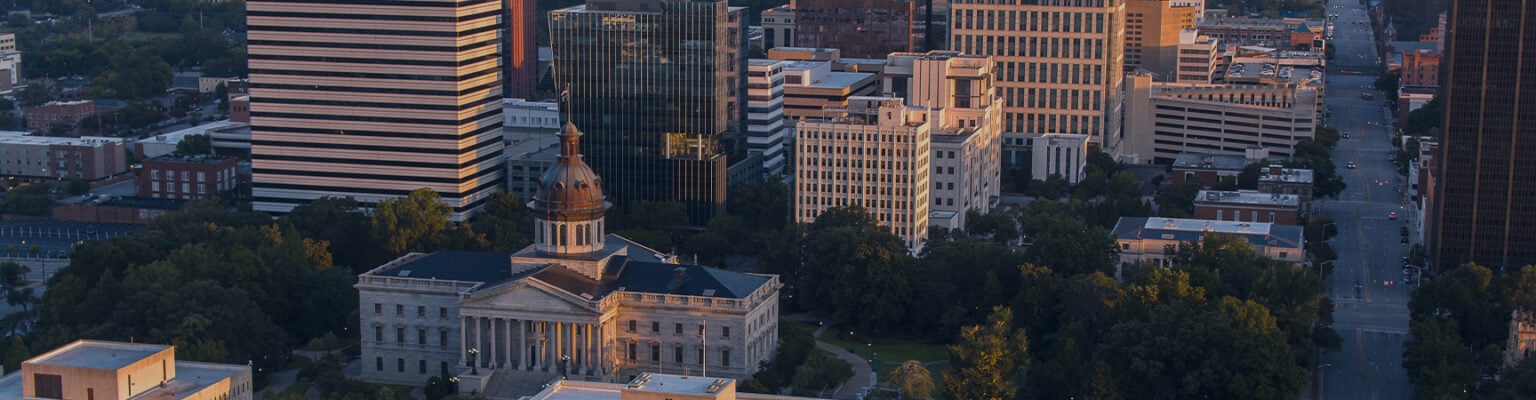
FCI Tallahassee at a glance
FCI Tallahassee is a low-security federal prison for women at 501 Capital Circle NE in Tallahassee, Florida, with a detention center for men beside it. The two held 1,257 people as of September 2026. The detention center holds men awaiting trial, sentencing or transfer, most of them charged in the Northern District of Florida.
| Official name | Federal Correctional Institution, Tallahassee |
|---|---|
| BOP code | TAL |
| Security level | Low; women · detention center: administrative; men |
| Population | 1,257 (as of September 2026) · institution and detention center together |
| Visiting | Friday–Sunday, 8:30 a.m.–3:00 p.m. · detention center days rotate by unit · see visiting hours |
| Inmate mail | Inmate Name & Register Number · FCI Tallahassee · Federal Correctional Institution · P.O. Box 5000 · Tallahassee, FL 32314 Detention center: same box, with Federal Detention Center Tallahassee as the second line |
| Send money | Lockbox · Western Union (code city FBOP, DC) · MoneyGram (receive code 7932) |
| Phone | 850-878-2173 · Fax 850-671-6105 |
| Street address | 501 Capital Circle NE, Tallahassee, FL 32301 · Leon County |
| Judicial district | Northern District of Florida |
| BOP region | Southeast |
| Designated capacity | 1,140 |
| Housing | Eight units: four multiple-occupancy cell, four open bay · 41 segregation cells |
| Special Housing Unit | Yes, at the institution and at the detention center |
| Medical care level | Level 2 |
| Mental health care level | Level 2 |
| RDAP | See RDAP and FIT |
| UNICOR | Yes (call center) |
| Camp | None |
On this page
The campus sits in Leon County, three miles east of downtown Tallahassee. It is one of the federal prisons in Florida and falls under the Bureau’s Southeast Region. In May 2023 the Justice Department’s Inspector General began an unannounced inspection here and stayed five days; its report is the fullest public account of conditions inside this prison.

FCI Tallahassee and FDC Tallahassee are two prisons at one address
FCI Tallahassee and FDC Tallahassee are two prisons on one campus: the institution holds women serving sentences, and the detention center holds men awaiting trial, sentencing or transfer. Almost every practical question below has a different answer depending on which side of the campus your person is on. The Bureau runs one facility code, TAL, one warden, one centralized staff roster and one mailing address across both. The Inspector General’s warning about the detention center explains why the distinction matters: it “houses inmates who have just entered BOP custody in advance of their criminal trial and for whom the BOP may not yet have a full criminal history,” so it “may house inmates who pose varying security risks, including inmates who may be ultimately designated as a high security risk.”
| The institution (FCI) | The detention center (FDC) | |
|---|---|---|
| Who is held there | Women serving sentences | Men awaiting trial, sentencing or transfer |
| Security level | Low | Administrative — men of every security level |
| Opened | 1938; converted to hold women in 1992 | 1996 |
| Average stay | 561.7 days | 82.8 days |
| Housing | Four open-bay units with cubicles, one two-level unit with cells, one SHU | Three cell units and a SHU |
| Uniform in the visiting room | Khaki | Orange jumpsuit |
| Visitors at one time | Four adults and up to eight children | Three people, adults and children together |
| Programming | Education, vocational training, psychology programs, UNICOR | A self-study GED class |
The average stays come from the June 2026 PREA audit; the rest of the table comes from the Inspector General’s 2023 inspection report and the two Admission & Orientation handbooks the institution published in January 2026. The Bureau’s roster lists the facility only as mixed, and the 2026 audit answers the question “[w]hich population(s) does the facility hold?” with “Both Females and Males.” The Inspector General’s report says which building holds whom: “a low security female prison” with “an adjacent male detention center.”
Florida also runs its own prison system, and a person sentenced by a Florida circuit court is in state custody, where the federal Inmate Locator will never find them. The other federal prisons in this state are FCC Coleman, FCI Miami, FDC Miami and FCI Marianna. There is no longer a federal camp at Pensacola.
Who is held at FCI Tallahassee?
FCI Tallahassee holds women at the institution and men at the detention center. The Bureau operates very few prisons for women, and that shortage shapes every designation here. On the Bureau’s own roster, six federal institutions hold women only and twenty-four more are recorded as mixed, holding women in a camp or a unit attached to a men’s prison. That is the whole federal estate for the 9,862 women in Bureau custody — 6.5 percent of 152,844 people, on the Bureau’s own inmate-sex statistics as of September 2026 — and it is why a woman from Oregon can find herself in the Florida panhandle with no realistic prospect of a transfer closer to home.
The 2026 PREA audit records a designated capacity of 1,140, a population of 1,188 on day one, an average daily population of 1,215 over the preceding twelve months, and a “Yes” against the question whether the facility had been over capacity that year. Ages run from 19 to 79. Forty-six people were limited English proficient, and 269 — better than one in five — had disclosed prior sexual victimization during risk screening. The institution admitted 5,703 people in those twelve months but only 1,262 stayed thirty days or more, which shows how much of the traffic through this address is the detention center’s.
Two records from the same institution, three years apart, show how fast this population changes. In May 2023 the Inspector General wrote that the female prison “had the largest number of transgender inmates in the BOP: 119 at the time of our inspection.” In the June 2026 audit the field for that count is filled in not with a number but with “N/A per Executive Order 14168,” and the auditor’s note reads: “Per Executive Order 14168, auditors have been directed to immediately pause from making compliance determinations regarding standards pertaining to transgender inmates. One Inmate who was selected for a random interview self-identified as transgender.”
What is the security level at FCI Tallahassee?
FCI Tallahassee is low security, and its detention center is administrative security. The 2026 PREA audit lists the custody levels held here as “Administrative, Low/Community, In, Out” — a range running from men whose classification is not yet fixed to women cleared to work outside the secure perimeter. Both are Medical Care Level 2 and Mental Health Care Level 2 institutions under the Bureau’s care-level rules, meaning stable outpatients whose conditions can be managed through routine appointments. Someone who needs more than that belongs at a Federal Medical Center, and the request to get there is made through the unit team and the regional medical designator, not at the gate.
Designation to a low turns on a security point score and on whether any Public Safety Factor applies. A Public Safety Factor overrides the point total and holds a person at a low even when the points would put them at a camp. Because the Bureau runs so few female institutions, a factor that would shift a man between two prisons a hundred miles apart can move a woman across the country, with no nearer option to move her to. What happens on arrival is set out in our guides to the intake process and to preparing for a self-surrender date.
Housing here is mostly open. The 2026 audit counts eight housing units across the campus: no single-cell units at all, four multiple-occupancy cell units, four open bay or dormitory units, and 41 segregation cells. The Inspector General described the women’s side in more detail: four single-level units with an open layout where people sleep in cubicles of two to four bunks and share showers, televisions, telephones and computers, and a fifth, two-level unit of double-occupancy cells that houses the residential mental health and drug treatment program. Cells in that unit stay unlocked during the day. Descriptions of this campus as a cell prison fit the detention center, not the institution.
Who are the notable inmates at FCI Tallahassee?
Two publicly known people are held at FCI Tallahassee as of September 2026: Jean McIntosh and Narcisa “Narcy” Veliz Novack. Better-known names still attached to this prison have left; the table gives each person’s status in the Bureau’s records.
| Name | Register number | Status (September 2026) |
|---|---|---|
| Jean McIntosh | 68895-066 | Held here. Projected release December 14, 2045 |
| Narcisa “Narcy” Veliz Novack | 91518-004 | Held here. Projected release recorded as LIFE |
| Ghislaine Maxwell | 02879-509 | Not here. At FPC Bryan, Texas, since August 1, 2025 |
| Nadine Menendez | 79613-510 | Not here. At FCI Danbury, Connecticut |
| Maria Butina | 35406-016 | Released October 25, 2019 |
| Catherine May Wood | 05523-045 | Released January 16, 2020 |
| Lauren Handy | 93984-007 | Released January 23, 2025 |
| Colleen LaRose | 61657-066 | Released November 2, 2018 |
| Chelsea Gerlach | 69097-065 | Released October 10, 2013 |
Ghislaine Maxwell is no longer here. She was held here from 2022 and moved to the minimum-security camp at Bryan, Texas, on August 1, 2025. Listings that still place her here are out of date. The facility code in her Bureau record is BRY, for FPC Bryan.
The New Jersey Globe reported on July 11, 2026, that Nadine Menendez had surrendered the previous Friday and begun a 54-month sentence “at the minimum-security federal prison in Tallahassee, Florida.” There is no minimum-security federal prison in Tallahassee, and her Bureau record places her at FCI Danbury in Connecticut, with a projected release date of April 20, 2030.
Released names carry a trap of their own. When someone finishes a sentence, the locator’s screen stops naming a facility and gives instead the date the person left Bureau custody, and the facility code in the person’s record often points somewhere other than the prison: Colleen LaRose’s to CPA, the Philadelphia Residential Reentry Management office, and Chelsea Gerlach’s to CSE, Seattle. Those are field offices that supervised a halfway house or home confinement, not places anyone was held.
How do I find someone at FCI Tallahassee?
Find someone at FCI Tallahassee with the Bureau’s Inmate Locator, searching by the eight-digit register number if you have it, because a name search returns everyone in the system with that name and the result page cannot tell two people apart. Our guide to how inmate number searches work explains the number itself.
The trap here is the name on the screen. The locator prints a facility’s name and type, and on this campus one name covers two prisons: the institution and the detention center both appear as “Tallahassee FCI” (record code TAL), so a woman serving a sentence and a man awaiting trial produce the same result, and nothing on the screen tells you which building. Elsewhere in Florida the screen reads Marianna FCI, Miami FCI, Miami FDC, or, at the Coleman complex, Coleman Low FCI, Coleman Medium FCI, Coleman I USP and Coleman II USP. Reading Miami FCI for Miami FDC, or Coleman I USP for Coleman II USP, sends a family to the wrong prison.
If the locator shows Tallahassee FCI and staff tell you the person is unavailable, ask the unit team which side of the campus they are on and whether they are in the Special Housing Unit. The SHU at the women’s prison also takes people from the camp at FCI Marianna, seventy-five miles west, which has no segregation unit of its own; the locator does not necessarily follow a temporary move like that.
How do I write to someone at FCI Tallahassee?
Write to someone at FCI Tallahassee at P.O. Box 5000, Tallahassee, FL 32314, the one post office box that serves both prisons on this campus. Address general mail exactly like this, with the register number on the line under the name:
INMATE NAME AND REGISTER NUMBER
FCI TALLAHASSEE
FEDERAL CORRECTIONAL INSTITUTION
P.O. BOX 5000
TALLAHASSEE, FL 32314
For someone at the detention center, the detention center’s January 2026 handbook prints the second line as FEDERAL DETENTION CENTER TALLAHASSEE and keeps the same box and ZIP code. Note that the mailing ZIP, 32314, is not the street ZIP, 32301 — the Bureau publishes the post office box for inmate mail, not the street address. Mail without a register number is returned to sender. The institution asks writers to add the housing unit as well, which speeds delivery but is not required.
Incoming first-class mail is opened and inspected before it is handed out, Monday through Friday only. Under the Bureau’s correspondence rules, legal and special mail is opened in front of the addressee and not read — but only if the envelope is marked and the sender identified on the outside. Our guide to writing to a federal inmate sets out the wording; get it wrong and the letter is treated as ordinary mail, opened in the mail room and read.
Two mail rules split along the campus line, and both come out of the Bureau’s security-level rules rather than anything local. Outgoing mail from a sentenced person at a low-security institution may be sealed by the writer and leaves unopened and unread; at an administrative institution like the detention center it may not be sealed and may be read. And softcover books and magazines may be received from any source at a low-security institution, while at an administrative institution they may only come from a publisher, a book club or a bookstore. Hardcover books and newspapers are publisher-only everywhere. A parcel of paperbacks that would reach a woman at the institution will be rejected at the detention center.
How do I send money to someone at FCI Tallahassee?
Send money for someone at FCI Tallahassee by postal money order to the Bureau’s national lockbox in Iowa, or through Western Union or MoneyGram; nothing goes to the prison itself. The institution’s January 2026 handbook sets out all three routes.
| Route | What to give | How long it takes |
|---|---|---|
| Postal money order | Federal Bureau of Prisons, inmate name, eight-digit register number, P.O. Box 474701, Des Moines, Iowa 50947-0001 | Mail time. Non-postal money orders and non-government checks are held 15 days |
| Western Union Quick Collect | Register number with no spaces or dashes followed immediately by the last name; committed name on the attention line; code city FBOP, DC | Two to four hours if sent between 7 a.m. and 9 p.m. Eastern, any day including holidays |
| MoneyGram Express Payment | Register number and last name; company name Federal Bureau of Prisons; city and state Washington, DC; receive code 7932 | Two to four hours on the same schedule; online transfers capped at $300 |
Personal checks and cash are not accepted. The money order must be made out to the full committed name and the complete eight-digit register number — not a nickname. The sender’s name and return address must appear in the upper left corner, because that is the only way funds that cannot be posted get back to anyone, and nothing else may go in the envelope: the Bureau disposes of anything enclosed with a deposit. If a money order does not arrive, the sender starts a tracer with whoever sold it; the prison cannot help.
Money moves the other way through a BP-199, which the person inside starts in TRULINCS, prints, signs in front of staff and hands in. Those are processed weekly. A unit manager approves most of them; only an associate warden can approve a withdrawal over $500. Our guide to sending money to federal inmates covers the mechanics in more detail.
What are the visiting hours at FCI Tallahassee?
Visiting at FCI Tallahassee runs Friday through Sunday, 8:30 a.m. to 3:00 p.m., at both the institution and the detention center, but the source for that schedule is twelve years old. The facility’s page on bop.gov links one visiting supplement, TAL 5267.08D, dated April 17, 2014. The institution’s January 2026 Admission & Orientation handbook, where a schedule would ordinarily sit, prints a drafting template’s instruction instead: “These procedures should be specific to each institution. At a minimum, they should contain the following: Directions, local transportation, days and hours of visiting…”. Call the institution at 850-878-2173 before you travel.
The detention center’s own January 2026 handbook is the one current document that gives a schedule, and it agrees with the 2014 supplement while adding detail: “FDC, Tallahassee social visiting is conducted weekly, on Friday, Saturday, Sunday and all Federal Holidays from 8:30 am until 3:00 pm. Social visiting days will be rotated weekly among each unit, with SHU inmates visiting on Friday.” A man at the detention center therefore does not have all three days. His unit has one of them, and which one changes every week. Ask him in writing which day his unit has before anyone buys a ticket.
| Rule | Institution | Detention center |
|---|---|---|
| Days and hours | Friday to Sunday, 8:30 a.m. to 3:00 p.m. | Friday, Saturday, Sunday and federal holidays, rotating weekly by unit |
| Length of a visit | Two hours, because of space limits | |
| Arrival | No visitor on institution property before 8:15 a.m.; processing stops at 2:30 p.m.; everyone out at 3:00 p.m. | |
| Weekend count | Visitor traffic stops at the front entrance at 9:30 a.m.; no one is processed during the 10:00 a.m. count on Saturdays, Sundays and federal holidays | |
| How many visitors | Four adults at a time and up to eight children | Three people at a time, adults and children counted together |
| Visiting room capacity | 150 | 43 |
| Money allowed in | Notes of $10 or less plus coins, $30.00 maximum | |
| Special Housing Unit | Fridays | Fridays |
Who can visit, and how many
Only people on the approved visiting list, which the unit team builds after NCIC background checks. The person inside mails a visitor form out, the visitor completes it and mails it back, the counselor runs the clearance and loads the name. None of that happens at the gate.
The detention center is stricter than the institution, and families are often caught out. Its handbook limits approved visitors to “mother, father, brother, sister, grandmother/grandfather, wife, son, daughter, and the mother of your child with the child,” and the child only where the counselor has seen an original birth certificate naming both parents. The 2014 supplement agrees: for detention center inmates, “[o]nly the immediate family members such as parents, sister, brother, step-brother or step-sister, spouses, etc. will be approved.” A fiancée, an unmarried partner, a cousin, a best friend — none of them get on a detention center list without a warden’s exception requested in writing through the unit team.
An approved visitor may visit once a day, and if they leave the room for any reason the visit ends. Attorney visits run seven days a week, arranged through the unit team in advance; an attorney needs a bar card, and a paralegal, investigator or interpreter needs separate NCIC clearance submitted ahead of time. See attorney-client communication in the Bureau. If the room fills up, the supplement says a two-hour cap applies first to visitors who live within a 200-mile radius. Live in Jacksonville or Panama City and you are the first asked to leave.
What visitors can wear and bring
Everything goes in one clear plastic bag no bigger than 12 by 24 inches, and the supplement lists exactly what may be in it: one handkerchief, one empty sippy cup, sealed feminine hygiene products, four diapers, one clear diaper bag, two plastic bottles of milk or formula, one baby lotion, baby wipes in a clear bag, three sealed jars of baby food, and the $30 in small notes and coins. Car keys, handbags and phones go in a lobby locker. Nothing may be handed over, and the person you are visiting may bring nothing out but a wedding band, a religious medal on a chain, glasses and their identification card.
Two colors will turn you away at this institution specifically. Khaki, in any shade resembling the institution uniform, is barred — and so is orange, because orange is what the detention center and the Special Housing Unit wear. The rest is the familiar list: nothing revealing the upper torso, no spandex or form-fitting or hip-hugger clothing, no pants above mid-calf, no skirt more than three inches above the knee, no camouflage, no see-through fabric including a plain white t-shirt, no hats or scarves, no flip flops or slippers, no sagging, no gang colors. Children under ten may wear shorts if the front lobby officer allows it.
Sign in at the front lobby with a state or government-issued photo identification card, which the control room keeps until you leave. Everyone 16 and over needs one, attorneys included, and no photo identification means no visit. Bags go through an x-ray machine and visitors through a metal detector; failing it means the visit does not happen and a denial form goes to the unit team. Children are permitted in the Parenting Center and the outdoor playground beside the institution’s visiting room; there is no children’s area at the detention center. The Bureau’s visiting regulations and our guide to federal prison visitation cover what applies across the system.
Getting there
The prison is on Capital Circle NE, the eastern arc of the beltway around Tallahassee, at Conner Boulevard. The 2014 supplement describes it as “three (3) miles east of downtown Tallahassee, Florida on Highway 319 and Conner Boulevard” — U.S. 319 and Capital Circle NE are the same road at that point. That supplement also prints the address with the ZIP code 33201, a typographical error: the street ZIP is 32301 and the mailing ZIP is 32314. Tallahassee International Airport is about twelve miles away on the far side of the city; the supplement’s $15 taxi fare and 75-cent bus ride are 2014 figures and should not be used to budget a trip. The web address the detention center handbook gives for public transport information does not work.
How do phone calls and email work at FCI Tallahassee?
Phone calls at FCI Tallahassee go out on the Bureau’s TRUFONE system, up to 510 minutes a month, to numbers the person inside has loaded into TRULINCS and had cleared, and email runs on TRULINCS. The Bureau’s telephone regulations, Program Statement 5264.09, issued September 3, 2026, set that 510: 300 minutes free to anyone eligible for First Step Act telephone incentives, and 210 more that anyone who uses up those 300, eligible or not, may buy. A single call should generally not exceed 15 minutes. The old rise of 100 minutes in November and December came from the 2008 policy and did not survive its rescission. Up to 30 numbers may sit on the list. Calls are recorded and monitored unless they are properly arranged unmonitored attorney calls, which run through the case manager and not through the phone list. Our guide to federal inmate phone calls explains the rest.
The hours differ across the campus, and the institution’s are more restrictive than they look. Phones there operate from 6:00 a.m. to no later than 11:30 p.m., but access “will normally be limited” Monday to Friday from 7:30 to 10:30 a.m. and from 12:30 p.m. until after the 4:00 p.m. count clears — because those are working hours and people are expected to be at their job assignments. That leaves early morning, a window around lunch, and the evening. At the detention center, where there are no work assignments, the phones are open 6:30 a.m. to 8:45 p.m. seven days a week. Its handbook also warns that a first offense of three-way calling or sharing a PIN draws six to eighteen months’ loss of phone privileges.
Families reach TRULINCS from outside through CorrLinks; see our page on CorrLinks and TRULINCS. TRULINCS is also where a report of sexual abuse goes confidentially to the Inspector General, through an option labeled “DOJ Sexual Abuse Reporting” — a route the Inspector General found in 2023 that many people here did not realize went outside the Bureau at all.
What can people buy at the FCI Tallahassee commissary?
People at FCI Tallahassee can spend up to $460 a month at the commissary; figures in this institution’s own handbooks are out of date. The Bureau’s trust fund rules, Program Statement 4500.13, issued May 7, 2026, record the change in their own summary: “Increases spending limit from $360 to $460 per month.” The limit rises by $50 during the November and December holiday period, for no more than one validation period, and stamps and over-the-counter medications do not count against it.
This campus published two handbooks in January 2026, one for the prison and one for the detention center, signed by the same warden in the same month, and they print different obsolete numbers. The prison’s says “The National Spending Limit is 320.00, but it may be further restricted at the local level.” The detention center’s says “Inmates are permitted to spend up to $360 per month on regular commissary purchases.” Neither is current. If staff quote $320 or $360, the document to point at is PS 4500.13.
The shopping list is a single sheet for both populations, and the 2025 form runs to 514 priced items. Bali bras in 34B through 38B, Playtex tampons, six sizes of lady briefs and five shades of CoverGirl foundation sit in the same columns as boxer briefs and a $23.35 men’s watch. Hair care takes up most of a column. Stamps are $0.73, a copier card $6.50, a Clear Tunes radio $12.95 and a Sangean wind-up radio — the kind that works when the power does not — $68.00. There is no typewriter ribbon on the list and no music player, only a $7.75 armband holder for one.
Shopping is by schedule. At the detention center the rotation is Tuesday for B unit, Wednesday for A unit, Thursday for D unit and the SHU, and the month’s spending resets on a validation date fixed by the last digit of the first five digits of the register number. The commissary closes for inventory in the last month of each quarter, and nobody shops in the week they are leaving. Our page on what federal inmates can buy covers the national rules.
What programs are available at FCI Tallahassee?
FCI Tallahassee offers education, vocational training and psychology programming at the institution, and almost nothing at the detention center. The most useful current inventory is not a Bureau publication at all. It is a quarterly report by a federal court monitor, filed on June 30, 2026, and covering January to March 2026, which lists what this institution actually ran that quarter: GED in English and Spanish, ESL, adult continuing education, Hooked on Phonics and college correspondence courses; Custodial Maintenance and Barista/Culinary Arts as vocational training; and, in psychology, the Female Integrated Treatment program, Resolve, the non-residential drug treatment program and twelve other therapeutic courses, plus fourteen further programming opportunities.
The same monitor recorded the wait. Education waitlists that quarter ran “no wait to 1 year or more,” vocational two to three months, psychology seven to fourteen weeks depending on release date. Three months earlier she had put education waitlists at “no wait to 6 months.” That is a doubling in a quarter, and it affects anyone counting on First Step Act time credits, which accrue for programming completed rather than requested. The Inspector General found the same pressure in 2023, when wait lists for several programs here “exceeded 500 names,” and recorded why staff triage by release date: people with long sentences and low assessed need can sit on a list for years.
RDAP and FIT: two Bureau documents disagree
Two Bureau documents disagree about residential drug treatment here. This institution’s own January 2026 handbook says: “Residential Drug Abuse Program (RDAP): RDAP is not available at FCI Tallahassee. To apply, submit an Inmate Request to Staff Member (cop-out) to the Drug Treatment Specialist.” The Bureau’s August 2026 First Step Act Approved Programs Guide says something different. Its list of residential drug treatment locations does not name FCI Tallahassee among the Southeast Region’s RDAP sites — but it does name it as the region’s Female Integrated Treatment site, under a heading stating that “[e]ach FIT program includes an RDAP component.” The guide’s programs-by-institution table separately marks this institution for residential drug treatment.
The handbook’s next paragraph tells participants who would otherwise qualify for RDAP and are within 48 months of their projected release date that they “may qualify for the early release benefit associated with RDAP.” Because a sentence reduction under 18 U.S.C. § 3621(e) turns on the answer, ask the Drug Treatment Specialist in writing whether the person is being screened for FIT or for transfer to an RDAP institution. Nationally the guide counts 57 residential drug programs at 50 locations and five FIT programs at five: Tallahassee, Greenville, Danbury, Carswell and Phoenix.
Education, vocational training and UNICOR
GED and literacy classes are mandatory for anyone without a verified high school credential, and English as a Second Language for anyone who cannot function in English. Beyond that the offering has narrowed: the monitor’s late-2025 list included Academic Success, Barton Reading and Spelling, Kitchen Math, Basic French and Total Money Makeover, with staff vacancies recorded against adult continuing education and Barton Reading and Spelling, and by early 2026 the vocational offering had changed from ServSafe to Custodial Maintenance alongside Barista/Culinary Arts. Listings that include cosmetology, horticulture, building trades and a dozen apprenticeships are out of date. The UNICOR operation here is a call center rather than a factory. It runs on its own pay scale, and the handbook says it lets people meet court-ordered financial obligations faster than any other job inside, which is why there is a waiting list. See our guides to federal prison education and vocational training.
Programming at the detention center, and why credits do not accrue
The detention center’s handbook says: “Due to the short-term nature of the Federal Detention Center, educational opportunities are limited at this facility. You will be able to enroll in more comprehensive programs once you reach your designated facility.” What exists is a self-study adult continuing education class every six weeks, a book and magazine restock, and testing — but the handbook restricts the TABE and GED tests to “non-pretrial inmates,” which excludes most of the population by definition. The Inspector General found in 2023 that men there “do not always receive required recreation time” because of recreation staffing, and that the institution would need another psychologist to serve the detention center full time.
Behind that sits a rule families are rarely told. First Step Act earned time credits are for people serving a federal sentence. Someone in pretrial status is not yet serving one, so time awaiting trial at a detention center generally does not earn credits, however many classes are completed. Good conduct time under 18 U.S.C. § 3624(b) works differently and is calculated once a sentence is imposed. This is the commonest misunderstanding about a stay at a federal detention center; raise it with counsel before sentencing rather than after. The Bureau’s rules for pretrial inmates govern the rest of a detention center stay.
What is daily life like at FCI Tallahassee?
Daily life at FCI Tallahassee is structured around five counts a day, a work assignment and controlled movement. The institution runs at least five official counts every 24 hours, with a sixth at 10:00 a.m. on weekends and holidays. Counts at 4:00 p.m. and 10:00 p.m. on weekdays — and at 10:00 a.m., 4:00 p.m. and 10:00 p.m. on weekends — are standing counts: everyone at their bedside, awake if necessary. Between 7:30 a.m. and 4:00 p.m. a pass is needed to move anywhere other than to a work detail or the midday meal, and ten minutes is the allowance; longer is a disciplinary matter. Outside working hours, movement runs in ten-minute controlled periods beginning ten minutes before each hour, and on weekends the compound is secured at 9:30 a.m. for the 10:00 a.m. count.
The detention center’s day is published in more detail, and it is a short day.
| Weekdays | Weekends and holidays | |
|---|---|---|
| Wake-up | 6:30 a.m. | 6:30 a.m. |
| First meal | Breakfast 6:30 a.m. | Coffee hour 7:00 a.m. |
| Midday meal | Lunch 10:30 a.m. | Brunch 10:30 a.m. |
| Recreation | 12:30 to 3:30 p.m., one hour per unit, weather permitting | — |
| Evening meal | 4:30 p.m., after the 4:00 p.m. count | 4:30 p.m., after the 4:00 p.m. count |
| Standing count | 9:00 p.m. | 9:00 p.m. |
| Phones | 6:30 a.m. to 8:45 p.m., seven days | |
No food, “including fruit,” may be carried from the common area into a cell at the detention center. Laundry is a one-for-one exchange, clothing on Mondays and Fridays and bedding on Thursdays. Because the detention center is a holdover facility, personal property stays at a person’s designated institution, and only items like shoes and a radio bought at this commissary travel on with them, with the receipt.
At the institution, uniform is khaki top and bottom on weekdays between 7:30 a.m. and 3:30 p.m., identification cards are worn on the upper front torso outside a cell, and commissary clothing for women is limited by national rule to pastel green, gray and white. Everyone medically cleared holds a job. Our pages on food in federal prison, recreation and searches and shakedowns cover the routine in more depth.
What do inspectors say about conditions at FCI Tallahassee?
Inspectors have documented conditions at FCI Tallahassee in unusual detail: the Justice Department’s Inspector General inspected it unannounced in May 2023, an independent auditor reviewed it under the Prison Rape Elimination Act in June 2026, and a monitor appointed by a federal court in California reports on it by name every quarter. Fourteen Bureau institutions had been inspected on site by the Inspector General by May 2026, on the Inspector General’s own count in Report 26-055, and this was the second of them.
The 2023 Inspector General inspection
On May 22, 2023, the Inspector General telephoned this institution at about 8 a.m. to say an inspection would begin at noon. Eight OIG staff and two contracted medical experts were on site from that Monday to May 26. The report, Inspection of the Federal Bureau of Prisons’ Federal Correctional Institution Tallahassee, E&I Report 24-005, was published on November 8, 2023. It was the second inspection under a program that had visited thirteen institutions by June 2025 and fourteen by May 2026, and Tallahassee was chosen because an internal risk assessment tool the OIG was piloting scored it “high risk” against the “low risk” score of the first site, FCI Waseca.
Food service drew the most attention, and the detail is worse than the headlines. At a lunch service on the second day, “moldy bread had been served to inmates,” with discolored and rotting vegetables in a refrigerator nearby. In the warehouses: “likely evidence of rodent droppings and rodents having chewed through boxes of food, as well as bags of cereal with insects in them and warped food containers,” and a large open hole in a wall where a pipe entered. Within 24 hours of being told, staff removed large volumes of food from storage. Food for the men’s detention center is cooked separately but stored in those same warehouses. The post responsible for food safety had been vacant for two years; the new administrator’s first day was the first day of the inspection. In a Bureau survey the previous June, 55 percent of people here had already rated the food poor.
The buildings were worse than the food. Facilities staff said the roofs over the women’s housing units routinely leak and that all five general population roofs needed replacing; the institution had received about $3.6 million for windows in two units and for the roofs over the administration building, the education building and the Special Housing Unit, but had not requested funding for the housing-unit roofs. Inspectors photographed plastic sheeting taped over ceilings, missing plaster, a black substance on walls and ceilings which inmates said staff had painted over shortly before the visit in advance of an internal Bureau audit, chipped porcelain shower tile, an inoperable toilet, a shower that flooded the floor when used and an electrical outlet with clear fire damage. One detail stands out: women were using feminine hygiene products to soak up water coming in through badly sealed windows. Three pages later the report explains why the bedding was worn through too — mattresses, pillows and blankets are accounted for in the same budget sub-account as feminine hygiene products, whose vendor price had risen sharply.
On staffing the numbers are stark. Of 307 positions, 260 were filled; Correctional Services stood at 109 of 122 and Health Services at 13 of 21, a 38 percent vacancy rate. In the preceding year, overtime and augmentation covered nearly 67,000 hours of correctional officer posts — about 32 full-time positions, more than double the 13 posted vacancies — and a member of the management team told the OIG that even a full complement of 122 would cover the women’s prison alone. Rosters showed a lieutenant assigned to the male detention center for 17.5 hours in total across the fifteen days before the inspection, after the institution had told the Bureau in January 2023, following a suicide there, that a lieutenant would be posted at all times. Video review then caught a staff member missing required rounds on two consecutive overnight shifts in that building. The women’s prison had 60 security cameras and the detention center 53; FCI Waseca, a comparable institution, had 162.
Search practice was equally thin. The Bureau’s August 2022 program review had already rated Correctional Services “At Risk,” and the OIG found the same problems running: crews working beyond the secure perimeter were not routinely searched on return, and the outer perimeter is a short single fence, “large portions of which are easily accessible to the public from a municipal park.” One reason staff gave is an institutional bind — PREA regulations require female staff to search women, most staff here are men, and posts go by seniority, so a female officer is rarely on the rear gate.
Healthcare was mixed rather than uniformly bad: 95 percent of physicals and 99 percent of chronic care clinics were completed on time in the first quarter of 2023, and every woman received a pregnancy test on admission. But the afternoon pill line had been moved from 4:30 p.m. to 2:00 p.m. because of staffing, and the OIG’s medical experts warned that insulin given that early makes glycemic control harder and that sleep medication given that early may not work. There were too few Spanish-speaking staff, and the elevator serving Health Services was out of order after a nurse was badly injured walking into the open shaft when a safety gate malfunctioned. On June 2, 2023, there were 191 open misconduct investigations involving staff here, averaging more than two years old. The Inspector General made no recommendations, on the ground that it had already recommended enterprise-wide fixes for all of this.
The 2026 PREA audit
An outside auditor, Cynthia Swier of Corrections Consulting Services, was on site from June 2–4, 2026; the final report is dated July 18, 2026. The outcome was two standards exceeded — 115.41 and 115.42, the screening standards — 43 met, and none failed.
The allegation data puts that result in context. In the twelve months before the audit there were 20 allegations of sexual abuse, eight of them staff-on-inmate, and 11 of sexual harassment, nine of them staff-on-inmate. Of the eight staff-on-inmate abuse allegations, five administrative and two criminal investigations were still open, with none closed either way; all nine staff-on-inmate harassment investigations were open. Of the twelve inmate-on-inmate abuse allegations, the audit records one unfounded and twelve unsubstantiated — thirteen outcomes against twelve allegations, which the form does not reconcile. On day one, 269 people here had disclosed prior sexual victimization during risk screening, and nobody was in segregated housing either for risk of victimization or for having reported abuse.
The audit also records what the institution offers a victim: its own PREA handbook, dated February 2025 for both prisons, names an agreement with a rape crisis center, Another Way, Inc., at 496 SW Ring Court, Lake City, Florida, roughly a hundred miles east of here.
A federal court monitor reports on this prison by name
A federal court monitor reports on FCI Tallahassee because of FCI Dublin. When the Bureau closed FCI Dublin in California after years of staff sexual abuse, the class action that followed, California Coalition for Women Prisoners v. U.S. Federal Bureau of Prisons, No. 4:23-cv-04155-YGR (N.D. Cal.), ended in a consent decree that took effect on March 31, 2025, the date the court approved it, and runs for two years from that date. It follows the class members wherever the Bureau sent them. Twenty-five of them are at FCI Tallahassee, and a Senior Monitor appointed by the court, Wendy Still, reports on this institution by name every quarter in a public filing.
Her report for January to March 2026, filed on June 30, 2026, puts the institution at “approximately 1,142 low security female AICs of which 25 are CMs” — a count of women only, the difference between it and the 1,257 the Bureau publishes for TAL being the detention center. It then gives two staffing figures that pull in opposite directions. Medical staffing was 10 of 18 authorized positions filled, a 44.4 percent vacancy rate, with the Public Health Service posts at this institution counted separately at 4 of 8. Mental health staffing was 17 of 18 filled — a 5.56 percent vacancy rate, the second lowest of the sixteen facilities in her table, behind FDC Houston at zero. In her report for the quarter before, when the medical vacancy rate here was 52.63 percent, she wrote that “the lack of pharmacy staff at FCI Tallahassee has had a profound impact on the CMs’ ability to receive medications.”
Two points follow for a family. A woman here who was at FCI Dublin has class counsel and a court-appointed monitor, a channel entirely separate from the administrative remedy program. And those filings carry the most current public figures on medical staffing at this prison — more current than any Bureau publication.
Staff prosecutions, and the day an agent was killed here
On June 21, 2006, an OIG and FBI team came to this campus to arrest six Bureau correctional officers indicted the day before on charges of conspiracy to sexually abuse female inmates and introduce contraband. One of the men being arrested opened fire, wounding a Bureau lieutenant and killing OIG Special Agent William “Buddy” Sentner III, who was 44. Sentner returned fire and killed him. President Bush awarded Sentner the Medal of Valor posthumously on October 22, 2008, and OIG staff marked the twentieth anniversary at the National Law Enforcement Officers Memorial on June 22, 2026. Every page on the Inspector General’s website carries a line in its footer: in memory of Special Agent William “Buddy” Sentner.
Prosecutions have continued, and the sentences are not consistent. Jimmy Lee Highsmith, a recreation specialist here, was indicted in February 2021 on three counts of sexual abuse of a ward involving three women here, convicted by a jury in December 2021 and sentenced on March 9, 2022, to 48 months. Lenton Jerome Hatten, 54, a sports specialist at this institution, engaged in repeated sexual acts with a woman in his charge between October 2021 and August 2022; DNA evidence confirmed a likely link, he resigned when the report was made, and on August 24, 2023, he was sentenced to three months in prison, five years of supervised release and sex offender registration. Kerontrez Lamar Kenon, a correctional officer here in June and July 2023, pleaded guilty on April 18, 2025, under 18 U.S.C. § 2243(b) and was sentenced on June 27, 2025, to 12 months and one day. In December 2021 a former officer assigned to the detention center was arrested on bribery and contraband charges, and the food service foreman who pleaded guilty in October 2020 to two counts of sexual abuse was on detail here from FCI Marianna, which is where case indexes that go by duty station file it.
FCI Tallahassee in the news
Recent news about FCI Tallahassee centers on the 2026 PREA audit, the FCI Dublin monitor’s reports, the Sentner anniversary, Ghislaine Maxwell’s transfer and staff prosecutions; older items concern the Inspector General’s 2023 inspection, two deaths in custody in 2021 and the 2006 shooting.
- July 18, 2026 — the final report of the PREA audit conducted here on June 2–4, 2026, recorded two standards exceeded, 43 met and none failed.
- June 30, 2026 — the court-appointed monitor in the FCI Dublin consent decree filed her fourth quarterly report, recording 25 class members here, a 44.4 percent medical staffing vacancy rate, and education waitlists of up to a year or more.
- June 22, 2026 — Inspector General staff marked the twentieth anniversary of Special Agent Sentner’s death at the National Law Enforcement Officers Memorial.
- August 1, 2025 — Ghislaine Maxwell was transferred from here to the federal prison camp at Bryan, Texas.
- June 27, 2025 — a former correctional officer here, Kerontrez Lamar Kenon, was sentenced to 12 months and one day for sexual acts with an inmate.
- June 2025 — the Inspector General published concurrent inspections of food service at six institutions, a project it said followed directly from what it found here, and recorded that the program had by then visited thirteen institutions; the Inspector General’s count reached fourteen in May 2026.
- November 8, 2023 — the Inspector General published E&I Report 24-005 on its unannounced inspection of this institution.
- August 24, 2023 — Lenton Jerome Hatten, a sports specialist here, was sentenced to three months for sexual abuse of a woman in federal custody.
- September and October 2021 — the Bureau posted two news releases reporting the deaths of people held at the Federal Detention Center adjacent to FCI Tallahassee and at FCI Tallahassee; the Bureau’s releases are listed on its press release page.
- June 21, 2006 — OIG Special Agent William “Buddy” Sentner was killed here during the arrest of six correctional officers indicted for conspiracy to sexually abuse female inmates.
Frequently asked questions about FCI Tallahassee
Is FCI Tallahassee a men’s prison or a women’s prison?
Two prisons share one address. The correctional institution holds women serving sentences; the detention center next to it holds men awaiting trial, sentencing or transfer. The Bureau’s roster records the facility only as mixed and the June 2026 PREA audit only as “Both Females and Males.” The Inspector General’s November 2023 report is the record that says which is which: “a low security female prison” with “an adjacent male detention center.”
Is there a prison camp at FCI Tallahassee?
No. The Bureau’s roster records no satellite camp here and there is no minimum-security housing on this campus. Reports describing “the minimum-security federal prison in Tallahassee” do not match the Bureau’s records: the institution is low security, the detention center is administrative, and neither is a camp.
When can families visit FCI Tallahassee?
Friday through Sunday, 8:30 a.m. to 3:00 p.m. at both prisons, with visits capped at two hours — from the 2014 visiting supplement TAL 5267.08D, still the only one the Bureau publishes for this facility. Detention center days rotate weekly by housing unit. Call 850-878-2173 before you travel.
What is the mailing address for FCI Tallahassee?
Inmate name and register number, FCI Tallahassee, Federal Correctional Institution, P.O. Box 5000, Tallahassee, FL 32314. The same box serves the detention center, whose handbook prints the second line as Federal Detention Center Tallahassee. The mailing ZIP, 32314, is not the street ZIP, 32301, and mail without a register number is returned.
How much can someone spend at the FCI Tallahassee commissary?
$460 a month, under Program Statement 4500.13, which raised the limit from $360 in May 2026; the limit rises by $50 in the November and December holiday period, for no more than one validation period. This institution’s January 2026 handbook still prints $320 and the detention center’s January 2026 handbook still prints $360. Both are obsolete.
Is Ghislaine Maxwell still at FCI Tallahassee?
No. She was held here from 2022 until August 1, 2025, when she was transferred to the federal prison camp at Bryan, Texas. Her Bureau record, register number 02879-509, carries the facility code BRY and a projected release date of July 17, 2037.
Does FCI Tallahassee have RDAP?
The records disagree. This institution’s own January 2026 handbook states that “RDAP is not available at FCI Tallahassee.” The Bureau’s August 2026 First Step Act guide names Tallahassee as the Southeast Region’s Female Integrated Treatment site, under a heading stating that each FIT program includes an RDAP component, and separately marks the institution for residential drug treatment. Because the early release benefit under 18 U.S.C. § 3621(e) turns on the answer, ask the Drug Treatment Specialist in writing.
How many phone minutes do people at FCI Tallahassee get?
510 minutes a month under Program Statement 5264.09, in effect since September 2026: 300 free to anyone eligible for First Step Act telephone incentives, and 210 more that can be bought once those 300 are used up. A single call should generally not exceed 15 minutes, and up to 30 numbers may be approved. Institution phones are normally restricted on weekday working hours; detention center phones are open 6:30 a.m. to 8:45 p.m. every day.
What did the Inspector General find at FCI Tallahassee?
In an unannounced inspection on May 22–26, 2023, published as E&I Report 24-005 in November 2023: moldy bread served at lunch, likely rodent droppings and insects in the food warehouses, leaking housing unit roofs with no funding requested to replace them, women using feminine hygiene products to soak up water at leaking windows, 38 percent of Health Services posts vacant, and 191 open staff misconduct investigations averaging more than two years old.
Do First Step Act time credits accrue at the Tallahassee detention center?
Generally not while someone is in pretrial status, because earned time credits are for people serving a federal sentence. The detention center also offers little to earn them with: education is a self-study adult continuing education class, and GED testing is restricted to people who are not pretrial. Good conduct time under 18 U.S.C. § 3624(b) is calculated separately, once a sentence is imposed.
What are the ways to put money on an FCI Tallahassee account?
A postal money order to the Bureau’s national lockbox at P.O. Box 474701, Des Moines, Iowa 50947-0001; Western Union Quick Collect with code city FBOP, DC; or MoneyGram Express Payment with receive code 7932. All three need the full committed name and the eight-digit register number. Personal checks and cash are not accepted.
Who is the warden at FCI Tallahassee?
Julia Frith, as recorded in the PREA audit conducted in June 2026 and in the preface to both January 2026 Admission and Orientation handbooks, which are signed J. Frith, Warden. Wardens move, so confirm before relying on it in correspondence.
Problems at FCI Tallahassee: where we can help
The things that go wrong here are documented, repeatedly, by people who came and looked. Raise them in writing, early, and keep copies.
- Medical care and medication. A court monitor recorded 44.4 percent of medical posts vacant here in early 2026, and a pharmacy staffing shortage she said had “a profound impact” on getting medication to the women she monitors. The Inspector General found the afternoon pill line moved two and a half hours earlier because of staffing. Our page on medical care in federal prison explains the sick call and appeal routes; where delay or negligence has caused injury, Federal Tort Claims Act claims are the mechanism.
- Staff sexual misconduct and retaliation for reporting it. The June 2026 PREA audit records eight staff-on-inmate abuse allegations and nine staff-on-inmate harassment allegations in twelve months, every one of those investigations still open. Reports can go to the Inspector General confidentially through the TRULINCS option labeled DOJ Sexual Abuse Reporting — which the Inspector General found in 2023 that people here did not always realize went outside the Bureau. A woman who was at FCI Dublin also has class counsel and a court-appointed monitor, separate from the administrative remedy program.
- Programming waitlists and First Step Act credits. Education waitlists here ran from no wait to a year or more in early 2026, and the Inspector General found lists exceeding 500 names in 2023. Credits accrue for programs completed, not requested, and staff triage by release date. A written request naming the specific program and the assessed need it addresses is the record that matters later.
- RDAP and the § 3621(e) year. Whether a person is screened for the Female Integrated Treatment program or redesignated to an RDAP institution changes the timeline, and a transfer request made late is a year lost.
- Special Housing Unit placements, including women driven in from the camp at FCI Marianna, which has no segregation unit of its own. SHU placement that outlasts its justification and protective custody that becomes indefinite are both reviewable.
- The detention center’s particular traps: visiting limited to immediate family, property held at a person’s designated institution rather than here, and earned time credits that generally do not run in pretrial status.
- Designation and transfer for women, where so few institutions exist that a Public Safety Factor can leave a woman a thousand miles from her children. See our guide to federal prison transfers.
- Disciplinary proceedings that threaten good conduct time; halfway house and home confinement placement; compassionate release under the Bureau’s reduction-in-sentence rules; and sentence computation errors. Each bears on early release from federal prison.
- Challenges to the conviction or sentence itself, through a direct appeal or a § 2255 motion.
Elizabeth Franklin-Best, P.C. handles federal criminal defense, appeals and post-conviction matters nationwide, and advises families on Bureau of Prisons issues at institutions across the system. Call (843) 620-1100 or contact us to talk through a specific situation.
Christopher Zoukis, JD, MBA, the firm’s Managing Director, writes and maintains the federal prison policy material on this site. He is not counsel of record; legal representation is provided by Elizabeth Franklin-Best.
Sources and currency
Bureau of Prisons documents
- FCI Tallahassee, Federal Bureau of Prisons, 2026. The Bureau’s facility page, with addresses, contact details, population and published documents.
- FCI Tallahassee Inmate Admission and Orientation Handbook, Federal Bureau of Prisons, 2026. Counts, movement, uniform, mail, telephones, commissary deposits and limits, programs and the First Step Act addendum.
- FDC Tallahassee Inmate Admission and Orientation Handbook, Federal Bureau of Prisons, 2026. The detention center’s visiting schedule and list, meals, laundry, recreation, education, property and telephones.
- FCI Tallahassee Commissary Shopping List, Federal Bureau of Prisons, 2025. The 514 priced items stocked for both prisons.
- Institution Supplement TAL 5267.08D, Visiting Regulations, Federal Bureau of Prisons, FCI Tallahassee, 2014. Visiting days and hours, visitor numbers and lists, dress code, items allowed, screening, SHU visiting and directions.
- Trust Fund/Deposit Fund Manual, Program Statement 4500.13, Federal Bureau of Prisons, 2026. Raised the commissary spending limit from $360 to $460; exclusions and the holiday increase.
- Inmate Telephone Regulations, Program Statement 5264.09, Federal Bureau of Prisons, 2026. The 510-minute monthly limit, call length and spacing; replaced Program Statement 5264.08 (2008).
- First Step Act Approved Programs Guide, Federal Bureau of Prisons, Reentry Services Division, 2026. Program availability by institution and the RDAP and Female Integrated Treatment locations lists.
- Press Releases, Federal Bureau of Prisons, 2021. Includes the September and October 2021 releases reporting deaths at the Tallahassee campus.
Audits and inspections
- PREA Audit Report: FCI Tallahassee, Corrections Consulting Services, 2026. On-site audit of June 2–4, 2026, by Cynthia Swier; capacity, population, housing, staffing, allegation and investigation data and the standards outcome.
- Inspection of the Federal Bureau of Prisons’ U.S. Penitentiary Canaan, U.S. Department of Justice, Office of the Inspector General, 2026. Report 26-055, with the Inspector General’s count of institutions inspected and a reference to the Tallahassee inspection.
- Audit of the Federal Bureau of Prisons’ Documentation of Its Compliance with Select National Menu Requirements, U.S. Department of Justice, Office of the Inspector General, 2026. Cites the Tallahassee inspection.
- Notification of Concerns Regarding Conditions at Federal Correctional Institution Terre Haute, U.S. Department of Justice, Office of the Inspector General, 2025. Report 26-001; cites the Tallahassee inspection.
- Concurrent Inspections of BOP Food Service Operations, U.S. Department of Justice, Office of the Inspector General, 2025. Report 25-062; the food-service inspection program that followed the Tallahassee findings.
- Inspection of the Federal Bureau of Prisons’ Federal Correctional Institution Tallahassee, U.S. Department of Justice, Office of the Inspector General, 2023. Report 24-005, on the unannounced inspection of May 22–26, 2023.
- Tribute to OIG Special Agent William “Buddy” Sentner, U.S. Department of Justice, Office of the Inspector General, 2006. Includes Inspector General Glenn A. Fine’s statement of June 21, 2006, the Medal of Valor and the anniversary ceremonies.
Court records
- 4th Quarterly Public Status Report, January 1 – March 31, 2026, Wendy Still, Senior Monitor, 2026. Filed June 30, 2026, in California Coalition for Women Prisoners v. U.S. Federal Bureau of Prisons, No. 4:23-cv-04155-YGR (N.D. Cal.); class members housed here, medical and mental health staffing, program inventory and waitlists. The copy is published by class counsel, Rosen Bien Galvan & Grunfeld.
- 3rd Quarterly Status Report, October 1 – December 31, 2025, Wendy Still, Senior Monitor, 2026. Dated April 14, 2026, in the same case; staffing and program waitlists. Published by class counsel.
- Former BOP Correctional Officer Sentenced to Sexual Abuse of a Ward, U.S. Department of Justice, Office of the Inspector General, 2025. Kerontrez Lamar Kenon’s sentence of 12 months and one day.
- Former BOP Correctional Officer Pleaded Guilty to Sexual Acts with an Inmate, U.S. Department of Justice, Office of the Inspector General, 2025. Kerontrez Lamar Kenon’s plea under 18 U.S.C. § 2243(b).
- Former Federal Correctional Officer Sentenced to Prison for Sexual Abuse of an Inmate, U.S. Attorney’s Office, Northern District of Florida, 2023. Lenton Jerome Hatten’s sentence.
- Former Tallahassee Federal Correctional Officer Sentenced to Forty-Eight Months in Federal Prison for Sexual Abuse of Inmate, U.S. Department of Justice, Office of the Inspector General, 2022. The recreation specialist’s 48-month sentence.
- Jury Convicts Former Tallahassee Federal Correctional Officer of Sexual Abuse of an Inmate, U.S. Department of Justice, Office of the Inspector General, 2021. The recreation specialist’s jury conviction.
- Former Tallahassee Federal Correctional Officer Indicted for Bribery and Introduction of Contraband into a Federal Prison, U.S. Department of Justice, Office of the Inspector General, 2021. The arrest of a former detention center officer.
- Former Tallahassee Federal Correctional Officer Indicted for Sexual Abuse of Multiple Inmates, U.S. Department of Justice, Office of the Inspector General, 2021. Jimmy Lee Highsmith’s indictment.
News and other sources
- Nadine Menendez reports to a Tallahassee prison, New Jersey Globe, 2026. By David Wildstein.
- Bureau of Prisons moves Ghislaine Maxwell to prison camp in Texas, ABC11, 2025.
- 18 U.S.C. § 3621(e), Imprisonment of a convicted person, U.S. Code (Legal Information Institute).
- 18 U.S.C. § 3624(b), Release of a prisoner, U.S. Code (Legal Information Institute).
- 18 U.S.C. § 2243(b), Sexual abuse of a minor, a ward, or an individual in Federal custody, U.S. Code (Legal Information Institute).
Sources reviewed September 2026.
Reviewed for legal accuracy by Elizabeth Franklin-Best, Esq., Principal Attorney·September 2026