
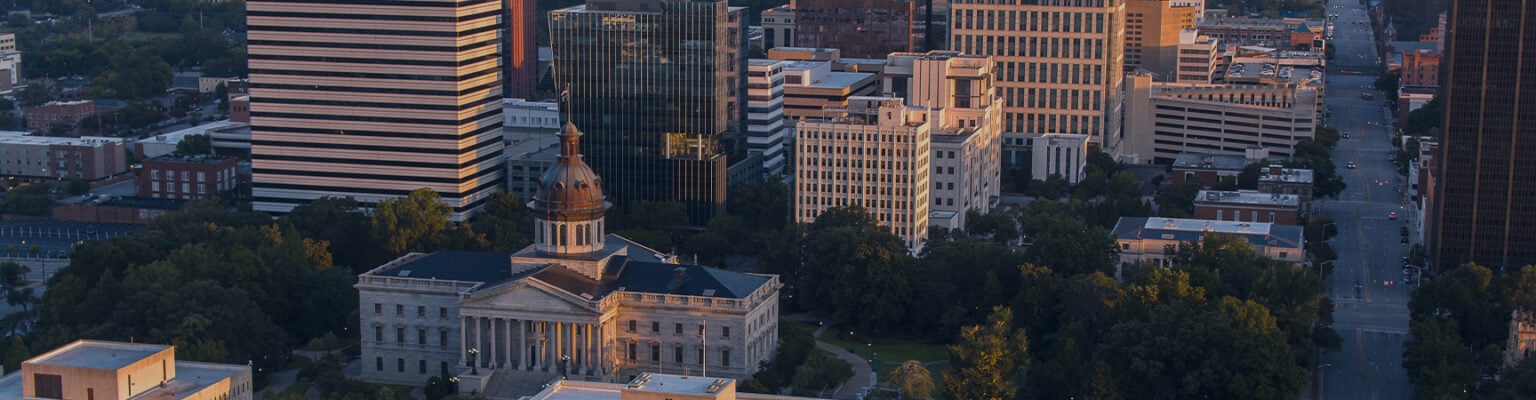
FCI Miami at a glance
FCI Miami is a low-security federal prison for men at 15801 S.W. 137th Avenue in southwest Miami-Dade County, with a minimum-security satellite camp beside it. It held 984 people as of September 2026 — 796 inside the fence and 188 at the camp — and most of the men here were sentenced in the Southern District of Florida.
| Official name | Federal Correctional Institution, Miami |
|---|---|
| BOP code | MIA · not MIM, which is FDC Miami |
| Security level | Low; men |
| Population | 984 (as of September 2026) · 796 at the FCI, 188 at the camp |
| Visiting | Saturday, Sunday and Monday, 8:00 a.m.–3:00 p.m., by housing-unit rotation; camp Saturday and Sunday · see visiting hours |
| Inmate mail | FCI: Inmate Name & Register Number · FCI Miami · Federal Correctional Institution · P.O. Box 779800 · Miami, FL 33177 Camp: Inmate Name & Register Number · FCI Miami · Federal Correctional Institution · Satellite Camp · P.O. Box 779800 · Miami, FL 33177 |
| Send money | Lockbox · Western Union (code city FBOP, DC) · MoneyGram (receive code 7932) |
| Phone | 305-259-2100 · Fax 305-259-2160 |
| Street address | 15801 S.W. 137th Avenue, Miami, FL 33177 · Miami-Dade County |
| Judicial district | Southern District of Florida |
| BOP region | Southeast |
| Housing | 11 units · cells and open dormitories |
| Special Housing Unit | Yes |
| RDAP | Yes · delivered in Spanish |
| UNICOR | Yes · textile cut-and-sew factory making jackets and pants |
| Camp | Yes · minimum security |
On this page
It is one of the federal prisons in Florida, was dedicated on March 26, 1976, and falls under the Bureau’s Southeast Region; it is not FDC Miami, the detention center downtown. One thing sets it apart from every other men’s prison in the federal system: the Bureau’s list of drug-treatment locations, updated in June 2026, marks exactly one men’s Residential Drug Abuse Program as a Spanish-language program, and it is this one. That shapes who is designated here, who stays after the program ends, and who has to leave to get treatment in English.

FCI Miami or FDC Miami? Telling the two apart
FCI Miami and FDC Miami are two separate federal institutions about twenty miles apart: FCI Miami sits on 137th Avenue in the far southwest of the county, near Zoo Miami, and FDC Miami is a tower at 33 NE 4th Street downtown. They are not two parts of one prison: they hold different people for different reasons and run on different rules. The table sets them side by side, with the Bureau’s population figures as of September 2026.
| FCI Miami (this page) | FDC Miami | |
|---|---|---|
| BOP code | MIA | MIM |
| What it is | A designated prison — people sent here are serving a sentence | A detention center — mostly people awaiting trial, sentencing or transfer |
| Security level | Low, plus a minimum-security camp | Administrative |
| Who is held | Men | Men and women |
| Population | 984 | 1,407 |
| Street address | 15801 S.W. 137th Avenue, Miami, FL 33177 | 33 NE 4th Street, Miami, FL 33132 |
| Inmate mail | P.O. Box 779800, Miami, FL 33177 | P.O. Box 019120, Miami, FL 33101 |
| Phone | 305-259-2100 | 305-577-0010 |
Two other names are often confused with this one.
Miami Correctional Facility is not this prison. It is a state prison run by the Indiana Department of Correction, near Bunker Hill, Indiana, and since 2025 it has also held immigration detainees for U.S. Immigration and Customs Enforcement. If a search or a directory listing has produced a phone number beginning 765, that is Indiana. This prison does not use that name, and neither does the Bureau: its facility page and every one of its institution supplements call it the Federal Correctional Institution, Miami.
Immigration detention in South Florida is a separate system. The main ICE facility in Miami-Dade County is the Krome North Service Processing Center at 18201 S.W. 12th Street — a different address, a different agency and a different set of rules — and people held there are found through ICE’s Online Detainee Locator System rather than the Bureau’s. Where the Bureau does hold immigration detainees in Miami, it is at the detention center downtown: under a memorandum of understanding between the Bureau and ICE signed on February 6, 2025, and reported by ABC News, the Bureau facilities designated to house male ICE detainees were FDC Miami, FDC Philadelphia, FCI Atlanta, FCI Leavenworth and FCI Berlin. FCI Miami was not among them.
Florida also runs its own large state prison system with its own offender search. A person sentenced in a Florida circuit court is in state custody and will not appear in the Bureau’s locator at all: different mail rules, different money routes, different visiting rules, different release calculations. Our guide to federal prisons in Florida lists the federal roster.
What is the security level at FCI Miami?
The main institution is low security; the camp beside it is minimum security. The 2024 Prison Rape Elimination Act audit records the custody levels as “Low, Minimum” and gives an age range of 19 to 88 inside the fence and 23 to 80 at the camp.
The 2024 audit counted 11 housing units and described a mixture: “Most of the toilets are inside the incarcerated individual cells… Open dormitory units have group restroom areas.” James Upchurch, who spent more than forty years in corrections including as Chief of Security Operations for the Florida Department of Corrections, put the same point to NBC6 in April 2023: institutions at this level “have inmates in open dormitories as opposed to cells… It’s a lot more of a modified camp style.”
The general-population units inside the fence are named for South Florida landmarks and lettered in order — Atlantic, Biscayne, Coral, Dolphin, Everglades, Flagler and Gator — which is why the institution’s paperwork switches between a letter and a name for the same place. The camp has two, I and J. The Special Housing Unit is reached through the gate beside Gator. The 2024 audit counted 11 housing units in all, so the named seven are not the whole map.
Whether a person lands inside the fence or at the camp turns on their security point score and on whether any Public Safety Factor applies, since a Public Safety Factor overrides the point total however low it is. Our guides to the intake process and how to prepare for prison cover the first days and the run-up to a self-surrender date.
The 2024 audit gives the designed capacity as 976 and the average daily population for the preceding year as 979, and answers “No” to the question whether the facility had been over capacity in those twelve months — on a day when the auditor counted 1,008 people on site. The Bureau’s count as of September 2026 is 984. Side by side, the figures show a prison running at or slightly above the population it was designed for.
Does FCI Miami have RDAP in Spanish?
Yes: on the Bureau’s own published record, FCI Miami is the only men’s institution in the federal system where the Residential Drug Abuse Program is delivered in Spanish. The institution’s Admission and Orientation handbook, updated in April 2026, says it in a sentence: “FCI Miami has RDAP in Spanish. If you are interested in RDAP in English, you may be eligible for transfer to another institution to participate in RDAP.”
The Bureau’s own list confirms it. Inside the August 2026 First Step Act Approved Programs Guide is a page headed “Residential Drug Abuse Programs (RDAP) and Female Integrated Treatment (FIT) Locations,” updated in June 2026, which counts “57 RDAPS at 50 Locations.” In the Southeast Region column, one entry carries a marker the key on the same page defines as “Spanish Program”: FCI Miami (FL). That marker appears in only one other place in the whole document, against FMC Carswell in Texas, which runs the women’s Female Integrated Treatment program.
The staffing follows the mission: Psychology Services here is listed as including a Spanish Residential Drug Abuse Program Coordinator, a Spanish Resolve Coordinator and a Spanish Internship Program Coordinator, with Drug Treatment Specialists in both languages and offices in the residential treatment unit itself. Drug Education, the non-residential drug program and the psychology groups all run in Spanish as well as English.
Program completion does not automatically move a person on. Jose Rojas, who retired after twenty-eight years as a federal correctional officer and served as a union leader at this institution, told NBC6 in May 2024 that the single national Spanish-language program draws men here from higher-security institutions and that “once they complete the program they stay there,” leaving “a lot of inmates who really don’t belong at that institution.” The Bureau has not endorsed that account, and NBC6 reported in the same piece that a 2018 whistleblower complaint making similar claims was found unsubstantiated by a Justice Department internal investigation.
If the person you care about needs residential drug treatment and speaks Spanish, a transfer request to this institution is a well-founded thing to ask a unit team for. If they need it in English and are already here, the handbook says the route runs the other way. Either way timing governs: admission is by nearness to release, and the handbook says a person ordinarily needs about twenty months left to serve. See our guide to federal prison transfers.
Who are the notable inmates at FCI Miami?
As of September 2026, Bureau records place Joel Greenberg, the former Seminole County tax collector, at FCI Miami; Peter Navarro, Tim Gionet, Lou Pearlman and Manuel Noriega are former prisoners here. Darren Sharper, James R. Gibson and Michael Conahan, often listed as held here, are not.
| Name | Where Bureau records place him | Case |
|---|---|---|
| Joel Greenberg | Currently held here. Register number 73648-018; projected release August 26, 2030 | Former Seminole County, Florida tax collector. Pleaded guilty in May 2021 in the Middle District of Florida to six federal offenses: sex trafficking of a child, illegally producing a false identification document, aggravated identity theft, wire fraud, stalking and conspiracy |
| Peter Navarro | Former. Register number 04370-510; released July 17, 2024, with FCI Miami as his facility of record | Former White House trade adviser, convicted of contempt of Congress and sentenced to four months |
| Tim Gionet | Former. Register number 25906-509; released March 31, 2023. Bureau records carry him under his committed name, Anthime Gionet | Livestreamer, sentenced for his part in the January 6 Capitol attack |
| Lou Pearlman | Register number 02775-093. Died in Bureau custody on August 19, 2016, aged 62, with FCI Miami as his facility of record | Boy-band impresario; pleaded guilty in 2008 to a long-running investment fraud |
| Manuel Noriega | Former. Register number 38699-079; left Bureau custody on April 26, 2010, on extradition to France, with FCI Miami as his facility of record | Former Panamanian head of state, convicted in 1992 of drug trafficking and racketeering |
| Darren Sharper | Not here. Register number 34209-034. Bureau records place him at the residential reentry management office in Baltimore (facility code CBR), with a projected release date of December 27, 2028 | Former NFL player convicted of rape and drug offenses |
| James R. Gibson | Not here. Register number 62228-004. Bureau records show he died in custody on November 3, 2025, aged 80, at the federal medical center at Butner (facility code BUH in his record) | Financial consultant convicted of fraud, conspiracy and money laundering |
| Michael Conahan | Not here. Register number 15009-067; released from Bureau custody on December 20, 2024, his last recorded facility the reentry management office in Miami rather than this prison | Former Pennsylvania judge convicted of racketeering in the “kids for cash” case |
Listings that place Darren Sharper here, give James R. Gibson a release date of 2034 or show Michael Conahan still in the system are out of date: the Bureau’s records put Sharper in a residential reentry program in Maryland, record Gibson’s death in custody in November 2025 and show Conahan released.
How do I find someone at FCI Miami?
Search the Bureau’s free public Inmate Locator, ideally by the eight-digit register number rather than the name, because the locator matches the committed name on the judgment and Hispanic naming conventions defeat it more often than anything else — a maternal surname dropped, two surnames run together, or a hyphen the court used and the family does not. Our locator guide explains the results.
Read the answer carefully, because the two Miami institutions differ by one word on the screen: “Located at: Miami FCI” is this prison and “Located at: Miami FDC” is the detention center downtown, and their record codes, MIA and MIM, differ by one letter. A third Miami entry, the residential reentry management office (code CMM), supervises halfway houses and home confinement rather than holding anyone itself — several of the former prisoners in the table above have it as their last recorded facility, which is what a normal end of sentence looks like. See RRM Miami.
If nothing comes back at all, the usual reasons are Florida state custody rather than federal, pretrial detention under the U.S. Marshals Service, immigration detention, or a committed name that differs from the one you are typing. How the register number itself is put together is set out in our guide to federal register numbers.
How do I write to someone at FCI Miami?
Write to someone at FCI Miami at P.O. Box 779800, Miami, FL 33177, the one box the FCI and the camp share, with the committed name and the register number on the first line. Mail addressed to the street address on 137th Avenue is not inmate mail and will not be delivered to a person.
| For someone at the institution | For someone at the satellite camp |
|---|---|
| Inmate Name & Register Number FCI Miami Federal Correctional Institution P.O. Box 779800 Miami, FL 33177 | Inmate Name & Register Number FCI Miami Federal Correctional Institution Satellite Camp P.O. Box 779800 Miami, FL 33177 |
General correspondence is opened, searched for contraband and may be read. Legal mail is opened only in the presence of the person it is addressed to and is not read — but only if the envelope identifies the sender as an attorney and is marked as special mail, and the Bureau puts the burden of telling the lawyer to mark it on the person inside. Our pages on attorney-client communication in the Bureau of Prisons and on writing to someone in federal prison, and the Bureau’s correspondence rules, cover the rest of it.
Three local rules often trip people up. Packages and express items are accepted only through U.S. Postal Service Express Mail — FedEx, UPS and similar carriers are refused at the door — and an authorization must already be on file in the mail room with a copy enclosed inside, or the post office returns it. A person may hold five books, two current magazines and one current newspaper at a time. And outgoing envelopes must spell out “Federal Correctional Institution” in the return address; the handbook says mail using the abbreviation goes back to the writer to do again.
Stamps, stationery, unused and musical greeting cards, Polaroids and nude photographs are all refused. First-class mail is handed out Monday to Friday after the 4:00 p.m. count, and outgoing legal mail can be dropped at the Lieutenant’s office from 7:00 to 7:15 a.m. on weekdays and 9:00 to 9:15 a.m. on weekends and federal holidays.
How do I send money to someone at FCI Miami?
Send money to someone at FCI Miami through the Bureau’s national lockbox in Des Moines, Iowa, or through one of two wire services, never to Miami; all three routes need the committed name and the eight-digit register number on the instrument itself as well as on the envelope.
| Route | Where it goes | When it posts |
|---|---|---|
| Postal money order or government check | Federal Bureau of Prisons Committed Name Eight-Digit Register Number Post Office Box 474701 Des Moines, Iowa 50947-0001 | U.S. postal money orders post without a hold. Any other money order or vendor refund check is held at least 15 days |
| Western Union Quick Collect | City code FBOP, state code DC | Two to four hours for money sent from 7:00 a.m. to 9:00 p.m. in the Eastern time zone; the handbook posts later transfers by 9:00 a.m. the next morning, bop.gov’s Send Money page by 7:00 a.m. |
| MoneyGram Express Payment | Company name FBOP, Washington DC, receive code 7932 | The same window and 7:00 a.m. next-day posting on bop.gov’s Send Money page; the handbook gives MoneyGram no separate time |
One line in the handbook matters more here than at most prisons, because a large share of this population has family abroad: “All foreign checks will be held for sixty (60) days before being posted.” A check drawn on a bank outside the United States, even in dollars, sits for two months — use a wire service instead. Cash, personal checks, letters and photographs enclosed with a money order are discarded or returned by the lockbox. Our guide to sending money to a federal prisoner compares the routes and their costs.
Before sending a large sum, know the ceiling on what it can buy: commissary spending is capped at $460 a month, and money above that sits in the account. Withdrawals over $500 need the Warden’s approval.
What are the visiting hours at FCI Miami?
Visiting at FCI Miami is on Saturday, Sunday and Monday, 8:00 a.m. to 3:00 p.m., at the institution; Saturday and Sunday at the camp; and ordinarily on federal holidays. Those hours come from institution supplement MIA-5267.09E, signed by Warden G. Heuett and dated May 1, 2024, which is the controlling document because it is the current supplement.
Monday visiting is unusual, and Friday visiting no longer exists: Friday belonged to institution supplement MIA-5267.08C of February 2014, replaced in July 2019 and again in May 2024. The Spanish-language visiting supplement still published on this institution’s page on bop.gov is that 2014 document. It gives the institution Friday, Saturday and Sunday, and the camp a Friday evening slot from 5:00 to 8:30 p.m. Families who read Spanish should not plan a Friday visit on the strength of it; a copy numbered MIA-5267.08C is the 2014 edition.
Visiting also runs on a housing-unit rotation rather than an open door. Atlantic, Biscayne and Everglades visit together; Coral and Dolphin together; Flagler and Gator together — each group on a different day, rotating through Saturday, Sunday and Monday. At the camp, I and J alternate weekends. Which day is yours depends on which unit the person is in that week, so ask them, and ask again after a move. Special Housing Unit visits are non-contact and capped at two hours; everyone else gets, in the supplement’s words, “an unlimited amount of visiting time during regular visiting hours.”
Who can visit, and how many
- The approved list holds a maximum of eighteen people, is ordinarily built within seven days of arrival, and is reviewed every ninety days.
- Adult immediate family named in the presentence report normally go on it on request. Anyone with a different surname should expect to send documentation to the unit team first.
- Everyone else needs a background check: the person inside mails out form BP-A0629, and the visitor returns it directly to the named unit team member, not to the person inside.
- A criminal record is not automatically disqualifying; the unit team weighs its nature, extent and recency against the relationship, and the Associate Warden decides.
- A visitor is ordinarily approved for one person’s list only, and children under sixteen must be with an approved adult throughout.
The supplement gives two answers on how many people may come at once. The body of the supplement says four visitors, counting children over three. Attachment 1 to the same supplement — the handout given to visitors — says five adults plus three children under three, and gives the camp Saturday-evening hours the body does not. Call 305-259-2100 before you travel and ask which document the lobby works from.
What visitors can wear and bring
Shorts of any kind are barred for anyone aged ten or over — in a city where shorts are ordinary clothing, that is the commonest reason a visit fails at the door. Also refused: sheer, net or mesh fabric; anything exposing the back, chest, midriff, shoulders or stomach; mini skirts, crop tops, sun dresses and halter tops; hats and scarves; spandex, tights and tight jeans; sweatpants, sweatshirts and hoodies; ripped clothing; hemlines above the knee; open-toe shoes and flip-flops. Two rules are stricter than most institutions: no watches or wearable electronics of any kind, and no visible jewelry at all except a wedding band. Khaki or military-green pants and shirts, and plain white, khaki or brown t-shirts, read as inmate clothing and are turned away.
You may bring one clear plastic bag no larger than twelve inches square, up to $20 in quarters and no paper money, photo ID, essential medication in its original labeled container handed to the visiting room officer, and feminine hygiene items; the handout adds one coat or sweater, to be worn throughout. Handbags, wallets, diaper bags, strollers, toys, newspapers, chewing gum, keys and phones stay outside, and the few lockers will not take a phone. Contact is one brief embrace at the start and one at the end — holding hands is expressly prohibited — and the person you are visiting cannot handle money or approach the vending machines, so you buy and carry it back.
The Title 18 queue, and the 9:30 cut-off
Arrive early, because processing runs on a numbered queue and stops in the middle of the morning. The parking lot opens at 7:30 a.m., and from 7:30 you may collect a numbered Title 18 form from the front lobby officer — then return to your car until 8:00. At 8:00 the lobby processes strictly in the order those numbers were issued, five visitors at a time, and the supplement says there will be no exception to this. Processing then stops at 9:30 a.m. for the 10:00 a.m. count and resumes when it clears, running again until 2:00 p.m. sharp; the room closes at 3:00. A visitor who arrives after 2:00 p.m. is not processed, even though the published hours run to 3:00.
Identification must be an unexpired government photo ID. Everyone clears a metal detector and x-ray screening, and all visitors are liable to random pat searches and drug screening on an ion spectrometry device. A confirmed positive costs a 48-hour suspension of visiting the first time, 30 days the second, 90 days the third and 180 days after that — and the supplement is explicit that no disciplinary action is taken against the person inside because a visitor tested positive. On the way in the back of your hand is marked with invisible ink and checked under ultraviolet light on the way out; leave the room and you cannot return that day. Our pages on searches, shakedowns and contraband and on federal prison visitation, and the Bureau’s visiting regulations, set out what applies system-wide.
Getting there
The institution’s own directions: from the Palmetto Expressway take SR-874 south toward the toll road and Homestead, continuing onto the Florida Turnpike; exit at S.W. 152nd Street and turn right onto S.W. 117th Avenue; turn right on Coral Reef Drive, which is 152nd Street; then left onto S.W. 137th Avenue for about half a mile. The institution is on the left. Through the entrance, take an immediate right and then a left into the visitor parking lot — the FCI is to the left and ahead, the camp to the right. Whoever drives a visitor in must leave government property immediately after dropping them off.
How do phone calls and email work at FCI Miami?
Men at FCI Miami can place calls but cannot receive them: each dials from a list of up to thirty numbers entered through the TRULINCS terminals, using a nine-digit access code, and cannot place a first call until he has recorded his voice by dialing 111. Under the Bureau’s telephone regulations, Program Statement 5264.09, issued September 3, 2026, the allowance is 510 minutes a calendar month: 300 free to anyone eligible for First Step Act telephone incentives, and 210 more that anyone, eligible or not, may buy after using up the first 300. A single call should generally not exceed 15 minutes. The extra 100 minutes in November and December belonged to the 2008 policy and did not carry over. Every telephone is monitored, as the handbook states in capitals; unmonitored calls with counsel are arranged through the unit team. In the Special Housing Unit the allowance drops to one call every seven days in administrative detention and one every thirty in disciplinary segregation.
The handbook prints international dialing instructions alongside the local and long-distance ones, but an international call comes out of the same 510 minutes as a call across town. Only one telephone in each unit is available between 7:15 and 10:30 a.m. and from noon until the 4:00 p.m. count clears.
Telephone sanctions here are severe. Three-way calls, forwarded calls, passing a connected handset to someone else and discussing business are all disciplinary matters; the handbook sets a first offense at six to eighteen months’ loss of telephone privileges and a second at sixteen to thirty-six. Beyond that the Warden may restrict a person to a single call a month under 28 C.F.R. § 540.100, in writing and with appeal rights, and the handbook warns that anyone transferring in with a conviction involving use of a prison telephone will be looked at for exactly that. See federal inmate phone calls.
Electronic messaging runs on TRULINCS, which families reach through CorrLinks: text only, no attachments, no internet, charged by the minute, and nothing passes until the person inside adds your address and you accept the invitation. Messages to and from an attorney are not privileged anywhere in the Bureau; privileged writing travels as marked special mail. See CorrLinks and TRULINCS. Two of the First Step Act needs surveys live on these terminals, and the handbook warns that failing to complete them puts a person into non-earning status for federal time credits. There is also a free line the other way — the institution’s Special Investigative Services office publishes 305-255-6046 for anonymous reports from inside, at no charge to the account.
What can people buy at the FCI Miami commissary?
People at FCI Miami can spend up to $460 a month at the commissary. The Bureau’s trust fund rules, Program Statement 4500.13, issued May 7, 2026, set that limit, and its summary of changes records in one line: “Increases spending limit from $360 to $460 per month.” The limit rises by $50 during the November and December holiday period, for no more than one validation period.
This institution’s own handbook still says $360, in both languages. The English edition, updated in April 2026, allows people to “spend up to $360.00 monthly”; the Spanish edition of the same handbook, dated the same day, goes further and calls it “el Límite de Gastos a nivel nacional” — the national spending limit. Both were written five weeks before the ceiling moved. The list of exclusions has grown too: stamps, nicotine replacement products, over-the-counter medications and vitamins, kosher and halal shelf-stable entrées for anyone in financial-responsibility refusal status, copy cards and paper, footwear including sneakers, mattresses, and a secured media device. The Miami handbook lists only stamps and over-the-counter medical items.
The two editions of the handbook also disagree with each other about the commissary schedule. The English text says the commissary is open Monday to Thursday and that the schedule follows the housing-unit rotation set by the weekly sanitation inspection, rotating weekly. The Spanish text says Monday to Friday, that the schedule is set by the fourth and fifth digits of the register number, and that it rotates every three months. They were published a day apart.
Both give the same formula for the date the money unlocks: take the fifth digit of the register number, multiply by three, add one. A fifth digit of 3 gives the 10th of the month. Money deposited the day after that waits nearly a month to be spent.
The Bureau’s commissary order form for this institution dates from 2018 and was signed by a Captain, an Associate Warden and a Warden, none of whom is in post today; treat it as an inventory, not a price list. Its stock reflects the population: Café Bustelo and Colombian coffee, Cuban crackers, plantain chips, Goya Sazón and Adobo, cilantro cubes, chorizos, Maria cookies, refried pinto and jalapeño beans, mango bars. Dozens of lines carry a kosher or halal mark; yarmulkes and a kufi are stocked but need prior authorization; laundry detergent and dryer sheets are flagged for the camp only.
The rules printed on the sheet are unforgiving: “If you are not in the commissary area when your name is called, you will lose your shopping privileges for the week. No changes or substitutions will be allowed at the window… All sales are final.” Identification is by fingerprint, Special Housing Unit orders are delivered before the Thursday 4:00 p.m. count, and the commissary closes for inventory in the last week of March and of September. The national rules behind all of this sit on our page about the federal prison commissary.
What programs are available at FCI Miami?
FCI Miami offers residential and non-residential drug treatment in Spanish and English, literacy and English-as-a-second-language classes, UNICOR factory work, religious programming and release preparation; the Bureau’s August 2026 approved-programs guide also names it for the Resolve trauma program.
Drug treatment, in Spanish and in English
The residential program runs a minimum of nine months as a half-day program at least five days a week, with participants housed together in a unit set apart from the compound; completion can mean up to a year off the sentence under 18 U.S.C. § 3621(e)(2) for those who qualify. Referral is by written request to Psychology Services, then a central-file screen and a diagnostic interview.
Three things run alongside it. Drug Education is a twelve- to fifteen-hour course in both languages, compulsory for anyone whose presentence report documents problem drug use — skipping it costs performance pay above maintenance level, bonus and vacation pay, and any UNICOR job. The non-residential program is twelve to twenty-four weeks of weekly groups, in English and Spanish. Medication-assisted treatment for opioid use disorder runs through Health Services rather than Psychology.
Education, UNICOR and the trades
Literacy and English-as-a-second-language classes are mandatory where they apply: 240 instructional hours for literacy, and ESL under the Crime Control Act of 1990 for anyone testing below an eighth-grade level of English regardless of what degrees they hold. Adult Continuing Education runs evenings and weekends, and correspondence courses are permitted where they need nothing but paper and pencil. See prison education and vocational training; there is an electronic law library here.
The largest single employer on the compound is the UNICOR factory, and it is bigger here than the phrase “prison industries” usually implies: a textile cut-and-sew operation manufacturing jackets and pants, employing about 240 people across cutting, sewing, folding, packing, shipping, the business office and quality assurance — against 796 men inside the fence as of September 2026, roughly three in ten. Applications go by written request to the factory manager, and prior UNICOR experience puts a name in the top ten percent of the waiting list. Facilities and maintenance is the other large employer, about 101 people at the institution and 52 at the camp, with performance pay of twelve cents an hour at grade four rising to forty at grade one.
Faith-based programming and reentry
Religious Services runs congregate worship, the religious diet program, ceremonial meals and work proscription for holy days, and hosts Threshold, the Bureau’s faith-based reentry class. The chaplains also handle emergency notifications of serious illness or death in the family, which is the fastest route when something happens at home. The April 2026 handbook calls the Release Preparation Program voluntary and opens it thirty months out, with seminars that put U.S. Probation, the Community Corrections Manager and reentry center staff in a room to take questions. Program Statement 5325.09, which has governed the program since June 22, 2026, says otherwise on both points: people are enrolled “between 18 and 24 months prior to their institution departure date to the community,” and a man who refuses to take part “will not ordinarily participate in an RRC” — a halfway house — and may face disciplinary sanctions.
A note on First Step Act programming. The Bureau’s August 2026 approved-programs guide names FCI Miami in its program-detail pages for Federal Prison Industries and for the Resolve trauma program, and its programs-by-institution table additionally marks the institution for Threshold, national parenting, family programming and all four occupational-education categories, while marking it as not offering post-secondary education, Life Connections or the sex-offender treatment programs. Approval is not delivery: whether a class is running, and how long the list is, is a question for the unit team in writing.
What is daily life like at FCI Miami?
Daily life inside the fence follows the schedule below, from the Admission and Orientation handbook updated in April 2026; times move, so treat it as the rhythm rather than a guarantee.
| Weekdays | Weekends and holidays | |
|---|---|---|
| Recreation yard opens | 6:10 a.m. | 6:10 a.m. |
| Morning meal | From 6:10 a.m. | 7:00 to 8:00 a.m. |
| Work call | 7:30 a.m. for UNICOR and facilities; general work call about noon | — |
| Controlled movement | Ten minutes on the hour, 7:55 a.m. to 3:05 p.m. | — |
| Stand-up count | 4:00 p.m. and 10:00 p.m. | 10:00 a.m., 4:00 p.m. and 10:00 p.m. |
| Noon meal | From 10:45 a.m., units called in sanitation order | From about 11:00 a.m. |
| Evening meal | About 5:15 p.m., once the 4:00 p.m. count clears | About 5:15 p.m. |
| Pill line | 7:00–7:30 a.m., 3:00–3:30 p.m., 8:00–8:30 p.m. | Morning line 8:00–8:30 a.m. |
| Recreation closes | Inner yard and building 8:30 p.m. | Inner yard and building 8:30 p.m. |
| Quiet time | 9:00 p.m. to 6:00 a.m. | 9:00 p.m. to 9:00 a.m. |
The order in which units are called to eat is decided every week by a sanitation inspection run at the Warden’s discretion: cleanest unit first, next-cleanest second, down the line. And there is no controlled movement at all at the camp except in an emergency and for meals — which, with a recreation yard open sunrise to sundown year-round, is the practical difference between the two sides of this property. Counts run five times a day and six on weekends, and call-outs for the next working day go up in each unit after 6:00 p.m.
Health Services runs sick call by appointment only on Mondays, Tuesdays, Wednesdays and Fridays — not Thursdays, not holidays. Sign-up is 6:30 to 7:00 a.m. at the hospital annex behind the Lieutenant’s office and appointments run 8:00 a.m. to 3:00 p.m.; arriving late means coming back the next day. Everyone at sick call is seen by a physician assistant, and asking specifically for a doctor gets the first available appointment rather than a refusal. There is a $2.00 co-payment charged to the commissary account. Everyone arriving is given a tuberculosis skin test, read within seventy-two hours, and another every year while results stay negative. See medical care in federal prison and the Bureau’s patient care rules.
Recreation is built around an outdoor yard in a climate where that works all year. Laundry is centralized, with linen exchange on Wednesday mornings; haircuts are never given in the housing units, the barber shop being in Education at the institution and across from the commissary at the camp. Admission and Orientation is held in the chapel on alternate Wednesdays, within thirty days of arrival.
What do inspectors say about conditions at FCI Miami?
The DOJ Office of the Inspector General has not conducted an on-site inspection of this facility. The District of Columbia’s Corrections Information Council has never inspected FCI Miami. Inspector General staff have been here once, in 2019, as one stop on a Bureau-wide evaluation — and that evaluation singles FCI Miami out in a text box of its own, which no other institution in it gets. What exists instead is a federal workplace-safety file, a Prison Rape Elimination Act audit, a staff survey with per-institution results, and one death that produced an unusual on-the-record statement from the Bureau.
The 2024 PREA audit
An independent auditor, James Kenney, was on site June 4–6, 2024, and filed his final report on July 13, 2024. The facility passed the PREA standards: one standard exceeded — 115.65, coordinated response — forty met, none unmet. It was the institution’s fourth audit since 2015 and it has passed each time. The allegation figures behind that are low: in the preceding twelve months, one allegation of sexual abuse, inmate-on-inmate, found unfounded; zero staff-on-inmate abuse allegations; zero sexual harassment allegations of any kind. A PREA audit counts sexual abuse and harassment of incarcerated people, not of staff by incarcerated people, and the second is the subject on which this prison has the longest federal record.
The audit is also the most detailed public description of the institution. The figures below are as of the first day of the on-site visit, June 4, 2024.
| Designed capacity | 976 |
|---|---|
| Population on day one | 1,008 |
| Average daily population, preceding 12 months | 979 |
| Housing units | 11 |
| Staff who may have inmate contact | 261 |
| Contractors / volunteers with inmate contact | 12 / 4 |
| Age range | 19 to 88 at the institution; 23 to 80 at the camp |
| Recorded as Limited English Proficient | 38 |
| Held in segregation for risk of sexual victimization | 0 |
The auditor explained that last line: he checked the Special Housing Unit roster, found no one held there for protective reasons, and wrote that “the security level of this institution requires these individuals to be housed elsewhere in the BOP.” Someone here who needs protective custody is likely to be transferred rather than accommodated.
On language the audit is the clearest published account of how this institution communicates. Staff who translate Spanish are available alongside the Justice Department’s LanguageLine contract and sign-language interpreting; “all written materials for incarcerated individuals are provided in two languages, English and Spanish”; and seven Spanish-speaking men were interviewed through a staff translator, all confirming the written material reached them in Spanish. No institution document mentions Haitian Creole, and the only named language services are Spanish, LanguageLine and sign language, so a Creole-speaking family should raise that gap directly with the unit team.
What OSHA cited, and what the Inspector General found
In February 2023 the Inspector General published an evaluation of how the Bureau handles sexual harassment and sexual assault committed by incarcerated people against staff — conduct aimed at employees, not staff misconduct toward prisoners. FCI Miami was one of three institutions visited for it, in 2019, alongside FCI Jesup and the complex at Coleman, and it is the only institution the report singles out in a text box of its own, headed “Unsafe Working Conditions Associated with Workplace Violence and Sexual Harassment at FCI Miami.” The sequence, in the Inspector General’s words and sourced to OSHA’s own documents:
- On June 6, 2018, OSHA wrote to FCI Miami setting out incidents in December 2017, February 2018 and May 2018 in which “female staff were exposed to sexual assault and violent threats from inmates,” and stated that the Bureau “failed to take action to prevent workplace violence.” No citation issued then.
- In November 2019 OSHA issued a notice of unsafe and unhealthful working conditions, citing a serious violation for failing to provide a workplace free of recognized hazards of death or serious physical harm “by exposing employees to the hazard of being assaulted by inmates with a history of violent behavior.” Two 2018 incidents were named: a pharmacist sexually assaulted while unescorted in the health unit, and a Special Housing Unit prisoner who tried to assault an officer through the open food slot of a shower cell.
- The Bureau appealed. In April 2020 OSHA declined the appeal. When the Inspector General published in February 2023, the Bureau was still “awaiting further contact from OSHA’s area office.”
The report also quotes an interviewee explaining why people here behave: “the green space, lake, and wildlife at FCI Miami helps to keep inmates calm. It also incentivizes them not to misbehave because they do not want to be transferred elsewhere.”
What staff told the Inspector General
The 2019 anonymous survey behind that report drew 7,334 responses Bureau-wide, of which 2,571 reported experiencing sexual harassment by incarcerated people; broken down by institution, FCI Miami accounts for 12 and FDC Miami for 17. Those are raw counts of respondents, not rates, and the report does not publish how many staff at each institution answered.
The Inspector General’s 2021 follow-up survey on the pandemic published results institution by institution. Asked to rate their own institution’s overall response, staff at FCI Miami answered: effective 32.3 percent, somewhat effective 19.4, neither 35.5, somewhat ineffective 3.2, ineffective 9.7. Asked how the pandemic changed their work, 67.6 percent said they had been required to perform duties outside their normal ones. These results, too, are published as proportions only, with no count of the FCI Miami staff behind them, so they give context rather than measurement.
A death in E-Unit, and the missing duress buttons
On December 11, 2022, Robert Pressley died in a cell in E-Unit, which the institution was then using to quarantine people returning from outside hospital. He was 43 and serving twelve years. Bureau records confirm the date and record FCI Miami as his facility; the following day the warden wrote to the sentencing judge in the Middle District of Georgia, with the cause pending the medical examiner. Reporting by Walter Pavlo in Forbes described the night: Pressley had been coughing blood and had been sent out to a trauma center in November; he was seen at health services and returned to his cell about twenty minutes later; his cellmate raised the alarm by beating on the door.
The Bureau gave two statements for that article. Asked about emergency notification from inside a cell, the Bureau’s Office of Public Affairs said: “Duress alarms or buttons are not required at all locations and are not currently utilized at FCI Miami.” Asked about staffing, it said FCI Miami “continues to maintain adequate staffing to meet their mission.”
For anyone here with a medical condition, that means there is no button in a locked cell at this institution; an emergency at night is raised by being heard.
FCI Miami in the news
Recent news about FCI Miami centers on a September 2026 furlough escape and on violence, lockdowns and an escape in 2023 and 2024; older items concern a death in custody in 2022, a COVID-19 outbreak and a death release in 2020, and the OSHA findings of 2018 and 2019.
- September 11, 2026 — furlough escape. The Bureau issued a press release the same night: Sherman Kemp, 47, “was discovered missing following a failure to report to the adjacent satellite camp at Federal Correctional Institution (FCI) Jesup in Jesup, Georgia, after a furlough transfer from the Federal Correctional Institution (FCI) Miami.” He was serving an aggregate 324-month sentence for cocaine and heroin conspiracy and firearms offenses. The Marshals Service asks for information on (786) 433-6340.
- May 25, 2024 — a fight inside a housing unit left four men injured, at least two with puncture wounds, and put the institution into lockdown. Sources told NBC6 the lockdown suspended visits, commissary, telephone and computer access, with men in their rooms all day and showers every third day.
- March 21, 2024 — a man then serving sixty months here pleaded guilty in the Southern District of Florida to possession with intent to distribute, after a routine search found more than fifty grams of cocaine in twenty-one baggies and more than seventeen grams of marijuana.
- February 23, 2024 — a 43-year-old man walked away from the institution on a Friday and Miami-Dade Police circulated a flyer the next day. Bureau records show he was recaptured and completed his sentence, leaving custody on July 16, 2025.
- April 1, 2023 — a riot in the recreation yard involving more than a hundred men sent four to hospital, and sources told NBC6 that more than a hundred weapons were recovered afterward. The Bureau confirmed the institution was “placed on modified operations” that day and defined the term: “a temporary change to some institution operations that may include inmate movement, programs, and/or services.” A consultant who reviewed the footage said the previous documented riot here was in 2016.
- December 11, 2022 — a death in a quarantine cell, described above.
- August 2020 — the Bureau posted one news release reporting the death of a person held at FCI Miami; the Bureau’s releases are listed on its press release page.
- July 2020 — the union president at FCI Miami told ABC News that COVID-19 was carried in by an employee and spiked across three units, and that the administration ordered a twenty-one-day lockdown; in one open communal area, 55 of 60 men tested positive. The Bureau reported 91 positive cases here.
- November 2019 and June 2018 — the OSHA notice and the letter that preceded it, described above.
Frequently asked questions about FCI Miami
What is FCI Miami?
FCI Miami is a low-security federal prison for men at 15801 S.W. 137th Avenue in southwest Miami-Dade County, operated by the Federal Bureau of Prisons and dedicated on March 26, 1976, with an adjacent minimum-security satellite camp. As of September 2026, it held 984 people — 796 at the institution and 188 at the camp.
What is the difference between FCI Miami and FDC Miami?
They are two separate federal institutions about twenty miles apart. FCI Miami (code MIA) is a low-security prison on 137th Avenue in southwest Miami-Dade for sentenced men. FDC Miami (code MIM) is an administrative-security detention center at 33 NE 4th Street downtown, mostly for people awaiting trial, sentencing or transfer. As of September 2026 they held 984 and 1,407 people. On the inmate locator’s screen they appear as Miami FCI and Miami FDC.
Is FCI Miami the same as Miami Correctional Facility?
No. Miami Correctional Facility is a state prison run by the Indiana Department of Correction near Bunker Hill, Indiana, which has also held immigration detainees for ICE since 2025. The Bureau of Prisons calls this institution the Federal Correctional Institution, Miami, and never uses the other name.
Is RDAP at FCI Miami taught in Spanish?
Yes. On the Bureau’s own published record, FCI Miami is the only men’s institution where the Residential Drug Abuse Program is delivered in Spanish. The RDAP locations list in the Bureau’s August 2026 First Step Act Approved Programs Guide, updated in June 2026, marks it with the guide’s Spanish-program symbol, which appears elsewhere only against FMC Carswell’s women’s program. The institution’s handbook says anyone wanting RDAP in English "may be eligible for transfer to another institution."
What are FCI Miami’s visiting hours?
Saturday, Sunday and Monday, 8:00 a.m. to 3:00 p.m., at the institution, and Saturday and Sunday at the camp, ordinarily including federal holidays, under institution supplement MIA-5267.09E of May 2024. Visiting runs on a housing-unit rotation, so which day applies depends on which unit the person is in. Friday visiting was discontinued; listings showing Friday follow a 2014 supplement replaced twice since. Processing closes at 2:00 p.m. Call 305-259-2100 before traveling.
How many visitors can come at once to FCI Miami?
The Bureau’s own document gives two answers. The body of institution supplement MIA-5267.09E says four visitors, counting children over three. The visitors’ handout attached to the same supplement says five adults plus three children under three. The approved visiting list itself holds up to eighteen people. Confirm on 305-259-2100 before a long journey.
Can you send money directly to FCI Miami?
No. Funds go to the Bureau’s national lockbox at Post Office Box 474701, Des Moines, Iowa 50947-0001, or by Western Union Quick Collect using city code FBOP, state DC, or by MoneyGram using receive code 7932 — all three needing the committed name and the eight-digit register number. A check drawn on a foreign bank is held sixty days before it posts, so families abroad should use a wire service.
How much can someone spend at the FCI Miami commissary?
$460 a month under Program Statement 4500.13 (2026), which raised the ceiling from $360, plus $50 during the November and December holiday period, for no more than one validation period. FCI Miami’s own April 2026 handbook still prints $360 in both its English and Spanish editions. The published Miami commissary order form dates from 2018, so its prices are obsolete.
Has FCI Miami been inspected?
The DOJ Office of the Inspector General has not conducted an on-site inspection of this facility. The District of Columbia’s Corrections Information Council has never inspected FCI Miami. Inspector General staff visited once, in 2019, for a Bureau-wide evaluation of inmate-on-staff sexual harassment that devoted a case study to FCI Miami. The institution passed an independent Prison Rape Elimination Act audit on June 4–6, 2024, with one standard exceeded, forty met and none unmet.
Are there emergency call buttons in the cells at FCI Miami?
No. Asked about emergency notification from inside a cell after a death in custody in December 2022, the Bureau’s Office of Public Affairs said: "Duress alarms or buttons are not required at all locations and are not currently utilized at FCI Miami." Families of anyone here with a medical condition should know that raising an alarm at night depends on being heard.
Who is the best-known person held at FCI Miami?
Joel Greenberg, the former Seminole County tax collector who pleaded guilty in May 2021 to six federal offenses including sex trafficking of a child, is held here with a projected release date of August 26, 2030. Peter Navarro served his four-month contempt-of-Congress sentence here in 2024. Darren Sharper and James R. Gibson, both routinely listed here, are not: Bureau records place Sharper in a residential reentry program in Baltimore and record Gibson’s death in custody in November 2025.
Problems at FCI Miami: where we can help
The issues that recur here are the ones this institution’s own record keeps pointing at: a single national Spanish-language treatment program that draws men in and does not move them on, a low-security compound with an open-dormitory layout and a documented history of yard violence, and a language gap that runs through the Bureau’s own paperwork. Raise them early, in writing, and keep copies.
- RDAP placement, in the right language. Getting to the Bureau’s only Spanish-language residential program, or getting to an English one from here, is a transfer question as much as a treatment question, and the handbook says so. Timing governs: admission runs on nearness to release. See our pages on RDAP and early release, the program itself and federal prison transfers.
- Designation and redesignation — whether a person is inside the fence or at the camp, and whether they can move closer to home once programming ends, turns on security points, Public Safety Factors and management variables, all of which are arguable and documented.
- First Step Act time credits. Two of the needs surveys live on the TRULINCS terminals here, and the handbook warns that not completing them puts a person into non-earning status — a fixable administrative problem that quietly costs months.
- Medical care that is not happening. Sick call runs four mornings a week and not on Thursdays, there are no duress buttons in the cells, and a request that goes nowhere has to be escalated in writing through the administrative remedy process, which has a clock on every rung. Where negligence has already caused an injury, a Federal Tort Claims Act claim runs on its own track, with its own deadline. Serious illness can also be the basis for a compassionate release request under the Bureau’s reduction-in-sentence procedures.
- Lockdowns and modified operations, which this institution has used after yard violence more than once, and which suspend visits, telephone, commissary and computer access with no published end date.
- Disciplinary hearings with good conduct time at stake, and time in the Special Housing Unit that runs past any reason for it — noting the audit’s finding that people needing protective housing are transferred out rather than accommodated here.
- Telephone restrictions, where the sanctions written into this institution’s handbook run to years rather than months.
- Halfway house and home confinement placement on the way to early release, which the Bureau arranges through the reentry office for the district a man is releasing to — RRM Miami for the Southern District of Florida — and sentence-computation and release-date errors.
- Challenges to the conviction or sentence itself, through a direct appeal or a § 2255 motion.
Elizabeth Franklin-Best, P.C. handles federal criminal defense, appeals and post-conviction matters nationwide, and advises families on Bureau of Prisons issues at institutions across the system. Call (843) 620-1100 or contact us to talk through a specific situation.
Christopher Zoukis, JD, MBA, the firm’s Managing Director, writes and maintains the federal prison policy material on this site. He is not counsel of record; legal representation is provided by Elizabeth Franklin-Best.
Sources and currency
Bureau of Prisons documents
- FCI Miami, Federal Bureau of Prisons, 2026. The Bureau’s facility page.
- FCI and FPC Miami Admission and Orientation Handbook, Federal Bureau of Prisons, FCI Miami, 2026.
- Manual de Admisión y Orientación, FCI and FPC Miami, Federal Bureau of Prisons, FCI Miami, 2026. The Spanish edition of the handbook.
- Institution Supplement MIA-5267.09E, Visiting Regulations, Federal Bureau of Prisons, FCI Miami, 2024. Replaced Institution Supplement MIA-5267.09D (2019).
- Institution Supplement MIA 1315.07-1C, Legal Activities, Inmate, Federal Bureau of Prisons, FCI Miami, 2013.
- FCI/FPC Miami Commissary List, Federal Bureau of Prisons, FCI Miami, 2018.
- Suplemento de Institución MIA-5267.08C, Regulaciones de Visita, Federal Bureau of Prisons, FCI Miami, 2014. The Spanish-language visiting supplement the English editions of 2019 and 2024 replaced.
- Community Ties: Sending Money, Federal Bureau of Prisons, 2026. Deposit routes and wire posting times.
- Trust Fund/Deposit Fund Manual, Program Statement 4500.13, Federal Bureau of Prisons, 2026. Sets the $460 commissary spending limit.
- Inmate Telephone Regulations, Program Statement 5264.09, Federal Bureau of Prisons, 2026. Replaced Program Statement 5264.08 (2008).
- Release Preparation Program, Program Statement 5325.09, Federal Bureau of Prisons, 2026.
- First Step Act Approved Programs Guide, Federal Bureau of Prisons, Reentry Services Division, 2026. Includes the RDAP locations list.
- Furlough Escape from FCI Miami, Federal Bureau of Prisons, 2026.
- Press Releases, Federal Bureau of Prisons, 2020. Includes the release reporting a death at FCI Miami that year.
Audits and inspections
- PREA Facility Audit Report: FCI Miami, James Kenney, PREA auditor, 2024. On-site audit of June 4–6, 2024.
- Evaluation of the Federal Bureau of Prisons’ Efforts to Address Sexual Harassment and Sexual Assault Committed by Inmates Toward Staff, U.S. Department of Justice, Office of the Inspector General, 2023. Report 23-034.
- Staff Perceptions of the Federal Bureau of Prisons’ Management of the Coronavirus Disease 2019 Pandemic: A Follow-Up Survey of BOP Staff, U.S. Department of Justice, Office of the Inspector General, 2021. Report 21-126, with per-institution results.
Court records
- Inmate at FCI Miami pleads guilty to possession with intent to distribute cocaine inside a federal prison, U.S. Attorney’s Office, Southern District of Florida, 2024. The March 2024 guilty plea of a man then held at FCI Miami.
- Former Seminole County Tax Collector Joel Micah Greenberg Pleads Guilty To Multiple Federal Offenses, U.S. Attorney’s Office, Middle District of Florida, 2021. Joel Greenberg’s guilty plea.
News and other sources
- Krome North Service Processing Center, U.S. Immigration and Customs Enforcement, 2026.
- Miami Correctional Facility (MCF), U.S. Immigration and Customs Enforcement, 2026.
- Males Detained by ICE to Be Housed in Federal Prisons, New Memo Says, ABC News, 2025. By Luke Barr.
- Bloody brawl puts federal prison in SW Miami-Dade into lockdown, NBC 6 South Florida, 2024. By Tony Pipitone.
- Inmate escapes federal correctional institution in Miami-Dade after judge denies release request, WPLG Local 10, 2024. By Andrea Torres.
- Video Shows Prison Riot That Led to Lockdown at Federal Correctional Institution in Miami, NBC 6 South Florida, 2023. By Heather Walker.
- Federal Inmate Dies Choking On His Own Blood While Locked In Cell At FCI Miami, Forbes, 2022. By Walter Pavlo.
- Union Officials Warn of ‘Dire’ Situations at South Florida Federal Prisons, ABC News, 2020. By Luke Barr.
- 18 U.S.C. § 3621(e)(2), Imprisonment of a convicted person, U.S. Code (Legal Information Institute).
- 28 C.F.R. § 540.100, Purpose and scope, Code of Federal Regulations (Legal Information Institute).
Sources reviewed September 2026.
Reviewed for legal accuracy by Elizabeth Franklin-Best, Esq., Principal Attorney·September 2026