
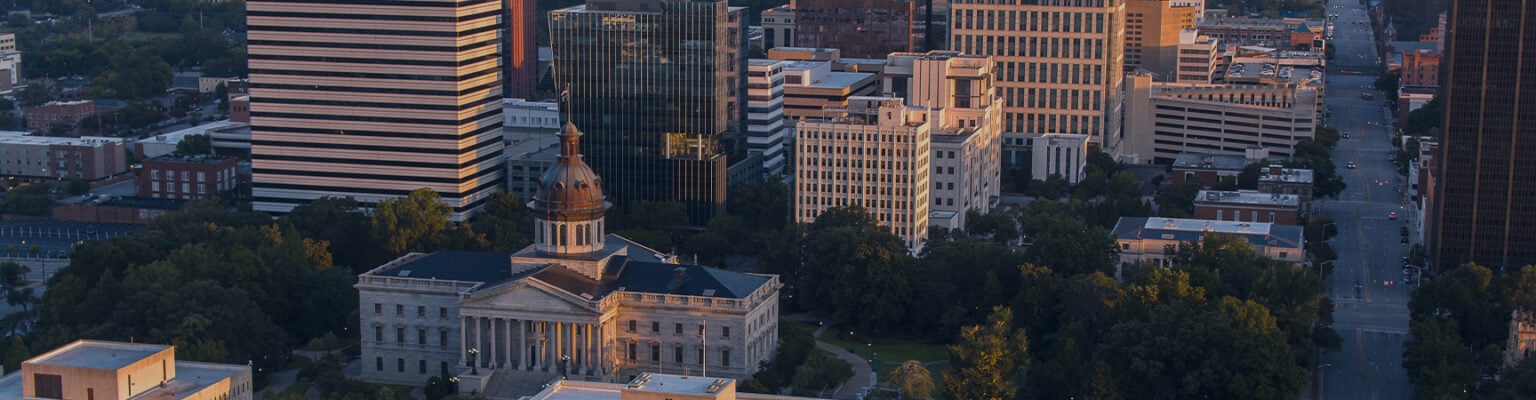
FCI Coleman Medium at a glance
FCI Coleman Medium is a medium-security federal prison for men in Sumterville, Florida, with no camp. It is one of four separate federal prisons at the Federal Correctional Complex in Coleman, and its housing is two-person cells rather than dormitories. As of September 2026 it held 1,518 people.
| Official name | Federal Correctional Institution, Coleman Medium |
|---|---|
| BOP code | COM · complex COX |
| Security level | Medium; men |
| Population | 1,518 (as of September 2026) |
| Visiting | Saturday, Sunday and federal holidays, 8:00 a.m.–3:00 p.m. · Monday: Special Housing Unit only, until 12:30 p.m. |
| Inmate mail | Inmate Name & Register Number · FCI Coleman Medium · Federal Correctional Institution · P.O. Box 1032 · Coleman, FL 33521 |
| Send money | Lockbox · Western Union (code city FBOP, DC) · MoneyGram (receive code 7932) |
| Phone | 352-689-5000 · Fax 352-689-5027 |
| Street address | 846 NE 54th Terrace, Sumterville, FL 33521 · Sumter County |
| Judicial district | Middle District of Florida |
| BOP region | Southeast |
| Housing | Two-person cells |
| Special Housing Unit | Yes · visits on Mondays only |
| Medical care level | Care Level 3 |
| Mental health care level | Care Level 2 |
| RDAP | No · Coleman’s two programs are at FCI Coleman Low and USP Coleman II |
| UNICOR | Yes · factory |
| Camp | None |
On this page
It is the only one of the four whose own handbook describes a compound built around cells rather than dormitories — the 4:00 p.m. count here is taken “with cells secured.” It is also one of two institutions the Bureau names for the Skills Program, a residential unit for people with intellectual and social impairments. The District of Columbia’s inspectors, who toured it on October 12, 2023, found it running at 135.2 percent of rated capacity over the preceding year.

Which Coleman prison is this, and is it the right one?
FCI Coleman Medium is the medium-security institution, code COM, one of four prisons sharing a street address, map coordinates, a public information email and a complex warden. Nothing else is shared: each has its own post office box, telephone number, visiting room and security level, and a letter, a deposit or a visit sent to the wrong one does not get forwarded across the campus.
Sort the code out before anything else. The table below lists the whole campus.
| Prison | Code | Security | Population (September 2026) | Inmate mail | Phone |
|---|---|---|---|---|---|
| FCI Coleman Medium (this page) | COM | Medium | 1,518 | P.O. Box 1032 | 352-689-5000 |
| FCI Coleman Low | COL | Low, with a camp | 2,115 | P.O. Box 1031; camp 1027 | 352-689-4000 |
| USP Coleman I | COP | High | 1,175 | P.O. Box 1033 | 352-689-6000 |
| USP Coleman II | CLP | High | 1,025 | P.O. Box 1034 | 352-689-7000 |
Those four populations add to 5,833 as of September 2026, which makes Coleman the largest federal prison complex in the country by some distance; the next largest, FCC Yazoo City, held 4,602 at the same time. Scale explains most of what the inspectors found here, and it is why a document that says “Coleman” usually is not saying “the Medium.” The roster carries a fifth entry, code COX, but that is the complex rather than a prison, so Coleman has four institutions, one of them with a camp attached.
The error that costs families the most money is misreading the facility name the Inmate Locator prints. Coleman Medium FCI and Coleman Low FCI differ by one word and describe two prisons half a mile apart, holding men at different security levels under different rules. A person recorded at COM does not live in a dormitory, is not subject to the odd-and-even visiting restriction that governs the Low, and cannot enroll in the residential drug program without a transfer. Our guides to medium-security federal prisons and the federal security-level system explain what the classification means.
Florida’s other federal prisons are FCI Miami (MIA), FDC Miami (MIM), FCI Marianna (MNA) and FCI Tallahassee (TAL), with release planning through RRM Miami and RRM Orlando; FPC Pensacola is off the roster. Someone sentenced by a Florida circuit judge is in a separate state system and will never appear in the federal locator. Our overview of federal prisons in Florida covers each of them.
What is the security level at FCI Coleman Medium?
FCI Coleman Medium is a medium-security prison for men, with no camp and no satellite low attached. In Bureau terms that means a double perimeter fence with electronic detection, cell housing rather than open dormitories, a higher staff-to-inmate ratio than a low, and a day broken into controlled ten-minute movement periods instead of an open compound.
The cells are what separate this institution from the Low next door, and the inspectors measured them. On the C2 block in October 2023 the Corrections Information Council recorded four sides, 64 cells to a side, two people to a cell, 128 people on each side of the block. That is the arithmetic of a medium: a door that closes, a cellmate you did not choose, and a count taken while the doors are locked. The handbook sets the 4:00 p.m. count as a standing count “with cells secured,” and adds a 10:00 p.m. standing count the Low does not have.
Crowding is the second defining fact. The Council recorded the institution “operating at an average of 135.2% of the rated capacity for the last year” — 1,152 rated against 1,558 people on the day it toured — and the Bureau’s reply, printed alongside, is that it had moved away from rated capacity toward “physical capacity and optimal capacity.” The population had fallen to 1,518 as of September 2026, and the complex ran at 5,979 average daily against a designated capacity of 5,099 in the year to July 2026.
Designation to a medium rather than a low turns on a security point score and on whether a Public Safety Factor applies — for a man under the Bureau’s security designation rules, Program Statement 5100.08, more than twenty years remaining to serve or an escape from a secure facility. Such a factor overrides a low point total however well a person otherwise scores, and it, like a Management Variable in the other direction, is arguable in writing. The Designation and Sentence Computation Center decides before anyone arrives, which is why that work belongs to the weeks after sentencing. See our guides to designation, the intake process, preparing for prison and federal prison transfers.
One more classification matters here: medical care level. The Bureau’s 2024 care-level charts put the Medium and both penitentiaries at Care Level 3 and the Low and its camp at Level 2; the undated mental-health chart released with them gives the Medium Level 2. The Council recorded the same medical level in October 2023, with “[s]ixty percent of the total population” requiring chronic care. The Bureau’s patient care rules, Program Statement 6031.06, describe Level 3 institutions as housing people with “more complex medical conditions” who “are more fragile” — a caseload carried here, in October 2023, by one doctor and two mid-level practitioners.
Who are the notable inmates at FCI Coleman Medium?
Of the names on published lists, Bureau records place one at FCI Coleman Medium: David Oquendo-Rivas, register number 34348-069, whose record carries facility code COM and a release date of LIFE. A federal jury in the District of Puerto Rico convicted him on March 8, 2013, of 28 counts of violent crimes in aid of racketeering and nine firearms counts, and he was sentenced on October 24, 2013, for the La Tómbola nightclub shooting in Toa Baja on October 17, 2009, in which eight people and an unborn child were killed. The First Circuit affirmed his convictions and vacated his co-defendant’s.
The other widely published names are out of date or belong to other prisons; the table shows where Bureau records place each.
| Name | Register number | What the Bureau’s record says |
|---|---|---|
| David Oquendo-Rivas | 34348-069 | FCI Coleman Medium (COM). Release date LIFE |
| Lawrence “Larry” Nassar | 21504-040 | FCI Lewisburg (LEW), Pennsylvania. Projected release January 30, 2068 |
| Dominic Taddeo | 01925-055 | Last recorded here. Released October 17, 2025 |
| Ethan Nordean | 28596-509 | Last recorded here. Released January 20, 2025 |
| Lawrence “Larry” Lawton | 52224-004 | Last recorded here. Released August 24, 2007 |
| Ruben Zuno-Arce | 43203-080 | Last recorded here. Died in custody September 18, 2012 |
| Benjamin Arellano-Felix | 00678-748 | USP Coleman I (COP), not this prison. Projected release April 28, 2032 |
| Édgar Valdez-Villarreal | 05658-748 | USP Coleman II (CLP). Projected release August 23, 2056 |
The assault on Larry Nassar did not happen here: the Bureau’s own statement at the time, quoted by CBS News and ESPN, placed it at “the United States Penitentiary (USP) Coleman II,” and Bureau records now place him at FCI Lewisburg with a release date in 2068. Dominic Taddeo, the organized-crime figure whose 2022 walk-away from federal custody drew national coverage, has this institution as his last recorded facility and left custody on October 17, 2025.
The published lists keep one entry for “FCI Coleman” and one for “USP Coleman,” and four real prisons do not map onto two labels. Oquendo-Rivas is filed under the penitentiary and is at the medium; Nordean, Lawton and Zuno-Arce are filed here and all left. Check the Inmate Locator yourself, read the full name it prints, and treat any undated list as wrong.
How do I find someone at FCI Coleman Medium?
To find someone at FCI Coleman Medium, search the Bureau’s free public Inmate Locator by the eight-digit register number wherever you have it. The number is the stable key: the locator matches the committed name on the judgment, not a nickname or a married name, and it covers everyone in federal custody since 1982. A result shows either the prison’s name and a projected release date, or the date the person left.
Read the name first. Coleman Medium FCI is this institution and nothing else. Because there is no camp and no satellite low attached here, that result is unambiguous about where the person lives, which is not true of the Low next door, where the institution and its camp share one record code, COL. If what comes back is Coleman Low FCI or either USP, open the page for that prison: the mailing address and the visiting rules are different.
A search that returns nothing usually means the person is in state custody, is in pretrial detention under the U.S. Marshals Service and not yet designated, or is spelled differently on the judgment. Our explainer on how federal register numbers work covers what the digits mean.
How do I write to someone at FCI Coleman Medium?
Letters for someone at FCI Coleman Medium go to P.O. Box 1032, Coleman, FL 33521, with the committed name and register number on the first line. The four prisons here run consecutive boxes — 1031 for the Low, 1032 for this institution, 1033 and 1034 for the penitentiaries — so one wrong digit delivers your letter to a different prison, and mail with no register number is returned.
| Personal and legal mail | Parcels sent by a carrier other than USPS |
|---|---|
| Inmate Name & Register Number FCI Coleman Medium Federal Correctional Institution P.O. Box 1032 Coleman, FL 33521 | Inmate Name & Register Number FCI Coleman Medium 846 NE 54th Terrace Coleman, FL 33521 |
Both blocks are as the Bureau’s location record gives them. Note that the city changes with the purpose: mail goes to Coleman while the prison’s physical address is in Sumterville. Both are in Sumter County and both are correct for what they are used for.
Under the Bureau’s correspondence rules, ordinary letters are opened, inspected and may be read. Legal mail is opened only in the addressee’s presence and is not read, but only if the envelope identifies the sender as an attorney and is marked “Special Mail — Open only in the presence of the inmate”; without that marking an attorney’s letter is processed like any other. Do not put cash, a check or a money order inside a letter: funds found in correspondence are rejected and returned to the sender, and where there is no return address they go to the Treasury. Our guides to attorney-client communication in the Bureau of Prisons and writing to someone in federal prison cover the rest.
How do I send money to someone at FCI Coleman Medium?
Money for someone at FCI Coleman Medium goes to the Bureau’s national lockbox in Des Moines or through one of two wire services, never to the prison, and the Bureau says so on this facility’s own page. All three routes need the committed name together with the eight-digit register number, on the instrument and on the envelope.
| Route | Where it goes | When it posts |
|---|---|---|
| Postal money order or cashier’s check | Federal Bureau of Prisons Committed Name Eight-Digit Register Number Post Office Box 474701 Des Moines, Iowa 50947-0001 | Processed on receipt and available the next day. A U.S. postal money order posts free of any hold; most other instruments carry an automatic 15-day hold |
| Western Union Quick Collect | Code city FBOP, DC | Two to four hours for a transfer made between 7:00 a.m. and 9:00 p.m. Eastern, according to the Bureau’s money page (its trust fund rules, Program Statement 4500.13: two hours, “ordinarily”); later transfers post by 7:00 a.m. next morning |
| MoneyGram | Receive code 7932, company name Federal Bureau of Prisons, Washington, DC | The same window as Western Union |
No cash and no personal checks. Our comparison of sending money to a federal prisoner sets out the fees on each route and which is worth using when.
Two things then decide what the money buys. The commissary ceiling is $460 a month, so a larger deposit sits in the account. And the Inmate Financial Responsibility Program takes a share toward restitution, fines and assessments. Its payment amounts deserve scrutiny here: in its August 2024 audit the Inspector General sampled 73 people’s payment files at three institutions, FCC Coleman among them, and found unit teams setting payments outside the Bureau’s own formula for reasons no one had written down. If an amount looks wrong, ask for the calculation in writing.
What are the visiting hours at FCI Coleman Medium?
Visiting at FCI Coleman Medium is on Saturdays, Sundays and federal holidays, 8:00 a.m. to 3:00 p.m. Monday is reserved for Special Housing Unit visits and ends at 12:30 p.m. There is no visiting Tuesday through Friday other than a special visit arranged in advance through the Warden’s Office. The rules are in the complex visiting supplement, COC 5267.09E, “Visiting Regulations,” dated October 1, 2024, which rescinded the 2018 supplement and governs all four prisons here; the Bureau’s visiting regulations and our guide to federal prison visitation cover the national rules. Telephone 352-689-5000 before you travel.
| Day | FCI Coleman Medium |
|---|---|
| Saturday | 8:00 a.m. – 3:00 p.m. |
| Sunday | 8:00 a.m. – 3:00 p.m. |
| Federal holidays | 8:00 a.m. – 3:00 p.m. |
| Monday | Special Housing Unit only, 8:00 a.m. – 12:30 p.m. Visitors are not processed after 11:00 a.m. |
| Tuesday – Friday | No visiting. Special visits only, by appointment approved through the Warden’s Office |
Three further rules matter on the day. No one may begin a visit after 2:00 p.m., whatever the closing time says. Inmates may not enter or leave the visiting room between 9:30 a.m. and the moment the 10:00 a.m. count clears. And no one is admitted to the lobby before 8:00 a.m., so there is no advantage in arriving at seven.
Older schedules for this prison are out of date. The 2012 handbook lists visiting on Mondays, Thursdays, Fridays, Saturdays, Sundays and holidays, with Special Housing Unit visits on Thursdays and seven visits a month. A superseded Spanish edition of the supplement, from 2016, is still on the Bureau’s server in this facility’s directory, though not linked from the facility page, and shows Monday as a general visiting day for the Medium. The 2024 supplement controls.
Who can visit, and how often
Visits are rationed by a point system running across the whole complex: six points a calendar month, two points a visit, so three visits. Any part of a visit counts as a whole one, and unused points expire rather than rolling forward. A visit is complete, for counting, when the visitors have left the property and the person has returned to their unit. A yearly visiting calendar is posted on the housing-unit bulletin board.
One restriction that applies half a mile away does not apply here. Paragraph 7.f of the supplement limits inmates “at FCC Coleman LOW and Camp” to odd-and-even visitation within a calendar month, so that the weekends available to any person alternate. The clause names the Low and the camp; it does not name the Medium, and no equivalent appears anywhere else in the document. Families here are working with three visits in any month rather than three on alternate weekends.
The list itself should not run beyond 20 people, of whom no more than ten may be friends and associates rather than family; a friend must have had an established relationship before the sentence began, though the warden may waive that “particularly for inmates without other visitors.” Up to five visitors may come at once, not counting children under two.
No one is added before an NCIC check comes back, and a parent or guardian must sign the Visitor Information form for anyone under 18; the unit team investigates from the presentence report, U.S. Probation, the NCIC and local police. Expect weeks rather than days, and start before you plan a trip.
Two operational rules are easy to miss. If the visiting room exceeds its rated capacity — 275 people here — the officer asks for volunteers to leave, and if there are none, “visitors who have traveled less than 300 miles are considered local visitors and will be terminated in the order in which they arrived.” And if the person has not reached the room within 45 minutes of the unit officer being notified, the Operations Lieutenant is called to expedite.
Special Housing Unit visits are the Monday session and must be set up the week before: the person inside submits an Inmate Request to Staff to the Special Housing Unit Lieutenant “by the Wednesday prior to the Monday Visit.” Two visitors maximum, the person in an orange jumpsuit by the officers’ desk. Processing stops at 11:00 a.m. and the visit ends at 12:30 p.m. The Bureau’s Special Housing Unit rules and our guide to special housing units explain how placements are challenged.
What visitors can wear and bring
Color is the rule that turns people away at the lobby door: no khaki, no green, no camouflage, because those are the institution’s uniform colors. The supplement also bars see-through fabric, sleeveless and backless tops, tight garments, plunging necklines, open-toed shoes, spandex, hats, swimwear and gang insignia, and requires clothing to reach the knee while standing. The handbook adds no flip-flops, no pants with metal rivets, buttons or snaps, no leggings, and no wig without a doctor’s note. Both warn that an underwire bra may not clear the metal detector, the most common reason a visitor is sent back to the car.
What you may carry in is short: a clear change purse no larger than six by six by three inches; up to $20 in cash with no bill larger than $5; empty clear baby bottles; diapers, powder, ointment and wipes in a clear container; two sealed containers each of baby food and formula; one change of baby clothes and one small blanket; life-maintenance medication such as heart or epilepsy medicine; a sweater or light jacket; and feminine hygiene items in reasonable quantity.
What may not come in is a longer list, and it trips people up: sunglasses, over-the-counter medication, playing cards, children’s toys, chewing gum, candy, opened baby food, makeup, photographs, letters, pens and pencils. Watches are barred in capitals and the bar runs both ways — a visitor may not wear one in, and the person inside may bring only a wedding band and an approved religious medallion. Diabetic insulin and syringes are excluded from the life-maintenance category and go in a lobby locker. Cell phones and other electronics stay outside.
Identification, screening and attorney visits
Everyone aged 16 and over shows photo identification — a current driver’s license, a state or government identification card, or a passport. The front lobby officer marks each visitor’s hand with a black-light stamp, and the Control Room checks it again before the sally port and on the way out.
Screening here is not sampled. At low security and above, the supplement provides that “all visitors are required to clear a metal detector before entering. Alternate random selection methods are not used for this search requirement,” and every visitor’s property “must be visually searched,” possibly by x-ray. Pat searches are separate, applied “according to a daily random method” behind a privacy screen after a written authorization. A visual search or breathalyzer needs the Warden’s approval and the visitor’s written consent; refusing “would then be grounds for removing the visitor from the visiting list.”
The visitor guidelines warn: “An electronic drug detection system is in use, anyone testing positive for illegal substances will be denied entry into the facility.” Ion scanners detect trace quantities and are well known to alarm on innocent transfer — from banknotes, a borrowed car, a hotel room surface. The supplement sets out no appeal from a positive reading.
Attorneys are handled separately, and the supplement is explicit about the privilege: visits are held in private attorney rooms during the regular hours, and “[s]taff may not subject visits between an attorney and an inmate to auditory supervision.” An attorney not on the visiting list needs the Warden’s written approval at least 24 hours ahead, plus a bar card and photo identification. Law clerks, paralegals and interpreters need a Warden-approved memorandum and an Application to Enter Institution as Representative with original signatures, and review takes “one week from the day after the date of receipt.”
Getting there
The Coleman complex sits in rural Sumter County off State Road 470, between Interstate 75 and U.S. 301 — by the institution’s own reckoning about 62 miles northeast of Tampa and eight miles west of U.S. Highway 27. The directions below are the Bureau’s own, from Attachment A to the visiting supplement.
- Northbound on I-75: take Exit 321, turn right onto Highway 470 east and follow it to Highway 301, where a Cumberland Farms store faces you. Turn left, north on 301, then right at the stoplight back onto Highway 470 east for roughly three miles.
- Southbound on I-75: take Exit 321, turn left onto Highway 470 east, then the same sequence — left and north on 301, right at the second caution light onto Highway 470 east for about three miles.
- From Orlando International Airport: Airport Boulevard north to SR-528, then Florida’s Turnpike at Exit 259 toward Ocala, north to Exit 296 for Highway 470, left at the end of the ramp, three to four miles to the complex entrance on the right.
- Public transport, from the institution’s handbook: Greyhound at Tavares, (352) 343-4511. At the end of a visit, a visitor may ask the Front Lobby Officer to call a taxi.
How do phone calls and email work at FCI Coleman Medium?
Phone calls at FCI Coleman Medium go one way: the person calls out on a monitored line, paying from their own account, and no one outside can telephone them. The monthly allowance changed in September 2026, and the change is large enough that most other sources are now out of date.
The Bureau’s telephone regulations, Program Statement 5264.09, issued September 3, 2026, replaced the 2008 policy. Its own summary of changes says it “[m]odifies the number of telephone minutes allowed per calendar month,” and at page 7 it provides that “[i]nmates with ITS accounts are limited to 510 minutes per calendar month.” People eligible for First Step Act telephone incentives “will receive 300 minutes per month at no charge,” and anyone who uses those up, eligible or not, “may purchase an additional 210 minutes.” A single call should generally not exceed 15 minutes, and the monthly cap does not apply to unmonitored legal calls.
Every institution handbook still describes the old 300-minute allowance, because they were printed before September 2026; this one cites Program Statement 5264.07 (2002), two policies out of date. The program statement controls, and 510 minutes is the current figure. Our guide to inmate phone calls covers the national rules.
The local mechanics come from that 2012 handbook. Up to 30 numbers go on the approved list, updated once a month and processed within five working days. Calls cut off at 15 minutes with a warning tone at 14. Replacing an access code compromised through the person’s own negligence costs $5 and a 30-day statement of charges costs $3. Third-party and three-way calls, using another person’s code and call forwarding are disciplinary offenses, and 1-888, 1-900, 1-976 and credit-card numbers cannot be dialed. Being found with a cell phone is charged as a code 108 offense, the greatest-severity category.
Two local details matter before an attorney tries to arrange a call. The handbook sets telephone hours at 6:00 a.m. to 9:00 p.m. and leaves only one telephone per housing unit available during work hours. And an unmonitored legal call is requested from the Unit Manager on an Inmate Request form explaining why other means will not do — then, in the handbook’s words, “[p]hone calls to an attorney will be made COLLECT ONLY.” Counsel who cannot accept a collect call from a correctional facility will not get that call, and the fix is a call-accepting line arranged in advance.
Electronic messaging runs on the system the new program statement renames from TRULINCS to the “electronic inmate communications system.” Our guide to TRULINCS and inmate email explains how to open an account.
What can people buy at the FCI Coleman Medium commissary?
People at FCI Coleman Medium buy food, hygiene items, over-the-counter medication, stamps and typewriter supplies from a commissary list shared with the Low, up to $460 a month. The Bureau’s commissary rules, Program Statement 4500.13, issued May 7, 2026, raised the national limit from $360. The institution’s 2012 handbook still says “Inmates having funds in their accounts will be permitted to spend up to $320.00 per month.” That figure is obsolete, as are $360 and the $290 in the handbook for the Low next door.
The 2021 order form (its heading reads “FCC COLEMAN COMMISSARY LIST (Low / Medium)”) serves both institutions and sets no limit at all: its rules, it says, “are on the reverse side,” and the reverse is not in the file the Bureau publishes.
What the form does show is what a month buys: 24 bottles of water, 24 soups, five of each cookie or cracker, two twelve-packs of soft drinks, one of each hygiene item, and stamps capped at “the equivalent of twenty first-class stamps ($11.00).” Over-the-counter medication — aspirin at $1.45, ibuprofen at $2.65, loratadine at $3.45 — “does not come off of spending limit,” the most useful line on the sheet for anyone managing a chronic condition.
One entry says something no policy document does: typewriter supplies are stocked in quantity, five ribbon types from $0.80 to $9.10 and typing paper at $2.70, which tells you how legal work gets done in a place whose law library has typewriters, a photocopier and a priority rule for legal users.
The mechanics come from the 2012 handbook. Sales run Monday through Thursday, 12:30 to 3:00 p.m. and 4:30 to 8:30 p.m., with Special Purchase Orders and Special Housing Unit sales on Fridays. The shopping day is set by register number and “will rotate quarterly,” so a routine that worked in January may not hold in April. No one shops without a commissary card. Our guide to the federal prison commissary explains how accounts and holds work.
What programs are available at FCI Coleman Medium?
FCI Coleman Medium offers the Skills Program, the Resolve Program, the non-residential drug program, education, vocational training and a UNICOR factory, but not the Residential Drug Abuse Program. The Bureau’s August 2026 First Step Act Approved Programs Guide names this institution by code in three of its program descriptions — the Skills Program, the Resolve Program and Federal Prison Industries. It does not name this institution for the residential drug abuse program, and neither does the institution’s handbook.
Being named in the guide is not the same as getting a seat. The Corrections Information Council put the gap in one sentence in October 2023: “Four of the six survey respondents requested programming, but only one was admitted into any programming. No survey respondents were participating in vocational training.”
The Skills Program
The Skills Program is the Bureau’s residential unit for people with intellectual and social impairments — the guide describes lower IQs, acquired brain injury, fetal alcohol syndrome, autism spectrum disorder and marked social-skills deficits, and says why the unit exists: such individuals “are more likely to be victimized and/or manipulated by those more sophisticated,” and may end up in the Special Housing Unit for their own protection or collecting incident reports because of limited decision-making. The guide’s description names two institutions for it: this one and FCI Danbury.
The guide’s by-institution grid, at the back of the same document, marks three institutions, adding FCI Coleman Low. The named description controls, and the inspection supports it: when the District of Columbia’s inspectors toured this complex on October 12, 2023, they visited “the C2 housing unit, the Skills program unit” at the Medium, and found no such unit at the Low. Anyone told a relative is going to Coleman for the Skills Program should confirm in writing which institution is meant.
The inspectors described the unit from inside. The program takes about sixteen months, three hours of class a day, built on cognitive behavioral therapy in a modified therapeutic community. “Each cell consists of a mental health patient and a mentor companion who previously completed the program,” and the mentors encourage medication compliance and help with mail and hygiene. A psychologist runs group therapy on the unit, mentors hold a community meeting every morning, GED tutoring happens there, and residents stay eligible for UNICOR work. It is worth 500 First Step Act credit hours. Our guide to mental health programs in federal prison covers the Bureau’s other treatment units.
Drug treatment, and why there is no RDAP here
There is no Residential Drug Abuse Program at FCI Coleman Medium, and that is the most consequential thing on this page for anyone weighing a designation. The Bureau’s own list of residential drug program locations, printed inside the August 2026 guide, records 57 programs at 50 locations; its two Coleman entries are “FCI Coleman – L” and “USP-II Coleman,” that is, FCI Coleman Low and USP Coleman II. This institution’s handbook agrees from the other direction: Psychology Services here “offers a drug education class as well as the Non-residential Drug Abuse Program,” plus Transitional Services for people who completed a residential program elsewhere.
That matters because completing the residential program can take up to twelve months off a sentence for a nonviolent offense under 18 U.S.C. § 3621(e). Two of the four prisons here can deliver it and this is not one of them, so for an eligible person a designation here is a transfer request waiting to be written. Our guide to RDAP and our RDAP page set out who screens in and how the section 3621(e) reduction is calculated.
What does run here is the non-residential program, twelve weeks, free, with $30 in incentive pay and First Step Act credits for those eligible; enrollment is ordered by projected release date. The Council recorded a complication: residents said unit teams do not always update projected release dates correctly, which leaves people ineligible for programming. The Bureau replied that the Designation and Sentence Computation Center sets release dates, not unit teams. Either way the answer is the same: get the sentence computation sheet, read the date, and query it in writing.
The department also runs the Resolve Program, which the guide names this institution for: cognitive behavioral therapy for trauma-related needs, worth 80 credit hours, built from an educational workshop on traumatic stress, a skills group called Seeking Safety, and dialectical behavior or cognitive processing therapy. Anger Management is the third, also twelve weeks. Staff said the waiting lists were long and would not give a number. The department itself was “fully staffed with six people” in October 2023 — better than the Low, where the Council found a psychologist vacancy and three vacant drug treatment specialist posts on the same visit.
Education, UNICOR and vocational training
The education department has a record to point to: staff told the inspectors in October 2023 that “FCI Coleman Medium has the highest GED pass rate in the Southeast region,” with 26 people graduating that year and twelve in English as a second language — done with classes of twelve to sixteen, a vacant guidance-counselor post, teachers who “are sometimes augmented to correctional positions because of short staffing,” and resident tutors.
Anyone without a diploma or GED is placed in Adult Basic Education, offered here in English and Spanish, and for people sentenced under the Violent Crime Control Act or the Prison Litigation Reform Act, good conduct time vests only while they hold a diploma or are making satisfactory progress. The Bureau’s literacy program rules and our guide to education in federal prison explain how progress is recorded.
Vocational training is narrower than the prospectus suggests. The handbook describes a building trades program — electrical wiring, plumbing, woodworking, masonry, drafting, building maintenance, culinary arts on the job in Food Service — leading to state certification through the apprenticeship program. What the inspectors found running in October 2023 was a carpentry class certifiable through the Department of Labor, a custodial maintenance class, and an HVAC apprenticeship “available for one enrollee at a time.” One seat. The University of Florida teaches at the complex, and nine people were taking correspondence courses. Our guide to vocational training covers the national programs.
Federal Prison Industries (UNICOR) operates here, and the guide’s own description names this institution among the places it does. The factory employed 140 people in October 2023 and offers a forklift class and a greenbelt assembly-line class; a 100-series incident report or worse disqualifies an applicant. UNICOR work is worth 500 First Step Act credit hours and is the best-paid work in the institution, so that disqualification carries real cost.
The law and leisure library runs Monday through Friday 7:30 a.m. to 8:30 p.m., Saturday to 3:30 p.m. and Sunday mornings; typewriters and a photocopier are in the department, “inmates with LEGAL work will have priority,” and law books cannot be checked out. The Bureau publishes no institution supplement on legal activities here: the document it links under “Legal Activities” is the national program statement, the Bureau’s legal activities rules.
Faith-based programming and reentry
Worship runs on Fridays, Saturdays and Sundays and on each faith group’s holy days, the chaplains stand mainline, and there is an outdoor prayer area with sweat lodges. The Council recorded a gap: the Christian respondents had access to leaders of their own faith and the others did not. Six respondents is a small sample; raise it early if the person you are writing to is not Christian. Our guide to religious programs in prison covers the national rules.
Reentry planning at this complex is run by a Reentry Affairs Coordinator who told the inspectors in 2023 that he was “implementing an instructional video to supplement reentry programming and provide programming to residents who are unable to program during lockdowns” — an answer that tells you how routinely lockdowns interrupt programming here. Halfway house placement is arranged by the Residential Reentry Management office for the district a person is releasing to; for Florida, the Bureau lists the Middle and Northern districts under RRM Orlando and the Southern and Middle under RRM Miami. The Bureau’s halfway house placement rules and our pages on halfway houses and on First Step Act time credits explain how placement and credits interact.
What is daily life like at FCI Coleman Medium?
Daily life at FCI Coleman Medium is a cell day, organized around five counts and ten-minute controlled moves. The schedule below is the institution’s own, from its 2012 Admission and Orientation handbook. Fourteen years is long enough for meal times to have shifted, so treat it as the shape of a day rather than a timetable — but it is the only published description of the day here, and the structure it sets out is the one the inspectors found still running in 2023.
| Weekdays | Weekends and holidays | |
|---|---|---|
| Official counts | Midnight, 3:00 a.m., 5:00 a.m., 4:00 p.m. standing with cells secured, 10:00 p.m. standing | The same, plus a 10:00 a.m. standing count |
| First movement | 6:00 a.m. — sick call, medication line and mainline open | 7:00–8:00 a.m. coffee hour; brunch 10:30 a.m.–noon |
| Sick call sign-up | 6:30–6:50 a.m., Monday, Tuesday, Thursday and Friday | — |
| Work call | 7:30 a.m.; UNICOR and Facilities at noon; general afternoon call 12:30 p.m. | — |
| Mainline | Opens 10:30 a.m.; units released by rotation from 11:00 a.m.; housing unit secured 12:40 p.m. | — |
| Controlled movement | Ten minutes at 8:30, 9:30, 1:30, 2:30, 6:00 and 8:00 | — |
| Afternoon | 3:15 p.m. yard recall; 4:00 p.m. stand-up count; commissary opens when the count clears; 4:30 p.m. evening meal and insulin line | The same after the 4:00 p.m. count |
| End of day | 8:30 p.m. final recall and compound closed; 9:00 p.m. institutional count; no compound access between 8:40 p.m. and 6:00 a.m. | |
Source: FCI Coleman Medium Admission and Orientation Handbook (2012). Schedules change without notice.
Recreation is better resourced than at most medium-security prisons. The yard carries four basketball courts, four handball and racquetball courts, two softball fields, bocce, horseshoes, tennis and a jogging track doubling as a football and soccer field; inside are band and music practice rooms, a leather room, an art room, a games room and a fitness area, run by a supervisor, an assistant and seven specialists. The inspectors added a movie room, spin classes, art classes taught by residents, and a leather working class costing $120 a year with the goods mailed out.
Then there is the lockdown question, on which the institution’s records and the people in it flatly disagree. The Council reported that “[t]he facility did not report any lockdowns in the last year,” and in the next bullet that “residents reported frequent lockdowns, including routine lockdowns each weekend due to staffing shortages,” which “keep them in their cells similar to solitary confinement.” It listed what a lockdown costs: programming, religious services, telephone calls, visits and the law library. Before driving out for a weekend visit here, assume a modified-operations day is possible and call the institution the morning you leave.
One more number puts the unit team in perspective: “Case managers reportedly see 140 residents each.” That is the person who prepares a program review, recommends a halfway house date and answers a written request — and a written request is the only form of asking that leaves a record.
What do inspectors say about conditions at FCI Coleman Medium?
Inspectors who toured FCI Coleman Medium in October 2023 named lockdowns, a lack of available programming and poor access to medical care as its major issues, and tied all three to overpopulation and understaffing. Four bodies have written about this institution since 2020: the District of Columbia’s Corrections Information Council, which toured it; an independent auditor under the Prison Rape Elimination Act, who audited the complex; the Government Accountability Office, which published per-institution allegation counts; and the Justice Department’s Inspector General, whose investigators have prosecuted officers from this compound. Only the first looked at FCI Coleman Medium as an institution in its own right, and it did so on one day with six respondents.
The District of Columbia inspection of October 2023
The Corrections Information Council inspects federal prisons because District of Columbia residents serve federal sentences in them. It notified the Bureau on September 6, 2023, asked for three days “to ensure adequate time to interview the large DC population at FCC Coleman,” reviewed staffing, significant incidents, disciplinary records, the accreditation audit and administrative-remedy filings, and toured the complex on October 11 and 12, 2023, reaching this institution on the second day.
The sample is small. There were eleven DC Code offenders here and six answered the survey; everything reported below in a resident’s voice rests on those six, and the rest comes from the tour and from staff. The conditions described are conditions in October 2023, eighteen months before publication.
The Council’s own summary of what it found: “The major issues noted are the number of lockdowns, the lack of available programming, and the lack of access to medical care. All these issues are likely due to the overpopulation and understaffing of the institution.”
Medical care is where the numbers are hardest. This is a Care Level 3 institution in which, on the complex’s own accreditation report, sixty percent of the population needs chronic care. The medical department was “90% staffed,” with one nurse vacancy — and its clinical staff consisted of “one doctor and two mid-level medical professionals,” the doctor seeing seven to eight patients a day. There were “300 people on the waitlist for routine care.” New arrivals are first evaluated within 14 days and chronic-care patients every six months.
Put the staffing beside the demand and the waiting list is arithmetic rather than neglect: three clinicians, roughly 935 people needing chronic care, 300 waiting for routine appointments. Four of the six respondents said they were dissatisfied with medical care and four said Health Services does not answer a sick-call request within 48 hours. The Bureau replied that complaints are triaged by medical acuity and that the Council gave it no specific case to review.
Dentistry runs on “three dental chairs and two dentists servicing 1,592 people” — a headcount the report’s dental section puts slightly above the 1,558 in its own facility profile — with Special Housing Unit residents brought over on Wednesdays and Thursdays; two of the six respondents had seen a dentist. The handbook adds the route in: emergency dental sick call at the morning sign-up, routine care by written request onto a waiting list, a dental open house on the second Wednesday of each month and a medical records open house the first, which is how a person gets sight of their own file.
Grievances: appeals answered late
For anyone trying to get a problem fixed here, the most useful finding in that report is two bullets on page 11. In the Medium’s own section, under the heading Grievance Process, the Council recorded: “The facility reporting responding to BP11 grievance forms in a timely manner 50% of the time for several months in 2022 and 2023. The facility reported responding to BP10 grievance forms in a timely manner 0% of the time for several months in 2022 and 2023.” The footnotes cite the Bureau’s own administrative-remedy data as of September 19, 2023.
Zero percent, for several months, on the first appeal rung. The finding belongs to the Medium, not the Low: it sits in the section of the report covering this institution, between the Medium’s dental findings and the Medium’s education findings, and the Low’s section does not begin until page 16 and contains no grievance findings at all.
The Bureau’s response is not a denial, and it is the practical part: “Regional Office staff respond to BP-10 grievances and Central Office staff respond to BP-11 grievances, not institution staff.” The delay is upstream of the prison. What follows is the Bureau’s own rule, quoted elsewhere in the same report — “[i]f the inmate does not receive a response within the time allotted for reply, including extension, the inmate may consider the absence of a response to be a denial at that level” — so a missed deadline is a reason to appeal onward, not to stop. The Bureau’s administrative remedy program rules set the deadlines at each rung, and our guide to filing a BP-9 explains the first step.
The August 2026 PREA audit
The complex passed its most recent audit under the Prison Rape Elimination Act with four standards exceeded, 41 met and none unmet — zero tolerance of sexual abuse, screening for risk of victimization and abusiveness, use of that screening information, and post-allegation protective custody. The auditor was Cynthia Swier of Corrections Consulting Services, the on-site visit ran July 14–16, 2026, and the final report is dated August 20, 2026.
The PREA link on this facility’s page points at the copy served from the FCI Coleman Low directory, ending cox_prea.pdf, and the USP Coleman II page links the same address: one audit for the campus, one copy. The older file in this institution’s own directory, com_prea.pdf, still holds the superseded audit of June 27–29, 2023, which recorded one standard exceeded and 44 met.
The audit covers FCC Coleman as a whole and says nothing about this institution alone; the word “Medium” appears in its 153 pages only inside a checklist of the security levels the complex holds. What it gives is a portrait of the campus: 90 buildings, 55 housing units — 39 multiple-occupancy cell units and 16 open bay or dormitory units, no single-cell unit anywhere — 362 segregation cells, an age range from 20 to 87, an average stay of 22 months, and 1,191 staff who may have contact with incarcerated people, down from 1,232 in 2023.
What the sexual-abuse numbers do and do not show
Two sources count sexual abuse allegations at Coleman, and neither counts findings. The 2026 audit records 32 sexual-abuse allegations across the complex in the twelve months before the visit — 25 with an incarcerated perpetrator, seven with a staff perpetrator — and 17 sexual-harassment allegations. Of the 31 administrative sexual-abuse investigations completed, one was unfounded, thirty unsubstantiated and none substantiated; of the 17 harassment investigations, one unfounded, sixteen unsubstantiated, none substantiated. No criminal investigation was opened from any of them.
None of the forty-eight completed investigations was substantiated, and the terms need their definitions. “Unsubstantiated” means the evidence did not establish that the incident did or did not occur; it is not a finding that the allegation was false. Nationally, about five percent of inmate-perpetrator and nine percent of staff-perpetrator allegations were substantiated between 2014 and 2022.
The Accountability Office’s report of May 5, 2026, is the only source that separates the four Coleman prisons. For FCI Coleman Medium it records 22 allegations with an incarcerated perpetrator across 2020 to 2024, counted by the year the incident occurred, and 57 with a staff perpetrator, counted by the year the allegation was reported. The two tables come from different Bureau systems with different cut-off dates and cannot be added.
The Accountability Office attaches three cautions to those figures. They are allegations, not findings. The report does not adjust for population anywhere, so a prison of 1,558 people will out-count a prison of half that size at identical risk, and no ranking can be built from them. And a low count can as easily mean that people do not report. The Bureau’s sexual abuse prevention policy and our guide to violence and sexual assault in prison cover the national rules.
The Inspector General, and the officers prosecuted from this compound
The DOJ Office of the Inspector General has not conducted an on-site inspection of this facility. On the Inspector General’s own count, published in May 2026 in its inspection report on USP Canaan, it had inspected 14 federal prison institutions since 2023 — seven individual inspections, six in its concurrent food-service review, and an ongoing effort at FCI Berlin. No prison at Coleman is among them, and none is on the list of inspections under way.
What it has published about this institution by name is easy to miss: its follow-up survey of staff perceptions of the Bureau’s pandemic management, issued on September 28, 2021, reports response percentages by institution, and “Coleman FCI Medium” is one of the 122 locations it names. Its 2021 remote inspection of the complex was conducted by telephone, document review and hotline complaints between May 5 and 30, 2020, with no site visit, and while its housing findings concern the Low and the camp, it records that 86 of the 102 people who tested positive at Coleman between July 1 and 15, 2020, were held here.
Its record names this institution repeatedly in criminal cases. On May 29, 2026, two former correctional officers assigned to FCI Coleman Medium were sentenced on the same day in the Middle District of Florida, each to 12 months and one day. Micheal Brooks was convicted after his fingerprints were found on a shrink-wrapped bundle of tobacco an inmate handed to staff inside the institution, having agreed to pay Brooks $3,000 for it. Karen Torres was ordered to forfeit $43,500 for taking cash and electronic payments to bring tobacco and narcotics in. Both were investigated by the Inspector General’s Ocala office.
That is the contraband economy from the prosecution side, and it is the same one the disciplinary system sees from the other: the inmate Torres supplied was convicted in June 2025 of possessing a contraband cell phone. A family hearing about a contraband incident report here is looking at one end of a market whose other end the Justice Department prosecuted twice in a single day.
Taken together, the oversight position here is thin: one inspection, on one day in October 2023, resting on six survey respondents; one complex-wide audit of a single statute, silent about this prison specifically; allegation counts that stop at 2024; and a criminal docket more current than any of them.
FCI Coleman Medium in the news
Recent news about FCI Coleman Medium centers on the Bureau’s posting of the 2026 PREA audit, a July 2026 death and the May 2026 sentencing of two former officers; older items concern the 2023 inspection and the pandemic years at Coleman.
- September 2026 — the Bureau posted the August 20, 2026 Prison Rape Elimination Act audit of FCC Coleman and repointed this facility’s PREA link to the copy in the FCI Coleman Low directory; the superseded 2023 audit remains at this institution’s own address.
- July 2026 — the Bureau reported that on July 26, 2026, at approximately 9:00 p.m., Isaiah Stacy Alstad was found unresponsive at FCI Coleman Medium. Responding employees initiated life-saving measures, emergency medical services were requested, and he was subsequently pronounced deceased by EMS personnel. The Federal Bureau of Investigation was notified. He was 27, serving a 110-month sentence from the District of Minnesota, and had been at FCI Coleman Medium since July 16, 2026.
- May 2026 — Micheal Brooks and Karen Torres, both former correctional officers here, sentenced on May 29 in the Middle District of Florida to 12 months and a day each, Torres forfeiting $43,500, in two contraband-for-bribes prosecutions.
- September 2025 — an inmate at this institution sentenced to time served for possession of a contraband cell phone, in the case that produced the Torres prosecution.
- April 2024 — the District of Columbia Corrections Information Council published its inspection of FCI Coleman Medium and FCI Coleman Low, from a visit of October 11 and 12, 2023.
- July 2020 to January 2022 — the Bureau posted five news releases reporting the deaths of people held at FCI Coleman Medium; the Bureau’s releases are listed on its press release page.
- January 2021 — the Inspector General published its remote inspection of FCC Coleman, which recorded the complex operating with 80 percent of its authorized medical staff when the pandemic began.
Frequently asked questions about FCI Coleman Medium
What is FCI Coleman Medium?
A medium-security federal prison for men at 846 NE 54th Terrace, Sumterville, Florida, which held 1,518 people as of September 2026. It has no camp, its housing is two-person cells, and it is one of four separate federal prisons at the Federal Correctional Complex in Coleman.
How many prisons are there at Coleman, Florida, and how do I tell them apart?
Four: FCI Coleman Medium (code COM, this page), FCI Coleman Low (COL, which has the camp), USP Coleman I (COP) and USP Coleman II (CLP). They share a street address but nothing else — each has its own post office box, telephone number and visiting room. The roster also lists FCC Coleman under code COX, which is the complex rather than a prison. Read the full facility name the Inmate Locator prints.
When can I visit someone at FCI Coleman Medium?
Saturdays, Sundays and federal holidays, 8:00 a.m. to 3:00 p.m.; Mondays are Special Housing Unit visits only, ending at 12:30 p.m., with visitors not processed after 11:00 a.m.; no visiting Tuesday through Friday except a special visit approved through the Warden’s Office. The governing document is the 2024 complex visiting supplement, COC 5267.09E. No visit may begin after 2:00 p.m., and processing pauses from 9:30 a.m. until the 10:00 a.m. count clears.
Does the odd and even visiting rule apply at FCI Coleman Medium?
No. Paragraph 7.f of the 2024 complex visiting supplement limits inmates at FCC Coleman Low and the camp to odd and even visitation within a calendar month. It names those two facilities only, and the supplement contains no equivalent restriction for the Medium. Visits here are rationed instead by six points a month at two points a visit, so three visits.
What is the mailing address for FCI Coleman Medium?
Inmate Name and Register Number, FCI Coleman Medium, Federal Correctional Institution, P.O. Box 1032, Coleman, FL 33521. Parcels sent by a carrier other than the Postal Service go to 846 NE 54th Terrace, Coleman, FL 33521. Boxes 1031, 1033 and 1034 belong to the other three prisons here, and box 1022 is staff mail.
Can I send money directly to FCI Coleman Medium?
No. Deposits go to the national lockbox at Post Office Box 474701, Des Moines, Iowa 50947-0001, or by Western Union Quick Collect using code city FBOP, DC, or by MoneyGram using receive code 7932. Every route needs the committed name and the eight-digit register number on the instrument and the envelope.
How much can someone spend at the FCI Coleman Medium commissary?
$460 a month, the national ceiling set by Program Statement 4500.13 in May 2026, which raised it from $360. This institution’s own handbook still says $320 a month, a 2012 figure that is widely repeated; the 2021 order form prints no limit at all because its rules sit on a reverse side the Bureau does not publish.
How many telephone minutes does someone get a month?
510 minutes a calendar month under Program Statement 5264.09, issued in September 2026, which replaced the 2008 policy. People eligible for First Step Act telephone incentives receive the first 300 free, and anyone who uses up 300, eligible or not, may buy the other 210. Institution handbooks, including this one, still describe the old 300-minute allowance; the program statement controls. A single call should generally not exceed 15 minutes, and the cap does not apply to unmonitored legal calls.
Does FCI Coleman Medium have RDAP?
No. The Bureau’s RDAP locations list inside the August 2026 First Step Act guide names FCI Coleman Low and USP Coleman II as the two Coleman locations. This institution’s own handbook offers drug education, the Non-Residential Drug Abuse Program and Transitional Services for people who completed a residential program elsewhere. For an eligible person, that makes a designation here a transfer question.
What is the Skills Program at FCI Coleman Medium?
A residential unit for people with intellectual and social impairments, worth 500 First Step Act credit hours, which the Bureau’s August 2026 programs guide names for only two institutions: this one and FCI Danbury. Inspectors recorded a sixteen-month program with three hours of class a day, each cell pairing a participant with a mentor who has completed it. The guide’s by-institution grid also marks FCI Coleman Low; ask the unit team in writing which institution is meant.
Has FCI Coleman Medium been inspected, and is Larry Nassar held there?
It was inspected once, on October 12, 2023, by the District of Columbia Corrections Information Council, whose findings in a resident’s voice rest on six survey respondents. The DOJ Office of the Inspector General has not conducted an on-site inspection of this facility. Larry Nassar is not here: the Bureau placed the July 2023 assault on him at USP Coleman II, and Bureau records place him at FCI Lewisburg in Pennsylvania.
Problems at FCI Coleman Medium: where we can help
The problems that recur at FCI Coleman Medium are the ones its own inspection record, audit history and criminal docket point to, and they are what families with someone here most often bring to us. Our page on problems in federal prison explains how we approach them.
- Medical and dental access in a Care Level 3 prison staffed by one doctor and two mid-level practitioners, where sixty percent of the population needs chronic care and 300 people were waiting for routine appointments. The route runs from a written request through the administrative remedy process and sometimes to a Federal Tort Claims Act claim; our page on medical care in federal prison explains what the Bureau owes.
- Administrative remedies that go unanswered. On the Bureau’s own data this institution reported answering regional appeals on time zero percent of the time for several months in 2022 and 2023. Silence at a deadline is a denial you can appeal, and the written record is what preserves the claim; our guide to filing a BP-9 starts the process.
- Getting a seat rather than an eligibility: long waiting lists, an HVAC apprenticeship with one place at a time, and four of six surveyed residents asking for programming while one got in. Completed programs are what earn First Step Act time credits.
- Transfer where the program is not here. The residential drug program runs at two Coleman prisons and this is not one of them, which puts the section 3621(e) year out of reach without a move. See federal prison transfers.
- Designation and security points — whether someone stays at a medium or moves to a low turns on point scores, Public Safety Factors and Management Variables, each arguable in writing. See our guide to designation.
- Skills Program placement and the mental-health care that goes with it, including where a person’s disabilities are the reason they keep collecting incident reports.
- Contraband and cell-phone disciplinary proceedings, which here sit on top of a staff-corruption problem the Justice Department prosecuted twice on a single day in May 2026 — context that belongs in front of the disciplinary hearing officer.
- Lockdowns the institution does not record as lockdowns, and the programming days, visits and law-library access they cost.
- Inmate Financial Responsibility Program payments set outside the Bureau’s formula, sentence computation errors under the Bureau’s sentence computation rules, compassionate release under its reduction-in-sentence rules, and halfway house placement, handled by the reentry office for the release district (for Florida, RRM Orlando or RRM Miami). See our pages on early release from federal prison and home confinement.
- Challenges to the conviction or sentence itself, through a direct appeal or a § 2255 motion.
Elizabeth Franklin-Best, P.C. handles federal criminal defense, appeals and post-conviction matters nationwide, and advises families on Bureau of Prisons issues at institutions across the system. Call (843) 620-1100 or contact us to talk through a specific situation.
Christopher Zoukis, JD, MBA, the firm’s Managing Director, writes and maintains the federal prison policy material on this site. He is not counsel of record; legal representation is provided by Elizabeth Franklin-Best.
Sources and currency
Bureau of Prisons documents
- FCI Coleman Medium, Federal Bureau of Prisons, 2026. Address, contact details, mailing addresses and posted documents.
- Visiting Regulations, Institution Supplement COC 5267.09E, Federal Bureau of Prisons, FCC Coleman, 2024. Visiting days and hours, points, dress, permitted items, searches, attorney visits and directions; replaced COC 5267.09B (2018).
- FCC Coleman Commissary List (Low / Medium), Federal Bureau of Prisons, 2021. Prices, category limits and the “(No USP)” annotations.
- Reglamentos de Visita, Complex Supplement COC 5267.09, Federal Bureau of Prisons, FCC Coleman, 2016. Superseded Spanish edition of the visiting rules, not linked from the facility page.
- FCI Coleman Medium Admission and Orientation Handbook, Federal Bureau of Prisons, 2012. Counts and movement, the $320 commissary figure, telephone rules, education, recreation and health services.
- Institution Care Levels for Medical Assignment and Institutional Mental Health Care Levels, Federal Bureau of Prisons, 2024. Released under Freedom of Information Act request 2024-03455 and published by the Washington Lawyers’ Committee.
- Inmate Legal Activities, Program Statement 1315.08, Federal Bureau of Prisons, 2026. The program statement linked from this facility’s page.
- Administrative Remedy Program, Program Statement 1330.18, Federal Bureau of Prisons, 2014.
- Trust Fund/Deposit Fund Manual, Program Statement 4500.13, Federal Bureau of Prisons, 2026. Commissary spending limit, deposit routes and wire posting times.
- Inmate Security Designation and Custody Classification, Program Statement 5100.08, Federal Bureau of Prisons, 2006. Security points and Public Safety Factors.
- Inmate Telephone Regulations, Program Statement 5264.09, Federal Bureau of Prisons, 2026. Monthly minute allowance and call rules; replaced Program Statement 5264.08 (2008).
- Patient Care, Program Statement 6031.06, Federal Bureau of Prisons, 2026. Care level definitions.
- First Step Act Approved Programs Guide, Federal Bureau of Prisons, Reentry Services Division, 2026. Programs by institution, including the RDAP locations list.
- Community Ties: Sending Money, Federal Bureau of Prisons, 2026. Deposit routes and wire posting times.
- RRM Orlando, Federal Bureau of Prisons, 2026. The judicial districts the office serves.
- RRM Miami, Federal Bureau of Prisons, 2026. The judicial districts the office serves.
- Death at FCI Coleman Medium, Federal Bureau of Prisons, 2026.
- Press Releases, Federal Bureau of Prisons, 2022. Includes the five releases from July 2020 to January 2022 reporting deaths at FCI Coleman Medium.
Audits and inspections
- PREA Audit Report: FCC Coleman, Cynthia Swier, Corrections Consulting Services, 2026.
- Inspection of the Federal Bureau of Prisons’ U.S. Penitentiary Canaan (Report 26-055), U.S. Department of Justice, Office of the Inspector General, 2026. Includes the Inspector General’s count of institutions inspected since 2023.
- Federal Prisons: Improvements Needed to Prevent, Detect, and Address Sexual Abuse (GAO-26-107343), U.S. Government Accountability Office, 2026. Per-institution allegation counts.
- Audit of the Federal Bureau of Prisons’ Inmate Financial Responsibility Program (Report 24-089), U.S. Department of Justice, Office of the Inspector General, 2024. Payment files sampled at three institutions, including FCC Coleman.
- FCI Coleman Medium & Low: Report on Findings and Recommendations, District of Columbia Corrections Information Council, 2024. The October 2023 inspection, with the Bureau of Prisons’ responses.
- PREA Facility Audit Report: FCC Coleman, Marc Coudriet, PREA Auditors of America, 2023. Superseded by the 2026 audit.
- Staff Perceptions of the Federal Bureau of Prisons’ Management of the Coronavirus Disease 2019 Pandemic: A Follow-Up Survey of BOP Staff (Report 21-126), U.S. Department of Justice, Office of the Inspector General, 2021. Response percentages by institution.
- Remote Inspection of Federal Correctional Complex Coleman (Pandemic Response Report 21-026), U.S. Department of Justice, Office of the Inspector General, 2021.
Court records
- BOP Correctional Officer Sentenced for Bribery, U.S. Department of Justice, Office of the Inspector General, 2026. Micheal Brooks’s sentence.
- BOP Correctional Officer Sentenced for Bribery, U.S. Department of Justice, Office of the Inspector General, 2026. Karen Torres’s sentence and forfeiture.
- BOP Correctional Officer Pled Guilty to Bribery, U.S. Department of Justice, Office of the Inspector General, 2026. Karen Torres’s guilty plea.
- BOP Correctional Officer Charged with Bribery, U.S. Department of Justice, Office of the Inspector General, 2025. The charge against Karen Torres.
- United States v. Candelario-Santana, 834 F.3d 8 (1st Cir. 2016), U.S. Court of Appeals for the First Circuit, 2016. Affirming David Oquendo-Rivas’s convictions.
- Puerto Rico Man Sentenced to Life in Prison for 2009 Mass Shooting, U.S. Department of Justice, Office of Public Affairs, 2013. David Oquendo-Rivas’s sentence.
News and other sources
- 18 U.S.C. § 3621(e), Imprisonment of a convicted person, U.S. Code (Legal Information Institute).
Sources reviewed September 2026.
Reviewed for legal accuracy by Elizabeth Franklin-Best, Esq., Principal Attorney·September 2026