
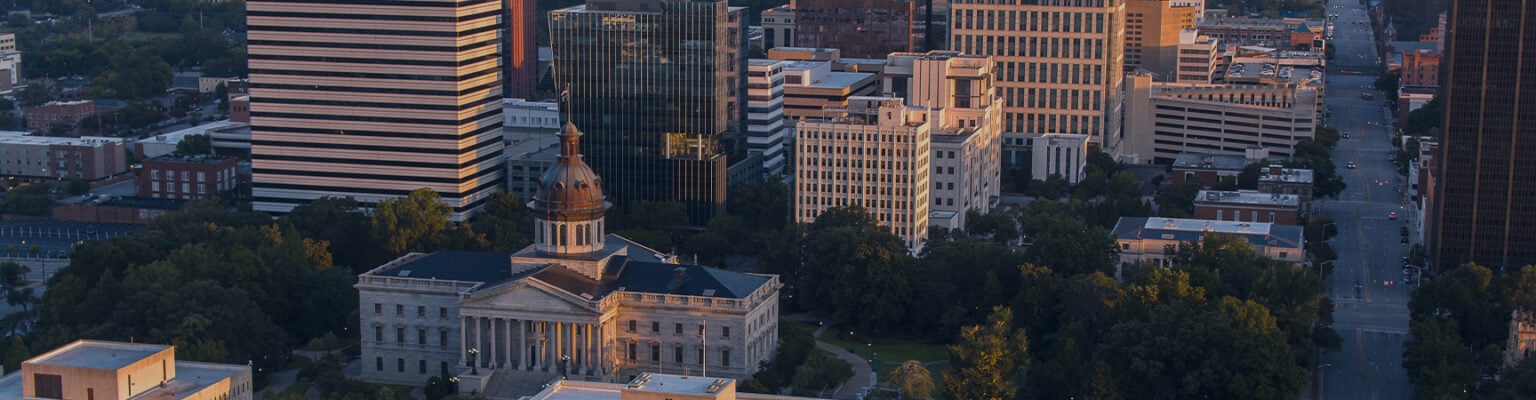
FCI Yazoo City Medium at a glance
FCI Yazoo City Medium is a medium-security federal prison for men at the Federal Correctional Complex in Yazoo County, Mississippi, holding 1,467 people as of September 2026. The Bureau of Prisons called it USP Yazoo City until April 4, 2024; before then, the name “FCI Yazoo City Medium” belonged to the prison next door, now FCI Yazoo City Low II.
| Official name | FCI Yazoo City Medium (USP Yazoo City until 2024) |
|---|---|
| BOP code | YAP · complex YAX |
| Security level | Medium; men |
| Population | 1,467 (as of September 2026) |
| Visiting | Saturday, Sunday and federal holidays, 8:00 a.m.–3:00 p.m. · Friday: Special Housing Unit only · see visiting hours |
| Inmate mail | Inmate Name & Register Number · FCI Yazoo City Medium · Federal Correctional Institution · P.O. Box 5000 · Yazoo City, MS 39194 |
| Send money | Lockbox · Western Union (code city FBOP, DC) · MoneyGram (receive code 7932) |
| Phone | 662-716-1241 · Fax 662-716-1255 |
| Street address | 2225 Haley Barbour Parkway, Yazoo City, MS 39194 · Yazoo County |
| Judicial district | Southern District of Mississippi |
| BOP region | Southeast |
| Designated capacity | 1,152 |
| Housing | 6 housing units, more than either neighboring institution |
| Special Housing Unit | Yes · visits on Fridays |
| RDAP | No · runs at FCI Yazoo City Low |
| UNICOR | See education, vocational training and UNICOR |
| Camp | None · the complex’s satellite camp belongs to FCI Yazoo City Low |
On this page
It shares its street address, 2225 Haley Barbour Parkway, with FCI Yazoo City Low and FCI Yazoo City Low II, and it is one of the federal prisons in Mississippi in the Bureau’s Southeast Region. Most of the internet still calls it USP Yazoo City. Before any trip, check whether visiting is suspended.

USP Yazoo City is now FCI Yazoo City Medium
USP Yazoo City became FCI Yazoo City Medium on April 4, 2024, when the Bureau renamed it, and at the same moment moved the name “FCI Yazoo City Medium” off the prison next door. The second half is the one that catches people out.
The announcement is the Bureau’s news item “Name Changes Approved for Seven FBOP Facilities,” April 4, 2024. The Bureau’s Population Management and Capacity Planning Committee recommended the changes that January under Program Statement 1001.14, Naming Bureau Property; the executive team approved them in February and Congress was notified in March. Six penitentiaries became correctional institutions — Atlanta, Leavenworth, Lewisburg, Lompoc, Marion and Yazoo City — and the Bureau explained why in one sentence: “The missions and security levels for these facilities had been previously changed but for a variety of reasons the names of the facilities were not.” The prison did not become less secure in April 2024; its paperwork caught up with a change that had already happened.
You can watch the swap in the Bureau’s own phone directory. Attachment F to the complex visiting supplement, dated February 18, 2019, lists three institution numbers: 662-751-4800 for the Low, 662-751-1020 for the Medium, and 662-716-1241 for the USP. Today the roster gives 662-716-1241 to FCI Yazoo City Medium. The number that reached the penitentiary in 2019 reaches “the Medium” now, because they are the same prison, and the institution that answered to “Medium” then is today Low II.
So a court record, news report, transfer order or directory entry written before April 2024 that says “FCI Yazoo City Medium” describes a different prison from the one on this page. In anything dated before spring 2024, the institution called the Medium is the one the Bureau now calls Low II.
The Bureau carries a standing notice on this facility’s page acknowledging that “the physical change to the facade of the structure may reflect the old name until a formal historical survey by the state in which it is located has been conducted and approved.” The word PENITENTIARY may still be cut into the building.
The three prisons at FCC Yazoo City
Four separately counted populations sit on roughly 1,000 acres of Yazoo County behind one address, and getting the wrong one has consequences for mail, for visiting and for what programs a person can reach. These are the roster figures as of September 2026.
| Institution | Roster security level | Population | Phone |
|---|---|---|---|
| FCI Yazoo City Low (YAZ) | Low | 1,490 at the institution, 188 at its satellite camp | 662-751-4800 |
| FCI Yazoo City Low II (YAM) | Recorded as Medium on the roster despite the name | 1,457 | 662-716-1020 |
| FCI Yazoo City Medium (YAP) | Medium — this page | 1,467 | 662-716-1241 |
That is 4,602 people in total as of September 2026, and the camp belongs to the Low. The middle row is the Bureau’s record, and the security-level section below deals with it.
Other prisons that share this town
Two other correctional facilities are commonly confused with this one, and neither is federal.
The Yazoo Regional Correctional Facility is a state prison at 154 Roosevelt Hudson Drive, Yazoo City, Mississippi 39194 — the same city and the same ZIP code as the federal complex. It is one of fifteen regional facilities the Mississippi Department of Corrections runs with county governments; as MDOC’s own page explains, they “operate under the authority of their respective county sheriff’s departments through agreements with MDOC.” Its number is 662-751-8484. If you have a Mississippi state inmate number rather than an eight-digit federal register number, that is where to call.
The phrase “Mississippi penitentiary” belongs to neither. The Mississippi State Penitentiary is at Parchman, in Sunflower County, about eighty miles north, and is run by the state. It is not an alternate name for this institution.
Is visiting suspended at FCI Yazoo City Medium?
Yes: on September 17, 2026, the Bureau’s facility page for FCI Yazoo City Medium reported that visiting “has been suspended until further notice,” and the Bureau has published no date for its resumption. Do not travel to Yazoo City for a social visit at this institution without telephoning first.
The facility page carries the sentence twice, once across the masthead and once inside the visiting panel: “Visiting at the Federal Correctional Institution (FCI) has been suspended until further notice.” It does not say why, for how long, or whether legal visits are affected.
The same day, the Bureau’s page for FCI Yazoo City Low II carried the same notice, and the page for FCI Yazoo City Low, on the same grounds, carried none. A family with people at two of these three institutions can visit one of them and not the other, so check each before you reach the gate.
Attorney visiting is governed separately, by the Bureau’s legal activities rules, Program Statement 1315.08, Inmate Legal Activities (the document the Bureau links from this facility’s own resources panel), which allows legal access to be restricted during a significant or disruptive event only when safety requires it, requires alternative legal-access arrangements once such an event lasts more than 24 hours, and requires notice to defense counsel. Counsel who need access during the suspension should contact the institution directly at 662-716-1241 rather than relying on the published visiting supplement, which predates the suspension by seven years.
What is the security level at FCI Yazoo City Medium?
FCI Yazoo City Medium is a medium-security institution: the Bureau’s roster records it as medium security, facility type FCI, and its facility page describes it in one line as “A medium security federal correctional institution.” It is not a penitentiary and has not been one since before the 2024 rename.
Medium-security federal institutions have double perimeter fences with electronic detection, mostly cell housing rather than open dormitories, higher officer-to-inmate ratios than low-security institutions, and tighter control of movement.
Designation is not a judge’s decision. The Designation and Sentence Computation Center applies the Bureau’s security designation rules, Program Statement 5100.08, which score offense severity, criminal history, violence, escape history, detainers, age, education and substance abuse into a points total and then adjust it: a Public Safety Factor sets a floor below which security cannot drop whatever the score, and a Management Variable lets the Bureau place someone outside the score for a stated operational reason.
So the useful question is rarely “how many points does he have?” but “what is on the designation that the points do not explain?” Both the Public Safety Factor and the Management Variable are recorded, and both can be challenged in writing.
A warning about the prison next door
The institution the Bureau calls FCI Yazoo City Low II is recorded on the same roster as a medium-security facility. As of September 2026, it is the only one of the Bureau’s 118 institutions whose name carries an explicit low, medium or high and whose recorded security level disagrees with that word.
If a family is told their relative is going to something called “Low II,” they will reasonably expect low-security conditions, low-security programming and a low-security custody score. The Bureau’s record says medium. Anyone whose designation names Low II should confirm the recorded security level with the Designation and Sentence Computation Center in writing before making plans that depend on it, because the name and the record do not agree and the record is what governs.
Who are the notable inmates at FCI Yazoo City Medium?
One: Mohammed Modin Hasan is the only person on the most widely copied public list of “notable inmates at FCC Yazoo City” whom the Inmate Locator places at this institution as of September 2026. The list names seventeen people.
Hasan, register number 75673-083, age 43, is at FCI Yazoo City Medium with a projected release date recorded as LIFE. A jury in the Eastern District of Virginia convicted Hasan and four co-defendants on November 24, 2010, in connection with the April 2010 attack on the U.S. Navy frigate USS Nicholas, which the men had mistaken for a merchant vessel; the FBI’s Norfolk field office announced the verdict that day. He was sentenced on March 14, 2011, to life imprisonment plus a consecutive eighty years, and the Fourth Circuit affirmed the convictions on May 23, 2012, as the U.S. Attorney’s Office announced at the time.
The other sixteen are somewhere else or no longer in federal custody. A stale list sends families to the wrong visiting room and lawyers to the wrong warden. The Locator records them this way:
| Person | Where the Bureau records them now | Detail |
|---|---|---|
| Manssor Arbabsiar (65807-054) | FCI Florence, Colorado — not Yazoo City | Projected release March 5, 2032 |
| Dino Bouterse (92082-054) | FCI Yazoo City Low II — the neighboring institution, not this one | Projected release September 11, 2027 |
| Michael Finton (17031-026) | FCI Loretto, Pennsylvania | Projected release January 11, 2034 |
| Philip Giordano (14302-014) | FCI Englewood, Colorado | Projected release July 29, 2032 |
| Luther Hackman (09425-510) | FCI Forrest City Low, Arkansas | Projected release October 23, 2036 |
| Shi Lei (88784-022) | FCI Coleman Low, Florida | Projected release July 20, 2033 |
| Scott Tucker (06133-045) | FCI Yazoo City Low — the low-security institution on the same grounds, not this one | Projected release March 5, 2031 |
| Darnell Catlett (16529-016) | Released | Released January 21, 2025, from FTC Oklahoma City |
| Marc Emery (40252-086) | Released | Released July 10, 2014; last recorded at the institution now called Low II |
| Eric Dewayne Boyd (31710-074) | Released | Released June 9, 2022; last recorded at the institution now called Low II |
| Lawrence Lawton, Michael Lohman, David Darnell Brown, Karey Woolsey, Mark Ingram Sr. and Steven Nigg | Released | Released in 2007, 2015, 2017, 2018, 2021 and 2024 respectively |
Two entries show how the confusion arises. Dino Bouterse is at Low II, two gates away, which is exactly the confusion the 2024 name swap created. And Marc Emery and Eric Dewayne Boyd were both last recorded at Low II at a time when that institution was itself named FCI Yazoo City Medium — which is how their names came to be attached to this prison in the first place. Neither man was ever held here.
An inmate’s recorded location can change without notice and without explanation. Check the Locator yourself before you drive.
How do I find someone at FCI Yazoo City Medium?
To find someone at FCI Yazoo City Medium, use the Bureau’s Inmate Locator. It is free, needs no account, and is the only authoritative source for where a federal prisoner is today.
You can search by eight-digit register number, which is exact, or by name with optional age, race and sex, which is not. Register numbers do not change when a person is transferred or re-sentenced, and one is required on mail, on money orders and on visiting applications.
One trap matters at this complex. The Locator shows each prison’s short name and type, and here the three differ by a word or two: “Yazoo City Medium FCI” is this institution, “Yazoo City Low II FCI” is its neighbor, and “Yazoo City Low FCI” is the low-security prison on the same grounds. Read the whole name before you address an envelope.
How do I write to someone at FCI Yazoo City Medium?
Write to someone at FCI Yazoo City Medium using this block exactly, as the Bureau’s facility page gives it. The register number is not optional; mail without it is returned.
- INMATE NAME & REGISTER NUMBER
- FCI Yazoo City Medium
- FEDERAL CORRECTIONAL INSTITUTION
- P.O. BOX 5000
- YAZOO CITY, MS 39194
All three institutions at FCC Yazoo City receive inmate mail at the same P.O. Box 5000 in Yazoo City 39194, so the institution name and the register number are the only things on the envelope that route a letter to the right prison. An envelope addressed to “FCI Yazoo City Medium” before April 2024 would have gone to a different building than the same words send it to today.
Write the institution name as the Bureau writes it now. “USP Yazoo City” on an envelope is an address for a prison that no longer exists under that name, and it invites exactly the sorting error the shared box makes possible.
This institution has no camp and no Federal Satellite Low, although the Bureau’s facility page shows empty “For inmates at the Camp” and “For inmates at the FSL” blocks left over from a shared template; ignore them. A camp address for Yazoo City belongs to FCI Yazoo City Low.
Two other addresses here are frequently misused. Staff correspondence and parcels go to P.O. Box 5666, Yazoo City, MS 39194; freight and non-USPS parcels go to the street address marked ATTN: WAREHOUSE. Sending an inmate’s property to either will delay it.
General mail and special mail
Under the Bureau’s correspondence rules, general correspondence is opened, inspected for contraband and read. Special mail — from attorneys, courts, members of Congress and certain others — is opened only in the inmate’s presence and inspected rather than read, but only if the envelope carries the sender’s name, an indication of status and the words “Special Mail — Open only in the presence of the inmate.” An attorney’s letter without that marking is read like any other, the most common avoidable mistake in prison correspondence. Our guide to writing to someone in federal prison covers rejected mail.
How do I send money to someone at FCI Yazoo City Medium?
Send money for someone at FCI Yazoo City Medium through the Bureau’s national lockbox or a wire service, never to the prison’s address. The Bureau’s facility page says so in terms: “Do NOT send money to an inmate using this facility’s address.”
By mail, to the national lockbox
Money orders, U.S. government checks, certified or cashier’s checks and bank drafts go to the Bureau’s centralized lockbox in Iowa, as its money instructions explain. Cash and personal checks are not accepted.
- Federal Bureau of Prisons
- [Inmate’s full committed name]
- [Inmate’s eight-digit register number]
- Post Office Box 474701
- Des Moines, Iowa 50947-0001
The committed name and register number must be printed legibly on the instrument itself and on the envelope; a nickname instead of the committed name is the usual reason a deposit is returned. Our guide to sending money to a federal prisoner covers each method in detail.
Electronically, through MoneyGram or Western Union
For MoneyGram’s ExpressPayment program the account number is the eight-digit register number with no spaces or dashes followed immediately by the last name, in the form 12345678DOE; the company is Federal Bureau of Prisons, the city and state Washington, DC, the beneficiary the full committed name, and the receive code is always 7932.
For Western Union’s Quick Collect program the account number takes the same form, the attention line is the full committed name, and the code city is always FBOP, DC.
Whatever arrives, the Bureau caps what can be spent at $460 a month, with a handful of exclusions, so a large deposit buys a balance drawn down at $460 a month; it may also be visible to the Inmate Financial Responsibility Program when restitution payments are set.
What are the visiting hours at FCI Yazoo City Medium?
When visiting runs, FCI Yazoo City Medium receives visitors on Saturdays, Sundays and federal holidays from 8:00 a.m. to 3:00 p.m., with Friday reserved for the Special Housing Unit; on September 17, 2026, the Bureau reported visiting here suspended until further notice. The published schedule also contains a trap that can cost a family a wasted journey.
The governing document is Complex Supplement YAX 5267.09A, Visiting Regulations, dated February 18, 2019, which covers all of FCC Yazoo City under the Bureau’s visiting regulations.
| Session | Who it is for, in the supplement’s own terms (“USP” is this institution; “Medium” is today’s Low II) | Applies here? |
|---|---|---|
| Friday, 1:00 p.m. – 3:00 p.m. | Low and Medium, Special Housing Unit only | No |
| Friday, 5:00 p.m. – 8:30 p.m. | Low and Medium, general population | No |
| Friday, 8:00 a.m. – 3:00 p.m. | USP Special Housing Unit only | Yes, SHU only |
| Saturday, 8:00 a.m. – 3:00 p.m. | Low, Medium and USP | Yes |
| Sunday, 8:00 a.m. – 3:00 p.m. | Low, Medium and USP | Yes |
| Federal holidays, 8:00 a.m. – 3:00 p.m. | Low, Medium and USP | Yes |
| Thursday, 1:00 p.m. – 3:00 p.m. | Holdovers not in a facility commensurate with their security and program needs | Yes |
The Friday evening session, 5:00 p.m. to 8:30 p.m., belongs to the Low and to Low II and has never applied to this institution; Friday here is reserved for the Special Housing Unit. A family that reads “Friday evening visiting at Yazoo City” somewhere and drives after work will arrive at a closed visiting room even when visiting is running normally. Weekend visits are also rationed: five points a calendar month, one deducted on each weekend-day entry to the visiting room, none charged for federal holidays, and nothing carried over.
One caution about the document itself: its Attachment F prints a schedule that does not match its own section 4, omitting the Friday evening session entirely and giving the complex camp different hours. Both are in the same 2019 supplement, and neither says which controls; call before you travel.
Who can visit, and how many
An inmate’s visiting list is capped at twenty-five people aged sixteen and over. He requests it from his correctional counselor, ordinarily within two weeks of arrival, and approval or denial takes about thirty days; someone without an approved list may add only immediate family.
The counselor gives the inmate a Visitor Information Form (BP-629) and a notice of the regulations, and it is his job to get those to each proposed visitor, immediate family included. The completed form is mailed back to the counselor; forms handed in by the inmate are not accepted. A visitor with a felony conviction can be approved or refused only by the Warden or a designee. Changes are permitted once every ninety days, so a careless addition locks out a different one for three months.
A visit is capped at five people in any combination, which the supplement expresses as four adults and four children; children eight and under may sit on a parent’s lap. A minister of record is added by written request to the Chaplain, is limited to one at a time, and counts against neither the twenty-five-person list nor the social-visit total. If the room becomes overcrowded, visits end in a set order: volunteers first, then people who visit twice a week or more and live within fifty miles, then everyone else.
What to wear, what to bring, and what happens at the lobby
The dress code is Attachment G of the 2019 supplement, and it is stricter than most. Skirts and dresses must fall more than two inches below the knee and a slit may not rise more than two inches above it; sleeveless garments must be covered by a jacket for the whole visit. Prohibited outright: see-through or skin-tight clothing including spandex and leggings, low-cut tops, wraparound skirts, T-shirts, sweat suits, camouflage, shorts for anyone sixteen or over, caps other than for infants, belly shirts, hospital scrubs, sagging pants, tube tops, tank tops, open-back shirts, non-religious headgear, and clothing suggesting gang affiliation.
Two clauses catch first-time visitors. Shoes must have a back or a strap around the back, so flip-flops and slides will turn you away at the lobby. And khaki clothing, or anything similar to what the inmates wear, is prohibited.
What may come in: two see-through baby bottles, one of which may be a sipper cup; four diapers; one set of baby clothes; life-maintenance medication, left with the visiting room officer; one clear plastic purse or bag no larger than five inches by eight; and vending machine money not exceeding $30.00 in denominations of $5.00 or smaller. Everything else goes in the car or a lobby locker: wallets, credit cards, keys, food, drink, cosmetics, gum, and every electronic device including, specifically, wrist watches.
Adults need a valid driver’s license with photograph, a valid passport with photograph, or federal or state photo identification. Each visitor completes form BP-S224, which records consent to search under 28 C.F.R. part 511 and the Bureau’s rules on searching visitors, asks for your vehicle’s make and license plate, and runs through a yes-or-no list covering tobacco, weapons, recording equipment, telephones, electronic devices, narcotics, cameras, food, alcohol and prescription drugs. It warns that a false statement carries a fine of up to $250,000 or five years’ imprisonment, or both. A Spanish template is published alongside it.
Once you leave the visiting room you may not come back the same day, and the area and its restrooms may be monitored. The operations lieutenant or institution duty officer may end a visit for improper conduct or dress.
Attorneys need a driver’s license and a valid state bar card; paralegals also need documentation that they represent the attorney of record and an NCIC check. A tape recorder requires the Warden’s prior written approval, and a cell phone is not admitted at all. The supplement distinguishes this prison physically from its neighbors in one place: where a non-contact visit is ordered, the Low and Low II use the Inmate Systems Department, while here it happens in observation cells inside the general population visiting room.
Getting there
The drive from Jackson is straightforward. These directions are the Bureau’s own, from the information sheet attached to the visiting supplement.
From Jackson, take Highway 49 north to Yazoo City, approximately 37 miles north of Interstate 220. Turn left at the first traffic light in Yazoo City onto North US 49 West, which is Broadway Street. Follow North US-49 West for 2.6 miles. Exit right onto MS-3 North and continue 1.7 miles. Turn left into the institution entrance. The nearest passenger rail is the Amtrak stop at 222 W. Broadway in Yazoo City, and the Bureau’s sheet lists five local hotels, though its telephone numbers date from 2019.
The information sheet prints the complex’s address as “Yazoo City, Mississippi 39056.” The Postal Service gives 39056 to Clinton, Mississippi, not Yazoo City, and every other Bureau record gives 39194. Use 39194.
How do phone calls and email work at FCI Yazoo City Medium?
Calls from FCI Yazoo City Medium are outbound only, monitored, and paid for by the inmate or accepted collect. You cannot call in; you can answer, and make sure the number you want called is on his approved list.
The complex’s admission handbook (2011) sets the mechanics: calls run fifteen minutes, a tone warns at fourteen, the line disconnects automatically, and a thirty-minute lockout runs before the next call. The monthly allowance it records is 300 minutes, collect or direct or any combination, with nothing carried over. That figure is out of date. The Bureau’s telephone regulations, Program Statement 5264.09, issued September 3, 2026, rescinded the 2008 policy the handbook was tracking and set 510 minutes per calendar month, 300 of them free to anyone eligible for First Step Act telephone incentives; anyone who uses up those 300, eligible or not, may buy the other 210. A single call should generally not exceed 15 minutes, and at least 30 minutes must pass between completed calls. The program statement is national policy and by many years the later document, so 510 governs; still have the unit team confirm the current month in writing.
Every call except a properly arranged unmonitored legal call is recorded and may be listened to; a notice to that effect is posted at each telephone. Say nothing on an institutional line you would not want a prosecutor to hear, and do not accept three-way calls or call forwarding: both are prohibited, both are detected, and both cost phone privileges. Our guide to federal inmate phone calls covers rates and blocked numbers.
Unmonitored attorney calls must be arranged in advance through the unit team or counselor. They are not the default, and an attorney who simply accepts a collect call is on a recorded line.
Email runs on TRULINCS, the Bureau’s closed, text-only messaging system, which families reach through CorrLinks. Every message is screened, and there is a per-minute charge from the inmate’s trust account, so a long message costs him money to read as well as to write. A family member who has not accepted the TRULINCS invitation cannot be written to, and the invitation arrives as an ordinary-looking email that people routinely delete as spam.
What can people buy at the FCI Yazoo City Medium commissary?
People at FCI Yazoo City Medium can spend $460 a month at the commissary, a limit that rose to that figure recently enough that much of what you will read about federal commissary is out of date.
The controlling document is the Bureau’s trust fund rules, Program Statement 4500.13, the Trust Fund/Deposit Fund Manual, issued May 7, 2026. Its summary of changes records the move in one line: “Increases spending limit from $360 to $460 per month.” The allowance rises by a further $50 during the November and December holiday period, for no more than one validation period, and revalidates automatically once a month unless the institution uses weekly or bi-weekly validation.
Listings that give $360 are out of date. The Bureau’s public guidance on sending money still links the previous edition of the manual, 4500.12, which is how the old number keeps circulating.
Some purchases sit outside the limit: postage stamps, nicotine replacement patches and lozenges, over-the-counter medications, copy cards and copy paper, footwear, mattresses and a secured media device. Because copy cards and paper are excluded, photocopying for someone preparing his own post-conviction filings does not come out of the $460. Our page on the federal prison commissary covers the national rules.
The Bureau’s page for this institution posts no commissary list; its resources panel offers only Program Statement 1315.08 and the PREA audit. The A&O handbook and the PREA audit for this complex are published under the yax_ prefix at the neighboring institution’s path. If a current list exists, ask the unit team or the trust fund supervisor for a copy, or ask the person inside to send one out.
What programs are available at FCI Yazoo City Medium?
FCI Yazoo City Medium’s approved programs are listed in the Bureau’s First Step Act Approved Programs Guide (Reentry Services Division, August 2026). Approved does not mean delivered: a program can be approved and still have a two-year waiting list or no instructor. The guide also states availability in two places that do not always agree; where they disagree about this prison, both are given below.
The guide’s programs-by-institution table marks this institution for twenty evidence-based recidivism reduction programs, among them Anger Management, Basic Cognitive Skills, the Bureau Literacy Program, Criminal Thinking, Dialectical Behavior Therapy, Emotional Self-Regulation, English as a Second Language, Family Programming for Men, Federal Prison Industries, the National Parenting Program, Non-Residential Drug Treatment, four strands of occupational education, Seeking Safety, Threshold and Wellness Inside and Out.
It is marked for thirty-three productive activities as well, and the list’s shape says something about who is held here. Alongside Alcoholics Anonymous, Narcotics Anonymous, Drug Education and Victim Impact sit A Matter of Balance, Healthy Steps for Older Adults, Getting to Know Your Aging Body, Brain Health As You Age, Arthritis Foundation Walk With Ease, Managing Your Diabetes and Living a Healthy Life with Chronic Conditions. That is a geriatric and chronic-disease catalog. The PREA audit records an age range here of 20 to 74.
Drug treatment, and where RDAP actually is
The Residential Drug Abuse Program does not run at FCI Yazoo City Medium. It runs at FCI Yazoo City Low, on the same grounds.
Both halves of the August 2026 guide agree on that. Its RDAP locations list, updated in June 2026 and totaling 57 programs at 50 locations, names “FCI Yazoo City – L (MS)”; the programs-by-institution table marks the residential drug treatment row for the Low and leaves it blank here.
This is the most consequential program fact on the page, because RDAP completion can carry up to a year off a sentence under 18 U.S.C. § 3621(e) and the Bureau’s early-release procedures for eligible people, and because the answer here is not “no” but “not at this address.” An RDAP-eligible man designated to the Medium is asking for a transfer of a few hundred yards, not to another state. That request goes through the unit team and the drug abuse program coordinator, and it is refused far more often when it is made late. What does run here is non-residential drug treatment and the drug education course, neither of which carries the § 3621(e) reduction.
Education, vocational training and UNICOR
The guide marks this institution for the Bureau Literacy Program, which is the GED track, for English as a Second Language, and for four strands of occupational education: job certification, technical certificate or degree, vocational apprenticeship and vocational market training. Federal law requires the literacy programming; the rest depends on instructors and on money.
The Bureau’s own records disagree on prison industries. The guide’s programs-by-institution table marks this institution for Federal Prison Industries, but the same guide’s description page for Federal Prison Industries, which lists the 55 institutions where the corporation operates, does not name it; it names FCI Yazoo City Low II and FCI Yazoo City Low. The Bureau’s UNICOR factory-locations list places a Clothing and Textiles operation at “Yazoo City, MS,” but that list names cities rather than institutions, and three federal prisons share this city. Ask the unit team in writing before anyone counts on a UNICOR job here. UNICOR is among the better-paid assignments in a federal prison at roughly 23 cents to $1.15 an hour, against a national waiting list the Bureau puts at about 25,000, and a diploma or GED is required above the lowest pay grade.
A program the guide contradicts itself about
The August 2026 guide says two different things about whether the Life Connections Program runs here.
The guide’s programs-by-institution grid marks this institution for Life Connections, a residential faith-based reentry program with a community mentor component. The program’s own narrative page, where the Reentry Services Division writes out in prose which institutions offer it, names five: CRW, MIL, THP, FTD and GRE; this institution is not among them. Ask the unit team in writing whether it is running this quarter and keep the answer: a written refusal is the beginning of an administrative remedy, and a verbal one is nothing.
What is daily life like at FCI Yazoo City Medium?
FCI Yazoo City Medium runs well above its designated capacity, and the Bureau’s own audit says so in numbers.
The February 2026 Prison Rape Elimination Act (PREA) audit records a designated capacity of 1,152 for this institution and counted 1,287 people here on February 24, 2026, the first day of the site visit: about 112 percent of design. The audit’s undated facility-characteristics figure, 1,481, is not that count. The population of 1,467 as of September 2026 is 127 percent of the same designated capacity. The audit answers “Has the facility been over capacity at any point in the past 12 months?” with a plain yes. When the Bureau dedicated the building in June 2014 it described a rated capacity of 960 beds; the audit’s designated figure of 1,152 is what the institution is measured against now, and the population has been above it for at least a year.
The audit records six housing units here, against three at FCI Yazoo City Low, three at Low II and two at the camp — twice as many as either neighbor for roughly the same population, which is the architecture of a building designed as a penitentiary.
Average length of stay is 463.1 days, and 1,401 people were admitted in the twelve months to February 2026. That churn shapes everything from how long a job assignment lasts to whether a program cohort ever finishes.
The only admission and orientation handbook the Bureau publishes for this complex (2011) describes a complex “consisting of a Medium, Low, and Minimum Security facility.” There is no penitentiary in it, because when it was written there was no penitentiary here: ground was broken in October 2009 and the building was not dedicated until June 2014. The handbook the Bureau hands out for this complex does not describe this prison.
It does record the counting rhythm, set Bureau-wide: official counts at 12:01 a.m., 3:00 a.m. and 5:00 a.m., standing counts at 4:00 p.m. and 10:00 p.m., and an additional 10:00 a.m. count on weekends and holidays. No one moves during a count; televisions and radios go off and talking stops, so a telephone call at four in the afternoon will end.
Dress is institutional khaki, shirt tucked in, name tag visible, required off the unit between 7:30 a.m. and 4:00 p.m. Monday through Friday, with property stowed in the locker during those hours. Colors are not permitted, doo-rags are confined to the housing unit, and caps are not worn indoors except religious headgear and Food Service headwear. The handbook records controlled movement released on the hour, seven days a week, at the Low and at the institution it then called the Medium; that passage does not speak to this prison, but controlled movement is the norm at medium security.
The 2019 visiting supplement adds what the handbook cannot: this institution has a Special Housing Unit with its own visiting arrangements, and observation cells inside the general population visiting room for non-contact visits. Those are penitentiary features, in a building that was one.
What do inspectors say about conditions at FCI Yazoo City Medium?
No independent body has inspected general conditions at FCI Yazoo City Medium: in the past year one auditor has been inside, for three days, on a single statutory subject.
The DOJ Office of the Inspector General has not conducted an on-site inspection of this facility. The Inspector General gives its own count in its inspection of USP Canaan, published May 21, 2026: “Since 2023, the OIG has conducted inspections at 14 BOP institutions: 7 individual facility inspections, 6 inspections conducted as part of the OIG’s Concurrent Inspections of BOP Food Service Operations, and the most recent ongoing inspection effort at Federal Correctional Institution (FCI) Berlin in New Hampshire.” Fourteen out of 118, and this is not one of them. Nor is it on the published list of inspections under way.
Of the thirty-seven Inspector General products that name this facility, most name it only in an appendix list of Bureau institutions, and twenty-one are announcements of criminal cases rather than examinations of conditions. The District of Columbia Corrections Information Council has never inspected it either.
The 2026 PREA audit
The PREA audit was conducted by an independent auditor, Lori Fadorick of Corrections Consulting Services LLC, who was on site at FCC Yazoo City from February 24 to 26, 2026, and signed the final report on April 2, 2026. The result: 45 standards met, none not met, none exceeded.
A PREA audit measures compliance with 45 sexual-safety standards over three days. It does not examine medical care, food, use of force, discipline or heat. A clean PREA audit and a violent institution are entirely compatible.
It is nevertheless the best current source of hard numbers about this institution, because it reports capacity, population, housing units, admissions and length of stay separately for each of the four counted populations at the complex; those are the figures used throughout this page. It records, complex-wide, 43 buildings, 724 staff who may have contact with incarcerated people and 63 volunteers — complex figures, not this institution’s. The PREA compliance manager here can be reached at YAP-PREAComplianceMgr-S@bop.gov.
The audit is hard to find: it is hosted under the complex file prefix at the neighboring institution’s web path, and this facility’s page links it as the “USP Yazoo City PREA Report,” a name the Bureau retired on April 4, 2024. The document is one complex-wide audit, not an audit of this institution alone: its cover names the audited facility as Federal Correctional Complex (FCC) Yazoo City, it describes the complex as two low-security institutions, a medium-security institution and a minimum-security camp, and it reports separately for FCI Yazoo City Low, that institution’s camp, FCI Yazoo City Low II and this institution. The Bureau links the same file from all three institutions’ pages under different labels: “FCI Yazoo City Low” on the Low page and again on the Low II page, and “USP Yazoo City” here.
The prosecution record, and what it does not prove
Since 2023 the Inspector General has announced at least seven criminal cases arising at this complex: officers arrested or convicted for bribery in May 2023, April 2025 and October 2025 (the last a captain’s secretary); officers who pleaded guilty or were sentenced for sexual abuse of a prisoner in July and September 2025; a former officer arrested for introducing contraband in March 2026; and a lieutenant indicted in April 2026 for deprivation of rights under color of law and falsification of records.
Deprivation of rights under color of law, coupled with falsification of records, is a use-of-force allegation with an alleged cover-up attached. It is a charge, not a finding, and the lieutenant is entitled to the presumption of innocence.
These are complex-level announcements: the releases say “FCC Yazoo City,” not which of the three institutions. They establish that staff here have been prosecuted for bribery, contraband and sexual abuse with some regularity. They do not establish a rate, and they do not tell you which building.
The 2022 arbitration
In July 2022 an independent arbitrator, Ed W. Bankston, found that management at FCC Yazoo City violated the civil rights of the president of the local union and willfully retaliated against her in breach of the collective bargaining agreement. Cyndee Price, who in 2020 became the first Black woman elected local union president at any federal correctional complex, was awarded overtime for 1,080 hours of union work done on her own time, $300,000 in compensatory damages, and fees and expenses. The arbitrator found she had been denied the full official time her male predecessor and male counterparts elsewhere received.
Representative Bennie Thompson asked the Department of Justice to investigate not only the retaliation but allegations of sexual misconduct, safety violations, inmate health issues and illegal staff searches at FCC Yazoo City, and Senator Cindy Hyde-Smith’s office raised the same allegations with the Inspector General. Four years later, no published inspection has followed.
For a medium-security prison holding 1,467 men as of September 2026, at 127 percent of its designated capacity, that is the whole oversight record: one three-day audit of one statutory subject, a labor arbitration concerning the complex, and a run of individual prosecutions. There has never been an independent inspection of conditions here.
FCI Yazoo City Medium in the news
Recent news about FCI Yazoo City Medium centers on two deaths over the winter of 2025 and 2026, a murder plea at the complex and a former officer’s sentence; older items concern a 2024 death, the 2024 renaming, the 2022 arbitration, the 2022 change in security level, deaths in 2020 and 2021, and the 2014 dedication. Items are dated, with the source for each, newest first; the Inspector General’s staff prosecutions are listed in the oversight section above.
- May 23, 2026 — John S. Andrews, 42, of Illinois pleaded guilty to second-degree murder for beating another incarcerated man to death at FCC Yazoo City; the victim is identified in the indictment only as C.S. The FBI investigated. Sentencing was set for September 4, 2026, with a maximum of any term of years up to life. The reporting does not say which of the complex’s three institutions the killing happened in. (WJTV, May 23, 2026)
- January 11, 2026 — The Bureau reported that Adrian Kordell McCleary, 28, “was found unresponsive at the Federal Correctional Institution (FCI) Yazoo City Medium” at approximately 12:10 a.m. on a Sunday; “responding employees initiated life-saving measures,” and he was “pronounced deceased by EMS personnel.” The FBI was notified. He had been sentenced in the District of Utah to 56 months for being a felon in possession of a firearm and ammunition, and had been here since October 23, 2024. (Bureau release, January 12, 2026; WLBT, January 12, 2026)
- December 7, 2025 — The Bureau reported that Develon Lashonie Cunningham, 49, “was found unresponsive at the Federal Correctional Institution (FCI) Yazoo City Medium” at approximately 8:25 p.m. on a Sunday; “responding employees initiated life-saving measures,” and he was taken to a local hospital and “subsequently pronounced deceased by hospital personnel.” The FBI was notified. He had been sentenced in the Southern District of Mississippi to 188 months for distribution of methamphetamine, and had been here since February 12, 2025. (Bureau release, December 8, 2025; Clarion-Ledger, December 10, 2025)
- September 24, 2025 — Parker M. Triplett, 25, a former correctional officer, was sentenced to 15 months for engaging in sexual acts with a federal prisoner at the Federal Correctional Complex in Yazoo City. Inspector General agents learned of the conduct in January 2025; he was indicted on April 8, pleaded guilty on June 25, and went into custody the same day. (U.S. Attorney’s Office, Southern District of Mississippi)
- September 13, 2024 — Robert Angelo Mangine, 51, was found unresponsive at FCI Yazoo City Medium at about 1:30 p.m. and pronounced dead by emergency medical services after staff began life-saving measures. The FBI was notified. He was serving 420 months from the Northern District of Iowa and had been held there since July 15, 2022. The report postdates the 2024 rename, so it means this institution. (WJTV, September 13, 2024, citing the Bureau)
- April 4, 2024 — The Bureau announced that USP Yazoo City would become FCI Yazoo City Medium, one of seven facilities renamed to match missions and security levels that had already changed. The name FCI Yazoo City Medium moved off the neighboring institution, which became FCI Yazoo City Low II. (BOP News)
- July 25, 2022 — An arbitrator found management at FCC Yazoo City guilty of violating the civil rights of the local union president and of willful retaliation, awarding $300,000 in compensatory damages plus 1,080 hours of overtime, attorney’s fees and expenses. (WJTV)
- April 22, 2022 — The date a Bureau table gives for this institution’s move from high to medium security, two years before its name changed, and for the neighboring FCI’s move from medium to low — the institution now called Low II, which the roster nonetheless records as medium. (Bureau table in DOJ OIG Report 25-070, July 2025, Appendix 2)
- May 12, 2021 — Revardo White, 61, serving 71 months from the Eastern District of Virginia, was pronounced dead by hospital staff. The Bureau said he had been diagnosed with liver cancer, tested positive for COVID-19 without symptoms before a planned transfer to a specialty-care institution, and had been at USP Yazoo City since October 22, 2020. (Bureau release, May 13, 2021)
- May 2020 — The Bureau posted one news release reporting the death of a person held at USP Yazoo City; the Bureau’s releases are listed on its press release page.
- June 5, 2014 — The penitentiary was dedicated. Director Charles E. Samuels, Jr. cut the ribbon with Complex Warden Marcus Martin, Southeast Regional Director Helen Marberry, Yazoo City Mayor Diane Delaware and U.S. District Judge Carlton Reeves. Ground had been broken on October 31, 2009. The Bureau described the complex as four facilities on about 1,000 acres — two correctional institutions, a camp and the new penitentiary — and the penitentiary as rated for 960 beds, with the first prisoners expected that autumn. That penitentiary is the third correctional institution today. (BOP News, June 27, 2014)
Frequently asked questions about FCI Yazoo City Medium
Is FCI Yazoo City Medium the same place as USP Yazoo City?
Yes. The Bureau renamed USP Yazoo City to FCI Yazoo City Medium on April 4, 2024, one of seven facilities renamed to match missions and security levels that had already changed; the code, YAP, did not change. At the same time the name “FCI Yazoo City Medium” moved off the neighboring prison, which became FCI Yazoo City Low II. Any record written before spring 2024 that says “FCI Yazoo City Medium” describes that other institution.
Can I visit someone at FCI Yazoo City Medium right now?
Not as of September 17, 2026, when the Bureau’s facility page reported visiting here suspended until further notice, with no published resumption date. The same notice appeared for FCI Yazoo City Low II; FCI Yazoo City Low, on the same grounds, was not suspended. Telephone 662-716-1241 before making any travel plan.
Why does FCI Yazoo City Low II show as medium security?
Because the Bureau records it that way. As of September 2026, Low II is the only one of the Bureau’s 118 institutions whose name and recorded security level disagree: named “Low II,” classified Medium. The field changed from Low to Medium between mid-August and early September 2026. Anyone designated there should confirm the recorded level with the Designation and Sentence Computation Center in writing.
What is the mailing address for FCI Yazoo City Medium?
Inmate name and register number, then FCI Yazoo City Medium, FEDERAL CORRECTIONAL INSTITUTION, P.O. BOX 5000, YAZOO CITY, MS 39194. All three institutions at this complex share that box, so the institution name and register number are the only things routing your letter to the right prison. Staff mail goes to P.O. Box 5666. Do not send money to either.
What is the commissary spending limit at FCI Yazoo City Medium?
$460 a month, set by Program Statement 4500.13, issued in May 2026, which raised it from $360, with a further $50 during the November and December holiday period, for no more than one validation period. Postage stamps, over-the-counter medications, nicotine replacement products, copy cards and paper, footwear, mattresses and a secured media device fall outside the limit. Sources still quoting $360 are out of date.
Does FCI Yazoo City Medium have RDAP?
No. The Residential Drug Abuse Program runs at FCI Yazoo City Low, on the same grounds. Both the RDAP locations list inside the August 2026 First Step Act Approved Programs Guide, updated in June 2026, and the guide’s programs-by-institution table place it there and not here. Non-residential drug treatment and drug education do run at this institution, but neither carries the sentence reduction available under 18 U.S.C. § 3621(e).
How crowded is FCI Yazoo City Medium?
The PREA audit completed in April 2026 records a designated capacity of 1,152 and counted 1,287 people here on February 24, 2026, the first day of its site visit — about 112 percent of design. The population of 1,467 as of September 2026 is 127 percent. The audit answers “has the facility been over capacity at any point in the past 12 months” with yes.
Has the Inspector General inspected FCI Yazoo City Medium?
No. The DOJ Office of the Inspector General has not conducted an on-site inspection of this facility. In its inspection of USP Canaan published on May 21, 2026, the Inspector General said it had conducted inspections at 14 Bureau institutions since 2023; this is not one, and it is not on the published list of inspections under way. The District of Columbia Corrections Information Council has never inspected it either.
Who is the best-known person held at FCI Yazoo City Medium?
Mohammed Modin Hasan, register number 75673-083, serving life. A jury in the Eastern District of Virginia convicted him on November 24, 2010, over the April 2010 attack on the U.S. Navy frigate USS Nicholas, and he was sentenced in March 2011 to life plus eighty years. Of the seventeen people on the most widely copied public list of people said to be held here, he is the only one the Inmate Locator places at this institution.
What are the visiting hours when visiting resumes?
The 2019 complex supplement gives this institution Saturdays, Sundays and federal holidays from 8:00 a.m. to 3:00 p.m., with Fridays from 8:00 a.m. to 3:00 p.m. reserved for the Special Housing Unit. The Friday evening session from 5:00 p.m. to 8:30 p.m. belongs to the Low and to Low II, not here. Weekend visits are rationed at five points a month, one per weekend day; holidays are not charged.
Can my lawyer visit while social visiting is suspended?
Attorney access is governed separately, under Program Statement 1315.08 on inmate legal activities, which allows legal access to be restricted during a significant or disruptive event only when safety requires it and requires alternative arrangements once such an event lasts more than 24 hours. The suspension notice says nothing about legal visits, so counsel should arrange access directly with the institution at 662-716-1241.
Problems at FCI Yazoo City Medium: where we can help
The problems that recur at this institution are visible in its own record, and they cluster in four places.
The first is the name. This prison changed names in April 2024 and the old name moved next door, and the Bureau’s own paperwork has not caught up: it links this institution’s 2026 audit under the heading “USP Yazoo City,” hands out a complex handbook written before the building existed, and publishes a visiting supplement that calls this place “the USP.” Three prisons share one mailbox. We spend real time correcting designation paperwork, mail routing and court records that name the wrong Yazoo City institution, and reconciling pre-2024 records that say “Medium” and mean somewhere else.
The second is drug-treatment placement. RDAP runs at the Low, not here, and a medium-security designation does not by itself make a man ineligible for it. Getting an RDAP-eligible person from this institution to the program a few hundred yards away is a unit-team and DSCC question about security level, Public Safety Factors and Management Variables, and it is answered far more readily when it is raised early and in writing. We prepare those requests, and we prepare the administrative remedy when one is refused without reasons.
The third is what happens after something goes wrong inside. Two men died at this institution within five weeks over the winter of 2025 and 2026; a lieutenant here was indicted in April 2026 for deprivation of rights under color of law and falsification of records; officers at this complex have been convicted of sexual abuse of prisoners and of taking bribes. Families in that position need the incident documented, the administrative remedy filed within its deadlines under 28 C.F.R. part 542, and the Federal Tort Claims Act administrative claim preserved before the two-year limit runs. Those deadlines are short and they are not forgiving, and there has never been an independent inspection of conditions at this prison to fall back on.
The fourth is the ordinary weight of a crowded medium. At 127 percent of designated capacity, with more than a thousand men cycling through in a year, what goes wrong is program waiting lists, lost property, disciplinary hearings run quickly, unanswered medical requests, and halfway-house dates set later than the First Step Act would allow. None is dramatic. All are fixable on paper, and all have a deadline.
Challenges to the conviction or sentence itself go through a direct appeal or a § 2255 motion; our compassionate release work proceeds under the Bureau’s reduction-in-sentence policy, and our early-release practice covers sentence computation errors.
Elizabeth Franklin-Best, P.C. is a federal criminal defense and post-conviction firm. We work on federal sentencing and appeals, 28 U.S.C. § 2255 motions, compassionate release and sentence reduction, First Step Act time credit and placement disputes, prison disciplinary and classification matters, administrative remedies, and the practical questions families face while somebody is inside. You can reach the firm at (843) 620-1100.
Christopher Zoukis, JD, MBA, the firm’s Managing Director, writes and maintains the federal prison policy material on this site. He is not counsel of record; legal representation is provided by Elizabeth Franklin-Best.
Sources and currency
Bureau of Prisons documents
- FCI Yazoo City Medium, Federal Bureau of Prisons, 2026. The institution’s page: suspension notice, mailing addresses, resources panel and name-change notice.
- Complex Supplement YAX 5267.09A, Visiting Regulations, Federal Bureau of Prisons, FCC Yazoo City, 2019. Schedule, visitor points, list limits, dress code and non-contact visiting for the whole complex.
- FCC Yazoo City Admission and Orientation Handbook, Federal Bureau of Prisons, FCC Yazoo City, 2011. Written before this institution opened.
- Inmate Legal Activities, Program Statement 1315.08, Federal Bureau of Prisons, 2026.
- Trust Fund/Deposit Fund Manual, Program Statement 4500.13, Federal Bureau of Prisons, 2026. Spending limit, holiday increase and exclusions.
- Inmate Security Designation and Custody Classification, Program Statement 5100.08, Federal Bureau of Prisons, 2026.
- Inmate Telephone Regulations, Program Statement 5264.09, Federal Bureau of Prisons, 2026. Replaced Program Statement 5264.08 (2008).
- First Step Act Approved Programs Guide (August 2026), Federal Bureau of Prisons, Reentry Services Division, 2026. Includes the RDAP locations list and the Federal Prison Industries and Life Connections descriptions.
- Community Ties (sending money), Federal Bureau of Prisons, 2026.
- UNICOR (Federal Prison Industries), Federal Bureau of Prisons, 2026. Lists factory locations by city.
- Death at FCI Yazoo City Medium, Federal Bureau of Prisons, FCC Yazoo City, 2026. The January 12, 2026 release on Adrian Kordell McCleary.
- Death at FCI Yazoo City Medium, Federal Bureau of Prisons, FCC Yazoo City, 2025. The December 8, 2025 release on Develon Lashonie Cunningham.
- Name Changes Approved for Seven FBOP Facilities, Federal Bureau of Prisons, 2024. Cites Program Statement 1001.14, Naming Bureau Property.
- Inmate Death at USP Yazoo City, Federal Bureau of Prisons, 2021. The May 13, 2021 release on Revardo White.
- Press Releases, Federal Bureau of Prisons, 2020.
- BOP Dedicates Newest Facility – USP Yazoo City, Federal Bureau of Prisons, 2014. Dedication, groundbreaking and rated capacity.
Audits and inspections
- PREA Audit Report: Federal Correctional Complex (FCC) Yazoo City, Corrections Consulting Services LLC (auditor Lori Fadorick), 2026. Capacity, population, housing units, admissions and length of stay for each institution at the complex.
- Inspection of the Federal Bureau of Prisons’ U.S. Penitentiary Canaan (Report 26-055), U.S. Department of Justice, Office of the Inspector General, 2026.
- Ongoing Work, U.S. Department of Justice, Office of the Inspector General, 2026.
- Inspection Reports, District of Columbia Corrections Information Council, 2026.
- Audit of the Federal Bureau of Prisons’ Oversight of the Use of Restraints (Report 25-070), U.S. Department of Justice, Office of the Inspector General, 2025. Appendix 2 reproduces the Bureau’s table of security-level and name changes.
Court records
- BOP Lieutenant Indicted and Arrested for Deprivation of Rights under Color of Law and Falsification of Records, U.S. Department of Justice, Office of the Inspector General, 2026.
- Former BOP Correctional Officer Arrested for Introduction of Contraband into a Federal Prison, U.S. Department of Justice, Office of the Inspector General, 2026.
- Former BOP Captain’s Secretary Pled Guilty to Bribery of a Government Official, U.S. Department of Justice, Office of the Inspector General, 2025.
- Former Federal Correctional Officer Sentenced to Prison for Sexual Act with a Federal Prisoner, U.S. Attorney’s Office, Southern District of Mississippi, 2025. Parker M. Triplett’s 15-month sentence.
- Former BOP Correctional Officer Sentenced for Sexual Abuse of a Ward, U.S. Department of Justice, Office of the Inspector General, 2025.
- Former Federal Correctional Officer Pleads Guilty to Engaging in a Sexual Act with a Federal Prisoner, U.S. Department of Justice, Office of the Inspector General, 2025.
- Former BOP Correctional Officer Arrested for Sexual Abuse of a Ward and Bribery, U.S. Department of Justice, Office of the Inspector General, 2025.
- Former BOP Correctional Officer Arrested and Pleaded Guilty to Bribery of a Public Official, U.S. Department of Justice, Office of the Inspector General, 2023.
- Fourth Circuit Affirms Convictions of Somali Pirates Who Attacked USS Nicholas, U.S. Attorney’s Office, Eastern District of Virginia, 2012. Mohammed Modin Hasan’s convictions affirmed.
- Five Somalis Sentenced to Life Plus 80 Years in Prison for Piracy Against USS Nicholas, Federal Bureau of Investigation, Norfolk Division, 2011.
- Five Somalis Convicted of Piracy Against USS Nicholas, Federal Bureau of Investigation, Norfolk Division, 2010.
News and other sources
- Inmate Pleads Guilty to Second-Degree Murder at Federal Prison in Mississippi, WJTV, 2026. By Kaitlin Howell.
- Inmate Found Dead at Federal Prison in Yazoo City, WLBT, 2026.
- Federal Inmate in MS Dies After Being Found Unresponsive in Prison, Clarion Ledger, 2025. By Pam Dankins.
- Inmate Dies After Being Found Unresponsive at Federal Prison in Mississippi, WJTV, 2024. By Kaitlin Howell.
- Arbitrator Finds Yazoo County Federal Prison Guilty of Violating Civil Rights, WJTV, 2022. By Biancca Ball.
- Yazoo Regional Correctional Facility, Mississippi Department of Corrections, 2026.
- ZIP Code Lookup, U.S. Postal Service. The source for ZIP code 39056 belonging to Clinton, Mississippi.
- 18 U.S.C. § 3621(e), Imprisonment of a convicted person, U.S. Code (Legal Information Institute).
- 28 C.F.R. Part 511, General Management Policy, Code of Federal Regulations (Legal Information Institute). Includes the rules for searching visitors.
- 28 C.F.R. Part 542, Administrative Remedy, Code of Federal Regulations (Legal Information Institute).
Sources reviewed September 2026.
Reviewed for legal accuracy by Elizabeth Franklin-Best, Esq., Principal Attorney·September 2026