
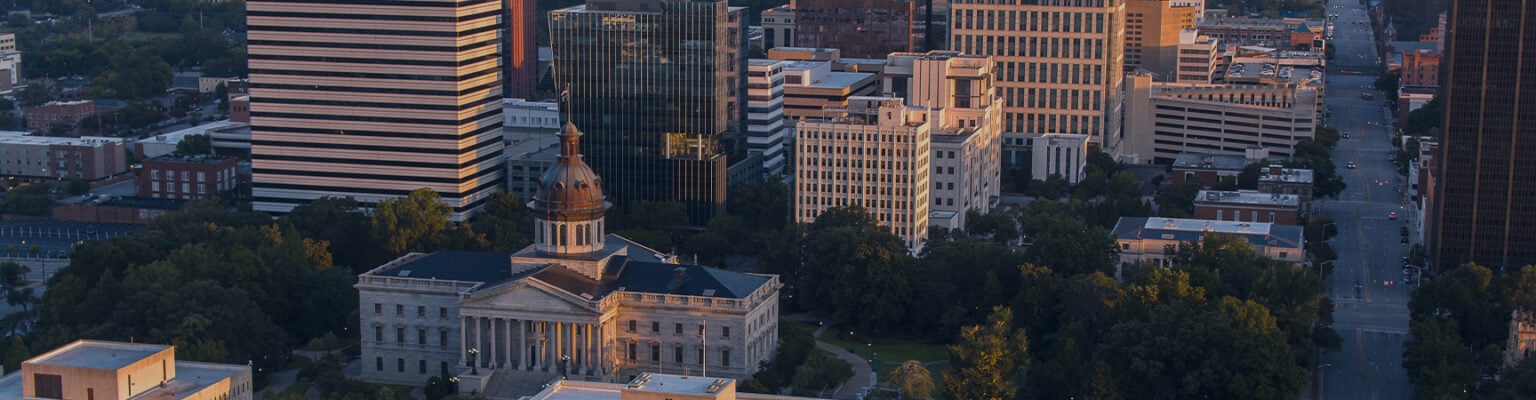
FCI Loretto at a glance
FCI Loretto is a low-security federal prison for men in Loretto, Pennsylvania, holding 781 people as of September 2026. It sits on a hill in Cambria County, about 20 miles west of Altoona and 30 miles east of Johnstown, in the Bureau’s Northeast Region. Its minimum-security satellite camp no longer exists: the Bureau announced the camp’s permanent closure in December 2024.
| Official name | Federal Correctional Institution, Loretto |
|---|---|
| BOP code | LOR |
| Security level | Low; men |
| Population | 781 (as of September 2026) |
| Visiting | Friday, Saturday, Sunday and federal holidays, 8:15 a.m.–2:15 p.m. |
| Inmate mail | Inmate Name & Register Number · FCI Loretto · Federal Correctional Institution · P.O. Box 1000 · Cresson, PA 16630 |
| Send money | Lockbox · Western Union (code city FBOP, DC) · MoneyGram (receive code 7932) |
| Phone | 814-472-4140 · Fax 814-471-1507 |
| Street address | 772 Saint Joseph Street, Loretto, PA 15940 · Cambria County |
| Judicial district | Western District of Pennsylvania |
| BOP region | Northeast |
| Designated capacity | 792 |
| Housing | 13 units: 8 multiple-occupancy cell units, 5 open-bay dormitories; no single-cell units |
| Special Housing Unit | Yes · 24 segregation cells · visits by video |
| RDAP | No · eligibility interviews held here |
| UNICOR | See what the First Step Act guide says |
| Camp | None · closed after the Bureau’s December 2024 announcement |
On this page
The building was a Catholic seminary, built in 1960, before it opened as a prison in 1984, which is why the compound looks like a small college campus and why it has dormitories where most federal prisons have cell blocks. People are designated here from the Western District of Pennsylvania and from anywhere else in the country.

The satellite camp at FCI Loretto is closed
There is no longer a camp at Loretto. On December 6, 2024, the Bureau confirmed that the FCI Loretto satellite camp would permanently close, that its staff would move across to the main institution, and that the people housed there would be transferred to other prisons. About 76 men were at the camp when the announcement came. The Bureau’s roster now records no camp here, and its population report gives a single figure of 781 with no camp line beneath it.
The closure matters for three reasons.
- No one is designated to a Loretto camp anymore. A minimum-security score and no Public Safety Factor used to make this campus a plausible designation for a man from western Pennsylvania who wanted to stay near home. That door is shut; the nearest federal camps for men in this state are now the satellite camps at FCI McKean, FCI Schuylkill, FCI Lewisburg and USP Canaan (see federal prisons in Pennsylvania).
- Every document this prison publishes still describes the camp in the present tense. The visiting supplement sets camp visiting hours; the handbook issues green camp uniforms against khaki at the FCI, routes camp legal mail through the Camp Officer and marks the camp’s out-of-bounds line at the sweat lodge and the pole barn; the commissary form still lists a detergent sold only at the camp. None of it is current, and none of it has been withdrawn.
- The Bureau’s own facility page was still describing the camp long after it shut. As recently as June 2026, the descriptive line on the Bureau’s facility page read “Low security FCI with adjacent minimum security satellite camp,” against roster fields that say otherwise. If you find that sentence on a directory site, that is where it came from.
Do not confuse this closure with the Bureau’s later round. On July 1, 2026, it announced the closure of FCI Beaumont Low, FCI Big Spring and its camp, FCI La Tuna with its Federal Satellite Low and camp, the FMC Lexington camp, FCI Petersburg Low and FCI Taft, and the conversion of the Morgantown and Duluth camps into Federal Satellite Low facilities. Loretto is not in that list. Its camp went eighteen months earlier, in a separate decision.
Does FCI Loretto hold women?
No: FCI Loretto holds men, and it always has. The Bureau’s roster records the institution as male; its April 2025 Prison Rape Elimination Act audit answers the question “Which population(s) does the facility hold?” by ticking Males and leaving Females and Both unticked; and its facility page describes the inmate sex as male offenders.
Loretto’s name does appear in a report about women’s imprisonment. The Justice Department’s Inspector General published a Review of the Federal Bureau of Prisons’ Management of Its Female Inmate Population in September 2018, and FCI Loretto is named in it. The passage is footnote 82, and it points the other way: “BOP operated four low security male institutions in its Northeast Region in 2013 (FCI Allenwood Low, FCI Elkton, FCI Fort Dix, and FCI Loretto), compared to one for women (FCI Danbury).” Loretto appears in a report about women’s imprisonment as one of the men’s prisons the Bureau had a surplus of. That asymmetry is still the reason a woman sentenced in Pennsylvania usually serves her time hundreds of miles from home; the institutions designated for women are a short list, and none is in this state.
What is the security level at FCI Loretto?
FCI Loretto is a low-security prison, and with the camp gone that is the only security level here. The 2025 PREA audit records the custody classifications held as In, Out and Community, across a population running from 20 to 83 years old with an average age of 44. The average stay is recorded as 25 to 60 months, so this is a prison for people serving middling sentences, and 598 men were admitted in the twelve months before the audit.
A low-security designation shows in the architecture. The audit counted 13 housing units — eight multiple-occupancy cell units and five open-bay dormitories — with no single-cell housing anywhere and 24 segregation cells. No one has a room to himself. The 24 seminary buildings were not designed as a prison and the fit shows: the mail room is in the basement of the South Unit below the dormitory, and the gym is across the hall from the barber shop.
Whether a man lands here at all is decided before he arrives, at the Designation and Sentence Computation Center in Grand Prairie, Texas, on a security point score adjusted by any Public Safety Factor and any Management Variable. A Public Safety Factor overrides a low point total, and it is the usual reason someone who expected a low-security designation gets a medium. What the first days look like is set out in our guides to the intake process and to preparing for prison. One local detail before a self-surrender: the handbook warns that a transferring man’s property routinely arrives two to three weeks after he does, and that after three weeks he should ask his counselor where it is.
The audit recorded that the institution was over its designated capacity at some point in the twelve months to April 2025, and held 846 men against a capacity of 792 on the day of the visit. The September 2026 population of 781 is below capacity — which is what happens when a camp closes and the men in it are dispersed rather than absorbed.
Who are the notable inmates at FCI Loretto?
One person on the published lists of notable inmates is still held at FCI Loretto: Michael C. Finton. The others left years ago; the table gives each person’s status in the Bureau’s records.
| Name | Status at Loretto | Case |
|---|---|---|
| Michael C. Finton | Currently held here. Register number 17031-026; projected release January 11, 2034 | Pleaded guilty on May 9, 2011, before U.S. District Judge David R. Herndon to attempted use of a weapon of mass destruction against property owned by the United States, and was sentenced the same day to 336 months under his plea agreement. In September 2009 he parked a truck he believed held about a ton of explosives outside the Paul Findley Federal Building and Courthouse in Springfield, Illinois, armed a timer and tried to detonate it by cell phone. The device was inert; the al-Qaeda contact was an undercover agent |
| Raffaello Follieri | Former — register number 61143-054, released May 25, 2012 | The property financier convicted in the Southern District of New York of fraud and money laundering |
| Anthony L. DiNunzio | Former — register number 97267-012, released February 22, 2018 from residential reentry supervision in Philadelphia, not from this prison | New England organized-crime figure who pleaded guilty to racketeering |
| William F. Boyland Jr. | Former — register number 79751-053, released December 20, 2024 from residential reentry supervision in New York | Former New York State Assemblyman convicted of extortion, bribery and related corruption offenses |
| Robert Phillipos | Former — the Bureau’s locator has no record of him | Convicted of making false statements in the Boston Marathon bombing investigation |
| John G. Rowland | Former — a year and a day at the Loretto camp from 2005; the camp no longer exists | Former Governor of Connecticut, who resigned during a federal corruption investigation |
Some published accounts say Finton “was transferred to USP Big Sandy,” a high-security penitentiary in Kentucky, on June 27, 2021, and cite the same register number, 17031-026. The Bureau’s record for that register number shows “Loretto FCI,” a low-security prison in Pennsylvania about eight hours’ drive from Big Sandy. Check the locator before planning a visit.
How do I find someone at FCI Loretto?
To find someone at FCI Loretto, search the Bureau’s free Inmate Locator by name or, better, by the eight-digit register number. The number never changes and never repeats; names do both. For someone still held the locator shows the facility and the projected release date; for someone already released it shows only “Not in BOP Custody as of” and the date of release, with no facility.
Read the result carefully, because names that look alike are different prisons. The screen shows “Loretto FCI” for this prison; “Lompoc I FCI” and “Lompoc II FCI” are the two institutions at Lompoc in California, and “Lewisburg FCI” (FCI Lewisburg) is two and a half hours east of here. The locator’s record behind that screen can carry a residential reentry office instead of a prison (code CPA for Philadelphia, CNK for New York), which means the person finished his sentence in a halfway house or on home confinement rather than at the institution that comes up in an old news story.
If nothing comes back, the usual explanations are state rather than federal custody, pretrial detention under the U.S. Marshals Service, or a committed name on the judgment that differs from the name the family uses. How that eight-digit number is put together is explained in our guide to federal register numbers.
How do I write to someone at FCI Loretto?
Write to someone at FCI Loretto at P.O. Box 1000, Cresson, PA 16630, not at the Saint Joseph Street address. Cresson is a different town with a different ZIP code, and getting that wrong is the commonest reason a letter to this prison comes back.
| Inmate mail and parcels | Freight and non-postal deliveries |
|---|---|
| Inmate Name & Register Number FCI Loretto Federal Correctional Institution P.O. Box 1000 Cresson, PA 16630 | Staff Name FCI Loretto Federal Correctional Institution ATTN: Warehouse 772 Saint Joseph St Loretto, PA 15940 |
FCI Loretto operates what its handbook calls heightened incoming mail procedures, and they are much stricter than the Bureau’s national correspondence rules. Read them before you buy a card.
- Only white envelopes and white paper are accepted, written in simple pen or pencil. No card stock.
- No labels, glitter, stickers, lipstick, crayon or stains of unknown origin, and nothing sprayed with perfume or cologne.
- Greeting cards and post cards are rejected. A photocopy of a card passes only if it meets every restriction above — which a printed card front will not.
- Postage stamps are removed from every incoming envelope before it is delivered.
- Some or all general correspondence may be photocopied, and only the photocopy given to the person it is addressed to. The original letter, and the handwriting on it, does not reach him.
- Only one soft-cover publication a day may be mailed in from any source other than a publisher, book club or bookstore.
The exceptions are narrow: valid legal mail meeting all three of the Bureau’s criteria, mail from a court or a government office, and correspondence from a genuine commercial source. A birthday card is none of those. Send a white sheet of paper in a white envelope, in pen, with the register number on the first line — mail without one is returned.
The limits on what a person may keep do not agree with each other, and that matters before you mail a parcel. The personal property section allows 25 letters, five books, 25 loose photographs, five magazines no older than 30 days and five newspapers no older than 10 days; the incoming publications section, eight pages later in the same handbook, allows five magazines no older than three months and ten newspapers; and the heightened-mail rules give magazines 90 days. Three figures for one thing. Ask the unit team which the mail room is applying, because anything over the limit is mailed home at the person’s expense or thrown away.
Privileged mail is handled differently and the marking on the envelope decides everything: it must carry the sender’s identification and the words “Special Mail — Open Only in the Presence of the Inmate” on the outside, and is then date-stamped and the addressee called to the mail room to open it. Without the marking it is ordinary mail — opened, read and possibly photocopied. The Bureau puts the burden of telling the lawyer on the client, and this handbook goes further than most by printing a ready-made form letter for that purpose, Attachment C, with copies held by counselors and the mail room. The privilege itself is set out at attorney-client communication in the Bureau of Prisons, and the national rejection rules at writing to someone in federal prison.
Outgoing legal mail has a window of thirty minutes a day. It is hand-carried to mail room staff between 7:00 and 7:30 a.m., Monday to Friday, by the man whose name is in the return address block and no one else — anyone delivering another’s legal mail receives an incident report — with his commissary card as identification. Anything of 16 ounces or more is processed as a package and packed in front of the officer. Incoming general correspondence is handed out after the 4:15 p.m. count on weekdays only. Never put money in a letter; enclosed funds are rejected and returned.
How do I send money to someone at FCI Loretto?
Money for someone at FCI Loretto goes to the Bureau’s national lockbox in Des Moines, Iowa, or through Western Union or MoneyGram, never to the prison. The handbook says it flatly: “The institution mail room at FCI Loretto does not accept funds received from outside the institution.” All three routes need the committed name and the eight-digit register number.
| Route | Where it goes | Notes |
|---|---|---|
| U.S. postal money order | Federal Bureau of Prisons Inmate Name Inmate Register Number Post Office Box 474701 Des Moines, Iowa 50947-0001 | The handbook names the postal money order as the route for outside deposits. A money order without the name and register number is returned to the sender |
| Western Union Quick Collect | Code city FBOP, DC | Named in the handbook as the alternative to the lockbox. Fastest of the three |
| MoneyGram | Receive code 7932, company name Federal Bureau of Prisons, Washington, DC | The national route; not named in this institution’s handbook, which predates its addition |
Two limits decide what the money is worth. The first is the commissary ceiling, $460 a month, described below. The second is less well known: a man in refuse status under the Financial Responsibility Program — who has declined to make payments toward a court-ordered fine, restitution or special assessment — may spend no more than $25.00 a month, excluding stamps, telephone credits and certain religious items. Sending $500 to a man in refuse status buys him $25 of goods a month and nothing else. That status is set at a program review and it is reversible. See sending money to a federal prisoner.
What are the visiting hours at FCI Loretto?
Visiting at FCI Loretto runs Friday, Saturday, Sunday and federal holidays, 8:15 a.m. to 2:15 p.m. Those hours come from the institution’s own visiting supplement, LOR 5267.09E, dated October 27, 2020, and the August 2023 Admission and Orientation handbook states the same hours independently. The Friday is unusual, since most federal prisons of this size visit only on weekends, and it helps a visitor who can take a weekday off.
The deadline that matters is not the closing time. Visitors must be processed one hour before visiting ends, so the front entrance stops taking new visitors at 1:15 p.m.; a visitor who arrives at 1:30 p.m. is turned away while the room is still open. A second rule applies on weekends and holidays only: the institution takes a stand-up count at 10:00 a.m., and although visitors keep being cleared through the metal detector, escorting into the visiting room stops at 9:15 a.m., movement into and out of the institution ceases, and no one is called for a visit or allowed to leave until the count clears.
Special Housing Unit visits run on Friday, Saturday or Sunday during regular hours, but not in person. The person in the unit uses video equipment inside the Special Housing Unit and the visitor uses video equipment in the visiting room. The request goes to the Captain no later than two weeks before the date, and the visit is capped at two hours. People in holdover status get the same arrangement, immediate family only.
The Bureau’s own facility data carries no visiting schedule for FCI Loretto, or for any other Bureau institution, which is why directory sites copy hours from documents of uncertain date. The supplement behind the hours above is nearly six years old and predates the camp closure; confirm the day and the hours on 814-472-4140 before you drive.
Who may visit, and how many at a time
- Four adult visitors at any one time, per man. Children under 16 are not counted against the four. The supplement gives the reason: limited space in the visiting area.
- The list holds immediate family identified in the presentence report plus up to ten friends and associates. A friend ordinarily has to have known him before prison; the exception is requested in writing to the Warden, and the burden of proving the prior relationship falls on the man inside at the time he asks.
- Everyone on the list is run through NCIC by the correctional counselor and nothing from the check may be disclosed to the man inside, so a denied visitor is never told why. Taking someone off the list is close to permanent: a removed visitor “will not be reinstated for a period of six months and only at the inmate’s request.”
- Eight visiting points a month, two charged for a visit on any of the four visiting days — four visits a month, whichever days they fall on.
- Legal visits by an attorney of record are not social visits, are not charged points, are arranged through the unit team and use a glass-partitioned area of the room. A Minister of Record likewise does not count against the ten or as a social visit; other clergy do.
- Special visits from people not on the list — an employer, an investigator, a parole representative — need advance approval from the unit manager after a background check, and “will normally occur on Fridays.”
- Prisoner Visitation and Support volunteers are not placed on visiting lists, are not charged points, and may still visit a man on visiting restrictions. For someone whose family cannot travel to Cambria County, that is the only visit available.
What visitors may wear and carry in
The prohibited list in Attachment 4 is long and the front entrance officer enforces it with discretion. No sweat pants or yoga pants, no shorts, nothing tight, stretchy, see-through or torn. No tank or halter tops — shoulders and backs covered, men and women alike — and no low-cut, crop or open-backed tops. No skirts at all except on approved religious grounds, and no head gear except approved religious headwear. No sandals or open-toe shoes, and shoes stay on in the room. Four more that visitors routinely forget: no sunglasses, no watches, no gloves, no scarves. Nothing may resemble what the men inside wear, so no khaki pants or shirts, and camouflage and utility clothing are barred outright.
What may come in is short: twenty dollars per adult for the vending machines, one clear plastic purse no larger than five inches by eight, and one easily searched diaper bag holding diapers, pre-mixed formula, three clear baby bottles, baby food and wipes in a clear bag. Strollers and baby carriers are not authorized, nor are toys, photographs, glass containers, handbags, wallets, hygiene items, tobacco, umbrellas or any electronic device — the supplement names smart watches with internet or calling capability specifically. Those go back to the car, and once you have signed in, returning to your vehicle is prohibited.
The medication rule is strict. Exactly two are permitted through the door: nitroglycerin in any form for a heart condition, and bronchodilator inhalers for asthma, with the visitor keeping possession throughout. Any other mandated medication must be declared to the front entrance officer during processing and authorized by the operations lieutenant before it comes in.
Inside, seating is assigned and fixed: the man faces the visitor bathrooms and the visitor faces the control center, adults across from each other, children under 16 allowed beside their father. He may kiss and embrace his visitors once on arrival and once on departure, may hold hands in view, may never enter the vending or children’s area or handle money, and is visually searched on the way out. If the room fills, staff ask for volunteers to leave and then terminate visits by frequency and distance traveled — and “at no time will additional chairs be added to the Visiting Room.” Nor is there an outdoor alternative: the patios “will only be used for authorized functions, approved by the Captain.”
Identification, screening, and the Thursday list
Everyone 16 and over presents current government-issued photo identification bearing full name and signature; altered, forged or expired documents are refused. The visitor keeps the ID and is stamped on the hand, and both are checked again by visiting room staff, by control and at the front lobby on the way out. Everyone clears a metal detector; if a hip or knee replacement or a pacemaker means you cannot, it is your responsibility to bring medical documentation before you enter, and you are then screened by hand-held detector. The handbook adds random pat searches and an ion spectrometry scan, which tests for the presence of illegal substances rather than their use; refusing it means leaving the grounds immediately. Vehicles in the visitor lot may be searched, and an unauthorized item in a car costs the visitor entry and the visiting privilege. See the Bureau’s national visiting regulations and our guide to searches, shakedowns and contraband.
One scheduling rule is worth planning around. The front entrance officer downloads the approved-visitor list every Thursday afternoon as a backup, the electronic files must be updated by noon on Thursday, and “no other changes will be made until the following Monday.” A visitor approved late in the week may not appear on the list the officer is working from that weekend. If approval came through on a Thursday or Friday, telephone the institution before you drive.
Getting there
The prison sits a mile outside the borough of Loretto, on high ground above the road, roughly 20 miles west of Altoona, 30 miles east of Johnstown and 90 miles east of Pittsburgh. Use 772 Saint Joseph Street, Loretto, PA 15940 for GPS navigation — never the Cresson post office box.
The supplement gives written directions from two airports. From Johnstown-Cambria County: Route 219 north 15 miles, Route 22 east five miles, then the Route 164 exit for Munster and Portage; right at the light, about three miles to Mount Aloysius College, then the road immediately past it on the left signed Loretto 4 miles. From Altoona: Route 22 west to the Cresson Summit exit, straight through the light, then right at the sign for Loretto 4 miles.
Public transportation reaches the area but not the gate. The 2023 handbook lists the Cambria County Transit Authority in Ebensburg and Johnstown, Amtran in Altoona and Greyhound in Altoona. Assume a car for the last stretch.
How do phone calls and email work at FCI Loretto?
Calls from FCI Loretto go one way: the man inside places them to an approved list he maintains through the TRULINCS terminals, and there is no way to telephone into a housing unit. Under the Bureau’s telephone regulations, Program Statement 5264.09, issued September 3, 2026, each person may use 510 minutes a calendar month: 300 are free to anyone eligible for First Step Act telephone incentives, and anyone who uses up those 300 minutes, eligible or not, may buy the other 210. A single call should generally not exceed 15 minutes. The November–December supplement that used to add minutes belonged to the 2008 policy and did not survive its rescission. FCI Loretto’s August 2023 handbook still cites that 2008 policy; the 2026 program statement controls because it replaced it, and 300 minutes is only the free part of the 510.
Locally the rules are tight. All telephones are disabled between 11:30 p.m. and 6:00 a.m., credit-card calls are not permitted, and third-party calling is “strictly prohibited” — the handbook spelling out both forms it takes here, passing the handset to another man mid-call and the person on the other end holding a cell phone to the receiver. Both are disciplinary matters. Telephones may not be used for business, numbers change only through TRULINCS, and TRULINCS may not be used during working hours. Every general call is monitored and recorded; the national picture is in our guide to federal inmate phone calls.
An unmonitored call to a lawyer is set up from the outside in: counsel contacts the unit team in advance and the team arranges it. The handbook quotes the Bureau’s standard that frequent confidential attorney calls “should be allowed only when an inmate demonstrates that communication with his or her attorney by other means is not adequate,” giving an imminent court deadline as the example, substantiated by attorney or client. A lawyer who simply telephones the institution and asks for a client will not get through. In a family emergency the route is the unit team or the chaplain, and the event has to be verified.
Electronic messaging runs on TRULINCS, which families reach through CorrLinks; our guide to CorrLinks and TRULINCS explains how it works. Email with an attorney is not privileged — the Bureau permits lawyers on the contact list and says in the same breath that those messages are monitored — so privileged writing goes by marked special mail in the 7:00 a.m. window above. One small local rule has outsized consequences: electronic requests to staff are capped at three a day, so a man chasing a medical appointment, a property claim and a program review at once is rationed.
What can people buy at the FCI Loretto commissary?
The FCI Loretto commissary sells food, clothing up to size 5XL, a watch and typewriter supplies, among other lines, under a national spending ceiling of $460 a month. The Bureau’s trust fund rules, Program Statement 4500.13, issued May 7, 2026, set that ceiling and raised it from $360. Stamps, copy cards and over-the-counter medication are marked on the order form as not counting against the monthly limit.
FCI Loretto’s own order form prints no spending limit at all — not a current one, not an obsolete one. Its handbook says only that “the weekly stamp and spending limits will be governed by periodic Bureau of Prisons memorandum updates,” and points at Program Statement 4500.11, which has been superseded twice. The national ceiling is therefore the only limit that applies here; listings that give a Loretto limit of $320 or $360 are out of date.
Shopping is once a week on an assigned day, set by the fourth and fifth digits of the register number, and the laundry day rotates with it — laundry falls the day after the commissary day, except for Thursday and Friday shoppers, whose laundry day is the Monday of the same week. Selections go on a paper merchandise list handed in on the day. The form’s own rules are blunt: “Do Not Leave Commissary once you have turned your slip in!!!” and “All Sales Are Final Once You Leave the Window.”
Purchase and possession limits are printed against every line: 24 meat items in total, three bags of chips at a time. Clothing runs to 5XL, and kosher and halal labeling runs through the coffee, condiments, meats and snacks. A G-Shock watch is sold at $99.95, five cents under the $100 ceiling the handbook sets on a watch. And the form still stocks Swintec correctional typewriter ribbons at $8.00 and print wheels at $56.95, which tells you how legal work still gets done here despite an electronic law library two floors up.
Two things the commissary does are not obvious. It issues the toilet paper: none is provided in the institution’s restrooms, and the handbook instructs each man to carry his own issue everywhere on the compound. And it is the route for indigence, since a man with no money requests toothpaste, a toothbrush, shaving cream, razors and soap through the commissary rather than buying them. See the federal prison commissary.
What programs are available at FCI Loretto?
FCI Loretto offers drug education and the non-residential drug program, literacy and GED, two vocational courses, two Department of Labor apprenticeships, and the RESOLVE trauma program — which is the only program the Bureau’s August 2026 guide names this institution for in its narrative pages. The residential drug abuse program is not here, and that absence is the first thing to deal with.
Drug treatment, and why RDAP is not offered here
The Residential Drug Abuse Program does not run at FCI Loretto. The handbook says so in capitals — “RDAP is NOT available here” — and adds that eligibility interviews are conducted locally and qualifying people are then transferred to an institution that has the program. Three independent records agree: the institution’s own handbook, the Bureau’s RDAP location list inside the August 2026 First Step Act guide (57 programs at 50 locations, updated in June 2026), and the guide’s by-institution grid. Loretto is on none of them.
That absence changes the arithmetic of a sentence. Completion of RDAP can mean up to a year off for a man convicted of a nonviolent offense, under 18 U.S.C. § 3621(e), and anyone designated here who qualifies must be moved — a move that takes time out of the back end. The handbook’s own threshold is at least 24 months left to serve. If drug treatment matters to a sentence, the conversation with the unit team starts on the first day, and the transfer request, not the treatment, is the thing to chase.
What is here is the rest of the ladder. Drug Abuse Education is a standardized 12- to 15-hour course, and most men who need it are waitlisted by their unit team within a month of arriving; declining it when it is required holds a man at maintenance pay with no bonus or vacation pay. The Non-Residential Drug Abuse Program runs 90 to 120 minutes a week for five months and carries a one-time $30 award on completion. Alcoholics Anonymous and Narcotics Anonymous both run. Psychology holds open house on Mondays from 7:30 to 8:30 a.m. and stands mainline at the noon meal.
The Bureau’s First Step Act guide names FCI Loretto for exactly one program in its narrative pages: the RESOLVE Program, its trauma-treatment curriculum. Both halves of the guide agree on that one. It is the strongest program signal the Bureau publishes about this institution.
Education, vocational training, and apprenticeships
Literacy is compulsory. Anyone without a verified high school credential attends for a minimum of 240 instructional hours, and a man who says he has a diploma has 60 days to produce documentation from the school, the agency or his presentence report before he is tested and scheduled into class anyway. Progress toward a credential is what vests good conduct time, so this is not optional in any practical sense. English-as-a-second-language runs to a CASAS score of 225. Adult Continuing Education courses run 8 to 12 weeks and are taught by people inside; anyone may propose one by sending a curriculum to the Supervisor of Education.
Vocational training here is two programs — Automotive Repair and Personal Fitness Trainer, each carrying individual certification — plus an Employment Skills class with mock job interviews. The apprenticeships are Teacher Aide and General Cook, run with the Pennsylvania Department of Labor, each requiring 4,000 hours of on-the-job training alongside classroom instruction, which means years left to serve to finish one and a job in Education or Food Service to start. The Facilities Department is the other trade route: electrical, plumbing, welding, painting, powerhouse, garage, landscape and construction work.
The leisure and law libraries open six days a week and close on Saturdays — the day a family is most likely to visit, so plan any legal call that depends on a library session with that closure in mind. The law library is electronic. There is an Employment Resource Center with a trained job coach and a parenting program. Correspondence study needs the Supervisor of Education’s approval first; an unapproved course is sent home at the student’s expense.
Religious Services runs from a chapel complex with separate areas for worship, prayer and study and a lending library of books, CDs and DVDs. The 2025 PREA audit counted 89 volunteers cleared to enter — a large number for a prison this size, and most of them come through the chapel. See religious programs in prison.
What the First Step Act guide says, and does not
The Bureau’s August 2026 approved-programs guide lists what is approved to be offered at each institution. Approval is not delivery, and the guide’s two halves do not always agree about Loretto.
| Program | The guide’s narrative pages | The guide’s by-institution grid |
|---|---|---|
| RESOLVE Program | Names FCI Loretto | Marks FCI Loretto |
| Post-secondary education | Names sixteen Pell-funded sites; Loretto is not one | Does not mark it |
| Federal Prison Industries (UNICOR) | Does not name FCI Loretto | Marks FCI Loretto |
| Residential Drug Abuse Program | Does not name FCI Loretto | Does not mark it |
Source: Federal Bureau of Prisons, Reentry Services Division, First Step Act Approved Programs Guide (Aug. 2026), narrative program entries and by-institution matrix.
The UNICOR line needs care. The grid marks Federal Prison Industries at Loretto; the guide’s own narrative entry does not name Loretto; and the institution’s 66-page handbook, which describes the Facilities Department’s trades in detail, never mentions UNICOR at all. A tick in a grid is not evidence that a prison industries factory operates here.
The post-secondary line does two things in one cell. Its narrative entry opens by saying post-secondary education “may be offered at all BOP loctions” — permission, granted to everybody, naming nobody — and then names the sites that actually run Pell-funded college programs: ATL, BEN, BML, BMM, BSY, DAN, ERE, ELK, GIL, LVN, MIL, PEK, RBK, TEX, TDG and WIL. Sixteen institutions out of 118, and Loretto is not among them. College here is correspondence study a man pays for himself with the Supervisor of Education’s approval, not a funded program.
The grid also marks “Women in the 21st Century Workplace” at this men’s institution, a reminder that a mark records permission rather than delivery. Exactly 87 of Loretto’s entries in the guide are blanket authorizations of that kind, granted to every Bureau institution. None of it tells you whether a class has a seat in it this quarter. Put that question to the unit team in writing and keep the reply for the next program review.
What is daily life like at FCI Loretto?
Daily life at FCI Loretto is built around controlled movement — ten minutes on the hour or half hour to get anywhere — and five counts a day, six on weekends. The schedule below is the institution’s own, from its August 2023 handbook.
| Weekdays | Weekends and federal holidays | |
|---|---|---|
| Breakfast mainline opens | 6:00 a.m., with commissary, recreation, pill line and insulin | 7:00 a.m. |
| Beds made by | 7:30 a.m., whatever shift you work | Before the 10:00 a.m. count |
| Lunch mainline | 10:45 a.m. to 11:45 a.m., units rotated | Same |
| Counts | Midnight, 3:00 a.m., 5:00 a.m., 4:15 p.m. stand-up, 9:30 p.m. stand-up | The same five plus a 10:00 a.m. stand-up |
| Dinner mainline | About 4:50 p.m. to 5:50 p.m., after the 4:15 count | Same |
| Recreation yard | Closed 10:25 a.m. to 10:40 a.m. and again at 3:30 p.m.; evening move at 4:45 p.m.; closed 8:00 p.m. | Closed 8:00 p.m. |
| Gym, weights, music, hobby craft | 6:00 a.m. to 8:00 p.m. daily | |
| Telephones | Disabled 11:30 p.m. to 6:00 a.m. | |
| Showers | From a clear 5:00 a.m. count until 11:50 p.m., closed during and 30 minutes before every count | |
Source: FCI Loretto Admission & Orientation Handbook (Aug. 2023), at 7 and 38. Times move without notice; read this as the shape of a day rather than a timetable.
Two entries say more than the times do. Red lights in the hallways come on to show a count is running, and there is to be no movement or talking while they are lit. And against the 1:25 p.m. move the handbook carries a single line — “Suboxone inmates will report to medical” — the only public indication that this institution runs medication-assisted opioid treatment on a daily dosing schedule.
Health services are organized by register number, each man with a named primary care provider whose list is posted on the unit boards. Sick call is at 6:30 a.m. on Monday, Tuesday, Thursday and Friday — and in any week containing a federal holiday it moves to Wednesday. Dental treatment is scheduled by the date of the written request, which makes the date on a cop-out worth recording, and prescribed glasses come from a contract optometrist at no cost after an eight-to-ten-week wait and may not be sent in from home. A $2.00 co-payment applies to any visit a man asks for himself, including in the Special Housing Unit, but not to staff-referred care, chronic care, preventive health, an emergency, infectious disease, mental health or substance abuse treatment. Indigence means no trust fund balance of $6.00 for 30 days; care is not withheld for inability to pay and a debt is recorded instead. See medical care in federal prison.
The rest runs on small rules that are easy to break by accident. Identification cards are scanned at the noon meal and no food leaves the dining hall, fruit included. Haircuts happen only in the barbershop, closed Mondays for cleaning. The next day’s appointment list goes up in the units after 4 p.m., reading it is each man’s own responsibility, and missing a callout is a disciplinary matter. Nothing may be taped to a wall, no sheet hung as a privacy curtain, no window covered — and, on a compound that sits in the woods, “inmates are not permitted to feed wildlife or any animals.” Recreation is one of the better parts of this institution: an indoor gymnasium, varsity and intramural basketball, softball and volleyball, an outdoor track, and hobby craft in fine arts, ceramics and leatherwork, six in the morning to eight at night.
What do inspectors say about conditions at FCI Loretto?
Inspectors have said almost nothing about conditions at FCI Loretto. One independent audit has looked at this prison in the last decade; it was about sexual safety rather than conditions generally, and the institution passed. Beyond it there is a federal data set of allegation counts and a staff survey. There has never been a conditions inspection of FCI Loretto by anybody.
The April 2025 PREA audit
FCI Loretto was audited under the Prison Rape Elimination Act on April 8 and 9, 2025, by an independent auditor, Grace Franks of Corrections Consulting Services. The final report is dated May 23, 2025, and runs to 123 pages. The institution met 45 standards, exceeded none, and failed none. No corrective action was required.
The allegation figures inside it are as low as a federal prison’s get. In the twelve months before the audit the institution recorded no allegations of sexual abuse at all — none inmate-on-inmate, none staff-on-inmate — and a single allegation of inmate-on-inmate sexual harassment, investigated administratively and closed as unsubstantiated. “Unsubstantiated” means the evidence was not enough to establish either that it happened or that it did not; it does not mean the report was false. The audit is also the fullest public description of this compound.
| Buildings | 24 |
|---|---|
| Inmate housing units | 13 — 8 multiple-occupancy cell units, 5 open bay or dormitory units, and no single-cell units at all |
| Segregation cells | 24 |
| Designated capacity | 792, against 846 held on the day of the audit |
| Average daily population, preceding 12 months | 813, and the facility was over capacity at some point in that year |
| Staff who may have inmate contact | 227, of whom 27 were hired in the preceding 12 months |
| Contractors / volunteers cleared to enter | 22 / 89 |
| Age range of the population | 20 to 83, average 44 |
| Average length of stay | 25 to 60 months |
| Forensic medical examinations | At a local hospital or clinic, not on site |
Two entries stand out. The institution employs no criminal investigators of its own for these allegations — that work goes outside, to a Justice Department component. And the staffing plan the auditor accepted rests on a memorandum of November 14, 2024, recording an assessment made at a Quarterly Salary/Workforce Utilization Committee meeting on August 23, 2024, seven and a half months before the visit. The auditor did not independently test staffing levels; PREA does not require it.
Sexual-abuse allegations recorded by GAO
The Government Accountability Office published per-institution allegation counts for every federal prison in May 2026. For FCI Loretto across 2020 to 2024 they are 12 allegations where another incarcerated person was the alleged perpetrator, and 8 where a Bureau employee was.
| Alleged perpetrator | 2020 | 2021 | 2022 | 2023 | 2024 | Total |
|---|---|---|---|---|---|---|
| Another incarcerated person | 2 | 1 | 3 | 5 | 1 | 12 |
| A Bureau employee | 3 | 0 | 4 | 1 | 0 | 8 |
Source: GAO, Federal Prisons: Improvements Needed to Prevent, Detect, and Address Sexual Abuse, GAO-26-107343 (May 5, 2026), tbl. 7 at 55–58 and tbl. 8 at 59–62.
GAO attaches four cautions to those numbers. They are reported allegations, not findings; nationally, most from 2014 through 2022 ended unsubstantiated, which is not the same as false. The two rows come from different Bureau systems and different counting bases — one by the year the incident happened, the other by the year it was reported — and were extracted five months apart, so they must never be added together. GAO does not adjust for population anywhere in the report, so a large prison out-counts a small one at identical risk and a low count can equally mean no one reports.
Six mentions, and not one inspection
The DOJ Office of the Inspector General has not conducted an on-site inspection of this facility. It is named in six of its products. In five of them Loretto is a row in a table or a footnote — the 2003 drug-interdiction review, the 2004 release-preparation audit, the 2008 health-care audit, the 2018 female-inmate review and the 2023 evaluation of sexual harassment committed by inmates toward staff — and being named in a Bureau-wide table or footnote is not oversight of a prison.
The sixth is the only per-institution data the Inspector General has ever published about this place: its 2021 follow-up survey of Bureau staff on pandemic management publishes response percentages for named institutions, and Loretto FCI is one of them. It records what staff said, including how they rated pandemic precautions for the people held here. For scale: on the Inspector General’s own count in May 2026, in Report 26-055 on USP Canaan, it had inspected 14 Bureau institutions since 2023. There are 118. Loretto is not among the fourteen, and it is not among the inspections currently open.
The other body that inspects federal prisons from outside, the District of Columbia’s Corrections Information Council, goes where District of Columbia Code offenders are held. It has never come to Cambria County.
So a prison holding 781 men as of September 2026 has been examined from outside once in recent memory, on a single question, by an auditor who spent two days here and found no fault. Everything else a family knows about conditions at FCI Loretto comes from the institution describing itself.
FCI Loretto in the news
Recent news about FCI Loretto centers on a 2026 sentence for a homemade weapon and the December 2024 camp closure; older items concern a death in custody, contraband prosecutions in 2017 and 2020, and the 2020 COVID-19 outbreaks.
- August 2026 — a prisoner at FCI Loretto, Federico Rivera, 53, was sentenced by U.S. District Judge Stephanie L. Haines to 12 months for possession of a prohibited object in prison after court records showed he had a homemade weapon. The sentence runs consecutively to a 240-month Eastern District of Louisiana sentence for conspiracy to distribute cocaine, conspiracy to commit murder in connection with a continuing criminal enterprise and carjacking, and to a District of Rhode Island sentence.
- December 2024 — the Bureau announced the permanent closure of the Loretto satellite camp. Union representatives told local television the decision did not make sense; the Bureau said camp staff would move to the main institution and the men housed at the camp would go to other prisons.
- January 2022 — the Bureau posted one news release reporting the death of a person held at FCI Loretto; the Bureau’s releases are listed on its press release page.
- 2020 — Robert Korbe, then serving a sentence here, pleaded guilty in the Western District of Pennsylvania to a scheme to distribute synthetic cannabinoids in prison, part of a prosecution that eventually charged 48 defendants across several federal prisons. The institution also reported repeated large COVID-19 outbreaks that year, one of which drove the single-day case count for the whole of Cambria County.
- 2017 — three men held here were separately indicted in the Western District of Pennsylvania for possessing buprenorphine or marijuana in prison. Contraband prosecutions out of this institution are handled in Johnstown.
Frequently asked questions about FCI Loretto
What is FCI Loretto?
A low-security federal prison for men in Loretto, Pennsylvania, run by the Federal Bureau of Prisons. It sits in Cambria County, about 20 miles west of Altoona, opened in 1984 in a Catholic seminary built in 1960, and held 781 people as of September 2026. Its minimum-security satellite camp closed after the Bureau’s December 2024 announcement.
Does FCI Loretto still have a prison camp?
No. On December 6, 2024, the Bureau confirmed that the satellite camp would permanently close; camp staff moved to the main institution and the men housed there were transferred elsewhere. The roster now records no camp and the population report shows one figure with no camp line. The institution’s own handbook, visiting supplement and commissary form all still describe the camp, because none has been reissued.
Is FCI Loretto a men’s prison or a women’s prison?
A men’s prison. The Bureau’s roster records the institution as male, and its April 2025 PREA audit answers “Which population(s) does the facility hold?” by ticking Males only. Loretto is named in the Inspector General’s 2018 review of the female inmate population, but as one of four low-security men’s prisons in the Northeast Region contrasted with the single one for women.
What are FCI Loretto’s visiting hours?
Friday, Saturday, Sunday and federal holidays, 8:15 a.m. to 2:15 p.m., under institution supplement LOR 5267.09E (2020), and the August 2023 handbook gives the same hours. Visitors must be processed one hour before the end, so the entrance stops taking them at 1:15 p.m., and on weekends and holidays no one is escorted in between 9:15 a.m. and the clearing of the 10:00 a.m. count. Call 814-472-4140 before traveling.
Does FCI Loretto have RDAP?
No. The institution’s handbook says so in capitals, adds that eligibility interviews are conducted here, and says people who qualify are transferred to an institution that runs the program. The Bureau’s RDAP location list inside the August 2026 First Step Act guide, updated in June 2026, does not include Loretto.
What is the mailing address for FCI Loretto?
Inmate Name and Register Number, FCI Loretto, Federal Correctional Institution, P.O. Box 1000, Cresson, PA 16630. The street address, 772 Saint Joseph Street, Loretto, PA 15940, is for visitors and freight only. Mail sent to the street address, or without a register number, is returned.
Why was my letter to FCI Loretto rejected?
This institution operates heightened incoming mail procedures. Only white envelopes and white paper written in pen or pencil are accepted — no card stock, labels, stickers, glitter, crayon or lipstick, and nothing scented. Greeting cards and post cards are rejected outright, postage stamps are removed before delivery, and general correspondence may be photocopied with only the copy handed over.
How much can someone spend at the FCI Loretto commissary?
$460 a month, the national ceiling set by Program Statement 4500.13 (2026). It is the only figure with authority here: the institution’s order form prints no limit at all and its handbook points at a program statement superseded twice since. A man in refuse status under the Financial Responsibility Program is capped at $25.00 a month instead.
How many phone minutes does someone at FCI Loretto get?
510 minutes in a calendar month under Program Statement 5264.09 (2026) — 300 free to anyone eligible for First Step Act telephone incentives, and the other 210 available to buy once those 300 are used up. A single call should generally not exceed 15 minutes, and the old November and December supplement was not carried over. The August 2023 handbook still cites the rescinded 2008 policy.
Who is the best-known person held at FCI Loretto?
Michael C. Finton, register number 17031-026, who pleaded guilty in May 2011 to attempting to bomb the federal courthouse in Springfield, Illinois, and was sentenced to 336 months. The Bureau’s locator places him at FCI Loretto, with a projected release date of January 11, 2034. Accounts that put him at USP Big Sandy in Kentucky are out of date.
Has FCI Loretto been inspected?
Only once, and narrowly. It passed an independent Prison Rape Elimination Act audit conducted on April 8 and 9, 2025, meeting 45 standards with none exceeded and none unmet. The DOJ Office of the Inspector General has not conducted an on-site inspection of this facility, and the Corrections Information Council of the District of Columbia, which goes only where District of Columbia Code offenders are held, has never come to Cambria County.
Problems at FCI Loretto: where we can help
The problems that recur at FCI Loretto are administrative bottlenecks visible in the prison’s own paperwork: a missing program, a closed camp, a mail room stricter than the national rule and a thirty-minute daily window for legal mail. The prison is quiet and passed its one audit cleanly, and each bottleneck has a route through it.
- RDAP, and the transfer it requires. This institution does not run the program, screens for it, and moves people out to reach it. That transfer request is the thing to press, and the timing question — whether enough of the sentence is left to complete treatment and still receive the reduction under 18 U.S.C. § 3621(e) — is worth working out on paper before the first program review. See the Residential Drug Abuse Program and RDAP and early release.
- Designation and redesignation after the camp closure. Men who would have gone to the Loretto camp are now sent further from home. Placement turns on security points, Public Safety Factors and Management Variables, all arguable, and a closer-to-home transfer is a request the unit team and the regional office can be asked to make. See federal prison transfers.
- Rejected mail and rejected publications. The heightened procedures here reject more than most institutions do, and a rejection carries a right of appeal for both sender and addressee.
- Legal access on a 7:00 to 7:30 a.m. window. When a filing deadline collides with a thirty-minute mailing window, a Saturday library closure and a rule that only the named sender may carry his own envelope, the answer is a documented request through the unit team rather than a missed deadline. See the prison law library.
- Financial Responsibility Program refuse status, which caps commissary at $25 a month and is weighed in decisions about community activities and other programs.
- First Step Act time credits, halfway house and home confinement placement — whether credits are being earned, calculated and applied, and whether the programming a man is doing counts toward them. See First Step Act time credit help and early release from federal prison.
- Disciplinary proceedings that threaten good conduct time, and Special Housing Unit placements — which here also mean the loss of in-person visiting, because SHU visits at Loretto are conducted by video.
- Medical care that is not happening: a dental waiting list ordered by the date of the written request, an eight-to-ten-week wait for glasses, and a $2.00 co-payment that deters people from asking. The route is a written request to staff and then the administrative remedy process, which has a deadline on every rung.
- Compassionate release, under the Bureau’s reduction-in-sentence rules, and sentence computation errors; see sentence computation challenges.
- Challenges to the conviction or sentence itself, through a direct appeal or a § 2255 motion.
Elizabeth Franklin-Best, P.C. handles federal criminal defense, appeals and post-conviction matters nationwide, and advises families on Bureau of Prisons issues at institutions across the system. Call (843) 620-1100 or contact us to talk through a specific situation.
Christopher Zoukis, JD, MBA, the firm’s Managing Director, writes and maintains the federal prison policy material on this site. He is not counsel of record; legal representation is provided by Elizabeth Franklin-Best.
Sources and currency
Bureau of Prisons documents
- FCI Loretto, Federal Bureau of Prisons, 2026. The Bureau’s facility page, with addresses, telephone and fax.
- FCI Loretto Inmate Admission and Orientation Handbook, Federal Bureau of Prisons, FCI Loretto, 2023.
- FCI Loretto Commissary List, Federal Bureau of Prisons, FCI Loretto, 2023. The commissary order form.
- Institution Supplement LOR 5267.09E, Visiting Regulations, Federal Bureau of Prisons, FCI Loretto, 2020. Replaced Institution Supplement LOR 5267.09D (2018).
- Trust Fund/Deposit Fund Manual, Program Statement 4500.13, Federal Bureau of Prisons, 2026. Sets the $460 commissary spending limit, raised from $360.
- Inmate Telephone Regulations, Program Statement 5264.09, Federal Bureau of Prisons, 2026. Replaced Program Statement 5264.08 (2008), which the institution’s handbook still cites.
- First Step Act Approved Programs Guide, Federal Bureau of Prisons, Reentry Services Division, 2026. The RESOLVE Program entry, the RDAP location list and the by-institution matrix.
- Federal Bureau of Prisons Announces Facility Closures and Operational Changes, Federal Bureau of Prisons, 2026.
- Press Releases, Federal Bureau of Prisons, 2022. The Bureau’s list of news releases.
- Facilities 1991, Federal Bureau of Prisons, 1991. Digitized and published by the National Criminal Justice Reference Service (NCJ 150209); gives the 1984 opening and the site’s earlier use as a Catholic seminary built in 1960.
Audits and inspections
- Federal Prisons: Improvements Needed to Prevent, Detect, and Address Sexual Abuse (GAO-26-107343), U.S. Government Accountability Office, 2026. Per-institution allegation counts, 2020–2024.
- Inspection of the Federal Bureau of Prisons’ U.S. Penitentiary Canaan (Report 26-055), U.S. Department of Justice, Office of the Inspector General, 2026.
- PREA Audit Report: FCI Loretto, Corrections Consulting Services LLC, 2025. Auditor Grace Franks; on-site audit April 8–9, 2025.
- Evaluation of the Federal Bureau of Prisons’ Efforts to Address Sexual Harassment and Sexual Assault Committed by Inmates Toward Staff (Report 23-034), U.S. Department of Justice, Office of the Inspector General, 2023.
- Staff Perceptions of the Federal Bureau of Prisons’ Management of the Coronavirus Disease 2019 Pandemic: A Follow-Up Survey of BOP Staff (Report 21-126), U.S. Department of Justice, Office of the Inspector General, 2021.
- Review of the Federal Bureau of Prisons’ Management of Its Female Inmate Population (Report 18-05), U.S. Department of Justice, Office of the Inspector General, 2018.
- The Federal Bureau of Prisons’ Efforts to Manage Inmate Health Care (Report 08-08), U.S. Department of Justice, Office of the Inspector General, 2008.
- The Federal Bureau of Prisons Inmate Release Preparation and Transitional Reentry Programs (Report 04-16), U.S. Department of Justice, Office of the Inspector General, 2004.
- The Federal Bureau of Prisons’ Drug Interdiction Activities (Report I-2003-002), U.S. Department of Justice, Office of the Inspector General, 2003.
Court records
- Illinois Man Admits Plotting to Bomb Federal Courthouse and Is Sentenced to 28 Years in Prison (Press Release 11-590), U.S. Department of Justice, Office of Public Affairs, 2011. Michael C. Finton’s plea and sentence.
News and other sources
- Homemade Weapon Lands Federal Inmate in Cambria County More Jail Time, WTAJ, 2026.
- Feds: FCI Loretto to Close Satellite Camp in Cambria County, WJAC-TV, 2024.
- Prison Bureau to Permanently Close Some Facilities, Altoona Mirror, 2024.
- 18 U.S.C. § 3621(e), Imprisonment of a convicted person, U.S. Code (Legal Information Institute).
Sources reviewed September 2026.
Reviewed for legal accuracy by Elizabeth Franklin-Best, Esq., Principal Attorney·September 2026