
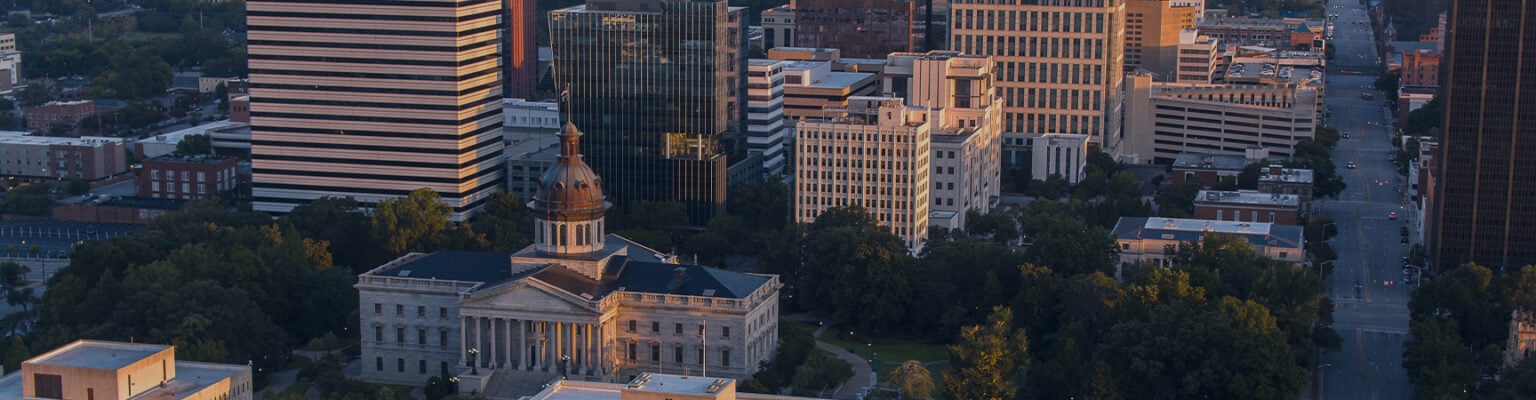
FDC Philadelphia at a glance
FDC Philadelphia is a federal jail at 700 Arch Street in Center City Philadelphia, holding 941 men and women as of September 2026. It is a detention center, not a prison: most people here have not been convicted of anything. They are held before trial for the Eastern District of Pennsylvania under the Bail Reform Act, in transit between institutions, or serving short sentences.
| Official name | Federal Detention Center, Philadelphia |
|---|---|
| BOP code | PHL |
| Security level | Administrative; men and women; federal detention center |
| Population | 941 (as of September 2026) |
| Visiting | By appointment only, on a monthly rotation by housing floor · see visiting hours |
| Inmate mail | Inmate Name & Register Number · FDC Philadelphia · Federal Detention Center · P.O. Box 562 · Philadelphia, PA 19105 |
| Send money | Lockbox · Western Union (code city FBOP, DC) · MoneyGram (receive code 7932) |
| Phone | 215-521-4000 · Fax 215-521-7220 |
| Street address | 700 Arch Street, Philadelphia, PA 19106 · Philadelphia County |
| Judicial district | Eastern District of Pennsylvania |
| BOP region | Northeast |
| Designated capacity | 1,123 |
| Housing | 10 housing units: women on 3 South, men on floors three through seven |
| Special Housing Unit | Yes, on the eighth floor |
| RDAP | No |
On this page
Since February 2025 the building has also held immigration detainees for U.S. Immigration and Customs Enforcement. It is the Bureau’s only detention center in Pennsylvania, the only federal facility in the state that holds women, and one of ten institutions the Bureau formally designates a pretrial detention facility. It is listed among the federal prisons in Pennsylvania and falls under the Bureau’s Northeast Region.

FDC Philadelphia is a jail, and three other Philadelphia lockups are not
FDC Philadelphia is the Bureau of Prisons’ Federal Detention Center; the City of Philadelphia runs its own jails, including one called the Detention Center, and neither system can find a person held by the other. The two are eight miles apart and answer to different governments, and the similar names send families searching in the wrong system.
| Where someone might be | Run by | How to find them |
|---|---|---|
| FDC Philadelphia, 700 Arch Street (this page) | Federal Bureau of Prisons | BOP Inmate Locator |
| Curran-Fromhold Correctional Facility, the Detention Center, Philadelphia Industrial Correctional Center, Riverside Correctional Facility | Philadelphia Department of Prisons (city) | The city’s inmate lookup on the Philadelphia Department of Prisons site |
| A Pennsylvania state prison | Pennsylvania Department of Corrections | The state inmate locator |
The test is which court charged the person. A case in the United States District Court for the Eastern District of Pennsylvania is federal, and a defendant ordered detained in it goes to 700 Arch Street. A case in the Philadelphia Court of Common Pleas or Municipal Court is state, and a defendant held in it goes to the State Road complex. Mail, money, phone accounts, visiting lists and grievance procedures differ in each system, and nothing filed in one reaches another.
A fourth agency, the U.S. Marshals Service, holds the person without running the building. Under the Bureau’s pretrial inmates policy, Program Statement 7331.05 (2023), pretrial detainees “are U.S. Marshals Service (USMS) prisoners,” housed under a memorandum of understanding that sets “a fixed number of beds for the USMS at specific Bureau institutions.” The Marshals hold the body, produce the person in court and move them after sentencing; the Bureau houses them in between. That is why a medical trip outside the building needs two agencies to agree — a problem the Inspector General recorded here in 2025. Pennsylvania’s other federal prisons are sentenced institutions holding men only.
Who is held at FDC Philadelphia?
FDC Philadelphia holds four groups under four sets of rules: pretrial detainees, holdovers, a sentenced work cadre and immigration detainees. Which one a person falls into decides how long they get in the visiting room, how many people can visit, whether they can take a class, and whether any of the time counts.
| Status | Who that is | What changes |
|---|---|---|
| Pretrial | Someone “legally detained but for whom the Bureau of Prisons has not received notification of conviction” — awaiting trial, a verdict, or sentencing after a plea | Cannot be required to work. Visiting list limited to immediate family plus one other adult, changed once a quarter. Most programming closed |
| Holdover | Someone en route to a designated institution — sentenced but not designated, or designated but not yet arrived | Same restricted visiting as pretrial, though a list from a prior federal institution can be recognized for immediate family verified in the presentence report |
| Work cadre | Sentenced people designated here to serve their time and run the building | Full visiting list of twenty. Education, hobby craft, interlibrary loan, monthly unit photographs |
| Immigration detainees | People held for ICE, allocated up to 125 beds here since February 2025 | A separate legal process entirely. ICE’s Philadelphia field office, not the Bureau, decides the case |
The pretrial definition is broader than families expect. Under 28 C.F.R. § 551.101, reproduced in Program Statement 7331.05, someone who has already pleaded guilty remains a pretrial inmate until the Bureau receives official notification of the conviction. A person can spend months here after a plea believing the sentence has started, and it has not. The regulation also promises a separation this building cannot fully deliver — “[p]retrial inmates will be separated, to the extent practicable, from convicted inmates” — and at intake a detainee signs a Notice of Separation acknowledging that contact with sentenced people may happen anyway.
ICE confirmed to the Philadelphia Inquirer in February 2025 that it would use up to 125 beds here for male detainees only. In January 2026 Representative Mary Gay Scanlon, after a visit, told WHYY that as of November 28, 2025, the facility held an average of 94 ICE detainees a day and that they “are treated the same as federal prisoners.” ICE publishes its own facility page for 700 Arch Street, with a deportation officer line at 215-656-7164 separate from the Bureau’s switchboard.
What is the security level at FDC Philadelphia?
FDC Philadelphia’s security level is administrative. In the Bureau’s vocabulary that is not a rung between minimum and high: it means the institution takes people of any security level, because its job is holding rather than classifying. A person with a low point score and one with a high score can be on the same floor, and neither has been designated yet.
Physically this is a high-rise jail on a downtown block, not a compound behind a fence. The admission and orientation handbook describes the layout in one sentence: “Designated and pre-trial/holdover female inmates are housed on 3 South. All male inmates are housed from the 3rd floor through the 7th floor. There is also a Special Housing Unit (SHU) on the 8th.” The 2024 PREA audit counted ten housing units. There is no yard; recreation happens on a deck.
Two local rules govern the Special Housing Unit, and neither appears in the Bureau’s national SHU policy: cells rotate at least every 21 days, and “[i]nmates assigned on the unit may not be in a cell for more than 120 days.” SHU visits run Sunday through Saturday, 7:30 a.m. to 2:00 p.m., non-contact, two visitors for an hour and a half — and no one under 18 may enter the SHU at all, which means a parent in segregation does not see their children.
Reviewing the Bureau’s management of women in 2018, the Inspector General recorded that “managing female inmates who needed to be placed in a SHU disrupted institution operations because BOP had to transfer these inmates to Federal Detention Center Philadelphia for SHU placement.” Women were moved here, from other institutions, to be segregated.
Can a detention order be reopened, reviewed or appealed?
Yes: a federal detention order can be reopened, reviewed by the district judge, or appealed. A person is here before trial because a judicial officer found, under 18 U.S.C. § 3142(e)(1), “that no condition or combination of conditions will reasonably assure the appearance of the person as required and the safety of any other person and the community.” That finding is an order, and orders can be revisited.
Reopening the hearing. The closing sentence of § 3142(f) provides that “[t]he hearing may be reopened, before or after a determination by the judicial officer, at any time before trial if the judicial officer finds that information exists that was not known to the movant at the time of the hearing and that has a material bearing on the issue whether there are conditions of release that will reasonably assure the appearance of such person as required and the safety of any other person and the community.” Two conditions apply: the information must have been unknown at the time, and material to conditions of release. A third-party custodian who has since agreed to take responsibility, a job offer, a treatment bed, a diagnosis — those are the facts that fit.
Review by the district judge. Most federal detention decisions are made by a magistrate judge. Section 3145(b) provides that where a person is ordered detained by one, “the person may file, with the court having original jurisdiction over the offense, a motion for revocation or amendment of the order. The motion shall be determined promptly.” In the Third Circuit, which governs the Eastern District of Pennsylvania, that is not appellate review. In United States v. Delker, 757 F.2d 1390 (3d Cir. 1985), the court held that on such a motion the district court makes its own independent determination rather than a deferential review of the magistrate judge’s decision, and may take evidence itself; the judge need not identify specific errors in the magistrate judge’s reasoning so long as they adequately explain their own conclusions. The same opinion held that hearsay is admissible at a detention hearing and that evidence may be received by proffer. Delker itself affirmed the detention; the decision matters for the standard it sets.
Appeal. Under § 3145(c) an appeal from a detention order, or from a decision denying revocation or amendment of one, is governed by 28 U.S.C. § 1291 and “shall be determined promptly” — one of the few pretrial rulings a defendant can take to the court of appeals immediately. Narrower still, § 3142(i) lets a judicial officer permit temporary release in the custody of a marshal “to the extent that the judicial officer determines such release to be necessary for preparation of the person’s defense or for another compelling reason.”
The Bureau itself cannot release anyone, and its pretrial policy says so. A warden “may not grant a furlough to a pretrial inmate (18 U.S.C. § 3622),” and “[e]xcept by order of the court, a pretrial inmate may not be considered for participation in community programs.” What staff must do instead, in an emergency, is get the lawyer on the phone: “In an emergency, staff shall facilitate contact with the pretrial inmate’s attorney of record, who may seek from the court a decision concerning release from custody or an escorted trip.” If a parent is dying, the request goes to the judge through counsel, and the institution’s job is to make that call happen.
Does time at FDC Philadelphia count toward a sentence?
Days held at FDC Philadelphia before sentencing ordinarily count toward a federal sentence, but no First Step Act time credits can be earned here before sentencing. Those are two separate questions, and they are often confused.
Under 18 U.S.C. § 3585(b), a defendant gets credit for time in official detention before the sentence commences, so long as that time “has not been credited against another sentence.” Months at 700 Arch Street waiting for trial are ordinarily credited. But the judge does not do the arithmetic. In United States v. Wilson, 503 U.S. 329 (1992), the Supreme Court held that § 3585(b) does not authorize a district court to award that credit at sentencing; the Attorney General, acting through the Bureau of Prisons, computes it after the defendant begins serving the sentence, and a prisoner who disputes the computation may seek administrative review and then review in court. A sentencing transcript in which everyone agrees about credit binds no one. The number that matters appears later, on a sentence computation, and it has to be checked when it does.
First Step Act earned time credits are a different matter, and for time spent here before sentencing the answer is no. The Bureau’s First Step Act time-credits policy, Program Statement 5410.01 (2022, amended in 2023), puts it in one sentence: “an inmate cannot earn FTCs during pretrial confinement, nor can they earn credits based on a prior incarceration. Further, an inmate cannot earn FTC when not in Bureau custody, including when in U.S. Marshals Service custody prior to arriving at their designated facility, regardless of where they are housed.” The regulation behind that policy has started credits on the date a person “arrives or voluntarily surrenders at the designated Bureau facility where the sentence will be served” (28 C.F.R. § 523.42(a)), but an interim final rule published on August 31, 2026, removes that clause with effect from September 30, 2026, leaving credits to begin “after the inmate’s term of imprisonment commences” (91 Fed. Reg. 55740); under 18 U.S.C. § 3585(a), a sentence commences when the defendant “is received in custody awaiting transportation to” the prison where it will be served. As of September 2026, the program statement had not been reissued. The Bureau’s notice says sentenced people awaiting transport can then begin approved programming, but credits still come only from completing the programs or activities assigned, so a sentenced holdover here should ask the unit team what has been assigned, and press for designation to a prison that runs the programs the person will need.
Where does someone go after FDC Philadelphia?
After sentencing, a person goes from FDC Philadelphia to a prison chosen by the Designation and Sentence Computation Center in Grand Prairie, Texas, on paper the court generates. Staff at 700 Arch Street do not make that decision, so the unit team cannot answer it. The chronology in the Bureau’s security designation rules, Program Statement 5100.08, reads as a to-do list, because every step is one a lawyer can affect.
- The defendant is sentenced.
- The Clerk of the Court transmits the Judgment in a Criminal Case to the U.S. Marshals Service.
- The Marshals ask the Designation and Sentence Computation Center to designate a facility.
- Center staff obtain the presentence report, the judgment including the Statement of Reasons, and the Marshals’ form USM-129.
- The center “will ordinarily complete the initial designation within three working days of receiving all the necessary documentation.”
Three working days. The window in which the paperwork can be made right is the weeks before sentencing, not the weeks after. The policy explains why the Statement of Reasons matters: the procedures exist to “ensure the Bureau is following the intentions of the Court when designating a facility, as the SOR may contain information which overrides the PSR and may affect scoring decisions.” An objection to a presentence report finding that drives a security point, a judicial recommendation to a named institution, a documented medical need — each has to be in a document the center will read before the three days start.
Distance is governed by 18 U.S.C. § 3621(b) as amended by the First Step Act, which directs the Bureau to place a prisoner “in a facility as close as practicable to the prisoner’s primary residence, and to the extent practicable, in a facility within 500 driving miles of that residence” — subject to bed availability, security designation, program and medical needs, “recommendations of the sentencing court,” and security concerns. For a Philadelphia family, five hundred driving miles reaches most of the Northeast Region — and also reaches Kentucky. A Public Safety Factor overrides a point score, which is why arguing about the factor is usually more productive than arguing about points. Our guides to the intake process, federal prison transfers and how to prepare for prison cover what happens either side of the designation.
Who are the notable inmates at FDC Philadelphia?
No notable inmates are known to be held at FDC Philadelphia. Published “notable inmates” lists for this facility name the same nine people, and as of September 2026 the Bureau’s records place none of them in this building; a detention center’s population turns over constantly. We do not publish the names of people currently held here, because most of them have not been convicted of anything. The table shows where those nine are, because mail sent on the strength of an old list goes to the wrong prison.
| Name | Where Bureau records place them (as of September 2026) | Case |
|---|---|---|
| Shain Duka | USP Atwater, California. Release date LIFE | Fort Dix attack conspiracy, convicted 2008 |
| Dritan Duka | USP Canaan, Waymart, Pennsylvania, not the Terre Haute Communications Management Unit. Release date LIFE | Fort Dix attack conspiracy |
| Eljvir Duka | USP Coleman I, Florida, not USP Hazelton. Release date LIFE | Fort Dix attack conspiracy |
| Kaboni Savage | ADX Florence, Colorado. Release date LIFE, after the commutation of his federal death sentence on December 23, 2024 | Murders connected to witness retaliation, E.D. Pa. |
| Barry Croft | ADX Florence, Colorado. Projected release June 15, 2037 | Plot to kidnap the Governor of Michigan |
| Abdul West | USP Big Sandy, Kentucky. Projected release April 15, 2056, not 2057 | Narcotics prosecution, E.D. Pa., 2019 |
| Andrew Drechsel | FCI Milan, Michigan. Projected release March 7, 2029 | Pleaded guilty in 2023 |
| Clare Bronfman | Released on June 27, 2025, not scheduled for release in June 2026 | NXIVM prosecution |
| Kimberly Jones | Released on August 2, 2006 | Perjury and conspiracy, 2005 |
Dritan Duka is at USP Canaan in Pennsylvania, not in “the Terre Haute CMU,” and the Terre Haute unit no longer exists. A federal judge recorded in September 2025 that the Bureau closed the Terre Haute and Marion Communications Management Units and established a single one at FCI Cumberland.
How do I find someone at FDC Philadelphia?
To find someone at FDC Philadelphia, use the Bureau’s free public Inmate Locator and search by the eight-digit register number if you have it. The locator matches the committed name — the name on the charging document or judgment — not the name someone goes by.
At a detention center the Bureau’s record can lag behind an arrest. A person is in Marshals custody from the moment of arrest, but the Bureau’s record does not exist until they are booked into an institution, which can take days if court appearances come first. A “no results” answer on the day of an arrest usually means the booking has not happened, not that the person is elsewhere. For someone held here the result reads “Philadelphia FDC”; any other name is a different institution, so check it before addressing an envelope. Our guide to how register numbers work explains what the digits after the dash mean.
How do I write to someone at FDC Philadelphia?
Write to someone at FDC Philadelphia at its post office box, not at 700 Arch Street. The Bureau’s address record gives the full block as:
| Inmate mail and parcels | Inmate Name & Register Number FDC Philadelphia Federal Detention Center P.O. Box 562 Philadelphia, PA 19105 |
|---|
Mail without a register number is returned. Two local practices go further than the Bureau’s national correspondence rules. Incoming general mail is photocopied before delivery, so what reaches the cell is a copy rather than the paper you touched. Photographs are photocopied too unless they come from an authorized printing company; Polaroids are refused outright; and a person may hold no more than 25 photographs in total, which is a hard ceiling for a parent receiving pictures of children. Anything over 16 ounces counts as a package and needs an approved authorization before it is sent. Our guide to writing to someone in federal prison covers what gets rejected and why.
Legal mail is handled differently, and only if labeled correctly. The Bureau’s pretrial legal access handbook names the commonest failure: the envelope must identify the sender’s full name and the word “Attorney,” because “[w]riting ‘Law firm’ or ‘Esq.’ is not enough,” and must be marked “Special Mail — Open only in the presence of the inmate.” Mail that is not correctly labeled is processed as general correspondence, which means staff may open, inspect, read and copy it. Properly marked legal mail is ordinarily processed within 24 hours on a weekday and not at all on weekends and holidays; outgoing special mail here is hand-delivered to the evening watch unit officer between 6:00 p.m. and 9:30 p.m. Our page on attorney-client communication in the Bureau of Prisons covers the privilege question. And never put money in a letter: “No money will be received by this institution through the mail.”
How do I send money to someone at FDC Philadelphia?
Money for someone at FDC Philadelphia goes to the Bureau’s national lockbox in Iowa or through one of two wire services. It never goes to Philadelphia. Each route needs the committed name and the eight-digit register number, and a detention center turns over fast enough that a wrong number is easy to make.
| Route | Where it goes | How fast it posts |
|---|---|---|
| Postal money order or government check | Federal Bureau of Prisons Committed Name Eight-Digit Register Number Post Office Box 474701 Des Moines, Iowa 50947-0001 | U.S. postal money orders post without a hold. Anything else carries an automatic 15-day hold. Personal checks and cash are refused |
| Western Union Quick Collect | City and state code FBOP/DC, with the register number and last name in one string and the full committed name on the attention line | Two to four hours if sent between 7:00 a.m. and 9:00 p.m. Eastern; otherwise by 7:00 a.m. the next morning |
| MoneyGram Express Payment | Receive code 7932, company Federal Bureau of Prisons, Washington, DC; up to $300 online | As above |
The sender’s name and return address must be in the upper left corner, and the envelope must contain nothing but the funds. If a transfer goes to the wrong register number and posts, the Bureau will not recover it; the handbook puts that responsibility entirely on the sender. Our guide to sending money to a federal prisoner compares the routes and their fees. Before sending a large sum, read the commissary section below: the ceiling on what a person here can spend each month is low, and money above it sits in the account.
What are the visiting hours at FDC Philadelphia?
Visiting at FDC Philadelphia is by appointment only, on a monthly rotation by housing floor, so there is no fixed public schedule. The monthly schedule is posted inside the building rather than fixed in policy. Since January 18, 2023, under institution supplement PHL 5267.09E dated March 8, 2023, “[a]ll visits will be prescheduled,” and a visitor books by emailing PHL-VisitingScheduler-S@bop.gov with the inmate’s name, register number and assigned unit, and the visitor’s name, address, phone number and date of birth.
The supplement does not agree with itself. Its body sets male general-population visiting at four blocks a day Monday to Friday — 7:15 to 8:45, 9:15 to 10:45, 11:15 to 12:45 and 1:15 to 2:45 — and four earlier blocks from 6:30 a.m. on weekends and holidays. Attachment 1 to the same document, the sheet handed to visitors, says men visit Wednesday through Saturday, 6:15 a.m. to 2:30 p.m. on weekdays and 7:15 a.m. to 2:00 p.m. on weekends. Visit length is disputed too: the body allows general-population men 1.5 hours once a week plus up to 1.5 hours on Saturdays and federal holidays, while the attachment says “[a]ll male inmates will visit for a maximum of 2 hours once a week, Monday through Friday, and 3 hours during Saturday visitation.” Women get their entire assigned visiting day, once a week, and everyone is guaranteed a minimum of four hours a month.
Neither version is marked as the controlling one, and the supplement dates from 2023. Confirm the day and the time with the institution at 215-521-4000 before you buy a ticket.
Two timing rules are consistent across both versions, and they are the ones that trip visitors up. In-processing of visitors stops well before the session ends — an hour and a half before in one passage, an hour in another — so arriving late does not mean a short visit, it means no visit. And on weekends and federal holidays no inmate enters the visiting room after 9:30 a.m., because the institution counts at 10:00.
Who can visit, and how many
- Two visitors at a time, including children and infants: “Ordinarily, inmates will be allowed no more than two visitors in the visiting room at a time regardless of age.” Exceptions go through the captain to the associate warden for programs.
- A pretrial or holdover detainee may have immediate family only, plus one additional adult who knew them before the arrest. Sentenced cadre may list up to twenty people, ten of them non-family.
- Every prospective visitor for a pretrial or holdover detainee gets a background investigation. There is no exception.
- The list can be changed once a quarter for pretrial and holdover detainees — March, June, September and December — and once a month for cadre. Miss the window and the next chance is three months away.
- The form is BP-A0629; the detainee mails it out and the visitor mails it back to the unit counselor directly. Children under 16 must be accompanied by a responsible adult.
What visitors can wear and bring
Prohibited, and enforced at the lobby: athletic wear including sweatpants and gym shorts; hats or scarves, including a scarf at the neck or waist; sleeveless tops and tank tops; sunglasses and long hair picks; tube tops, midriffs and low-cut clothing; tight clothing such as Lycra or spandex; see-through or ripped clothing; shorts more than two inches above the knee on anyone including children; skirts and dresses above the knee, with any side split no higher; open-toed shoes, knee- or thigh-high boots, pants tucked into boots; and watches of any kind. A jacket or sweater worn in must stay on for the whole visit. Color matters because the people here wear a yellow jumpsuit into the visiting room: gray sweatpants, plain white T-shirts and anything yellow or orange are barred as resembling inmate attire.
You may bring one small clear plastic wallet or change purse, no larger than a gallon zip-lock bag, with no more than $20 in small bills and coins for the vending machines; medication required to sustain life, such as an inhaler or nitroglycerin; and, for an infant, two disposable diapers, wipes in a clear container, one plastic bottle, one clear sippy cup and one blanket. No gum, candy or lozenges enter the building. Everything else goes in a lobby locker.
Inside, the incarcerated person may not touch money or use the vending machines — the visitor buys and heats everything. An embrace and a brief closed-mouth kiss are permitted at the beginning and end of the visit and at no other point, and that applies to children: “Inmates will not be allowed to maintain constant contact with children and infant visitor(s) during their visit.” One sentence in the regulations should be read literally: under 18 U.S.C. § 1791, providing or attempting to provide an incarcerated person with “anything whatsoever” without the warden’s knowledge and consent carries up to twenty years’ imprisonment, a fine, or both.
Getting there
The building is at 7th and Arch Streets in Center City, inside the historic district, which makes it the most accessible federal detention facility in the country by public transport and one of the hardest to park at. The institution’s own directions come off I-95 at the 676/Callowhill Street exit, or off I-676 at 8th Street, in both cases to Arch. Every visitor 16 and over presents a valid state or government-issued photo identification and clears a walk-through metal detector; a medical implant needs a medical card, and without one you clear the detector or you do not enter. Do not arrive more than fifteen minutes early; visitors may not wait or congregate at the front entrance, and food and drink are prohibited in the lobby. How those rules are applied is covered in searches, shakedowns and contraband; the national rules are in the Bureau’s visiting regulations and our guide to federal prison visitation.
How do phone calls and email work at FDC Philadelphia?
Calls at FDC Philadelphia go one way: people held here place them through the TRUFONE system, and no one can call in. The system is reached with a nine-digit personal access code the unit team issues. Phones operate from 6:00 a.m. to 9:30 p.m. daily, and a single call should generally not exceed 15 minutes. Under the Bureau’s telephone regulations, Program Statement 5264.09, issued September 3, 2026, the monthly allowance is 510 minutes: 300 of them are free to anyone eligible for First Step Act telephone incentives, and anyone who uses up those 300, eligible or not, may buy the other 210. The monthly limit does not apply to unmonitored legal calls. One local rule shapes every family’s evening: “There is a one (1) hour waiting period between calls.” A person cannot call their mother and then call their children fifteen minutes later. Calls also end immediately when a count or a meal begins, mid-sentence, which is not a hang-up. Every call except a properly arranged unmonitored legal call is recorded and monitored, and using the phone constitutes consent to that; three-way calls, call forwarding and passing the phone to another party all produce incident reports. Our guide to federal inmate phone calls covers the national system.
Email runs on TRULINCS, which families reach through CorrLinks. Email with a lawyer is not privileged: the Bureau’s pretrial handbook states that TRULINCS messages “are NOT confidential” and can be read and shared with others in law enforcement, including the prosecutor. Our page on CorrLinks and TRULINCS explains how the system works and walks a family through setting the account up.
How does a lawyer reach a client at FDC Philadelphia?
A lawyer reaches a client at FDC Philadelphia through legal visits on every day of the week, a direct legal phone on the pretrial units, and properly marked legal mail. Legal access is the reason this building sits where it does, and the Bureau’s rules for legal access are more generous here than anywhere a sentence is served.
Legal visits and the attorney phone
Attorneys visit Monday to Friday from 6:15 a.m. to 8:00 p.m. and on weekends and federal holidays from 7:15 a.m. to 2:00 p.m. Tuesday is reserved for legal visits only. Immigration and Customs Enforcement publishes the identical hours on its own facility page for this address. Processing stops at 3:30 p.m. on a weekday, before the 4:00 p.m. count, and at 9:30 a.m. on a weekend or holiday, before the 10:00 a.m. count. Counsel presents a bar card and a separate government photo identification. Legal visits take priority over social visits in processing, private attorney rooms are used only for legal visits, and “[s]taff may not subject visits between an attorney and an inmate to auditory supervision.”
Counsel can see several clients in one trip: “Attorneys are permitted to request up to three inmate clients at a time,” and where security permits all three are brought to the visiting room, two waiting while counsel meets the first. Because FDC Philadelphia is one of the Bureau’s ten designated pretrial detention facilities, it has a direct legal phone on the pretrial units for “brief, direct, unmonitored, calls to pre-programmed and verified phone numbers of defense counsel.” Federal Defender clients should be able to use it; retained counsel may be able to, and the unit team decides. Longer unmonitored calls are requested on form BP-A0148 and granted only on a showing that mail, visits and ordinary calls are not enough. There are no unmonitored phone booths in the Special Housing Unit, and at this facility a legal access request from the SHU goes to the SHU lieutenant by name. Non-attorney members of a defense team are admitted as legal assistants on form BP-A0243, renewed annually, with an annual background check unless the person is a credentialed Federal Public Defender employee.
Discovery, the law library and the presentence report
Counsel may bring CDs, DVDs and external hard drives containing criminal discovery into the visiting room, with earbuds or headphones; institution computers in the attorney rooms are first come, first served, and a personal laptop needs prior authorization from the warden. But handing anything across the table does not work. “[I]nmates are not permitted to receive any items, including legal paperwork, directly from their attorney,” and a client ordinarily cannot carry additional material back to the unit from a visit or from court. Documents go in through the legal mail drop box in the lobby, in an envelope marked with the sender’s name, language identifying the sender as an attorney, the client’s name and register number, and the special-mail legend. “Absent these markings, any mail left in the drop box will be returned to the sender or destroyed if the sender cannot be determined.”
The Bureau’s pretrial handbook sets out this facility’s discovery regime in two lines: once the legal department approves, the unit team gives the client the electronic discovery to keep on the housing unit; protected or sensitive discovery must be checked out from and returned to the unit team. Every housing unit here, including the Special Housing Unit, has two terminals dedicated to the electronic law library. Using it is free; printing on the unit costs 15 cents a page, and photocopies from Education cost 15 cents a side, made on the unit’s scheduled day unless there is a verifiable imminent deadline. Without proof of how many copies the court requires, staff make one. A typewriter for legal use sits on each housing unit; ribbons, correction tape and paper come from the commissary.
One rule closes a window that never reopens. A person in pretrial custody may hold and review a copy of their own presentence report right up to the day of sentencing. After sentencing, possessing it is prohibited across the entire Bureau and can bring a disciplinary charge. If there is correcting to be done on a presentence report, it has to happen while the client is still here and still unsentenced.
What can people buy at the FDC Philadelphia commissary?
People at FDC Philadelphia buy from a shorter commissary list than at a sentenced institution, ordering every two weeks on a sheet that caps quantities item by item. The spending limit is the figure families most often get wrong, and three documents disagree on it.
| Document | Date | What it says |
|---|---|---|
| BOP Program Statement 4500.13, Trust Fund/Deposit Fund Manual | Issued May 7, 2026 | National monthly spending ceiling of $460, raised from $360 |
| FDC Philadelphia Admission & Orientation Handbook | 2022 | “The commissary spending limit for the work cadre is $250.00 and for Pretrial/Holdover inmates, $200.00 per month” |
| FDC Philadelphia commissary order form | Sheet in effect to June 15, 2026 | No dollar limit printed at all |
Program Statement 4500.13 makes $460 the maximum an inmate may spend in a month, and the local controls it allows are quantity limits on individual items. The $250 and $200 are what this building’s 2022 handbook recorded; the current order form does not repeat them. Listings that give $360 are out of date: that national figure was superseded in May 2026. Ask the trust fund office at 215-521-4000 what the limit is this month before you send money against it.
Shopping is every two weeks rather than weekly, another detention-center difference. The order sheet goes in the night before the assigned day by 9:00 p.m.; anything not collected at the 7:00 a.m. pickup waits two weeks. The sheet caps quantity item by item — twenty-four soups, ten rice, nine waters, six sodas, most condiments at two — and around sixty items carry kosher or halal labeling. Rule 12 is the one that produces incident reports: the purchase limit is also the possession limit, and excess commissary is contraband. The Bureau’s trust fund rules and our page on the federal prison commissary cover the national system.
What programs are available at FDC Philadelphia?
FDC Philadelphia offers fewer programs than a prison, and most are open only to the sentenced work cadre, not to the pretrial and holdover detainees who make up most of the population. Pretrial and holdover detainees are not even required to attend an admission and orientation program, and education here is almost entirely for sentenced cadre: the arrival interview with education staff, the literacy and GED program, the ESL program, the OSHA, forklift and food-safety courses, the crochet and knitting hobby-craft programs, and the interlibrary loan arrangement with the Free Library of Philadelphia are all restricted to them. A pretrial detainee without a high school credential “may participate in an ACE GED Prep course; this course is offered on an informal basis (classes are taught by inmate tutors).” Everyone can reach the leisure library, the electronic law library, the parenting workshops and religious services. One thing happens here that happens almost nowhere else: “The Parole Commission schedules monthly hearings at FDC Philadelphia.”
Drug treatment and medication-assisted treatment
There is no Residential Drug Abuse Program here. The handbook states it in four words — “FDC Philadelphia does not offer RDAP” — and a sentenced cadre member who wants it must ask the drug abuse program coordinator for a referral to another institution. Because the reduction of up to twelve months under 18 U.S.C. § 3621(e) depends on completing the residential program, and the referral cannot happen until after sentencing, time spent waiting here is time not spent on the waiting list. What is here is medication-assisted treatment, available to anyone in the building with a history of problematic opioid use who is screened as appropriate by Psychology and Health Services. Drug abuse education and a non-residential treatment program also run.
Mental health and the RISE unit
This building runs a residential mental health unit, which most detention centers do not. “Pre-trial and holdover inmates who have significant mental health needs may qualify for placement on the RISE unit. RISE is a residential mental health treatment unit designed to provide services to individuals who have serious mental health problems. The unit also has a training program for suicide watch companions and mental health companions.” The need is real: the 2024 PREA audit recorded 129 people with a cognitive or functional disability — intellectual, psychiatric or speech — among 868 in the building on the first day of the audit. A residential mental health unit for unconvicted people, staffed and running, is worth naming in a bail argument, and so is its absence at whatever facility a client might be moved to.
What is daily life like at FDC Philadelphia?
Daily life at FDC Philadelphia runs on a fixed timetable of counts, meals, recreation on a deck and a pill line. The hours below come from the 2022 handbook and the 2023 visiting supplement; read them as the shape of the day rather than this week’s timetable.
| Weekdays | Weekends and holidays | |
|---|---|---|
| Quiet hours | 5:45–8:00 a.m. and from 9:30 p.m. | 6:45–8:00 a.m. and from 9:30 p.m. |
| Meals | Breakfast 6:00–7:00 a.m.; lunch 11:00 a.m.–12:00 p.m.; dinner 5:00–6:00 p.m. | |
| Jumpsuit buttoned in common areas | 7:30 a.m. – 4:00 p.m. | Not required |
| Count during visiting hours | 4:00 p.m. | 10:00 a.m. and 4:00 p.m. |
| Recreation deck and unit library | 6:00–10:30 a.m., 12:00–3:30 p.m., 5:00–9:30 p.m. | 6:00–9:30 a.m., 11:30 a.m.–3:30 p.m., 5:00–9:30 p.m. |
| Telephones | 6:00 a.m. – 9:30 p.m., 15-minute calls, one hour between calls | |
| Pill line | 6:45–8:45 a.m. and 5:00–8:00 p.m. | |
Unit photographs — the ones taken without a visitor present, for sending home — are taken monthly for sentenced cadre. For pretrial detainees they are taken twice a year: on Father’s Day, and once during the winter holidays.
Health care runs through sick call, and the collection schedule has a gap: forms are collected Monday, Tuesday, Thursday and Friday, and “[s]ick call forms will not be collected on Wednesdays.” There is a $2 charge per visit, waived for emergencies, prenatal care, chronic conditions and for anyone indigent — defined here as having had no trust fund balance above $6.00 for 30 days. Clinical staff round the Special Housing Unit daily and the housing units weekly. And in a detail that exists only because this is a pretrial facility, “[p]re-sentence inmates are given priority in the processing of eyeglass orders” — because a person reviewing discovery has to be able to read it.
What do inspectors say about conditions at FDC Philadelphia?
The DOJ Office of the Inspector General has not conducted an on-site inspection of this facility. Its staff have nonetheless been inside repeatedly for Bureau-wide reviews. For its audit of the Bureau’s oversight of restraints, Report 25-070 of July 29, 2025, it wrote: “We visited Federal Detention Center Philadelphia to gain an understanding of the use of force and application of restraints process and requirements at an institution.” That was the only institution visited for that purpose, in an audit reviewing 14,772 use-of-force incidents recorded between January 2018 and January 2024. It is a Bureau-wide audit that happens to contain a site visit here; it makes no finding about conditions at this facility.
The same office came here for its May 2025 evaluation of colorectal cancer screening and recorded a problem that belongs to detention centers specifically: FDC Philadelphia “had expressed difficulty in coordinating transportation to external medical appointments, especially for pretrial inmates, whose transportation requires coordination with the U.S. Marshals Service or state-level agencies.” The facility’s answer was a shared calendar of upcoming medical trips sent to whichever agency is driving. Of the fourteen institutions in that study this one had by far the smallest screening-eligible population — twelve people — so its percentages carry no weight. This building was also in the sample for the Inspector General’s 2023 capstone review of the pandemic response and its 2018 review of the management of women in federal custody. The District of Columbia’s Corrections Information Council inspected here in 2015 but never published its report.
The 2024 PREA audit
FDC Philadelphia was audited under the Prison Rape Elimination Act on April 2–4, 2024, by Grace A. Franks, an independent auditor subcontracted through PREA Auditors of America; the final report is dated May 17, 2024, and the previous audit was in June 2021. The result is strong on its face: six standards exceeded, 35 met, none unmet. The six exceeded were supervision and monitoring, limits to cross-gender viewing and searches, hiring and promotion decisions, use of screening information, protective custody, and criminal and administrative agency investigations. The audit is also the most detailed public description of this building that exists.
| Designated capacity | 1,123 |
|---|---|
| Average daily population, preceding 12 months | 948 |
| Housing units | 10 |
| Population on day one of the audit | 868 |
| People with a cognitive or functional disability | 129 |
| People identifying as transgender or intersex | 11 |
| People ever placed in segregated housing for risk of sexual victimization | 176 |
| Staff | 216 full and part time, plus 70 volunteers and 7 contractors with inmate contact |
In the twelve months before the audit the facility reported three allegations of sexual abuse, all inmate-on-inmate, and four of sexual harassment, of which one was staff-on-inmate; none was substantiated. There were no staff-on-inmate sexual abuse allegations in that window.
The staffing finding rests on a smaller population than the building now holds. The facility’s own questionnaire told the auditor that the average daily population since the June 2021 audit was 891, “and the staffing plan is predicated on 891 inmates.” The Bureau reported 941 people here as of September 2026, fifty more than the plan contemplates, and a union official told the Philadelphia Inquirer in February 2025 that the institution was understaffed by 25 officers.
Staff prosecutions
The audit’s reporting window closed on April 2, 2024. On July 6, 2024 — three months later — a correctional officer at this facility, Michael Jefferson, committed the conduct for which he was arrested on May 1, 2025, pleaded guilty in December 2025 to three counts of sexual abuse of an inmate under his supervision and one count of deprivation of rights under color of law, and was sentenced on May 18, 2026, to 360 months’ confinement and ten years of supervised release. Thirty years. The case was investigated by the Inspector General’s Trenton office with the FBI Laboratory. The audit and the prosecution are consistent with each other: the conduct post-dates the reporting period.
Two contraband prosecutions bracket it. A former officer, Lee Moore, pleaded guilty in May 2024 to providing contraband in prison and was sentenced in October 2024 to three years’ probation with six months of home confinement and a $5,000 fine. And in March 2025 the United States Attorney for the Eastern District of Pennsylvania charged a practicing criminal defense attorney with providing contraband to an inmate here; the complaint alleges he entered on February 4, 2025, with two folders, met a client for eighteen minutes and left with one, and that staff later found the client carrying a folder containing a phone, a charging cord, 83 suboxone strips and 240 cigarettes. Those are allegations, not findings, and the defendant is presumed innocent. They help explain why legal visits here are watched so closely.
FDC Philadelphia in the news
Recent news about FDC Philadelphia centers on deaths in custody, a staff sexual-abuse prosecution and the building’s use for immigration detention; older items concern the Inspector General’s 2025 site visit, an attorney contraband charge and the 2023 visiting overhaul.
- August 2026 — in a release titled Death at FDC Philadelphia, the Bureau reported that Zion Weddington-Bolden, 20, was “found unresponsive” on August 9, 2026, and, after life-saving measures, was “pronounced deceased by hospital personnel.”
- May 2026 — a former correctional officer at this facility was sentenced to 360 months and ten years of supervised release for three counts of sexual abuse of an inmate under his supervision and one count of deprivation of rights under color of law, for conduct in July 2024.
- March 2026 — in a release titled Death at FDC Philadelphia, the Bureau reported that Rocco Scolamacchia Jr., 49, was “found unresponsive” on March 21, 2026, and, after life-saving measures, was “pronounced deceased by hospital personnel.”
- January 2026 — Representative Mary Gay Scanlon, after touring the building, told WHYY that immigration detainees held here “are treated the same as federal prisoners,” describing two-bunk cells with a sink and toilet and reported difficulty reaching lawyers, medical care and interpreters, with an average daily ICE population of 94 as of November 28, 2025.
- January 2026 — Parady La, 46, died at Thomas Jefferson University Hospital. ICE’s own release records that he was arrested on January 6, 2026, in Upper Darby, detained here, was “receiving treatment for severe drug withdrawal,” and was found unresponsive in his cell the next day; officers administered CPR and several doses of naloxone, and he was pronounced dead at 3:22 a.m. on January 9. The ACLU of Pennsylvania filed a Freedom of Information Act request on February 5, 2026, on behalf of his family, seeking records from both ICE and the Bureau and stating that “significant questions remain unanswered.”
- July 2025 — the Inspector General published Report 25-070 on the Bureau’s oversight of the use of restraints, naming FDC Philadelphia as the institution it visited. In March 2025 a criminal defense attorney and a second defendant were charged with providing contraband to an inmate here.
- February 2025 — ICE confirmed it would use up to 125 beds here for male immigration detainees. A union official said the facility was then understaffed by 25 officers.
- January 2023 — visiting was rebuilt around a rotating per-floor schedule with all visits booked by email in advance, and Tuesdays reserved for attorneys.
Frequently asked questions about FDC Philadelphia
What is FDC Philadelphia?
A federal detention center at 700 Arch Street in Center City Philadelphia, operated by the Federal Bureau of Prisons and holding 941 men and women as of September 2026. It is a jail rather than a prison: most people here are held before trial for the Eastern District of Pennsylvania, with others in transit between institutions, some serving short sentences, and immigration detainees held for ICE.
When can families visit someone at FDC Philadelphia?
Only by appointment. Visits rotate by housing floor, change monthly, and must be booked by emailing PHL-VisitingScheduler-S@bop.gov with the inmate’s name, register number and unit and the visitor’s details. The 2023 visiting supplement gives two conflicting schedules: its body sets weekday blocks from 7:15 a.m. to 2:45 p.m. for men, while the attachment handed to visitors says men visit Wednesday to Saturday, 6:15 a.m. to 2:30 p.m. on weekdays. Call 215-521-4000 before traveling.
Who can visit someone held at FDC Philadelphia before trial?
Immediate family — parents, spouse, children and siblings — plus one additional adult who had a relationship with the person before the arrest. Only two visitors are ordinarily permitted at a time, including children and infants. Every prospective visitor for a pretrial or holdover detainee receives a background investigation, and the list can be changed only once a quarter, in March, June, September and December.
Can a federal detention order be changed?
Yes, in three ways. Under 18 U.S.C. § 3142(f), the hearing may be reopened before trial on information, unknown at the hearing, that bears materially on release conditions. Under § 3145(b), a magistrate judge’s detention order can go to the district court, which in the Third Circuit decides independently (United States v. Delker). Under § 3145(c), the order can be appealed immediately. Section 3142(i) also allows temporary release to prepare a defense or for another compelling reason.
Is time held at FDC Philadelphia credited toward a federal sentence?
Ordinarily, yes. Detention before the sentence commences is credited under 18 U.S.C. § 3585(b) unless credited against another sentence, but the Bureau of Prisons computes it after the sentence begins, not the judge (United States v. Wilson, 1992). Under Bureau policy, First Step Act time credits cannot be earned in pretrial confinement; an interim final rule effective September 30, 2026, lets credits start once the sentence commences, for assigned programs the person completes.
Does FDC Philadelphia have RDAP?
No. The facility’s handbook states that FDC Philadelphia does not offer the Residential Drug Abuse Program, and a sentenced cadre member who wants it must ask the drug abuse program coordinator for a referral to another institution after sentencing. Medication-assisted treatment for opioid use, drug abuse education and a non-residential drug treatment program are available here.
How much can someone spend at the FDC Philadelphia commissary?
Three documents give different figures. Program Statement 4500.13 raised the Bureau’s national ceiling from $360 to $460 in May 2026 and makes $460 the maximum an inmate may spend each month. This facility’s 2022 handbook recorded local limits of $250 for work cadre and $200 for pretrial and holdover detainees; the current order form prints no figure. Confirm at 215-521-4000 before you send money. Shopping here is every two weeks, not weekly.
Does FDC Philadelphia hold ICE detainees?
Yes. ICE confirmed in February 2025 that it would use up to 125 beds here for male immigration detainees, and it publishes its own facility page for 700 Arch Street under its Philadelphia field office. In January 2026 Representative Mary Gay Scanlon reported an average daily ICE population of 94 as of November 28, 2025. Parady La, held here by ICE, died on January 9, 2026, after being found unresponsive; the ACLU of Pennsylvania has sought records for his family.
Has FDC Philadelphia been inspected?
The DOJ Office of the Inspector General has not conducted an on-site inspection of this facility, though its staff have visited for Bureau-wide reviews, most recently the July 2025 restraints audit, for which FDC Philadelphia was the institution visited. The facility passed an independent Prison Rape Elimination Act audit on April 2–4, 2024, with six standards exceeded, 35 met and none unmet. The DC Corrections Information Council inspected it in 2015 but never published its report.
Are any famous people held at FDC Philadelphia?
None of the nine people on published lists for this facility is here, according to Bureau records as of September 2026: Shain Duka is at USP Atwater, Dritan Duka at USP Canaan, Eljvir Duka at USP Coleman I, Kaboni Savage and Barry Croft at ADX Florence, Abdul West at USP Big Sandy and Andrew Drechsel at FCI Milan. Clare Bronfman was released in June 2025 and Kimberly Jones in 2006. A detention center’s population turns over constantly.
Problems at FDC Philadelphia: where we can help
The problems we help with at FDC Philadelphia are the problems of a jail, and its own records show them: a visiting regime that contradicts itself, a legal-access system with more doors than anyone uses, a staffing plan written for a smaller population, and a medical transport process that needs two agencies to agree.
- Detention itself — reopening under 18 U.S.C. § 3142(f), review by the district judge under § 3145(b), appeal under § 3145(c), temporary release under § 3142(i).
- Getting counsel in and material out. Unmonitored legal calls are granted on a showing, not on request, and the presentence report can only be held before sentencing.
- Sentence credit under § 3585(b). The Bureau computes it, the court does not, and the computation has to be read when it arrives. Errors go through the administrative remedy process first.
- Designation. The Statement of Reasons, a presentence report objection and a judicial recommendation all have to be right before the three-day designation window opens, not after.
- Medical care that is not happening, including the external-appointment problem the Inspector General recorded here in 2025, and where injury has resulted, Federal Tort Claims Act claims.
- Mental health. A residential treatment unit exists here for unconvicted people; getting a client onto it is concrete work.
- Disciplinary proceedings and Special Housing Unit placements, including protective custody — a SHU placement here also ends contact with anyone under 18.
- Staff misconduct. A correctional officer here was sentenced in May 2026 to thirty years for sexually abusing a person in his custody, and reporting routes exist that do not run through the institution.
- Challenges to the conviction or sentence itself, through a direct appeal or a § 2255 motion.
Elizabeth Franklin-Best, P.C. handles federal criminal defense, appeals and post-conviction matters nationwide, and advises families on Bureau of Prisons issues at institutions across the system. Call (843) 620-1100 or contact us to talk through a specific situation.
Christopher Zoukis, JD, MBA, the firm’s Managing Director, writes and maintains the federal prison policy material on this site. He is not counsel of record; legal representation is provided by Elizabeth Franklin-Best.
Sources and currency
Bureau of Prisons documents
- FDC Philadelphia, Federal Bureau of Prisons, 2026. The Bureau’s facility page, with address, contact details, population and inmate-mail block.
- FDC Philadelphia Commissary Order Form, Federal Bureau of Prisons, 2026. Items, quantity limits and shopping rules.
- Institution Supplement PHL 5267.09E, Visiting Regulations, Federal Bureau of Prisons, FDC Philadelphia, 2023. Prescheduled visiting, visiting blocks, visitor lists, dress and permitted items; replaced PHL 5267.09D (2021).
- FDC Philadelphia Inmate Admission and Orientation Handbook, Federal Bureau of Prisons, 2022. Housing, commissary limits, programs, health care, the daily schedule and legal resources.
- Trust Fund/Deposit Fund Manual, Program Statement 4500.13, Federal Bureau of Prisons, 2026. Sets the $460 national spending limit.
- Inmate Security Designation and Custody Classification, Program Statement 5100.08, Federal Bureau of Prisons, 2006, as amended in 2026. The initial-designation chronology.
- Inmate Telephone Regulations, Program Statement 5264.09, Federal Bureau of Prisons, 2026. Replaced Program Statement 5264.08 (2008).
- First Step Act of 2018 – Time Credits: Procedures for Implementation of 18 U.S.C. § 3632(d)(4), Program Statement 5410.01, Federal Bureau of Prisons, 2022, as amended in 2023.
- Pretrial Inmates, Program Statement 7331.05, Federal Bureau of Prisons, 2023, as amended in 2025.
- Pretrial Detention Legal Access Handbook, Federal Bureau of Prisons, 2024. Legal visits, legal calls, legal mail and discovery at the Bureau’s designated pretrial detention facilities.
- First Step Act Time Credits—Revisions, Federal Bureau of Prisons (Federal Register), 2026. Interim final rule, 91 Federal Register 55740, revising 28 C.F.R. § 523.42(a) effective September 30, 2026.
- Death at FDC Philadelphia, Federal Bureau of Prisons, 2026. News release on the death of Zion Weddington-Bolden.
- Death at FDC Philadelphia, Federal Bureau of Prisons, 2026. News release on the death of Rocco Scolamacchia Jr.
Audits and inspections
- Inspected Facilities, District of Columbia Corrections Information Council, 2026. Lists the 2015 inspection of FDC Philadelphia.
- Audit of the Federal Bureau of Prisons’ Oversight of the Use of Restraints, U.S. Department of Justice, Office of the Inspector General, 2025. Report 25-070, including the site visit to FDC Philadelphia.
- Evaluation of the Federal Bureau of Prisons’ Colorectal Cancer Screening Practices for Inmates and Its Clinical Follow-up on Screenings, U.S. Department of Justice, Office of the Inspector General, 2025. Report 25-057.
- PREA Facility Audit Report: FDC Philadelphia, PREA Auditors of America, 2024. On-site audit of April 2–4, 2024, by Grace A. Franks, an independent auditor subcontracted by PREA Auditors of America; capacity, housing, staffing and allegation data.
- Capstone Review of the Federal Bureau of Prisons’ Response to the Coronavirus Disease 2019 Pandemic, U.S. Department of Justice, Office of the Inspector General, 2023. Report 23-054.
- Annual Report 2019, District of Columbia Corrections Information Council, 2019. Records the decision not to publish the 2015 FDC Philadelphia report.
- Review of the Federal Bureau of Prisons’ Management of Its Female Inmate Population, U.S. Department of Justice, Office of the Inspector General, 2018. Report 18-05, including the transfer of women to FDC Philadelphia for Special Housing Unit placement.
Court records
- Former BOP Correctional Officer Sentenced for Sexual Abuse of an Inmate, U.S. Department of Justice, Office of the Inspector General, 2026. Michael Jefferson’s sentence.
- FDC Philadelphia Correctional Officer Pleads Guilty to Sexual Abuse, Violating Inmate’s Civil Rights, U.S. Attorney’s Office, Eastern District of Pennsylvania, 2025. Michael Jefferson’s guilty plea.
- Duka v. Rule, No. 2:25-cv-00224 (S.D. Ind.), order screening complaint and transferring venue, U.S. District Court for the Southern District of Indiana, 2025. Records the closure of the Terre Haute and Marion Communications Management Units and the new unit at FCI Cumberland.
- Attorney Charged With Providing Contraband to an Inmate at FDC Philadelphia, U.S. Attorney’s Office, Eastern District of Pennsylvania, 2025. The complaint against a defense attorney and a second defendant.
- Former Correctional Officer Sentenced for Smuggling Mobile Phones into Federal Detention Center, U.S. Attorney’s Office, Eastern District of Pennsylvania, 2024. Lee Moore’s sentence.
- United States v. Wilson, 503 U.S. 329 (1992), Supreme Court of the United States, 1992. The Bureau, not the sentencing court, computes credit for prior custody.
- United States v. Delker, 757 F.2d 1390 (3d Cir. 1985), U.S. Court of Appeals for the Third Circuit, 1985. The district court’s independent review of a magistrate judge’s detention order.
News and other sources
- Rep. Mary Gay Scanlon Says ICE Detainees Are Treated Like ‘Federal Prisoners’ at Philadelphia Detention Center, WHYY, 2026.
- FOIA Request for Records Related to Parady La, ACLU of Pennsylvania, 2026.
- Career criminal, illegal alien in ICE custody passes away at local hospital, U.S. Immigration and Customs Enforcement, 2026. The death of Parady La.
- FDC Philadelphia, U.S. Immigration and Customs Enforcement, 2026. ICE’s detention-facility page for 700 Arch Street, with visiting hours and contacts.
- Philadelphia’s Federal Detention Center Will House ICE Detainees, The Philadelphia Inquirer, 2025.
- Philadelphia Department of Prisons, City of Philadelphia, 2026. The city’s jail system.
- 18 U.S.C. § 1791, Providing or possessing contraband in prison, U.S. Code (Legal Information Institute).
- 18 U.S.C. § 3142, Release or detention of a defendant pending trial, U.S. Code (Legal Information Institute).
- 18 U.S.C. § 3145, Review and appeal of a release or detention order, U.S. Code (Legal Information Institute).
- 18 U.S.C. § 3585, Calculation of a term of imprisonment, U.S. Code (Legal Information Institute).
- 18 U.S.C. § 3621, Imprisonment of a convicted person, U.S. Code (Legal Information Institute).
- 18 U.S.C. § 3622, Temporary release of a prisoner, U.S. Code (Legal Information Institute).
- 28 C.F.R. §§ 551.100–551.114, Pretrial Inmates, Code of Federal Regulations (Legal Information Institute).
- 28 C.F.R. § 523.42(a), Earning First Step Act Time Credits, Code of Federal Regulations (Legal Information Institute).
Sources reviewed September 2026.
Reviewed for legal accuracy by Elizabeth Franklin-Best, Esq., Principal Attorney·September 2026