
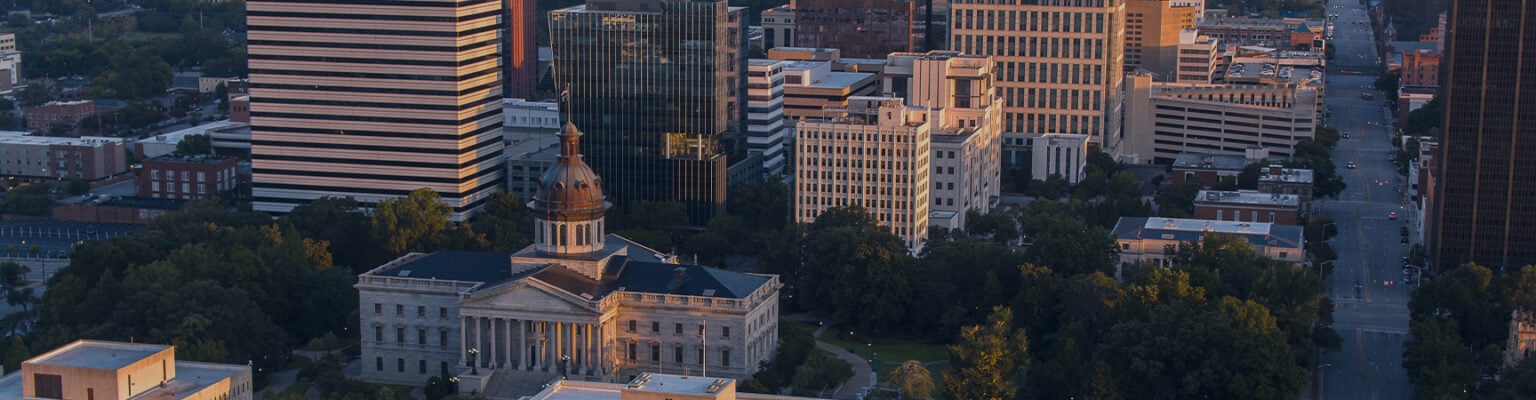
FCI Milan at a glance
FCI Milan is a low-security federal prison for men in Milan, Michigan, and the only federal prison in the state. Behind the same perimeter the Bureau also runs a Federal Detention Center for people awaiting trial and sentencing in the Eastern District of Michigan. As of September 2026 the two together held 1,546 people.
| Official name | Federal Correctional Institution, Milan |
|---|---|
| BOP code | MIL |
| Security level | Low; men · attached Federal Detention Center at administrative security |
| Population | 1,546 (as of September 2026) · one figure for the institution and the detention center |
| Visiting | FCI: Friday 11:30 a.m.–3:00 p.m.; Saturday, Sunday, and federal holidays 8:15 a.m.–3:00 p.m. · FDC: see the unit schedules |
| Inmate mail | Inmate Name & Register Number · FCI Milan · Federal Correctional Institution · P.O. Box 1000 · Milan, MI 48160 |
| Send money | Lockbox · Western Union (code city FBOP, DC) · MoneyGram (receive code 7932) |
| Phone | 734-439-1511 · Fax 734-439-5534 |
| Street address | 4004 East Arkona Road, Milan, MI 48160 · Washtenaw County |
| Judicial district | Eastern District of Michigan |
| BOP region | North Central |
| Designated capacity | 1,154 |
| Housing | 12 housing units; about half the institution in open-bay dormitories · no single-cell units |
| Special Housing Unit | Yes · 65 segregation cells |
| Medical care level | Level 2 |
| Mental health care level | Level 2 |
| RDAP | Yes |
| Sex offender treatment | Yes · non-residential program |
| UNICOR | Yes · metal plant |
| Camp | No |
On this page
The rules that govern a detainee in the detention center are not the rules that govern a sentenced man on the compound. The prison sits in Washtenaw County about 30 miles southwest of Detroit and 15 miles south of Ann Arbor, and it falls under the Bureau’s North Central Region. One thing here exists nowhere else in the federal system: a working public high school, staffed by teachers from the local school district, which has awarded a full Michigan diploma to more than 900 men since 1977.

One prison, two populations, and two sets of rules
FCI Milan holds two groups who share an address and very little else: men serving sentences at the low-security institution, and men held at the Federal Detention Center before trial, before sentencing, or while waiting to be designated. Almost every practical answer below depends on which group a person is in. The Bureau reports one population number for the whole site, and the inmate locator returns the same words — “Milan FCI” — for both.
| Which part | Who is there | What is different |
|---|---|---|
| The institution (FCI) | Sentenced men at low security | Khaki uniform, work assignment, full programming, a visiting list of up to fifteen adults, visiting on Fridays, weekends, and holidays |
| The Federal Detention Center (FDC) | Mostly men awaiting trial or sentencing in the Eastern District of Michigan, plus holdovers | Visits restricted to verified immediate family, two hours, on days that rotate between two units; no compelled work; no First Step Act time credits before sentence, and for a sentenced man waiting here the rule changes on September 30, 2026 (see below) |
The only public split of the two populations is the Inspector General’s. On January 17, 2021, it recorded that “the FCI housed 1,031 sentenced adult male inmates; the FDC housed an additional 221 adult male inmates, most of whom were awaiting trial.” Nothing more recent exists, so treat roughly one in six people here as being on the detention side.
The Bureau’s pretrial inmates policy, Program Statement 7331.05 (2023), notes that besides the dedicated detention centers, “[o]ther institutions also house pretrial inmates,” in units inside the main facility or in separate jail buildings. Congress requires detainees be kept apart from sentenced people only “to the extent practicable” (18 U.S.C. § 3142(i)(2)), and the policy explains what that means in a shared building: “[p]racticable is dependent on the institution’s design, structure, and operation.”
First Step Act time credits do not run in pretrial custody
Time in pretrial custody earns no First Step Act time credits. The Bureau’s time-credit policy, Program Statement 5410.01 (2023), ties the start of earned time credits to one event: “the date the inmate arrives at or voluntary surrenders to their initially designated Bureau facility to serve their sentence.” On that wording nothing accrues before arrival — not in pretrial status, not in Marshals custody, and not on the strength of a prior term.
For a man who has already been sentenced, that changes on September 30, 2026. An interim final rule published on August 31, 2026, strikes the arrival wording from 28 C.F.R. § 523.42(a), so credits begin “after the inmate’s term of imprisonment commences” (91 Fed. Reg. 55740); under 18 U.S.C. § 3585(a), a sentence commences when the defendant “is received in custody awaiting transportation to” the facility where it will be served. The rule’s preamble says the change lets people awaiting transport begin approved programming, but credit still depends on completing the programs or activities a man is assigned, and pretrial time is untouched. Program Statement 5410.01 still carries the older wording, so a sentenced man still waiting at Milan should ask the unit team, in writing, what he has been assigned.
Many people stay here a month or more: the 2024 PREA audit recorded 1,634 admissions in twelve months, of which 1,321 stayed thirty days or more. A man who spends a year at the detention center awaiting trial, doing every class it offers, finishes that year with the credit balance he started with: zero. The classes still show up in a presentence report and in a unit team’s judgment, so they are worth taking, but do not plan a release date around them. What shortens the wait is a faster designation.
Credit for the time itself is a separate question. Days in official detention before the sentence begins are credited under 18 U.S.C. § 3585(b) if they have not been credited elsewhere — but the arithmetic is done by the Bureau, under its sentence computation rules, after sentencing, not by the judge in the courtroom, which is why computations arrive weeks later and sometimes arrive wrong. Milan’s handbook tells arrivals to expect a copy within 30 days. Check it against the judgment the day it appears; our page on challenging a sentence computation sets out the route.
What else changes when the custody changes
- Who may visit. The December 2024 visiting supplement says: “Inmates housed in the Federal Detention Center (FDC) shall be limited to immediate, verified family members only,” against fifteen adults for a sentenced man. It also records that “Common Law marriage is not recognized in the state of Michigan.”
- Work. Detainees “may not be compelled to work other than to perform housekeeping tasks in their cells and in the community living area,” and must be offered the chance to waive that right to take an institution job. Working is a choice on one side and an assignment on the other.
- Reviews. A detainee sees the unit team within 21 calendar days of arrival and at least every 90 days after, with 48 hours’ notice. Those reviews must assess “the practicability of separation from convicted inmates” — so if housing with sentenced men is a problem, the review is where to raise it, on the record.
- Custody and orientation. Staff supervise a detainee “as if classified ‘In’ custody” by default, and a reduction needs the Regional Director’s approval. Detainees are not required to attend the Admission & Orientation program, so the handbook most people are handed is not the whole of what applies to them.
- Court clothes. Staff may supply clothing for court appearances or the detainee may supply his own. Families who want a suit worn at trial should ask the unit team, in writing, well before the date.
If you are not certain which group your person is in, the test is not the building. It is whether a sentence has been imposed and the Bureau has been notified of it. Ask the unit team in writing, and ask for the answer in writing.
Michigan has one federal prison. Everything else is state.
FCI Milan is the only Bureau of Prisons institution in Michigan. Michigan’s prison system is large, and almost all of it belongs to the Michigan Department of Corrections, which the federal inmate locator does not cover.
| What people are looking for | What it actually is | Where to search |
|---|---|---|
| “Milan prison,” “Milan Correctional Facility” | FCI Milan — this page. Federal, low security, with a detention center | BOP Inmate Locator |
| A Michigan state prison | Michigan Department of Corrections — a separate system with its own rules on mail, money, visiting, and release | The MDOC offender search |
| Someone “in Detroit” on a federal case | The federal courthouse is in Detroit; the jail is not. Eastern District detainees are held at Milan’s detention center, 40 miles away | BOP Inmate Locator, then this page |
| RRM Detroit | The Bureau’s reentry office for the Eastern District of Michigan — not in Detroit. Its roster address is 4026 East Arkona Road, Milan, two door numbers from the prison. The Western District is served by RRM Chicago | RRM Detroit |
Halfway house and home confinement placements follow the district a person is releasing to, and for the Eastern District of Michigan they are administered from an office on the grounds of this prison, reachable on 734-508-9048 — so a family chasing a release plan there is chasing Milan whether or not their person has ever been held here. For the Western District, bop.gov lists the office as RRM Chicago. See federal prisons in Michigan.
What is the security level at FCI Milan?
The institution is low security. The detention center attached to it is administrative, which in the Bureau’s vocabulary means it takes people at any security level because its job is holding rather than classifying. There is no camp at Milan, whatever other listings say: the Bureau’s roster records no camp here, and the Inspector General’s 2008 inventory of institutions gave camp lines for Marianna, Marion, McCreary, McKean, Memphis, and Miami while giving Milan a single line of its own.
Low security at Milan mostly means dormitories rather than cells. The Inspector General described the layout: “roughly half of the FCI’s inmate population is housed in open-bay units, where up to 74 inmates live together in open-air, dormitory-style bunks. The bunks are separated by built-in cement cubicles, making it impossible to move furniture.” The 2024 PREA audit counted 29 buildings, 12 inmate housing units, 65 segregation cells, and zero single-cell housing units on the entire site.
Where a sentenced person lands is decided before arrival, under the Bureau’s designation and classification rules, by a security point score and by whether a Public Safety Factor applies. A factor overrides the point total no matter how low the score; a Management Variable can push the other way. All three are documents, all three can be wrong, and all three are arguable — see the intake process, designation, and federal prison transfers.
Who are the notable inmates at FCI Milan?
The best-known person held at FCI Milan is Andrew “Drew” Drechsel, the 2019 winner of American Ninja Warrior. Most published lists for this prison are wrong, and two of the errors send a letter to the wrong state.
| Name | Status | Case |
|---|---|---|
| Andrew “Drew” Drechsel | Currently held here. Register 73733-018; projected release March 7, 2029 | Winner of American Ninja Warrior in 2019; pleaded guilty in June 2023 to receiving child pornography and to enticing a minor to travel interstate |
| Oliver Schmidt | Former — released from Milan on September 24, 2020, then transferred to German custody | Volkswagen executive sentenced in December 2017 in the diesel emissions prosecution |
| Derrick Evans | Former — released from Milan on October 21, 2022 | West Virginia state legislator convicted over the January 6 Capitol attack |
| Wayne Earl Jenkins | Not here. Bureau records place him at FMC Lexington, Kentucky; projected release August 12, 2037 | Baltimore police sergeant who led the Gun Trace Task Force; pleaded guilty to racketeering and robbery |
| Derrick Shareef | Not here. Bureau records place him at FCI Forrest City Low, Arkansas; projected release November 11, 2036 | Pleaded guilty in 2007 to attempted use of a weapon of mass destruction over a plot against an Illinois mall |
| Umar Farouk Abdulmutallab | Not here. Held at USP Florence ADMAX, Colorado, with a release date recorded as LIFE | Convicted over the attempt to detonate a device aboard a flight into Detroit in 2009; held at Milan before trial |
Two further names are wrongly tied to this prison. Larry Nassar appears on directory lists for Milan; Bureau records place him at FCI Lewisburg, Pennsylvania, and no reliable record places him at Milan. Listings that show Vicente Zambada Niebla awaiting trial at Milan are out of date: he returns no current record in the Bureau’s database, and he stopped awaiting trial more than a decade ago.
One name belongs to the institution’s history rather than its present. The Bureau’s record of the 50 federal executions carried out since 1927 contains a single Michigan entry: on July 8, 1938, Anthony Chebatoris, sentenced to death for a bank robbery, “was executed by hanging at FCI Milan, MI.” Michigan abolished capital punishment in the nineteenth century and has never restored it. The one execution ever carried out inside the state was a federal one, on this ground.
How do I find someone at FCI Milan?
Use the Bureau’s free Inmate Locator. Search on the eight-digit register number if you have it; if you do not, search the committed name, which is the name on the judgment rather than the name anyone uses. The locator covers everyone in federal custody since 1982: for someone still held it gives the facility and a projected release date, and for someone released it shows “Not in BOP Custody as of” and a date, with no facility.
At Milan the locator answers “Milan FCI” for a sentenced man on the compound and for a detainee in the detention center alike, and nearly every rule on this page turns on which one you are dealing with. A blank result usually means the person is in Michigan state custody, or still in Marshals custody and not yet at a Bureau facility, or spelled differently on the judgment. Our guide to how federal register numbers work explains why the number is the reliable key.
How do I write to someone at FCI Milan?
One post office box serves this whole address. The Bureau publishes a single inmate mailing block for Milan — there is no separate line for the detention center — so the same envelope format works for both populations.
| General correspondence, both the institution and the detention center |
|---|
| Inmate Name & Register Number FCI Milan Federal Correctional Institution P.O. Box 1000 Milan, MI 48160 |
The handbook states the consequence of getting it wrong in one sentence: “If this information is not on your letters, they will be returned to you.” Post Office Box 9999 at the same ZIP code is the staff mail address and is not a route to anyone incarcerated.
Mail reaches the housing units after the 4:00 p.m. count, Monday to Friday only, which is why a Friday posting can sit until Monday evening. Under the Bureau’s correspondence rules, incoming general mail is opened and inspected. Hardcover books must come directly from a publisher, bookstore, or book club, newspapers by subscription only, and stamps sent through the mail are rejected — they can only be bought in the commissary.
Legal mail is handled differently, and only if it is marked: it must carry the sender’s identification and the words “Special Mail — Open only in the Presence of the Inmate” on the front, and Milan’s mail room processes marked legal mail Monday to Friday at 3:25 p.m. An attorney’s envelope without that marking is opened and read as ordinary correspondence, and the burden of telling the lawyer to mark it falls on the person inside. See writing to someone in federal prison and attorney-client communication in the Bureau of Prisons.
How do I send money to someone at FCI Milan?
Send money through the Bureau’s national system, not to Milan. Milan’s handbook says only that “[f]unds are to be sent to the Lockbox or Western Union,” and the Bureau’s national trust fund rules fill in the rest. Money posted to the prison’s own address comes back, and cash enclosed in a letter is treated as contraband.
| Route | Where it goes | Notes |
|---|---|---|
| Postal money order or cashier’s check | Federal Bureau of Prisons Committed Name Eight-Digit Register Number Post Office Box 474701 Des Moines, Iowa 50947-0001 | U.S. postal money orders post without a hold; most other instruments carry an automatic hold before the funds are usable |
| Western Union Quick Collect | Code city FBOP, DC | Fastest route; a fee applies to every transfer |
| MoneyGram | Receive code 7932, company name Federal Bureau of Prisons, Washington, DC | Online transfers are capped per transaction |
All three routes need the committed name and the eight-digit register number, on the instrument and on the envelope. Visitors cannot help at the gate: Milan’s supplement provides that money “cannot be placed on an inmate’s account or left with Bureau staff to place on an inmate’s account,” and the $20 a visitor may carry is for the vending machines and nothing else. Before sending a large amount, note that commissary purchases are capped at $460 a month, so anything beyond that sits in the account. Our guide to sending money to a federal prisoner compares the costs.
What are the visiting hours at FCI Milan?
Milan has two visiting schedules, one for the institution and one for the detention center. Both come from institution supplement MIL-5267.09.h, Milan’s local supplement to the Bureau’s visiting regulations, dated December 16, 2024, which replaced the October 2022 version.
| Institution (FCI) | Hours |
|---|---|
| Friday — Special Housing Unit only | 8:15 a.m. to 11:15 a.m. |
| Friday — general population | 11:30 a.m. to 3:00 p.m. |
| Saturday | 8:15 a.m. to 3:00 p.m. |
| Sunday | 8:15 a.m. to 3:00 p.m. |
| Federal holidays | 8:15 a.m. to 3:00 p.m. |
No visitor is processed into the visiting room after 2:00 p.m. on any day, at either part of the site.
| Detention center (FDC) | Hours |
|---|---|
| Friday and Sunday — West Unit only | 8:30 a.m. to 3:00 p.m. |
| Saturday and Monday — East Unit only | 8:30 a.m. to 3:00 p.m. |
| Federal holidays — East Unit | 8:30 a.m. to 11:30 a.m. |
| Federal holidays — West Unit | 12:00 p.m. to 3:00 p.m. |
Detention center visits last two hours, extended only if no one else is waiting, and the number of visits a detainee gets is simply the number of days his unit is allowed. Which unit he is in decides which days you can drive.
The unit days rotate. Milan’s 2013 handbook gives the detention center’s visiting days as East Unit on Fridays and Sundays and West Unit on Thursdays and Saturdays — the mirror image of the 2024 supplement. The handbook explains why in a note attached to the commissary schedule: the days change every six months. The two Bureau documents assign opposite days to the same two units. Confirm the current cycle on 734-439-1511 before you book anything, and confirm which unit your person is in at the same time.
Listings that show Thursday evening visiting from 4:30 to 8:00 p.m., or a Friday session running to 8:00 p.m., are out of date; those hours come from the 2013 handbook.
Who can visit, and how many
- A sentenced man at the institution may keep up to fifteen adults on his visiting list and may update it at any time. A detainee at the detention center is restricted to verified immediate family.
- Five visitors at a visit, of whom no more than three may be adults — and for this purpose anyone over sixteen counts as an adult.
- Institution visits are rationed by points: twelve points a month, two points a visit, which is six visits, and no more than one trip to the visiting room in a day.
- Legal visits do not consume points. Neither do visits from a Minister of Record, or from a Life Connections sponsor.
- Everyone needs approval before arriving and an NCIC background check. The person inside must have known the visitor before incarceration; anyone met since needs the Warden’s approval on a written request, and a refusal can be appealed through the administrative remedy process.
- Where a detainee has no immediate family able to bring his children, the children’s mother or legal guardian may be approved instead, with proof of relationship such as a birth certificate. Men in the Special Housing Unit visit Friday mornings only.
What visitors can wear and bring
Khaki is the color to leave at home; it is what the men wear. Also turned away: excessively tight, transparent, or spandex clothing, tank tops, halter or sleeveless tops, plunging necklines, clothing with holes, wrap-around skirts, hooded shirts and sweatshirts, camouflage, shorts, skirts that are not knee-length, and open-toed shoes. Nothing may hang more than three inches below the belt line, and nothing may carry gang or profane wording.
Jackets, coats, and sweaters are admitted only between November 1 and April 30, and even then they are left on the coat rack in the front lobby.
Visitors aged sixteen and over may carry $20 for the vending machines; food bought there is emptied onto a paper plate before it returns to the table, and no bag or container may be within reach of the person you are visiting. Handbags, watches and all electronics, toys, umbrellas, newspapers, magazines, photographs, greeting cards, paperwork, lotion, lip balm, tobacco, and outside food stay in the car. Only life-sustaining medication — heart medication, an inhaler — comes in, declared at the lobby and left with the visiting room officer.
For an infant you may bring one small see-through diaper bag, one change of clothes, three diapers, wipes, two clear plastic bottles, and a seasonal blanket. Formula is mixed in front of the lobby officer and glass is not allowed. Infant carrier seats are not permitted, which means carrying the baby for the length of the visit; nursing mothers are given an auxiliary room with a privacy curtain.
Identification, screening and the drug swab
Every visitor sixteen or over needs one valid state or federal government photo identification, a driver’s license for preference. Milan’s supplement says twice, in two different paragraphs, that Mexican consulate identification cards are not accepted. Children under sixteen need no identification but must arrive with an approved adult.
Screening is a walk-through metal detector plus an x-ray of your belongings, a hand-held wand where a documented surgical implant will not clear, and an ultraviolet ink stamp on the back of the hand. Hair pins have to come out. Inside the room, contact is limited to an embrace and a kiss at the start and finish, beside the officer’s desk; every man is pat-searched going in and visually searched coming out.
Staff also randomly test visitors for drug traces on an electronic detection unit in the front lobby. Attorneys are excluded; social visitors are not. A positive result suspends visiting for 48 hours the first time, 30 days the second, 90 days the third, and 180 days the fourth. You may refuse, but refusing ends the visit and requires the Associate Warden’s approval before you return. See searches, shakedowns and contraband and federal prison visitation.
Getting there
The institution’s own directions run from U.S. 23. From the south, take U.S. 23 northbound and leave at Carpenter Road, Exit 27; turn east onto Arkona Road, drive about a quarter of a mile, and turn right into the institution parking lot. From the north, take U.S. 23 southbound to the same exit, turn left, cross the overpass, and follow the signs toward the federal prison. The front lobby does not open before 8:00 a.m., and anyone waiting outside is sent back to their vehicle until it does.
How do phone calls and email work at FCI Milan?
Calls go out, never in. Milan runs the Bureau’s Trufone system as a debit and collect service; the person inside gets a personal access code by institution mail the day after arrival, records a voice sample before the system will work, and keeps up to thirty approved numbers, each active fifteen minutes after entry. Replacing a compromised code costs $5.00.
Two timing rules matter. Debit credits can only be bought after 4:00 p.m. on weekdays, or at any hour on weekends. And calls are barred during official count and during the caller’s work period — at this institution that removes most of the working day, because counts land at midnight, 3:00 a.m., 5:00 a.m., 4:00 p.m., and 9:00 p.m. If you want to be reachable, be reachable in the evening. Across the Bureau people get 510 minutes a calendar month under the Bureau’s telephone regulations, Program Statement 5264.09, issued September 3, 2026. Anyone eligible for First Step Act telephone incentives gets 300 of them free, and anyone who uses up those 300 minutes, eligible or not, may buy the other 210. A single call should generally not exceed 15 minutes. See federal inmate phone calls.
If a called party blocks the line and later wants the block lifted, it takes a letter to the Trust Fund Supervisor with a recent phone bill attached; staff cannot undo it on request. Email runs on TRULINCS, reached through CorrLinks: text only, monitored, and not privileged — an attorney may be on the contact list, but those messages are read like any others, so confidential writing travels as marked special mail. See CorrLinks and TRULINCS. An unmonitored call with counsel has to be arranged in advance by written request to the unit team, at the caller’s expense and, the handbook says, preferably collect. Build that lead time into any deadline.
Attorney visits at the institution take place on regular visiting days, need no appointment, require only a bar card, and are processed as they arrive rather than in line behind social visitors. At the detention center, legal visiting runs Monday to Friday, 8:30 a.m. to 3:00 p.m., with advance arrangement required for any other day. Bringing a laptop, tablet, or external drive into the detention center means signing Milan’s own computer agreement: x-ray and physical inspection, wireless disabled, no recording, a power cord no longer than six feet, and an acknowledgment that data contraband under 28 C.F.R. § 500.1(h) includes personal photographs and information about other prisoners. Misuse is reportable to the attorney’s bar.
What can people buy at the FCI Milan commissary?
People at FCI Milan can spend up to $460 a month at the commissary, the national ceiling under the Bureau’s trust fund rules. Program Statement 4500.13, issued May 7, 2026, raised the limit from $360. The limit rises by $50 during the November and December holiday period, for no more than one validation period. Every commissary document Milan publishes predates that change, so the figures on them are too low.
| Figure | Source and date | Status |
|---|---|---|
| $460 a month | Program Statement 4500.13 (2026) | Current |
| $180 per two-week validation period, i.e. $360 a month | Milan’s published commissary sheets, December 2024 and January 2025 | Superseded |
| $320 a month | Milan’s Admission & Orientation handbook, 2013 | Long superseded |
A local limit is stricter still. Anyone in refuse status under the Financial Responsibility Program is held to $25 a month here — so refusing a restitution plan costs almost the whole commissary, on top of the effects on housing, work, and release planning.
The reset day is personal, not unit-wide: the fifth digit of the register number sets it, running from the 1st for a zero to the 28th for a nine. Institution sales run Monday to Thursday, split between general population and UNICOR workers; detention center sales run every two weeks, one unit at a time, with the Special Housing Unit on its own day and the same warning the handbook gives about visiting — the days change every six months.
Milan publishes three price lists and none is for the general population of the institution: a detention center list of December 2024, a regional Special Housing Unit list of the same date, and a standardized list of women’s items dated January 2025 that reaches every institution’s packet under Program Statement 4500.13 whether or not it holds women — Milan does not. The roughly 1,300 men on the compound have no published price list at all. The detention center list shows the shape of the prices: a tablet at $137.80, a copy card at $6.50, stamps capped at $14.60 a week, a master lock at $10.50, prayer oil at $3.30, and a typing wheel at $19.50 on the same sheet as the tablet. Quantity caps run alongside the money — ten soups, five of each meat or candy item, three bars of soap, one peanut butter. The national rules behind all of this are on our page about the federal prison commissary.
What programs are available at FCI Milan?
The Bureau’s First Step Act Approved Programs Guide of August 2026 marks Milan for residential and non-residential drug treatment, the non-residential Sex Offender Treatment Program, the Life Connections Program, Pell-funded post-secondary education, Federal Prison Industries, all four categories of occupational education, literacy and English as a second language, parenting, anger management, criminal thinking, and dialectical behavior therapy, plus a long list of productive activities. One program, the high school, exists nowhere else in the Bureau.
The guide records what an institution is authorized to run, not what is running this month or how long the waiting list is. Ask the unit team, in writing.
The high school inside the prison
Milan Area Schools operates a high school inside this prison, and it is the only one in the federal system. The institution’s own handbook said so in 2013 — “FCI Milan is the only Federal Bureau of Prisons facility with a high school diploma program” — and the school district said it again to its own board of education in the fall of 2025, reporting that after a visit by a Bureau delegation the Bureau posted that Milan’s program “is unique to the Bureau of Prisons as it is the only high school in a federal prison in the U.S.”
This is not a GED class. Four certified Milan teachers deliver coursework built on the Michigan Merit Curriculum — life skills, academics, fine arts, and industrial arts — and the graduates receive the same diploma as a senior at Milan High School. The program began in 1977 with two students and had passed 900 graduates by 2025, with thirteen in the most recent year. Graduation is held inside the prison, with families present; the ceremony on November 5, 2025, was addressed by the Washtenaw County Prosecuting Attorney.
A diploma changes what else becomes possible here. The August 2026 guide lists Milan among the sites offering Pell-funded post-secondary education, and the district describes graduates moving on to a Jackson College associate degree delivered on site, or to advanced vocational training. Under Bureau pay rules a man without a credential cannot rise above pay grade four, and the institution’s vocational courses are ordinarily reserved for people who already hold one and are within three years of release. Anyone here without a high school credential should be asking Education about enrollment in their first week, not their last year. See prison education and vocational training.
RDAP and drug treatment
FCI Milan runs a Residential Drug Abuse Program: it sits in the North Central column of the Bureau’s RDAP locations list updated in June 2026, which records 57 programs at 50 sites. Milan carries none of that list’s qualifying markers, so it runs a standard program rather than a co-occurring-disorder or Spanish-language one. Nothing in that list marks any program suspended; the marker appears only on the Bureau’s separate standalone RDAP locations sheet, which suspends three entries, none of them Milan. The non-residential drug treatment program and drug education also run, and Alcoholics Anonymous and Narcotics Anonymous are marked as productive activities.
Completion can support a reduction of up to a year under 18 U.S.C. § 3621(e) for people convicted of non-violent offenses, but the exclusions are broad and are decided long before graduation, and pretrial detainees are outside the program entirely. Test eligibility under the Bureau’s RDAP rules at the interview, not at the end; our page on RDAP and the sentence reduction sets out the steps.
Sex offender treatment and what it means for designation
Milan is one of nine institutions in the federal system that deliver the non-residential Sex Offender Treatment Program. The August 2026 guide lists them by code: CRW, ELK, ENG, MNA, MAR, MIL, PEM, SEA, and TCP. The program is recorded as an evidence-based recidivism reduction program of 144 hours, delivered by Psychology Services, ordinarily taken in the last three to four years of a sentence. The residential version of the program does not run here.
What the designation means in practice is the same national sex offender program policy at each of the nine, and our pages for the other treatment institutions set it out: treatment is voluntary, the management program that comes with it is not, and joining a waiting list can make a man ineligible for the transfer closer to home his family has been asking about. Two things are specific to Milan. It publishes no local supplement describing how it monitors for risk-relevant behavior, so everything a family can learn about that comes from national policy. And its visiting supplement carries the Walsh Act flag: the unit team annotates the visiting system for anyone “convicted of a sex offense involving a minor,” and visits are then more closely supervised, whether or not any individual restriction has been written.
Life Connections, faith-based and reentry programming
Milan is one of five institutions running the Life Connections Program, the Bureau’s residential faith-based reentry program, and has been since the program was a pilot. The August 2026 guide names CRW, MIL, THP, FTD, and GRE and records 500 credit hours under Chaplaincy Services; Milan’s handbook describes an eighteen-month program in A Unit requiring a projected release date 24 to 36 months out, a high school credential, and no refuse status under the Financial Responsibility Program. A dedicated chaplain directs it. One privilege matters to families: a sponsor’s visits do not count against the monthly visiting points, so mentoring does not come out of the ration that pays for a mother’s visit. The Threshold and national parenting programs are also marked here. See religious programs in prison and the Bureau’s religious beliefs and practices policy.
Education, vocational training and UNICOR
Beneath the high school sit the ordinary layers: beginning and advanced GED classes, English as a second language for anyone scoring below 225 on the CASAS assessment, and the mandatory 240 instructional hours of literacy for anyone arriving without a credential, with satisfactory progress a condition of full good conduct time for people sentenced under the Violent Crime Control Act or the Prison Litigation Reform Act. The detention center is thinner by design: its handbook states that “[s]pecific education programming is not available,” leaving self-study materials. Its law library runs seven days a week, the two units swapping afternoon and evening slots on odd and even days while the Special Housing Unit takes the morning; copies cost fifteen cents.
UNICOR runs a metal plant here, described in the handbook as employing about 411 people with a pre-industrial training program for those waiting to be hired, and still marked in the August 2026 guide. In the Inspector General’s account of 2020, the Warden linked the unit holding UNICOR and Facilities workers to the early spread of the virus, and when the plant reopened that May it did so with 25 workers.
What is daily life like at FCI Milan?
Daily life at Milan runs on counts, controlled movement and, for about half the institution, open-bay dormitories. The timetable below comes from the July 2013 handbook given to new arrivals; read it as the rhythm of the place rather than as this week’s schedule.
| Weekdays | Weekends and holidays | |
|---|---|---|
| Counts | Midnight, 3:00 a.m., 5:00 a.m., 4:00 p.m., 9:00 p.m. | A 10:00 a.m. stand-up count as well |
| Breakfast | 6:00 a.m. to 7:00 a.m. | Coffee hour 6:00 a.m. to 7:00 a.m. |
| Midday meal | Lunch from 10:30 a.m. | Brunch from 10:30 a.m. |
| Dinner | From 4:30 p.m. | |
| Uniform required | 7:30 a.m. to 4:00 p.m. | — |
| Controlled movement | Ten minutes to get from one place to the next, announced over the public address system | |
| Gymnasium | 6:15–9:30 a.m., 10:35 a.m.–3:30 p.m., 4:30–8:30 p.m. in winter — and closed altogether in summer, when those hours move to the yard | |
| Barber shop | 7:30–10:30 a.m., 11:30 a.m.–3:30 p.m., 4:30–9:30 p.m. | — |
| Sick call sign-up | 6:30–7:00 a.m., every weekday except Tuesday | — |
Housing is dormitory rather than cellular for about half the institution, in open bays of up to 74 men in fixed concrete cubicles, and the 2024 audit found no single-cell housing anywhere on the site. Laundry runs on a fixed schedule — linens on Wednesdays between 5:30 and 7:30 a.m., clothing dropped in that window on any weekday and back by early afternoon — and a commissary card is needed for every transaction.
Health services open house is Thursday from 11:30 a.m. to 12:30 p.m., a dentist is on duty on weekdays, and a full medical and dental evaluation is due within the first fourteen days. Inmate-requested visits carry a $2 charge under the Federal Prisoner Health Care Copayment Act; staff-initiated, chronic, and preventive care are free. Records, the mail room, and receiving and discharge hold their own open house on Wednesday mornings and Friday afternoons — the reliable way to raise a mail or property problem with the department that can fix it. Recreation covers the gym, the yard, and hobby craft.
What do inspectors say about conditions at FCI Milan?
Independent scrutiny of Milan rests on one remote Inspector General review from 2021 and audits under the Prison Rape Elimination Act, required at least once every three years. The DOJ Office of the Inspector General has not conducted an on-site inspection of this facility. It has written exactly one report about Milan, and that report was produced without anyone entering the building. The District of Columbia’s Corrections Information Council, whose inspectors reach a number of federal prisons because DC residents are held in them, has never inspected Milan at all.
The 2021 remote inspection
Between May 11 and June 30, 2020, the Inspector General examined Milan’s handling of the pandemic by telephone interview, document review, and a staff survey, publishing Pandemic Response Report 21-032 on January 28, 2021. It is not an inspection of conditions, but it is the most detailed independent account of this prison, and it records that the institution’s name is pronounced MY-lan. It found that “Milan suffered one of the BOP’s early COVID-19 outbreaks.” The first staff member tested positive on March 27, 2020, the first three prisoners on April 3. By June 30, 57 staff and 98 prisoners had tested positive and three men had died, all three deaths falling between April 24 and 30.
- The dormitories. The inspectors identified the open-bay housing as the central problem, with a staff member telling them social distancing there was “almost impossible.” It is the same architecture that shapes ordinary life here in ordinary years.
- Transport staff. Officers escorting symptomatic men to hospital did so without the required protective equipment, partly because symptoms were being attributed to asthma and allergies; a lieutenant told the inspectors that 24 transport staff were on sick leave with the virus by late April. The institution had used 7 of its 235 N95 respirators in the last two weeks of March.
- Medical staffing and lock-in. About 75 percent of Milan’s medical staff caught the virus, half in the outbreak’s first week; the Chief Psychologist called that the most significant challenge the institution faced, and cover moved to one nurse physically present around the clock. Out-of-cell time fell to ten minutes a day in the open-bay units on April 3 and reached about an hour only in late May.
- Release authorities. Of 61 low and minimum security men with six months or less left to serve as of April 12, 45 were still at Milan on May 10 and 24 on June 14. The Inspector General concluded that “the BOP did not fully leverage its existing or expanded authorities under the CARES Act and the Attorney General’s memoranda to promptly transfer FCI Milan inmates to home confinement.”
Between March 1 and June 15, 2020, Milan received 309 requests for compassionate release. In the three months before that it received nine. Eight of the 309 ended in a sentence reduction, and every one came from a motion the prisoner filed in court rather than from a Bureau recommendation.
The 2024 PREA audit
Milan’s most recent audit under the Prison Rape Elimination Act was conducted by Lynni O’Haver of Corrections Consulting Services, an independent auditor, who was on site November 5–7, 2024, and filed her final report on December 12, 2024. Milan passed: 44 standards met, one exceeded — standard 115.33, inmate education — and none unmet, with no corrective action required. The audit is also the fullest public description of the physical plant and population that exists for this prison. The Bureau’s older PREA link for Milan, mil_prea.pdf, serves the superseded audit of April 2022, by Jennifer L. Feicht, on site October 26–28, 2021, and again on November 4, 2021, so a copy found at that address is not the current one.
| Buildings | 29 |
|---|---|
| Inmate housing units | 12, of which none is single-cell |
| Segregation cells | 65 |
| Custody levels | Administrative and Low; “In” and “Out” custody |
| Age range | 19 to 78 |
| Designated capacity | 1,154, against a population of 1,585 and a twelve-month average of 1,576 |
| Over capacity in the past twelve months | Yes |
| Staff who may have inmate contact | 318, with 27 hired in the year |
| Contractors / volunteers | 10 / 224 |
| Accreditation | American Correctional Association, within three years |
| Forensic examinations after a sexual assault | At a local hospital, not on site |
A population of 1,585 against a designated capacity of 1,154 is 137 percent of the figure the buildings were rated for. On the first day of the audit, 1,570 people were held: 221 with a physical disability, 101 blind or with low vision, 69 limited English proficient, nine deaf or hard of hearing, 19 identifying as transgender or intersex, and 232 who had disclosed prior sexual victimization during risk screening. One in fifteen men here has a serious visual impairment, in a building where movement is controlled and announced by loudspeaker.
The allegation data has a gap the audit does not explain. In the twelve months before it, Milan reported ten allegations of inmate-on-inmate sexual abuse — one substantiated, eight unsubstantiated, one criminal investigation still open — three of inmate-on-inmate sexual harassment, and zero allegations of staff-on-inmate sexual abuse or harassment of any kind. Eight weeks before the auditor arrived, a correctional officer at this institution pleaded guilty in federal court to sexual contact with a ward here.
Staff prosecutions
The Inspector General’s public case record for Milan includes prosecutions of staff and of a prisoner. Cara Wozniak, a correctional officer here, was charged in May 2024 and pleaded guilty on September 12, 2024, to sexual contact with a ward and to providing contraband; the conduct ran from April to November 2023 and included tobacco smuggled for resale and a gold necklace. She was sentenced on February 26, 2025, to six months and a year of supervised release with a no-contact condition. In June 2026 she told her probation officer, before a scheduled polygraph, that she had been in touch with the man by telephone and social media and had not disclosed a cell phone; the Eastern District of Michigan issued a summons returnable on July 1, 2026.
On December 10, 2024, a former utility systems operator foreman here was arrested on a felony complaint charging child sexually abusive activity, accosting a child, and use of a computer to commit a crime. The contraband traffic runs both ways: Robert Bibbs, then a prisoner, pleaded guilty in October 2024 to bribing a corrections officer to smuggle tobacco for him to sell and was sentenced in January 2025 to 18 months.
A family deciding where to report misconduct should know that the Inspector General, whose address the handbook prints, is not part of the Bureau of Prisons.
FCI Milan in the news
Recent news about FCI Milan centers on the case of a former correctional officer, a death in custody, and the high school’s graduates; older items concern the 2020 outbreak and earlier contraband and bribery cases.
- July 2026 — the former correctional officer convicted of sexual contact with a prisoner here was summoned back to federal court after admitting she had breached the no-contact condition of her supervised release.
- April 2026 — death in custody. The Bureau’s news release reported that Jacob Medina, 41, “was found unresponsive” at FCI Milan at about 7:00 p.m. on April 14, 2026, that responding employees “initiated life-saving measures,” and that he “was subsequently pronounced deceased by medical personnel.”
- November 2025 — Milan Area Schools graduated another class from the high school inside the prison, taking the program past 900 diplomas since 1977. The Washtenaw County Prosecuting Attorney gave the commencement address.
- February 2025 — a former correctional officer was sentenced to six months for a sexual act with a prisoner and for introducing contraband.
- January 2025 — a man formerly held at Milan was sentenced in the Eastern District of Michigan to 18 months for bribing a corrections officer to smuggle tobacco.
- December 2024 — a former utility systems operator foreman at the institution was arrested and charged with crimes against children and with using a computer to commit a crime.
- February 2022 — an outside supplier was sentenced for providing a synthetic cannabinoid and cell phones to men held here.
- January 2021 — the Inspector General published its remote inspection, recording one of the Bureau’s earliest outbreaks: 57 staff and 98 prisoners infected by the end of June 2020, and three deaths in a single week in April.
- April and May 2020 — the Bureau posted three news releases reporting the deaths of people held at FCI Milan; the Bureau’s releases are listed on its press release page.
- October 2015 — a correctional officer was indicted for soliciting money from prisoners at Milan.
Frequently asked questions about FCI Milan
What is FCI Milan?
FCI Milan is a low-security federal prison for men at 4004 East Arkona Road in Milan, Michigan, with an attached Federal Detention Center holding people awaiting trial and sentencing in the Eastern District of Michigan. As of September 2026 the two together held 1,546 people. It is the only federal prison in Michigan.
Is there a camp at FCI Milan?
No. The Bureau’s roster records no satellite camp at Milan, and the Inspector General’s 2008 inventory of Bureau institutions, which listed camps separately, gave Milan a single line with no camp beneath it. Listings that describe a minimum-security camp here are wrong.
What is the difference between FCI Milan and FDC Milan?
They share one address, one telephone number, and one mailing box, but hold different people under different rules. The institution holds men serving sentences at low security; the detention center holds men awaiting trial, awaiting sentence, or waiting to be designated. Detention center visits are limited to verified immediate family and run on days that rotate between two units; detainees cannot be compelled to work; and First Step Act time credits do not accrue in pretrial status.
Do you earn First Step Act time credits at the detention center in Milan?
Not before sentencing: time in pretrial confinement earns no credits. Program Statement 5410.01 (2023) starts the clock when a person arrives at his designated facility, but an interim final rule effective September 30, 2026, removes that wording from 28 C.F.R. § 523.42(a). From then, a sentenced man waiting here for transport may start earning, but only through programs he is assigned and completes. Credit for the time itself is calculated by the Bureau under 18 U.S.C. § 3585(b).
When can I visit someone at FCI Milan?
At the institution, Friday 11:30 a.m. to 3:00 p.m. for general population, Friday 8:15 to 11:15 a.m. for the Special Housing Unit, and 8:15 a.m. to 3:00 p.m. on Saturdays, Sundays, and federal holidays. At the detention center, 8:30 a.m. to 3:00 p.m., with West Unit visiting on Fridays and Sundays and East Unit on Saturdays and Mondays. No visitor is processed after 2:00 p.m. The unit days rotate, so call 734-439-1511 before traveling.
How much can someone spend at the FCI Milan commissary?
$460 a month, the national limit set by Program Statement 4500.13 in May 2026. It rises by $50 for the November and December holiday period, for no more than one validation period. Milan’s own published commissary sheets predate the increase and show $180 per two-week validation period, and its 2013 handbook shows $320; both are obsolete. Anyone in refuse status under the Financial Responsibility Program is limited to $25 a month.
Does FCI Milan have RDAP?
Yes. Milan appears in the North Central Region column of the Bureau’s current list of residential drug abuse programs, updated in June 2026, with no suspension marker. The non-residential drug treatment program and drug education also run there. Completion of the residential program can support a reduction of up to twelve months under 18 U.S.C. § 3621(e) for people convicted of non-violent offenses, subject to exclusions that are decided long before completion.
Is FCI Milan the only federal prison with a high school?
Yes, according to the Bureau and the school district. Milan’s 2013 handbook states that “FCI Milan is the only Federal Bureau of Prisons facility with a high school diploma program,” and in November 2025 Milan Area Schools reported that the Bureau described it as the only high school in a federal prison in the United States. Graduates receive the same diploma as a Milan High School senior. The program began in 1977 and had passed 900 graduates by 2025.
Who is the best-known person held at FCI Milan?
Bureau records place Andrew “Drew” Drechsel, the 2019 winner of American Ninja Warrior, at FCI Milan with a projected release of March 7, 2029. Several names on published lists for this prison are wrong: Wayne Jenkins of the Baltimore Gun Trace Task Force is at FMC Lexington, and Derrick Shareef is at FCI Forrest City Low.
Has FCI Milan ever been inspected?
Yes, on site by an independent auditor under the Prison Rape Elimination Act in November 2024, when the institution met 44 standards, exceeded one, and failed none; and remotely by the Inspector General, whose Pandemic Response Report 21-032 of January 2021 rested on telephone interviews and document review between May and June 2020. The DOJ Office of the Inspector General has not conducted an on-site inspection of this facility. The District of Columbia’s Corrections Information Council has never inspected it.
Where is RRM Detroit?
In Milan, not Detroit. The Bureau’s roster gives RRM Detroit an address of 4026 East Arkona Road, Milan, MI 48160, on the grounds of the prison, with the telephone number 734-508-9048. Its bop.gov page lists one judicial district, the Eastern District of Michigan, so it handles halfway house and home confinement placements for people releasing there; releases to the Western District go through RRM Chicago.
Problems at FCI Milan: where we can help
The problems that recur here are visible in this institution’s own record, and they are not a typical low-security prison’s. They come from holding two legally different populations behind one fence, from a building rated for 1,154 people that has been holding closer to 1,600, and from a medical department that Milan’s only independent review found badly short of staff in 2020. These are the issues we are asked about most often:
- Pretrial detention, and everything that turns on getting designated: time credits, which never accrue before sentence and, under a rule in force from September 30, 2026, may start for a sentenced man before he reaches his designated prison; a sentence computation that has to be checked against the judgment; and program assignments worth requesting in writing while the wait goes on.
- Designation and transfer. Whether someone stays at a low, and whether they can move nearer to Michigan or away from it, turns on a point score, a Public Safety Factor, and a Management Variable — all written down, all arguable.
- Medical care that is not happening. The Inspector General found Health Services here losing three-quarters of its staff in a single outbreak and moving to round-the-clock cover with one nurse on site. The route is a written request, then the administrative remedy process, then — where negligence has caused injury — a Federal Tort Claims Act claim.
- Safety in open-bay housing. With no single cells anywhere on the site and dormitories of up to 74 men, separation requests and protective custody are decided by unit staff rather than by architecture.
- Compassionate release. Milan’s handbook sets out what a request to the Warden must contain, and the Bureau’s reduction-in-sentence policy sets the criteria; the Inspector General’s figures show what happens to the ones that stop there. See the request to the Warden and exhaustion.
- First Step Act time credits that are being earned but not applied, PATTERN scores that drive both credits and placement, and halfway house or home confinement, which is arranged by the reentry office for the district a person is releasing to — RRM Detroit, on the grounds of this prison, for the Eastern District of Michigan, and RRM Chicago for the Western. See our early-release work.
- Disciplinary proceedings that threaten good conduct time, Special Housing Unit placements that outlast their justification, and reporting staff misconduct safely — all of which run through an administrative remedy process that has to be completed before a federal judge will look at anything.
- Challenges to the conviction or sentence itself, through a direct appeal or a § 2255 motion.
Elizabeth Franklin-Best, P.C. handles federal criminal defense, appeals and post-conviction matters nationwide, and advises families on Bureau of Prisons issues at institutions across the system. Call (843) 620-1100 or contact us to talk through a specific situation.
Christopher Zoukis, JD, MBA, the firm’s Managing Director, writes and maintains the federal prison policy material on this site. He is not counsel of record; legal representation is provided by Elizabeth Franklin-Best.
Sources and currency
Bureau of Prisons documents
- FCI Milan, Federal Bureau of Prisons, 2026.
- Death at FCI Milan, Federal Bureau of Prisons, FCI Milan, 2026. News release on the death of Jacob Medina.
- FCI Milan Commissary Sales Lists, Federal Bureau of Prisons, FCI Milan, 2025. Detention center and regional Special Housing Unit lists (2024) and a standardized list (2025).
- Visiting Regulations, Institution Supplement MIL-5267.09.h, Federal Bureau of Prisons, FCI Milan, 2024. Replaced Institution Supplement MIL-5267.09.g (2022).
- FCI Milan / FDC Milan Admission & Orientation Handbook, Federal Bureau of Prisons, FCI Milan, 2013.
- Trust Fund/Deposit Fund Manual, Program Statement 4500.13, Federal Bureau of Prisons, 2026. Commissary spending limit and the standardized commissary list.
- Inmate Telephone Regulations, Program Statement 5264.09, Federal Bureau of Prisons, 2026. Monthly minute allowance and call rules; replaced Program Statement 5264.08 (2008).
- First Step Act of 2018 – Time Credits: Procedures for Implementation of 18 U.S.C. § 3632(d)(4), Program Statement 5410.01, Federal Bureau of Prisons, 2023. When time credits begin to accrue.
- Pretrial Inmates, Program Statement 7331.05, Federal Bureau of Prisons, 2023. Pretrial units inside other institutions, separation, work, reviews, custody, and court clothing.
- First Step Act Time Credits—Revisions, Federal Bureau of Prisons (Federal Register), 2026. Interim final rule, 91 Federal Register 55740, revising 28 C.F.R. § 523.42(a) effective September 30, 2026.
- First Step Act Approved Programs Guide, Federal Bureau of Prisons, Reentry Services Division, 2026. Programs by institution, including the Sex Offender Treatment Program, the Life Connections Program, Pell-funded sites, and the RDAP locations list.
- Residential Drug Abuse Programs and Locations, Federal Bureau of Prisons, 2025.
- Institution Care Levels for Medical Assignment and Institutional Mental Health Care Levels, Federal Bureau of Prisons, 2024. Released under Freedom of Information Act request 2024-03455 and published by the Washington Lawyers’ Committee.
- Capital Punishment (Federal Executions), Federal Bureau of Prisons, 2026. Includes the 1938 execution of Anthony Chebatoris at FCI Milan.
- RRM Detroit, Federal Bureau of Prisons, 2026. Judicial district served.
- RRM Chicago, Federal Bureau of Prisons, 2026. Judicial districts served.
- Press Releases, Federal Bureau of Prisons, 2020.
Audits and inspections
- PREA Audit Report: FCI Milan, Corrections Consulting Services, LLC, 2024. Auditor Lynni O’Haver.
- Remote Inspection of Federal Correctional Institution Milan (Pandemic Response Report 21-032), U.S. Department of Justice, Office of the Inspector General, 2021.
- The Federal Bureau of Prisons’ Efforts to Manage Inmate Health Care (Report 08-08), U.S. Department of Justice, Office of the Inspector General, 2008. Lists Milan at medical care level 2, with no camp.
Court records
- Former BOP Correctional Officer Sentenced for a Sexual Act with an Inmate and Introduction of Contraband, U.S. Department of Justice, Office of the Inspector General, 2025. Cara Wozniak’s sentence.
- Bureau of Prisons Inmate Sentenced to Over One Year in Prison For Offering Bribes to Corrections Officer, U.S. Department of Justice, Office of the Inspector General, 2025. Robert Bibbs’s sentence.
- Former BOP Utility Systems Operator Foreman Arrested and Charged with Crimes Against Children and the Use of a Computer to Commit a Crime, U.S. Department of Justice, Office of the Inspector General, 2024. The arrest of a former utility systems operator foreman at FCI Milan.
- Bureau of Prisons Inmate Pleads Guilty to Offering Bribes to Corrections Officer, U.S. Department of Justice, Office of the Inspector General, 2024. Robert Bibbs’s guilty plea.
- Former Corrections Officer Pleads Guilty to Sexual Contact with Inmate and Contraband Smuggling, U.S. Department of Justice, Office of the Inspector General, 2024. Cara Wozniak’s guilty plea.
- Non-DOJ Individual Sentenced for Providing Contraband to Federal Inmate, U.S. Department of Justice, Office of the Inspector General, 2022. An outside supplier’s sentence for contraband sent into FCI Milan.
- Former Corrections Officer Indicted on Bribery Charges, U.S. Department of Justice, Office of the Inspector General, 2015. The indictment of a correctional officer at FCI Milan.
News and other sources
- Corrections Officer at Milan Prison Who Had Sex With Inmate Summoned for No-Contact Violation, WDIV ClickOnDetroit, 2026.
- Milan Area Schools Is Making a Difference at the Federal Prison, The Sun Times News, 2025.
- Corrections Officer at Milan Prison Had Sex With Inmate, Bought Him Gold Chain, WDIV ClickOnDetroit, 2024.
- 18 U.S.C. § 3142(i)(2), Release or detention of a defendant pending trial, U.S. Code (Legal Information Institute).
- 18 U.S.C. § 3585(a)–(b), Calculation of a term of imprisonment, U.S. Code (Legal Information Institute).
- 18 U.S.C. § 3621(e), Imprisonment of a convicted person, U.S. Code (Legal Information Institute).
- 18 U.S.C. § 3632(d)(4)(B)(ii), Development of risk and needs assessment system, U.S. Code (Legal Information Institute).
- 28 C.F.R. § 523.42(a), Earning First Step Act Time Credits, Code of Federal Regulations (Legal Information Institute).
Sources reviewed September 2026.
Reviewed for legal accuracy by Elizabeth Franklin-Best, Esq., Principal Attorney·September 2026