
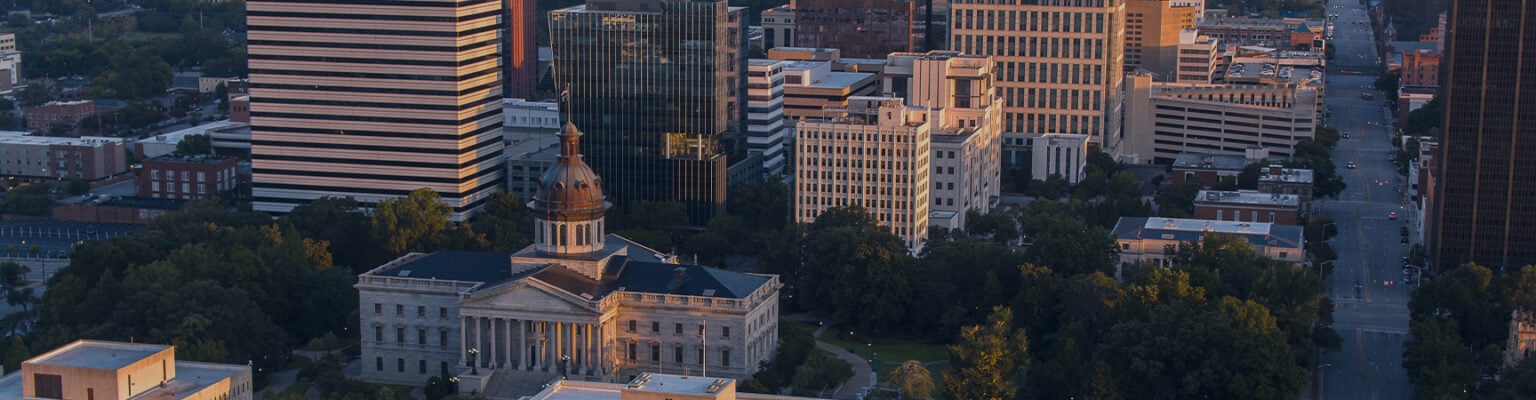
FCI Texarkana at a glance
FCI Texarkana is a low-security federal prison for men in Texarkana, Texas, holding 1,310 people as of September 2026 — 1,081 inside the institution and 229 at the minimum-security satellite camp beside it. Its Residential Drug Abuse Program runs at the camp only, so a man at the low-security institution who qualifies for it has to be transferred out of Texarkana to get it.
| Official name | Federal Correctional Institution, Texarkana |
|---|---|
| BOP code | TEX |
| Security level | Low; men aged 18 and over |
| Population | 1,310 (as of September 2026): 1,081 at the FCI, 229 at the camp |
| Visiting | Saturday, Sunday and federal holidays, 8:00 a.m.–3:00 p.m. · last admission 2:00 p.m. · see visiting hours |
| Inmate mail | FCI: Inmate Name & Register Number · FCI Texarkana · Federal Correctional Institution · P.O. Box 7000 · Texarkana, TX 75505 Camp: Inmate Name & Register Number · FCI Texarkana Camp · Satellite Prison Camp · P.O. Box 9300 · Texarkana, TX 75505 |
| Send money | Lockbox · Western Union (code city FBOP, DC) · MoneyGram (receive code 7932) |
| Phone | 903-838-4587 · Fax 903-223-4424 |
| Street address | 4001 Leopard Drive, Texarkana, TX 75501 · Bowie County |
| Judicial district | Eastern District of Texas, Texarkana Division |
| BOP region | South Central |
| Designated capacity | 952: 748 at the FCI, 204 at the camp |
| Housing | 19 housing units: 1 single-cell, 12 multiple-occupancy cell units, 6 open-bay dormitories |
| Special Housing Unit | Yes · 34 segregation cells |
| RDAP | Camp only |
| UNICOR | Yes |
| Camp | Yes · minimum-security satellite prison camp |
On this page
The original section was dedicated in 1940, which makes it one of the older prisons the Bureau still runs. It sits in Bowie County, a quarter of a mile down Leopard Drive from Interstate 30 and about a mile from the Arkansas line. It is one of the federal prisons in Texas and falls under the Bureau’s South Central Region, administered from Dallas.

Which Texarkana lockup, and which side of the line?
FCI Texarkana and its camp are the federal lockup in Texarkana, a city that sits on two states; the state prison and the local jail nearby are separate systems. Settle which one you need before you go any further, because getting it wrong costs a wasted trip or a filing in the wrong court.
| Lockup | Run by | How to find someone |
|---|---|---|
| FCI Texarkana and its camp (this page) | Federal Bureau of Prisons | BOP Inmate Locator |
| Barry B. Telford Unit, New Boston | Texas Department of Criminal Justice — state | Texas state offender search |
| Bi-State Justice Building jail | Local — Bowie County and the two city governments | Local jail roster |
If the sentence came out of a Texas state court, the person is in the state system and the federal locator will never find them. The heat and air-conditioning litigation in the Texas papers since 2025 belongs to that state system, not to this prison.
Congress wrote the state line into the venue statutes. Under 28 U.S.C. § 124(c)(5) the Texarkana Division of the Eastern District of Texas “comprises the counties of Bowie, Franklin, Red River, and Titus,” and “[c]ourt for the Texarkana Division shall be held at Texarkana, and may be held anywhere within the Federal courthouse in Texarkana that is located astride the State line between Texas and Arkansas.” Under 28 U.S.C. § 83 the Texarkana Division of the Western District of Arkansas — Hempstead, Howard, Lafayette, Little River, Miller, Nevada and Sevier counties — sits in that same building, described in the same words.
So: the prison stands in Bowie County, Texas, and belongs to the Eastern District of Texas. A mother living four blocks away on State Line Avenue, on the Arkansas side, lives in the Western District of Arkansas. Two different United States Attorneys, two different clerks’ offices, two different sets of local rules — inside one federal courthouse that straddles the border. When a lawyer tells you which court a motion goes to, that is what is behind the answer.
The Bureau’s closure announcement of July 1, 2026, named six institutions, three of them Texas low-security prisons: FCI Beaumont Low, FCI Big Spring and FCI La Tuna. Texarkana was not on it, and the Bureau’s roster shows no change here.
What is the security level at FCI Texarkana?
FCI Texarkana is a low-security institution. The satellite prison camp next to it is minimum security. The 2026 PREA auditor recorded the custody levels here as Low, Minimum/In, Out and Community, which is the technical way of saying that the compound runs from men who need a fence to men who go out on work details.
Low security buys two things that matter every week. Outgoing mail may be sealed by the writer and goes out unopened, which is not true at a medium or a penitentiary. And softcover books and magazines may arrive from any source rather than only from a publisher or bookstore.
How designation to the FCI or the camp works
Which side of the fence someone lands on is decided before they arrive, by a security point score and by whether any Public Safety Factor applies under the Bureau’s security designation rules. A Public Safety Factor overrides the points: it keeps a man out of a camp however low he scores, and it is the most misunderstood part of designation. At Texarkana the stakes are unusually high, because the camp holds the drug-treatment program and the institution does not — the first thing to raise with a unit team. Our guides to the intake process and how to prepare for prison cover the first days and the weeks before a self-surrender date.
How crowded is it?
Very crowded. The PREA audit gives the designated capacity as 952 — 748 at the institution and 204 at the camp — against 1,310 people as of September 2026. That is 138 percent of capacity across the site: about 145 percent at the institution, about 112 percent at the camp. The audit records an average daily population of 1,338 over the preceding year and answers “yes” on whether the facility had been over capacity during it.
Crowding is why the visiting room fills, why the commissary line runs against a clock, and — under this institution’s own supplement — why a visit gets cut to two hours.
Who are the notable inmates at FCI Texarkana?
The best-known person held at FCI Texarkana is Terry Lee Loewen, serving twenty years over a 2013 plan to bomb the tarmac at Wichita’s airport; most other names on published lists have left or were never here. Register numbers are given so each person can be looked up.
| Name | Status (September 2026) | Case |
|---|---|---|
| Terry Lee Loewen | Currently held at FCI Texarkana. Register 24134-031; projected release December 28, 2030 | Avionics technician with airport-ramp access who pleaded guilty to attempting to use a weapon of mass destruction over a December 2013 plan to drive a bomb onto the tarmac at Wichita’s airport; the device undercover agents supplied was inert. Twenty years, District of Kansas, August 31, 2015 |
| Joshua James Duggar | Not here. Bureau records place him at FCI Elkton, Ohio, register 42501-509, projected release February 2, 2033 | Convicted in the Western District of Arkansas of receiving child sexual abuse material. KNWA/FOX24 reported on July 13, 2026, with dates from the Bureau, that he moved from FCI Seagoville to FMC Fort Worth on May 29 and reached FCI Elkton on July 8 by way of the Oklahoma City transfer center; that account has no stop at Texarkana |
| C. Ray Nagin | Former. Released March 16, 2022, register 32751-034, last recorded under the Dallas reentry office | Mayor of New Orleans, convicted of bribery, honest-services wire fraud and money laundering. Listings giving his release as 2020 are out of date |
| Keith Russell Judd | Former. Released November 21, 2014, register 11593-051 | Filed for the 2012 Democratic presidential primary from this prison while serving an extortion sentence, and took 41 percent of the West Virginia vote. Listings saying he is still serving it are out of date |
| Ricky D. Ross | Former. Released September 29, 2009, register 05550-045 | The Los Angeles cocaine trafficker known as “Freeway Rick” |
| Daniel C. Morales | Former. Released March 30, 2007, register 28928-180 | Attorney General of Texas, convicted of mail fraud and filing a false tax return |
| Billy Abb Cannon | Former. Released November 28, 1986, register 01727-095 | Heisman Trophy winner convicted of counterfeiting. Listings giving his release as 1992 are out of date |
| Eric Prescott Kay | Not here. Bureau records place him at FCI Englewood, Colorado, register 04401-509, with a projected release of February 18, 2041; the Bureau’s record shows only the current facility, so it does not confirm a stay at Texarkana | Former Los Angeles Angels communications director convicted of distributing fentanyl resulting in death |
Two older names circulate without register numbers: Jimmy Snowden, convicted over the 1964 Mississippi civil-rights murders and said to have been transferred out in 1971, and the New Orleans organized-crime figure Carlos Marcello. Bureau inmate records reach back only to 1982, so neither placement can be confirmed from them, and neither is stated here as fact.
How do I find someone at FCI Texarkana?
Find someone at FCI Texarkana with the Bureau’s free Inmate Locator. Search by the eight-digit register number if you have it; the number is the reliable key, because the locator matches the committed name on the judgment rather than the name anyone actually uses. The locator covers everyone in federal custody since 1982: for someone still held it gives the facility and a projected release date, and for someone released it shows “Not in BOP Custody as of” and a date, with no facility.
On screen the locator gives the prison’s name and type — “Texarkana FCI” for this one — while the code TEX stays in the record behind the page. If the entry names an institution you do not recognize, look it up before booking anything, because it may be a prison a thousand miles away.
A blank result usually means one of three things: the person is in state or local custody rather than federal, they are in pretrial detention under the Marshals Service and not yet designated, or the committed name is spelled differently on the judgment. Our guide to how register numbers work explains how the number is built and what its last three digits tell you about the sentencing district.
How do I write to someone at FCI Texarkana?
Write to someone at FCI Texarkana at P.O. Box 7000, Texarkana, TX 75505, or at P.O. Box 9300 for the satellite camp; the institution and the camp use different boxes. This is the most common mail mistake at Texarkana, because a great many federal prisons share one box between the two and this one does not. The committed name and the eight-digit register number belong on the first line, together.
| For someone at the FCI | For someone at the satellite camp |
|---|---|
| Inmate Name & Register Number FCI Texarkana Federal Correctional Institution P.O. Box 7000 Texarkana, TX 75505 | Inmate Name & Register Number FCI Texarkana Camp Satellite Prison Camp P.O. Box 9300 Texarkana, TX 75505 |
Box 9500 is staff mail. It appears on the front page of the 2026 PREA audit as the facility’s mailing address, and a letter to an incarcerated person sent there goes to the wrong place.
Three local rules go beyond the national ones. Only white envelopes are used, incoming and outgoing. All letter mail is copied except legal mail, and photographs are copied unless they come from a third-party vendor — so what reaches the housing unit is a photocopy, and the original never arrives. And negotiable instruments are returned to sender and never processed in the mail room, which means money enclosed in a letter is never delivered.
Read the handbook’s list of what gets returned as contraband before you mail anything: stationery items, musical greeting cards, cigarettes, maps, food, double-backed Polaroid photographs, and stamps or stamped items. Mail goes out in the units Monday to Friday; there is ordinarily no weekend or holiday service.
Legal mail is treated differently, but only when it is marked. The envelope must carry the attorney’s name, an indication that the sender is an attorney, and the words “Special Mail — Open only in the presence of the inmate.” Marked that way it is opened in front of the addressee and not read; unmarked, it is ordinary mail and gets copied with everything else. The Bureau puts the burden of telling the lawyer on the person inside. See attorney-client communication in the Bureau of Prisons, writing to someone in federal prison and the Bureau’s correspondence rules.
One unusual category: ballots. Incoming mail from a board of elections marked “Official Election Mail,” “Official Election Ballot” or “Ballot Enclosed” is handled as legal mail and signed for, and all outgoing mail to a board of elections is treated as legal mail. Only the District of Columbia, Maine and Vermont let their residents vote while incarcerated, and their materials sit on TRULINCS.
How do I send money to someone at FCI Texarkana?
Send money to someone at FCI Texarkana through the Bureau’s lockbox in Des Moines, Western Union or MoneyGram; money never goes to Texarkana itself. Whichever route you use, the committed name and the eight-digit register number have to appear on the instrument and on the envelope both.
| Route | Where it goes | How fast it posts |
|---|---|---|
| Postal money order or cashier’s check | Federal Bureau of Prisons Committed Name Eight-Digit Register Number Post Office Box 474701 Des Moines, Iowa 50947-0001 | U.S. postal money orders post without a hold. Non-postal money orders and non-government checks carry an automatic 15-day hold |
| Western Union Quick Collect | Code city FBOP, DC, with the register number entered first, no spaces or dashes, followed by the surname | Two to four hours if sent between 7:00 a.m. and 9:00 p.m. Eastern; otherwise by 7:00 a.m. the next morning |
| MoneyGram Express Payment | Receive code 7932, company name Federal Bureau of Prisons, city and state Washington, DC. Online transfers capped at $300 | Same as Western Union |
No cash, no personal checks. The handbook puts the risk on the sender: “The sender has the sole responsibility of sending the funds to the correct inmate. If an incorrect register number and/or name are used and accepted and posted to that inmate, funds may not be returned.” Deposit envelopes must contain nothing but the money order. What each route costs is set out in our guide to sending money to a federal prisoner.
Two limits matter before you send a large sum. The commissary ceiling is $460 a month, so anything beyond that simply sits in the account until the next validation. And a man in refuse status under the Inmate Financial Responsibility Program — for declining to pay on restitution, a fine or a special assessment — has a spending limit of $25 a month and is barred from UNICOR work and from performance pay above maintenance level. Check for refuse status before concluding the account is broken.
What are the visiting hours at FCI Texarkana?
Visiting at FCI Texarkana runs Saturdays, Sundays and all federal holidays, 8:00 a.m. to 3:00 p.m., at the institution and at the camp alike. That schedule comes from institution supplement TEX-5267.09B, dated January 8, 2025, which replaced the 2018 version. Weekday and evening visiting do not exist here at all.
Processing of visitors begins no earlier than 8:00 a.m. and stops one hour before visiting ends — so the last admission is 2:00 p.m. Anyone arriving after 2:00 p.m. is not admitted, even though the room is still open.
The 2023 handbook still prints 8:15 a.m. as the start; the 2025 supplement is later and controls. Call 903-838-4587 before you travel.
Who can visit, and how many
- The visiting list holds no more than 20 people. The handbook words it differently — immediate family plus up to 20 additional adults — and the two documents do not agree. Ask the counselor which the unit is applying.
- Four adult visitors and four minor children at a time. The room’s stated maximum is 150 people, and children are not guaranteed a seat when it is full.
- Five visiting points a month: one point for a regular visiting day, two for a federal holiday. Points do not carry over, though the Warden may waive them over a major holiday period.
- Visitors other than immediate family go through a background check first. The person inside mails out a Visitor Information Form BP-5629; the visitor completes it, signs it and returns it to the counselor. Nobody should travel before being told they are approved.
- Except for immediate family, a visitor may not be on more than one person’s list. New commitments and holdovers must have an approved list before any visit.
- Someone transferred in should not assume the old list carried over. The handbook says to check with the counselor first, in capitals.
Split visits — where more than four authorized adults arrive together — are permitted once and once only. The ones who leave must leave the grounds; waiting in the parking lot, in a vehicle or in the lobby for a second turn is expressly forbidden.
And when the room becomes overcrowded, the supplement imposes a two-hour maximum and says who loses time first: “The officers will apply this action first to those who reside within a two hundred (200) mile radius of FCI Texarkana. If the condition still exists, those who have visited most frequently and for the longest period will be terminated next.” Most prisons cut the frequent visitor first. Texarkana cuts the local one first. If you live in Shreveport, Little Rock or the Dallas suburbs, you are inside that radius.
Visits for people in the Special Housing Unit are by closed-circuit television only, last two hours, and must be booked through the SHU Lieutenant by written request. No photographs with visitors, and the point system still applies.
Attorney visits ordinarily happen during regular visiting hours by appointment through the Unit Manager, but where a court deadline makes it urgent the supplement provides that “such visits will not be limited by normal visiting procedures.” There are private conference rooms inside the visiting room, and attorney visits are not subject to auditory supervision. Two traps for counsel, both to be arranged in advance: recording equipment needs the Warden’s authorization and a written stipulation, and the client may not bring legal papers into the room without prior permission from the Executive Assistant or Warden.
One category is protected unconditionally: consular visits for foreign nationals go ahead “even though the inmate may have had visits suspended through the discipline process or be confined in the SHU.”
What visitors can wear and bring
Khaki is the first thing to leave at home. The men at the institution wear issued khaki and the men at the camp forest green, and the visitor dress code bars khaki outright — pants, shirt, blouse, anything. Also barred: skirts, dresses and culottes above the knee when standing or with a split, including wrap-arounds; shorts of any length except on children aged 12 and under; halter, tube, tank and crop tops; anything exposing the midriff; going without a bra; spandex; see-through clothing, which the supplement says includes a plain white T-shirt; form-fitting clothing; sweatpants and jogging suits. Capri pants must reach the calf. Hats of every kind are out, baseball caps, cowboy hats, sombreros, head wraps and headbands all named. No open-toed or open-backed shoes.
The Front Lobby Officer decides on attire and can refuse a visit on it, with a contested case going to the Operations Lieutenant — so dress for the stricter reading. You may carry in a small clear plastic bag with no more than $40 per adult for the vending machines, no bill larger than $5, plus one card each. The handbook still says $20; the supplement is newer. Also permitted: a handkerchief, a comb or hairbrush, keys without pictures on the fob, and sealed feminine hygiene items.
For an infant: three clear nursing bottles, three diapers, wet wipes and one small blanket, with premixed formula or sealed original containers. Attachment D to the same supplement adds two sealed jars of baby food, which the body of the document does not. Powders, ointments, creams, bowls, cups, carriers and strollers are all prohibited, and a diaper bag must be clear plastic. A nursing area is unlocked on request, one adult at a time. Children may bring no toys, books, cards, dolls, crayons or games; the children’s area inside the visiting room is staffed “when Contract Staff are available, space permitting,” which is to say not reliably.
Prohibited altogether: anything with cellular capability, phone watches included; food, chewing gum and medication, with nitroglycerine the only exception; handbags, umbrellas, cameras, instant photographs and photographs on key chains or necklaces, photo albums, radios, blankets, pocket knives, electronic games, personal papers or legal documents, newspapers, magazines, books, pens and pencils, utensils, sports bottles, non-prescription sunglasses, luggage and tape recorders. Everything else stays in the car; the institution stores nothing.
The person you are visiting is equally restricted: one pair of prescription glasses, one comb, one plain wedding band, one religious medallion, one white handkerchief. He must be in a pressed issued uniform with institution shoes — sneakers are barred from visitation, and a man with a soft-shoe permit is given loaner shoes for the visit. Inhalers and other emergency medication sit at the officer’s desk.
Identification, screening and the ion scanner
Government photo identification is required from everyone aged 16 and over: a state driver’s license, a state identification card, an immigration card, military identification or a passport. The supplement names what will not work — credit cards, store cards, school identification, birth certificates, Social Security cards. A child under 16 must be with a responsible adult over 18 who is also on the approved list.
Everyone walks through a metal detector. Vehicles may be searched at random or wholesale, with the owner present and standing at least twenty feet away. Visitors are marked with an identifying stamp before the control sallyport and re-checked under black light on the way out, and every visitor is subject to a pat search by a staff member of the same sex. Refusing any part of it means leaving the grounds, and the Captain must approve any return visit. See our guide to searches, shakedowns and contraband.
Then there is the ion scanner, where families most often get into trouble. Texarkana runs an electronic drug detection machine on visitors at random. The supplement sets out exactly what a positive costs, and it escalates: a first positive suspends that visitor for 48 hours; a second within one month, 30 days; a third after a 30-day suspension, 90 days; a fourth after that, 180 days. A positive more than a month after the first resets the ladder to first occurrence. Trace contamination on a banknote or a car door is enough to trigger one of these machines, and there is no hearing.
One protection is written into the same paragraph: “No disciplinary action shall be taken against an inmate when an individual scheduled to visit the inmate tests positive.” The suspension lands on the visitor, not on the person inside. If an incident report is written anyway, that sentence is the first thing to put in front of the Unit Discipline Committee.
Inside, every man at the institution is pat-searched before a visit and visually searched afterward; camp residents are pat-searched, with visual searches at random. The whole room is under video camera. Our general guide to federal prison visitation and the Bureau’s visiting regulations cover the system-wide rules.
Getting there
The supplement’s own directions: from Interstate 30 westbound take Exit 220A to the Lake Drive and Leopard Drive exit, stay in the middle lane, go through the intersection and move into the right lane, turn right at the stop sign onto Leopard Drive and continue south about a quarter of a mile. Camp visitors use the camp entrance; institution visitors use the main entrance. The handbook gives a different route — off Interstate 30 south on Highway 59, then to Leopard Drive, with the institution about a mile down on the left — which reaches the same gate.
Texarkana Regional Airport is minutes away on the Arkansas side of the line; on the handbook’s own mileages Shreveport is 70 miles south, Little Rock 145 miles northeast and the Dallas-Fort Worth airports 175 miles west. Getting to the gate is the visitor’s own responsibility, and there is a pay phone in the front lobby.
How do phone calls and email work at FCI Texarkana?
Phone calls at FCI Texarkana go out, never in, and email runs on TRULINCS. The number has to be on an approved list of 30, entered through TRULINCS, and the caller uses a nine-digit personal access code plus voice verification. Across the Bureau the allowance is 510 minutes a calendar month under the Bureau’s telephone regulations, Program Statement 5264.09, issued September 3, 2026: 300 minutes free to anyone eligible for First Step Act telephone incentives, and 210 more that anyone may buy after using up those 300. Properly arranged unmonitored legal calls do not count against the 510.
Texarkana’s 2023 handbook still says 300 minutes a month, and still promises an extra 100 minutes in November and December. Both figures are obsolete. The holiday supplement belonged to the 2008 telephone policy that the September 2026 program statement rescinded, and a family budgeting around extra Christmas minutes is budgeting around a rule that no longer exists.
Locally the phones run from 6:00 a.m. to 10:00 p.m., with the system down overnight for maintenance. The catch is in the middle of the day: the handbook records that access is normally limited Monday to Friday from 7:30 to 11:30 in the morning and from 12:30 until after the 4:00 p.m. count clears. A call that never comes at two on a Tuesday afternoon is the schedule, not a snub.
A single call should generally not exceed 15 minutes, and a 30-minute wait follows before the next one. Three-way calls, call forwarding and lending a personal access code are all disciplinary offenses. See our guide to federal inmate phone calls.
An unmonitored call with counsel has to be arranged through the Unit Team, and the handbook sets the threshold: the person “must demonstrate to the Unit Team the need, such as an imminent court deadline.” He pays for it, and the institution prefers it placed collect. Build the request around a date on a docket, not around a wish to talk.
Families reach TRULINCS email through CorrLinks: text only, no attachments, 13,000 characters a message, charged by the minute. The same system carries account transactions, the electronic law library, prescription refill requests, and a Request to Staff function with a standard Department of Justice mailbox for reporting sexual abuse directly to the Inspector General. Charges and set-up are covered on our CorrLinks and TRULINCS page.
Email with a lawyer is not privileged. Privileged written communication has to travel as marked special mail on paper.
What can people buy at the FCI Texarkana commissary?
People at FCI Texarkana can spend up to $460 a month at the commissary, the national limit in the Bureau’s trust fund rules, Program Statement 4500.13, issued May 7, 2026; it rises by $50 during the November and December holiday period, for no more than one validation period. Items excluded from the limit include stamps, copy cards and over-the-counter medicines; the order form marks the exempt items with an asterisk.
This institution’s own handbook says the national spending limit is $320. That figure has been superseded twice — first to $360, then to $460 by the May 2026 program statement, which records the increase in its own change log. Listings that give $320 or $360, including the 2023 handbook, are out of date.
Texarkana’s commissary order form (2026) prints its rules at the bottom: no additions or substitutions once the form is submitted; once you take the receipt and leave the window the sale is complete; stay inside the commissary until the move is called; and stay off the pavement in front of Education and the Hospital.
What the money buys tells you something. A SCOR 7C tablet is $99.45 and its case $9.10 — most of a month’s ceiling for the device that carries music and messaging. Nike Air Force sneakers are $99.95, against a national property cap of $100 on athletic shoes. A radio is $26.00, a book of stamps $15.60 with a limit of two, coffee $4.25 for the house brand, mackerel $1.15 with a limit of twelve. Ice cream is seasonal at $3.30, flavor of the day listed on a board.
Two details on that sheet stand out. Sixty-odd items carry a kosher, halal or heart-healthy mark, so a religious or medical diet can be assembled from the window rather than only from the food line. And typewriter ribbons at $10.10 and lift-off correction tape at $14.30 are still stocked, which tells you how a man without a lawyer prepares a motion here. Our page on the federal prison commissary covers the national rules and what the money actually buys.
What programs are available at FCI Texarkana?
FCI Texarkana offers drug treatment, with the residential program at the camp only, Pell-funded college courses, literacy and GED classes, vocational training, UNICOR factory work, and faith-based and reentry programming.
RDAP runs at the camp, not at the institution
The Residential Drug Abuse Program at Texarkana, run under the Bureau’s drug treatment rules, operates at the satellite camp and nowhere else on the site. The institution’s handbook states it directly: the drug programs “are available to all inmates at both facilities except for the RDAP which is only at our Camp. If an inmate applies to and is found qualified for the RDAP, but is not able to enroll in the program at our Camp, he will be transferred to a facility commensurate with his security need.”
A page later it repeats the point: “Any inmate determined to be eligible for RDAP from the FCI will have to be transferred to an RDAP facility for program participation.”
The Bureau’s national list agrees. The RDAP location list in the First Step Act Approved Programs Guide (2026), updated in June 2026, totals 57 programs at 50 locations, and the entry for this site reads “SCP Texarkana (TX)” — the camp, not the institution.
So a man at the low-security institution with a documented substance-use disorder and a year of his sentence potentially at stake under 18 U.S.C. § 3621(e) is looking at a transfer, not a class down the corridor — a waiting list, a move away from whatever visiting pattern a family has built, and months of delay at the point in a sentence when months matter. The handbook says interviews ordinarily happen between 48 and 24 months from release, so the application has to be in before the window, not when it opens.
For the men who do reach it, the handbook records that this is “one of two Comprehensive Drug Abuse Programs in minimum security level facilities within the South Central Region.” The other on the Bureau’s regional list is FPC Bryan, which holds women. Staff work from a dedicated RDAP building beside the camp’s outdoor recreation area.
Drug Abuse Education and the non-residential program do run at both, with a drug-program open house at the institution on Thursdays from 10:30 a.m. to noon. The handbook states that “[t]his institution does not have a Resolve Program,” and Texarkana is not a Sex Offender Management Program institution, so that treatment likewise means a transfer.
Education, college courses and vocational training
Texarkana is one of sixteen federal prisons the Bureau names as offering post-secondary education funded by Pell grants. The August 2026 programs guide lists the sites in a single line — ATL, BEN, BML, BMM, BSY, DAN, ERE, ELK, GIL, LVN, MIL, PEK, RBK, TEX, TDG and WIL — with coursework leading to an associate or bachelor’s degree taught by credentialed instructors from the community. Out of 118 federal institutions that is a short list, and it is the strongest single reason a family might prefer this designation to a comparable low elsewhere in the region.
Below that sits the mandatory floor: 240 instructional hours of literacy classes, or a GED, for anyone without a high school credential. The handbook attaches a sanction most people never hear about until it bites — a guilty finding on an incident report connected to literacy enrollment flips the assignment to unsatisfactory progress, good conduct time stops vesting, and another 240 hours are required before it can be changed back. English as a second language is compulsory for anyone testing below eighth-grade proficiency, whatever degrees they hold.
On vocational training, the handbook names three programs in the same paragraph as the camp drug program — air conditioning, small engines and automotive repair — and the August 2026 guide separately marks apprenticeship training, vocational training and a technical certificate track as approved here. Apprenticeships registered with the Department of Labor carry a certificate that means something outside. For how these credentials work outside Texarkana, see prison education and vocational training.
The law library here is electronic. The Bureau’s legal activities rules, Program Statement 1315.08 (2026), which the Bureau’s Texarkana page links under “Legal Activities,” eliminated the requirement to maintain physical law libraries system-wide; research now runs through TRULINCS, with a copier in the Education Department and free copies for the indigent through the Unit Team. Case Managers notarize documents under 18 U.S.C. § 4004, and the SF-95 that starts a Federal Tort Claims Act claim comes from the Safety Department.
UNICOR and work assignments
Everyone medically cleared works. Food service, unit orderly and maintenance jobs are the usual first assignment, and the factory, the institution’s largest employer of incarcerated workers, is the step up. The shape of Texarkana’s day is built around it: UNICOR work call at 6:45 in the morning and again at 11:05, a one-way move from the factory to the food line at about 10:25, and factory recall at 2:45. The factory gives priority to men with large court-ordered financial obligations; refuse status under the Inmate Financial Responsibility Program bars the job altogether. What that factory has done here is set out in the oversight section below.
Faith-based and reentry programming
Religious Services runs worship, study groups and the religious diet program from two chapels — one at the institution, on the right of the corridor from Education toward the recreation yard, and one at the camp at the end of the hallway from the visiting room. Community volunteers lead a good deal of it; the March 2026 audit counted 19 cleared to enter. The August 2026 guide marks Threshold, the Bureau’s faith-based reentry course, as approved here, and does not name Texarkana for Life Connections.
Reentry programming beyond that runs heavily to health and aging: the guide marks nine separate courses here aimed at older adults, from chronic-condition self-management to falls prevention and financial literacy for the over-fifties. That is a fair description of who is here — the audit put the age range at 19 to 81 at the institution and 22 to 70 at the camp.
A caution that applies to every line of the guide: it lists which programs are approved to be offered, and approval is not delivery. Of the 90 program entries the guide carries for Texarkana, only three name this institution explicitly — Federal Prison Industries, post-secondary education and the camp drug program. The rest say the program “may be offered at all BOP institutions,” which is permission, not a report that anything is happening. Whether a class is running is a question for the unit team, in writing.
What is daily life like at FCI Texarkana?
The shape of the day
Daily life at FCI Texarkana runs to a movement schedule that the handbook prints minute by minute, which is unusual. Here is the shape of it.
| Weekdays | Weekends and holidays | |
|---|---|---|
| Wake-up | 6:00 a.m. | |
| Breakfast | 6:00–7:00 a.m. | Coffee hour 7:00–8:00 a.m. |
| Main meal | Lunch 10:30 a.m. | Brunch after the 10:00 a.m. count clears |
| Dinner | Directly after the evening recreation move, about 4:35 p.m. | |
| Counts | Midnight, 3:00 a.m., 5:00 a.m., 4:00 p.m., 9:30 p.m. | The same five, plus 10:00 a.m. |
| Stand-up counts | 4:00 p.m. and 9:30 p.m. | 10:00 a.m., 4:00 p.m. and 9:30 p.m. |
| Controlled movement | Ten minutes on the half hour — five minutes inbound, five outbound | On the hour |
| Cells ready for inspection | 7:30 a.m. – 4:00 p.m. | By 10:00 a.m. |
| Telephones | 6:00 a.m. – 10:00 p.m., access limited 7:30–11:30 a.m. and 12:30 p.m. to after the 4:00 p.m. count | 6:00 a.m. – 10:00 p.m. |
| Television rooms | Close at 10:00 p.m.; later only on the Captain’s memorandum | |
Source: FCI and SPC Texarkana Admission & Orientation Handbook (2023). Schedules change; treat this as the shape of the day rather than a guarantee.
Call-outs for the next day’s medical, dental, education and team appointments go up on the unit board after 6:00 p.m. the night before, so missing one is on the man who did not read it.
Housing, recreation and the television
The March 2026 PREA audit gives the fullest public description of the physical plant: 67 buildings, 19 housing units — one single-cell, twelve multiple-occupancy cell units and six open-bay dormitories — and 34 segregation cells. One unit, G-Unit, is built in cubicles rather than rooms, a design the handbook singles out with its own clothing rule.
Televisions here have no speakers. Every set has been modified to transmit on a radio frequency, so a personal radio and earphones are needed to hear anything, and programming is chosen by a unit television committee rather than by whoever holds the remote. That is why the radio at $26 on the commissary sheet is not a luxury item.
Recreation covers sports, fitness, table games, hobby craft, music and film, under the Zimmer Amendment restrictions that apply across the Bureau: no R, X or NC-17 films, no instruction in any martial art or in weightlifting, no electric instruments. The barber shop is on the west side of the Modular Unit, with a sign-up clipboard on the wall, and the institution has been smoke-free since April 1, 2006.
One rule matters to anyone inclined to file documents. Uniform Commercial Code lien documents, and any document carrying the home address, telephone number or Social Security number of a judge, juror, witness, informant, prosecutor or Bureau staff member, are contraband here and can be referred for prosecution under 18 U.S.C. §§ 119 and 1521.
Medical and dental care
Sick call here is called triage, and it runs four days a week, not five: Monday, Tuesday, Thursday and Friday, excluding holidays. Wednesday is physicals day — admission examinations, annual examinations for the over-fifties and pre-release examinations. A man who wakes up unwell on a Wednesday either waits until Thursday or submits a written request to his provider.
Sign-up is narrow: 6:30 to 6:45 in the morning at the camp, 6:30 to 7:00 in the Health Services lobby at the institution. Same-day appointments are handed out at sign-up, and arriving late for one can mean starting again at triage the next day.
On-site medical staff cover 14 hours a day, 6 in the morning to 8 at night, seven days a week; listings that give 16 hours are out of date. Emergency care is available around the clock; for the other ten hours the Clinical Director or a designee decides between the local emergency room and calling staff back in. First responders must begin CPR, use a defibrillator or give first aid within four minutes.
The 2023 handbook lists the establishment: one full-time physician, one full-time dentist, a health systems administrator and an assistant, two mid-level practitioners, six registered nurses, a pharmacist, a medication technician, an infectious-disease coordinator, a radiology technologist and support staff. One physician and one dentist, on paper, for a site holding 1,310 people as of September 2026.
A $2 co-payment applies to any visit the patient requests, waived for staff referrals, chronic-care follow-up, preventive care, emergencies, infectious disease, mental health and substance abuse treatment; indigence means no trust fund balance of $6 for 30 days. Emergency admissions go to the community hospital in Texarkana, planned surgery to a Bureau medical facility. Someone who has exhausted the internal complaint route may write to The Joint Commission’s Office of Quality Monitoring, a step the handbook prints with an address and a telephone number. See our guide to medical care in federal prison and the Bureau’s patient care rules.
What do inspectors say about conditions at FCI Texarkana?
Inspectors have said little about conditions at FCI Texarkana itself: the only independent examination that happens on a cycle is the Prison Rape Elimination Act audit, which looks at one subject and which the institution passed in 2026 with seven standards exceeded. The DOJ Office of the Inspector General has not conducted an on-site inspection of this facility, and neither has the District of Columbia’s Corrections Information Council, which inspects the federal prisons holding D.C. residents.
The Inspector General’s file is not empty, though, and it is unusual. Seventeen OIG products name FCI Texarkana. Eleven are criminal or civil case announcements, and nine of those concern contraband smuggling or bribery by staff and by prisoners between 2011 and 2024. One is a staff survey that publishes results for “Texarkana FCI” by name. And one is a 433-page investigation of the factory on this compound.
The March 2026 PREA audit
FCI Texarkana was audited under the Prison Rape Elimination Act on March 3–5, 2026, by Valerie Wolfe Mahfood of Corrections Consulting Services, an independent auditor. The final report is dated April 9, 2026.
The result was strong: seven standards exceeded, 38 met, none unmet, no corrective action required. The exceeded standards were the zero-tolerance policy, the staffing plan, employee training, volunteer and contractor training, inmate education, care for victims and audit cooperation. The auditor recorded full access to every area and private interviews with 20 randomly selected and 21 targeted residents.
Four allegations of sexual abuse were reported in the twelve months before the audit, all inmate-on-inmate and none involving staff, plus one of sexual harassment. Three abuse allegations were closed as unsubstantiated and one was substantiated; no criminal investigation was opened in any of them. Unlike some audits, this one had no locked files — the auditor reviewed all four investigation records. She found two gaps in protections residents rely on, and neither worked as intended.
- The rape crisis hotline could not be reached from the prison telephones. The report records that “at the time of the onsite portion of the audit, the inmate phone system did not currently allow inmates to dial the toll-free rape crisis center number from the inmate phones without that number being first added to inmate phone lists.” The institution responded by training incoming and current residents and adding the point to the handbook.
- Opposite-gender announcements were not routine. “[A]s many inmates stated that female staff do not routinely conduct opposite gender announcements, additional training was provided to all staff.” Announcing entry to a housing unit is the mechanism that lets a man in a dormitory know to be dressed.
The audit also records that the institution “has attempted to negotiate a contract between itself and several local rape crises centers. However, to date, the facility has been unable to do so.” Advocacy is by telephone through the RAINN national hotline and by staff trained as advocates, and forensic examinations are done at a local hospital rather than on site. Beyond its own subject, the audit is the most detailed public description of this prison:
| Buildings | 67 |
|---|---|
| Housing units | 19 — one single-cell, twelve multiple-occupancy cell units, six open-bay dormitories |
| Segregation cells | 34 |
| Designated capacity | 952 (748 institution, 204 camp) |
| Population on day one of the audit | 1,319 |
| Staff who may have inmate contact | 252, of whom 13 were hired in the preceding year |
| Contractors / volunteers on site | 13 / 19 |
| Age range | 19–81 at the institution; 22–70 at the camp |
| Average length of stay | 737.5 days at the institution; 347.3 days at the camp |
| Accreditation in the last three years | American Correctional Association only |
On day one of the audit, 122 of the 1,319 men held here had disclosed prior sexual victimization during risk screening, twelve had reported being abused in this facility, seven identified as transgender or intersex, 39 had a physical disability and ten were limited English proficient. Nobody was in segregated housing either for risk of sexual victimization or for having reported abuse. Putting a man who reports an assault into the Special Housing Unit is the classic disincentive to reporting.
One caution about that description. The institution told the auditor it had made “substantial expansions or modifications to the existing facilities” and was “in the process of installing and updating the video monitoring systems,” so the layout the 2023 handbook describes may already have changed.
What GAO counted, 2020 to 2024
In May 2026 the Government Accountability Office published the first per-institution count of sexual abuse allegations across the whole federal system, covering 2020 to 2024. Texarkana’s rows read as follows.
| Alleged perpetrator | 2020 | 2021 | 2022 | 2023 | 2024 | Total |
|---|---|---|---|---|---|---|
| Another incarcerated person | 3 | 6 | 4 | 2 | 6 | 21 |
| A staff member | 2 | 1 | 4 | 5 | 2 | 14 |
These are reported allegations, not findings: GAO’s own analysis of 2014 through 2022 found that “most allegations resulted in an unsubstantiated outcome, meaning there was not enough evidence to support the allegation did or did not occur” — and unsubstantiated does not mean false. The two rows come from different Bureau systems with different as-of dates, the first counting by year of incident and the second by year of report, so they cannot be added. GAO does not adjust for population anywhere, so a prison of 1,300 out-counts a prison of 500 at identical risk, and a low count can equally mean nobody feels safe reporting.
The Inspector General and the recycling factory
The Inspector General’s investigators have been inside FCI Texarkana, but not to inspect the prison. They came for the factory. Between November 2006 and February 2009 a team drawn from the OIG, OSHA, the National Institute for Occupational Safety and Health, the Federal Occupational Health service and the Environmental Protection Agency visited eight of the ten federal prisons where UNICOR was recycling electronic waste. Texarkana was one, and its section of the report runs five pages. It is an investigation of UNICOR’s recycling program rather than an inspection of the prison, and its findings here are about the factory: it found that delays in upgrading respiratory protection and starting medical surveillance at FCIs Elkton and Texarkana “placed staff and inmates at further risk of harm.”
Its account of this compound is specific. Recycling began here in October 2001 with two technicians and about fifteen men, and grew fast: within a few years roughly six staff and between 80 and 150 incarcerated workers were processing six to eight million pounds of electronics a year, in a warehouse outside the perimeter and in the basement of the factory inside. The dangerous part was breaking cathode ray tubes, which hold two to five pounds of lead apiece and throw off cadmium and lead dust when smashed.
Men here had been breaking that glass since December 2001 in paper dust masks. They were not fit-tested for respirators until September 2002 and did not have them until October, and medical surveillance did not begin until more than six months after air tests at another UNICOR prison showed exposures above OSHA limits. The institution’s own Safety Manager told investigators that UNICOR had never informed him of the hazard and had never sent him those results; by late September 2002 he was prepared to shut the operation down unless testing was done.
The factory manager asked repeatedly for a proper enclosure, calling the existing one “not up to standard.” Six months after the first request a UNICOR headquarters program manager wrote internally that “Texarkana is currently operating a glass operation with no ‘booth’ (per se) that is similar to the other locations.” Headquarters eventually released about $19,000 and a seven-zone booth opened at the camp warehouse in June 2004.
Two further details stand out. Until 2004 dust from the glass-breaking area was captured by the old furniture factory’s ventilation system and thrown in the trash or, on the account of a former Associate Warden from another prison who visited Texarkana, mixed with that factory’s sawdust, which was being sold to a particle board manufacturer. And as late as 2008 neither the factory manager nor the Safety Manager knew that such filters were treated as hazardous waste elsewhere in UNICOR. Tested here in 2009, they exceeded the regulatory toxicity thresholds.
Glass breaking stopped at every UNICOR factory in May 2009. The report, published on October 21, 2010, states that electronic waste recycling itself continued here, and a Texarkana Gazette report of April 9, 2024, describes the operation as still running and still employing federal prisoners. Anyone whose family member worked in that factory in the 2000s and has since had unexplained health problems should read the report itself and talk to a lawyer about it.
FCI Texarkana in the news
Recent news about FCI Texarkana centers on a 2026 family event, a former employee’s lawsuit and a death in custody; older items concern prosecutions of staff and prisoners from 2014 to 2024 and deaths in custody in 2020 and 2021.
- June 2026 — a family event. The Texarkana Gazette reported on June 21 that “[s]ixteen men had the chance to look past prison bars after a recent family-centered event at FCI Texarkana.”
- April 2026 — a former employee sued over his termination. The Texarkana Gazette reported on April 22 that the man “claims he lost his job after blowing the whistle.” No court docket is cited here, and nothing is stated about the merits.
- March 2026 — a death in custody. The Bureau reported that on Monday, March 2, at approximately 4:45 p.m., Dixon Kelley III was found unresponsive; responding employees initiated life-saving measures, emergency medical services were requested, and he was pronounced deceased by EMS personnel. The FBI and the Marshals Service were notified, and the release gives no cause of death. It gives his age as 52 and says he was serving a 177-month sentence for bank robbery imposed in the Eastern District of Texas.
- December 2024 — a licensed nurse practitioner assigned to the institution pleaded guilty and was sentenced for theft of government property, receiving one year of probation and ordered to pay $181.83 in restitution.
- September 2024 — a prisoner was sentenced for dealing inside. Verlan Perez, Jr., 36, of Dallas, received 87 months consecutive to an existing 157-month sentence for conspiracy to distribute methamphetamine and buprenorphine; prosecutors said he had distributed 43 grams of methamphetamine inside FCI Texarkana.
- December 2020 to August 2021 — the Bureau posted two news releases reporting the deaths of people held at FCI Texarkana; the Bureau’s releases are listed on its press release page.
- 2020 to 2021 — a cluster of smuggling and bribery prosecutions, announced by the Inspector General against a former correctional officer and several prisoners, including a case in which a prisoner “agree[d] to extend [his] stay after smuggling drugs into FCI Texarkana.”
- November 2014 — a member of staff was convicted of having sex with a prisoner.
Frequently asked questions about FCI Texarkana
What is FCI Texarkana?
A low-security federal prison for men in Texarkana, Texas, run by the Federal Bureau of Prisons, with a minimum-security satellite prison camp beside it. The original section was dedicated in 1940. As of September 2026 it held 1,310 people — 1,081 at the institution and 229 at the camp.
Does FCI Texarkana have RDAP?
Only at the camp. The institution’s own handbook says the Residential Drug Abuse Program “is only at our Camp,” and that a man at the low-security institution who qualifies “will have to be transferred to an RDAP facility for program participation.” The Bureau’s First Step Act Approved Programs Guide (2026) says the same: its RDAP location list names “SCP Texarkana” and not the FCI.
What are FCI Texarkana’s visiting hours?
Saturdays, Sundays and all federal holidays, 8:00 a.m. to 3:00 p.m., at both the institution and the camp, under institution supplement TEX-5267.09B (2025). Processing stops one hour before visiting ends, so the last admission is 2:00 p.m. The 2023 handbook still prints 8:15 a.m.; call 903-838-4587 before traveling.
What is the address for mail to FCI Texarkana?
The institution and the camp use different boxes, which is the most common mistake here. For the FCI: Inmate Name and Register Number, FCI Texarkana, P.O. Box 7000, Texarkana, TX 75505. For the camp: Inmate Name and Register Number, FCI Texarkana Camp, Satellite Prison Camp, P.O. Box 9300, Texarkana, TX 75505. Box 9500 is staff mail.
How much can someone spend at the FCI Texarkana commissary?
$460 a month, under Program Statement 4500.13 (2026), rising by $50 during the November and December holiday period for no more than one validation period. Excluded items include stamps, copy cards and over-the-counter medicines. Figures of $320 or $360 — including the $320 in this institution’s own 2023 handbook — are out of date.
Which federal court covers FCI Texarkana?
The Eastern District of Texas, Texarkana Division, which under 28 U.S.C. § 124(c)(5) comprises Bowie, Franklin, Red River and Titus counties. A family on the Arkansas side of the city is in the Western District of Arkansas, Texarkana Division. Both courts sit in the same courthouse, which both statutes describe as “located astride the State line between Texas and Arkansas.”
How crowded is FCI Texarkana?
The March 2026 Prison Rape Elimination Act audit gives the designated capacity as 952 — 748 at the institution and 204 at the camp — against 1,310 people as of September 2026. That is about 138 percent of designated capacity, and the audit recorded an average daily population of 1,338 over the preceding year.
Who is the best-known person held at FCI Texarkana?
Terry Lee Loewen, register 24134-031, serving 20 years for attempting to use a weapon of mass destruction after a 2013 plot to drive a bomb onto the tarmac at Wichita’s airport, projected release December 28, 2030. Other names attached to this prison online are out of date: Keith Judd was released in 2014, Ray Nagin in 2022, and Bureau records place Joshua Duggar at FCI Elkton in Ohio.
Can a visitor be turned away by a drug scanner at FCI Texarkana?
Yes. The institution runs an electronic drug detection machine on visitors at random, and its supplement sets a fixed ladder: a first positive suspends that visitor for 48 hours, a second within a month for 30 days, a third for 90 days and a fourth for 180 days. The same paragraph provides that “[n]o disciplinary action shall be taken against an inmate when an individual scheduled to visit the inmate tests positive.”
Does FCI Texarkana offer college courses?
Yes. The Bureau’s First Step Act Approved Programs Guide (2026) names Texarkana as one of sixteen federal institutions offering post-secondary education funded by Pell grants, leading to an associate or bachelor’s degree. Approval is not the same as a class running this term, so ask the unit team what is enrolling.
How many phone minutes does someone at FCI Texarkana get?
510 minutes per calendar month under Program Statement 5264.09 (2026): 300 free to anyone eligible for First Step Act telephone incentives, and 210 more that anyone may buy after using up those 300. A single call should generally not exceed 15 minutes, with a 30-minute wait before the next. The extra 100 minutes in November and December that the 2023 handbook still promises belonged to the older policy and no longer exists.
Has FCI Texarkana been inspected?
FCI Texarkana passed an independent Prison Rape Elimination Act audit conducted on site March 3–5, 2026, with seven standards exceeded, 38 met and none unmet. The DOJ Office of the Inspector General has not conducted an on-site inspection of this facility, and the District of Columbia’s Corrections Information Council has never inspected it. Inspector General investigators did visit between 2006 and 2009, but for a Bureau-wide investigation of the UNICOR electronic waste factory.
Is FCI Texarkana closing?
No. The Bureau’s closure announcement of July 1, 2026, named six institutions, three of them Texas low-security prisons — FCI Beaumont Low, FCI Big Spring and FCI La Tuna. Texarkana was not among them and remains on the Bureau’s roster.
Problems at FCI Texarkana: where we can help
The problems that recur here are visible in the institution’s own record: a compound at 138 percent of capacity, a factory economy, a drug program on the wrong side of the fence for most of the population, and an Inspector General file dominated by contraband and bribery. These are the questions that come from Texarkana.
- RDAP access and the section 3621(e) year. Because the program runs only at the camp, a qualifying man at the institution faces a transfer request, a waiting list and a clock. Whether he is eligible, whether a Public Safety Factor is blocking a camp designation, and whether the referral went in early enough are all arguable. See our RDAP practice and our guide to federal prison transfers.
- Disciplinary proceedings arising from contraband. Nine of the eleven Inspector General case announcements naming this institution concern smuggling or bribery, and a compound under that interdiction pressure writes a lot of incident reports. A finding can cost good conduct time and First Step Act credits at once, and the hearing is where that is fought.
- Special Housing Unit placements that outlast their justification under the Bureau’s SHU rules. There are 34 segregation cells here and visits from them are by closed-circuit television only. Protective custody raises its own questions.
- Visiting suspensions after an ion-scanner positive. A trace reading costs a visitor 48 hours to six months on a fixed ladder with no hearing, and the supplement itself says no discipline may follow for the person inside. If an incident report was written anyway, that sentence is the answer.
- Medical care that is not happening. One physician and one dentist serve 1,310 people, and triage runs four days a week. The route is a written request to staff, then the administrative remedy process, every rung of which has a deadline. Where negligence has caused injury, a Federal Tort Claims Act claim starts with an SF-95.
- Historical UNICOR exposure. Men worked the electronic waste operation here from 2001 onward, and the Inspector General found they broke leaded glass in paper masks for the better part of a year. Anyone with that work history and an unexplained illness should have the report and their medical file read together.
- First Step Act time credits at this institution — whether they are being earned here, calculated correctly under the Bureau’s time credit rules, and actually applied.
- Halfway house and home confinement placement, which runs through the reentry office for the district a man releases to: for Texas, RRM Dallas covers the Northern District and RRM San Antonio the Eastern, Southern and Western.
- Financial responsibility refuse status, which drops the commissary limit to $25 a month and closes off factory work, often over a payment schedule that can be renegotiated.
- Compassionate release under the Bureau’s reduction-in-sentence rules, detainers and sentence computation errors, and other routes to early release from federal prison.
- Challenges to the conviction or sentence itself, through a direct appeal or a § 2255 motion.
Elizabeth Franklin-Best, P.C. handles federal criminal defense, appeals and post-conviction matters nationwide, and advises families on Bureau of Prisons issues at institutions across the system. Call (843) 620-1100 or contact us to talk through a specific situation.
Christopher Zoukis, JD, MBA, the firm’s Managing Director, writes and maintains the federal prison policy material on this site. He is not counsel of record; legal representation is provided by Elizabeth Franklin-Best.
Sources and currency
Bureau of Prisons documents
- FCI Texarkana, Federal Bureau of Prisons, 2026. The Bureau’s facility page, with address, contact details, mailing addresses, population, region, county and judicial district.
- FCI Texarkana Commissary Shopping List, Federal Bureau of Prisons, FCI Texarkana, 2026. Prices, quantity limits, dietary marks and shopping rules.
- Institution Supplement TEX-5267.09B, Visiting Regulations, Federal Bureau of Prisons, FCI Texarkana, 2025. Hours, points, visitor numbers and lists, split visits, termination priority, dress, permitted items, screening, the ion scanner, attorney and consular visits, and directions; replaced Institution Supplement TEX-5267.09 (2018).
- FCI and SPC Texarkana Inmate Admission and Orientation Handbook, Federal Bureau of Prisons, FCI Texarkana, 2023. History, schedule, counts, movement, mail, telephone, TRULINCS, commissary, education, drug programs, medical services and property.
- Manual de Admisión y Orientación para los Reclusos, Federal Bureau of Prisons, FCI Texarkana, 2023. The Spanish edition of the handbook.
- RRM Dallas, Federal Bureau of Prisons, 2026. The reentry office and the judicial districts it serves.
- RRM San Antonio, Federal Bureau of Prisons, 2026. The reentry office and the judicial districts it serves.
- Inmate Legal Activities, Program Statement 1315.08, Federal Bureau of Prisons, 2026. The electronic law library.
- Trust Fund/Deposit Fund Manual, Program Statement 4500.13, Federal Bureau of Prisons, 2026. The $460 commissary spending limit, raised from $360, the $50 holiday increase and the exclusions.
- Inmate Telephone Regulations, Program Statement 5264.09, Federal Bureau of Prisons, 2026. The 510-minute monthly limit and the exception for legal calls; replaced Program Statement 5264.08 (2008).
- First Step Act Approved Programs Guide, Federal Bureau of Prisons, Reentry Services Division, 2026. The Federal Prison Industries and post-secondary education site lists and the RDAP locations list.
- Federal Bureau of Prisons Announces Facility Closures and Operational Changes, Federal Bureau of Prisons, 2026. Texarkana is not named.
- Death at FCI Texarkana, Federal Bureau of Prisons, 2026. The death of Dixon Kelley III on March 2, 2026.
- Press Releases, Federal Bureau of Prisons, 2020–2021. Includes the two releases reporting deaths at FCI Texarkana.
Audits and inspections
- PREA Audit Report: Federal Correctional Institution (FCI) Texarkana, Corrections Consulting Services, LLC, 2026. On-site audit of March 3–5, 2026, by Valerie Wolfe Mahfood; capacity, physical plant, staffing, accreditation, population, allegation and investigation data, and the hotline and announcement findings.
- Federal Prisons: Improvements Needed to Prevent, Detect, and Address Sexual Abuse, U.S. Government Accountability Office, 2026. Report GAO-26-107343, with per-institution allegation counts for 2020 to 2024.
- A Review of Federal Prison Industries’ Electronic-Waste Recycling Program, U.S. Department of Justice, Office of the Inspector General, 2010. Report E2006005, released October 21, 2010, with the FCI Texarkana site-visit findings on respiratory protection and medical surveillance.
Court records
- BOP Licensed Nurse Practitioner Pleaded Guilty and Sentenced for Theft of Government Property, U.S. Department of Justice, Office of the Inspector General, 2024. The plea and probation sentence of a nurse practitioner assigned to FCI Texarkana.
- Texarkana Federal Inmate Sentenced for Trafficking Drugs in Prison, U.S. Attorney’s Office, Eastern District of Texas, 2024. Verlan Perez, Jr.’s 87-month consecutive sentence.
- Kansas Man Sentenced to 20 Years in Prison in Plot to Explode Car Bomb at Airport, Federal Bureau of Investigation, Kansas City Division, 2015. Terry Lee Loewen’s sentence.
News and other sources
- Josh Duggar Moved to Fourth Different Federal Prison in Last Year; Now Serving Sentence in Ohio, KNWA/FOX24, 2026. His 2026 transfers, with dates from the Bureau.
- FCI Texarkana Residents ‘Dress to the Nines’ as They Spend Time with Family, Texarkana Gazette, 2026.
- Former FCI Texarkana Employee Sues over Termination, Texarkana Gazette, 2026.
- Texarkana Electronic Waste Recycler Employs Federal Inmates, Texarkana Gazette, 2024.
- 18 U.S.C. § 119, Protection of individuals performing certain official duties, U.S. Code (Legal Information Institute).
- 18 U.S.C. § 1521, Retaliating against a Federal judge or Federal law enforcement officer by false claim or slander of title, U.S. Code (Legal Information Institute).
- 18 U.S.C. § 3621(e), Imprisonment of a convicted person, U.S. Code (Legal Information Institute).
- 18 U.S.C. § 4004, Oaths and acknowledgments, U.S. Code (Legal Information Institute).
- 28 U.S.C. § 83, Arkansas, U.S. Code (Legal Information Institute). The Texarkana Division of the Western District of Arkansas.
- 28 U.S.C. § 124(c)(5), Texas, U.S. Code (Legal Information Institute). The Texarkana Division of the Eastern District of Texas.
Sources reviewed September 2026.
Reviewed for legal accuracy by Elizabeth Franklin-Best, Esq., Principal Attorney·September 2026