
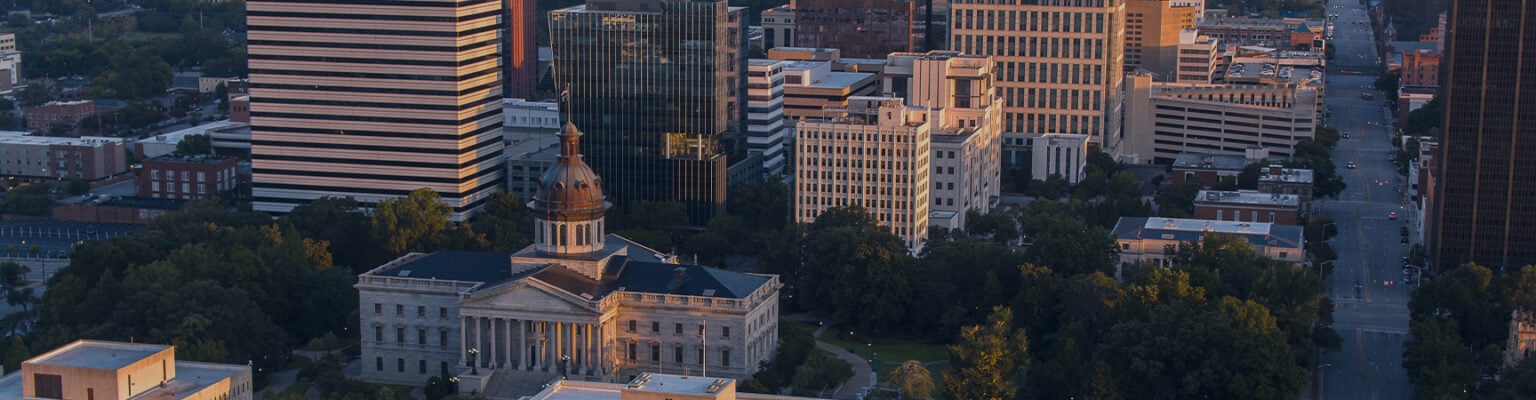
FCI Seagoville at a glance
FCI Seagoville is a low-security federal prison for men about 15 miles southeast of Dallas, holding 1,437 people as of September 2026 — 1,320 at the main institution and its attached detention center, and 117 at the minimum-security satellite camp. It is a Sex Offender Management Program institution, one of nine in the Bureau where the Non-Residential Sex Offender Treatment Program is delivered.
| Official name | Federal Correctional Institution, Seagoville |
|---|---|
| BOP code | SEA |
| Security level | Low; men · attached Federal Detention Center (administrative) |
| Population | 1,437 (as of September 2026): 1,320 at the institution and detention center, 117 at the camp |
| Visiting | Institution: Friday–Monday and federal holidays · camp: Saturday, Sunday and federal holidays · detention center: two days a week, rotating · hours differ between two Bureau documents: see visiting hours |
| Inmate mail | Institution and detention center: Inmate Name & Register Number · FCI Seagoville · Federal Correctional Institution · P.O. Box 9000 · Seagoville, TX 75159 Camp: Inmate Name & Register Number · FCI Seagoville · Federal Correctional Institution · Satellite Camp · P.O. Box 9000 · Seagoville, TX 75159 |
| Send money | Lockbox · Western Union (code city FBOP, DC) · MoneyGram (receive code 7932) |
| Phone | 972-287-2911 · Fax 972-287-5466 |
| Street address | 2113 North Highway 175, Seagoville, TX 75159 · Dallas County |
| Judicial district | Northern District of Texas |
| BOP region | South Central |
| Special Housing Unit | Yes |
| Medical care level | Level 2 |
| RDAP | Yes |
| Sex offender treatment | Non-Residential Sex Offender Treatment Program · Sex Offender Management Program institution |
| UNICOR | Yes · textile factory (military camouflage jackets and pants) |
| Camp | Yes · minimum-security satellite camp, adjacent |
On this page
The institution sits on Highway 175 in Dallas County, is one of the federal prisons in Texas, falls under the Bureau’s South Central Region, and is in the Northern District of Texas. It opened on October 10, 1940, as the Federal Reformatory for Women. The Sex Offender Management Program shapes everything else about it, and the management half of that program is not voluntary.

One address, three kinds of custody — and one of them is a jail
Three kinds of custody run on the one federal campus at 2113 North Highway 175 — a low-security prison, a detention center and a minimum-security camp — and the rules differ enough that families confuse them before they arrive.
| Which part | Who is held there | What is different |
|---|---|---|
| FCI Seagoville | Sentenced men at low security, custody level In | The main compound: khaki uniform, controlled movement, work assignment, commissary, programs |
| The Federal Detention Center | Mostly people held before trial or before designation, custody level Administrative | Run by a separate Jail Administrator. Visits limited to immediate family, two hours a day, on a rotating unit schedule. Legal visits daily, 6:00 a.m. to 8:30 p.m. Its entrance is on a different road |
| The satellite camp | Sentenced men at minimum security, custody level Out | Dormitory housing, no fence, work on the grounds of the main institution |
The detention component is easy to miss, because the Bureau calls the whole place FCI Seagoville and reports one combined population. Three things give it away: the Bureau’s roster lists a Federal Detention Center at this address; the handbook says the “Jail/Camp Administrator is responsible for the overall operations of the Federal Detention Center and Satellite Camp”; and the Bureau publishes the Pretrial Detention Legal Access Handbook on this facility’s page in twenty-five languages, a document only institutions holding pretrial detainees carry. The 2024 PREA auditor toured “the main building, the jail, and the camp” as three separate areas.
The most consequential difference is time credits: First Step Act time credits do not accrue in pretrial custody. The 2022 handbook states it directly: “Participation in these activities pretrial custody does not count toward time credit participation.” It also starts credits on arrival at the designated institution; an interim final rule removes that condition from the regulation on September 30, 2026, so credits start when the sentence commences (91 Fed. Reg. 55740). Months spent in the detention center waiting for a case to resolve earn nothing, however much programming a person does.
There is no Federal Satellite Low here; the institution, its detention component and its camp are the three parts of the site.
What is the security level at FCI Seagoville?
FCI Seagoville is a low-security institution. The camp beside it is minimum security. The detention center is administrative, which in the Bureau’s vocabulary means it takes people of any security level because its job is holding rather than classifying.
Which of the three a person lands in is decided before arrival, by a security point score on the Inmate Load and Security Designation Form and by whether a Public Safety Factor applies. A factor overrides the point total. Here the one that matters is PSF F, Sex Offender, and it does something specific: under the Bureau’s security designation rules, Program Statement 5100.08, a person carrying it “will be housed in at least a Low security level institution, unless the PSF has been waived.” The designation table makes the consequence concrete. Someone scoring zero to eleven points with no Public Safety Factor is a minimum designation — a camp. The same score with the Sex Offender factor is a low. That rule keeps a person out of the camp at Seagoville no matter how low the score, and it is why a low-security SOMP institution is where most people carrying that factor serve their time.
Two features of the factor matter to anyone who wants to argue it. A conviction is not required — the policy applies it where “the Presentence Investigation Report (PSR), or other official documentation, clearly indicates” the conduct occurred, with a worked example of a plea to simple assault where the presentence report described a sexual assault — but a count dismissed or nolle prossed cannot support it at all. And only one official can lift it: “Only the DSCC Administrator is authorized to waive a PSF. A request for waiver of a PSF will be submitted to the DSCC via form 409.” The presentence report is what all of this is built from, which is why language in it never contested at sentencing can set a security level for years. See the intake process and federal prison transfers.
What does it mean that FCI Seagoville is a SOMP prison?
It means the Bureau deliberately concentrates men with sex offense histories here, assesses and monitors all of them, and offers treatment to those who volunteer. The institution’s Admission and Orientation handbook (2022), signed by Warden C. Rivers, puts it in one sentence: “FCI Seagoville is a Sex Offender Management Program site for low security male inmates.” Then it draws the line that governs everything else: “Although treatment is completely voluntary, the management program is not.”
The Bureau publishes no list of SOMP institutions. What it does publish is the First Step Act Approved Programs Guide, and its 2026 edition names the institutions where the Non-Residential Sex Offender Treatment Program is delivered: CRW (women only), ELK, ENG, MNA, MAR, MIL, PEM, SEA and TCP. Nine, in a system of about 120. The guide records it as an evidence-based recidivism reduction program of 144 credit hours, delivered by Psychology Services under Program Statement 5324.10, ordinarily taken in the last 36 to 48 months of a sentence, and describes the typical participant: “Most participants in the SOTP-NR have a history of a single sexual offense and many may be first-time offenders serving a sentence for an internet-based sexual crime.”
An independent auditor described the population in blunter terms. Reviewing risk-screening files during the April 2024 audit under the Prison Rape Elimination Act, she wrote: “Due to the FCI Seagoville’s mission of providing sex offender treatment programs, most inmates had prior convictions for sex offenses against adults and children. Despite these serious convictions, most risk assessments were identified as low risk.”
The Bureau’s sex offender programs policy, Program Statement 5324.10, gives the reason for concentrating people this way. The stated goal is “to reduce the need to place sexual offenders in protective custody, and to create an institution climate conducive to voluntary participation in treatment. To achieve this goal, SOMP institutions will maintain a significant proportion of sexual offenders in the population.” Concentration is the safety mechanism. A man who would be at risk on an ordinary yard is not unusual on this one.
How designation to a SOMP institution happens
Five routes lead here, and they are not equivalent. Newly sentenced men with a sex offense history may be designated straight to a SOMP institution by the Designation and Sentence Computation Center. Someone who volunteers for treatment elsewhere may be transferred to take it, on a referral “approved for participation by designated staff at the Designations and Sentence Computation Center.” A person at a non-SOMP prison found to have engaged in risk-relevant behavior may be moved specifically so a Correctional Management Plan can be imposed, because such plans “may be imposed only at SOMP institutions.” Men “with verified protective custody needs due to their sex offense history” may be redesignated here rather than left in segregation somewhere else. Finally, “[i]nmates may also be redesignated to SOMP institutions to meet the population target percentage of sexual offenders” — the Bureau moves people to keep the proportion right.
Leaving is harder than arriving, and the reason is policy rather than any warden’s discretion. Three categories “should not be considered for transfer to a non-SOMP institution”: anyone awaiting or participating in either treatment program, anyone with a Discharge Evaluation still to be completed, and anyone with a Correctional Management Plan. A man who signs up for treatment and then waits on a list has, in the same act, made himself ineligible for the transfer closer to home his family has been asking about.
Within thirty days of arrival, everyone with a sexual offense history is interviewed by a SOMP psychologist or treatment specialist. The policy lists what that interview covers, and the last item is the one to prepare for: “An explanation of risk-relevant behaviors that may warrant a Correctional Management Plan.”
What the management program restricts, and how
A Correctional Management Plan is an individualized set of restrictions on property, mail, telephone and visiting, written by a SOMP psychologist after an Initial Risk Assessment and approved by the Warden or a management official. It is not a disciplinary sanction, it does not come from a hearing, and there is no disciplinary appeal from it. The handbook tells arrivals where to ask: “SOMP psychology staff determine whether or not particular items or behaviors are risk-relevant in each individual inmate’s case.”
What triggers one is routine security work, not an investigation: cell searches, pat searches, telephone monitoring, mail monitoring, review of incoming publications, review of visiting and telephone lists, and monitoring of visiting-room activity. Staff here are trained annually to spot risk-relevant conduct. A photograph in a locker, a sentence in a letter, a name added to a visiting list — any of these can start it.
The categories a plan may restrict tell a family what not to send. Property: items usable as sexual paraphernalia, including “photographs, pictures, or drawings depicting adults or children in sexually explicit or suggestive poses or situations”; material romanticizing adult-child sex; and “[w]ritten correspondence in which individuals are discussed in a sexualized way.” Visiting: prior victims, children being groomed and their caregivers, and “[c]hildren who will not be adequately supervised by an accompanying visiting adult.” Correspondence, telephone and messaging: the same categories plus one that surprises people — “[o]ther sexual offenders.” Two men who met inside a SOMP prison may be barred from writing to each other after one goes home. Seized items are handled as contraband, the plan is “disseminated to staff in other departments as necessary,” and a psychologist must discuss it with the person and offer a copy. Ask for the copy.
Seagoville runs a second, narrower flag through its visiting system. Institution supplement SEA 5267.09(a) requires the unit team to identify anyone “convicted of a sex offense involving a minor (WA W CONV)” and to place an annotation in the visiting program reading “this inmate was convicted of a sex offense involving a minor.” What follows is in the same paragraph: “Any inmate identified as having a Walsh Act assignment involving a minor will have his/her visits closely monitored.” That flag is separate from a Correctional Management Plan and applies whether or not one exists.
One required document is not published. Program Statement 5324.10 requires that “[e]ach SOMP institution is required to have an Institution Supplement that reflects that institution’s unique characteristics and specifies how each institution will monitor inmates for risk-relevant behavior.” Seagoville does not publish it. The Bureau’s page for this facility lists four documents — the handbook, the visiting supplement, the PREA audit and a national legal-activities program statement — and none is that supplement. Everything a family can learn about how this institution decides these questions comes from national policy and nothing local.
The Adam Walsh evaluation that follows you out the door
The handbook introduces the mission through the statute: “The Walsh Act was passed by Congress in 2006, and this law requires all inmates with a history of sexual offenses be reviewed and evaluated prior to release.” Inside a SOMP institution that review has a name and a procedure. A Discharge Evaluation is performed on people “with significant risk management issues, as determined by an Initial Risk Assessment,” and on anyone expelled from either treatment program. Evaluators score an actuarial instrument — the policy names the Static-99R — and where no adjudicated contact offense makes scoring possible, the assessment rests on a review of the offense history instead. It is completed in the twelve months before transfer to a halfway house or release.
The policy does not need the person’s cooperation: “The interview is not required.” And: “If based solely upon a review of available documentation, the Discharge Evaluation may be conducted without the inmate’s consent.” A person may decline; the refusal is noted; the report is written anyway from the presentence report and the file. It then goes to the unit team at least thirty days before a halfway house transfer, and “[a]t least 30 days prior to the inmate’s release, the Discharge Evaluation is sent directly to the United States Probation Officer.” A risk classification produced inside a prison lands on a probation officer’s desk a month before the person does.
A lawyer’s work starts with the evaluation’s source material — the presentence report, the offense description, anything said in a screening interview — because that is the material a family can still do something about. Certification proceedings under 18 U.S.C. § 4248 are separate and much rarer, but they draw on the same record.
Treatment: what is offered here and what is not
Seagoville offers the non-residential program only. The residential program — 500 hours, high intensity, for people with multiple sexual offenses or a high level of sexual deviancy — runs at two institutions in the whole Bureau, FMC Devens in Massachusetts and USP Marion in Illinois.
The handbook spells out the waiting arrangement that follows: “If you have been recommended to receive Residential Sex Offender Treatment, you will be unable to participate in the Non-Residential Sex Offender Treatment Program. However, you can remain on the wait list for the SOTP-R and remain at this institution until you are within the time frame to transfer.” A man assessed as needing the residential program does not get the non-residential one as a substitute. He waits at Seagoville for a bed at Devens or Marion — and while he waits he is in the category the policy says should not be transferred to a non-SOMP prison. Two rules that each make sense alone combine into years in Texas for a family that lives somewhere else.
“Approved” has a narrow meaning: the First Step Act guide lists what each institution is approved to offer, and whether a group is running this month is a question for the unit team. The 2024 PREA auditor recorded a gap of her own — asked about referrals after sexual abuse incidents, a facility psychologist described the program as active, but “no records were provided during the audit indicating that individuals involved in sexual abuse incidents had been referred to the program for additional treatment.”
Who are the notable inmates at FCI Seagoville?
The notable people held at FCI Seagoville include Christopher Epps, the former Mississippi corrections commissioner; former Oklahoma state senator Ralph Shortey; former Senate aide Ruben Verastigui; and Justin Heath Smith, the adult-film performer known as Austin Wolf. Register numbers are given so you can look each person up; for two former entries, the Bureau’s record shows only where the person was last held, not a stay at Seagoville.
| Name | Register number | Status (September 2026) | Case |
|---|---|---|---|
| Christopher B. Epps | 10095-042 | Currently held here. Projected release October 2, 2030 | Former Commissioner of the Mississippi Department of Corrections, convicted of taking about $1.4 million in bribes from state contractors; sentenced to 19 years 6 months |
| Ralph Shortey | 31860-064 | Currently held here, under the committed name Ralph Allan Le Shortey. Projected release December 7, 2030 | Former Republican member of the Oklahoma Senate; pleaded guilty to child sex trafficking and was sentenced to 15 years |
| Ruben Verastigui | 29014-509 | Currently held here. Projected release October 28, 2031 | Former Republican Senate and anti-abortion-group aide; sentenced in the District of Columbia to 12 years 6 months for possession of child pornography |
| Justin Heath Smith | 22682-511 | Currently held here. Projected release June 2, 2040 | Adult-film performer who worked as Austin Wolf; arrested in June 2024 and sentenced for receiving and distributing child sexual abuse material |
| Josh Duggar | 42501-509 | Former — Bureau records now place him at FCI Elkton, Ohio, projected release February 2, 2033 | Convicted in the Western District of Arkansas of receiving child sexual abuse material, sentenced to 151 months; arrived at Seagoville on June 27, 2022 |
| Douglas Perlitz | 36435-013 | Former — released June 17, 2025, with RRM New York as his last recorded facility; the Bureau’s record shows only a current or last facility, so it does not confirm the Seagoville placement | Former director of a school for street children in Haiti, convicted of traveling to engage in illicit sexual conduct with minors |
| Fernando Rivas | 23452-171 | Former — released July 2, 2026, with RRM Atlanta as his last recorded facility; as with Perlitz, the record does not confirm the Seagoville placement | Emmy-winning composer whose credits included Sesame Street; 15 years for producing and sending child pornography |
Josh Duggar, the name most often attached to Seagoville, is no longer here; the Bureau places him at FCI Elkton. Listings that give Chris Epps a 2032 release date are out of date; the Bureau’s record gives October 2, 2030. Register number 10095-042 belongs to Epps, although some listings also assign it to Richard Clark, the father of the musician St. Vincent; no Bureau record for Clark could be confirmed, so he is not listed.
How do I find someone at FCI Seagoville?
Find someone at FCI Seagoville with the Bureau’s free public Inmate Locator, searching by the eight-digit register number if you have it; it matches the committed name rather than the name a person goes by. The result will not tell you which part of Seagoville he is in: a man in the detention center appears as “Located at: Seagoville FCI,” exactly as a man on the main compound does. Ask the unit team, or call 972-287-2911.
If the locator shows nothing, the usual reasons are state rather than federal custody, pretrial detention under the U.S. Marshals Service before a Bureau designation, or a judgment that spells the name differently. Our guide to how register numbers work explains how the number is built.
How do I write to someone at FCI Seagoville?
Write to someone at FCI Seagoville at P.O. Box 9000, Seagoville, TX 75159; the institution, the detention center and the camp share that box. Put the committed name and the eight-digit register number on the first line; the handbook asks for the housing unit on the envelope too, which speeds delivery.
| For someone at the institution or the detention center | For someone at the satellite camp |
|---|---|
| Inmate Name & Register Number FCI Seagoville Federal Correctional Institution P.O. Box 9000 Seagoville, TX 75159 | Inmate Name & Register Number FCI Seagoville Federal Correctional Institution Satellite Camp P.O. Box 9000 Seagoville, TX 75159 |
General mail is opened and inspected, delivered Monday to Friday and handed out after the 4:00 p.m. count. Two local rules often trip families up. Polaroid photographs are rejected outright — “they cannot be searched without harming the picture” — unless the backing has been cut or removed. And hardcover books, newspapers and newsprint magazines may come only from a publisher, a bookstore or a book club; paperbacks and ordinary magazines may come from anyone at the institution and the camp but, at the detention center, only from those same sources (28 C.F.R. § 540.71). Our guide to writing to someone in federal prison and the Bureau’s correspondence rules cover what is rejected nationally.
At a SOMP institution there is a further filter that has nothing to do with the mail room. Incoming mail is one of the seven routes the sex offender program uses to detect risk-relevant behavior, and what it finds can be restricted by a Correctional Management Plan even where the same item would be allowed at another prison.
Legal mail is different. Incoming legal and special mail is opened in front of the person it is addressed to and is not read, provided it is clearly marked; an attorney’s letter without the marking is handled as ordinary mail and may be read. The handbook reproduces the Special Mail Notice form and tells the incarcerated person to send it to counsel. Our guide to attorney-client communication in the Bureau of Prisons covers the privilege question in full.
Outgoing legal mail has its own local rule: it cannot go in the unit mailbox. “You must personally deliver outgoing Special/Legal Mail to the institution mail room Tuesday – Thursday, 11:30 am- 12:30 pm, excluding federal holidays, and present your prisoner identification card for the mail room staff to verify your identity. You will not be allowed to mail any outgoing special/legal mail without proper identification.” Three hours a week, and an identification card that has to be on the person. Mail room staff also “x-ray all outgoing special/legal mail daily,” and anything suspicious “may be opened outside the presence of the inmate.” Anyone working to a court deadline has to plan around that window.
How do I send money to someone at FCI Seagoville?
Send money to someone at FCI Seagoville through the Bureau’s national lockbox in Iowa or through Western Union or MoneyGram; money never goes to the prison itself. All three routes need the committed name and the eight-digit register number on the instrument and on the envelope.
| Route | Where it goes | How fast it posts |
|---|---|---|
| Postal money order, or a federal, state or local government check | Federal Bureau of Prisons Committed Name Eight-Digit Register Number Post Office Box 474701 Des Moines, Iowa 50947-0001 | Postal money orders and government checks post without a hold. Every non-postal money order and non-governmental check carries an automatic 15-day hold |
| Western Union Quick Collect | Code city FBOP, DC | Two to four hours if sent between 7:00 a.m. and 9:00 p.m. Eastern, any day including holidays; otherwise by 7:00 a.m. next morning. Western Union charges the sender $9.95 for cash transfers up to $5,000 at an agent location |
| MoneyGram | Receive code 7932, company name Federal Bureau of Prisons, Washington, DC. Up to $300 online | Same posting times as Western Union |
The handbook prints the lockbox address twice, and the two do not match: on page 14 it is Post Office Box 474701, which is correct and is the address every federal institution uses, and on page 40, in the visiting rules, it tells inmates to have money sent to “Post Office Box 47401.” That box is one digit short. Copy the one from page 14.
The lockbox rejects more than people expect: a missing name or register number, a register number that is not eight digits, no valid date or signature, an instrument more than six months old, a third-party or joint-payee instrument, a personal check. No cash. And nothing else may go in the envelope — “[t]he National Lockbox cannot forward any items enclosed with the negotiable instrument,” so a photograph tucked in with a money order is a photograph thrown away. Our full guide to sending money to a federal prisoner compares every route and its cost. Commissary spending is capped at $460 a month, so money beyond that sits in the account rather than buying anything.
What are the visiting hours at FCI Seagoville?
Visiting at FCI Seagoville runs Friday through Monday and on federal holidays at the institution, and on weekends and holidays at the camp, but two Bureau documents give different hours. Call 972-287-2911 before you book anything.
| Where | Institution supplement SEA 5267.09(a), July 6, 2016 | A&O handbook (2022) |
|---|---|---|
| The institution | Fridays 2:30 p.m. to 8:30 p.m.; Saturdays, Sundays, Mondays and federal holidays 8:30 a.m. to 3:00 p.m. | “8:15 am to 3:30 pm of Friday thru Monday, and Federal Holidays” |
| The satellite camp | Saturdays, Sundays and federal holidays 8:30 a.m. to 3:00 p.m. | Not stated separately |
| The detention center | Friday to Monday 8:30 a.m. to 3:00 p.m., unit J1 visiting Friday and Saturday and unit J2 Sunday and Monday, rotating each quarter | Not stated separately |
| Special Housing Unit | Video visiting inside the SHU, up to two hours per visit, first come first served | Not stated |
Under the 2016 visiting supplement a Friday visit is an evening visit, 2:30 to 8:30 p.m.; under the 2022 handbook Friday is a daytime visit ending at 3:30 p.m. A family driving in from out of state for a Friday evening is relying on the older document. The supplement is what the Bureau’s own facility page calls official policy; the handbook is six years newer. Neither document is from the current year.
The detention center runs on its own schedule and does not visit every week. Each detention unit gets two days and the two units swap those days every quarter: a man in J2 this quarter visits Sunday and Monday, and next quarter Friday and Saturday. Detention visits are capped at two hours a day, and only immediate family may visit at all — mother, father, brother, sister, wife, daughter, son. A long-term partner can be submitted with documentary proof of a marital-type relationship before incarceration.
Who can visit, and how many
- Five visitors per visit. Children under 16 must be accompanied by an adult family member or guardian who is also on the list; visitors aged 16 and 17 may come alone with a notarized statement of consent from a guardian.
- The list may hold up to ten friends and associates, plus unlimited family members whose relationship can be confirmed.
- Six visiting points a month, set on June 1, 2016, and unchanged in the 2022 handbook: one point for a Monday or Friday, two for a weekend day or holiday, counted per visit regardless of length. Extra points need a written request and the Warden’s prior approval.
What visitors can wear, bring and expect at the gate
Nothing khaki and nothing camouflage — khaki is the uniform here. Also barred: see-through or provocative garments, plunging necklines, wrap-around and mini skirts, anything strapless or sleeveless except on young children, form-fitting clothing including leggings and spandex, shorts, athletic and sweat clothing, sagging pants, heels over three inches, open-toed shoes, hats of any type, and anything resembling gang affiliation. Hems must reach the bend or middle of the knee. Government photo identification is required for everyone 16 and over. One small clear purse or zip-lock bag is allowed — the supplement gives its maximum size three different ways in one document, so bring the smallest. The 2016 supplement allows one- and five-dollar bills for the vending machines; the 2022 handbook allows “up to $30.00 cash.” Staff will not hold a visitor’s property, so wallets, phones, keys and food stay in the car.
Screening runs in stages — walk-through detector, hand-held detector, then a possible pat or visual search — with belongings x-rayed and everyone stamped and checked under black light on the way out. Two local procedures call for preparation. Visitors and their vehicles are searched at random by ion spectrometry, and a positive result costs the contact visit: the visit “may be provided” in a non-contact area instead. And visitors are processed by pager — you hand over your Title 18 form and photo identification, take a buzzer, and “wait INSIDE their vehicle until the pager alerts.” The lot opens one hour before visiting starts. Our guide to federal prison visitation and the Bureau’s visiting regulations cover the system-wide rules.
Getting there
The institution is on U.S. Highway 175 inside the Seagoville city limits, about 15 miles east of Dallas by its own reckoning. From Dallas, take US 175 east and leave at the Simonds Road exit, signed on some approaches as Kimberly/Simonds; coming east the entrance is on the access road, coming west take the same exit and turn left over the highway. Note the entrances: the institution and the camp share an entrance at the Kimberly/Simonds intersection, but the detention center’s entrance is on the eastbound US 175 service road. If you are visiting someone held before trial, that is the gate you want.
How do phone calls and email work at FCI Seagoville?
Phone calls at FCI Seagoville go one way — the incarcerated person places them, and you cannot call in — and email runs on TRULINCS. The Bureau allowance is 510 minutes a calendar month under the Bureau’s telephone regulations, Program Statement 5264.09, issued September 3, 2026: 300 free to anyone eligible for First Step Act telephone incentives, and 210 more that anyone may buy after using up those 300. A single call should generally not exceed 15 minutes. The 400-minute November and December figure came from the 2008 policy and did not survive its rescission. At Seagoville the minutes reset on a date calculated from the register number — the fifth digit multiplied by three, plus one — the same formula that resets the commissary limit.
Two local rules shape when a call can happen. After a 15-minute call ends, “the inmate will not be permitted to use the telephone again for an additional 30 minutes.” And during the working day the phones mostly are not available: all unit telephones run 6:00 a.m. to 11:30 p.m., but between 7:30 a.m. and 4:00 p.m. “only one telephone per unit is operational from 7:30 AM- 10:30 AM, and from 12:30 PM-until the 4:00 PM count has cleared.” On weekends and federal holidays all unit phones run 6:00 a.m. to 11:30 p.m. except during counts. If a call has not come by mid-afternoon on a weekday, that is usually why.
The phone access code is treated as property: “[b]ecause a PAC is considered an item of value for purposes of inmate discipline, the giving to another inmate or possessing another inmate’s PAC will be grounds for disciplinary action,” and replacing a compromised code costs $5.00. Blocked entirely: 700, 800, 900 and 976 numbers, hotels, third-party calls, call forwarding and three-way calls — the last is one of the most common ways a family loses phone privileges without meaning to. Properly arranged legal calls are set up through the unit team and are not monitored. See our guide to federal inmate phone calls.
Families reach TRULINCS email through CorrLinks. Here it costs five cents a unit, one unit being one minute, bought in blocks starting at 40; printing a message or a law library document costs fifteen cents a page. Email with a lawyer is not privileged — attorneys may be on the contact list, and those messages are monitored like every other message. Privileged written communication has to go by marked special mail, which here means the Tuesday-to-Thursday window described above. Our page on CorrLinks and TRULINCS explains the system and its costs.
What can people buy at the FCI Seagoville commissary?
The FCI Seagoville commissary sells food, hygiene and personal items, including Texas staples such as chorizo beans and tortillas, up to a spending limit of $460 a month. The limit comes from the Bureau’s trust fund rules, Program Statement 4500.13, issued May 7, 2026, and rises by $50 during the November and December holiday period, for no more than one validation period. Items that do not count against it include stamps, over-the-counter medications and vitamins, copy cards and copy paper, footwear, mattresses and a secured media device.
Seagoville’s own handbook says $360, which is obsolete: the summary of changes in Program Statement 4500.13 states that it “[i]ncreases spending limit from $360 to $460 per month.” Listings that copied the handbook’s figure are out of date.
The institution’s own commissary shopping list (2022), which the Bureau publishes but does not link from this facility’s page, states no limit at all. It marks items “EXEMPT FROM SPENDING LIMIT” with an asterisk and never prints the figure those items are exempt from. The controlling number is the national one.
Two things here run off the register number. The spending limit “is reset once per month based on the fifth digit of the inmate registration number,” on a day given by the formula above; the shopping day is set by the fourth and fifth digits together, rotates semi-annually, and allows one shop a week. The store opens Monday to Thursday, 6:00 a.m. to 10:30 a.m. only, and a federal holiday pushes that day’s shoppers to the next. A man whose day is Wednesday has a four-and-a-half-hour window a week, and he brings his own bags.
The list is specific to Texas and to this population — chorizo beans, refried beans, corn and flour tortillas, Tony Chachere’s and sliced jalapeños beside the standard soups; denture brushes, denture adhesive, stool softener and reading glasses for the age profile the PREA audit put at 19 to 83. Three entries stand out. A desk fan is $30.70, the same fan the Fort Worth Star-Telegram found men buying in 2023 to survive a summer in buildings with no air conditioning. A typewriter ribbon is $8.95; typewriters are still how legal work gets done here. And the handbook notes that “Trans-Gender Shopping Lists are available in the Commissary” — a separate sheet for a population the 2024 audit recorded as 38 people identifying as transgender or intersex on its first day.
Indigence has a two-part definition here: “Inmates are considered indigent if their account balance is $8.00 or less AND the inmate must not have exceeded $40.00 of their Commissary spending limit.” Indigent inmates “ARE NOT afforded free usage of any paid service” — no free email, no free phone. All sales are final. The same handbook gives a different test for the medical co-payment, and it is the one a sick relative needs: “Indigent inmates WILL NOT be charged a co-pay… Inmates are considered indigent if their account balance is $6.00 or less in the past 30 days.” Two definitions, one document; which applies depends on what is being charged for. Our page on the federal prison commissary covers the national rules and what the money actually buys.
What programs are available at FCI Seagoville?
FCI Seagoville offers the Residential Drug Abuse Program, the Non-Residential Sex Offender Treatment Program, GED and English classes, vocational training, Department of Labor apprenticeships, UNICOR factory work and faith-based programming.
RDAP and drug treatment
The Residential Drug Abuse Program runs here under the Bureau’s drug treatment rules. Participants live together in one housing unit and attend daily group treatment, and completing all three phases — nine months residential, follow-up counseling, and transitional treatment during halfway house placement — can mean up to twelve months off under 18 U.S.C. § 3621(e). Our RDAP practice handles eligibility disputes.
At this institution the early-release exclusions do most of the work. A prior federal or state conviction for “homicide, forcible rape, robbery, aggravated assault, or a sexual offense committed against a child” bars the year off, as does being a pretrial inmate, an immigration detainee, a contract boarder or an old-law prisoner. A man can complete every hour of the program here and receive no sentence reduction at all, so ask the drug abuse program coordinator about eligibility at the interview rather than at the end. The separate Drug Abuse Education course is compulsory for many; refusing it costs performance pay above maintenance level and eligibility for a UNICOR job.
Education, vocational training and UNICOR
GED and English as a second language sit at the center of the education department, with the usual consequence attached: not holding a diploma or GED, or not making satisfactory progress, reduces good conduct time from 54 to 42 days a year for anyone sentenced for an offense committed on or after April 26, 1996. Beyond that, the current offering is:
| Track | What is offered |
|---|---|
| Vocational training | Auto mechanics, HVAC, and logistics distribution |
| Work certifications | Barista and forklift |
| Department of Labor apprenticeships | Dental assistant, HVAC, boiler room, electrician, plumber, career tech and recreation assistant |
| College | Certification courses through Dallas College for anyone with a GED or verified diploma, subject to funding; correspondence courses at the student’s own expense, proctored by the Supervisor of Education |
| UNICOR | A textile factory making military camouflage jackets and pants, with sewing, cutting, packing and machine maintenance posts, plus an FPI business office and quality control |
Apprenticeships carry a strict condition: “Inmates selected for apprenticeship programs are required to maintain a clear conduct record before and during the entirety of the program. Should you receive any infraction or incident, you will be removed from the program immediately.” A single incident report ends a Department of Labor apprenticeship rather than delaying it. UNICOR starts at 23 cents an hour and rises to $1.15, and turning down a job at interview puts a person on a refusal list for a year. Our guides to prison education, vocational training and UNICOR explain how these work system-wide.
The law library is in Building 8, with typewriters reserved for legal work and a copier running on cards bought from the commissary; a basic law library operates inside the Special Housing Unit. Two rules matter before a deadline: time off a work detail “may be given for the purpose of research and preparation of documents to meet an imminent court deadline,” on a written request approved by the Supervisor of Education; and “[t]he removal of law books, reference materials, periodicals, or other research resources from the Law Library is strictly prohibited. There are no exceptions to this prohibition.” Material found in a cell is contraband.
Faith-based and reentry programming
The chapel sits at the east end of Building 3, open seven days a week with no appointment; Religious Services runs “approximately 140 organized religious programs per month” with “over 150 citizen volunteers,” a large corps for men whose families cannot reach Texas. First Step Act programming is split between Education and Recreation, and Recreation’s list is aimed at older men: “A Healthier Me in the BOP, A Matter of Balance, Arthritis Foundation, Brain Health as You Age, Getting to Know Your Aging Body, Health and Wellness Lifespan, Managing Your Diabetes, Service Fit and Talking With Your Doctor.” Both departments say the same thing about signing up: “Enrollment will be made in-person or via sign-up sheet in our housing unit. Electronic cop-outs will not be accepted.” A TRULINCS message asking to join a class does not count as a request.
What is daily life like at FCI Seagoville?
Daily life at FCI Seagoville runs on counts and ten-minute movement windows, on the schedule the institution’s handbook sets out.
| Weekdays | Weekends and federal holidays | |
|---|---|---|
| Units and compound open | About 6:00 a.m. | Recreation yard 6:15 a.m.; open movement 7:00–9:45 a.m. |
| Meals | Breakfast 6:00–7:00 a.m., lunch 10:45 a.m.–12:00 p.m., dinner after the 4:00 p.m. count clears | Coffee hour 7:00–8:00 a.m., brunch after the 10:00 a.m. count, dinner after the 4:00 p.m. count |
| Open movement | Ten minutes at 7:30, 8:20 and 9:20 a.m.; 3:15–3:45 p.m.; then ten minutes before each hour from 6:00 p.m., last call 7:50 p.m. | Ten minutes before each hour from 1:00 p.m. |
| Counts | Midnight, 3:00 a.m. and 5:00 a.m. in bed; standing counts 4:00 p.m. and 9:15 p.m. | Same, plus a 10:00 a.m. count and a 10:00 p.m. standing count |
| Recreation yard, weights, music room | 6:15 a.m.–3:25 p.m. and 4:30–8:25 p.m. | Same |
Which unit eats first is decided by cleanliness: “LUNCH: in order based upon the results of the previous week’s Sanitation Inspection scores,” and dinner the same way. The standard the handbook sets is short: “There is only one level of sanitation at FCI Seagoville and that is CLEAN.” Beds are made military style by 7:30 a.m. with the issued folding chair on top, and “[b]eds must be positioned so the Unit Officer may readily count the inmate in bed.” The identification card goes around the neck, outside the shirt, whenever a person leaves the housing unit.
Health services are open seven days a week from 6:00 a.m. to 7:30 p.m., but the way in is narrow: sick-call appointments are made in person at the reception desk on the second floor of Building 9 “between 6:30-7:00 a.m. ONLY,” Monday, Tuesday, Thursday and Friday. Routine dental care goes on a waiting list by written request, with the date of the request setting priority. Care at this Medical Care Level 2 institution is delivered by Primary Care Provider Teams assigned by register number, Team I taking fourth-and-fifth digits 00 to 49 and Team II 50 to 99, which is why two men in the same room can have different providers. Recreation runs organized sports, a hobby shop, a weights area and a music room under Zimmer Amendment limits: no R, X or NC-17 films, no martial arts or weightlifting instruction, no electric instruments.
What do inspectors say about conditions at FCI Seagoville?
Investigators have said more about conditions at FCI Seagoville than at most federal prisons, chiefly in a January 2026 Inspector General investigation that found serious management failures here, but none of it comes from a routine inspection. The DOJ Office of the Inspector General has not conducted an on-site inspection of this facility. Its inspection program had reached fourteen institutions on its own May 2026 count (Report 26-055), and the District of Columbia’s Corrections Information Council has never inspected Seagoville. What exists instead is one Bureau-wide evaluation that included a site visit, one independent PREA audit, and an Inspector General investigation published in January 2026 that examined this institution in detail and made findings about it.
The Bardell investigation
On January 6, 2026, the Inspector General published Report 26-007, an investigation into the Bureau’s conditions of confinement and medical treatment of Frederick Mervin Bardell at FCI Seagoville and the government’s related representations to the court, opened on the referral of Senior U.S. District Judge Roy B. Dalton, Jr. Its summary finding: “Overall, we identified serious job performance and management failures at multiple levels within FCI Seagoville, from line staff through the Warden.”
The report gives the fullest public account of this institution’s health services. “At the time of this investigation and review, FCI Seagoville’s HSU was severely understaffed. The institution did not have a Clinical Director or any physicians assigned to the institution.” A regional physician served as acting clinical director and “visited FCI Seagoville approximately 2 to 3 days per month.” “For much of the period relevant to this investigation and review, there was only one midlevel provider at FCI Seagoville, and for a period of time the midlevel provider was on medical leave, leaving no medical providers at the facility aside from nurses.”
For a period, then, a prison that held roughly 1,750 men had no physician and no midlevel provider on site.
The chronology followed from the staffing. Bardell reported blood in his stool on July 5, 2020, having first noticed it eight months earlier. A nurse practitioner examined him that day and ordered an urgent diagnostic colonoscopy consultation with a target date of July 27. “[N]one of the testing the NP scheduled occurred in a timely manner.” On September 18, 2020, a CT scan returned critical results showing a strong likelihood of stage IV colon cancer spread to the liver. A successful colonoscopy was not performed until January 29, 2021 — more than six months after he first reported the symptom, and 73 days after the scan that said he urgently needed one.
The report’s compassionate release findings bear directly on motions under 18 U.S.C. § 3582(c)(1)(A). The Inspector General found that the government’s representations to the court — that there was “no indication” Bardell could not “receive adequate care in custody” — “were inconsistent with what we learned during the course of our investigation and review,” and that the Assistant U.S. Attorney, who made no knowing misrepresentation, had relied on a Bureau reduction-in-sentence decision reached through “a seriously deficient process.” One recommendation asks the Department to require prosecutors answering such motions to address “timeliness and quality of past medical care by the BOP for the inmate, understaffing at the facility where the inmate is housed, and the BOP’s ability to meet the inmate’s needs.”
The report also describes the release. The Bureau did not wait for the U.S. Probation Office to approve a release plan as the court had ordered, “because at least nine BOP employees failed to read or fully read the Court’s order.” Bardell left at about 4:00 p.m. on February 8, 2021, for a 6:15 p.m. commercial flight through Atlanta; the Bureau asked his parents to book the ticket and had another prisoner drive him. He needed a wheelchair to reach Receiving and Discharge, was left at the airport curb without one, and made his own way through the connection. The joint status report filed four days later recorded that his parents did not recognize him, that his clothes were soiled with blood and excrement, and that his weight had fallen from 160 pounds to 103. He died on February 17, 2021, nine days after his release. The Bureau and the Department agreed with all eight of the report’s recommendations.
Report 26-007 is also the source for two facts: this is a Medical Care Level 2 institution, and Kristi Zook was its warden from November 2019 to January 2022. The 2016 Bureau-wide review is a different kind of document. Inspector General staff visited Seagoville as one of the institutions sampled for the Review of the Federal Bureau of Prisons’ Release Preparation Program (2016), which found that across the institutions visited “the quality of RPP classes was inconsistent in content, length, and format.” That is an evaluation of a Bureau program that happens to include a site visit, and it makes no finding about conditions here.
The 2024 PREA audit
FCI Seagoville was audited under the Prison Rape Elimination Act on April 16–18, 2024, by an independent auditor, Cassandra McGilbra; the final report is dated July 26, 2024. The facility passed with two standards exceeded — 115.42, use of screening information, and 115.65, coordinated response — 39 met, none unmet. It is also the fullest public description of the physical plant and the population.
| Designed capacity | 1,680 |
|---|---|
| Average daily population, preceding 12 months | 1,670; never over capacity in that period |
| Inmate housing units | 9 |
| Age range of population | 19 to 83 |
| Staff who may have inmate contact | 262 |
| Limited English proficient, day one | 73 |
| Identifying as transgender or intersex, day one | 38 |
| Disclosed prior sexual victimization at risk screening, day one | 23 |
| Ever placed in segregated housing for risk of sexual victimization | 0 |
In the twelve months before the audit the facility recorded eight allegations of sexual abuse — seven inmate-on-inmate, one staff-on-inmate — and four of sexual harassment, all inmate-on-inmate, none referred for criminal investigation. All seven inmate-on-inmate abuse investigations and all four harassment investigations closed unsubstantiated; the staff-on-inmate abuse investigation was still open when the auditor left, which is why seven files rather than eight were reviewed.
The report also discloses two limitations. The auditor tried to reach the Parkland Rape Crisis Center before and during the audit “but was unsuccessful,” and the chief psychologist told her the memorandum of understanding with the center “was still under review by the BOP contract services.” And of the forty men interviewed, fifteen said they had never been asked about victimization or abuse since arriving; the auditor found documents showing those interviews completed 21 days later.
Heat, power and staffing
Seagoville’s oldest housing was built in 1940 and has no air conditioning, in a county that regularly runs above 100 degrees from June to September. The Fort Worth Star-Telegram reported on August 31, 2023, that the institution housed about 1,800 men in seven buildings, that “[f]our of the buildings, constructed in the 1940s, do not have air conditioning,” and that “[t]he three other housing units have air conditioning but have frequent power outages” — four of the seven running on rented generator power from mid-December to the end of July. Robert Freeman, president of AFGE Local 1637, told the paper that “the running joke is that everything runs off duct tape and band-aids” and that the facility “is operating at about half of the staff it needs.” Meeting notes of August 3, 2023, signed by Freeman and Associate Warden A. Greenfield, record that “[m]anagement is embarrassed by the lack of being able to fix this issue.”
Two years later it reached Congress. Opening a House Judiciary subcommittee hearing on Bureau oversight on May 6, 2025, Ranking Member Jasmine Crockett named this institution: “Six of the eight buildings housing inmates had broken air-conditioning units during the summer where temperatures in Texas facilities can reach up to 110 degrees, and at least one unit topped 149 degrees.” That is a member’s statement rather than an agency measurement, and its building count differs from the newspaper’s seven and from the PREA audit’s nine housing units.
Staffing runs through all of it. The PREA auditor was told in 2024 that “staffing has been challenging, but all shifts are adequately covered with overtime.” The Inspector General found that the health services unit had no physician at all. Staffing is why a callout is canceled, a class has a waiting list, a colonoscopy slips, or a visit is cut short.
FCI Seagoville in the news
Recent news about FCI Seagoville centers on the Inspector General’s Bardell report, a 2025 walkaway from the camp and contraband indictments in 2024; older items concern a 2022 walkaway, deaths in custody from 2020 to 2022 and the 2020 COVID-19 outbreak.
- January 2026 — the Justice Department’s Inspector General published Report 26-007 on the medical care and release of Frederick Mervin Bardell, finding “serious job performance and management failures at multiple levels within FCI Seagoville, from line staff through the Warden.”
- September 2025 — Ruben Enriquez, 52, was found missing from the satellite camp at about 3:30 p.m. on Friday, September 5, serving 210 months for a methamphetamine conspiracy out of the Eastern District of Texas. The Marshals Service and the FBI were notified and the Bureau opened an internal investigation.
- September 2024 — the U.S. Attorney for the Northern District of Texas announced five indictments charging seven men held here with contraband offenses, six involving drugs or a phone and one charging possession of child pornography. An indictment is an allegation, not evidence.
- October 2022 — Salvador Gallegos, 31, walked away from the satellite camp on October 31, three years into a 160-month sentence from the Northern District of Texas. The camp then held 109 of the institution’s roughly 1,800 men. The camp has no fence.
- July 2020 to March 2022 — the Bureau posted eight news releases reporting the deaths of people held at FCI Seagoville; the Bureau’s releases are listed on its press release page.
- August 2020 — CNN reported that more than 1,300 of roughly 1,750 men at the institution and camp had tested positive for COVID-19, the largest outbreak in the federal prison system at that point, along with 28 of about 300 staff and three deaths.
The COVID-19 lawsuit did not decide whether conditions here were lawful. In Glenewinkel v. Carvajal, No. 3:20-cv-02256 (N.D. Tex.), men held at Seagoville sued Bureau officials in August 2020 over the institution’s pandemic response. On January 20, 2022, Judge Jane J. Boyle dismissed the case without prejudice under Rule 12(b)(1) for lack of subject matter jurisdiction: the Administrative Procedure Act waived no sovereign immunity, because the complaint identified no discrete agency action the Bureau was legally required to take, and no damages action lay under Bivens, a pandemic-policy claim arising in a new context distinct from Carlson v. Green. The court never reached the merits of whether conditions at Seagoville violated the Eighth Amendment.
Frequently asked questions about FCI Seagoville
What is FCI Seagoville?
FCI Seagoville is a low-security federal prison for men in Seagoville, Texas, about 15 miles southeast of Dallas, operated by the Federal Bureau of Prisons. It has an attached Federal Detention Center and an adjacent minimum-security satellite camp. As of September 2026 it held 1,437 people, 117 of them at the camp.
Is FCI Seagoville a sex offender prison?
It is a Sex Offender Management Program institution, which is not quite the same thing. The Bureau concentrates men with sex offense histories here to assess, monitor and treat them; its 2022 handbook says that “[a]lthough treatment is completely voluntary, the management program is not.” The independent auditor who reviewed screening files in April 2024 recorded that “most inmates had prior convictions for sex offenses against adults and children.” It also holds men convicted of fraud, drugs and other offenses.
Does FCI Seagoville have sex offender treatment?
Yes, the non-residential program. The Bureau’s First Step Act Approved Programs Guide (2026) lists the Non-Residential Sex Offender Treatment Program at nine institutions, Seagoville among them, as a 144-hour evidence-based recidivism reduction program delivered by Psychology Services and ordinarily taken in the last 36 to 48 months of a sentence. The residential program runs only at FMC Devens and USP Marion.
Does FCI Seagoville have a detention center?
Yes. The Bureau’s roster records a Federal Detention Center at this address, and the institution’s handbook refers to a Jail/Camp Administrator responsible for it and for the camp. It holds people mostly before trial or before designation, at administrative custody level. Its visiting rules are different, its entrance is on the eastbound US 175 service road, and time spent there before sentence does not earn First Step Act time credits.
When can I visit someone at FCI Seagoville?
Two Bureau documents disagree. Institution supplement SEA 5267.09(a) (2016) gives Fridays 2:30 to 8:30 p.m. and Saturdays, Sundays, Mondays and federal holidays 8:30 a.m. to 3:00 p.m.; the Admission and Orientation handbook (2022) gives 8:15 a.m. to 3:30 p.m. Friday through Monday and federal holidays. The camp visits Saturdays, Sundays and holidays. Detention units visit two days a week on a rotating schedule, two hours a day. Call 972-287-2911 before traveling.
How much can someone spend at the FCI Seagoville commissary?
$460 a month, under Bureau Program Statement 4500.13 (2026), rising by $50 during the November and December holiday period for no more than one validation period. Seagoville’s own handbook still says $360, and the institution’s 2022 shopping list prints no limit at all. Sources stating $360 are out of date.
Does FCI Seagoville have RDAP?
Yes. The Residential Drug Abuse Program runs here, and completion of all three phases can be worth up to twelve months off under 18 U.S.C. § 3621(e). The exclusions matter more than the waiting list at this institution: a prior conviction for a sexual offense committed against a child, among others, bars the reduction even where the program is completed.
Can you send money directly to FCI Seagoville?
No. Money sent to the prison is returned. Funds go to the Bureau’s national lockbox at Post Office Box 474701, Des Moines, Iowa 50947-0001, or by Western Union Quick Collect using code city FBOP, DC, or by MoneyGram using receive code 7932. All three need the committed name and the eight-digit register number. Note that the institution’s own handbook prints the lockbox box number two different ways; 474701 is correct.
Has FCI Seagoville been inspected?
Not in the ordinary sense. The DOJ Office of the Inspector General has not conducted an on-site inspection of this facility, and the District of Columbia’s Corrections Information Council has never inspected it. But in January 2026 the Inspector General’s Report 26-007, on the medical care and release of a man who died nine days after leaving, found “serious job performance and management failures” here. The facility passed a PREA audit in April 2024 with two standards exceeded.
Does FCI Seagoville have air conditioning?
Not in all of its housing. The Fort Worth Star-Telegram reported in August 2023 that four of the institution’s seven buildings, built in the 1940s, have no air conditioning and that the other three have it but suffer frequent power outages. In May 2025, a member of Congress told a House Judiciary subcommittee that six of eight housing buildings had broken air-conditioning units during the summer.
Problems at FCI Seagoville: where we can help
The problems that recur at FCI Seagoville are the ones Report 26-007 found: a health services unit that was severely understaffed, compassionate release paperwork that did not move, and a court order that at least nine Bureau employees failed to read or fully read. Every route into those problems runs on a deadline that is easy to miss:
- Designation and the Sex Offender Public Safety Factor. The factor can be applied on the strength of language in a presentence report without a conviction on that conduct, it floors a person at low security, and only the DSCC Administrator can waive it. The argument starts with the presentence report; our federal prison consulting services and guide to designation cover the process.
- Correctional Management Plans. A plan can restrict property, mail, telephone and visiting without a disciplinary hearing, and it also makes a person ineligible for transfer to a non-SOMP institution. Ask for the written copy the policy requires staff to offer.
- The Discharge Evaluation. It can be written without an interview and without consent, and it goes to the supervising U.S. Probation Officer thirty days before release. Its source material deserves attention long before it is written.
- Medical care that is not happening. The Inspector General found this institution operating with no physician assigned. The route is a written request to staff, then the administrative remedy process, and every rung has a clock on it. See medical care in federal prison and, where negligence has caused injury, Federal Tort Claims Act claims.
- Compassionate release and sentence computation. Report 26-007 is now a citable Inspector General finding on how a reduction-in-sentence request was handled at this facility and on what the government told the court about care here.
- First Step Act time credits, including the months in the detention center that do not count, and other routes to early release from federal prison.
- Disciplinary proceedings that threaten good conduct time, and SHU placements that outlast their justification, including protective custody, under the Bureau’s Special Housing Unit rules.
- Challenges to the conviction or sentence itself, through a direct appeal or a § 2255 motion.
Elizabeth Franklin-Best, P.C. handles federal criminal defense, appeals and post-conviction matters nationwide, and advises families on Bureau of Prisons issues at institutions across the system. Calls are answered 24 hours a day. Call (843) 620-1100 or contact us to arrange a paid one-hour consultation about a specific situation. Christopher Zoukis, JD, MBA is the firm’s Managing Director and writes its federal prison policy material; he is not counsel of record, and legal representation is provided by Elizabeth Franklin-Best.
Sources and currency
Bureau of Prisons documents
- FCI Seagoville, Federal Bureau of Prisons, 2026. The Bureau’s facility page, with address, contact details, population, judicial district and inmate-mail addresses.
- FCI Seagoville Admission & Orientation Information Handbook, Federal Bureau of Prisons, FCI Seagoville, 2022. The Sex Offender Management Program mission, mail, money, commissary, telephone, programs, daily schedule and health services.
- FCI/SCP Seagoville Commissary Shopping List, Federal Bureau of Prisons, FCI Seagoville, 2022. Prices, category limits and spending-limit exemptions.
- Institution Supplement SEA 5267.09(a), Visiting Regulation, Federal Bureau of Prisons, FCI Seagoville, 2016. Visiting schedule and points, dress code, screening, detention-center visiting and legal access, and the Walsh Act annotation.
- Trust Fund/Deposit Fund Manual, Program Statement 4500.13, Federal Bureau of Prisons, 2026. The $460 spending limit and its exclusions; raised the limit from $360.
- Inmate Security Designation and Custody Classification, Program Statement 5100.08, Federal Bureau of Prisons, 2006, as amended in 2026. Public Safety Factor F, the designation tables and transfers for specialized national programs.
- Inmate Telephone Regulations, Program Statement 5264.09, Federal Bureau of Prisons, 2026. The 510-minute monthly limit and the waiting period between calls; replaced Program Statement 5264.08 (2008).
- Sex Offender Programs, Program Statement 5324.10, Federal Bureau of Prisons, 2025. Sex Offender Management Program components, designation, Discharge Evaluations, Correctional Management Plans and the institution supplement requirement.
- First Step Act Approved Programs Guide, Federal Bureau of Prisons, Reentry Services Division, 2026. The institution lists for both sex offender treatment programs, credit hours and program descriptions.
- Walkaway from FCI Seagoville’s Satellite Camp, Federal Bureau of Prisons, 2025. Ruben Enriquez’s disappearance from the camp on September 5, 2025.
- Press Releases, Federal Bureau of Prisons, 2020–2022. Includes the eight releases reporting deaths at FCI Seagoville.
Audits and inspections
- Investigation and Review of the Federal Bureau of Prisons’ Conditions of Confinement and Medical Treatment of Frederick Mervin Bardell and Related Representations to the Court, U.S. Department of Justice, Office of the Inspector General, 2026. Report 26-007: health services staffing, the medical care level, the handling of the compassionate release request and the release.
- Inspection of the Federal Bureau of Prisons’ U.S. Penitentiary Canaan, U.S. Department of Justice, Office of the Inspector General, 2026. Report 26-055, with the count of Bureau institutions the office has inspected.
- PREA Facility Audit Report: FCI Seagoville, Cassandra McGilbra, independent PREA auditor, 2024. On-site audit of April 16–18, 2024; capacity, population characteristics, staffing, allegation data and standards.
- Review of the Federal Bureau of Prisons’ Release Preparation Program, U.S. Department of Justice, Office of the Inspector General, 2016. Evaluation and Inspections Report 16-07, a Bureau-wide evaluation that included a site visit to FCI Seagoville.
Court records
- Seven Charged With Possessing Contraband in Seagoville Prison, U.S. Attorney’s Office, Northern District of Texas, 2024. The five indictments against seven men held at FCI Seagoville.
- Glenewinkel v. Carvajal, No. 3:20-cv-02256 (N.D. Tex.), U.S. District Court for the Northern District of Texas, 2022. Docket of the COVID-19 suit, dismissed by Judge Jane J. Boyle under Rule 12(b)(1) on January 20, 2022.
News and other sources
- Federal Corrections in Focus: Oversight of the Bureau of Prisons, U.S. House Committee on the Judiciary, Subcommittee on Crime and Federal Government Surveillance, 2025. Hearing of May 6, 2025, with the statement of Ranking Member Jasmine Crockett.
- Power outages, understaffing and no AC create ‘volatile’ situation at prison near Dallas, Fort Worth Star-Telegram, 2023. Air conditioning, power outages and union statements.
- Inmate walks away from minimum security facility in Seagoville, CBS News Texas, 2022.
- Coronavirus outbreak at Seagoville Texas prison is worst in federal system, CNN, 2020.
- 18 U.S.C. § 3582(c)(1)(A), Imposition of a sentence of imprisonment, U.S. Code (Legal Information Institute).
- 18 U.S.C. § 3621(e), Imprisonment of a convicted person, U.S. Code (Legal Information Institute).
- 18 U.S.C. § 4248, Civil commitment of a sexually dangerous person, U.S. Code (Legal Information Institute).
- 28 C.F.R. § 540.71, Procedures (incoming publications), Code of Federal Regulations (Legal Information Institute).
Sources reviewed September 2026.
Reviewed for legal accuracy by Elizabeth Franklin-Best, Esq., Principal Attorney·September 2026