
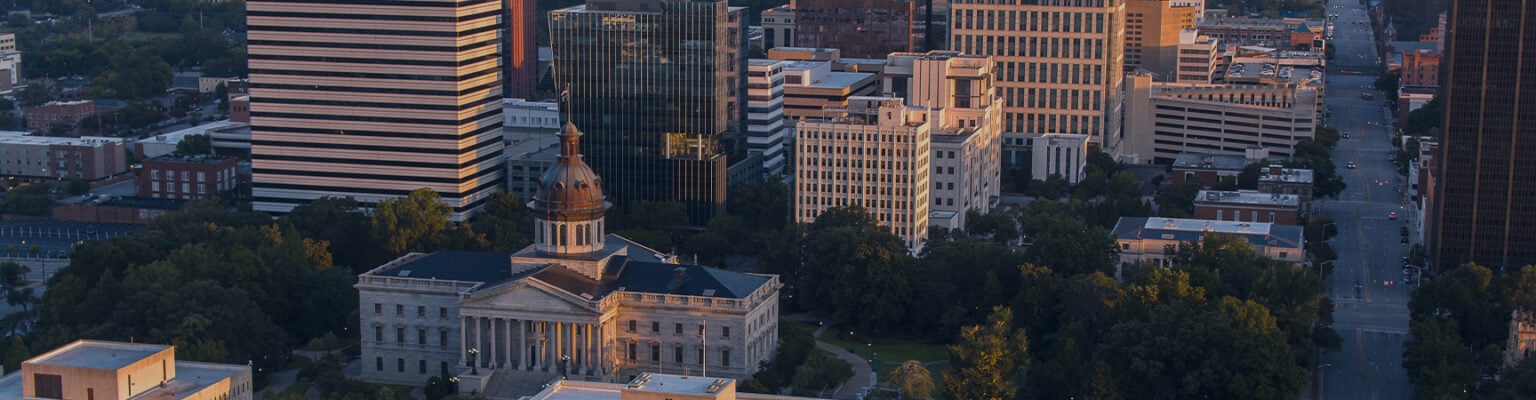
FCI Otisville at a glance
FCI Otisville is a medium-security federal prison for men in Otisville, New York, with an adjacent minimum-security satellite camp and a detention center. It held 936 people as of September 2026 — 845 at the institution and detention center and 91 at the camp. It sits in Orange County, about 70 miles northwest of New York City, and serves the Southern District of New York.
| Official name | Federal Correctional Institution, Otisville |
|---|---|
| BOP code | OTV |
| Security level | Medium; men · adjacent minimum-security satellite camp · detention center |
| Population | 936 (as of September 2026) · 845 at the FCI and detention center, 91 at the camp |
| Visiting | FCI: Saturday, Sunday, Monday and federal holidays, 8:00 a.m.–2:45 p.m. · Camp: Thursday to Monday and federal holidays, 8:00 a.m.–3:00 p.m. · see visiting hours |
| Inmate mail | FCI: Inmate Name & Register Number · FCI Otisville · Federal Correctional Institution · P.O. Box 1000 · Otisville, NY 10963 Camp: Inmate Name & Register Number · FCI Otisville · Federal Correctional Institution · Satellite Camp · P.O. Box 1000 · Otisville, NY 10963 |
| Send money | Lockbox · Western Union (code city FBOP, DC) · MoneyGram (receive code 7932) |
| Phone | 845-386-6700 · Fax 845-386-6727 |
| Street address | Two Mile Drive, Otisville, NY 10963 · Orange County |
| Judicial district | Southern District of New York |
| BOP region | Northeast |
| Designated capacity | 1,088 |
| Housing | 10 units · nine multiple-occupancy cell units and one open dormitory · no single-cell units |
| Special Housing Unit | Yes · 41 segregation cells · visits Mondays only, non-contact |
| Medical care level | Level 2 |
| RDAP | No |
| UNICOR | No working factory |
| Camp | Minimum-security satellite camp for men, adjacent to the institution |
On this page
FCI Otisville falls under the Bureau’s Northeast Region. It is also the most talked-about prison in the federal system for one reason: its kosher food and its observant Jewish population. That reputation has outrun the record; the kosher section below separates what the Bureau’s documents say from what they do not.

There are two prisons in Otisville, New York, on the same road
FCI Otisville, the federal prison on Two Mile Drive, and Otisville Correctional Facility, a New York State prison, stand in the same village, and confusing them sends families to the wrong gate. Otisville has about a thousand residents and two medium-security prisons, and the federal institution’s own directions end by sending you onto the road the state prison is named for.
| Prison | Run by | Address | How to find someone |
|---|---|---|---|
| FCI Otisville (this page) | Federal Bureau of Prisons | Two Mile Drive, Otisville, NY 10963 | BOP Inmate Locator |
| Otisville Correctional Facility | New York State — DOCCS | 57 Sanitorium Road, Otisville, NY 10963 | DOCCS Incarcerated Look-Up |
A New York State sentence means the person is not at FCI Otisville and the federal locator will never find them; a United States District Court sentence means this is the right page. The two systems share a village and nothing else — separate rules on mail, money, visiting, telephone calls, release dates and grievances, and separate locator websites; the state prison has its own DOCCS facility page. For the Bureau’s other institutions in the state, see federal prisons in New York.
The Bureau’s own description adds a third element. Its facility page describes Otisville as “a medium security federal correctional institution with an adjacent minimum security satellite camp and a detention center,” and counts the institution and the detention center together in one number of 845. The visiting supplement is written for “designated/holdover/pre-trial inmates.” So this is not only a sentenced-population prison, and some rules — including whether outgoing mail may be sealed — turn on which of those a person is.
What is the security level at FCI Otisville?
The institution itself runs at medium security; the camp beside it is minimum. One post office box, one commissary list and one visiting supplement cover both, which disguises how unlike each other they are to live in — and the choice between them is made before anyone arrives at the gate.
The 2026 PREA audit gives the clearest public picture of the physical plant: 24 buildings, ten housing units, nine of them multiple-occupancy cell units and one an open dormitory, and no single-cell housing at all. The 2016 inspection report adds the detail that surprises people — the general-population units hold 154 men each and contain “two, four, or 12-person cells,” the twelve-man rooms having a television, a living area and a bathroom with doors. Descriptions that put everyone in a two-man cell are out of date.
Two things decide which side of the fence a person ends up on: the security point total, and whether a Public Safety Factor has been applied. The second beats the first — a factor is what bars camp placement no matter how few points someone carries, and arguing it is where a lawyer’s work usually lands. For the opening days see our intake process guide; for the weeks before a self-surrender date, how to prepare for prison.
One local rule matters before a designation is argued: “[m]aximum custody classified inmates will not receive visits while housed at FCI Otisville, due to the mismatch of security designation.” A custody classification above what this prison is built for costs a person their visits.
Is FCI Otisville really “the kosher prison”?
Only partly: FCI Otisville’s certified kosher meals are the same national program every federal prison serves. One thing about Otisville’s religious programming is genuinely unusual and is documented by an independent inspector: the head of its Religious Services department is a rabbi. Almost everything else people believe about this prison’s food describes a national Bureau program that runs identically at every federal institution, and several of the specifics that circulate — a kosher kitchen, Passover seders, a large Jewish population — are not stated in any document the Bureau publishes about this place. Families make sentencing arguments, designation requests and travel plans on the strength of that difference.
What the Bureau’s certified religious diet actually is
It is a sealed tray, and it is the same sealed tray everywhere. The Bureau’s religious beliefs and practices rules, Program Statement 5360.10 (2022), call the religious diet program the Alternative Diet Program and give it two components: self-selection from the main line, with a no-flesh option and access to the salad or hot bar; or food that “accommodates religious dietary needs with nationally recognized, religiously certified processed foods (e.g., halal and kosher). These meals are prepackaged and double wrapped in order to preserve the integrity of the religious certification.” Ordinarily it is served and eaten in the dining hall.
The Food Service Manual, Program Statement 4700.08 (2026), gives the mechanics. Prepared foods “will be certified by a nationally accepted Orthodox Kashrut supervision service” or a World Halal Food Council member, and bread, margarine, chips, salad dressing, ketchup and mustard must also be Certified Parve. Then the sentence that answers the kosher-kitchen question: “Nothing cut, processed, prepared, or served from a container is offered” except certified loaf bread, beverages, and food the warden orders repackaged for security. Only disposable single-use utensils and gloves may touch certified food, and the menu is national. No federal prison cooks the certified diet, and Otisville is no exception. The manual also carries the rule that trips people up: participants “are not authorized to consume mainline or hot bar food items,” and violations are reported.
How a person gets the certified diet, and how they lose it
By writing to the chaplain. Otisville’s own handbook says it in one line: “If you wish to join the Religious Diet or participate in your faith’s ceremonial meal, you must submit an ‘Inmate Request to Staff Member Form’ to one of the Religious Services staff members.” Program Statement 5360.10 puts a clock on what follows. The chaplain interviews the person and “will ordinarily complete the BP-A1142, Religious Diet Interview form within two working days of receiving the request”; approval is recorded on form BP-A0700; within 24 hours the chaplain enters it on the SENTRY religious diet participant list; and Food Service starts serving the certified line “within two days of SENTRY notification.” Anyone turned down “may request a re-interview at three-month intervals.”
Losing it is faster than getting it back. Anyone “observed eating from the main line may be removed temporarily,” and so may anyone who buys or eats non-certified food from the commissary. Notice goes out on form BP-A0820, and removal “is not punitive in nature.” The consequence is a delay, and a long one: re-approval “ordinarily may extend up to thirty days,” and “[r]epeated withdrawals (voluntary or otherwise) … may result in inmates being subjected to a waiting period of up to one year.” That is why the kosher marking on Otisville’s commissary list matters more than its novelty value. A person on the certified line who buys the wrong snack can be off the diet for a month.
On ceremonial meals the rule is one per person per calendar year, requested on form BP-A0148 sixty days beforehand. Food Service is the only permitted source: ceremonial foods “may not be donated” and “may not be catered,” and the ritual-food budget runs from $10 to $200 per faith group in a fiscal year.
What is genuinely local at Otisville
The rabbi. The District of Columbia Corrections Information Council inspected this prison on August 5, 2014, and its inspection report, published in January 2016, recorded that “FCI Otisville has four dedicated Religious Services staff including three chaplains. The head of Religious Services is a rabbi, and is one of less than five full-time rabbis employed by the FBOP.” The same passage records 20 faith groups at the facility, an indoor chapel and an outdoor worship area, and 77 Religious Services volunteers running faith groups, reentry programs and classes. That is a remarkable chaplaincy for a prison of this size. It is also twelve years old, and it is the only independent account of Otisville’s religious programming that exists.
The commissary list. Otisville’s own order form carries a category headed “CRC & KOSHER,” and what is in it is not generic: matzos at $3.15, gefilte fish at $5.15, matzo ball chicken soup at $4.25, beef cholent at $5.10, rugelach at $5.55, Gefen noodle soup, Gefen tuna, kosher mayonnaise and seltzer. Across the whole two-page form 106 line items carry a “(K)” kosher marker; exactly one item is marked halal.
Religious articles for sale. The same form sells a yarmulke for $6.00, a kufi for $4.50, a Rastafarian crown for $21.50 and a prayer rug for $11.00 — the exact items Program Statement 5360.10 authorizes as religious headwear by SENTRY religious preference, three per person. The inspection report adds the detail that explains the prices: “As per FBOP policy, all products are marked up 30%, except for religious items.”
One more, from the Bureau’s own program guide. The August 2026 First Step Act Approved Programs Guide describes an Aleph Correspondence Course Program running “from a Hebrew Reading and Writing Course to the mystical teachings of the Kabbalah,” and its programs-by-institution table marks Otisville for it, one of 47 institutions of 118. The guide’s own narrative page for that program says it “[m]ay be offered at all BOP institutions.” The two parts of the guide disagree.
What the Bureau’s documents do not say
The six documents the Bureau publishes for FCI Otisville — the handbook, the camp insert, the commissary form, the legal-activities supplement, the 2026 PREA audit and the visiting supplement — and its facility page are silent on the points that circulate. None of them uses the word “kosher” about Otisville’s kitchen. None mentions a Passover seder here. None names a synagogue, a minyan or a Torah. None publishes any count of Jewish people held here, and the Bureau publishes no religion breakdown by institution anywhere. The handbook’s entire treatment of religion is four sentences that would fit any federal prison.
The one count that does exist points the other way. On the day the inspectors visited in August 2014, with 1,065 people in the institution, “[a] total of 23 inmates are on religious diets” — and those meals “are prepared off-site according to certified religious diet standards. They arrive sealed at the facility and are stored in a separate kitchen area.” Twenty-three people out of 1,065 is 2.2 percent, and the food came in sealed from outside, exactly as the national manual describes.
You cannot ask to be sent here for the food
Program Statement 5100.08, the Bureau’s designation and custody classification manual, mentions an inmate’s religious beliefs exactly once in 116 pages, and it is not about federal prisons: “When designating an inmate to a non-federal facility … Designators shall consider the inmate’s religious beliefs, if known as one of the factors in making a designation decision.” There is no equivalent instruction for designation to a Bureau institution, and no need for one, because the certified diet is available at every institution in the system. Designation runs on security points, Public Safety Factors, medical and program need and proximity to the release address. A judicial recommendation carries weight; a religious preference, by itself, does not appear in the manual.
Who are the notable inmates at FCI Otisville?
Alexander Mashinsky, the founder of Celsius Network, and Eliyahu Weinstein are held at FCI Otisville; most of the other well-known people linked to it, Michael Cohen among them, have left. Published lists that show them as current are out of date. The Bureau’s Inmate Locator places each person below as follows.
| Name | Status at Otisville | Case |
|---|---|---|
| Alexander Mashinsky | Currently held here. Register number 68096-510; projected release July 5, 2035 | Founder of Celsius Network. Sentenced on May 8, 2025, in the Southern District of New York to 12 years, a $50,000 fine and $48,393,446 in forfeiture, for commodities and securities fraud |
| Eliyahu Weinstein | Currently held here. Register number 62465-050; projected release December 17, 2054 | Sentenced on November 14, 2025, in the District of New Jersey to 37 years for securities and wire fraud, money laundering and obstruction, in a scheme causing more than $44 million in losses. He had begun supervised release on January 19, 2021, after two earlier federal convictions |
| Michael Cohen | Former — released November 22, 2021, register number 86067-054, from the New York reentry office rather than the institution | President Trump’s former personal attorney, who pleaded guilty in the Southern District of New York to campaign-finance and tax offenses and to lying to Congress |
| Sholam Weiss | Former — released from FCI Otisville on January 20, 2021, register number 32610-054 | Sentenced in absentia in the Middle District of Florida to 845 years, later reduced to 835, for racketeering and money laundering in the collapse of National Heritage Life Insurance. The sentence was commuted on January 19, 2021 |
| Sholom Rubashkin | Former — released from FCI Otisville on December 20, 2017, register number 10755-029 | The Agriprocessors executive convicted of bank fraud in the Northern District of Iowa; sentence commuted in December 2017 |
| Michael Sorrentino | Former — released from FCI Otisville on September 12, 2019, register number 66910-050 | The Jersey Shore cast member, sentenced in New Jersey for tax offenses |
| Sheldon Silver | Former — died in Bureau custody on January 24, 2022, register number 71915-054; his last facility was FMC Devens, Massachusetts | Speaker of the New York State Assembly for more than two decades. He reported to Otisville in August 2020, had a home-confinement release revoked after two days in May 2021, and was later moved to Devens |
| Dean and Adam Skelos | Former — Dean Skelos released January 13, 2022, register number 72196-054; Adam Skelos released June 4, 2021, register number 72199-054 | The former New York State Senate Majority Leader and his son, convicted of bribery, extortion and conspiracy |
| Kenneth Ira Starr | Former — released December 8, 2016, register number 63552-054 | The New York financial adviser convicted of fraud and money laundering — not the independent counsel |
Four other points are often misreported. Sholam Weiss is not serving his sentence here; he left on January 20, 2021, and the 845-year term had already been cut to 835 before it was commuted. Kenneth Ira Starr is not serving a seven-year sentence; he was released in December 2016. Billy McFarland, the Fyre Festival organizer, is not held here: Bureau records give his release on August 30, 2022, register number 91186-054, from the New York reentry office. And Rabbi Mendel Epstein was released on July 26, 2022, from FCI Butner Medium I, register number 65960-050.
One oddity shows why the register number matters more than the name: the Locator holds two men called Sholom Rubashkin whose records both show release from FCI Otisville — the Agriprocessors executive, 10755-029, in December 2017, and a different, younger man, 75431-053, in March 2013.
How do I find someone at FCI Otisville?
The Bureau’s Inmate Locator is free and public. Give it the eight-digit register number if you have one, because the number never changes and a name might: the locator indexes the committed name on the judgment, so a nickname or a different spelling will miss. What comes back is the person’s present facility and projected release date. Its coverage runs back to 1982, which is why it will also tell you when somebody left, though not from where.
An empty result almost always means one of three things: the sentence was a New York State one, the person is being held for the U.S. Marshals Service in a county jail before trial rather than by the Bureau, or the judgment spells the name differently from the way the family does. Our guide to how register numbers work shows what each block of digits encodes.
One trap specific to this institution: someone held here shows as “Located at: Otisville FCI”, while “Located at: New York RRM” means the New York residential reentry office that supervises people on home confinement in the same region. Someone shown there is in Bureau custody but not in the prison.
How do I write to someone at FCI Otisville?
Mail for FCI Otisville and its camp goes to one box, P.O. Box 1000. Write the committed name and the register number on the same first line; without the number the envelope is sent straight back.
| For someone at the FCI | For someone at the satellite camp |
|---|---|
| Inmate Name & Register Number FCI Otisville Federal Correctional Institution P.O. Box 1000 Otisville, NY 10963 | Inmate Name & Register Number FCI Otisville Federal Correctional Institution Satellite Camp P.O. Box 1000 Otisville, NY 10963 |
Do not use P.O. Box 600: that is the staff mail box, and it appears on the cover sheet of the institution’s PREA audit.
A plain letter arriving here is opened, turned out for contraband and may be read. Privileged correspondence is handled differently — opened in the addressee’s presence and not read — but two conditions come first: the sender must be identifiable on the outside, and the envelope must say “Special Mail — Open only in the presence of the inmate.” Miss either and the Bureau’s correspondence rules apply: staff “may treat the mail as general correspondence and may open, inspect, and read the mail.” Our pages on attorney-client communication and on writing to someone in federal prison go through the privilege rules and the commonest reasons mail is turned back.
Outgoing mail works differently at the two halves of one address, and the difference is set by regulation rather than by the institution. Under 28 C.F.R. § 540.14, outgoing general correspondence from a sentenced person in a minimum or low security institution may be sealed and goes out unopened; from a sentenced person in a medium or high security institution it “may not be sealed by the inmate and may be read and inspected by staff,” and a person held before trial may not seal it either. So at the camp letters go out sealed and at the FCI they do not — which is what Otisville’s handbook means when it says, in four words, “You are NOT to seal outgoing mail.” Two local quirks from the same handbook: Polaroid photographs are not accepted, and writing to someone at another institution needs permission first.
How do I send money to someone at FCI Otisville?
Money for someone at FCI Otisville goes to the Bureau’s lockbox in Des Moines or through Western Union or MoneyGram, never to Otisville itself, under the Bureau’s trust fund rules, Program Statement 4500.13 (2026). Omit the committed name or the eight-digit register number and any of the three fails.
| Route | Where it goes | How fast it posts |
|---|---|---|
| Postal money order or cashier’s check | Federal Bureau of Prisons Committed Name Eight-Digit Register Number Post Office Box 474701 Des Moines, Iowa 50947-0001 | Credited the day it reaches Des Moines and spendable the following day. A U.S. postal money order clears immediately; nearly everything else sits under a 15-day hold |
| Western Union Quick Collect | Code city FBOP, DC | Ordinarily within two hours under Program Statement 4500.13, or two to four on the Bureau’s Send Money page, when sent between 7:00 a.m. and 9:00 p.m. Eastern; anything later lands by 7:00 the next morning |
| MoneyGram | Receive code 7932, company name Federal Bureau of Prisons, Washington, DC | The same windows as Western Union |
Currency and personal checks are refused outright. Leave the name or the number off either the instrument or the envelope and the deposit is returned; leave off a return address as well and it is forfeited to the Treasury. Our guide to sending money to a federal prisoner prices each route. One thing to weigh before wiring a large amount: with commissary spending capped at $460 a month, the surplus simply accumulates — and at the camp the balance has to be there on the day the order sheet goes in, not on the day the goods arrive.
What are the visiting hours at FCI Otisville?
Visiting at the institution runs Saturday, Sunday, Monday and federal holidays, 8:00 a.m. to 2:45 p.m., and a visitor arriving after 2:15 p.m. will not be let in. Visiting at the camp runs Thursday, Friday, Saturday, Sunday, Monday and federal holidays, 8:00 a.m. to 3:00 p.m., with a 2:30 p.m. arrival cut-off. Both come from the visiting supplement, Institution Supplement OTV 5267.09a, Visiting Procedures, issued October 1, 2021.
Two things about those days are unusual. Monday is a visiting day at both the FCI and the camp, which is rare in the federal system. Friday is not a visiting day at the FCI: the supplement says the visiting room “will be closed on Tuesday, Wednesday, Thursday, and Friday, except for legal visits and Federal Holidays.” Listings that include Friday among the institution’s visiting days are out of date; a Friday trip to the FCI ends at a closed visiting room.
The supplement has not been reissued since 2021; it is the most recent one published for this institution. On September 17, 2026, the Bureau’s facility page reported that visiting at the FCI “has been suspended until further notice.” Call 845-386-6700 before you travel and ask whether visiting has resumed.
Visits from the Special Housing Unit run on Mondays only, in the non-contact room, for one hour, for immediate family only, arranged in writing beforehand.
The camp’s odd and even weekend system
Camp weekend visiting alternates, and which weekend a person gets is decided by their register number: “The 5th digit of the inmate’s register number will determine your Even/Odd status and the weekend you will be allowed visits.” The supplement’s own worked example is register number 87654-321, whose fifth digit is 4, an even number, giving that person the weekend designated even. Visiting on the wrong weekend needs prior written approval from the Camp Administrator. Count the digits before the hyphen, take the fifth, and ask the unit team which weekend is which on the current calendar. Thursday, Friday and Monday camp visits sit outside the rotation.
Who can visit, and how many
- The approved list may hold immediate family, other relatives, and 25 additional friends and associates, at both the FCI and the camp. That is unusually generous; most institutions cap the friends-and-associates category at ten.
- A maximum of three adult visitors and three children at one time. The FCI visiting room holds no more than 64 people at once and the camp room 61, so the number can be cut further when the room is full.
- The list is amended once a quarter, by Inmate Request to Staff Member. Do not expect a mid-quarter addition.
- Approval runs on form BP-629. The person inside asks the unit team for it and posts it out; the visitor fills it in and returns it to the Unit Counselor direct, not to the person inside. A 16- or 17-year-old arriving without a parent, guardian or adult family member needs written permission beforehand from a parent, guardian or family member over 18 who is not in custody.
- Each designated or holdover person gets twelve visiting points a month: a weekday visit costs one point, a weekend or holiday visit two, and unused points do not carry over. Consular visits and a minister of record do not count. Work the twelve out in advance — a family visiting every weekend day available will exhaust them before the month ends, and Monday visits go twice as far.
- When the room is crowded every visitor is guaranteed a minimum of one hour, and “consideration will be given to those visitors who visit infrequently and/or have traveled long distances. Those visitors will be among the last to be terminated.”
What visitors can wear and bring
Khaki and orange are barred at all times — khaki is the institution uniform and orange the segregation jumpsuit. The rest is the familiar national list — nothing sleeveless, sheer, low-cut, form-fitting or torn, nothing shorter than three inches above the center of the knee for anyone 16 or over, shoes on everyone including children, and no flip-flops or Crocs. Two local rules trip people up. No jackets, no coats and nothing with a hood, which turns away more winter visitors here than any other clause. And no hats, caps, bandanas, scarves or gloves, except religious headwear, which the supplement names item by item and which will not be searched other than by metal detector.
You may carry in one small clear transparent bag or purse, a reasonable amount of feminine hygiene items, a reasonable amount of infant food and care items, and life-saving medication. No glass containers. Anything else belongs in a lobby locker or in the car, and what you carry through is hand-searched and X-rayed. No bill larger than $5.00 is allowed for the vending machines, which only the visitor may operate; money cannot be left for deposit, and the person you are visiting may not handle your property or your cash. Photographs can be bought with picture tickets from the commissary. Service animals are admitted with certification, but that paperwork must be in at least 24 hours ahead, not produced at the gate.
Identification and screening
Everyone 16 and over must present valid photo identification issued by a federal or state agency — a driver’s license, an official state identification card or a passport. Foreign government passports are accepted; foreign-issued identification cards are not. Canadian citizens need an enhanced Canadian driver’s license or a valid passport; Mexican citizens a passport or a DSP-150 laser visa.
All visitors pass through a walk-through metal detector. The medical-implant rule here is stricter than most and has to be handled in advance: a visitor who cannot clear the detector because of a medical condition “must submit proper documentation from a doctor’s office to SIS staff or unit team,” and “[t]he Warden must approve documentation prior to visiting.” Turning up on the day with a letter from a cardiologist is not the process. Visitors at the FCI have a hand stamped on entry and must show it again on leaving, and once you leave the room you may not come back the same day. How such searches are run system-wide is covered in searches, shakedowns and contraband, the Bureau’s visiting regulations set the national rules, and our guide to federal prison visitation explains them.
Attorneys get a New York-specific accommodation and a contradiction to work around. The supplement records that “[d]ue to the unique situation in the state of New York, an attorney will either present a bar card or identify him/herself as an attorney with a driver’s license,” which is accepted in place of a bar card. But the same document says a valid form of identification is required for an attorney visit at the FCI and that two forms are required at the camp. The supplement says both; carry two. Counsel need not be on the visiting list, and attorney visits outside normal visiting days or hours are coordinated and supervised by the unit team.
Getting there
From New York City, take the New York Thruway (Interstate 87) north to Exit 16, Harriman, then Route 17 West, the Quickway, toward Middletown and on to Exit 120. Turn left off the ramp onto Route 211 and follow it through Middletown; Route 211 turns right at a light with a Cumberland Farms on the right. Continue into Otisville to a T intersection with a bank on the left, turn right onto Sanitarium Road, and the institution is 300 yards along on the left. From Philadelphia, take the New Jersey Turnpike to the Garden State Parkway north to Interstate 87 and join the same route at Exit 16. From New England, Interstate 84 West to exit 4 West, then Route 17 West to Exit 120.
Middletown is the nearest town of any size and the nearest rail and bus service; there is no public transport to the gate.
How do phone calls and email work at FCI Otisville?
Calls from FCI Otisville go one way: the person inside dials out, and there is no way to call in. The number must already sit on an approved list of up to thirty, which the person inside builds through TRULINCS. Under the Bureau’s telephone regulations, Program Statement 5264.09, issued September 3, 2026, the national allowance is 510 minutes a calendar month: 300 free to anyone eligible for First Step Act telephone incentives, and 210 more that anyone who uses up the first 300, eligible or not, may buy. A single call should generally not exceed fifteen minutes, and at least 30 minutes must pass between completed calls. The further 100 minutes in November and December belonged to the 2008 policy and did not survive its rescission. A properly arranged unmonitored legal call is outside the monthly limit. Everything else is recorded and open to monitoring.
Otisville’s handbook records that money moves from the commissary account to the telephone account after 4:30 p.m. each evening, one way only, with no transfer back. Third-party and three-way calling is barred, and the handbook draws the definition wide enough that handing the receiver to somebody else in your kitchen can count. Our guide to federal inmate phone calls explains how the charges work.
Messaging runs on the Bureau’s TRULINCS system; on the outside it appears as CorrLinks. Messages are plain text, billed by the minute; the DC inspectors put the rate here at five cents a minute in 2014. Do not treat it as confidential: attorneys may be added to the list, and the Bureau says in the same breath that the messages are monitored. Anything privileged goes on paper, marked. Our page on CorrLinks and TRULINCS sets out the system and what it costs.
What can people buy at the FCI Otisville commissary?
A person at FCI Otisville may spend $460 a month on commissary. The Bureau’s trust fund rules, Program Statement 4500.13, issued May 7, 2026, raised the ceiling to that figure from $360. Stamps, copy cards and over-the-counter medicines sit outside it; telephone credit is not on the manual’s list of exclusions.
Lower figures for this prison are out of date. Otisville’s own 2012 handbook says $320 in its English column and $290 in the Spanish column on the same page, a discrepancy in one document that has stood for fourteen years, and the DC inspectors recorded $350 in August 2014. The institution’s current commissary order form prints no limit at all.
Shopping at the institution is by register number rather than housing unit, and the schedule printed on the form is unforgiving about which day is yours.
| Shopping day | Last two digits of the register number |
|---|---|
| Monday | 64–99 |
| Tuesday | 00–16 |
| Wednesday | 17–39 |
| Thursday | 40–63 |
| Friday | New arrivals only, 6:30–8:00 a.m.; open house 11:00 a.m.–12:00 noon |
Shopping hours are 6:30 to 8:00 a.m., with day sales from 10:30 a.m. to noon, and all sales are final after the day of purchase. The camp runs on a different system: order sheets go in by Monday night and orders are delivered on Wednesdays during the noon meal, to the purchaser only, who must show an identification card.
The contents are where this institution stops looking like every other one. Alongside the “CRC & KOSHER” category described above, 106 items across the whole list carry a “(K)” kosher marker — coffee, instant milk, potato chips, crackers, pasta, olive oil, rice and a kosher pickle at sixty cents — against a single halal item. Quantity caps apply by category: two ice creams, six bottled drinks, twelve nutrition bars, one oil. A book of stamps is $10.00, a non-transferable copy card $6.50 and a photo ticket $1.00. Our page on the federal prison commissary sets out the rules that apply everywhere and what a month’s spending actually amounts to.
What programs are available at FCI Otisville?
Drug treatment, and why there is no RDAP here
FCI Otisville does not run the Residential Drug Abuse Program, and neither does its camp. The Bureau’s First Step Act Approved Programs Guide for August 2026 contains a list of RDAP locations totaling 57 programs at 50 locations; its Northeast Region column names Allenwood, Canaan, Danbury, Elkton, Fairton, Fort Dix, the Lewisburg and McKean camps and Schuylkill. Otisville is not on it, and the same guide’s programs-by-institution table does not mark it either. Both halves of the document agree.
In practice, the up-to-twelve-month sentence reduction under 18 U.S.C. § 3621(e) that completing RDAP can bring (see the Bureau’s drug treatment program rules) is not available to someone while they are designated here. Obtaining it requires a transfer to an institution that runs the program, and transfers take time a short sentence may not have. If a drug history and a § 3621(e) reduction are part of the plan, the designation itself is the thing to argue about, and it has to be argued early. Our guide to federal prison transfers walks through how such a request is built. What Otisville does run is the non-residential drug abuse program, drug education and the Alcoholics Anonymous and Narcotics Anonymous groups, all four marked for this institution in the August 2026 guide.
Education, apprenticeships and vocational training
Otisville has offered vocational training and apprenticeships, and the independent inspection describes them in detail. The inspectors found horticulture and aquaponics taught in a greenhouse “where tilapia are raised for food and also as plant fertilizer”; a master gardener apprenticeship certified through the Cornell University College of Agriculture and Life Sciences; a floor care technician certification; computer skills; upholstery; and textiles. In the floor-care program participants are certified in their own name rather than under a register number, and as of the inspection 24 people had found work on release as a result.
The report gives two apprenticeship counts. Its summary page says the facility “offers 27 apprenticeship programs.” Its body says Otisville “offers 23 apprenticeships certified through the U.S. Department of Labor,” with two more being implemented, “bring[ing] the total number of programs to 25.” The body’s 23 is the figure with the Department of Labor behind it.
On education, the same inspection recorded 132 people enrolled in GED classes in fiscal 2013 with 26 completions, 142 in occupational or vocational programs with 130 completions, and no one enrolled in post-secondary education. Twelve were taking college correspondence courses on the visit day, which the inspectors called “fairly high” relative to other prisons. The Bureau’s literacy program carries a standard 240 mandatory instructional hours, and Otisville’s handbook records a $25 completion award for passing the CASAS certification test after at least 40 classroom hours.
Two details matter to anyone doing legal work. Institution Supplement OTV 1315.07l (2013), which applies the Bureau’s legal activities rules here, runs the general-population law library on a split weekday schedule and on Saturdays, while “[t]he Satellite Camp and Unit J law libraries are open seven days a week, from 7:30 a.m., until evening recall.” And the same supplement carries a sentence to quote to any unit team that refuses legal copies to someone with no money: “The unit team will ensure that an inmate, who doesn’t have sufficient funds to pay for legal copies and has requested assistance through the institution, receives a job assignment to financially assist him in his needs.”
There is no working UNICOR factory. The 2012 handbook still names an Associate Warden of UNICOR; by the August 2014 inspection the factory was shut, and the Bureau’s published response to that report says the building “is still owned by UNICOR and is not available for Bureau purposes.” The August 2026 programs guide keeps the contradiction alive: its programs-by-institution table marks Otisville for Federal Prison Industries, while the narrative page for that program lists 54 institutions by name and Otisville is not one of them.
Faith-based and reentry programming
Religious Services at Otisville is unusually well staffed for a prison of this size — four dedicated staff including three chaplains, led by a rabbi, serving 20 faith groups, with an indoor chapel, an outdoor worship area and 77 volunteers, on the 2014 inspection. Chaplains also run the religious diet program described above, and the chapel posts its own service schedule in the units and at the camp.
The August 2026 programs guide marks Otisville for the Threshold Program — a non-residential faith-based reentry program open to people of any faith or none, ordinarily within 24 months of release — and for Faith-Based Conflict Management, Embracing Interfaith Cooperation, the Aleph Correspondence Course, CROSSROADS and House of Healing. It also marks the institution for Life Connections, the Bureau’s residential faith-based program; the guide’s own narrative page for Life Connections names only five institutions and Otisville is not among them. Where the two halves of that document disagree, ask the unit team in writing rather than assuming either answer.
The Release Preparation Program here covers health and nutrition, personal growth, release requirements, community resources, employment and personal finance across 20 hours of classes, overseen by a Reentry Affairs Coordinator. A note on First Step Act programming: the Bureau’s guide lists what is approved to be offered. Approval is not delivery. Whether the class has an instructor this month, and how long its waiting list runs, changes week to week — put the question to the unit team on paper and keep your copy.
What is daily life like at FCI Otisville?
The day is built around five counts and a ten-minute movement window. The table below is its shape, from the institution’s handbook and the camp insert.
| At the institution | At the camp | |
|---|---|---|
| Counts | Midnight, 3:00 a.m., 5:00 a.m., 4:00 p.m. and 10:00 p.m. daily, plus 10:00 a.m. on weekends and holidays. The 4:00 p.m. and 10:00 p.m. counts are stand-up counts | |
| Meals | Serving schedule posted on the TRULINCS bulletin board; uniform required at lunch Monday to Friday | Breakfast 6:00 a.m. weekdays and 7:00 a.m. weekends and holidays; lunch 11:00 a.m.; dinner 4:15 p.m. |
| Uniform required | Khaki, 7:30 a.m. to 3:30 p.m. Monday to Friday | Green, at the noon meal and during work hours |
| Controlled movement | Begins about 30 minutes past the hour for a ten-minute window, announced over the loudspeaker | Not applicable |
| Work hours | 7:30 a.m. to 3:30 p.m. | 7:30–10:30 a.m. and 11:45 a.m.–3:00 p.m. |
| Sick call | By written request to Health Services | Common area at 8:00 a.m. Monday, Tuesday, Thursday and Friday; dental sick call Wednesdays at 7:00 a.m. |
| Commissary | One day a week by register number, 6:30–8:00 a.m. | Sheets in by Monday night; delivered Wednesdays at the noon meal |
Sources: the FCI Otisville Admission and Orientation Handbook (2012) and the Satellite Camp Admission and Orientation Insert. These hours drift, and modified operations change them. Read the table as the rhythm of a day at Otisville rather than a timetable anyone is bound to.
One camp routine has no equivalent at most prisons. An “adverse weather” count is called when the weather — usually fog, in this part of the Shawangunk ridge — makes the compound hard to see across. A yellow sign goes up in the unit officer’s window, work call is suspended, and nobody moves until the count clears.
Recreation is the department the inspectors singled out, running 6:00 a.m. to 9:30 p.m., with a track, free weights and outdoor courts, a band room, and classes in ceramics, painting, leather craft, music and yoga. Its wellness center trains people to National Federation of Personal Trainers certification, and the certified then work with the Medical Department giving exercise and diet instruction to men with diabetes and high blood pressure. The leisure library sits inside the Ramapo-Catskill inter-library loan system.
What do inspectors say about conditions at FCI Otisville?
Very little, and what there is mostly praises the place. FCI Otisville has been inspected for conditions of confinement exactly once in its history, by a District of Columbia oversight body with no jurisdiction over the Bureau, on a single day in August 2014. It has been audited under the Prison Rape Elimination Act, most recently in April 2026. And since 2024 the Justice Department has brought three federal criminal cases arising inside it. Those three bodies of material do not point the same way, and all three matter.
The 2016 inspection report
The District of Columbia Corrections Information Council inspects federal prisons that hold DC residents, because people sentenced in the District serve their time in the federal system. It inspected FCI Otisville on August 5, 2014, and published its report on January 7, 2016. It recorded Otisville’s medical care level as Level 2. Everything in it describes that day, not today.
The denominators matter more here than at most facilities, because they are small. On the visit date the institution held 1,065 people against a rated capacity of 891 — 119.5 percent of capacity. Forty-two were DC residents, 3.9 percent of the population. The Council interviewed ten of those forty-two, and they reported 21 concerns and 6 positive comments between them; its demographic figures rest on the 36 for whom data was available. Nothing in this report is a survey of the prison as a whole.
Within those limits, the findings were the warmest the Council has recorded anywhere. It wrote that “FCI Otisville has the lowest number of significant incidents — including inmate assaults, attempted assaults, and staff use of force — of all the facilities the CIC has inspected to date,” and that it “is the strongest facility in terms of its capacity to care for the well-being of inmates and support rehabilitation and reentry preparation,” adding that “[t]he facility resembles a college campus more than a federal prison.” Behind it, for the year to June 2014: no lockdowns, no suicides and no deaths of any kind; three assaults on inmates and two on staff; eight uses of force; and a Special Housing Unit built for 80 holding 41, at an average stay of 30 days.
The complaints the Council did hear clustered in two places. Five of the 21 concerns were about health services: sick call responses taking a week, dental “overloaded,” one man who waited a year to have his wisdom teeth out, another who said he had not had a physical in ten years. Five more were about distance and the cost of staying in touch with families in Washington. The administrative remedy figures are extraordinary for a prison of over a thousand people: for the year to May 2014, one BP-9 filed at the institution, two BP-10s at the regional office, and no BP-11s at all.
That report is now more than a decade old. Every finding in it describes a prison as it stood before the pandemic, before the closure of the Metropolitan Correctional Center in Manhattan sent some of its population here, and before the three criminal cases below.
The 2026 PREA audit
The Prison Rape Elimination Act audit was conducted by Brian Sutherland of Corrections Consulting Services, an independent auditor who spent April 28–30, 2026, inside FCI Otisville. His final report carries the date June 12, 2026. The facility passed: 45 standards met, none unmet, none exceeded. Average daily population over the year to April 2026 was 1,010. Asked whether the facility had been accredited within the past three years, the auditor ticked No — no American Correctional Association, no National Commission on Correctional Health Care, no CALEA. Many federal institutions carry all three.
| Buildings / housing units | 24 / 10 — nine multiple-occupancy cell units, one open dormitory, no single-cell units |
|---|---|
| Segregation cells | 41 |
| Designated capacity | 1,088; population on day one of the audit 954 |
| Staff who may have inmate contact | 244, of whom 17 were hired in the previous twelve months |
| Contractors / volunteers cleared | 6 / 57 |
| Limited English proficient | 47 |
| With a cognitive or functional disability | 76 |
| Disclosed prior sexual victimization at screening | 185 |
| Accreditation within three years | None |
Sexual assault forensic examinations are performed off site at a local hospital. In the twelve months before the audit the facility reported 15 allegations of sexual abuse — eleven inmate-on-inmate and four staff-on-inmate — and five of sexual harassment. All twenty were administratively investigated; three were found unfounded, twelve unsubstantiated and none substantiated. The audit also records that “[t]he facility reported no criminal investigations were conducted in the past 12-months.”
Five weeks after that report was finalized, a former correctional officer at this institution was indicted on three counts of sexual abuse of a ward. The two records are not necessarily in conflict — a criminal referral can post-date an audit window, and the indictment is an allegation that has not been tried — but anyone relying on “45 standards met, none unmet” should know both dates.
Sexual-abuse allegation counts
The Government Accountability Office published per-institution sexual-abuse allegation counts for every federal prison in May 2026, covering 2020 to 2024. For FCI Otisville the figures are 37 allegations with an incarcerated person as the alleged perpetrator, counted by the year the incident occurred, and 13 with a staff member as the alleged perpetrator, counted by the year the allegation was reported.
Four things have to travel with those numbers. They are allegations, not findings: nationally most of those from 2014 through 2022 resolved as unsubstantiated, meaning there was not enough evidence either way, which does not mean they were false. The two counts come from different Bureau systems with different as-of dates and are never added together. The GAO does not adjust for population, so a large prison out-counts a small one at identical risk. And a low count can as easily mean nobody reported.
What the Inspector General has and has not done
The DOJ Office of the Inspector General has not conducted an on-site inspection of this facility. The context: the Inspector General’s program of institution inspections is young and small. In its inspection of USP Canaan, report 26-055 of May 21, 2026, the OIG states that “[s]ince 2023, the OIG has conducted inspections at 14 BOP institutions: 7 individual facility inspections, 6 inspections conducted as part of the OIG’s Concurrent Inspections of BOP Food Service Operations, and the most recent ongoing inspection effort at Federal Correctional Institution (FCI) Berlin in New Hampshire.” Fourteen institutions out of 118. Otisville is not one of them, and it is not on the Inspector General’s list of ongoing work either.
What the Inspector General has done here is narrower. Its 2021 follow-up survey of Bureau staff on the pandemic publishes response percentages for this institution by name. Its 1999 review of inmate telephone privileges recorded that “[f]our inmates at FCI Otisville, New York, used prison telephones to arrange for heroin to be smuggled into prison,” and that the Bureau did not know until it was told — 27 years ago. Otisville is named in passing in half a dozen Bureau-wide products, but none makes a finding about conditions here. In practice, the only independent look anyone has ever taken at conditions inside FCI Otisville lasted one day and happened in August 2014.
FCI Otisville in the news
Recent news about FCI Otisville centers on criminal cases against a former officer and a contractor and a 2025 murder conviction; older items concern a 2022 death and the transfer of people from MCC New York.
- July 2026 — a former correctional officer indicted. Kyle Brown, 27, of Newburgh, New York, was arrested on July 15, 2026, on an indictment charging three counts of sexual abuse of a ward for engaging in sexual acts with an inmate he was responsible for guarding. Prosecutors say he was employed at FCI Otisville from about 2024 to July 1, 2026; the case is before Judge Philip M. Halpern in the Southern District of New York. The charges are accusations and he is presumed innocent unless and until proven guilty.
- June 2026 — a contractor charged with smuggling. Terri Lynn Outer, 50, a contract dental assistant at the institution from January 2024 to August 2025, was charged on June 24, 2026, with bribery, providing contraband in prison and conspiracy. Prosecutors allege she took more than $163,000 from inmates’ families, and that on August 1, 2025, staff searched a Health Services supply room she had access to and found about 3.2 pounds of marijuana and 6.7 pounds of loose-leaf tobacco. The charges are accusations and she is presumed innocent.
- August 2025 — a murder conviction. A jury in White Plains convicted Daniel Smith, then 65, of first-degree murder for killing Patrick Deck, a man held in the next cell, at FCI Otisville on October 26, 2021. He had been indicted in March 2024 and faced a mandatory life sentence. Bureau records place him at USP Florence ADMAX in Colorado, register number 35566-007, with a projected release date of life.
- June 2022 — the Bureau posted one news release reporting the death of a person held at FCI Otisville; the Bureau’s releases are listed on its press release page.
- 2021 — the Manhattan transfer. After the Bureau closed the Metropolitan Correctional Center in New York City, the Inspector General recorded that it “transferred some MCC New York inmates to Federal Correctional Institution Otisville.” Since that closure, more people who would have been held in Manhattan have been sent upstate.
Frequently asked questions about FCI Otisville
What is FCI Otisville?
FCI Otisville is a medium-security federal prison for men in Otisville, New York, with an adjacent minimum-security satellite camp and a detention center. As of September 2026 it held 936 people — 845 at the institution and detention center and 91 at the camp. It is in Orange County and serves the Southern District of New York.
Is FCI Otisville a kosher prison?
Not in the way the phrase suggests. The Bureau’s certified religious diet is a national program: under Program Statement 4700.08, certified kosher and halal food arrives in sealed individual packages, and no federal prison cooks it. What is unusual at Otisville is its chaplaincy: a 2014 inspection recorded that the head of Religious Services is a rabbi, “one of less than five full-time rabbis employed by the FBOP,” and counted 23 people on religious diets out of 1,065.
Can you request to be sent to FCI Otisville for kosher food?
No. Program Statement 5100.08, the Bureau’s designation manual, mentions religious beliefs only in connection with designation to a non-federal facility. Designation to a Bureau institution runs on security points, Public Safety Factors, program need and proximity to the release address, and the certified religious diet is available at every institution, so there is no policy basis for asking for a particular prison on that ground.
When can families visit FCI Otisville?
At the institution, Saturday, Sunday, Monday and federal holidays, 8:00 a.m. to 2:45 p.m., with no entry after 2:15 p.m. At the camp, Thursday, Friday, Saturday, Sunday, Monday and federal holidays, 8:00 a.m. to 3:00 p.m., with no entry after 2:30 p.m. Both are from institution supplement OTV 5267.09a (2021). The institution’s visiting room is closed on Fridays, and in September 2026 the Bureau reported visiting at the FCI suspended until further notice. Call 845-386-6700 before you travel.
How does the Otisville camp odd and even weekend visiting system work?
Camp weekend visits alternate, and the fifth digit of the register number decides which weekend a person gets: an even fifth digit means the weekend designated even, an odd fifth digit the weekend designated odd. The supplement’s worked example is register number 87654-321, whose fifth digit is 4, giving that person even weekends. Visiting on the wrong weekend needs prior written approval from the Camp Administrator. Thursday, Friday and Monday camp visits sit outside the rotation.
Does FCI Otisville have RDAP?
No. The RDAP locations list printed inside the Bureau’s August 2026 First Step Act guide, 57 programs across 50 sites, omits Otisville, and so does the guide’s programs-by-institution grid. A person designated here therefore cannot earn the sentence reduction of up to twelve months that 18 U.S.C. § 3621(e) allows on RDAP completion. Non-residential drug treatment, drug education, Alcoholics Anonymous and Narcotics Anonymous do run.
How much can someone spend at the FCI Otisville commissary?
$460 a month, under Program Statement 4500.13, which replaced a $360 ceiling in May 2026. Stamps, copy cards and over-the-counter medicines are outside the cap, but telephone credit is not among the manual’s exclusions. Figures of $290, $320, $350 and $360 all appear in older documents about this prison, including its own 2012 handbook. All of them are obsolete.
Is FCI Otisville the same as Otisville Correctional Facility?
No. They are two different prisons in the same village. FCI Otisville, on Two Mile Drive, is federal. Otisville Correctional Facility, at 57 Sanitorium Road, is a New York State medium-security prison. They are minutes apart on the same road. If the person was sentenced in a state court, use the DOCCS Incarcerated Look-Up; the federal inmate locator will not find them.
Who is the most famous person held at FCI Otisville?
The best-known person currently held here is Alexander Mashinsky, the founder of Celsius Network, sentenced in May 2025 to 12 years with a projected release date of July 5, 2035. Eliyahu Weinstein, sentenced in November 2025 to 37 years in New Jersey, is also held here. Michael Cohen, President Trump’s former personal attorney, served here and was released in November 2021. Sholam Weiss and Sholom Rubashkin left in January 2021 and December 2017 respectively.
Has FCI Otisville been inspected?
Once, for conditions. The District of Columbia Corrections Information Council came on August 5, 2014, and called Otisville the strongest facility it had seen. The DOJ Office of the Inspector General has not conducted an on-site inspection of this facility. On its own count in May 2026 it had inspected 14 Bureau institutions since 2023, and Otisville is not among them. The facility passed a Prison Rape Elimination Act audit in April 2026, with 45 standards met and none unmet.
Problems at FCI Otisville: where we can help
Otisville’s own paperwork shows where it goes wrong: one inspection, one audit and three prosecutions point at the same handful of pressure points. Our page on problems in federal prison explains how we approach them.
- Designation, because of what is not here. Otisville runs no RDAP and no UNICOR factory. If a drug history, an RDAP sentence reduction under § 3621(e) or industries work matters to the plan, the argument is about where the person is designated, and it has to be made early. See our guides to designation and federal prison transfers.
- The religious diet, and getting back on it. A removal for buying the wrong commissary item costs up to thirty days, and repeated withdrawals up to a year. Both the removal and a refusal to reinstate are challengeable through the administrative remedy process, and forms BP-A1142, BP-A0700 and BP-A0820 are what the challenge is built from.
- Medical and dental delay. Health services drew more complaints than anything else in the one inspection this prison has had. Start with a written request to staff, then the medical care route under the Bureau’s patient care rules through the remedy process, timing each rung. Where neglect has already caused harm, a Federal Tort Claims Act claim runs on its own clock.
- Staff sexual misconduct and how to report it. The 2026 audit recorded four staff-on-inmate abuse allegations in a year and no criminal investigations; an officer was indicted five weeks after the report was finalized. Reporting inside the institution is not the only route, and preserving the record from the first day matters.
- Visiting refusals and the medical-implant rule. A visitor who cannot clear the metal detector needs documentation approved by the Warden before the visit, not at the gate, and a refused visitor is documented on a denial form that can be obtained and answered.
- Contraband investigations that sweep in the wrong people. Two prosecutions in three years mean active SIS work, and an incident report arising from an investigation still carries the full protections of a disciplinary hearing under the Bureau’s discipline rules. Special Housing Unit placement pending investigation is itself reviewable, as is protective custody.
- First Step Act time credits under the Bureau’s time-credit rules, particularly for people whose programming options here are narrower than at a prison with RDAP; halfway house and home confinement placement under the Bureau’s placement procedures, administered for New York through RRM New York; compassionate release under the Bureau’s reduction-in-sentence rules; and sentence computation errors under its sentence computation rules. See early release from federal prison.
- Challenges to the conviction or sentence itself, through a direct appeal or a § 2255 motion.
Elizabeth Franklin-Best, P.C. handles federal criminal defense, appeals and post-conviction matters nationwide, and advises families on Bureau of Prisons issues at institutions across the system. Call (843) 620-1100 or contact us to talk through a specific situation.
Christopher Zoukis, JD, MBA, the firm’s Managing Director, writes and maintains the federal prison policy material on this site. He is not counsel of record; legal representation is provided by Elizabeth Franklin-Best.
Sources and currency
Bureau of Prisons documents
- FCI Otisville, Federal Bureau of Prisons, 2026. Facility description, contact details, mailing addresses, population and the visiting notice.
- Visiting Procedures, Institution Supplement OTV 5267.09a, Federal Bureau of Prisons, FCI Otisville, 2021.
- Legal Activities, Inmate, Institution Supplement OTV 1315.07l, Federal Bureau of Prisons, FCI Otisville, 2013.
- FCI Otisville Inmate Admission and Orientation Handbook, Federal Bureau of Prisons, FCI Otisville, 2012.
- FCI Otisville Satellite Camp Admission and Orientation Insert for Inmate Handbook, Federal Bureau of Prisons, FCI Otisville, undated.
- FCI Otisville Commissary List, Federal Bureau of Prisons, FCI Otisville, undated. Prices, category limits and the kosher items.
- Trust Fund/Deposit Fund Manual, Program Statement 4500.13, Federal Bureau of Prisons, 2026.
- Food Service Manual, Program Statement 4700.08, Federal Bureau of Prisons, 2026. Includes the Certified Food Program.
- Inmate Security Designation and Custody Classification, Program Statement 5100.08, Federal Bureau of Prisons, 2006, as amended in 2026.
- Inmate Telephone Regulations, Program Statement 5264.09, Federal Bureau of Prisons, 2026. Replaced Program Statement 5264.08 (2008).
- Correspondence, Program Statement 5265.14, Federal Bureau of Prisons, 2011.
- Religious Beliefs and Practices, Program Statement 5360.10, Federal Bureau of Prisons, 2022. Religious diets, headwear and ceremonial meals; replaced the 2015 version of Program Statement 5360.09.
- First Step Act Approved Programs Guide, Federal Bureau of Prisons, Reentry Services Division, 2026. Programs by institution, including the RDAP locations list.
- Press Releases, Federal Bureau of Prisons, 2022. Includes the June 2022 release reporting a death at FCI Otisville.
Audits and inspections
- PREA Audit Report: Federal Correctional Institution (FCI) Otisville, Brian Sutherland, Corrections Consulting Services, 2026.
- Federal Prisons: Improvements Needed to Prevent, Detect, and Address Sexual Abuse (GAO-26-107343), U.S. Government Accountability Office, 2026. Per-institution allegation counts.
- Inspection of the Federal Bureau of Prisons’ U.S. Penitentiary Canaan (Report 26-055), U.S. Department of Justice, Office of the Inspector General, 2026. Includes the count of institutions inspected since 2023.
- Limited-Scope Review of the Federal Bureau of Prisons’ Strategies to Identify, Communicate, and Remedy Operational Issues (Report 23-065), U.S. Department of Justice, Office of the Inspector General, 2023. Records the transfer of MCC New York inmates to FCI Otisville.
- Staff Perceptions of the Federal Bureau of Prisons’ Management of the Coronavirus Disease 2019 Pandemic: A Follow-Up Survey of BOP Staff (Report 21-126), U.S. Department of Justice, Office of the Inspector General, 2021. Staff survey results by institution.
- FCI Otisville Inspection Report, District of Columbia Corrections Information Council, 2016. Includes the Bureau of Prisons’ response.
- Criminal Calls: A Review of the Bureau of Prisons’ Management of Inmate Telephone Privileges, U.S. Department of Justice, Office of the Inspector General, 1999.
Court records
- Federal Correctional Officer Charged With Sexual Abuse Of An Inmate At FCI Otisville, U.S. Attorney’s Office, Southern District of New York, 2026. Kyle Brown’s indictment.
- United States v. Brown, No. 7:26-cr-00306, U.S. District Court for the Southern District of New York, 2026.
- Former BOP Contractor Charged With Accepting Bribes In Exchange For Smuggling Contraband, U.S. Attorney’s Office, Southern District of New York, 2026. Terri Lynn Outer’s charges.
- Convicted Ponzi Schemer and Co-Conspirator Sentenced to 37 Years and 12 Years for $44 Million Fraud Scheme, Money Laundering, False Statements, and Obstruction of Justice, U.S. Attorney’s Office, District of New Jersey, 2025. Eliyahu Weinstein’s sentence.
- Founder Of Celsius Sentenced To 12 Years For Fraud And Market Manipulation, U.S. Attorney’s Office, Southern District of New York, 2025. Alexander Mashinsky’s sentence.
- FCI Otisville Inmate Charged With Murdering Fellow Inmate, U.S. Attorney’s Office, Southern District of New York, 2024. Daniel Smith’s indictment.
News and other sources
- Otisville NY Prisoner Guilty in Brutal Beating of Fellow Inmate, The Journal News, 2025.
- Otisville Correctional Facility, New York State Department of Corrections and Community Supervision, 2026.
- 18 U.S.C. § 3621(e), Imprisonment of a convicted person, U.S. Code (Legal Information Institute).
- 28 C.F.R. § 540.14, General correspondence, Code of Federal Regulations (Legal Information Institute).
- 28 C.F.R. § 540.18, Special mail, Code of Federal Regulations (Legal Information Institute).
- 28 C.F.R. § 540.19, Legal correspondence, Code of Federal Regulations (Legal Information Institute).
Sources reviewed September 2026.
Reviewed for legal accuracy by Elizabeth Franklin-Best, Esq., Principal Attorney·September 2026