
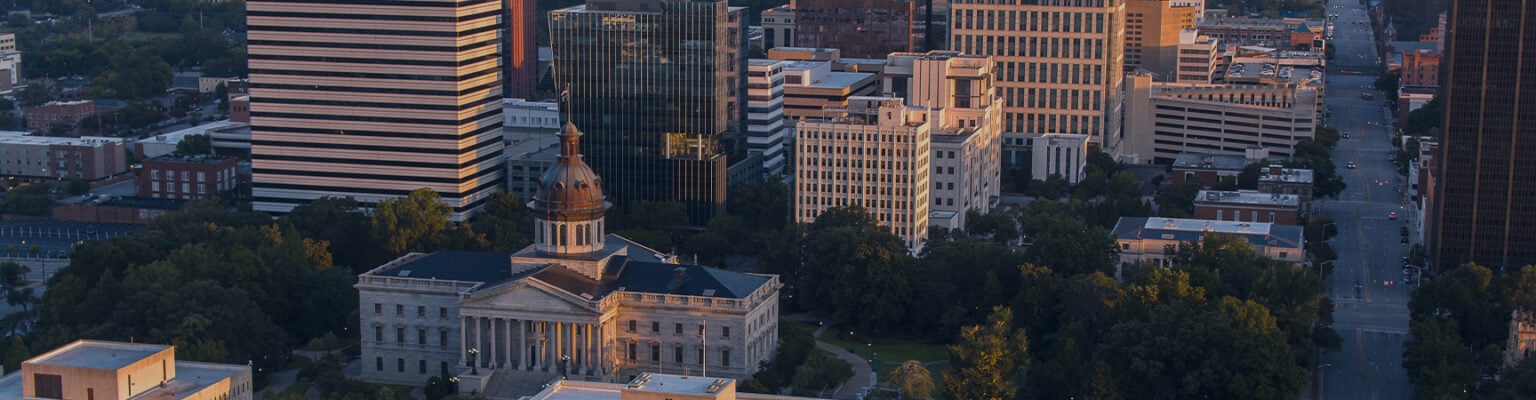
FCI Sheridan at a glance
FCI Sheridan is a medium-security federal prison in Sheridan, Oregon, with three facilities on one campus: the medium-security prison, a Federal Detention Center and a minimum-security satellite camp. It held 1,493 men as of September 2026 and is the only Bureau of Prisons institution in Oregon.
| Official name | Federal Correctional Institution, Sheridan |
|---|---|
| BOP code | SHE |
| Security level | Medium (prison), Administrative (detention center), Minimum (camp); men |
| Population | 1,493 (as of September 2026) — 1,214 prison and detention center, 279 camp |
| Visiting | Prison and camp: Saturday, Sunday and federal holidays 8:30 a.m.–3:00 p.m. · Detention center: Unit J-1 Friday and Saturday, Unit J-2 Sunday and Monday · see visiting hours |
| Inmate mail | Prison and detention center: Inmate Name & Register Number · FCI Sheridan · Federal Correctional Institution · P.O. Box 5000 · Sheridan, OR 97378 Camp: Inmate Name & Register Number · FCI Sheridan · Federal Correctional Institution · Satellite Camp · P.O. Box 6000 · Sheridan, OR 97378 |
| Send money | Lockbox · Western Union (code city FBOP, DC) · MoneyGram (receive code 7932) |
| Phone | 503-843-4442 · Fax 503-843-6645 |
| Street address | 27072 Ballston Road, Sheridan, OR 97378 · Yamhill County |
| Judicial district | District of Oregon |
| BOP region | Western |
| Housing | Prison: eight general population units and one Special Housing Unit · Detention center: two units · Camp: two open-bay buildings |
| Special Housing Unit | Yes, at the prison; none at the camp |
| Medical care level | 2 |
| Mental health care level | 3 |
| RDAP | Yes at the prison; suspended at the camp |
| Sex offender treatment | No |
| UNICOR | No · see prison industries |
| Camp | Yes, minimum-security satellite camp |
On this page
The Bureau of Prisons counted 1,214 at the prison and detention center together and 279 at the camp. It sits in Yamhill County, about 50 miles southwest of Portland and 25 miles northwest of Salem, among the federal prisons in Oregon and under the Bureau’s Western Region. It is also one of five institutions in the whole federal system approved to run the residential Mental Health Step Down Program, and one of the handful of federal prisons the Department of Justice Inspector General has entered unannounced and written up in public.

Three things get confused with FCI Sheridan
If someone has told you a relative is “at Sheridan,” start by ruling out the two institutions this one is most often mistaken for. Sheridan Correctional Center is in Sheridan, Illinois, ninety minutes southwest of Chicago; it is run by the Illinois Department of Corrections, it is an adult male medium-security state prison dedicated to substance abuse treatment, and its number is (815) 496-2181. Oregon’s own state prisons are run by the Oregon Department of Corrections and are a separate system again: a man sentenced in a state court does not come here, and a man sentenced in the United States District Court for the District of Oregon does not go to a state prison. The Bureau of Prisons roster lists exactly one Oregon institution, and it is this one.
Immigration detention is the third confusion, and here it is history rather than coincidence. In 2018 Immigration and Customs Enforcement placed 124 men in the detention center at Sheridan, and the litigation that followed is set out below. ICE is a separate agency with its own facilities and its own detainee locator; a person in ICE custody has no Bureau of Prisons register number and will not appear in the Bureau’s inmate locator. On March 26, 2026 ICE Acting Director Todd Lyons wrote to Oregon’s congressional delegation that “ICE is not currently planning to expand current detention facilities or open any new long or short-term detention facilities in Oregon,” while adding that the agency is “exploring various options to increase bedspace capacity nationwide working in collaboration with federal partners such as the U.S. Marshals Service, the Department of War, and the Bureau of Prisons.”
Finally, the name covers three things inside the fence. The Inspector General records that the institution “is composed of three sub-facilities: a medium-security prison, a minimum-security prison camp, and a detention center,” that the prison and camp opened in 1989 and the detention center in 1995, and that “FCI Sheridan leadership uses a centralized roster to assign employees to all three facilities.” One warden, one staff complement, three very different experiences of custody.
What is the security level at FCI Sheridan?
Medium at the main institution, administrative at the detention center, minimum at the camp — the three levels the PREA auditor recorded on one form in July 2024. The prison has eight general population units and one Special Housing Unit, two floors of double-occupancy cells unlocked during the day for the common shower and recreation areas; the institution’s own handbook counts the same buildings as “four individual housing units broken down by A and B sides.” The detention center has two general population units. The camp has no cells and no Special Housing Unit at all: two buildings of open living space with bays of bunk beds and communal bathrooms. When camp staff need to separate someone they move him into the Special Housing Unit inside the main institution, so a camp disciplinary problem can put a man behind a locked door on a different compound the same afternoon, under the Bureau’s discipline rules.
Two other levels matter more than the security score for anyone with a health problem. Sheridan is a Medical Care Level 2 institution, which in the Bureau’s scheme means it should be able to manage stable outpatients through routine appointments — not complex or acute conditions. It is a Mental Health Care Level 3 institution, the second highest of four. In the Bureau’s rules for treating mental illness, Program Statement 5310.16, that level describes a prisoner who needs “weekly mental health interventions” or “placement in a residential Psychology Treatment Program,” and the policy names the Step Down Program described below among the programs at the sites where the Bureau manages those prisoners. Listings that give the mental health level as 2 are out of date: the Inspector General’s 2024 report says 3, as does the Bureau’s undated mental-health chart released under the Freedom of Information Act. Our page on medical and mental health care levels explains the scale.
Who are the notable inmates at FCI Sheridan?
None of the names that circulate about this prison belongs to a man held here. Bureau records place each of them somewhere else or show him released; for a man already released, the screen shows only the date he left custody, and only the record behind it names his last facility.
| Name and register number | Bureau record (September 2026) |
|---|---|
| Leslie Ibsen Rogge, 13915-004 | Released from Bureau custody on June 18, 2026, at 86. The facility on his record is code BUH — FMC Butner, North Carolina, not Sheridan. |
| Tre Arrow, 70936-065 | Released on December 4, 2009, nearly seventeen years ago, with code CSE — RRM Seattle — on the record. Still listed as a current Sheridan inmate on directory sites. |
| Robert Gomez (Miracle Cars fraud) | Fifteen men of that name appear in the locator and not one is at Sheridan. Without a register number the name cannot be resolved. |
| Michael Avenatti, 86743-054 | At code CLB — RRM Long Beach, California — with a projected release of September 8, 2028. He asked his sentencing judge in 2021 to recommend Sheridan. A request is not a designation. |
No list of this kind can be complete, because the Bureau’s locator cannot be searched by institution. You can look up a person and find his prison; you cannot look up a prison and find its people. Any site publishing a roster of who is at Sheridan today built it from news archives, and archives are not updated when somebody transfers.
How do I find someone at FCI Sheridan?
Use the Bureau’s Inmate Locator, which covers everyone in federal custody from 1982 onward. The eight-digit register number gives an exact match; by name you need first and last name and ideally age to narrow it, and the result shows the facility and a projected release date for someone still held, and for someone released only “Not in BOP Custody as of” and the date, with no facility.
All three facilities here report under the single code SHE. The locator will say someone is at “Sheridan FCI” whether he is in the prison, the detention center or the camp, and will not tell you which. That distinction changes his visiting days, his mailing address and whether anyone beyond immediate family may visit, so ask the unit team directly rather than inferring it.
One line on the locator causes avoidable panic: “NOT IN BOP CUSTODY.” It can mean release, but the screen shows the same words for a record the Bureau marks “IN TRANSIT,” which in its own words means the person “has been moved from a BOP facility, and may or may not be returned”; its example is a pretrial prisoner removed by the U.S. Marshals Service. A release date of “UNKNOWN” means only that the term has not been determined. Designation itself is decided by the Bureau’s Designation and Sentence Computation Center in Grand Prairie, Texas, and that is the point at which a written submission about medical need, family location or programming carries the most weight.
How do I write to someone at FCI Sheridan?
There are two inmate addresses here, not one, and the institution’s own handbooks print the wrong one for the camp. The Bureau’s facility page gives these blocks and no others.
| For someone at | Address it exactly like this |
|---|---|
| The prison or the detention center | INMATE NAME & REGISTER NUMBER FCI SHERIDAN FEDERAL CORRECTIONAL INSTITUTION P.O. BOX 5000 SHERIDAN, OR 97378 |
| The satellite camp | INMATE NAME & REGISTER NUMBER FCI SHERIDAN FEDERAL CORRECTIONAL INSTITUTION SATELLITE CAMP P.O. BOX 6000 SHERIDAN, OR 97378 |
| Staff | STAFF NAME, FCI SHERIDAN, P.O. BOX 8000, SHERIDAN, OR 97378 |
| Freight and non-USPS parcels | STAFF NAME, FCI SHERIDAN, ATTN: WAREHOUSE, 27072 BALLSTON ROAD, SHERIDAN, OR 97378 |
Here is the trap. All three Admission and Orientation handbooks — the prison’s, the detention center’s and the camp’s, all signed by Warden DeWayne Hendrix in October 2021 — print a single “Inmate Mailing Address” of P.O. Box 5000, including the camp handbook a man at the camp is handed on arrival. The 2019 visiting supplement goes the other way and puts the detention center with the camp at Box 6000. The Bureau’s facility page and its live address record agree with neither: Box 5000 covers the prison and the detention center, Box 6000 covers the camp. Use the table above, and if a letter comes back, that mismatch is the first thing to check.
The Bureau’s correspondence rules sit behind the local ones. Mail without a register number is returned, the sender’s name and return address must be in the upper left corner, and general correspondence is opened and read. The Inspector General found that staff here intercepted 62 grams of methamphetamine in inmate mail shortly before the 2023 inspection, and that employees named synthetic cannabinoids sprayed onto paper and buprenorphine strips hidden behind stamps or in book bindings as the common routes in. Nothing you send should be capable of being mistaken for either: no perfumed paper, no stickers, no glitter, no glued-down photographs.
Special mail from an attorney, a court, a member of Congress or an embassy is opened only in the prisoner’s presence and is not read — but only if the envelope earns that on its face, marked “Special Mail — Open only in the presence of the inmate” and identifying the sender by name and title. An envelope carrying nothing but a firm’s logo is general mail and will be read. Our guide to writing to someone in federal prison covers what gets rejected and why. Two local rules: incoming ballots marked “Official Election Mail” or “Ballot Enclosed” are handled here as legal mail and signed for, and a pretrial inmate may carry legal documents into a social visit with prior approval, the pages counted on the way in. The supplement is explicit that “The legal document rule applies ONLY to pre-trial inmates.”
How do I send money to someone at FCI Sheridan?
Never to the prison. Money mailed to Ballston Road or to either post office box is returned or sits unposted. Federal prisoner funds go to one national lockbox in Iowa, or through Western Union or MoneyGram — our guide to sending money to federal inmates compares the routes — and all three need the committed name and the eight-digit register number exactly as the Bureau holds them.
| Route | What to give, and how fast it posts |
|---|---|
| National lockbox | Federal Bureau of Prisons, committed name, eight-digit register number, P.O. Box 474701, Des Moines, IA 50947-0001. Money order only — no cash, no personal checks. Non-postal money orders and non-government checks sit on a 15-day hold. Nothing else may go in the envelope; the Bureau disposes of anything enclosed with the funds. |
| Western Union Quick Collect | Code city FBOP, DC. Register number with no spaces or dashes followed immediately by the last name; full committed name on the attention line. Sent between 7 a.m. and 9 p.m. Eastern, it posts in two to four hours. |
| MoneyGram ExpressPayment | Company name Federal Bureau of Prisons, city and state Washington, DC, receive code 7932, register number then last name, committed name on the beneficiary line. Online transactions are capped at $300. Same posting window. |
Sending more than the commissary ceiling allows is the commonest waste of money in this system: the national limit under the Bureau’s trust fund rules, Program Statement 4500.13 (2026), is $460 a month, raised from $360, with a further $50 across November and December for no more than one validation period. One local rule matters as much. If a man here is in refuse status under the Inmate Financial Responsibility Program, the institution’s handbook says he has “a spending limit of only $25 monthly,” cannot work for Federal Prison Industries, cannot earn performance pay above maintenance level, may be moved to less desirable housing, and will not be considered for favorable requests. Money sent into a refuse-status account largely sits there. Ask him what his IFRP status is before sending a large sum.
What are the visiting hours at FCI Sheridan?
Visiting runs on Saturdays, Sundays and federal holidays at the prison and the camp, and at the detention center on Fridays and Saturdays for Unit J-1 and Sundays and Mondays for Unit J-2. The Bureau’s facility page for Sheridan, like every Bureau facility page, lists no visiting hours; the schedule is in the institution’s visiting supplement, which that page links.
The controlling document is Institution Supplement SHE 5267.09c, Visiting Regulations, dated July 21, 2019, which rescinds SHE 5267.09b of February 20, 2019 and covers all three facilities: “It is the policy of FCI/SCP/FDC Sheridan to establish visiting procedures for all inmates incarcerated at Sheridan.” It is nearly seven years old. Its schedule is below.
| Where he is | Days | Hours | Points from the monthly 12 |
|---|---|---|---|
| Medium-security prison | Saturdays, Sundays and federal holidays | 8:30 a.m. to 3:00 p.m. | 2 per day |
| Satellite camp | Saturdays, Sundays and federal holidays | 8:30 a.m. to 3:00 p.m. | 2 per day |
| Detention center, Unit J-1 | Fridays and Saturdays | 8:30 a.m. to 3:00 p.m. | 1 Friday, 2 Saturday |
| Detention center, Unit J-2 | Sundays and Mondays | 8:30 a.m. to 3:00 p.m. | 2 Sunday, 1 Monday |
| Special Housing Unit | Saturdays and Sundays | 8:30 a.m. to 3:00 p.m., one hour by video terminal | As for general population |
Two figures in that supplement contradict each other and the difference will cost you a visit. The body says visits run from 8:30 a.m.; Attachment A, the sheet a prisoner is told to mail to his family, says “Regular visiting hours are from 8:00 a.m. to 3:00 p.m.” and adds “No visitors will be processed after 2 p.m.” The reconciling rule is in the body: no one may be on institution grounds before 8:00 a.m., processing normally begins by 8:30, and processing stops an hour before the room closes. Treat 8:00 as the earliest you may be on the property, 8:30 as when visits begin, and 2:00 p.m. as the hard cut-off. On weekends and holidays processing also pauses at 9:15 a.m. until the institution count clears, so a party arriving at 9:20 waits.
There is a second conflict, and it favors camp families. The camp’s own Admission and Orientation handbook of October 2021, two years newer than the supplement, publishes a Friday evening session — “Friday 5:00 p.m. to 8:00 p.m.” — charged at one point, alongside the weekend schedule. The 2019 supplement gives the camp no Friday session at all. Both documents are the institution’s own and both sit on bop.gov. If a Friday evening is the visit that fits around work, call 503-843-4442 and have it confirmed before you drive. The national rules behind the supplement are in the Bureau’s visiting regulations, and our guide to federal prison visiting explains how a list is built.
The rated capacity of each room is printed in the supplement and explains why visits get cut short: 230 at the prison, 158 at the camp, 93 at the detention center. When a room fills, the Operations Lieutenant or Institution Duty Officer decides who leaves, and the stated tie-breakers are time of arrival and distance traveled. If you have come from out of state, say so at the front lobby.
Who can visit, and how many
At the prison and camp, six visitors at one time including children, of whom no more than four may be adults; a child over 16 counts as an adult. At the detention center it is two adults and up to four children. If more adults arrive than the limit allows, the officer may authorize a split visit — one interchange only, and whoever leaves may not return that day or wait on institution grounds.
Getting onto the list works differently at each facility. A sentenced man at the prison or camp mails a visiting form to each prospective visitor, who returns it to his counselor; the list ordinarily holds no more than ten friends and associates, with immediate family not counted. At the detention center a pretrial or holdover inmate may list immediate family only — mother, father, step-parents, foster parents, brother, sister, spouse, children — and each must demonstrate the relationship; a man designated there rather than held pretrial may ask for up to three non-family visitors. Every child, whatever his age, must be on the list. Prior convictions need the warden’s approval, and a refusal comes in writing on a “Notice of Denial for Proposed Visiting Applicant” that goes into the central file — a document you can ask to see and, if it is wrong, ask to have corrected.
What visitors can wear and bring
Several dress rules here are stricter than most. Skirts and dresses must touch the bottom of the kneecap with no slit above the knee. Leggings, jeggings, spandex, leotards, yoga pants and pants with holes are refused unless the lower body is covered by a skirt of proper length. Sweatshirts, sweatpants and jogging outfits are refused specifically because they resemble prisoner clothing, and so is anything in a khaki, green, red or yellow top-and-bottom combination. Hooded clothing is out. No watches and no bracelets, for anyone. Shoes must have a heel or strap to the foot — no slippers, shower shoes, flip-flops or open-toed shoes.
Everything carried in must be in a clear container, and the list is closed: one transparent purse or zip-lock bag up to a gallon, four diapers, two unopened plastic jars of baby food, three clear plastic bottles, one 30-inch square blanket, female hygiene products, “heart and epilepsy medication only,” factory-sealed formula, baby wipes, one car key, and no more than $30 in coin per visitor. No car seats, no strollers, no toys, and no paper currency at all: the vending machines take coins, a prisoner may not walk to them with you, and nothing bought there may leave the room.
Identification and screening
Everyone 16 and over needs valid state or government photo identification showing full name and signature, and an expired license will not do. One line in the supplement covers a license under suspension: “A license that is under current suspension can be used as valid identification.” Screening is covered by our guide to searches and contraband: a walk-through metal detector, a random same-gender pat search in a private area of the front lobby, random drug-residue testing on an ion scanner the supplement names as the Smiths Detection 600, and x-ray of jackets and shoes. Undergarments may not be removed or put through the x-ray to clear the detector.
Getting there
The institution sits off State Highway 18 on the outskirts of the town of Sheridan, roughly 50 miles southwest of Portland and 25 miles northwest of Salem. The supplement’s own directions: from Portland, Interstate 5 south to Highway 99W, west toward McMinnville, the Highway 18 bypass signed for the ocean beaches around McMinnville, then about thirteen miles west to the second Sheridan exit, turning right off the ramp; the institution is on the south side of the highway and visible from the exit. From Salem, Highway 22 west toward Dallas and the beach cities to the Valley Junction turn-off for Highway 18 east, on to the Sheridan off-ramp, turn left, and it is about a quarter mile along Ballston Road.
There is no bus: the supplement states that the area “has no public transportation (city bus service) between the institution and the surrounding areas.” Anyone flying in should plan on a rental car from Portland, and park only in the marked visitor areas: “There is absolutely no parking on Ballston Road at any time.” Deal with a knee or hip replacement before the day as well — your physician must fax or mail a report to the institution in advance, after which you are cleared with a hand-held detector.
How do phone calls and email work at FCI Sheridan?
Calls are placed by the prisoner, never received, from a list of approved numbers, and every call except a properly arranged legal call is monitored and recorded. National policy gives 510 minutes a month under the Bureau’s telephone regulations, Program Statement 5264.09, issued September 3, 2026 — 300 free to anyone eligible for First Step Act telephone incentives, the remaining 210 purchasable, and no November or December supplement in the new policy — with a single call that should generally not exceed 15 minutes, paid from the same trust fund account the commissary draws on — so telephone money and commissary money compete. Electronic messaging runs on TRULINCS, which is not email in any ordinary sense: messages are screened, there are no attachments or photographs, delivery is delayed, and a contact who rejects the system is blocked from then on. The handbooks list what else it is used for here: account transactions, the bulletin board, the contact list, the law library, BP-199 withdrawals, buying TRU-Units, and prescription refills of self-carry medication sent straight to the pharmacy.
Two local details matter for legal work; our page on attorney-client communications covers the national rules. At the detention center, legal visits for pretrial prisoners run seven days a week on a first-come first-served basis in two-hour blocks, and an attorney needing a full day or a video conference must ask at least 48 hours ahead. An attorney may bring a personal laptop, notebook or iPad into the detention center after signing the institution’s own “FDC Sheridan Electronic Media Agreement,” with any external memory device declared before entry and power cords no longer than six feet; law clerks, paralegals, interpreters, investigators and experts need prior clearance from the unit team through a dedicated attorney notification mailbox. For a man in the Special Housing Unit the visit itself is electronic — one hour by video terminal on a Saturday or Sunday, restrained on the way there but not during the call, with visitors screened exactly as for a contact visit and limited to five per group.
What can people buy at the FCI Sheridan commissary?
Three different order forms, one per facility, published as a single file and all dated 2023: the prison’s marked “Updated: October 2023,” the camp’s headed “FPC Sheridan Commissary 2023,” and the detention center’s carrying “Updated: 10/1/2023” over the signature of Warden I. Jacquez. Buying power depends on which building a man is in, and the three differ in ways easy to miss: the postage allowance is $12.60 at the prison, $11.00 at the camp and $13.20 at the detention center.
On the monthly ceiling the institution’s own documents are out of date. The prison handbook of October 2021 says “The National Spending Limit is $360 per month. However, inmates may only spend $180 on a bi-weekly basis.” The camp’s gives “$180.00 bi-weekly based on the 1st and the 15th as revalidation dates.” That national figure was superseded on May 7, 2026: Program Statement 4500.13 sets the limit at $460 a month, with an extra $50 across November and December, and its summary of changes records the rise from $360. Any source still printing $360 as the national ceiling — the Bureau’s own handbooks for this prison included — is describing the old rule. What the local $180 two-week cap now does under the higher ceiling is a question the paperwork does not answer; ask the trust fund supervisor in writing.
The shopping rules are mechanical. At the camp, groups are set by the last two digits of the first five register digits — 00 to 33, 34 to 66, 67 to 99 — rotating monthly; at the detention center the revalidation date is three times the last digit of the first five, plus one. And on all three forms: “When your name is called for Commissary, you must report to the sales window or you will lose your shopping privilege for that week.”
What is stocked says something about how time passes here. The October 2023 prison list still carries a Swintec typewriter ribbon at $7.75 and a correction ribbon at $14.55, which is what legal drafting looks like where the law library is a menu option on a shared terminal. Sweatpants are $22.10 and a sweatshirt $18.85, in gray or white only, which is all the clothing men may buy; ramen is 50 cents, limit twelve. An “N” before a price means the item is outside the monthly limit, an “R” that it stays available on commissary restriction.
One warning about searching for this document. A second file, she_fdc_commlist.pdf, is still served from the Bureau’s directory for this institution although nothing on the facility page links to it, and it is a detention center list dated July 2014 with a $9.80 stamp allowance and 49-cent stamps on it. If a search engine puts that in front of you, you are reading prices from twelve years ago.
What programs are available at FCI Sheridan?
One program here is genuinely rare, one was suspended at the camp and has not come back, and most of the rest carried waiting lists long enough that the Inspector General counted them. At this institution the gap between approval on paper and a seat in a classroom is documented in unusual detail.
The Mental Health Step Down Program
Five institutions in the entire federal prison system are approved for the residential Mental Health Step Down Program, and this is one of them. The August 2026 First Step Act Approved Programs Guide names them in the program’s own detail entry — USP Allenwood, FCI Atlanta, FCI Butner Medium I, FMC Fort Worth and FCI Sheridan — and the guide’s separate programs-by-institution table, read by counting column positions against that block’s header codes, marks the same five. The two halves of the guide agree here, which is not always true of it.
The guide calls it a unit-based residential program offering an intermediate level of care to people with serious mental illness “who do not require inpatient treatment but lack the skills to function in general population,” whose goal is “to provide evidence-based treatment that maximizes the participants’ ability to function while minimizing relapse and the need for inpatient hospitalization.” It runs as a modified therapeutic community using cognitive behavioral treatment, peer support and skills training, with psychology staff working alongside psychiatry on medication. It is an Evidence-Based Recidivism Reduction program worth 500 credit hours, it carries a risk-score impact, and it is delivered by Psychology Services under the Bureau’s psychology treatment program rules, Program Statement 5330.11.
The reason it exists in five places and not everywhere is the tier it fills. A man whose illness is serious and chronic but who does not need inpatient hospitalization has, in most institutions, nowhere in particular to be; Step Down gives him a unit, a treatment structure and a route back to general population without a hospital admission. That also makes it a designation question rather than a program question: getting in usually means getting transferred to one of the five, through a written request supported by the psychology record and decided by the Bureau’s Designation and Sentence Computation Center.
There is dated evidence that it has actually been running here, which is more than most program listings can offer. Inspecting in late November 2023, when nearly every other department was short-staffed, the Inspector General wrote: “We note that the Psychology Services Department did have sufficient employees to administer a program of note: the BOP’s Mental Health Step Down Program… At the time of our inspection, 53 inmates were participating in the program and FCI Sheridan was 1 of only 5 BOP institutions that offered this program.” That was 53 participants at an institution then holding about 1,600 men, and the count is nearly three years old. The question for the unit team, in writing, is not whether the program exists but when the next cohort starts and how long the list is.
RDAP and drug treatment
The Residential Drug Abuse Program runs at the main institution and was suspended at the camp on about December 4, 2023 — three days after the Inspector General’s team left. Leadership had asked the Western Regional Director to suspend it because they could not hire drug treatment staff, and “Three days after our inspection concluded, BOP Director Colette Peters suspended the RDAP at the FCI Sheridan’s minimum-security prison camp.” Only 5 of 16 drug treatment posts were then filled and about 70 camp residents were waiting to begin. Many had been moved to Sheridan from other prisons specifically for that program, and the Inspector General recorded that they “were frustrated that they had been moved farther from their homes and families only to arrive at Sheridan and learn that the institution was struggling to offer the program.” By March 1, 2024, over 80 percent of the eligible camp population had been transferred out again.
The camp program has not reappeared on the Bureau’s current list. The RDAP locations table inside the August 2026 guide, dated “Updated 6/4/2026” and totaling 57 programs at 50 locations, names “FCI Sheridan (OR)” and no Sheridan camp — while the same list separately names satellite camps at Cumberland, Leavenworth, Lewisburg, McKean, Edgefield and Texarkana. A list is a snapshot, and a cohort could restart without it being redrawn, so the step that settles it is a written request to the Drug Abuse Program Coordinator asking whether a camp cohort is running and, if not, what the transfer route is.
More than a dozen men filed habeas petitions over the suspension, and on August 9, 2024 a magistrate judge in the District of Oregon issued findings recommending dismissal in a run of them. The reasoning matters before anyone spends money on the same theory: Congress required the Bureau to provide substance abuse treatment “subject to the availability of appropriations,” and the reduction under 18 U.S.C. § 3621(e)(2)(B) is discretionary — the Bureau may deny it even to a successful participant. For a claim to belong in habeas, success must necessarily mean speedier release and must show the detention itself is without legal authorization. The recommendation in each case, including Tackett v. Jacquez, No. 3:23-cv-01928-JE (D. Or. Aug. 9, 2024), was dismissal. Those are recommendations from a magistrate judge, not final judgments, and the practical lesson is that the administrative remedy process and a transfer request were the routes that stayed open.
One step in RDAP admission deserves a defense lawyer’s attention years early. Staff screen the presentence report for documentation of a pattern of drug abuse or dependence; if it is there, the man is referred to the Drug Abuse Program Coordinator for a diagnostic interview, ordinarily between 42 and 24 months from release. Because the presentence report is the screening document, what is written about substance use before sentencing decides eligibility long afterward.
Education and vocational training
Mandatory literacy and English-as-a-second-language classes are the core: a man without a high school credential must take at least 240 instructional hours of GED programming to vest the maximum good conduct time. The education department holds open house on Tuesdays from 11:00 to 11:30 a.m. and Thursdays from 11:30 a.m. to noon, and a Career Resource Center sits inside it.
The vocational picture at the end of 2023 was thin and the Inspector General put numbers on it. The Bureau had assessed more than 1,200 men at the prison and camp as needing programming to improve their ability to hold a job after release. Fifty-eight were enrolled in vocational training — 57 in carpentry and one in an electrician apprenticeship — with waiting lists of over 600 for the first phase of the Resolve Program and over 500 for anger management. By April 2024 the Bureau reported a welding program started and vocational enrollment up to 78. Seventy-eight seats against twelve hundred assessed needs is the ratio behind a unit team’s statement that a program is available.
Faith-based programming and reentry
Religious Services runs the chapel, the religious diet program and approval of religious headwear, which is inspected before and after every visit. The Reentry Affairs Coordinator sits in the chapel area and pushes the work release depends on: two forms of identification including a social security card, and benefits applied for before release rather than after. Reading the August 2026 guide’s institution table by column position, Sheridan is marked for anger management, basic cognitive skills, criminal thinking, dialectical behavior therapy, national parenting, the non-residential drug program, all four occupational education categories, Seeking Strength and Threshold, and is not marked for BRAVE, Challenge, Life Connections, post-secondary education or either sex offender treatment program. That table is the weaker half of the guide; treat it as the opening of a conversation with the unit team, not as an entitlement.
Federal Prison Industries
The record conflicts here, and it matters to anyone counting on UNICOR wages to pay restitution. The institution’s own handbook of October 2021 says in terms: “FCI Sheridan does not currently have a UNICOR factory.” The August 2026 First Step Act guide agrees by omission — its Federal Prison Industries entry prints fifty-five institution codes, one of them repeated, and Sheridan is not among them — while the same guide’s institution table marks Sheridan for it. Where those two halves disagree, the named list is the better record, and here the institution’s own handbook says the same. Sheridan did once host a UNICOR electronics recycling operation, which the Inspector General listed among the program’s sites in a 2010 review. Ask the unit team whether any industries work exists before building a payment schedule around it.
What is daily life like at FCI Sheridan?
The day is built around counts and controlled movement, and at the main institution a good part of it is spent in a cell whether or not anything is wrong. Because Correctional Officer posts could not all be filled, the Inspector General found, management “has had to habitually confine (or lock down) inmates to their cells during daytime hours,” which kept them out of programs and off the recreation yard. Our page on lockdowns and modified operations explains the national rule. A family that cannot understand why a man never seems to be in class is usually looking at that, not at his effort. The published schedule at the main institution runs as follows.
| Time | What happens |
|---|---|
| 6:00 a.m. | Lights on in the housing units |
| 6:30 – 7:30 a.m. | Breakfast, Monday to Friday (7:00 – 8:00 a.m. coffee hour on weekends and holidays) |
| 7:30 a.m. – 3:30 p.m. | Work and program hours; institution khaki required, shirt tucked, belt worn |
| 10:45 a.m. – noon | Lunch, Monday to Friday; brunch 10:45 – 11:45 a.m. on weekends and holidays. Senior staff stand mainline at the noon meal |
| 2:50 p.m. | Recreation recall on weekdays (3:30 p.m. on weekends) |
| 4:00 p.m. | Standing count; dinner is served once it clears |
| Evening | Controlled movement; units called to the evening meal on a weekly rotation; the compound is announced closed once the dining room is cleared |
| 8:45 p.m. | Institution recall, daily |
Controlled movement is tighter than the phrase suggests. During evening and weekend movement the walkway from food service to the gymnasium is the only one open, and being on any other is an out-of-bounds charge; every lawn area is off limits; unit doors stay locked between movements; and an identification card must be carried whenever a man is out of his own quarters. Clothing marks which facility he belongs to — khaki at the main institution, with the handbook direct about it (“absolutely no ‘sagging’”), and spruce green at the camp. Everything a man owns has to fit one locker.
The camp runs on the same clock but a different geography: no cells and no locked doors between a man and the yard, which is why the Inspector General described contraband as most acute there. The perimeter nearest the camp “is marked by a fence that is easily accessible from a municipal park, which would make it easy for associates of inmates to throw contraband over the fence.” The same openness is why an evening with a single officer assigned to the camp becomes an evening with no officer at all if that one is called to the prison or the detention center — which employees told the inspectors happens regularly. Food service drew one of the few unqualified compliments in the 2024 report: the warehouses were “clean and functioning well,” and the bakery was singled out.
What do inspectors say about conditions at FCI Sheridan?
More than they say about almost any federal prison. Sheridan was the third institution inspected under the Inspector General’s unannounced on-site program, which had reached fourteen institutions on its own May 2026 count (Report 26-055), and the resulting document runs to 39 pages with photographs. There is also a full PREA audit from July 2024. The DC Corrections Information Council, which inspects institutions holding District of Columbia offenders, has not inspected this one.
The Inspector General’s inspection
The team gave the institution four hours’ notice. The Inspector General telephoned at about 8 a.m. on Monday, November 27, 2023 to say an inspection would begin at noon, and ten OIG employees plus a contracted physician and registered nurse stayed until Friday, December 1. Report 24-070 was published on May 22, 2024, and its first sentence sets the tone: “Our unannounced inspection identified several serious safety and security issues at FCI Sheridan affecting both employees and inmates.” It made no new recommendations, on the basis that what it found were versions of Bureau-wide problems already under open recommendations.
Staffing is the spine of it. Overall 290 of 357 positions were filled. Correctional Services had 117 of 145; Health Services 18 of 27, with three of seven nurse posts filled and no phlebotomist at all since March 2022; drug treatment 5 of 16. To cover correctional posts in the year to November 2023, staff worked more than 88,400 hours of overtime and augmentation — about 43 full-time positions, fifteen more than the official vacancy count, which led the Inspector General to conclude that the 145 authorized correctional posts “may be too low.”
| What the inspectors found | The figure |
|---|---|
| Blood-draw and urine orders backlogged | 725, reduced to 44 by May 2024 after the OIG raised it |
| X-ray orders pending | 274, reduced to 84 by May 2024; the prison’s machine had been out since July 2022 and the detention center’s since December 2022 |
| Outside appointments canceled for lack of escort staff | 101 between January and November 2023, of which 89 were later completed; a further 73 were canceled by providers |
| Men waiting for routine dental care | About 350 in October 2023, 41 percent of them for two years or more; dental care was limited to intake exams, clinical exams and walk-in triage |
| Men in the Special Housing Unit | 90, average stay 54 days; 18 had been there 100 days or more; five were single-celled |
| Open employee misconduct investigations | 98, averaging more than 1.5 years old; nine employees were off regular duty |
| Open investigations of staff sexual misconduct | 20 at the inspection; 31 as of May 13, 2024 after the Bureau re-examined the allegations |
| Security cameras | 225 in total — 154 at the prison, 50 at the detention center, 21 at the camp — of which 60 were digital |
| Overdue systems replacement | Estimated at $21.6 million, unfunded at the time of the inspection |
One incident explains what a medical backlog feels like from inside. A man in the Special Housing Unit “admitted to having feigned a suicide attempt (he placed a fabric noose around his neck) in order to force institution employees to provide medical attention for an ingrown hair that became infected.” When he was finally examined, the swelling in his face was severe enough that he spent five days in hospital. The inspectors watched the video and found it disturbing that a condition that visible had gone unaddressed in a unit where officers must make rounds twice an hour and a clinician daily.
The rounds themselves were not being made: reviewing housing unit video from an evening shortly before the inspection, the Inspector General found officers completed “less than half of the required twice-hourly rounds in three housing units between 9:30 p.m. and 6 a.m.” The main institution’s trauma room was found with an empty oxygen tank on November 28 that was not replaced until December 1. Not everything was bad — infrastructure was in better shape than at the institutions previously inspected, the cameras produced good footage, food service was clean. The Bureau’s response, signed by Director Colette S. Peters on May 20, 2024, reported that “As of early May, FCI Sheridan had filled 87.9% of all positions, up from 81% as of November 2023,” and two days after publication Oregon’s congressional delegation wrote to her that “Taken together, these deficiencies showcase a comprehensive failure by leadership at FCI Sheridan and BOP to protect both inmates and prison staff.”
The 2024 PREA audit
Seven months later a different federal process looked at the same prison and reached a different verdict. Valerie Wolfe Mahfood, auditing for PREA Auditors of America, was on site from July 10 to 12, 2024 and certified the report on August 26; the Bureau posted it on September 17. The result was five standards exceeded, 36 met, none failed. Among the five exceeded was supervision and monitoring.
That sits oddly beside the Inspector General’s findings, and the reason is worth understanding rather than glossing. The PREA standard asks whether there is a documented staffing plan reviewed on a schedule, whether deviations below minimum staffing are recorded, and whether supervisors make and document unannounced rounds. The auditor found the plan reviewed quarterly, last finalized May 6, 2024, and observed supervisory rounds documented across all three shifts. She also recorded this: “Per the FCI Sheridan Warden, within the audit time frame, the staffing levels of FCI Sheridan have not fallen below the required levels.” The Inspector General had measured something different — whether officer posts were filled and whether inmate-monitoring rounds were completed — and found they were not. Both records are accurate about what they examined, and a family reading only one would form a very different picture of this place.
The audit’s own numbers are worth keeping. The audit puts 1,518 men in the institution on the first day of the on-site visit, against a designed capacity of 1,311, and records that it had been over capacity at some point in the previous year. Its two statements of the twelve-month average do not agree: the facility-characteristics block says 1,595 and question 15 says 1,834. Ages ran from 19 to 84. In the twelve months before the audit, administrative investigations of sexual abuse recorded fifteen ongoing, one unfounded, three unsubstantiated and one substantiated allegation between prisoners, and seven ongoing allegations against staff. Read those counts against what the Inspector General found seven months earlier — that the institution “did not centrally track the number of all allegations of inmate-on-inmate sexual misconduct reported to employees,” logging only those judged to merit a full investigation, contrary to 28 C.F.R. § 115.87. The institution told the OIG afterward that it had changed the method to capture every allegation. See the Bureau’s sexual-abuse prevention policy.
Litigation and the criminal record
The case that made this prison nationally known is Innovation Law Lab v. Nielsen, 310 F. Supp. 3d 1150 (D. Or. 2018). On May 31, 2018 Immigration and Customs Enforcement transferred 124 immigrant men into the detention center for civil detention; about 121 were still there weeks later, in two units, one of which also held federal prisoners. Volunteer lawyers could not reach them: a hotline set up on June 8 could not be dialed from the facility’s phones, an attorney was turned away on June 10, a visit scheduled for June 15 was canceled at the last minute, attorneys were refused again on June 18, 20 and 21, and an authorized Know Your Rights session was turned away by Bureau officers. At least 50 detainees had asked the Law Lab for representation and 64 had asked the Federal Public Defender. Credible-fear interviews were due to start on June 28.
Judge Michael H. Simon granted a temporary restraining order on June 25, 2018. He held the court had jurisdiction because the claim concerned the conditions of pre-hearing civil detention rather than removal proceedings, and that the plaintiffs were likely to succeed on a Fifth Amendment due process claim — not a right to appointed counsel, but a right to counsel at one’s own expense and a reasonable opportunity to obtain it. For 28 days he barred any asylum interview or deportation until a detainee had the chance to attend a Know Your Rights session and consult requested counsel, barred transfer out of the District of Oregon without counsel’s consent or the court’s approval, required visitation rooms available at least six hours a day, required notice to the Federal Public Defender of scheduled interviews, and ordered at least four telephone lines in each unit holding detainees with free direct calls to legal service providers from 8 a.m. to 8 p.m. daily. It is a temporary restraining order, not a final judgment.
The criminal record here runs mostly to contraband and corruption, prosecuted out of the Inspector General’s Seattle office: a correctional officer and an outside associate self-surrendered in November 2020 on a three-count indictment with a prisoner for conspiracy, providing contraband and bribing a public official, and in March 2024 a former officer named Herrera was sentenced for smuggling in “drugs, a cell phone, and other contraband.” Separately, on February 4, 2025 a former Sheridan officer was sentenced to 35 months and ordered to register as a sex offender for encouraging child sexual abuse. As of September 2026, the Inspector General listed six Bureau-wide engagements as ongoing — among them an evaluation of the use of lockdowns and modified operations begun in June 2025. None names Sheridan.
FCI Sheridan in the news
Recent news about FCI Sheridan centers on three deaths in custody in 2026, an ICE letter to Oregon’s congressional delegation and the end of staff retention bonuses; older items concern the Inspector General’s 2023 inspection and 2024 report, the suspension of the camp drug-treatment program and the 2018 detention of immigrants at the detention center. Dated entries, most recent first:
- June 28, 2026 — Death at FCI Sheridan. The Bureau reported that Franklin Earl Lawrence Jr., 53, “was found unresponsive” at about 7:30 p.m., that “life-saving measures” were begun, and that after “life-saving efforts” he was “pronounced deceased by EMS personnel.”
- May 6, 2026 — Death at FCI Sheridan. The Bureau reported that Burdick Nelson Seminole, 61, was “found unresponsive following a perceived altercation” at about 6:40 a.m., that “life-saving measures” were begun, and that he was “subsequently pronounced deceased by EMS personnel.” “A second individual was medically assessed and treated for minor injuries.”
- March 26, 2026 — ICE Acting Director Todd Lyons writes to Oregon’s congressional delegation that the agency “is not currently planning to expand current detention facilities or open any new long or short-term detention facilities in Oregon,” while noting that ICE is working with the Marshals Service and the Bureau of Prisons on national bedspace.
- January 22, 2026 — Inmate Death at FCI Sheridan. The Bureau reported that Jeffery Hoagland, 62, “was found unresponsive” at about 4:15 p.m., that “life-saving measures” were begun, and that after “life-saving efforts” he was “pronounced deceased by EMS personnel.”
- February 26, 2025 — the Bureau tells staff that retention incentives worth up to 35 percent of base salary will be greatly reduced or eliminated from March 23, 2025, affecting 23,000 employees at 50 prisons. At Sheridan the incentive had gone to about 40 correctional workers hired that quarter, and the three facilities together then held 1,442 men.
- August 9, 2024 — a magistrate judge issues findings recommending dismissal of habeas petitions brought over the camp RDAP suspension.
- May 22, 2024 — the Inspector General publishes Report 24-070, with a news release and a video message from Inspector General Michael Horowitz the same day.
- December 8, 2023 — staff announce at a town hall that the camp’s drug treatment program is being suspended and that men who want to continue may transfer.
- December 4, 2023 — three days after the inspection ends, the Director approves suspension of the camp RDAP.
- November 27 – December 1, 2023 — the Inspector General conducts an unannounced on-site inspection, the third of the program.
- 2021 — the Bureau posted two news releases reporting the deaths of people held at FCI Sheridan; the Bureau’s releases are listed on its press release page.
- June 25, 2018 — a federal judge grants a temporary restraining order over access to counsel for immigration detainees held at the detention center.
- May 31, 2018 — ICE transfers 124 immigrant men into the detention center.
Frequently asked questions about FCI Sheridan
Is FCI Sheridan the same as Sheridan Correctional Center?
No. Sheridan Correctional Center is an Illinois Department of Corrections medium-security state prison in Sheridan, Illinois, dedicated to substance abuse treatment, on (815) 496-2181. FCI Sheridan is a federal prison in Sheridan, Oregon. Separate systems, separate states: a man sentenced in a state court does not come here, and a man sentenced in the federal court for the District of Oregon does not go to a state prison.
How many federal prisons are there in Oregon?
One. The Bureau of Prisons roster lists a single Oregon institution: FCI Sheridan, which contains a medium-security prison, a Federal Detention Center and a satellite camp on one campus. The Bureau’s own list of 22 residential reentry management offices places none of them in Oregon; the nearest is RRM Seattle.
When can families visit FCI Sheridan?
Under Institution Supplement SHE 5267.09c of July 21, 2019: the prison and camp visit Saturdays, Sundays and federal holidays from 8:30 a.m. to 3:00 p.m.; at the detention center, Unit J-1 visits Fridays and Saturdays and Unit J-2 Sundays and Mondays. No visitor is processed after 2 p.m., and processing pauses at 9:15 a.m. on weekends until the count clears. The Bureau’s facility page lists no hours; the schedule is in that supplement.
Can you visit the Sheridan camp on a Friday evening?
The camp’s own Admission and Orientation handbook of October 2021 publishes a Friday session from 5:00 p.m. to 8:00 p.m., charged at one visiting point. The 2019 visiting supplement, which is the controlling regulation, gives the camp no Friday session. Both are the institution’s own documents. Call 503-843-4442 before you travel.
What is the mailing address for FCI Sheridan?
For a man at the prison or the detention center: inmate name and register number, FCI Sheridan, Federal Correctional Institution, P.O. Box 5000, Sheridan, OR 97378. For a man at the camp: the same, plus the line Satellite Camp, at P.O. Box 6000. All three of the institution’s 2021 handbooks print Box 5000 for everybody, which is wrong for the camp.
How much can someone spend at the FCI Sheridan commissary?
$460 a month under Program Statement 4500.13 (2026), with an extra $50 available across November and December. The institution’s own handbooks still print the old national figure of $360 and a local $180 two-week cap. Stamps and over-the-counter medication fall outside the limit. Ask the trust fund supervisor which validation cycle applies at the facility your relative is in.
Does FCI Sheridan have RDAP?
Yes at the main institution. The camp program was suspended on the Director’s approval about December 4, 2023, three days after the Inspector General’s inspection ended, because only 5 of 16 drug treatment posts were filled. The Bureau’s current RDAP locations list, updated in June 2026, names FCI Sheridan and no Sheridan camp. Put the question to the Drug Abuse Program Coordinator in writing.
What is the Mental Health Step Down Program?
A unit-based residential program for people with serious mental illness who do not need inpatient hospitalization but cannot manage in general population. It runs as a modified therapeutic community using cognitive behavioral treatment, peer support and skills training, is worth 500 First Step Act credit hours, and is delivered by Psychology Services. The August 2026 First Step Act guide approves it at five institutions: USP Allenwood, FCI Atlanta, FCI Butner Medium I, FMC Fort Worth and FCI Sheridan.
How does someone get into the Step Down Program?
Through Psychology Services and, for most people, through a transfer. Because the program runs at only five institutions, the route is usually a written request to the unit team supported by the psychology record, leading to a redesignation decision by the Bureau’s Designation and Sentence Computation Center. Approval on the Bureau’s list is not a bed: ask when the next cohort starts and how long the waiting list is.
Did the Inspector General inspect FCI Sheridan?
Yes. The Department of Justice Inspector General conducted an unannounced on-site inspection from November 27 to December 1, 2023 and published E&I Report 24-070 on May 22, 2024. Sheridan was the third institution inspected under that program. The report found substantial shortages of Correctional Officers and healthcare workers, a backlog of 725 laboratory orders and 274 x-ray orders, and about 350 men waiting for routine dental care.
Who are the famous inmates at FCI Sheridan?
None of them. Bureau records as of September 2026: Leslie Rogge, register 13915-004, was released on June 18, 2026 from FMC Butner; Tre Arrow, register 70936-065, was released on December 4, 2009; none of the fifteen Robert Gomez records is at Sheridan; and Michael Avenatti, register 86743-054, is listed under “Long Beach RRM,” the Bureau’s residential reentry office there, not at a prison.
Did ICE hold immigration detainees at FCI Sheridan?
Yes, in 2018. ICE transferred 124 men into the detention center on May 31, 2018, and on June 25, 2018 a federal judge granted a temporary restraining order over their access to lawyers, ordering visitation hours, notice to the Federal Public Defender and free direct telephone lines to legal service providers. ICE told Oregon’s congressional delegation in March 2026 that it has no current plans to open or expand detention facilities in the state.
Does FCI Sheridan have a UNICOR factory?
Its own Admission and Orientation handbook of October 2021 says: “FCI Sheridan does not currently have a UNICOR factory.” The August 2026 First Step Act guide agrees by omission, printing fifty-five institution codes for Federal Prison Industries, one of them repeated, without Sheridan among them, although the same guide’s institution table marks it. The institution once hosted an electronics recycling operation. Confirm with the unit team before planning restitution payments around industries wages.
How do I get to FCI Sheridan without a car?
With difficulty. The institution’s visiting supplement states that the area has no public bus service between the prison and the surrounding towns, and names three private carriers instead. The institution sits off State Highway 18, about 50 miles southwest of Portland and 25 miles northwest of Salem, so most visitors fly into Portland and drive.
Where we can help
The problems that recur at this institution are documented, which means they can be raised with specifics rather than complaints. The list below comes from what its own inspection, audit and court record show going wrong here.
- Medical care that is ordered and never delivered: 725 backlogged laboratory orders, 274 pending x-rays, two x-ray machines out of service for over a year, 101 outside appointments canceled for want of an escort. Health Services here also shredded paper sick-call requests without reconciling them, so what a man keeps on paper may be all the record there is.
- Dental care modified out of existence — no cleaning, fillings or root canals, with 41 percent of a 350-man waiting list already two years deep.
- Program access a designation should have delivered. Men were transferred here specifically for RDAP and found it suspended at the camp; a redesignation request or a First Step Act credit dispute starts with establishing in writing what was promised at designation; the Bureau’s time-credit procedures set the rules.
- Access to the Mental Health Step Down Program, or to adequate mental health treatment short of it, at one of the five institutions approved to run it — and the transfer request that getting there usually requires.
- Long stays in the Special Housing Unit: ninety men, an average of 54 days, eighteen past 100 days, five single-celled. Where a placement has outlasted its reason, the reviews and the psychological assessments required for someone with serious mental illness are reviewable through the administrative remedy.
- Access to counsel at the detention center: legal visits, video conferences, the electronic media agreement and the treatment of legal materials in the visiting room.
- Sentence computation and challenges to it, First Step Act time credits, halfway house and home confinement placement, and compassionate release under the Bureau’s reduction-in-sentence rules.
- Challenges to the conviction or sentence itself, through a direct appeal or a § 2255 motion.
Elizabeth Franklin-Best, P.C. handles federal criminal defense, appeals and post-conviction matters nationwide, and advises families on Bureau of Prisons issues at institutions across the system. Call (843) 620-1100 or contact us to talk through a specific situation.
Christopher Zoukis, JD, MBA, the firm’s Managing Director, writes and maintains the federal prison policy material on this site. He is not counsel of record; legal representation is provided by Elizabeth Franklin-Best.
Sources and currency
Bureau of Prisons documents
- FCI Sheridan, Federal Bureau of Prisons, 2026. The Bureau’s facility page, with the mailing addresses, contact details and population.
- Death at FCI Sheridan, Federal Bureau of Prisons, FCI Sheridan, 2026. Press release on the death of Franklin Earl Lawrence Jr.
- Death at FCI Sheridan, Federal Bureau of Prisons, FCI Sheridan, 2026. Press release on the death of Burdick Nelson Seminole.
- Inmate Death at FCI Sheridan, Federal Bureau of Prisons, FCI Sheridan, 2026. Press release on the death of Jeffery Hoagland.
- FCI Sheridan, FPC Sheridan and FDC Sheridan Commissary Lists, Federal Bureau of Prisons, FCI Sheridan, 2023. Items, prices and purchase limits at each of the three facilities.
- FCI Sheridan Inmate Admission and Orientation Handbook, Federal Bureau of Prisons, FCI Sheridan, 2021. Mail, telephone, commissary, work, programs, health services and the daily schedule at the prison.
- FPC Sheridan Inmate Admission and Orientation Handbook, Federal Bureau of Prisons, FCI Sheridan, 2021. The satellite camp’s own handbook, including its Friday visiting session.
- FDC Sheridan Inmate Admission and Orientation Handbook, Federal Bureau of Prisons, FCI Sheridan, 2021. The detention center’s own handbook.
- Institution Supplement SHE 5267.09c, Visiting Regulations, Federal Bureau of Prisons, FCI Sheridan, 2019. Visiting days and hours for all three facilities, visitor lists, dress, screening and directions; rescinded SHE 5267.09b (2019).
- Trust Fund/Deposit Fund Manual, Program Statement 4500.13, Federal Bureau of Prisons, 2026. Sets the $460 commissary spending limit.
- Inmate Telephone Regulations, Program Statement 5264.09, Federal Bureau of Prisons, 2026. Replaced Program Statement 5264.08 (2008).
- Correspondence, Program Statement 5265.14, Federal Bureau of Prisons, 2011. General and special mail.
- Treatment and Care of Inmates with Mental Illness, Program Statement 5310.16, Federal Bureau of Prisons, 2014. As amended in 2025; mental health care levels and the residential psychology treatment programs.
- Psychology Treatment Programs, Program Statement 5330.11, Federal Bureau of Prisons, 2009. Governs the Mental Health Step Down Program. The Bureau does not publish this edition online.
- First Step Act Approved Programs Guide, Federal Bureau of Prisons, Reentry Services Division, 2026. Program availability by institution, the Mental Health Step Down Program entry and the RDAP locations list.
- Institution Care Levels for Medical Assignment and Institutional Mental Health Care Levels, Federal Bureau of Prisons, 2024. Released under Freedom of Information Act request 2024-03455 and published by the Washington Lawyers’ Committee.
- Press Releases, Federal Bureau of Prisons, 2021. The Bureau’s news releases, including its notices of deaths in custody.
- About Federal Inmate Records, Federal Bureau of Prisons, 2026. What the Bureau’s public inmate records cover and what “IN TRANSIT” and “UNKNOWN” mean.
Audits and inspections
- Inspection of the Federal Bureau of Prisons’ U.S. Penitentiary Canaan, U.S. Department of Justice, Office of the Inspector General, 2026. Report 26-055; counts the program’s unannounced inspections.
- Ongoing Work, U.S. Department of Justice, Office of the Inspector General, 2026. The Inspector General’s list of engagements under way.
- Inspection of the Federal Bureau of Prisons’ Federal Correctional Institution Sheridan, U.S. Department of Justice, Office of the Inspector General, 2024. E&I Report 24-070, with the Bureau’s response; unannounced inspection of November 27 to December 1, 2023.
- PREA Facility Audit Report: Final, FCI Sheridan, PREA Auditors of America, 2024. On-site audit of July 10–12, 2024, by Valerie Wolfe Mahfood.
Court records
- BOP Correctional Officer Pleaded Guilty and Sentenced for Encouraging Child Sexual Abuse, U.S. Department of Justice, Office of the Inspector General, 2025. The February 2025 sentence of a former Sheridan officer.
- Tackett v. Jacquez, No. 3:23-cv-01928-JE (D. Or.), U.S. District Court for the District of Oregon, 2024. Docket and the August 2024 findings and recommendation on the camp RDAP habeas petitions.
- Former Federal Correctional Officer Sentenced to Federal Prison for Role in Bribery and Contraband Scheme, U.S. Department of Justice, Office of the Inspector General, 2024. The March 2024 sentence of the officer named Herrera.
- Non-DOJ Individual Sentenced for Providing Contraband in Prison, U.S. Department of Justice, Office of the Inspector General, 2024.
- BOP Inmate Pleaded Guilty to Conspiracy and Bribing a Public Official, U.S. Department of Justice, Office of the Inspector General, 2023.
- BOP Correctional Officer and Non-DOJ Individual Self-Surrender After They and a BOP Inmate Were Indicted, U.S. Department of Justice, Office of the Inspector General, 2020. The November 2020 three-count indictment.
- Non-DOJ Associate of BOP Correctional Officer Self-Surrendered After Being Indicted, U.S. Department of Justice, Office of the Inspector General, 2020.
- Innovation Law Lab v. Nielsen, 310 F. Supp. 3d 1150 (D. Or. 2018), U.S. District Court for the District of Oregon, 2018. Temporary restraining order of June 25, 2018 on access to counsel at the detention center.
News and other sources
- Salinas, Merkley, Hoyle-Led Letter Forces ICE to Confirm: No Plans to Expand or Build ICE Detention Facilities in Oregon, Office of Representative Val Hoyle, 2026. Encloses the letter of ICE Acting Director Todd Lyons of March 26, 2026.
- Staff at Federal Prison in Sheridan to Lose Retention Bonuses, The Oregonian/OregonLive, 2025. By Maxine Bernstein.
- Following Horrific Findings at FCI Sheridan, Oregon Lawmakers Demand Federal Bureau of Prisons Address Staffing Shortages and Other Alarming Risks, Office of Senator Ron Wyden, 2024.
- Sheridan Correctional Center, Illinois Department of Corrections.
- 18 U.S.C. § 3621(e)(2)(B), Imprisonment of a convicted person, U.S. Code (Legal Information Institute).
- 28 C.F.R. § 115.87, Data collection, Code of Federal Regulations (Legal Information Institute).
Sources reviewed September 2026.
Reviewed for legal accuracy by Elizabeth Franklin-Best, Esq., Principal Attorney·September 2026